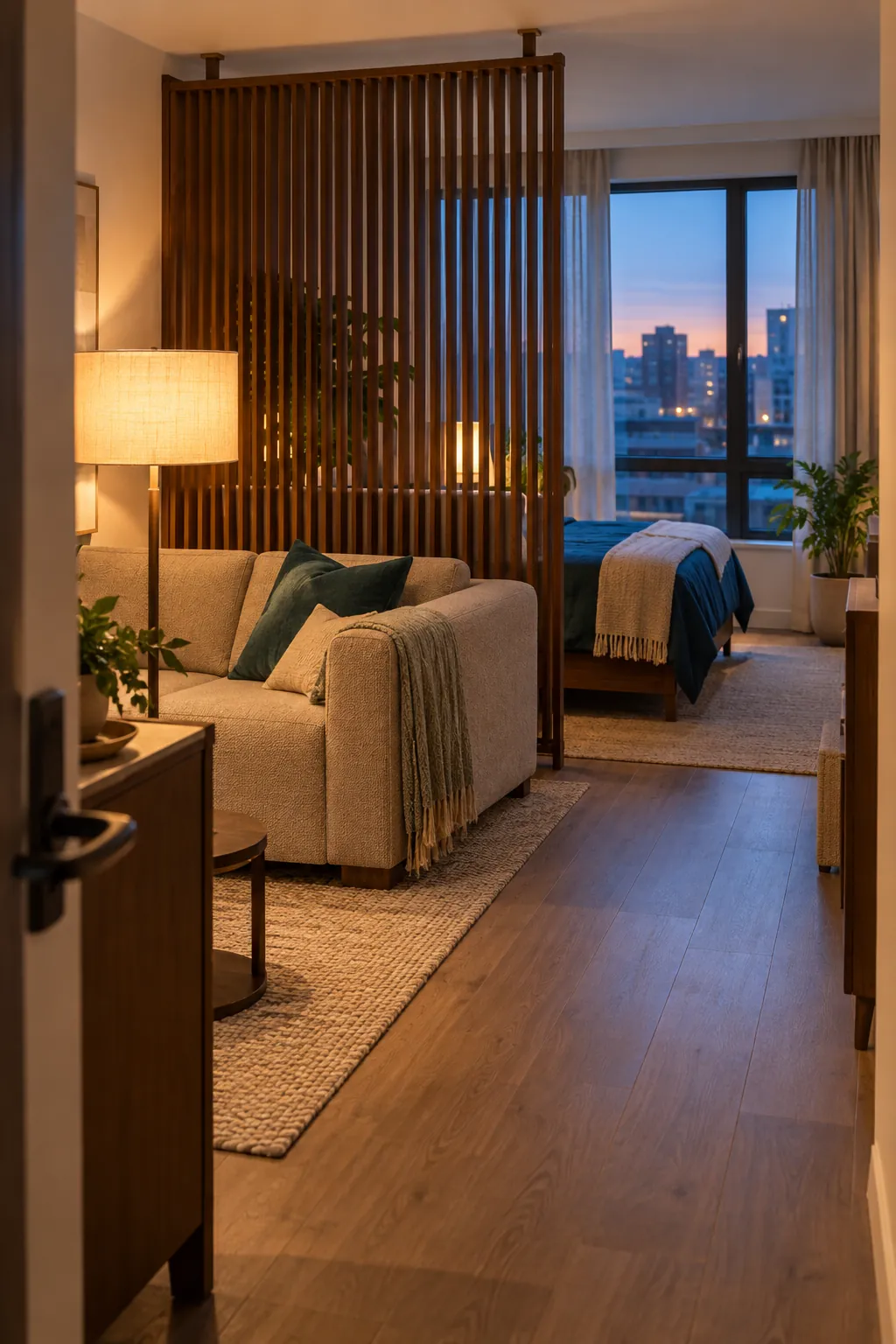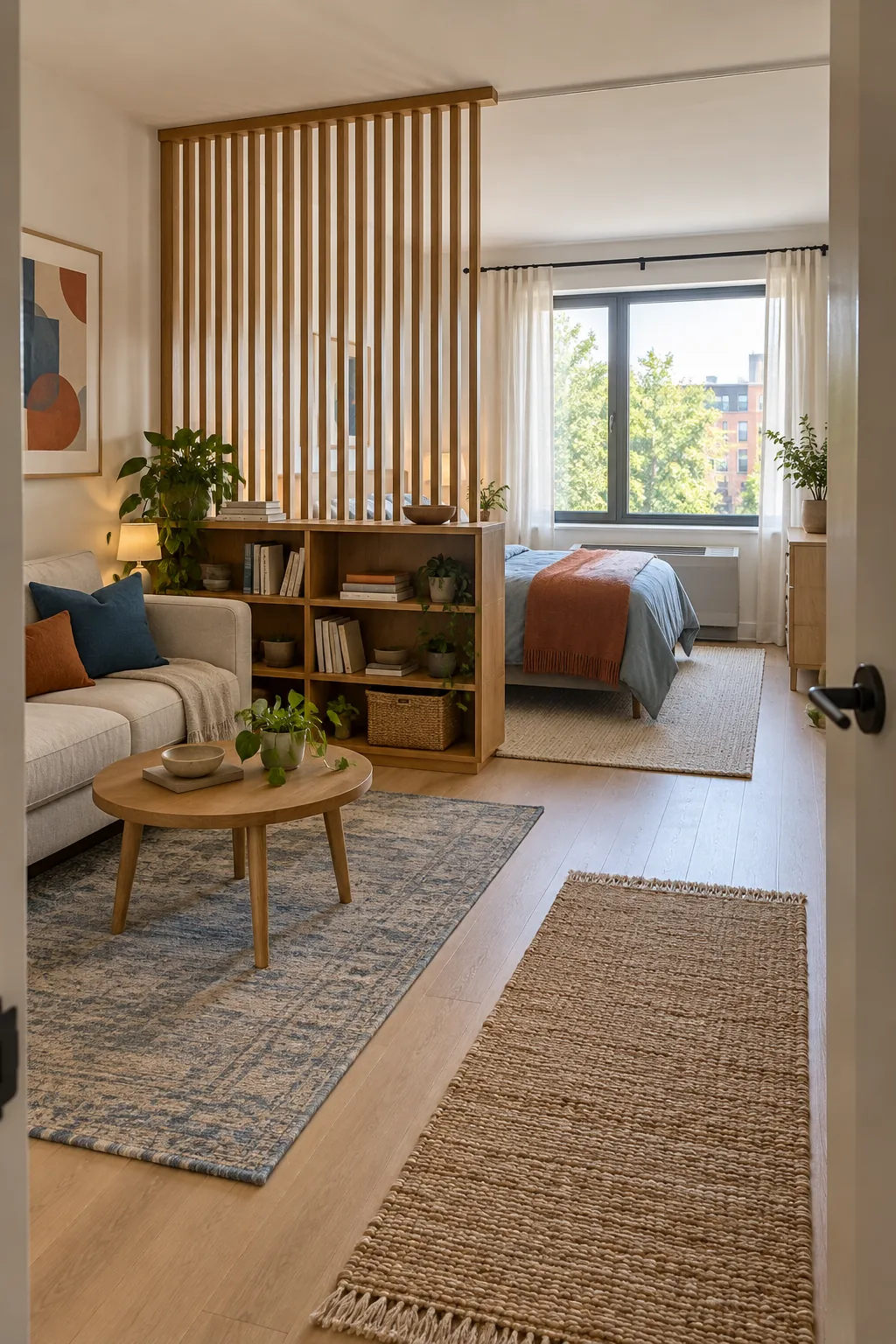
A divider should solve a specific problem. It may hide a bed from the entrance, separate work from rest, control a view, or add limited privacy. In a small space, the divider must also protect the main walking path, natural light, ventilation, and access to doors and storage.
Start by marking each zone on the floor before adding a physical barrier. Test the layout with furniture or painter tape and live with it for a few days. Many studio rooms feel better with a partial visual cue than with a full height wall.
Zone the Room With Rugs and Furniture
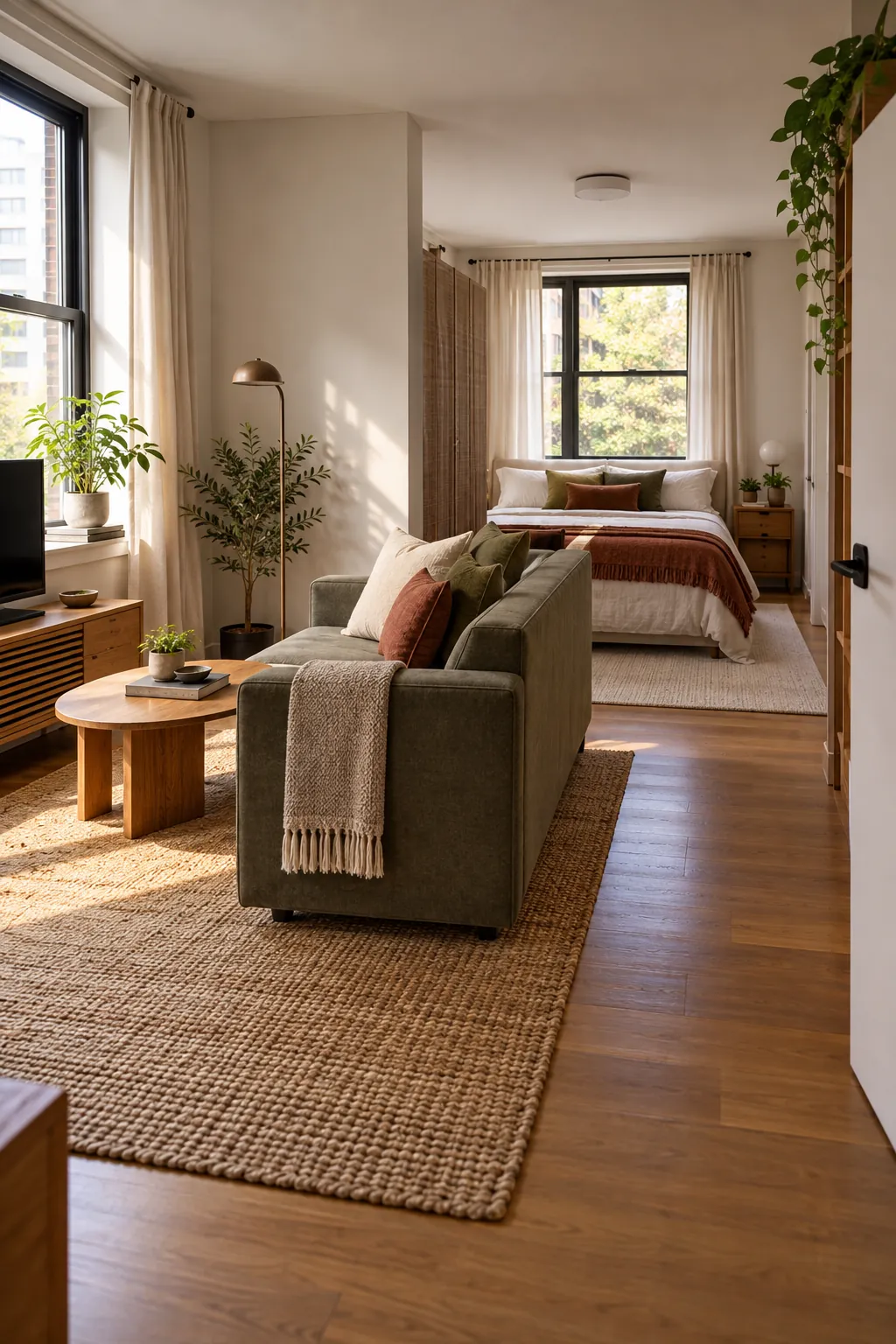
Small space zoning can begin without a divider. Place a rug under the living area, turn the sofa so its back faces the sleeping zone, or position a desk perpendicular to the wall. These changes establish boundaries while keeping light and air moving through the full room.
Keep the back of any exposed furniture neat and stable. Leave a clear route from the entrance to the window, bathroom, and storage. If the zones still feel connected in the wrong way, add a low console or tall plant near the boundary instead of blocking the entire width.
Hang a Curtain Room Divider
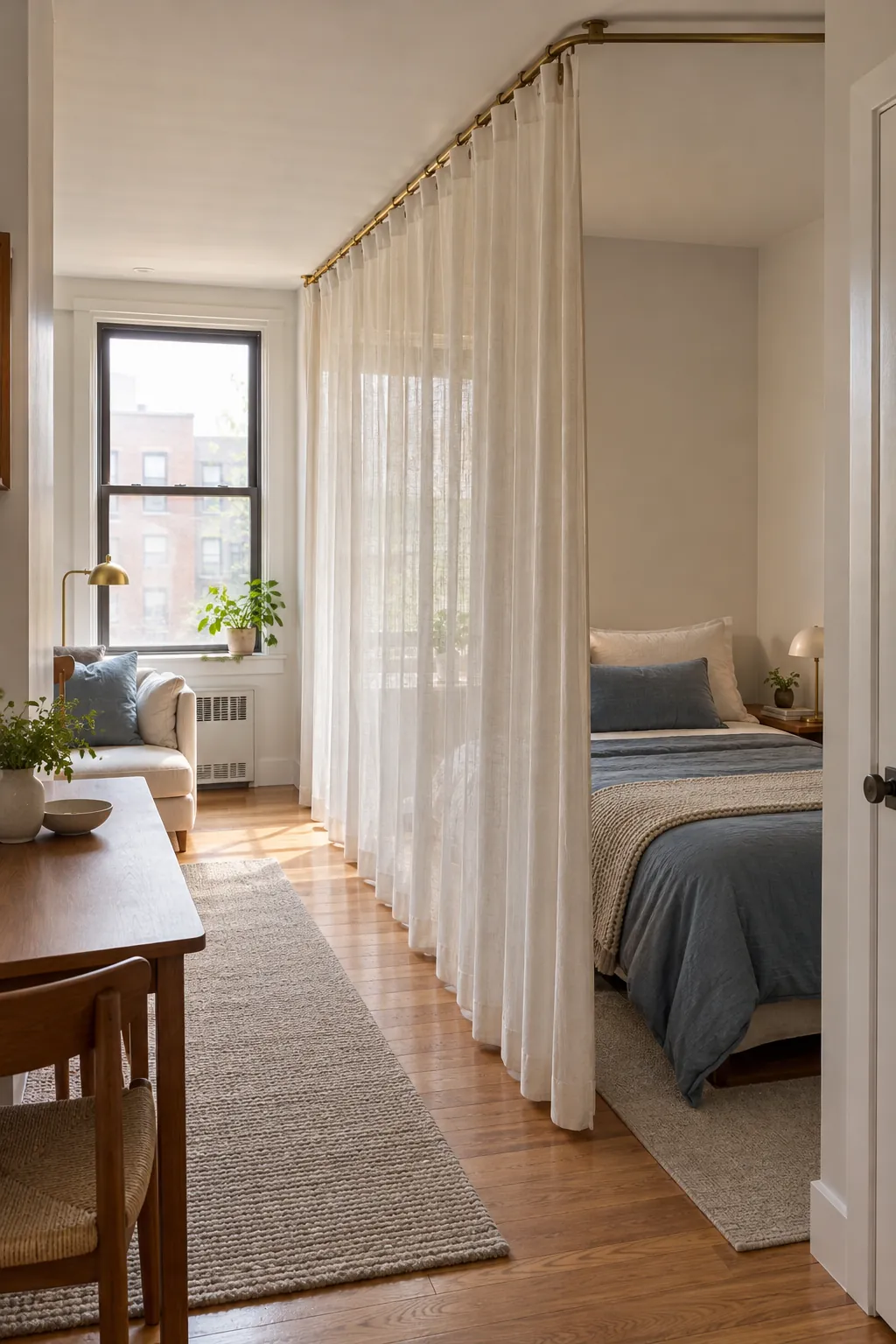
A curtain room divider offers flexible privacy and uses little floor space. Mount a ceiling track where the fabric can stack against a wall or beside a wardrobe when open. Choose enough fullness for privacy without using so much fabric that it overwhelms the room.
Use a translucent curtain when you need visual separation but still depend on one window. Choose an opaque lined fabric when nighttime privacy matters more. Keep fabric away from heaters, cooking areas, and open flames, and confirm that the ceiling fixing suits the surface and load.
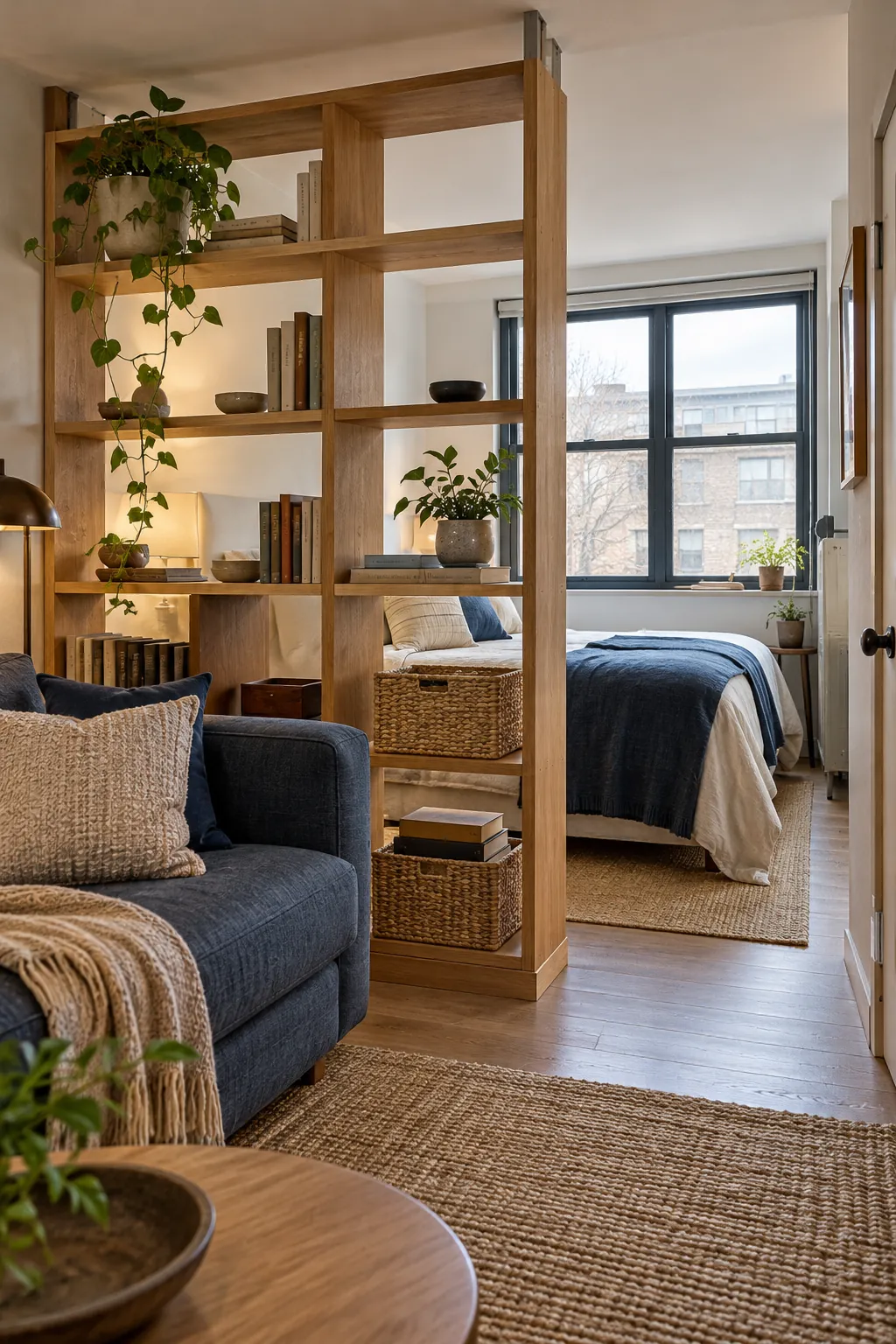
Use an Open Shelf Divider
An open shelf divider can separate zones and add storage without creating a solid wall. Keep some compartments empty so daylight and sight lines can pass through. Anchor tall shelving according to the manufacturer instructions, especially in homes with children, pets, or active walkways.
Store heavier items low and keep fragile objects away from exposed edges. A shelf that is shallow enough for the room may work better than a deep standard bookcase. Check the finished passage on both sides before buying, since storage is not useful if it creates a narrow daily bottleneck.
Place a Folding Screen Where Privacy Changes
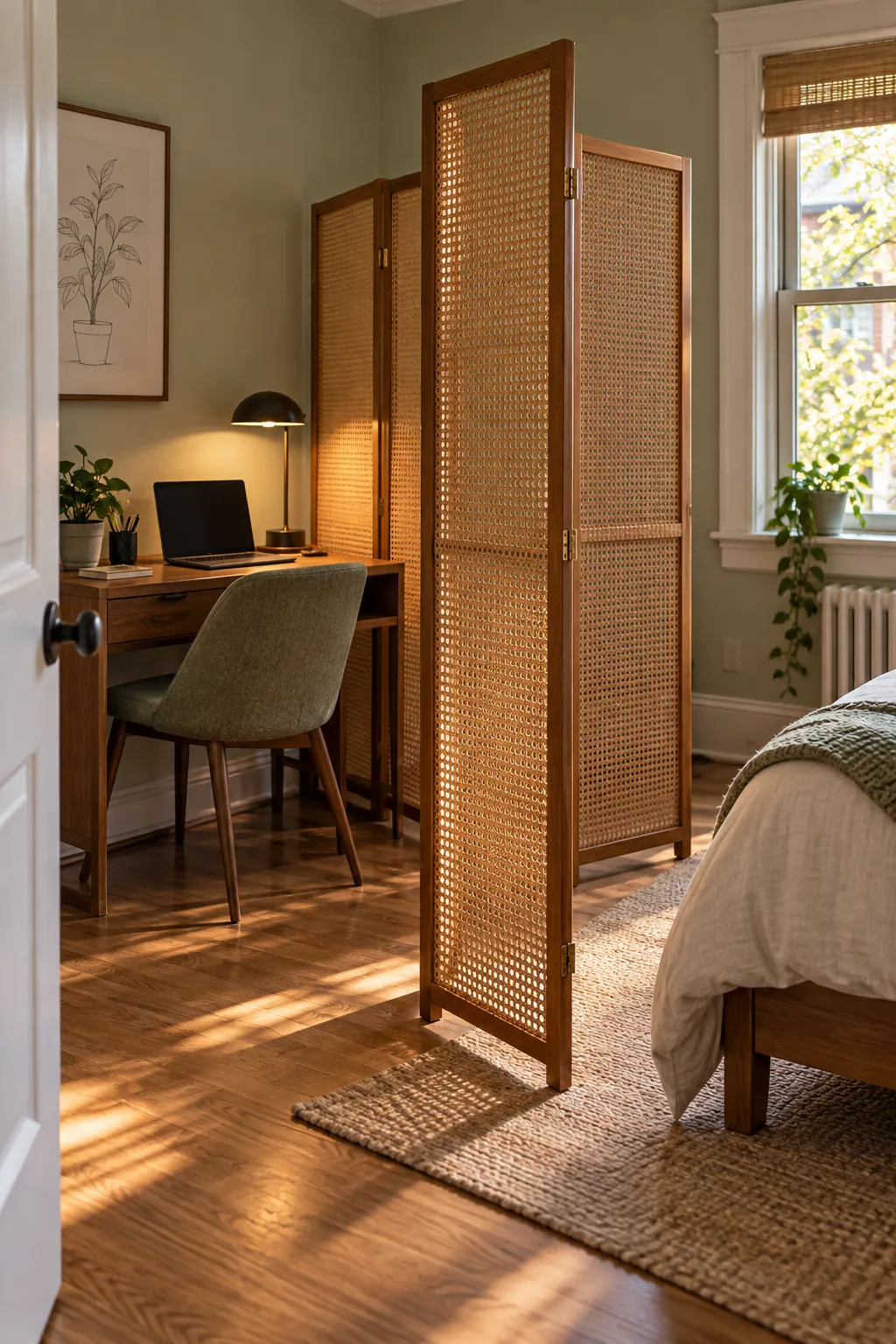
Folding screen ideas suit rooms that need privacy only at certain times. A screen can hide a bed during a video call, cover exercise equipment when guests arrive, or shield a dressing area. It can then fold against the wall and return the room to one open space.
Choose a screen with stable feet and a height that blocks the necessary view without dominating the ceiling. Position it away from busy door swings and strong drafts. A perforated, woven, or slatted design feels lighter than a solid opaque panel and allows some illumination to cross the boundary.
Install a Sliding Panel Divider
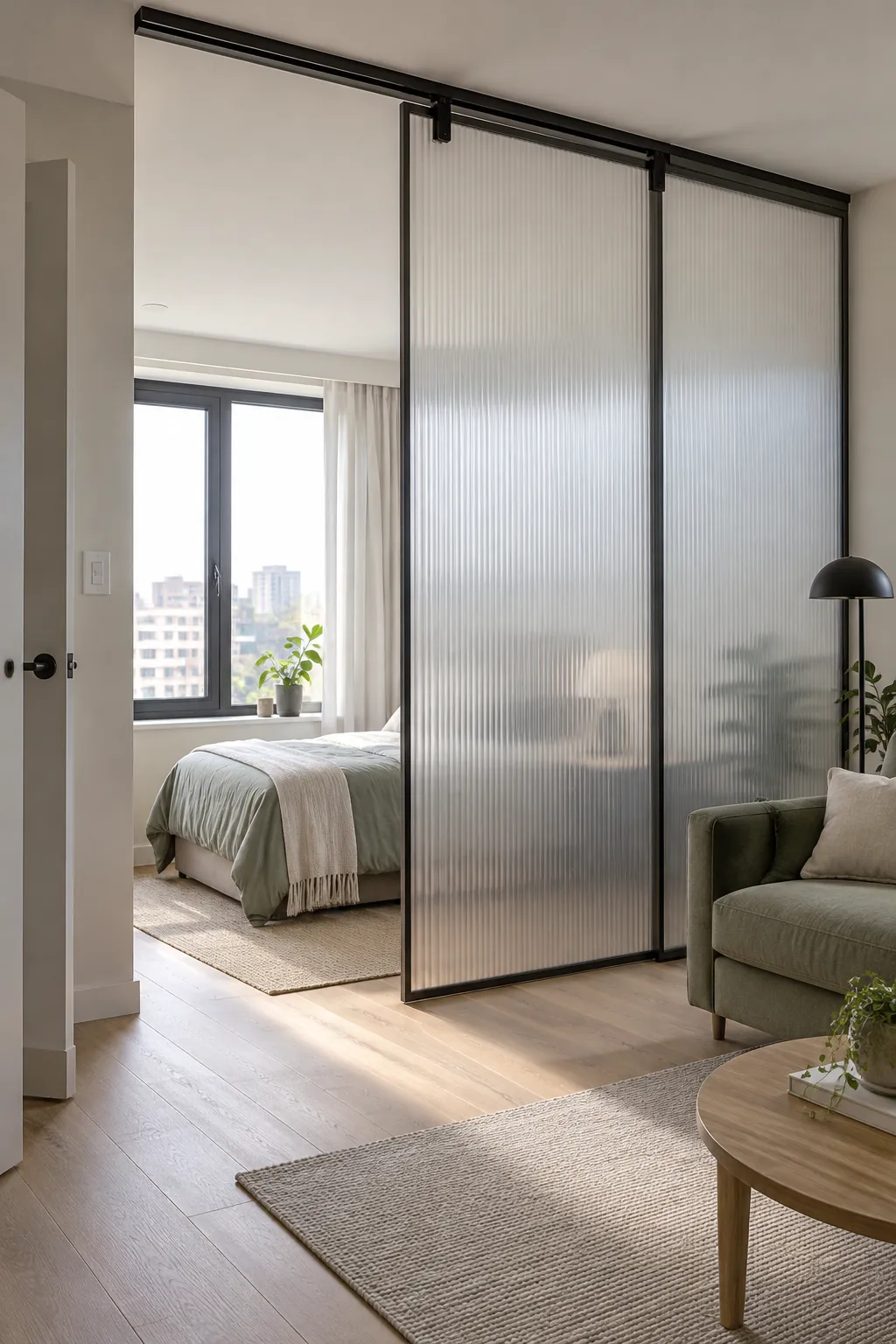
A sliding panel divider provides a cleaner edge when a curtain feels too soft. Ceiling mounted panels can keep the floor clear, but they need sound structure and enough stacking space. Translucent panels share daylight, while solid panels provide more visual privacy.
Measure the full travel of each panel and confirm that it will not block switches, vents, or storage. Sliding panels reduce views but usually do little for sound unless they form a sealed construction. Discuss electrical, fire safety, and building requirements with qualified professionals before treating the divider as a new enclosed room.
Separate Bedroom and Living Zones Without Blocking the Window
For a bedroom living room divider, place the sleeping zone in the more private part of the plan and keep the main social area connected to the entrance. Use a divider that stops short of the window or allows light through. A partial screen near the foot or side of the bed often hides the direct entrance view without enclosing the whole bed.
Give each zone its own light source and storage boundary so the separation still works after dark. Keep an easy path to the bed and never trap a person behind furniture. If one window must serve both areas, favor an open shelf, slatted screen, translucent panel, or curtain that can stay open during the day.