
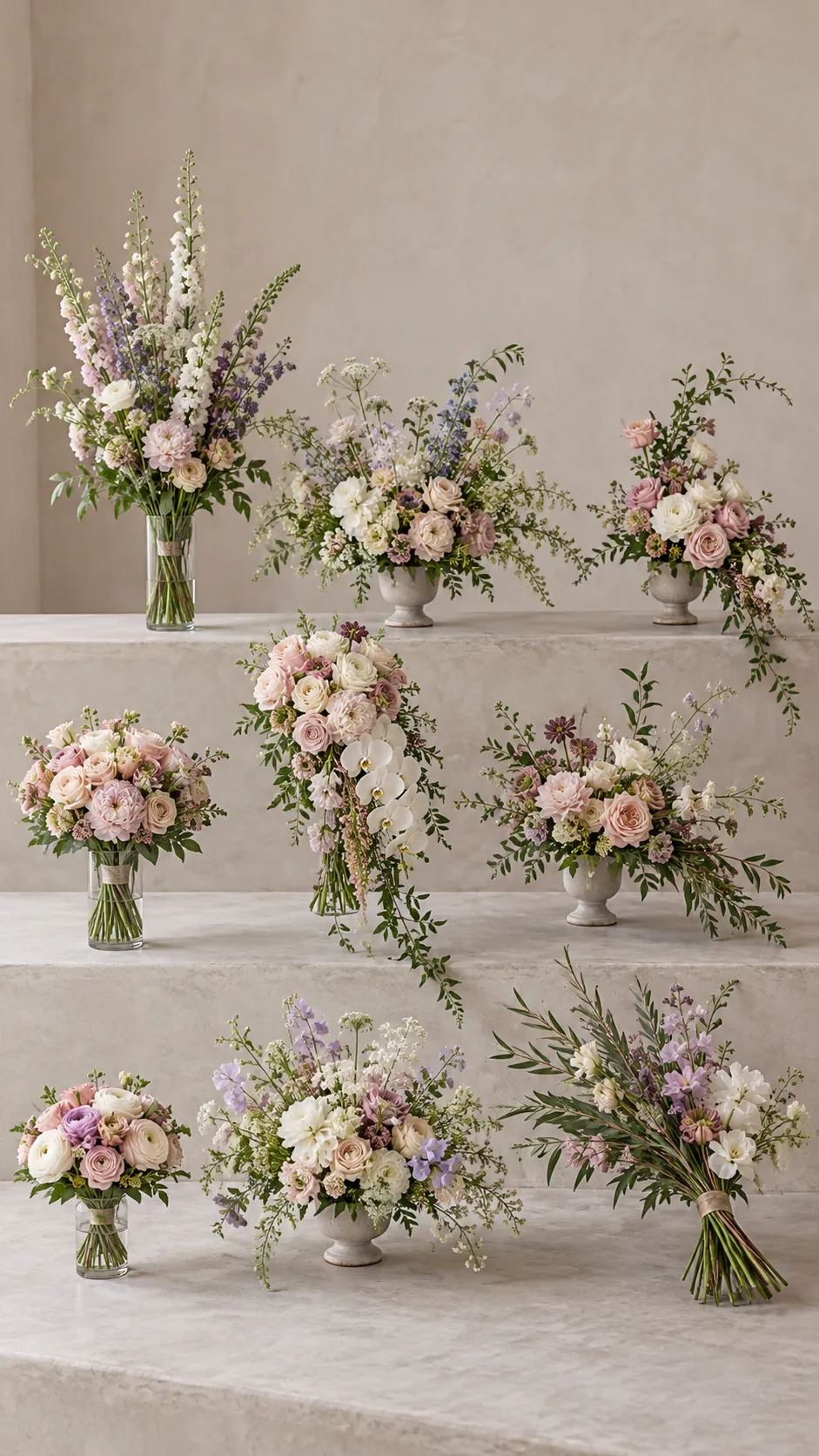
Flower choice becomes easier after you decide what the finished outline must do. A low round bouquet needs different stem strength and flower scale from a long cascade or an airy garden shape. Test the silhouette with a few branches first, then spend your flower budget on stems that can hold that structure.
Classic Round
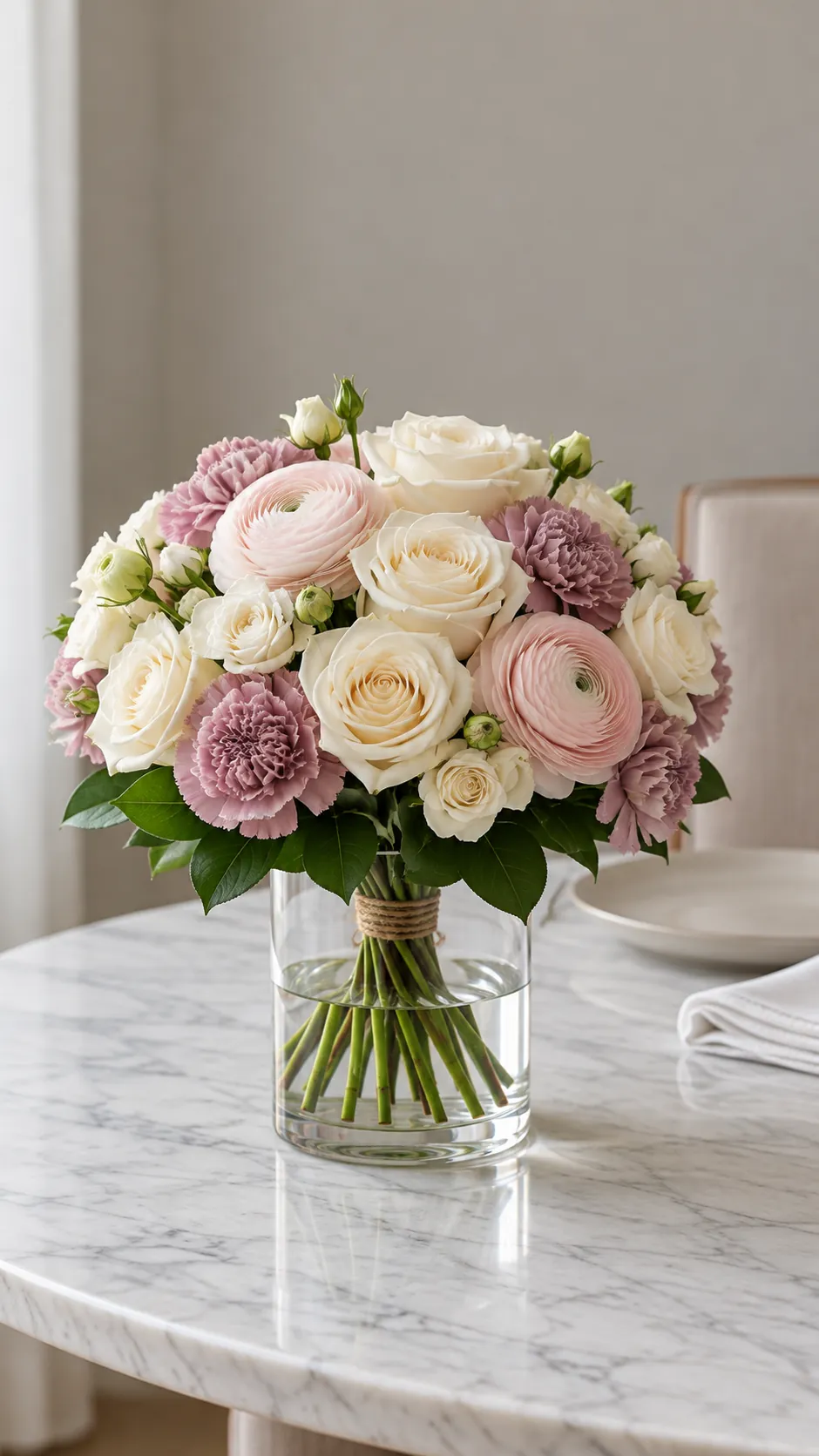
A round flower bouquet places most blooms at a similar distance from the binding point, creating a calm compact outline. It suits sturdy flowers with comparable head sizes, such as roses, carnations, or ranunculus. Choose it when you want easy carrying and a formal look, but keep a few height differences so the surface does not become flat.
Loose Hand Tied Dome
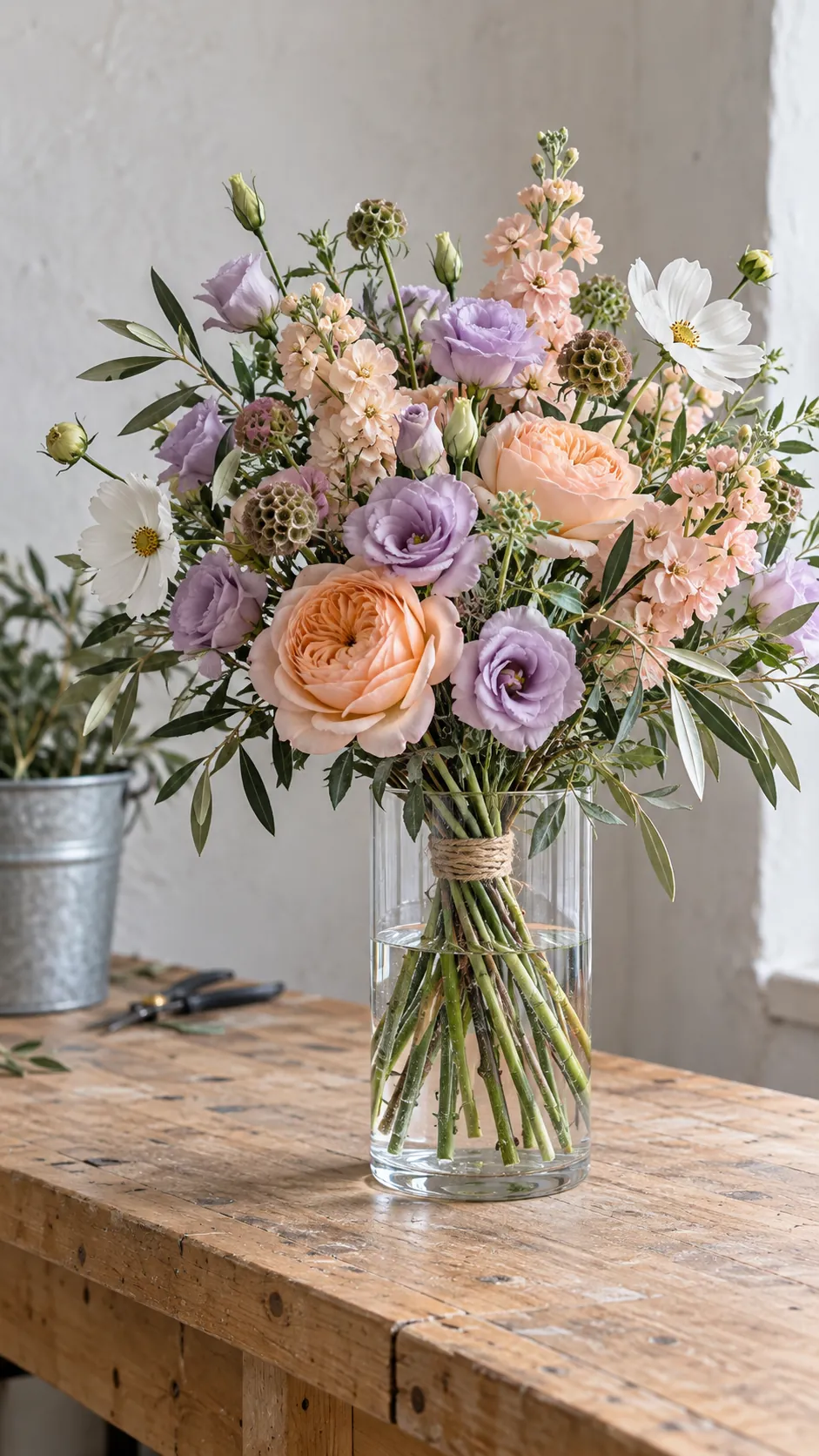
A loose hand tied bouquet shape begins with a spiral stem bundle and a dome that has visible air between flowers. Rotate the bundle in one direction while adding stems, then check that the binding point remains narrow enough to hold. This structure forgives mixed flower sizes and feels relaxed without losing a clear boundary.
Trailing Cascade
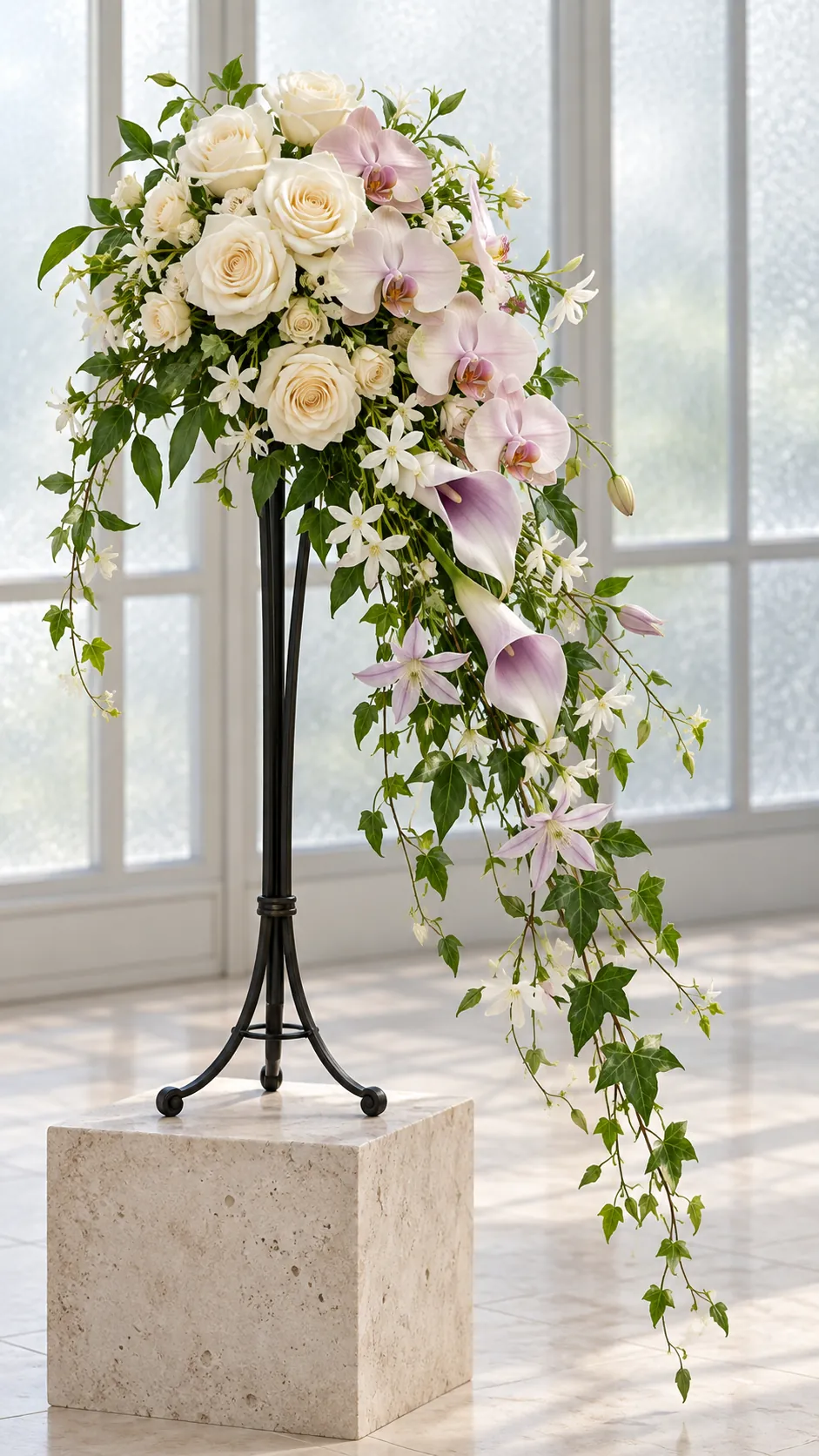
A cascading bouquet style carries visual weight downward through vines, flexible foliage, or naturally arching flowers. Build a secure upper body before extending the longest line, because a weak center makes the design feel dragged forward. Try the shape with light trailing materials before buying heavy blooms that require stronger support.
Open Crescent
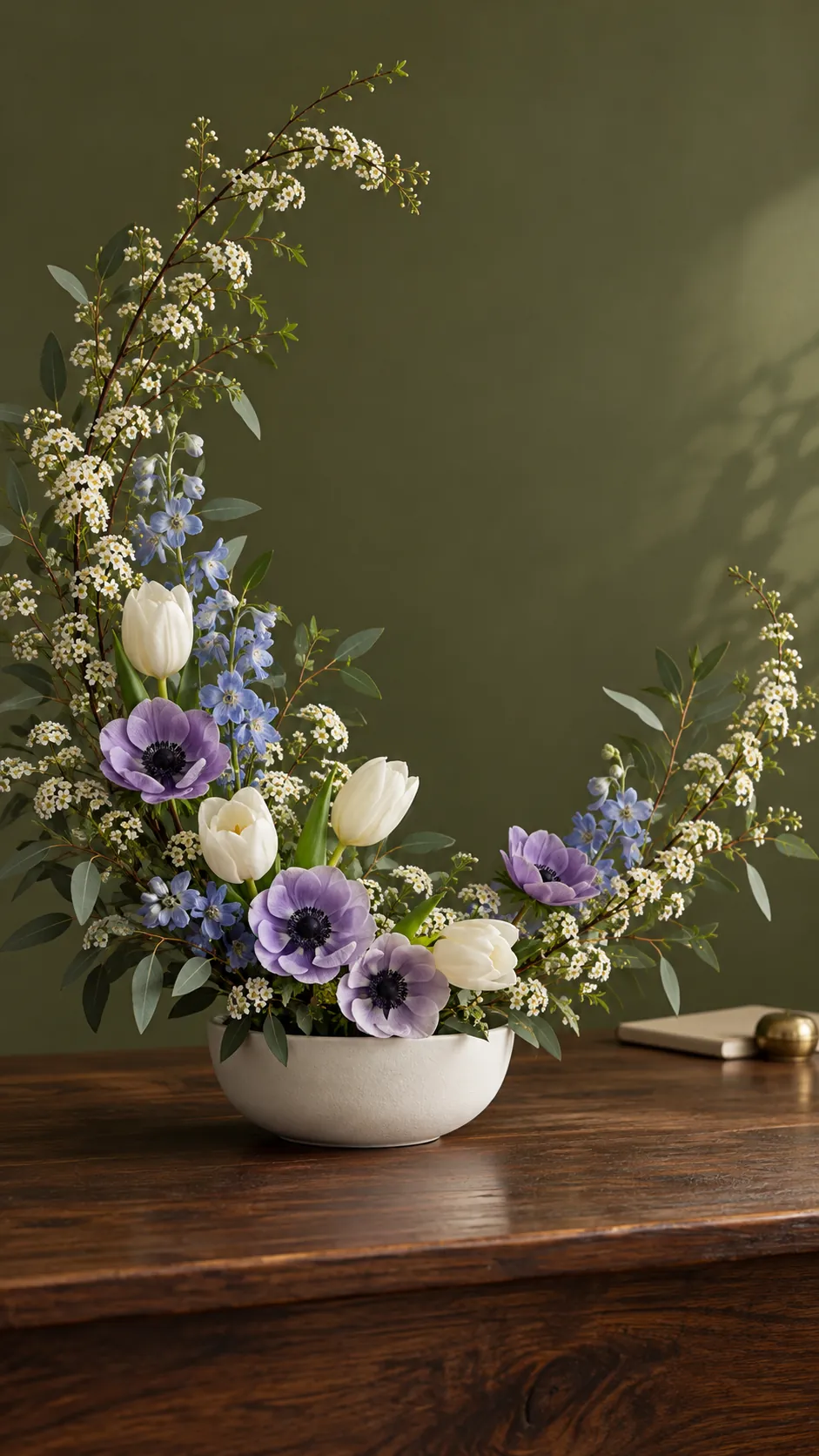
A crescent flower arrangement curves in two directions around an open center, with one arm often longer than the other. Flexible stems and narrow foliage reveal the curve more clearly than dense round flowers. The empty space is part of the design, so stop adding material before the crescent closes into a circle.
One Sided Asymmetry
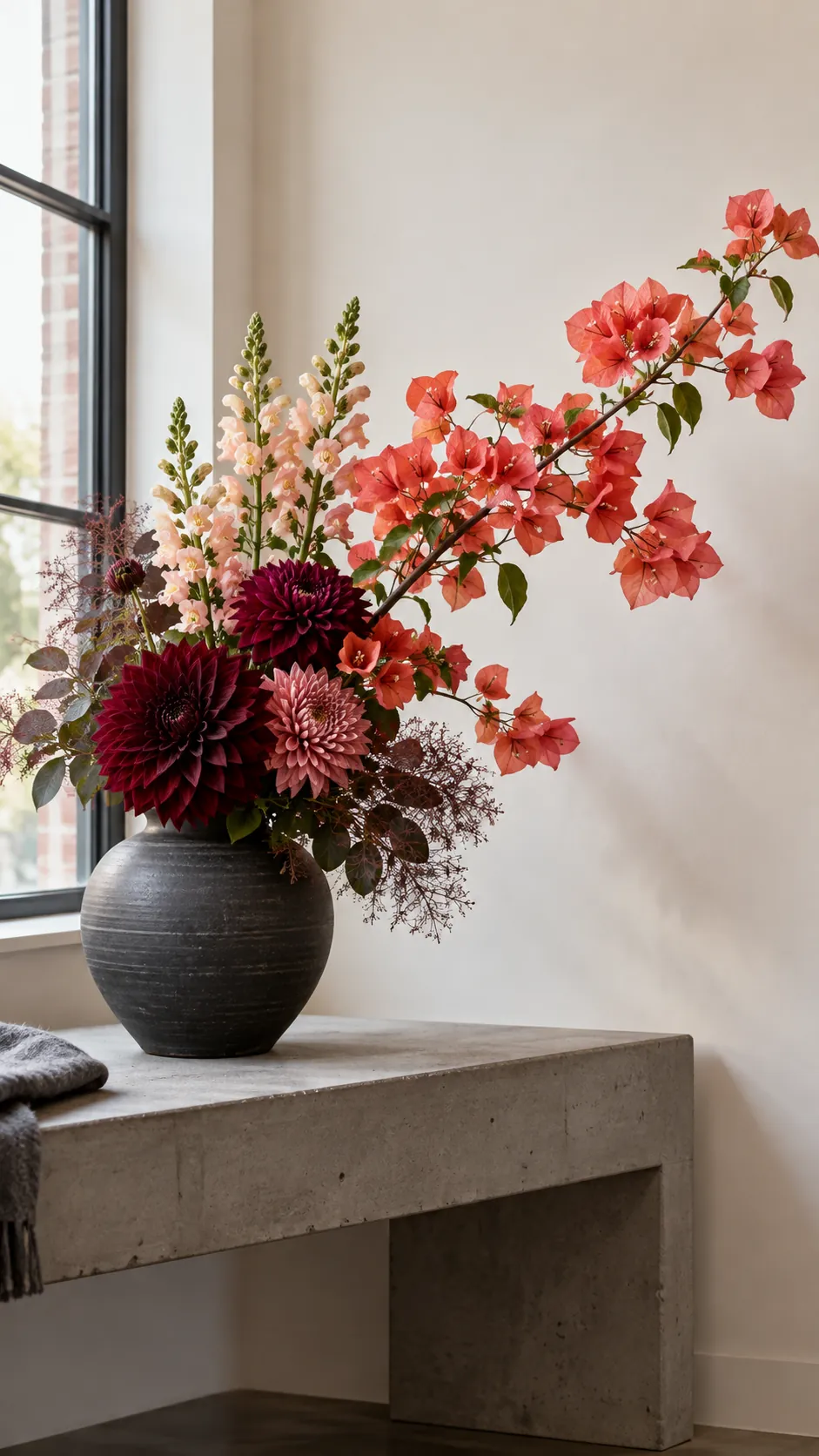
An asymmetrical floral design gains energy from a deliberate extension on one side and a denser counterweight near the center. The two sides should differ in length, flower size, and negative space while still feeling balanced in the hand. This shape works best when you can find one beautiful branch or line flower to set the direction.
Tall Presentation Bouquet
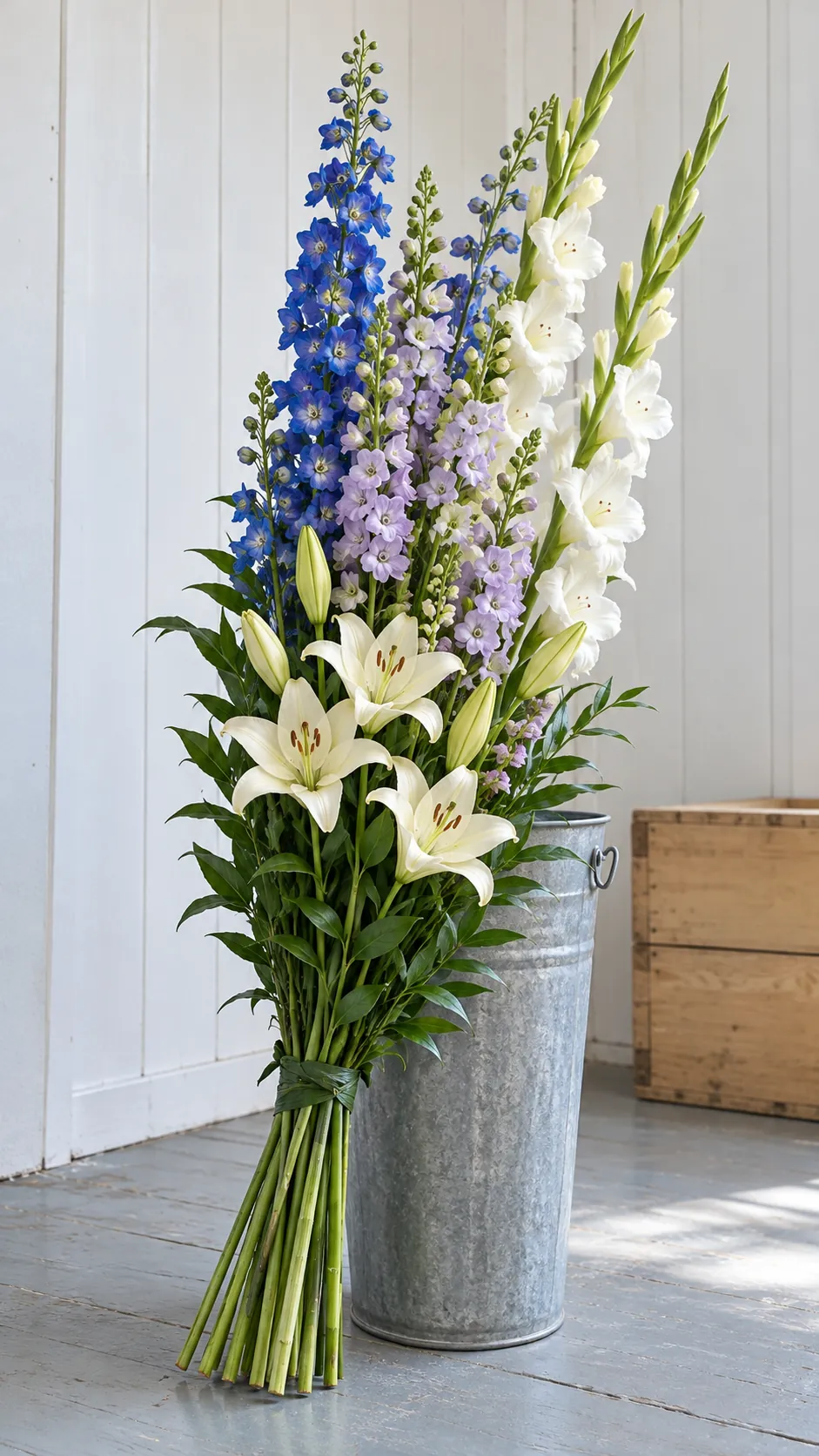
A presentation bouquet keeps long stems mostly parallel and displays the flower heads at graduated heights. It shows off gladiolus, delphinium, lilies, or other line flowers without forcing them into a low bundle. Plan enough lower foliage to connect the stems visually, then leave the upper lines clean and readable.
Compact Posy
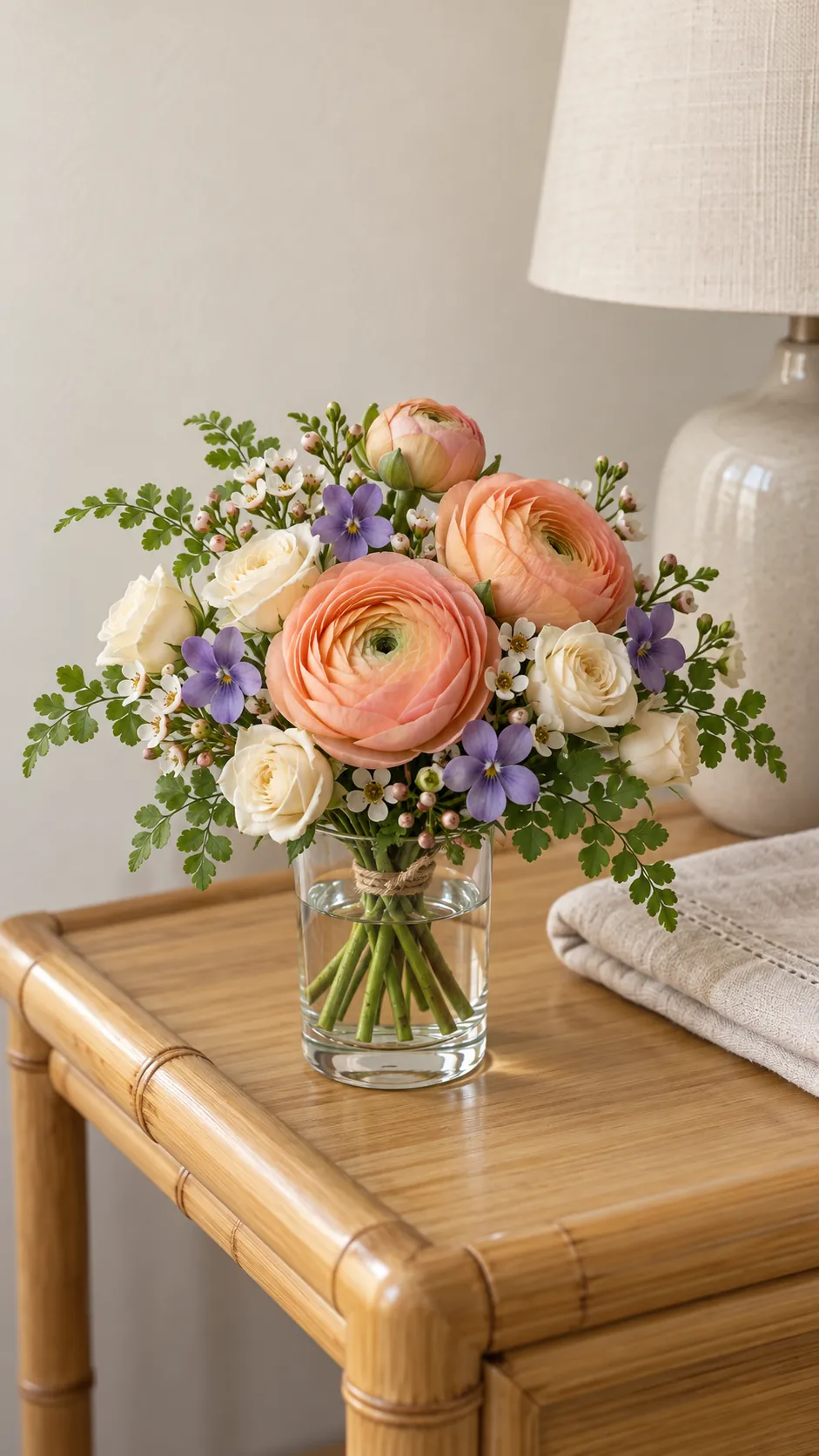
Compact bouquet styling uses a small diameter, short visible stems, and a limited number of focal flowers. The scale makes it useful for a gift, a small table, or a person who does not want to carry much weight. Spend on a few excellent blooms, then use fine foliage to finish the edge without making the posy wider.
Airy Garden Cloud
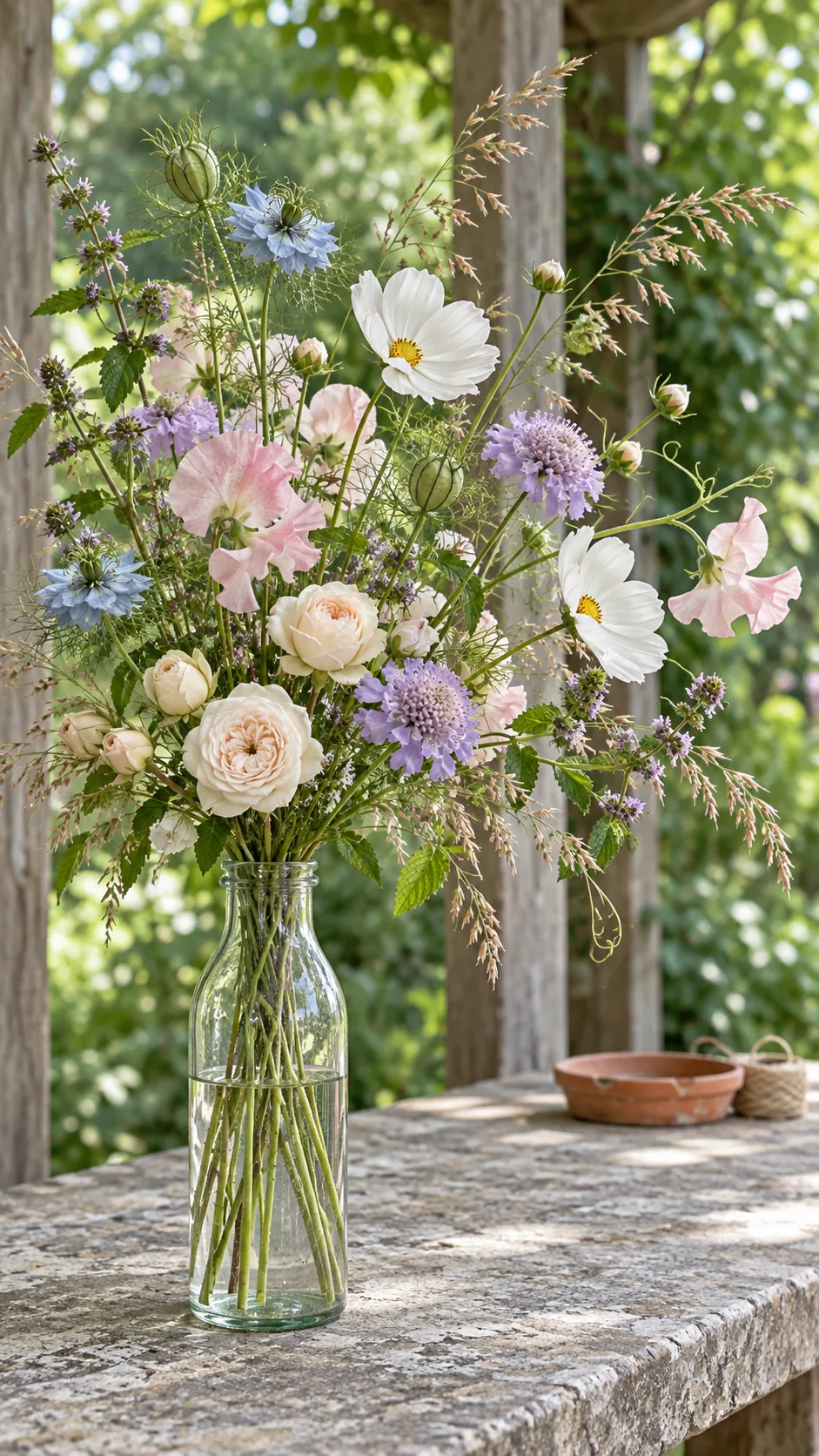
An airy flower bouquet depends on visible gaps, fine branching stems, and blooms set at several depths. It may use many stems, but each one needs a distinct role instead of filling every opening. Select flowers with natural movement, then resist squeezing the binding point until the shape becomes dense.
Long Arm Sheaf
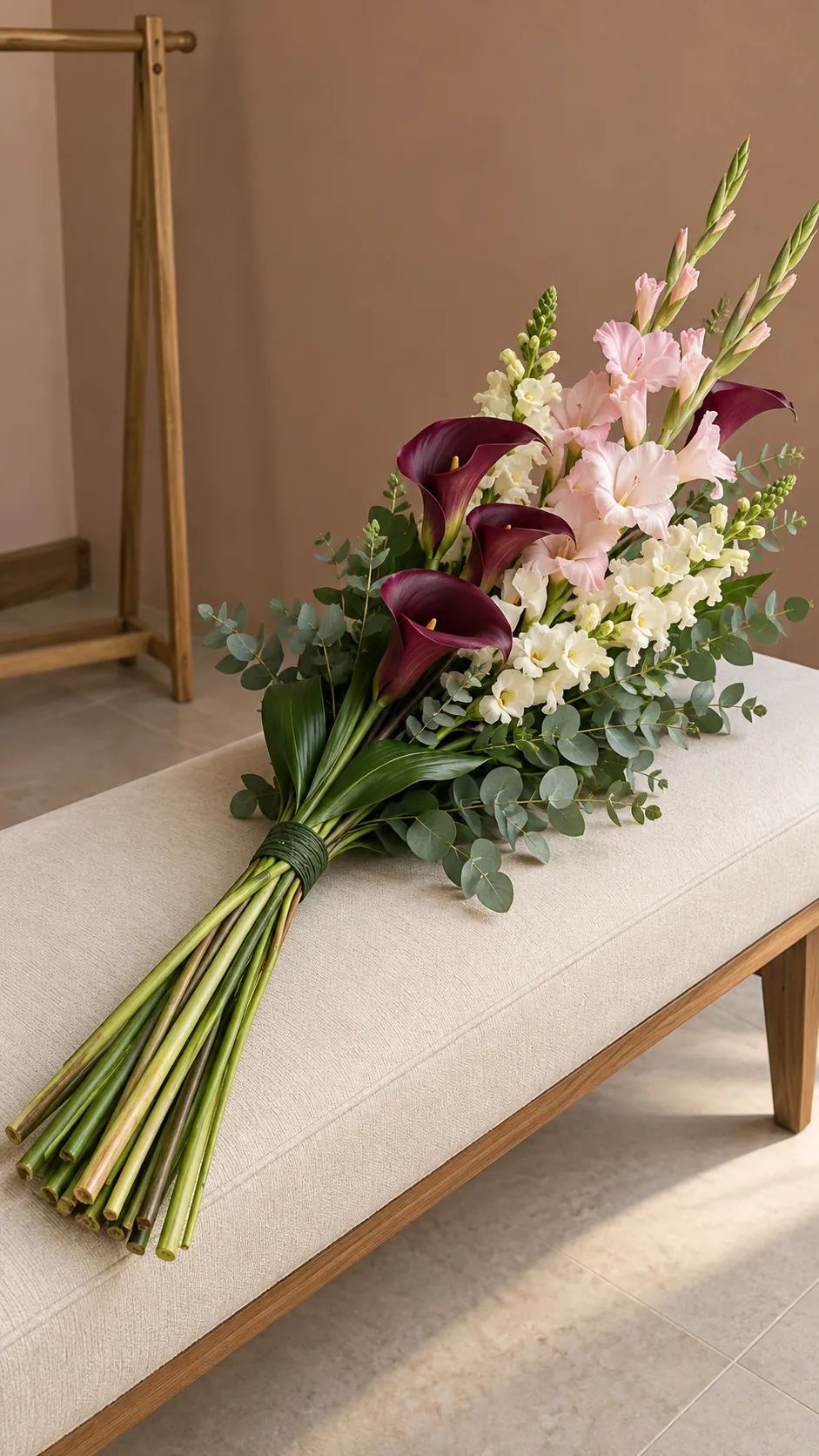
An arm sheaf lies across the forearm, so it favors long stems and a side facing display rather than a front facing dome. Arrange the flower heads in a gentle diagonal and bind the stems where the hand can support their weight. Test the length against the carrier before purchasing flowers, since an oversized bundle quickly becomes awkward.