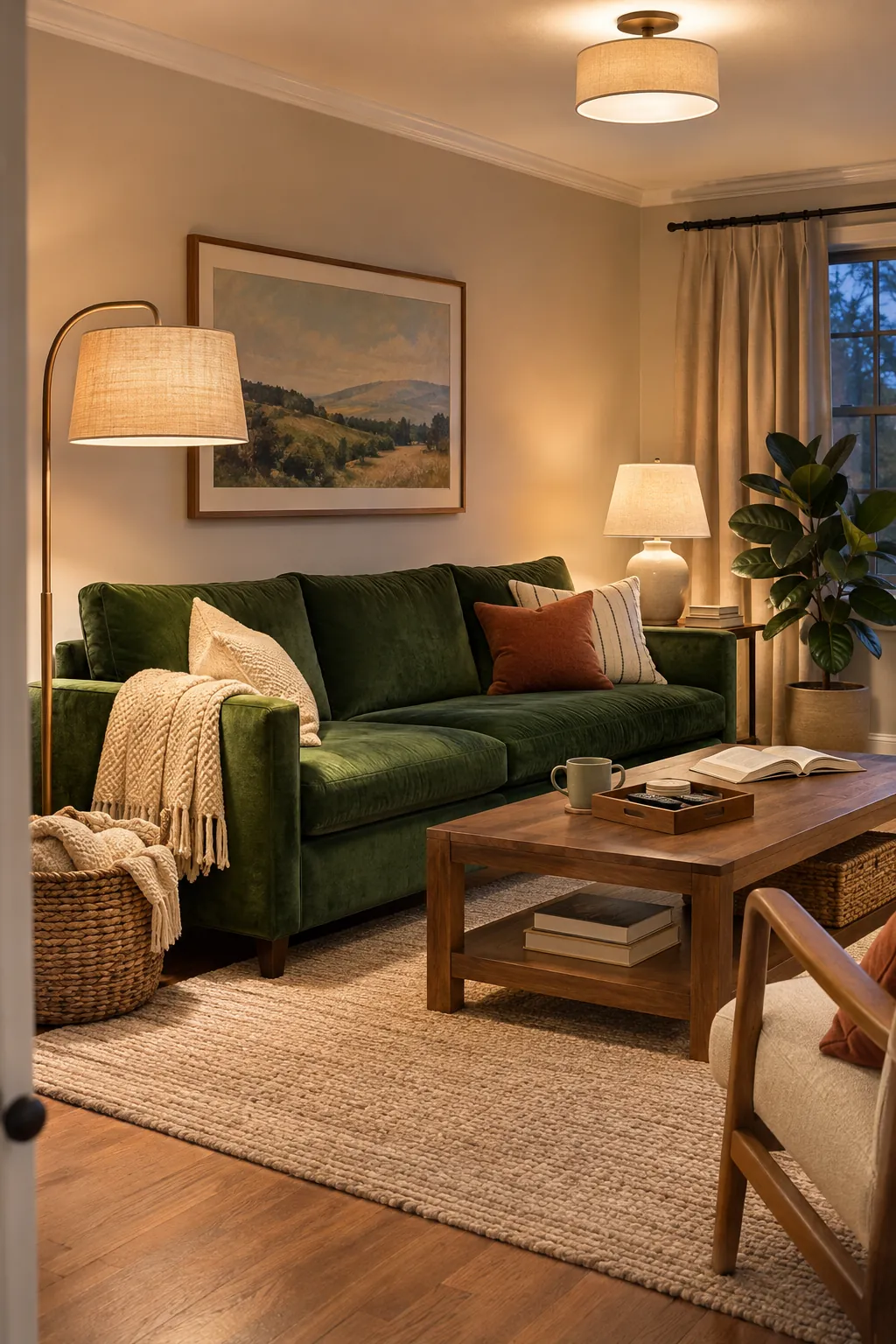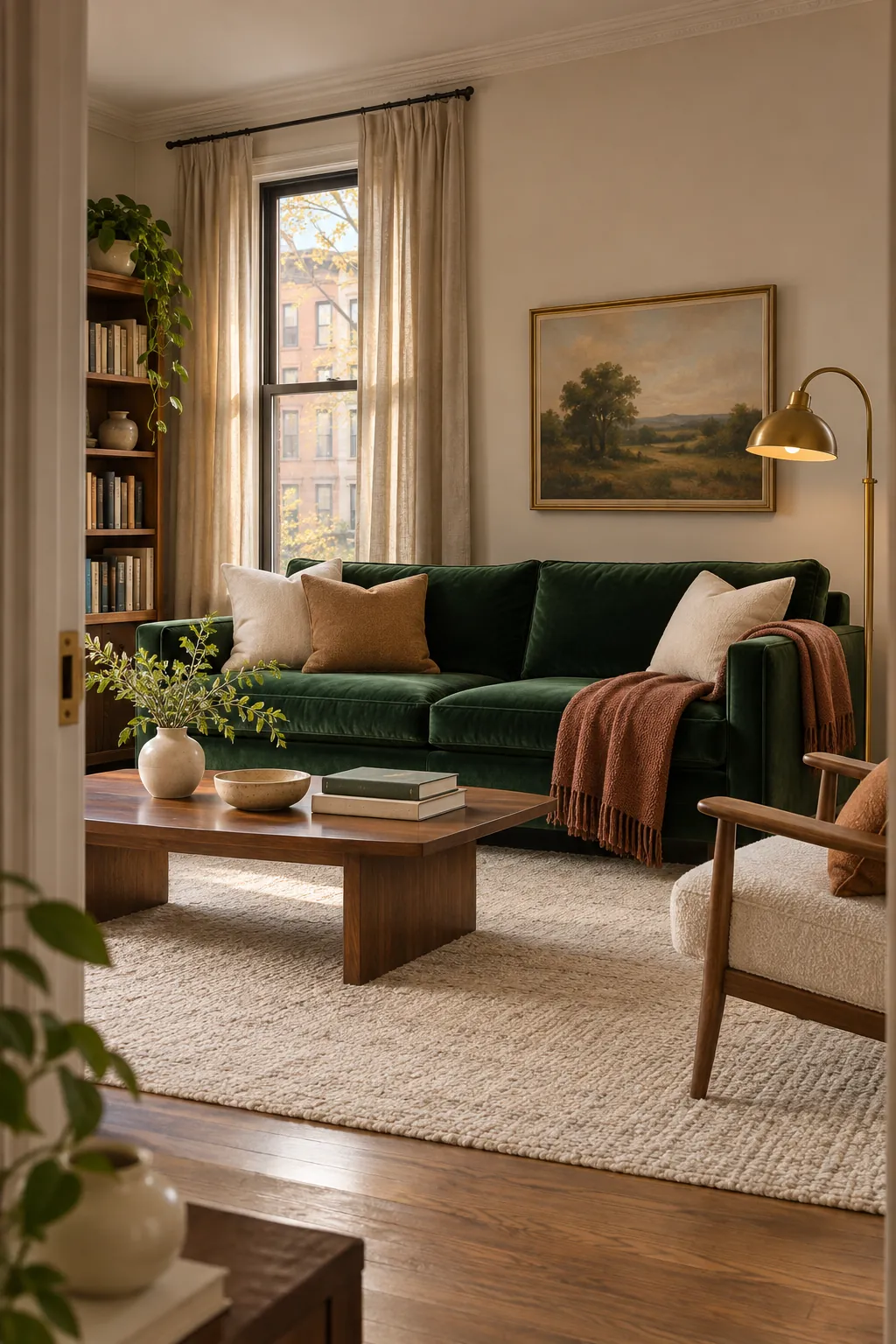
A saturated sofa can look elegant in a showroom and surprisingly difficult at home. The answer is not to surround it with more statement pieces. Give the velvet a calm foundation, repeat its warmth through natural materials, and use contrast where the room needs definition. The result can feel rich without becoming dark or formal.
Start with a warm neutral foundation
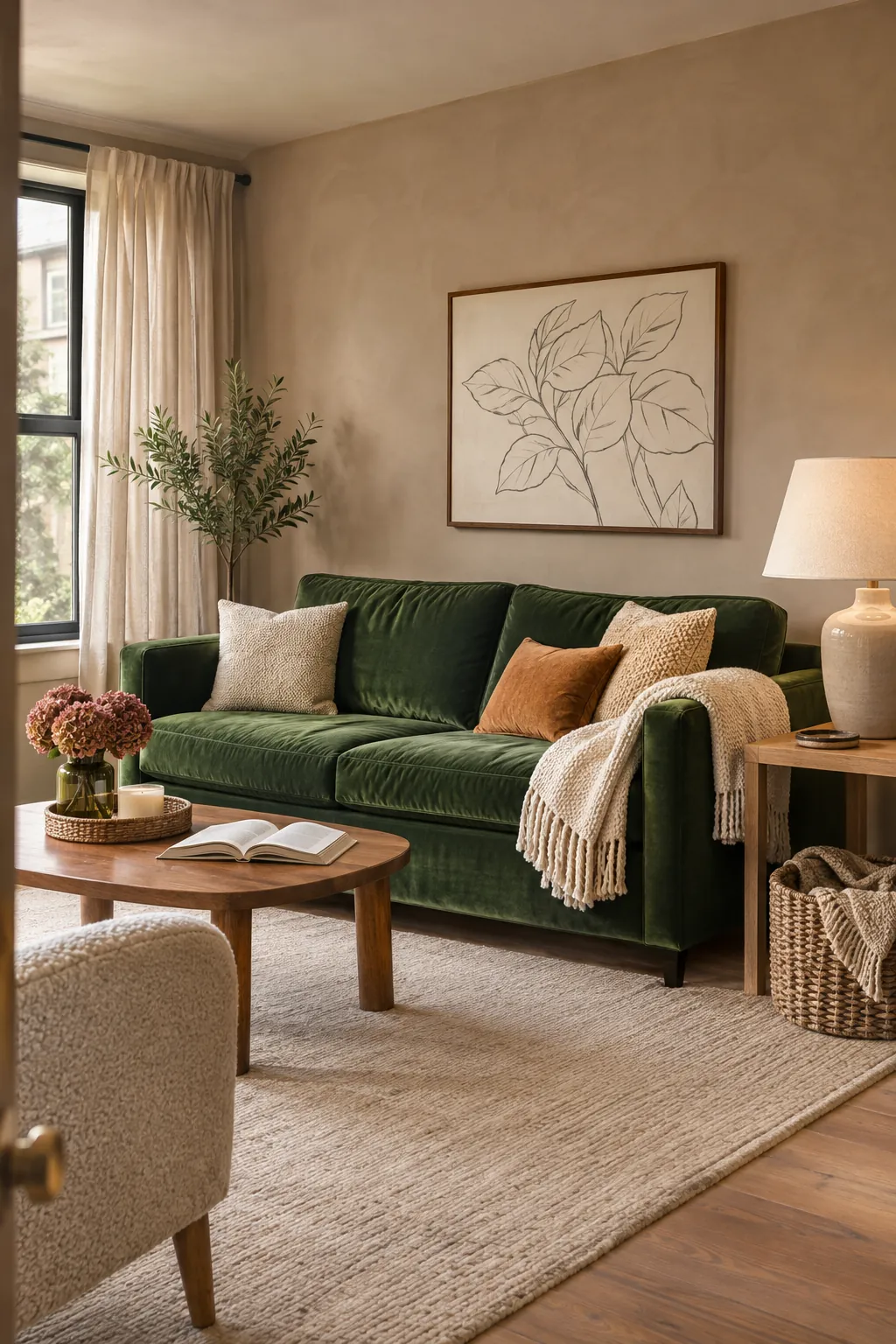
A green velvet sofa already carries rich color and a soft sheen, so the easiest supporting plan begins with warm, quiet surfaces. Cream, oatmeal, mushroom, and pale taupe walls give the fabric room to change with the light. They also prevent an emerald or forest green couch from making the room feel cold.
Choose one warm neutral for the largest surfaces, then repeat it in two or three smaller places. A wool rug, linen curtains, and a ceramic lamp can carry related tones without becoming a matching set. If the room receives cool northern light, select beige with a clear yellow or pink undertone rather than a gray beige.
Dark walls can also work, especially in a cozy den. Deep navy, warm charcoal, or chocolate brown creates a dramatic envelope, but the room needs several lighter areas. Pale upholstery on an accent chair, a light rug, and open window treatments keep the contrast readable.
Choose a rug that balances the velvet
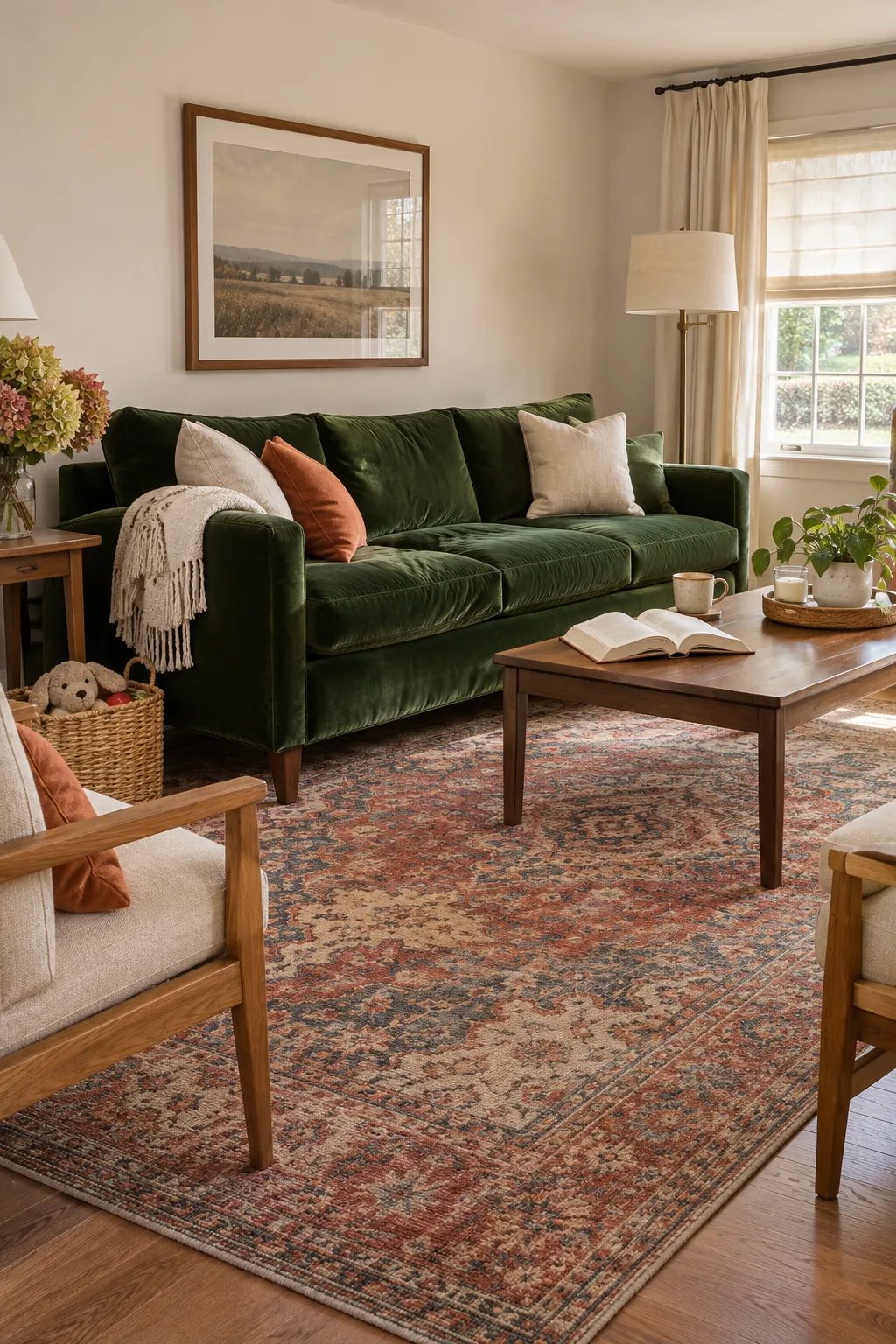
The best rug depends on whether the sofa should feel formal, relaxed, or playful. An ivory wool rug makes dark green velvet look crisp and luxurious. A faded Persian style rug introduces rust, muted blue, and aged red, which can connect the sofa to wood furniture and brass details. A natural jute rug gives the room a casual texture, but it is more comfortable when layered under a smaller flat weave or soft wool rug.
Scale matters more than the pattern. At minimum, the front legs of the sofa and nearby chairs should rest on the rug. This makes the seating area look connected instead of scattered. In a small living room, a larger quiet rug often makes the floor seem wider than several small pieces.
Homes with children or pets benefit from low pile rugs with mixed colors that hide ordinary wear. Test a rug sample beside the velvet in daylight and after dark. Green velvet can look blue in one light and yellow in another, so a rug that works at both times is the safer choice.
Layer pillows with color and texture
Pillows are the simplest place to change the mood. For a calm palette, combine cream boucle, camel linen, and a small amount of black or dark brown. For more energy, add ochre, burnt orange, dusty rose, or deep blue. These colors sit comfortably beside green without competing with its depth.
Use different textures because velvet beside more velvet can look heavy. Linen, wool, woven cotton, and a restrained patterned fabric add contrast. A useful arrangement combines one larger solid pillow, one smaller pattern, and one lumbar pillow with a visible weave. Leave enough open sofa space so the seat still looks inviting and works for daily use.
Patterns should share at least one color with the rest of the room. A botanical print is not required merely because the sofa is green. Checks, narrow stripes, geometric motifs, and small traditional patterns can feel more timeless.
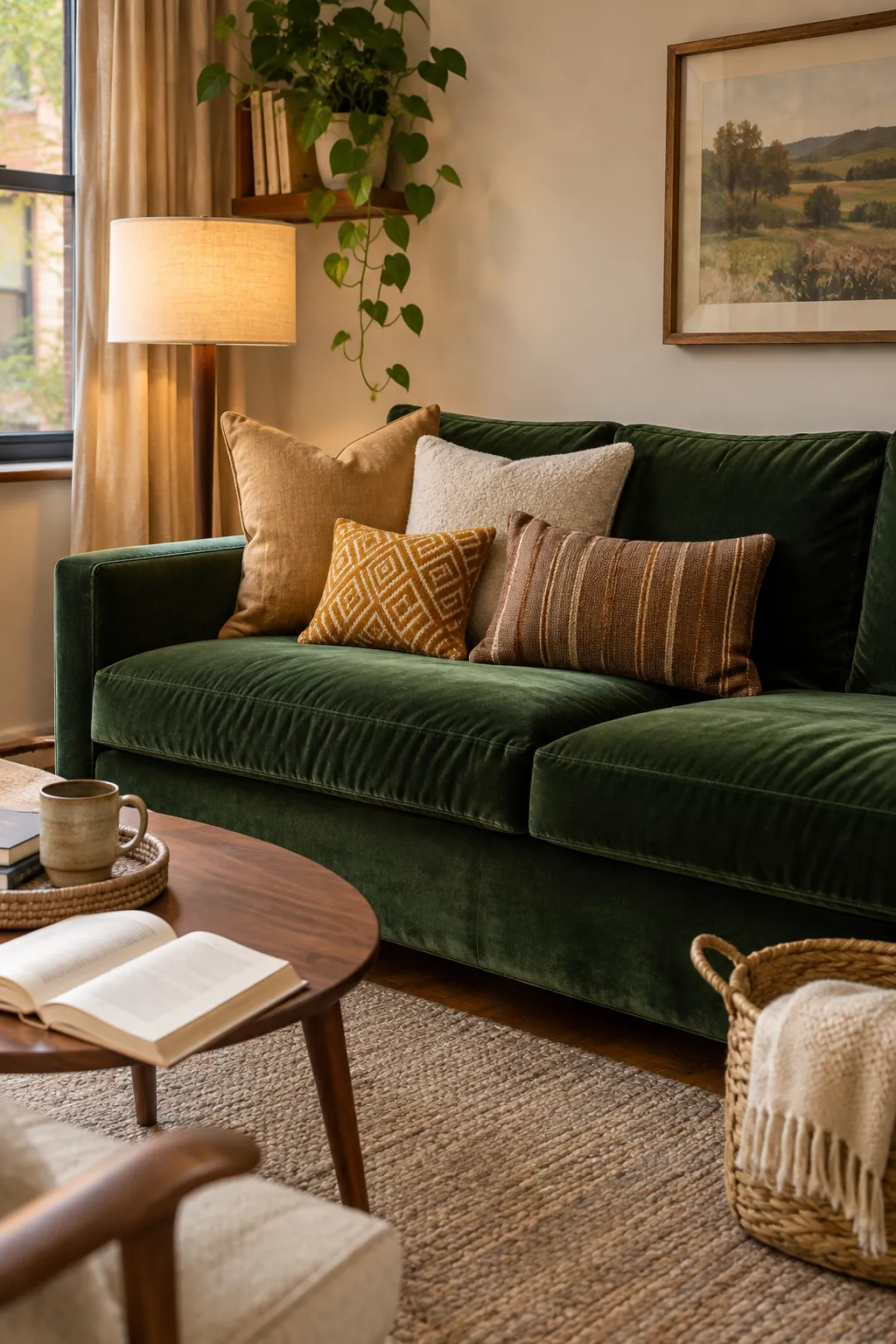
Use wood and brass for warmth
Green velvet pairs especially well with materials that have a warm natural finish. Walnut, oak, and medium toned teak make the color feel grounded. A wood coffee table also softens the visual shine of velvet and polished metal. Keep the grain visible rather than choosing an opaque painted finish for every piece.
Brass works best as a controlled accent. A floor lamp, a narrow picture frame, or small table hardware is usually enough. Mixing in blackened steel or aged bronze keeps the room from feeling overly coordinated. Avoid placing many bright gold objects at the same height, since this can make the styling feel staged.
Repeat wood in at least two locations, such as a coffee table and an accent chair frame. The woods do not need to match exactly. Similar warmth and a clear difference in value usually look more natural than a near match.
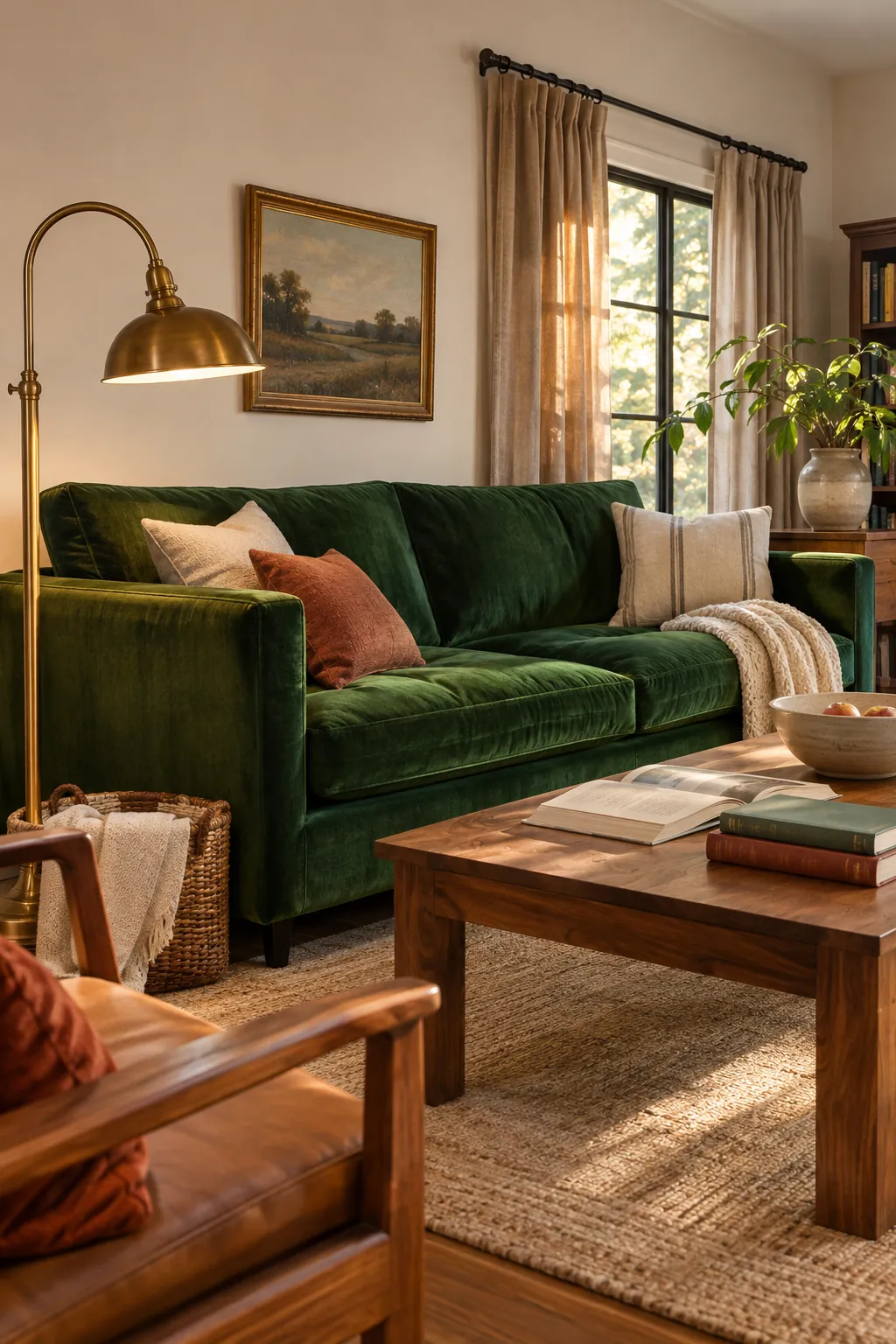
Pick curtains that support the room
Curtains can either quiet the sofa or extend its drama. Warm white and flax linen are reliable because they soften daylight and give the velvet a matte counterpoint. Curtains in the same green family can create an enveloping room, but choose a visibly lighter or darker shade so the window does not look like an accidental match.
For stronger color, consider dusty rose, ochre, or muted blue. Repeat that curtain color in one small accessory to make the choice feel connected. If the rug already has a bold pattern, plain curtains usually give the room better balance.
Hang the rod close to the ceiling and extend it beyond the window frame. Full length panels make the wall feel taller and allow more glass to remain exposed when the curtains are open. Use a lined fabric for bedrooms or street facing rooms, and a lighter weave where privacy is less important.
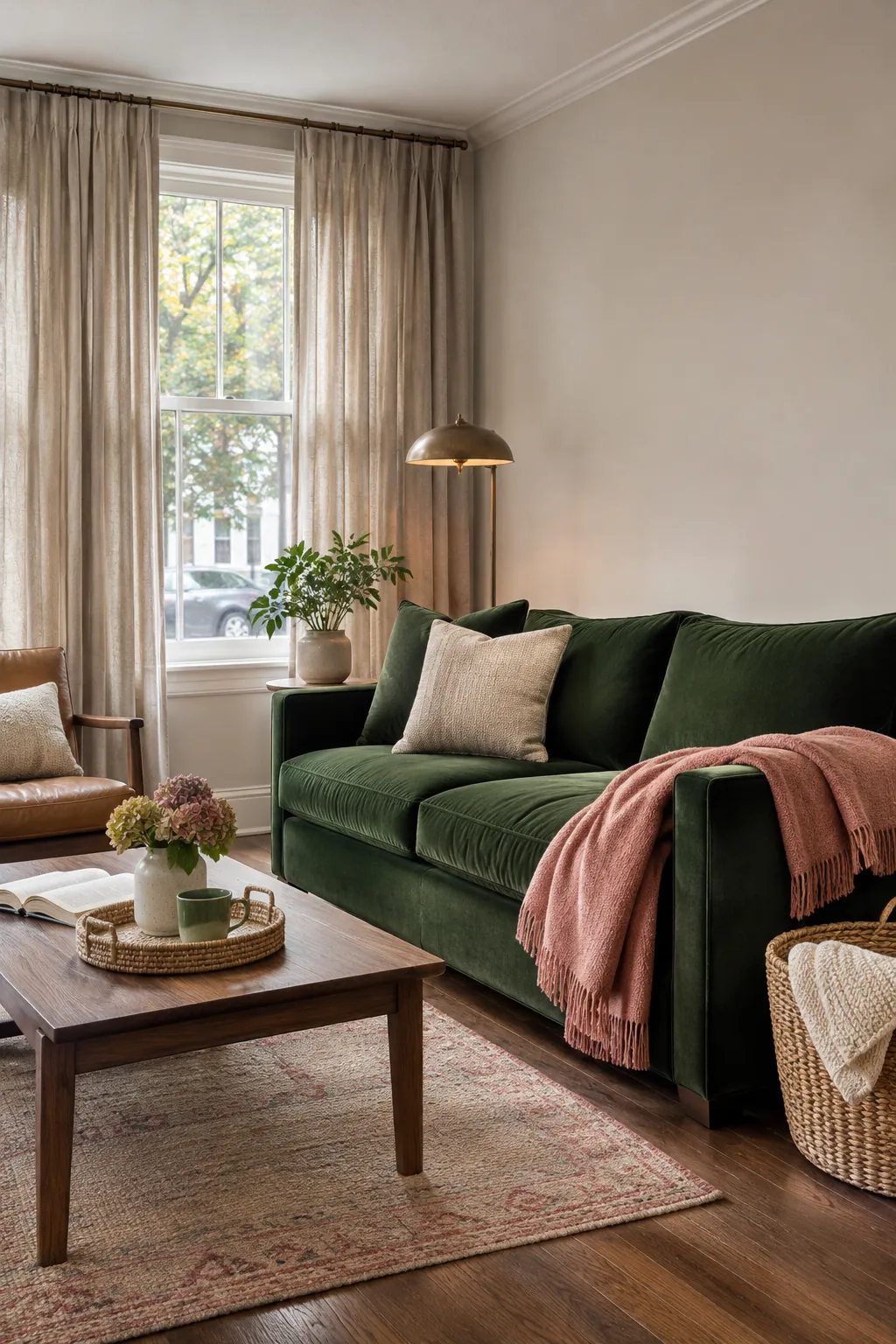
Finish with lighting and useful details
Velvet changes character as light moves across its pile. A room with only one ceiling fixture can make the sofa look flat in one area and harshly shiny in another. Combine ambient light with a floor lamp near the seating area and a smaller lamp on a side table. Warm white bulbs help emerald and forest tones feel comfortable in the evening.
Add objects that serve the way the room is used. A broad tray controls remotes on the coffee table, a basket holds throws, and a side table gives each seat a place for a drink. Books, ceramics, and one living plant can add personality, but leave visible empty space around them.
Before buying more decor, photograph the room from the entrance. The image makes repeated colors, crowded corners, and weak lighting easier to notice. Adjust one area at a time. The finished room should support conversation and daily routines, while the sofa remains the clear focal point.