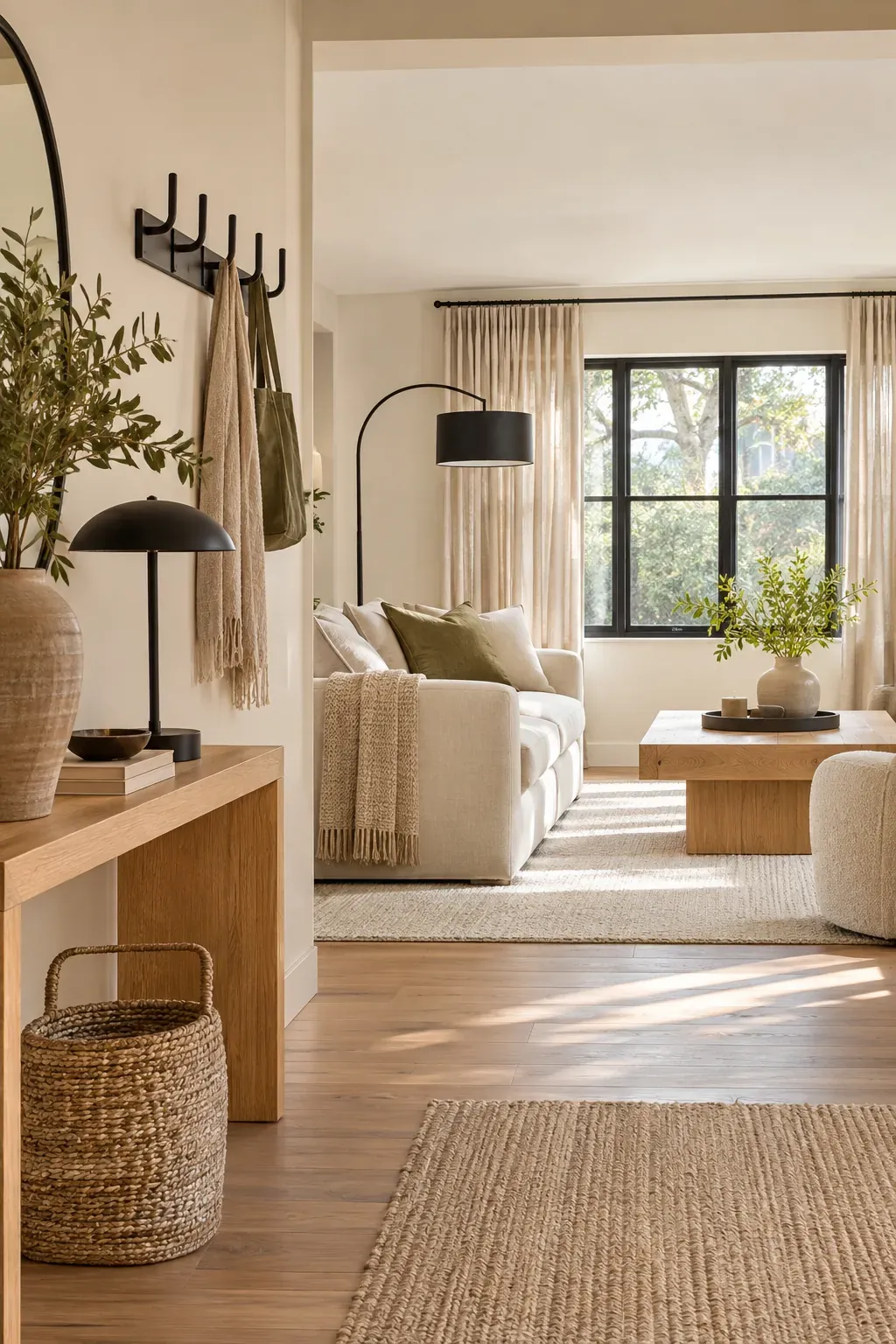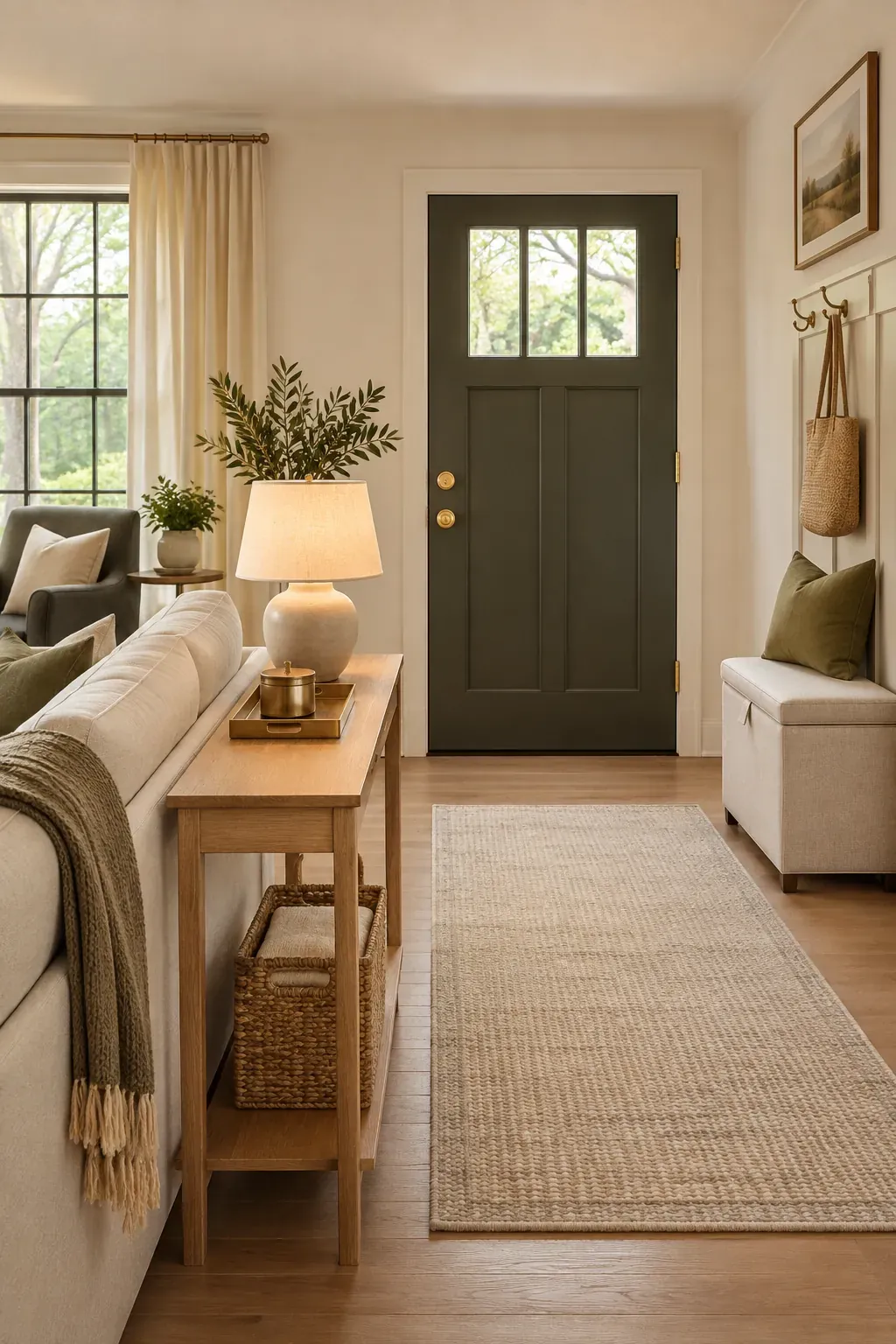
A front door that opens directly into the living room can make arrivals feel exposed and leave shoes, bags, and coats without a natural home. The solution is to create a small sequence rather than build a full foyer. A landing surface, a protected path, and one clear visual boundary can make the entrance feel intentional.
Float a Console Behind the Sofa
A slim console can mark the entry edge when the sofa sits near the door. Keep it no deeper than the available passage and leave enough room for the door to open fully. Use the top for a small tray and lamp rather than general living room clutter.
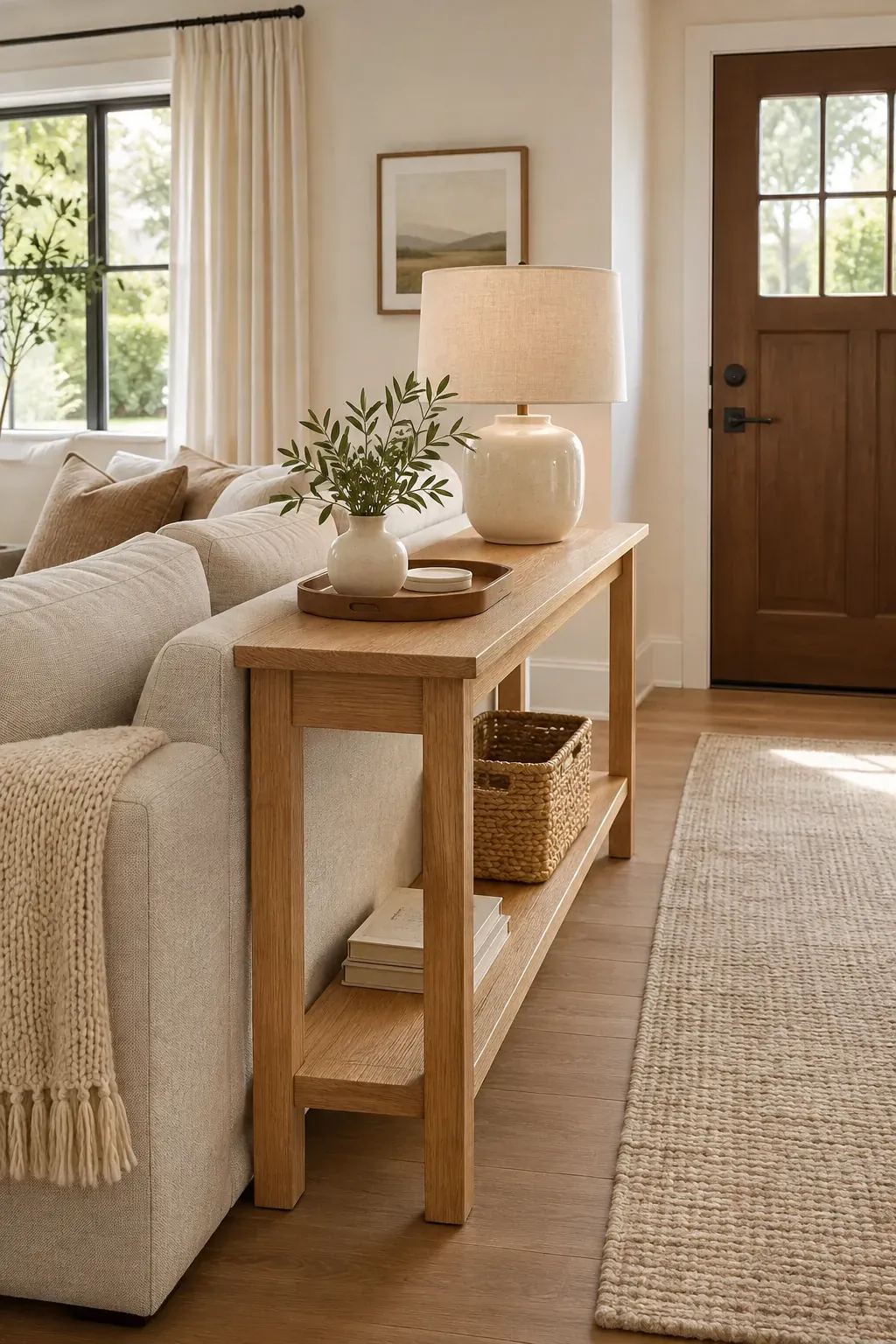
Turn the Sofa to Form a Boundary
Place the sofa back toward the entrance so it behaves like a low wall. The seating should still face the room’s main focal point and preserve a comfortable route from the door. A narrow table behind it can finish the edge without adding height.
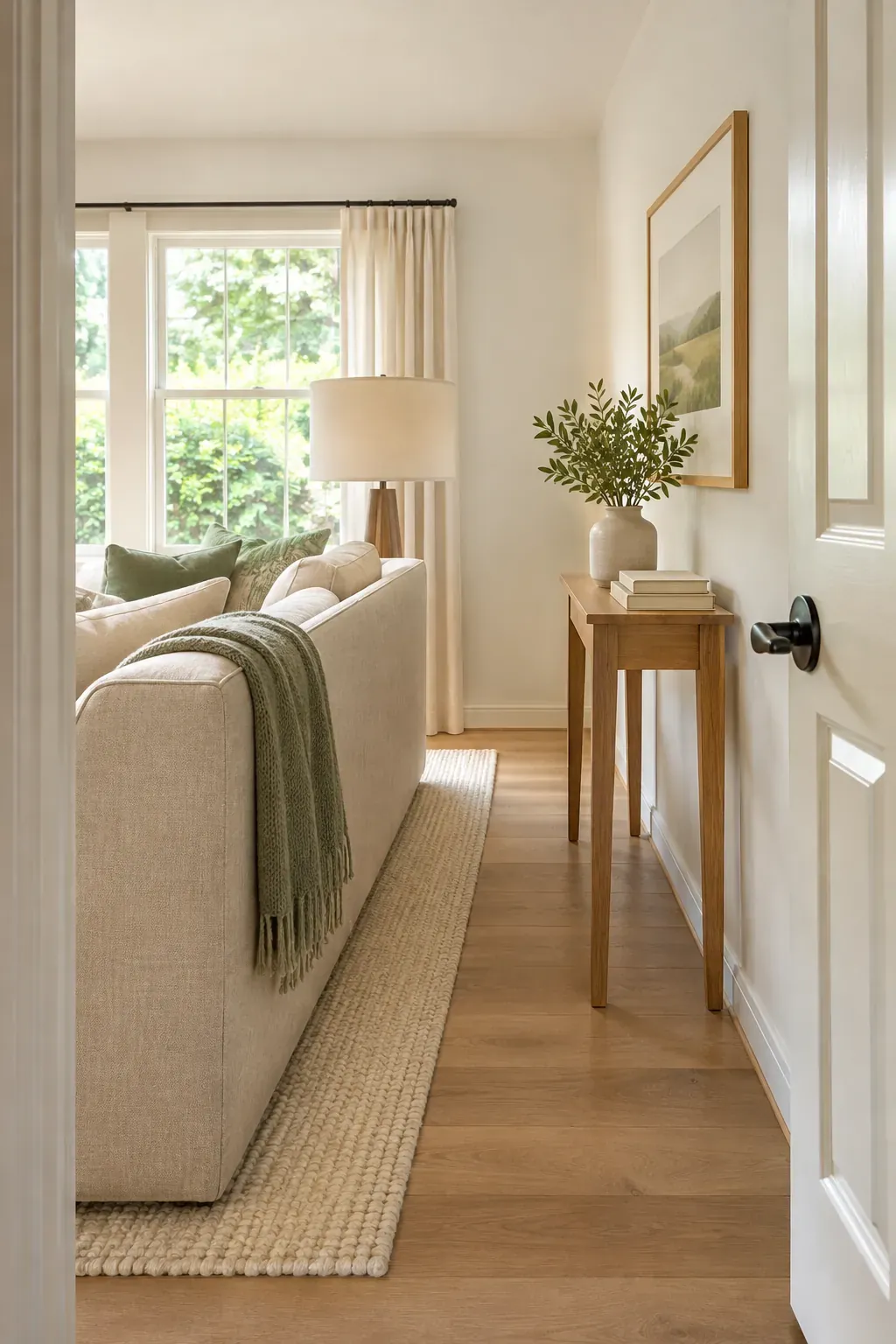
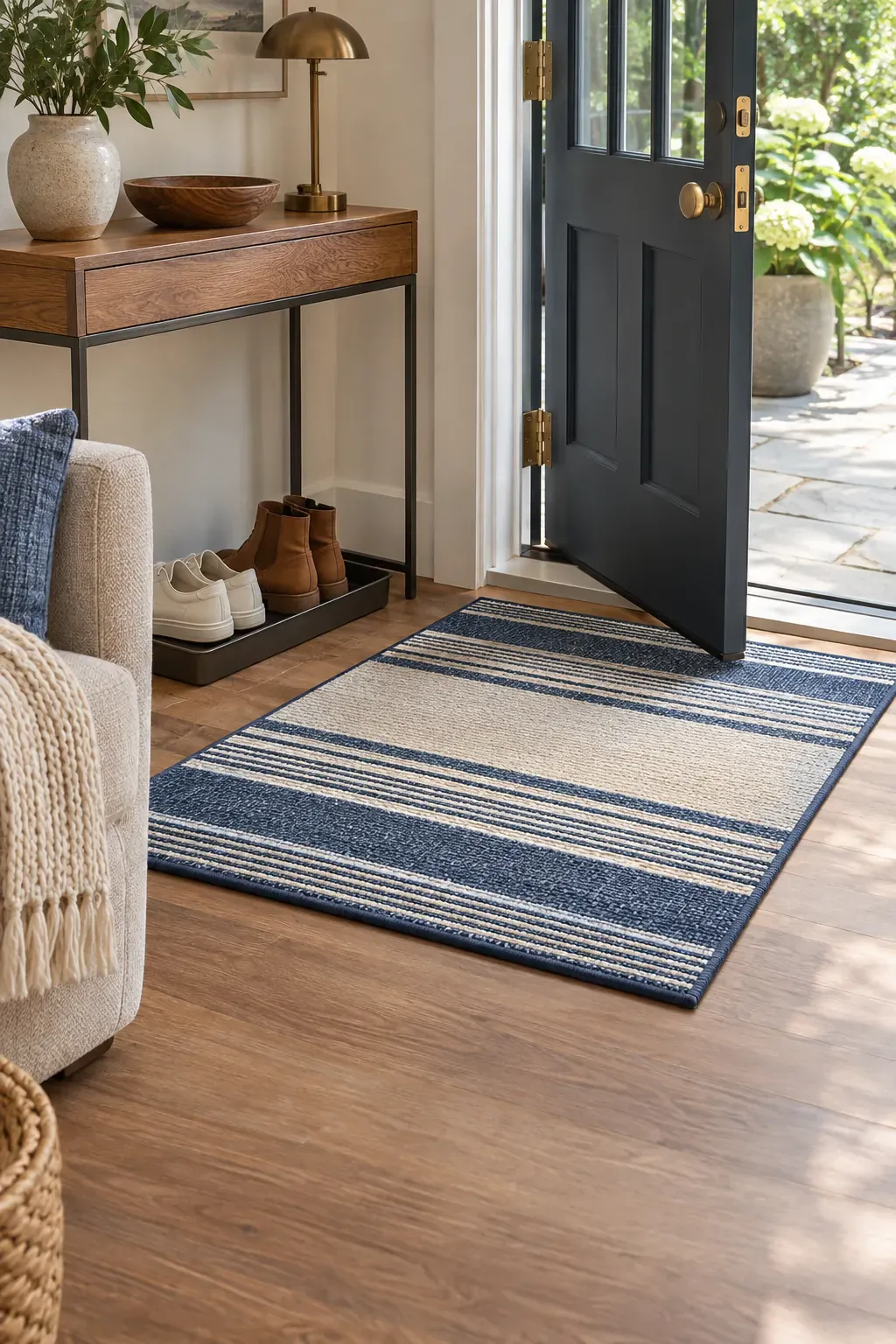
Place a Washable Rug at the Door
A flat washable rug catches dirt and gives the entrance a visible footprint. Choose a size that clears the door swing and does not curl under foot. A proper nonslip pad keeps the rug stable on smooth flooring.
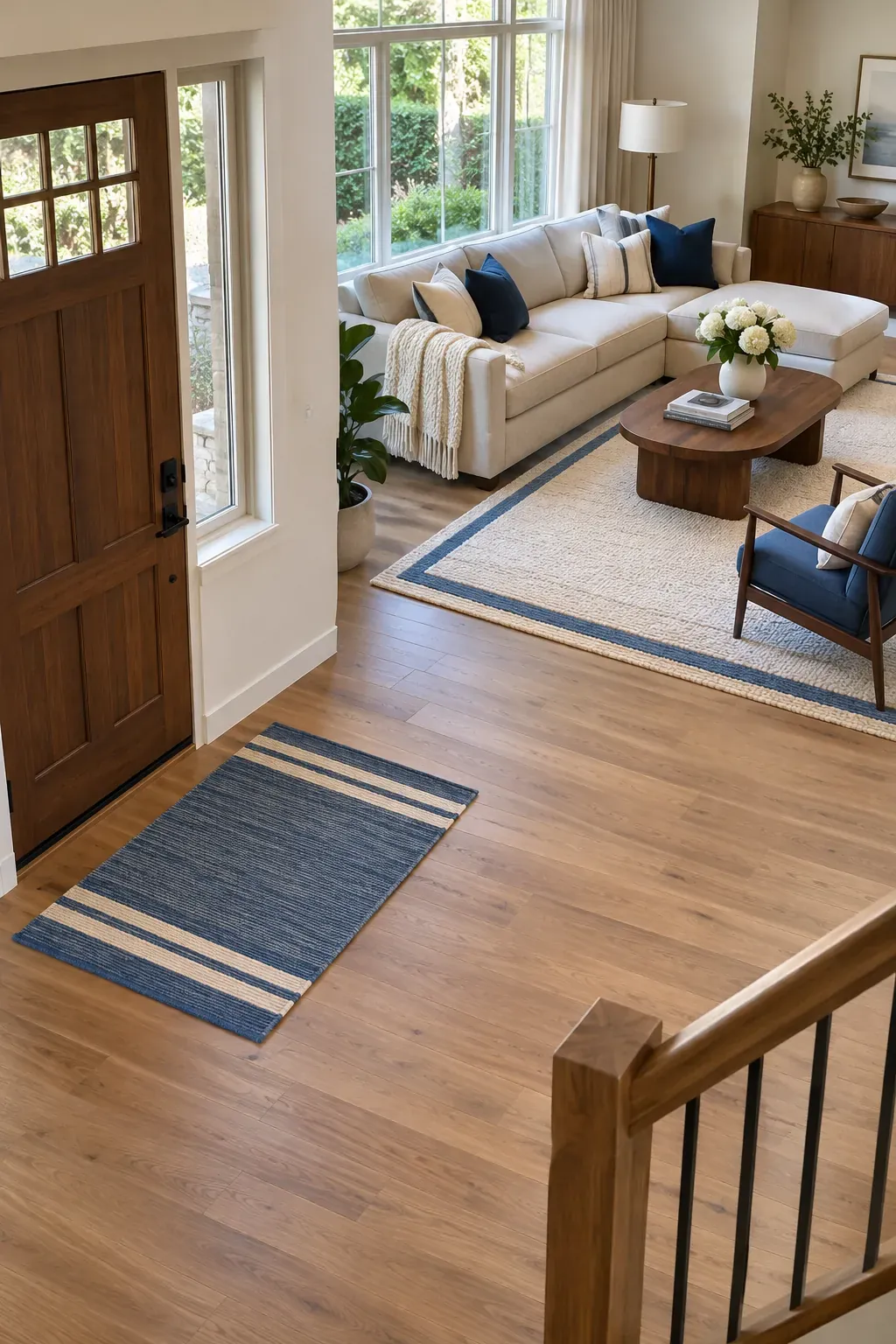
Use a Different Rug for the Seating Area
Separate rugs help the entrance and conversation area read as different zones. Leave a visible strip of flooring between them so the layout does not look like one broken carpet. Relate the colors without matching the patterns exactly.
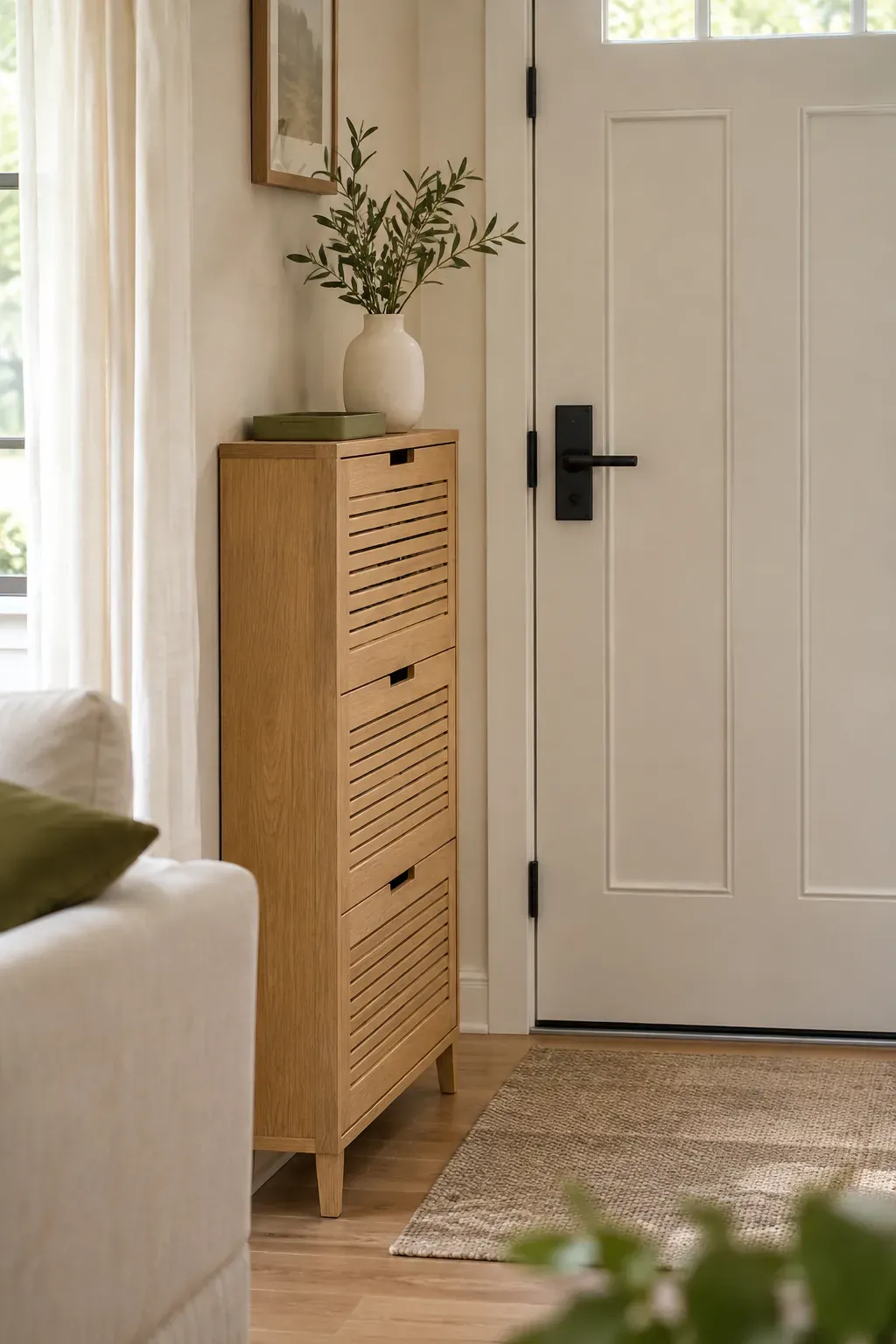
Add a Narrow Shoe Cabinet
A shallow closed cabinet keeps footwear near the door without displaying it from the sofa. Measure the open door and the walking route before choosing the cabinet. Ventilated fronts and a washable tray make daily use easier.
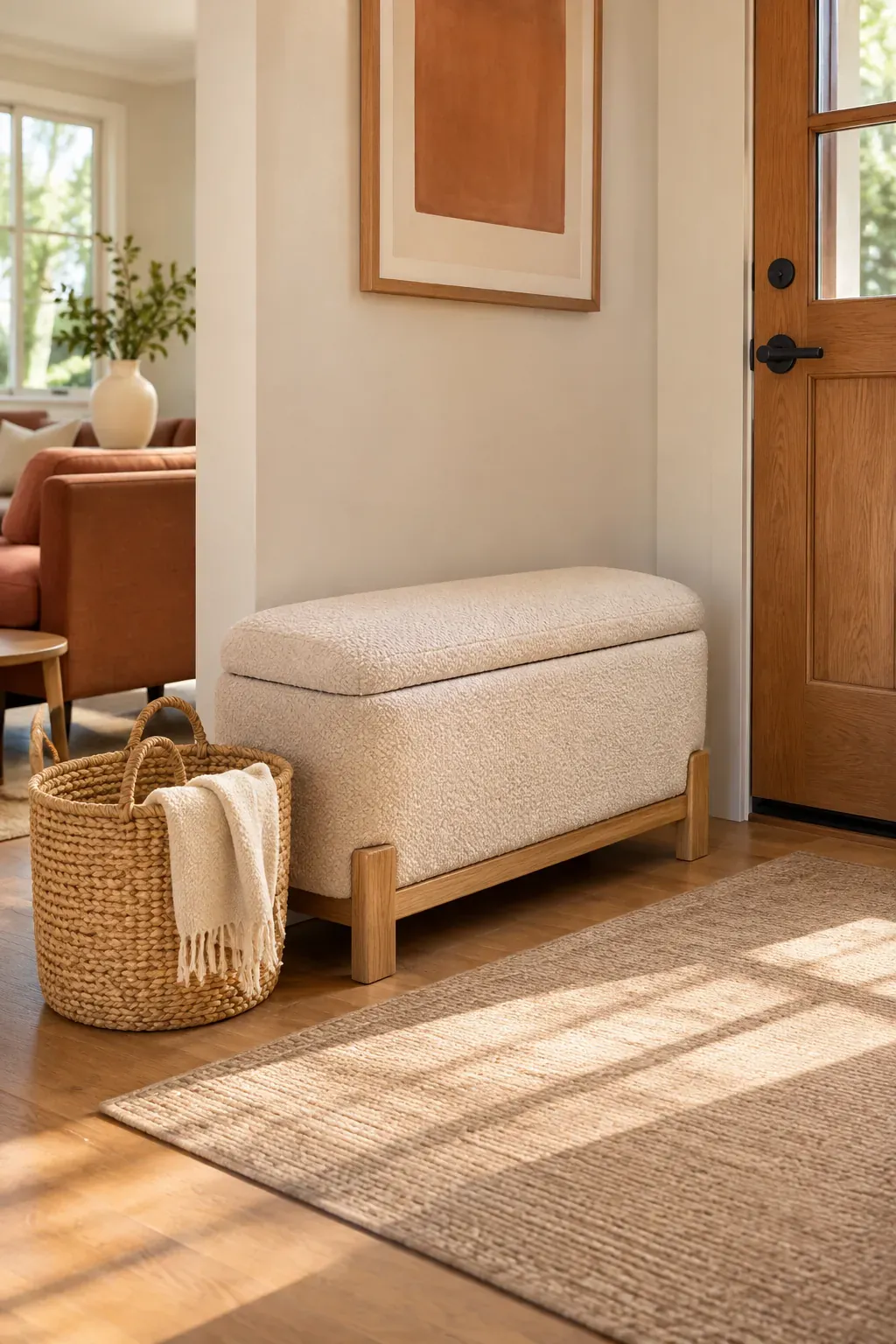
Choose a Bench With Hidden Storage
A compact bench provides a stable place to remove shoes. Hidden storage can hold bags, scarves, or pet supplies that would otherwise drift into the room. Keep the seat clear so the furniture remains useful instead of becoming a drop pile.
Install Hooks Within the Entry Zone
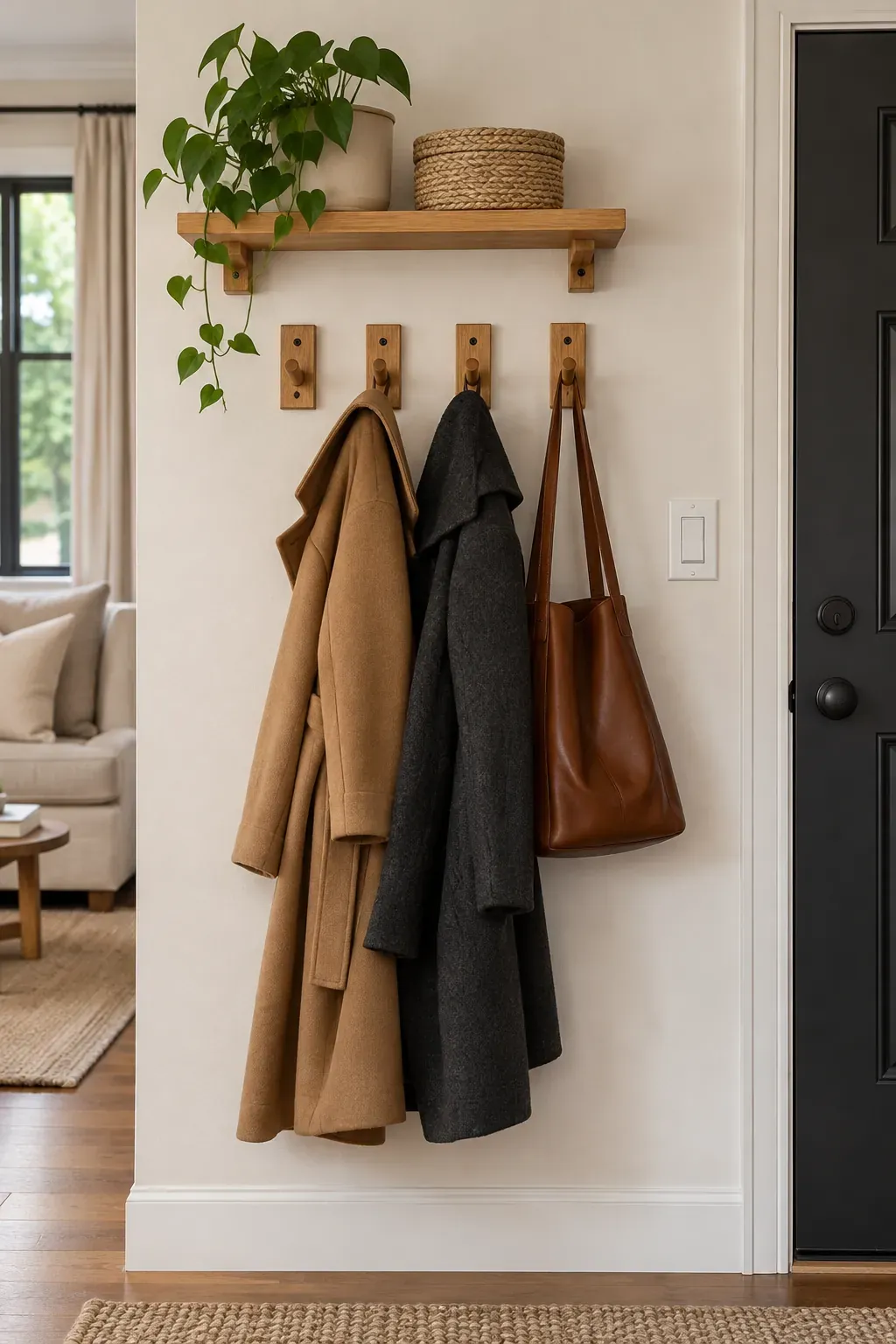
Hooks keep coats and bags close to the threshold, but they need breathing room to avoid a crowded wall. Assign one or two hooks per person and move seasonal items elsewhere. Mount them where hanging pieces will not strike the door or cover a switch.
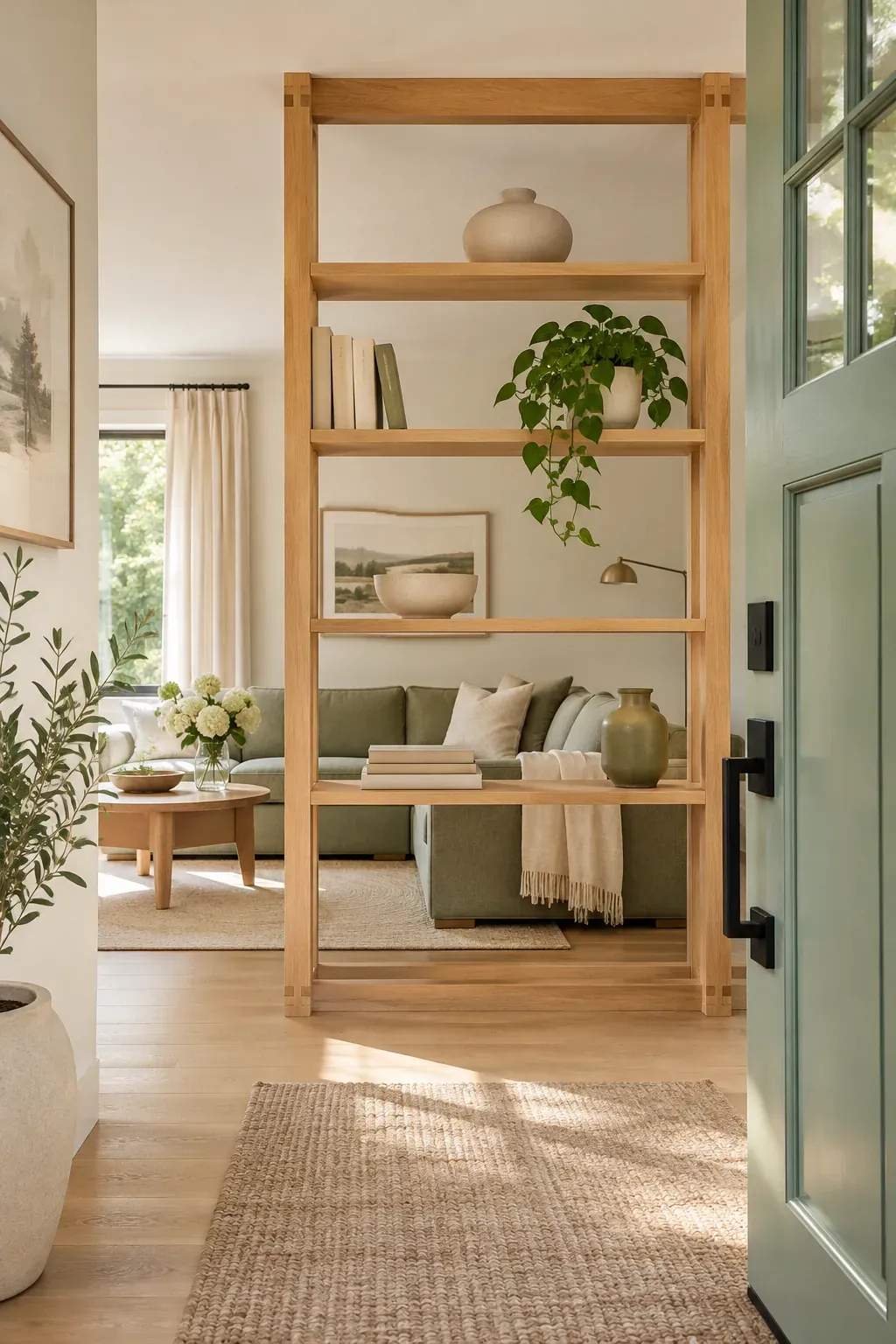
Screen the Door With Open Shelves
An open shelf can reduce the direct sightline from the door to the sofa while sharing daylight. Use a stable unit with more empty space than objects so it does not become a visual wall. Anchor tall furniture according to the manufacturer’s instructions.
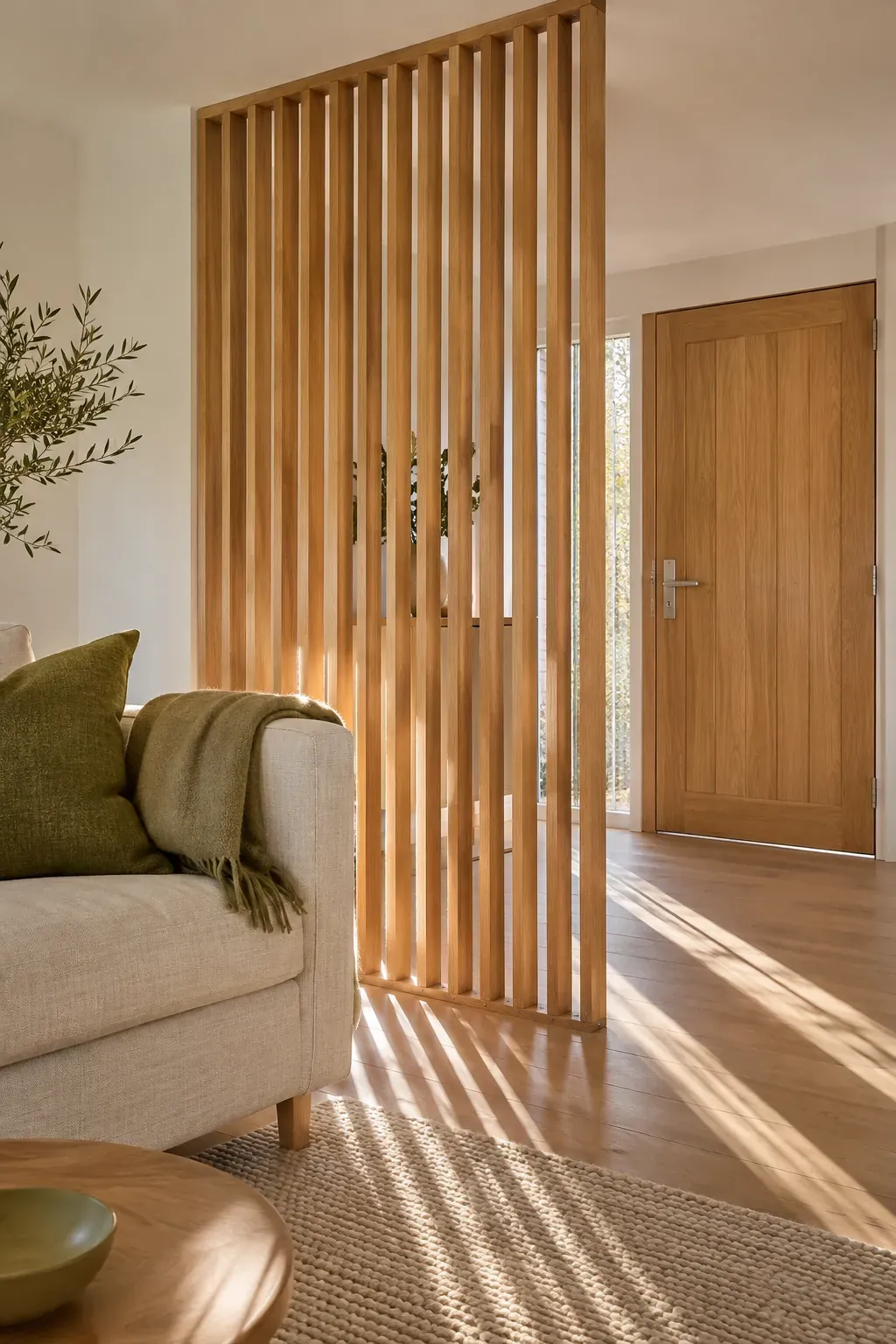
Try a Light Slatted Divider
Vertical slats create a stronger boundary without closing the entrance. Keep the divider outside the door swing and preserve the widest natural walking line. Match its wood tone to one existing piece so it belongs in the room.
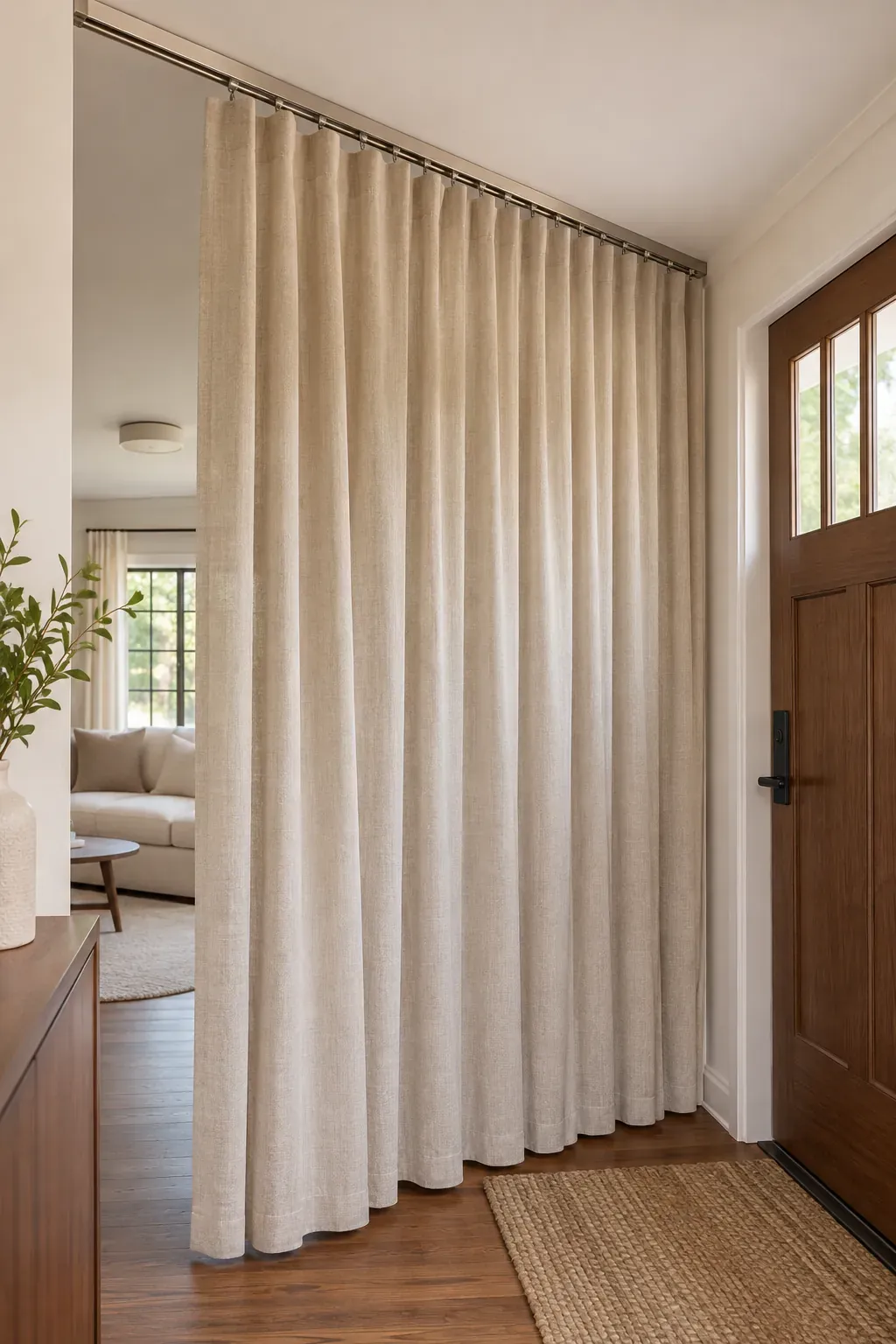
Hang a Curtain for Flexible Privacy
A ceiling mounted curtain can soften the entrance when privacy matters and disappear when it does not. Choose a full length fabric with enough weight to hang cleanly. Position it so the panel cannot catch in the door or trail across the main route.
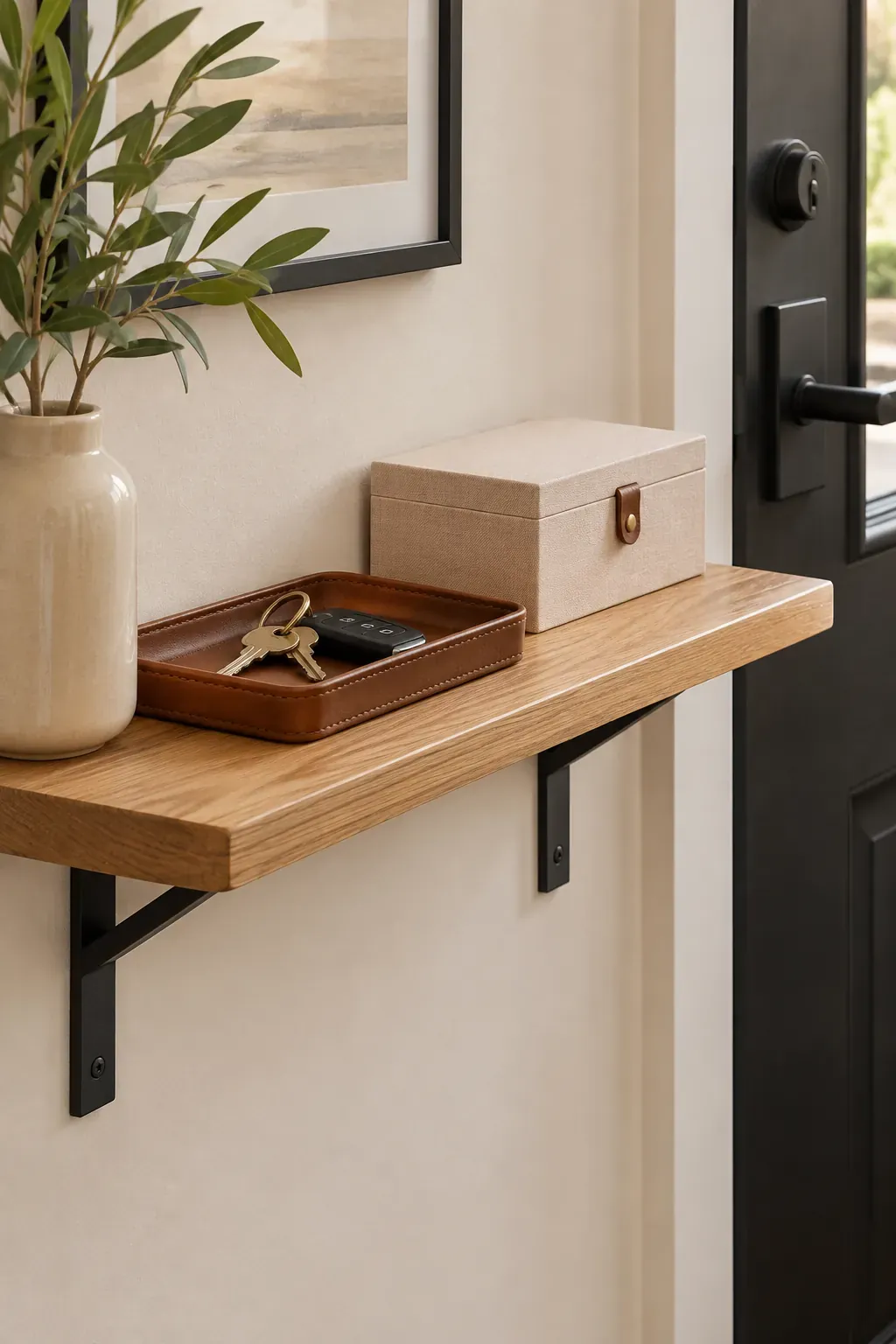
Create a Drop Zone With a Wall Shelf
A shallow shelf gives keys and mail a defined stop without consuming floor space. Add one small tray and a closed box rather than many organizers. Keep the surface narrow enough that nobody bumps it while entering with bags.
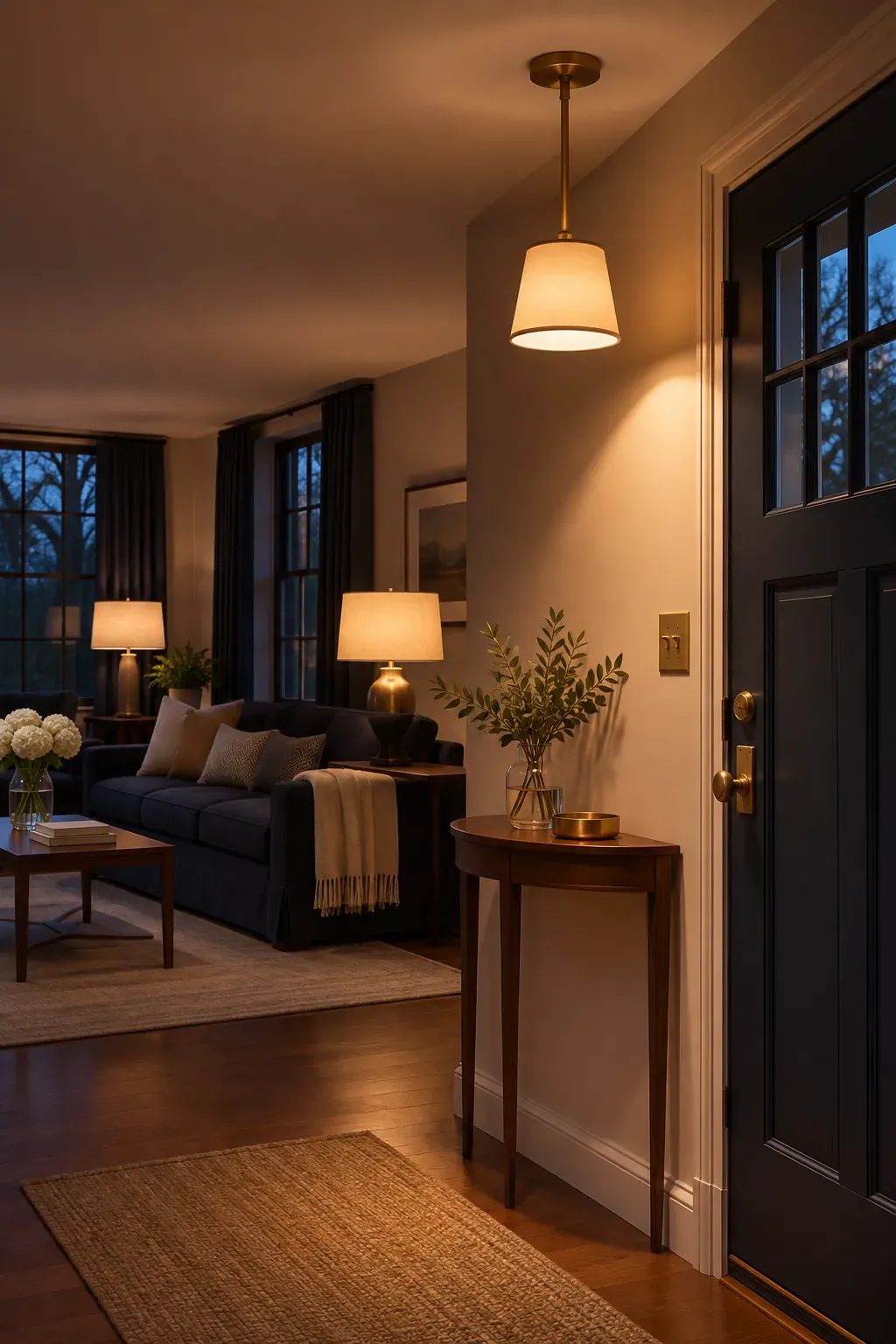
Use Lighting to Announce the Entrance
A pendant or wall light can make the entrance feel like its own destination after dark. Select a fixture that does not interfere with the door or tall guests. Pair it with softer living room lamps so each zone has a distinct evening role.
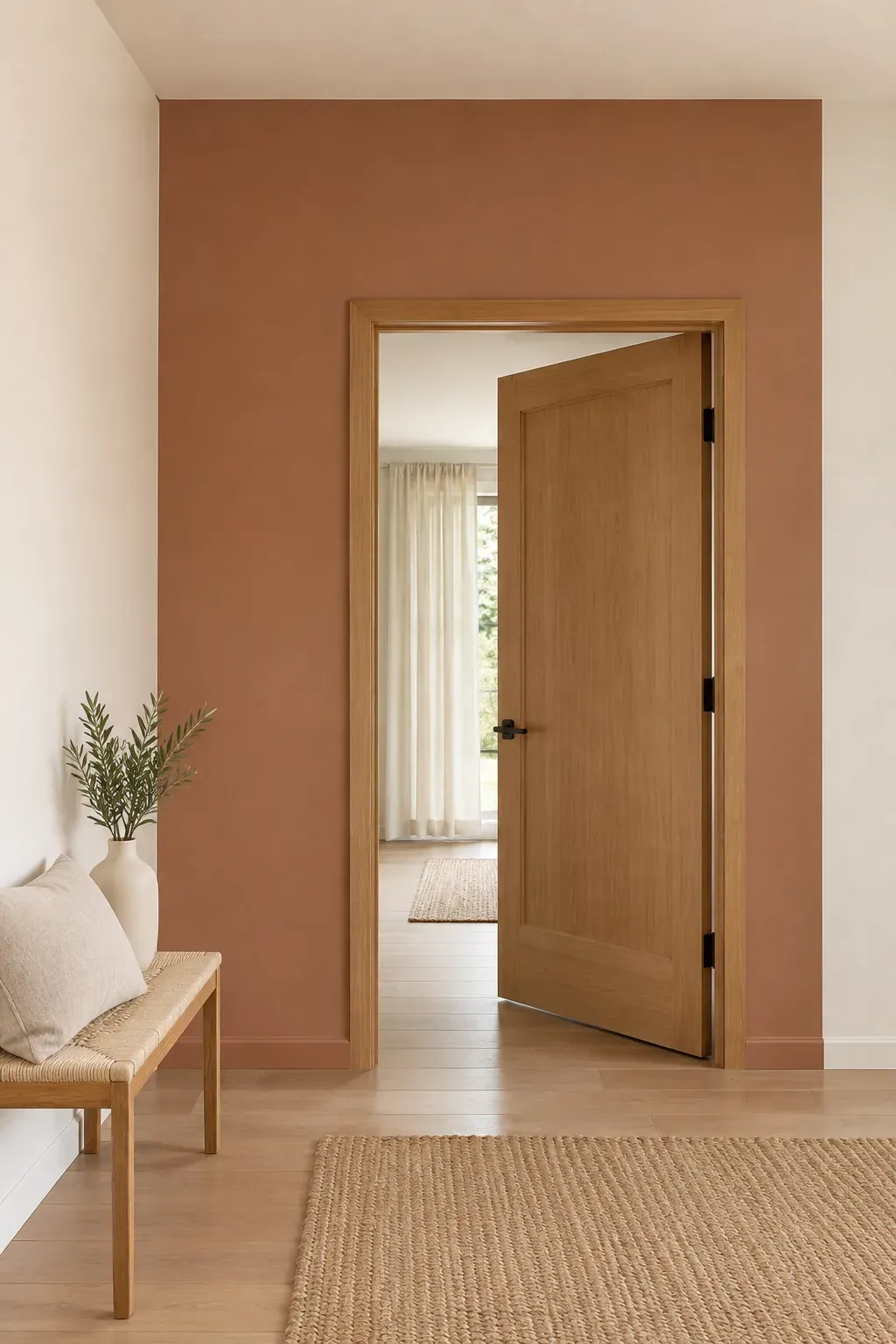
Paint a Small Entry Color Block
A restrained color block can define the door wall without adding furniture. Follow an architectural edge such as a corner or ceiling line so the shape feels deliberate. Repeat the color once in the living room to connect the zones.
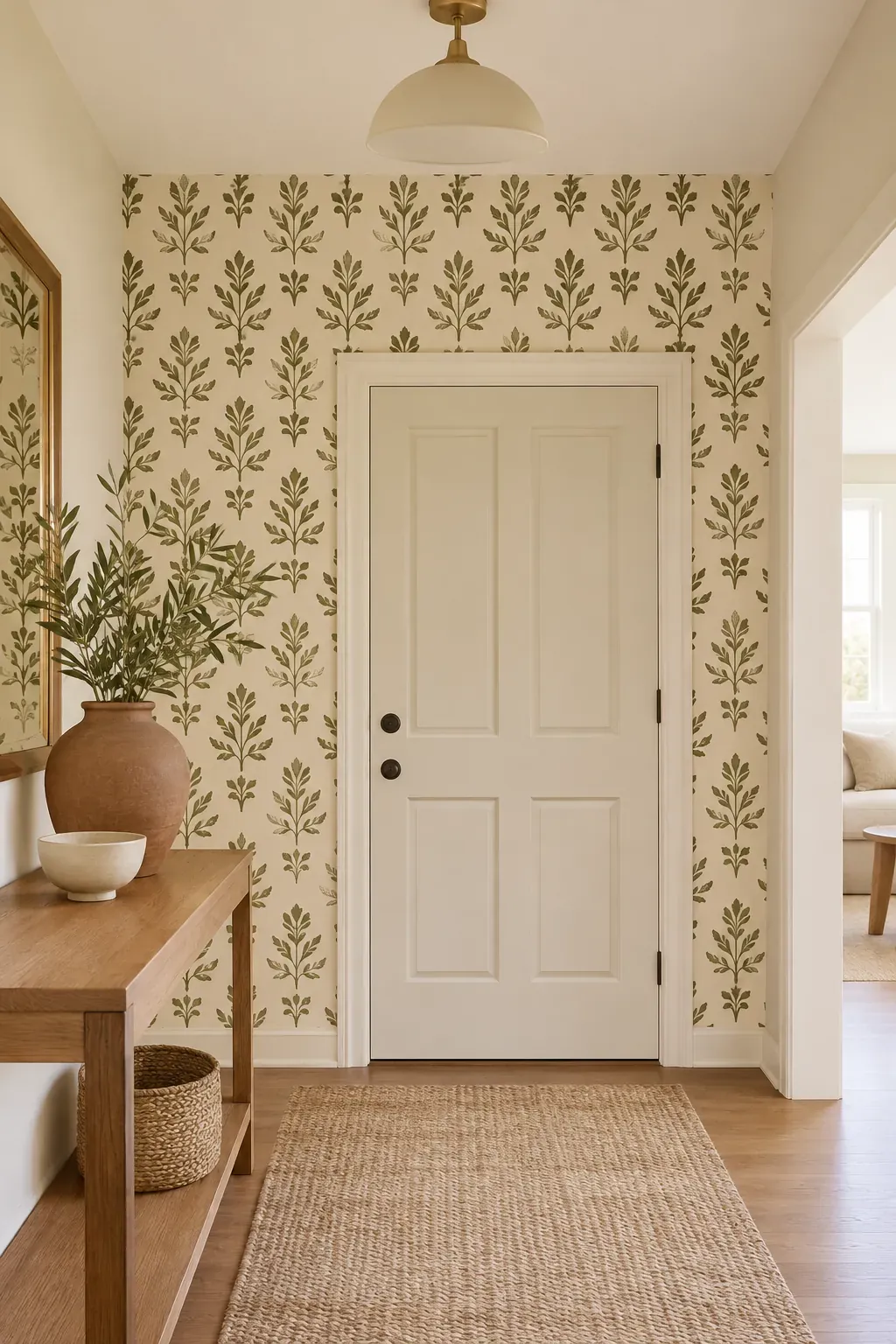
Frame the Door With Wallpaper
A small area of block print wallpaper can give the entrance identity without covering the living room. Choose a pattern with a scale that remains calm beside the main seating. Use removable paper only on a suitable clean surface when the change must be reversible.
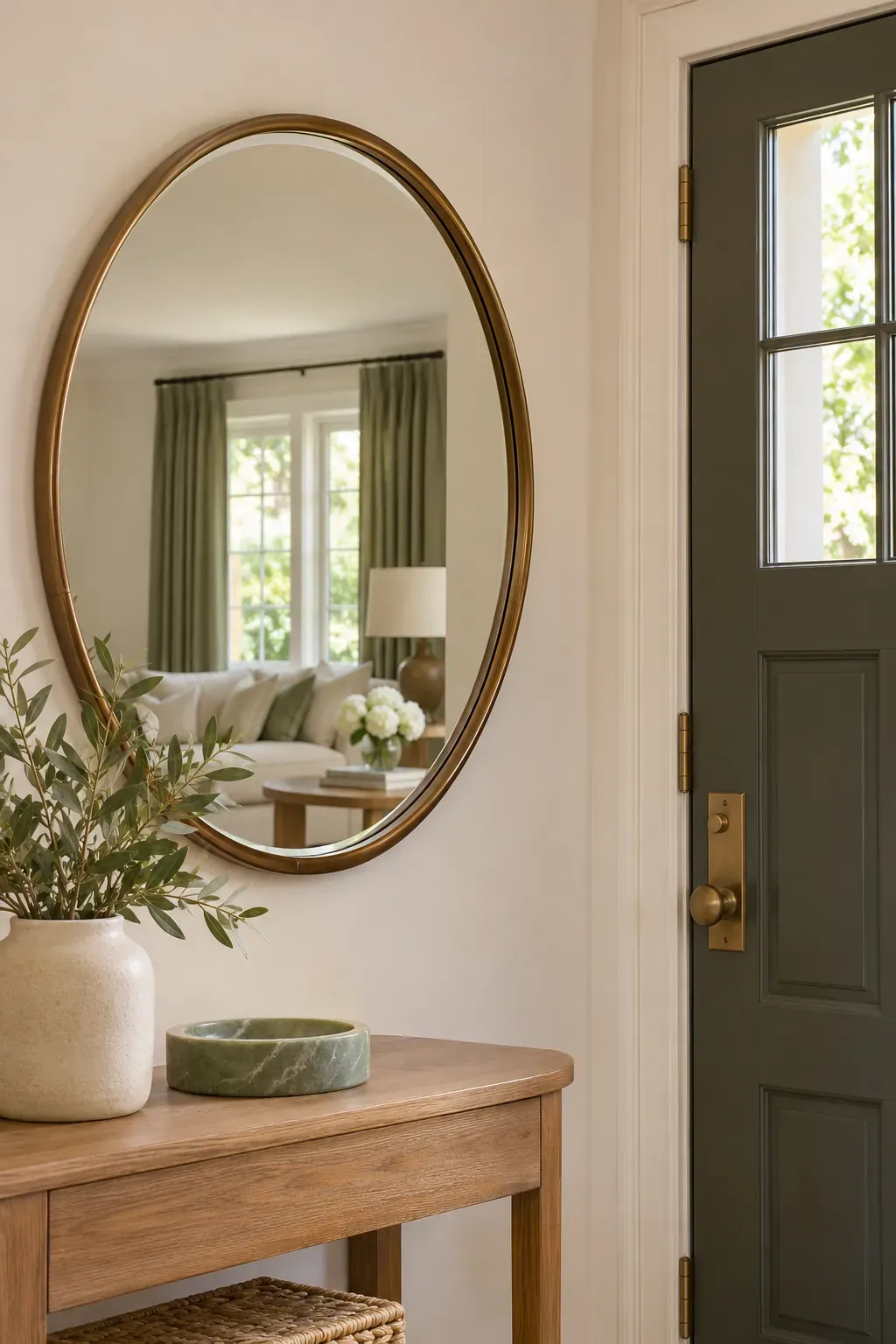
Place a Mirror Beside the Exit
A mirror supports the last check before leaving and bounces light into the threshold. Hang it where the open door will not strike the frame. Angle the room layout so the mirror reflects a calm interior view rather than household clutter.
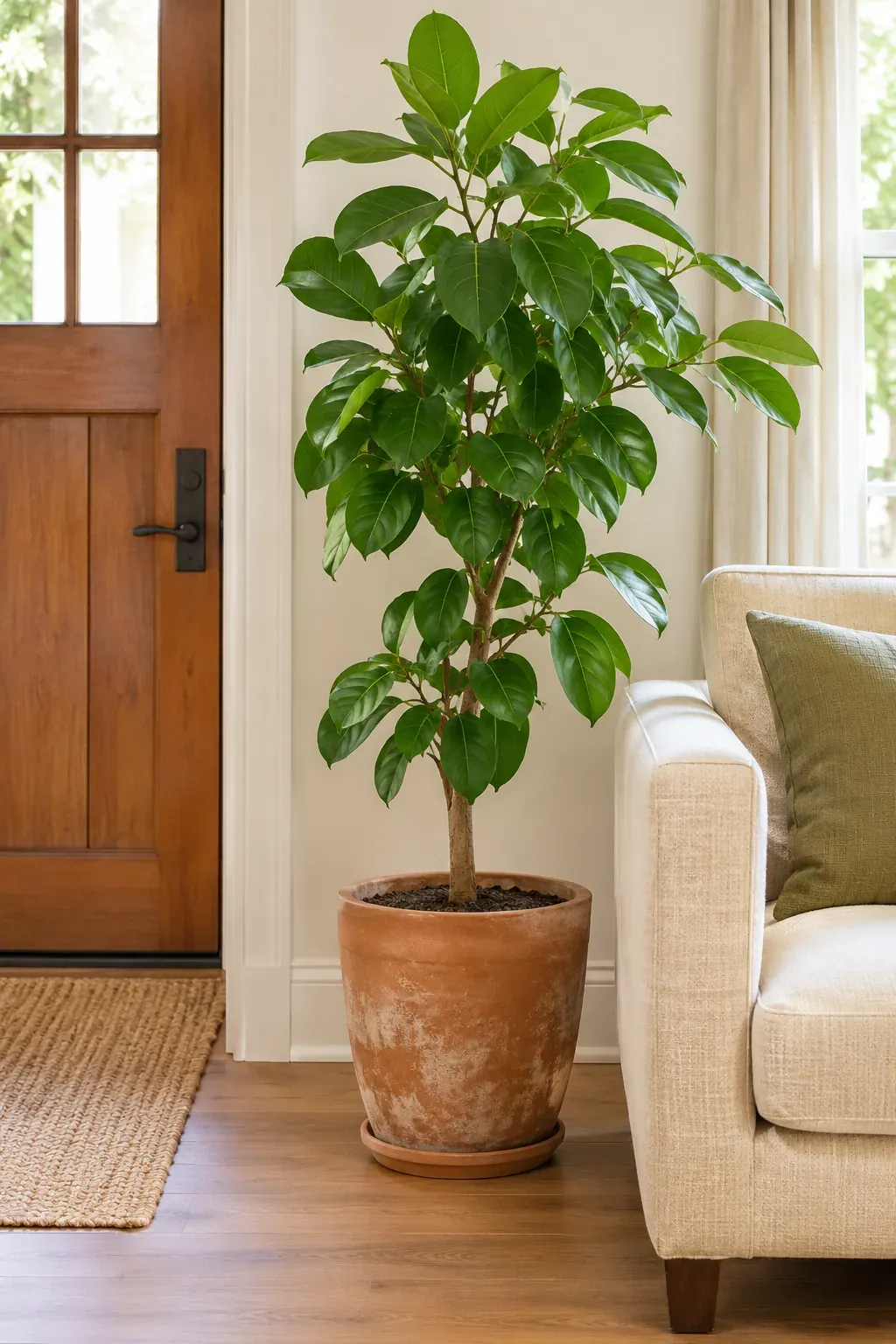
Bring in One Tall Plant
A tall plant can soften the abrupt transition from door to sofa and partially screen the view. Choose a species that suits the actual light and keep the pot clear of the walking route. One healthy plant has more impact than several small pots near the threshold.
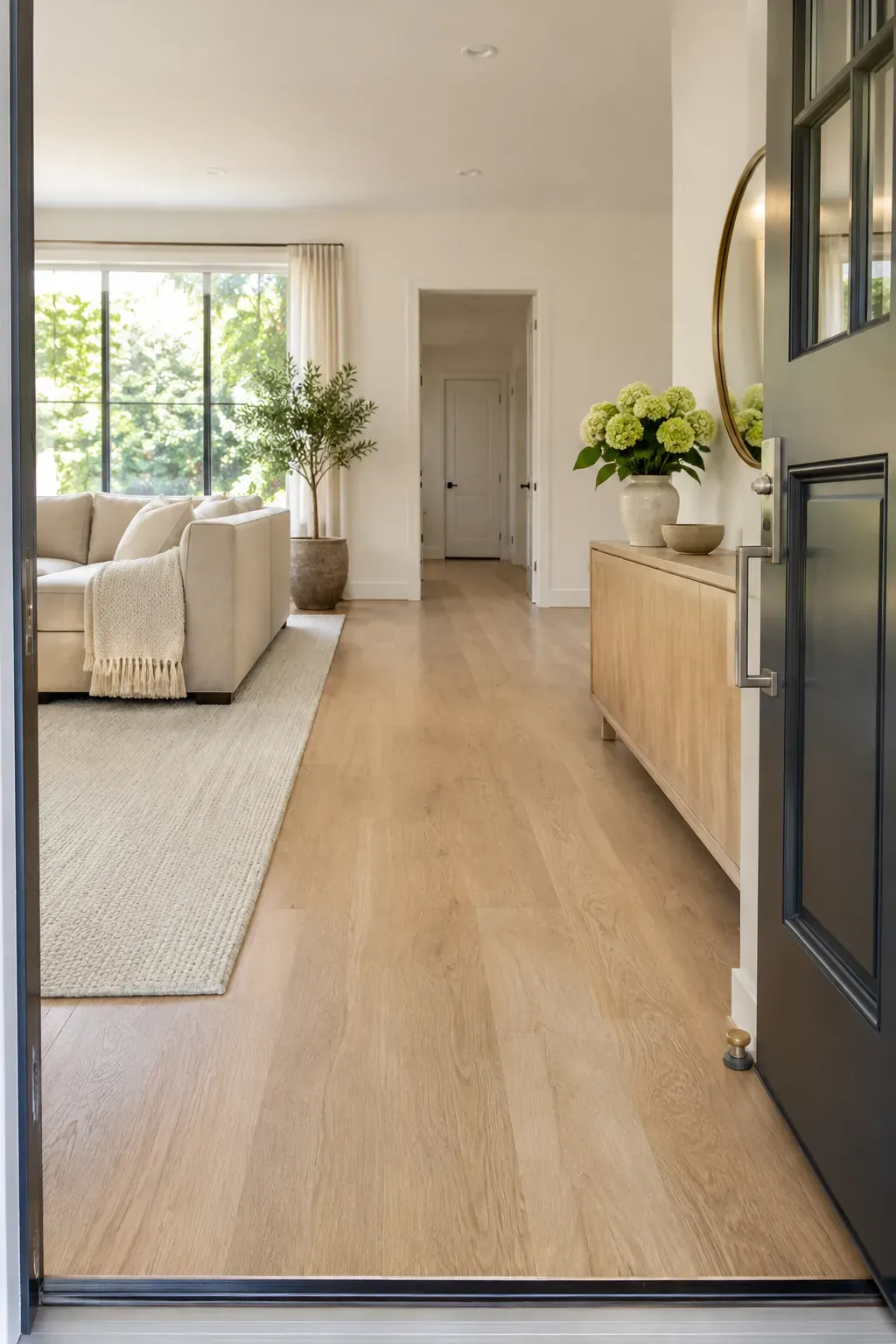
Keep the Arrival Path Completely Clear
The most convincing entry zone still fails if people must weave around furniture. Trace the route from the open door to the main hallway and seating before adding storage. Move decorative pieces out of that line and preserve comfortable turning space for bags or mobility aids.
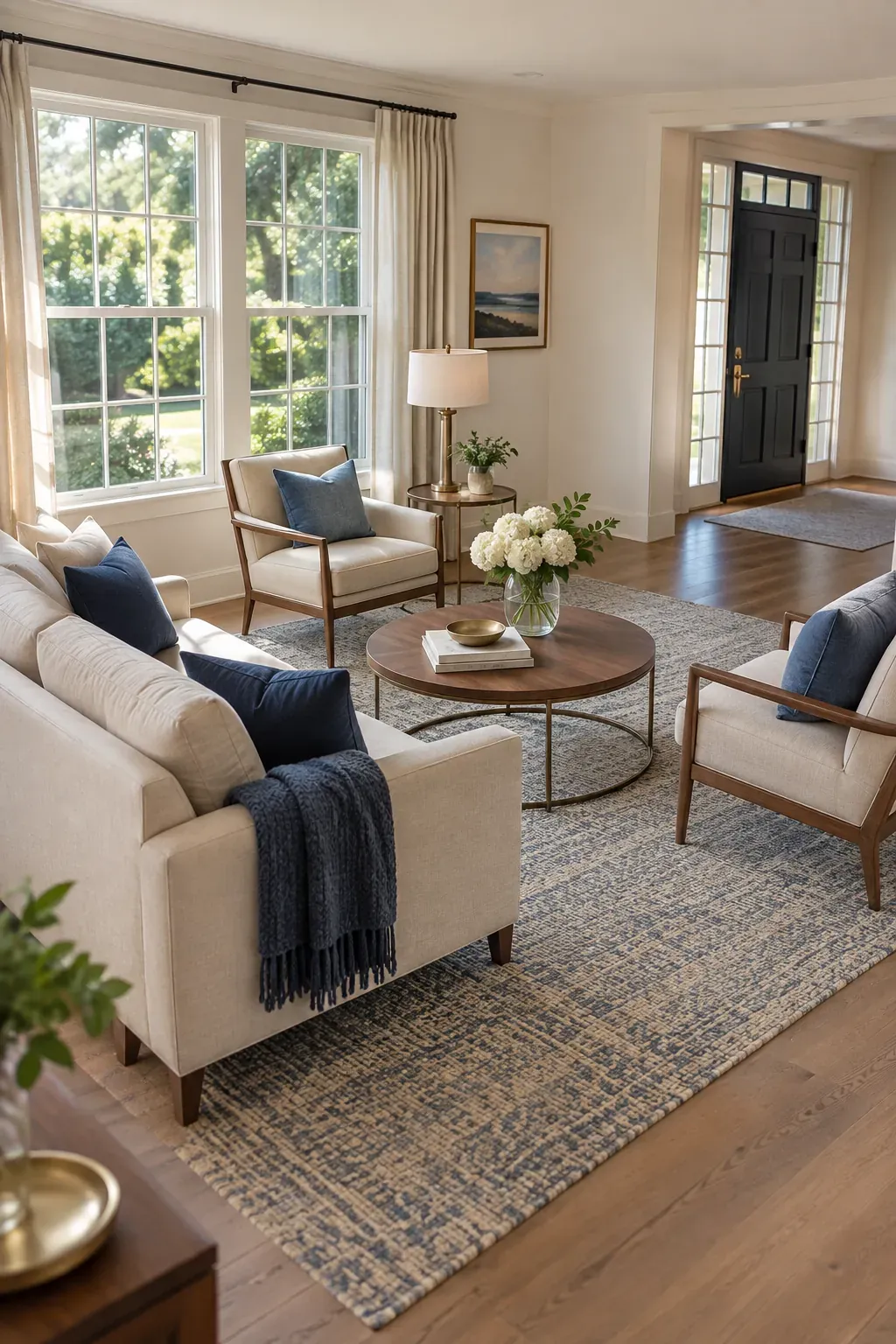
Aim the Seating Away From the Door
A slight shift in chair or sofa angle can stop arriving guests from facing the entire conversation area at once. Keep the furniture connected enough for comfortable talk. The entrance then feels adjacent to the room rather than dropped into its center.
Repeat Materials Across Both Zones
Use one wood tone, metal finish, or textile color in both the entrance and living area. Repetition makes the new zone feel integrated instead of added as an afterthought. Limit the shared material to a few visible points so the room remains relaxed.