
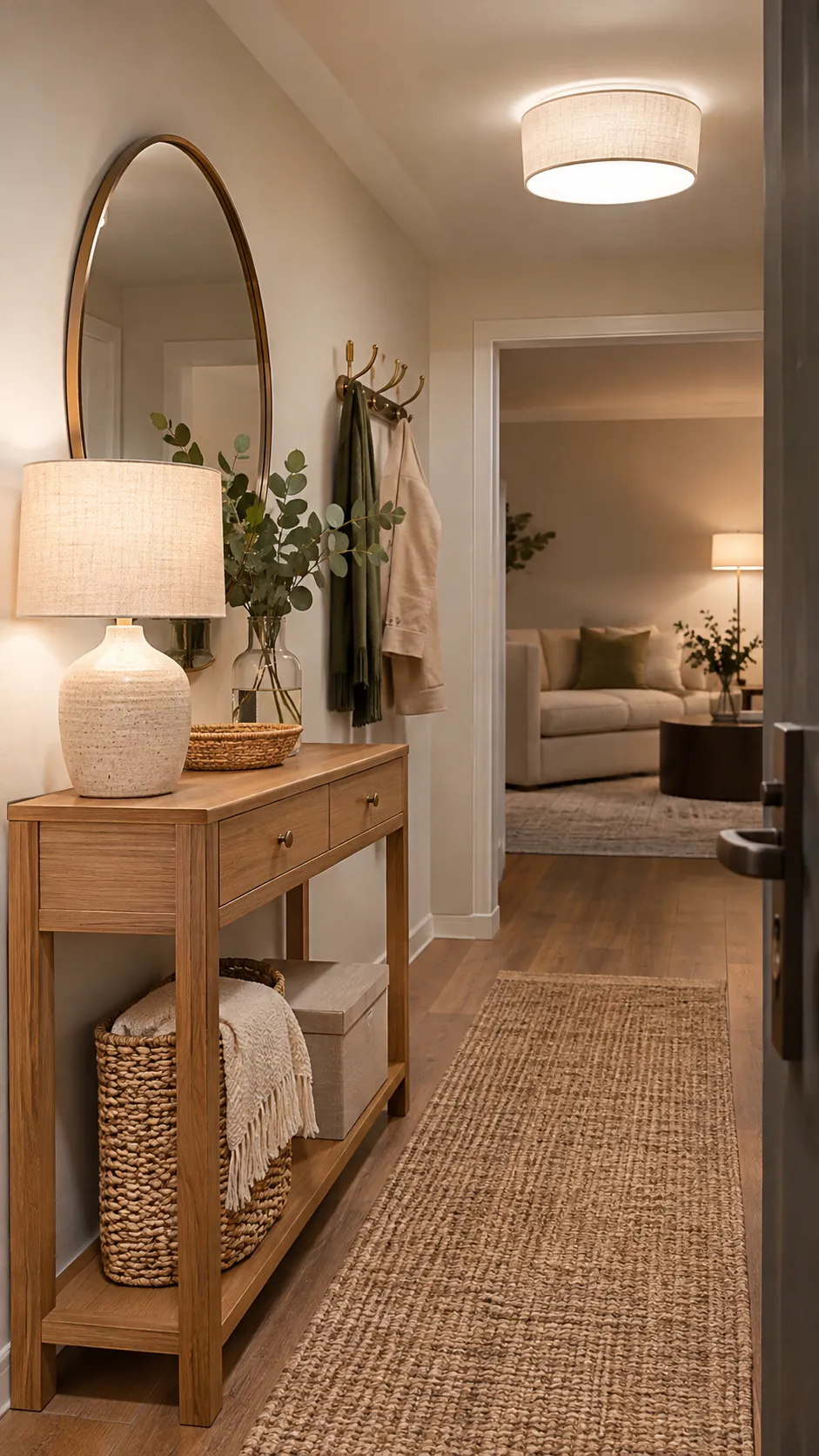
A dark entrance can make the first moments at home feel cramped and flat. The best fix is a balanced mix of useful light, warm surfaces, clear circulation, and a few details that make arrival easier.
Start With Three Layers of Light
A single ceiling bulb creates a bright spot above and heavy shadows around faces, storage, and corners. Use ambient light for safe movement, task light near keys or shoes, and a small accent lamp to soften the room. Put the ambient fixtures on a dimmer so the entrance can feel bright during cleaning and calm during evening arrivals.
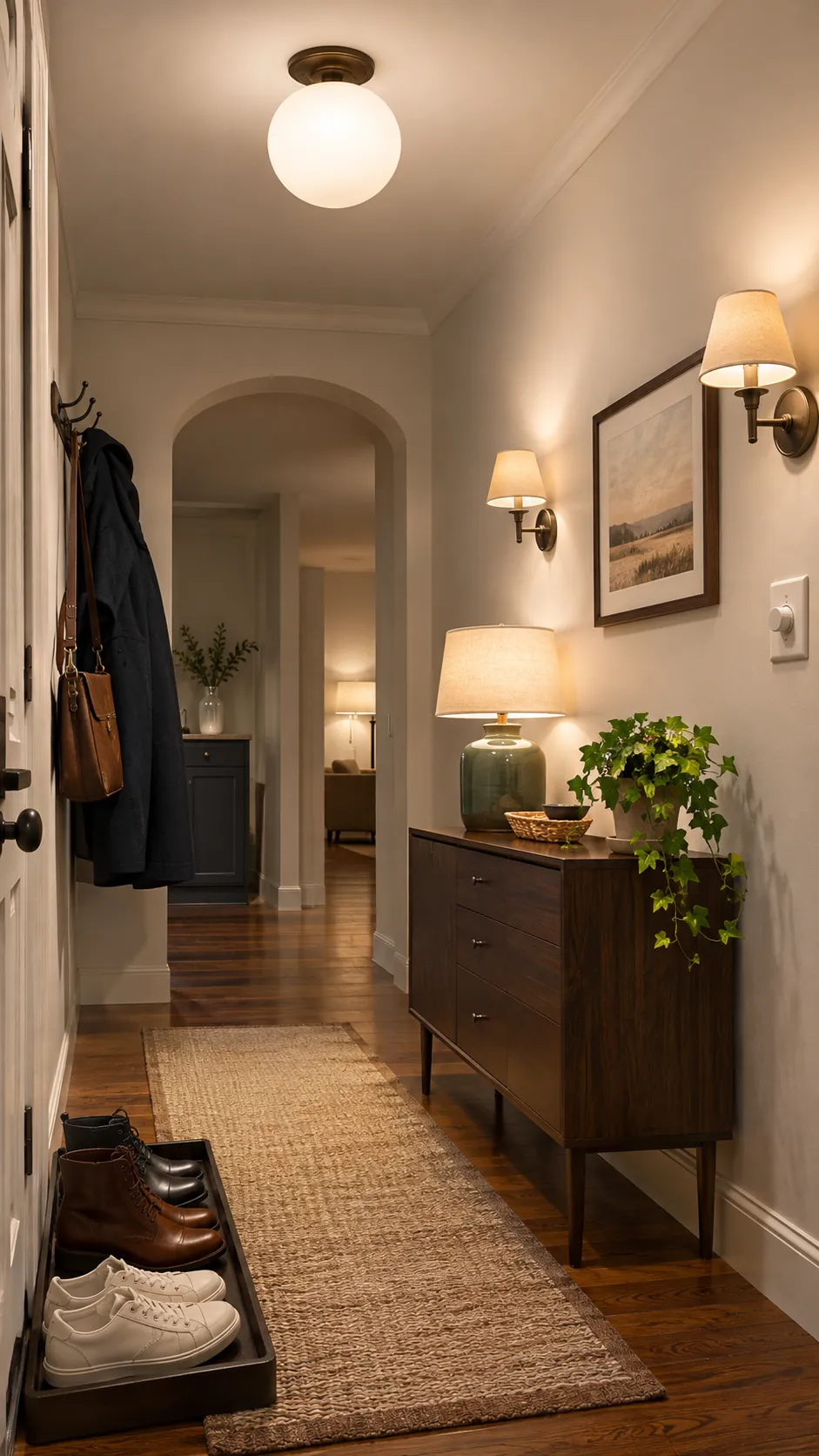
Choose warm white bulbs with strong color rendering and keep their color temperature consistent. A shaded lamp or frosted globe is easier on the eyes than a clear bulb. If wiring changes are not possible, a rechargeable wall light can add the missing middle layer.
Place a Mirror Where It Can Multiply Light
A mirror helps only when it reflects something useful. Place it across from a lamp, a pale wall, or the brighter opening to the next room. Avoid aiming it at a bare bulb, since that creates glare instead of a gentle spread.
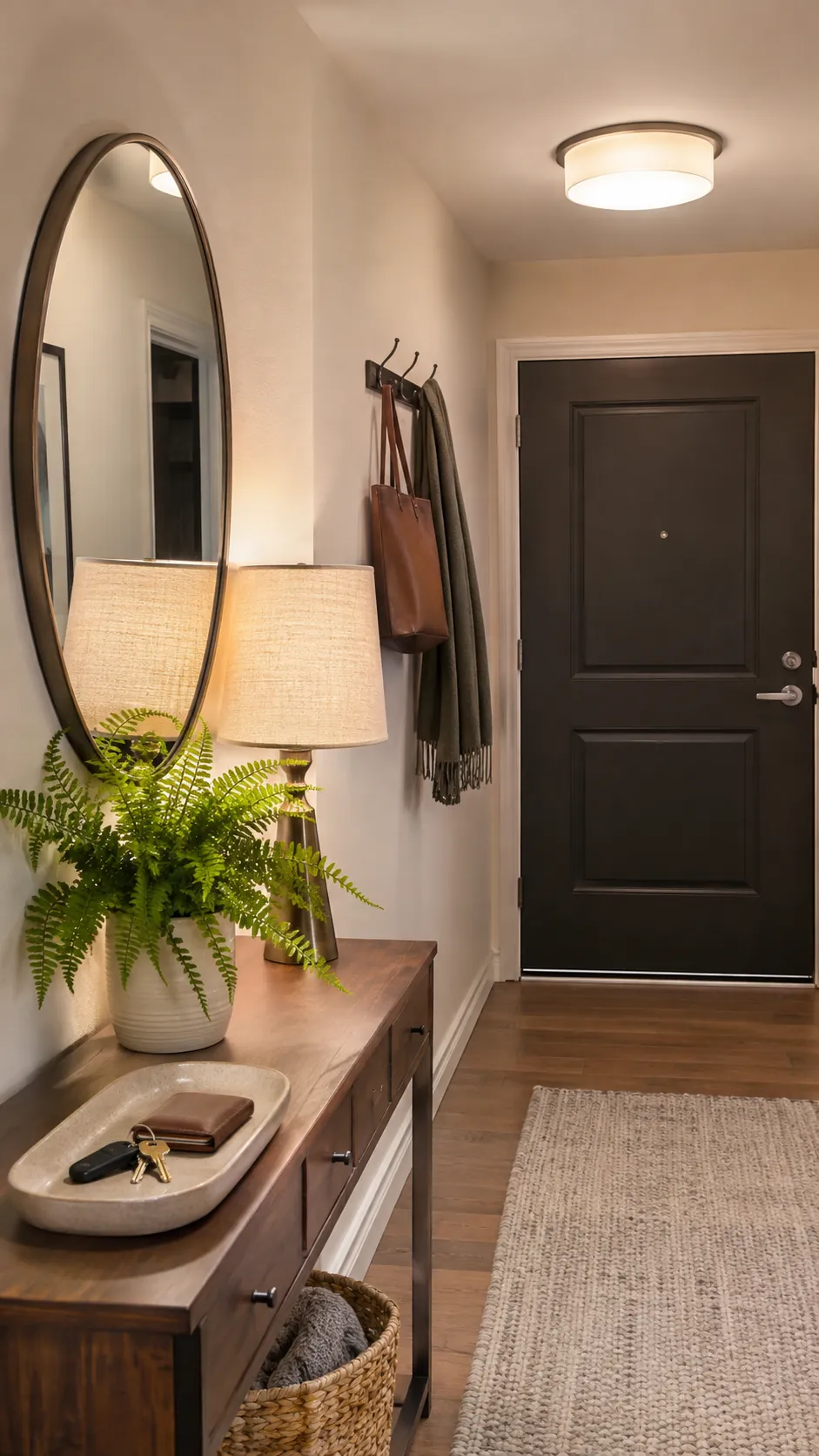
Check the reflection from standing and seated height before mounting it. A rounded shape can soften a narrow hall full of rectangular doors. Keep it clear of hooks, cabinet doors, and the front door swing.
Test Warm Paint in the Actual Room
Paint behaves differently without daylight, so a popular white can turn gray, green, or yellow under your fixtures. Test large samples on different walls and view them throughout the day. Warm putty, soft mushroom, pale clay, and creamy off white often feel more settled than cold blue white.
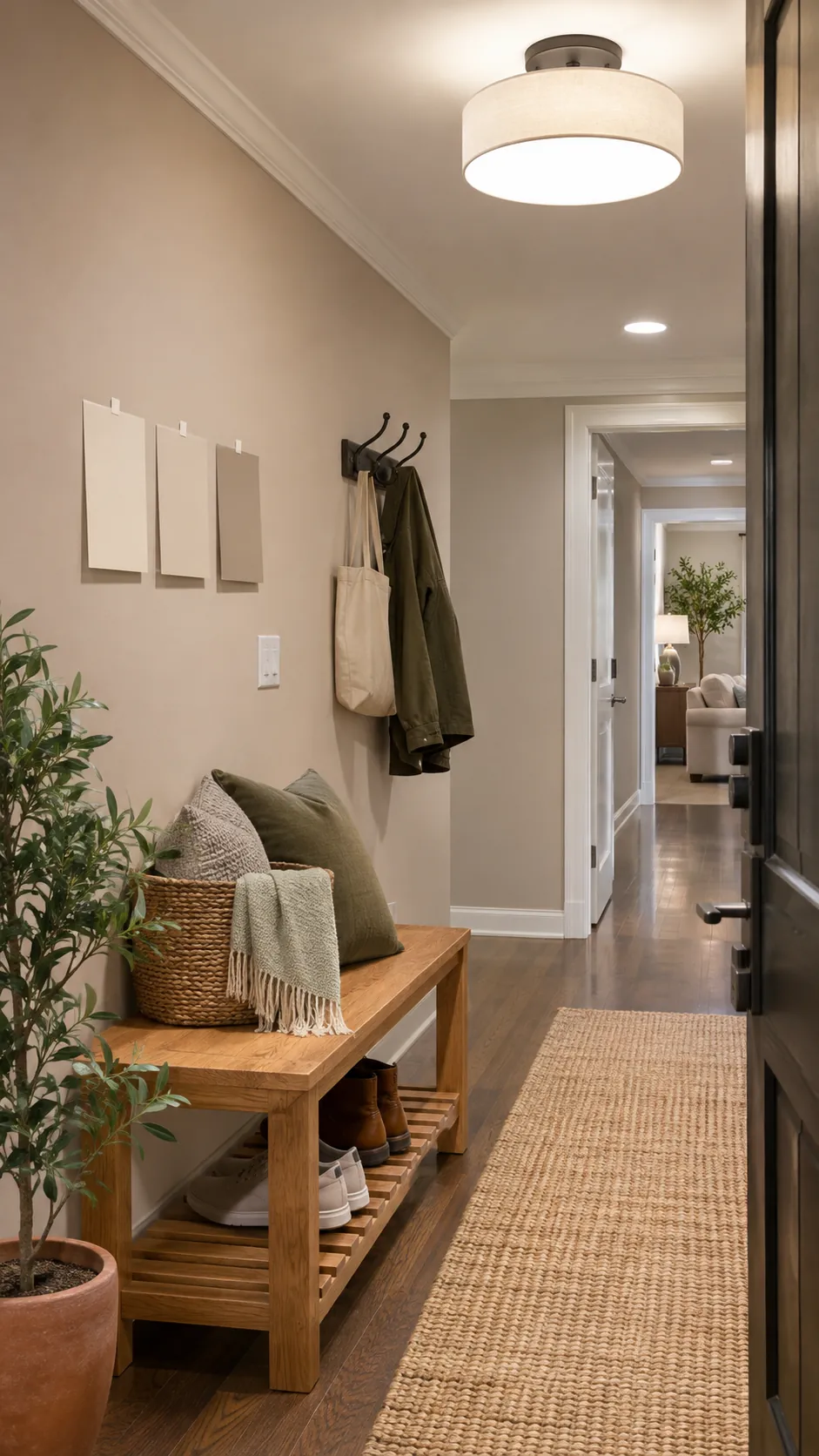
Keep the ceiling a little lighter to lift the room. Satin trim can return a small amount of light, while washable matte walls look calm. Decide on bulbs first because a later lamp change can alter the paint again.
Use Texture to Replace the Missing Daylight
Daylight normally reveals texture, so a windowless foyer needs materials that still read under lamps. Combine one woven surface, one visible wood grain, and one matte ceramic or stone element. These quiet differences add depth without strong color or excess decor.
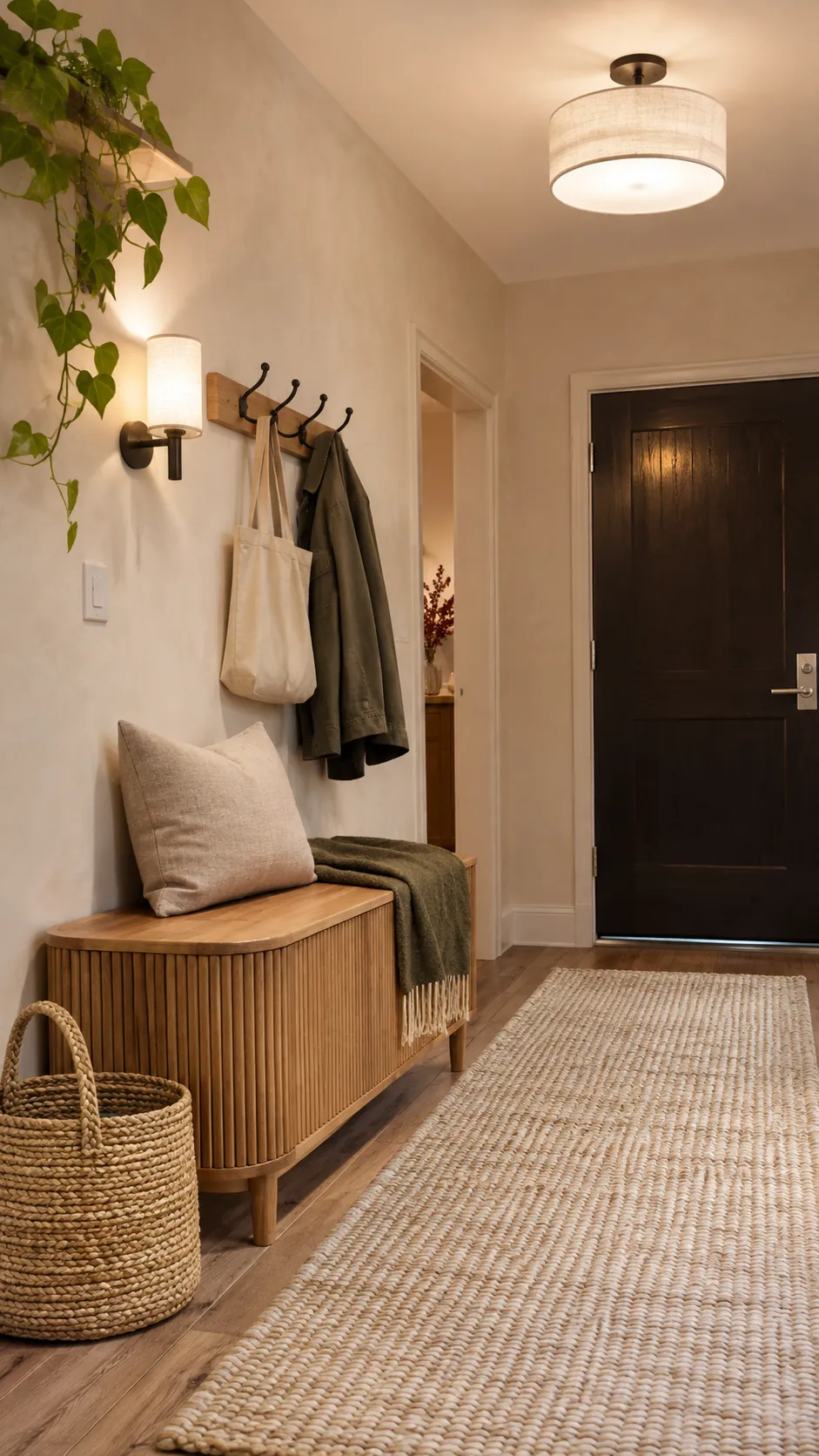
Keep the palette related so the entrance does not feel crowded. A wool runner, oak bench, linen cushion, and lidded basket add comfort while doing useful work. Choose washable or wipeable versions near wet shoes.
Hide the Clutter That Absorbs Attention
Dark entrances feel smaller when shoes, mail, coats, and cables cover every surface. Give each frequent item a closed home, then leave one shallow tray for objects that must stay visible. A shoe depth cabinet is often more useful than a deep console that narrows the route.
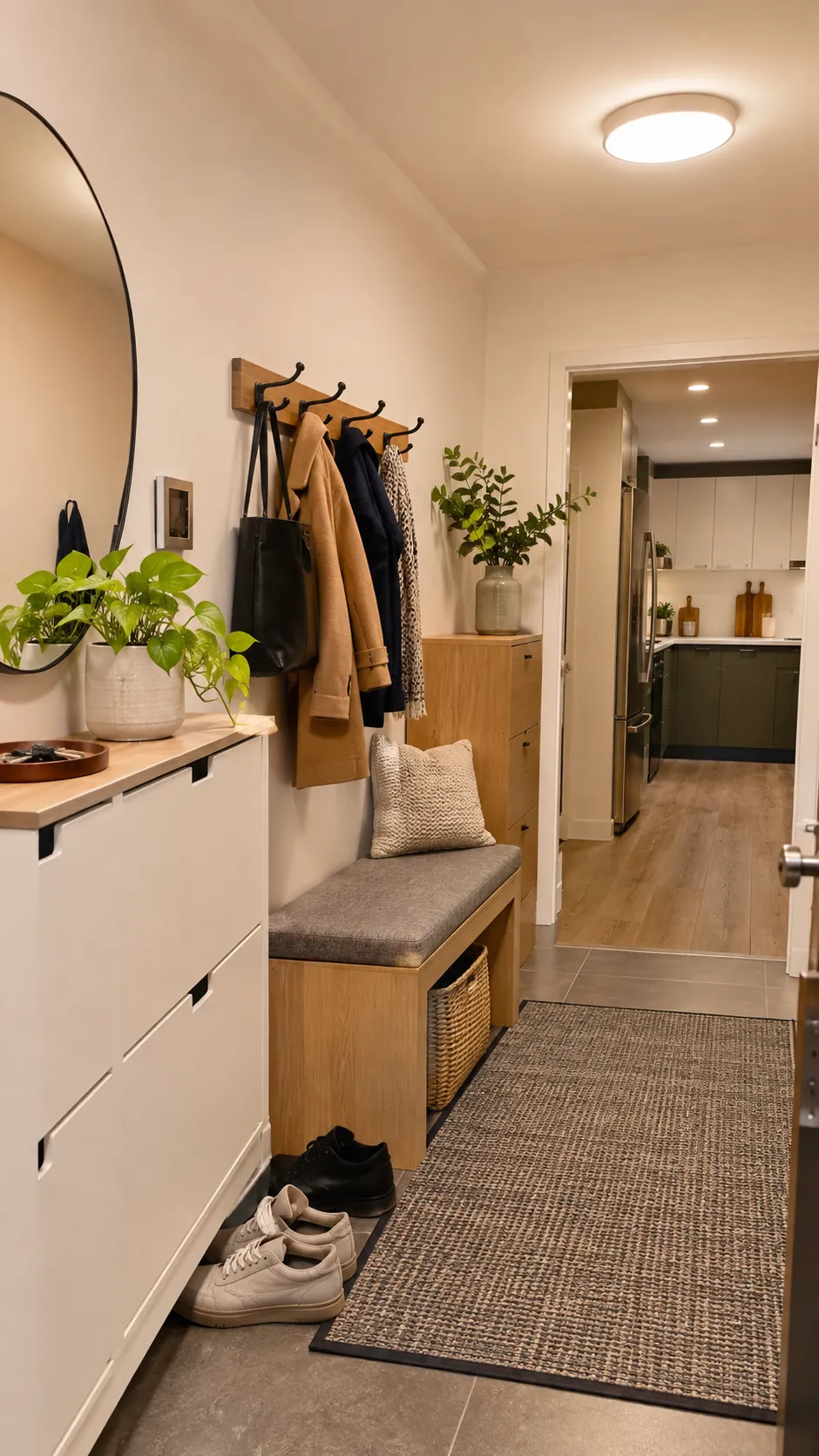
Measure the full door swing and the path used while carrying bags. Add a perch only if sitting does not block traffic. Small internal bins can separate pet gear, umbrellas, and seasonal items.
Brighten the Floor Without Choosing White
The floor occupies a large part of the view and can return light upward. Pale stone look tile, medium oak, or a low contrast runner brightens the lower half without showing every mark. A washable runner also quiets footsteps and defines the route.
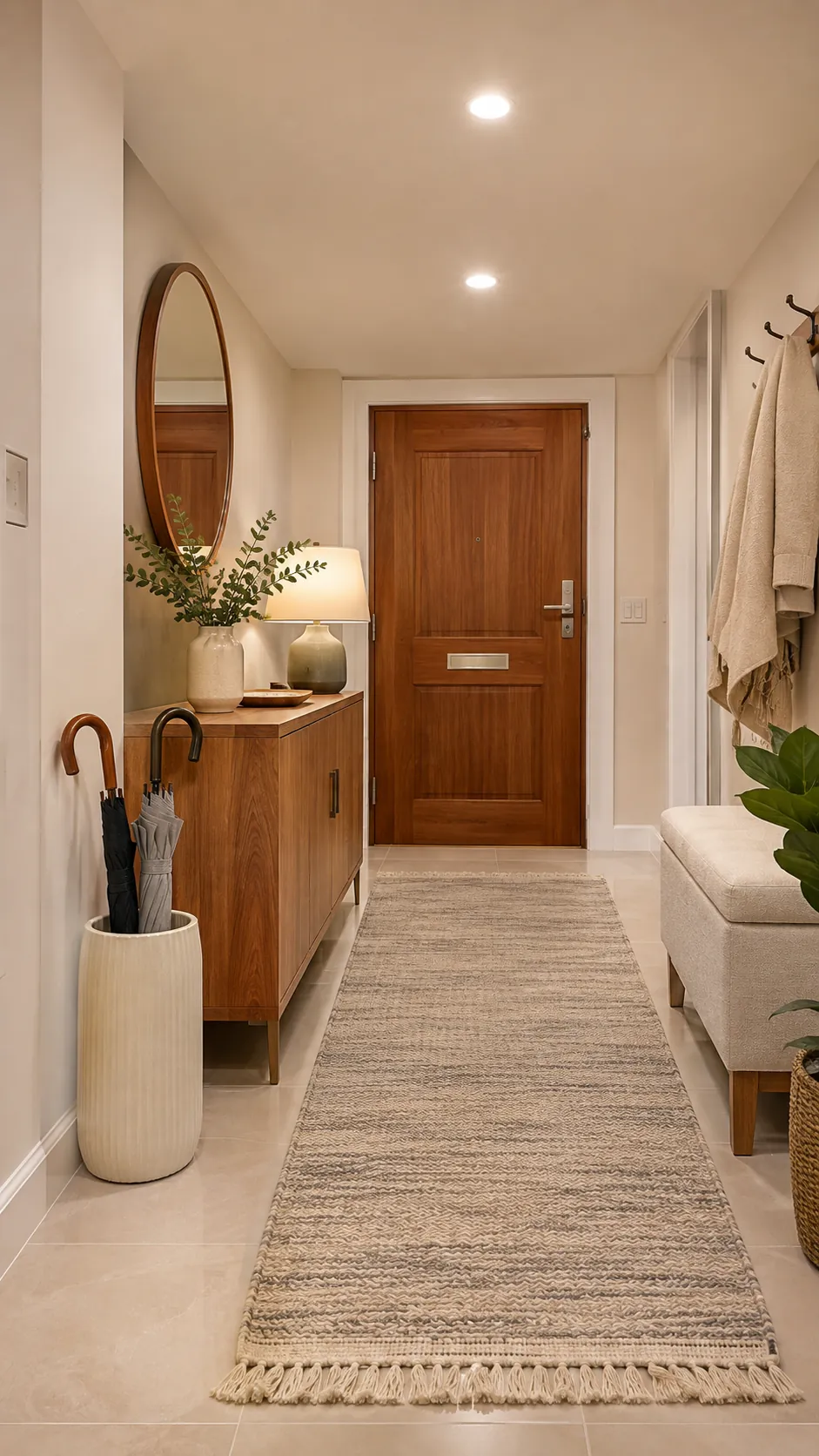
Avoid a very dark rug on a dark floor because its edges disappear in low light. Use a nonslip pad and low pile so the door clears it. Repeat one runner color in a bowl or plant pot.
Finish With One Living Detail and a Gentle Scent
A shade tolerant plant, one personal photograph, or a simple branch can make a functional entrance feel inhabited. Choose a plant that tolerates the available light or rotate it with another from a brighter room. Artificial foliage works only when its scale and leaf color look convincing.
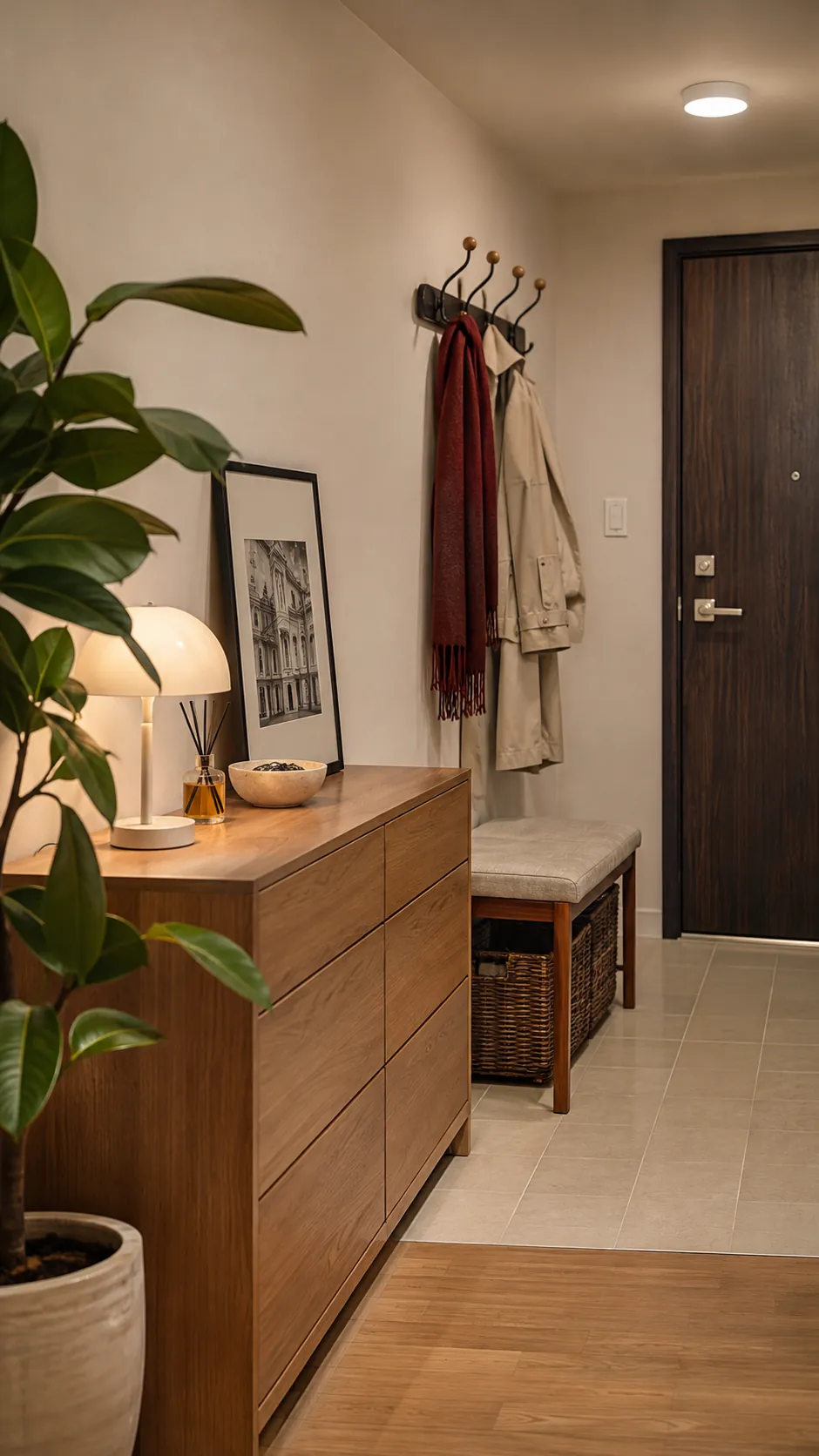
Keep fragrance subtle because scent concentrates where air movement is limited. A small diffuser is easier to control than several competing products. Once light, storage, and circulation work, this restrained layer creates a warm first impression.