
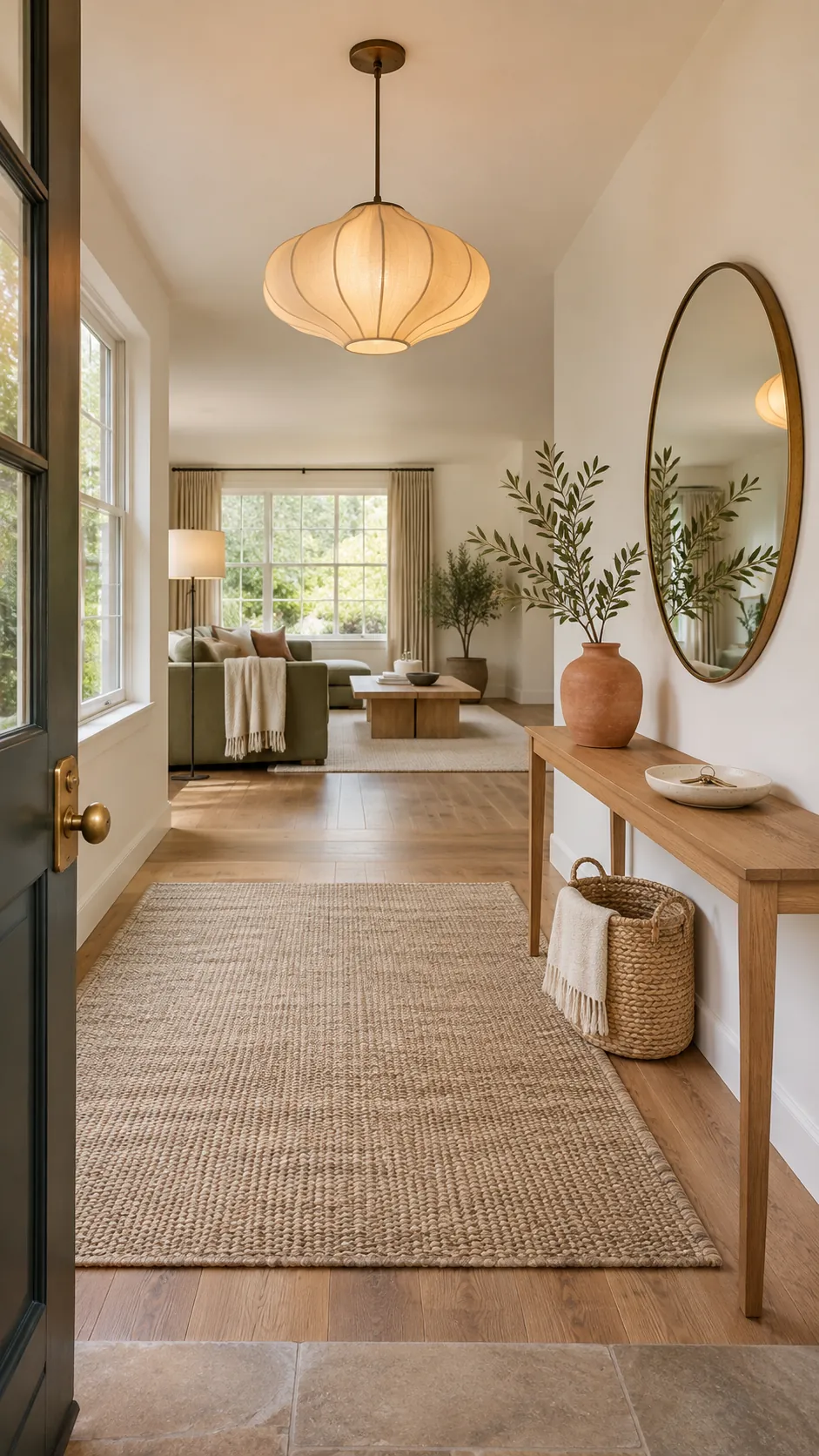
An open front door can spill straight into the living area, leaving shoes, bags, and arriving guests with no obvious place to land. The solution is not to close the space. It is to give the entrance a few clear signals that say where arrival begins, where movement continues, and where the home starts to relax.
Start With the Path People Actually Walk
Watch how people move from the front door to the kitchen, stairs, and main seating area. Keep that route open, then place entry furniture beside it instead of directly in it. A clear path makes the entrance feel intentional because guests can understand the room before they decide where to put a coat or bag.
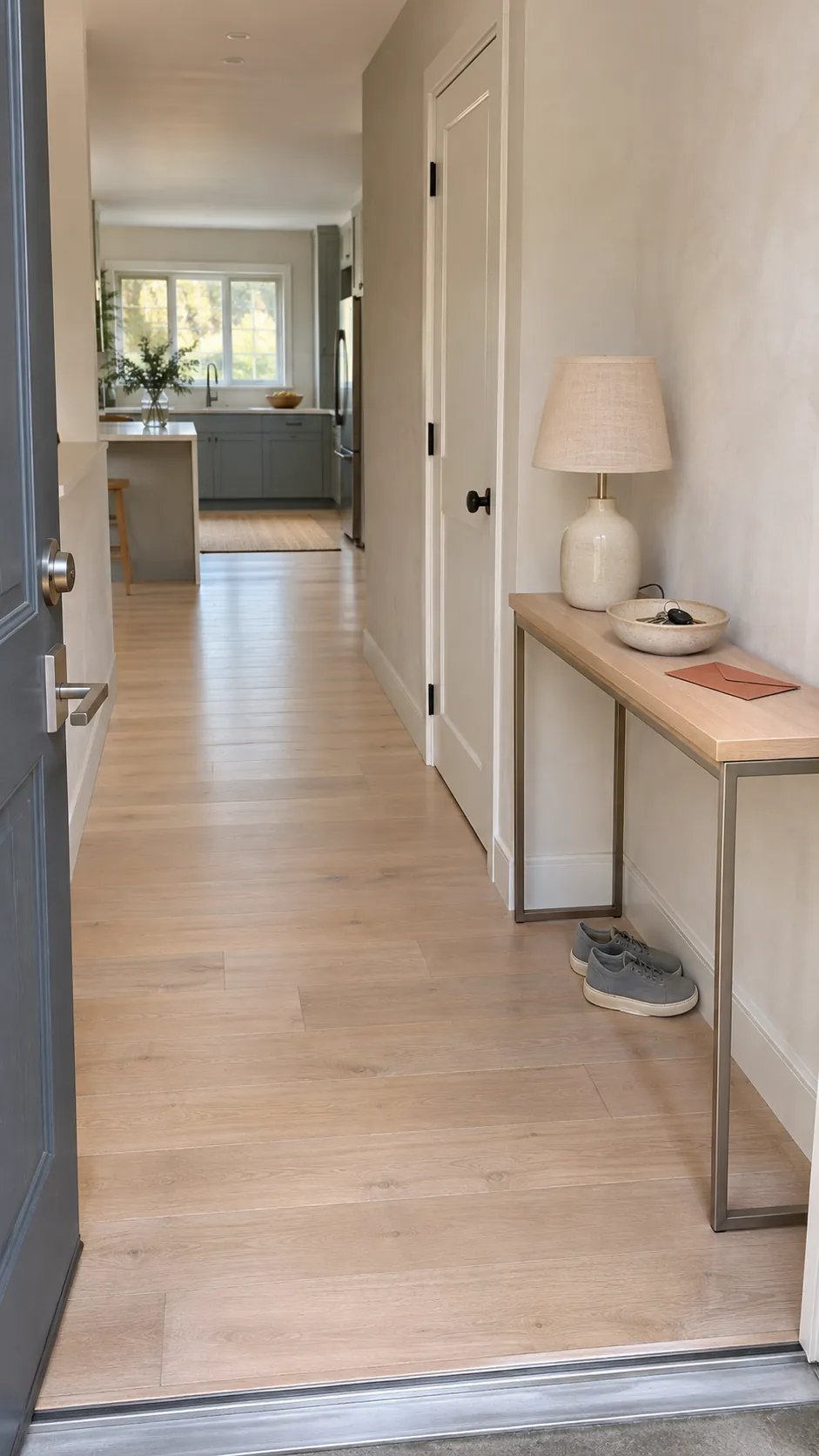
Leave enough width for two people to pass without turning sideways. Check the full swing of the door and any nearby closet door before choosing furniture depth. Blue painter tape on the floor can show the footprint of a console or bench before you buy anything.
Anchor the Zone With the Right Rug
A rug creates a visual boundary without changing the floor plan. Choose one that is large enough to connect the door, landing surface, and first step into the home. A tiny mat tends to look temporary, while a correctly scaled rug makes the arrival zone read as one complete area.
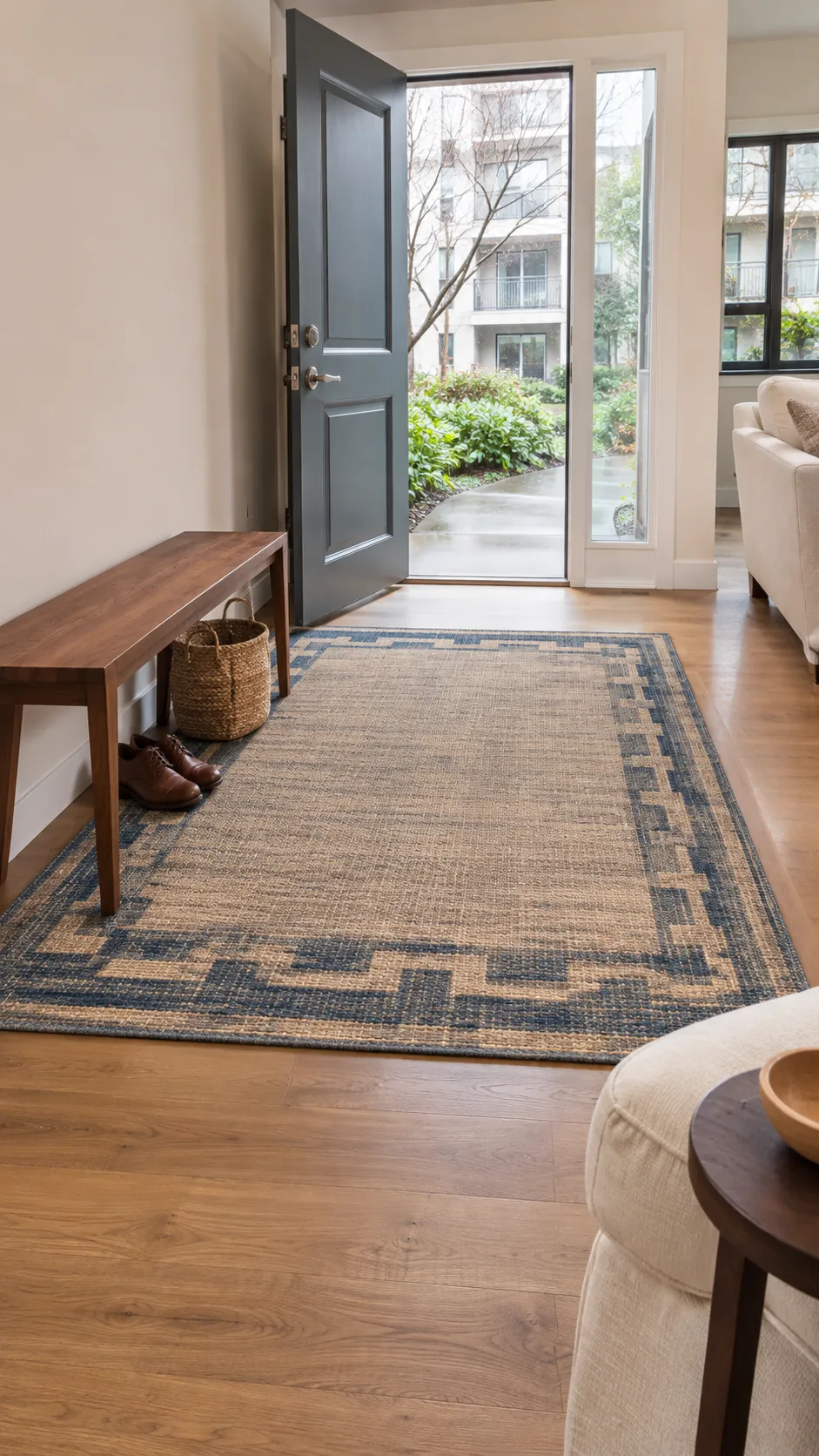
Keep the rug clear of the door swing and select a low pile that will not catch the door. Repeat one color from the nearby room so the entrance feels connected rather than isolated. A durable weave with visible texture also hides the small marks that collect near a busy front door.
Use a Console as a Soft Boundary
A slim console can mark the edge of an entryway while preserving sight lines. Set it against a wall when space is tight, or place it behind a sofa when the entrance opens directly into the living room. The furniture should guide movement, not behave like a barrier.
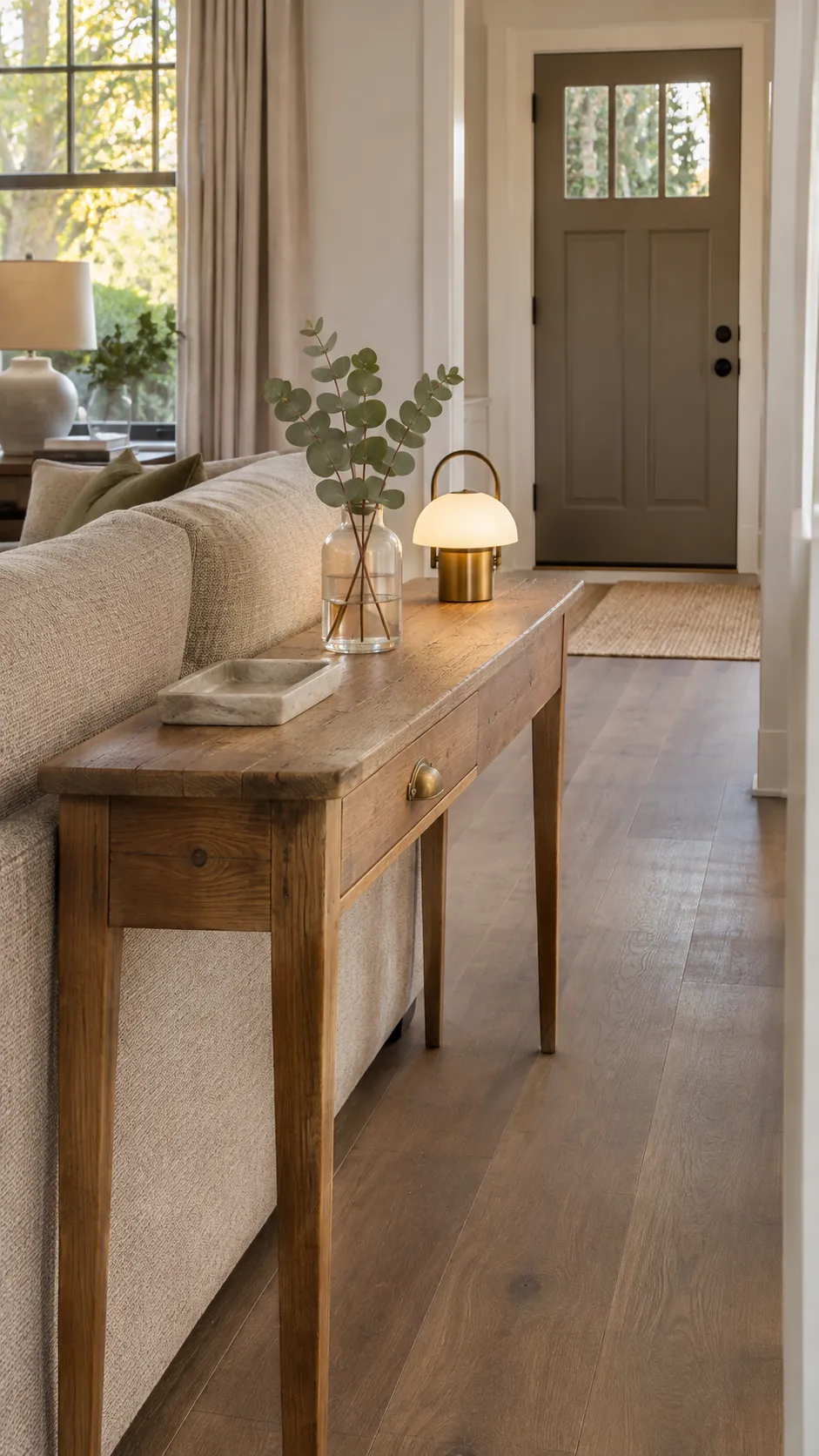
Give the surface one practical job, such as holding a key tray or a small lamp. Keep enough empty space that it still feels calm when daily items arrive. If a console would make the route narrow, use a shallow wall shelf with rounded corners instead.
Create a Complete Landing Station
An entrance gains identity when it supports the actions that happen there. Combine a place to sit, a surface for keys, and storage for the items your household uses most often. The pieces do not need to match, but they should sit close enough to function as one station.
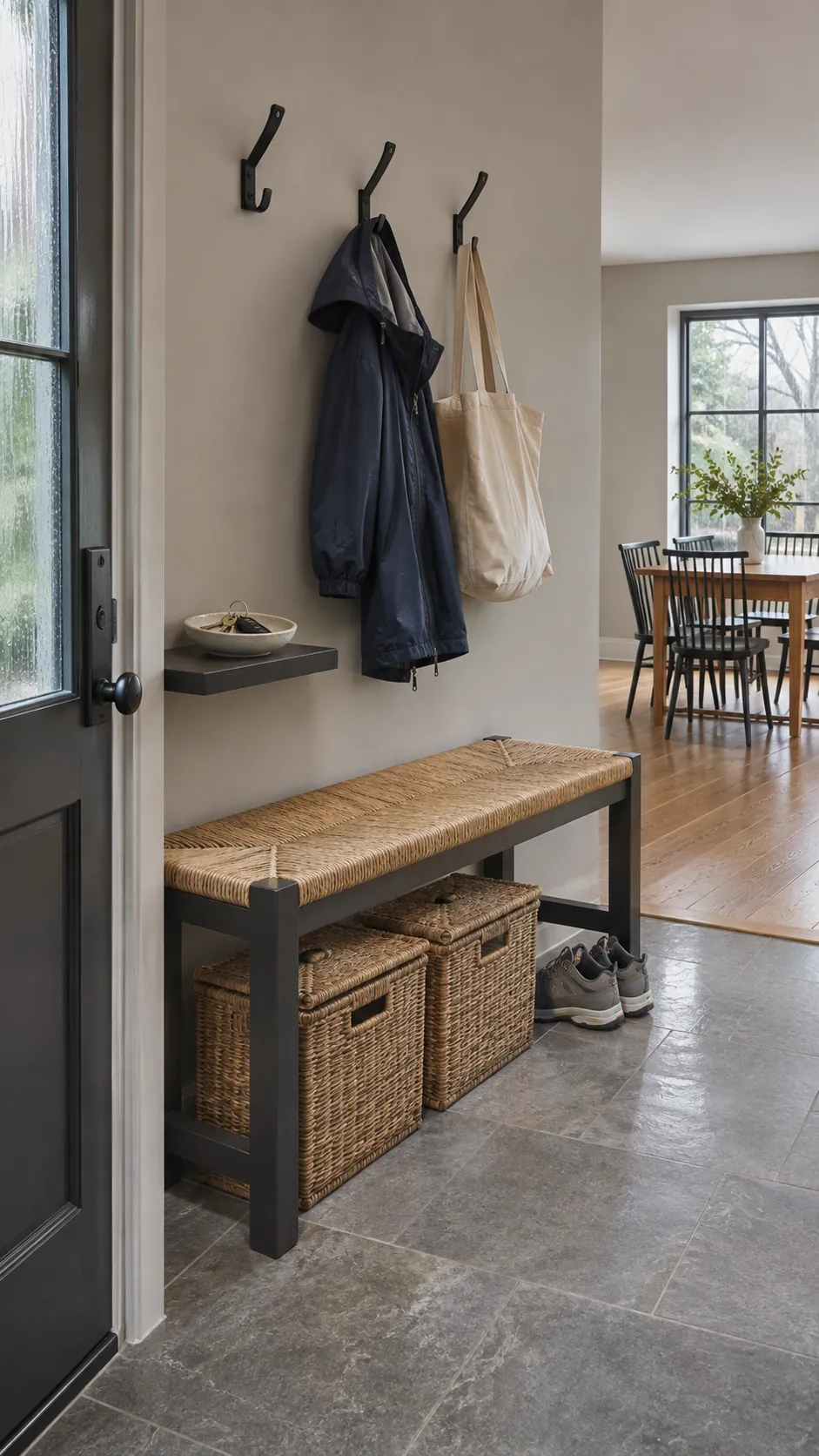
Closed baskets can contain shoes and pet gear, while a small tray prevents keys from spreading across the room. Place hooks where coats will not brush people walking past. Design for normal habits rather than an ideal routine, since a convenient station is more likely to stay tidy.
Give the Entrance Its Own Light
Lighting can define a zone even when the ceiling and flooring continue into another room. A pendant centered over the rug gives the entrance a strong visual center. If electrical work is not practical, a table lamp or plug in wall light can create the same sense of local focus.
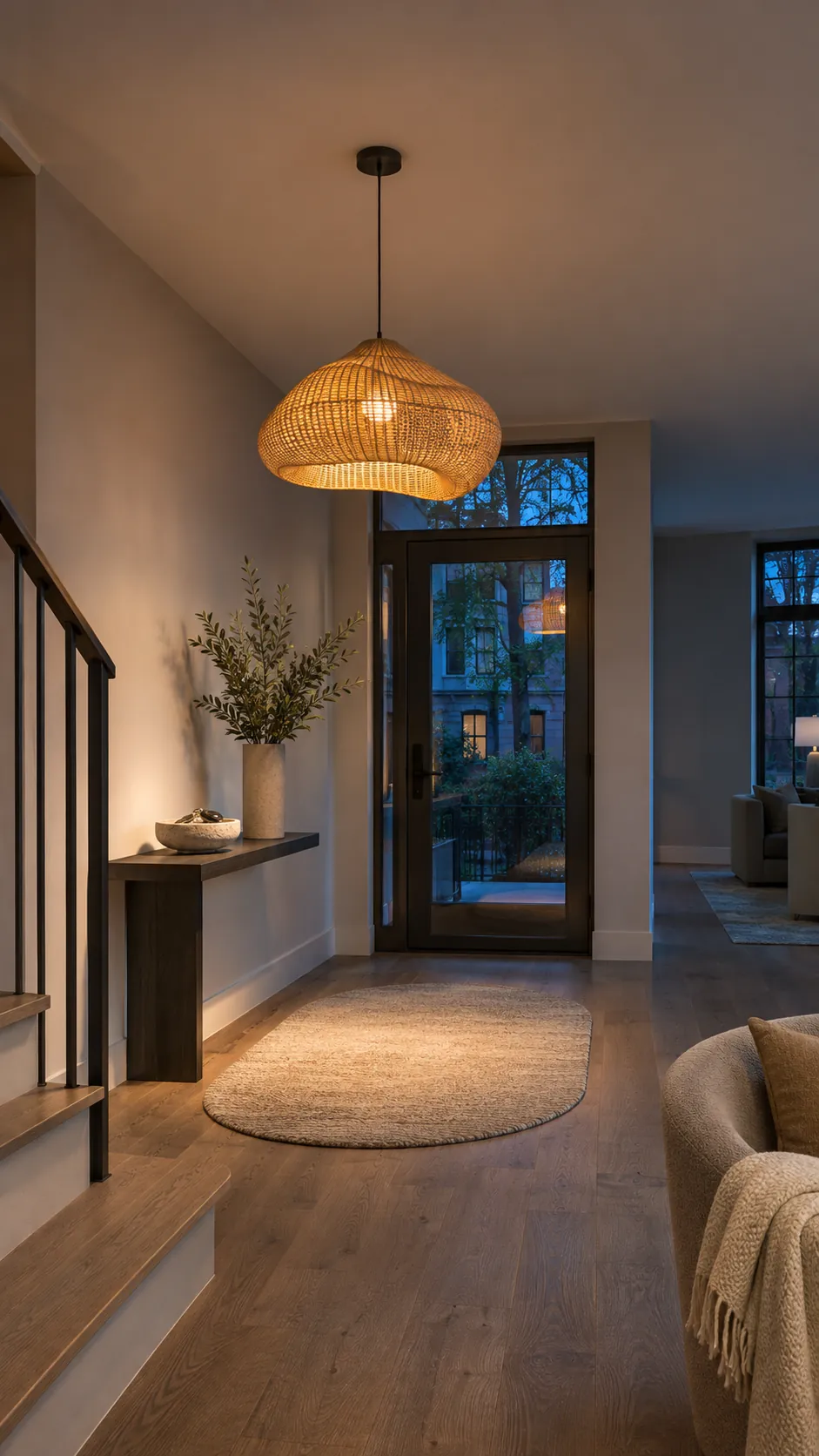
Use a warm bulb that relates to the lighting in the adjoining room. The fixture can have a distinct shape, but its finish should echo nearby hardware or furniture. This balance gives the entrance character without making it look disconnected from the rest of the home.
Build a Focused Vertical Moment
A mirror, a specific piece of art, or a narrow wall treatment gives the eye a destination when the door opens. Keep the arrangement aligned with the furniture below it so the two read as one composition. This focused vertical area can make a small slice of wall feel like a complete foyer.
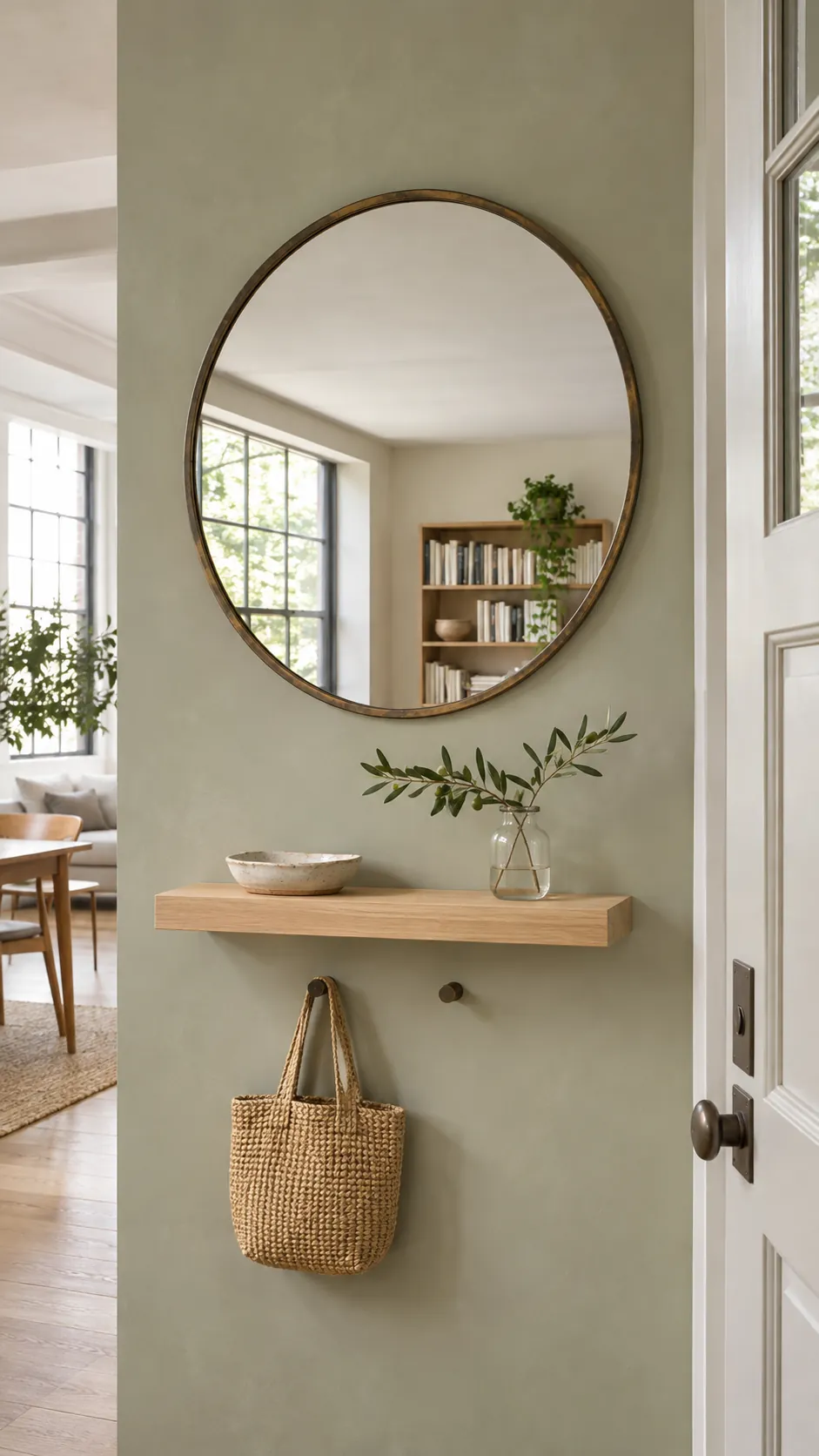
A mirror is useful for a final check and can return light to a dim entrance. Hang it at a comfortable viewing height rather than centering it only by measurement. If the wall is visible from the living room, choose a frame that shares one material or color with that room.
Repeat Materials to Connect the Zones
The entrance needs a boundary, but it also needs a relationship with the rooms around it. Repeat two or three materials across the threshold, such as oak, aged brass, woven fiber, or a muted blue. Repetition creates continuity while changes in scale and function keep the entrance distinct.
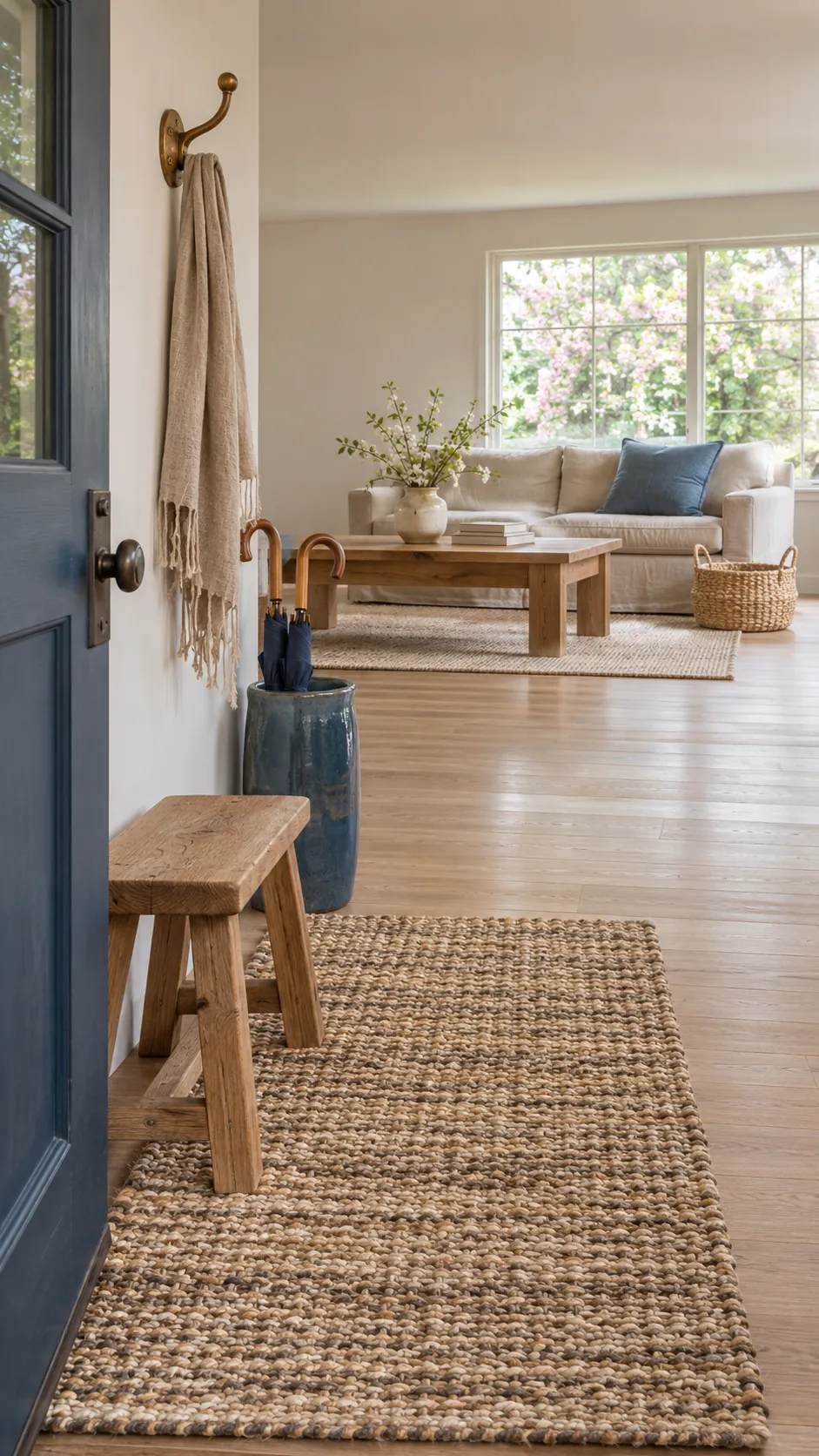
Use the strongest texture near the door and quieter versions deeper in the room. For example, a woven entry rug can relate to a smaller basket beside the sofa, while a wood console can echo a coffee table without matching it exactly. The final test is simple: the entrance should be easy to recognize, easy to use, and easy to walk through.