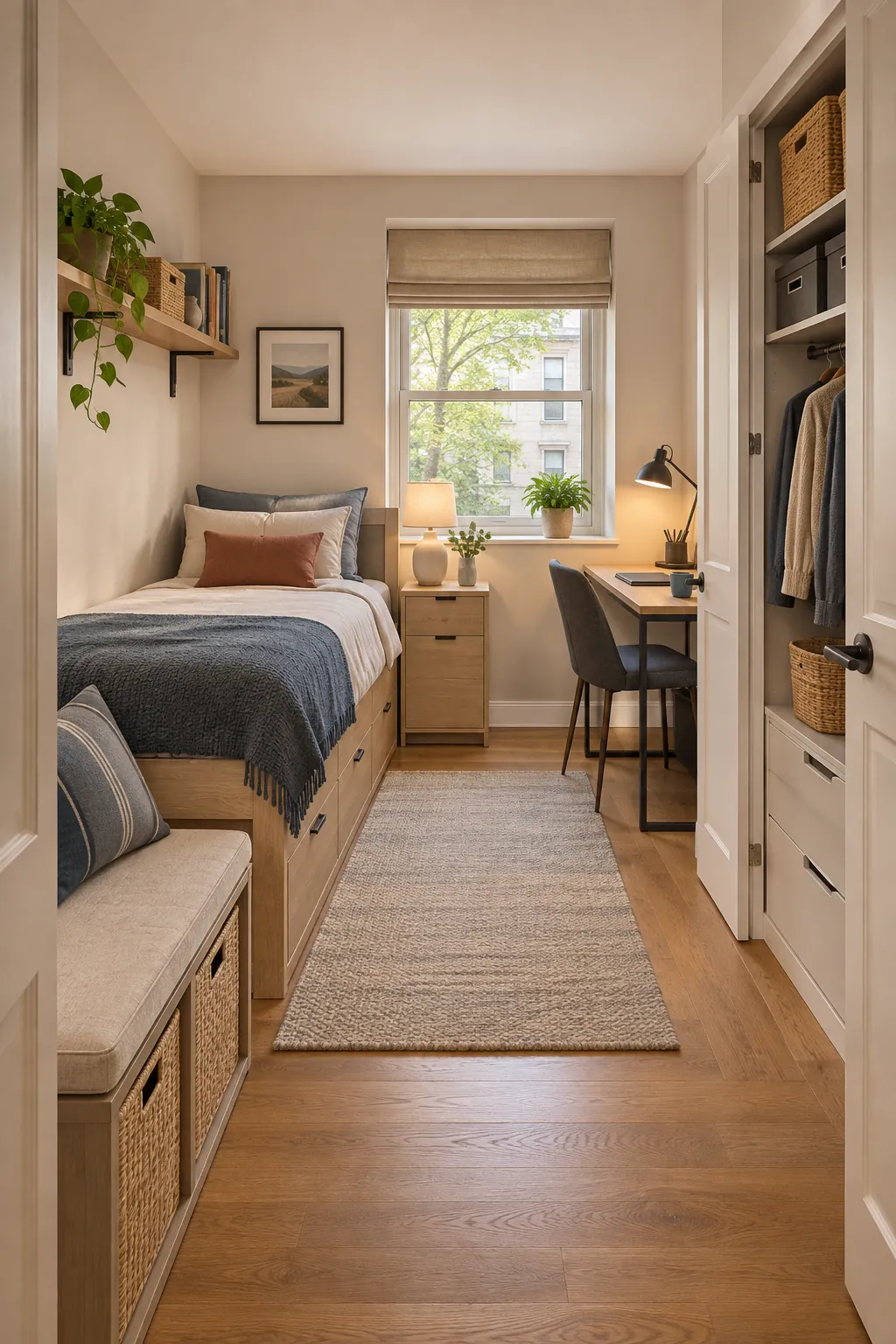
A small bedroom works best when every object has a clear job and every route stays easy to use. The goal is not to fill every gap. It is to match storage and furniture to the way you sleep, dress, work, and move through the room.
Map the clear floor route first
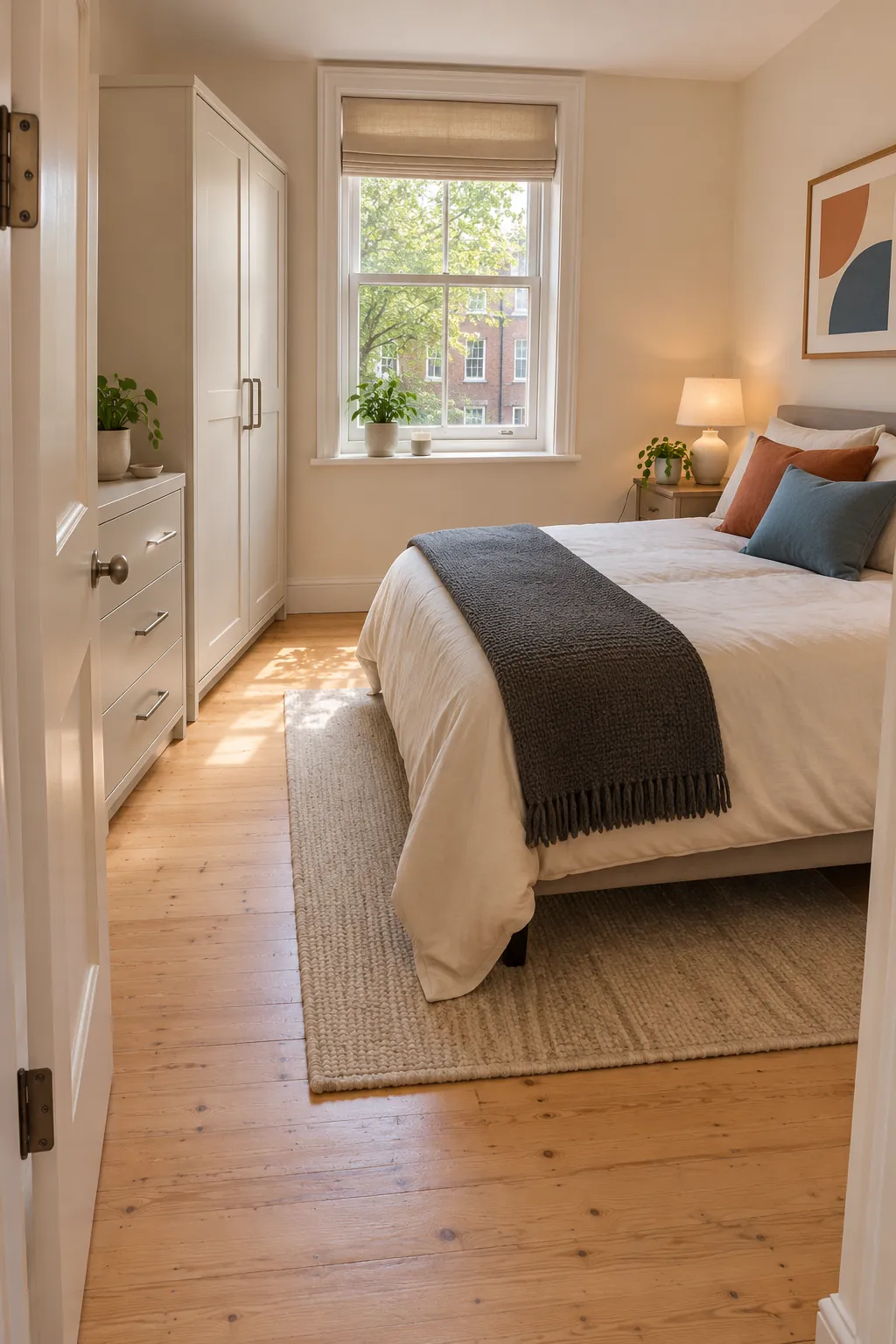
Begin at the door and trace the path to the bed, closet, dresser, and window. Keep that route free before assigning any leftover corner to furniture. A narrow room feels more useful when doors and drawers open fully and you can reach daily items without turning sideways.
Use under bed storage for the right things
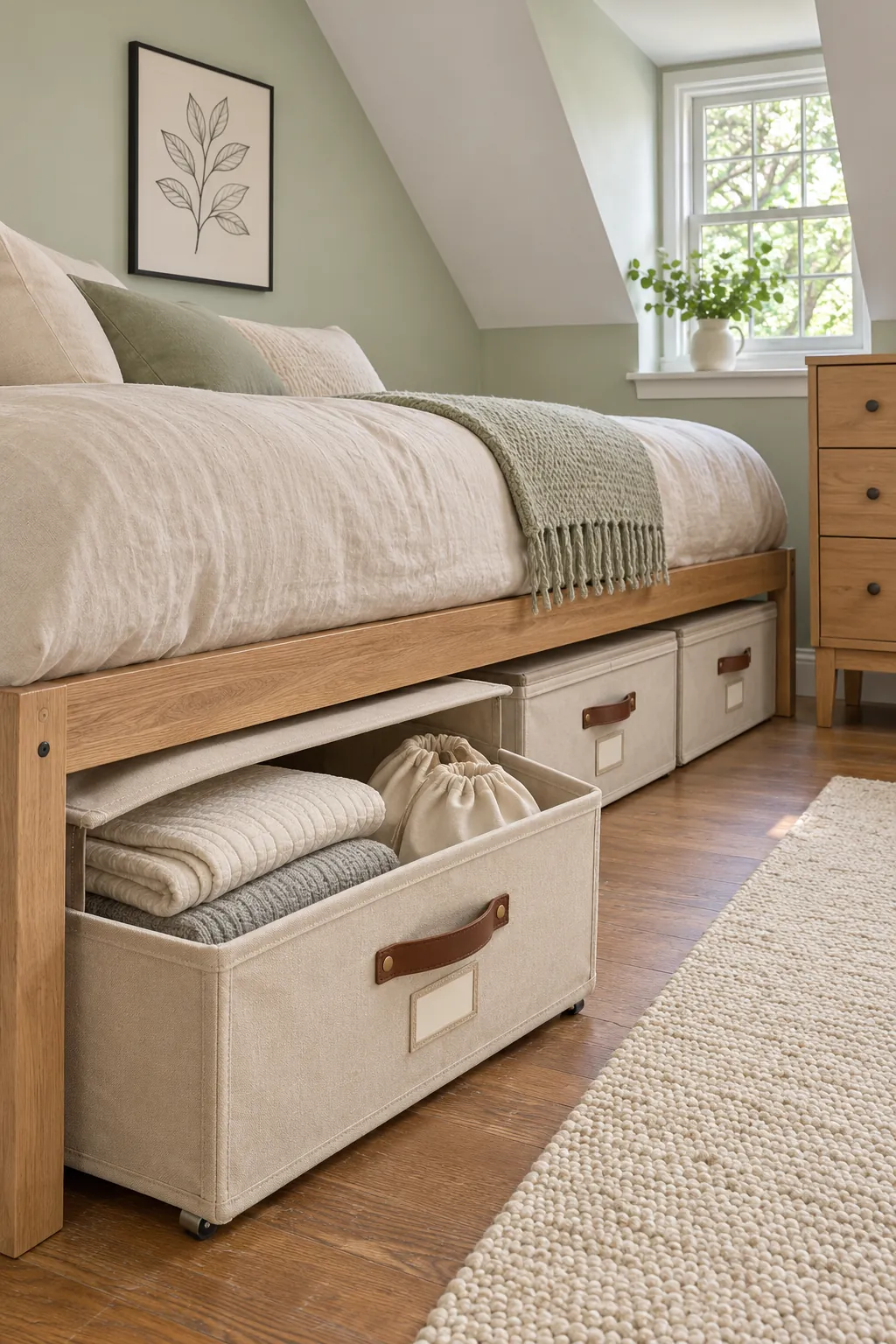
Under bed storage is most useful for bedding, seasonal clothes, shoes, or other items that do not need daily access. Choose matching low containers that pull out from the easiest side, and leave enough clearance for handles and flooring. Avoid pushing loose bags underneath, since hidden piles quickly become difficult to manage.
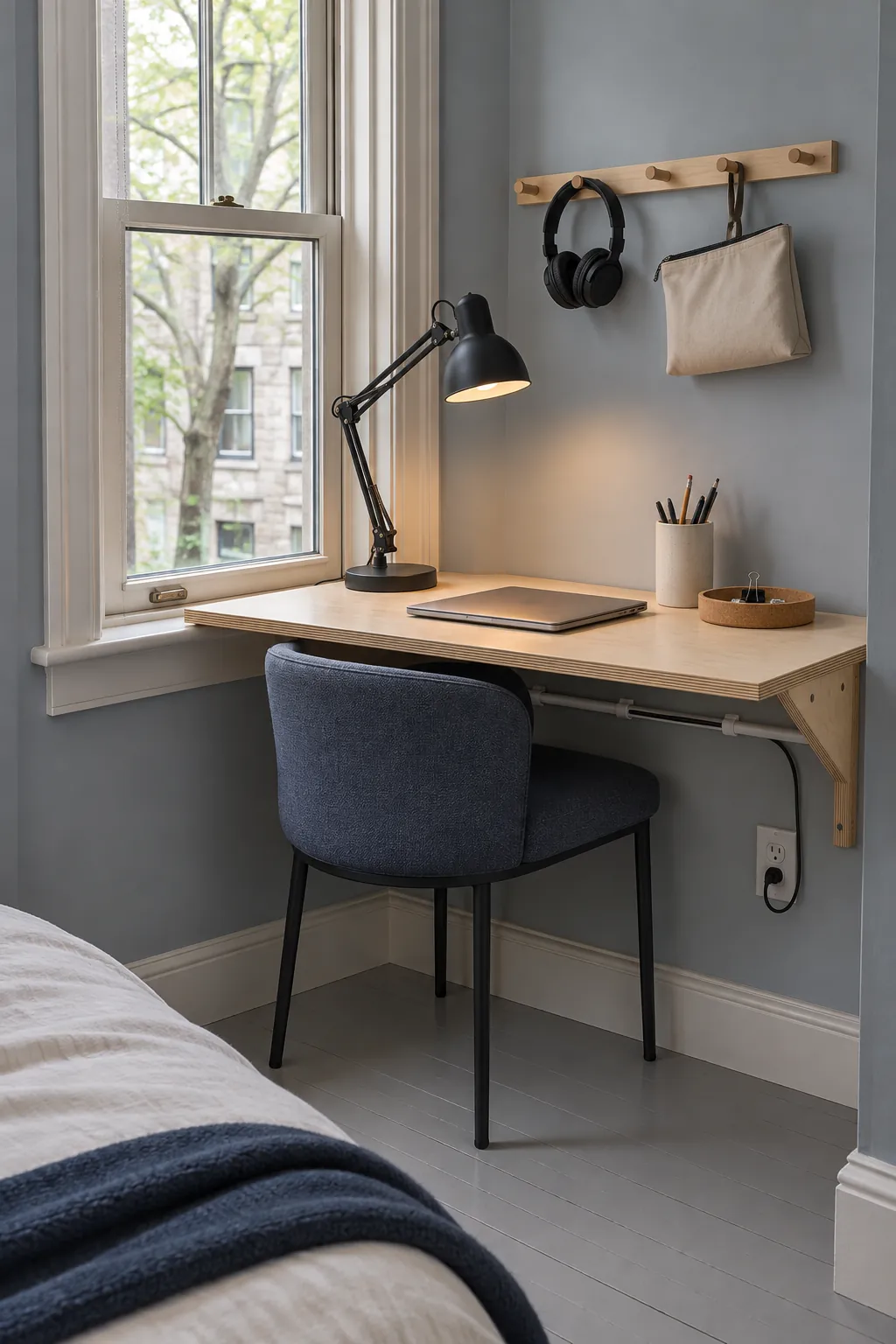
Turn one corner into a focused work zone
A corner desk in a bedroom can work when its depth stays modest and the chair tucks away completely. Place it near daylight if the screen will not create glare, then use one task lamp and one contained tray for supplies. Keeping work materials within that corner helps the bed remain a restful zone.
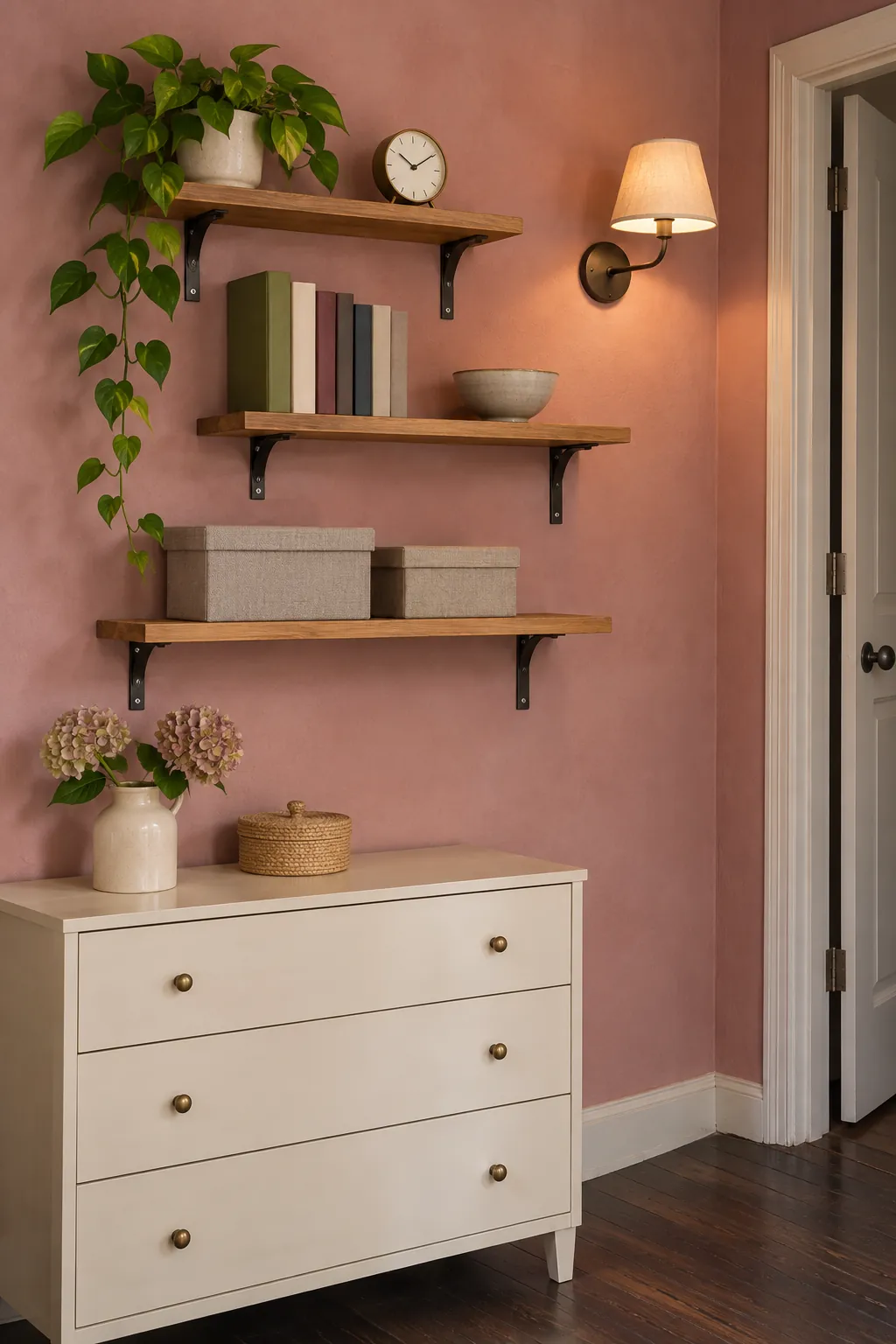
Move light storage onto the wall
Wall mounted shelves can hold books, small boxes, and personal objects without taking floor area. Mount them where you will not hit your head when standing or getting out of bed. Keep the heaviest items low, use proper fixings for the wall type, and leave some open space so the shelf does not become a visual pile.
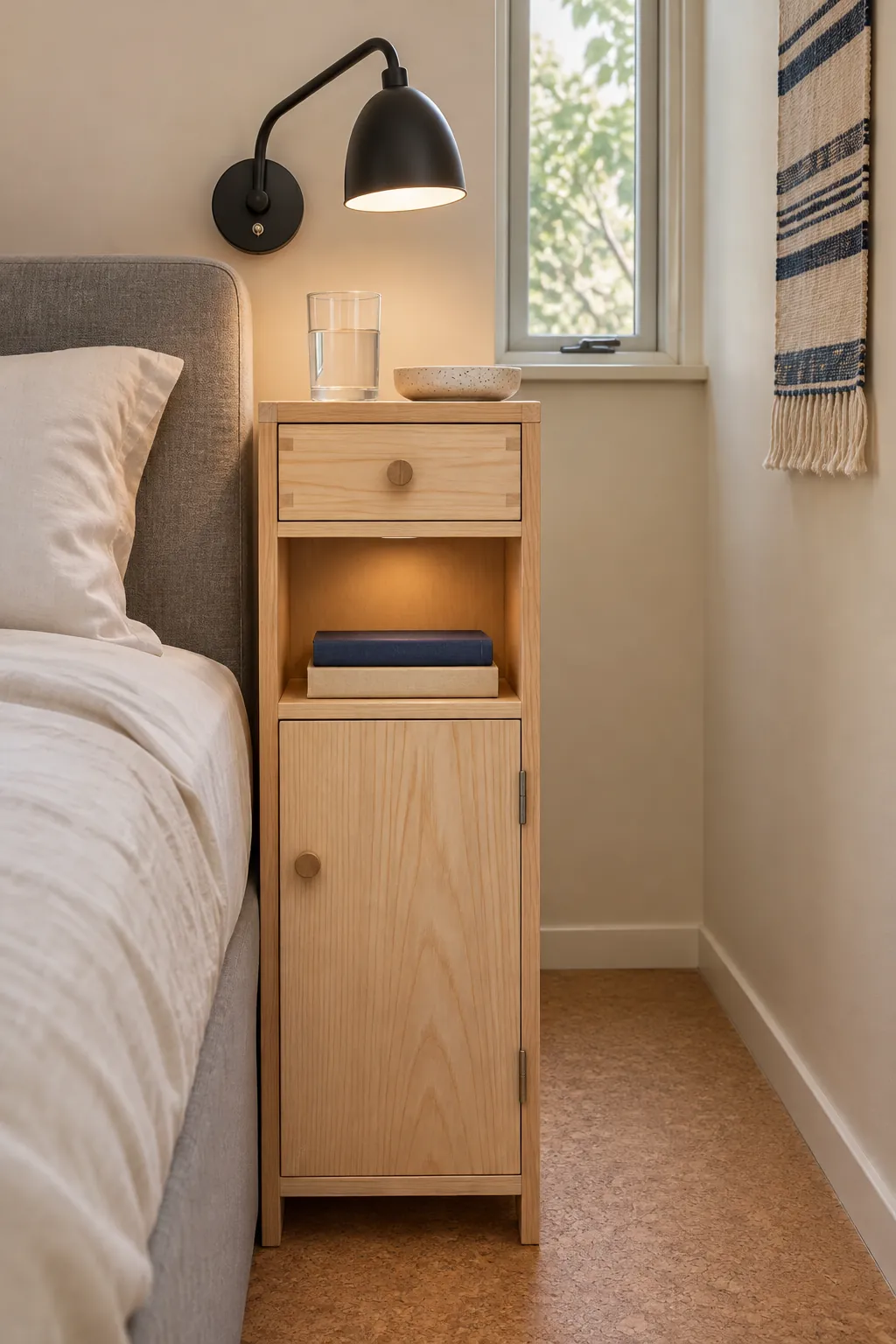
Build bedside storage upward
A narrow bedside cabinet can provide a lamp surface, a drawer, and enclosed storage in the footprint of a small stool. Choose a height that is comfortable from the mattress and a depth that does not narrow the walkway. Wall mounted lamps free the top for water, glasses, and the few things you actually use at night.
Choose one piece that solves two needs
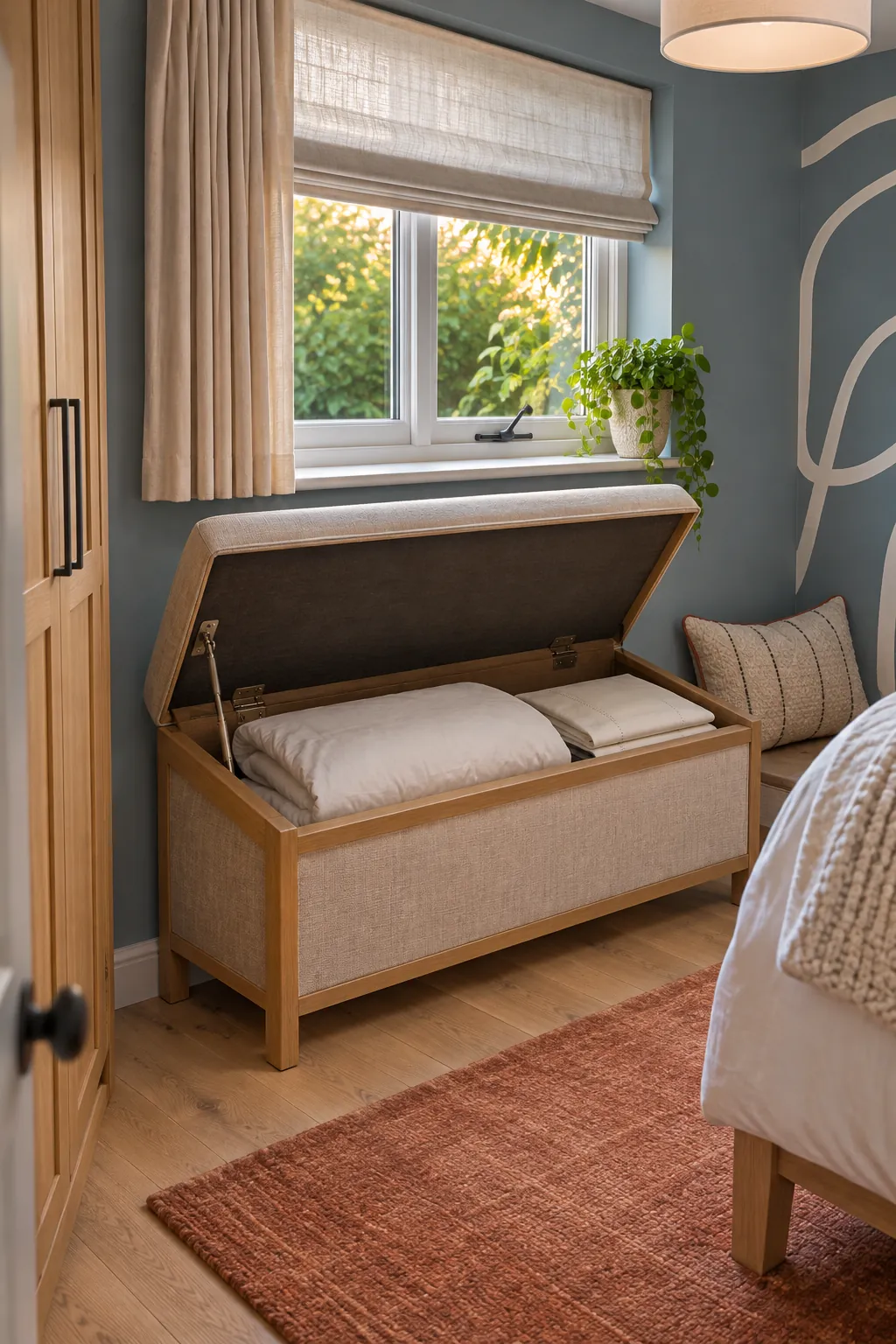
Multipurpose bedroom furniture earns its space only when both functions are useful. A storage bench can hold spare bedding and provide a seat, while a small dresser can also serve as a bedside surface. Measure the open lid, drawer pull, and sitting clearance before buying so the second function remains practical after the room is furnished.