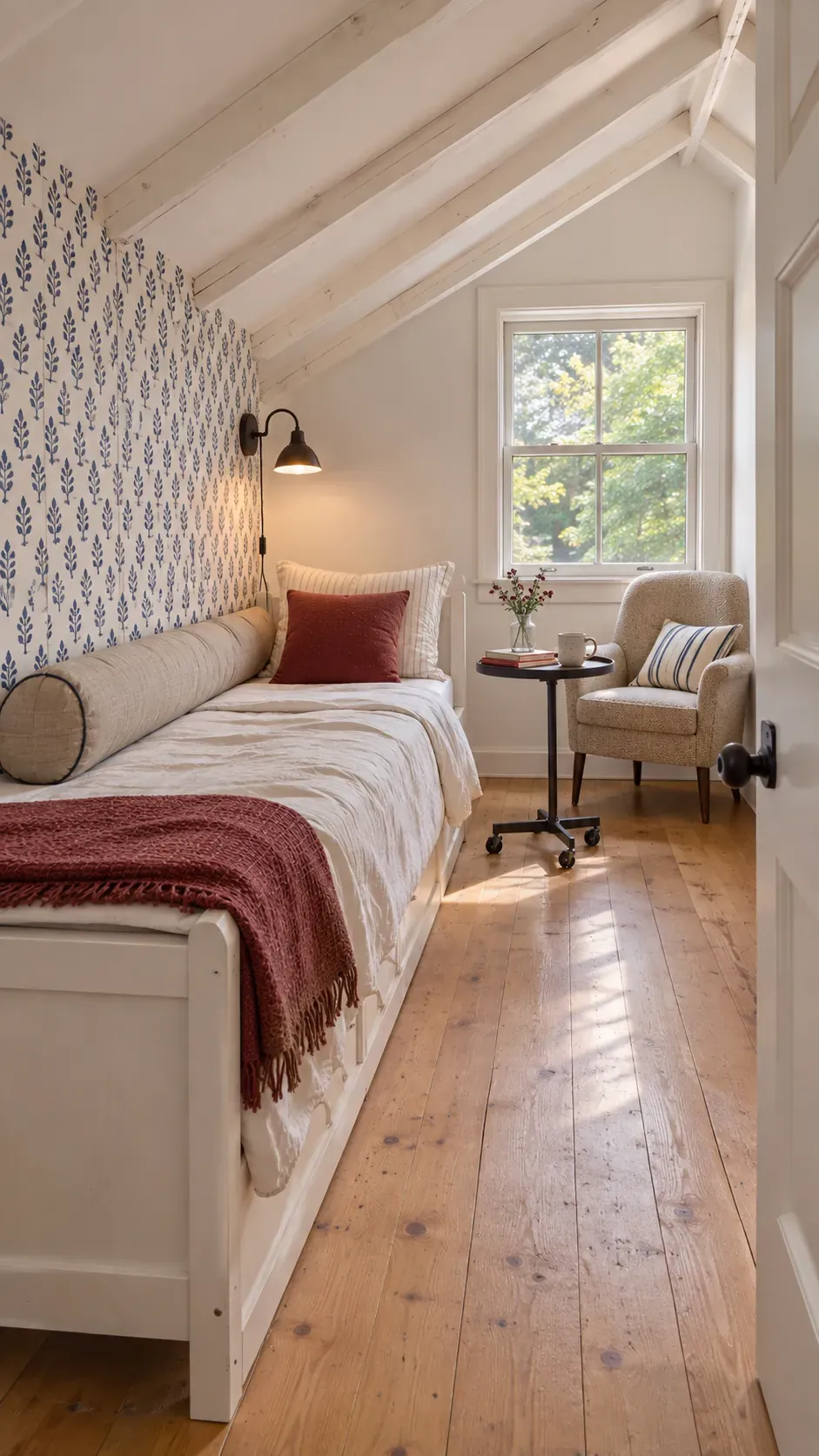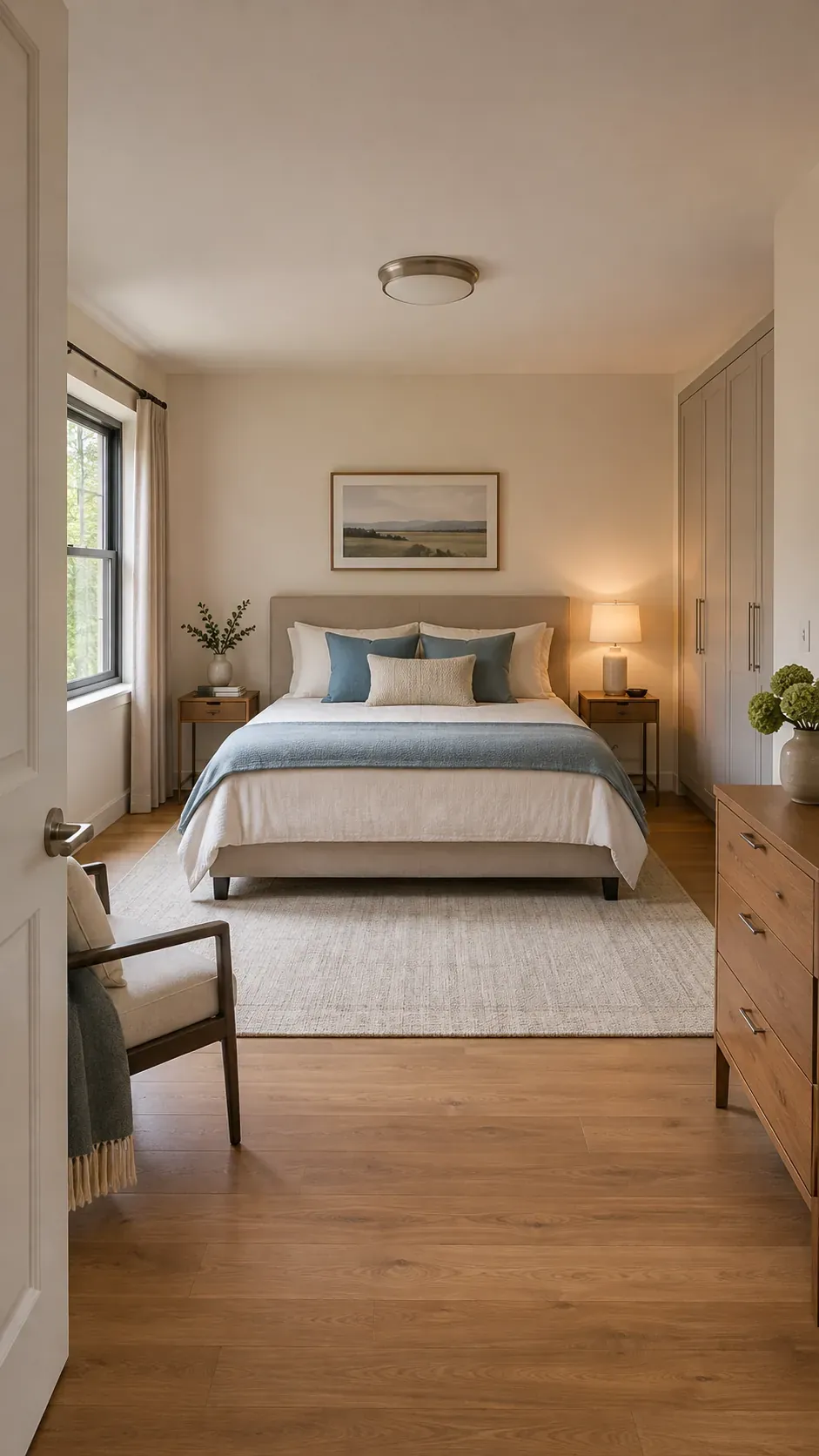
The best bed position is the one that supports sleep and lets the room work every day. A perfect looking wall is not useful if the closet will not open or the only walkway becomes cramped. Compare the real clearances first, then choose the calmest option among the layouts that function.
Start with doors and walking space
Mark the full swing of the room door, closet doors, and drawers before moving the bed. Keep a direct route from the entrance to the sleeping area and any storage you use daily. A slightly less symmetrical layout often feels better than a centered bed that forces awkward movement.
Use a solid wall when it fits
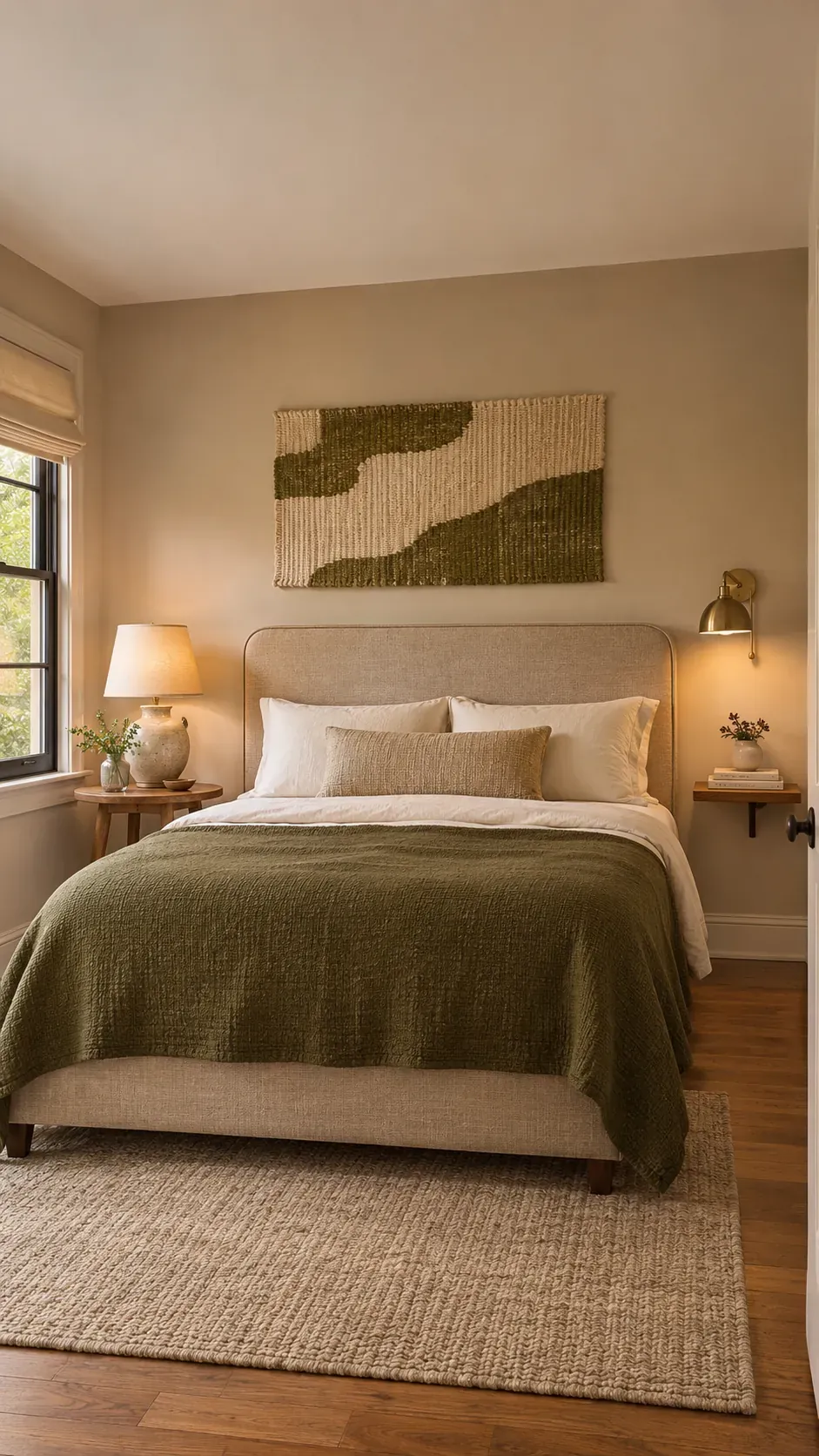
A solid wall gives the headboard a stable visual background and usually simplifies lighting. Centering works well when both sleepers need equal access, but exact symmetry is not mandatory. Shift the bed enough to protect a better walkway if the remaining side still works for making the bed and reaching a lamp.
Handle a bed facing the door calmly
A bed can face the door when that position creates the best circulation. If a direct line feels exposed, offset the bed from the doorway, use a substantial headboard, or place a low bench at the foot. Keep the door visible from the pillow when possible without putting the bed in the path of entering traffic.
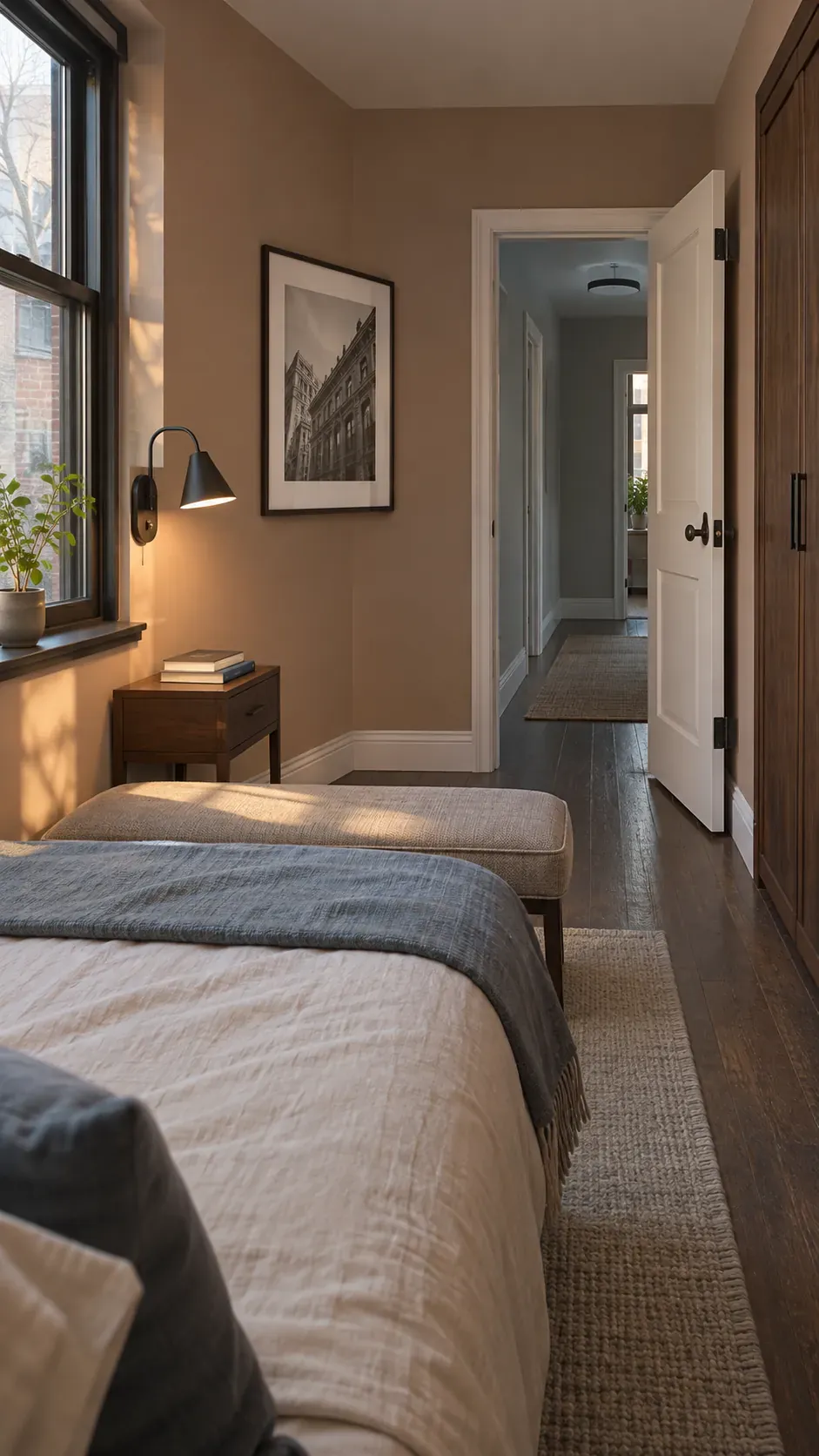
Place a bed under a window with care
A bed under a window can free the longest wall for storage, especially in a narrow room. Check drafts, heating vents, curtain operation, moisture, and safe access to the window before committing. Use a headboard low enough for the sill and choose window coverings that can open without dragging across the pillows.
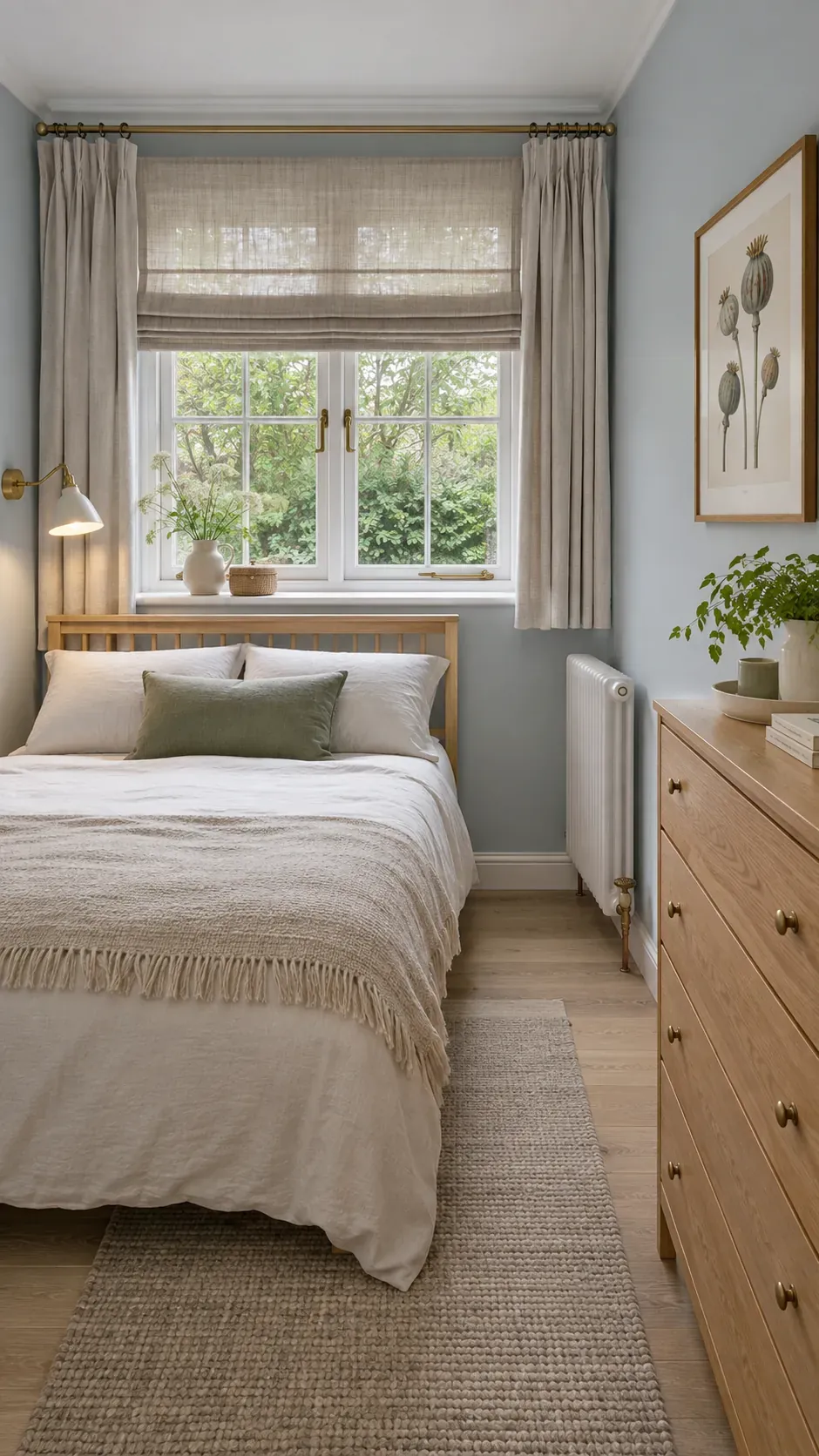
Protect closet and drawer clearance
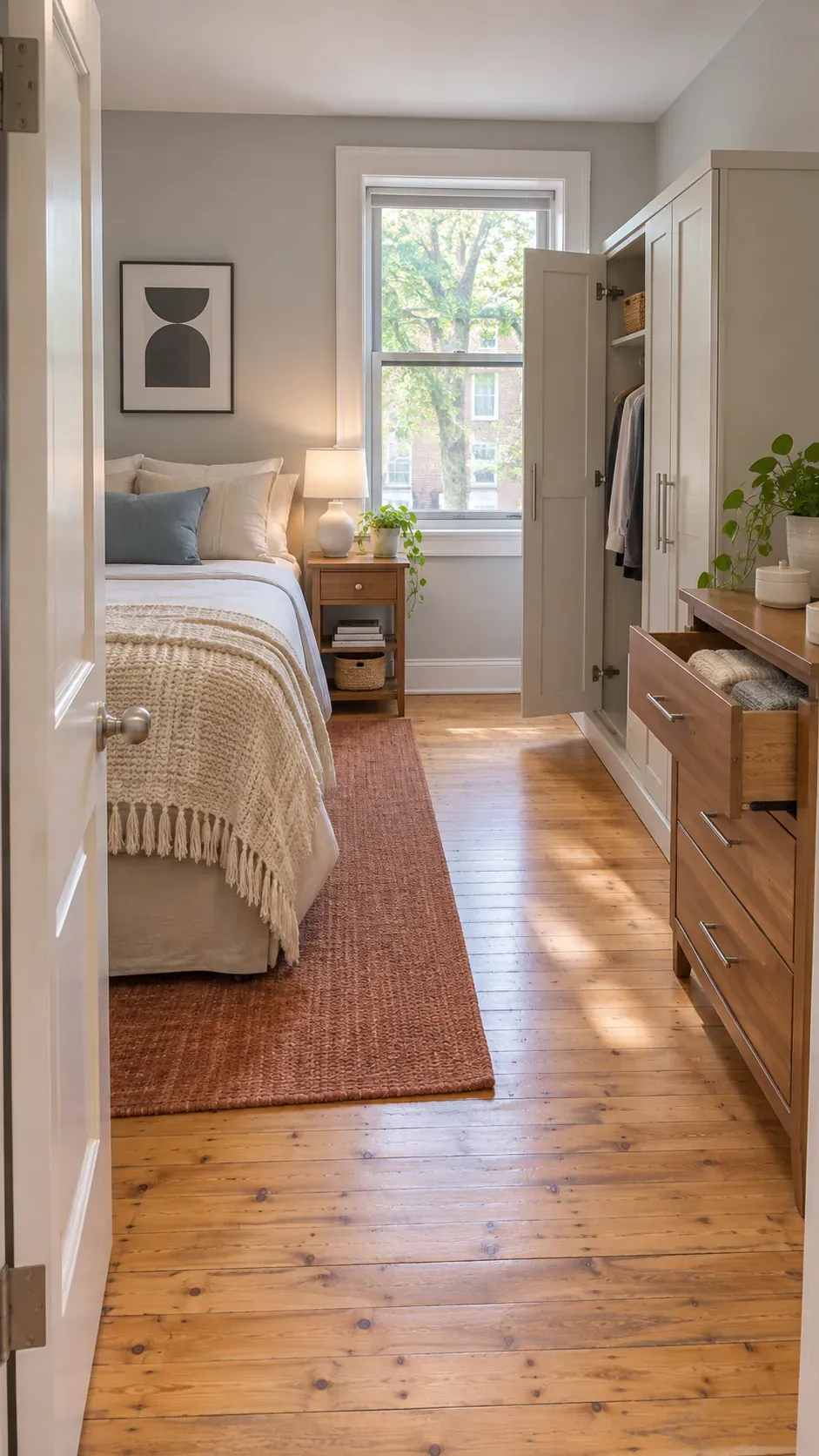
Measure the bed frame rather than only the mattress, since rails and headboards add inches. Open every closet panel and pull the largest drawer fully before deciding the final position. Leave room to stand in front of storage, because a door that technically opens can still be frustrating if you cannot use what is inside.
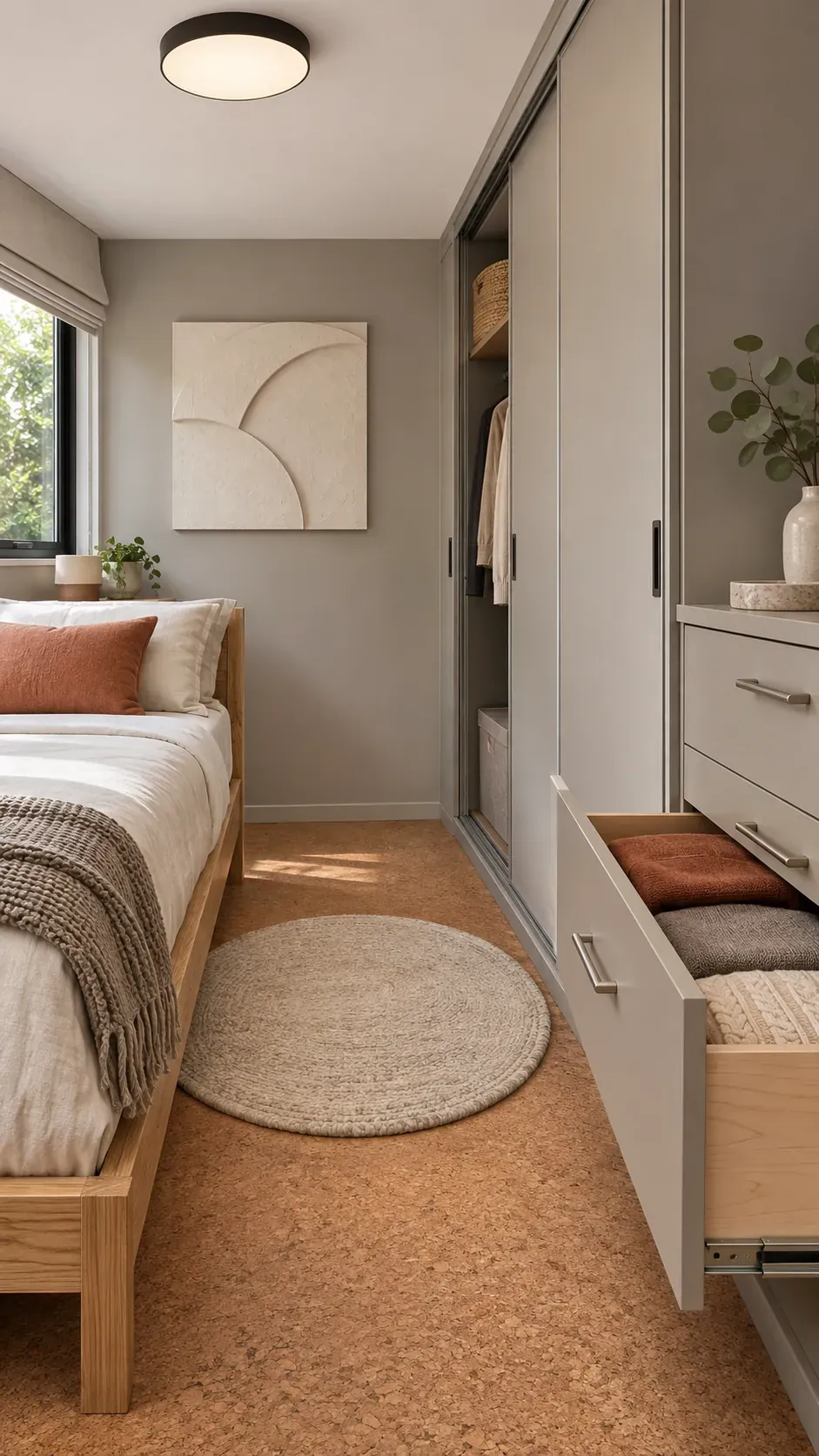
Use a corner arrangement only when it helps
Pushing a bed into a corner can create a larger open zone for a desk or play area, but it makes one side harder to reach and the bedding harder to change. It is often reasonable for one sleeper, a daybed, or a very narrow room. Test the layout with tape and live with the route for a day before moving heavy furniture.