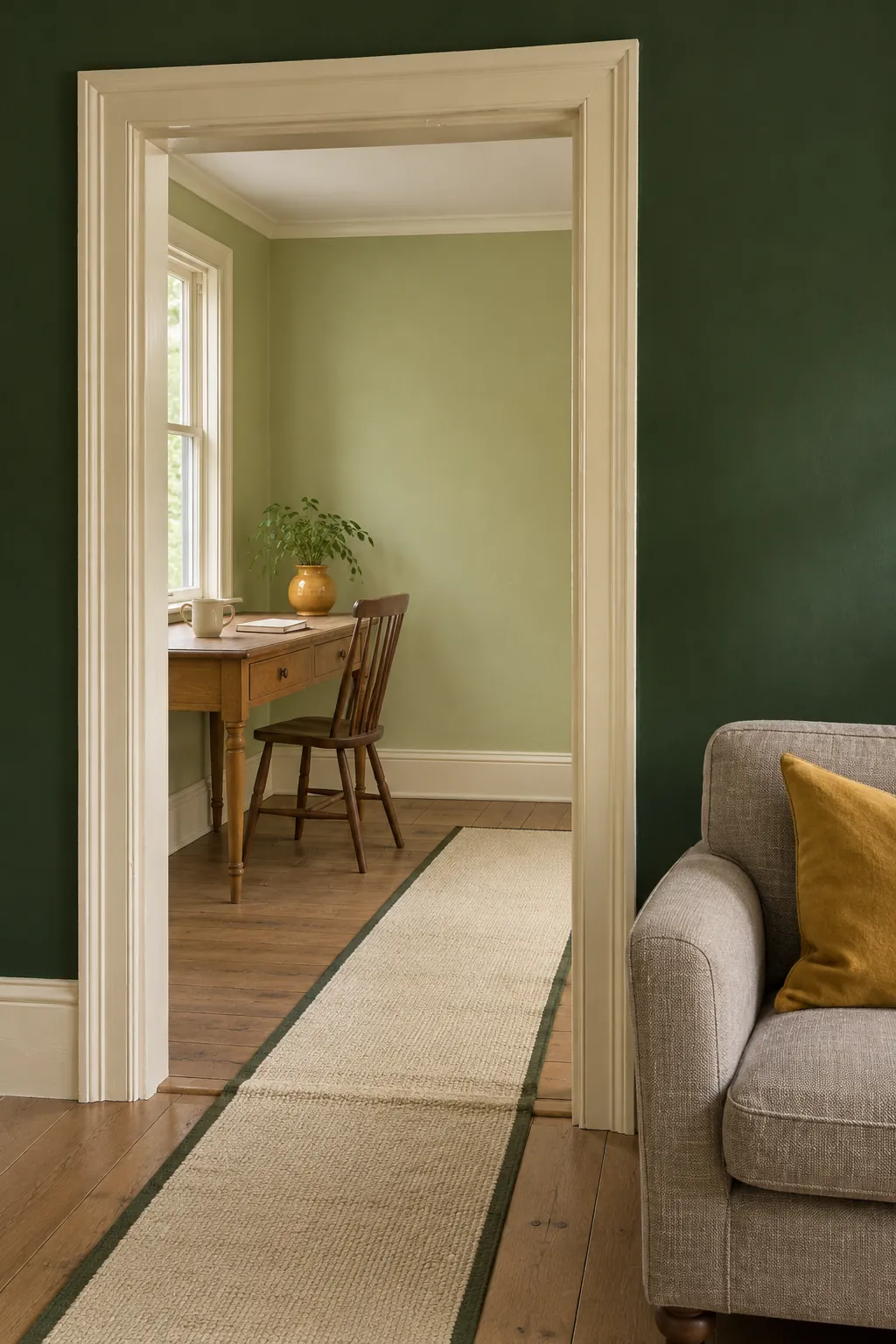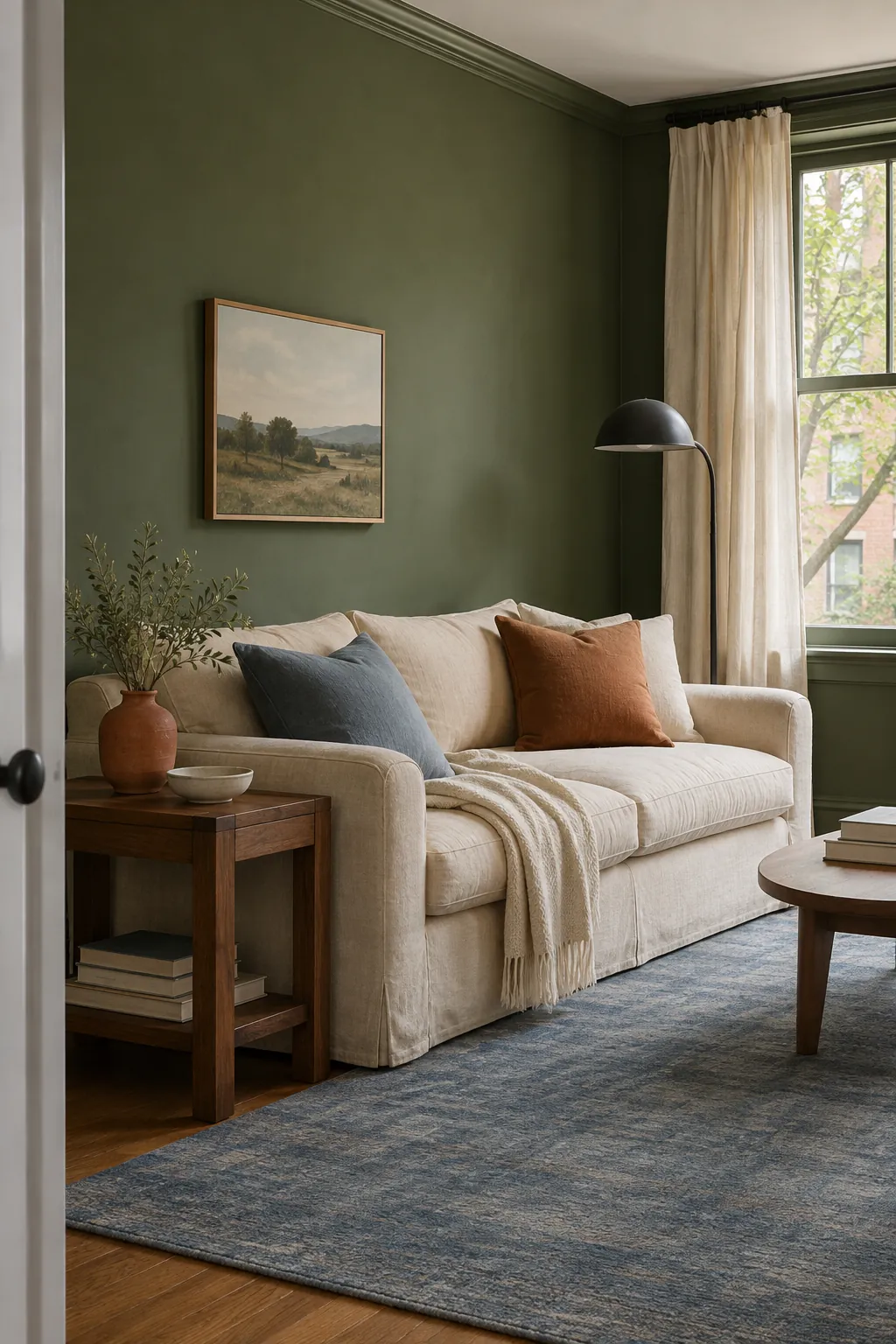
A green room can feel calm and connected to nature, but the same paint can look muddy, sharp, or unexpectedly dark when the surrounding colors work against its undertone. The useful question is not simply which colors match green. It is which colors help your particular green look intentional in your light, beside your floors, and next to the rooms that you can see from the doorway.
Read the green before choosing companions
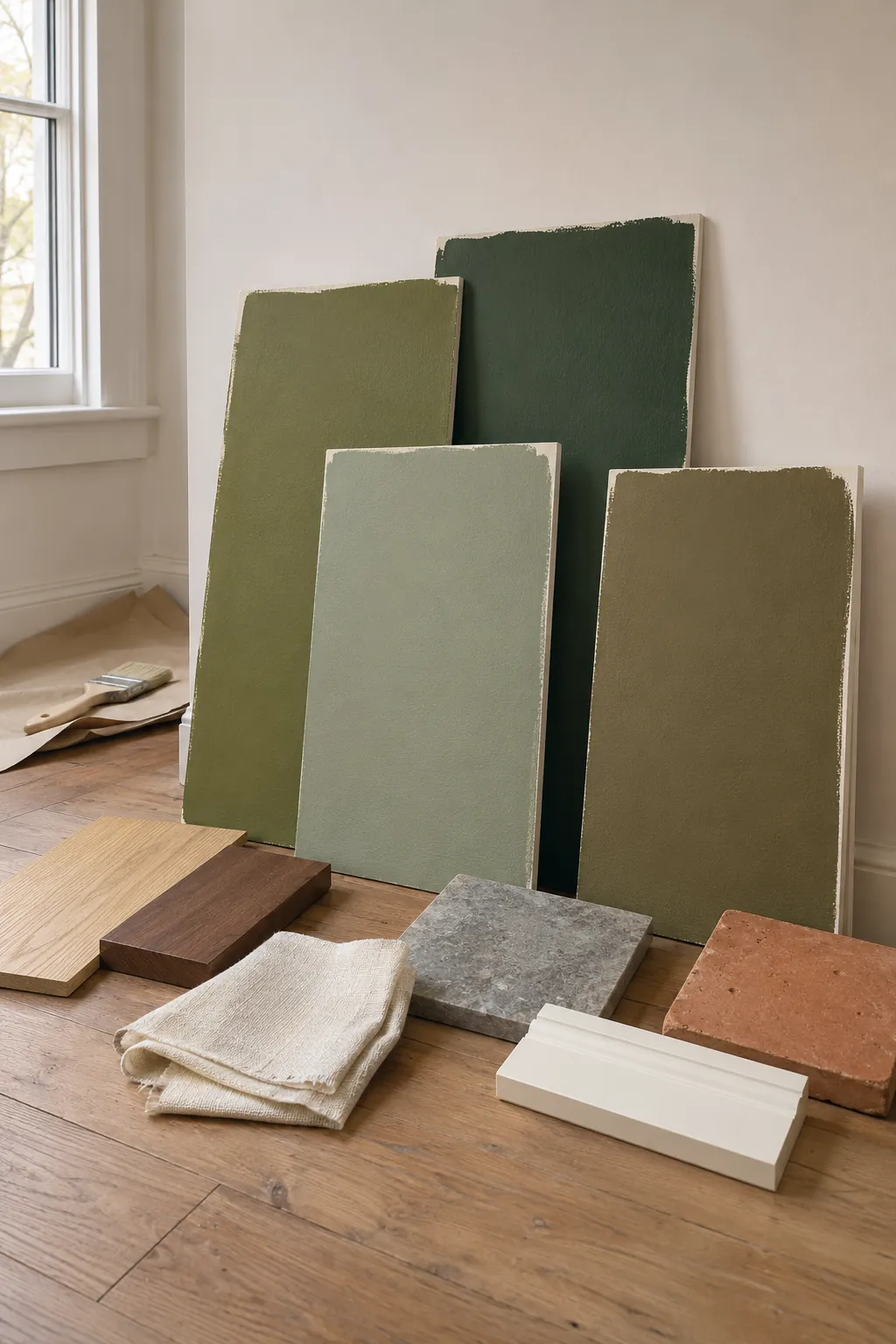
Start by deciding whether the wall color leans yellow, blue, gray, or brown. A yellow green usually feels happiest with cream, warm wood, ochre, and clay. A blue green often suits crisp white, charcoal, muted navy, and cool stone. Gray green is flexible, but it can turn lifeless beside a gray that has the wrong undertone.
Value matters just as much as undertone. Deep green needs enough pale surface area to keep a small room from feeling enclosed, while a pale green can handle darker furniture and stronger contrast. Paint a large sample and move it around the room for several days. Look at it beside the floor, trim, sofa, and curtains in morning light and after the lamps come on.
Use warm white and cream to create breathing room
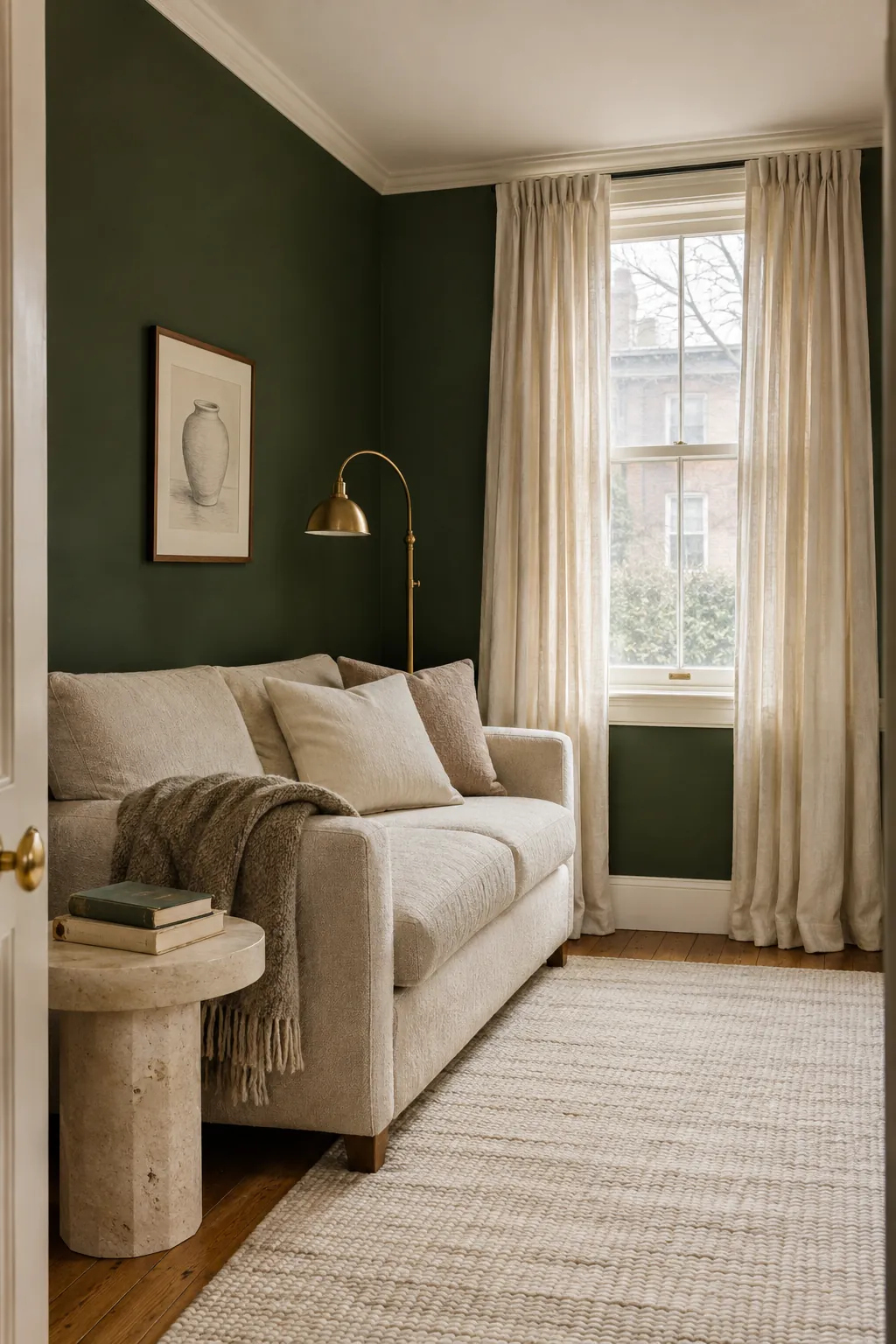
Warm white is the most forgiving partner for many green walls because it adds light without making the room feel clinical. Use it on trim, ceilings, lampshades, and larger curtains when the green is medium or dark. Cream works especially well with olive, moss, and sage because its soft yellow undertone supports their warmth.
A very clean blue white can make a warm green look dull or dirty by comparison. If the existing trim is fixed, compare the green directly against it before buying paint. Repeat the chosen white in at least two places so it reads as a deliberate part of the green wall color combination rather than an isolated patch.
Let wood tones provide warmth and structure
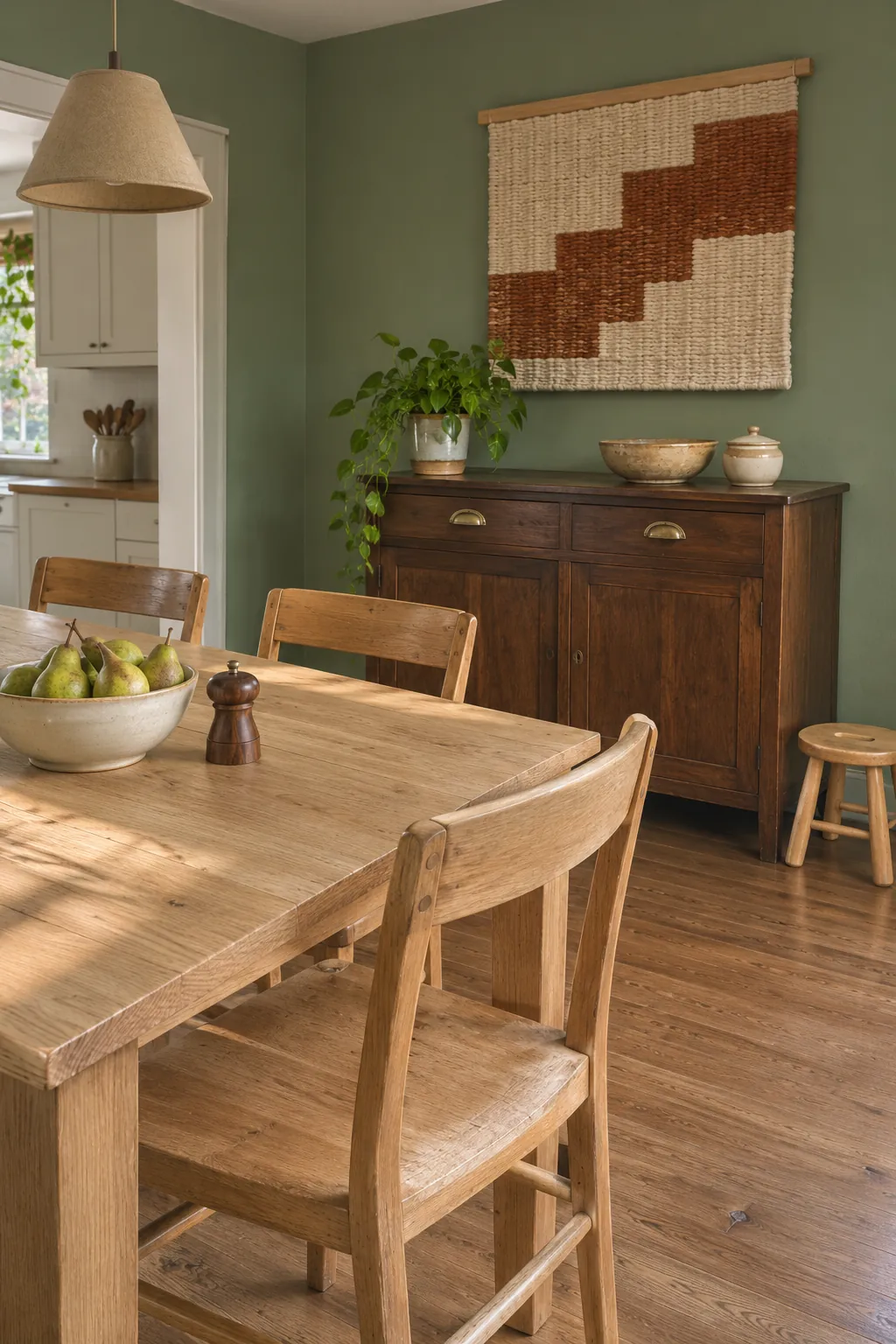
Wood is often the bridge that makes green and neutral interiors feel settled. Pale oak keeps a green bedroom or compact living room light. Walnut gives medium green a tailored contrast, while aged pine and warm teak strengthen the earthy character of olive or forest tones.
You do not need every wood finish to match. Choose one dominant temperature, then allow one secondary tone in a smaller dose. A walnut table can sit on an oak floor when another dark detail, such as a lamp base or curtain rod, repeats its depth. Avoid filling a dark green room with only heavy dark furniture unless the space has generous daylight and pale textiles to balance it.
For furniture with green walls, texture also changes how the color feels. Linen, woven cane, wool, and visible wood grain soften a strong paint color. Glossy black or lacquered pieces make the same wall look more formal and graphic.
Add clay, ochre, and muted blue as controlled accents
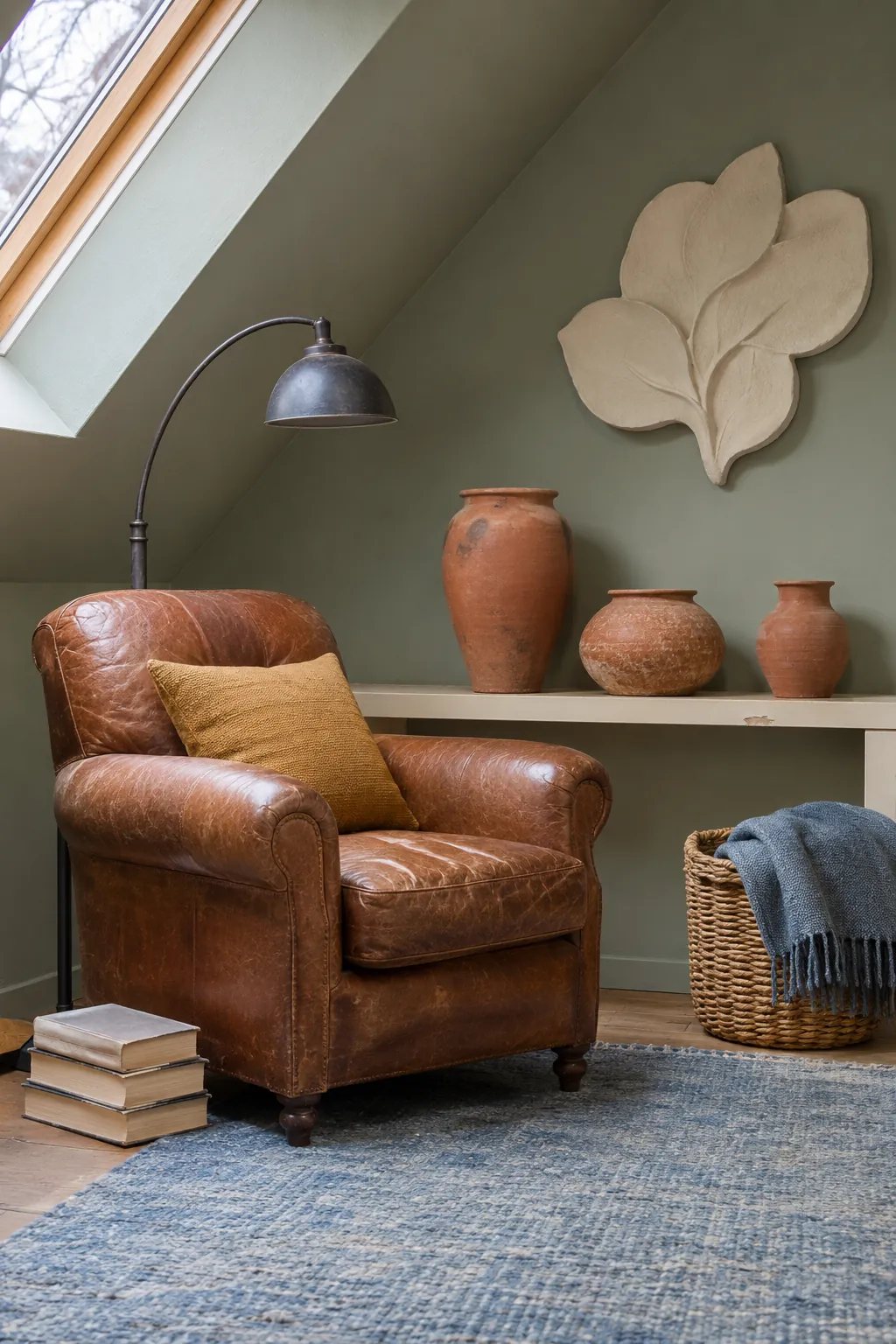
Terracotta and muted ochre bring out the sunlit side of green. They are useful in rugs, cushions, pottery, and one upholstered chair because a small amount creates warmth without turning the room into a theme. These accents are particularly effective when a green room opens toward a cream or ochre space.
Muted blue offers a quieter relationship. Dusty blue, denim, and softened navy sit comfortably beside blue green or gray green walls. Keep one color dominant and let the other appear in smaller areas. Equal blocks of strong green and bright blue can compete, while a green living room paint color with a faded blue rug feels layered and calm.
Choose rugs and curtains by visual weight
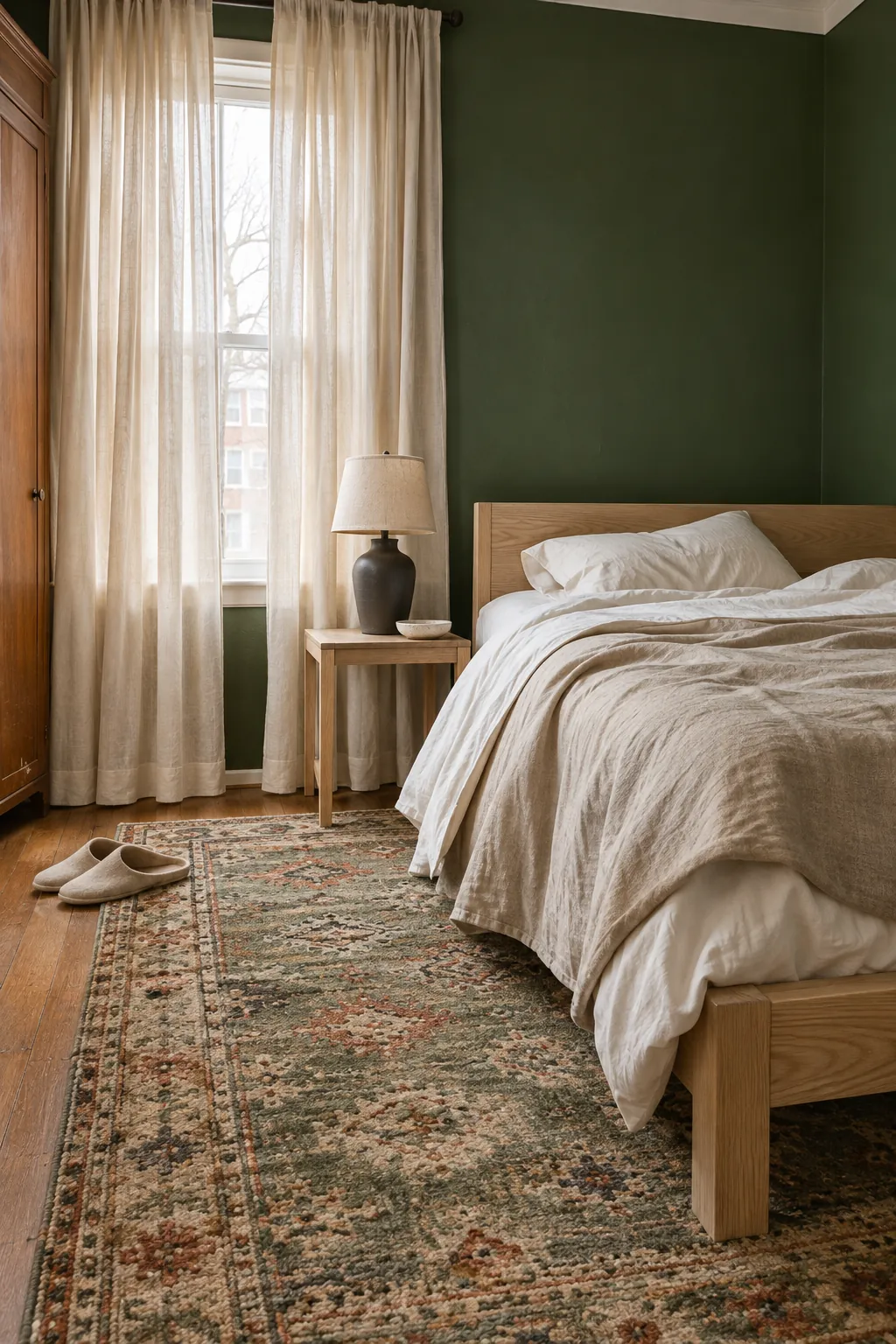
Rugs for green rooms should connect the wall to the furniture rather than introduce an unrelated palette. A cream wool rug lightens a dark room. A faded rug that includes green, rust, and beige can unite several existing finishes, while a charcoal pattern gives pale green walls a useful anchor.
Curtains for green walls affect a much larger area than cushions or art. Choose warm white linen when you want the wall to remain the focus. Select a close green tone for a soft wrapped effect, but vary the value so the window does not disappear. A small woven pattern can work when the sofa and rug are quiet. If the room already has many colors, plain curtains usually prevent visual noise.
Connect adjoining rooms without copying the paint
When a green wall continues into a view of another room, the two spaces need a shared note rather than identical paint. Repeat the green through a small textile, plant pot, or patterned rug in the next room. Then carry a color from that room back into the green space. This creates a visible conversation across the doorway.
If dark green feels too enclosed, keep it in the room with the best light and use a paler relative in the connecting area. The shared undertone will make light and dark green walls coexist naturally. Cream trim can provide another continuous line through both spaces.
Before committing, place samples where both colors can be seen at once. Check the view from each direction during the brightest and dimmest parts of the day. A successful pairing should make the transition feel calm even when furniture, doors, and shadows interrupt the view.