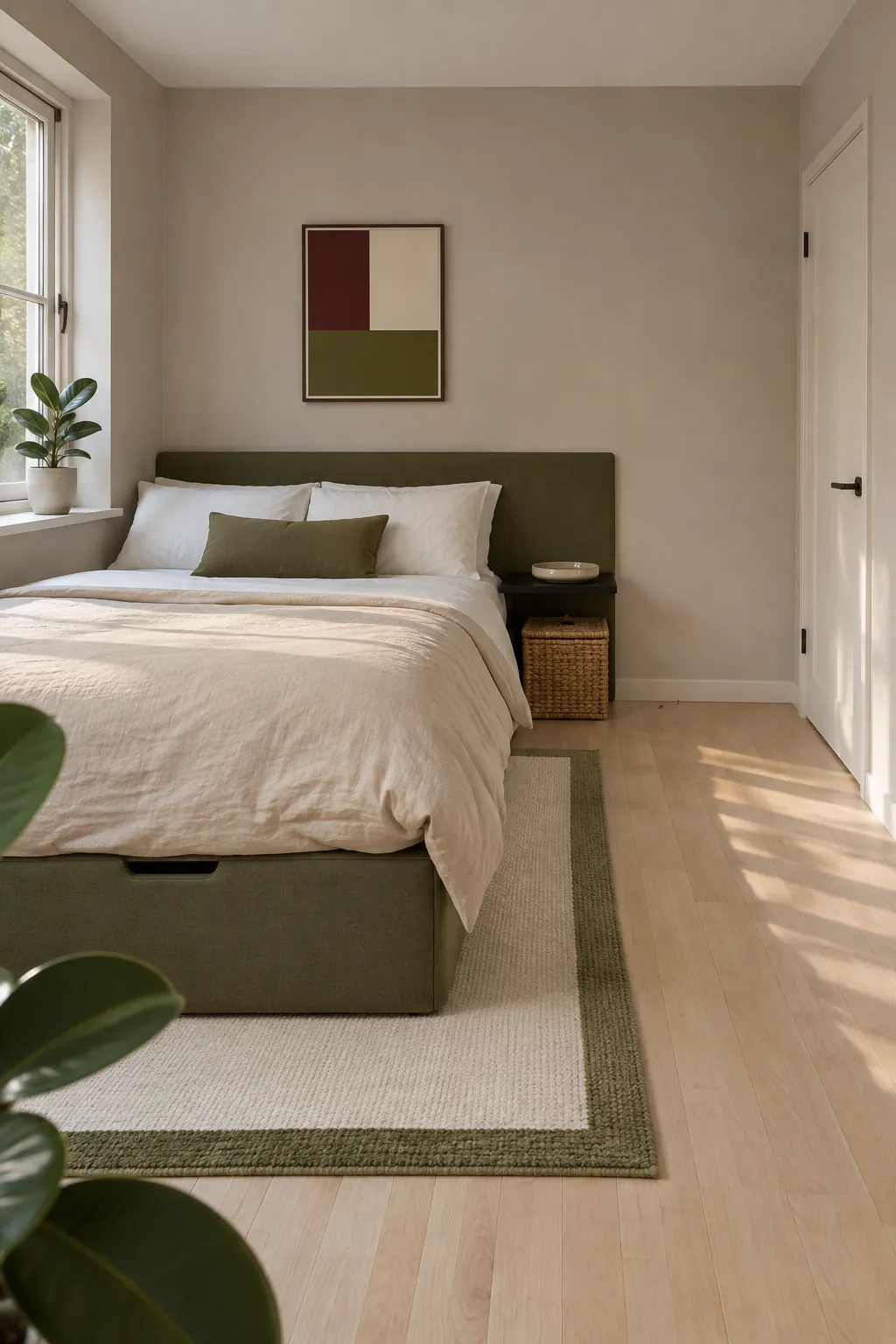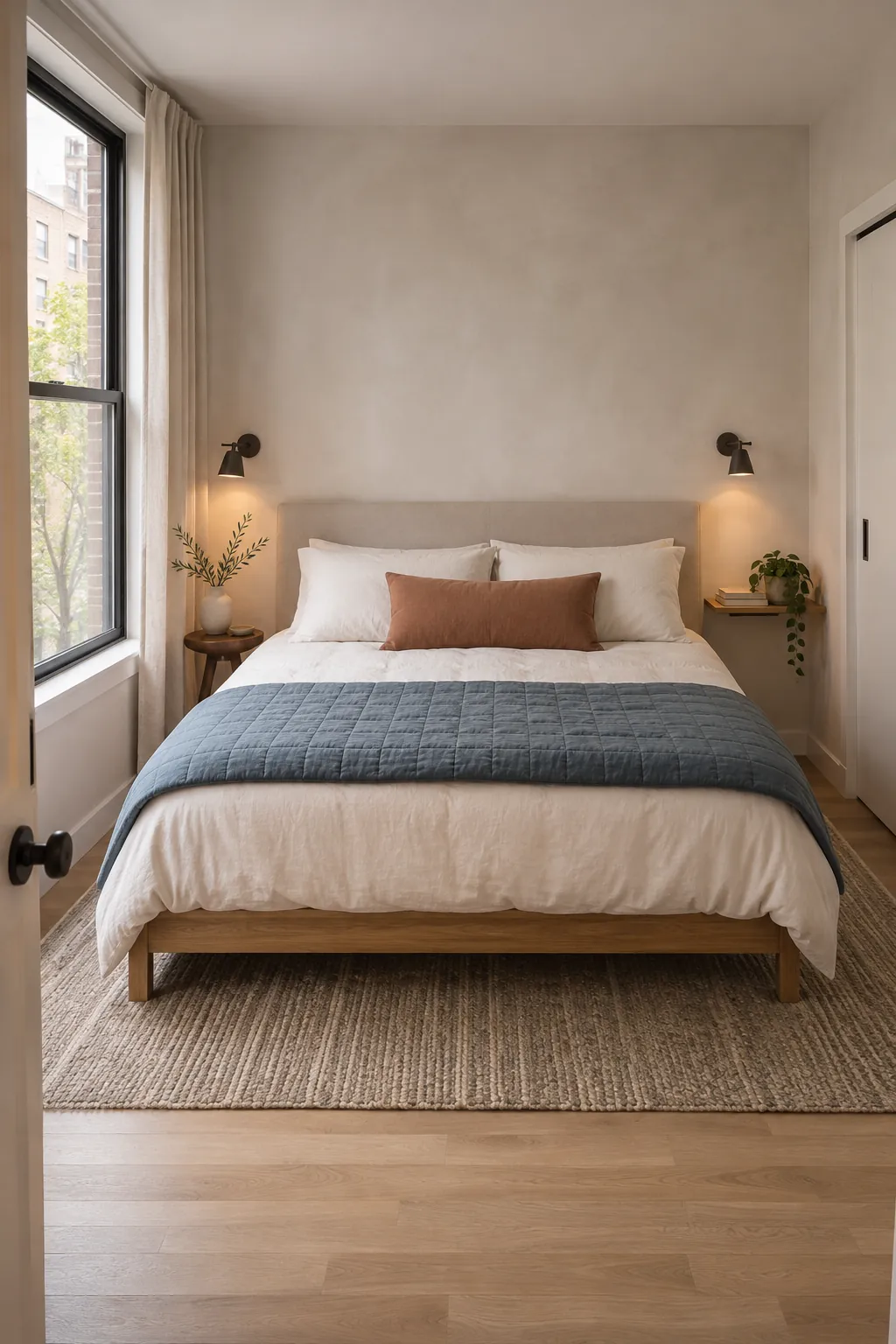
A queen bed can earn its place in a compact bedroom, but every object around it has to justify the floor space it takes. The useful starting point is not decoration. It is a clear route to the door, closet, drawers, and both sides of the mattress where possible. Once those paths work, a restrained mix of scale, texture, and light can make the bed feel intentional rather than oversized.
Measure the usable paths first
Mark the full swing of the bedroom and closet doors before you choose a bed position. Open every drawer that faces the bed and check whether you can stand in front of it. A narrow passage can work when the route is direct, but a pinch point beside an open door becomes frustrating every day.
Centering the headboard on the clearest wall usually gives the room the calmest view. In a very narrow queen bed layout, pushing one side closer to a wall may preserve a useful path on the other side. That choice is practical for one sleeper, though two sleepers may prefer slimmer access on both sides. Test the arrangement with painter tape or boxes before moving heavy furniture.
Choose a visually light bed frame
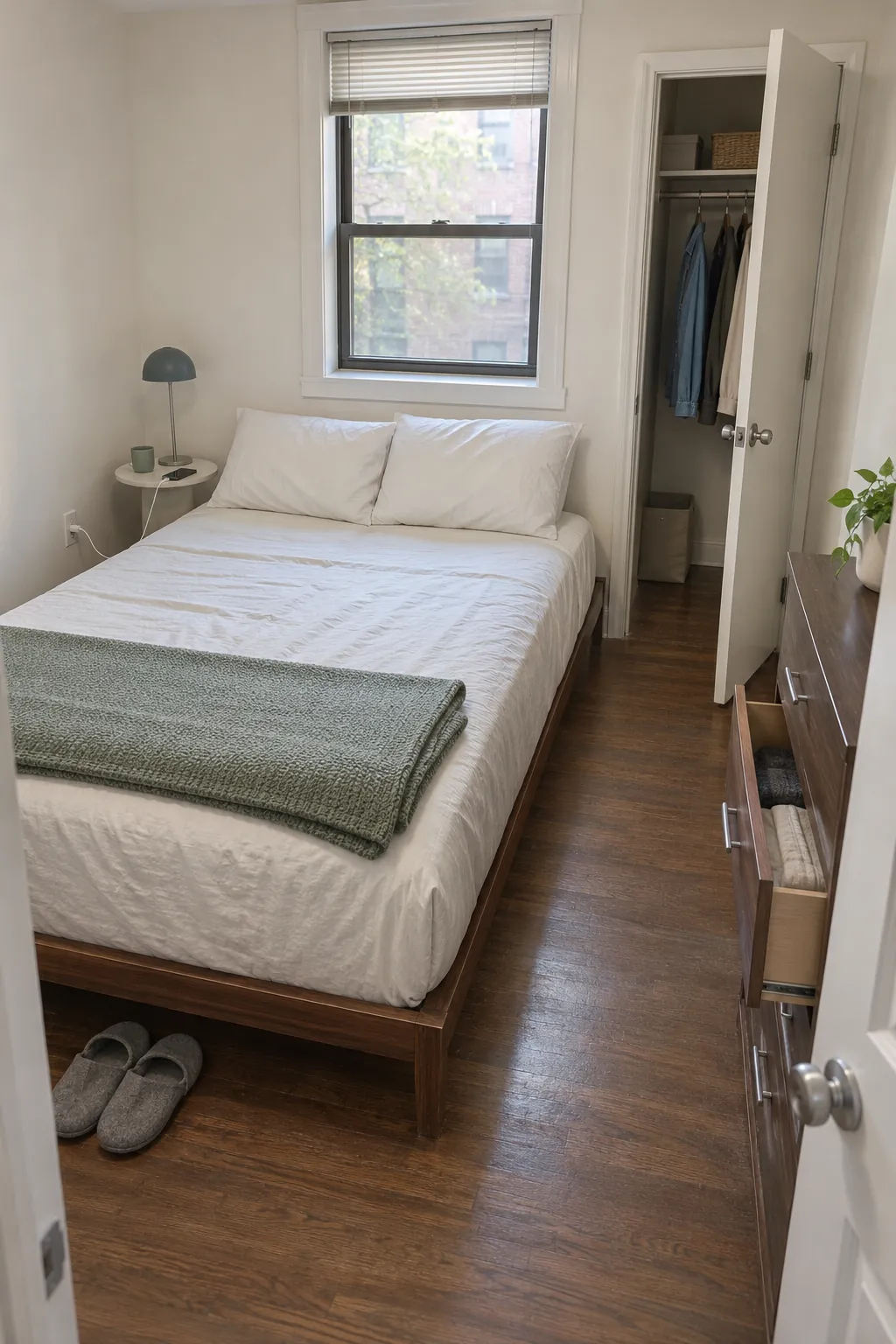
A low profile headboard keeps more wall visible and reduces the sense that the bed is filling the whole room. Slim wood rails, a simple upholstered panel, or an open spindle design can provide definition without adding a deep surround. Avoid thick footboards if they crowd the route at the end of the mattress.
The frame still needs to suit daily life. A storage queen bed can replace a dresser when its drawers open into a clear aisle. A lift base is often better when side drawers would hit a wall or nightstand. Check the total frame dimensions, not only the mattress size, because broad rails can quietly consume several valuable inches.
Keep the bedding tailored and soft
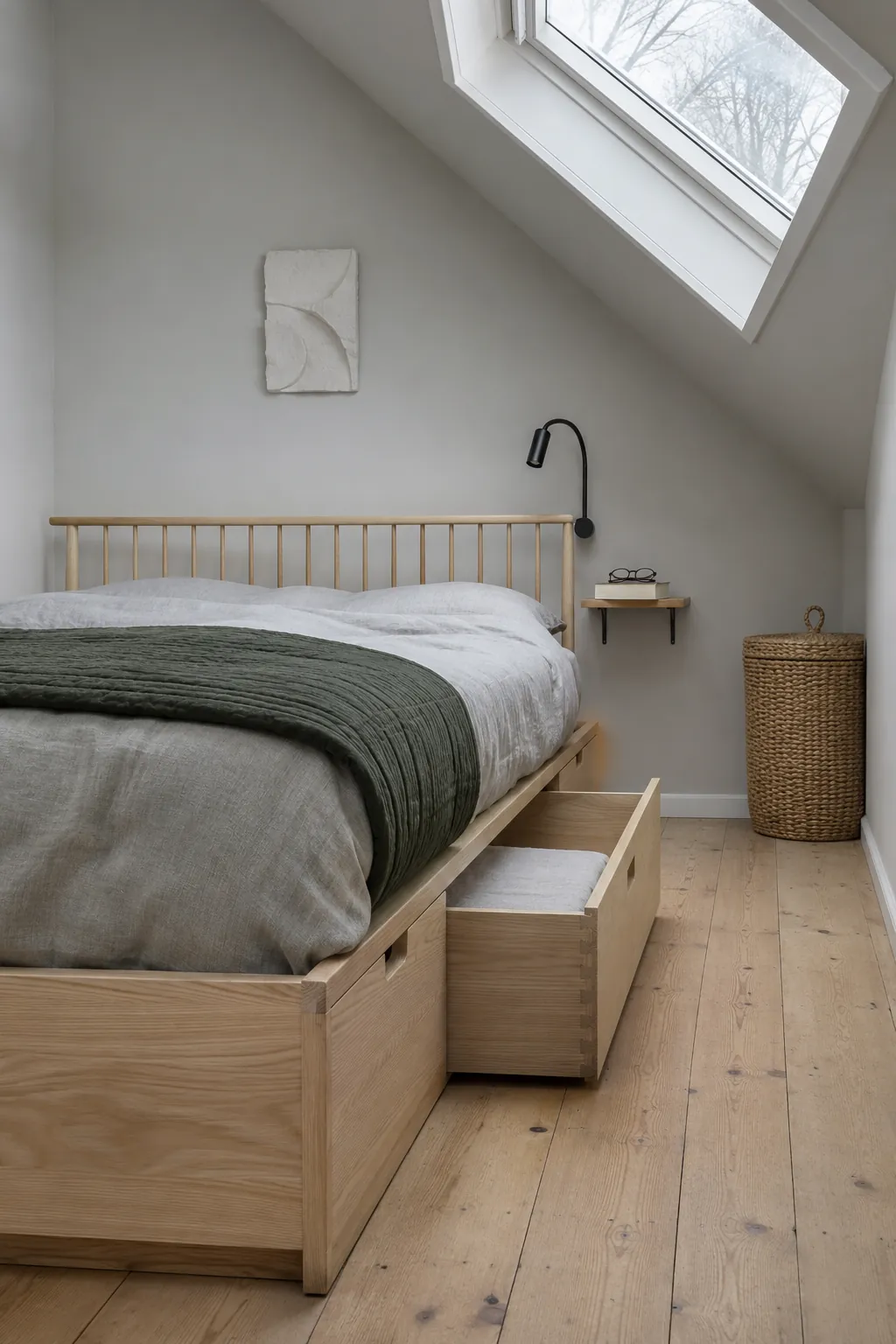
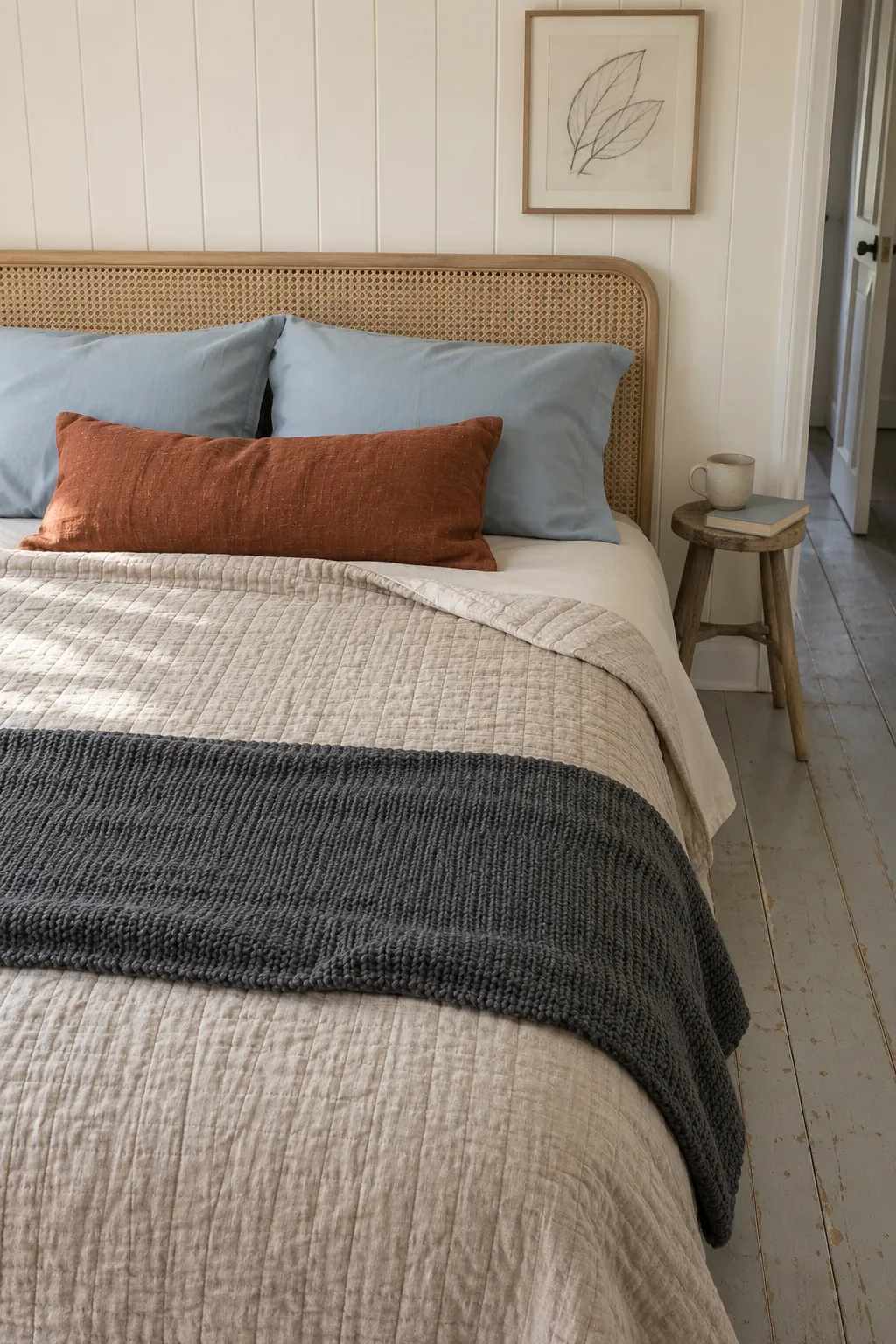
Minimal bedding layers give the bed a finished look without creating a bulky mound. Start with a fitted sheet, a smooth coverlet or duvet, sleeping pillows, and one lumbar cushion or two modest decorative pillows. Let the cover fall neatly over the sides, but keep it clear of the floor so the frame remains visible.
Choose two or three related colors instead of matching every piece. Warm white, oatmeal, clay, muted blue, and soft green can add depth while keeping the largest surface calm. Texture provides more interest than a crowded pillow collection: washed cotton, a linen blend, a lightly quilted coverlet, and one knitted throw are enough. Fold the throw across the lower third of the bed so it adds a horizontal line rather than visual clutter.
Replace bulky nightstands with narrow surfaces
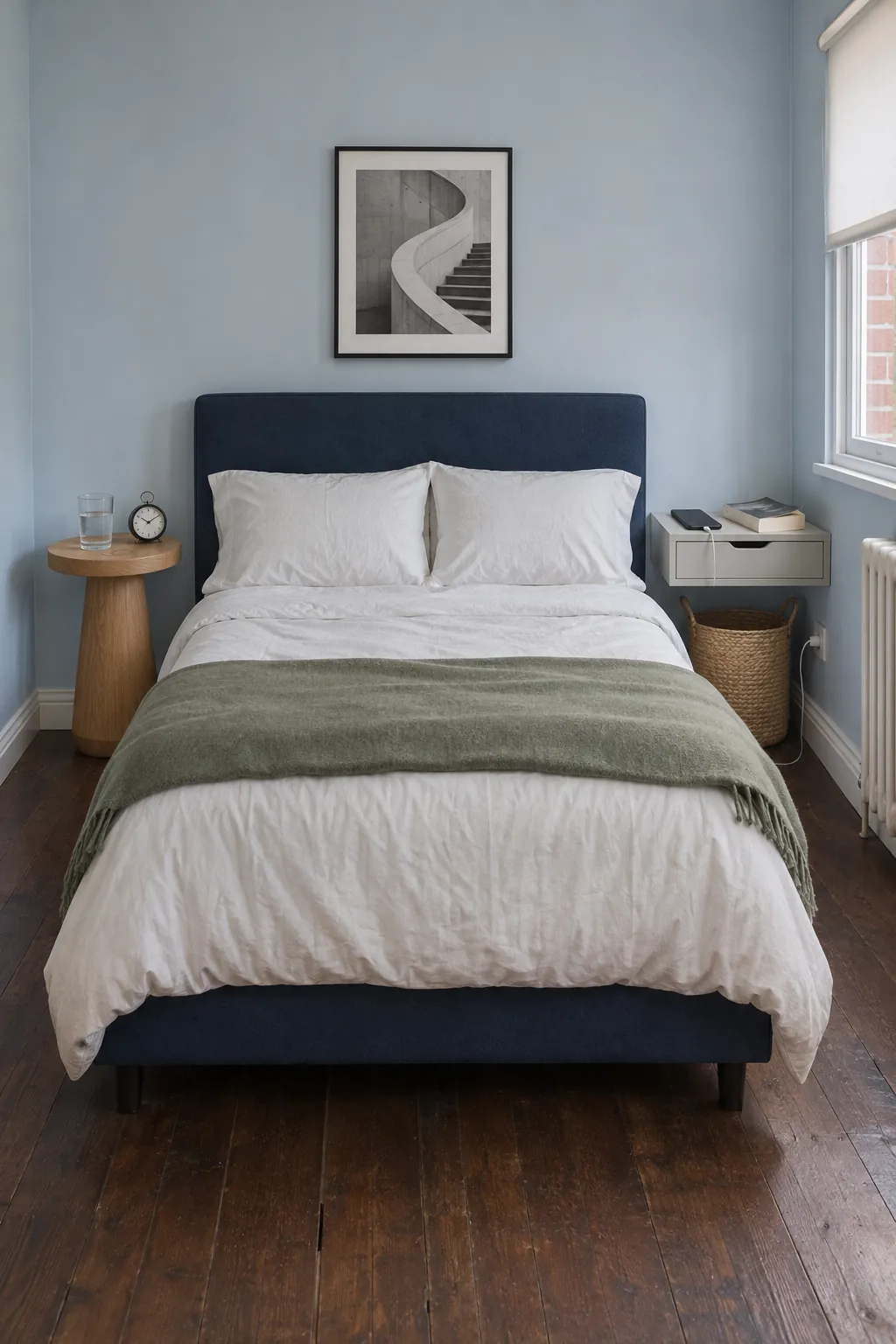
Narrow nightstands should hold the real bedtime essentials without narrowing the passage. A small pedestal table, compact drawer unit, or wall shelf can support a phone, water glass, and book. Rounded corners are helpful beside a tight route because they make the space easier to move through.
The two sides do not have to match. One sleeper might need a drawer while the other side only needs a shallow shelf. Keep the heights close to the top of the mattress so each surface is comfortable to reach. If storage is scarce, use one closed piece for visual calm and place a slim basket beneath the lighter surface.
Move the lamps onto the wall
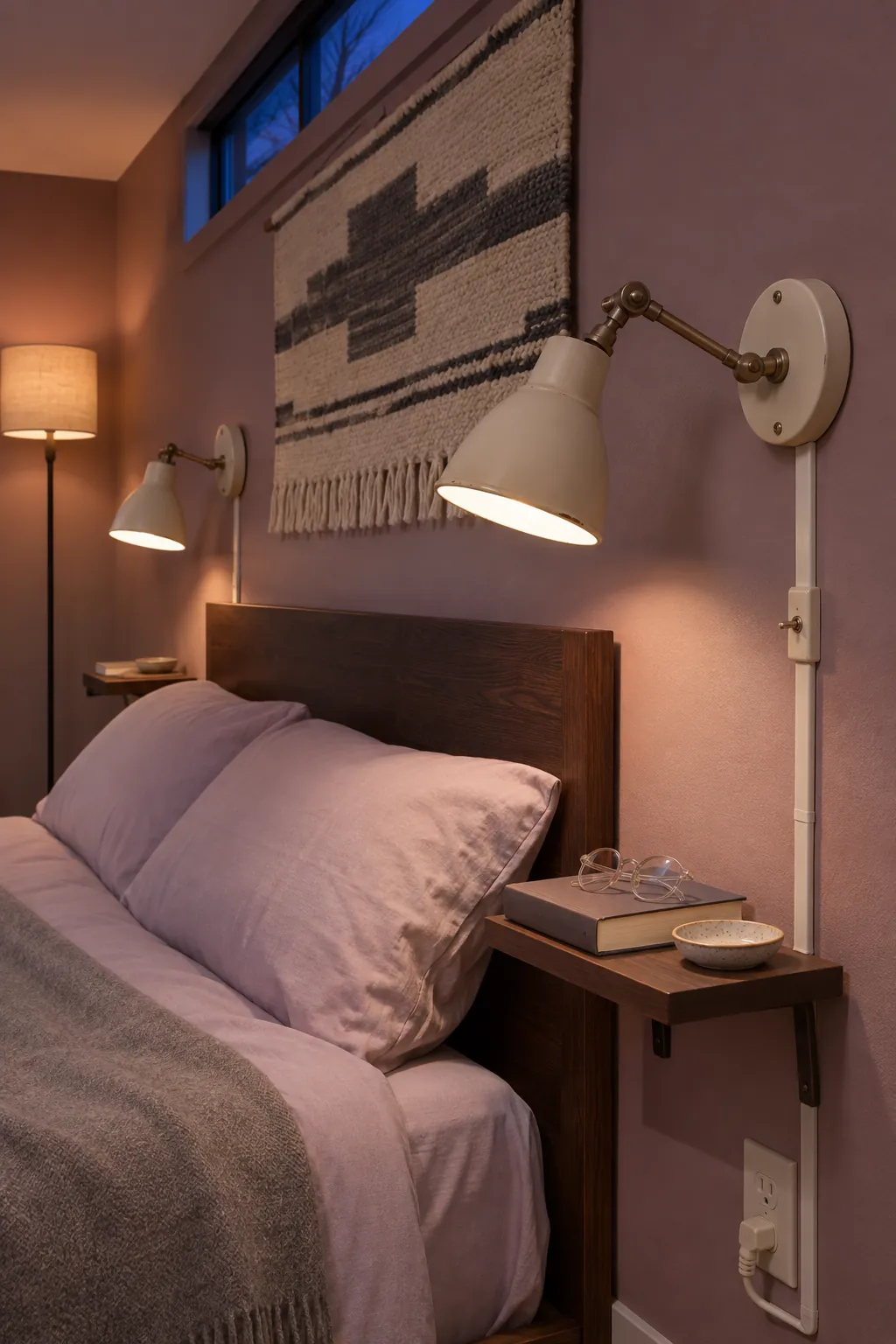
Wall mounted bedside lamps free the top of a narrow table and draw the eye upward. Plug in sconces are useful for renters because they need no permanent wiring, and a cord cover can keep the installation orderly. Choose an adjustable arm or shade that directs light onto a book without shining across the whole room.
Use more than one level of light. Bedside lamps provide focused evening light, while a shaded ceiling fixture or small corner lamp spreads a softer glow. Warm bulbs usually make bedding and wood tones feel more comfortable than a cold overhead source. Keep the fixtures compact and position the switches where they can be reached from bed.
Anchor the bed without crowding the floor
Small bedroom rug placement works best when the rug connects the bed to the room instead of floating at the foot. A rug can begin below the nightstands and extend beyond the lower part of the bed, or a smaller rug can sit across the lower half with a visible border on three sides. Measure the exposed area before buying, since a rug that barely reaches past the mattress can look accidental.
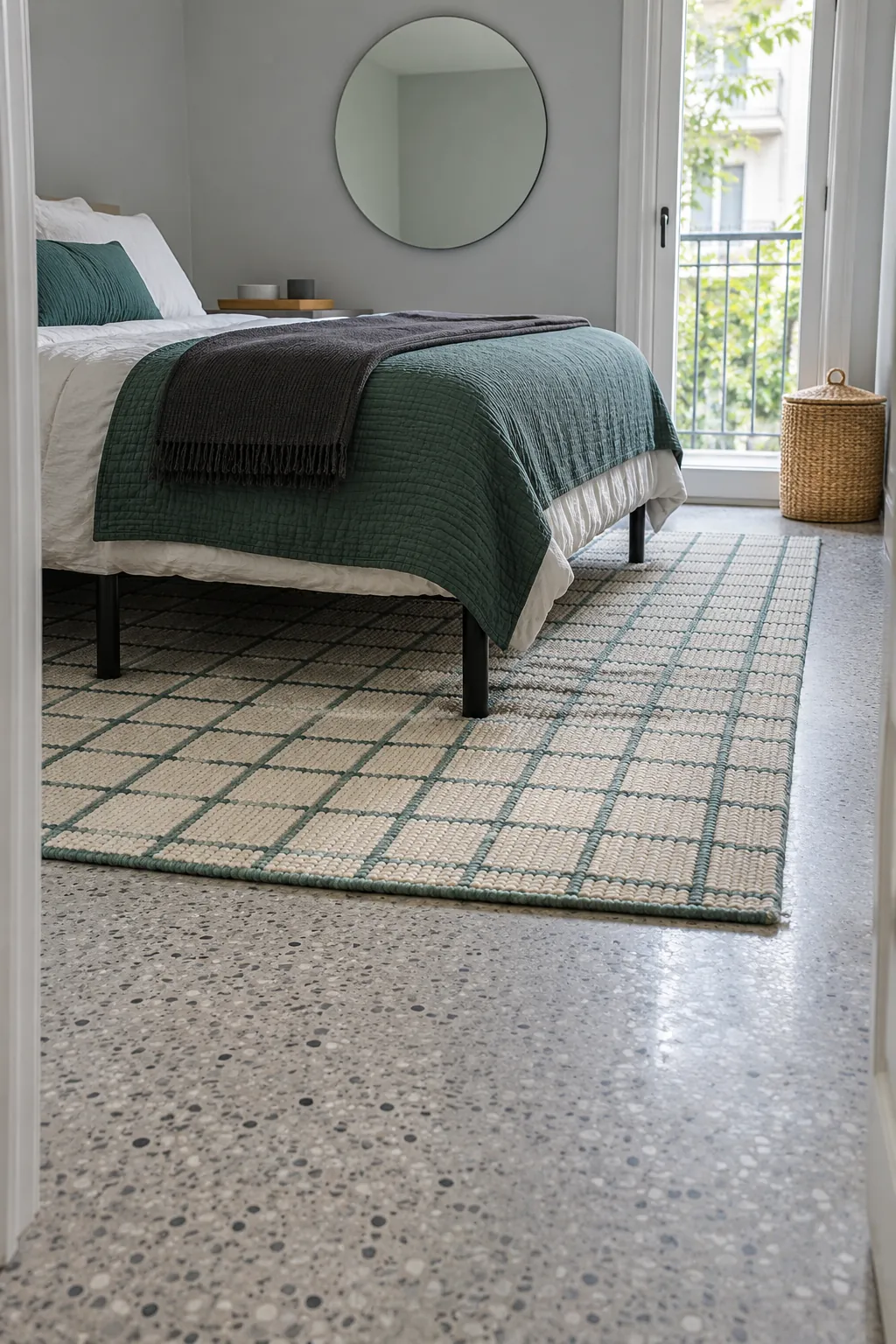
Keep the remaining floor easy to clean and resist filling each open corner. One useful basket, a shallow tray, or a bench only when the foot path allows it is enough. Repeat one bedding color in the rug, then let the other surfaces stay quiet. The finished room should support sleep and movement first, with decoration reinforcing that order rather than competing with it.