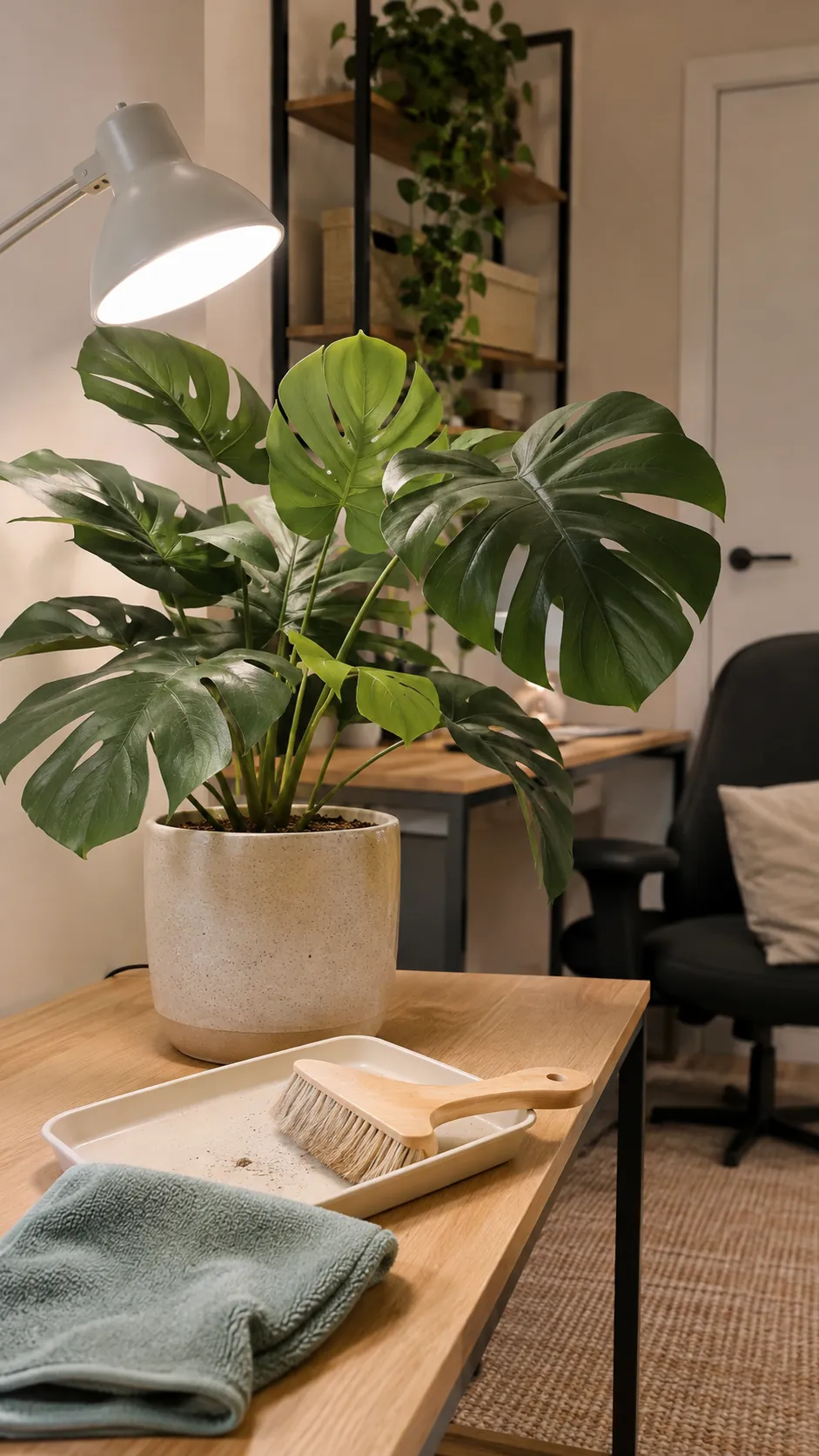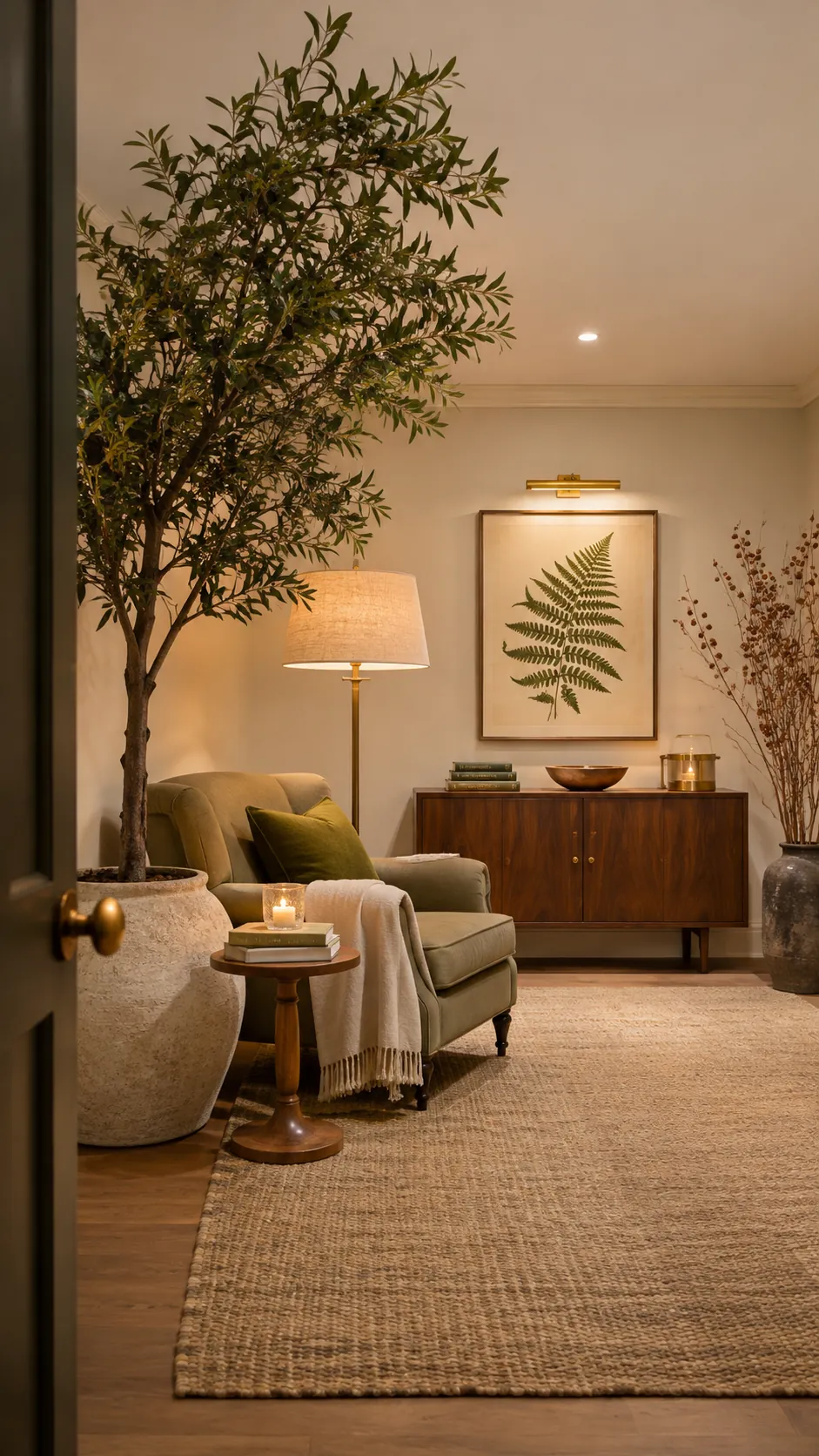
A room can feel flat and sealed off when daylight never reaches it. Putting a living plant there does not solve the problem if the plant slowly declines, and the label low light does not mean no light. A better approach is to build the feeling of nature with believable foliage, botanical forms, layered materials, and lighting that makes green accents feel intentional.
Start by Accepting the Actual Light Level
Watch the room through a normal day before buying anything. If you cannot comfortably read there without a lamp, most live plants will not receive enough energy for steady growth. A snake plant or pothos may survive for a time, but survival is not the same as healthy growth.
You can add a proper grow light if caring for living plants matters to you. Otherwise, treat the darkness as a design constraint and choose greenery that does not pretend biology can be ignored. This decision prevents repeated plant loss and lets you spend the budget on a result that will stay attractive.
Choose Fewer Faux Plants with Better Detail
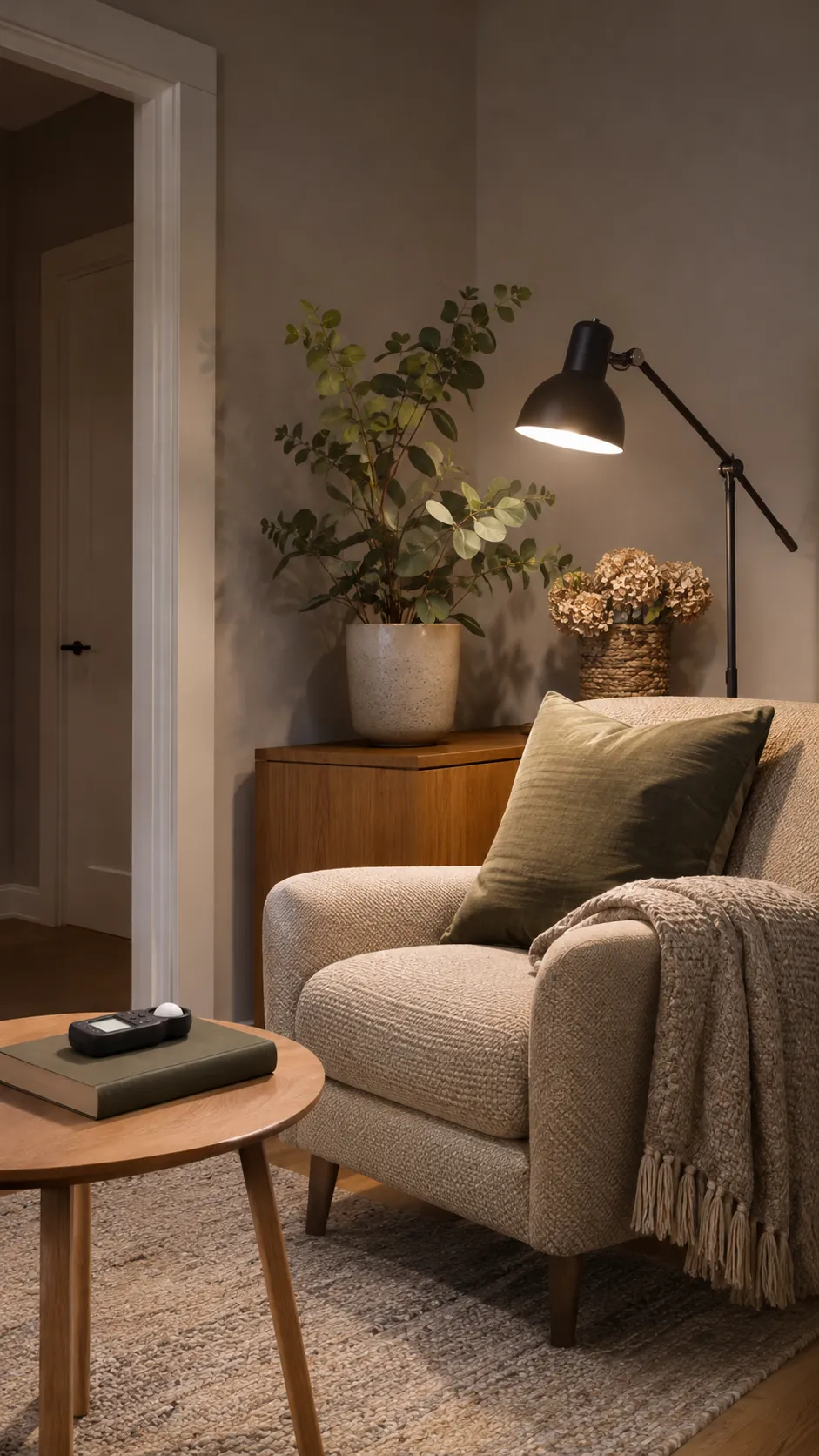
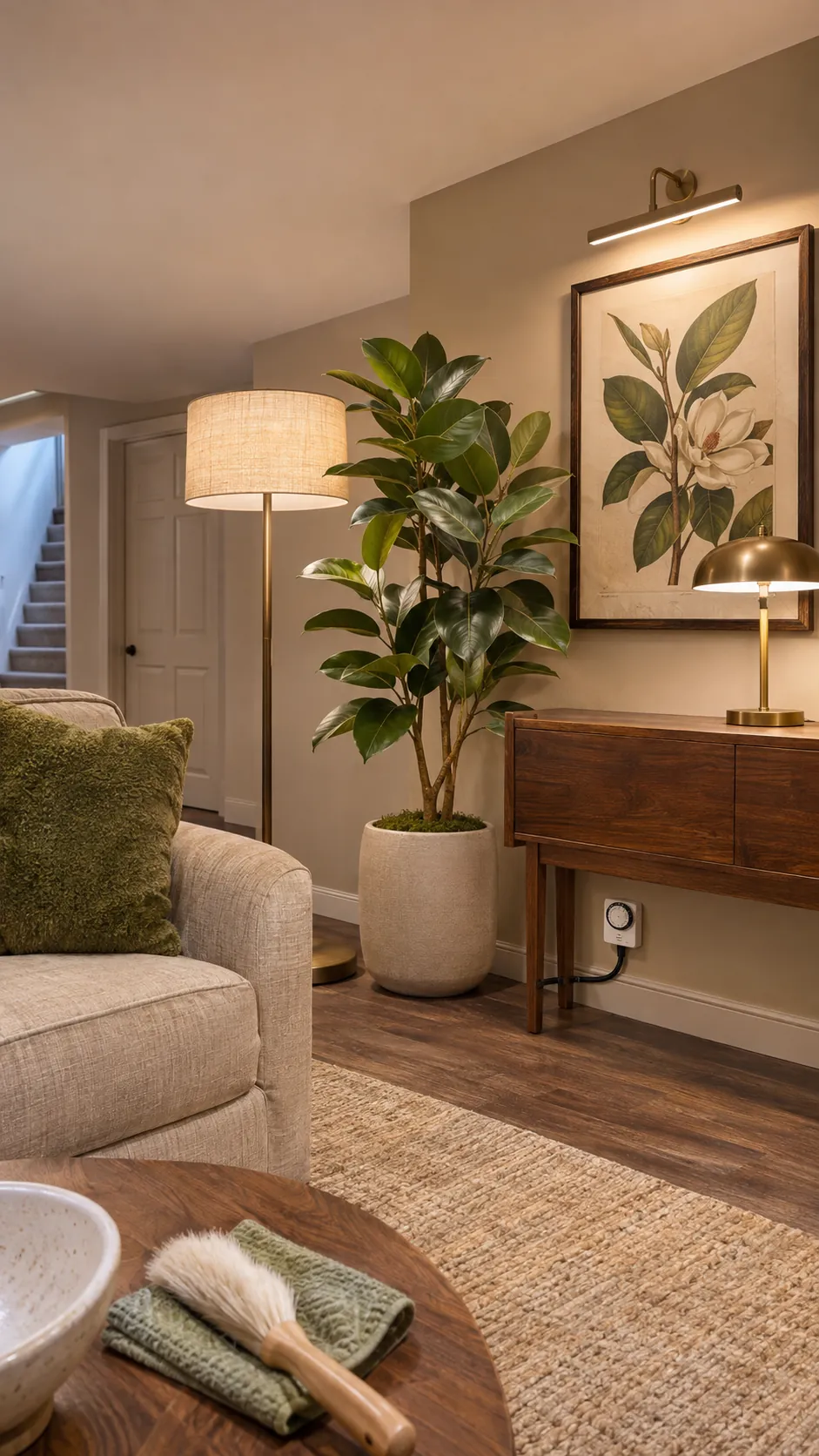
One convincing artificial tree usually looks better than a shelf filled with identical plastic leaves. Look for varied leaf angles, several shades of green, visible vein patterns, and stems that change thickness naturally. Avoid glossy leaves with repeated shapes because they reveal the construction immediately.
Place the plant where a real specimen might plausibly sit, such as beside a chair or near a lamp, instead of hiding it in an impossible ceiling corner. Set the nursery base inside a substantial planter and cover the top with preserved moss, cork pieces, or clean bark. The heavier container gives the arrangement visual weight and makes the foliage feel part of the room.
Layer Botanical Art with Green Textiles
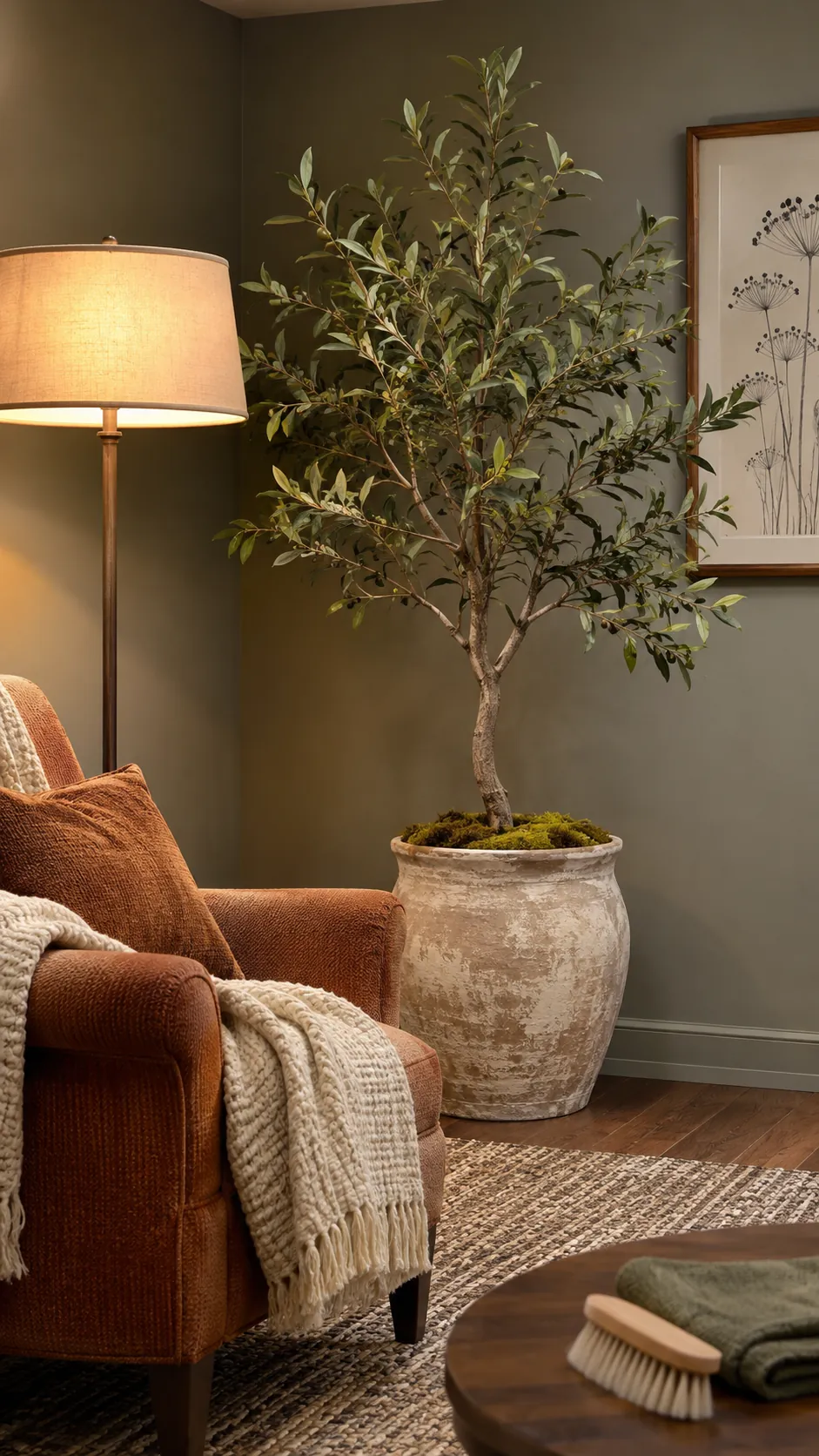
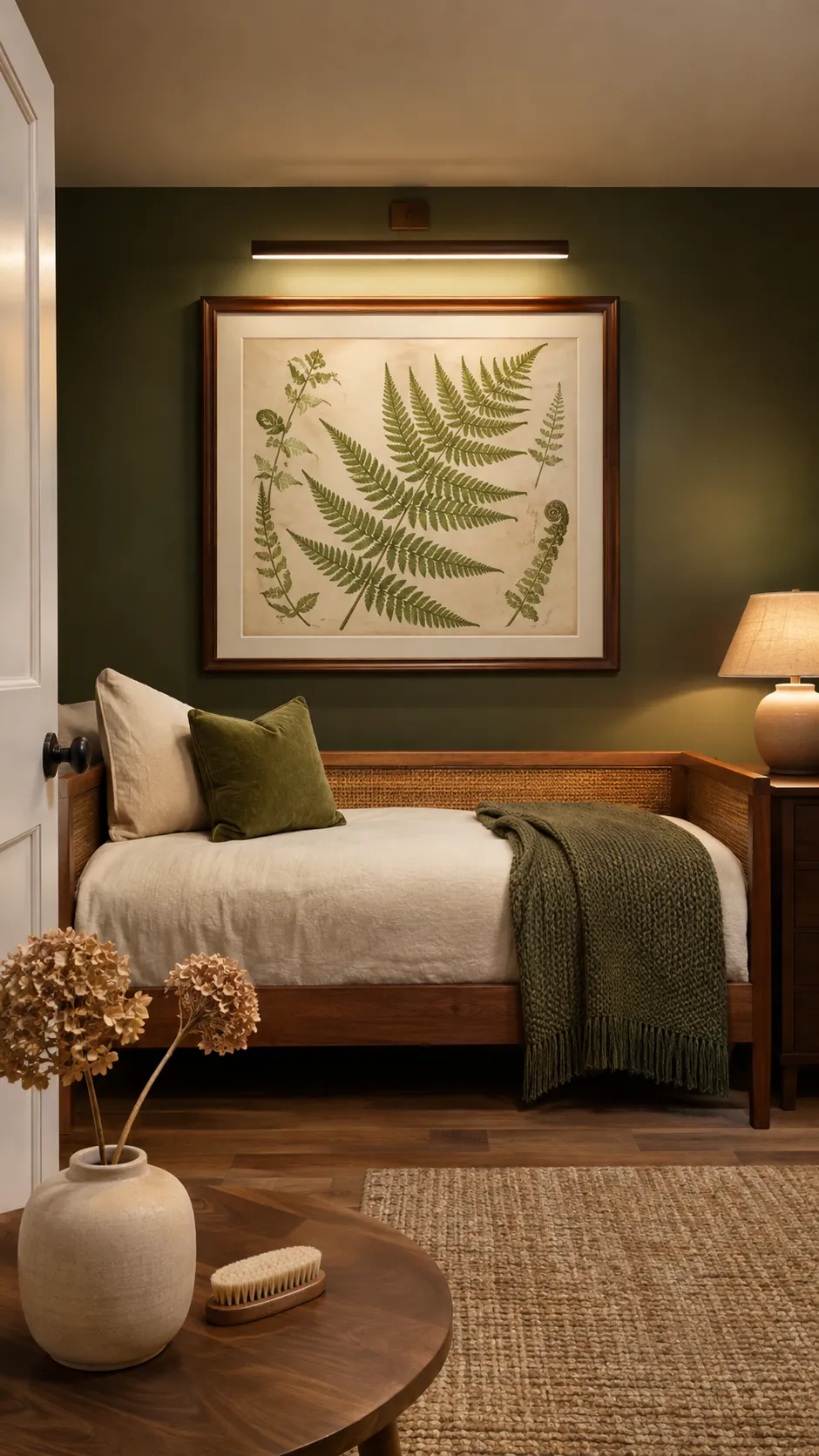
Greenery can come from pattern and color rather than a three dimensional plant. A large botanical print gives the eye a clear natural subject, while a green cushion or woven throw repeats the color at seating level. Keep the surrounding palette quiet so these references do not become a themed collection.
Choose art with identifiable leaves or branches instead of vague green marks. Add texture through linen, wool, or cotton so the room gains the irregular surfaces associated with nature. Two or three connected elements are enough to establish the idea without covering every wall.
Use Preserved and Dried Natural Forms
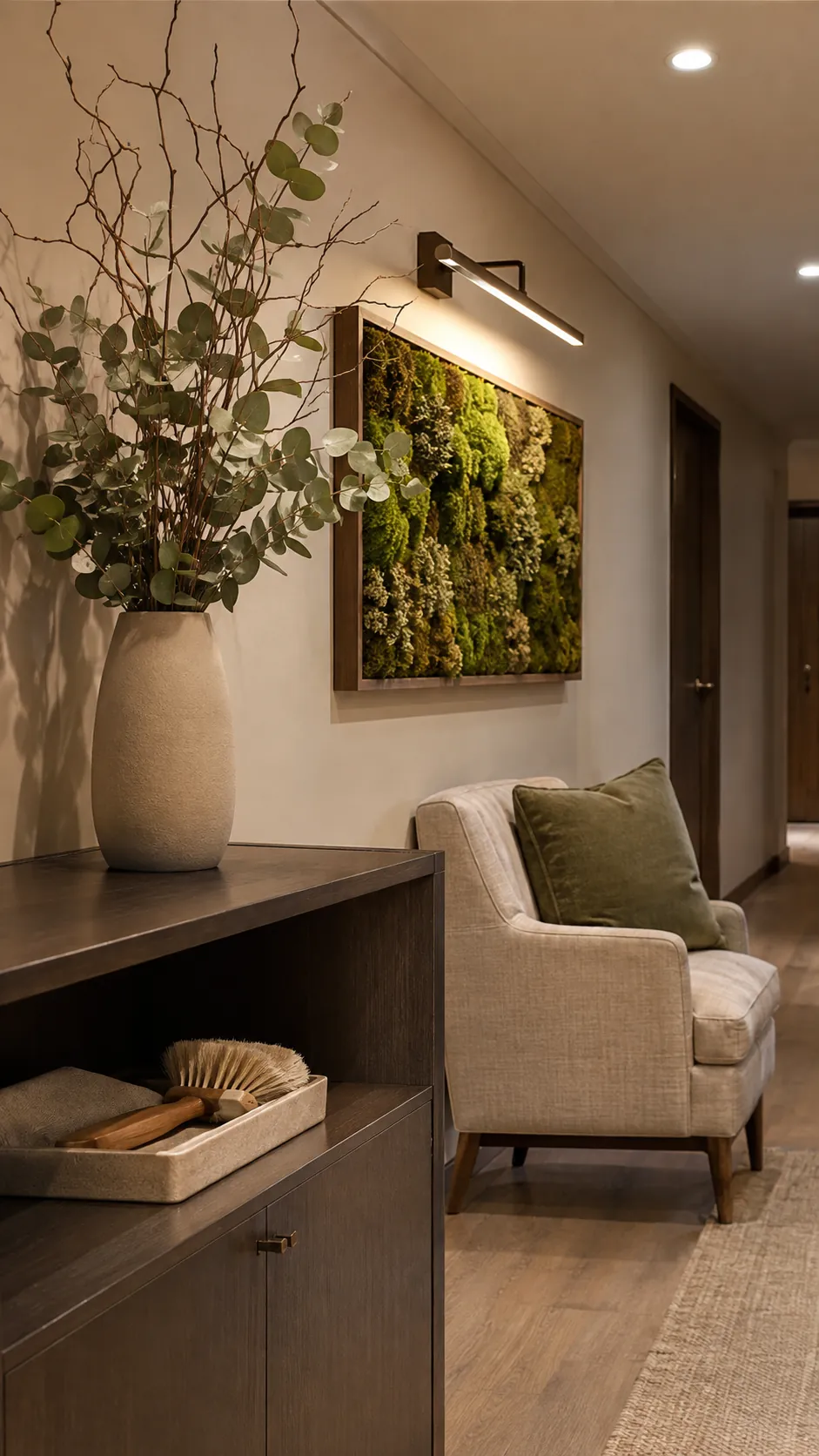
Preserved moss, dried eucalyptus, and sculptural branches bring real plant material into a space without asking it to grow. Their muted colors are especially useful when bright artificial foliage would feel too sharp. Keep arrangements simple so their silhouettes remain easy to read in limited light.
Display dried stems in an opaque vase and keep them away from damp areas or strong heat. A framed preserved moss panel can add color and softness, but it still needs occasional gentle dusting. These materials age, so remove brittle or faded pieces rather than letting the arrangement become tired.
Let Lighting Make Green Accents Feel Alive
A dark room needs more than one bright ceiling fixture. Combine a warm shaded lamp with a directed light that grazes a botanical print, faux tree, or textured wall. The small variations between highlight and shadow give leaves and natural materials more depth.
Keep the light color comfortable and neutral enough that green does not turn yellow. Place bulbs where they do not create harsh glare on plastic foliage or glass frames. A timer can make the room welcoming at the same hours each day, even when no daylight enters.
Keep Artificial Greenery Clean and Convincing
Dust is the detail that makes faux plant decor look neglected fastest. Use a soft wide brush or microfiber cloth to clean leaves from the stem outward, supporting each branch with your other hand. Work from the top down so loose dust does not settle on areas you already cleaned.
Check the plant from normal viewing height after cleaning and reshape any compressed branches. Remove loose debris from the planter surface and wipe the container at the same time. A small collection that receives regular care will support the room better than many pieces that become gray and forgotten.