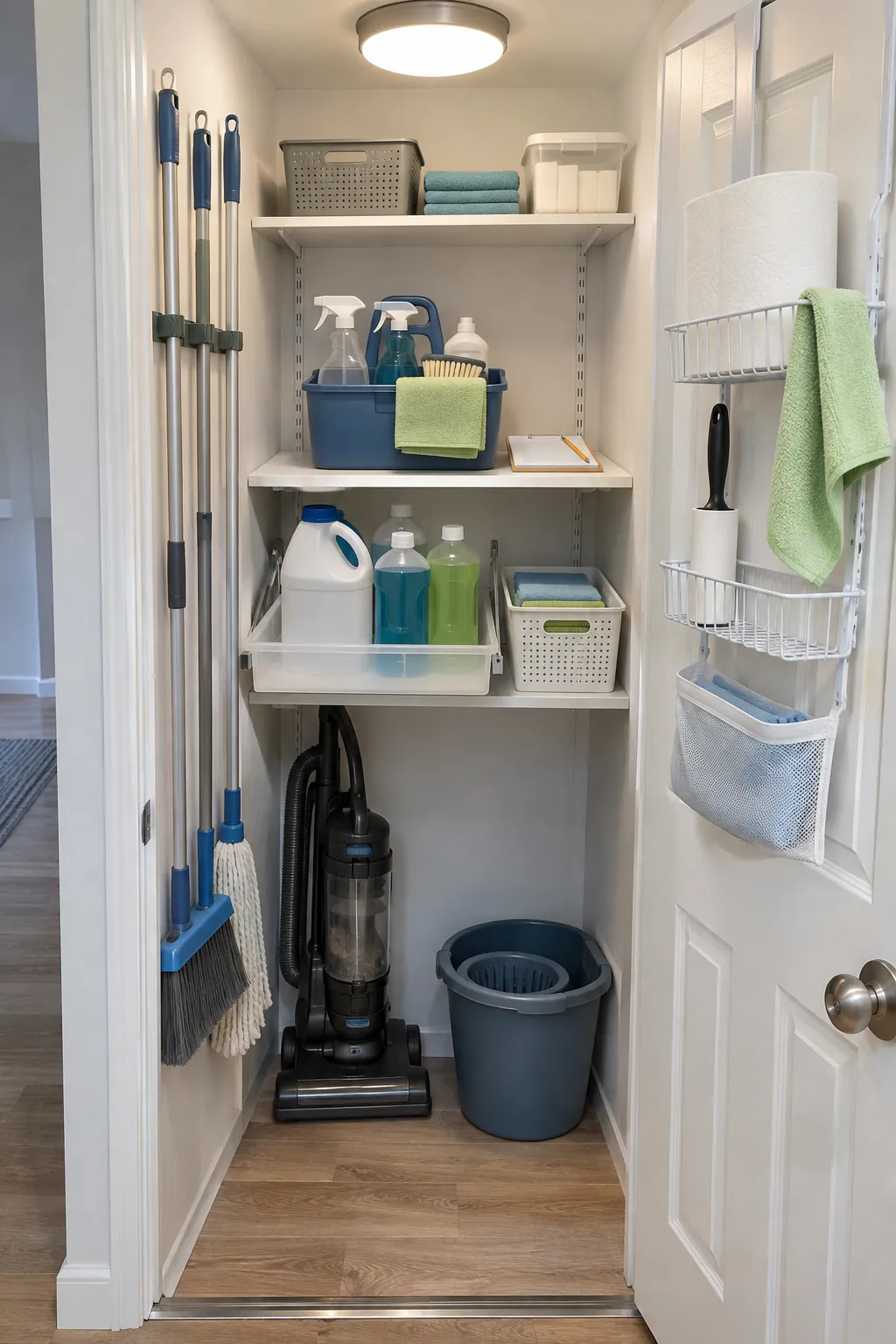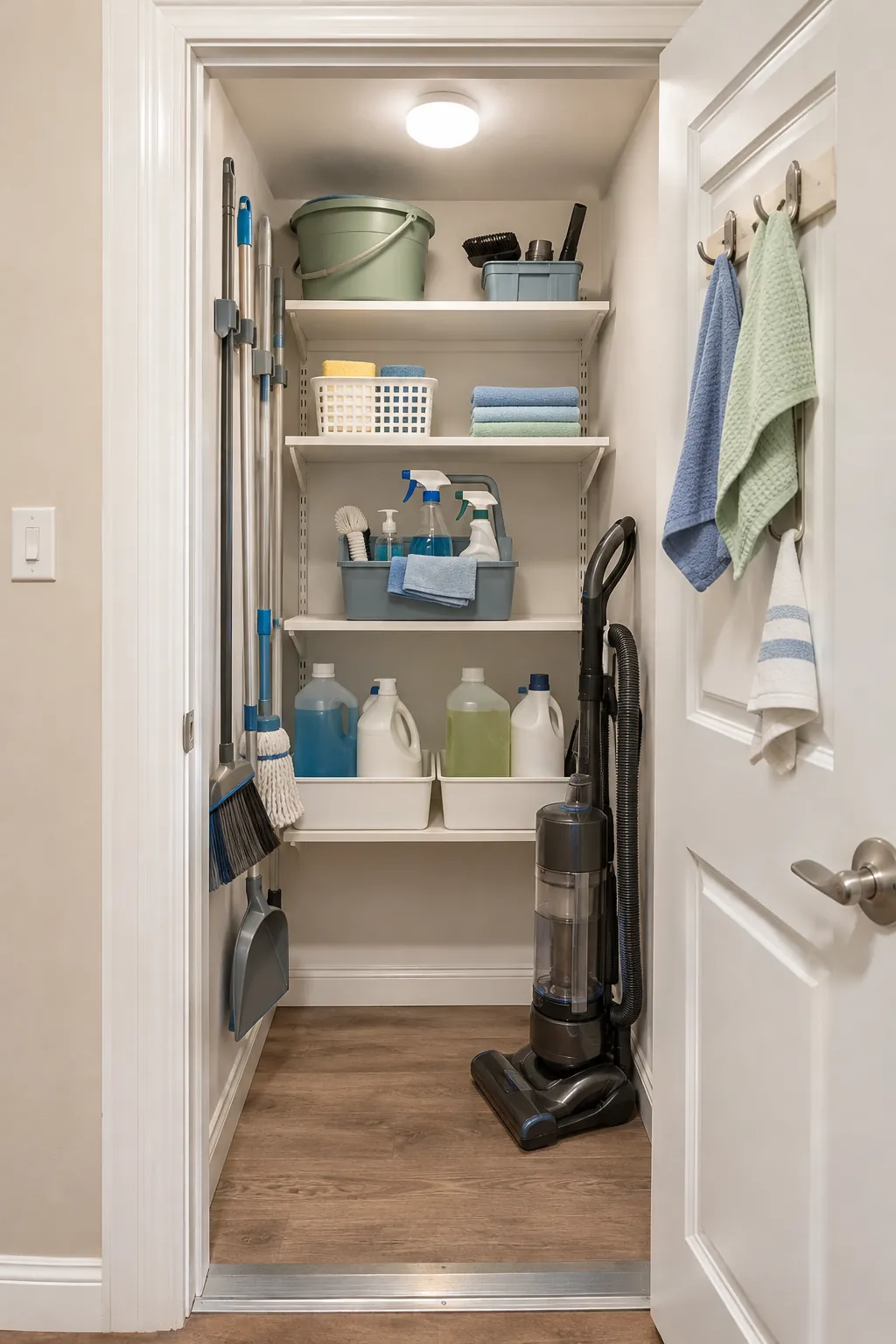
A small utility closet fails when every item competes for the same floor and front shelf. Long handles lean across bottles, refill containers hide daily supplies, and the vacuum blocks anything stored behind it. A January reset works best when each wall and shelf receives one clear job.
The useful goal is not to fill every inch. Keep frequently used supplies easy to reach, store heavy liquids low, hang long tools securely, and leave enough open space to remove one item without moving five others. Follow every product label, keep cleaners in compatible containers, and never mix products.
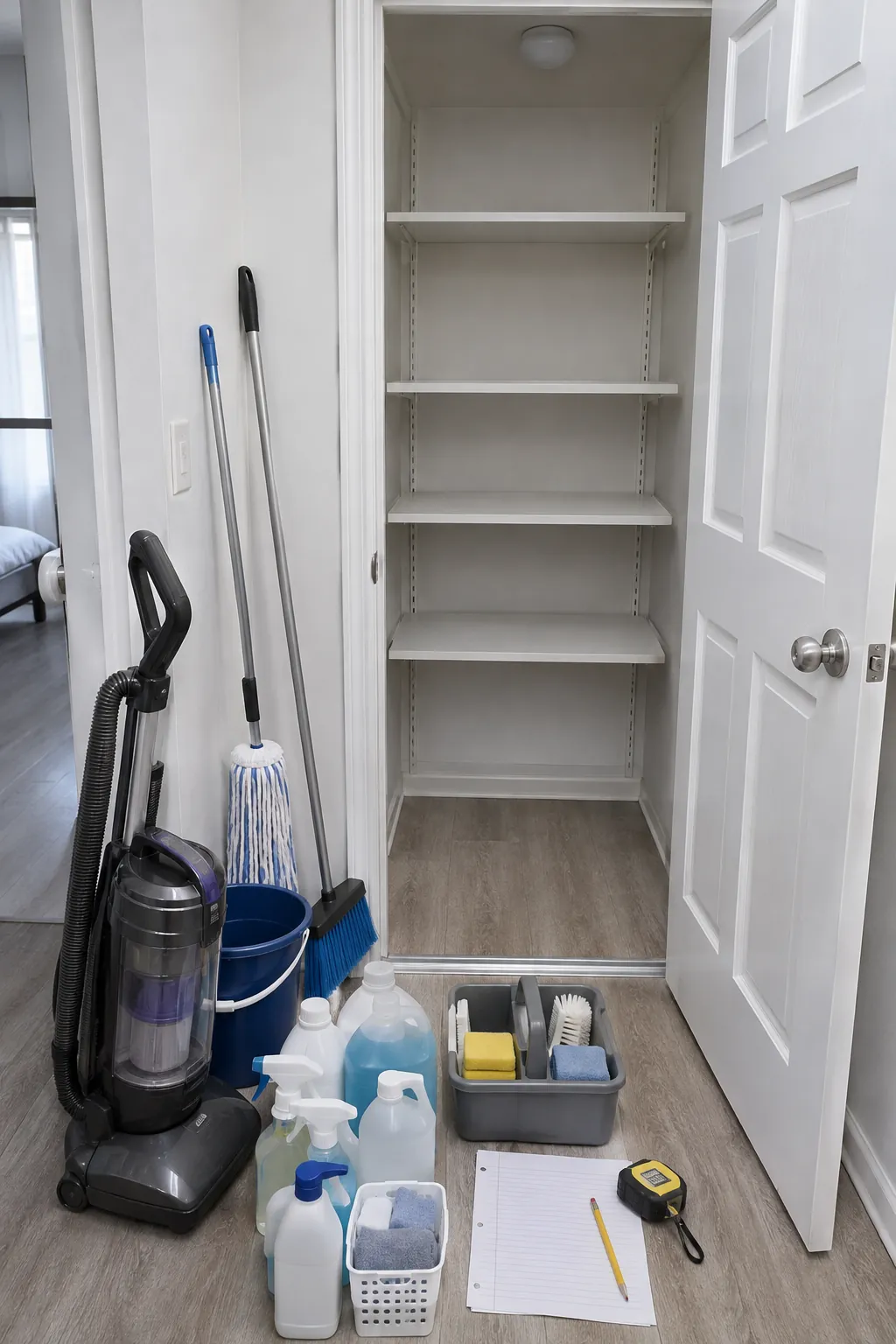
Empty the Closet and Check Every Product
Remove everything and clean the shelves and floor before planning zones. Discard empty packages and follow local guidance for unwanted chemicals instead of pouring them together or down a drain. Check dates, damaged caps, leaking containers, and labels that can no longer be read.
Group the remaining items by how they are used: long tools, daily cleaners, bulk refills, cloths, appliance parts, and occasional supplies. Measure the tallest tool, the deepest bottle, and the vacuum in its stored position. Those dimensions decide where shelves and hooks can work.
Give Long Tools a Vertical Wall Zone
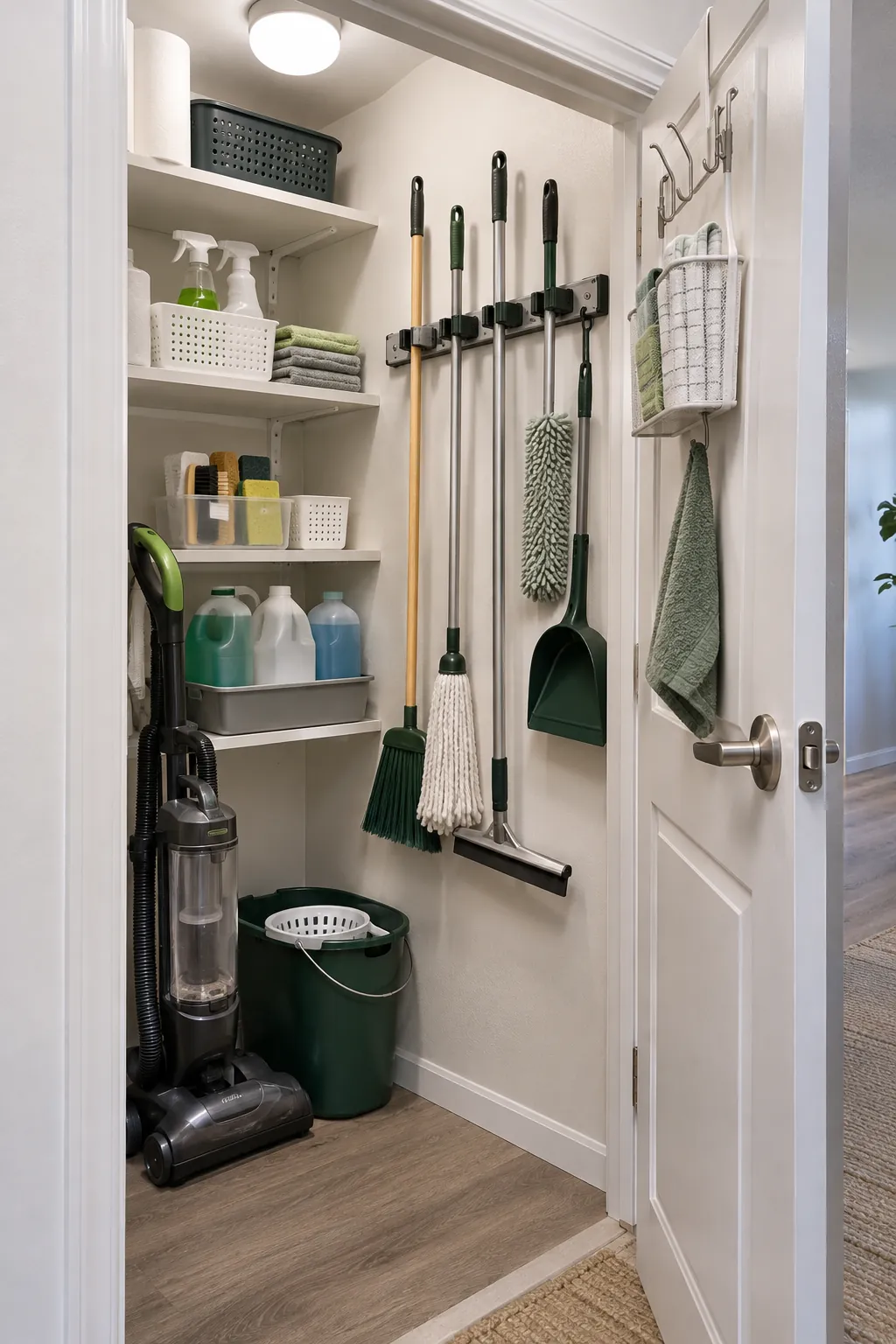
Mount a rated grip rail or individual tool holders on a clear side wall. Hang brooms and mops with their heads above the floor when the tool design allows it, and keep the heaviest item on the strongest fixing. Follow the hardware instructions and use fixings suited to the wall material.
Leave enough spacing so one handle can come out without releasing its neighbors. Keep damp mop heads ventilated and allow them to dry before closing them into a small closet. A dustpan can hang beside its brush in otherwise unused narrow space.
Store Refill Bottles Low and Contained
Bulk refill bottles are heavy and can leak, so place them on a low shelf inside a washable tray. Keep each product in its original marked container unless the maker provides specific refill directions and a compatible reusable bottle. Never transfer cleaner into a food or drink container.
Arrange bottles in one row when possible so every cap and label remains visible. If the shelf is deep, use a tray that slides out as one unit instead of pushing products into a hidden second row. Keep incompatible products separated according to their labels.
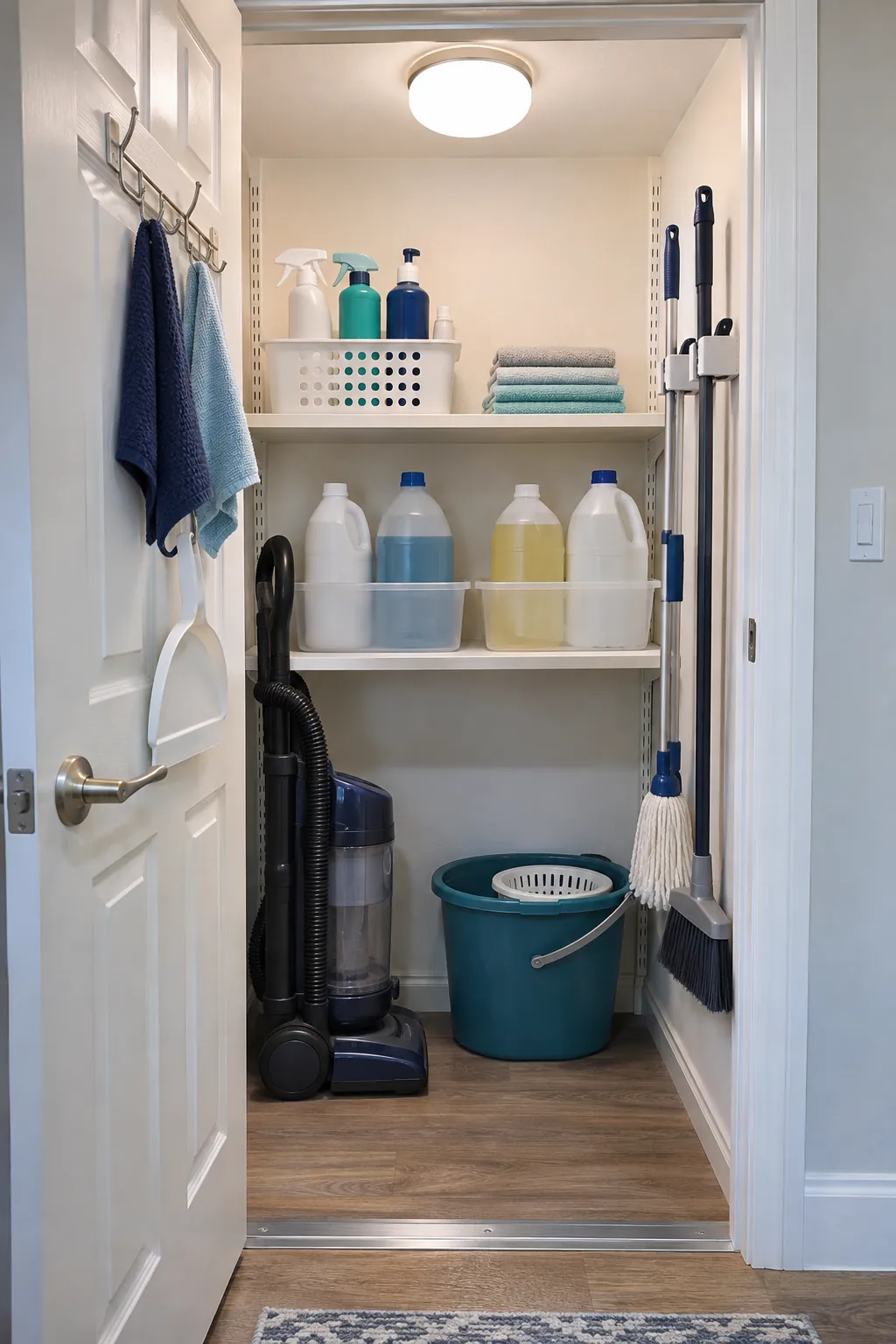
Build One Daily Cleaning Caddy
Keep the small group of products used most often in a handled caddy. A cloth, gloves, one or two approved surface cleaners, and a small brush may be enough for routine work. The caddy prevents repeated trips and keeps daily bottles from spreading across several shelves.
Choose a position between knee and shoulder height so the caddy lifts out easily. Do not overload it with bulk refills or tall unstable bottles. Return it to the same open shelf after use and let damp cloths dry before placing them inside.
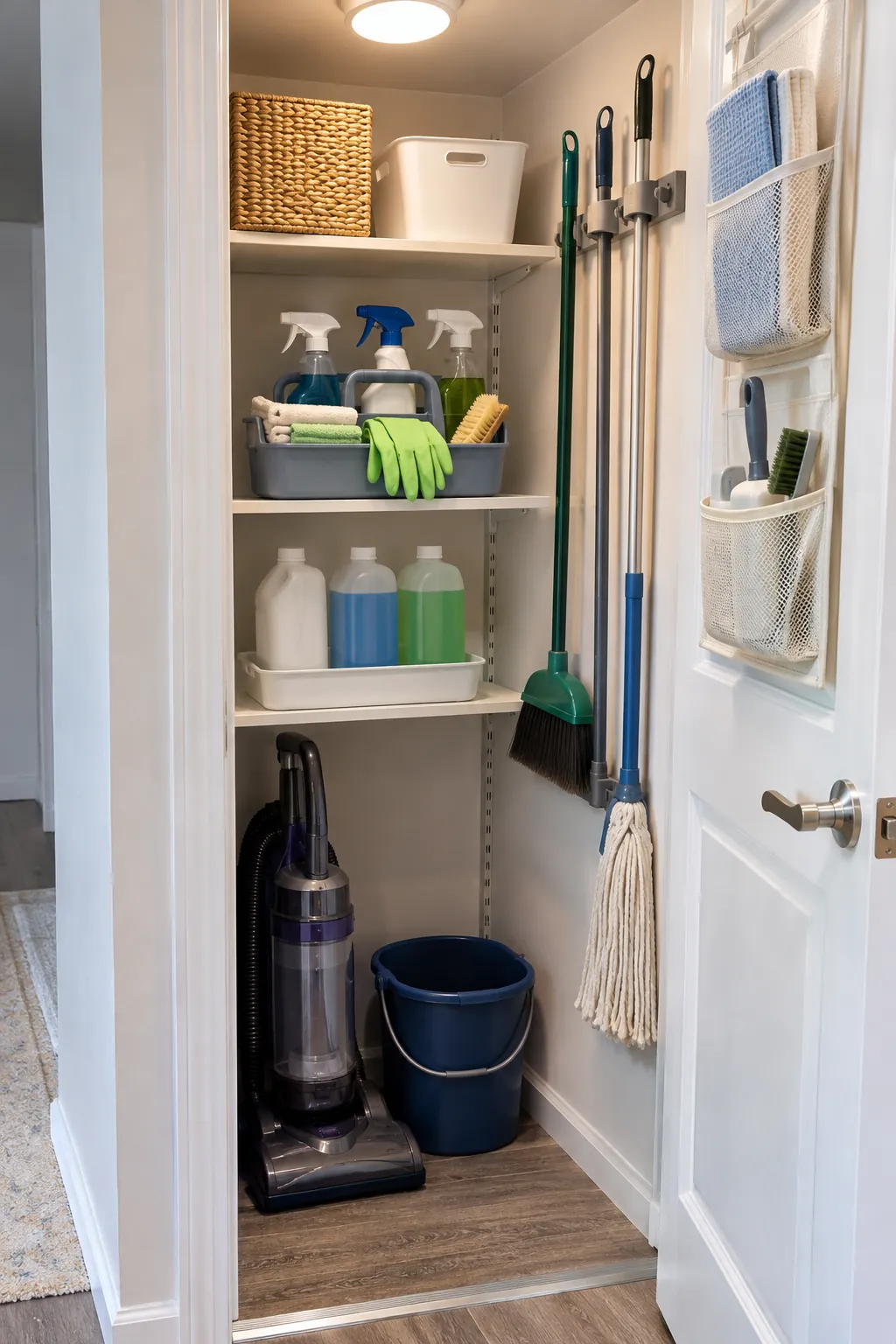
Protect Children and Pets From Cleaners
Follow product labels and household safety guidance when choosing storage height and access control. A high shelf alone may not be enough if a child can climb nearby shelving, and some products require a locked location. Keep the closet ventilated as directed and never store chemicals near food, medicine, or animal feed.
Preserve every original label and keep child resistant closures working as designed. Do not combine leftovers to save bottle space. If the closet cannot meet the safe storage requirements for a product, move that product to a more suitable secured location.
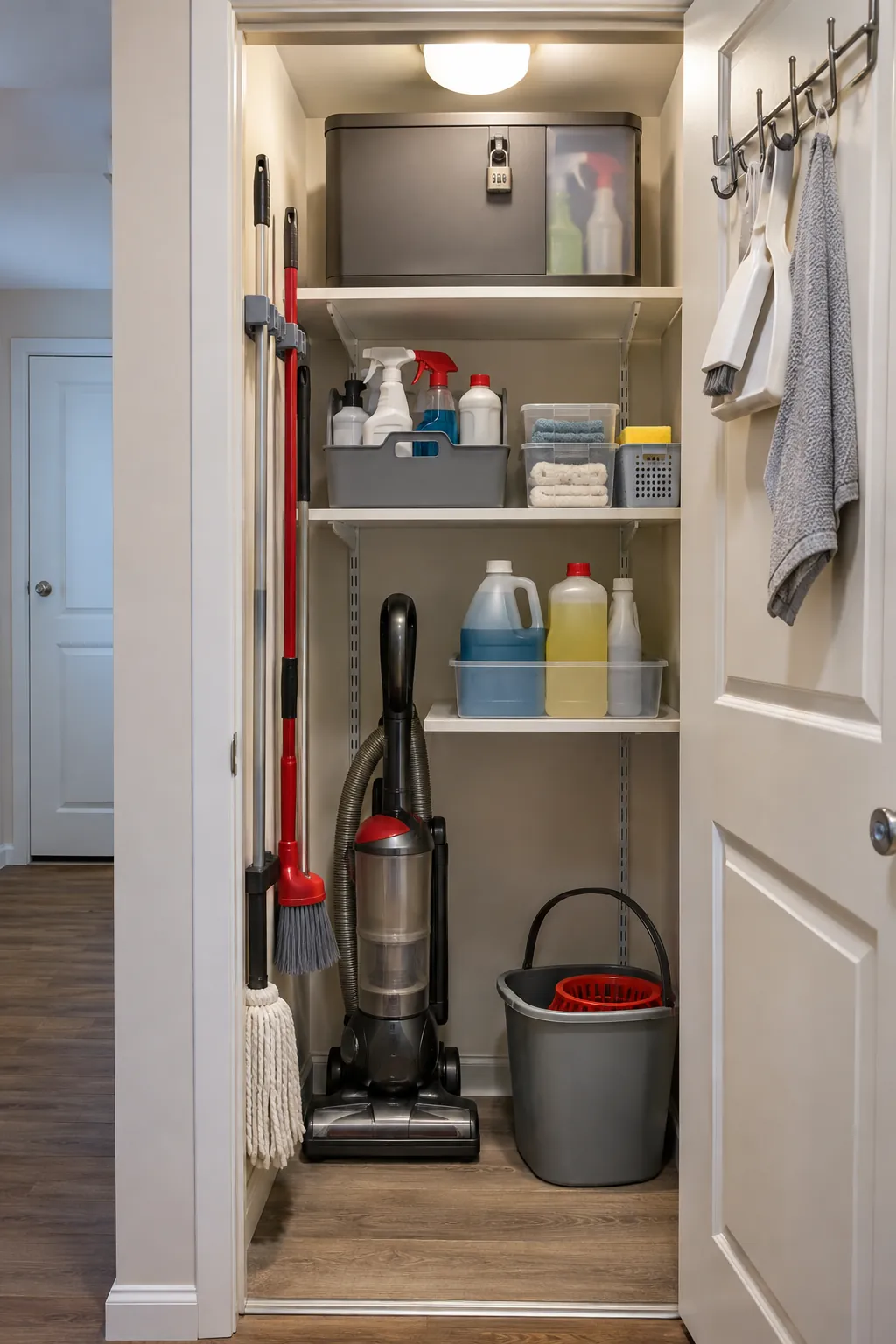
Use the Door for Light Supplies
An over door organizer or shallow fixed rack can hold light cloths, gloves, spare sponges, and dusting attachments. Check the added depth with the door fully closed because shelves and hanging tools may collide. Keep liquids off the door unless the organizer is rated for their weight and securely prevents tipping.
Place the most used light item near hand height and less frequent pieces above or below it. Avoid filling every pocket because loose supplies can catch as the door moves. The door should still open smoothly without pulling at its hinges.
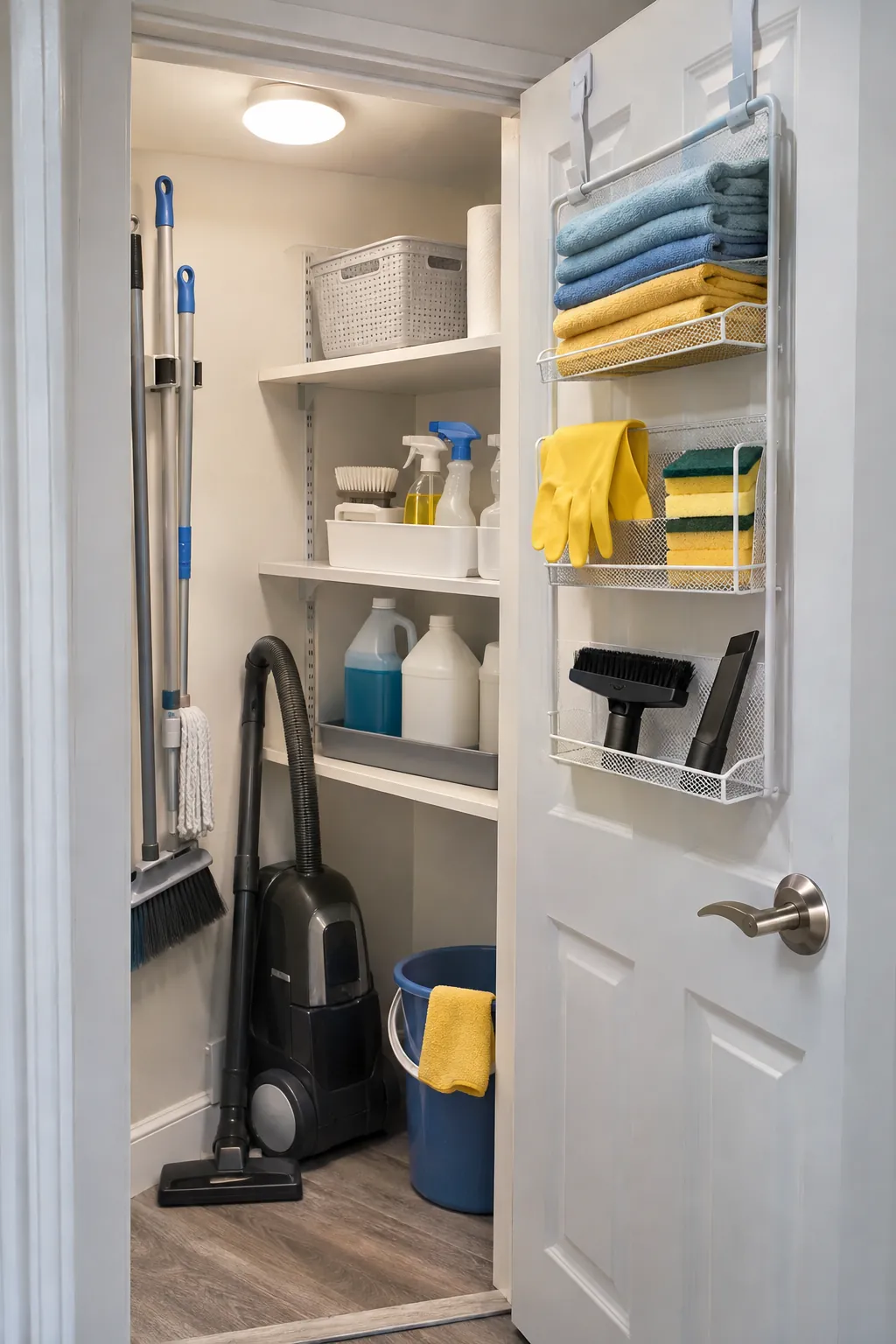
Reserve the Floor for Large Equipment
Give the vacuum, bucket, and other bulky equipment exact parking positions. Store attachments together in one small bin or on a secure holder so they do not fall behind the machine. Keep the vacuum cord wrapped according to its design and away from wet tools.
Choose the removal order before placing anything. The item used most should come out without moving a bucket or step stool. Leave a small clear strip of floor so the closet can be swept and leaks can be noticed quickly.
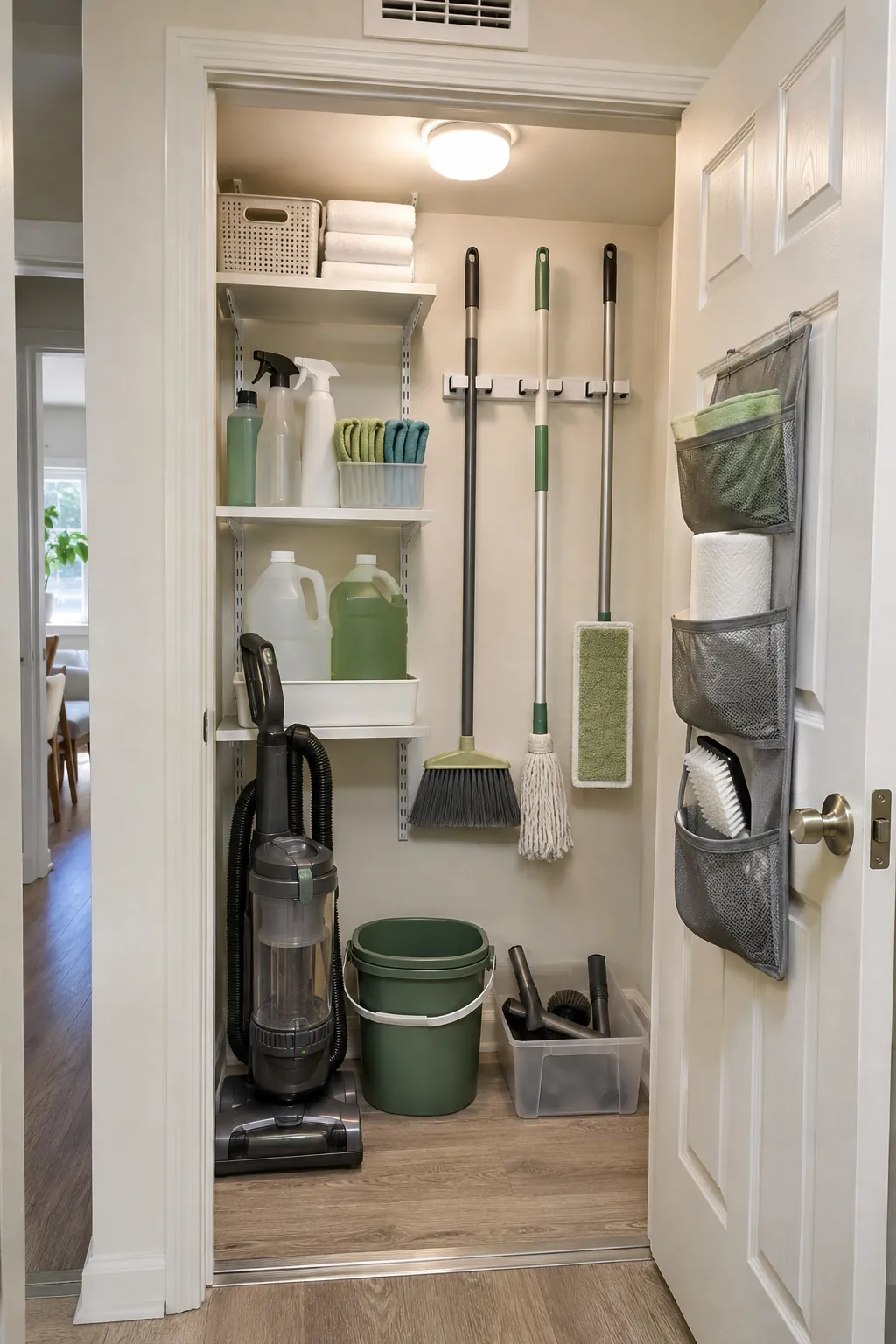
Run a Short Monthly Inventory
Once a month, pull out the daily caddy, inspect the refill tray, and check for damp tools or leaks. Add a product to the shopping list only when the active container is genuinely low. This habit prevents duplicate bottles from occupying the space you just created.
Return anything that migrated into the wrong zone and clean the open floor strip. The closet should stay easy to read at a glance: long tools on the wall, daily supplies in the caddy, refills low in containment, light items on the door, and large equipment on the floor.