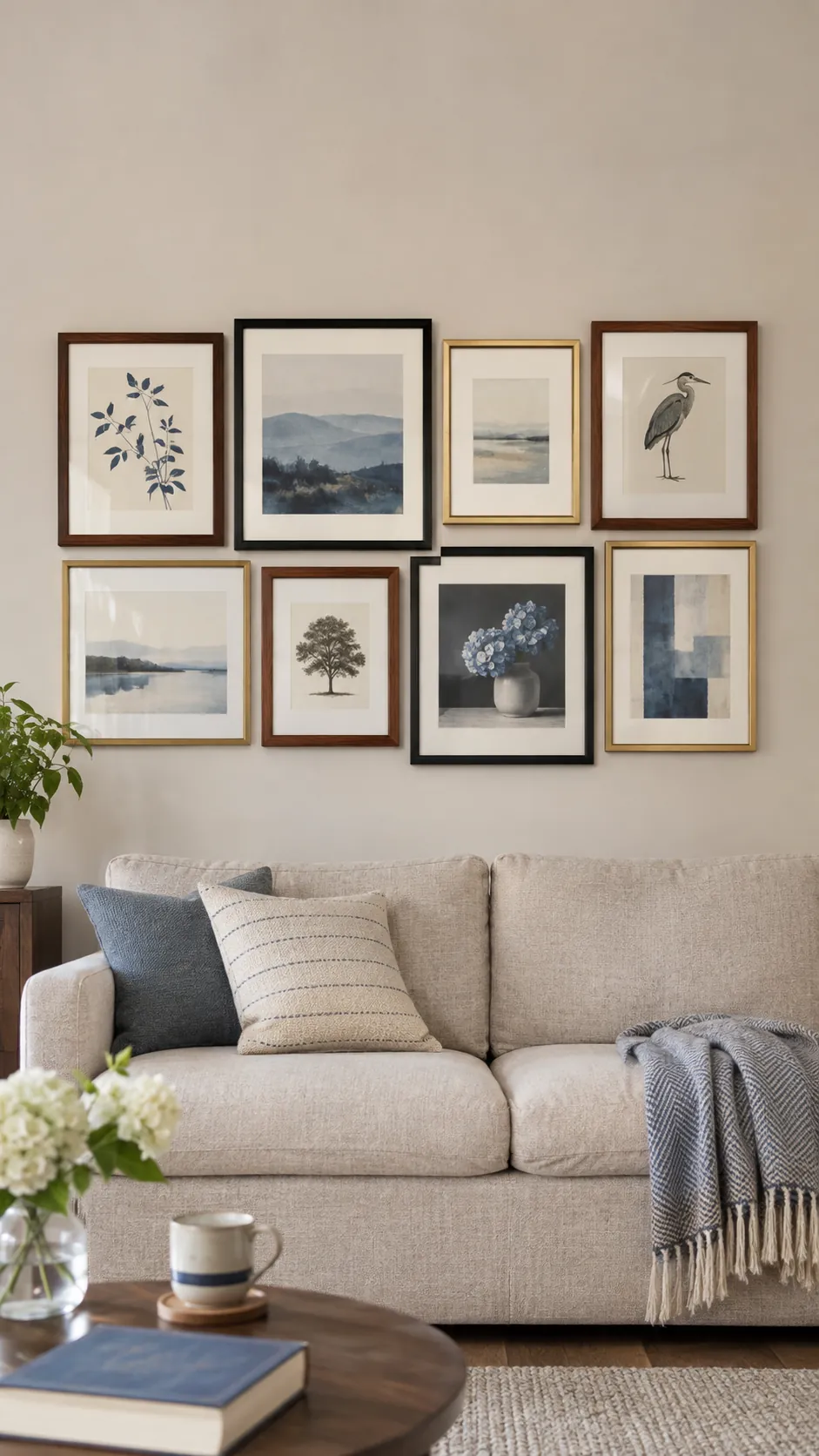
Mixed frames rarely fail because one piece is the wrong size. They fail when the empty space between pieces changes so much that the eye stops reading one collection. A reliable layout starts with one base gap, then makes small adjustments only where a heavy or unusual frame needs them.
Choose a Base Gap Between 2 and 3 Inches
Use 2 inches for a compact collection with small frames and related images. Move toward 3 inches when frames are large, visually heavy, or displayed on a broad wall. Gaps above 4 inches often separate the pieces into unrelated islands, while gaps under 1 inch can make varied moldings feel crowded.
Your base gap is a starting rule, not a demand for mathematical perfection. A round frame may need slightly more air at its widest point, and a deep shadow box may need more clearance for its cast shadow. Keep most neighboring edges close to the base measurement so those exceptions remain quiet.
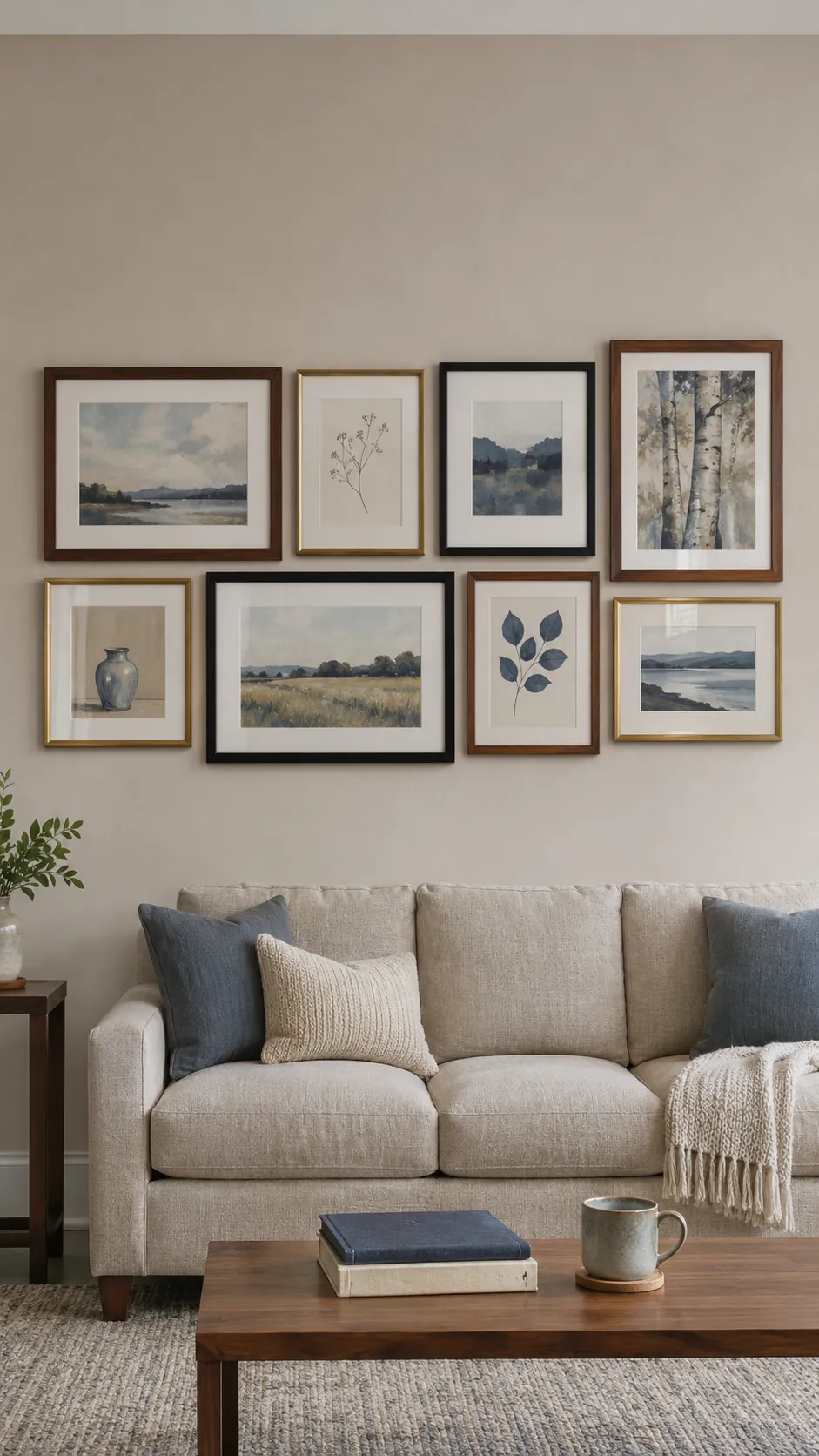
Measure Between Outer Frame Edges
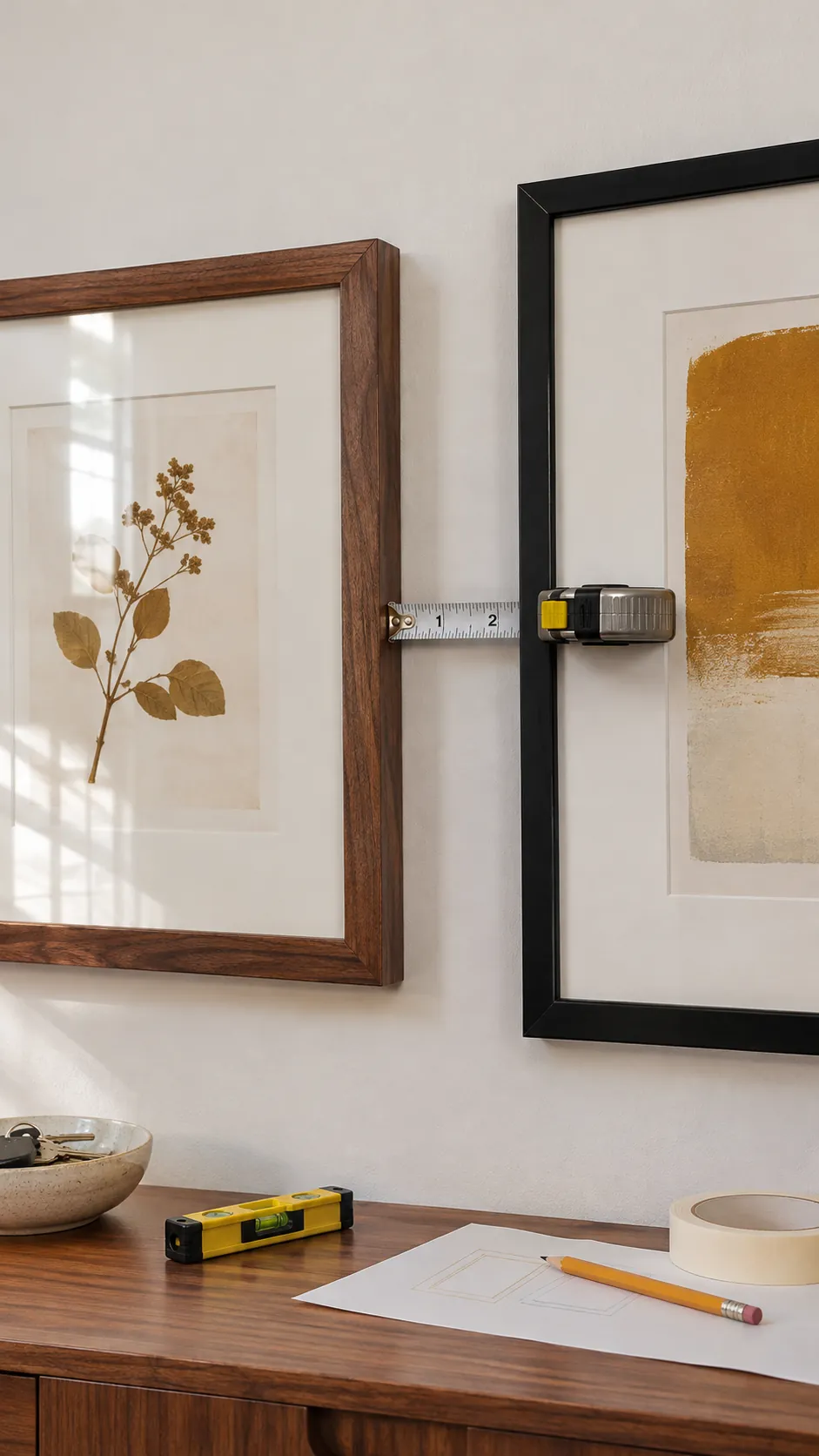
Measure the visible gap from one outer frame edge to the next. Do not measure between image openings, mats, hooks, or frame centers because mixed frame widths make those distances misleading. Record the outside width and height of every piece before you plan the arrangement.
For two frames beside each other, add the first frame width, the chosen gap, and the second frame width. Repeat that calculation across each row to find the total group width. This simple method shows whether the collection fits the wall before any hardware is installed.
Build the Layout on the Floor First
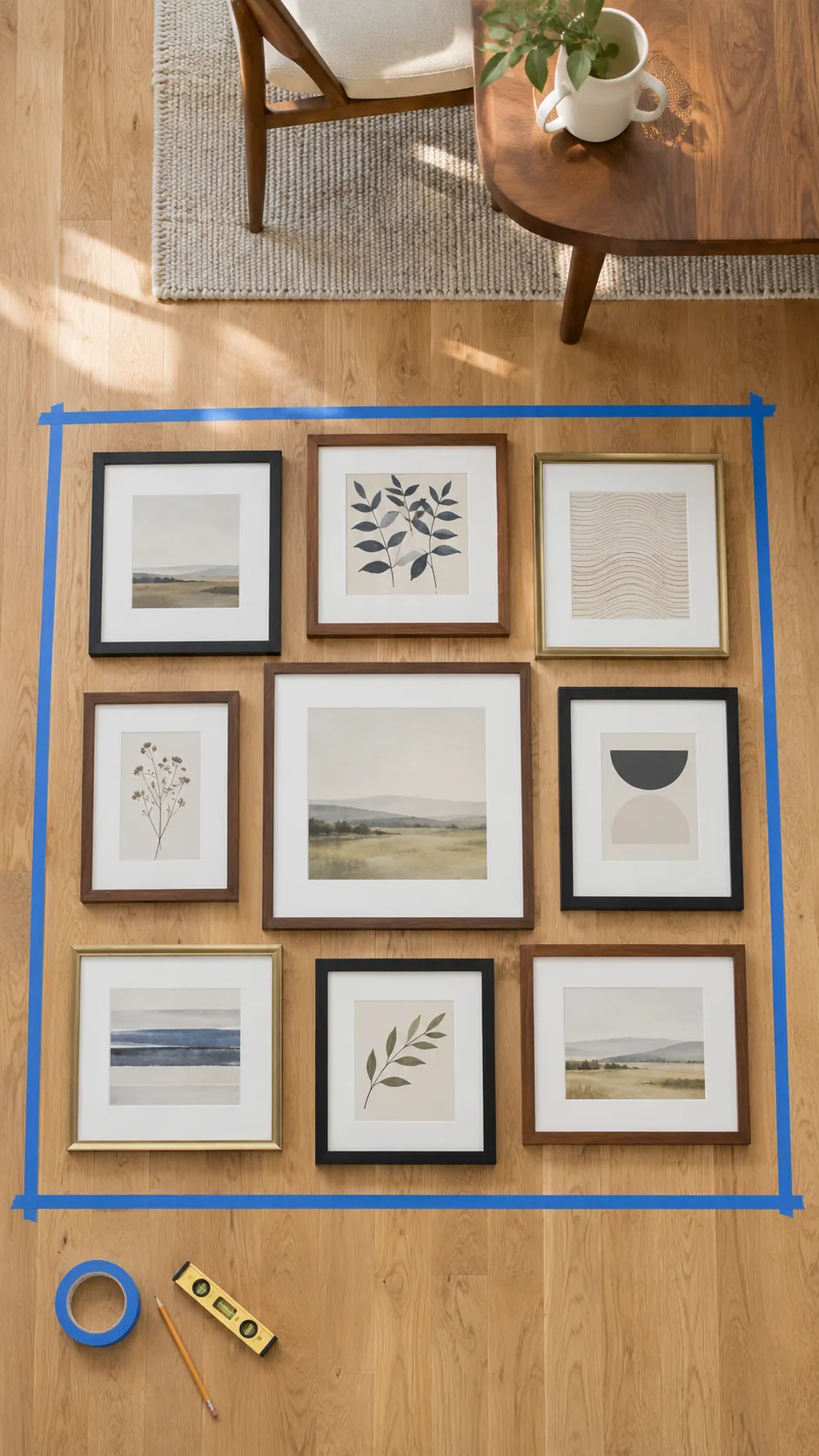
Mark a rectangle on the floor that matches the available wall area, then place the largest frame slightly away from the exact center. Add medium frames around it and use small pieces to resolve remaining openings. Step back or photograph the arrangement from above to judge the outer silhouette.
Look for accidental channels where several gaps align into a wide empty stripe. Shift one frame enough to interrupt that channel without losing the base spacing elsewhere. Keep a doorway, furniture edge, or wall centerline as the reference for the whole group.
Transfer Every Frame With a Paper Template
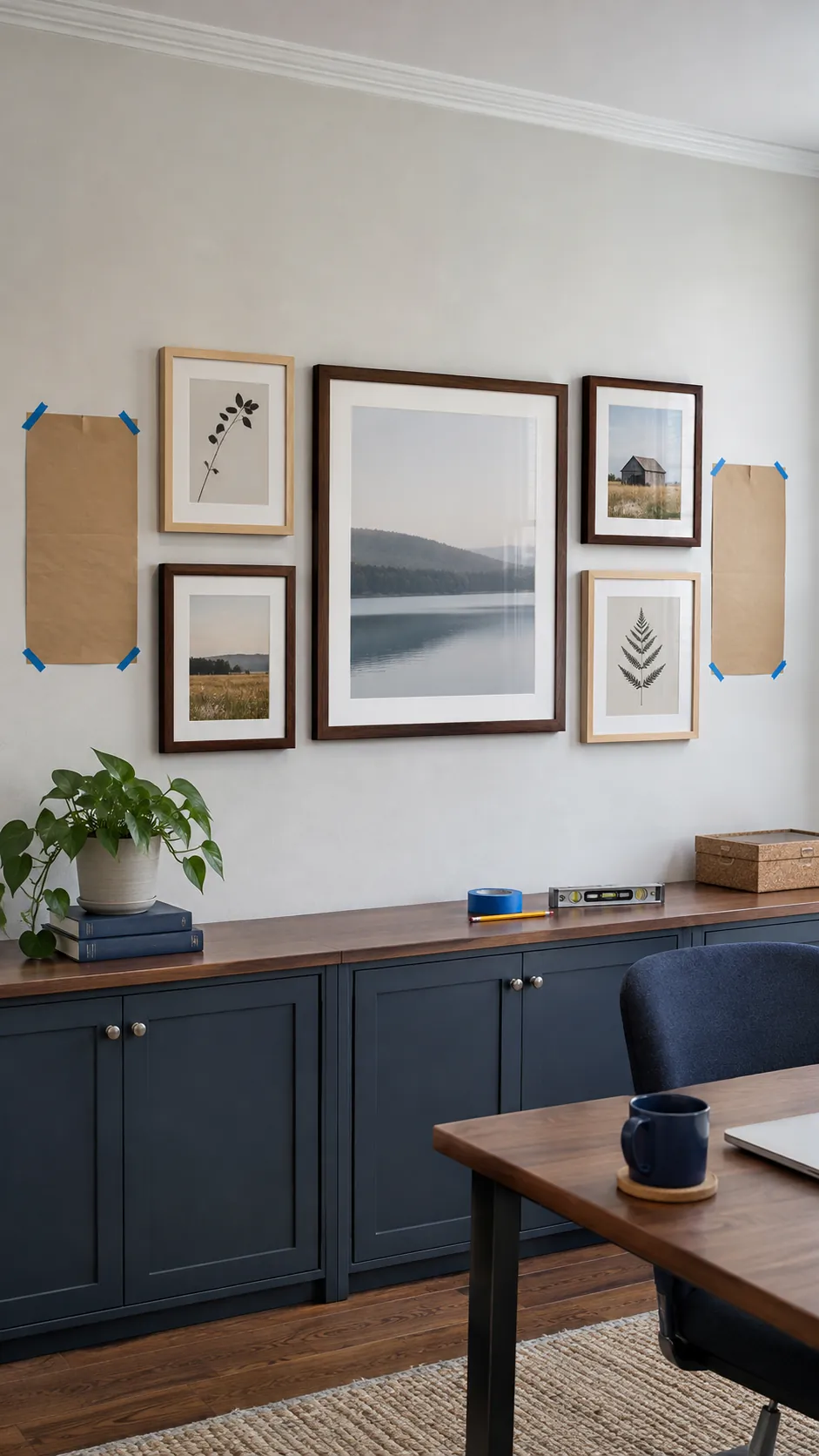
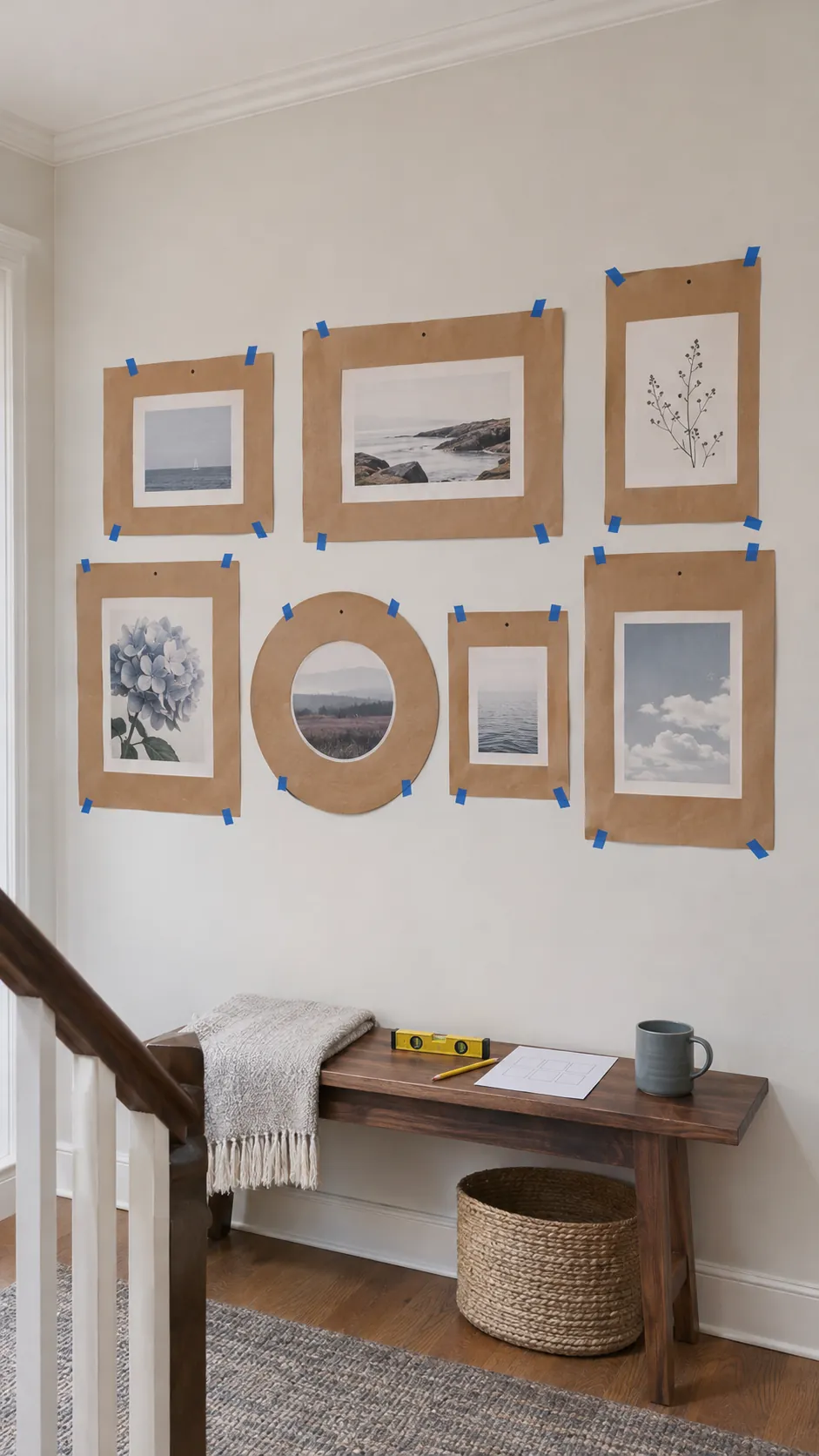
Trace each outer frame onto kraft paper and mark the exact hanging point on the template. Tape the paper shapes to the wall with the planned gaps visible between them. This lets you inspect height, furniture clearance, and the full group from normal room viewpoints.
Move paper rather than making extra holes when a gap looks wrong. Once the arrangement feels balanced, place each hook through its marked point, then remove the paper. Check old wire and hardware before relying on the template because loose wire changes the final hanging height.
Balance Visual Weight, Not Just Distance
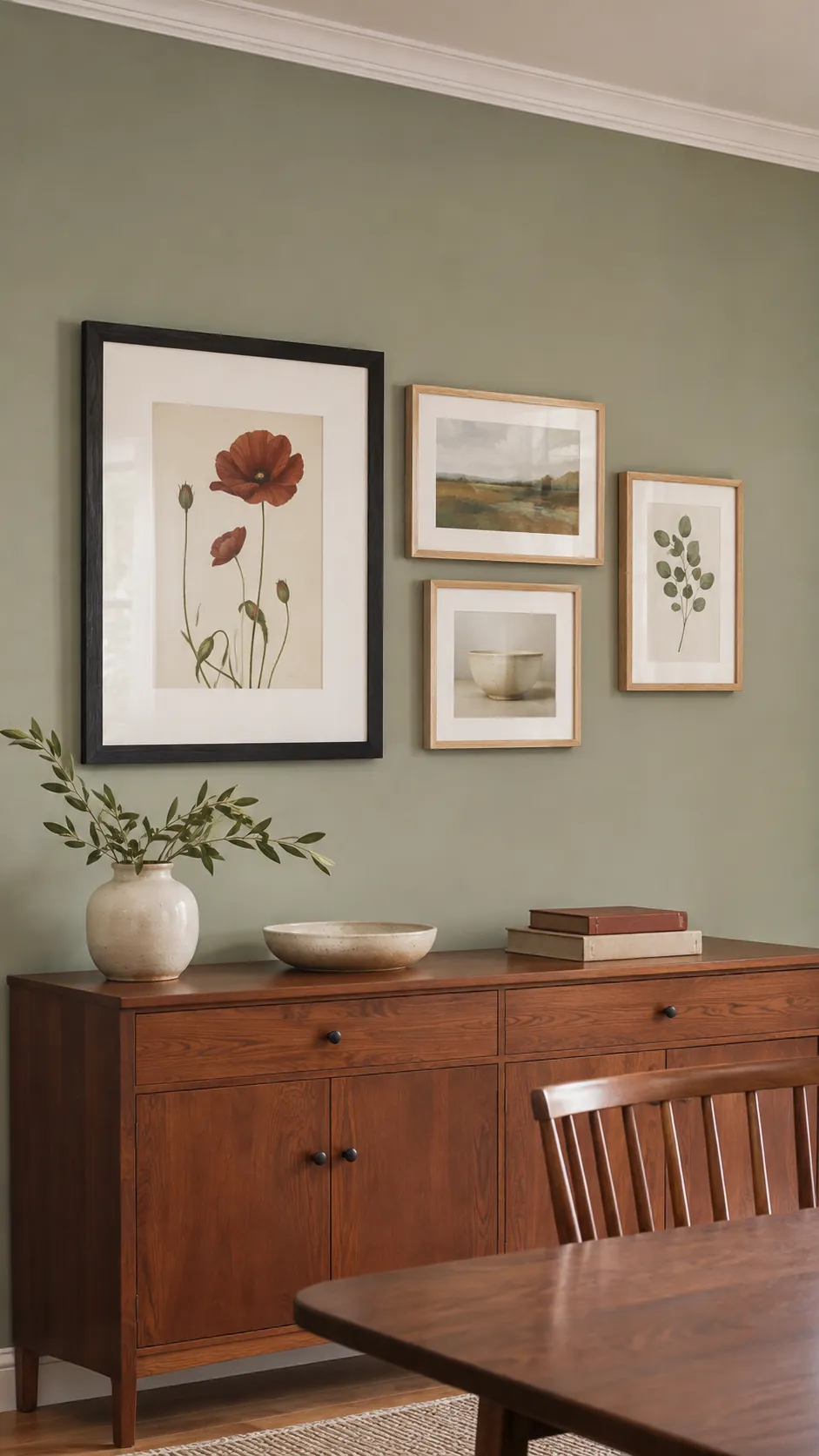
A large dark frame has more visual weight than a small pale frame, even when both are equally far from the center. Place a pair of smaller pieces opposite one heavy piece, or repeat its dark finish elsewhere in the group. This keeps the arrangement from leaning visually to one side.
Review the wall as a blurred shape by stepping back and narrowing your eyes. The details disappear, making heavy areas and empty pockets easier to see. Adjust the position of one or two frames before changing every gap.
Hang the Anchor First and Check Each Ring
Install the anchor frame, then add the closest surrounding pieces before working outward. Measure each new gap from the frame that is already level, rather than from the floor or ceiling. Check the growing outer silhouette after every two or three additions so a small error does not travel across the wall.
If the finished group feels loose, move the outermost frames inward before disturbing the center. If it feels crowded, create air beside the heaviest pieces rather than expanding every gap equally. The goal is a connected collection with comfortable breathing room, not identical empty space at every point.