A familiar gallery wall can start to feel stale even when the frames are still useful. The most effective refresh usually changes one visual rule, such as color, matting, scale, spacing, or balance. Work with the strongest pieces first and spend only where a clear gap remains.
Swap In a Stronger Color Anchor
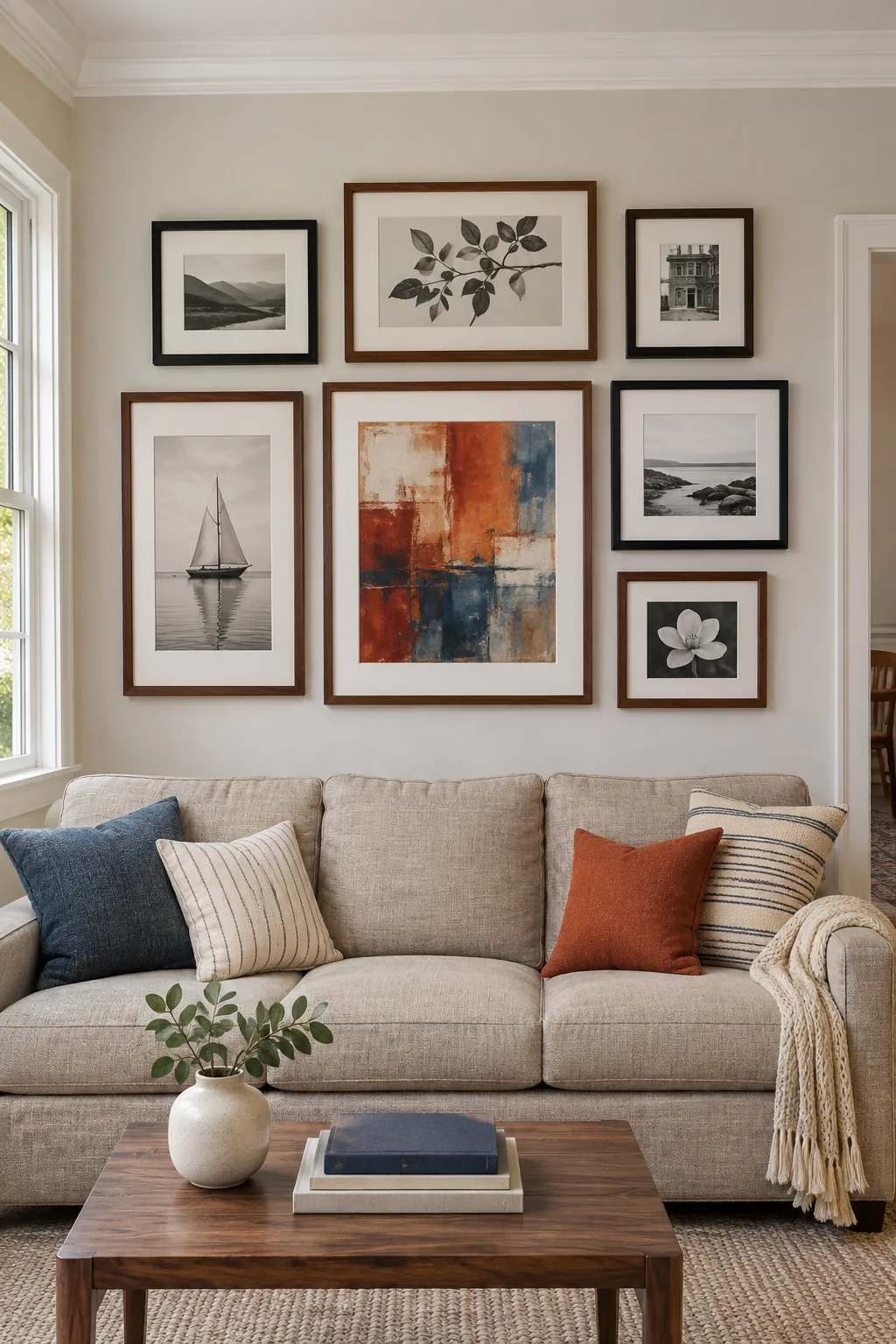
Replace the weakest print with one piece that contains two colors already present in the room. A rust and blue abstract can connect wood furniture, a blue cushion, and otherwise neutral photographs. Keep the new piece near the visual center so its color travels across the full group.
Refresh the Mats Instead of the Frames
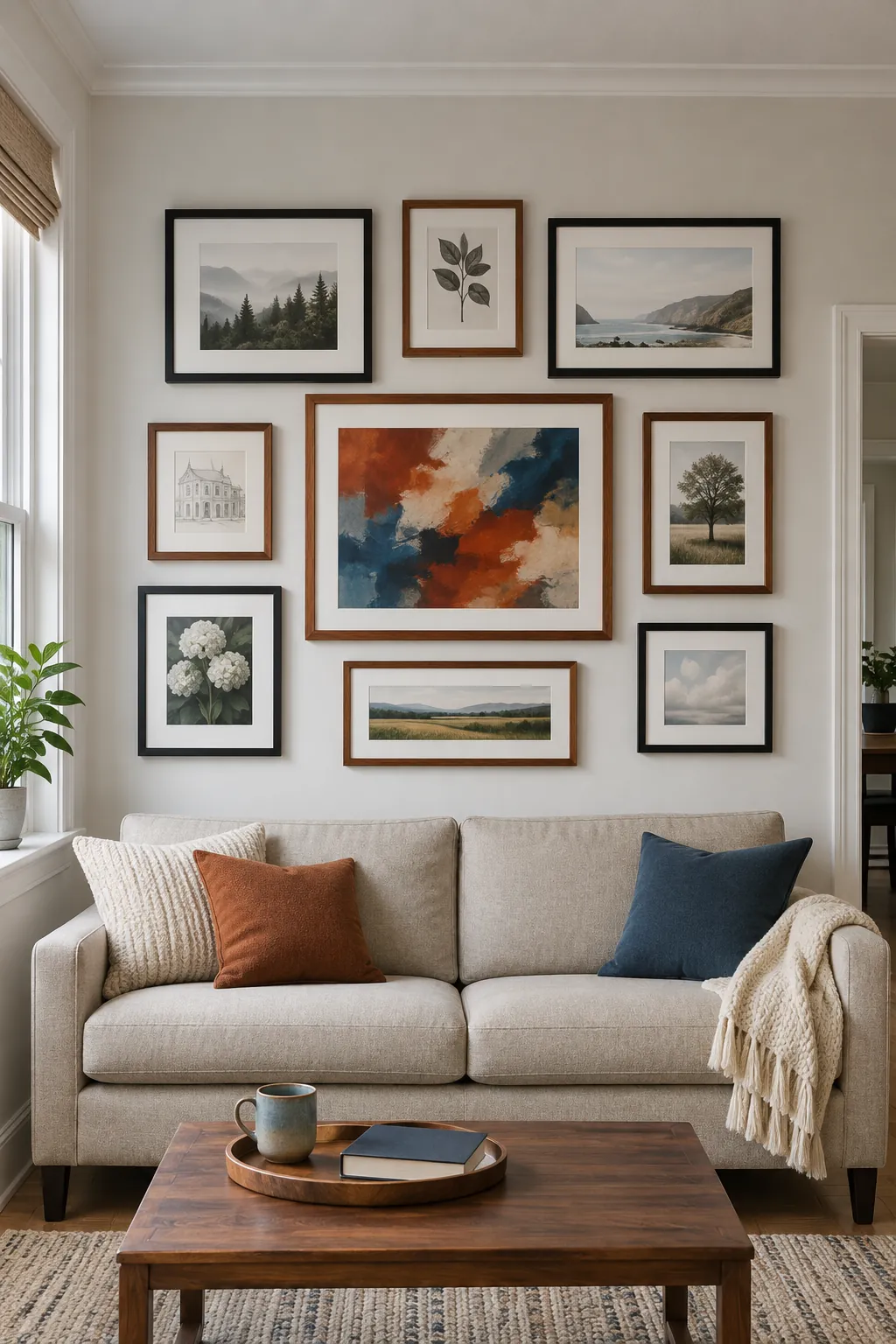
New mats can make old frames look intentional without changing their molding. Use one warm white mat color across most pieces, then add one muted color mat around a small focal image. Check every opening against the actual art so important edges and signatures remain visible.
Paint Only Two or Three Frames
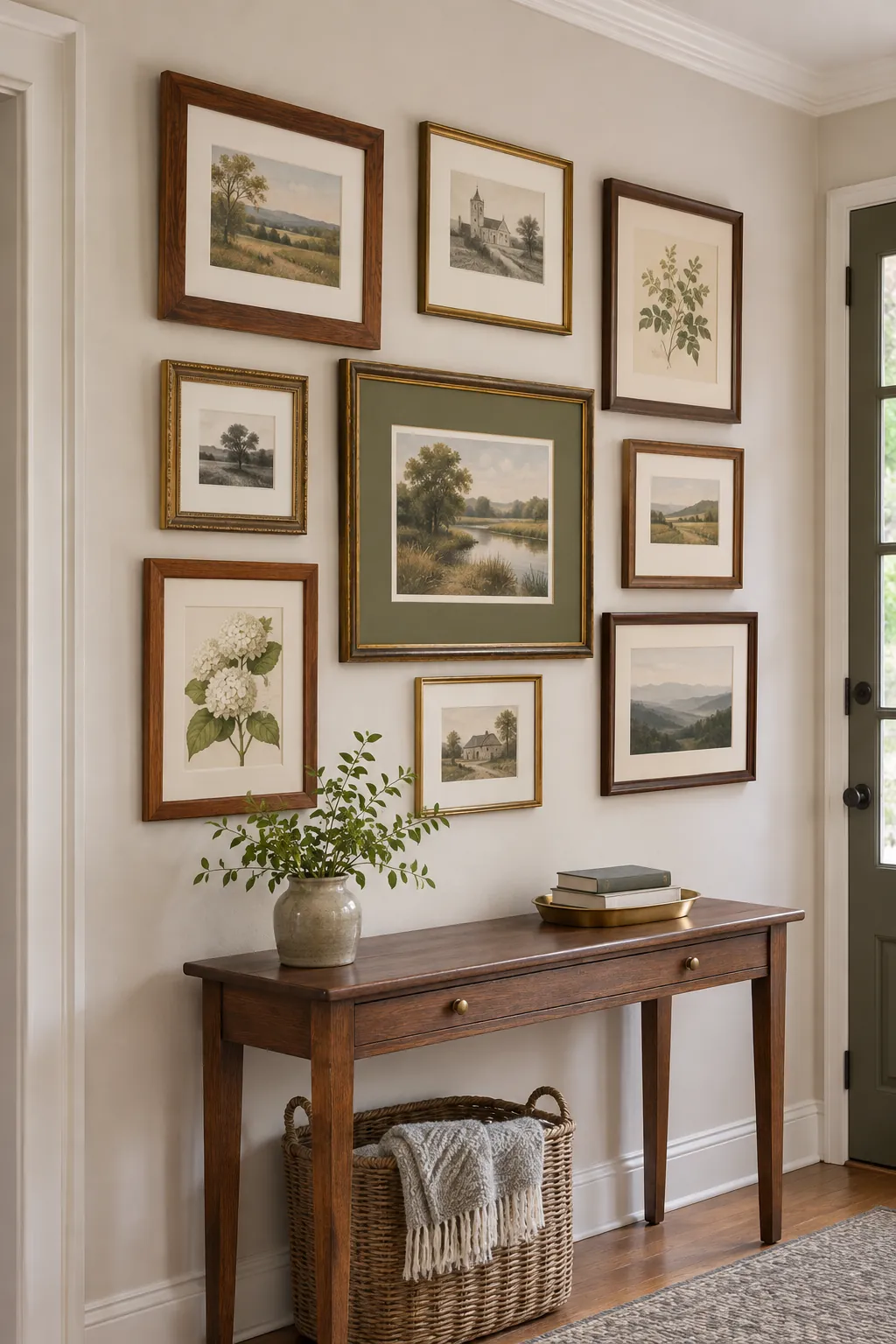
A few repeated dark frames can distribute visual weight across a wall of mixed wood. Paint two or three inexpensive frames in the same soft black or deep green, then place them apart from each other. Leave valuable, carved, or naturally beautiful frames unchanged.
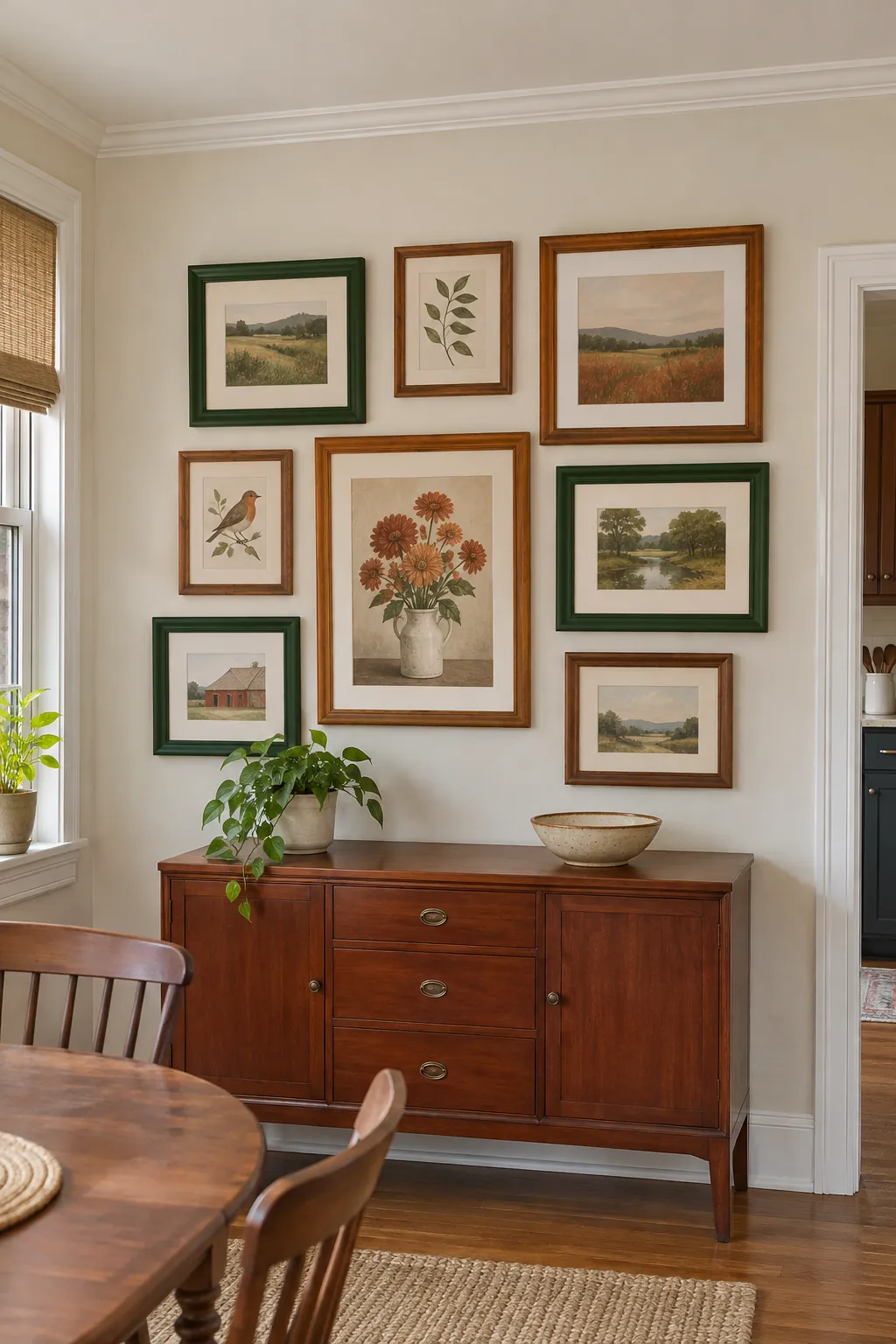
Move the Anchor Away From Dead Center
A perfectly centered largest frame can make an eclectic wall feel stiff. Shift it slightly to one side, then balance it with two smaller pieces across the centerline. Preserve similar gaps so the new arrangement looks deliberate rather than random.
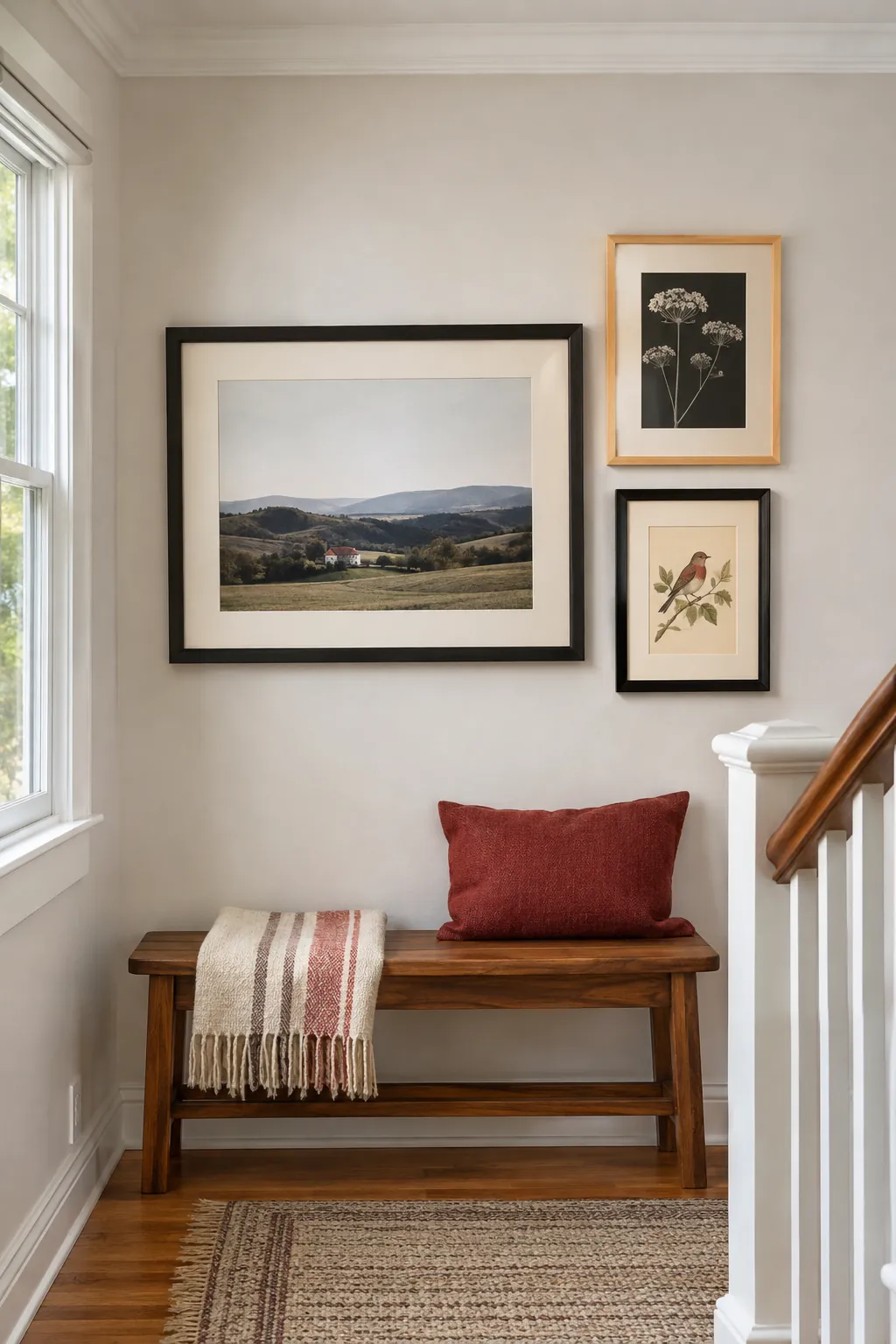
Enlarge One Photo You Already Own
Choose a personal photo with a clear subject and enough resolution for a larger print. Put the enlargement into the biggest existing frame and move its former art into a smaller compatible frame. One stronger scale change can make the entire collection feel more confident.
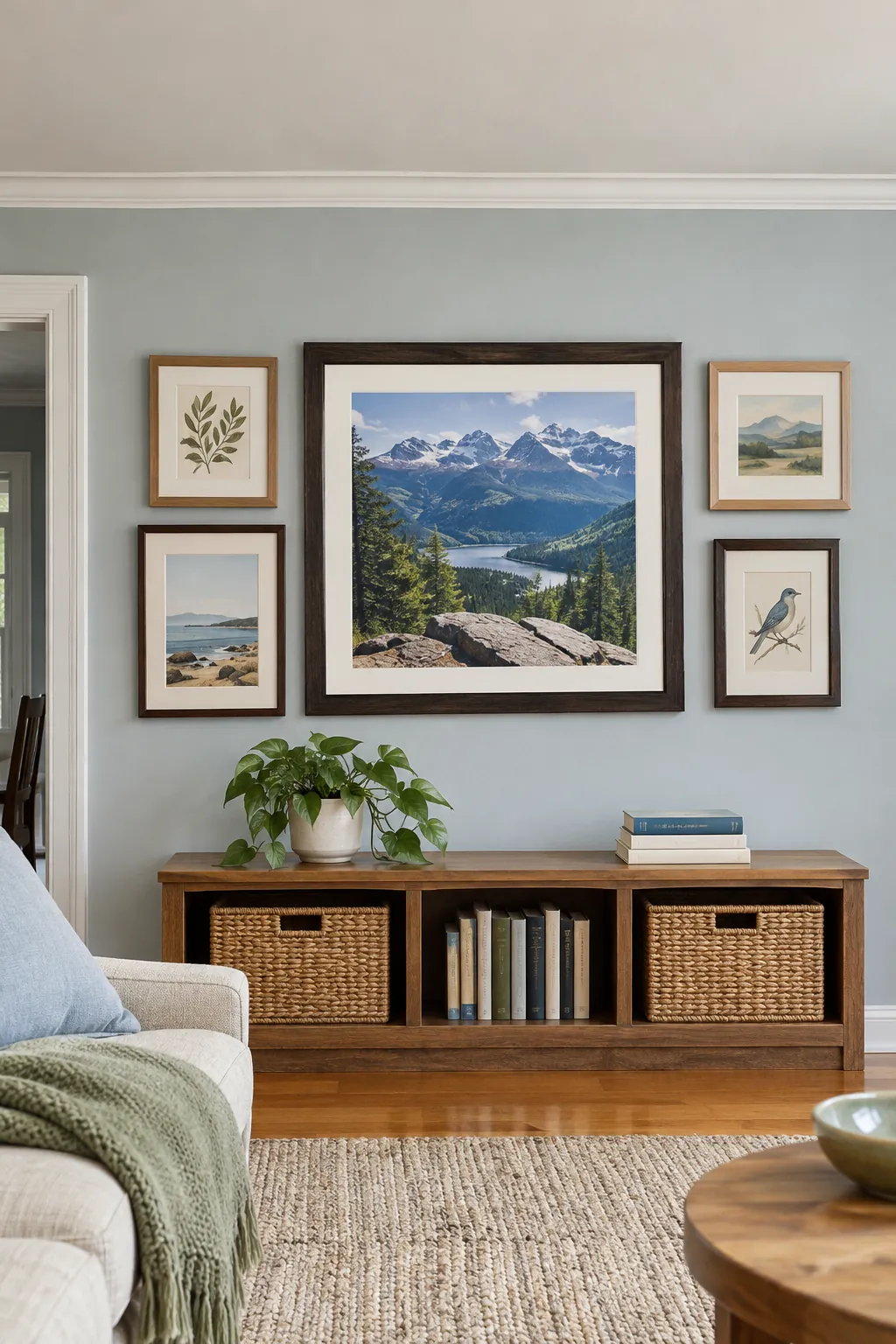
Rotate Art by Season, Not Every Frame
Keep a small folder of prints sized for the frames that are easiest to open. Change only two or three pieces when the room needs a seasonal shift, using color and subject rather than holiday wording. Store removed art flat with clean tissue so it can return later.
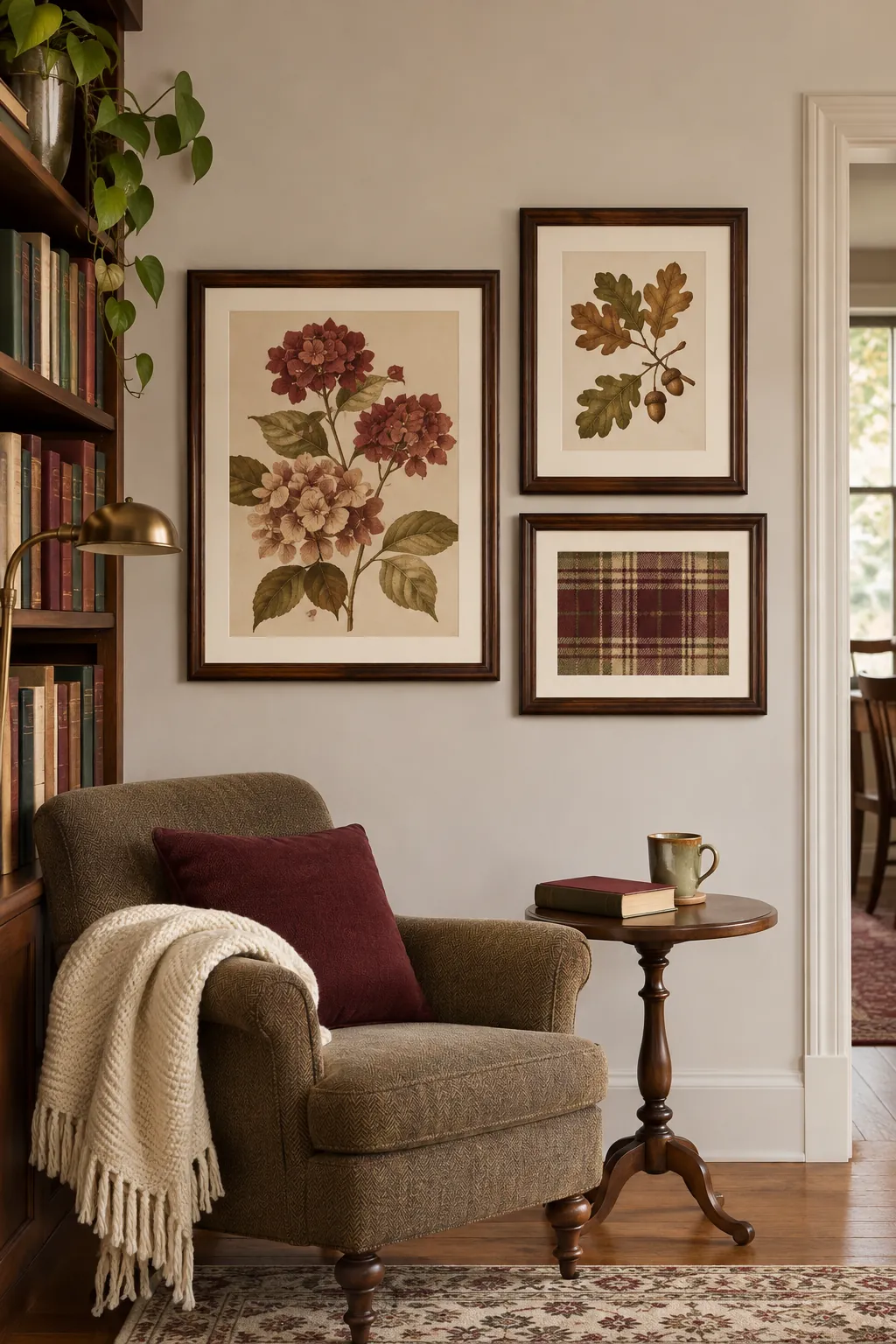
Clean the Glass and Correct Every Tilt
Dust, cloudy glass, and small tilts can make good art look tired. Clean each glazing surface with a method suitable for its material, then add small bumpers behind lower corners to hold frames level. Photograph the wall straight on afterward because a photo reveals uneven rails quickly.
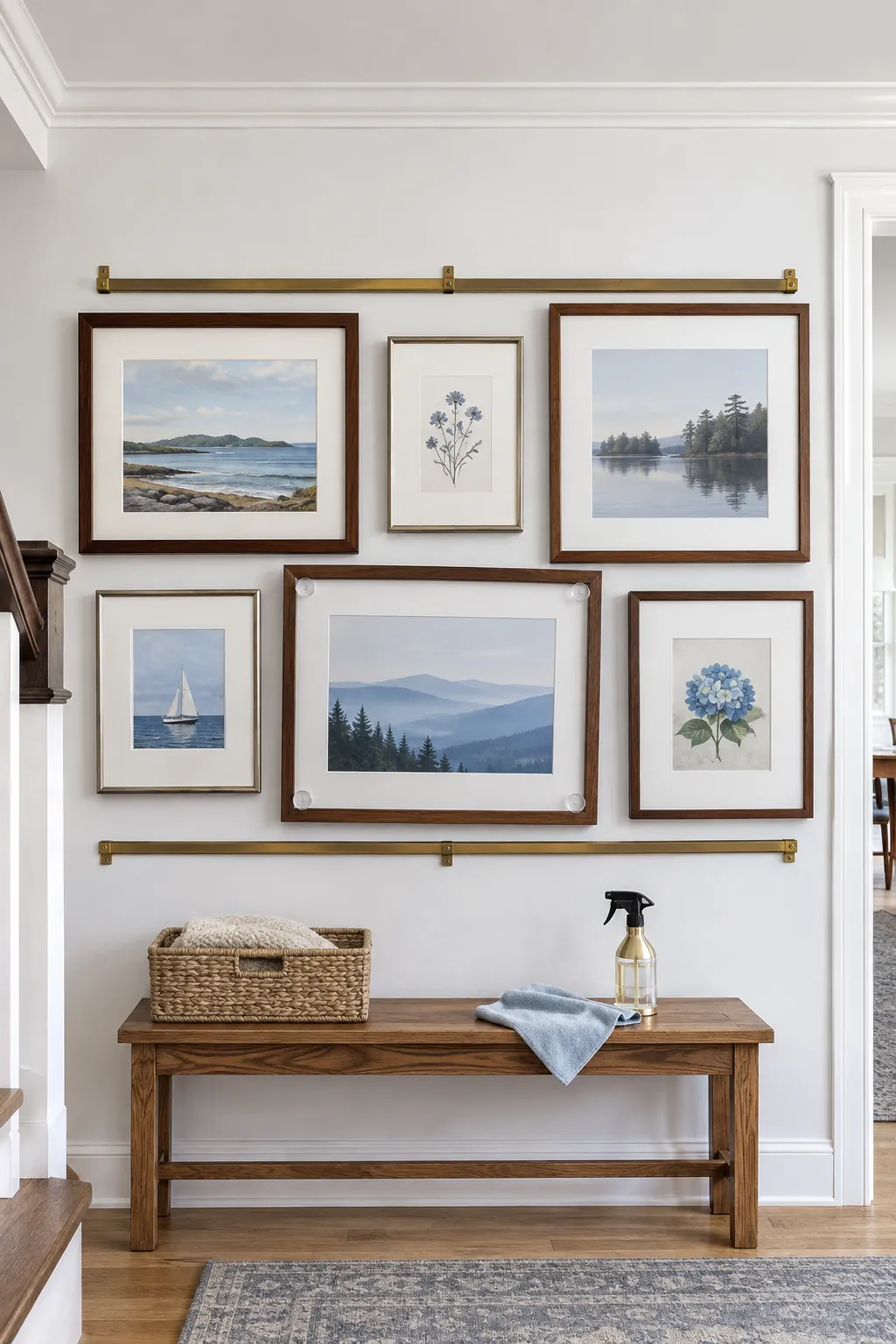
Remove Pieces That Dilute the Collection
More frames do not always create a stronger gallery wall. Remove one or two generic pieces, then close the remaining gaps to make a tighter outer shape. The open wall around a smaller group can give personal art more presence.
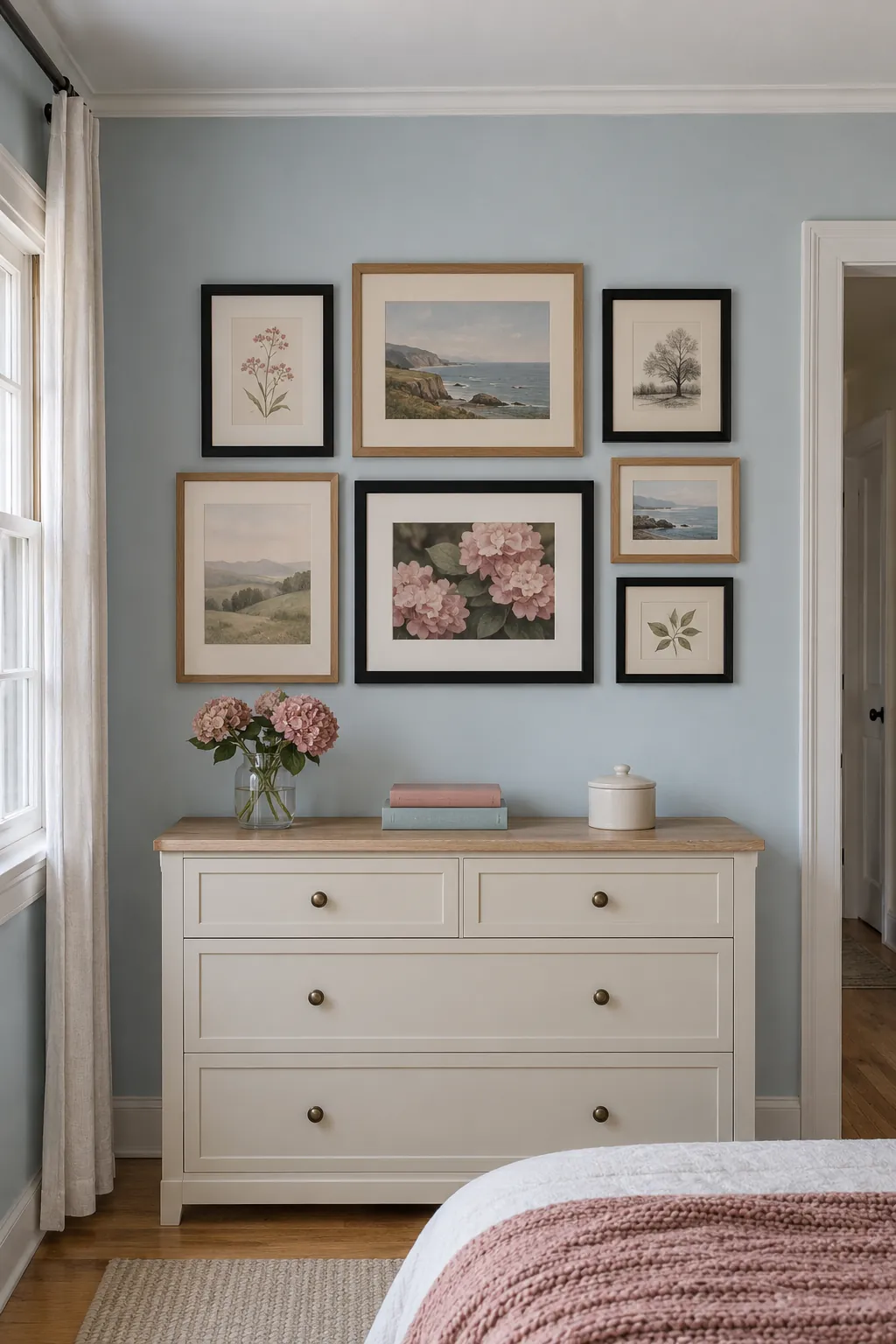
Add One Short Art Ledge
A short ledge can support two small frames that are awkward to hang alone. Keep it inside the gallery wall silhouette and avoid turning the display into several competing shelves. Rest only lightweight pieces on it and secure the ledge to suitable wall support.
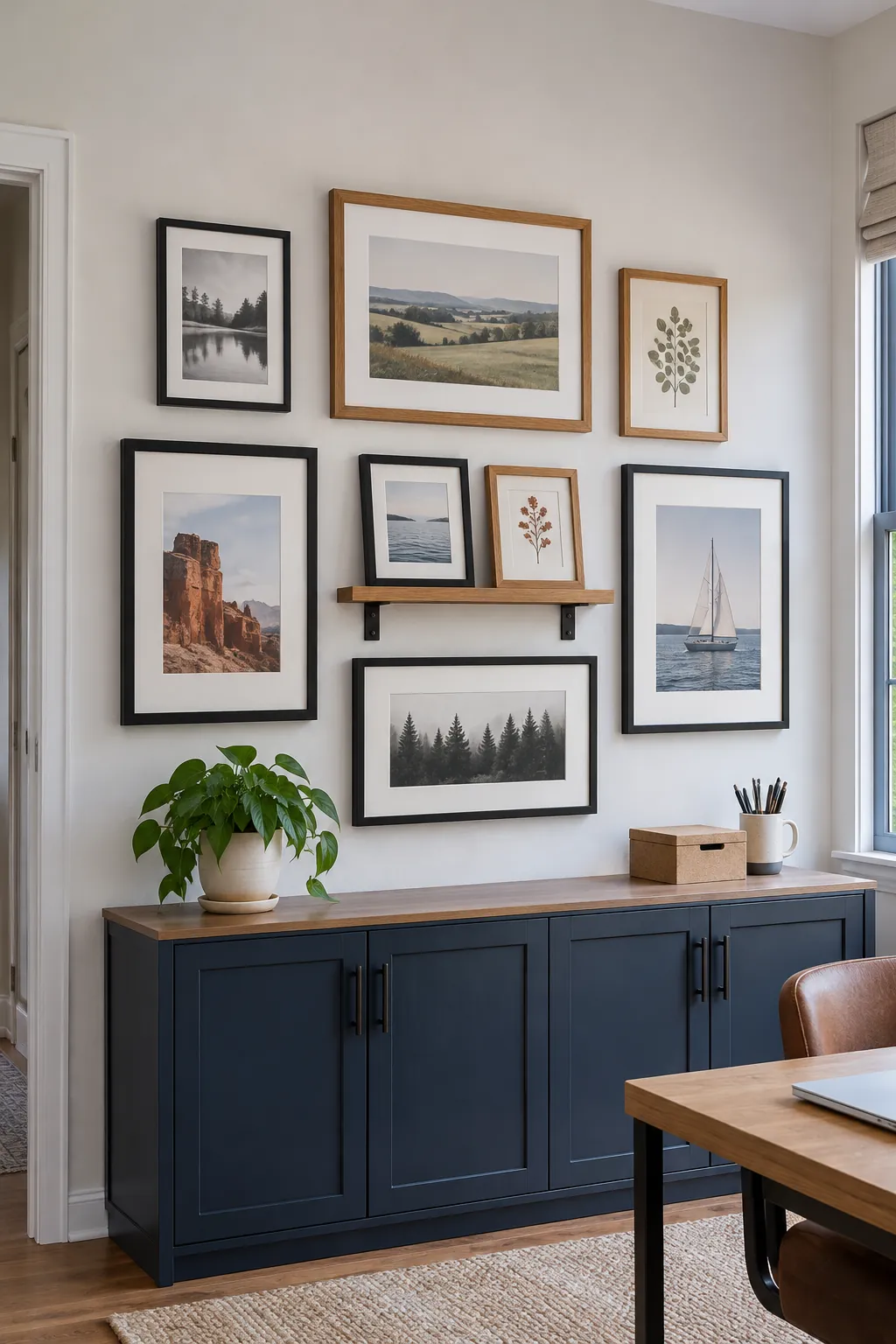
Repeat One Shape Across the Wall
Add visual rhythm by repeating a round or square shape in separate parts of the arrangement. A round mirror can echo a circular textile piece without requiring matching frames everywhere. Keep repeated shapes far enough apart that they guide the eye rather than forming a pair.
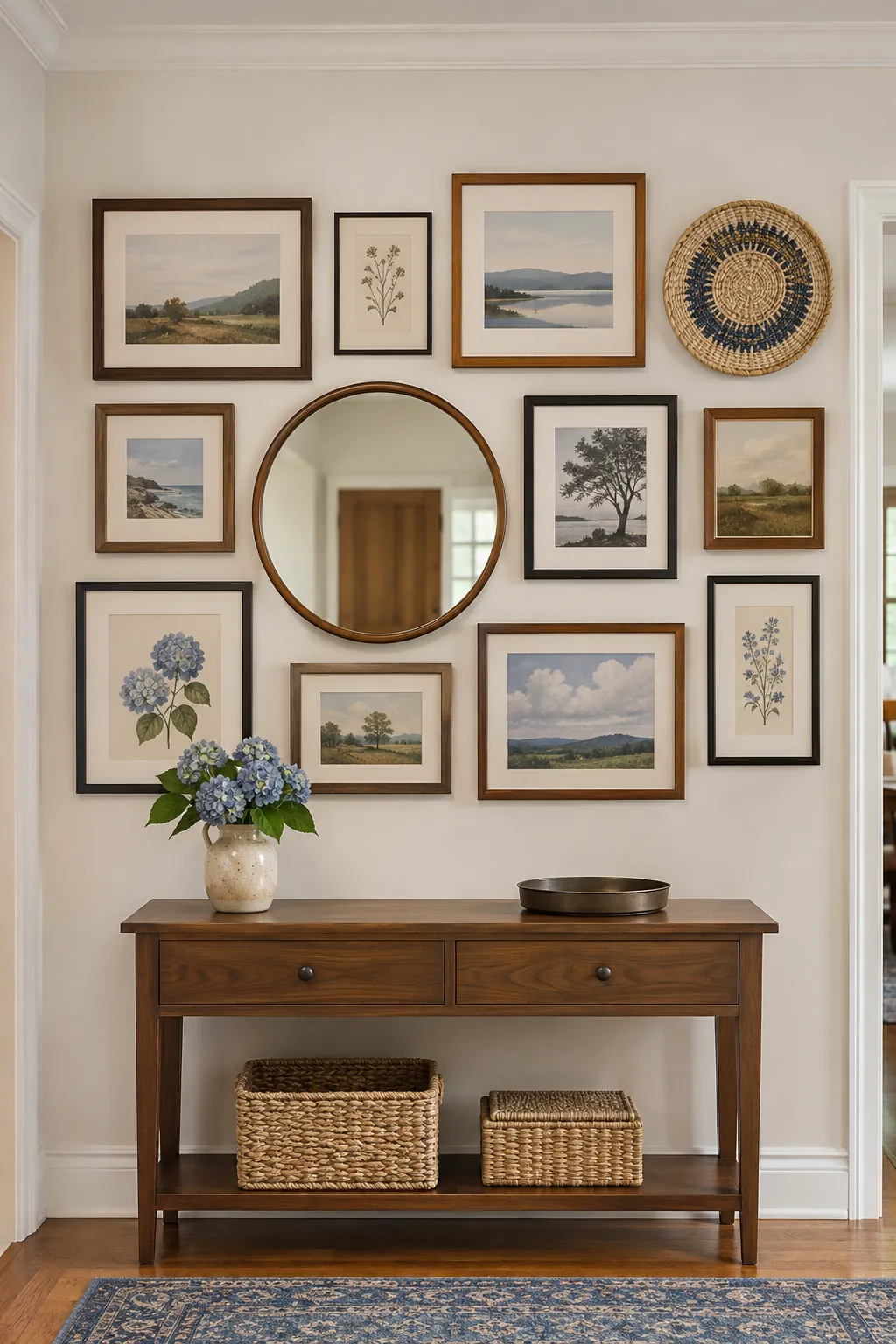
Repeat Room Colors Inside the Frames
The gallery should relate to furnishings without copying them exactly. Replace a few inserts with art that repeats a cushion, rug, or wall color in smaller amounts. Spread those echoes across the group so one corner does not carry all the color.
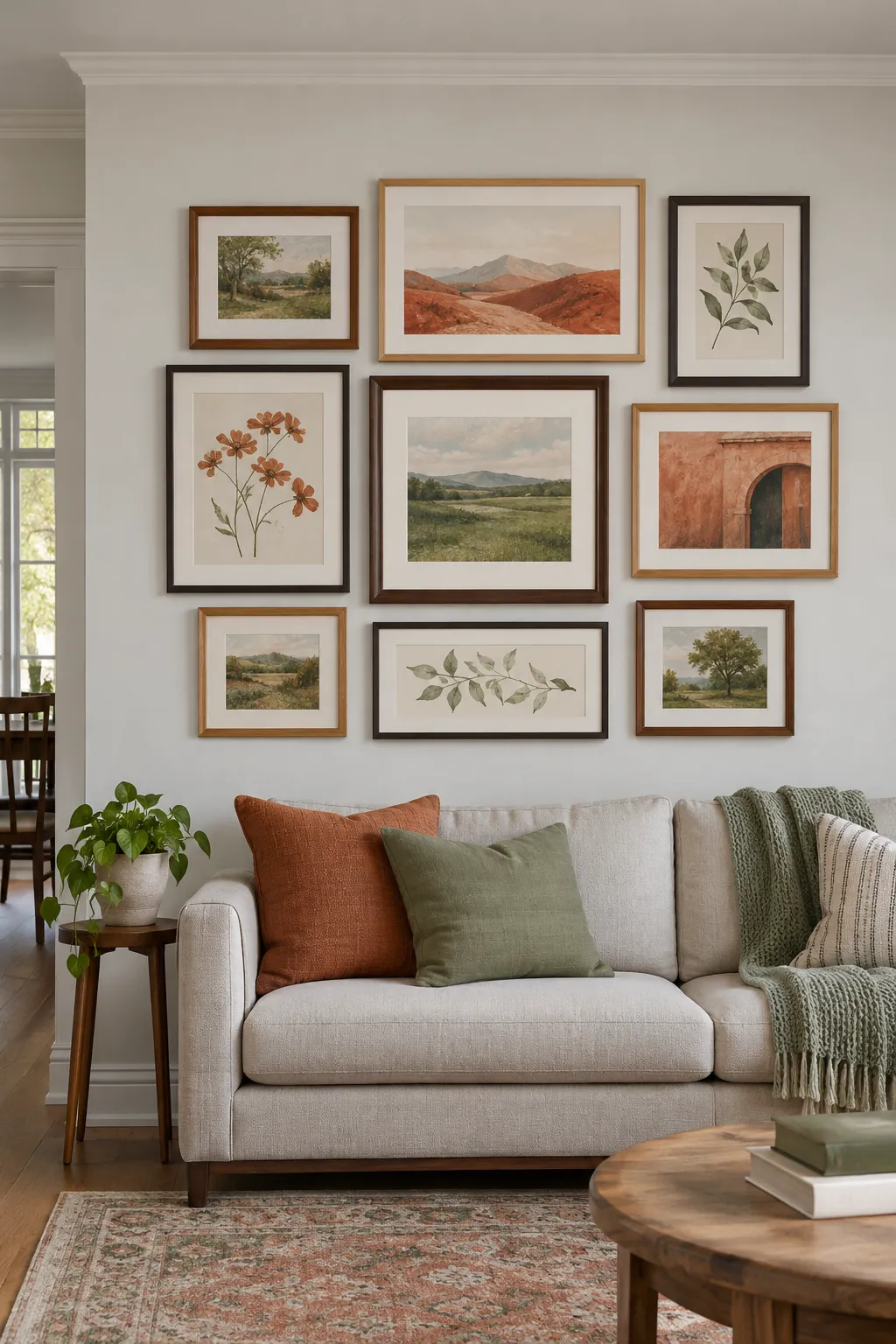
Test the New Outer Shape With Tape
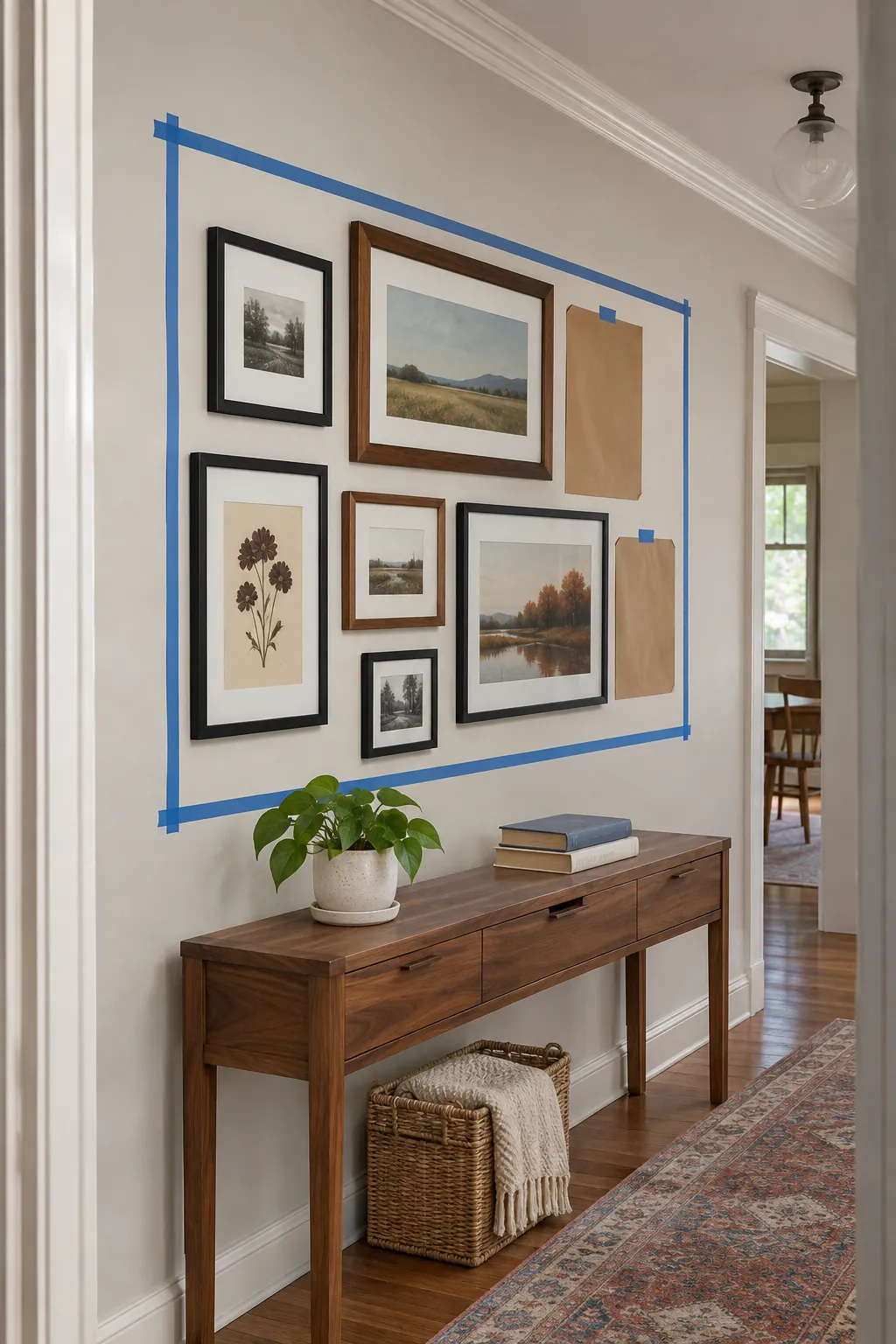
Before moving hooks, outline the proposed group with removable tape and use paper templates for changed positions. Compare the outline with nearby furniture and door trim from the main room entrance. Move the outer edge first, then adjust internal gaps only where necessary.