A small print can be meaningful and still look stranded above a wide sofa. The problem is usually not the artwork itself. The wall needs enough visual width, a clear relationship to the furniture, and deliberate spacing that makes the whole area read as one composition.
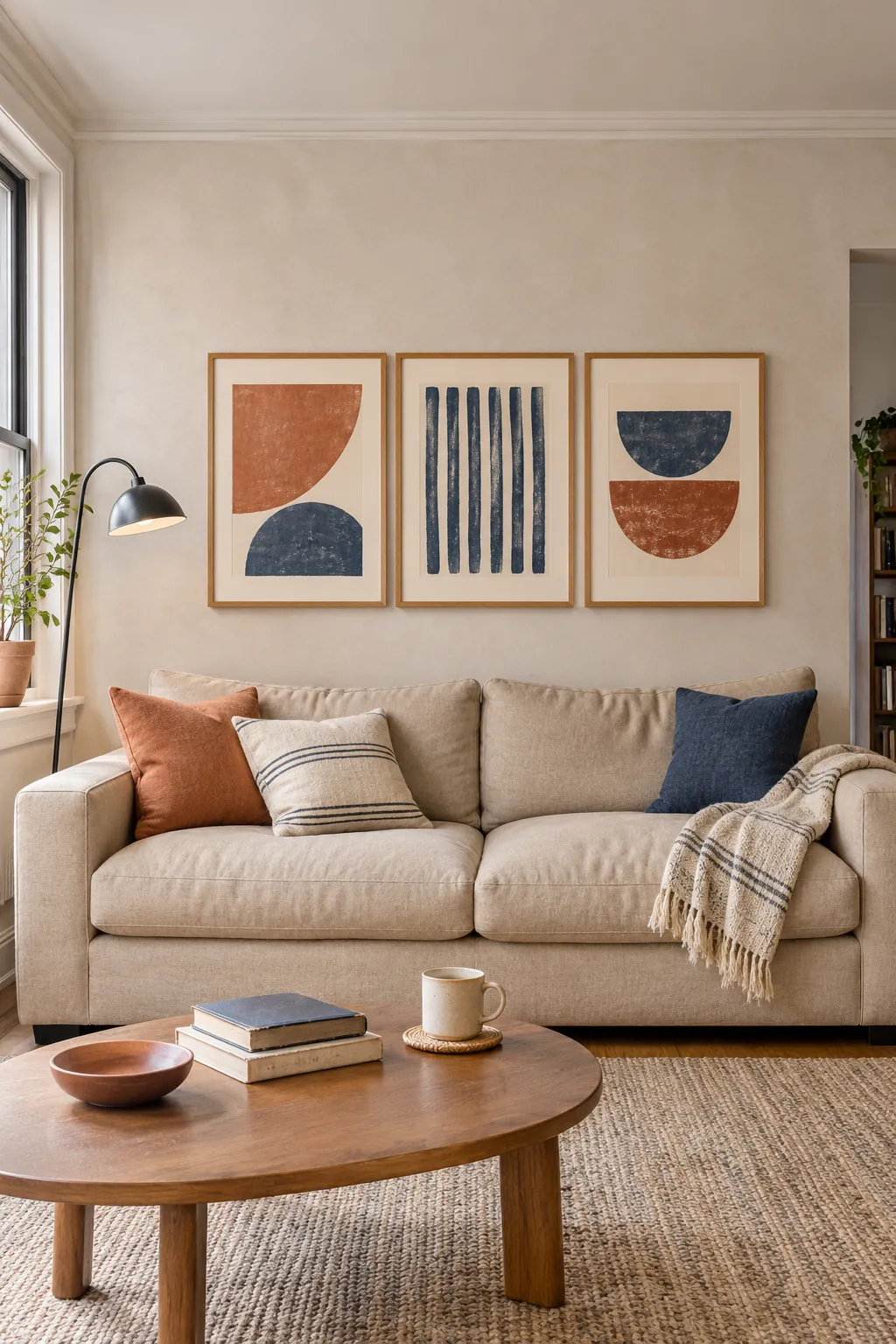
Build a Three Print Triptych
Divide one broad image across three coordinated frames to gain width without buying an oversized original. Keep the gaps narrow enough that the eye joins the panels, and align their top and bottom edges precisely. A paper template for the complete triptych helps you center the set over the seating before the first hook goes in.
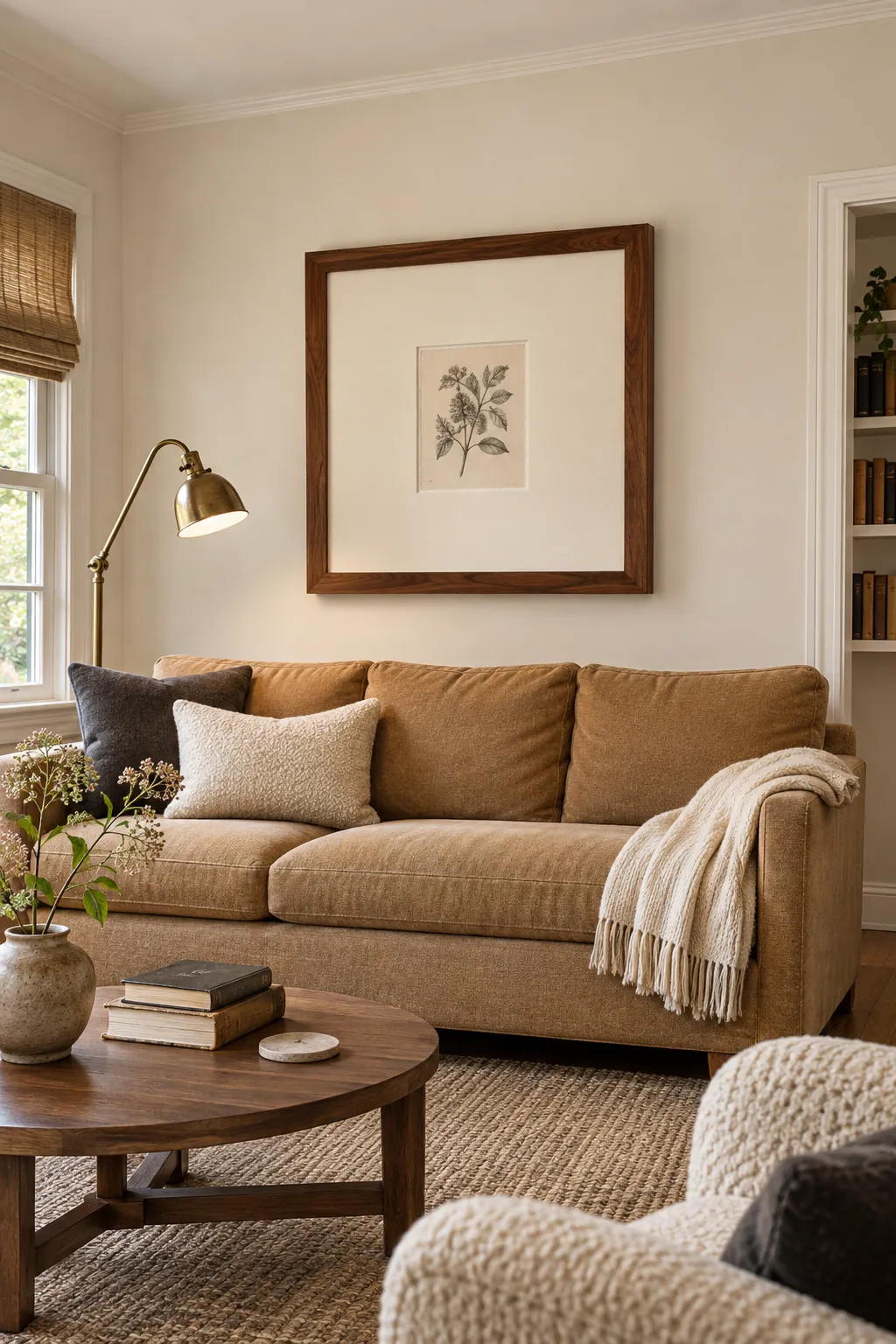
Give the Print a Generous Mat
A wide mat turns a modest drawing into a piece with architectural presence. Choose a border that is visibly generous, then use a frame profile with enough weight to hold its own above upholstered furniture. The extra white space also protects a detailed image from competing with patterned cushions or a textured wall.
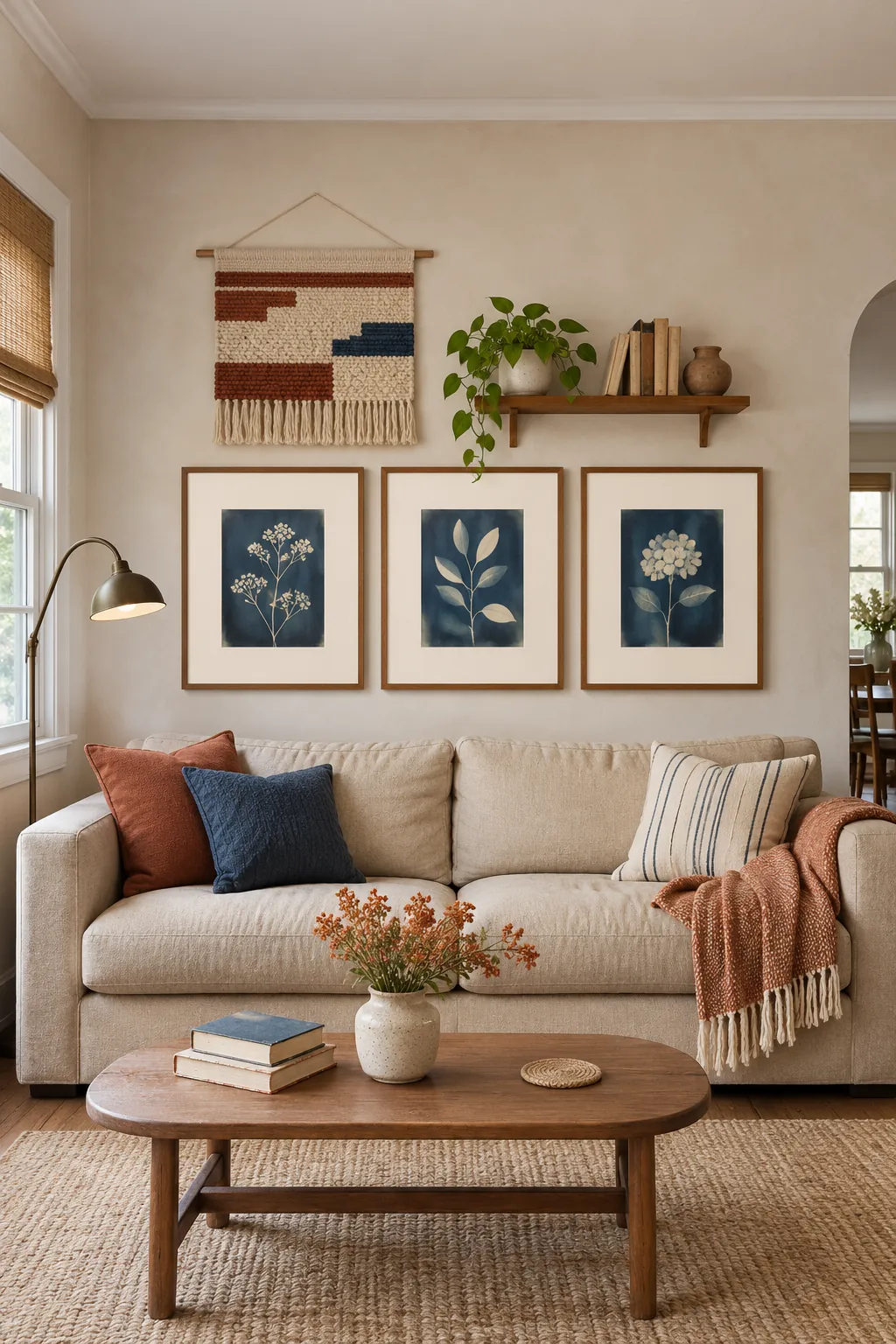
Pair It With a Woven Wall Hanging
A woven panel adds scale through texture while the framed print supplies detail. Let one piece sit slightly higher so the pair feels composed rather than mechanically matched. Repeat a color from the textile in a cushion or throw to connect the wall to the sofa below.
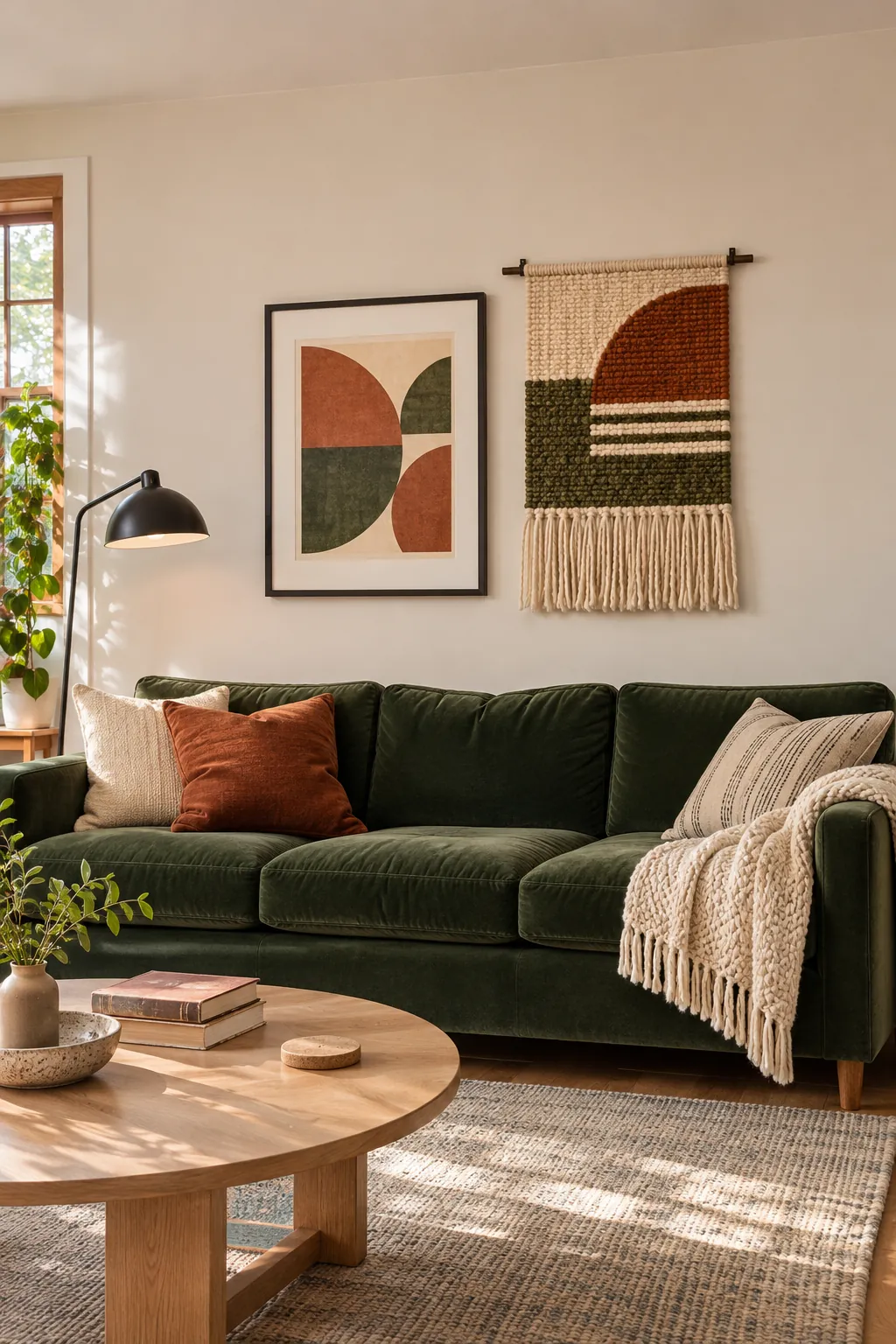
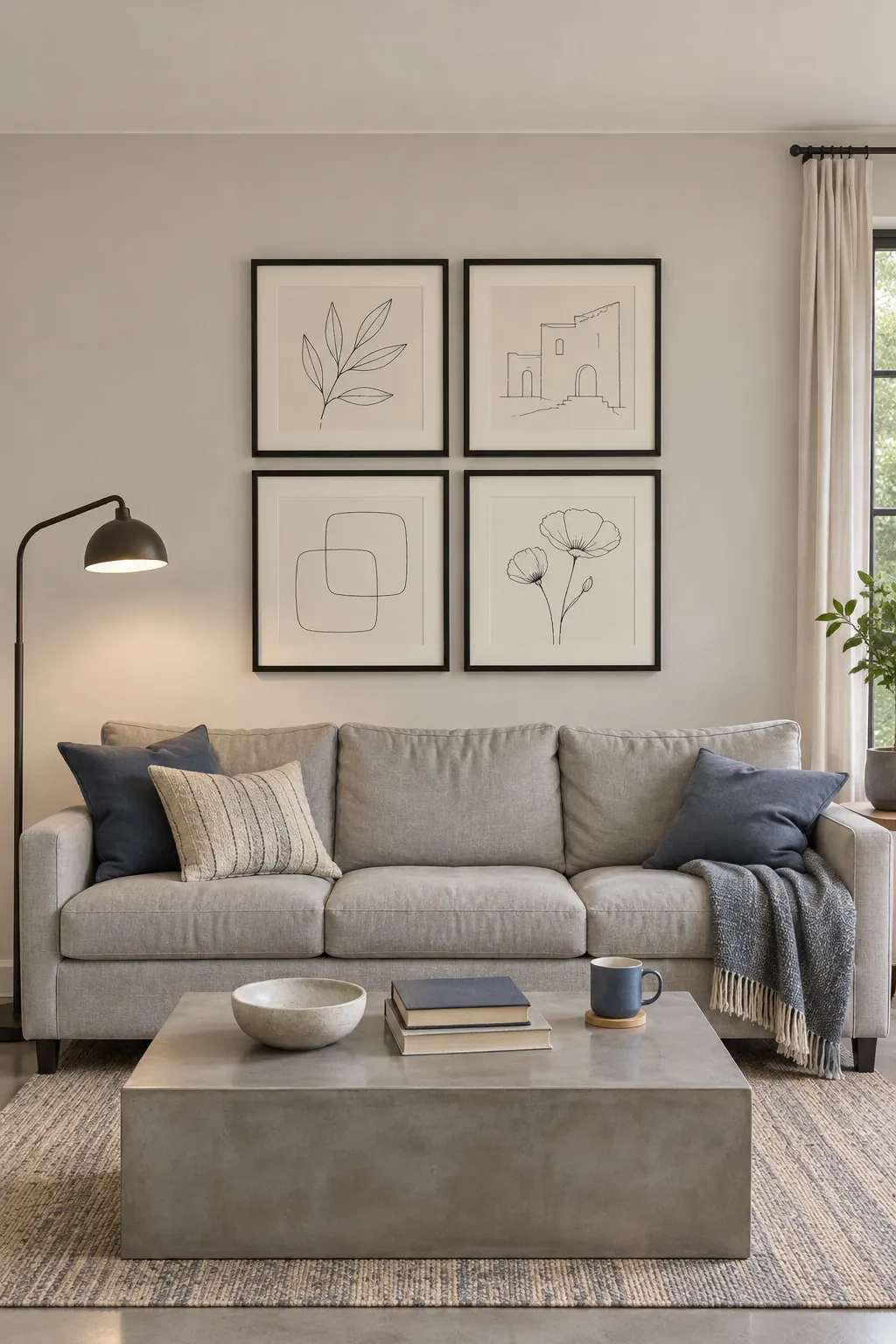
Create a Tight Four Piece Grid
Four equal works form a clear rectangle that behaves like one larger artwork. Measure every interval from frame edge to frame edge, because small differences become obvious in a strict grid. This solution suits line drawings, family photographs, or related studies that share a quiet palette.
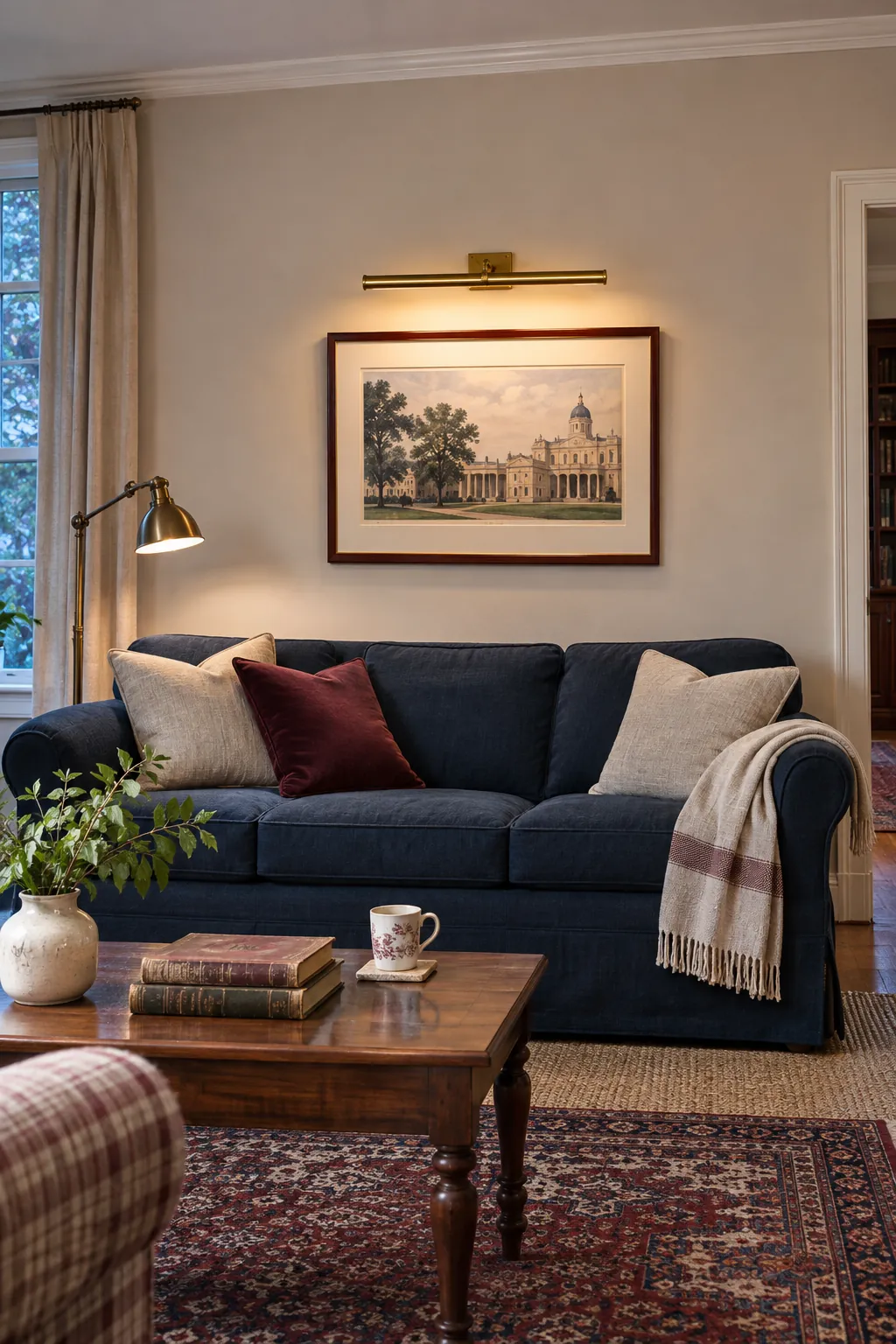
Add a Picture Light Above It
A picture light creates a strong upper boundary and gives the artwork more visual importance after dark. Select a fixture a little narrower than the frame and mount it so illumination reaches the paper without a bright reflection on the glazing. Conceal the cord or use a rechargeable fitting for a cleaner result.
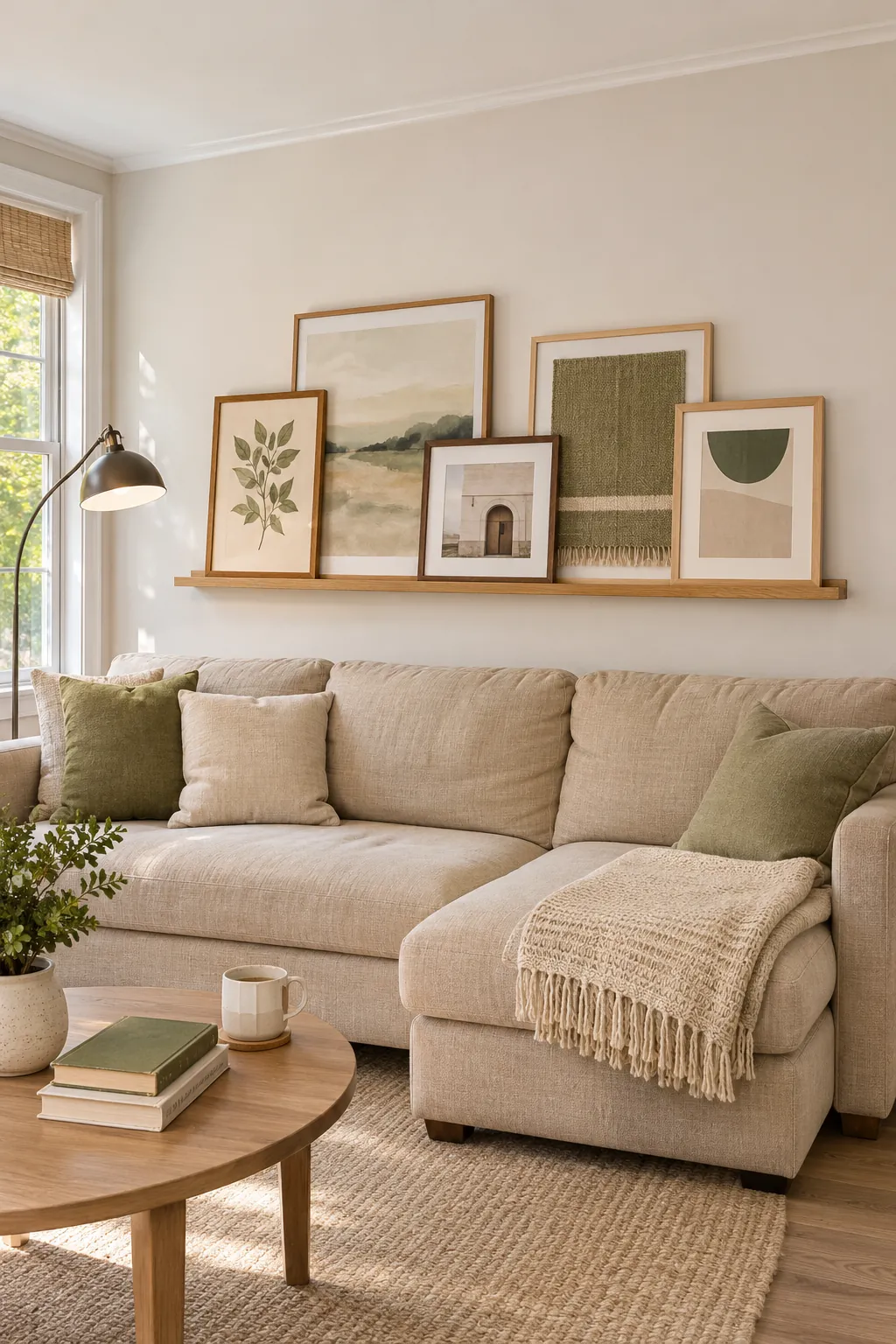
Layer Frames on a Slim Ledge
A shallow ledge lets several frames overlap into one flexible composition. Put the tallest piece off center, then step smaller works toward the opposite side to spread the visual weight. Secure every frame against slipping and keep the shelf depth modest so people do not bump it when sitting down.
Flank It With Sculptural Sconces
Compact sconces widen a central artwork and introduce useful ambient light. Their shades should clear the frame and cast light away from reflective glazing. Match their height carefully, but let the middle artwork remain the dominant shape so the wall does not resemble a row of equal fixtures.
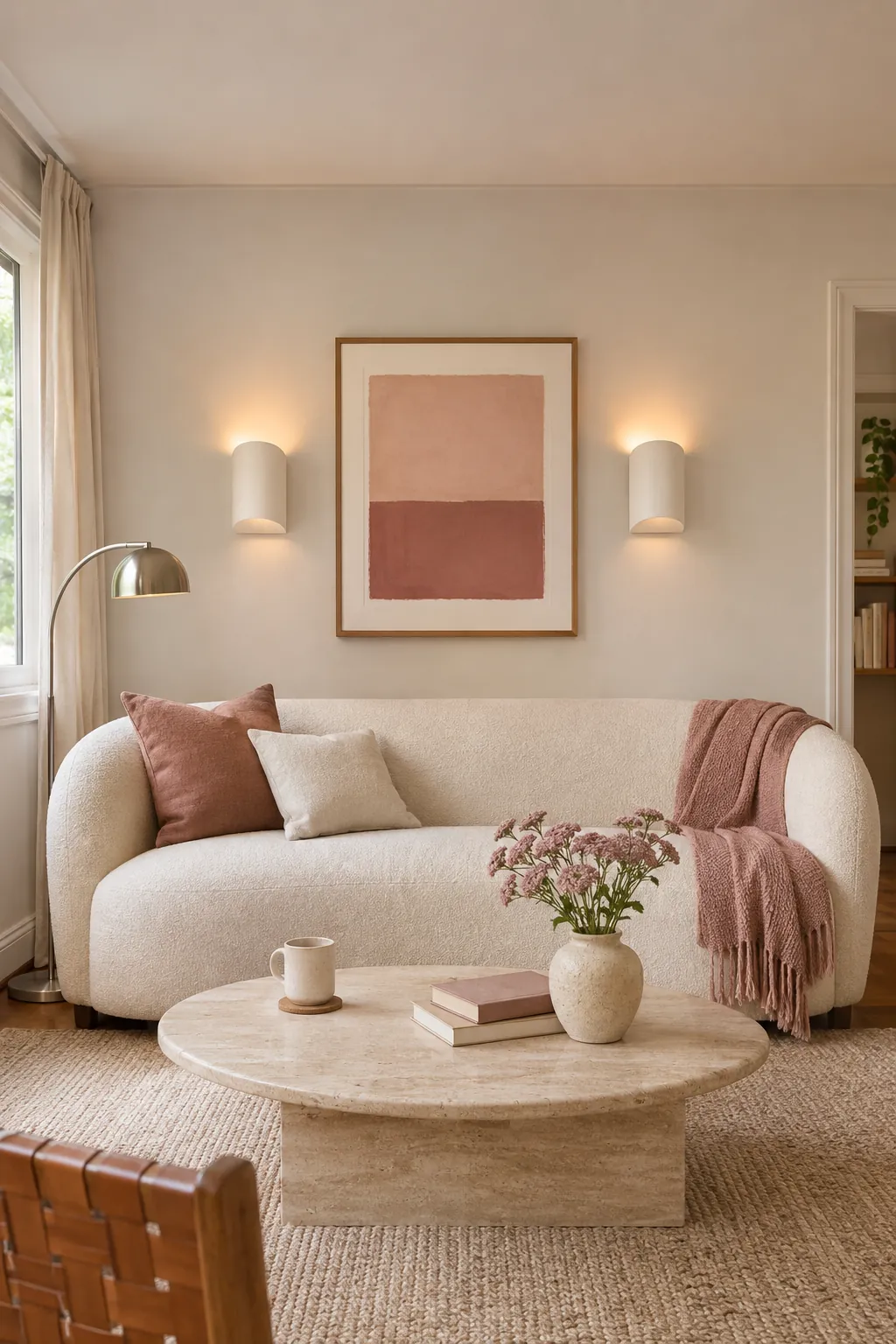
Mix One Print With Two Smaller Works
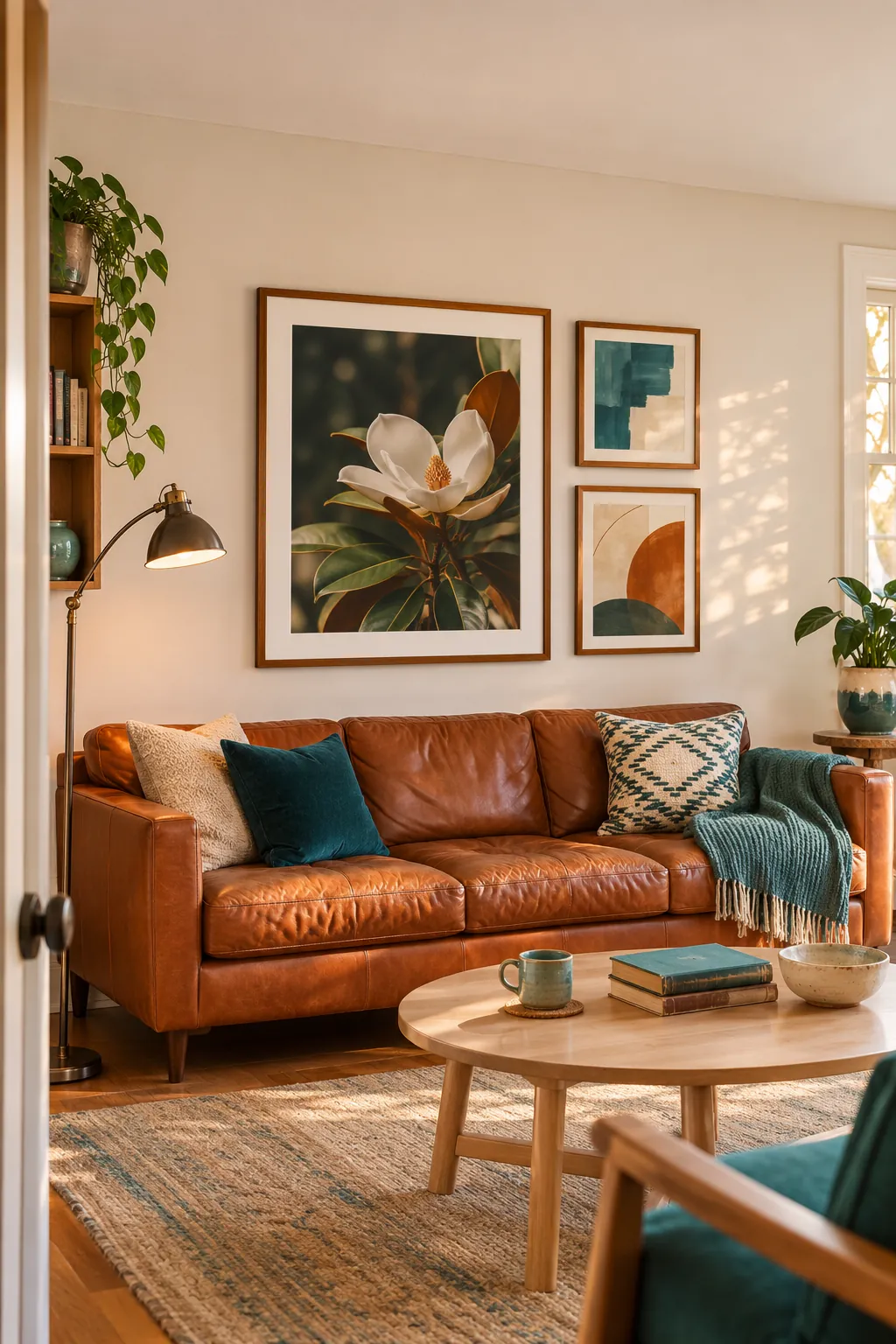
One larger image with two smaller companions creates an easy visual triangle. Place the supporting works on the side that needs more weight, especially when a floor lamp or window already occupies the other side. Shared mat color can unite different art styles without forcing identical frames.
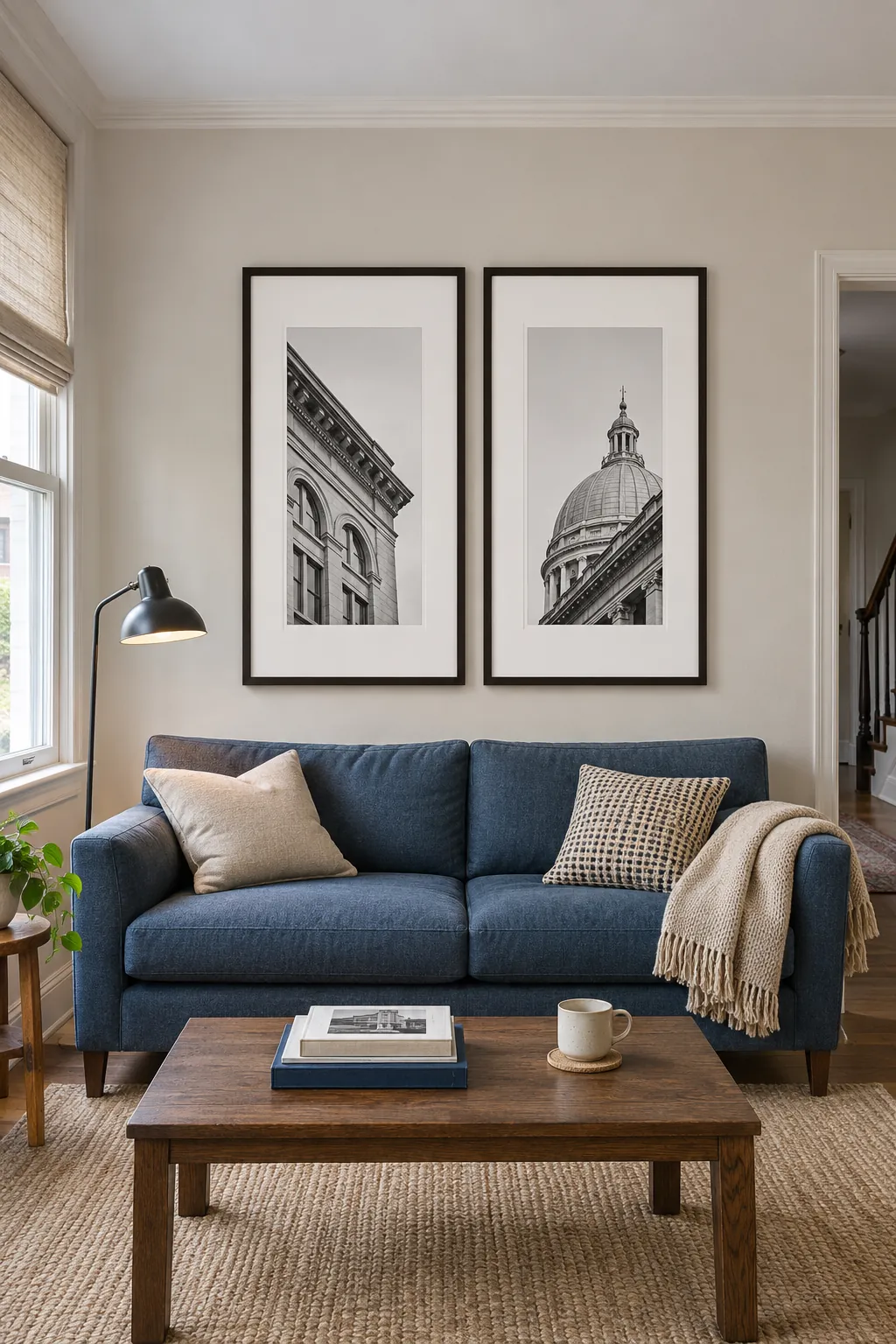
Use a Tall Pair Instead of One Wide Piece
Two vertical pieces can fill the space above a sofa while making a low room feel taller. Give each work a broad mat so the narrow format still has substance. Keep the pair close enough to read together and leave more open wall at the outer sides than between the frames.
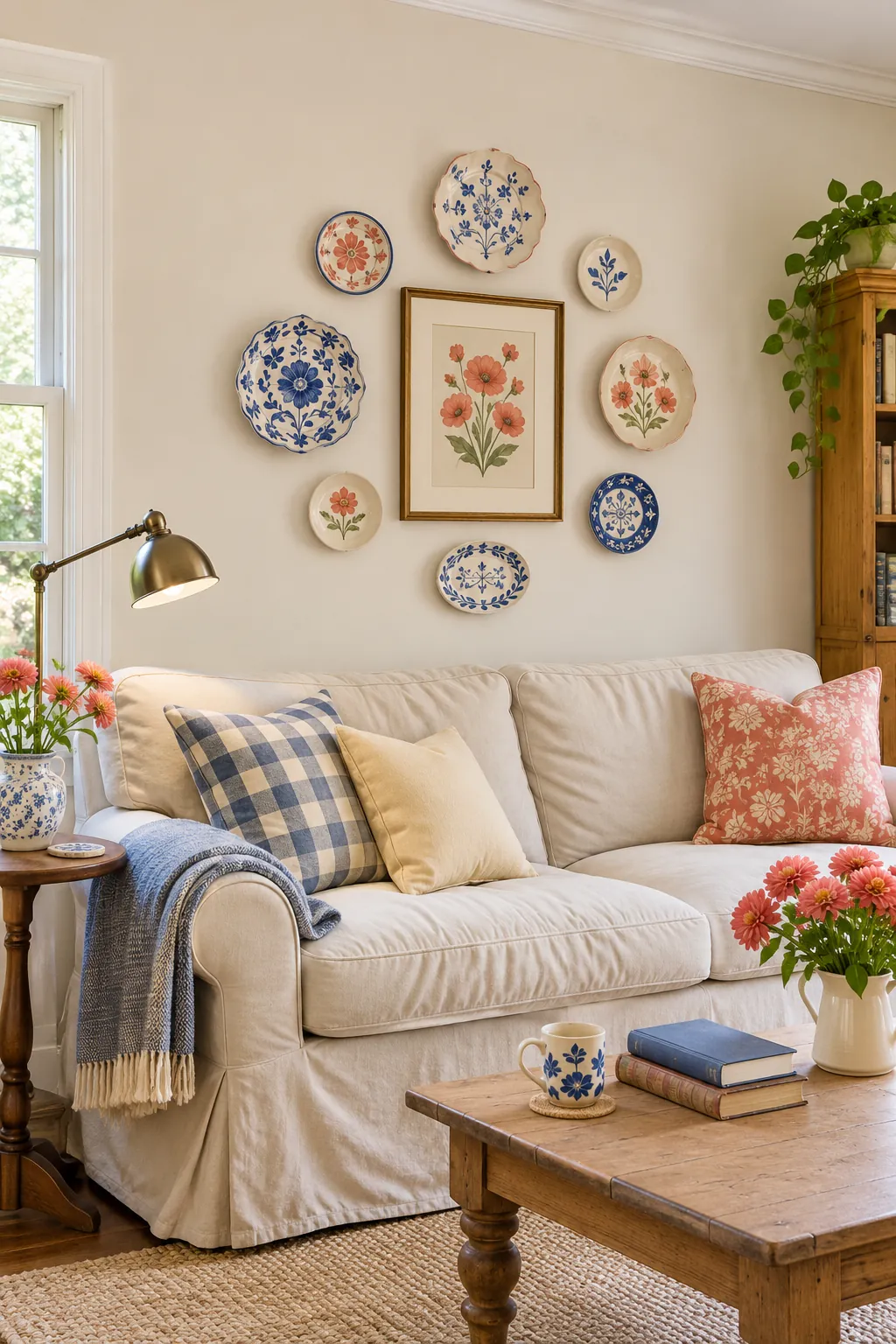
Surround It With Small Ceramic Plates
Handmade plates can expand a small floral or food related print with shape and color. Arrange the ceramics in an irregular orbit, but preserve a few consistent gaps so the display feels intentional. Use proper plate hangers and keep the lowest piece well above heads resting against the sofa.
Hang a Textile Behind the Frame
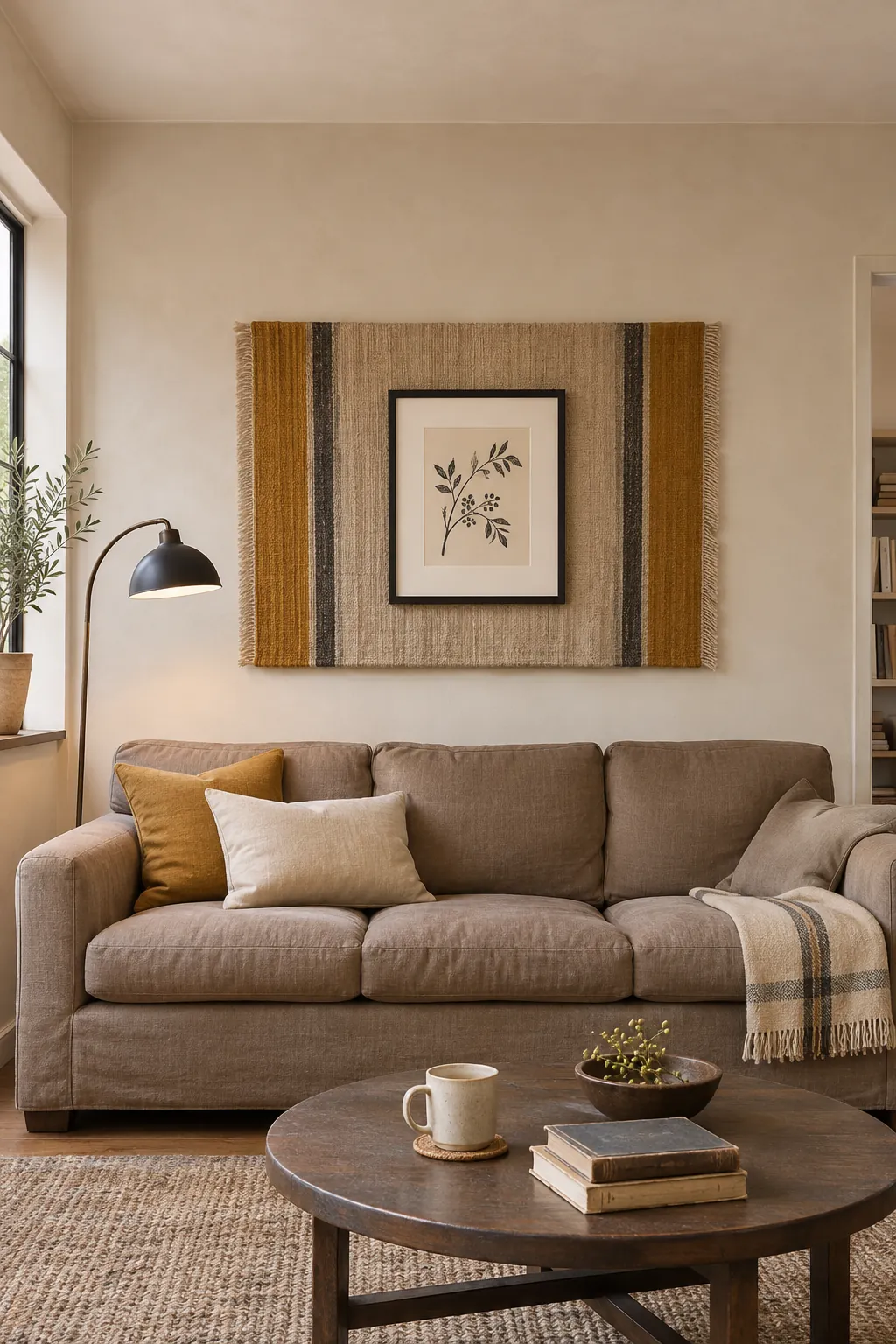
A flat textile panel works like an oversized mat behind a smaller frame. Choose a weave with restrained pattern, then leave a visible border on every side of the artwork. This layered method adds warmth without the depth of a shelf, which makes it useful in tight rooms.
Extend the Display With Wall Baskets
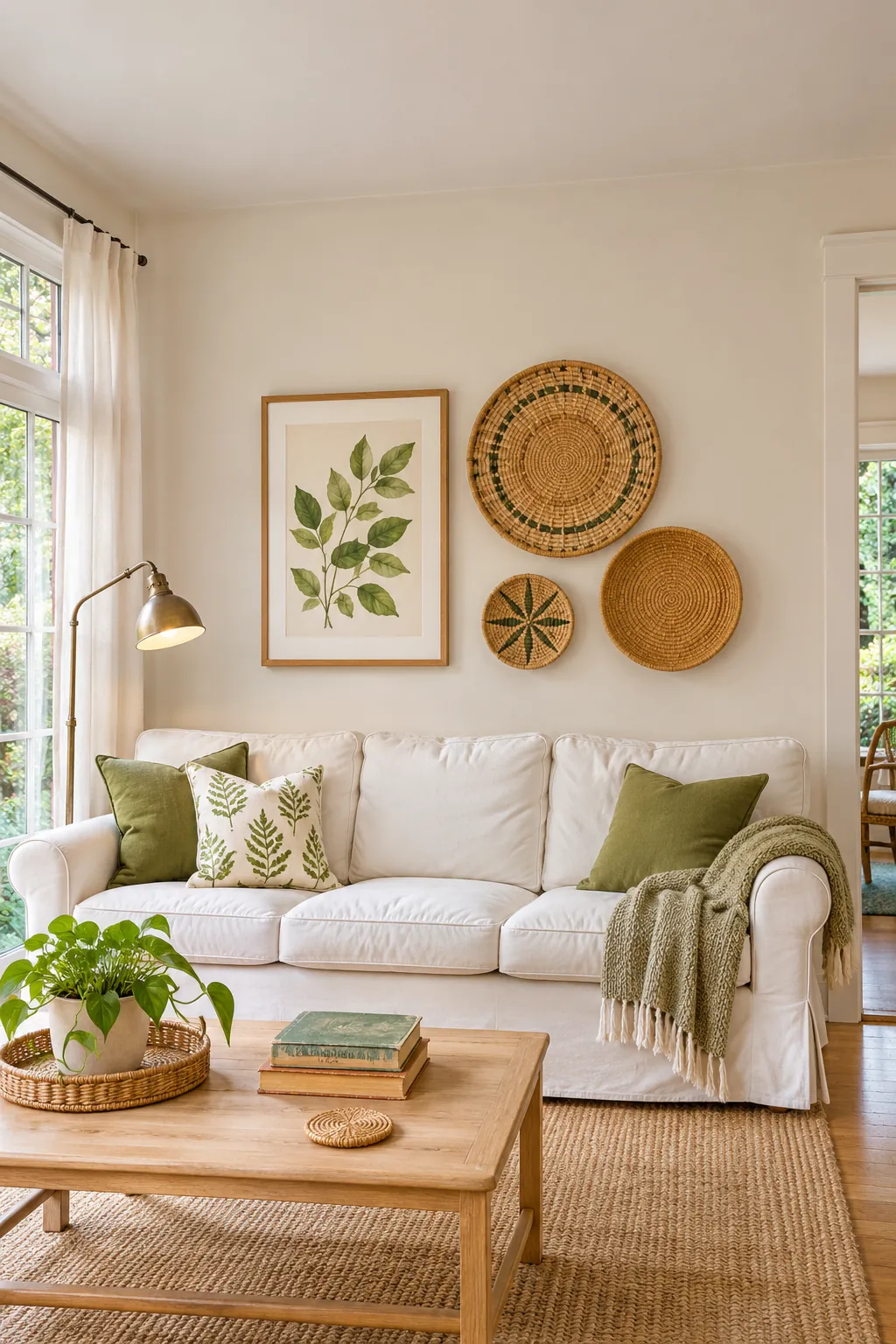
Shallow baskets bring broad organic forms to the wall without adding much weight. Vary their diameters and weaving patterns, while repeating one fiber tone to maintain unity. A loose diagonal arrangement can bridge the distance between a small print and a nearby tall plant.
Anchor It With a Console Behind the Sofa
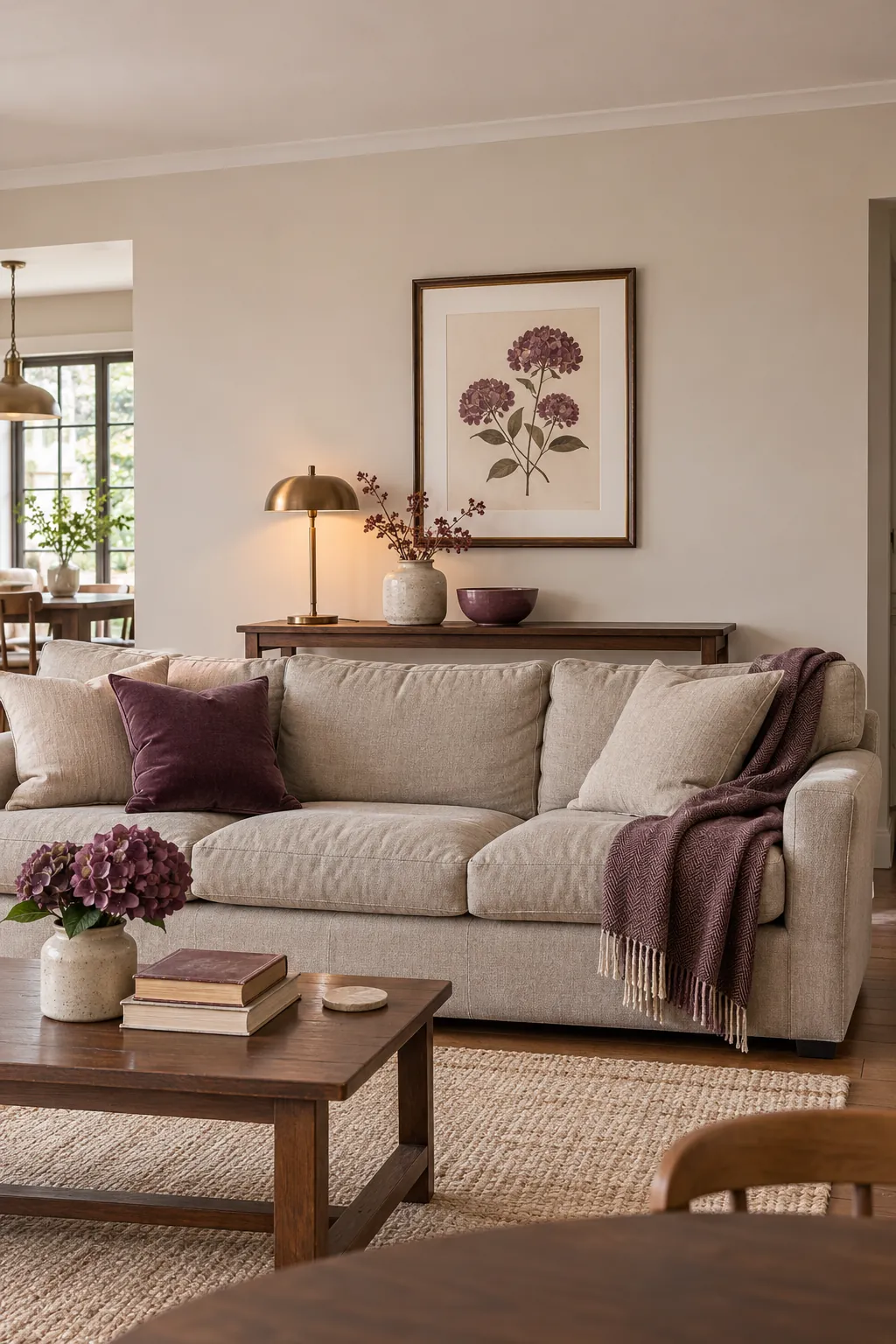
A console visually links wall art to the furniture zone when the sofa has room behind it. Use a slim table that does not push the seating too far forward, then place a lamp and two quiet objects below the print. The vertical stack of table, objects, and artwork reads as one substantial composition.
Try an Asymmetrical Gallery Cluster
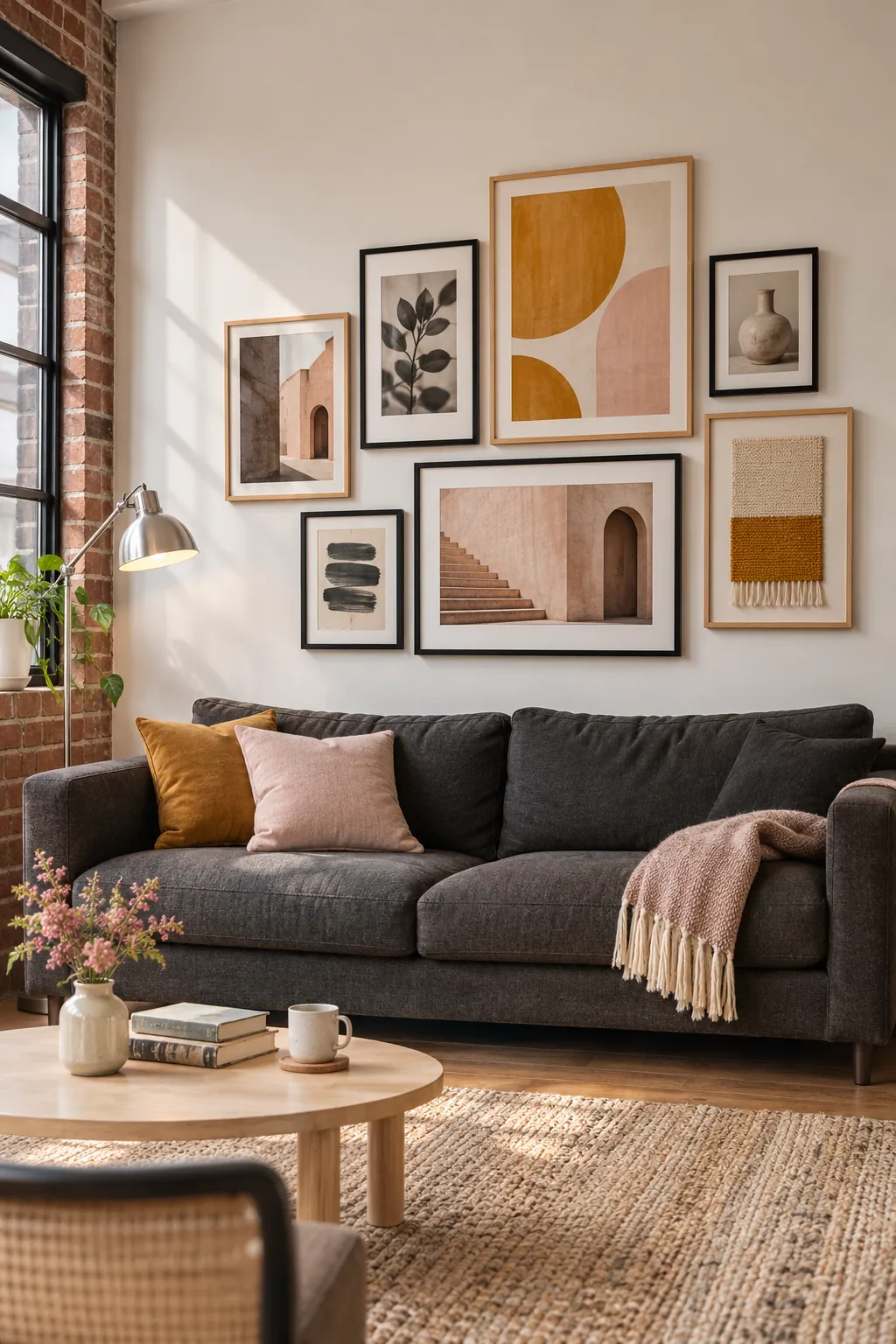
An asymmetrical cluster can cover generous width while preserving a collected look. Start with the largest frame near the middle, build outward in uneven steps, and maintain one calm outer edge as a reference line. Lay the complete arrangement on the floor first to catch awkward gaps before mounting.
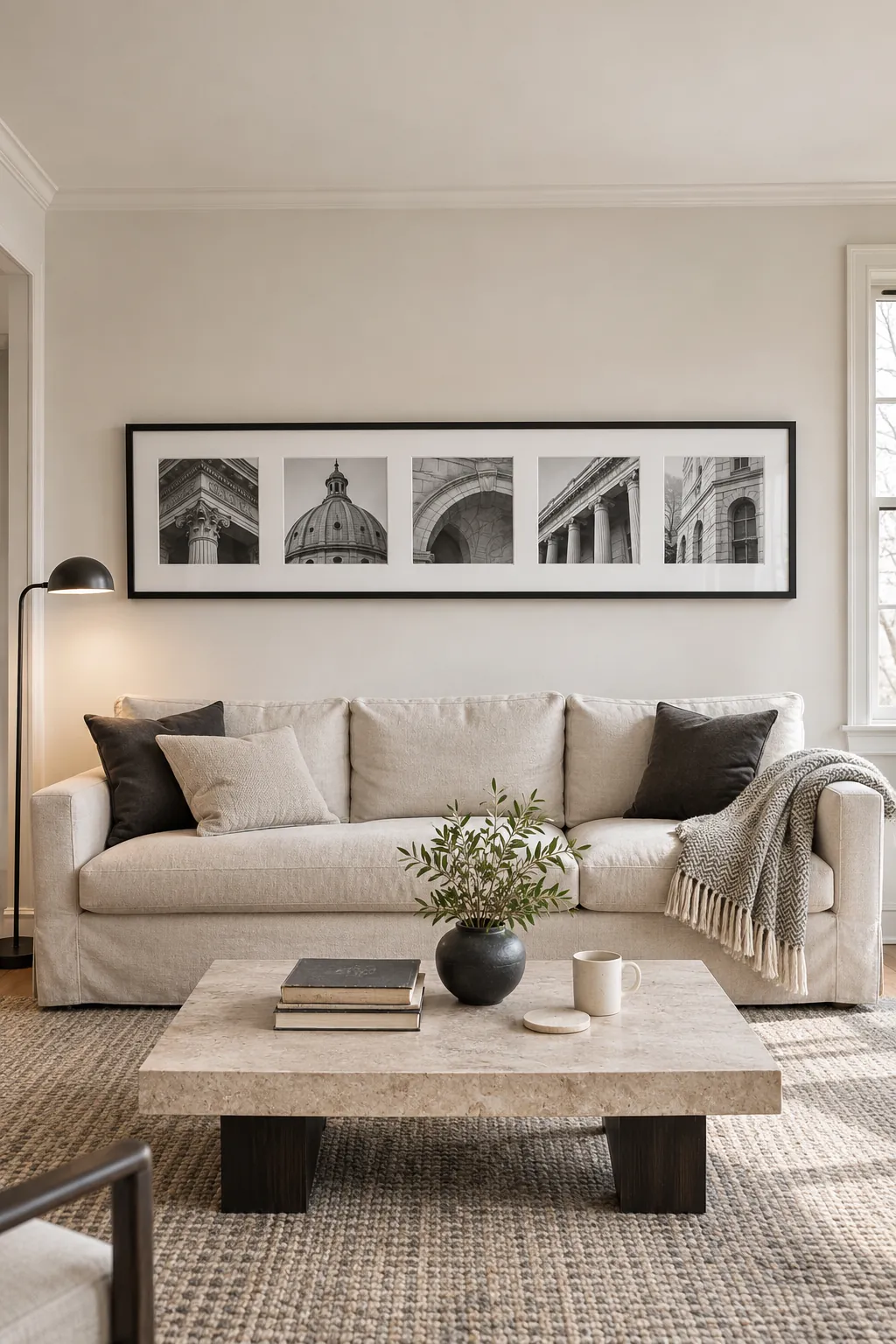
Use a Panoramic Frame With Multiple Images
A panoramic frame can hold several related images while keeping the wall visually simple. Use consistent cropping and equal internal spacing so the photographs act as a sequence rather than separate small prints. The long horizontal form naturally echoes the sofa and is especially effective on a busy patterned wall.
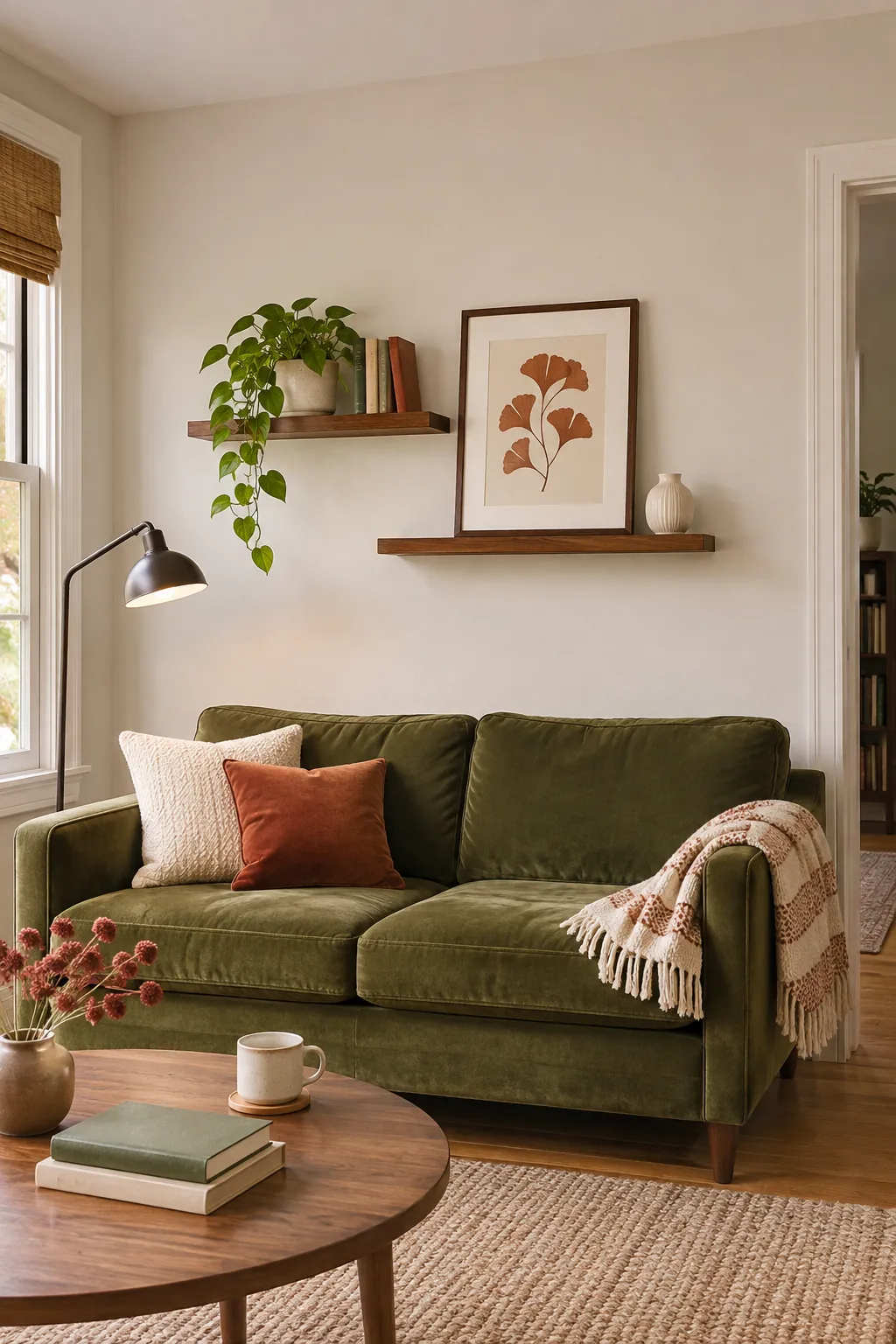
Add Narrow Floating Shelves
Two short floating shelves offer more flexibility than one continuous ledge. Offset them so their ends do not create a rigid ladder, and limit the display to a few framed works plus one object with depth. Wall anchors must match both the shelf system and the wall material.
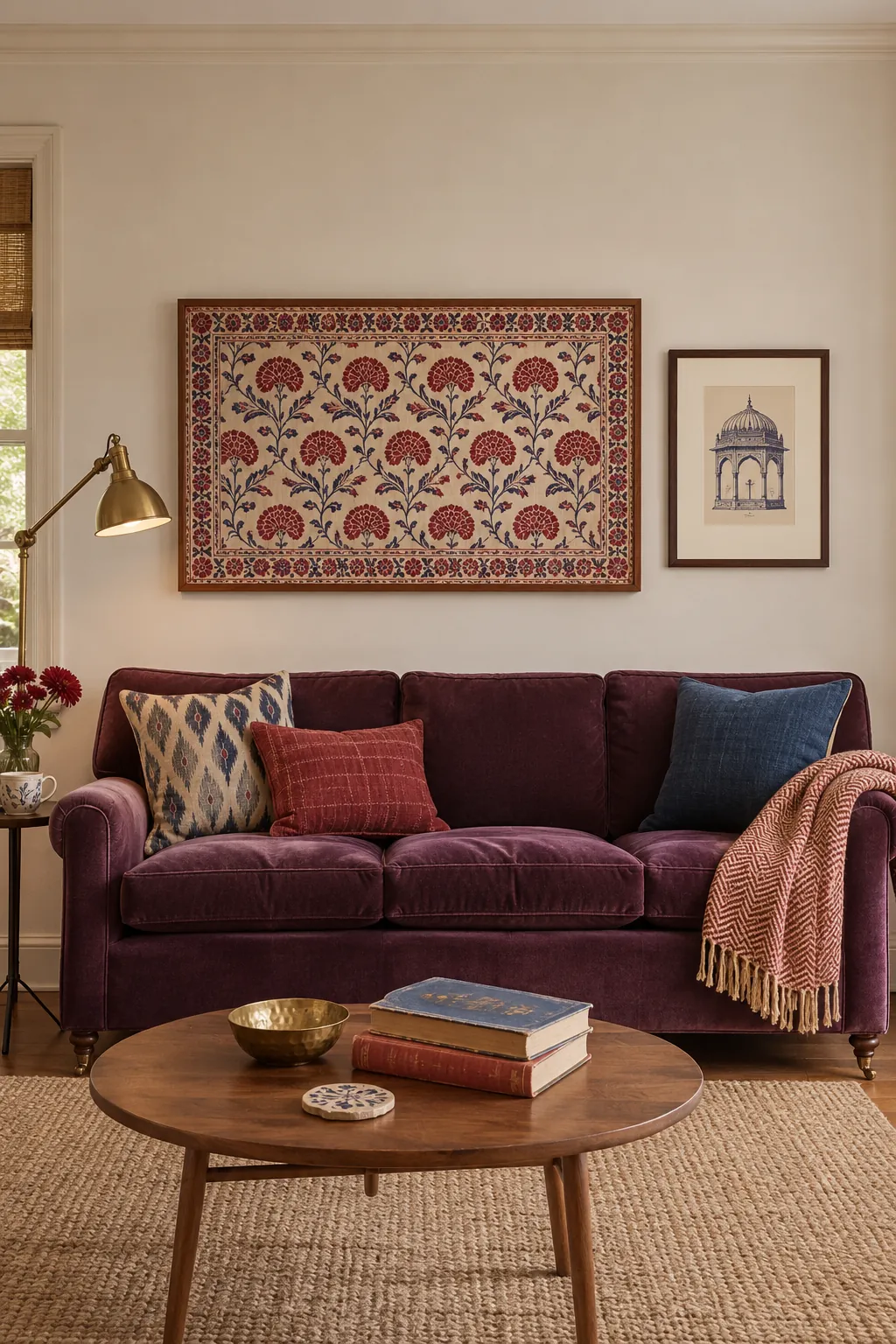
Frame a Printed Fabric Panel
Printed fabric can provide the scale and color that a small paper print lacks. Stretch the cloth evenly so its pattern stays square, then choose a frame deep enough to protect the edges. Pair motifs by color or line quality rather than trying to find two identical designs.
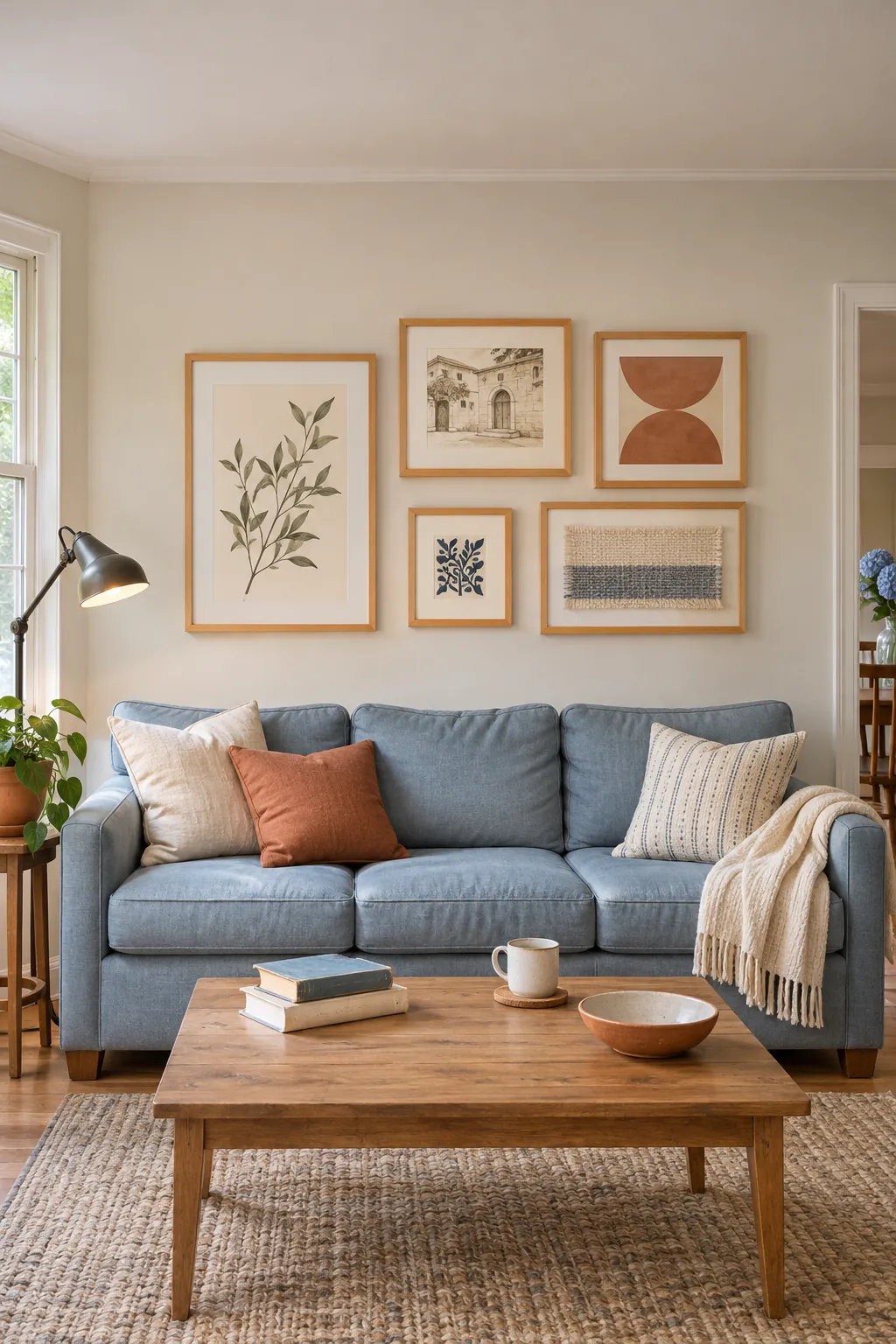
Repeat the Frame Color Across the Wall
A repeated wood tone can make unrelated pieces feel like a deliberate collection. Change the mat widths and frame sizes to avoid a boxed set appearance, but hold the maple or oak finish consistent across the wall. This approach works well when you want to mix photographs, drawings, and small paintings.
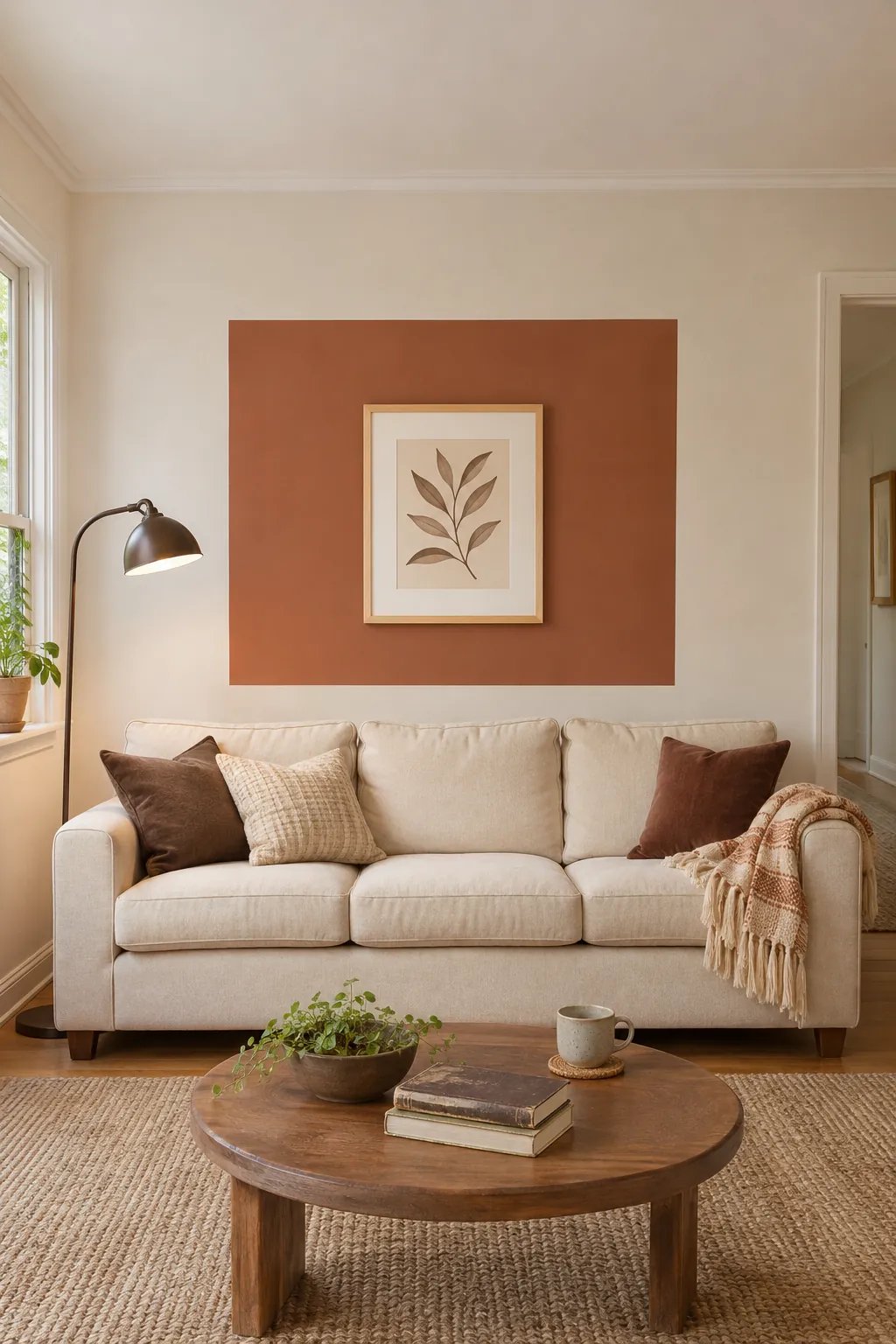
Paint a Color Field Behind the Arrangement
A painted rectangle gives the eye one large field to read behind a modest frame. Make the color block wider than the artwork and clearly narrower than the sofa, with crisp level edges. Test the paint color in daylight and lamplight because a strong clay or blue can shift more than the framed image.