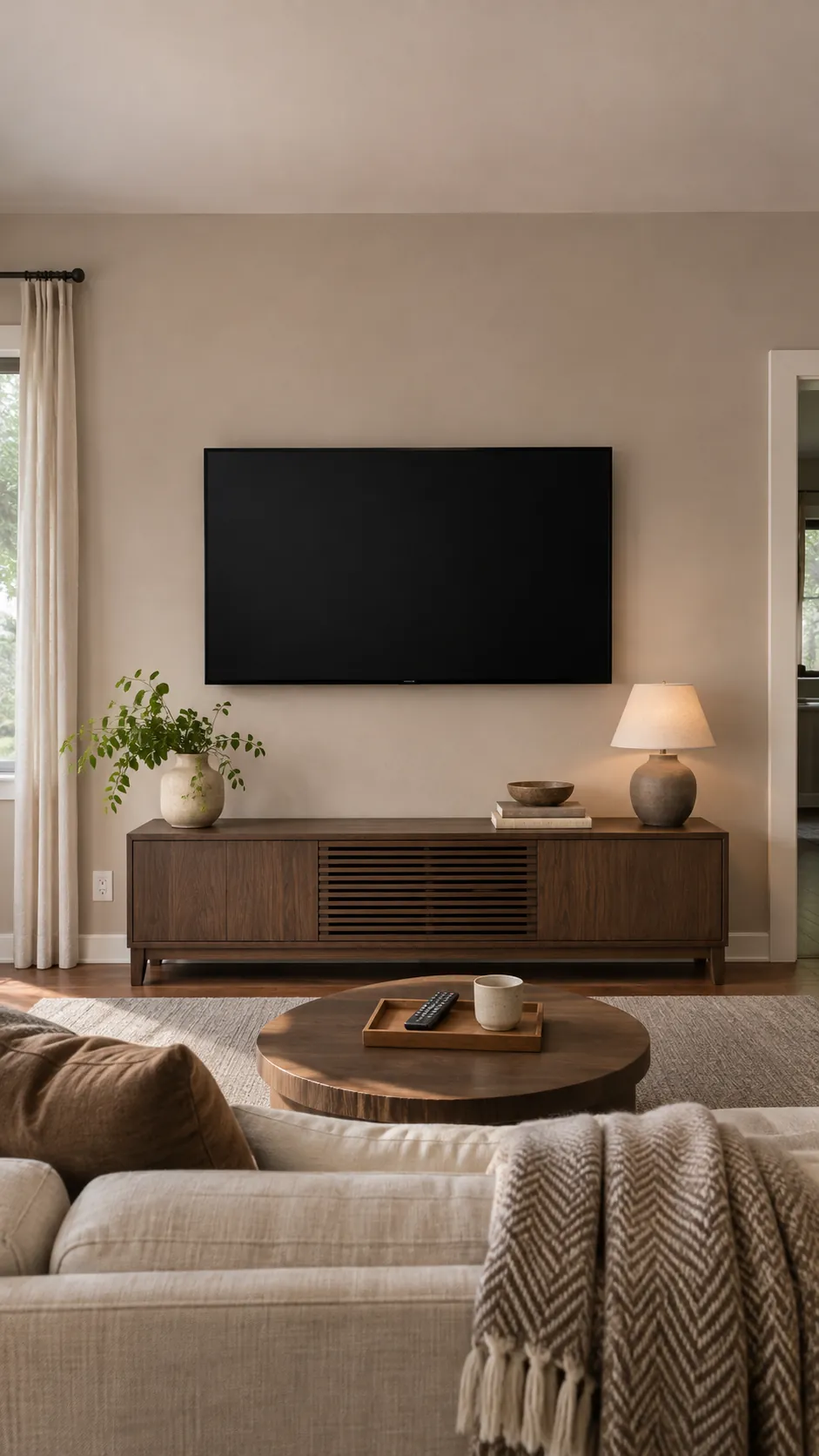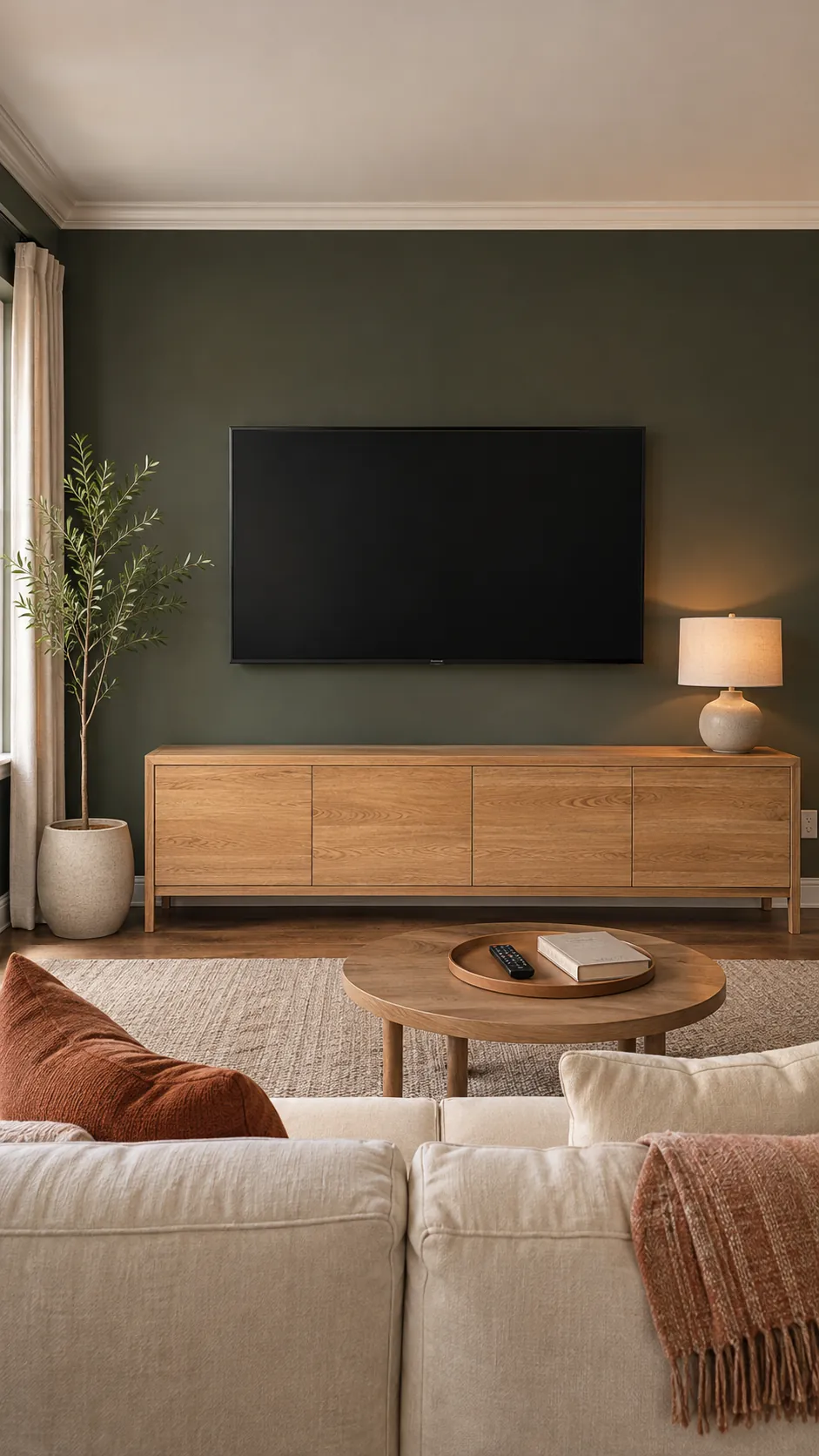
A television already creates contrast, reflection, and movement, so nearby decor must work more quietly than art on another wall. The best arrangement supports the screen with broad shapes, controlled color, and clean cable routes. Leave the immediate viewing zone calm, then add interest at the outer edges or below.
Paint the TV Wall a Low Contrast Color
A darker wall reduces the contrast between a black screen and its background, so the television feels less like a cutout. Choose a muted color that relates to the room rather than pure black, and sample it in daytime and evening light. Keep the finish matte because sheen can reflect windows and lamps during viewing.
Use One Long Console Below the Screen
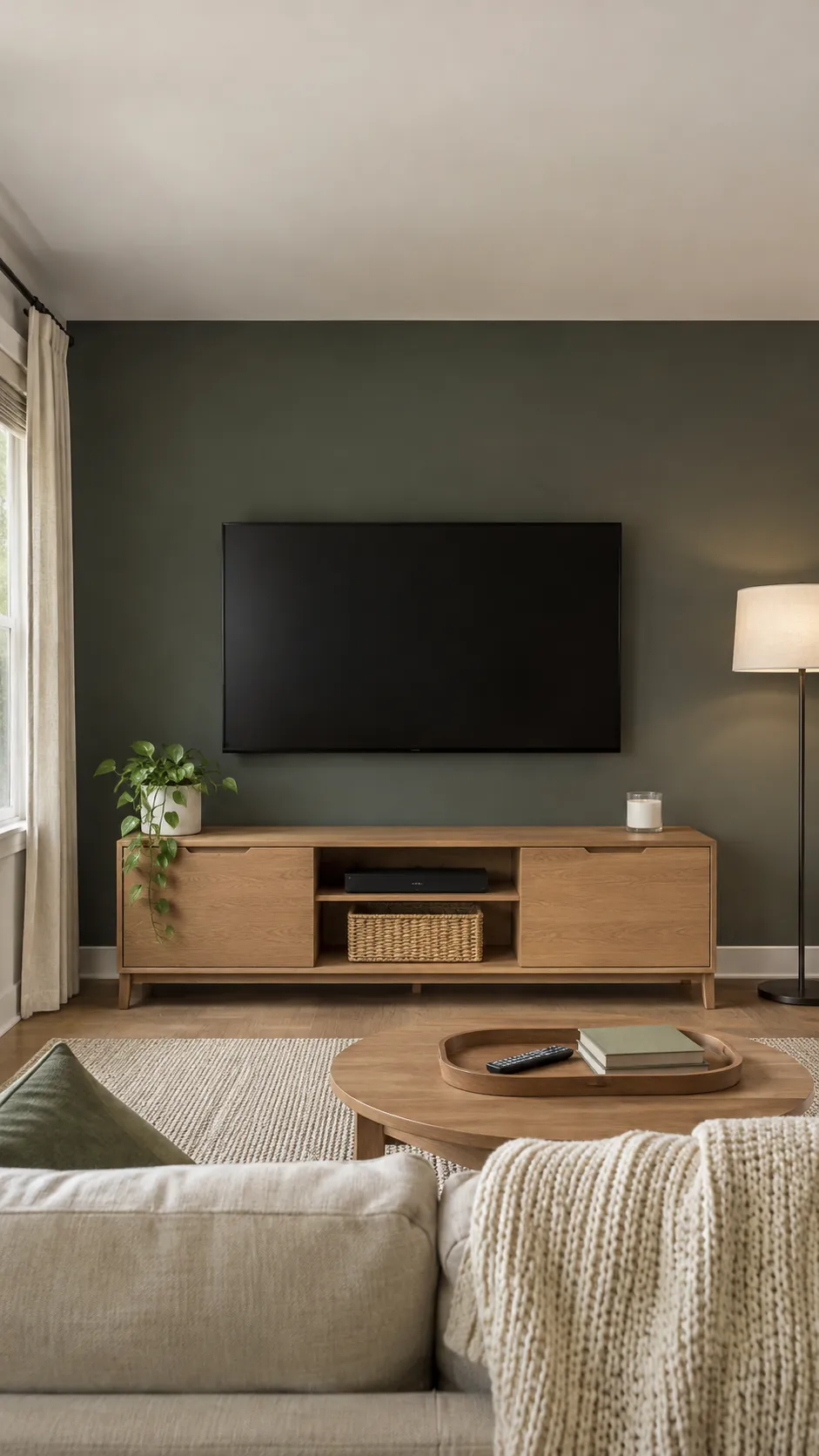
A console that extends beyond the screen gives the television a stable visual base. Its top should stay mostly clear, with a few low objects that do not overlap the picture from the main seats. Closed doors hide equipment and make minimal television wall styling easier to maintain every day.
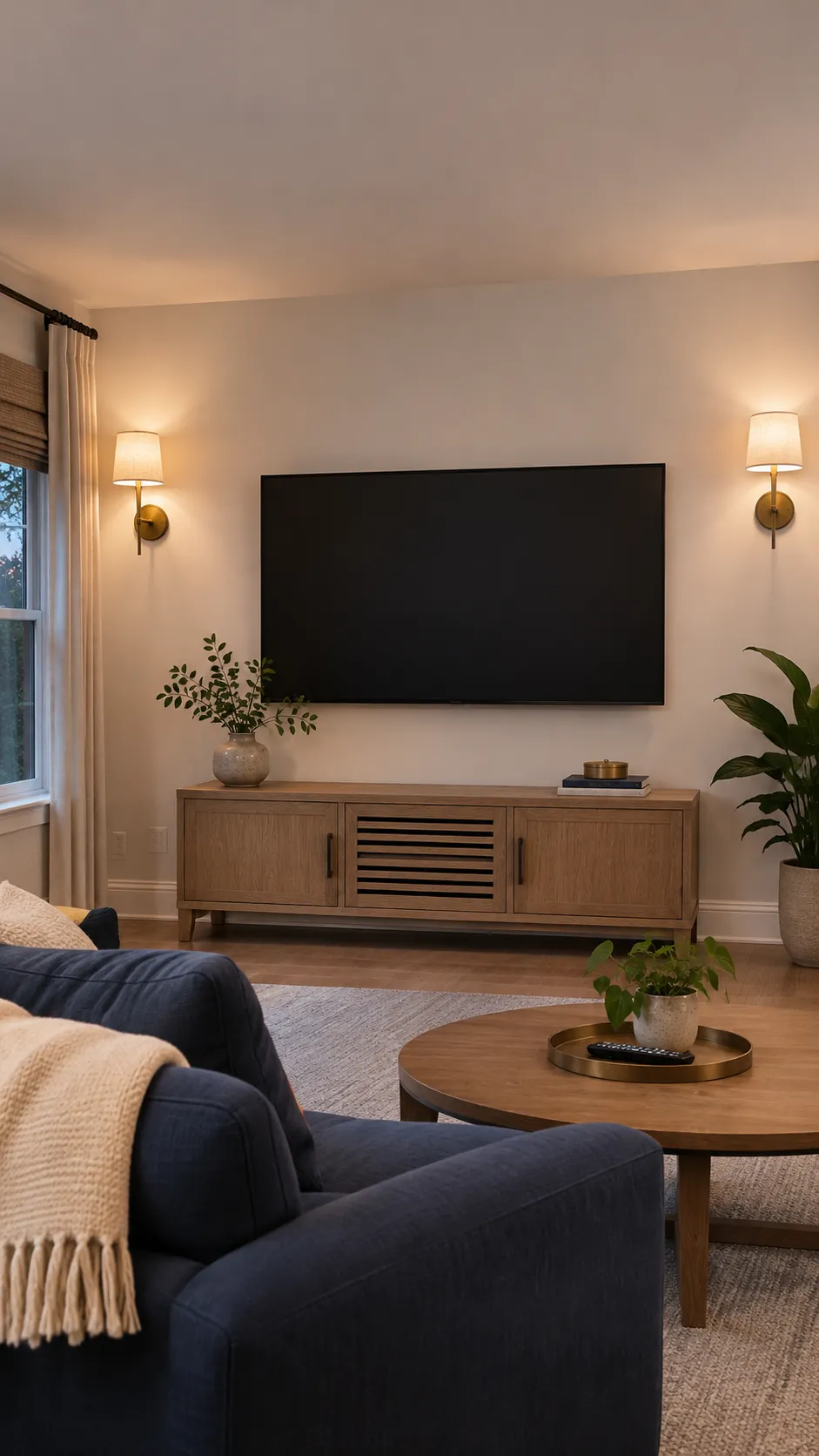
Add Soft Light at the Outer Edges
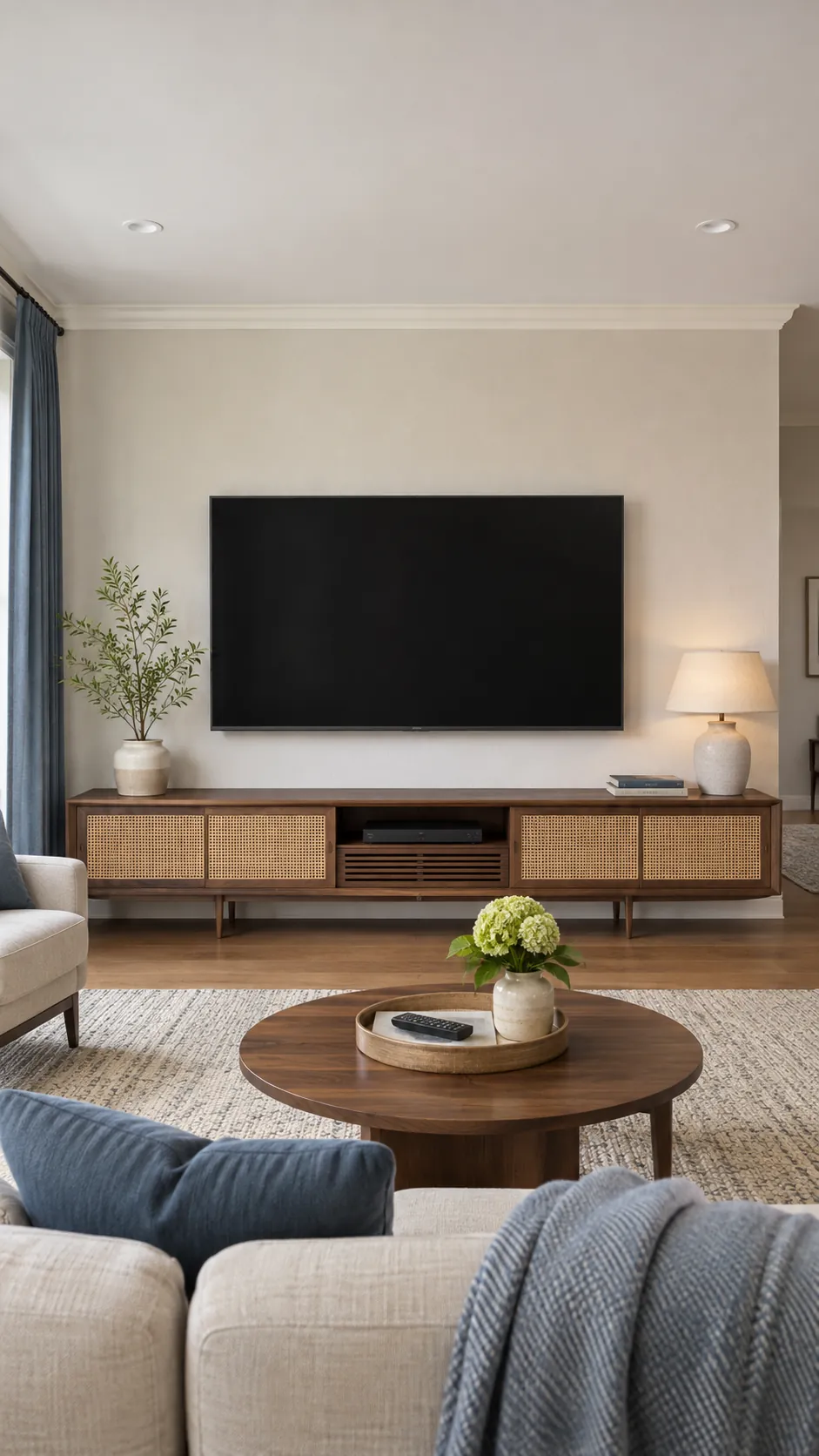
Soft light at the far edges can widen the composition without creating glare beside the picture. Use shaded fixtures with warm dimmable bulbs and keep their beams off the screen. Place switches or smart controls within easy reach so the room can shift from conversation light to comfortable viewing light.
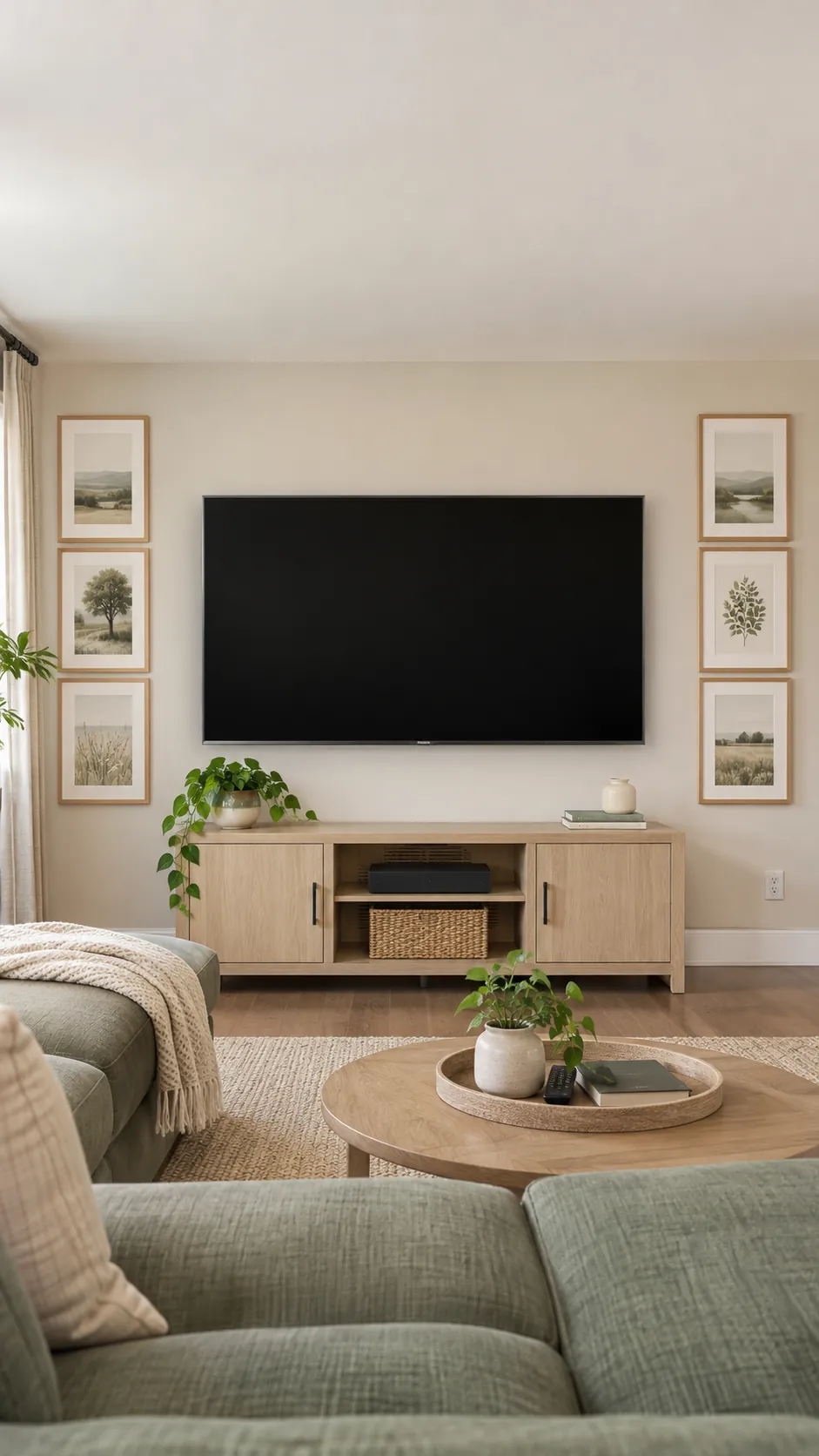
Keep Art in Narrow Side Columns
If you want art near the television, arrange narrow columns beyond its outer edges. Select quiet shapes and related frame colors so the pictures support the balanced television wall instead of competing with moving images. Maintain a generous gap next to the screen and keep bright white mats to a minimum.
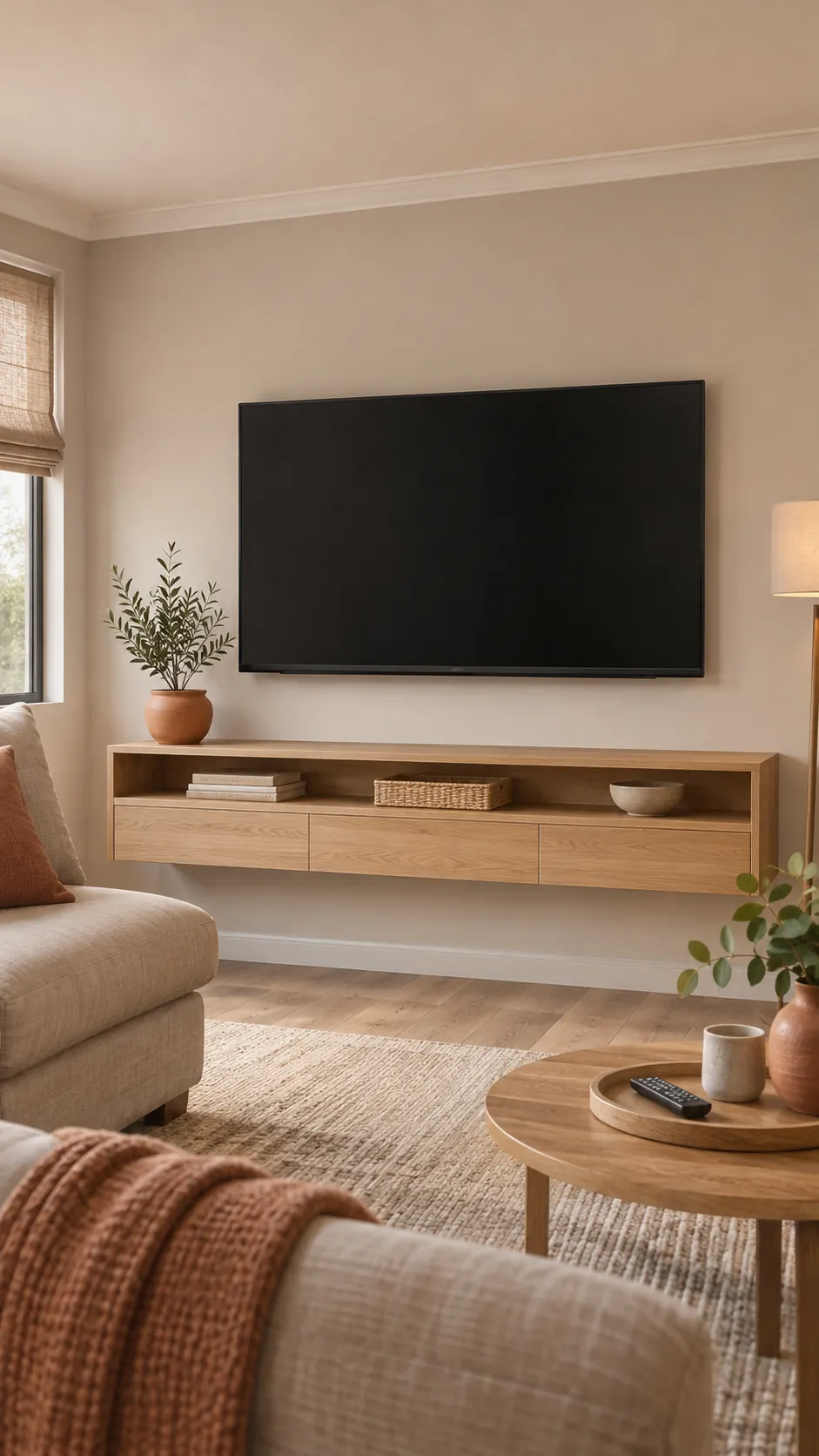
Repeat Horizontal Lines Below the TV
Long horizontal elements echo the screen shape and make the full television wall arrangement feel intentional. A floating cabinet or open shelf should sit below the screen, not cut across its side edges. Limit objects to a few low pieces with different textures, then leave open space between them.
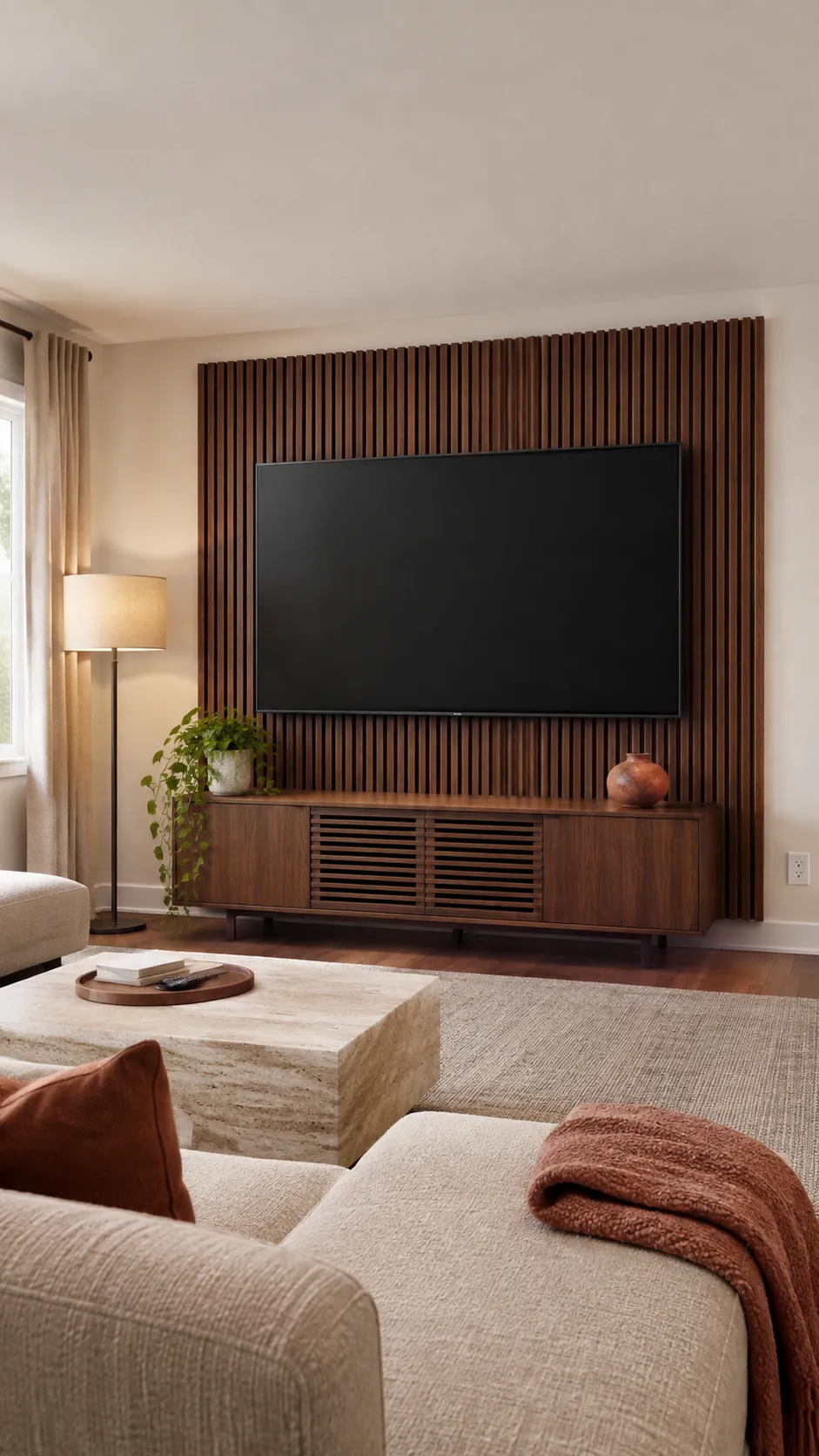
Build a Simple Wood Slat Backdrop
Wood slats add depth and warmth while keeping the backdrop visually consistent. Use a broad rectangular panel that is clearly larger than the television, with even spacing and no decorative breaks near the screen. Darker timber can reduce contrast, but the surface should remain matte to prevent distracting reflections.
Balance One Plant With a Floor Lamp
A tall plant and a slender lamp can balance the wall without hanging more objects. Set them outside the direct viewing area and choose silhouettes that do not overlap the picture from the sofa. The unequal pair creates visual balance decor through similar height and different texture.
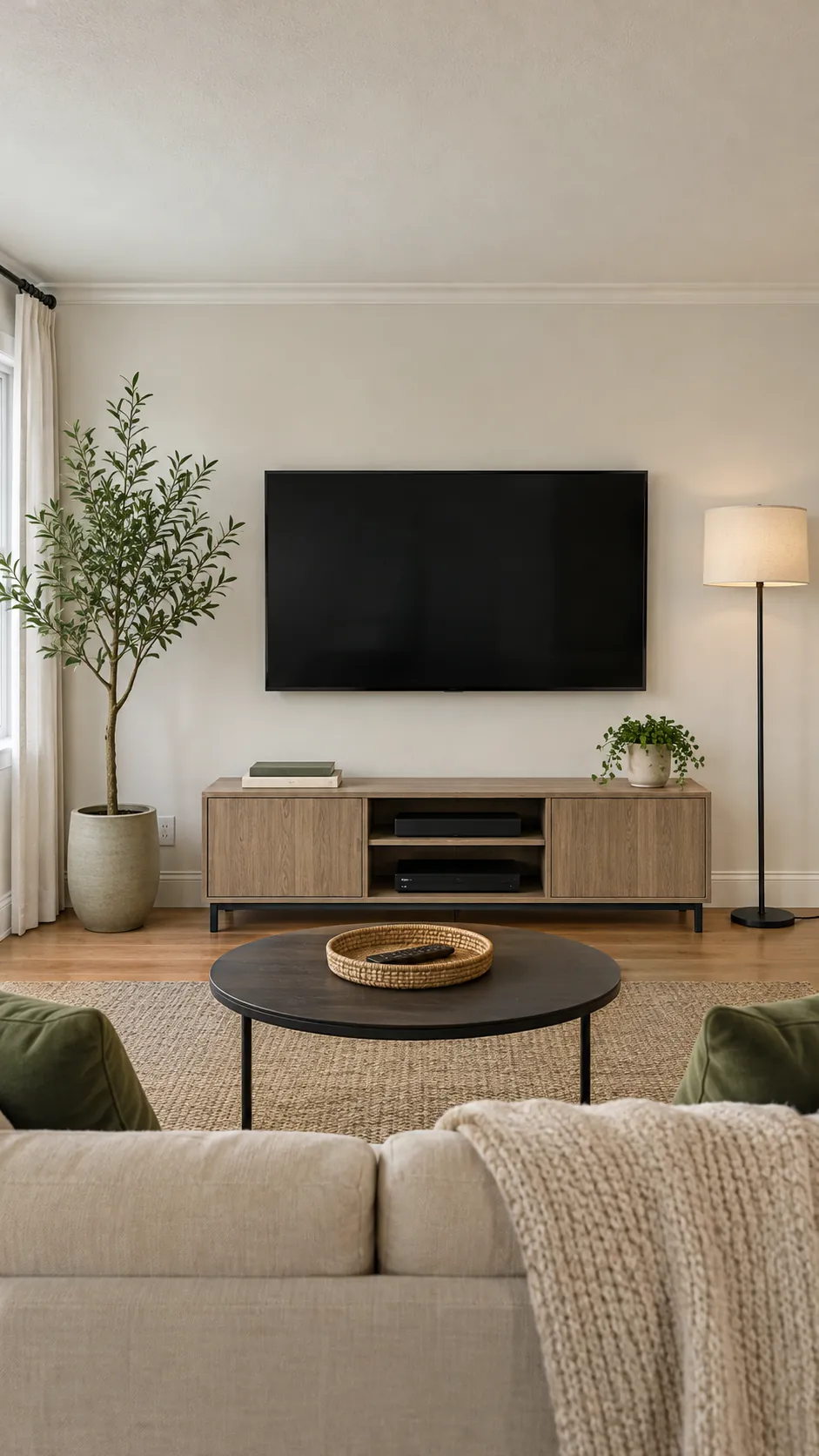
Hide Every Visible Cable
Loose cables pull attention downward and make even careful wall mounted television decor look unfinished. Use an approved in wall route where construction allows, or a paintable surface raceway installed straight to the cabinet. Keep ventilation openings clear and leave service access for devices that may need replacement.
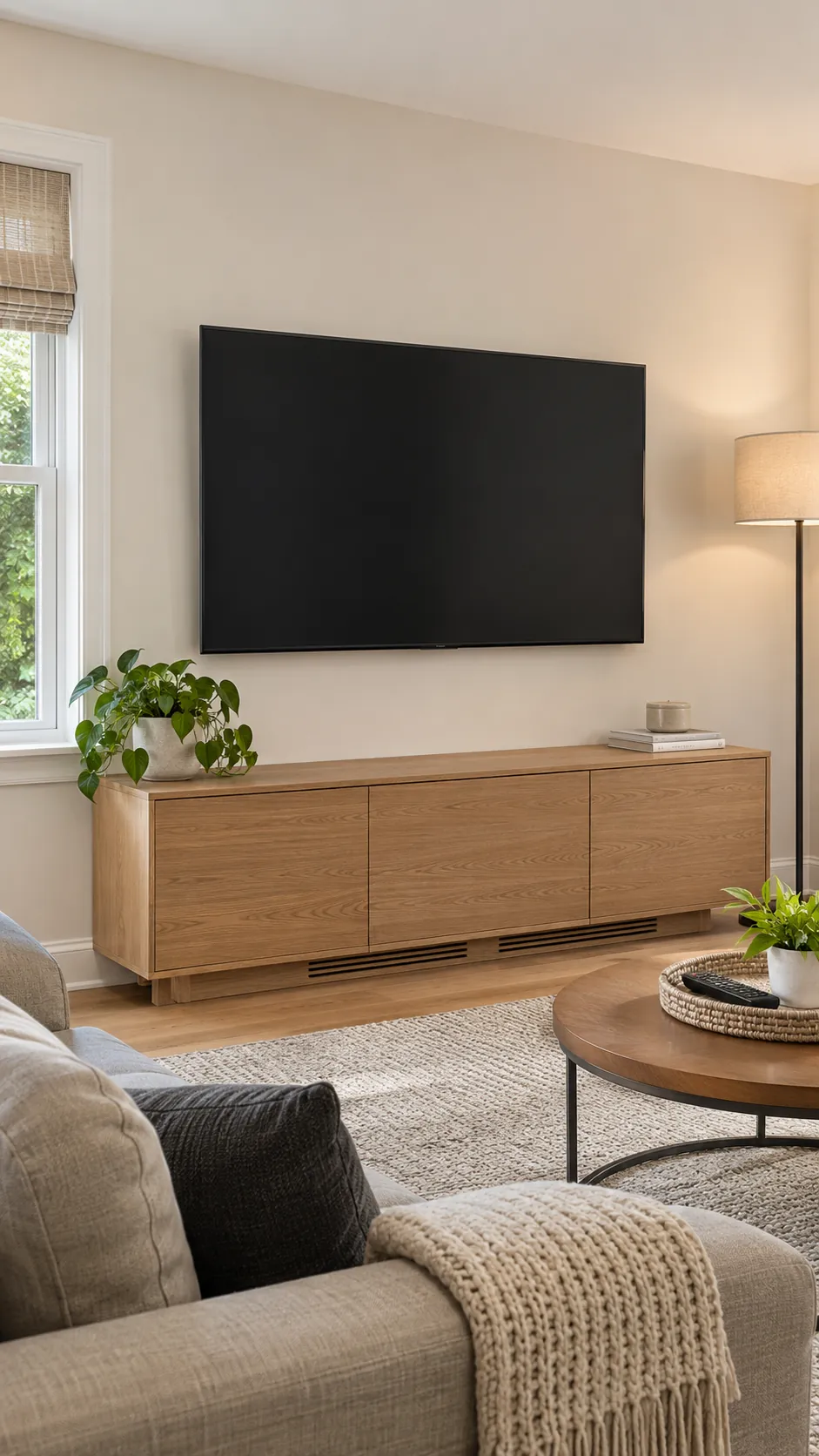
Match Built Ins to the Wall Color
Built ins can frame a television quietly when they share the wall color and use mostly closed fronts. Keep their inner edges well away from the screen and avoid filling every shelf with small objects. Matching paint lets storage recede while the television, console, and seating remain the living room focal points.
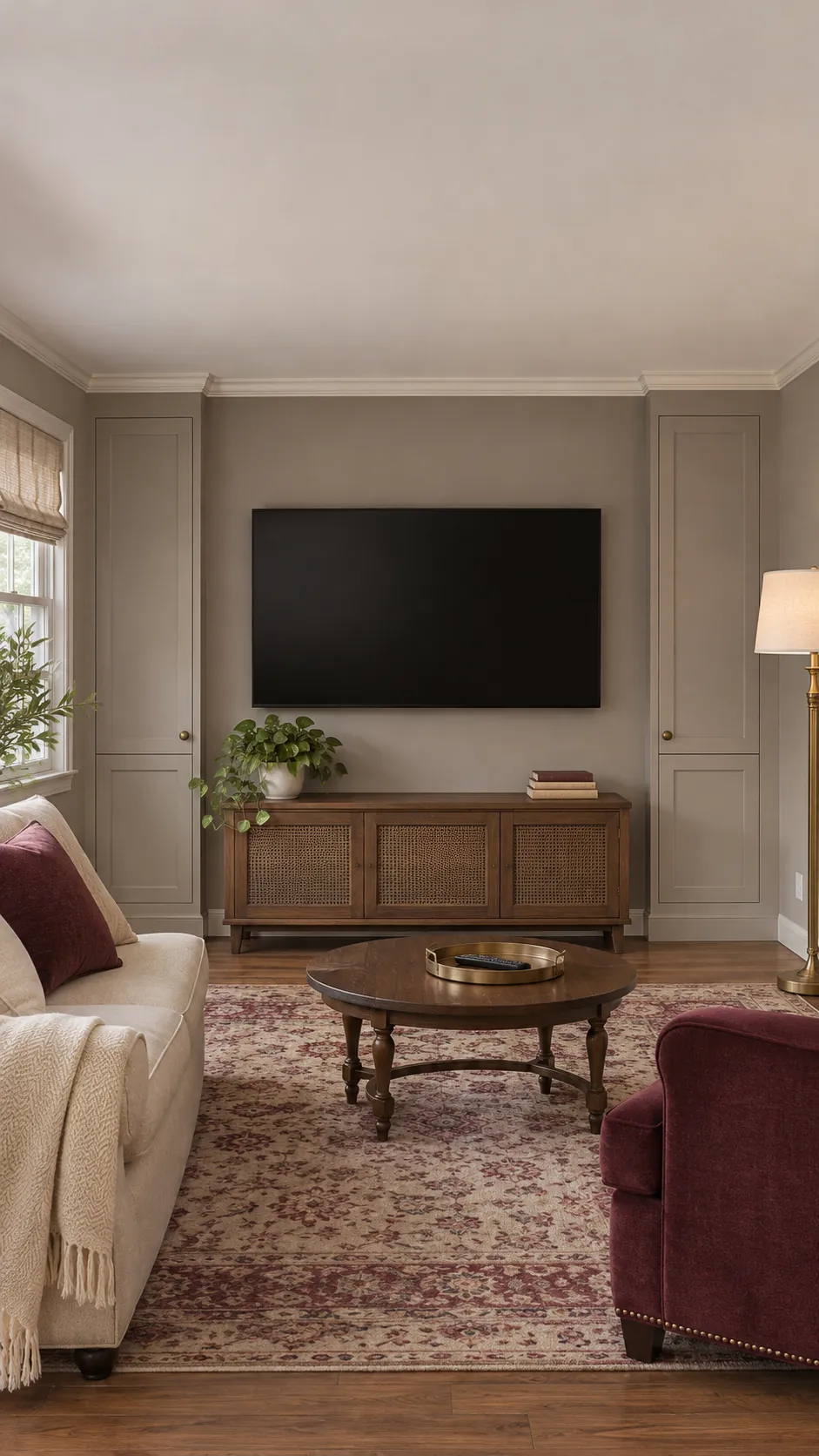
Leave a Quiet Border Around the Screen
Empty wall is an active part of a successful television composition. Preserve a calm border around all four screen edges, then place books, bowls, or a low plant on the console below. This restraint protects the picture from visual noise and makes future screen size changes easier to absorb.