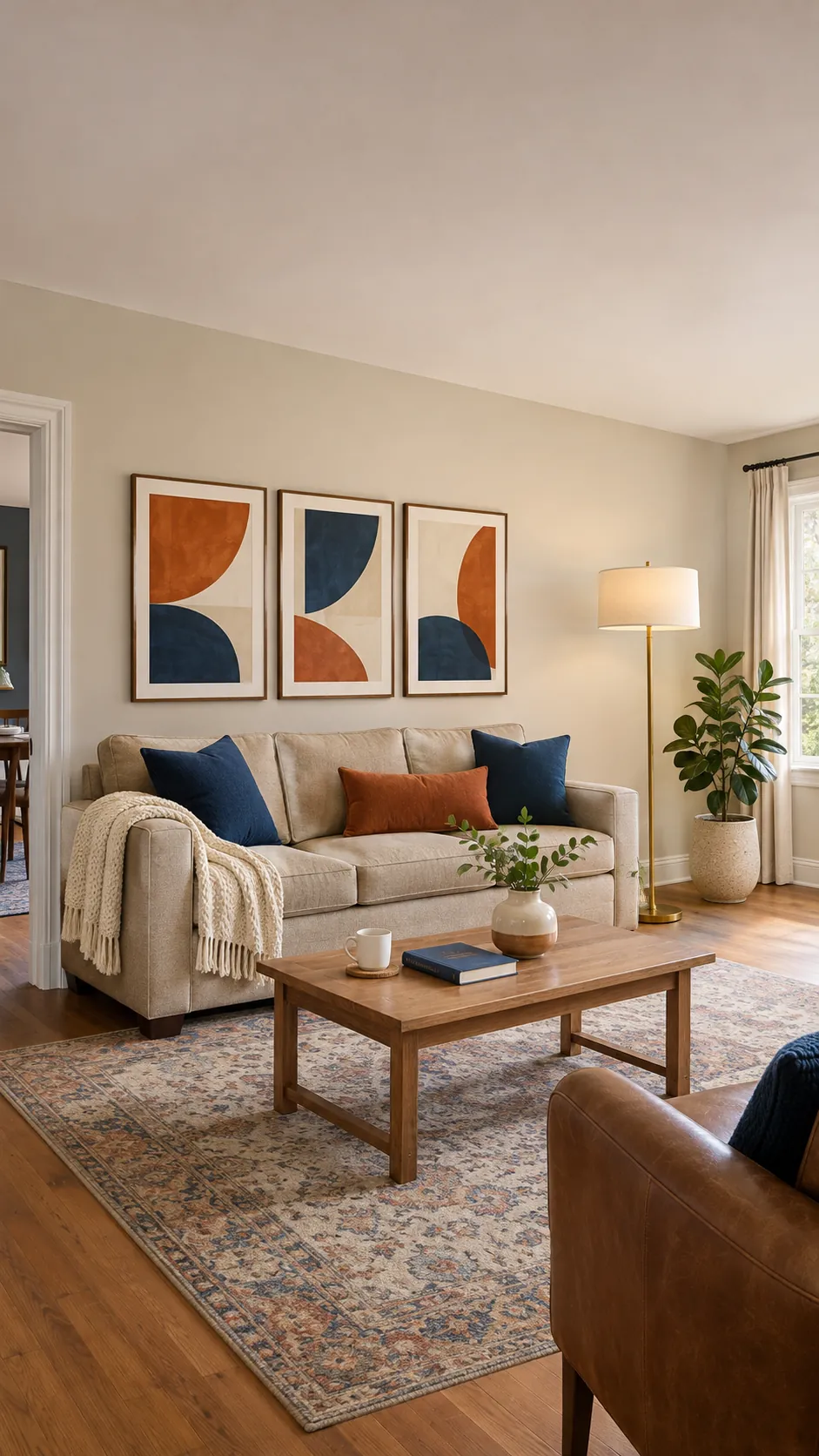
An uncentered sofa creates two competing reference points: the wall and the furniture. If you split the difference without a plan, the artwork often looks wrong from both directions. Choose the seating group as the main anchor, then use asymmetry and nearby floor objects to account for the remaining wall.
Use the Sofa as the First Anchor
Centering art on the wall can make it look unrelated to an off center sofa. Begin with the seating itself, because the artwork and couch need to read as one usable zone. Keep the frame or grouping narrower than the sofa, then adjust only when another piece of furniture clearly belongs to the same composition.
Find the Center of the Seating Group
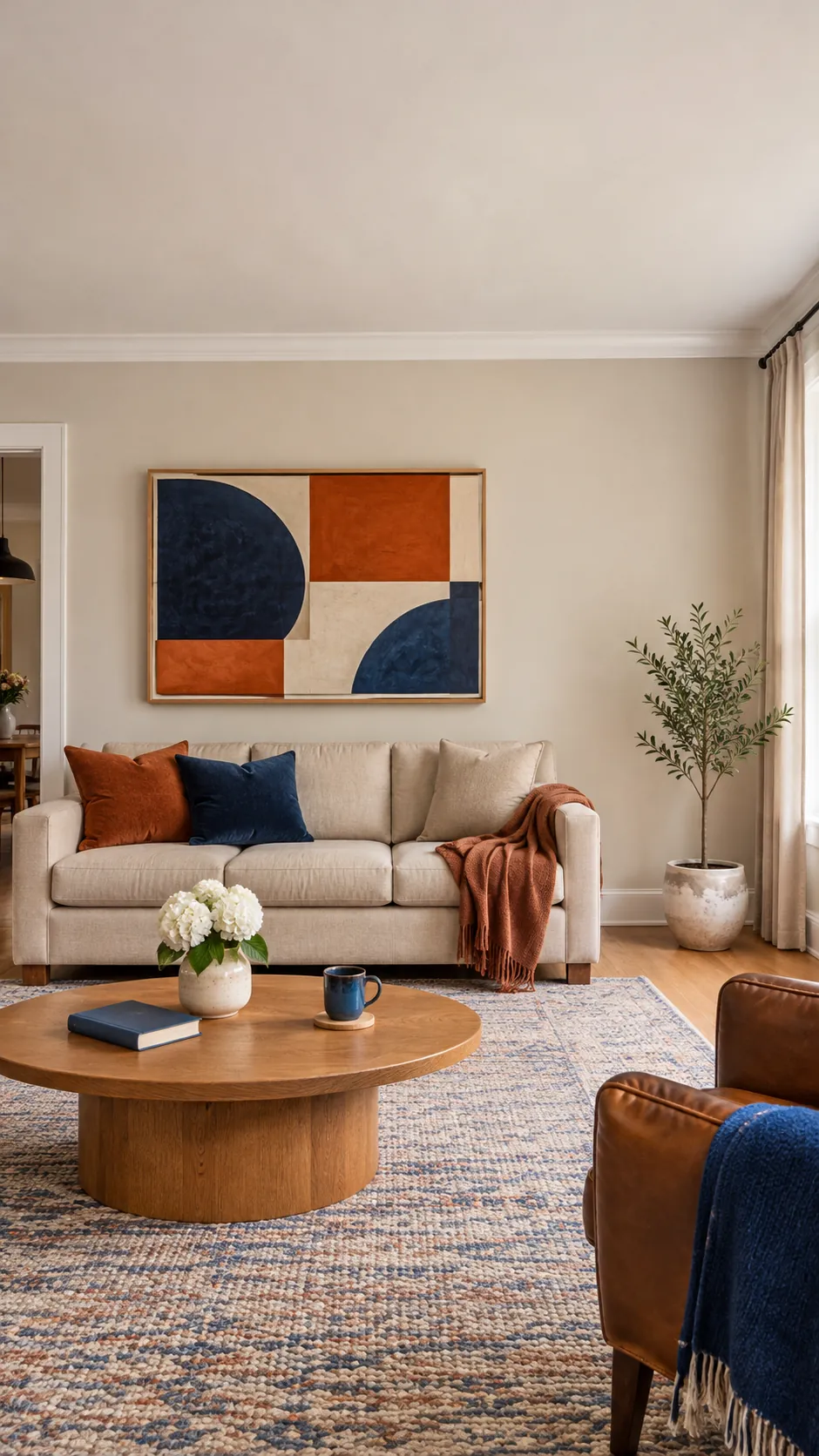
A sofa may share its visual weight with a lounge chair, side table, or floor lamp. Stand at the room entrance and estimate the center of that complete seating group rather than measuring only the couch. Mark that point with removable tape, then compare it with the center of the artwork before choosing a hook location.
Shift the Art Toward the Open Side
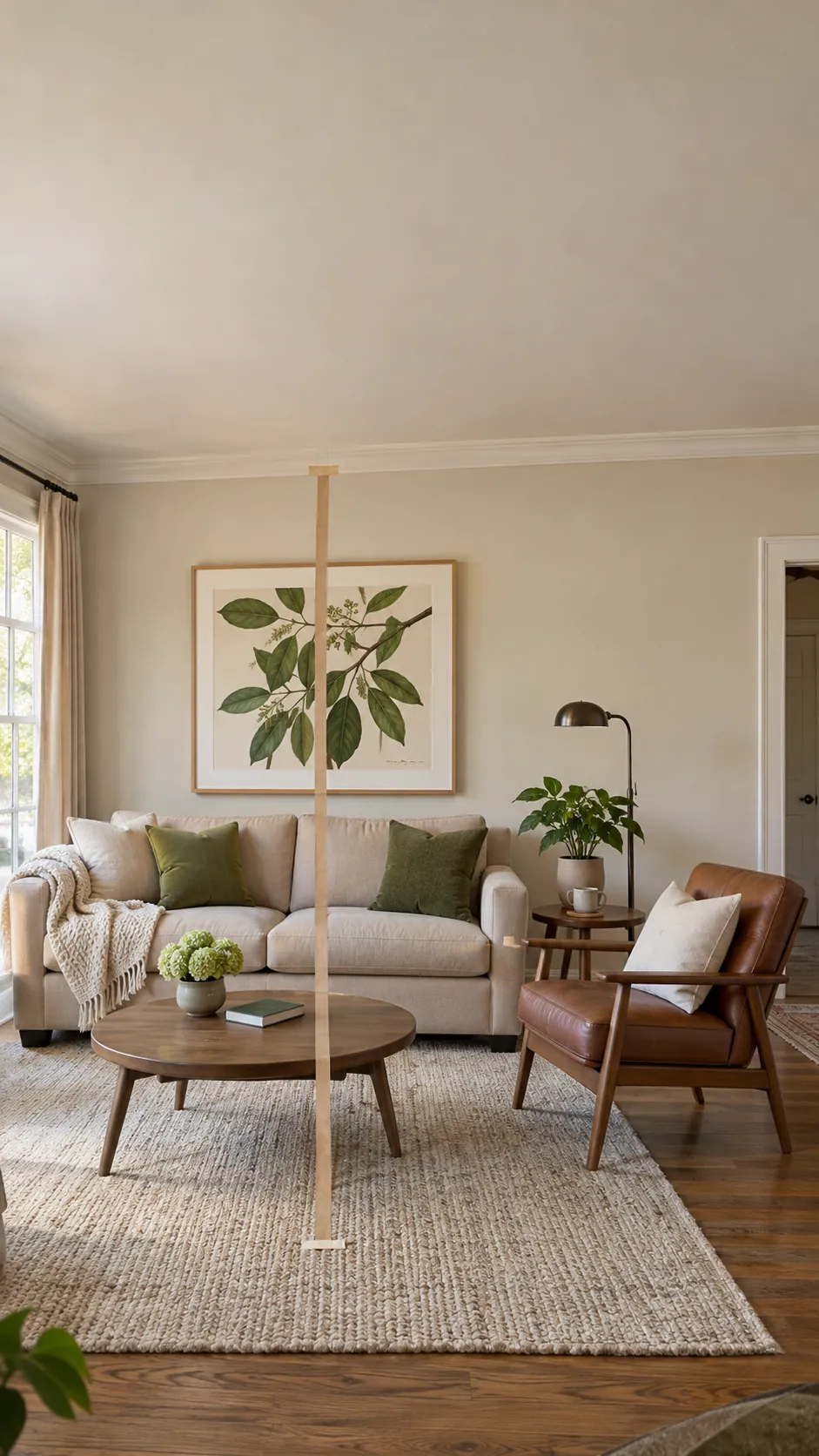
When open wall extends beyond one sofa arm, let a pair or gallery grouping travel slightly toward that space. Keep the heaviest piece closer to the seating, then use a smaller companion to bridge the empty area. This controlled shift feels intentional because the artwork still overlaps the sofa width instead of floating entirely beside it.
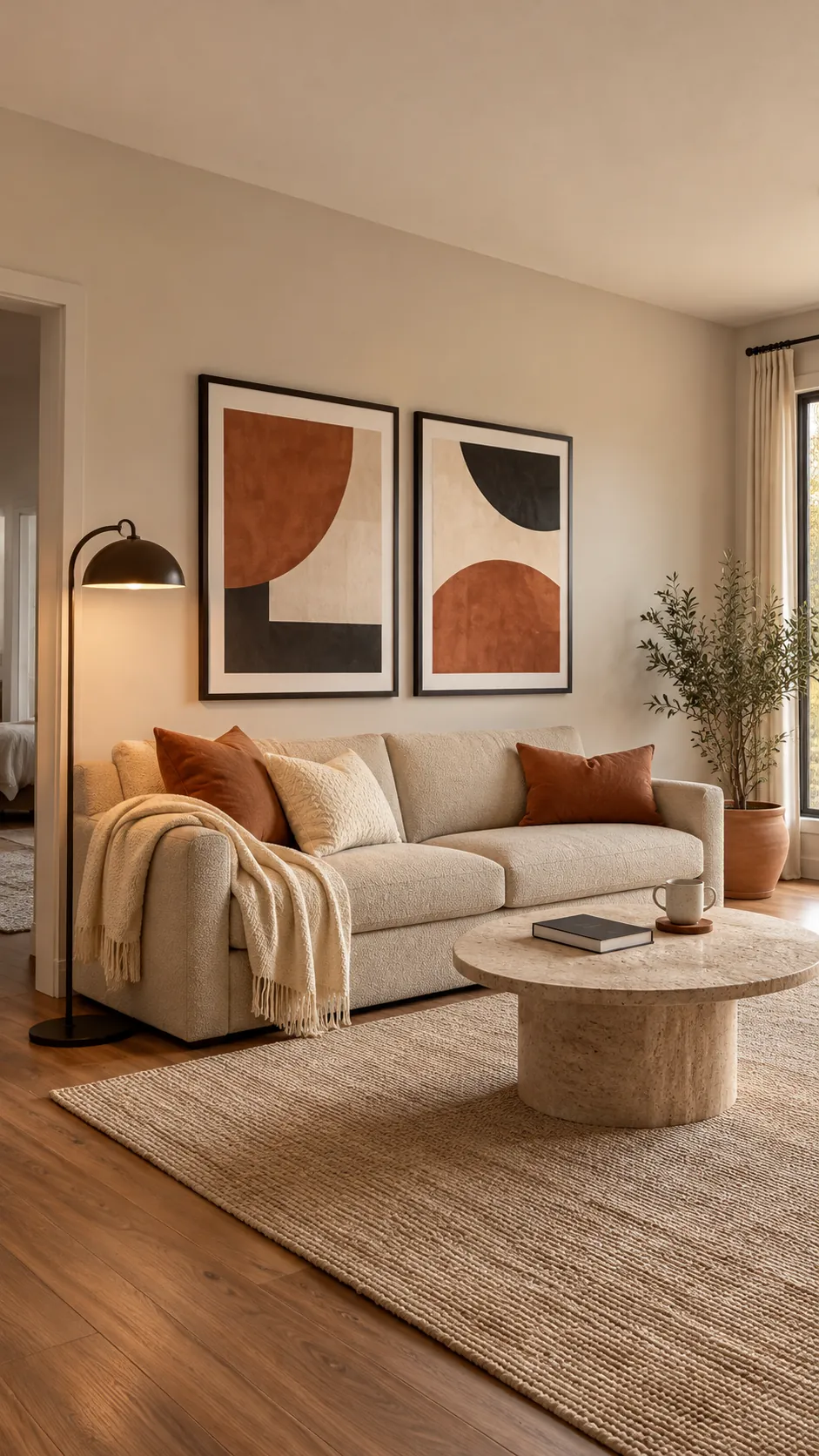
Build an Asymmetrical Gallery Shape
An asymmetrical arrangement can echo an irregular furniture plan better than one rigid rectangle. Start with the largest frame above the sofa, then step smaller pieces toward the side that needs more visual weight. Repeat one frame finish or mat color so the varied outline reads as a single wall art alignment.
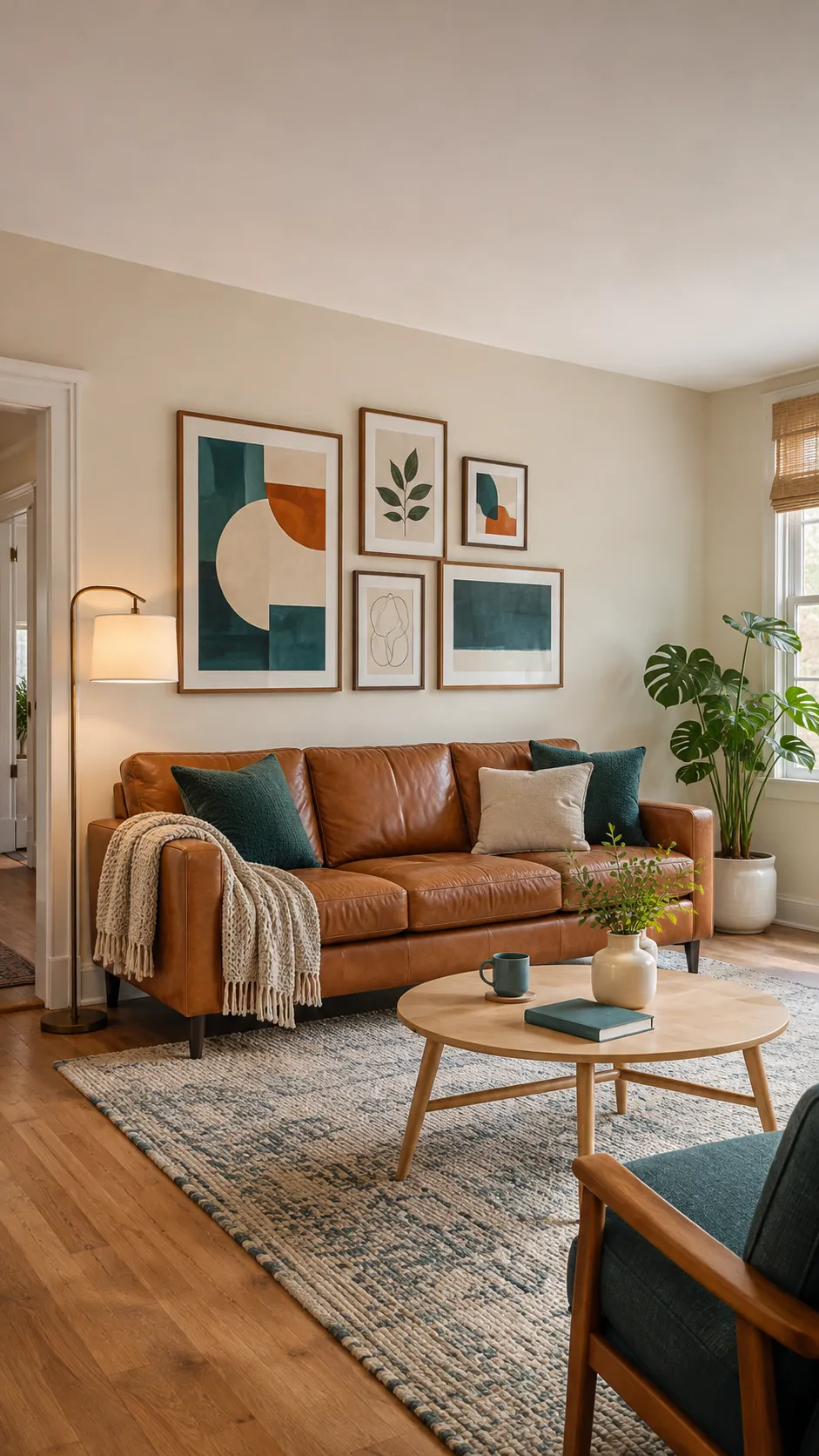
Balance the Wall With a Tall Floor Object
A tall plant, floor lamp, or narrow bookcase can complete the composition without forcing the art to cover the whole wall. Place the floor object on the emptier side and leave a visible gap between it and the frame. Similar overall height can create visual balance decor even when the two sides use different shapes and materials.
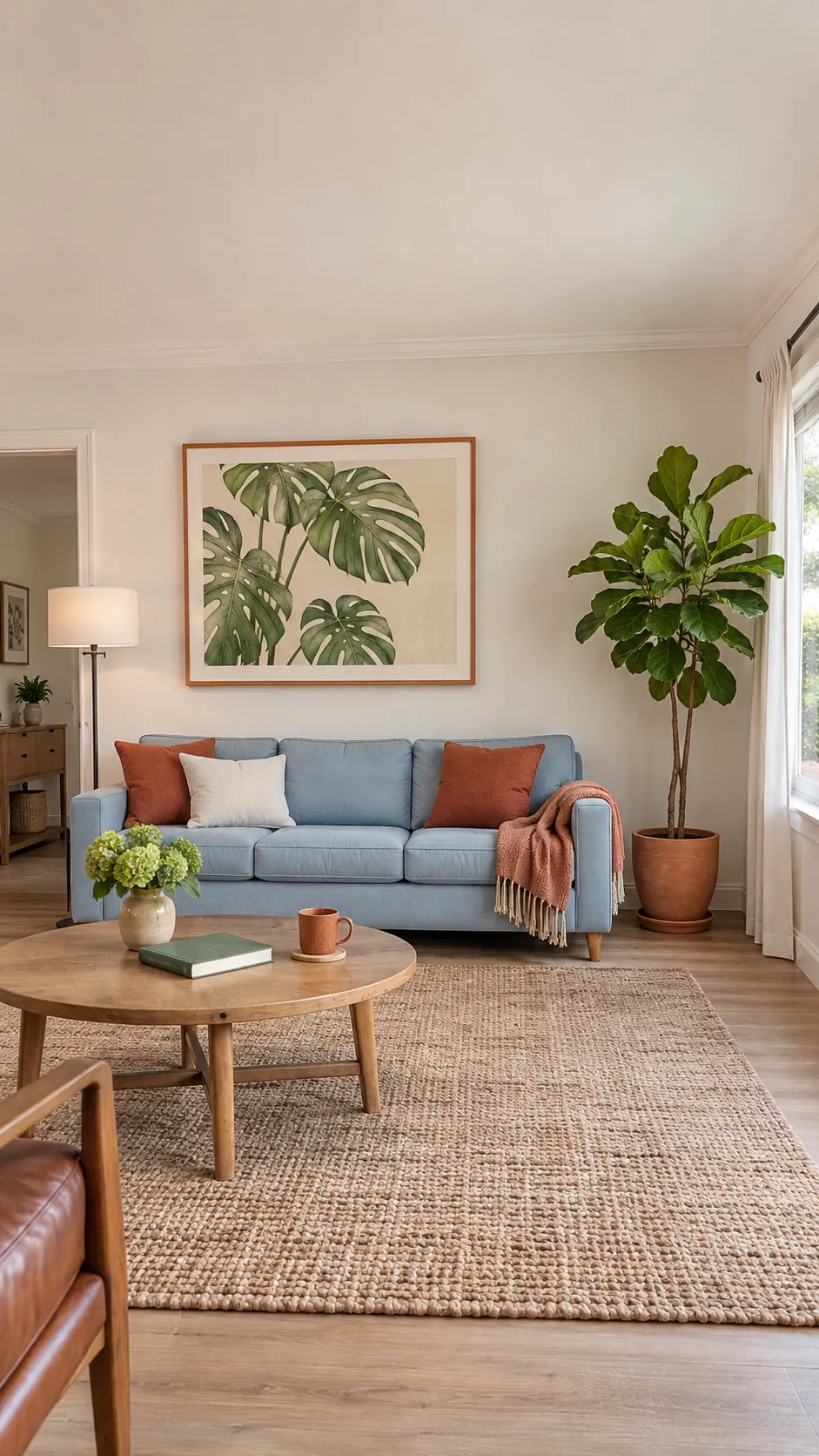
Test the Outline From the Main Viewpoint
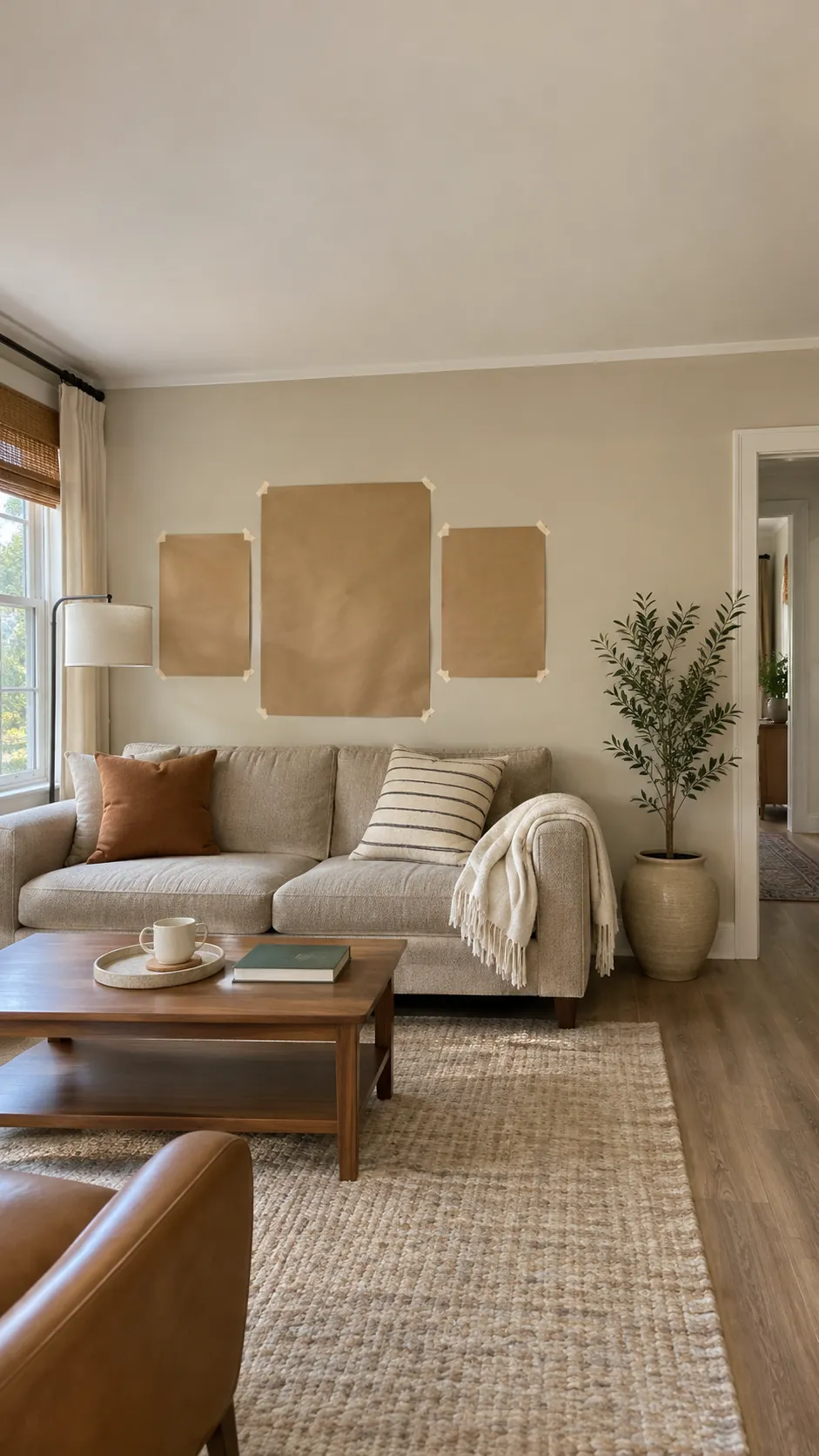
Cut paper to the outside dimensions of every proposed frame and tape the full arrangement in place. Check it from the main doorway, the opposite seat, and the room path you use most often. Move the templates in small steps until the display connects to the furniture without making the empty end of the wall feel abandoned.