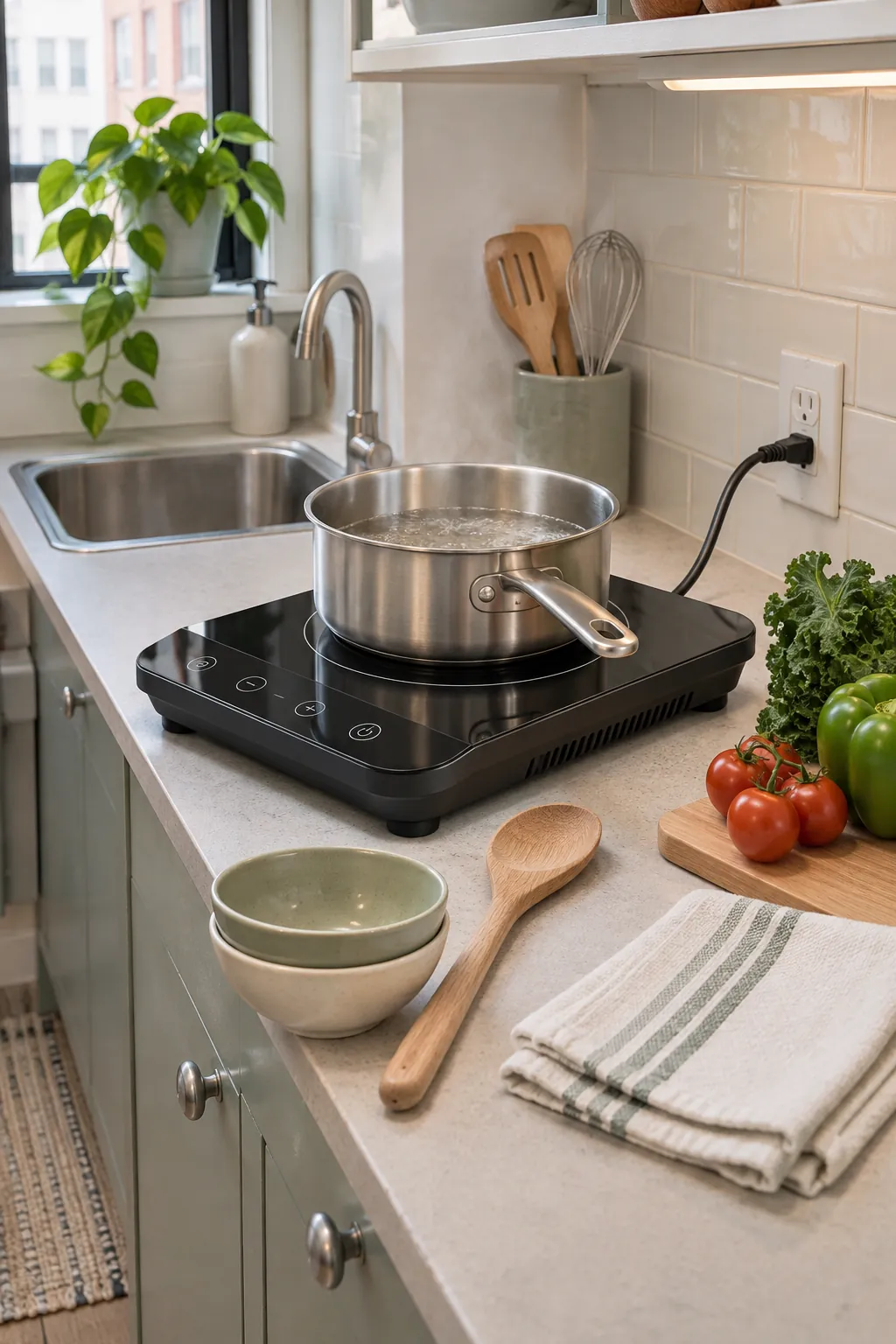
A portable induction cooktop can add fast, responsive heat without taking over a small kitchen. The catch is that a compact body does not guarantee a good fit. Pan size, power cycling, fan noise, outlet capacity, and ventilation can change how useful a single burner feels every day.
Check the Outlet Before Comparing Power
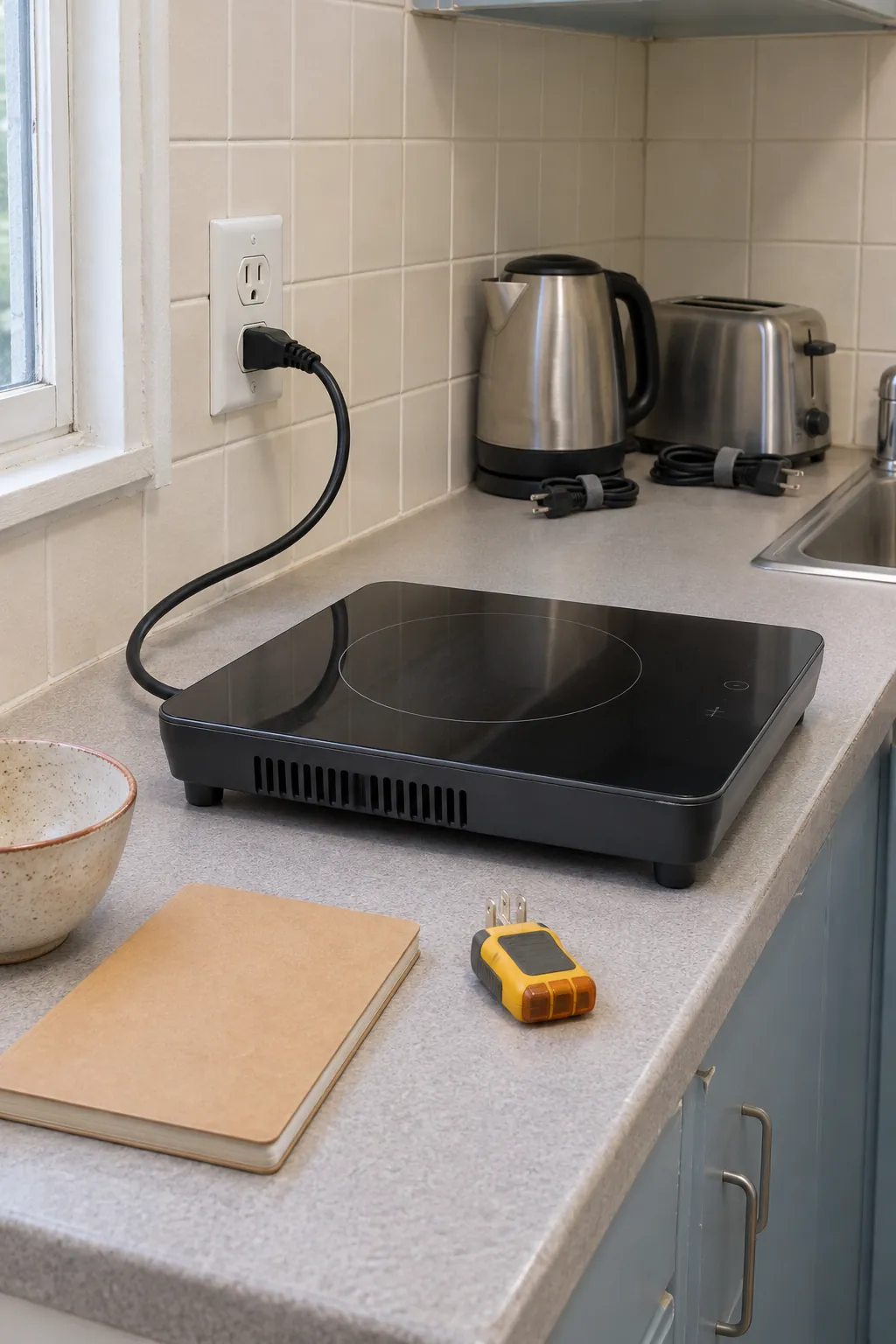
Start with the electrical circuit that serves your counter. Many portable units can draw most of the capacity available from a normal household outlet at their highest setting. A microwave, toaster, kettle, or coffee maker on the same circuit can cause an overload when both appliances run together.
Look for the rated input on the product label and compare it with the manual for your home electrical system. Do not plan to use an extension cord unless the manufacturer clearly permits one. Choose a location where the factory cord reaches the outlet without crossing a sink, hob, walkway, or hot pan handle.
Test the Cookware You Already Own
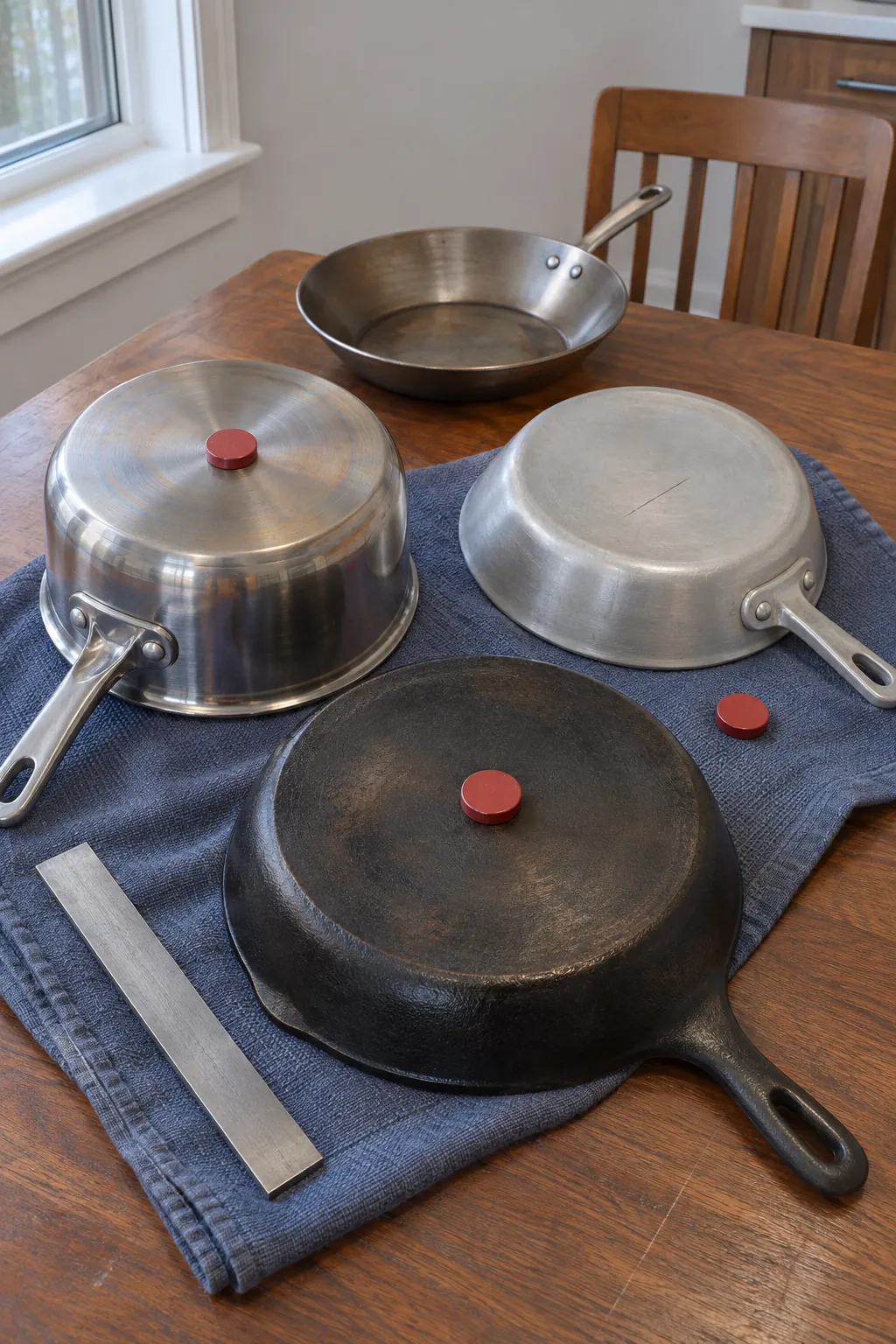
Induction needs a magnetic pan base. A simple refrigerator magnet can screen your current cookware: a firm attraction across the flat base is a useful first sign. Cast iron and many stainless steel pans work, while glass, copper, aluminum, and some stainless steel need a compatible magnetic layer.
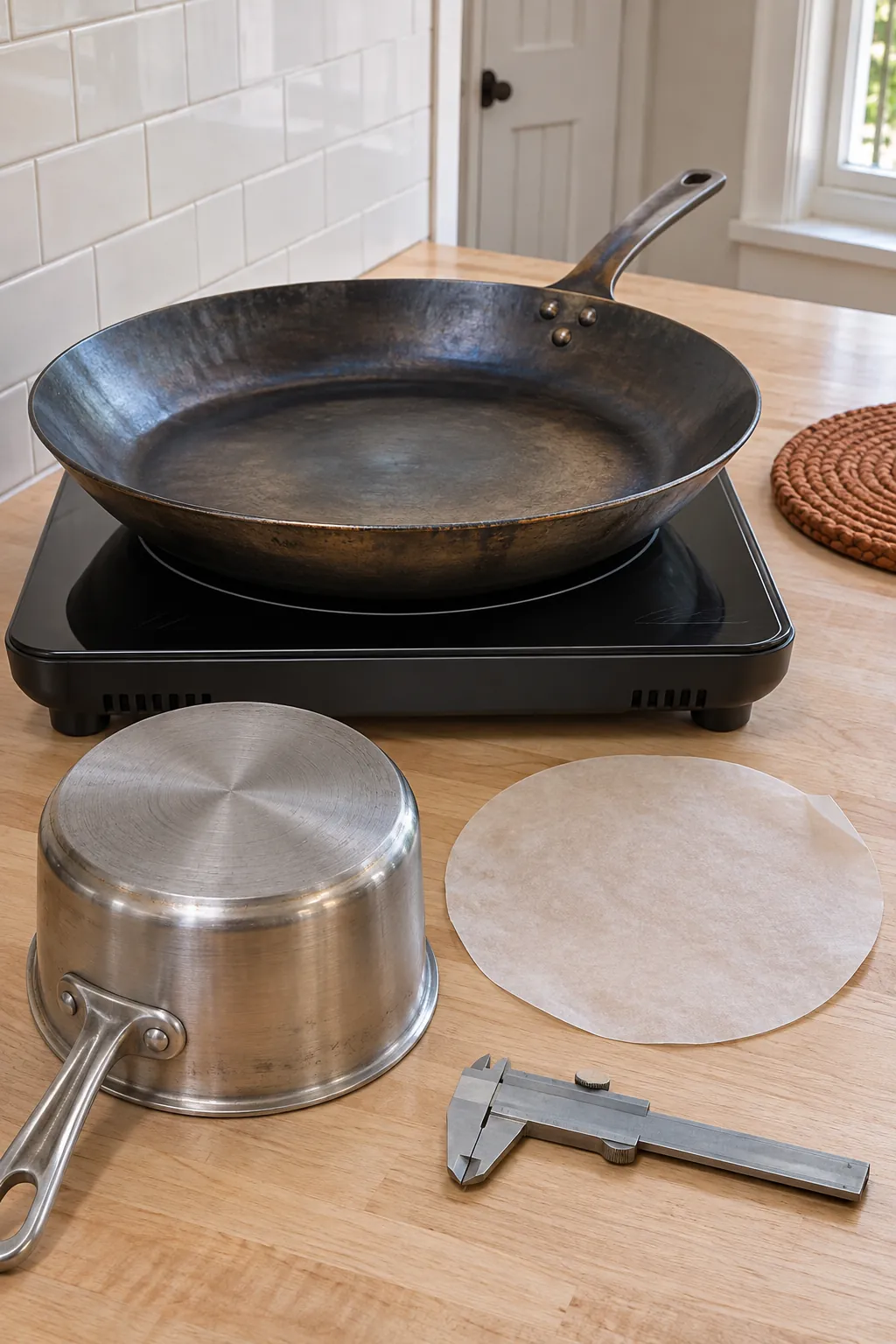
Compatibility is not only about material. A warped base can lose contact or trigger uneven heating. Check the cooktop manual for its minimum pan diameter, then measure the flat magnetic area rather than the flared rim. A large skillet with a small magnetic disc may work, but the outer cooking surface can stay cooler.
Match the Heating Zone to Your Main Pan
The circle printed on the glass does not always reveal the size of the induction coil below it. A small coil can heat the center of a broad skillet more strongly than the edges. That difference matters for pancakes, searing, and shallow frying, where food covers much of the pan.
Search the specifications or independent test information for the actual heating zone diameter. Compare it with the flat base of the pan you use most. A medium saucepan is forgiving, while a wide carbon steel or cast iron skillet may develop a hot center if the coil is too small. Gradual preheating reduces thermal stress, but it cannot make a narrow heating zone wider.
Look Beyond the Highest Heat Setting
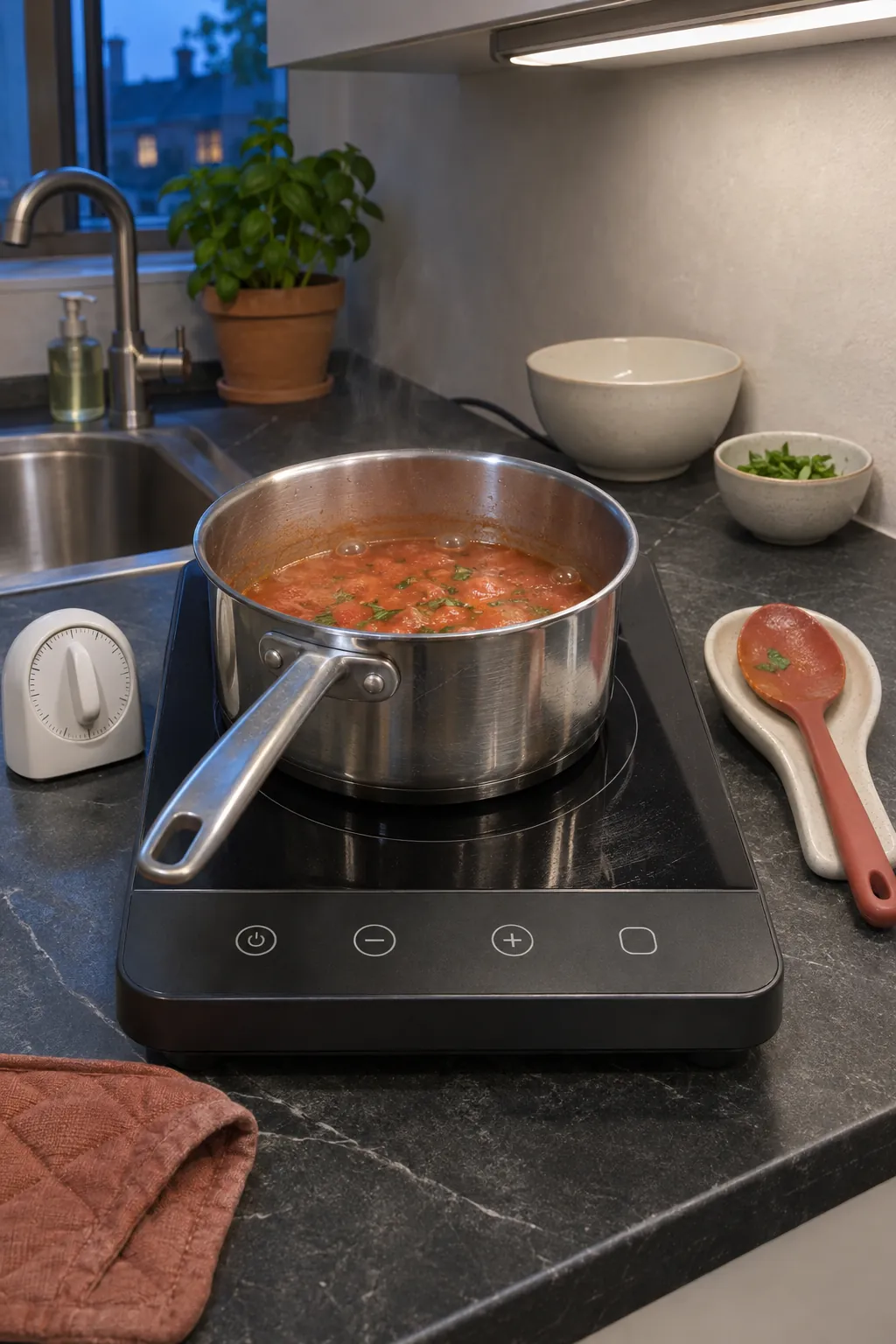
High power is useful for boiling water, but low heat behavior often separates a pleasant cooktop from a frustrating one. Some portable units maintain gentle energy in small steps. Others switch between full power and no power, which can make a quiet simmer surge and stop.
Compare the number of useful power levels and read how the manual describes temperature mode. A temperature setting usually responds to a sensor beneath the glass, not to the exact temperature inside the food. For sauces and delicate cooking, steady low power and quick manual adjustment are more valuable than a long list of preset names.
Controls also need to work with a pan in place. Choose buttons that remain visible beside your usual cookware and do not require repeated taps to reach a common setting. A timer is helpful only when it can be changed without resetting the heat.
Plan for Fan Noise and Open Airflow
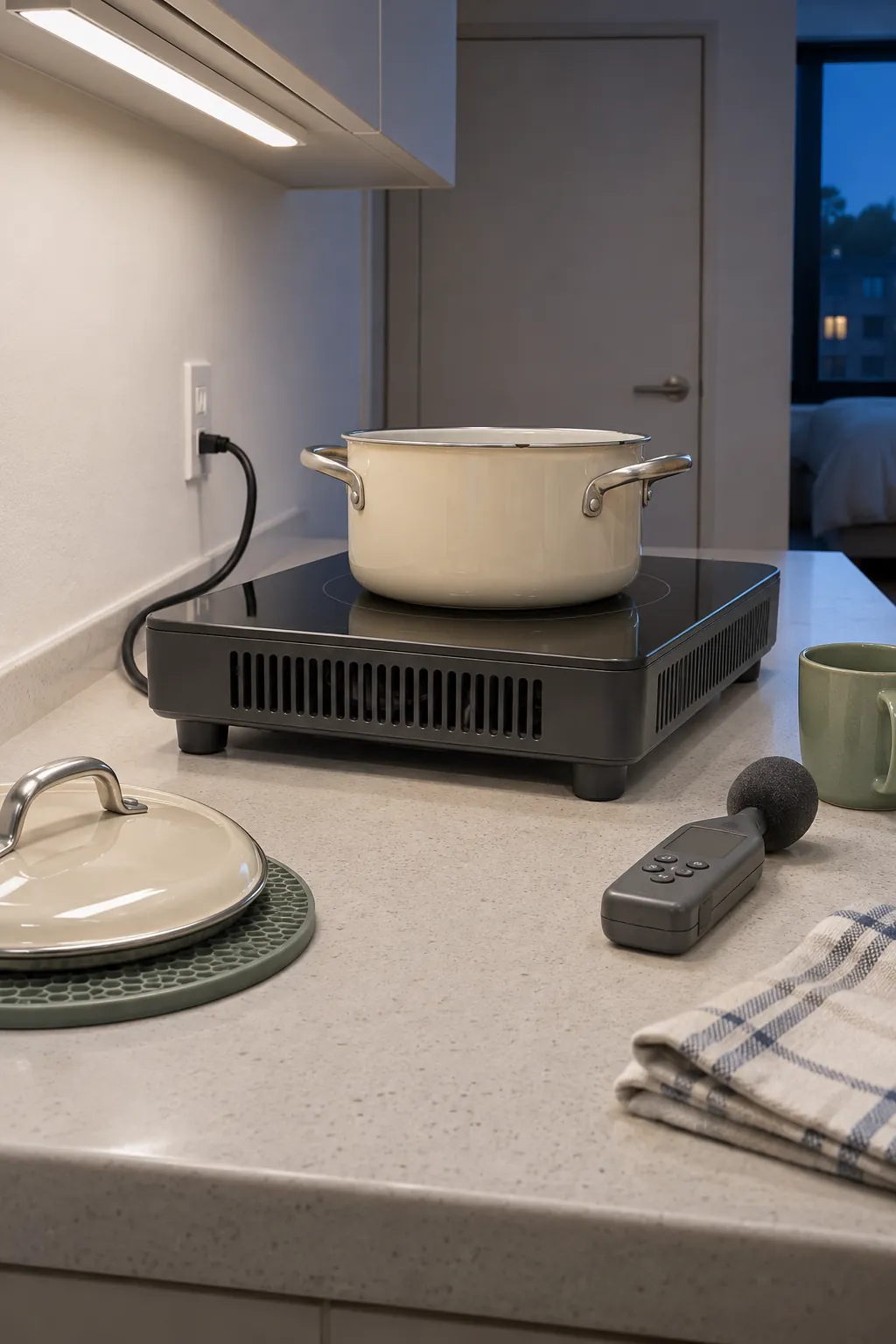
Portable induction units use a fan to cool their internal electronics. You may also hear a hum or high tone from the interaction between the cooktop and certain pans. Sound can change with power level, pan construction, and how flat the pan sits.
If noise sensitivity matters, listen to the exact model in person or buy from a seller with a practical return policy. Check whether the fan continues after cooking and whether control beeps can be reduced. Keep every intake and exhaust opening clear, even when the cooktop is close to a wall.
Measure the Whole Cooking and Storage Zone
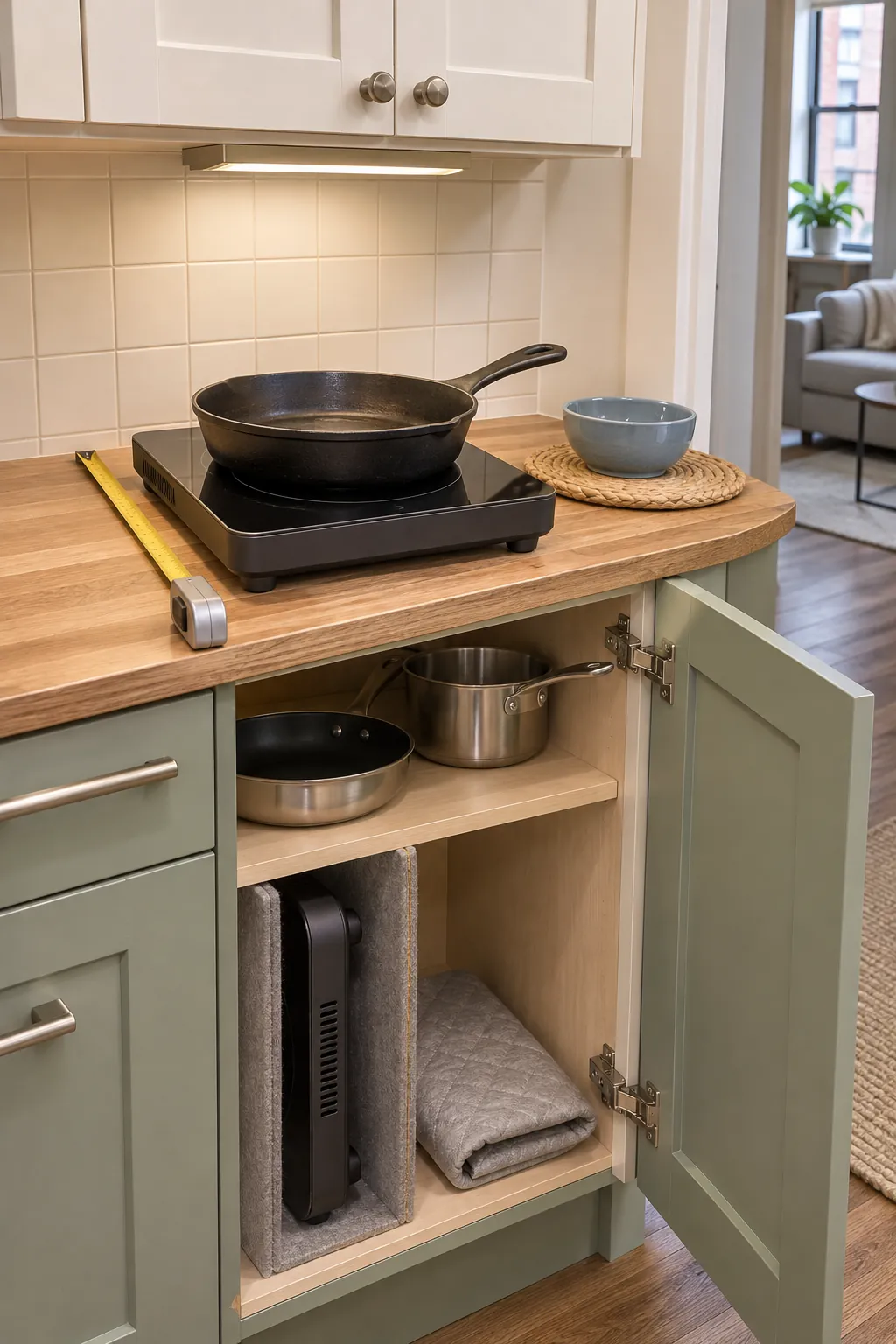
Measure the cooktop body, cord exit, pan overhang, and the space needed for ventilation. A narrow burner can still become awkward when a skillet handle reaches into a walkway. You also need a heat safe place for a second pan, utensils, and hot food.
For storage, record the height as well as the width and depth. Glass surfaces need protection from heavy objects, and grease must be cleaned before the unit enters a cabinet. A model that is easy to lift with secure side grips will be used more often than one that requires an unstable hold around the glass edge.
The best single burner cooktop fits your electrical circuit, your most used magnetic pan, and your tolerance for sound. Favor a heating zone that suits the pan base, useful low power control, clear ventilation, stable feet, and dimensions that leave a safe working area. Those details matter more in a small kitchen than an impressive maximum power number alone.