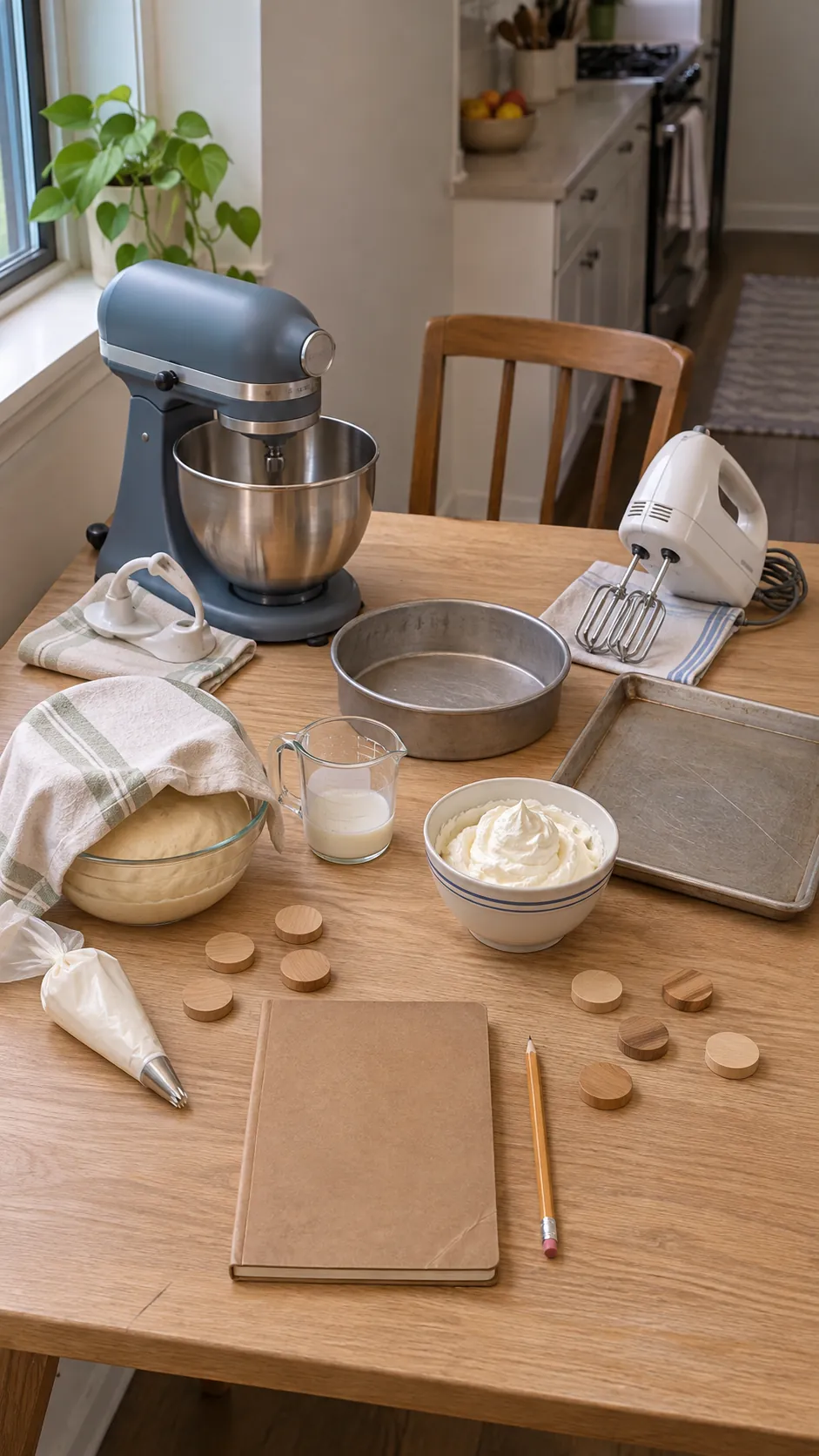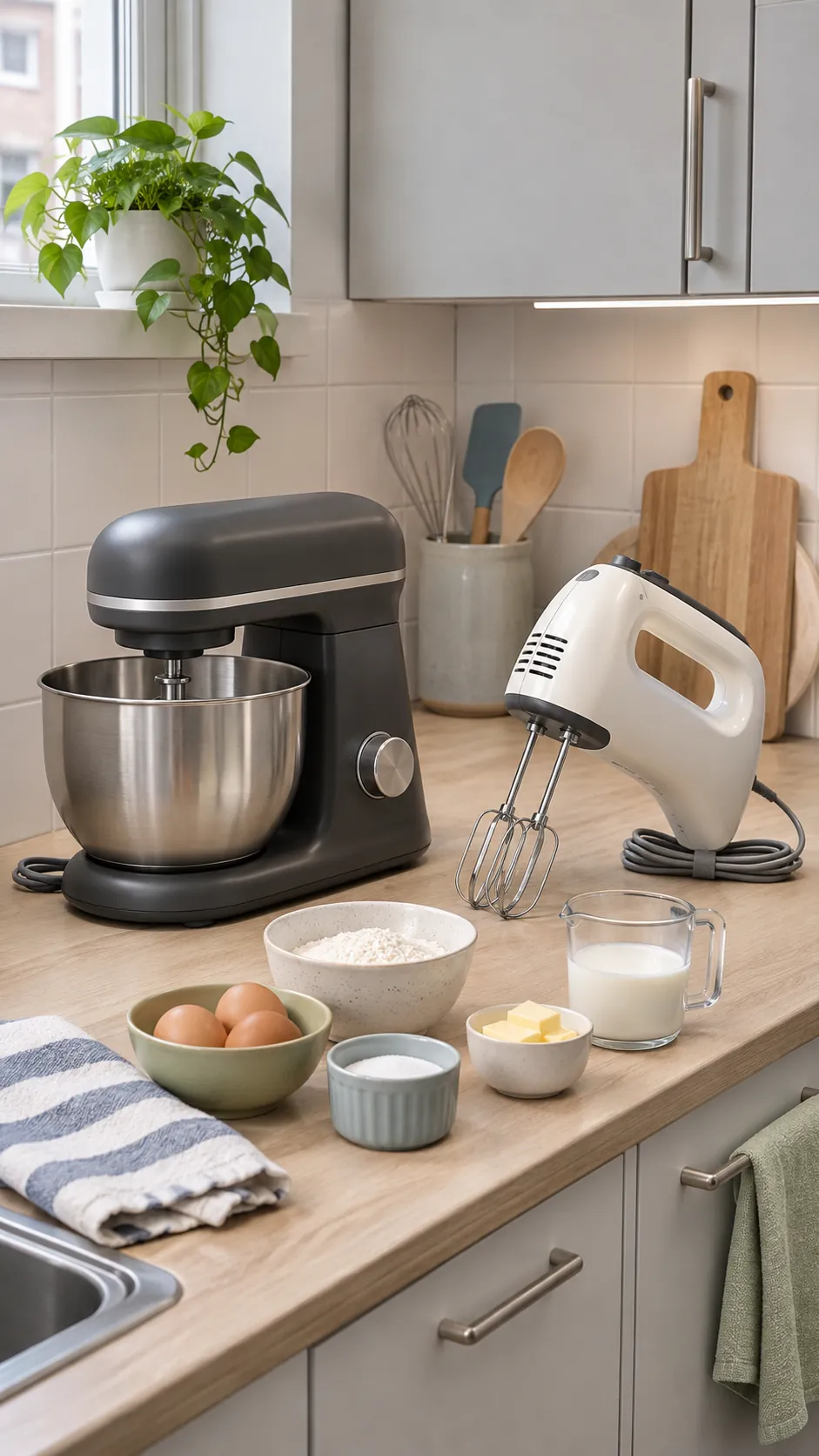
A compact stand mixer can save your arms and free your hands, but it also claims a permanent piece of a small kitchen. A hand mixer costs less space and reaches any bowl, yet you must guide it for every minute of mixing. The better choice is not the one with the larger motor. It is the one that fits the recipes you make, the batches you mix, and the storage routine you can sustain.
Start with your actual baking week. If you mostly make one cake, a dozen cookies, whipped cream, or frosting, a hand mixer is often enough. If bread dough, stiff cookie dough, long buttercream sessions, or frequent double batches are normal, a compact stand mixer earns its footprint more easily.
The short answer for a small apartment
Choose a hand mixer when storage is scarce, your batches are small, and most jobs are light or medium. It works well for cream, egg whites, cake batter, frosting, mashed potatoes, and many cookie doughs. You can use a narrow bowl, move the bowl as you work, and put the mixer in a drawer when you finish.
Choose a compact stand mixer when you often need sustained mixing, want both hands available, or regularly work with mixtures that become tiring to hold. The bowl and tool stay aligned while you add ingredients. That matters for gradual additions, long whipping, and recipes where consistency depends on steady mixing.
Do not treat a hand mixer dough hook as equal to a stand mixer dough hook. Some hand mixers include hooks, but dense dough can strain a small motor and your wrist. For occasional soft dough, hand kneading may be the simpler answer. For frequent bread, pizza, bagels, or enriched dough, a suitable stand mixer has a clearer advantage.
Compare the real working footprint
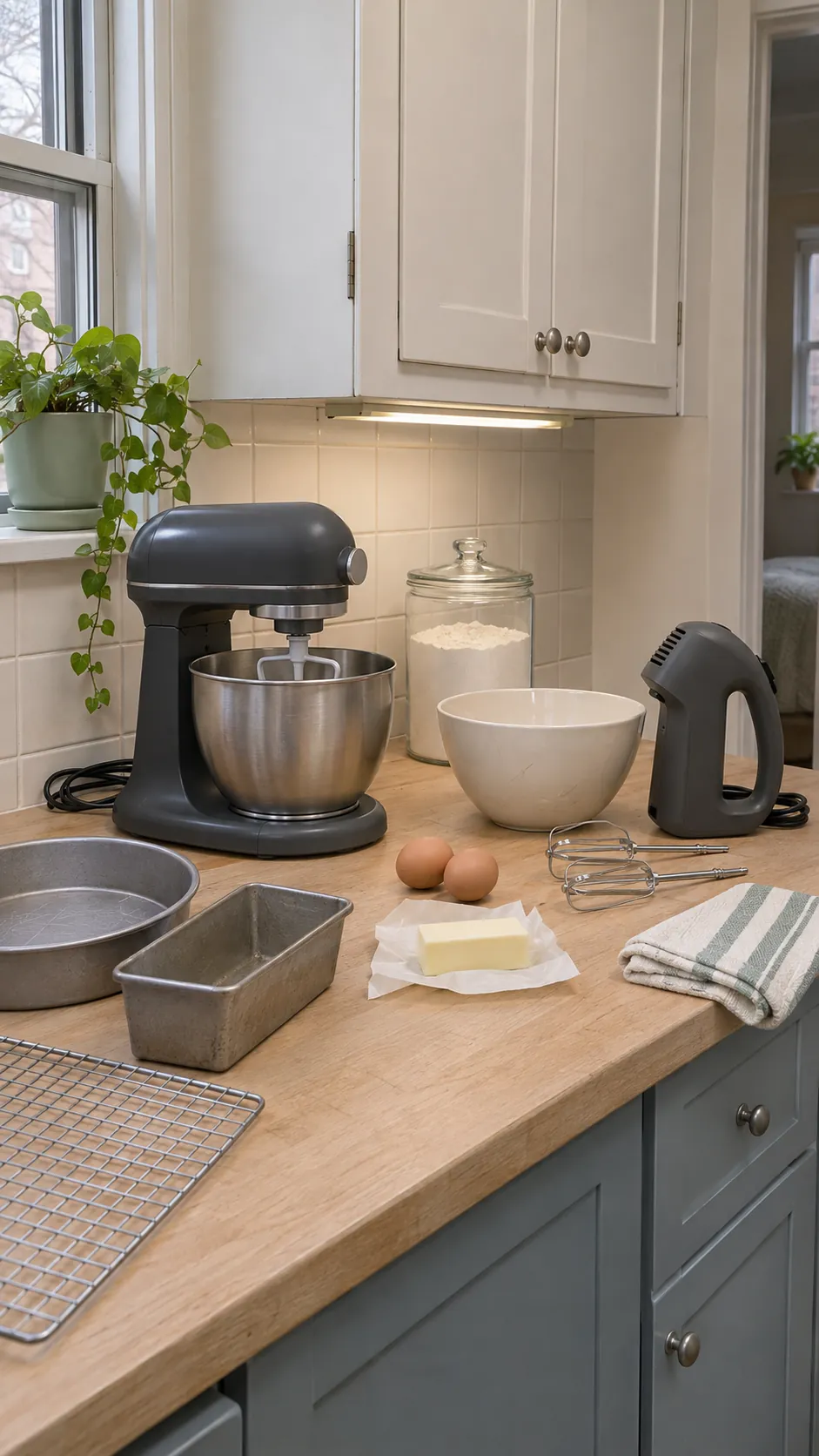
A stand mixer needs more than the rectangle under its base. You need room above the head to lift or tilt it, room in front to remove the bowl, and a stable landing area for ingredients. Measure beneath the upper cabinets and include the height of any splash guard. Confirm that the outlet is close enough for the factory cord without an extension lead.
A hand mixer has a smaller storage footprint, but its working zone can be wider. The bowl must stay stable while your hand moves around it. Flour, sugar, and batter can escape if you start too fast or use a shallow bowl. A damp towel or nonslip mat under a deep bowl can make the setup calmer.
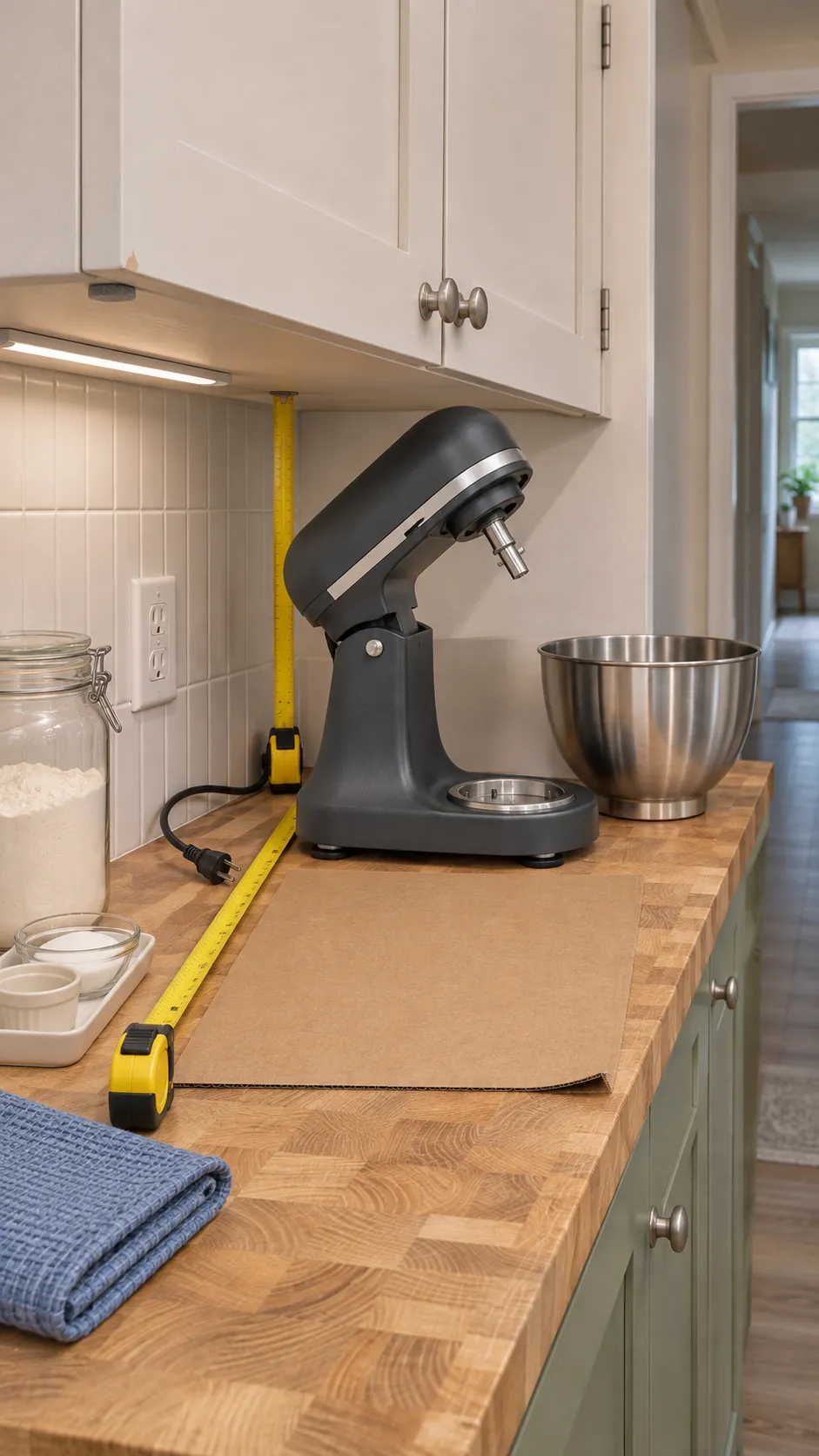
Test the whole routine with cardboard or existing appliances. Can the stand mixer remain on the counter without blocking food preparation? If it lives in a cabinet, can you lift it comfortably from that height? A machine that is difficult to retrieve often becomes a machine you do not use.
Match the mixer to your smallest and largest batches
Bowl capacity can mislead. A larger bowl may handle more dough, but a very small amount of cream or one egg white may sit below the whisk. Check the maker’s minimum guidance and look at the distance between the tool and bowl. Small apartment bakers often halve recipes, so reliable contact at low volume matters as much as maximum capacity.
For a hand mixer, capacity depends mainly on your bowl and the strength of the motor. You can switch to a smaller bowl for a small batch. For a stand mixer, the bowl is part of the system. Some models accept a smaller bowl, but that accessory adds cost and storage.
Write down three real batches: the smallest thing you make, the usual batch, and the heaviest batch. Include flour weight for bread and approximate dough weight when a maker publishes limits. A compact body does not always mean weak performance, but a small machine should not be assumed to knead every dense dough.
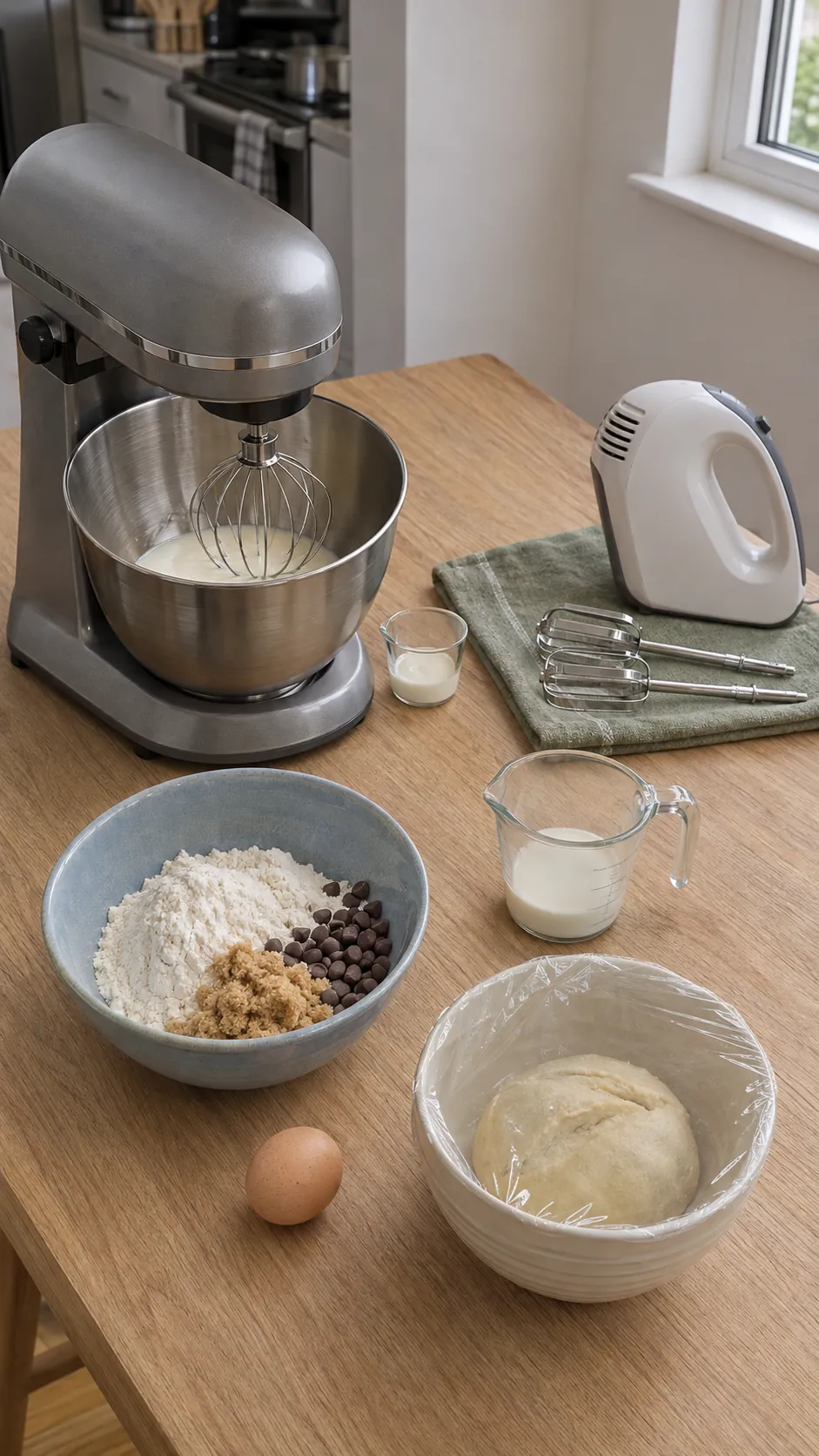
Decide how much hands free mixing matters
A stand mixer can keep working while you weigh the next ingredient, scrape a measuring cup, or prepare a pan. That convenience is useful when sugar must enter gradually or when buttercream needs a long mixing period. It can also help a baker with limited grip strength or wrist endurance.
Hands free does not mean unattended. Scrape the bowl when the recipe requires it. Watch thick dough so the machine does not walk or overheat. Start flour and confectioners sugar at the lowest setting, because a powerful mixer can still throw dry ingredients across a small kitchen.
A hand mixer gives direct feedback. You can feel resistance, move into dry pockets, and stop instantly. It also works over a double boiler or in a bowl that is too small for a stand mixer. The tradeoff is continuous attention and arm effort.
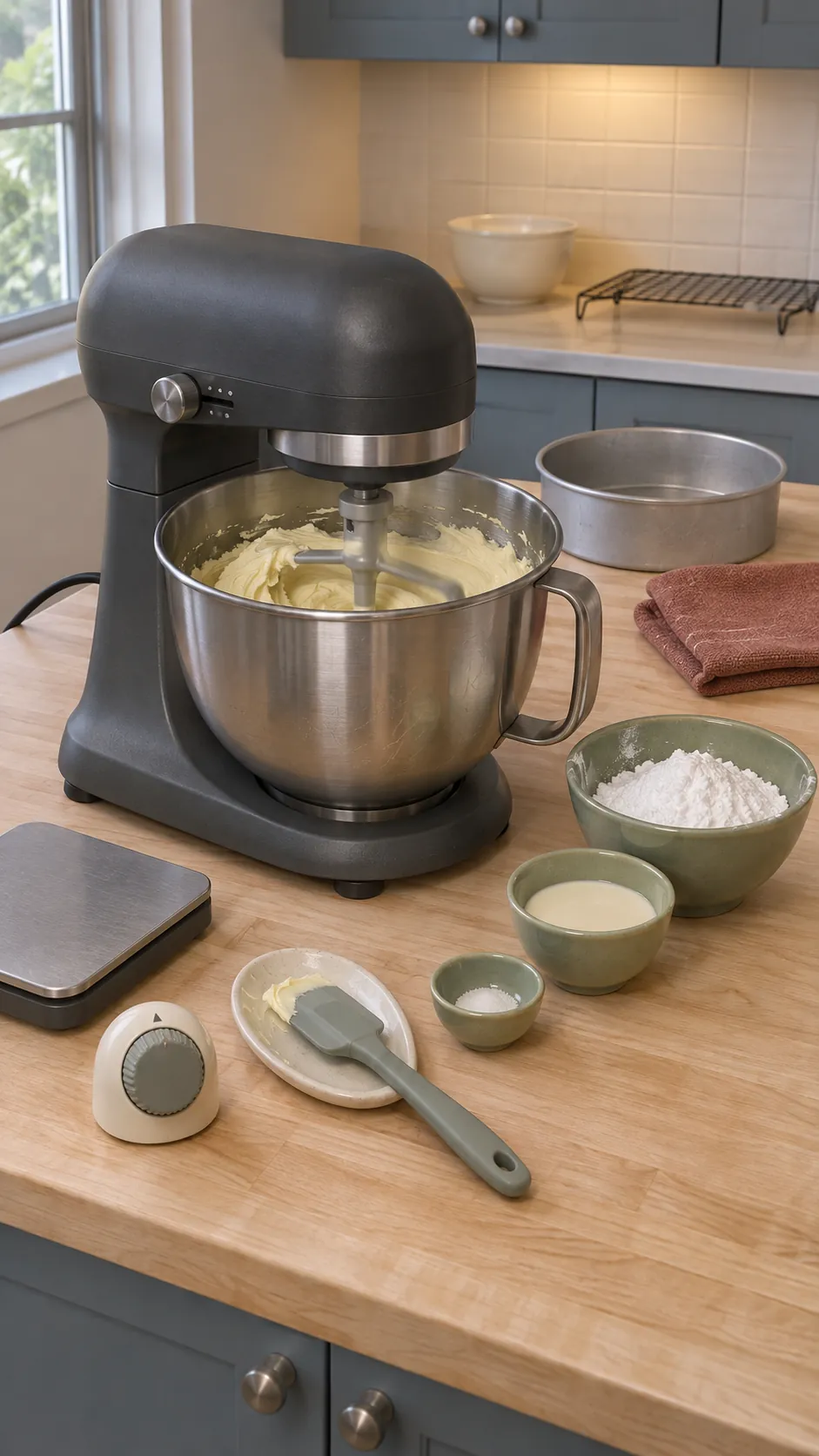
Count cleanup and attachment storage
A hand mixer usually leaves two beaters and one bowl to wash. The body can be wiped and stored with the cord. A stand mixer adds a fixed base, larger bowl, beater, whisk, and perhaps a dough hook or splash guard. Flour can settle around the head, hinge, speed control, and bowl mount.
Before buying, decide where every attachment will live. A small bin keeps hooks and beaters together. Store the whisk where its wires will not bend. If the bowl stays on the mixer, check whether it can hold attachments without scratching the surface or trapping moisture.
Consider the recipe aftermath, not only the mixing time. A stand mixer may save ten minutes of holding but create a larger washing and drying job. That is a good trade when it removes pain or improves a frequent task. It is less convincing for a baker who makes one light cake each month.
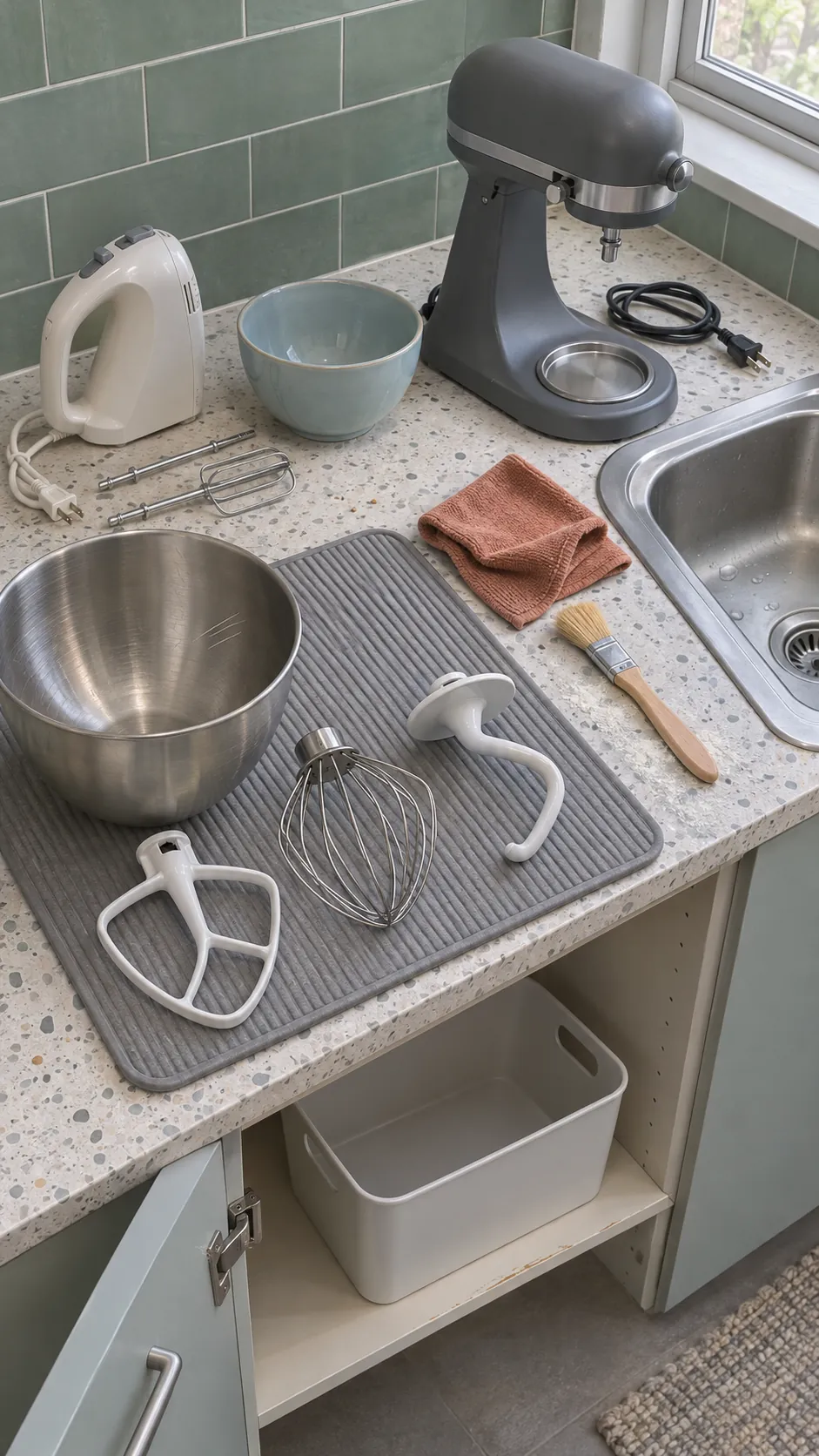
Use a recipe based decision test
Review your last ten baking sessions. Give one point to the hand mixer for each light small batch, quick job, or recipe made in a special bowl. Give one point to the stand mixer for each stiff dough, long mixing period, large batch, or task where two free hands would help.
Then apply the space test. If the stand mixer can stay in a safe ready position, its score stands. If it must be lifted from an awkward shelf for every use, subtract the convenience you expected. If the hand mixer fits in a drawer beside its beaters and you already knead bread by hand, its simple routine may win.
There is no rule that every serious baker needs both. Start with the tool that solves today’s repeated problem. Add the second only when a clear job remains difficult. In a small apartment, a useful appliance is one that earns its space every week.