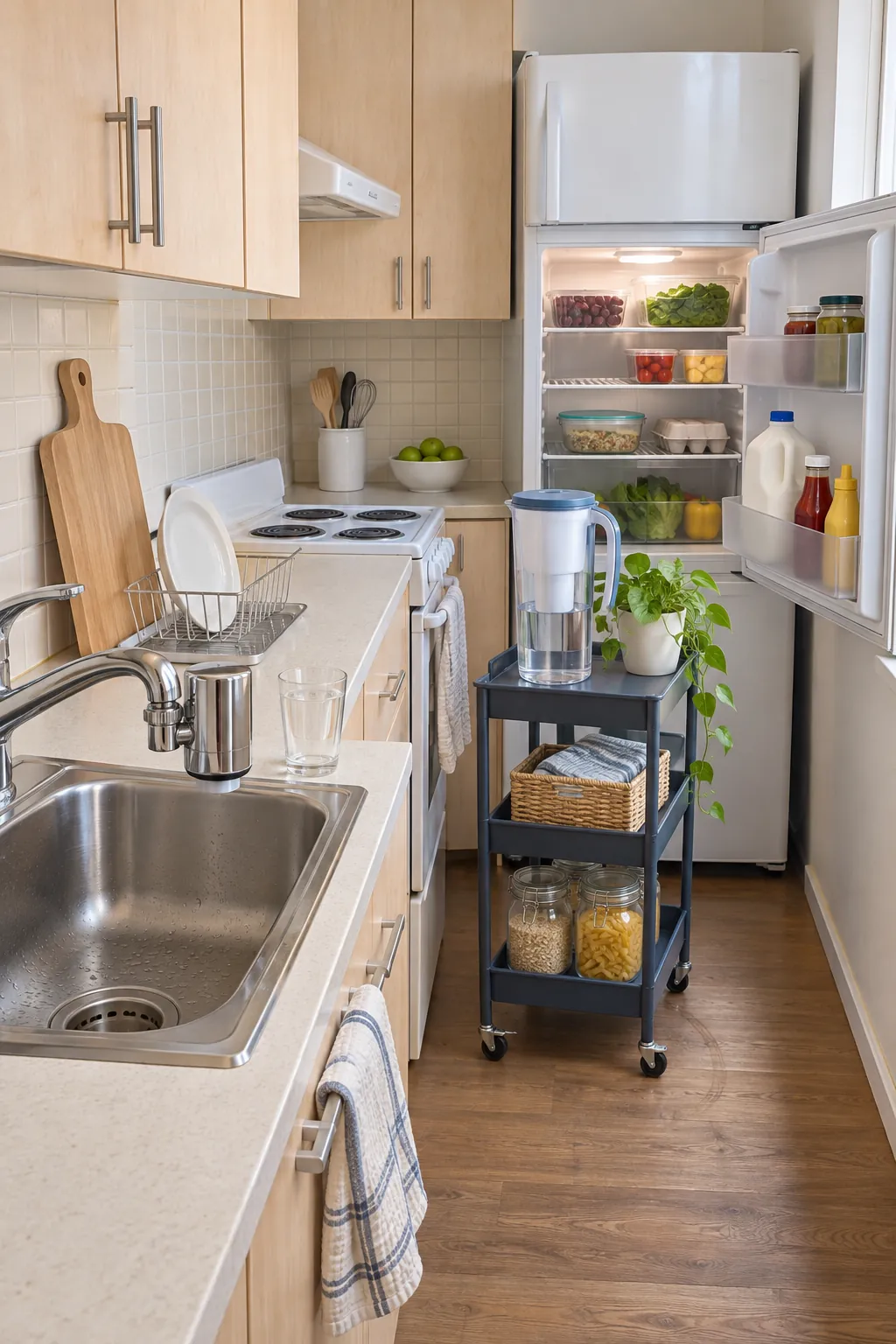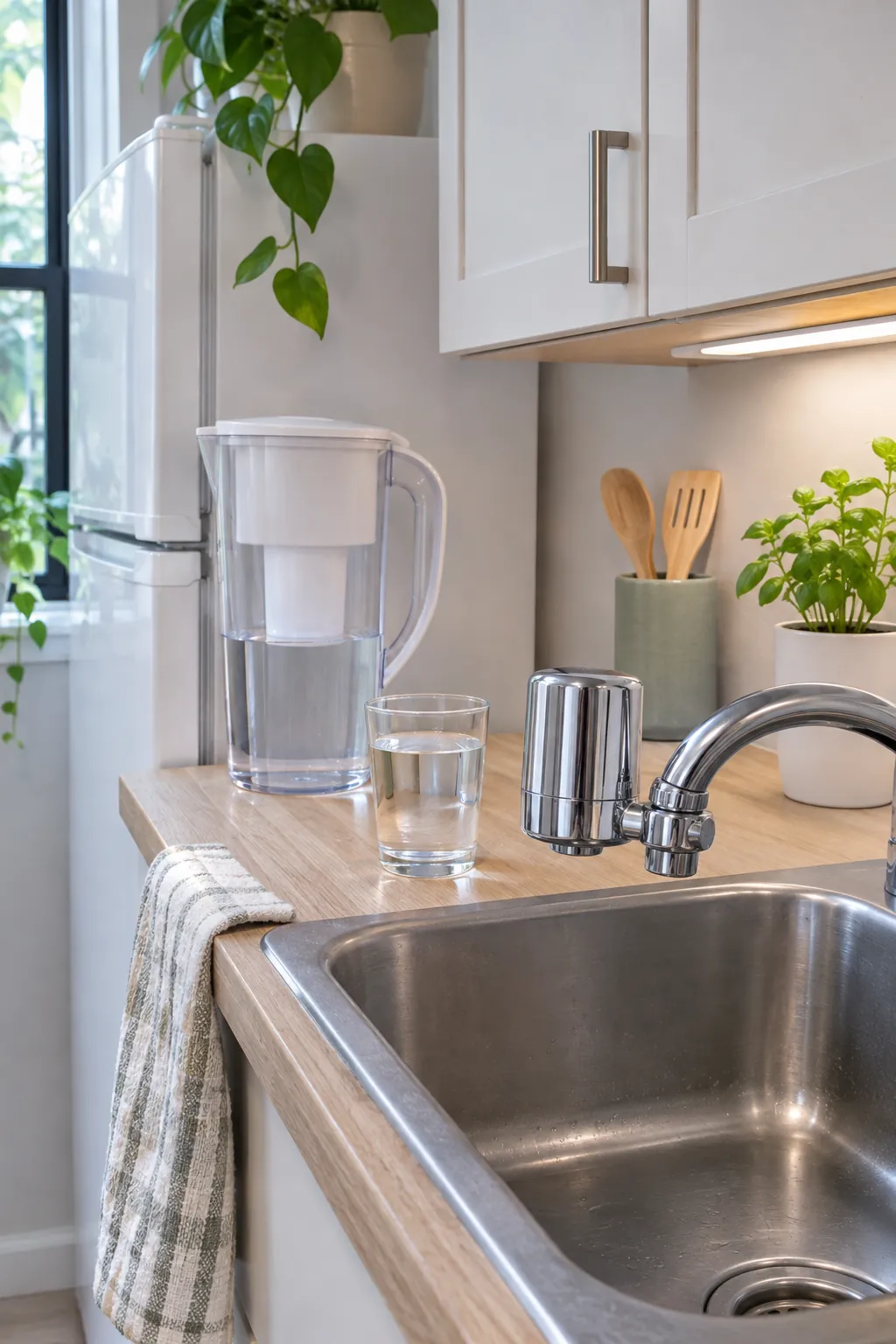
A water filter can save counter space or consume refrigerator space, but the smallest product is not always the easiest one to live with. In a compact kitchen, the better choice depends on where you have spare room, how quickly you need filtered water, and whether your faucet can accept an attachment. The useful comparison starts with those daily constraints, not with the shape of the filter.
Check What You Need the Filter to Reduce
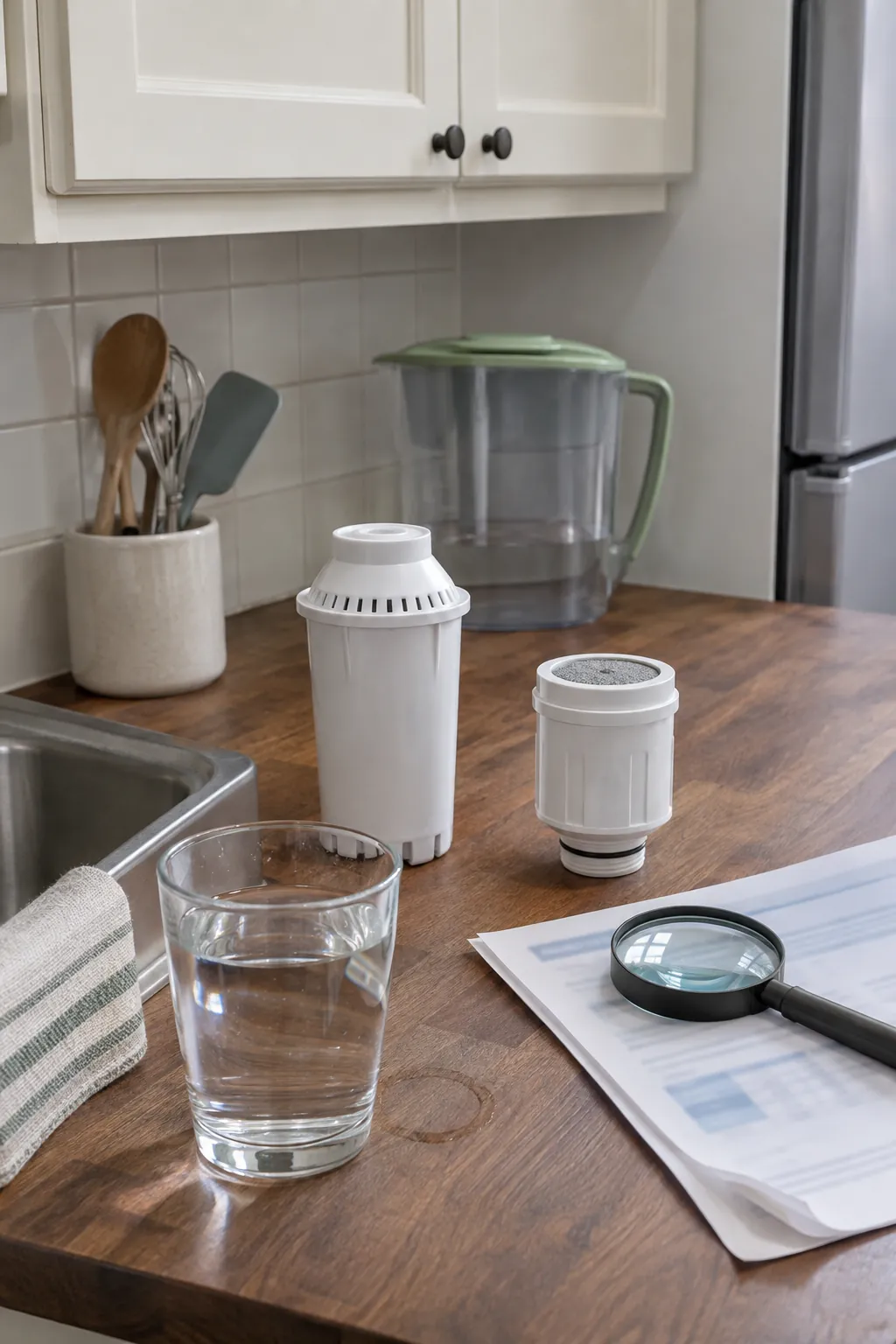
Start with the water quality report from your local utility, or test a private well through a qualified laboratory. A basic carbon filter may improve chlorine taste and odor, but different cartridges carry different contaminant reduction claims. Look for an independent certification that names the exact substance you care about, rather than assuming that every pitcher or faucet filter does the same job.
This step can change the decision before kitchen space enters the picture. A slim water filter pitcher and a faucet water filter are useful only when their certified performance matches your water concern. If neither option addresses the issue in your report, compare a suitable under sink system or another certified treatment method instead.
Measure the Space a Pitcher Actually Uses
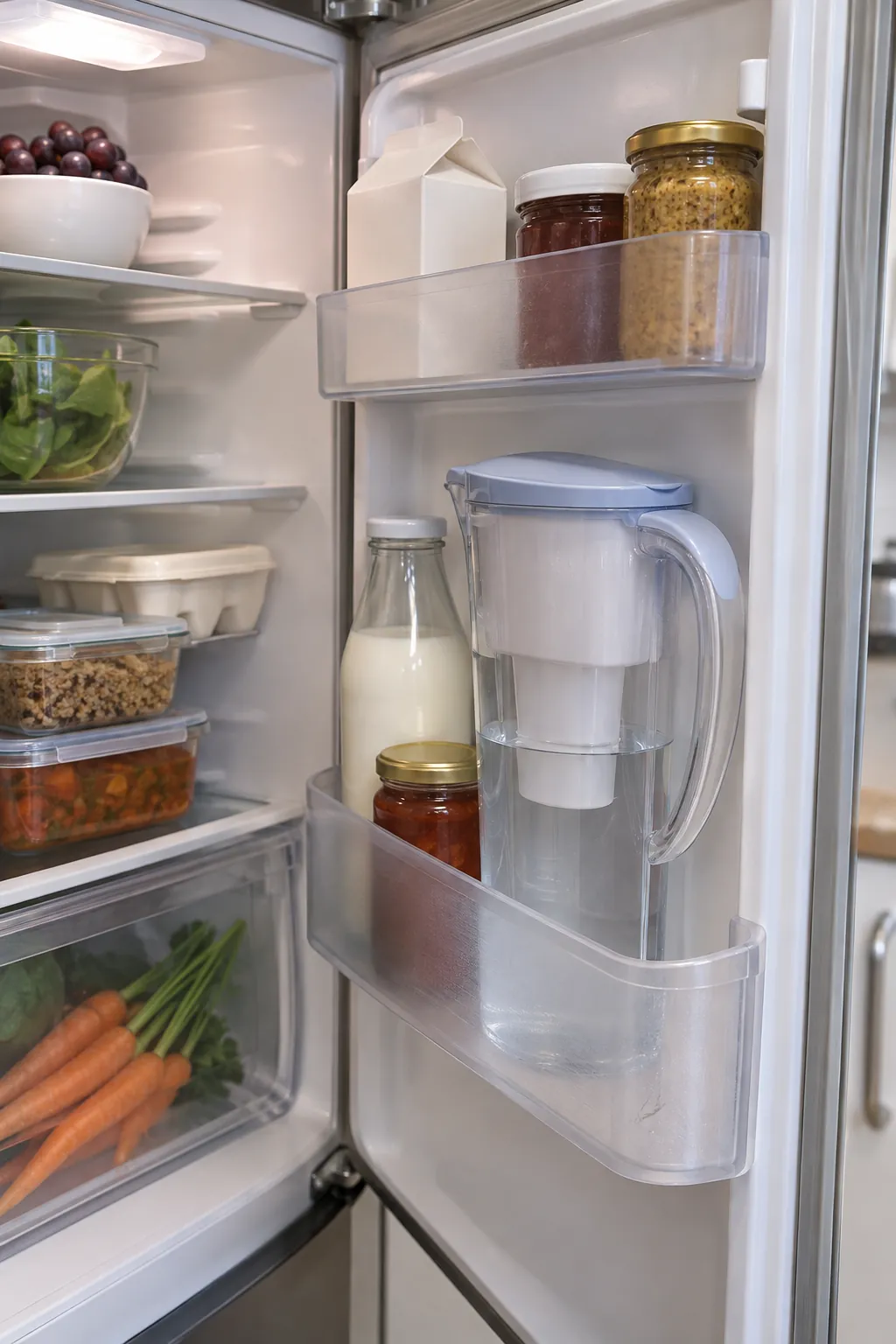
A slim pitcher moves filtration away from the sink, which is helpful when the faucet is incompatible or the lease limits fixture changes. It can also keep drinking water cold. The tradeoff is that its narrow body may still be too tall for a shelf, too deep for a small refrigerator door, or awkward to lift past food stored in front of it.
Measure the pitcher at its widest point, including the handle, lid, and spout. Measure the usable height and depth of the intended shelf or door bin after normal groceries are in place. Leave enough clearance to remove the lid or pour without scraping the shelf above, because a fit that works only in an empty refrigerator will become frustrating during the week.
Confirm Faucet Compatibility Before You Buy
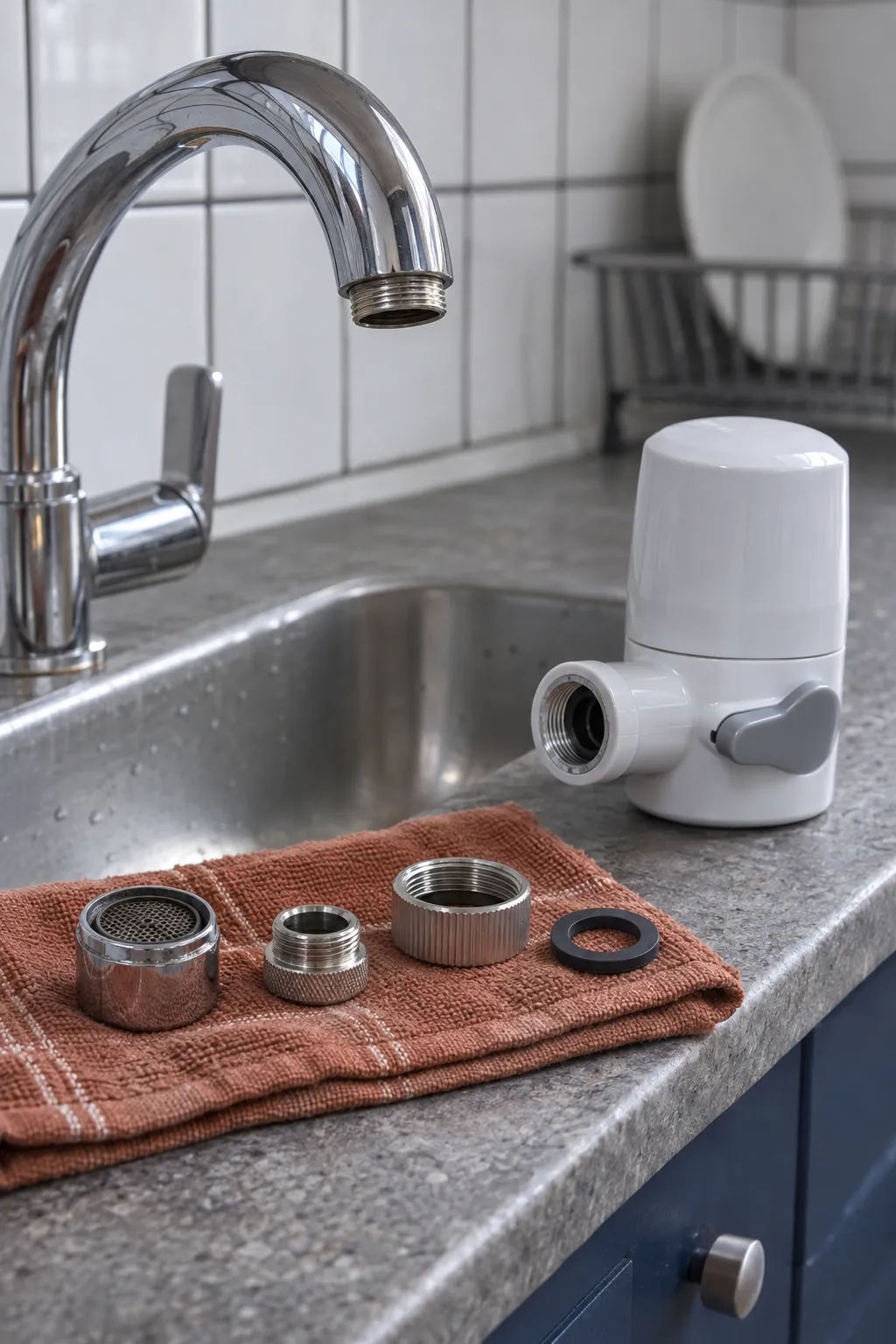
A faucet filter preserves refrigerator and counter storage, yet it occupies the busiest point in the kitchen. Many attachments fit standard removable aerators, but pull down sprayers, unusual threads, and some sensor faucets may not accept them. Check the faucet model, aerator type, available adapters, and the filter maker’s compatibility guidance before ordering.
Also check the space around the spout. The filter body can reduce clearance over a shallow sink and can make large pots harder to fill or wash. A secure fit matters because forcing an adapter or leaving a loose connection can lead to drips, splashing, or unwanted stress at the faucet.
Compare Speed With Ready Water Capacity
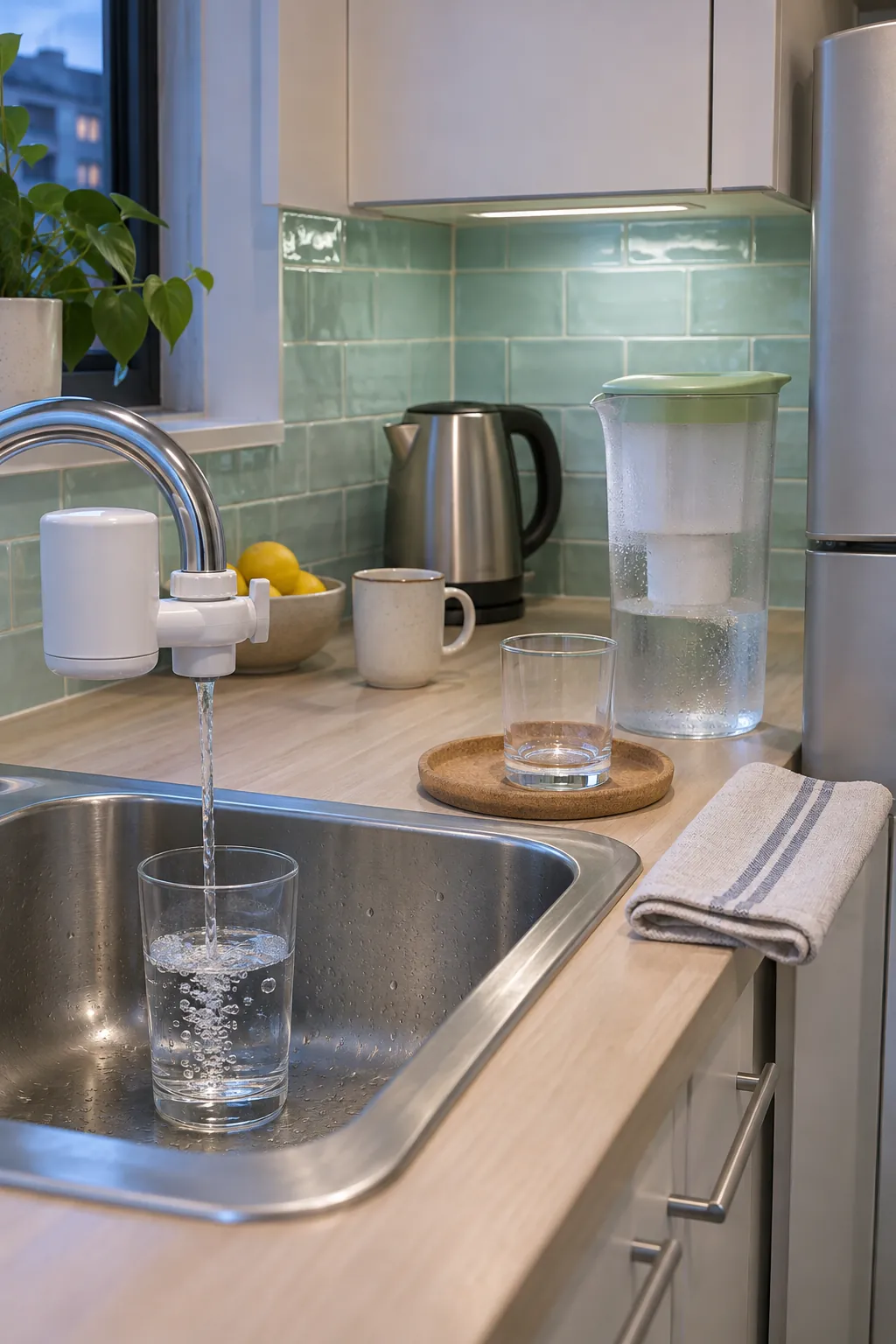
A faucet filter supplies water when you turn it on, so it works well for repeated glasses, a kettle, or cooking water. Its filtered flow is usually slower than the unfiltered tap, but you do not need to remember a refill cycle. This is often the practical advantage for a household that empties a small pitcher faster than it refills.
A pitcher stores a limited amount of ready water and can chill it at the same time. That is convenient when one or two people drink modest amounts and refill it after each pour. It becomes less convenient when several people need water at once, when the upper reservoir blocks part of the usable capacity, or when nobody notices that the last glass was poured.
Count the Maintenance You Will Actually Do
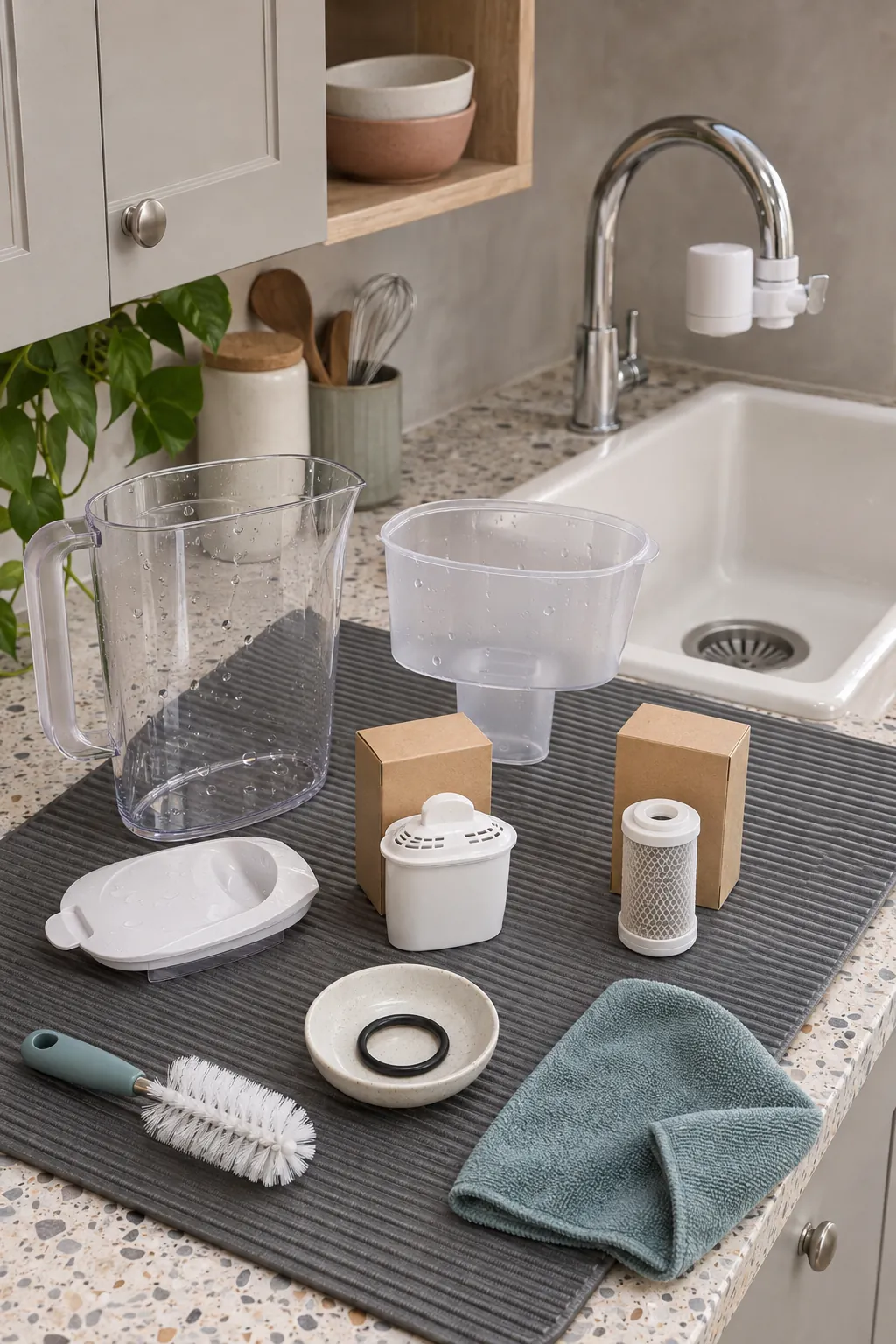
Compare the purchase price, replacement cartridge price, rated service life, and realistic household use. A lower initial price can lose its advantage when cartridges need frequent replacement or are difficult to find. Follow the maker’s replacement schedule, because taste alone does not reliably show whether a cartridge is still performing as certified.
A pitcher needs regular washing and careful drying around the lid and reservoir. A faucet unit needs the mounting area cleaned, the connection checked, and the selector switched correctly so hot water does not pass through a cartridge that is designed for cold water. Choose the routine that fits habits you already keep, since a neglected compact filter is not a space saving success.
Choose the Constraint You Prefer
Choose a slim pitcher when the faucet cannot accept an attachment, cold ready water matters, and you can dedicate a measured refrigerator zone to it. This option is also easier to take when you move, which can suit renters. Confirm that its certified reduction claims and usable capacity meet your needs before treating its narrow shape as the deciding feature.
Choose a faucet filter when refrigerator storage is more valuable than sink clearance, the faucet is compatible, and you want filtered water without planning refills. It is often the stronger small kitchen choice for frequent use, provided the attachment does not interfere with washing and the cartridge meets the same water quality requirement. The right answer is the one that places the inconvenience where your kitchen has room for it.