Deep red flowers can dry into rich winter material, but the color can also turn brown, fade, or disappear under dust. The difference usually comes from harvest timing, moisture, light, and the drying method. A careful process gives you firm stems and muted burgundy tones that still look intentional in a wreath or vase.
Choose Flowers That Can Hold Their Shape
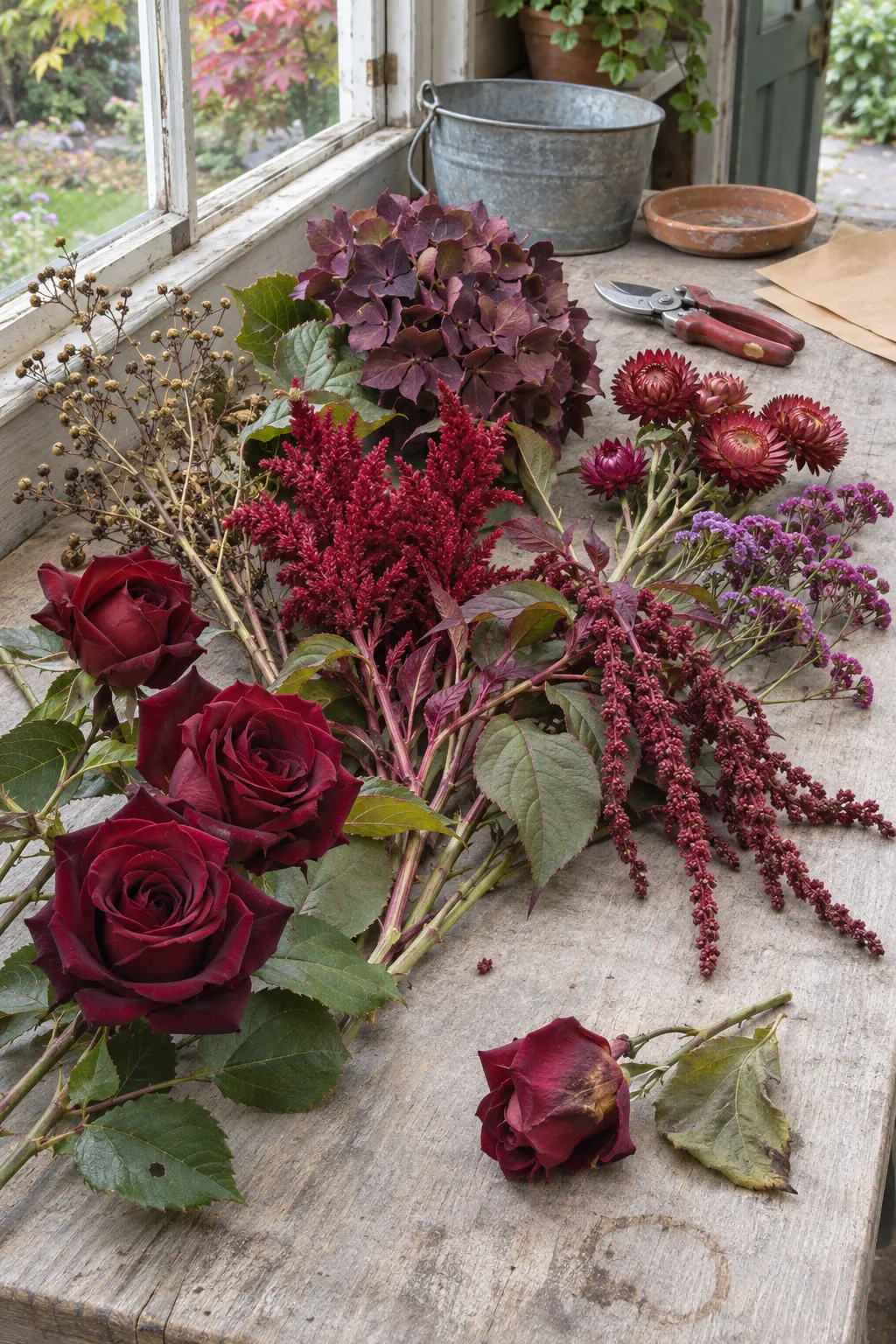
Start with flowers that are freshly opened and free from bruises, water spots, and soft petals. Roses, celosia, amaranth, hydrangea, strawflower, statice, and dark dahlias can all contribute burgundy color, although each dries differently. Select some tight forms for structure and some airy stems for movement.
Harvest garden flowers after surface moisture has evaporated. Late morning on a dry day is often practical because dew is gone but strong afternoon heat has not stressed the blooms. Florist stems should be dried soon after purchase rather than left in water until their edges weaken.
Prepare Small Bundles Before Air Drying
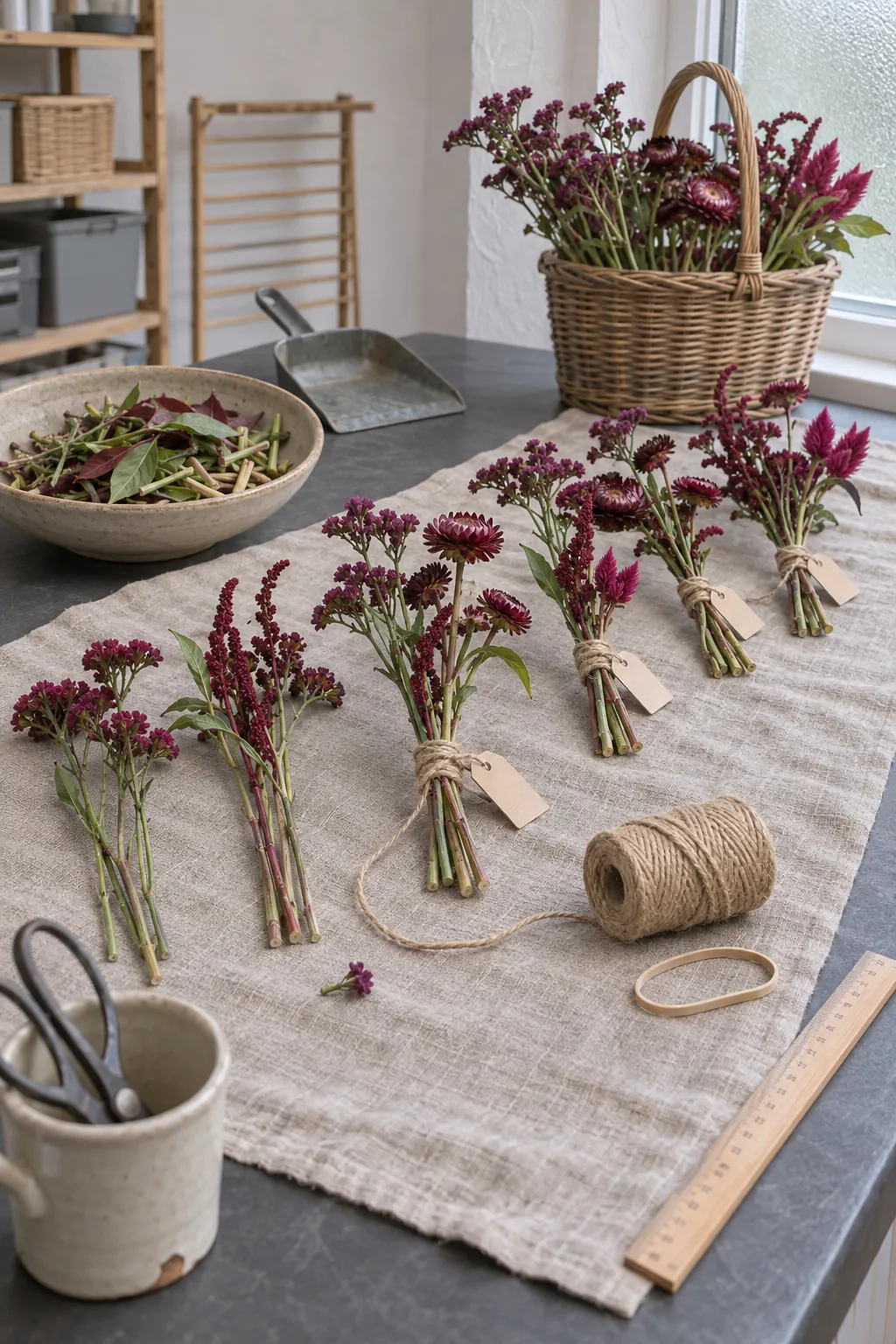
Remove lower leaves because they trap moisture and become brittle clutter. Sort stems by thickness and flower type so each bundle dries at a similar pace. Tie only four to six stems together with twine or an elastic band, since stems shrink as they lose water.
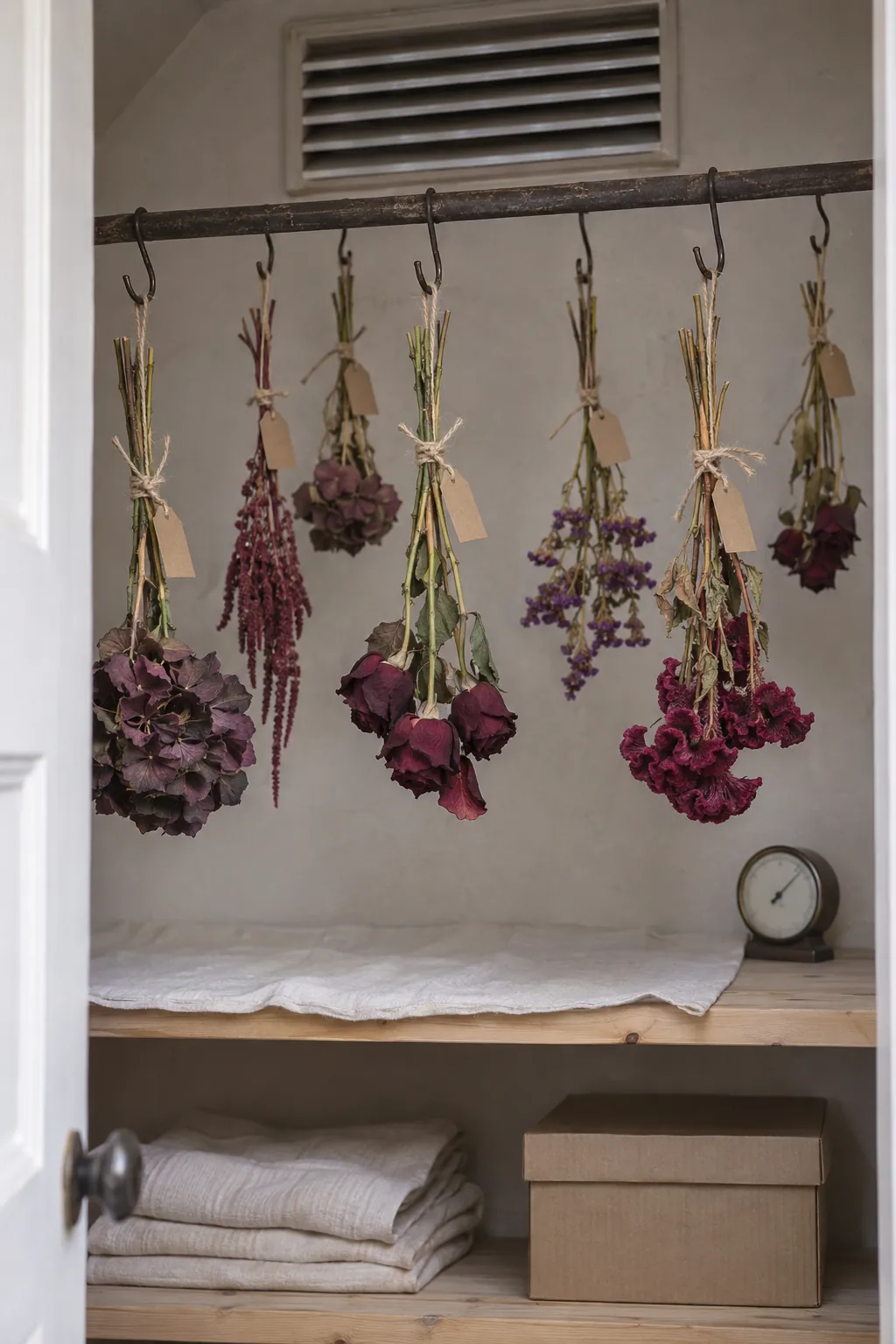
Keep flower heads at slightly different heights so air can move around every bloom. Large dense flowers should often hang alone. Label each bundle with its flower type and start date, which makes it easier to compare methods and avoid handling delicate petals too soon.
Hang Flowers in a Dark Dry Place
Hang the bundles upside down in a dark cupboard, spare room, or ventilated storage area. Darkness slows visible fading, while moving air carries moisture away. Leave space between bundles and avoid a damp basement, a steamy kitchen, or a sunny window.
Most flowers need about two to four weeks, but the room and stem thickness matter more than a fixed date. A bloom is ready when the petals feel papery, the stem feels firm, and the thickest part near the flower head no longer feels cool or flexible. If the center still feels soft, give it more time.
Use Silica Gel for Full Petal Shapes
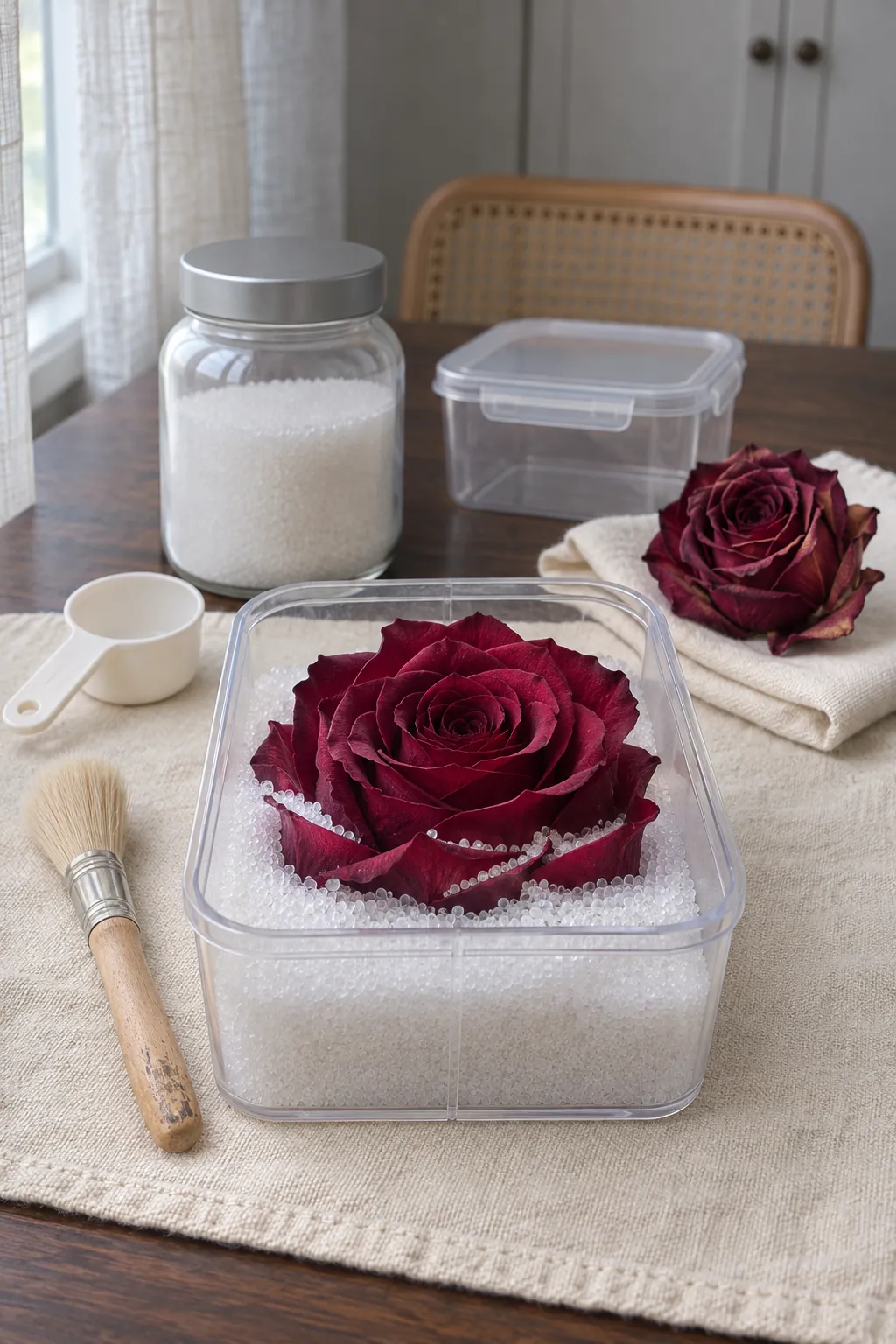
Air drying suits many stems, but it can make a full rose or dahlia collapse. Silica gel supports layered petals while drawing out moisture, so it is useful when shape matters as much as color. Choose a container with a tight lid and reserve the material for craft use.
Place a shallow layer of silica gel in the container, set the trimmed flower upright, and slowly pour more granules around and between the petals. Cover the flower completely without crushing it. Follow the product timing, then uncover the bloom gently and remove remaining grains with a soft brush.
Condition and Store the Dried Stems
Move finished stems into a clean, dry room for a day before arranging them. This pause helps you catch any stem that still bends or any flower center that feels damp. Discard material with mold, a sour smell, or spreading dark soft patches because it can damage the rest of the collection.
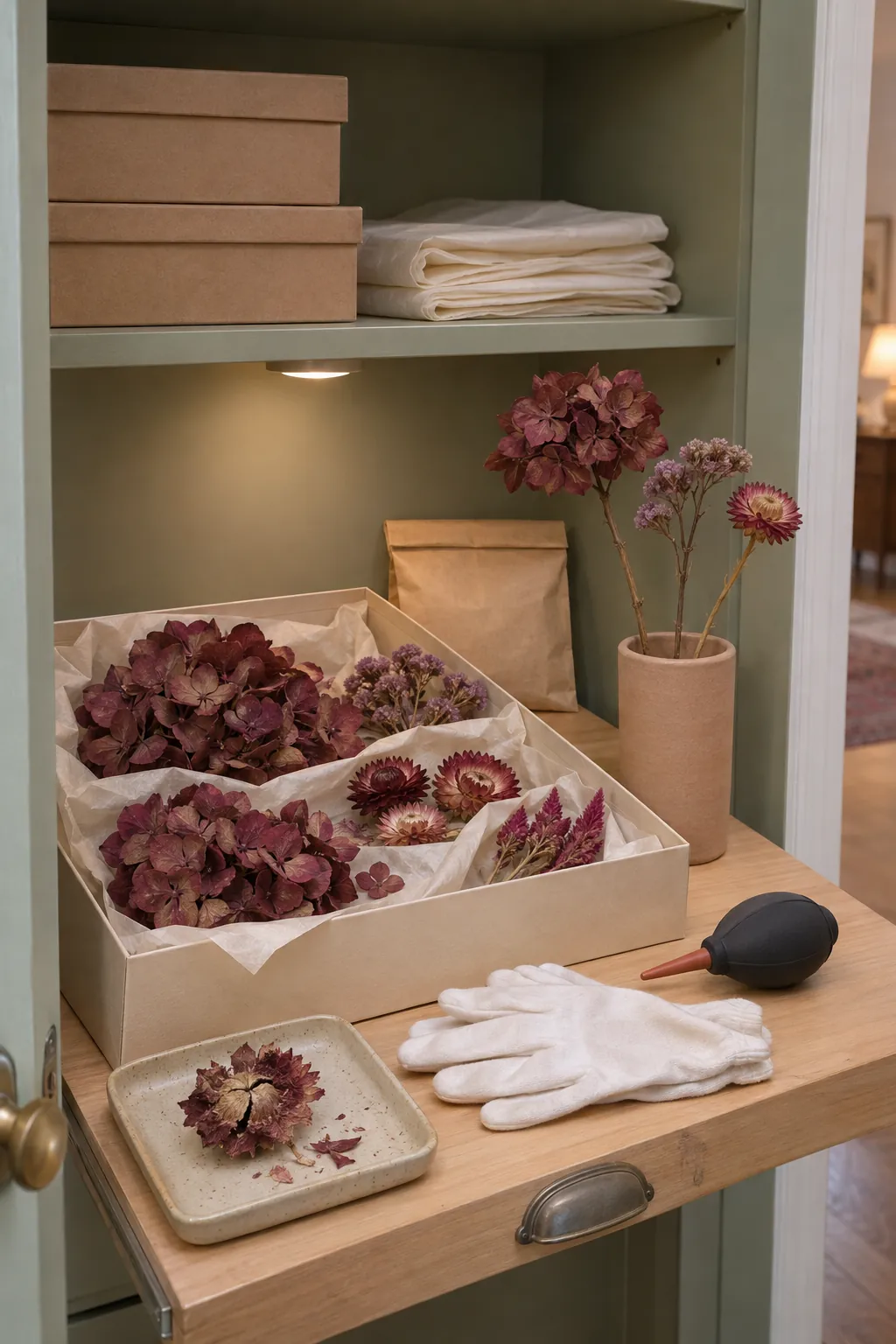
Store dried flowers in a lidded box with acid free tissue between layers, or keep upright bundles loosely covered with clean paper. Choose a dark cupboard with stable indoor humidity. Avoid airtight plastic around material that may retain moisture, and keep finished decor away from direct sun, fireplaces, and heating vents.
Build Winter Wreaths and Arrangements Gently
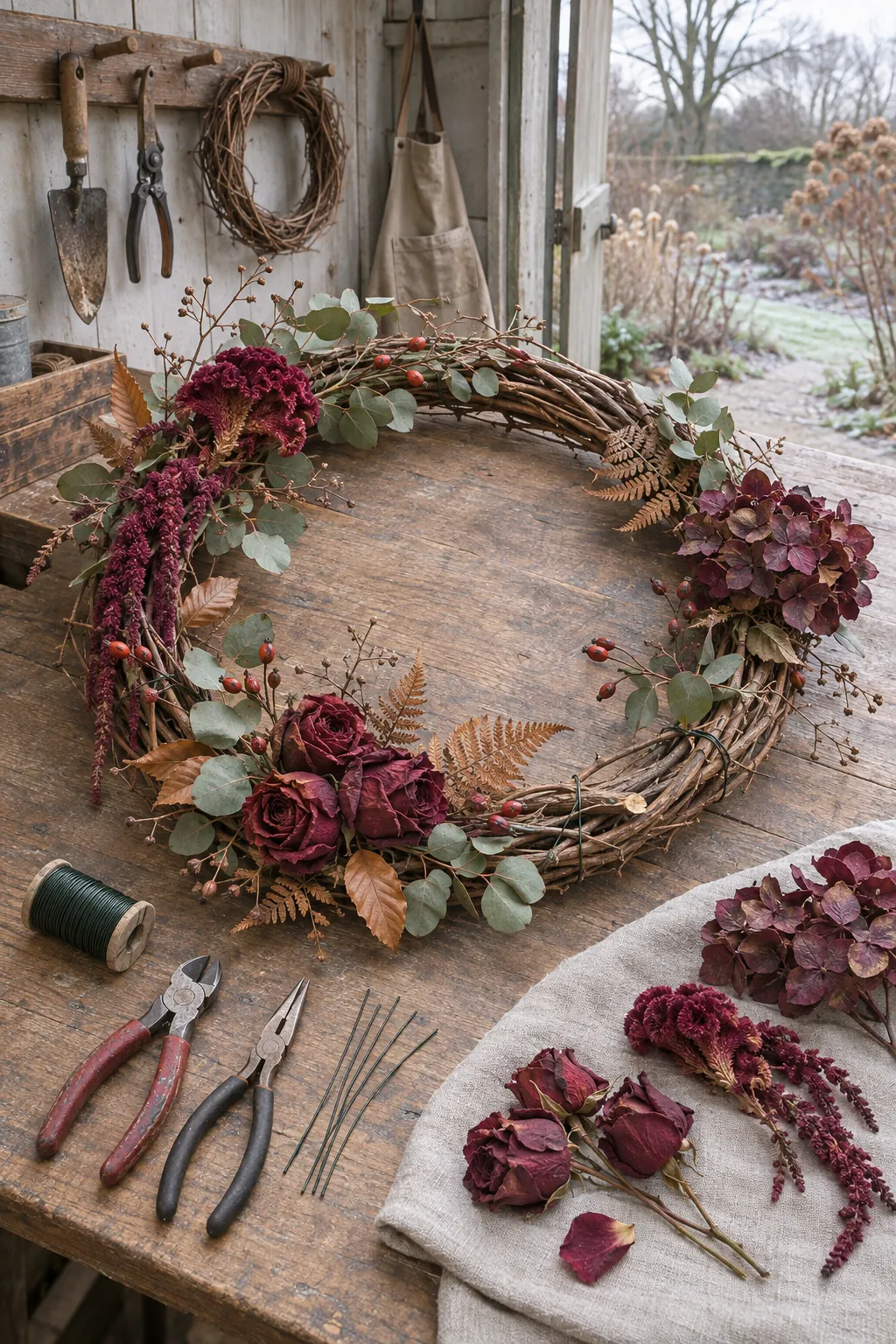
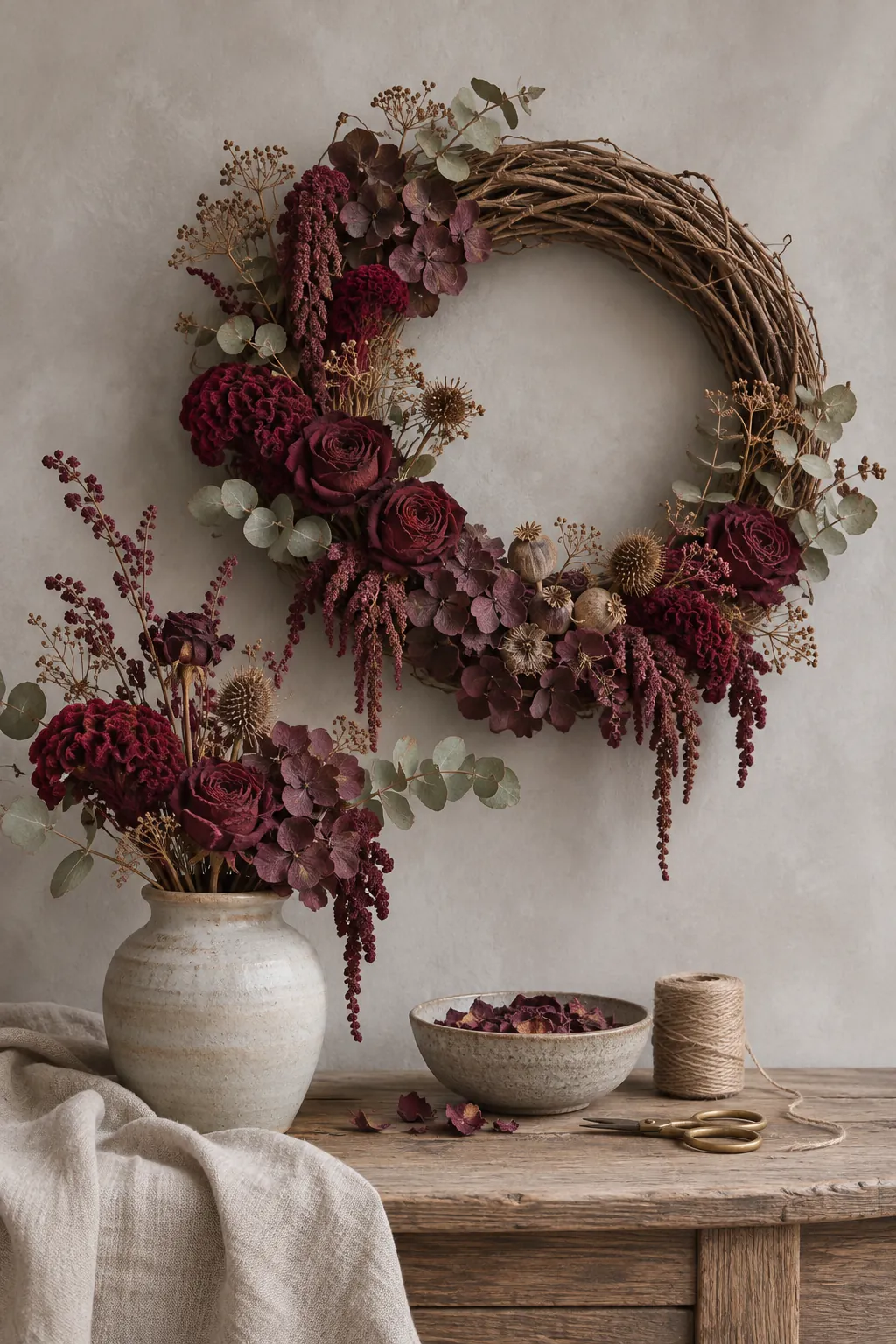
Plan the structure before touching the most fragile blooms. Attach sturdy foliage, seed heads, and branching stems to a wreath base first, then place burgundy focal flowers where their color can repeat around the circle. Fine floral wire gives more control than forcing brittle stems into a tight frame.
For a vase arrangement, support delicate flowers with twiggy branches, grasses, or dried foliage. Rotate the vessel as you work so the weight stays balanced. Display the finished piece where it will not receive strong sun or frequent bumps, then use a cool hair dryer on its lowest setting from a generous distance when dust begins to collect.