
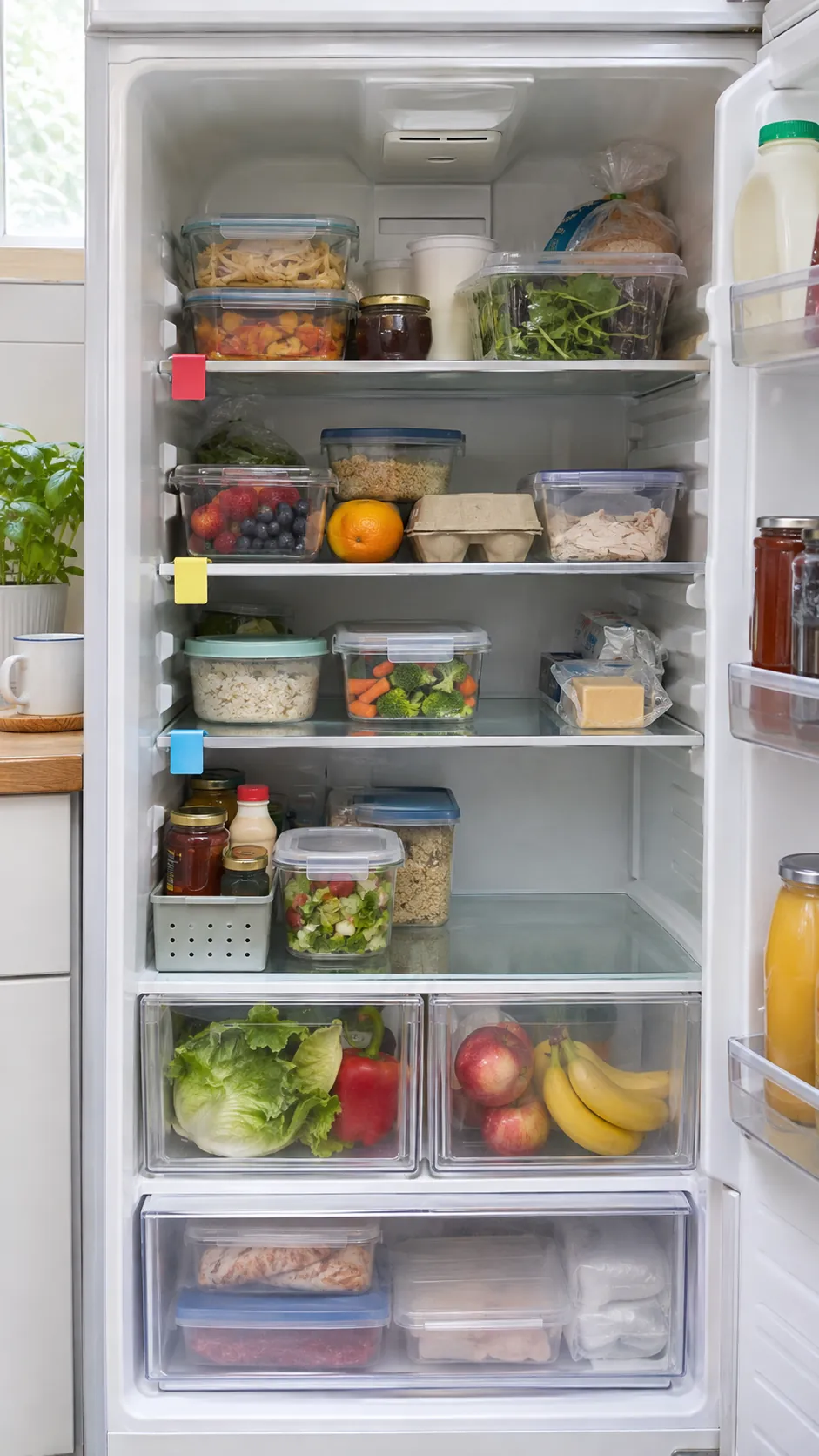
A shared refrigerator becomes tense when ownership is unclear and one grocery trip can erase another person’s space. The best layout makes boundaries obvious before anyone has to ask. It also leaves room for food safety, temporary overflow, and the changing shape of weekly groceries.
Agree on Ownership Before You Move Food
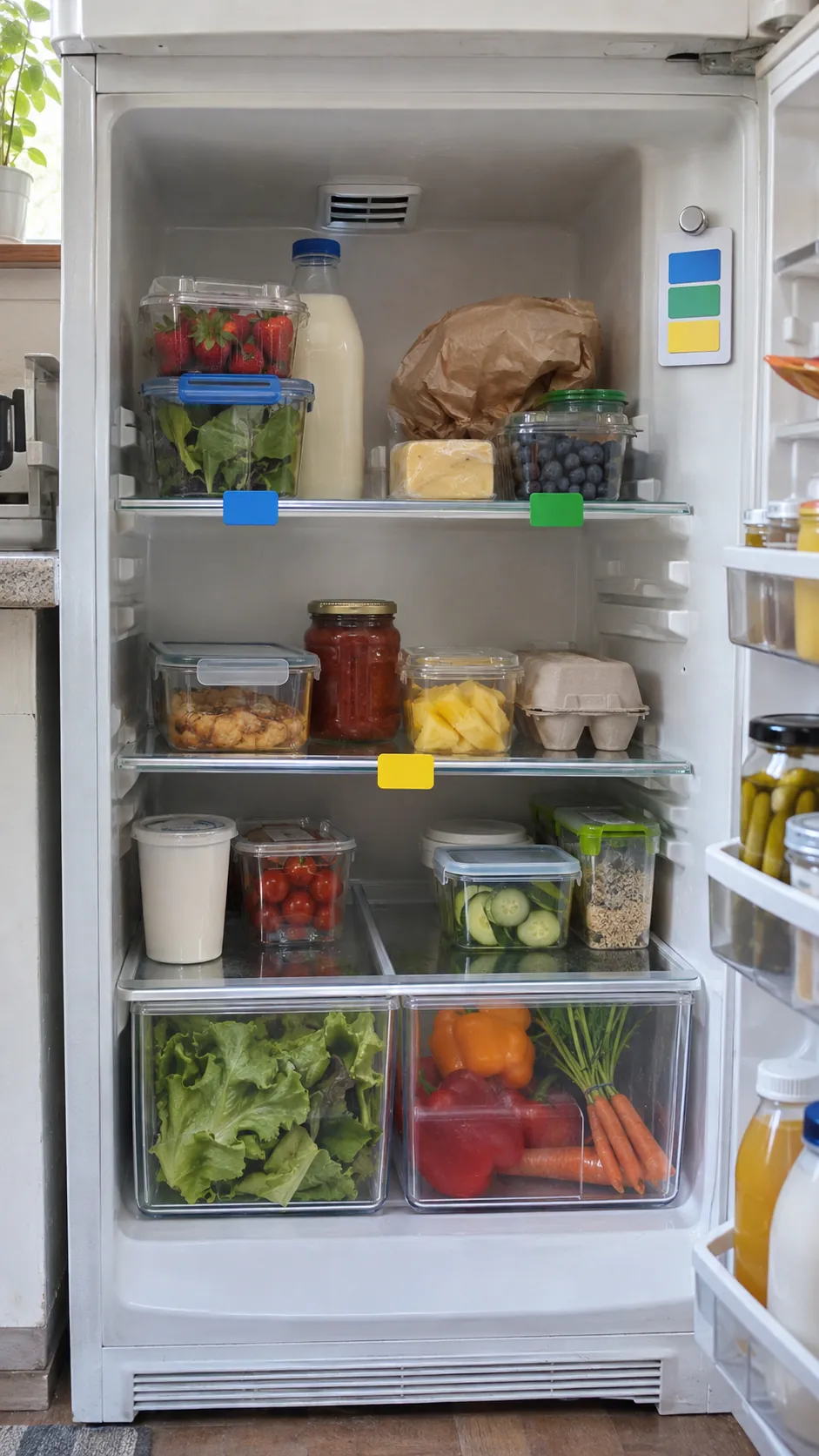
Start with a short household agreement about what is personal, what is shared, and what nobody should move without asking. Discuss common conflict points such as milk, leftovers, sauces, produce, and food bought for a specific meal. A visible storage system works only when everyone understands the same rules.
Divide Usable Space Instead of Counting Shelves
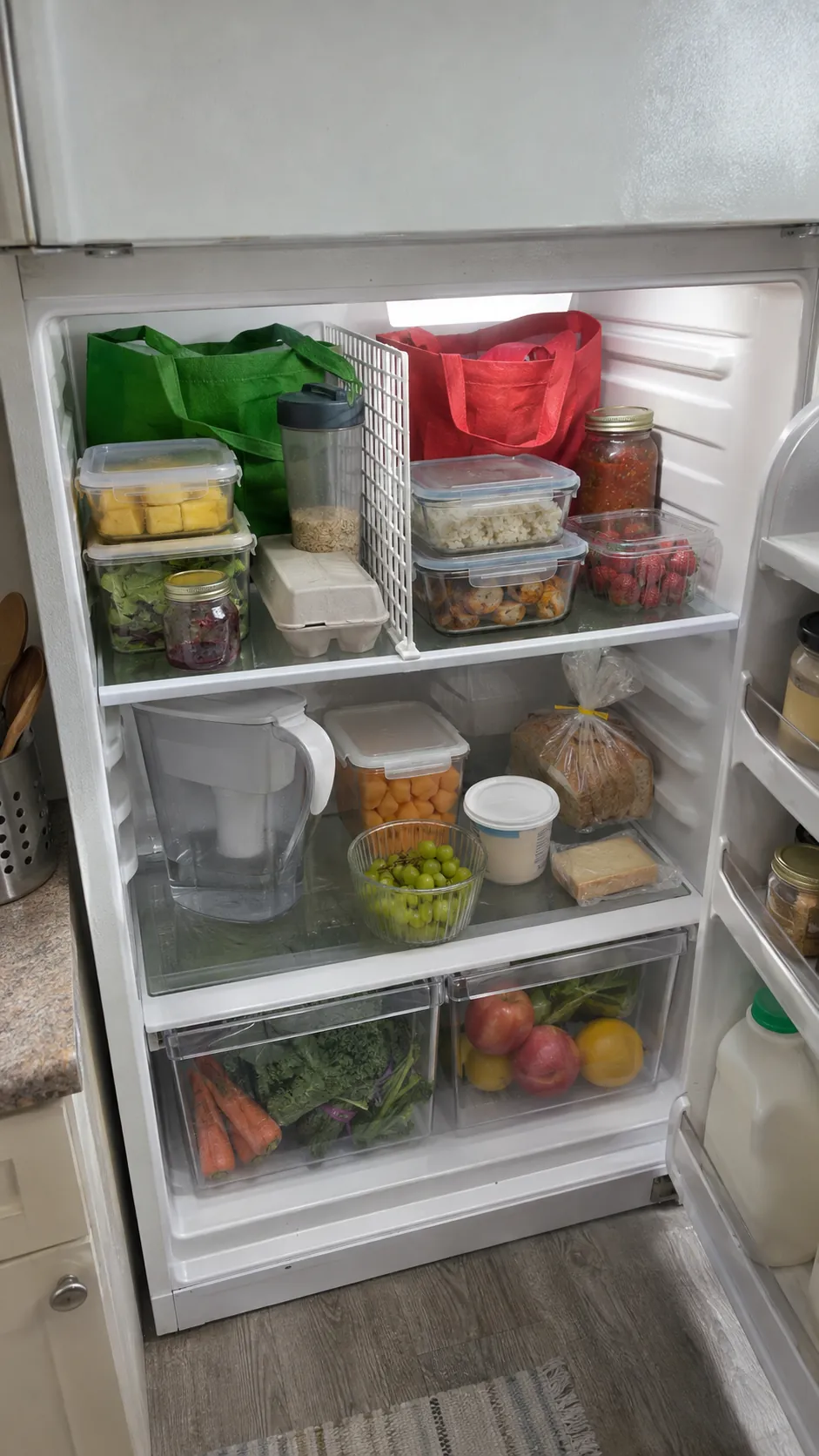
Measure the usable width and depth, then divide capacity in a way that fits the number of roommates. Equal shelf counts can feel unfair when one shelf is tall and another is cramped, so compare actual space and access. Give shorter roommates a reachable area and keep vents clear. Review the division after one normal shopping week.
Use Personal Bins for Small Loose Groceries
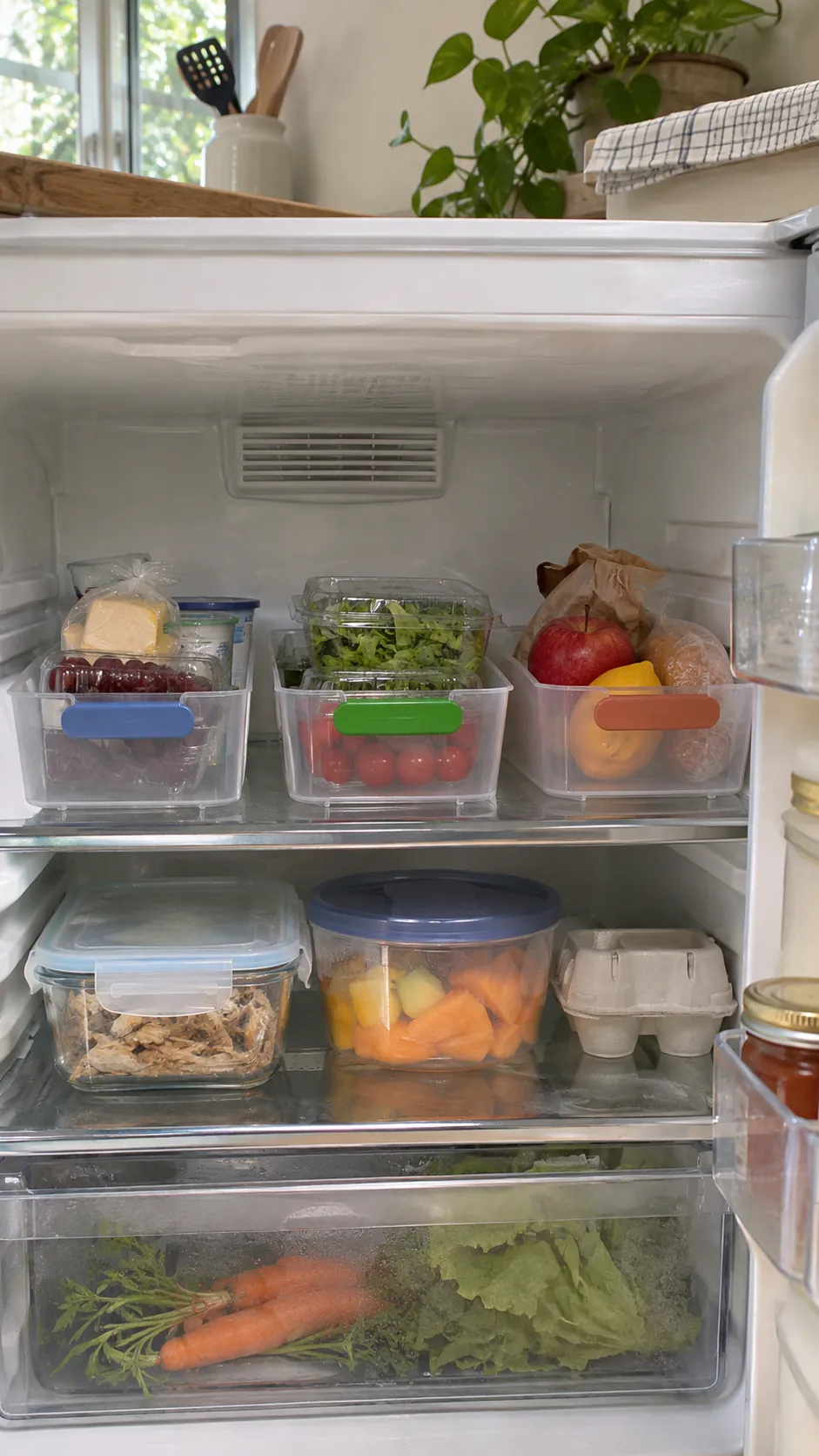
Give each roommate one shallow bin for yogurt, cheese, snacks, and other small items that migrate easily. Choose bins that pull out without disturbing the neighboring zone and label the front with a name or agreed color. Keep tall groceries outside the bin when they would block visibility.
Create One Shared Condiment Area
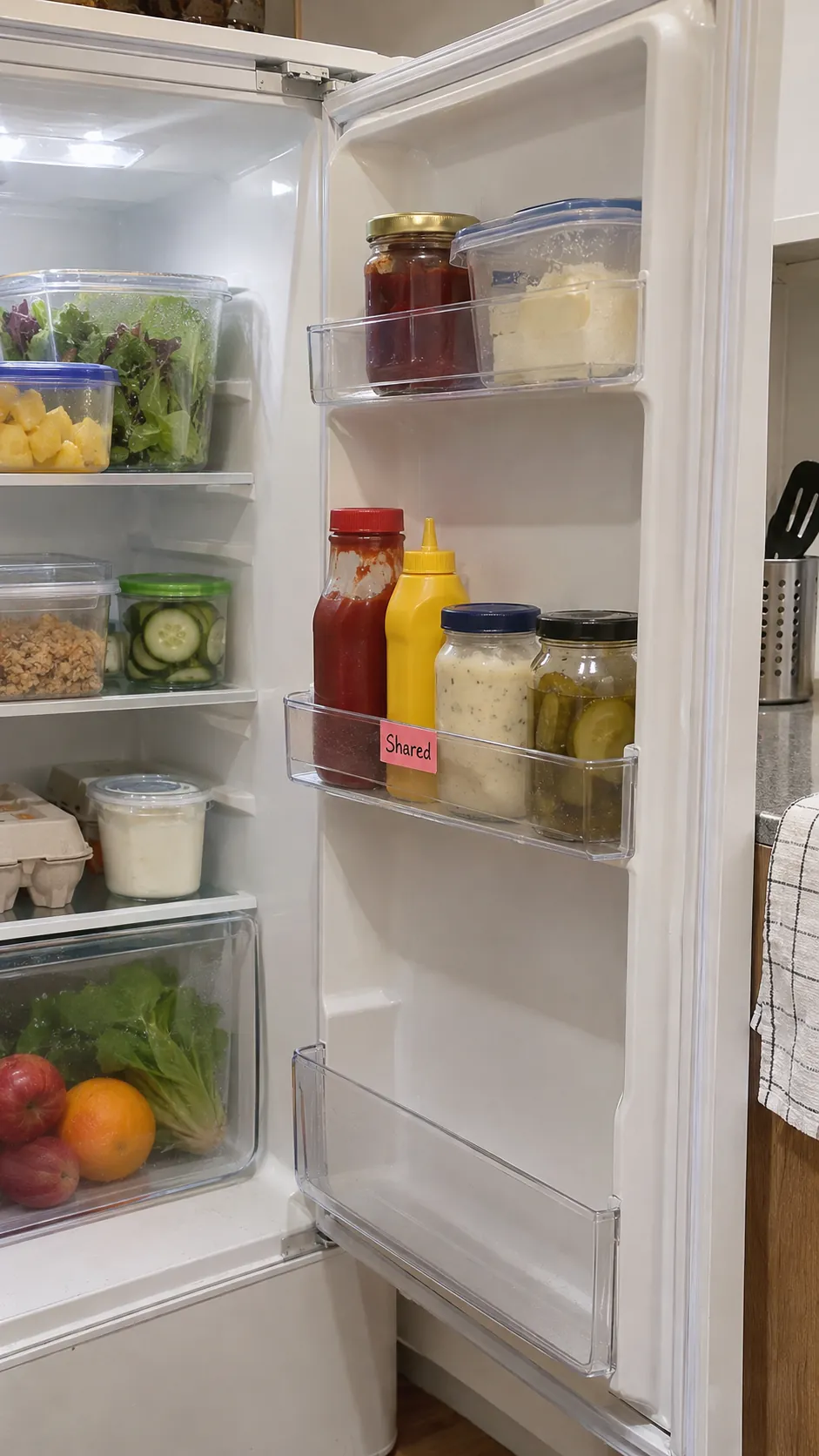
Reserve a defined door rail or narrow shelf for condiments that everyone has agreed to share. Decide who replaces an empty staple and avoid keeping several nearly identical bottles unless people prefer separate brands. Personal sauces can stay in the owner’s zone so the shared area does not become ambiguous.
Separate Meal Plans and Leftovers
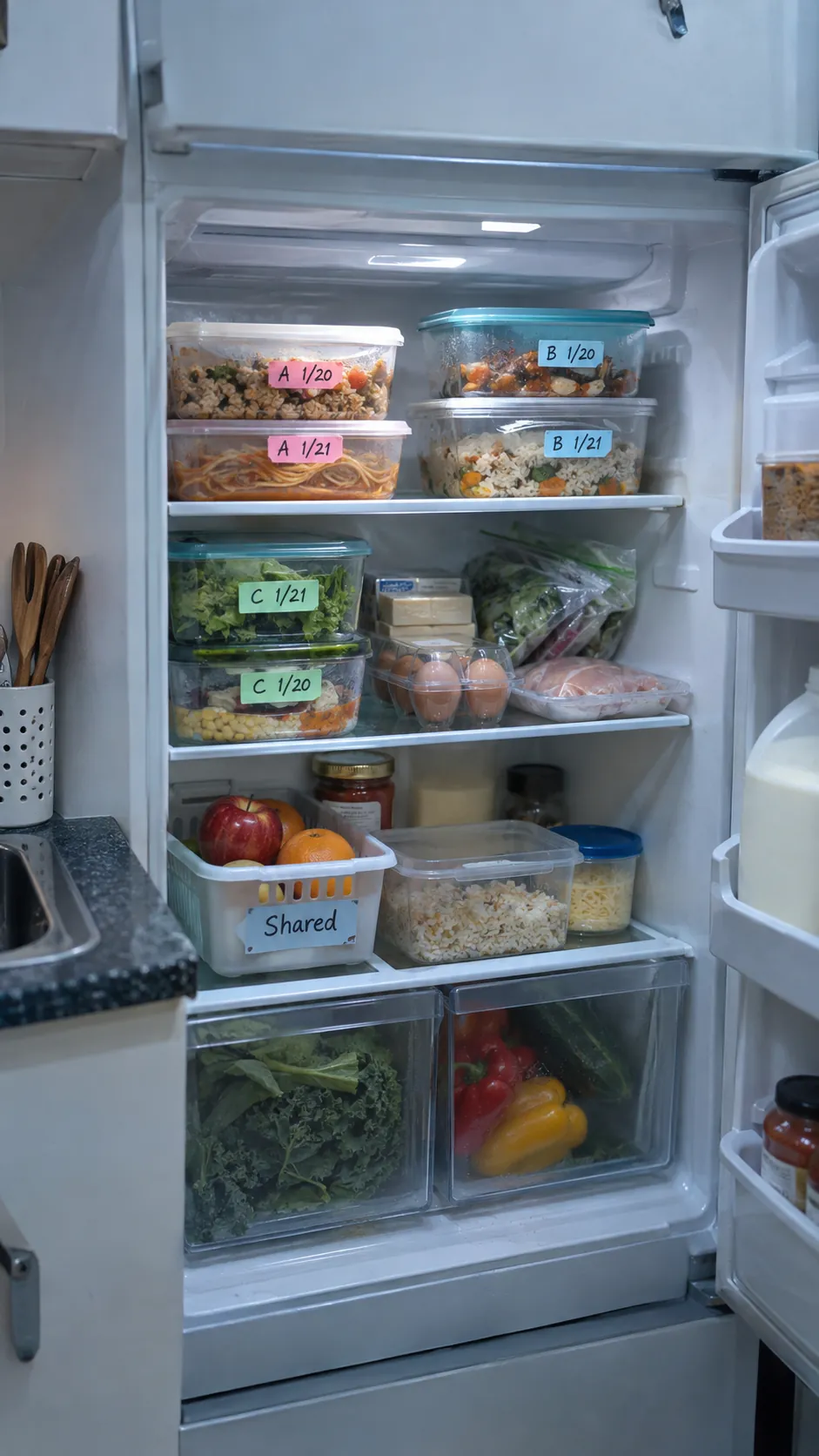
Keep ingredients for personal meal plans inside the owner’s zone, and store leftovers in clear labeled containers. Include the name and date only when the household will maintain that habit. Never place a roommate’s food on the counter to reclaim space because a quiet move can spoil it. Ask first or use the agreed overflow area.
Set an Overflow Rule for Grocery Day
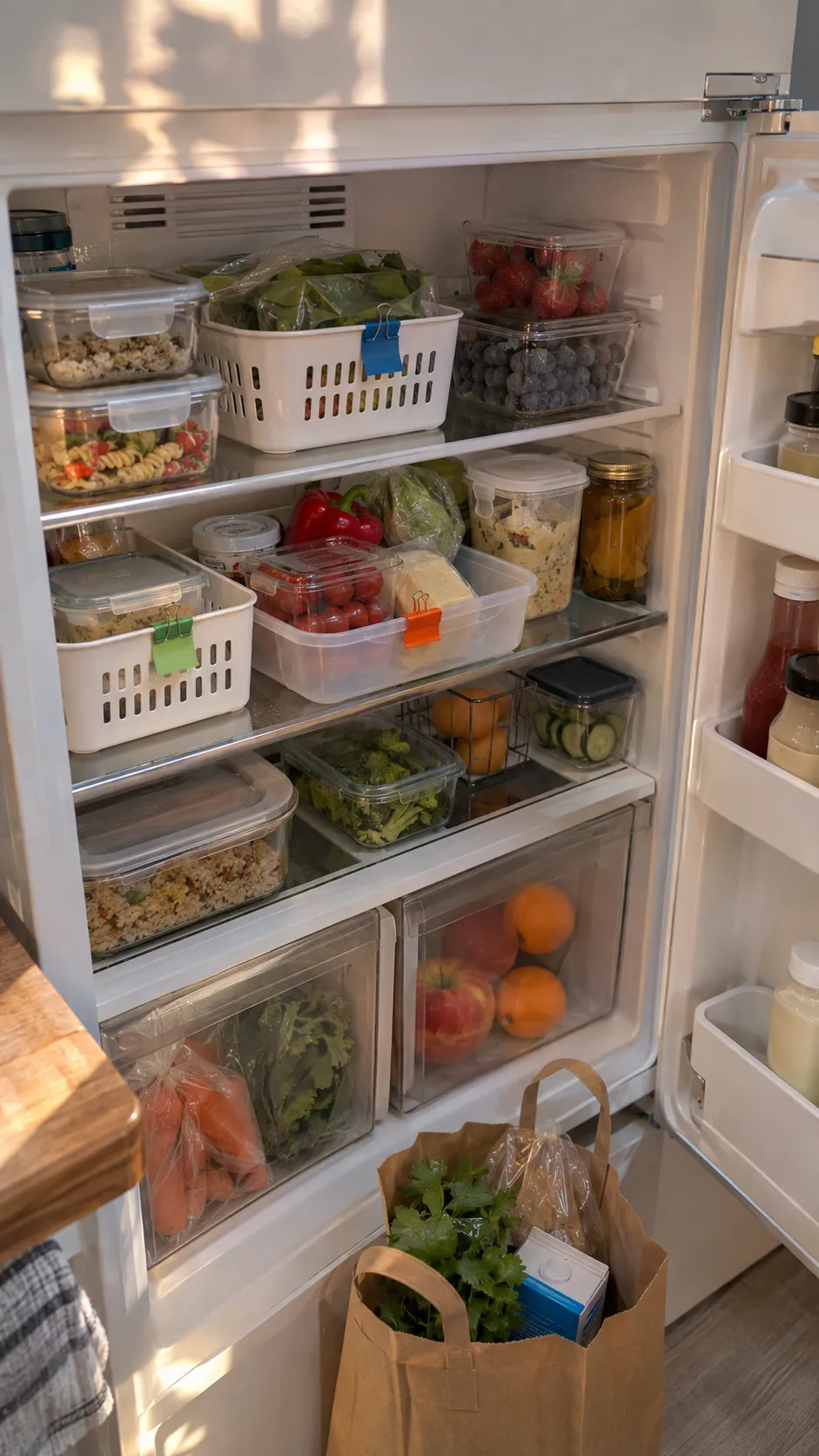
Choose one temporary overflow shelf corner before anyone runs out of room. The person using it should send a quick message and clear it by the agreed time. This rule is safer than placing groceries in another person’s zone without warning. It also handles the weekly changes that make a rigid layout frustrating.
Protect Food Safety Across All Zones
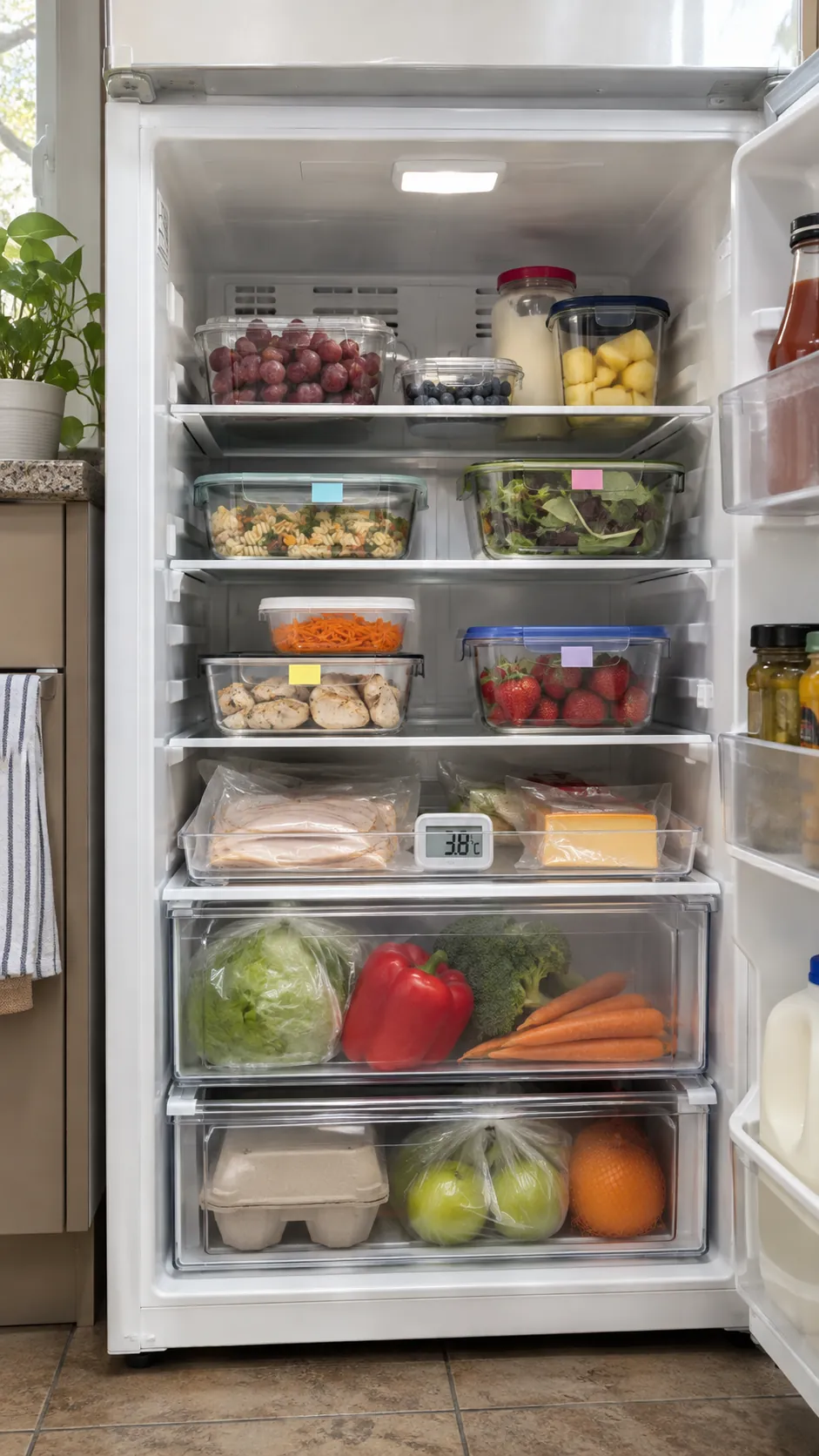
Ownership boundaries should never override safe storage. Keep raw meat and seafood sealed in a leak resistant tray on the lowest practical shelf, even if that area belongs to a different zone. Store milk and other temperature sensitive food inside the main cavity rather than in a warm door position. Everyone should know where shared safety supplies and the refrigerator thermometer are kept.
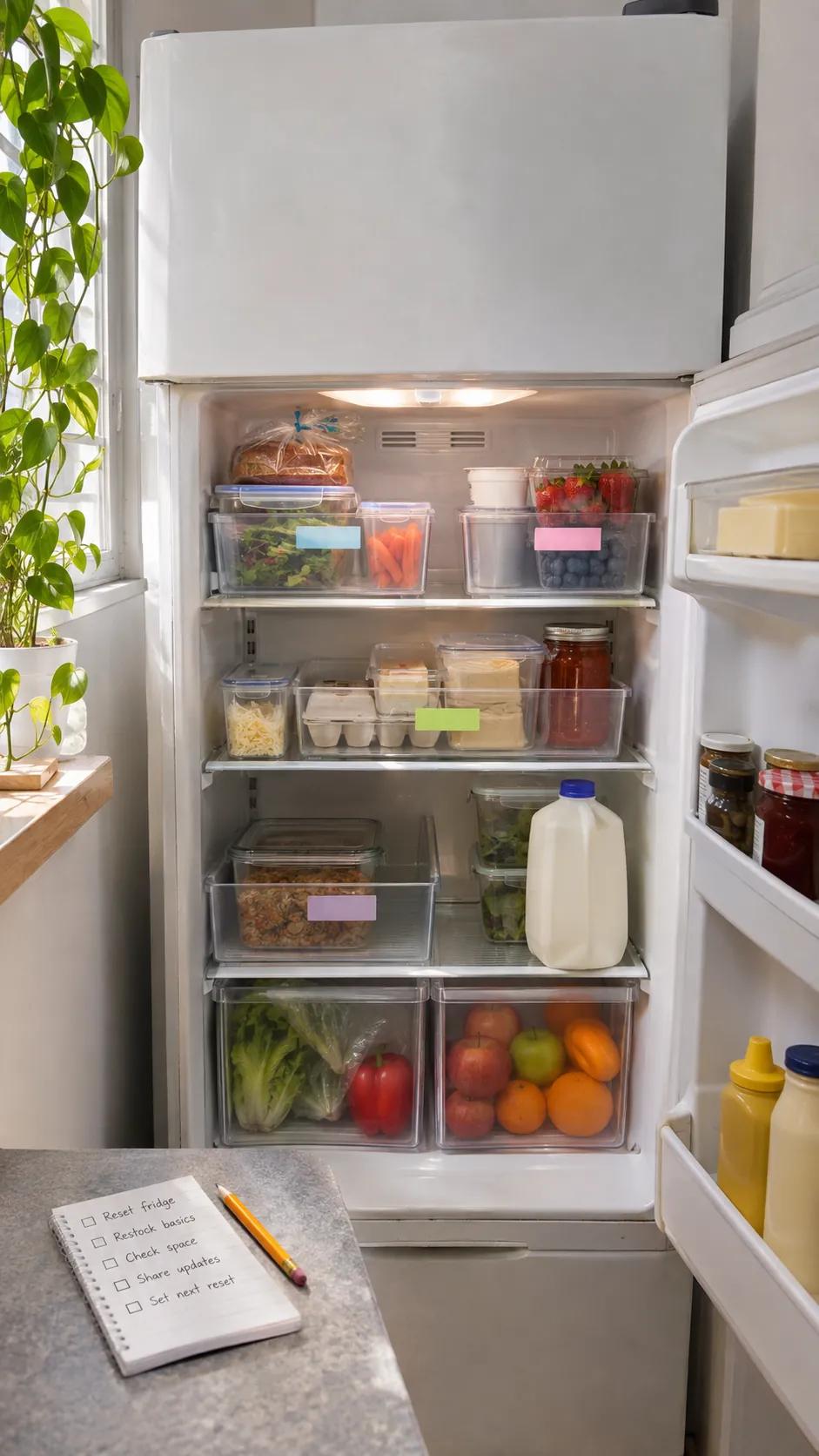
Reset the Fridge Together on a Simple Schedule
Pick a brief weekly time to remove spoiled food, wipe spills, and return stray groceries to the correct zones. Each person decides what happens to their own food, while the group handles shared items together. Use the reset to adjust space when travel, meal preparation, or a large shop changes demand. A small routine prevents resentment better than an elaborate system that nobody repeats.