
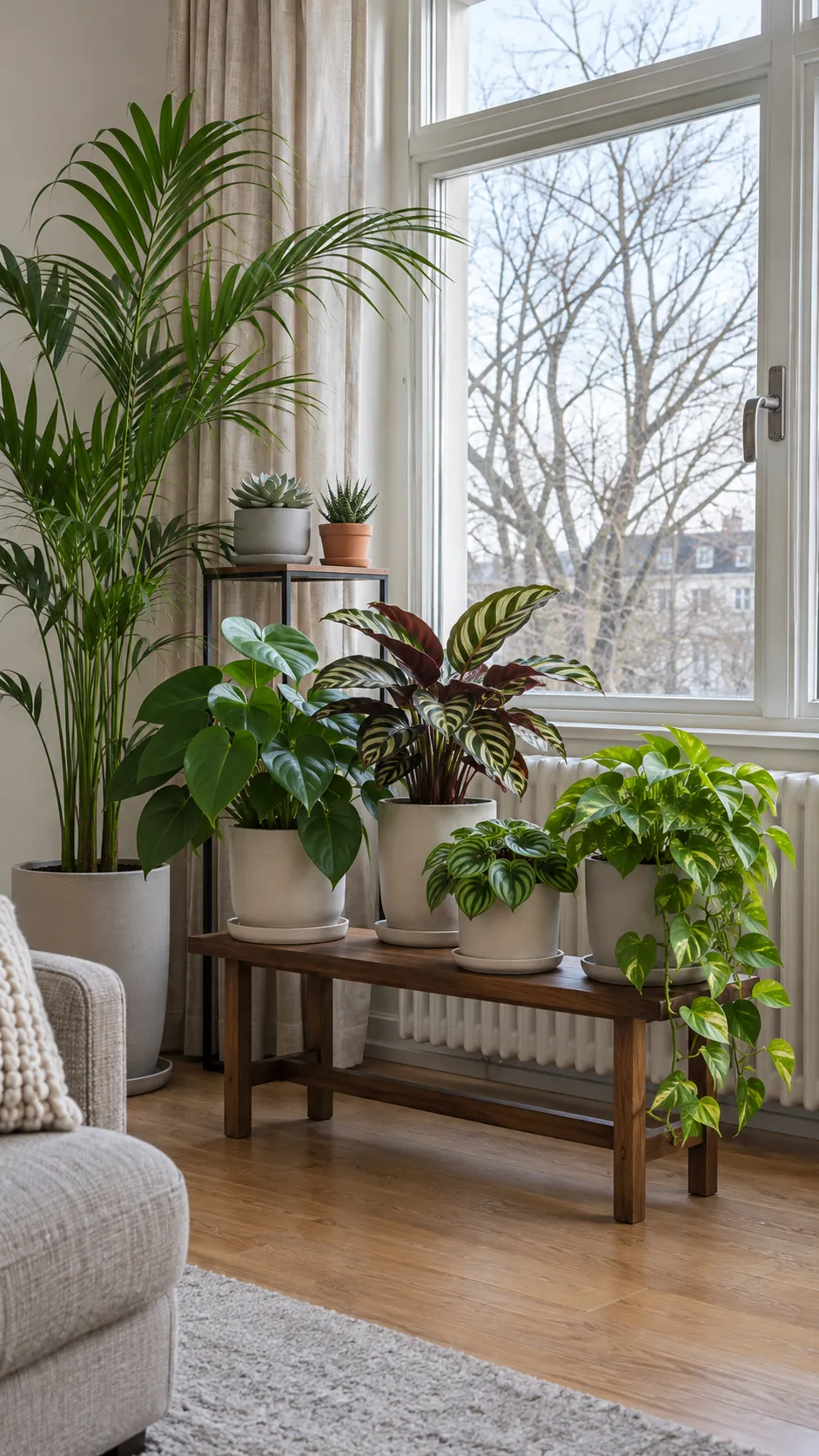
A plant arrangement that looked balanced in July can become a poor fit by late autumn. Daylight reaches the room for fewer hours, the sun enters from a different angle, and leaves that once sat in useful light may spend most of the day in shade. The best winter update is not to crowd every pot against one window. It is to match each plant with the brightest safe position its needs justify, while keeping the room easy to use.
Map the useful light before moving any pots
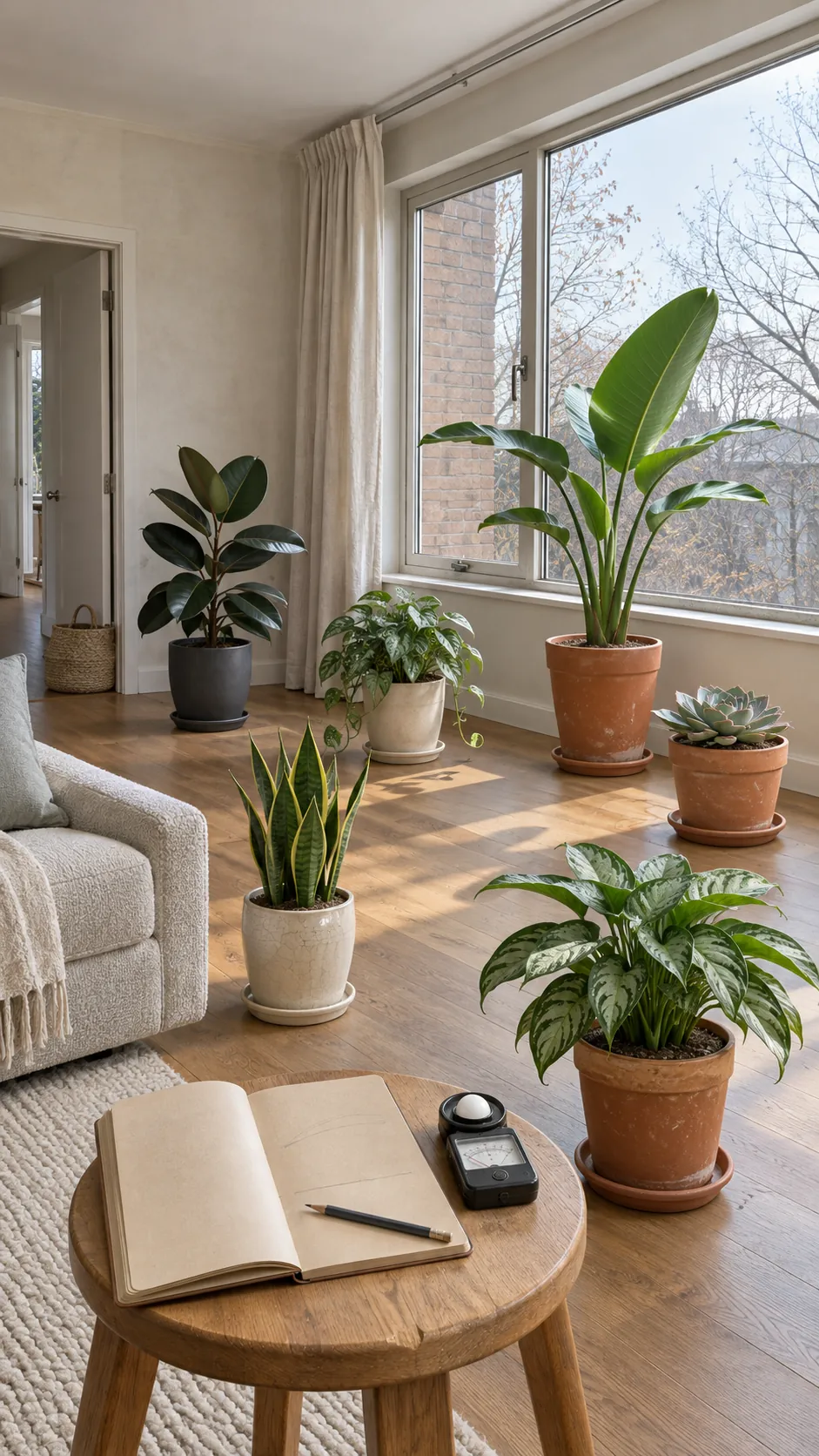
Watch the room at morning, midday, and late afternoon on a clear day, then repeat the check on a cloudy day. Note which windows receive direct sun, which offer bright filtered light, and where a nearby building, porch roof, or evergreen blocks the sky. The goal is a simple winter light map based on what reaches the leaves now, not what reached them in summer.
Stand where each plant would sit and look toward the window. A wide view of open sky usually offers more useful light than a narrow view between buildings. Clean dusty glass and wipe broad leaves before judging the final position, since both can reduce the light that reaches the plant.
Sort plants by the light they need most
Give the strongest natural light to plants that depend on it, such as many succulents, cacti, citrus, variegated foliage, and active flowering plants. Medium light foliage plants can occupy the second row or an east facing window. Plants that tolerate lower light can sit farther into the room, but low light tolerance does not mean no light.
Use current growth as evidence. Long gaps between leaves, pale new growth, leaning stems, or smaller leaves can point to inadequate light. A plant that is resting and holding steady may not need the prime position as urgently as one that is actively growing or forming buds.
Build one bright winter zone instead of a window crowd
Concentrating plants near the best window can work well when the display has depth. Place tall plants at the sides or back, medium plants on a bench or sturdy stand, and compact pots on the brightest raised level. Leave visible space between leaf masses so the front plants do not shade everything behind them.
Keep the arrangement practical. Leave room to open curtains, reach latches, water each pot, and inspect both sides of the leaves. A shallow tray under the group protects the floor, while individual saucers prevent one wet pot from affecting its neighbors.
Keep foliage clear of cold glass and heating vents
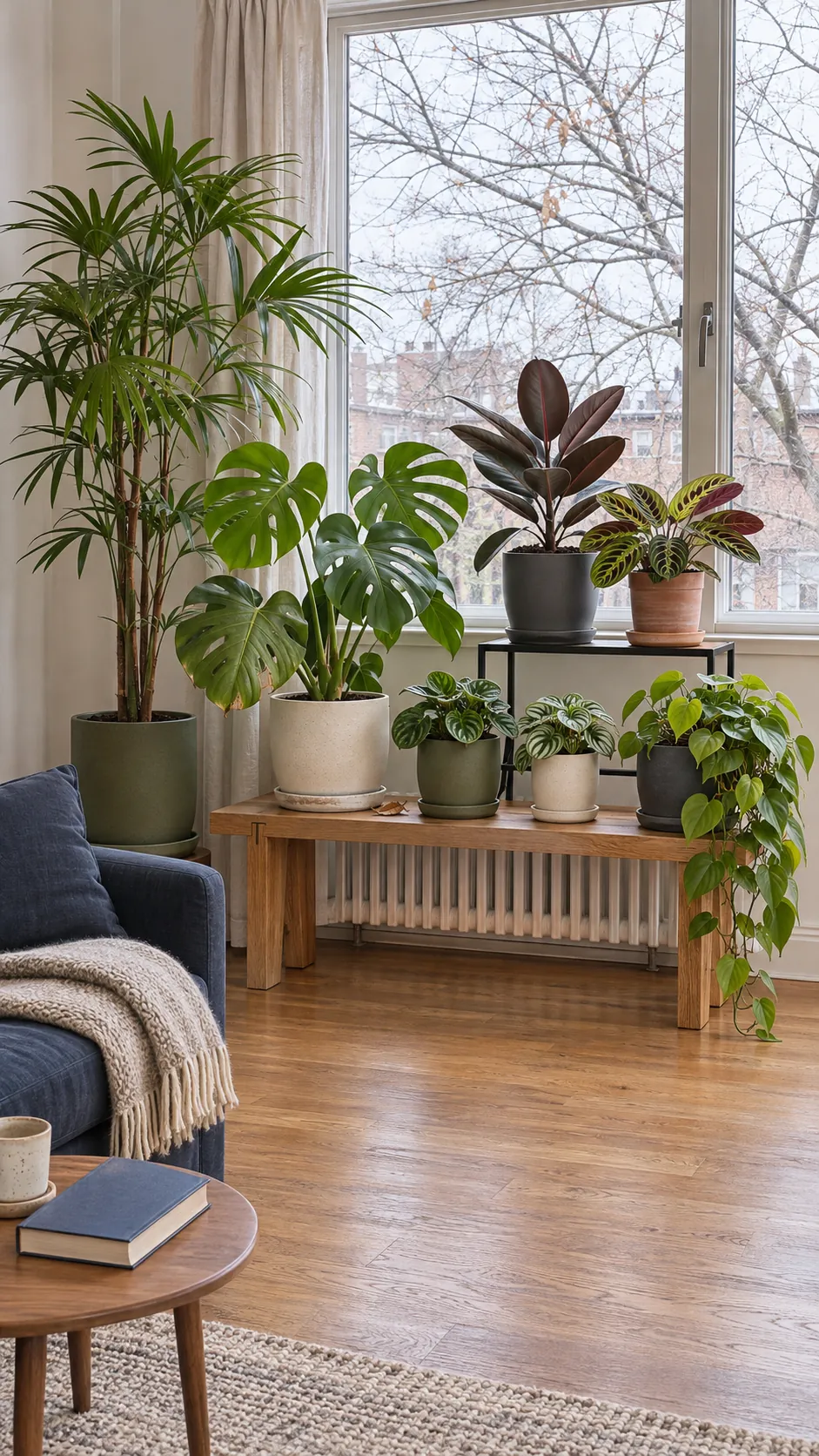
Moving closer to a window increases light, but leaves should not press against cold panes. A few inches of clear space helps protect tender foliage and allows air to move around the plant. On very cold nights, a window ledge behind a closed curtain can become much colder than the room.
Also trace the path of warm air from radiators, baseboard heaters, and forced air vents. Constant hot airflow can dry leaves and potting mix quickly. Choose a nearby position that receives the window light without sitting in the direct stream, and keep walkways and emergency exits open.
Add a grow light where the window cannot do enough
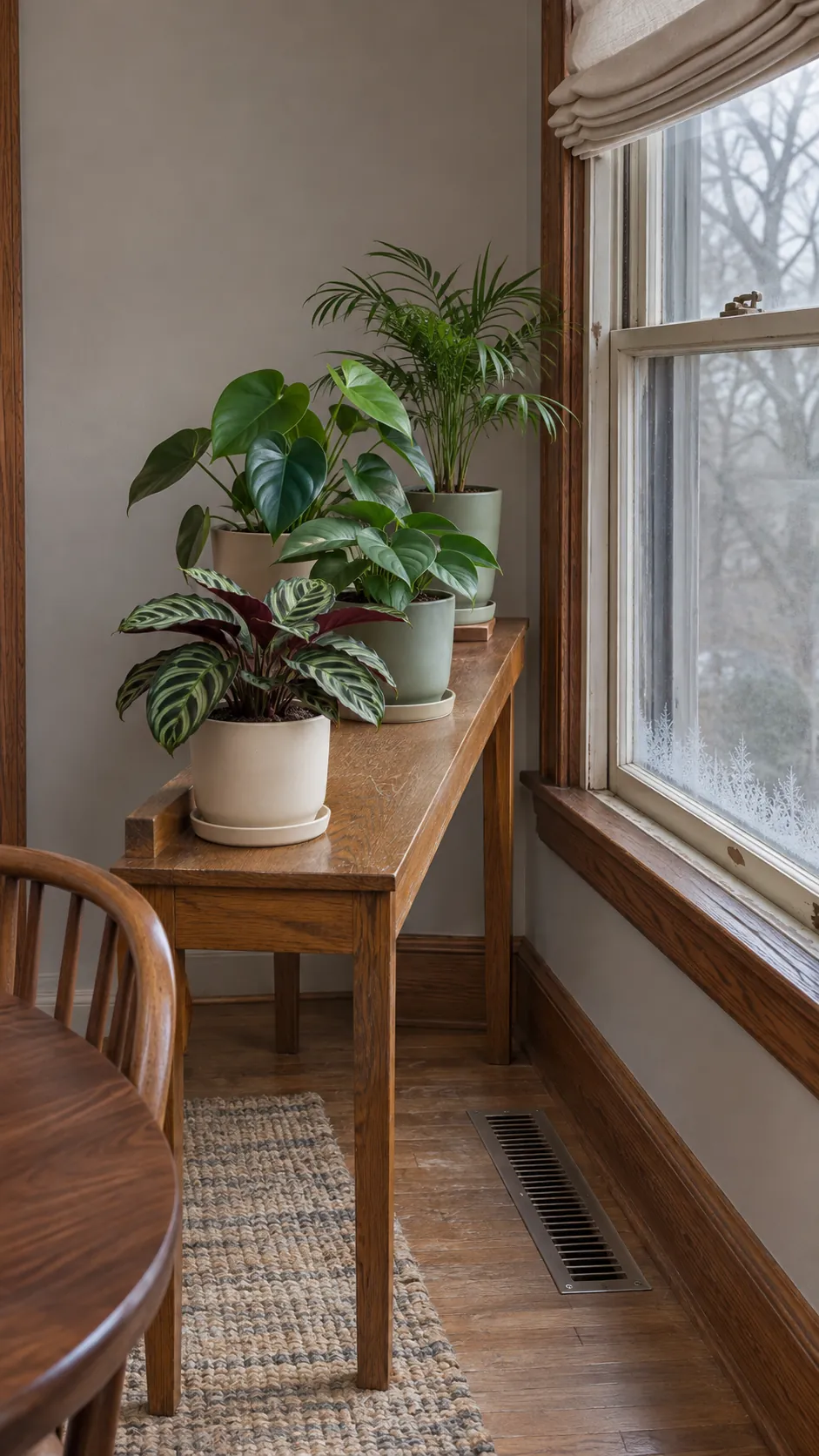
A grow light is useful when the only bright window is already full, a shelf sits beyond useful daylight, or a dark rental has few windows. It can also preserve an attractive display in the part of the room where you actually want to see it. Choose a fixture designed for plants, follow its distance guidance, and use a timer so the schedule stays consistent.
The University of Minnesota notes that supplemental lights can extend the useful day for indoor plants. Keep a dark period as well, since plants need a regular daily cycle. Position the lamp above the foliage rather than far to one side, then raise it as plants grow so leaves do not touch the fixture.
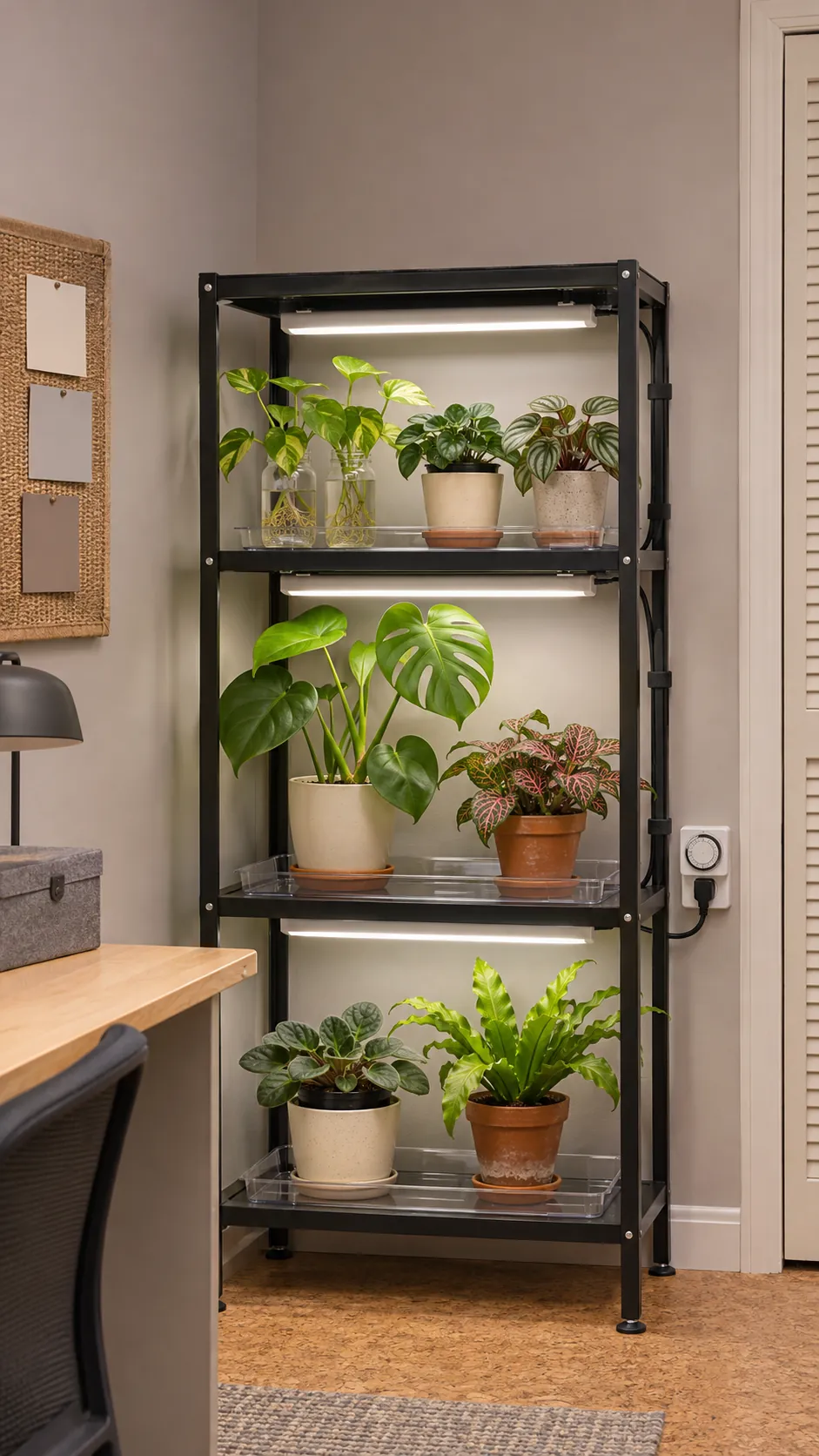
Raise small plants so taller leaves do not shade them
Small pots often disappear at the back of a table, where they receive less light and become difficult to check. Use a stable riser, narrow bench, or stepped stand to bring their leaves into the open. A tiered arrangement also creates a calmer display because every plant has a visible outline.
Test stability before watering. The stand should support the full weight of wet potting mix, and each saucer should sit flat without overhanging an edge. Put plants that need frequent care where you can lift them without moving three other pots first.
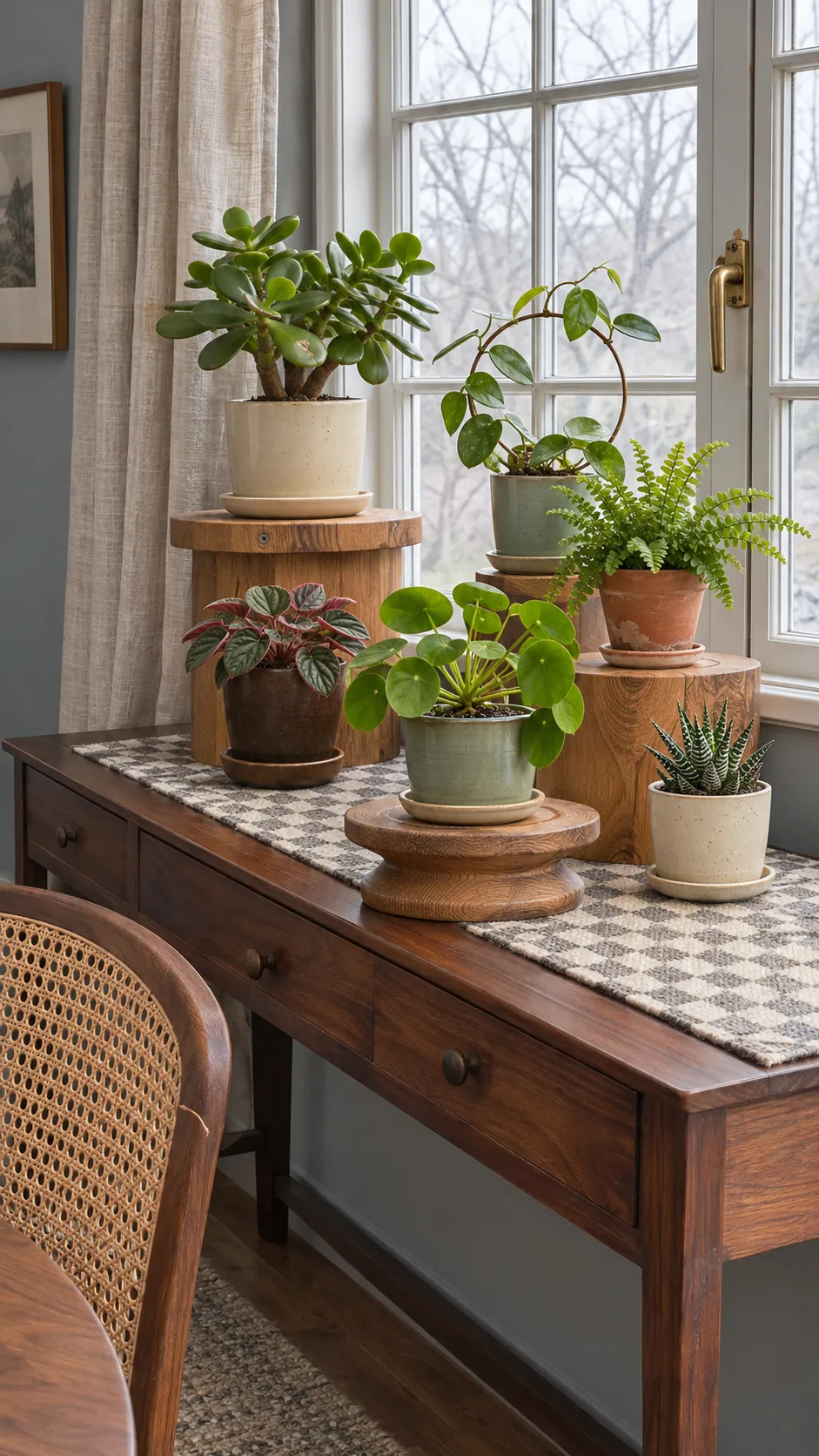
Rotate pots for balanced growth without constant shuffling
Plants naturally lean toward the strongest light. Turn pots a small amount at regular intervals when even growth matters, but avoid changing their location every few days. A simple mark on the back of each pot helps you see how far it has turned.
Some plants respond poorly when moved during bud formation, so check the needs of flowering specimens before rotating them. For the rest of the collection, a modest turn is easier to track than a complete reversal. Observe new leaves over several weeks and adjust only if the plant continues to lean strongly.
Reset watering and humidity for the new positions
A plant moved closer to sun may dry faster, while one moved into a cooler dim area may stay wet much longer. Check the potting mix instead of following the summer calendar. Water thoroughly when the plant needs it, let excess water drain, and empty standing water from decorative covers.
Grouping plants can make care more efficient, but it does not replace correct watering. If heated air is very dry, a room humidifier can help sensitive plants more reliably than frequent misting. Keep enough space between pots to inspect for pests and to prevent damp foliage from remaining packed together.
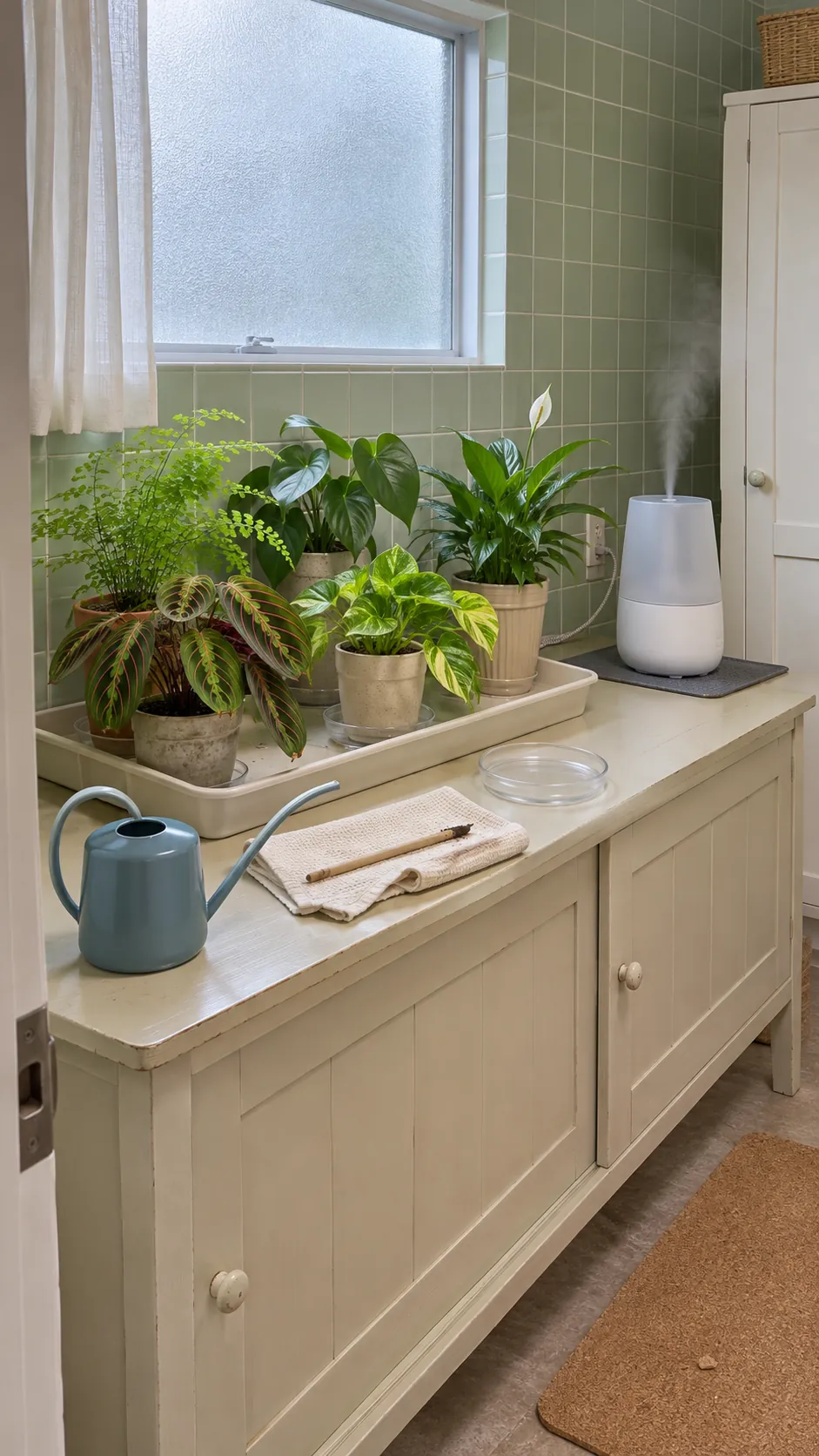
Review the display after two weeks
Give the new arrangement time before making another large change. Look for cold damage, scorched patches, persistent leaning, slow drying soil, or leaves that block another plant. Move one pot at a time, record what changed, and keep the clear paths and care access that made the display workable.
The winter version does not need to copy the summer layout. It needs to support healthy plants through lower light while still feeling intentional in the room. When days lengthen again, reverse the process gradually because stronger spring sun can surprise foliage that adapted to winter conditions.