
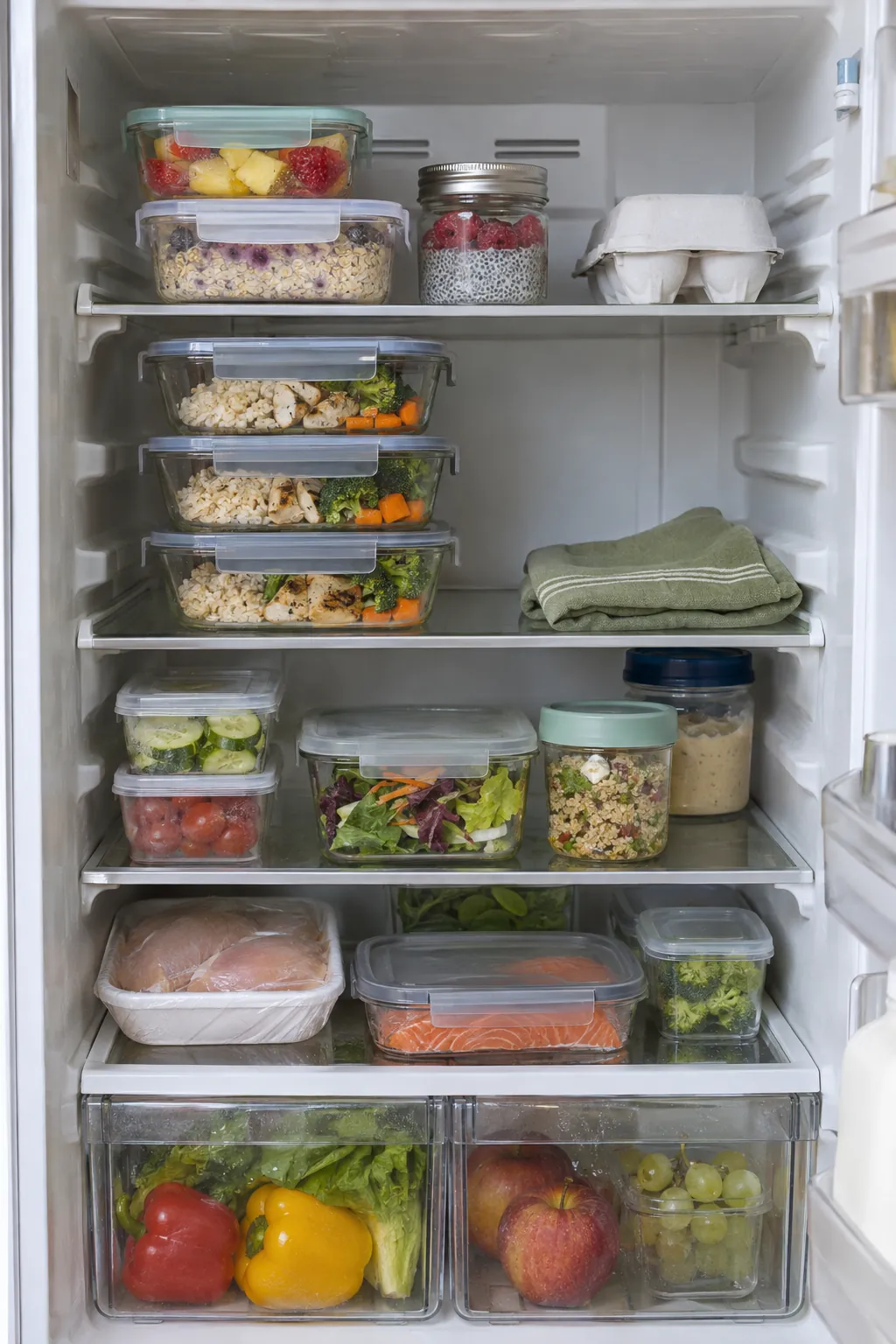
A week of prepared meals can overwhelm a small refrigerator before the groceries even arrive. The useful target is a stable container pattern that keeps each portion visible and easy to remove. Good storage also protects airflow, food safety, and a little flexible space for real life.
Measure the Shelf Before Choosing Containers
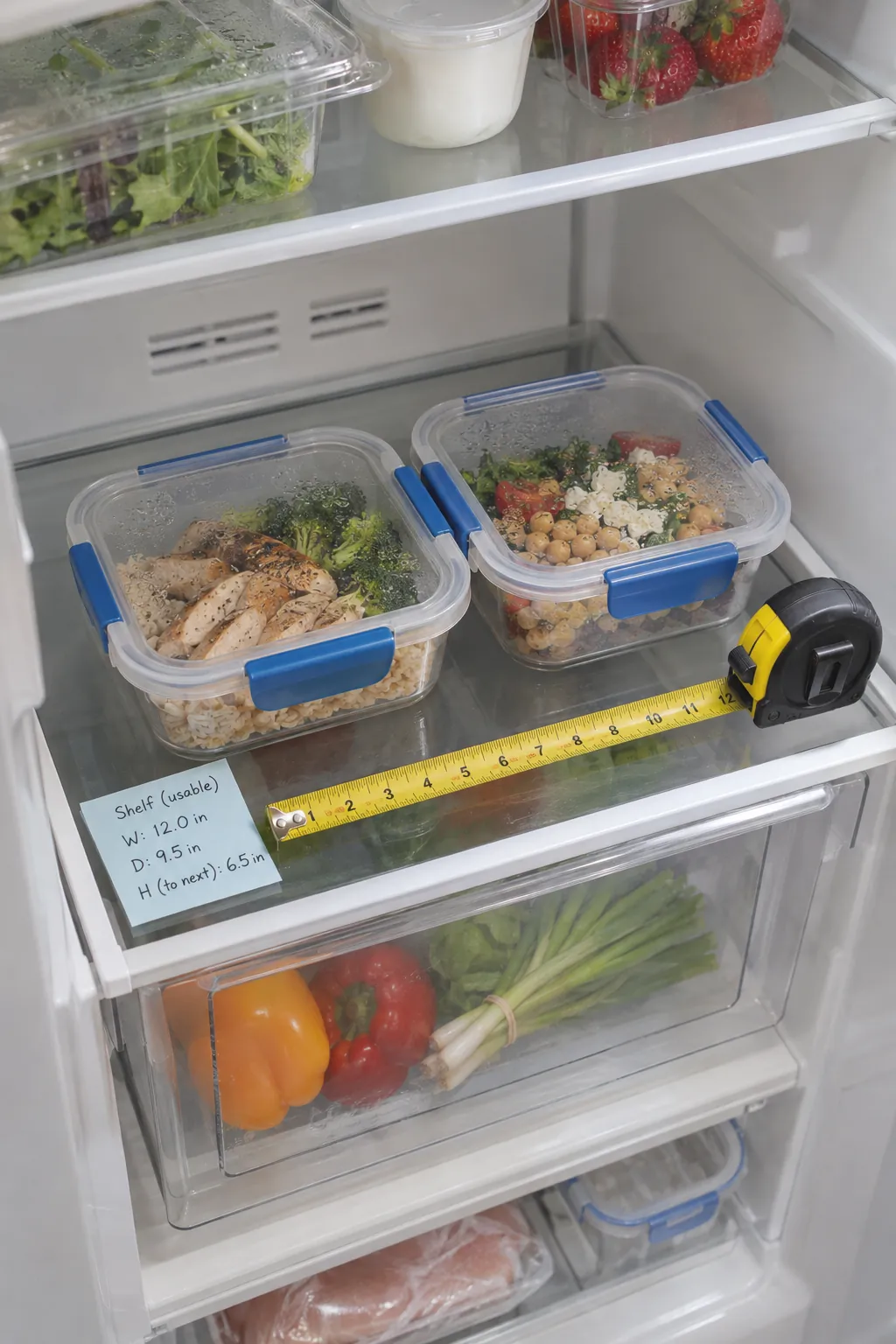
Measure shelf width, depth, and clearance before buying a container set. Include the space needed to grip a lid and pull a box forward. A container that fits on paper can still waste space if its handles or tapered sides prevent a stable stack.
Use One Container Footprint
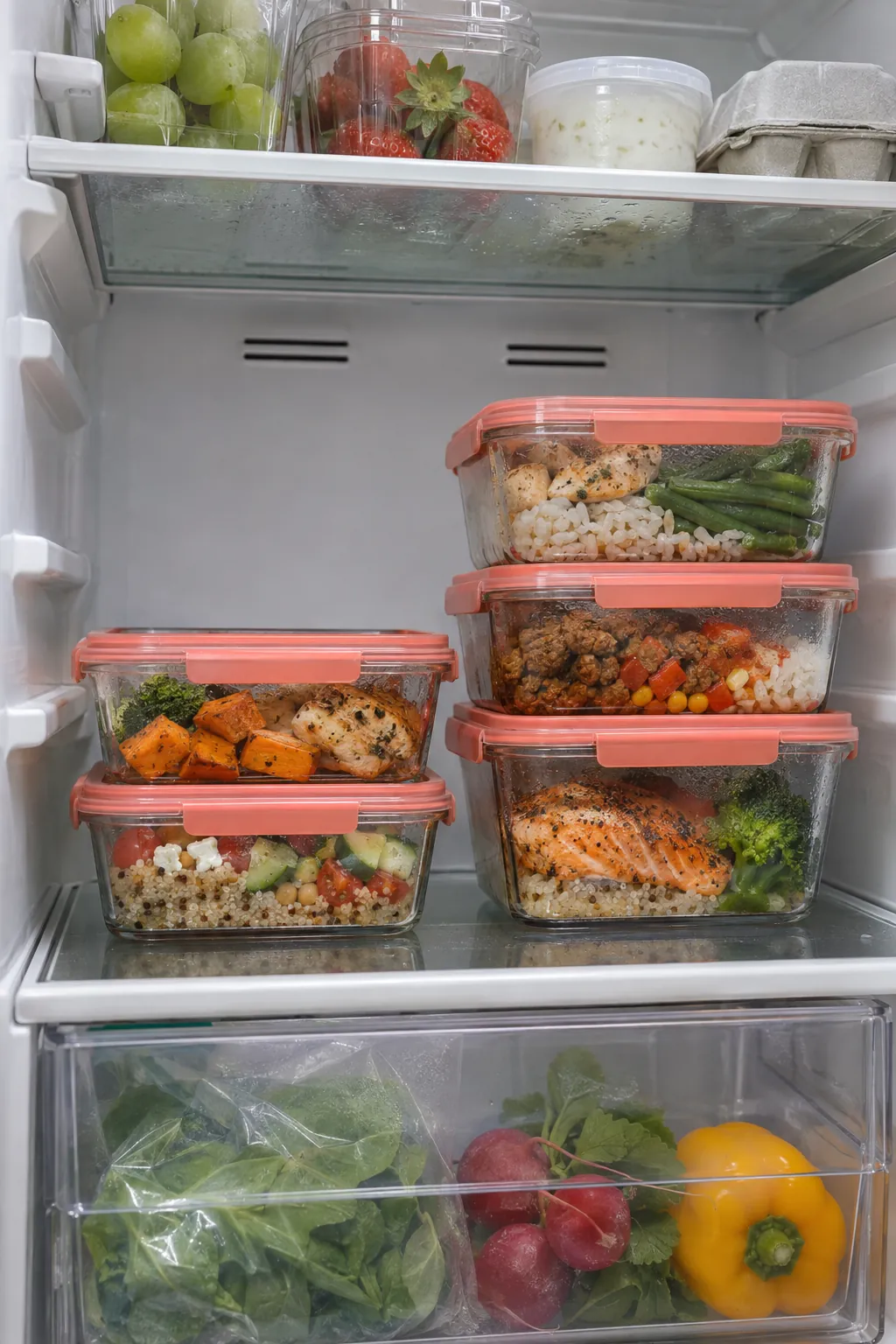
Choose containers that share one or two footprints so stacks remain stable. Different heights can still hold varied portions, but aligned bases prevent awkward gaps. Keep lids compatible within each group and avoid mixing sets that almost fit yet slide under pressure.
Limit Stack Height for Easy Access
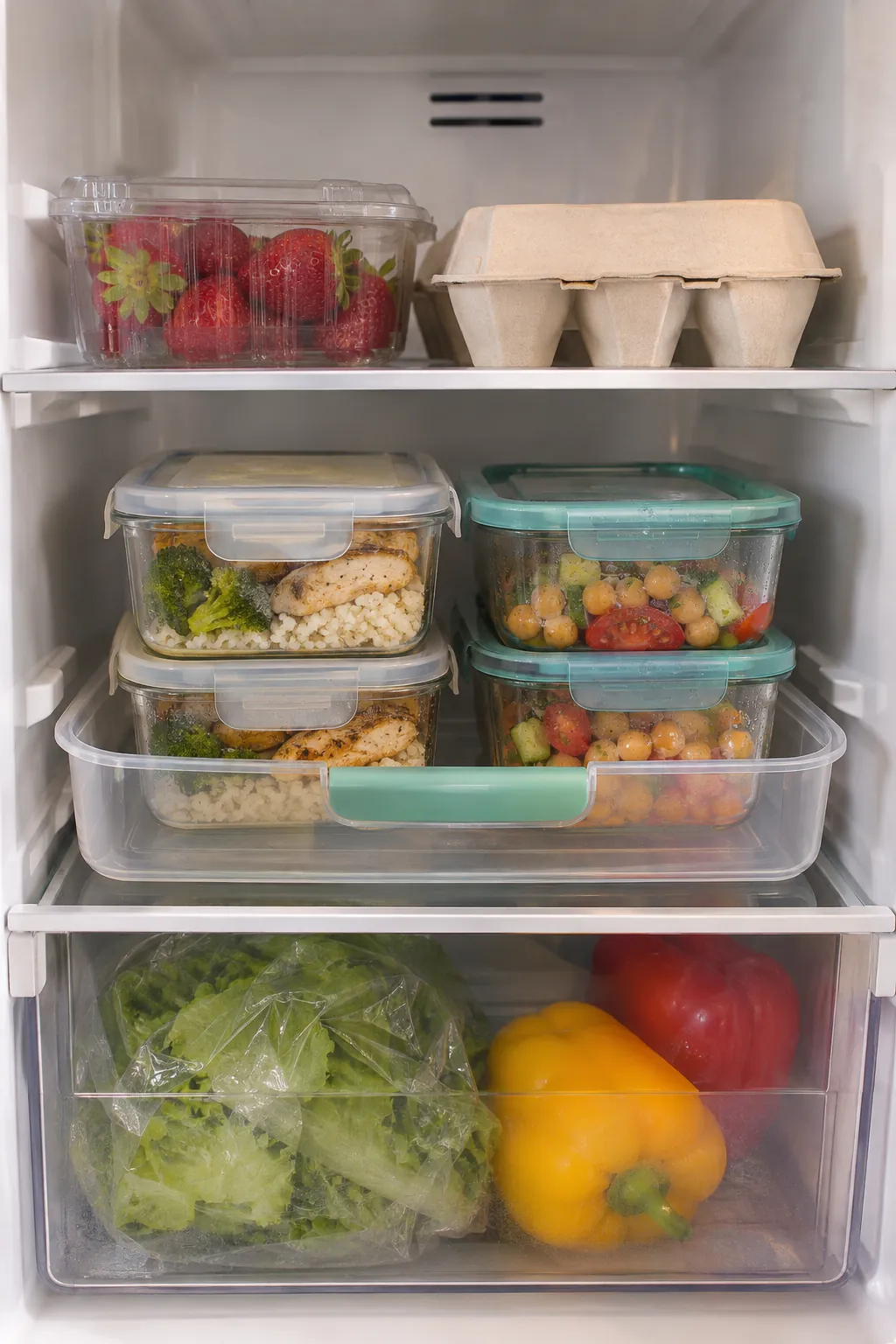
Build short stacks that let you remove one meal without unloading the shelf. Two containers are often easier to manage than a tall tower in a compact refrigerator. If the shelf is deep, place the next meal at the front and later meals behind it in a pull out tray.
Separate Ready Meals from Loose Ingredients
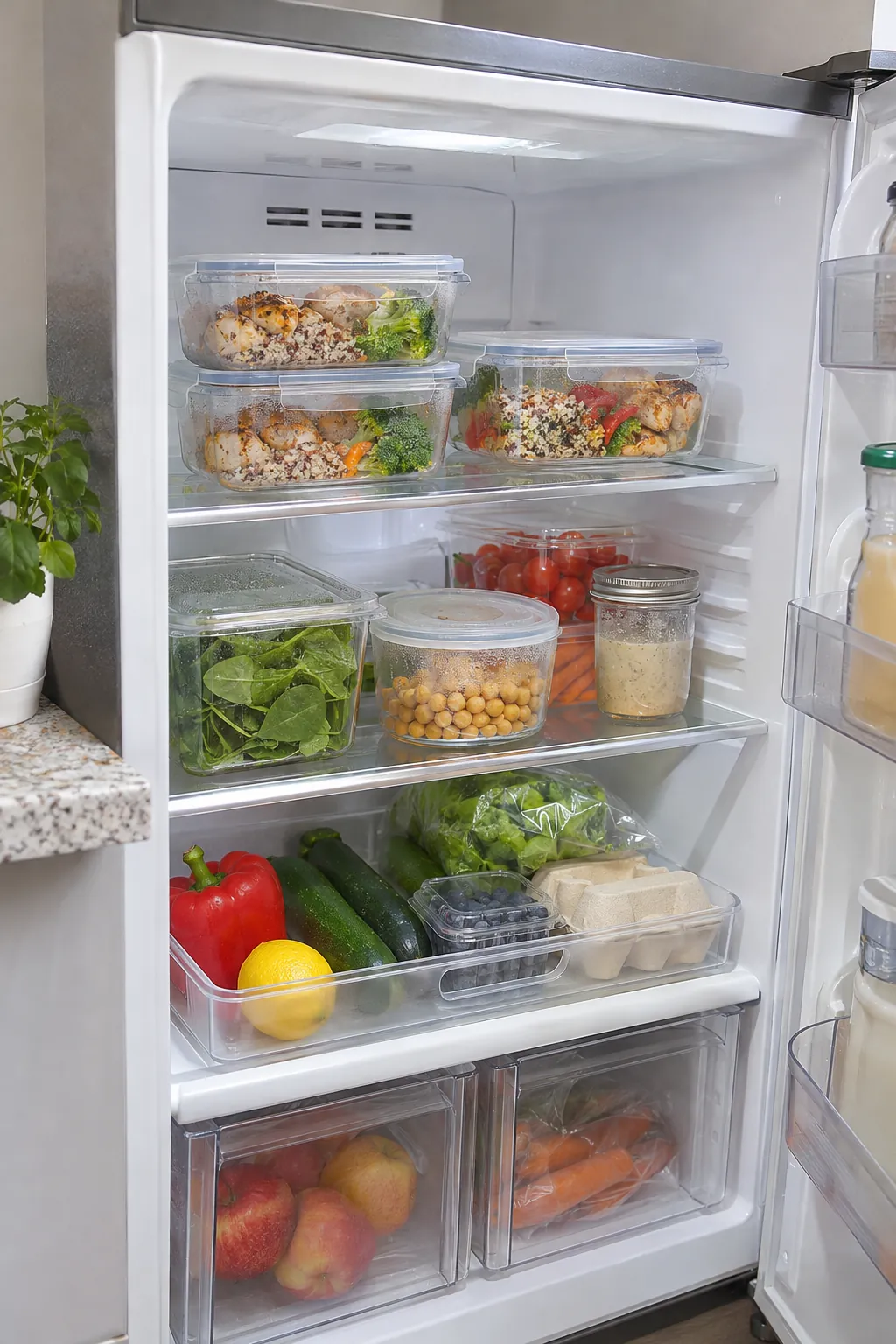
Give finished meals a defined shelf zone and keep loose ingredients elsewhere. This prevents a carton or produce bag from breaking the container pattern and hiding a lunch. Use clear containers so the portions remain identifiable, and keep raw food safely contained below ready meals.
Label by Meal and Use Order
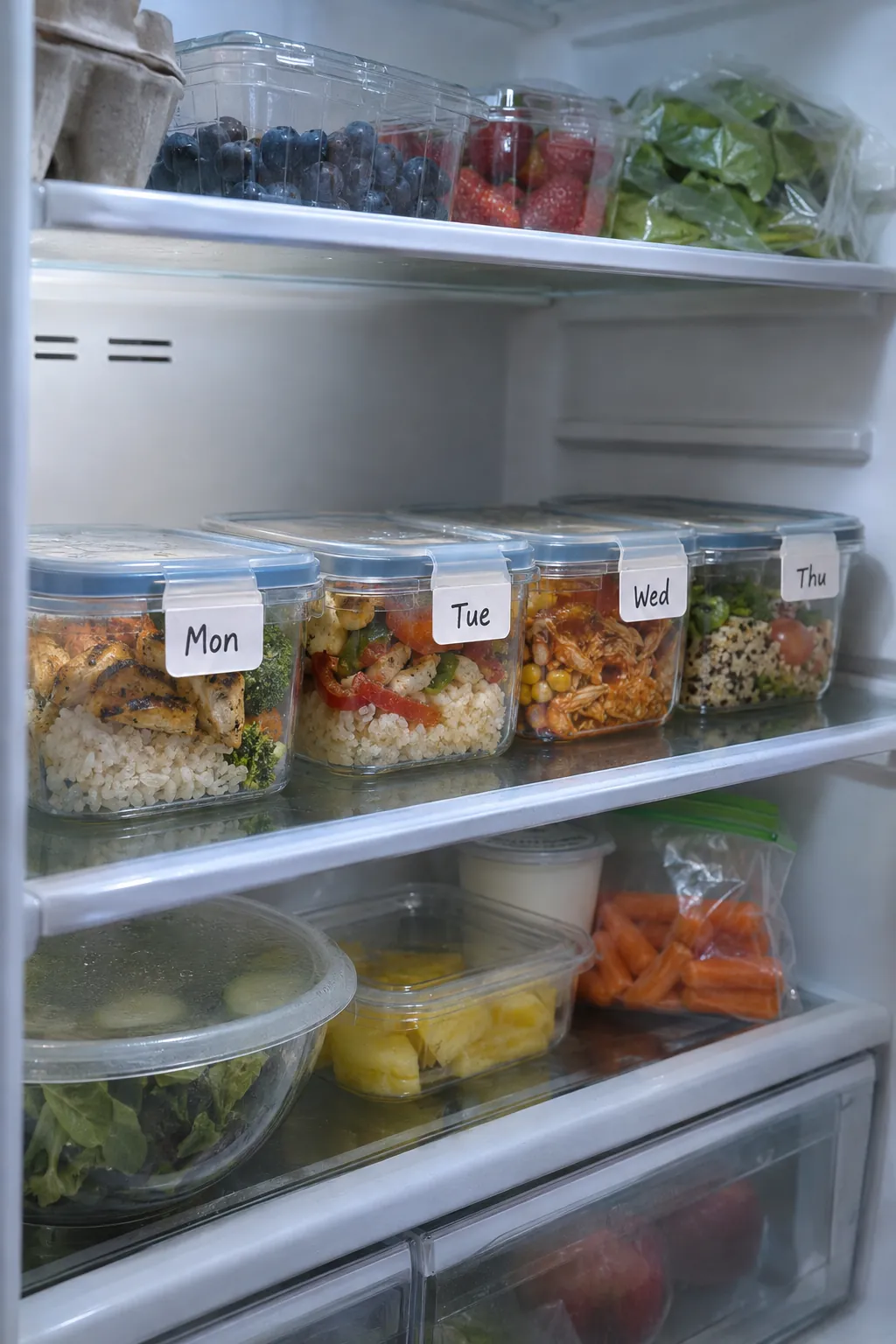
A small removable label can show the meal and the day it should be used. Place the label on the front edge where it remains visible inside the stack. Keep the system simple enough to repeat each week, and remove old labels when containers are washed.
Leave Room for Cooling and Weekly Change
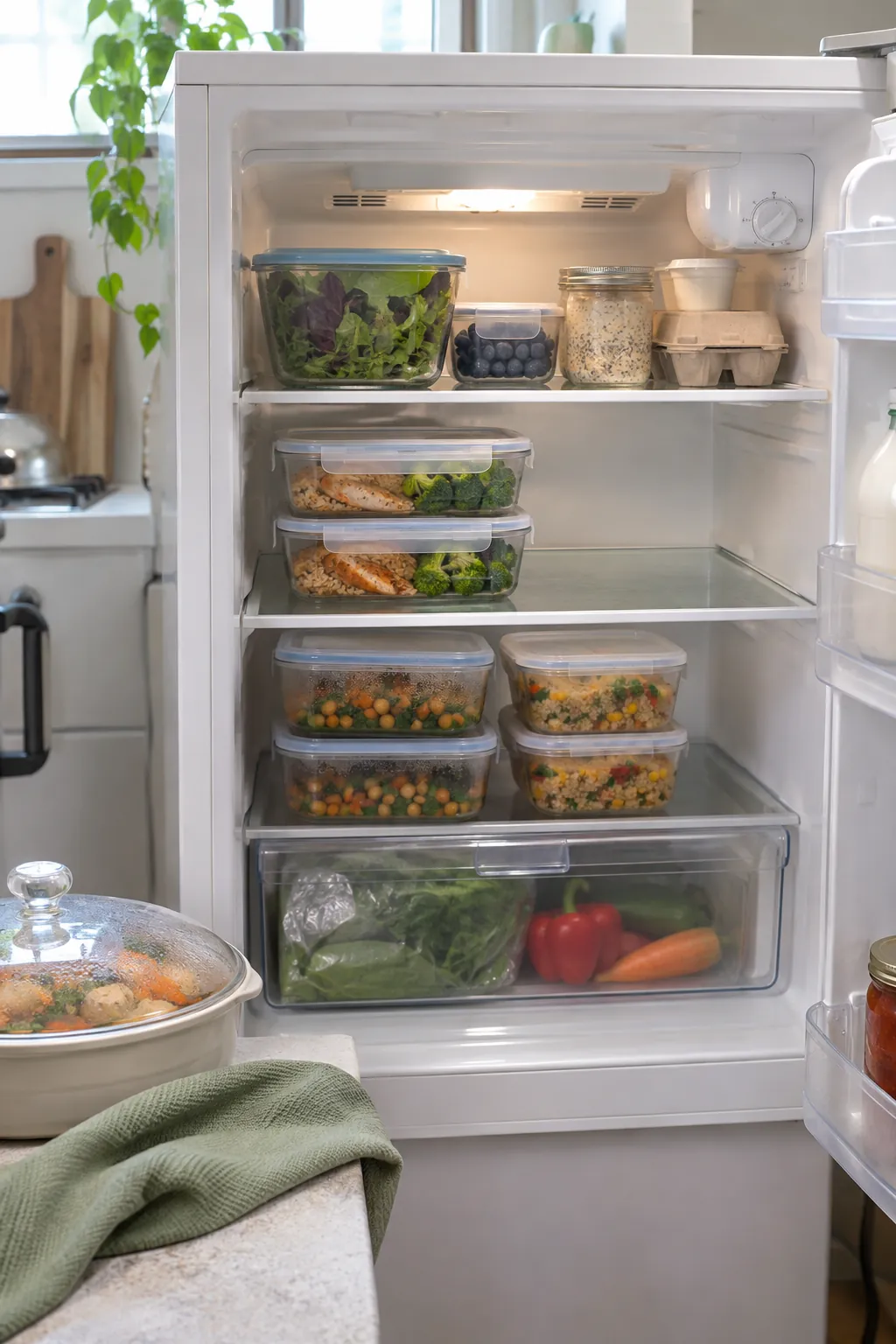
Do not fill every shelf with prepared portions. Leave one landing area for a newly cooled dish, an unexpected leftover, or a grocery package that is taller than usual. Let cooked food cool safely according to your normal food safety guidance before sealing and refrigerating it. A little flexibility keeps the system usable after the first week.