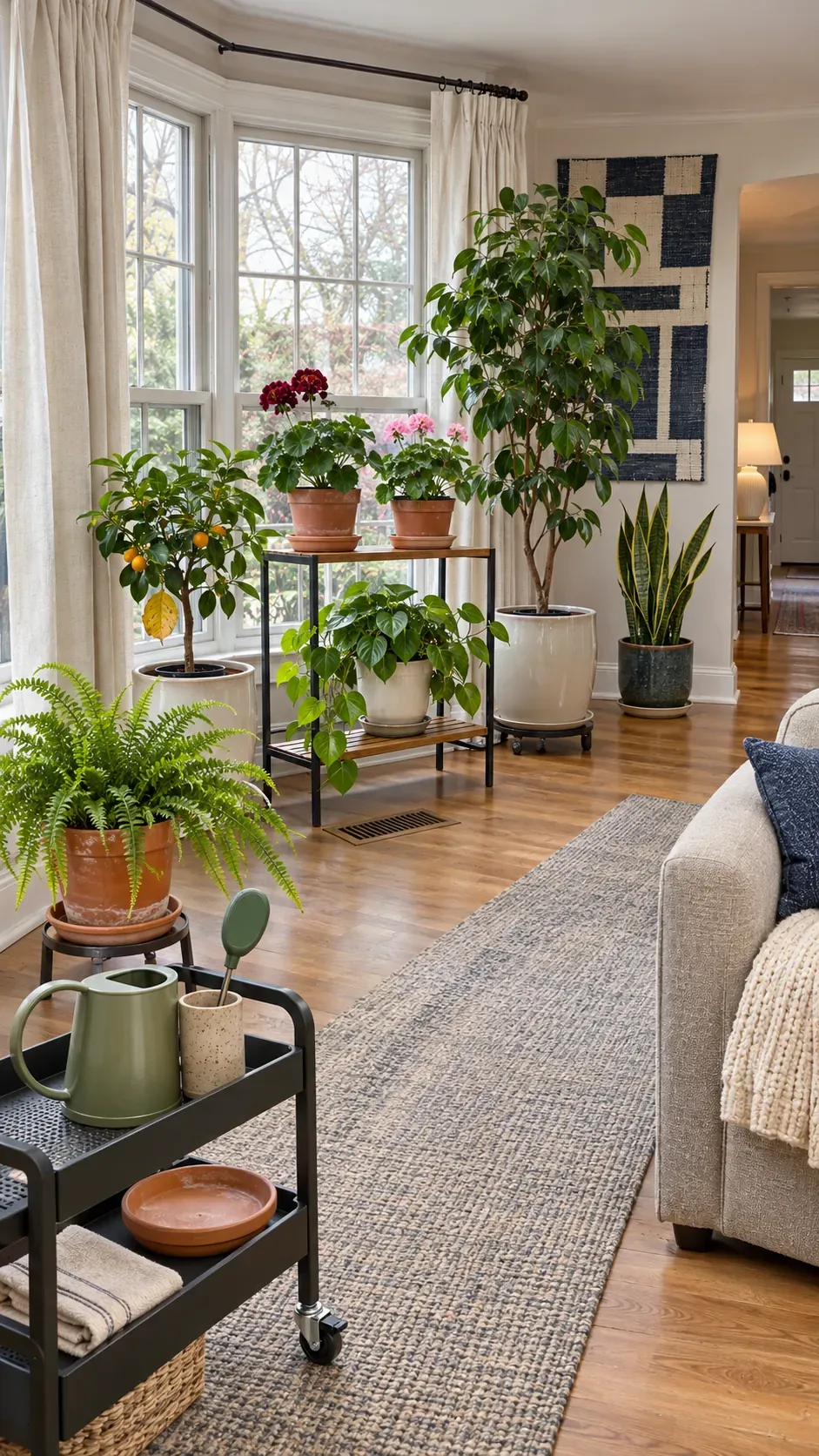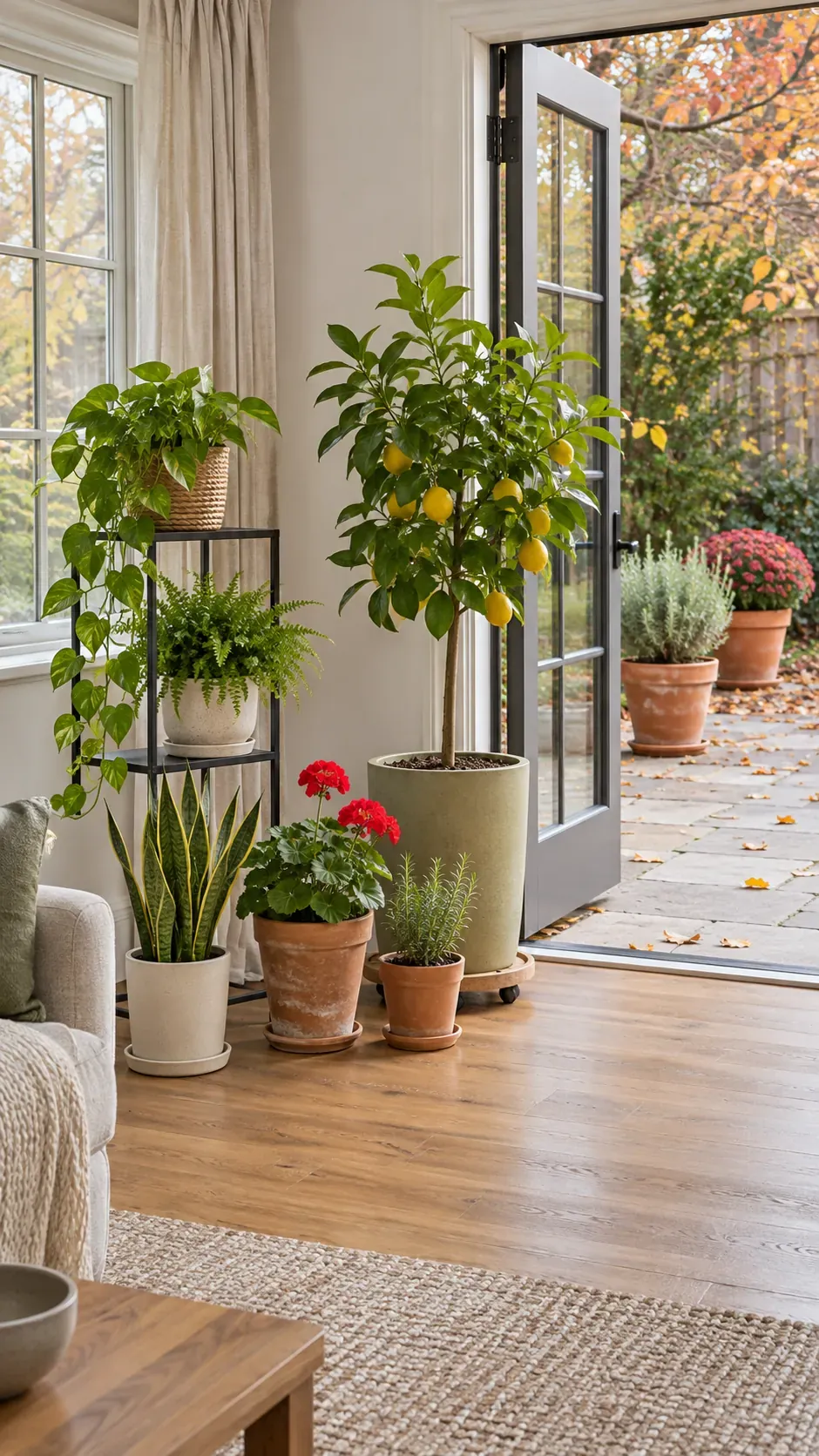
The first cold night can turn a calm plant collection into a crowded rescue mission. Pots land on tables, vines block curtains, and the brightest window becomes a wall of foliage. The real problem is not the number of plants. It is moving them before each one has an indoor job and a safe place to live.
A better indoor plant transition starts outside. Decide which plants are worth overwintering, prepare a temporary inspection zone, and reserve the best light for the plants that need it most. This keeps walking routes, work surfaces, and windows usable while giving tender plants a realistic chance to adjust.
Choose What Earns Indoor Space
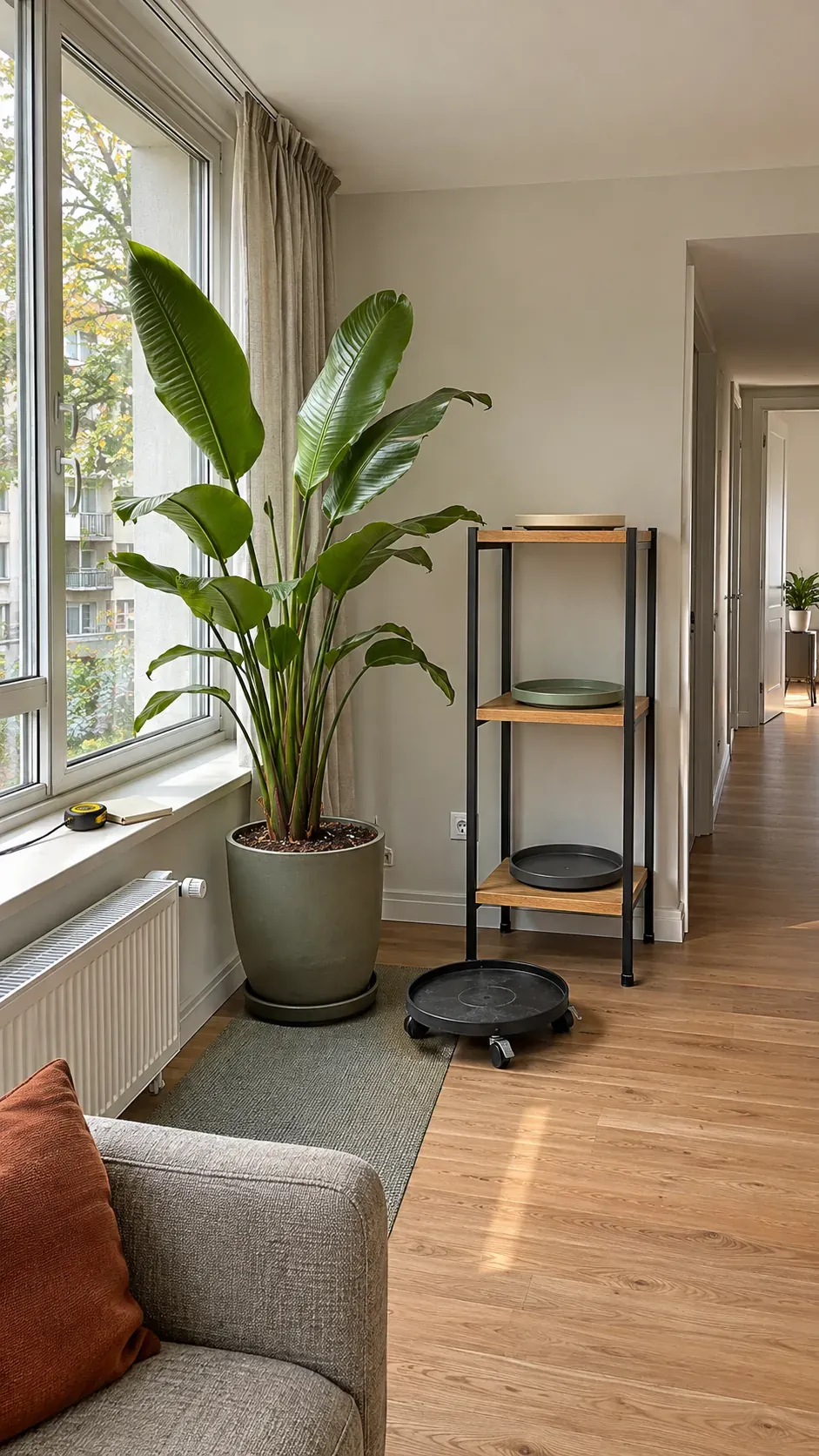
Measure the usable indoor zones before you count pots. Note the width of each bright window, the depth of available shelves, and the clearance needed for doors, curtains, vents, and normal walking. A plant does not fit just because its pot touches the floor. Its mature leaves, watering access, and winter growth habit also need room.
Sort outdoor plants into three groups: plants that need warm indoor care, plants that can rest in a cool protected place, and plants that are not practical to keep. Give priority to healthy specimens, plants with personal value, and varieties that are difficult to replace. A weak annual in a huge container may consume more useful space than it deserves.
Record the pot width and the full foliage width for every plant you plan to keep. This simple inventory prevents optimistic arranging later. It also reveals which large plants can be divided, pruned within the needs of the species, or moved into a lighter nursery pot that fits a decorative cover pot.
Build a Quarantine Zone Before the Move
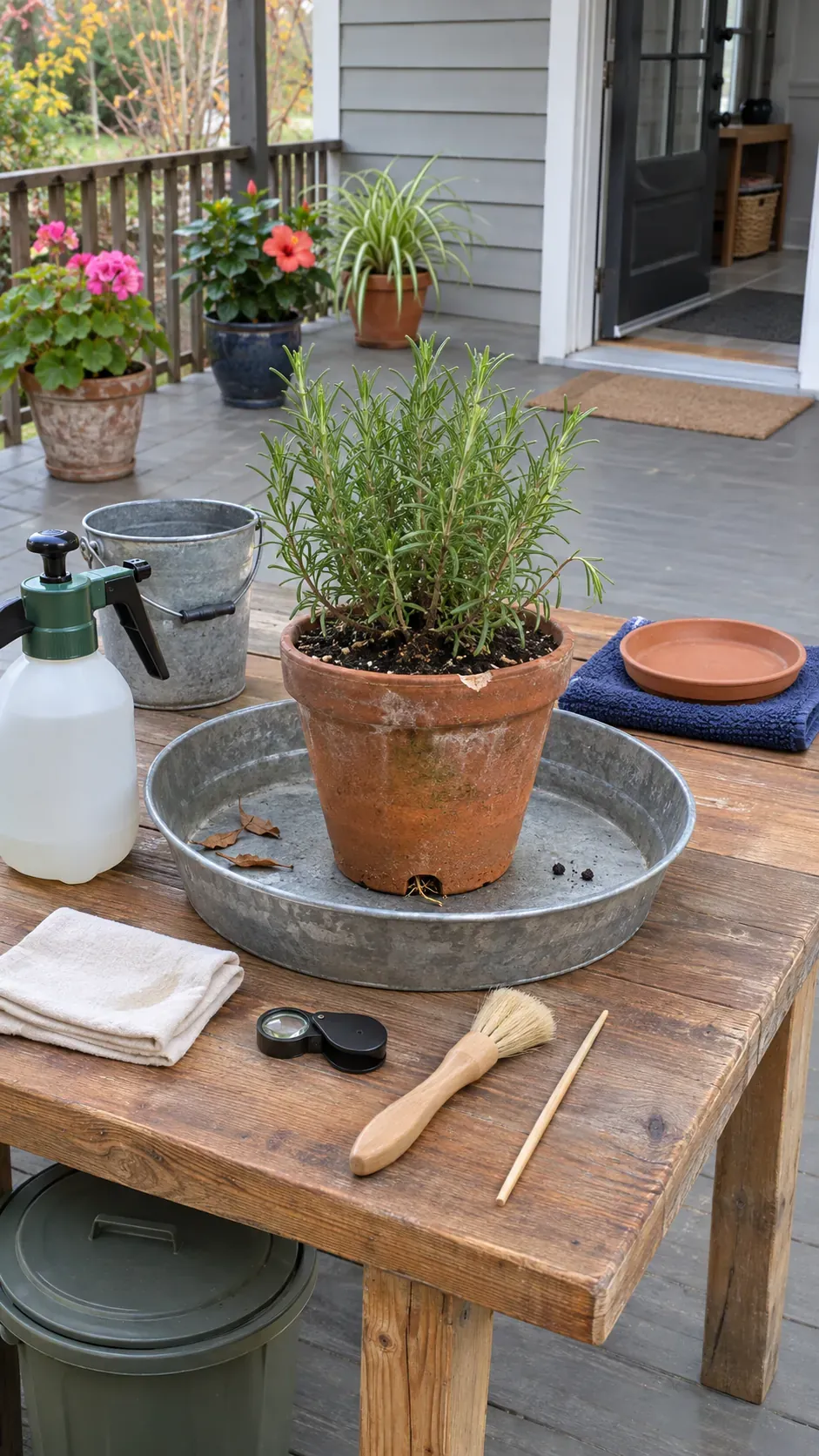
Outdoor leaves and pot rims can hide scale, mealybugs, spider mites, slugs, and egg clusters. Reddit search snippets repeatedly show that pests are the fear behind many fall moving questions. Prepare an indoor plant quarantine area away from the established collection so inspection does not happen in the middle of the final display.
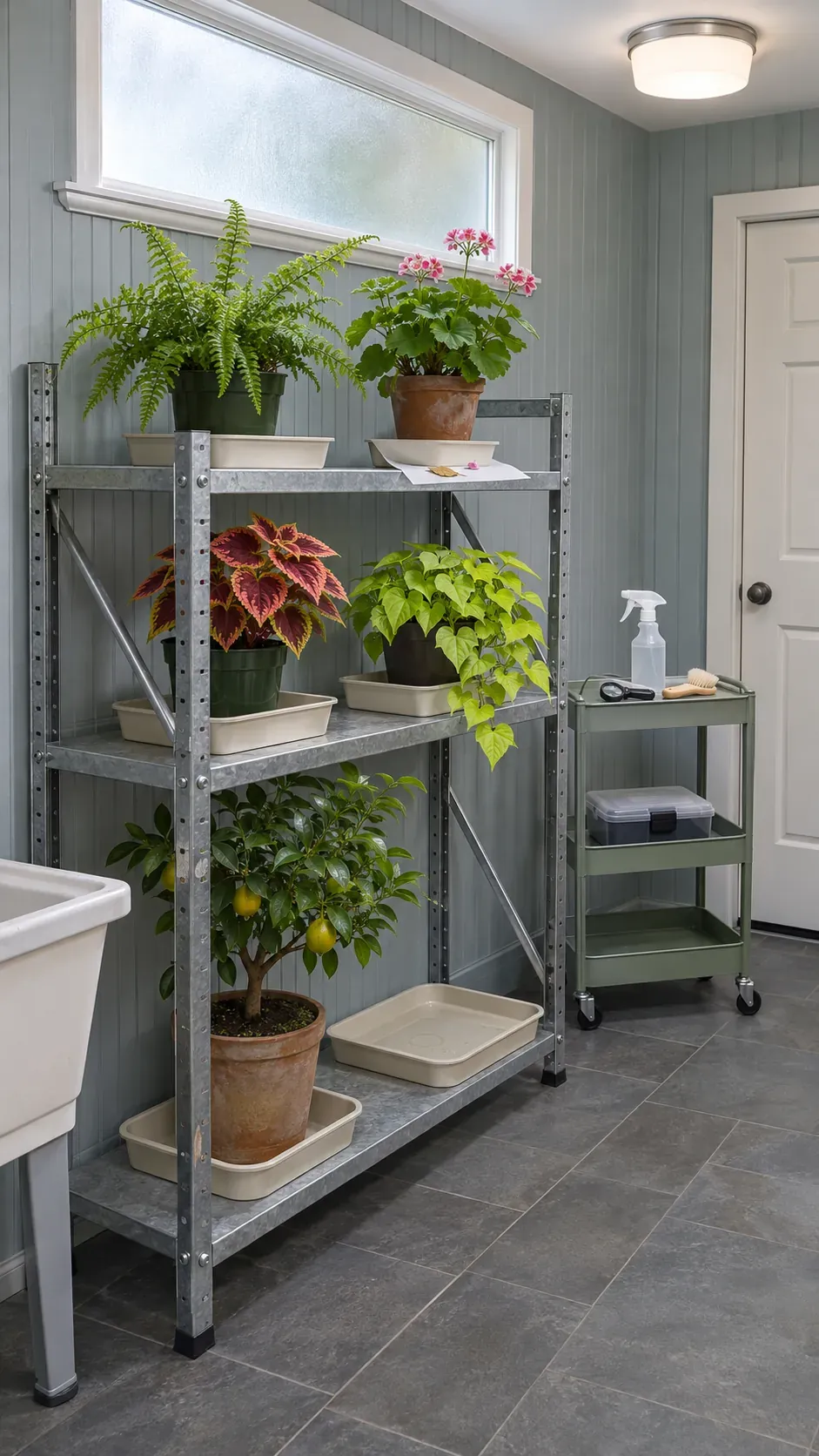
A washable floor near useful daylight works well. Set plants on waterproof trays with space between leaves. Use one sturdy shelf only if its load rating can handle wet soil and ceramic pots. Temporary plastic frames that sway when touched create a new problem, especially around children, pets, or narrow routes.
Keep the zone simple enough to clean. A small stool, a hand lens, white paper for checking falling insects, and a covered container for tools are more useful than decorative styling here. Watch the plants regularly and follow a treatment that is appropriate for the identified pest and plant. Product labels and local guidance should decide chemical use, not a generic routine.
Clean and Inspect One Pot at a Time
Work through the collection over several days instead of treating the move as one exhausting event. Inspect leaf tops, leaf undersides, stem joints, drainage holes, saucers, and the outer edge of the root ball. Remove dead leaves and loose debris. Wash the outside of each pot and clean its saucer before the plant crosses the threshold.
Do not repot every plant automatically. Fresh soil, root disturbance, lower light, and a sudden change in humidity can create several stresses at once. Repot only when there is a clear reason, such as a damaged container, failing drainage, or a root problem that cannot wait. Otherwise, let the plant settle indoors before making another major change.
Move the cleanest plants first and mark the date. A dated piece of painter tape on the tray can help you track the observation period without adding permanent labels to the display. Keep newly moved plants separate until repeated checks show no active problem.
Match Plants to Light Before Empty Floor Space
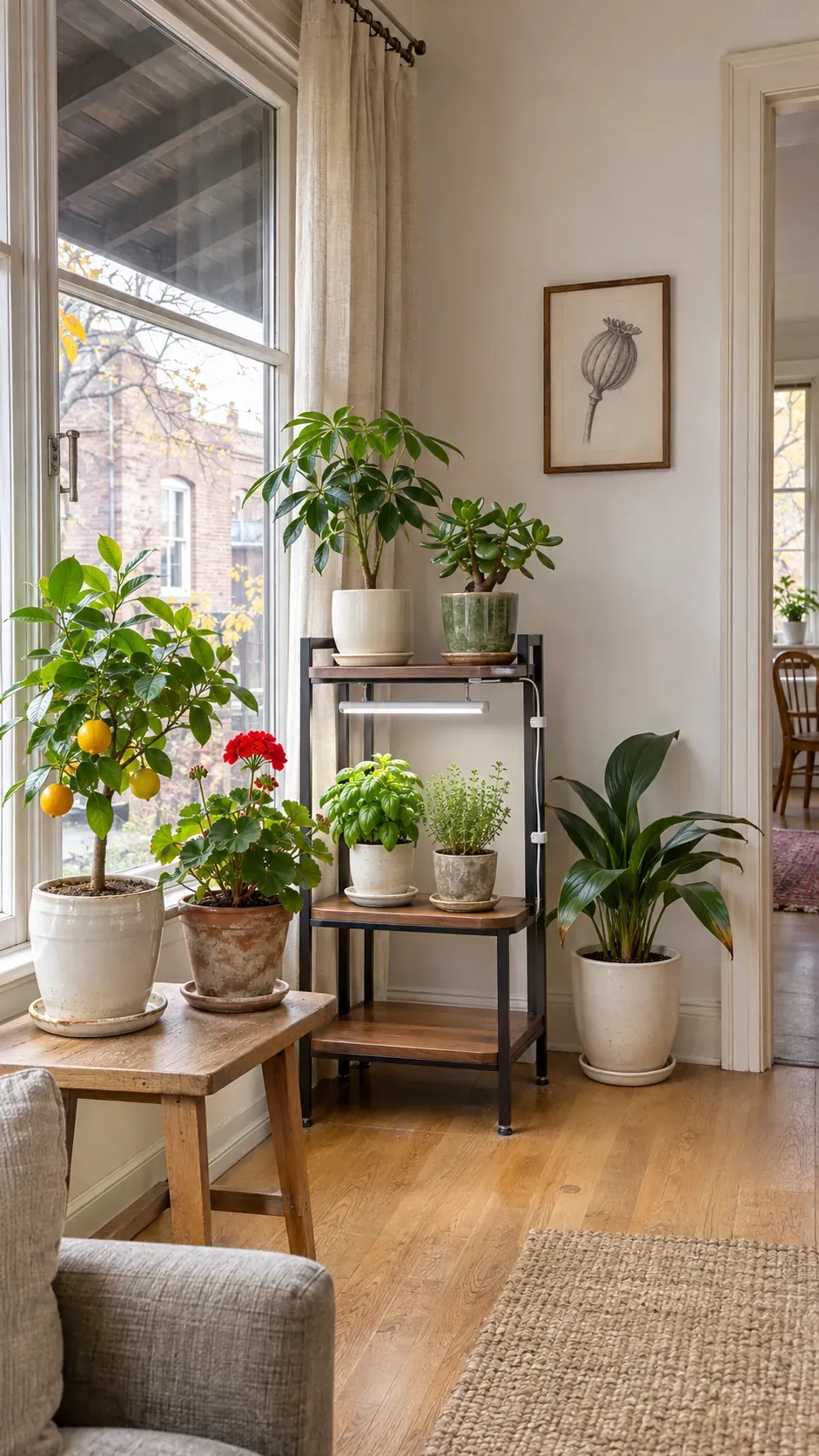
An empty corner is not useful seasonal plant storage if it is too dark. Start with the brightest suitable windows and assign those positions to plants that relied on strong outdoor light. Place shade tolerant plants farther into the room. Check how roof overhangs, nearby buildings, and autumn sun angles change the light instead of judging only by window direction.
Ease sun loving plants toward lower light when possible. A short period in outdoor shade before the final move can reduce the shock of a much darker room. Some leaf drop can still occur while the plant adjusts. The useful response is steady conditions and careful observation, not constant relocation from one weak spot to another.
If natural light is insufficient, use a suitable grow light and place it according to the manufacturer guidance for coverage and distance. One well planned light zone is usually tidier than scattering small lamps around the room. Route cords away from water and walking paths, and keep leaves clear of hot fixtures.
Use Vertical Layers and Mobile Groups
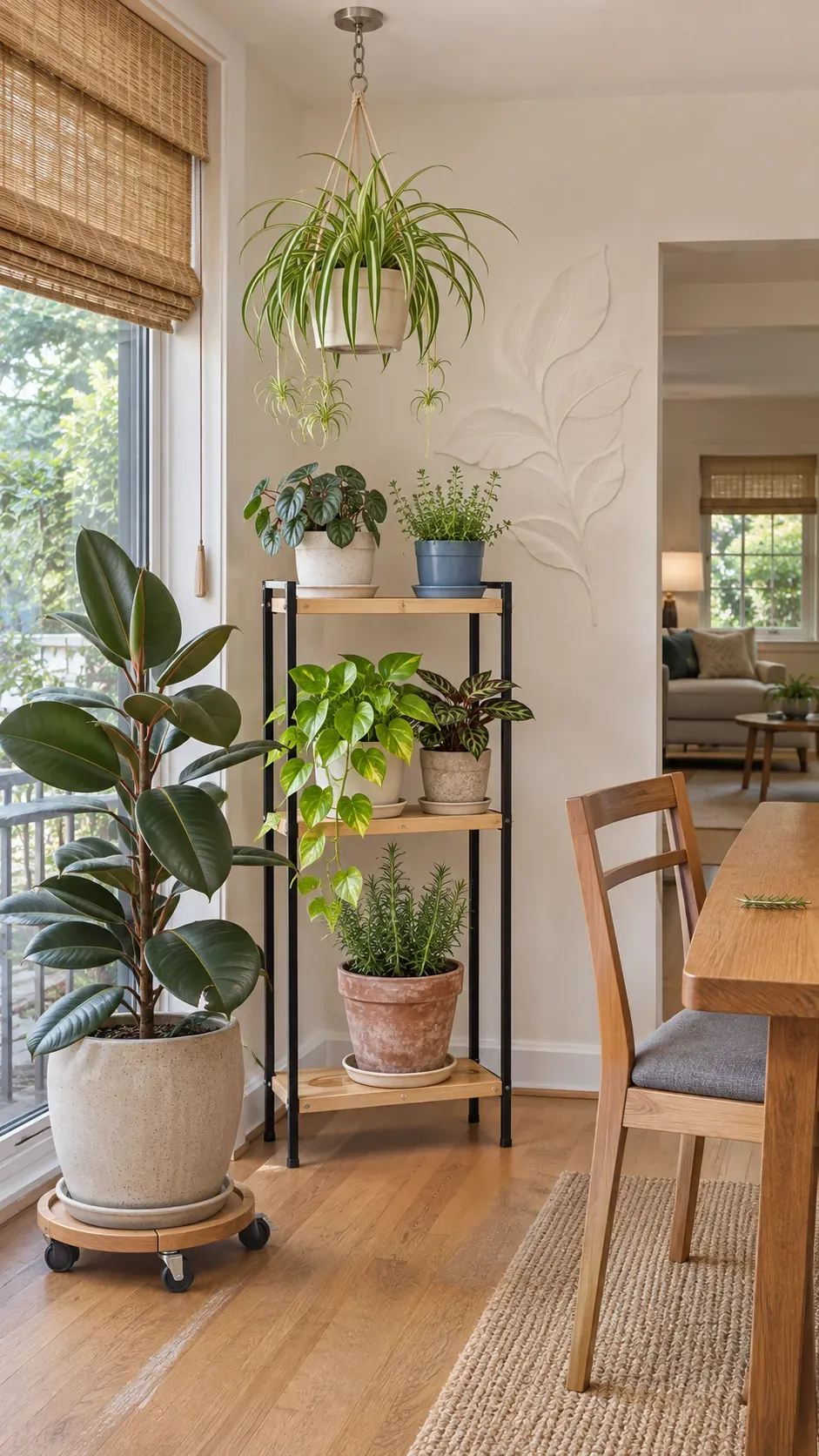
Arranging extra houseplants works best when the display uses height without sealing off the window. Put tall floor plants beside the glass rather than directly across it. Raise smaller pots on a narrow load rated stand, and use a hanging position only where the ceiling support, head clearance, and watering route are safe.
Group plants by care needs instead of squeezing every leaf into a single decorative mass. A bright dry group and a bright humid group are easier to monitor than one mixed cluster. Leave air space around foliage and keep a hand width of access to each pot. The display should allow you to remove one plant without dismantling the whole arrangement.
Rolling plant stands are useful for heavy pots and seasonal adjustments. Choose broad stable bases with locking casters, then keep them out of door swings and main routes. In small homes, one mobile group can move closer to a window during the day and return to a protected position without turning several surfaces into permanent plant storage.
Reset Watering and Keep the Display Usable
Indoor conditions usually slow water use. Test the potting mix before watering instead of following the outdoor calendar. Empty saucers, protect floors, and check that water can reach every pot without passing over electronics or upholstery. A plant that is awkward to water will eventually damage the room or be neglected.
Review the autumn houseplant display after two weeks. Look for blocked curtains, leaves pressed against cold glass, crowded new growth, hidden pests, and pots that are too heavy to service safely. Move only the plants that have a clear problem. Frequent rearranging makes it harder to understand whether light, water, temperature, or simple transition stress caused a change.
The final test is ordinary life. You should still be able to open the window, sit in the chair, reach the shelf, and clean the floor. When the room remains functional, bringing plants indoors for fall feels like a planned seasonal shift rather than a takeover.