
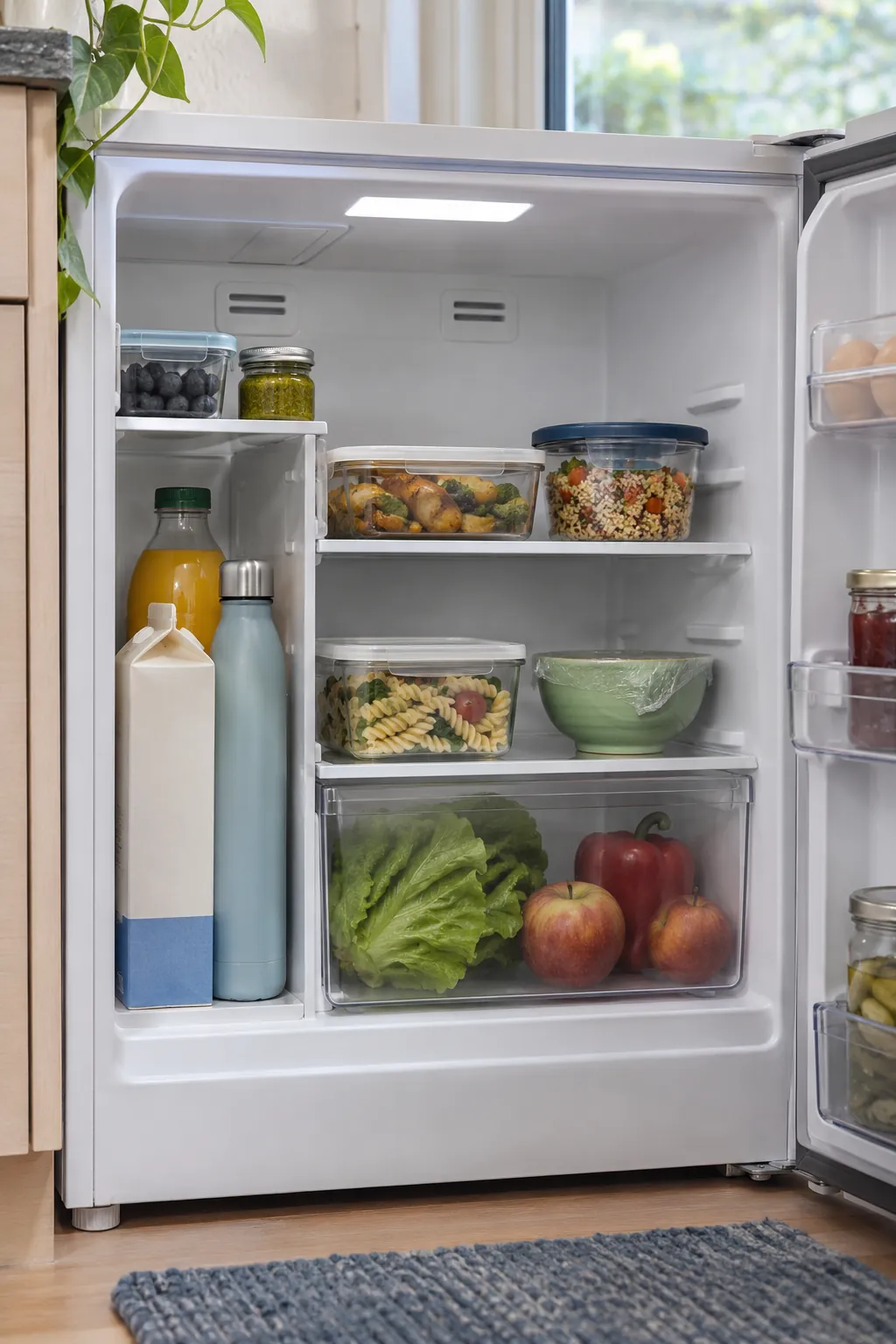
One tall milk carton or drink bottle can force an adjustable shelf so high that the space above it becomes almost useless. The better approach is to create one narrow vertical bottle lane and keep normal shelf height everywhere else. Start with the bottle you buy most often, measure its true height and width, then change only the smallest part of the refrigerator layout.
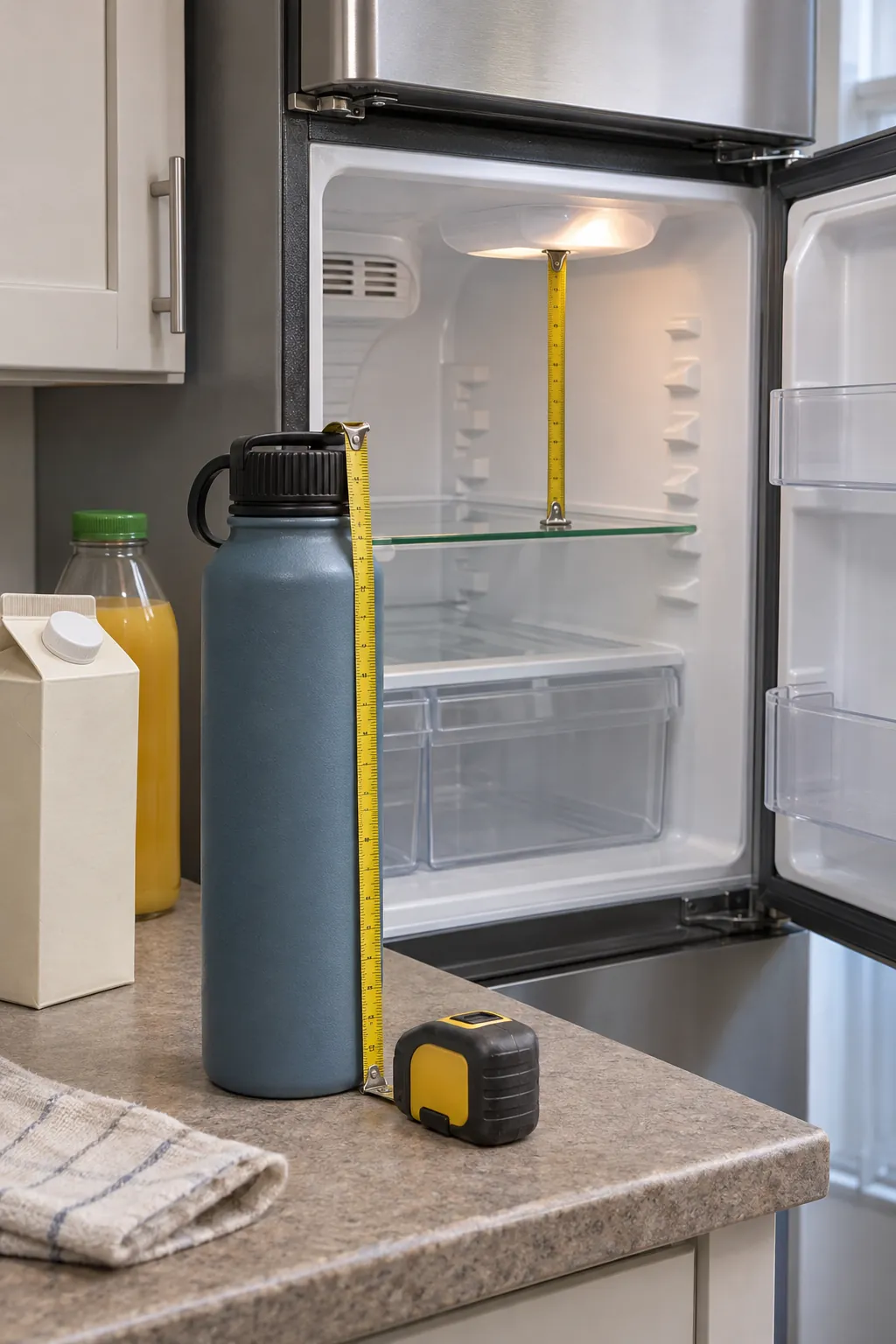
Measure the Bottle and the Real Clearance
Measure from the bottle base to the highest point of the cap, then add enough room to lift it without scraping the shelf above. Measure the widest part too. A narrow neck does not matter if broad shoulders catch under a shelf support.
Inside the refrigerator, measure from the usable shelf surface to the lowest obstruction above it. Include light housings, shelf frames, and any downward curve near the back. Test the bottle at the front and rear because vertical bottle clearance can change with refrigerator shape.
Use a Half Width Shelf Position When Available
Some adjustable fridge shelves are split into left and right sections. Raise only one half by one support position and place tall bottles beneath it. The other half can remain at normal height for leftovers, dairy, and produce.
If one section slides back or folds under itself, confirm that the moving part locks securely before loading it. Do not improvise a shelf position that the manufacturer did not provide. Glass must rest on its intended supports, and food should stay clear of air vents.
Build One Narrow Upright Bottle Zone
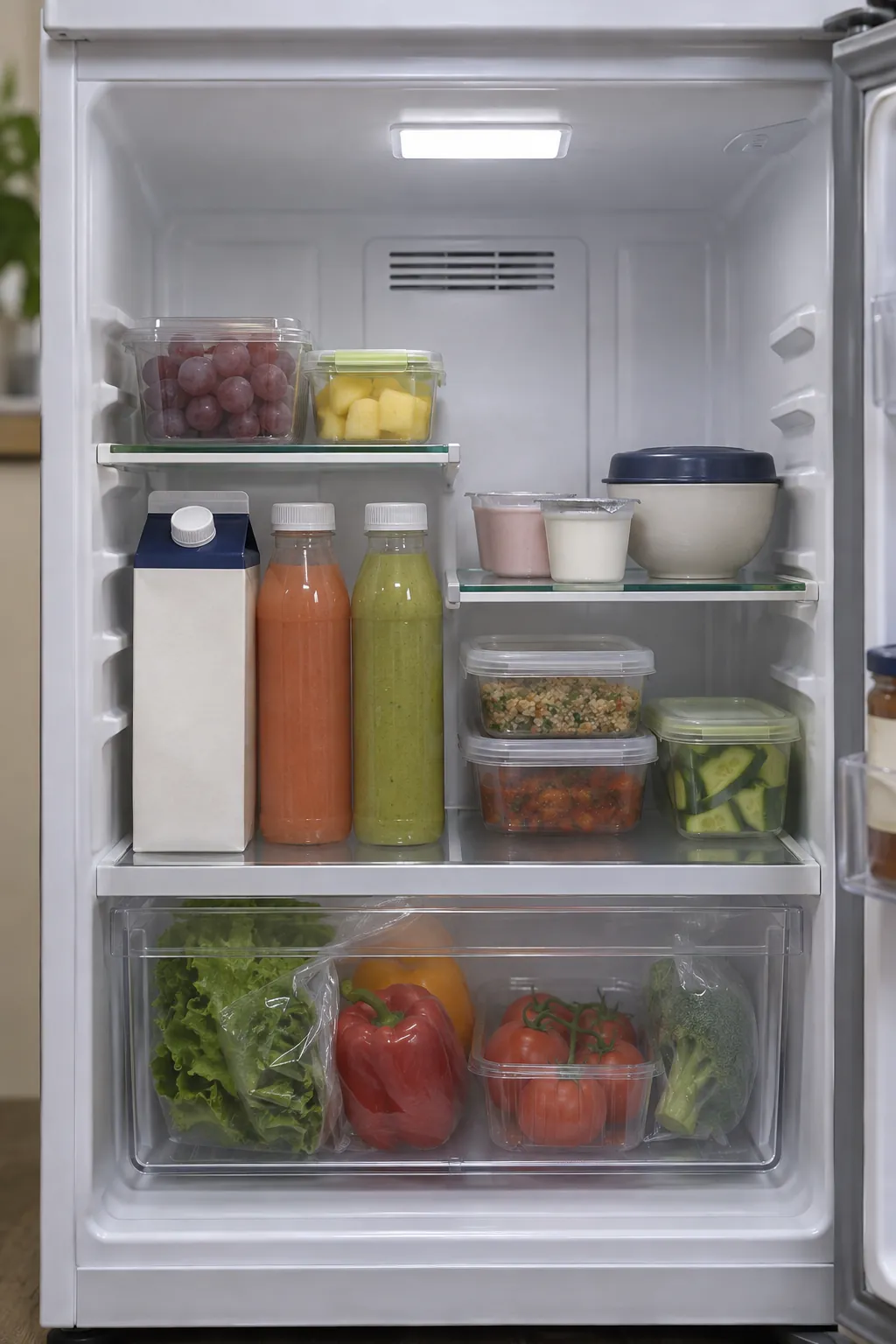
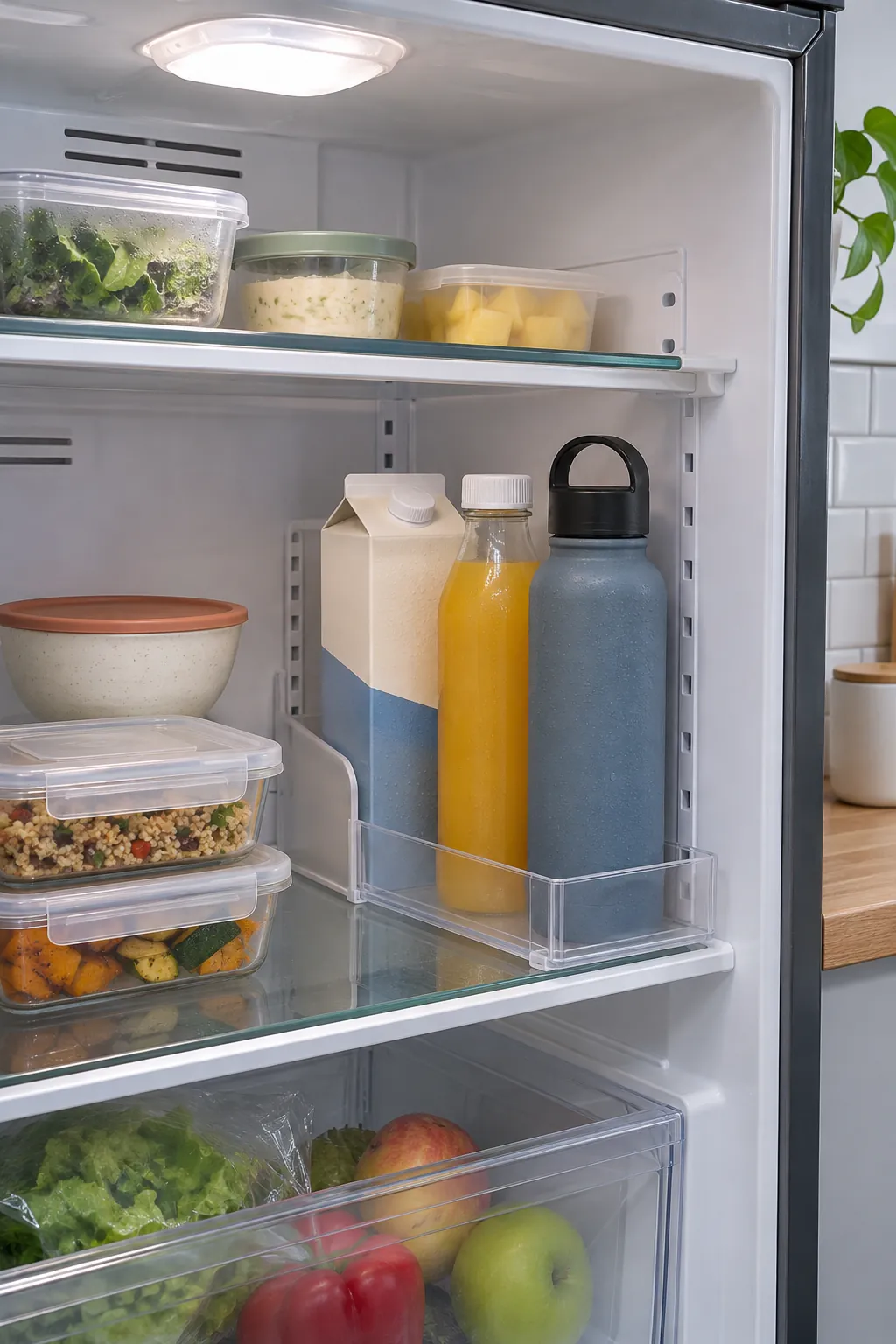
Group the tallest containers in one lane instead of scattering them across the shelf. Milk carton storage, juice bottles, and a reusable water bottle often fit within a narrow strip. A simple divider or low sided tray can stop the group from spreading without adding much width.
Put heavy bottles near the side wall or a strong shelf support, not at the unsupported center edge. Leave enough finger space to lift one bottle straight up. If the lane becomes a crowded row that must be unloaded, reduce the number of tall containers rather than widening the lane.
Use Door Bins Only When They Fit Safely
Fridge door bins can free a main shelf, but they are not suitable for every tall bottle. The rail must reach high enough to prevent tipping when the door moves. The cap must also clear the bin above and the bottle must not stop the door from closing.
The door is usually warmer and experiences more temperature change than the interior. Use it for products that tolerate that location according to storage guidance. Keep milk and other highly perishable drinks on an interior shelf when the appliance guidance recommends it.
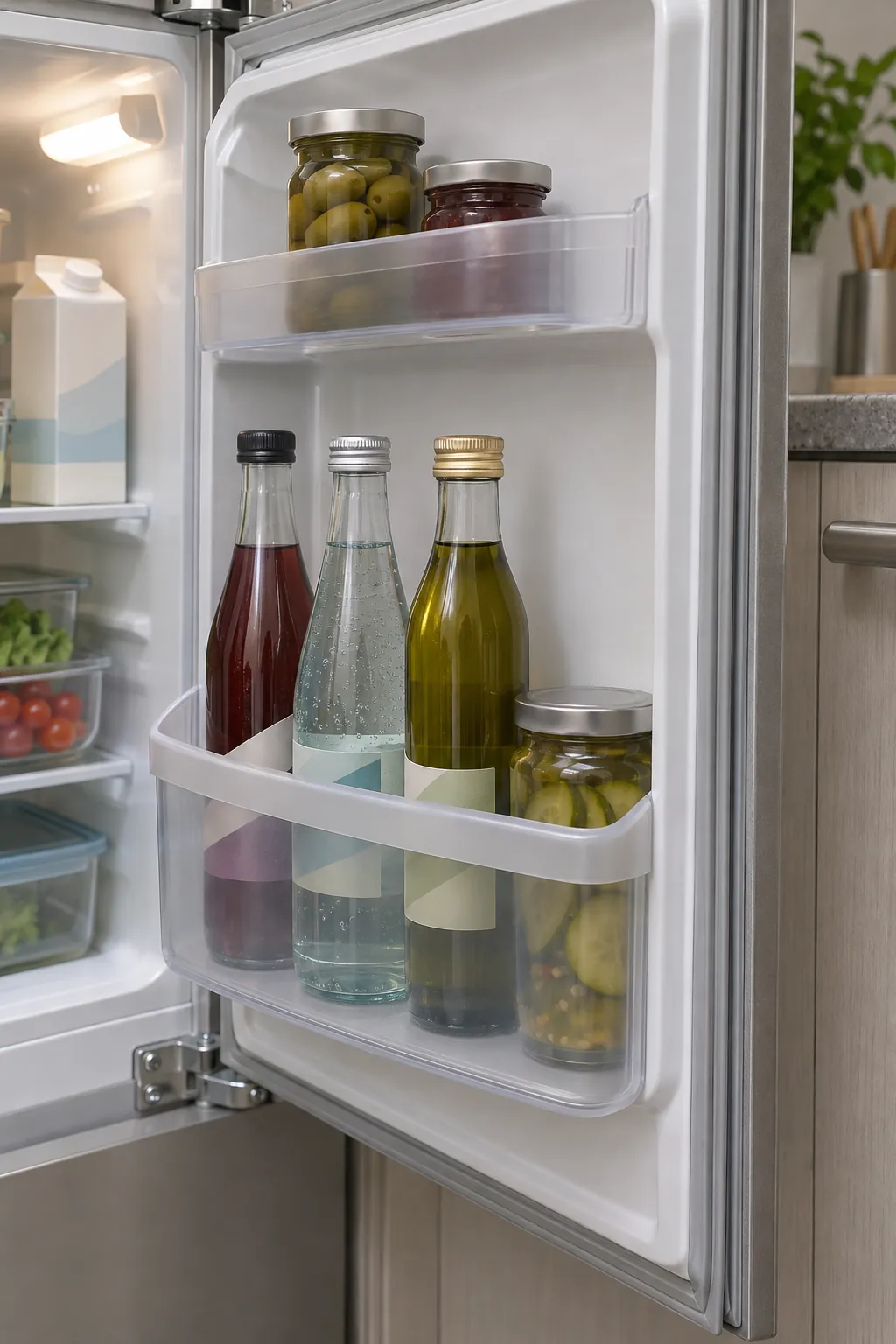
Store Sealed Bottles Horizontally With Restraint
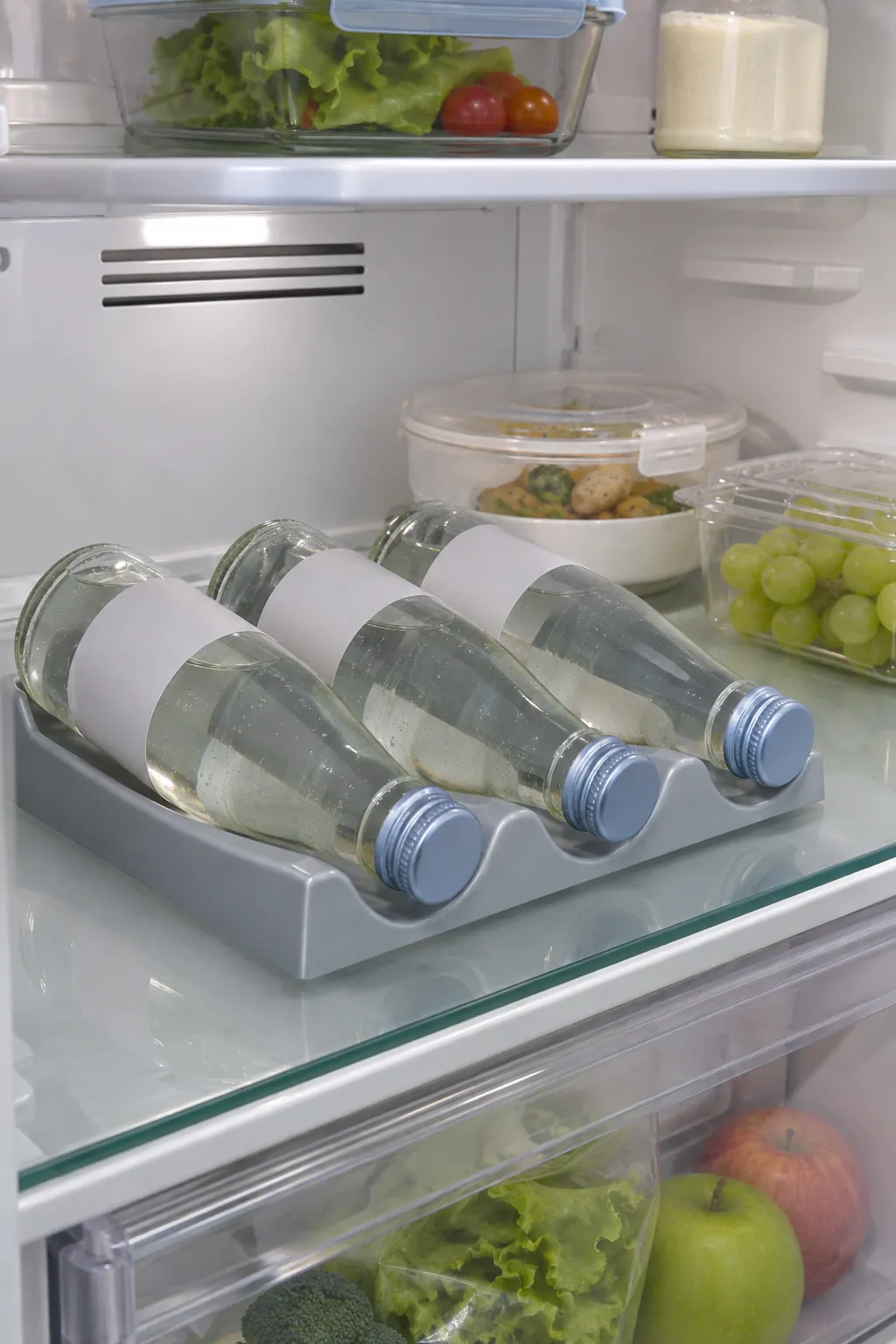
A securely sealed bottle can sometimes lie on its side in a refrigerator bottle rack or shallow cradle. This works for factory sealed drinks and containers with caps that you have tested for leaks. It does not work for open containers, loose stoppers, or packages that must remain upright.
Use a rack that prevents rolling and keeps bottles in a single layer. Stacking several bottles may advertise capacity, but it makes the lower one difficult to retrieve and can create unstable weight. Keep the rack away from fragile food and confirm that it does not block cold air circulation.
Reduce Bottle Height Only When the Container Is Suitable
Transferring a drink into a shorter container can recover shelf height, but the new container must be food safe, clean, easy to close, and clearly identified. This is most practical for homemade drinks or filtered water. Keep the use by information with the food and avoid transferring products when the original package carries important handling instructions.
Do not decant a product merely to achieve a tidy small refrigerator layout. Extra washing and an uncertain label can create more work than the saved space is worth. Choose a shorter package at the store when it contains the same amount and fits your routine.
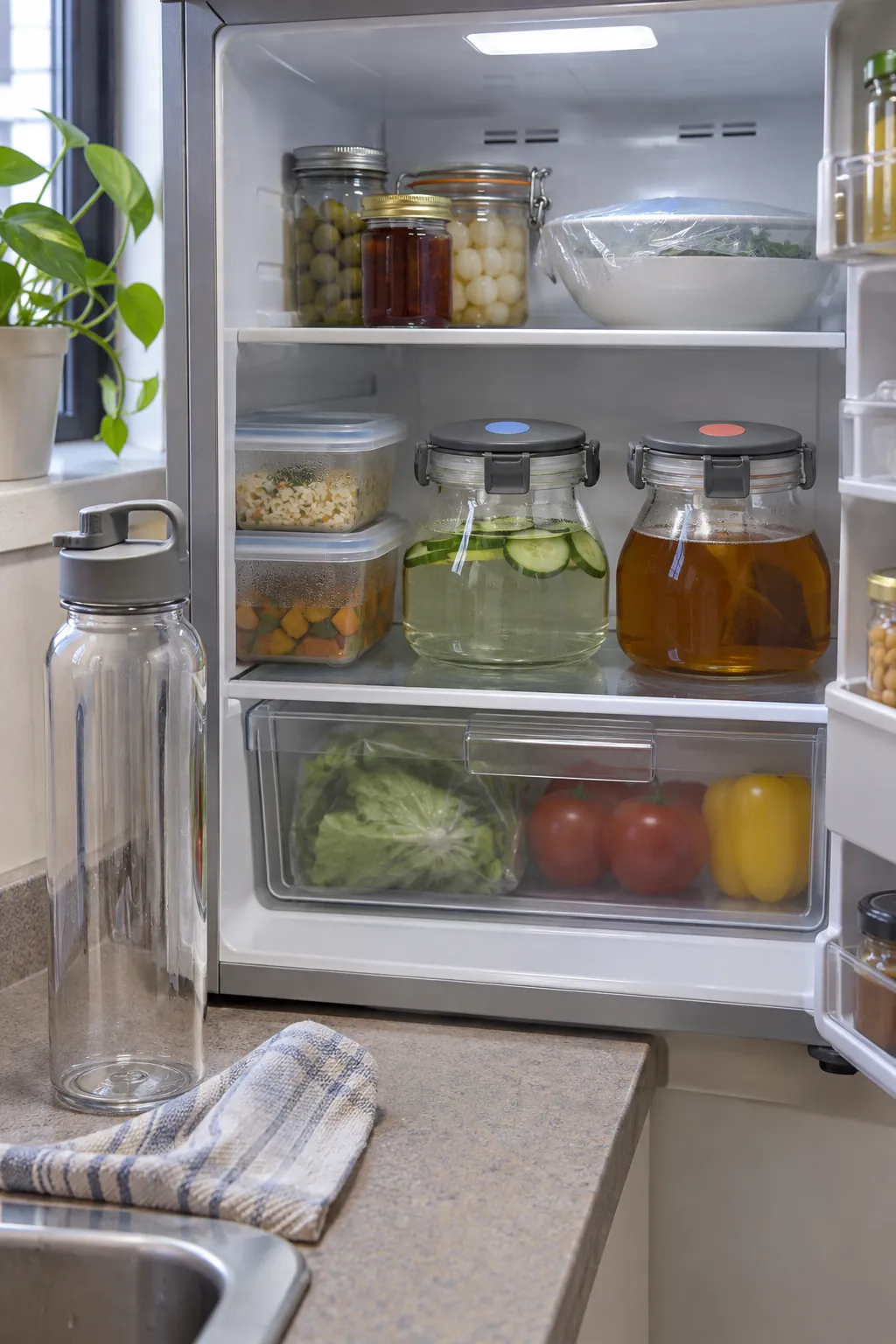
Test the Layout Through One Grocery Cycle
Load the refrigerator as you normally would and use it for a week before buying more equipment. Check whether the tall bottle can be removed without moving other food, whether the cap clears the shelf, and whether the remaining shelf sections still hold common containers.
A good solution dedicates only the required width to height. If one bottle still controls the whole shelf, move the lane, choose a shorter package, or use a safe door position. Compact fridge capacity improves when the layout follows recurring groceries instead of one unusual container.