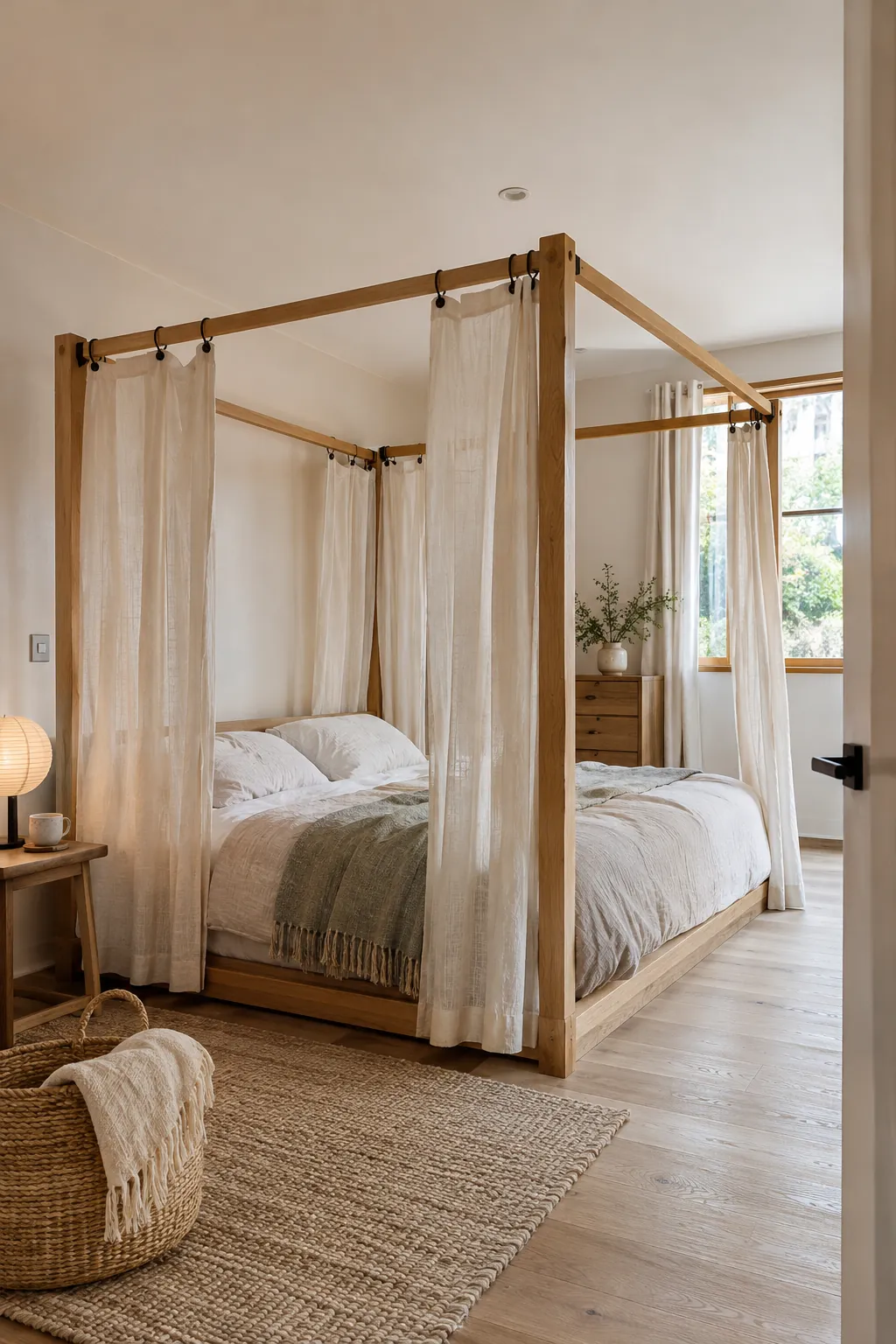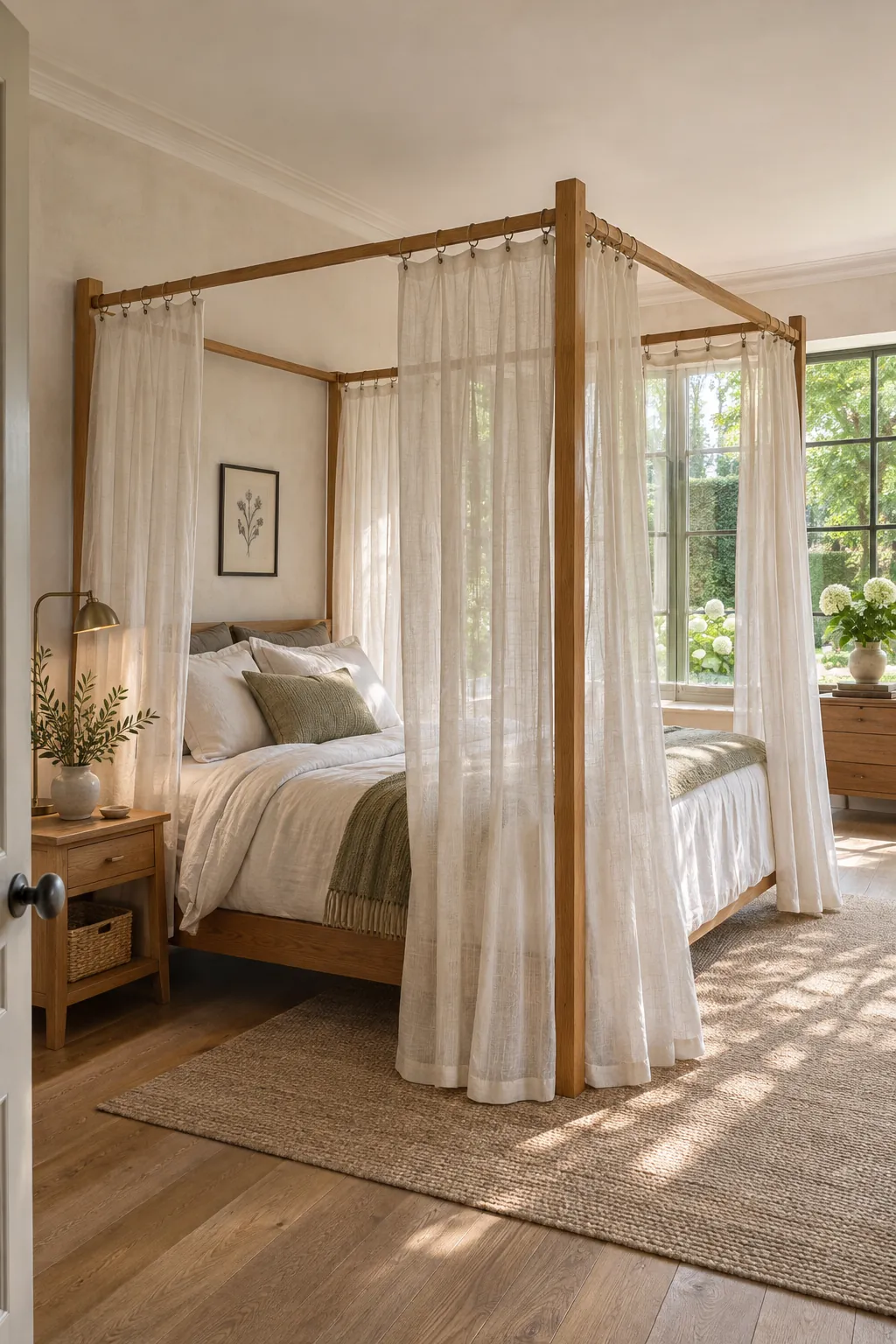
A canopy can make a bedroom feel sheltered, but the wrong frame or fabric can also steal light and floor space. The most convincing rooms treat the canopy as part of the architecture, then balance it with practical clearance, washable textiles, and calm lighting. Use the ideas below to find a version that fits your room rather than forcing the room to fit the bed.
Airy Linen Curtains
Loose linen panels soften a canopy bed without making the frame feel heavy. Choose fabric that reaches the floor with a small, tidy break, then keep the panels open during the day so daylight still crosses the room. A washable linen blend is easier to maintain than delicate gauze and gives a cozy bedroom a relaxed finish.
Slim Black Frame
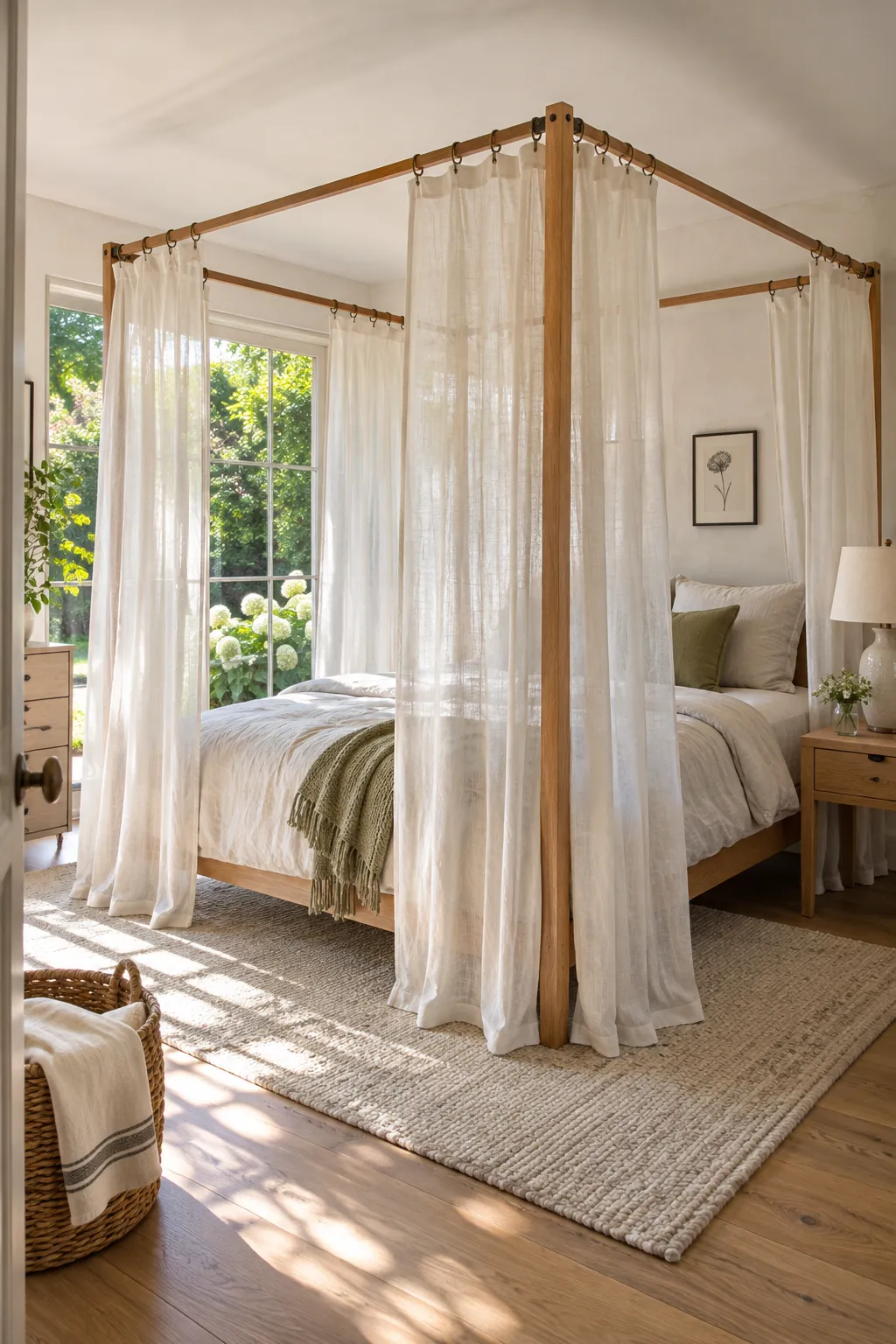
A narrow black canopy frame adds structure while preserving open sightlines. Pair it with pale bedding and quiet walls so the outline reads as a crisp graphic accent instead of a visual cage. This approach works especially well when you want modern canopy bedroom decor without curtains.
Warm Oak Canopy
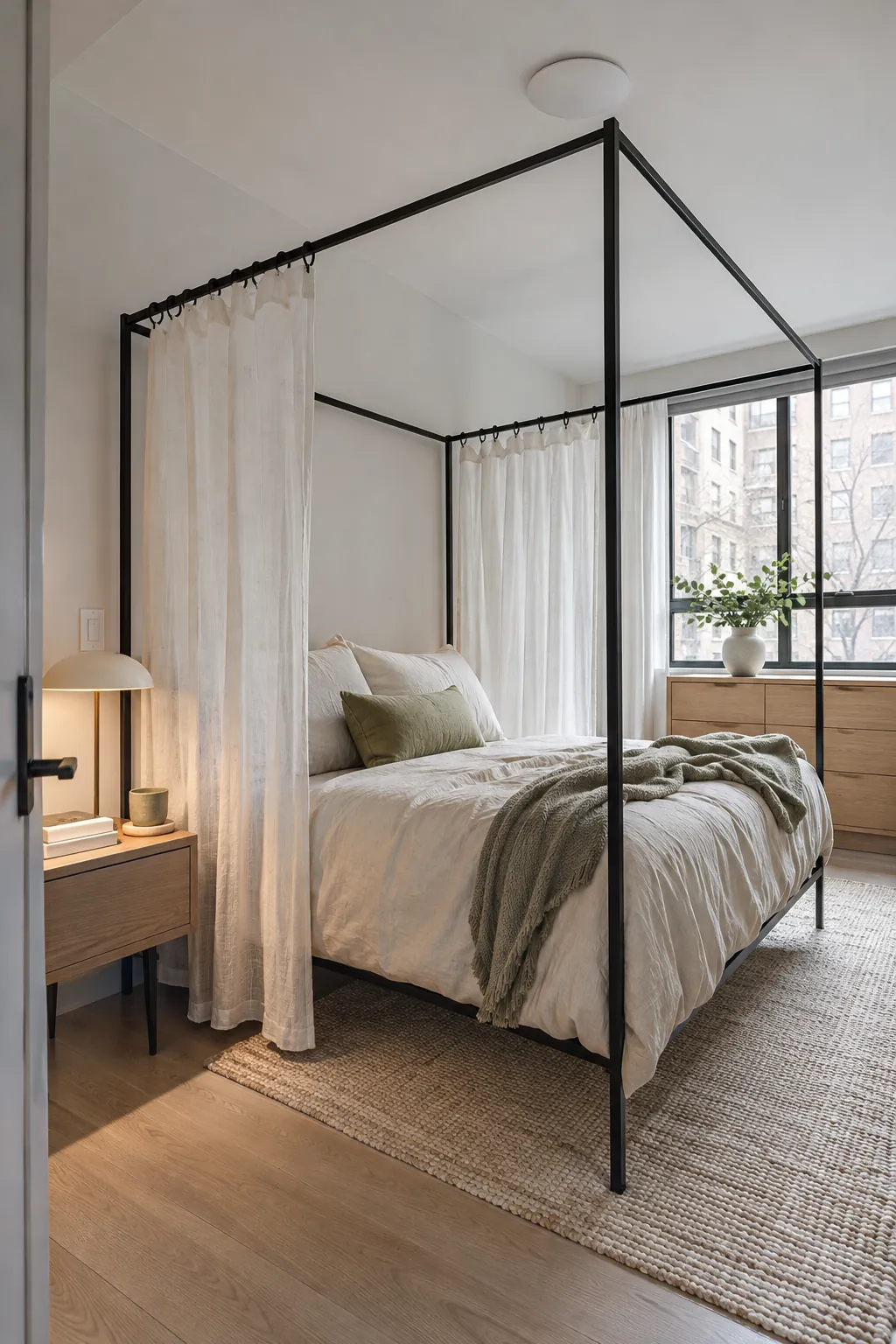
An oak canopy bed brings warmth through grain and proportion rather than extra decoration. Repeat the wood tone once or twice in a bench or bedside table, but vary the finish slightly so the room does not look like a matching furniture set. Natural bedding and woven shades keep the result grounded.
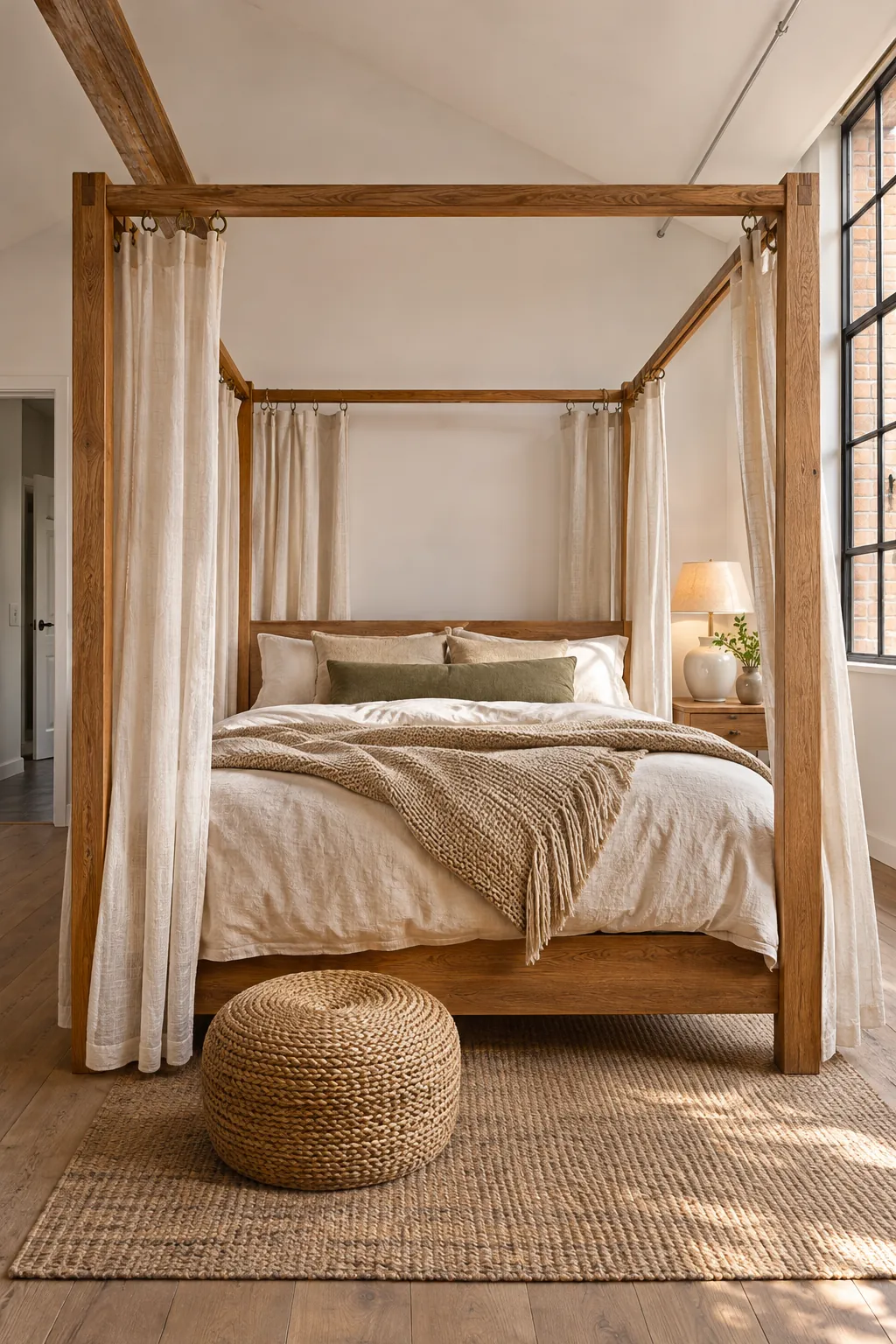
Ceiling Mounted Half Canopy
A ceiling mounted half canopy gives you softness around the head of the bed without surrounding the whole mattress. Secure the track into suitable framing and keep fabric clear of lamps, fans, and heating equipment. The shorter span is useful in a small room where a full canopy bed frame would feel crowded.
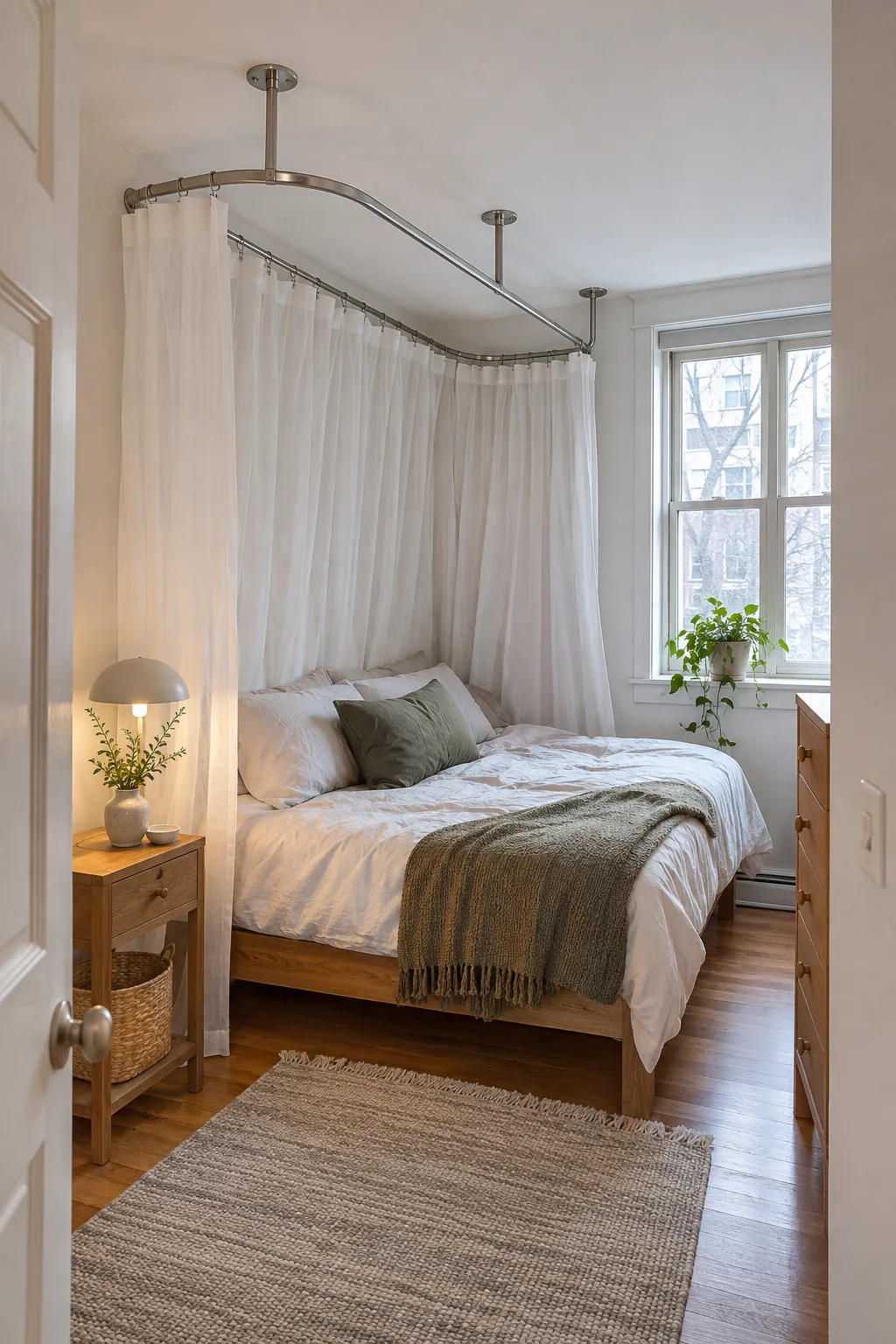
Romantic Sheer Drapes
Sheer white drapes create a romantic canopy while allowing the frame and windows to remain visible. Use fewer, wider panels instead of many narrow pieces, which can look busy and collect more dust. Soft pleats and plain bedding keep the atmosphere graceful rather than theatrical.
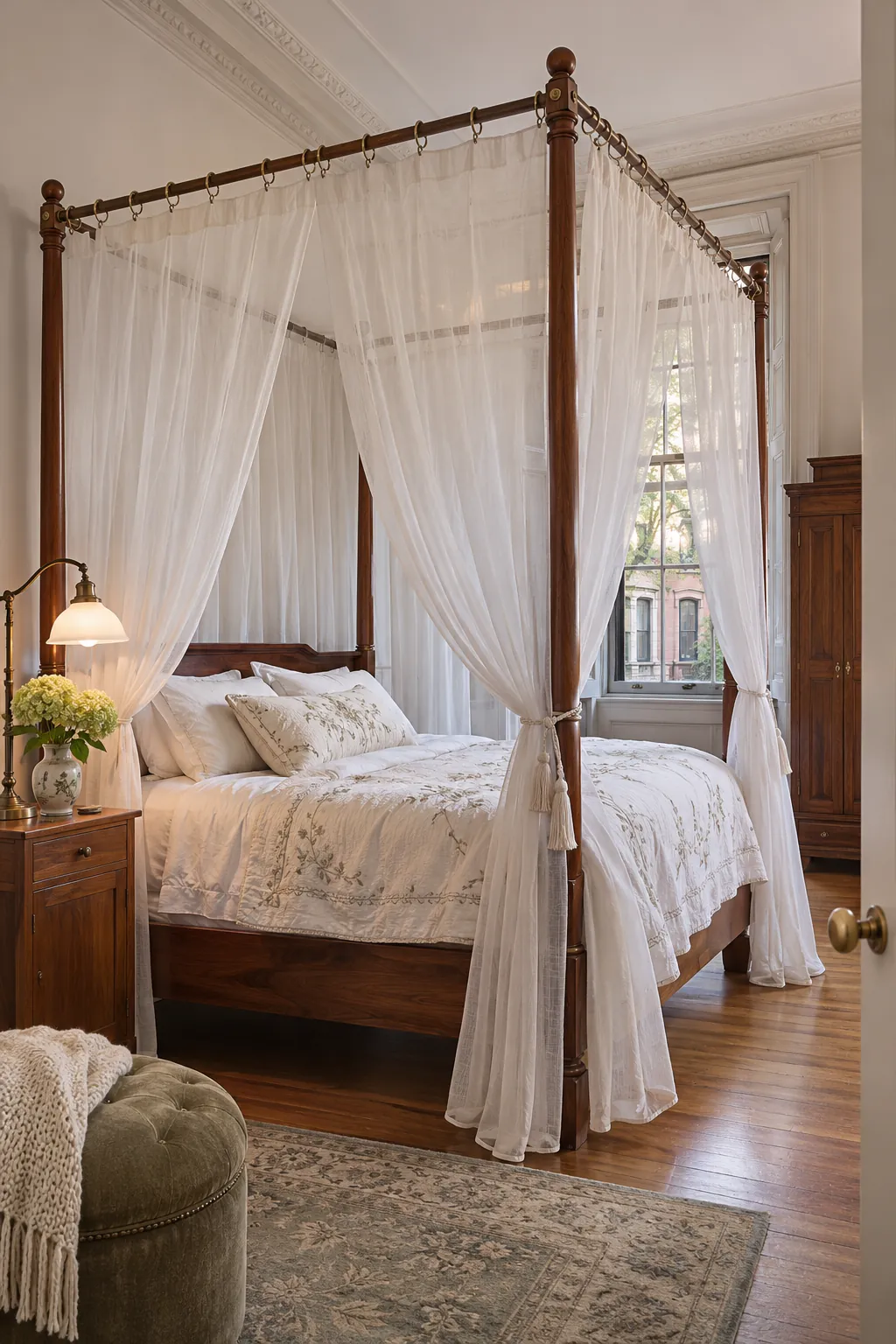
Attic Room Canopy
An attic bedroom benefits from a canopy that responds to the roofline instead of competing with it. Place the lower side of the frame beneath the slope and preserve a clear standing route beside the bed. Light fabric and low furniture help the angled ceiling feel intentional and spacious.
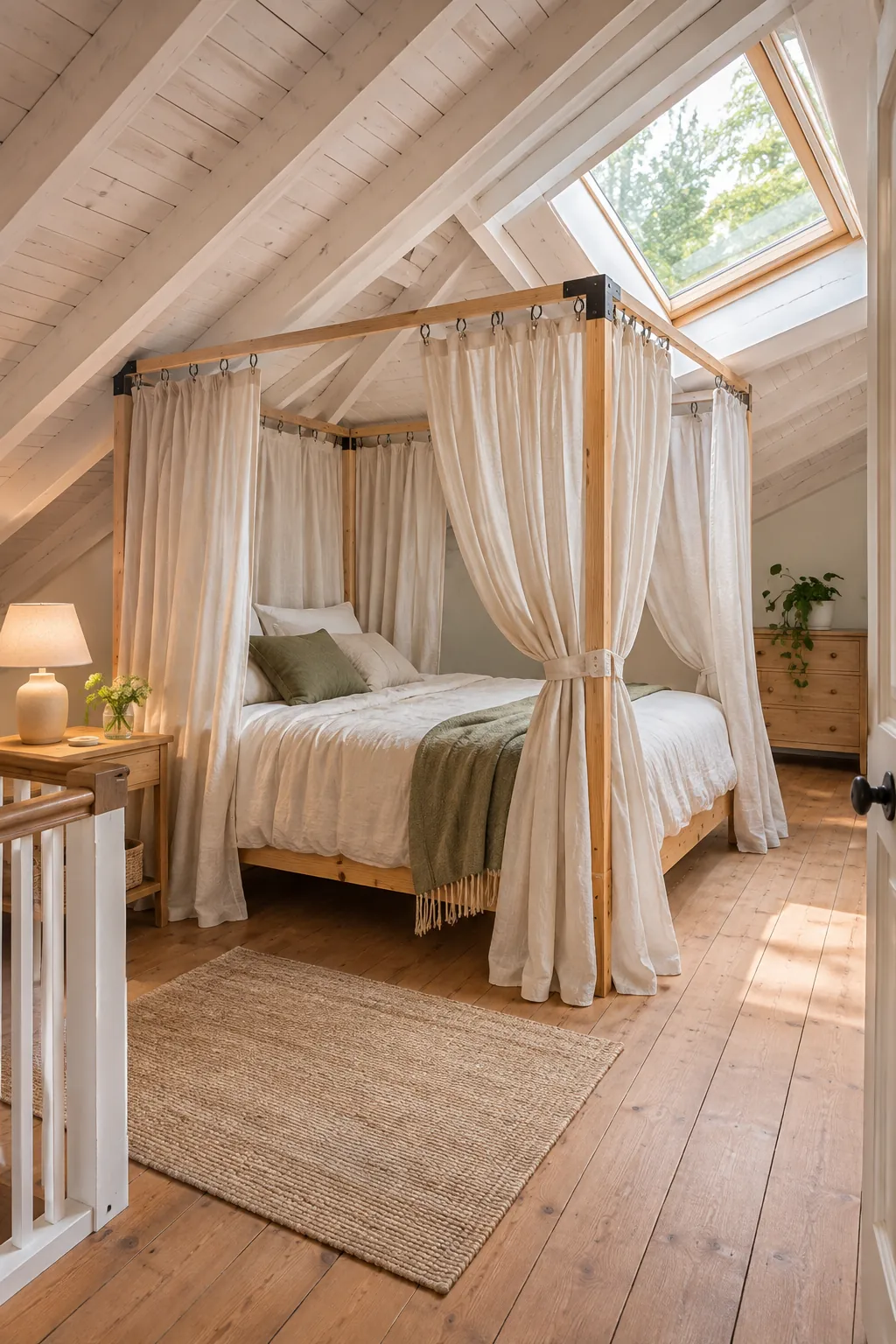
Cottage Floral Panels
Small scale floral panels can give a canopy bed a gentle cottage character. Limit the pattern to the upper rails or two side panels, then let solid sheets and a simple quilt provide breathing room. A faded palette feels collected and is easier to combine with existing bedroom furniture.
Minimal White Frame
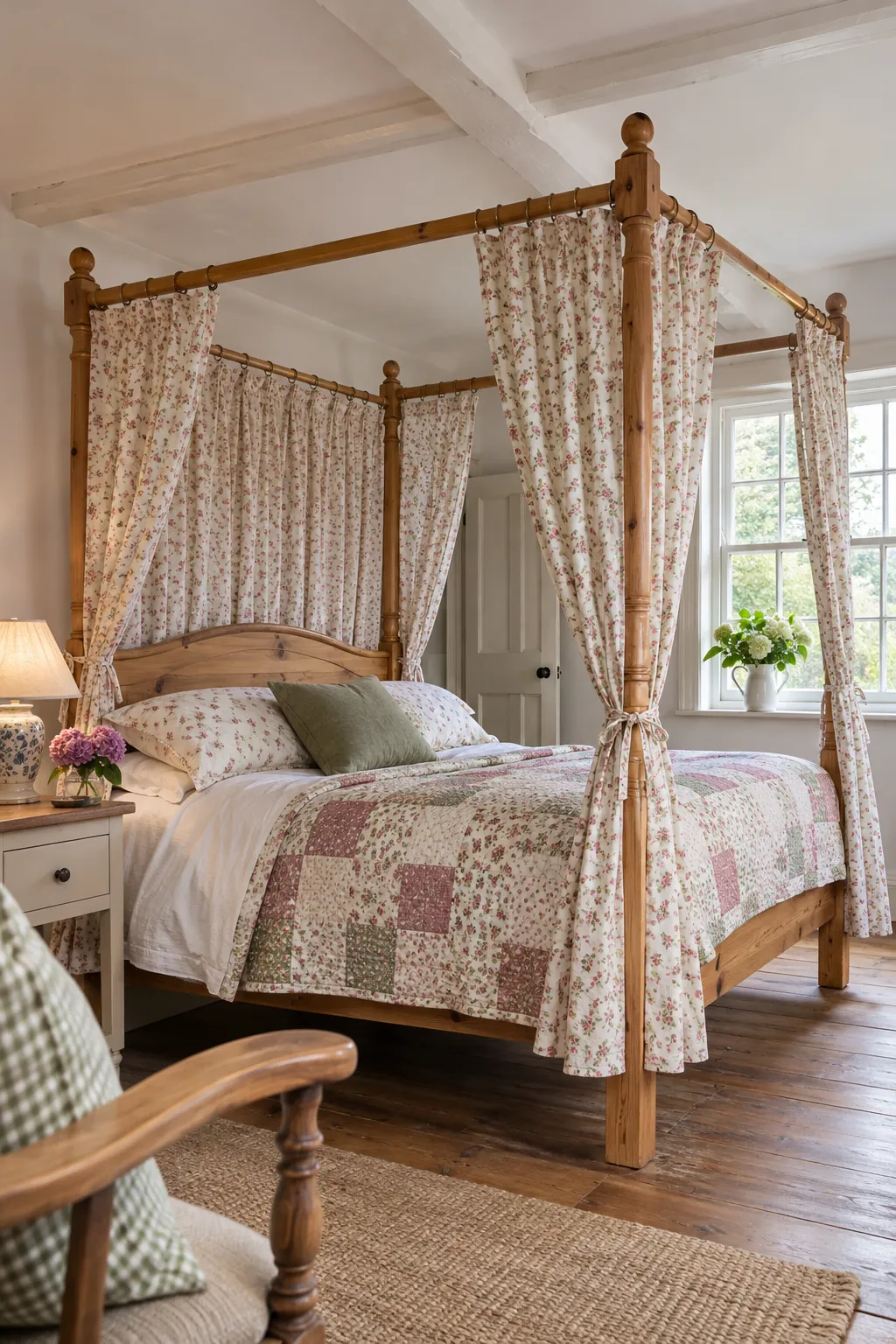
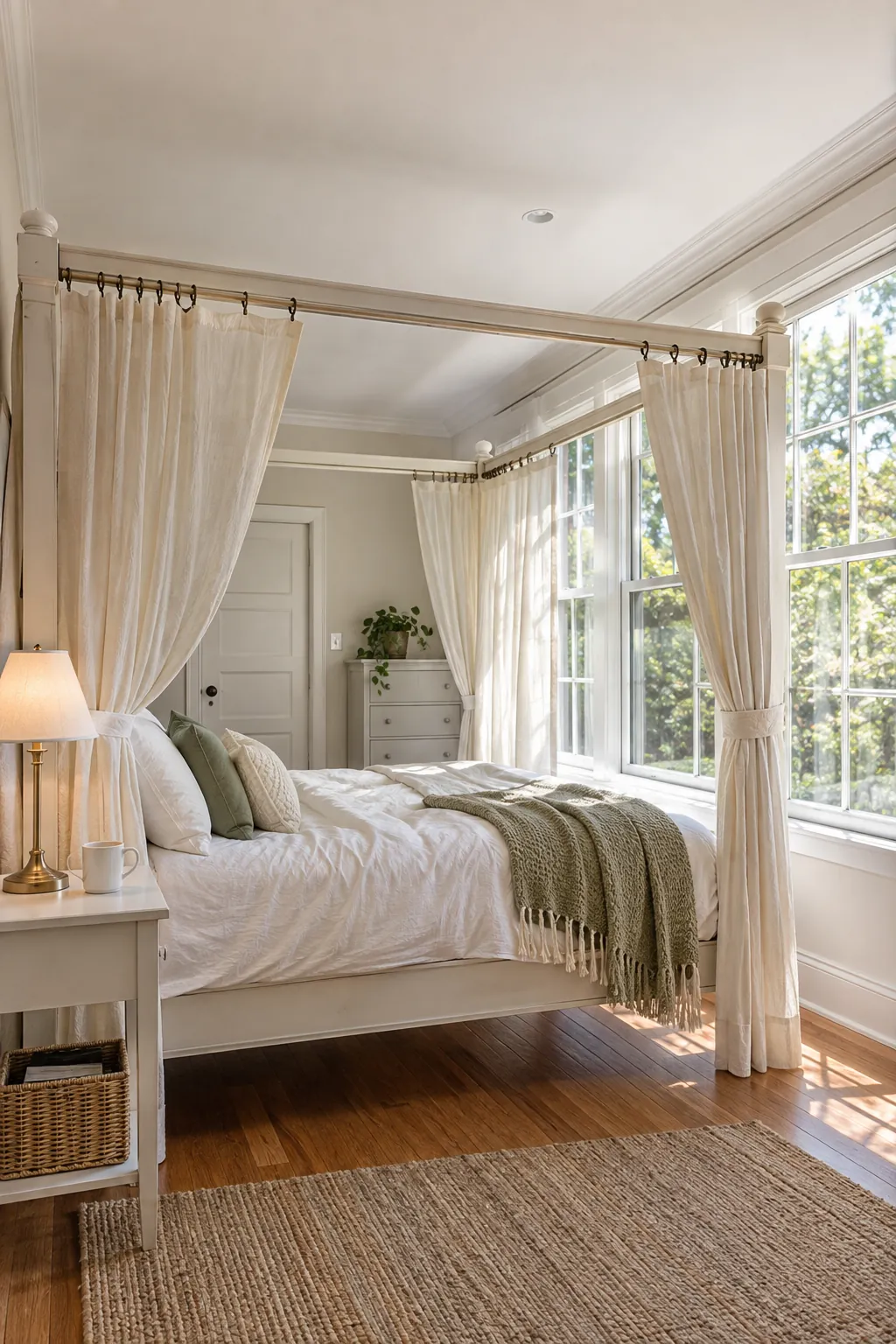
A white canopy frame blends into pale walls and reduces the visual weight of tall posts. Add contrast through textured bedding, a timber stool, or one darker lamp rather than outlining every edge. This is a useful canopy bed idea for a small room that still needs an open, bright feeling.
Velvet Head Curtain
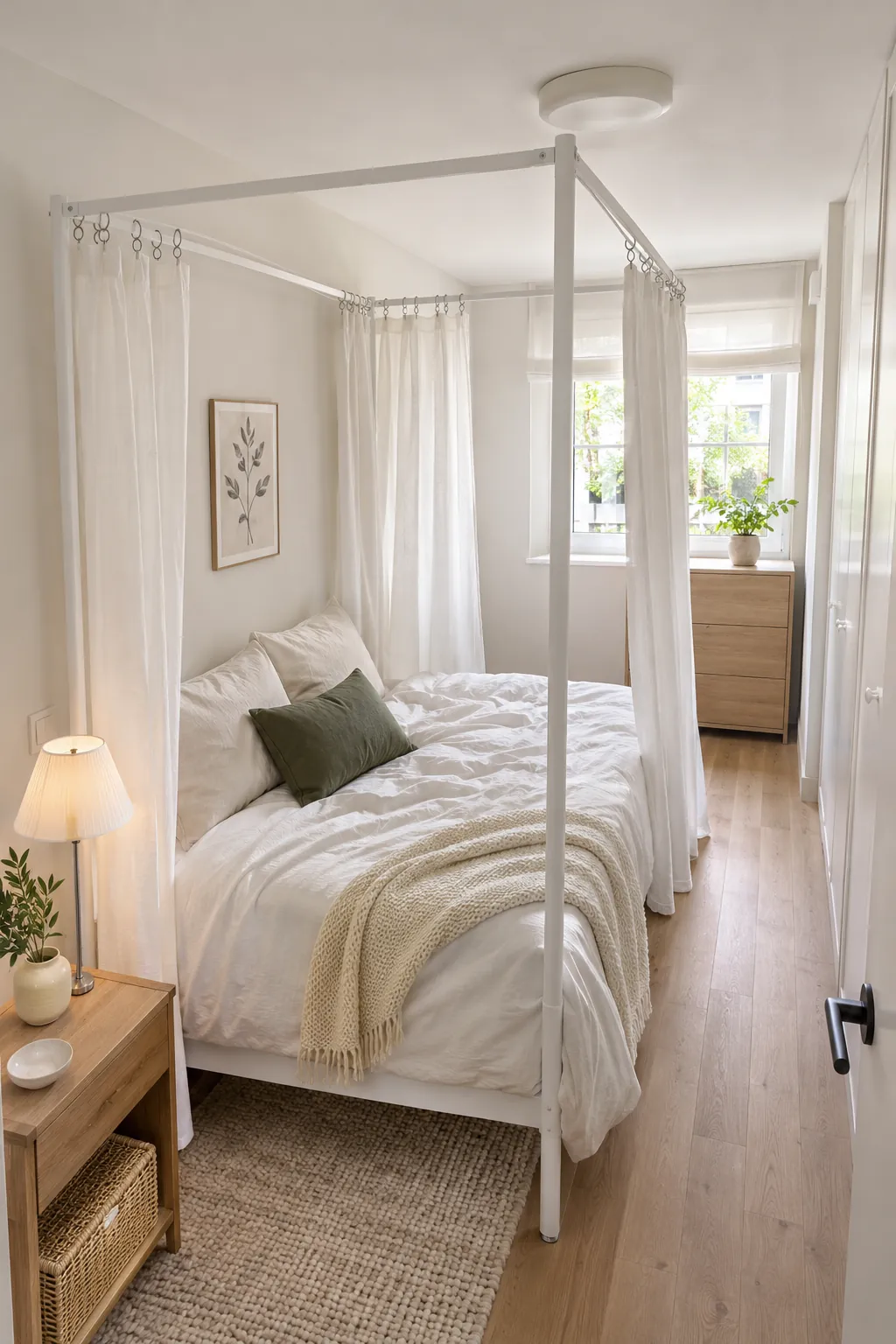
A single velvet panel behind the headboard creates depth without enclosing the bed. Choose a restrained color and hang the fabric smooth enough to show its soft sheen, with no loose folds near bedside lights. The concentrated treatment feels luxurious while leaving the foot and sides fully open.
Bamboo Canopy Frame
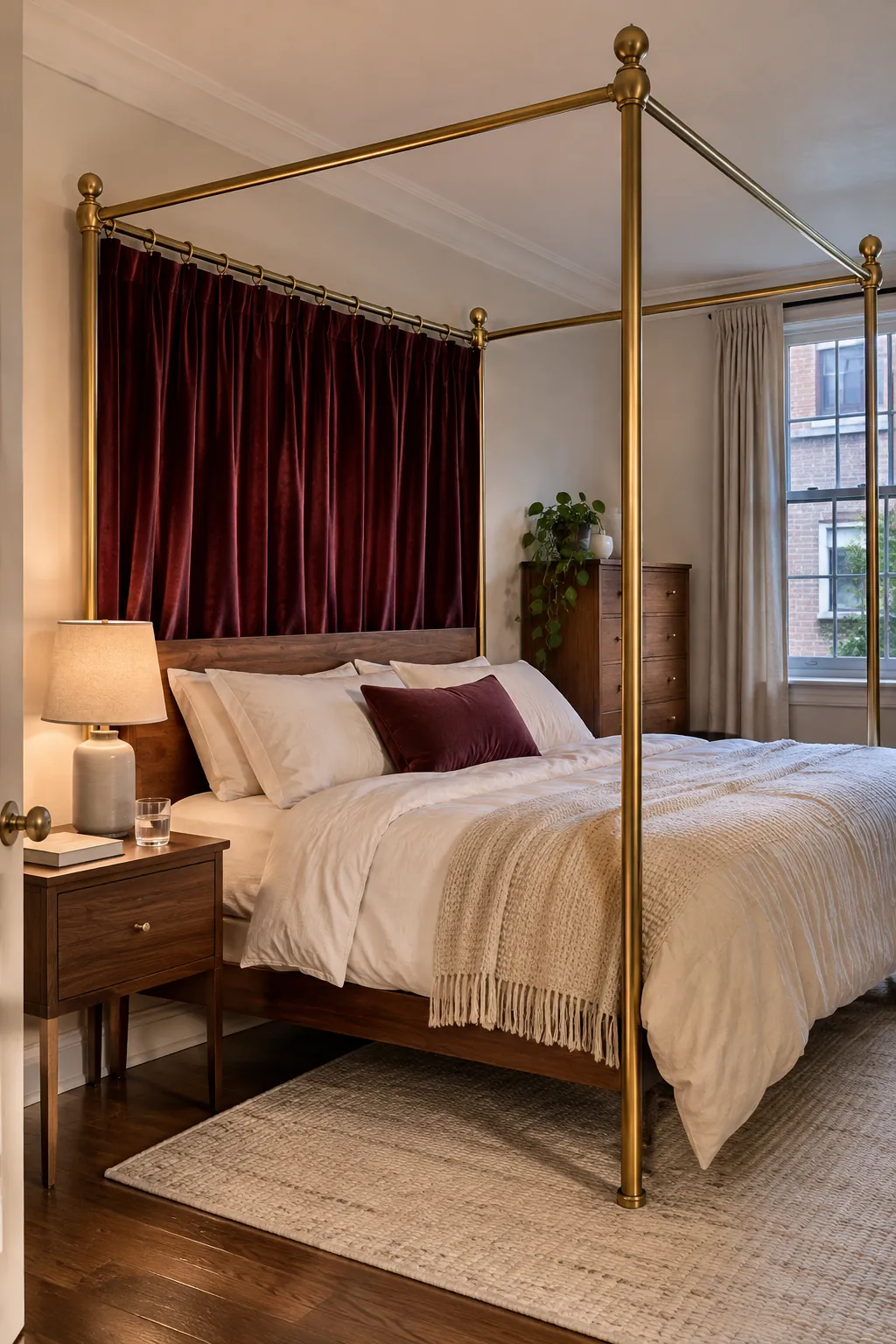
A bamboo canopy frame adds irregular texture and a lighter mood than heavy carved wood. Combine it with cotton bedding, woven baskets, and a limited natural palette so each material remains distinct. Check the joints periodically, since movement and dry indoor air can loosen natural frame connections.
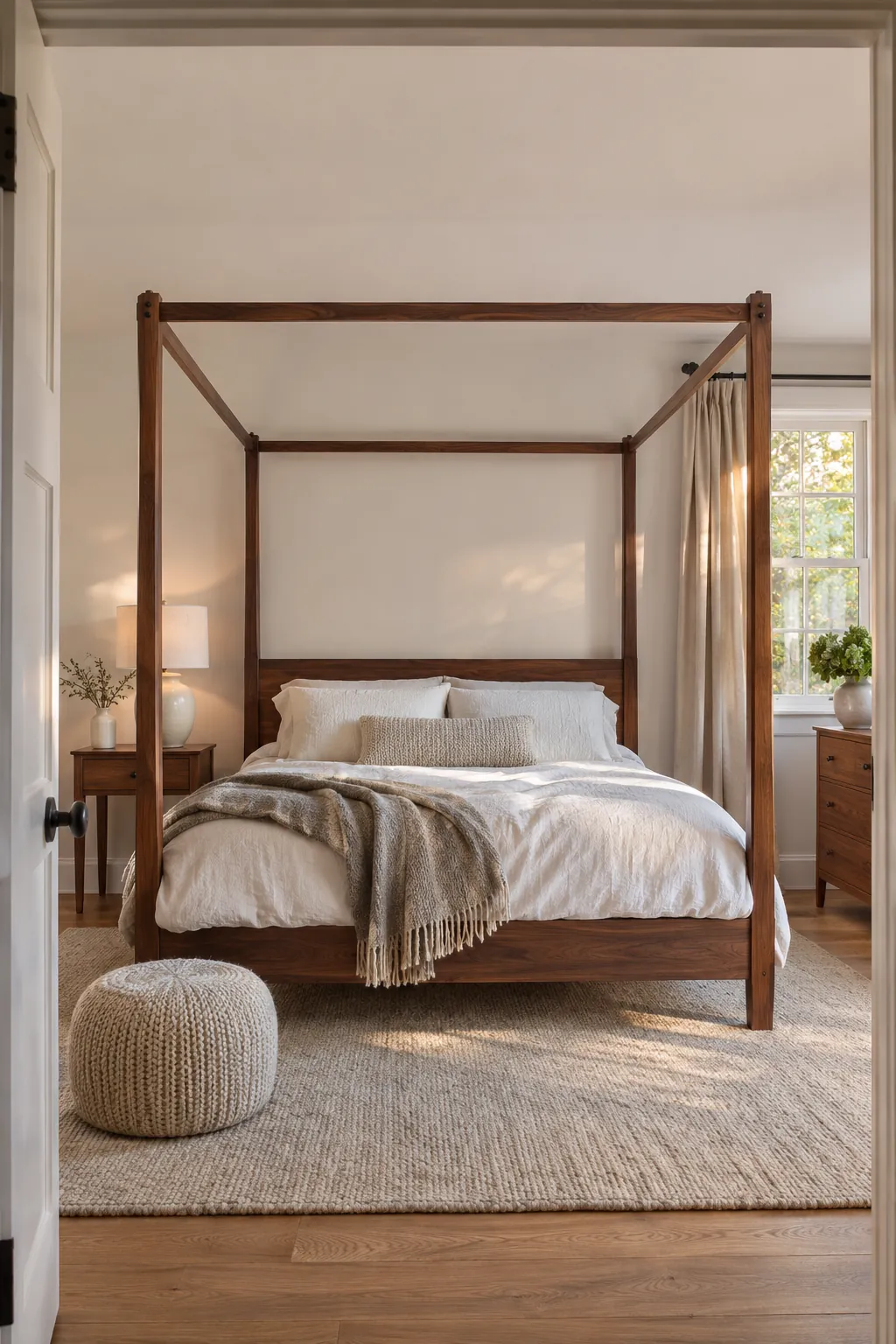
Curtain Free Four Poster
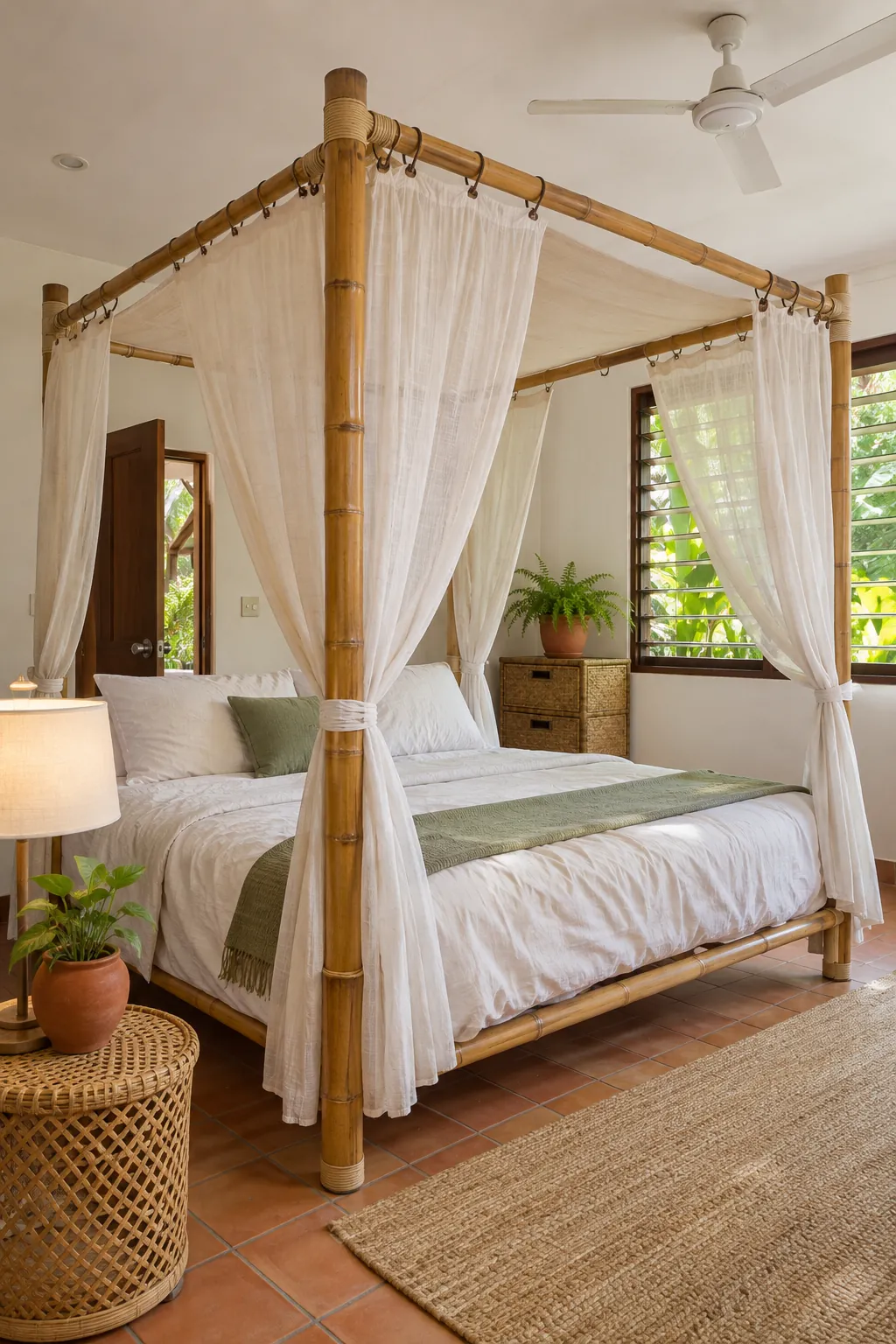
A curtain free four poster highlights proportion and craftsmanship without adding fabric care. Let the top rails frame an uncluttered ceiling and keep pendant lights outside the bed perimeter. This option suits anyone who likes the canopy silhouette but wants easy cleaning and steady airflow.
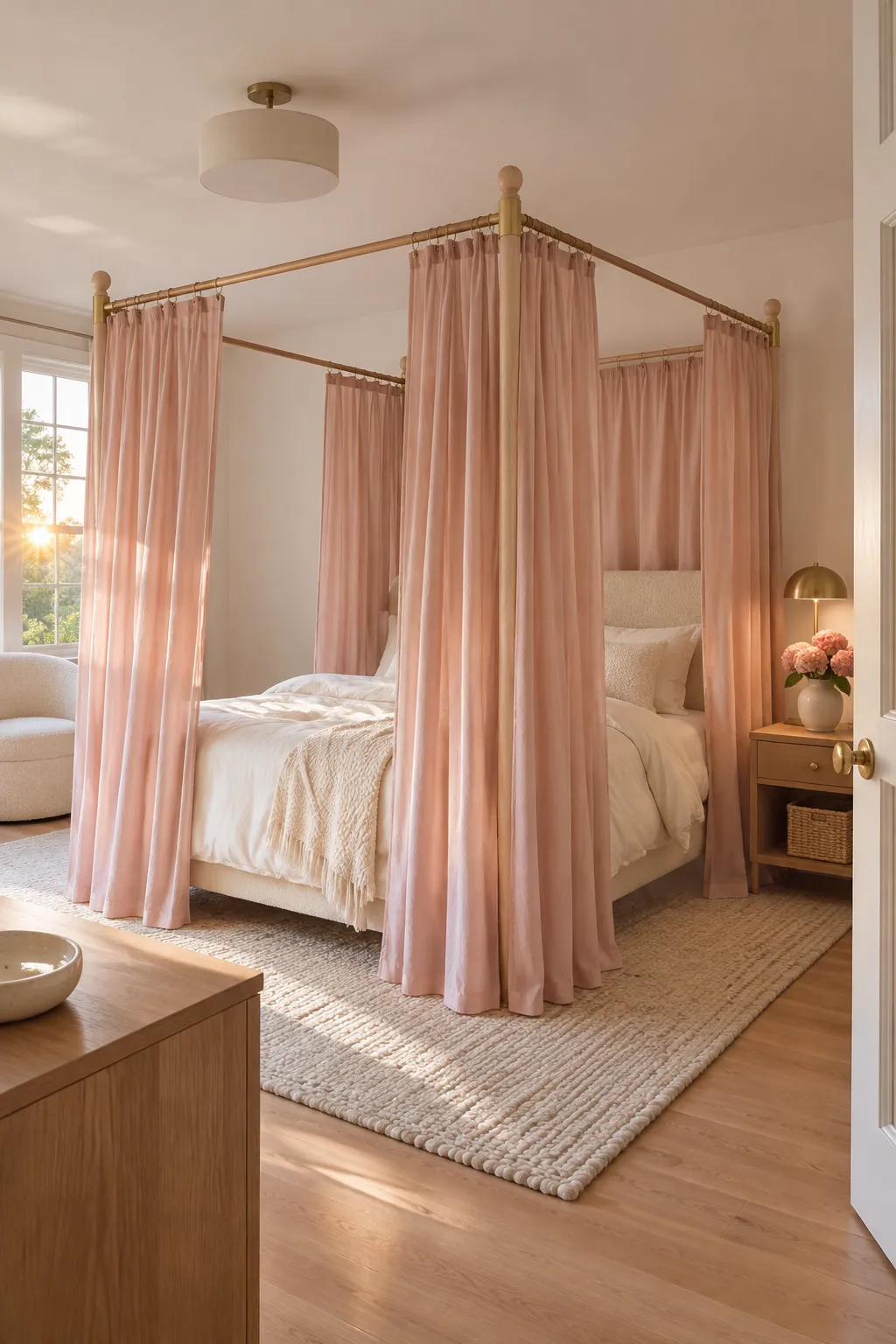
Soft Blush Canopy
Muted blush fabric warms a canopy bed while remaining calmer than bright pink. Balance it with stone, cream, and walnut tones, then use one small brass detail for a subtle glow. The color works best when fabric texture and daylight create variation instead of relying on many decorative accessories.
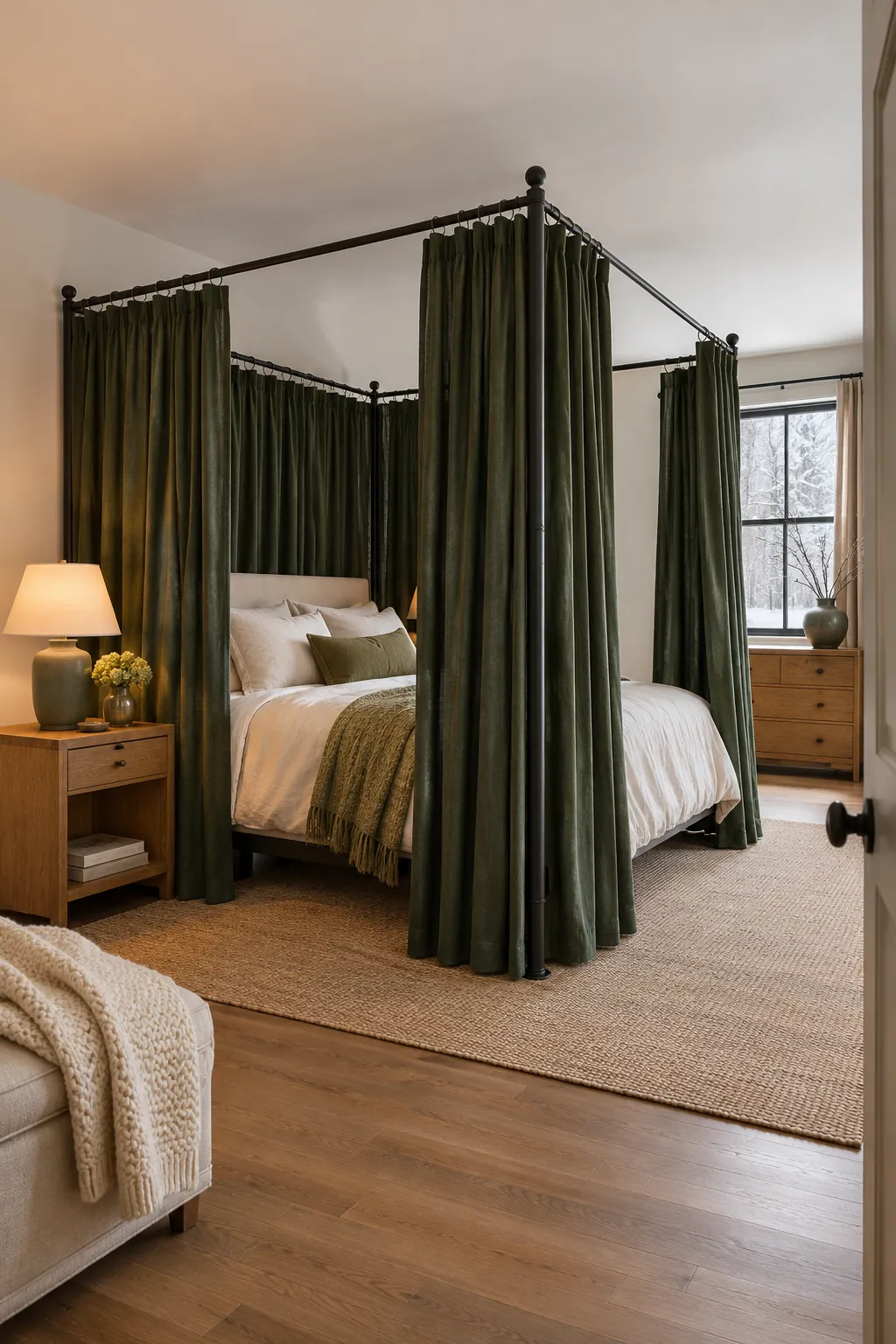
Moody Green Drapery
Deep green drapery can make a large bedroom feel more intimate and settled. Use the rich fabric on only two sides, then add warm lamps and pale sheets to preserve contrast around the sleeping area. Measure generous walking clearance because dark panels can make narrow gaps feel tighter than they are.
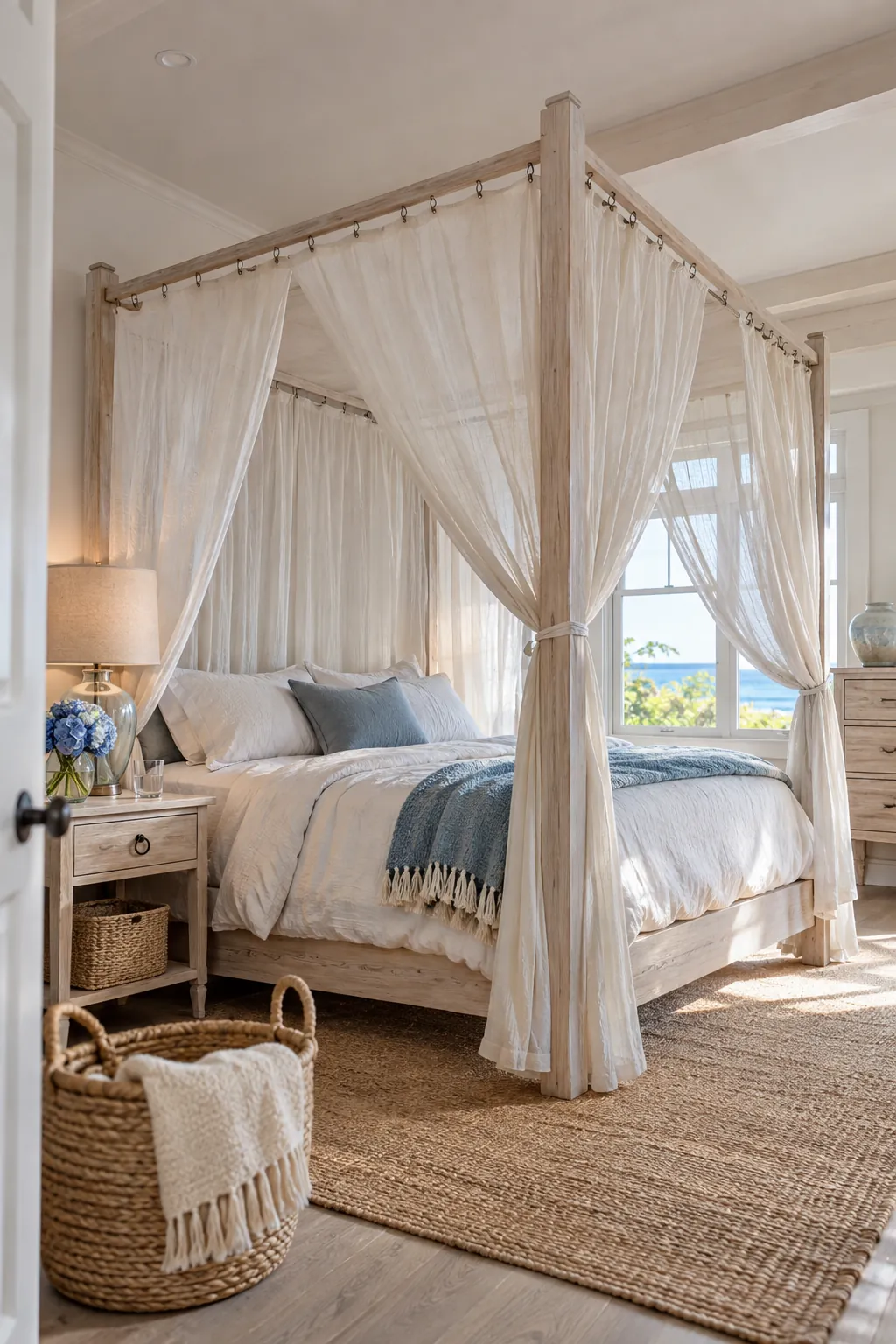
Coastal Muslin Canopy
Washed muslin gives a canopy a breezy coastal character without nautical symbols. Pair its soft movement with pale wood, a woven rug, and clear glass lighting for a quiet material story. Keep the cloth away from open windows during strong wind so it does not snag on frame joints.
Built In Alcove Effect
Side curtains and a shallow overhead panel can make a standard bed feel like a built in alcove. Keep the opening wide enough for comfortable access and use integrated reading lights that remain clear of fabric. The result offers a sheltered look without requiring a full four post frame.
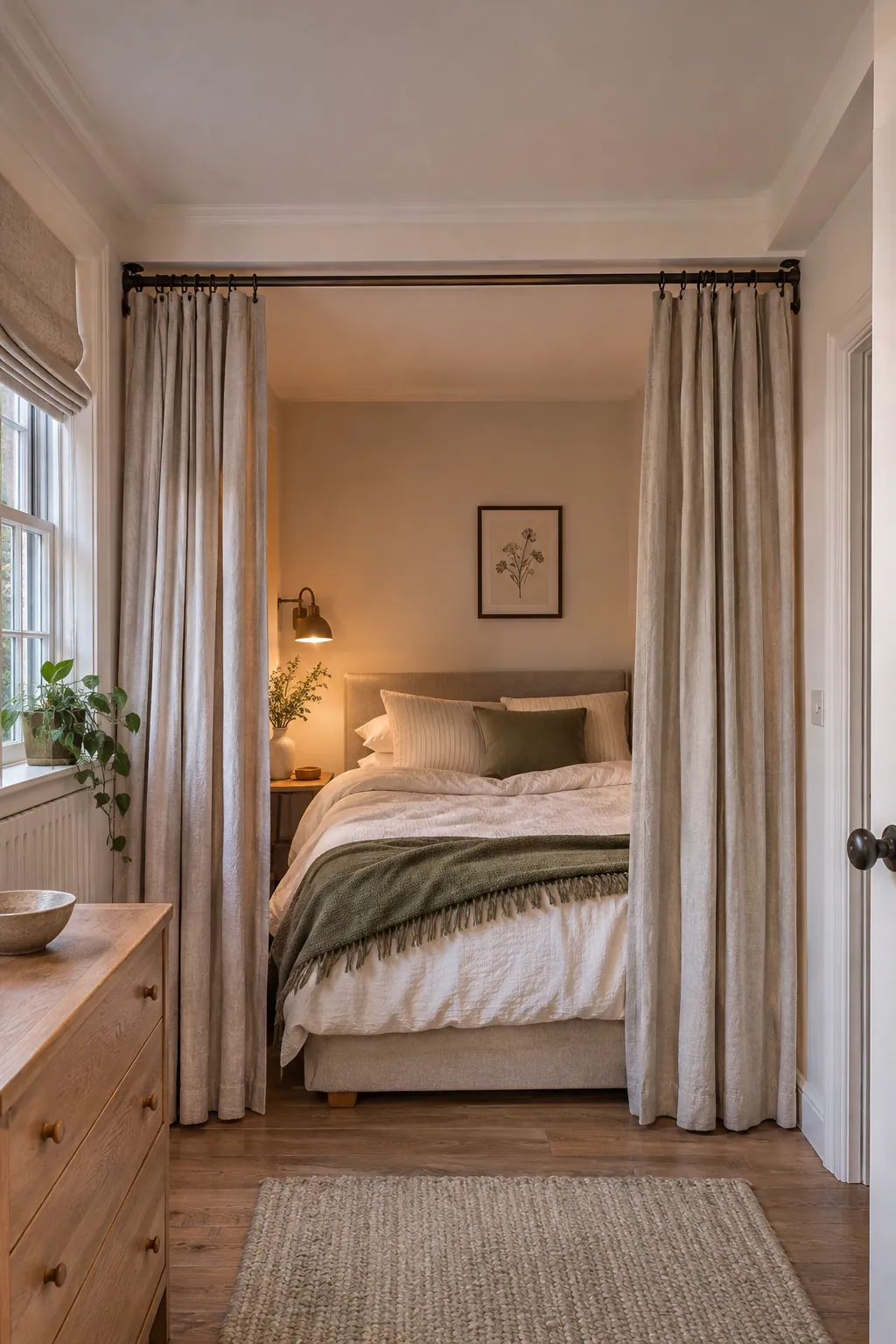
Rattan Detail Canopy
Rattan panels at the head and foot introduce pattern while an open canopy frame maintains height. Repeat the woven texture in only one smaller object, such as a lamp or tray, to avoid a themed room. Smooth cotton sheets provide useful contrast against the lively cane surface.
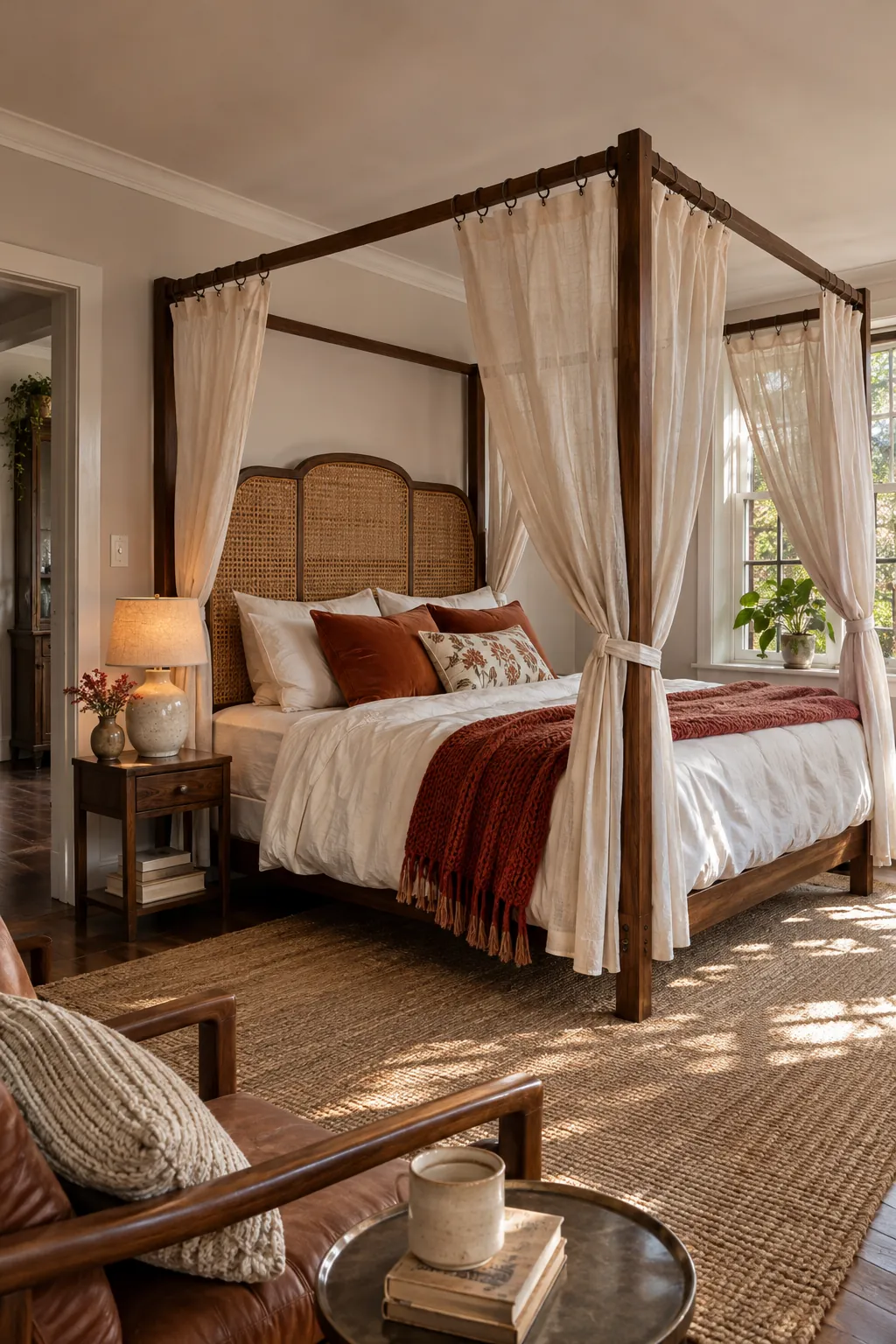
Corner Draped Canopy
Draping fabric at the four corners leaves the center of each side open and accessible. Tie each panel at the same height for order, but let the folds fall naturally rather than shaping stiff swags. This arrangement adds softness while keeping bedside tables and daily movement unobstructed.
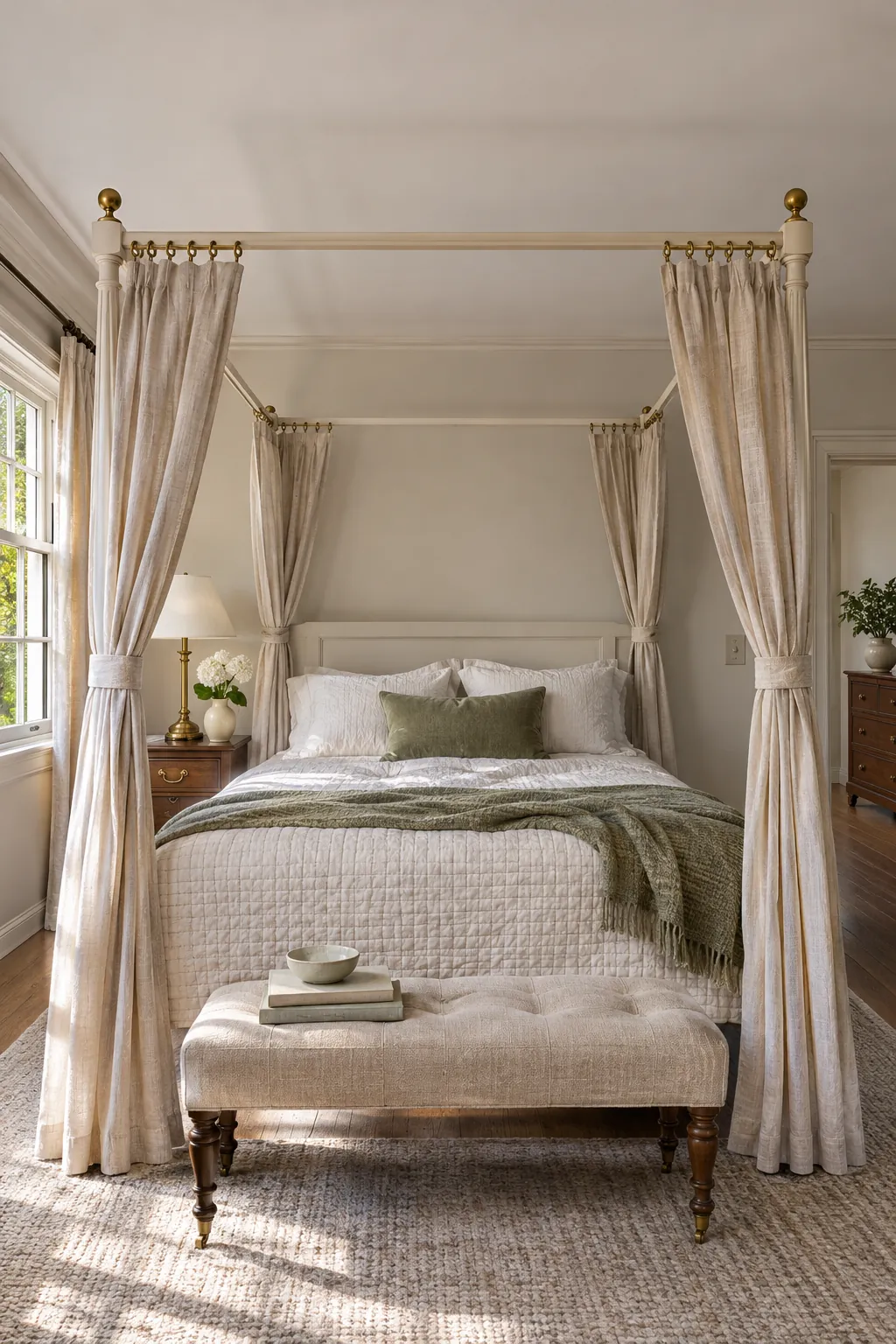
Low Ceiling Canopy
A low ceiling does not rule out a canopy if the upper rails sit close to the ceiling and the posts remain slim. Match the frame color to the walls, avoid a fabric roof, and use vertical bedside lamps to draw the eye upward. Confirm that the assembled frame clears ceiling fans and fixtures before purchase.
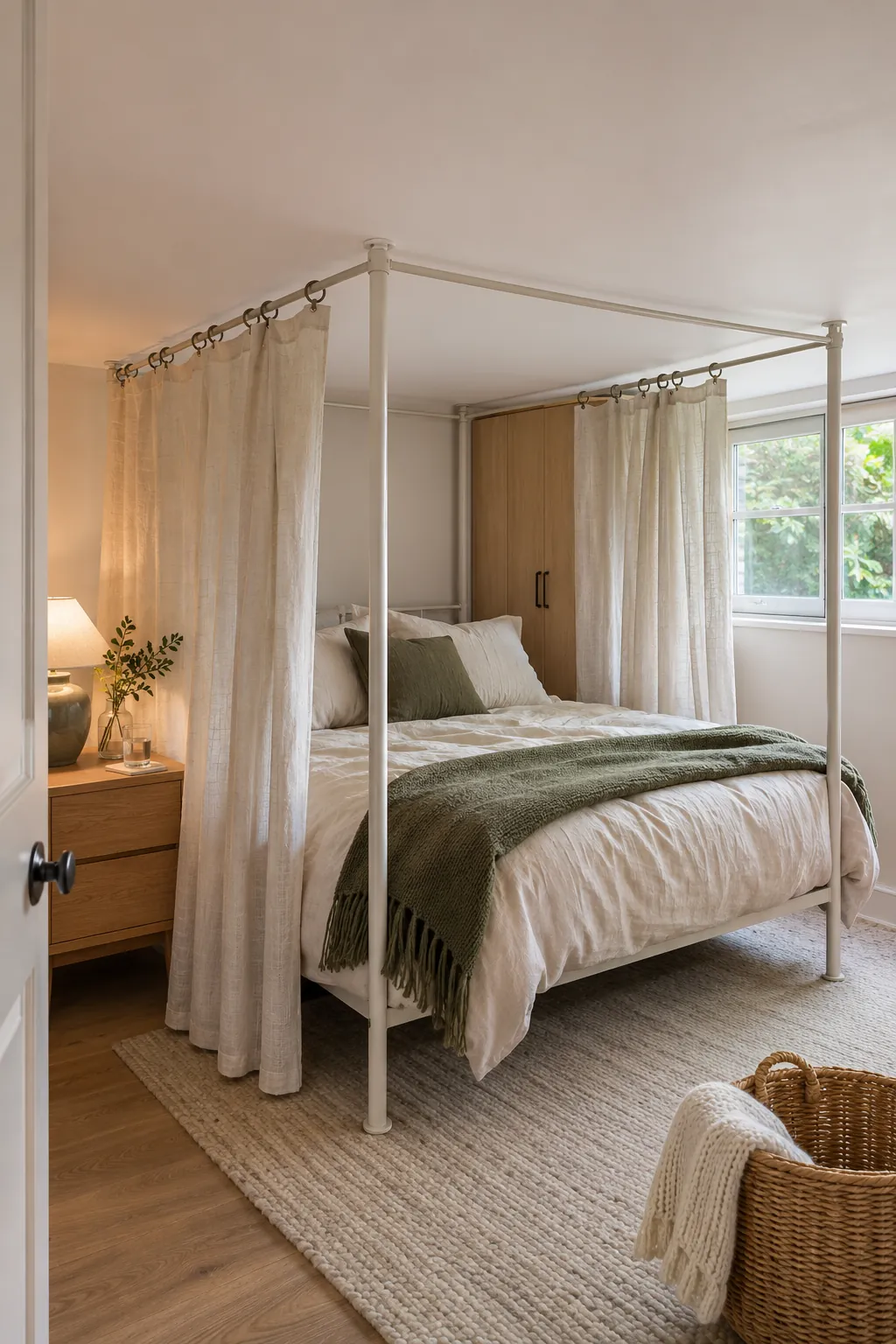
Layered Neutral Textiles
Layering cream, oatmeal, and pale gray textiles gives a canopy depth without strong color contrast. Vary the weave and weight across curtains, sheets, and one throw so the room remains readable in soft light. Keep the palette edited because too many similar fabrics can look untidy rather than restful.
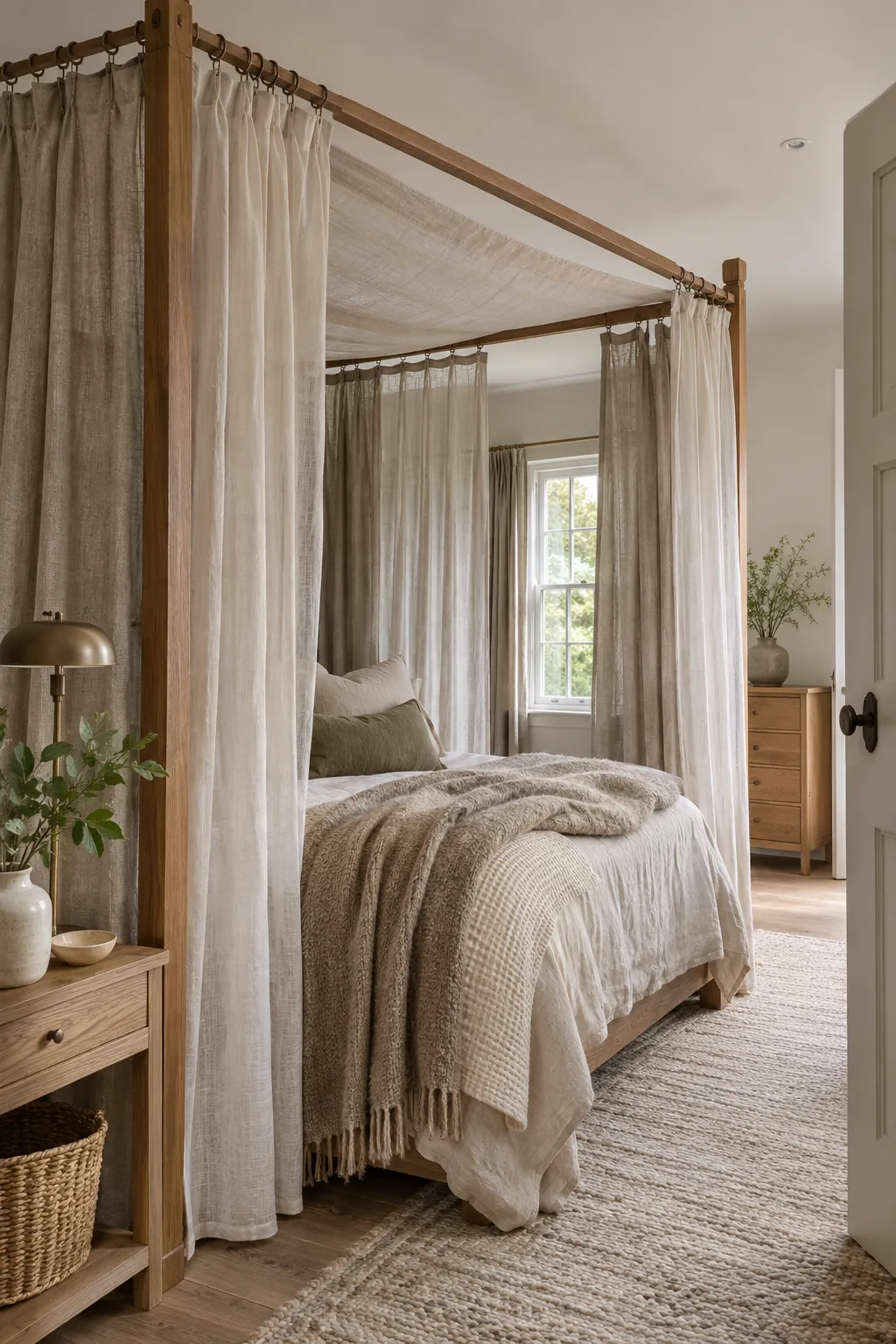
Carved Wood Statement
A carved wood canopy can anchor a spacious bedroom as the main decorative feature. Give the bed clear wall space and pair it with quiet bedding so the carving remains legible from the doorway. Check the scale carefully, since thick posts and a high crown need more visual and physical room than a simple frame.
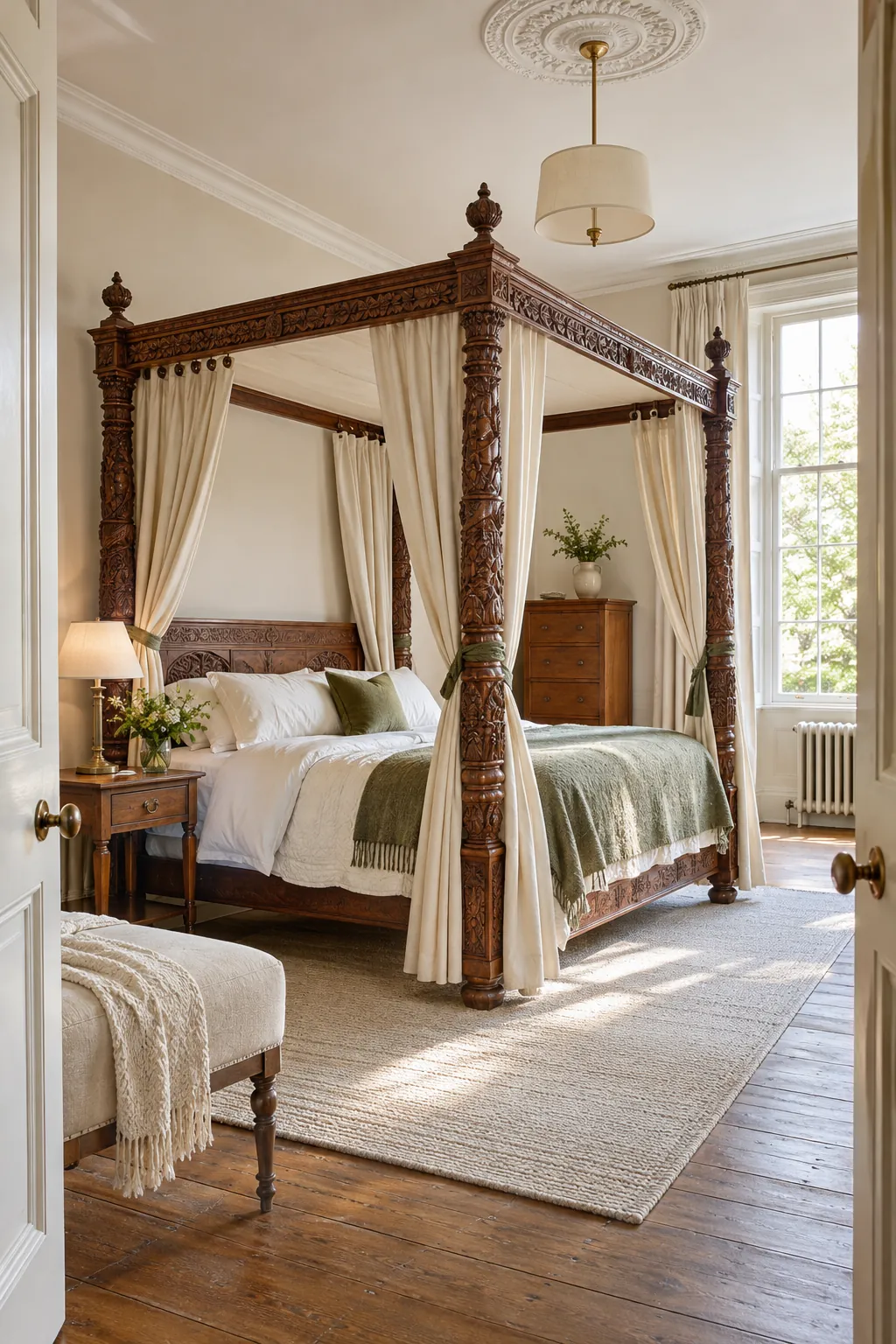
Industrial Pipe Canopy
A dark metal pipe canopy brings an industrial edge to a simple bedroom. Professional installation and secure wall or ceiling fixing are important because improvised overhead structures must not shift above the bed. Warm timber, soft cotton, and a vintage style rug keep the metal from making the room feel cold.
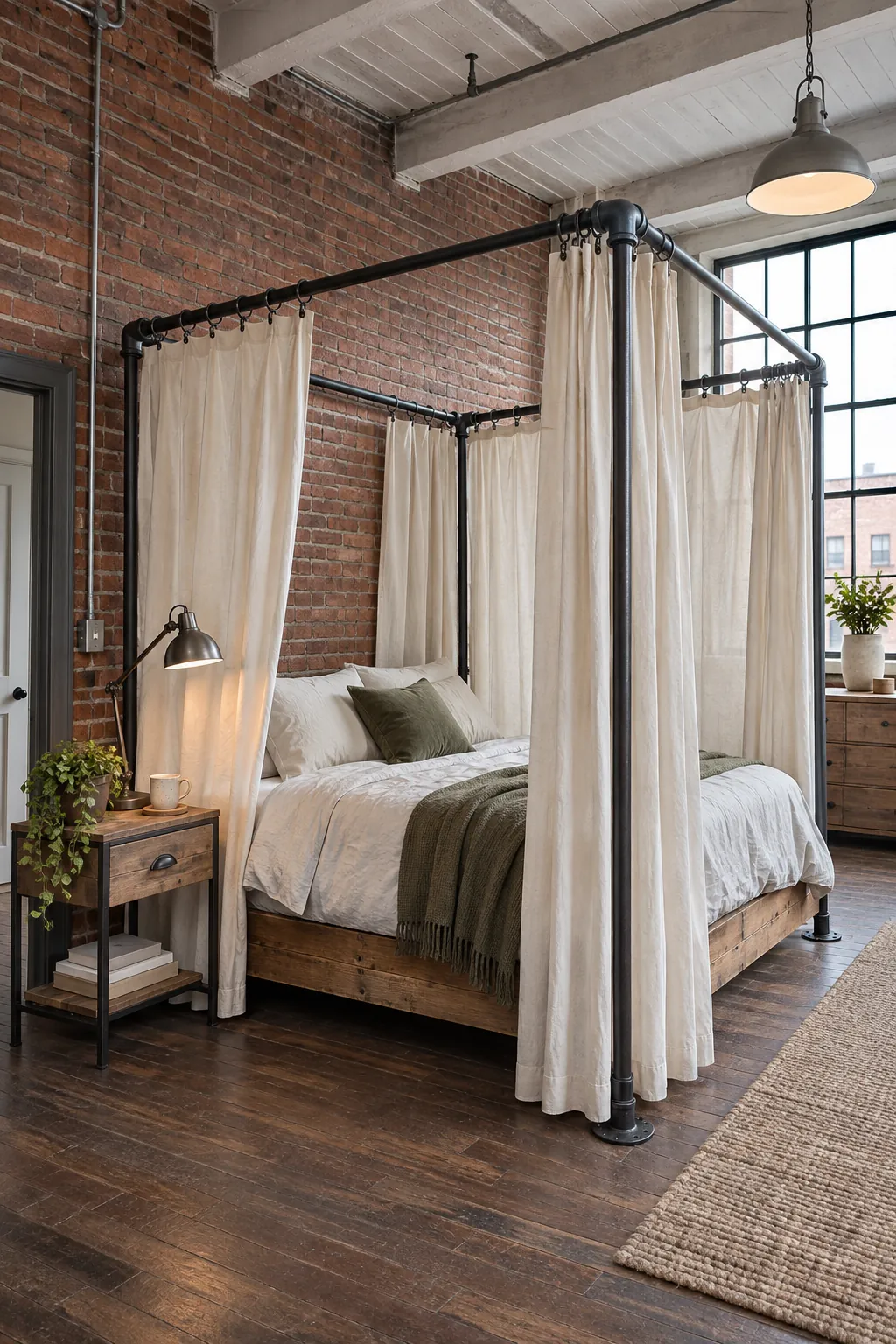
Reading Nook Canopy Bed
A canopy bed can double as a reading retreat when the head area has good support and focused light. Add a firm back cushion and a reachable shelf, then route cords away from curtains and walking paths. The setup feels inviting when books and lighting serve daily use rather than acting as decoration.
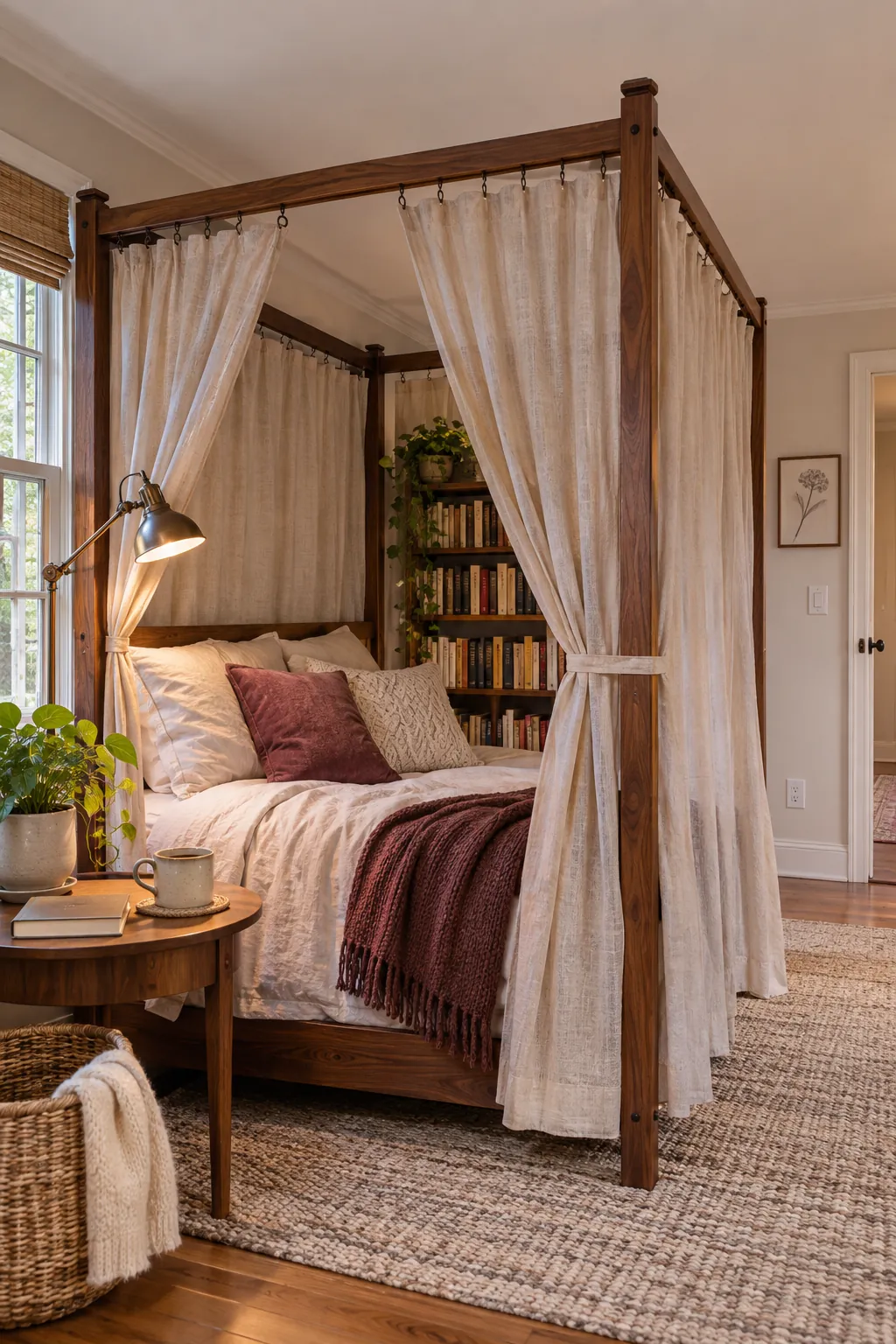
Sunlit Window Canopy
Placing a canopy near a window can frame daylight, provided the bed does not block ventilation or access. Use translucent panels and tie them back beyond the window opening during the day. Test the path of direct sun because strong exposure can fade colored fabric and disturb sleep.
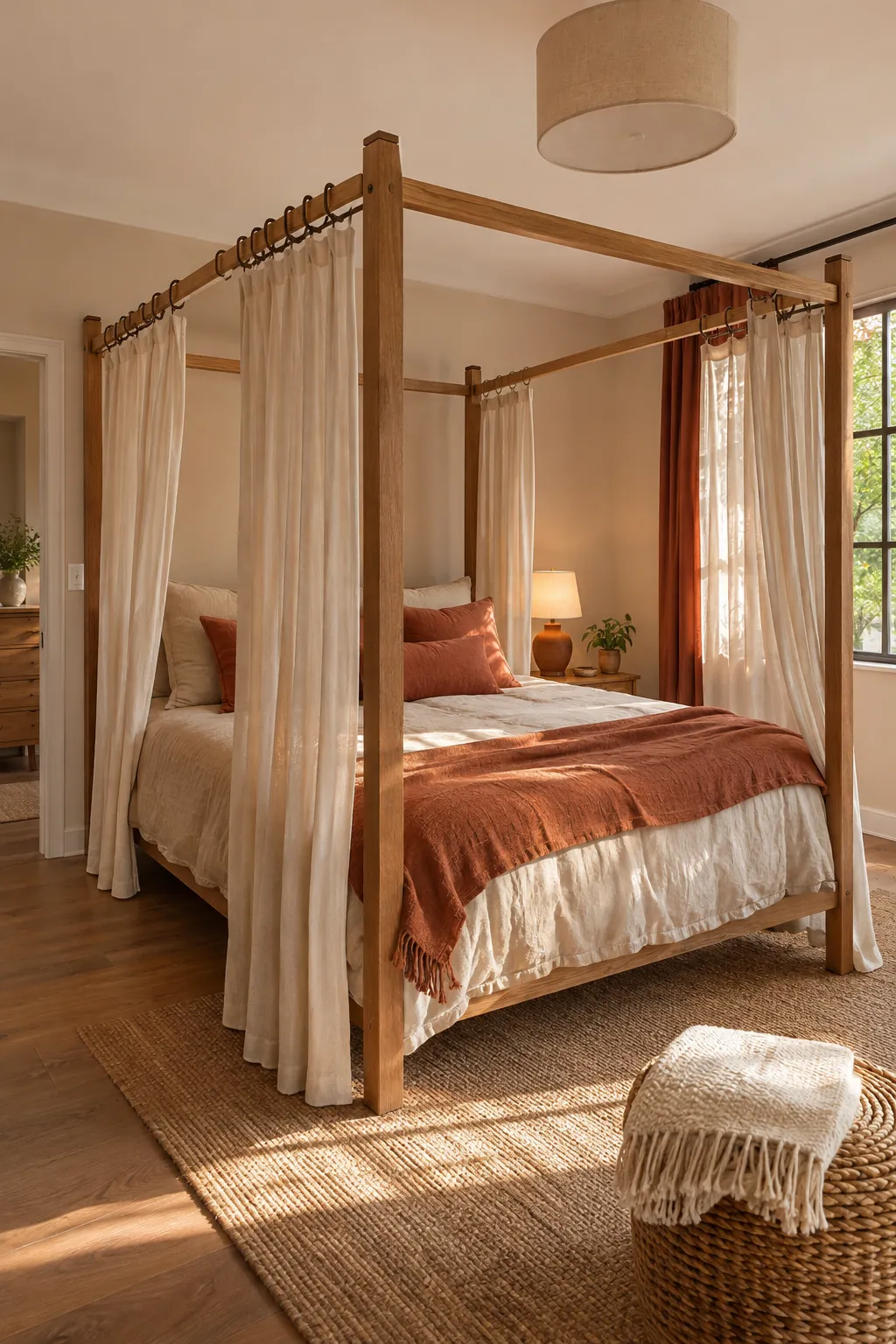
Earthy Terracotta Accents
Terracotta cushions and a clay toned throw bring warmth to a neutral canopy bed. Keep the canopy fabric light and let the earthy color stay close to the mattress, where it feels grounded. A few handmade ceramics can continue the palette without filling every surface.
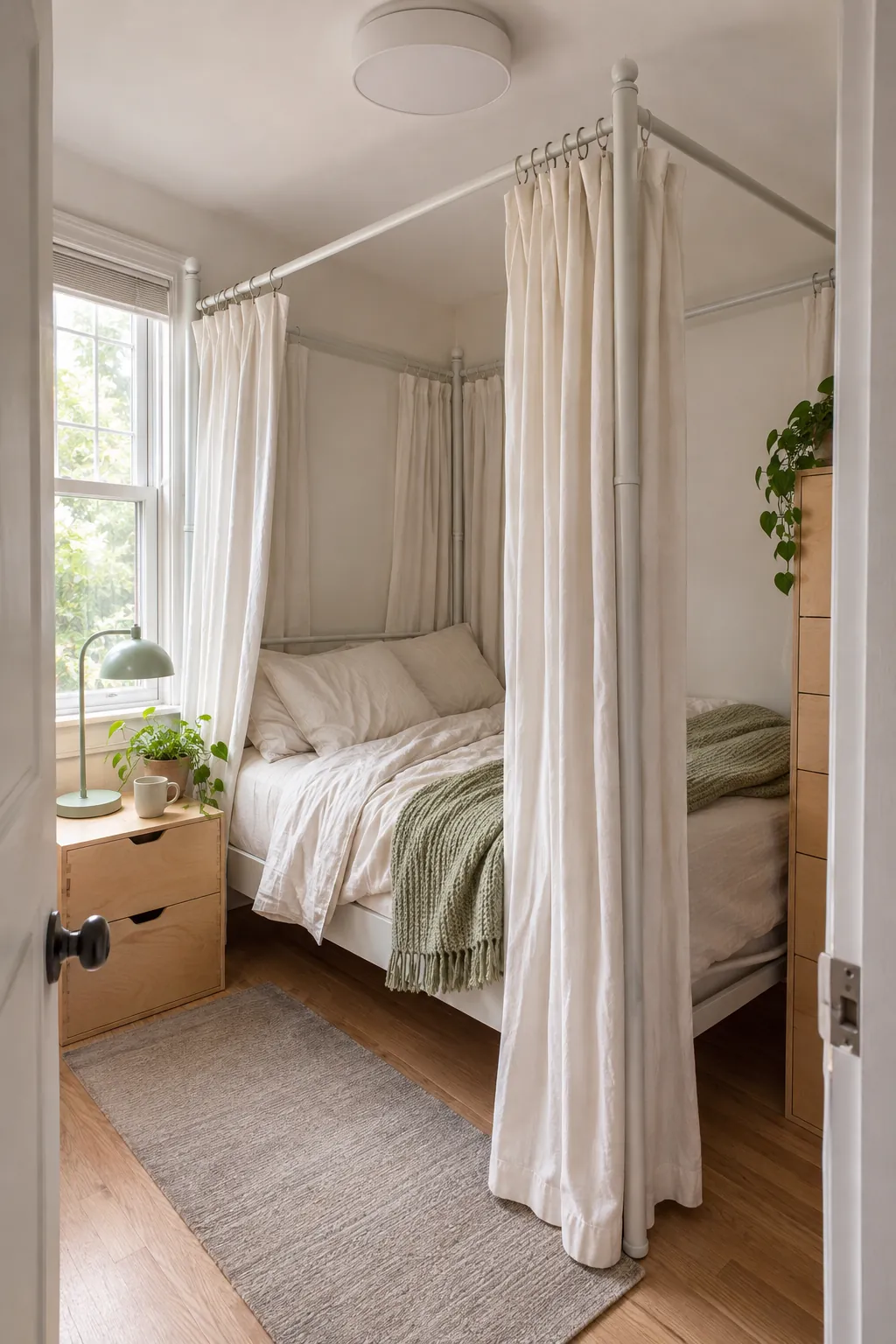
Tucked Corner Small Room
In a compact bedroom, a canopy bed can sit close to one wall if the accessible side remains comfortable. Choose a frame with straight posts, no projecting finials, and enough under bed storage to reduce extra furniture. Pale walls and a clear route from the door prevent the tall frame from dominating the room.
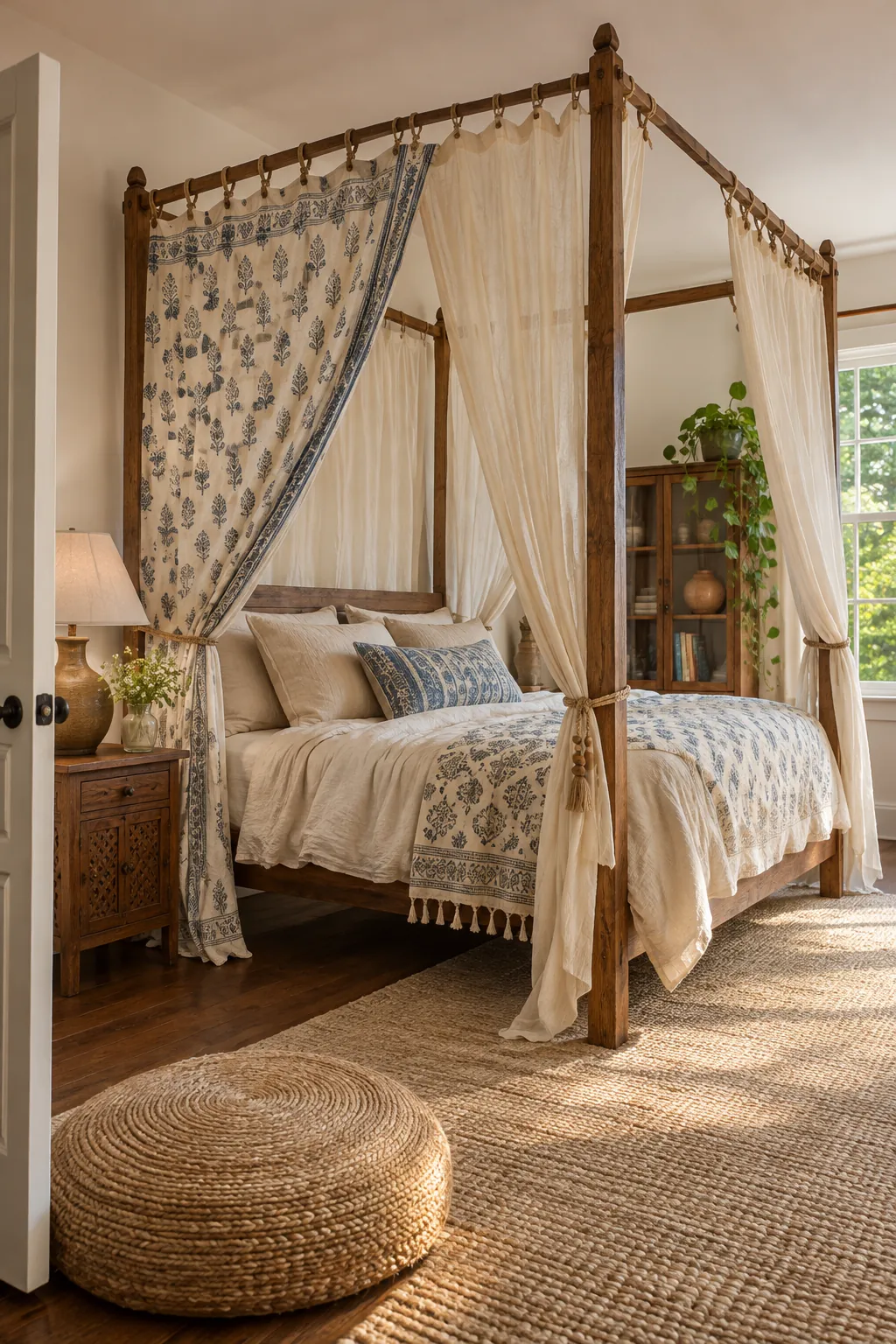
Relaxed Bohemian Canopy
A relaxed bohemian canopy works best when natural materials lead and decorative layers remain selective. Combine an open timber frame with one patterned textile, a plain cotton curtain, and a textured rug. Leaving some wall and floor area quiet keeps the room personal without turning every object into a focal point.
Tailored Hotel Style
A tailored canopy uses symmetrical lamps, smooth panels, and crisp bedding to create a calm hotel feeling. Choose durable fabric and leave enough space to clean behind the headboard and bedside tables. One slightly irregular object, such as a handmade vase or textured throw, prevents the arrangement from feeling impersonal.
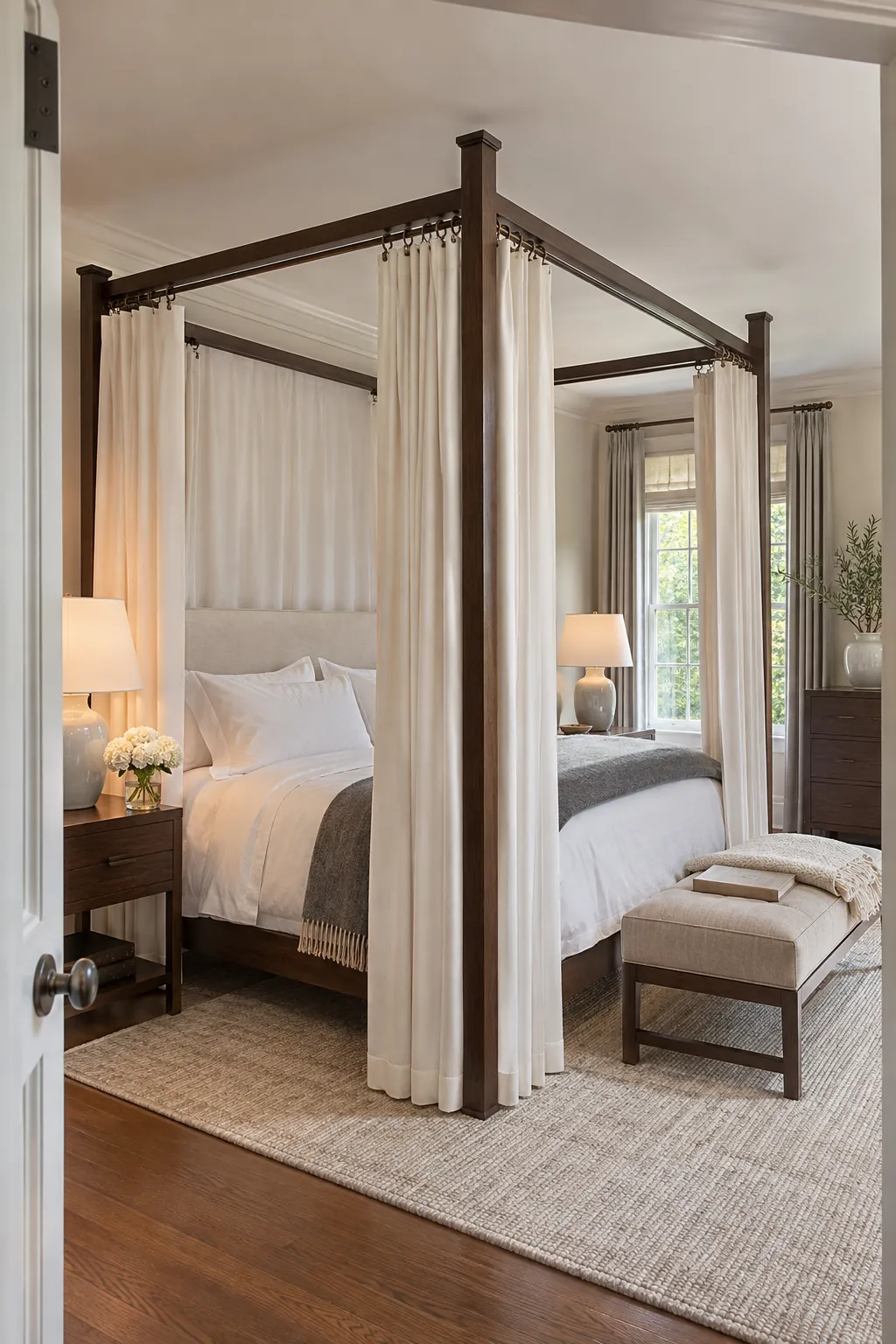
Simple DIY Ring Canopy
A ring canopy above the head of the bed offers a simple alternative to a complete frame. Use an appropriately rated ceiling fixing, keep the hanging fabric behind the pillows, and confirm that children or pets cannot pull it down. The small amount of cloth adds softness while preserving floor space and access on both sides.
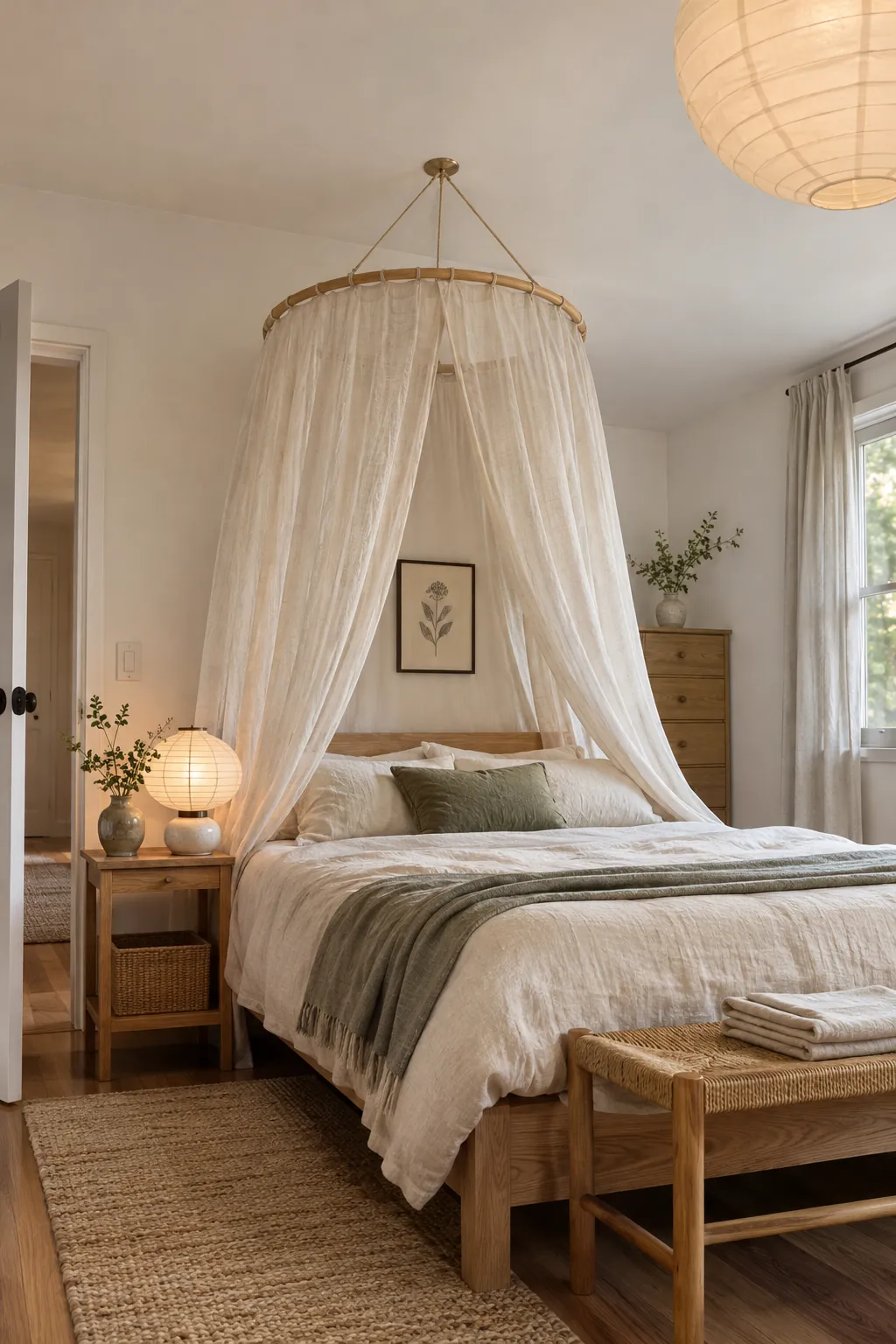
Calm Japandi Canopy
A low timber canopy with clean joints suits a calm room built around function and tactile materials. Pair it with linen bedding, one paper shade, and open floor space that makes daily movement easy. The restrained design succeeds through proportion and craftsmanship, so avoid adding curtains unless privacy or light control truly requires them.