
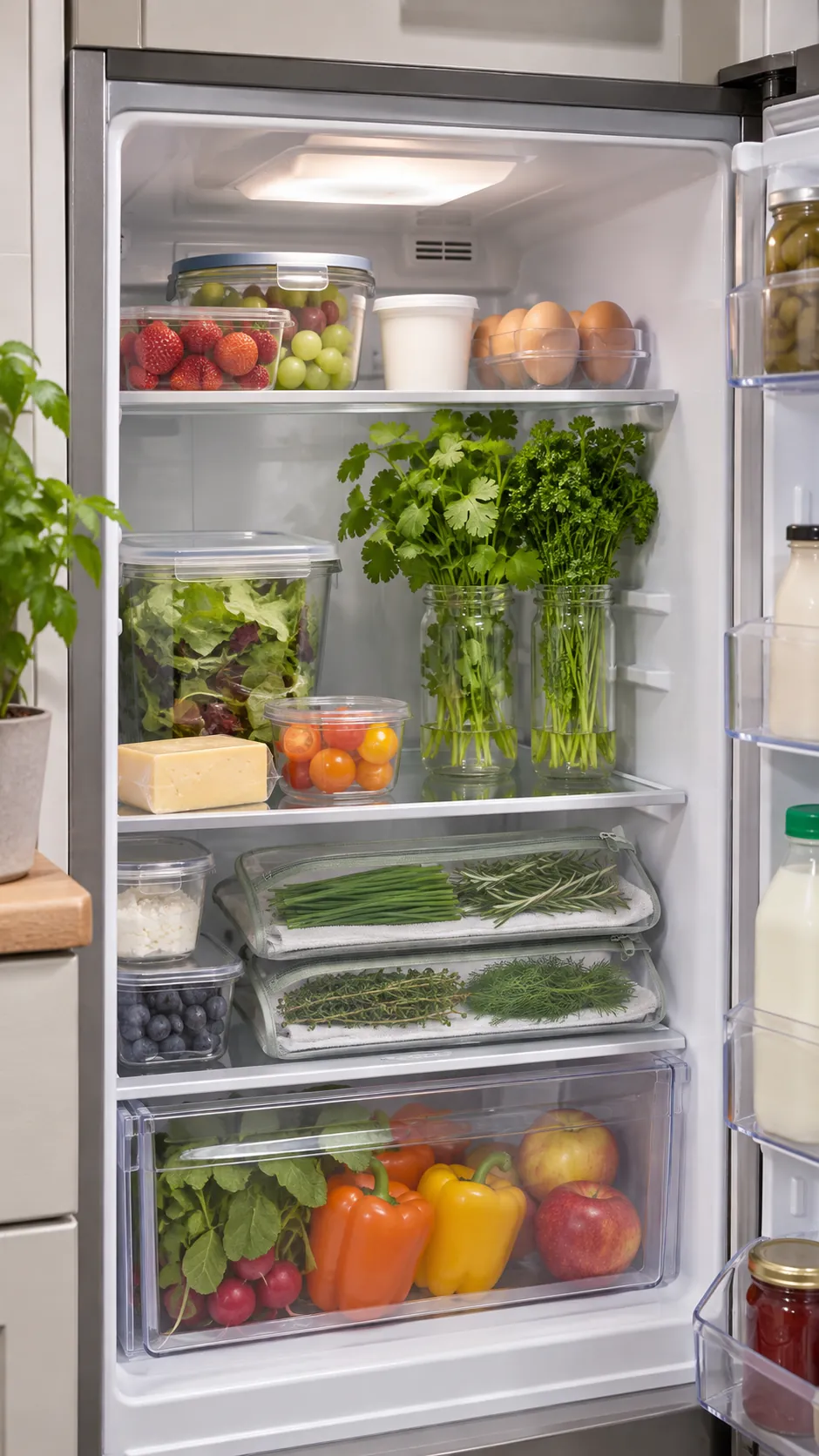
Fresh herbs need the right moisture balance more than they need a specialized keeper. In a small fridge, cilantro and parsley can stand in a narrow jar, while chives, rosemary, thyme, and many delicate cut herbs can lie flat with a towel in a reusable bag or shallow container. The compact choice depends on the stems, leaves, and how soon you will cook with them.
Sort Herbs Before Choosing Storage
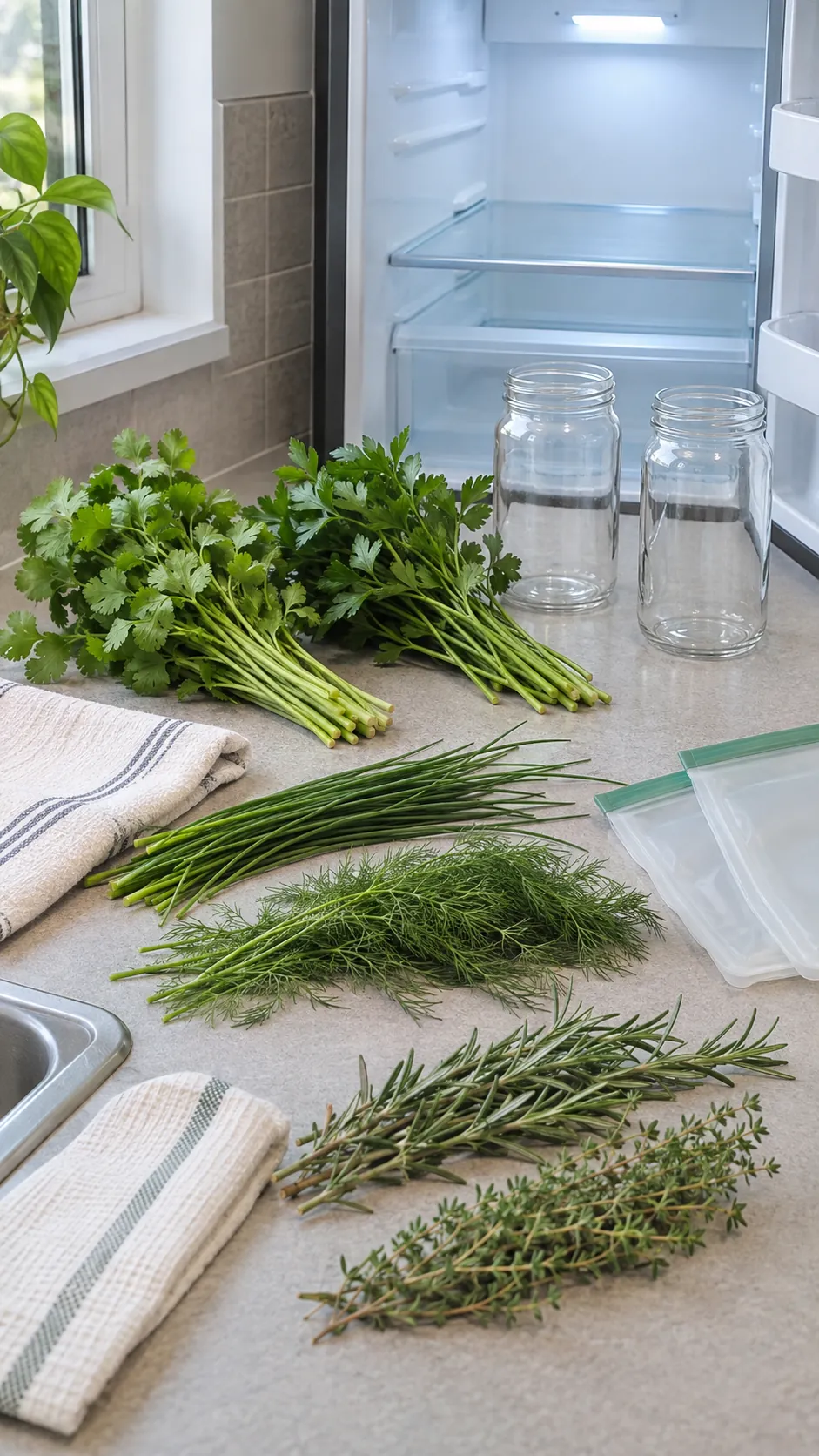
Leafy bunches with longer stems, including cilantro and parsley, can often use a refrigerator herb jar like cut flowers. Woody sprigs such as rosemary and thyme take little room when laid flat. Tender leaves and chives need protection from crushing but do not require a tall container.
Remove damaged leaves and any tight bands that bruise stems. Follow the storage guidance supplied with the herb. Basil can be sensitive to cold, so consider room temperature storage when appropriate and use it promptly.
Control Surface Moisture
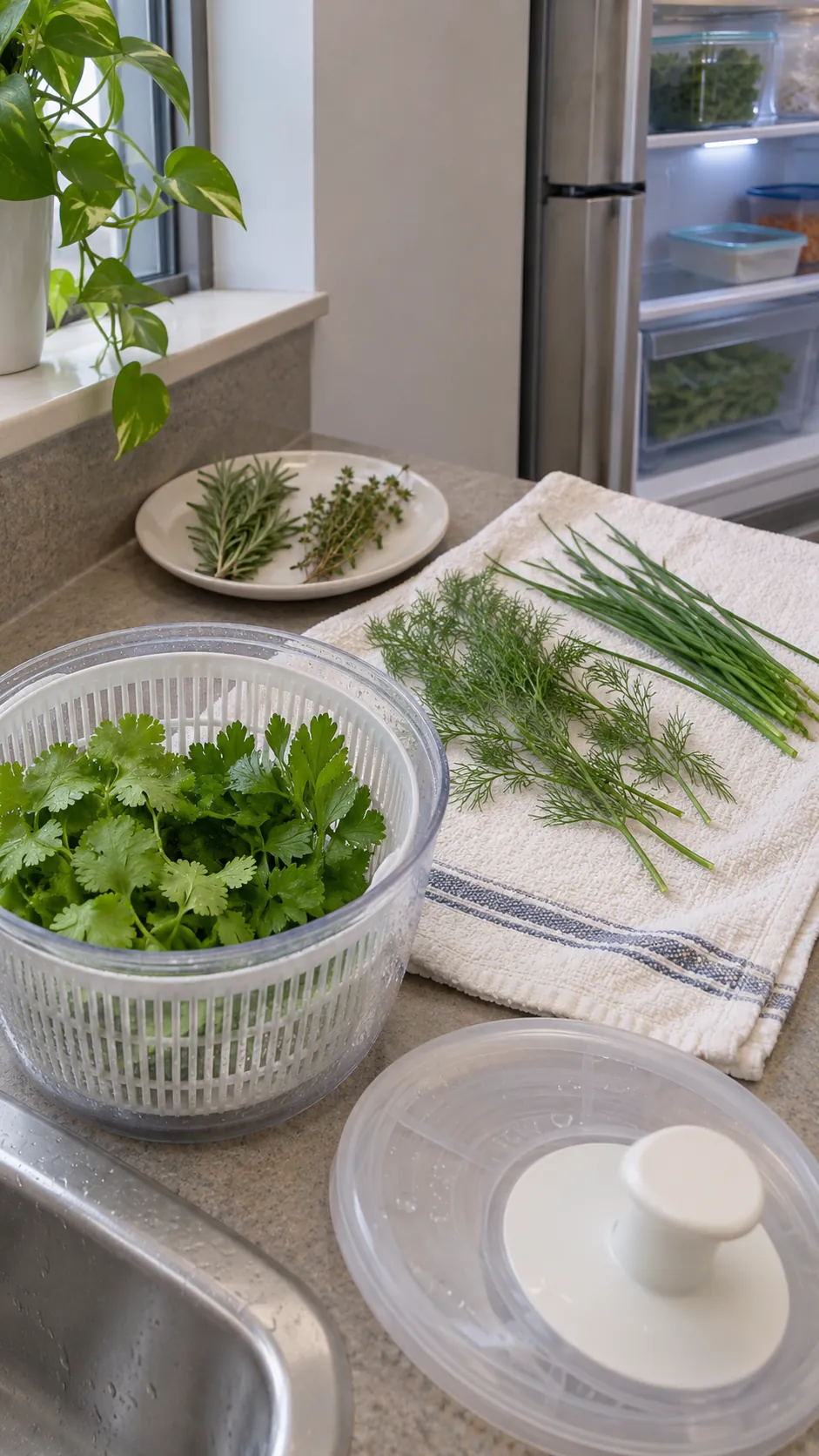
If you wash herbs before storage, dry them thoroughly. A salad spinner followed by a clean towel can remove water trapped among leaves. Excess droplets encourage deterioration, while completely exposed herbs can lose moisture and wilt.
When herbs arrive clean and you prefer to wash them just before cooking, keep them dry during storage. Check the bunch rather than following one rigid rule. Replace a soaked towel, remove deteriorating leaves, and avoid sealing visible pools of water with the herbs.
Use a Narrow Jar for Cilantro and Parsley
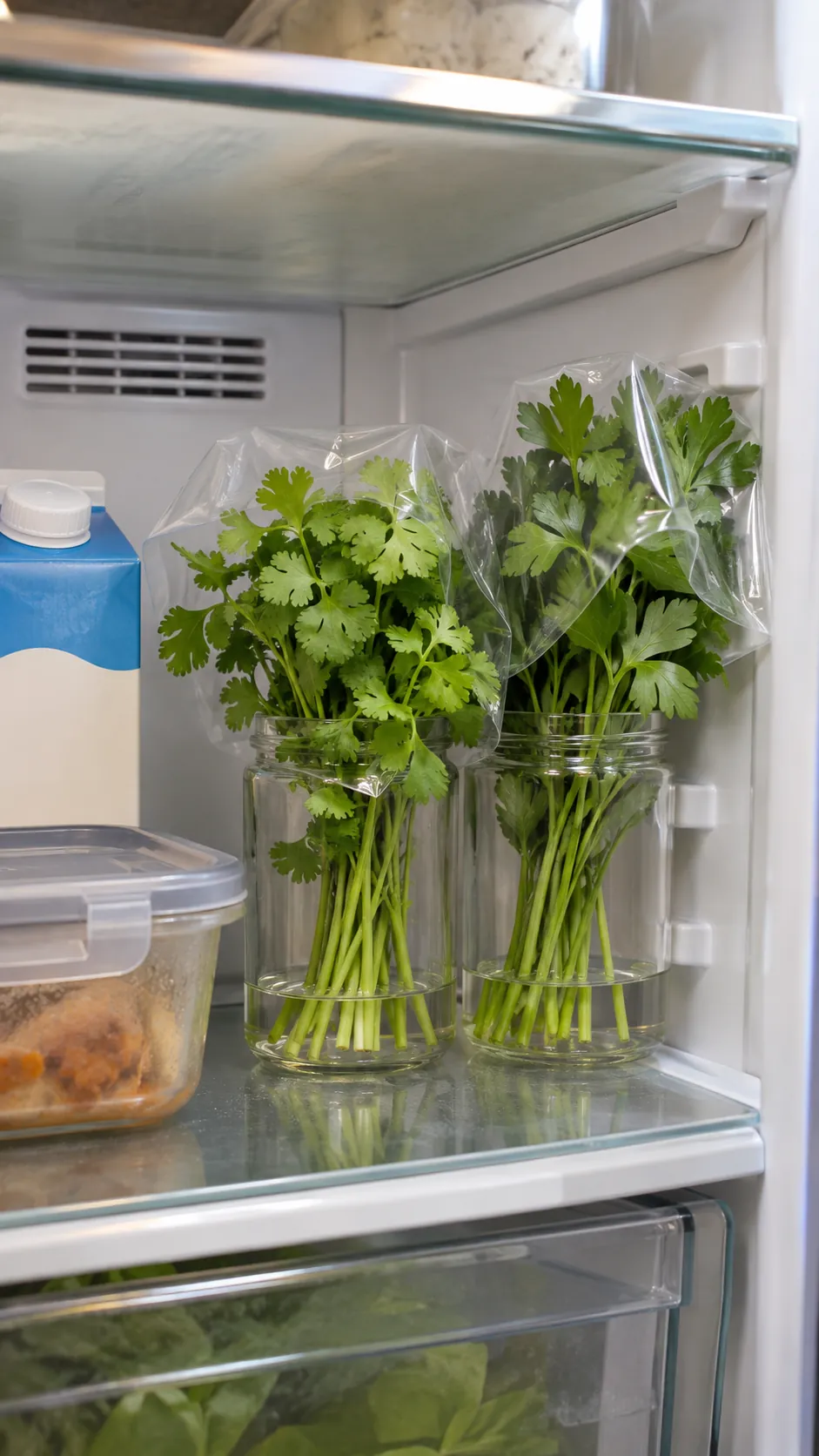
Trim a small amount from the stem ends and place the bunch in a narrow stable jar with a shallow level of clean water. Keep leaves above the water. A loose reusable cover over the leaves can reduce drying without compressing them.
Choose the shortest jar that supports the stems and fits under the shelf above. Place it where it cannot tip, and change cloudy water. One jar can hold the bunch without the wide base and lid of a bulky compact herb keeper.
Lay Delicate Herbs Flat With a Towel
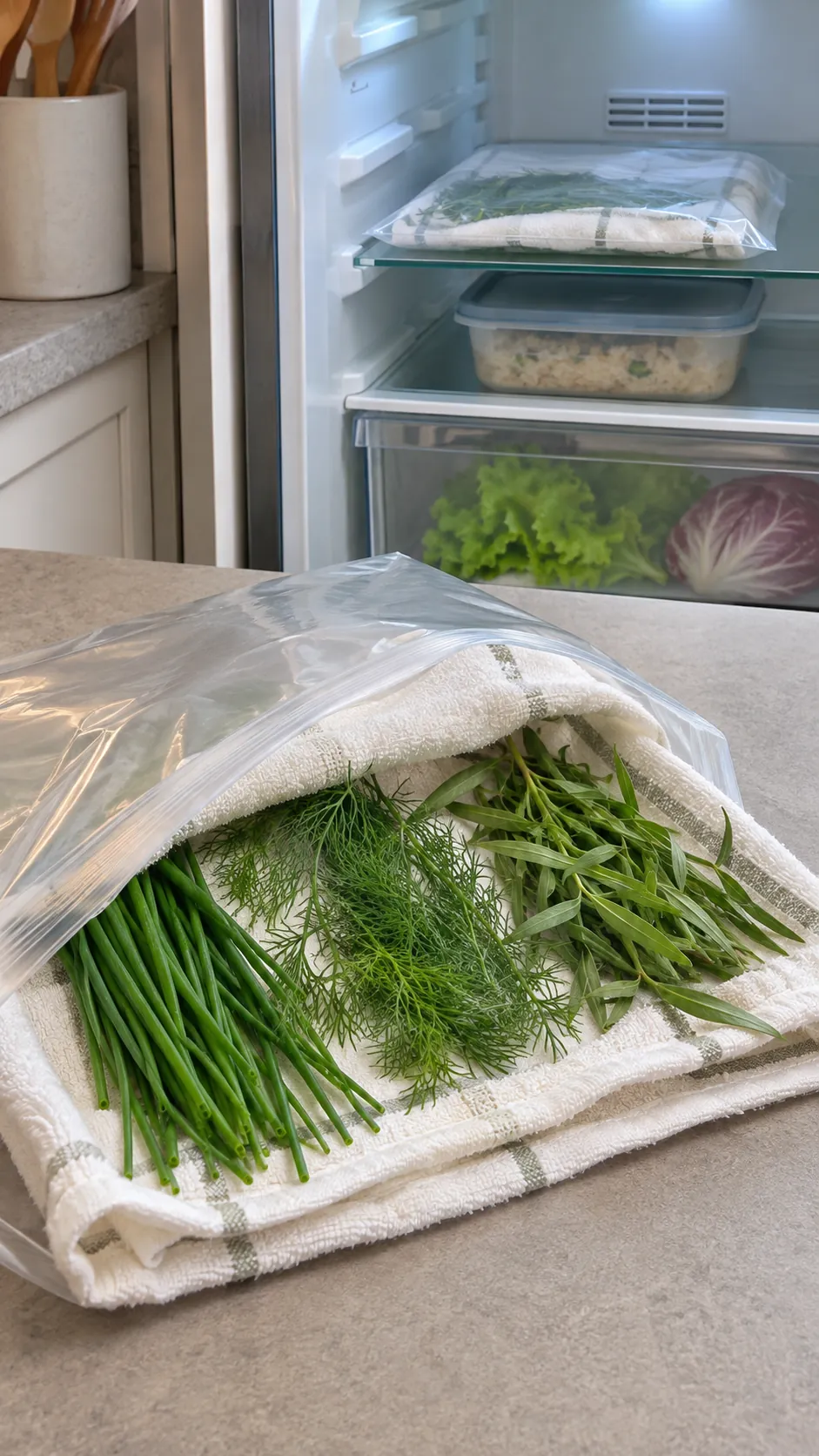
Spread dry chives, tarragon, dill, or other delicate cut herbs in a loose layer on a clean absorbent towel. Roll or fold the towel gently, then place it in a reusable bag or shallow container. Do not compress the leaves into a dense bundle.
A flat package can slide into a narrow shelf gap or rest above a low container. Keep it visible so it is not crushed by leftovers. Check the towel and leaves during the week, especially if the herbs were damp when stored.
Keep Woody Sprigs in a Slim Packet
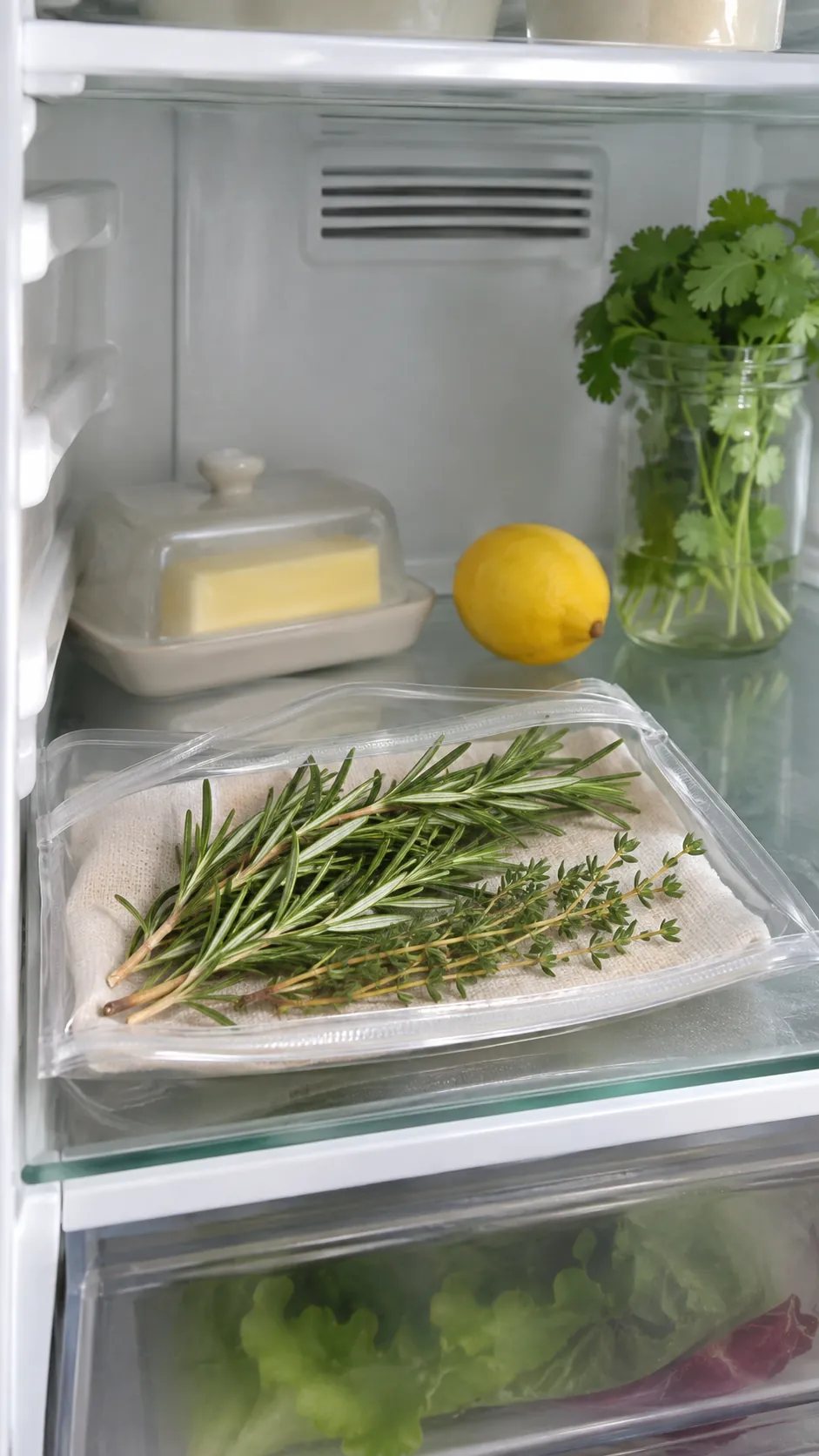
Rosemary and thyme sprigs are compact when wrapped loosely in a lightly damp towel and placed in a reusable bag. The packet needs only enough room to prevent crushing. Store it where the stems remain visible and cannot fall behind a drawer.
Use a separate packet when moisture needs differ. Combining a wet leafy bunch with woody sprigs can make both harder to monitor. A slim packet also lets you take only the amount needed without lifting a tall container.
Give Every Herb a Cooking Plan
Place herbs near ingredients you will use with them or note the next meal that needs them. Fresh herb storage cannot correct buying more than the household can cook. Smaller bunches or planned shared uses often save more fridge shelf space than another container.
Review herbs before shopping. Use suitable remaining leaves in sauces, soups, salads, or compound butter according to the recipe. Freeze herbs intended for cooked dishes when that method suits them, understanding that thawed texture will differ from fresh garnish.
Use the Smallest Method That Protects the Leaves
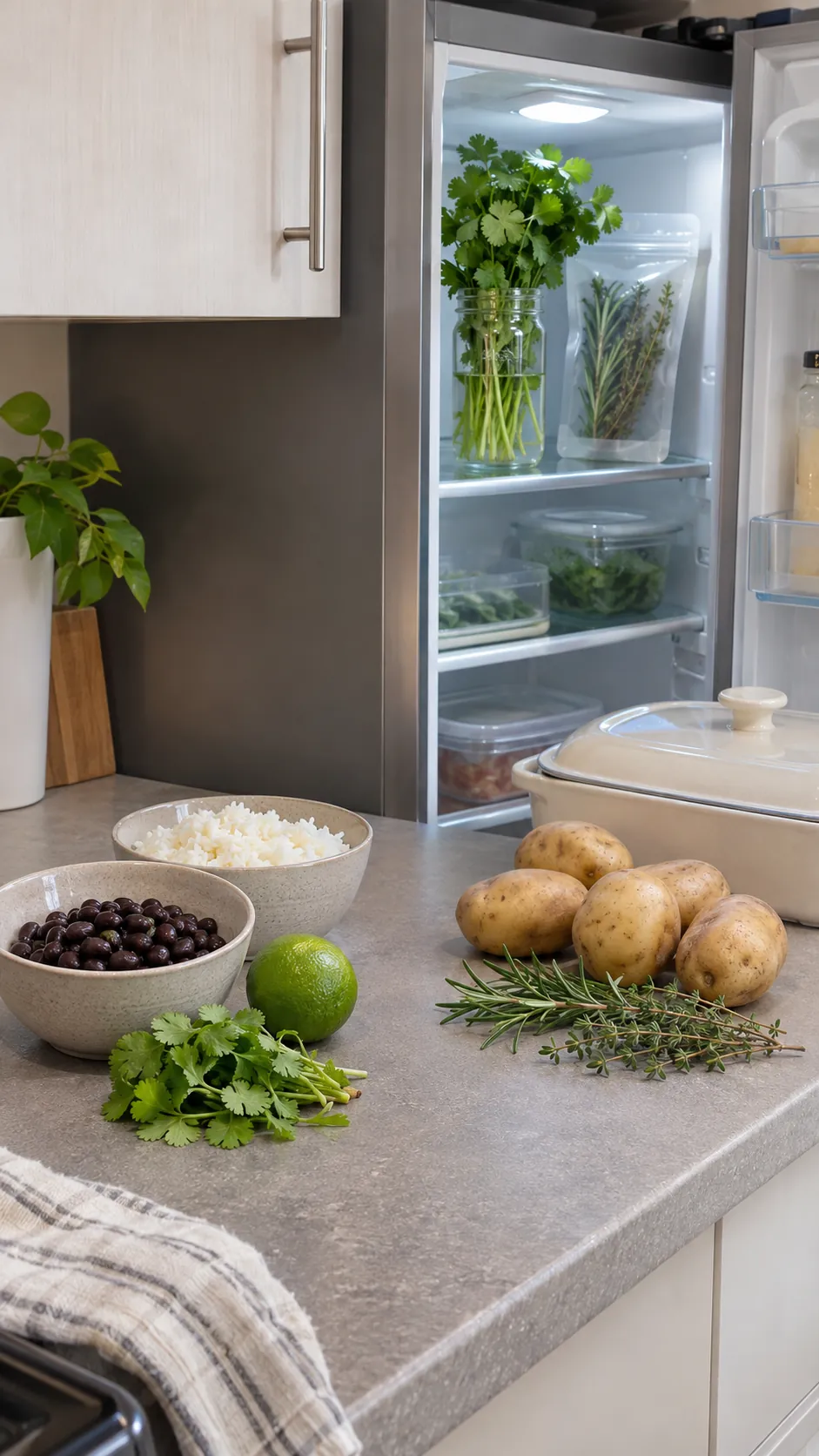
A narrow jar is useful when stems benefit from water and the bunch has enough height. A flat towel package is better when shelf height is scarce or the herbs crush easily. Woody sprigs need little more than a slim controlled moisture packet.
Check moisture, visibility, and the cooking plan instead of buying a container for every herb. The best small kitchen food preservation routine protects what you actually use while leaving the refrigerator flexible for the next grocery trip.