
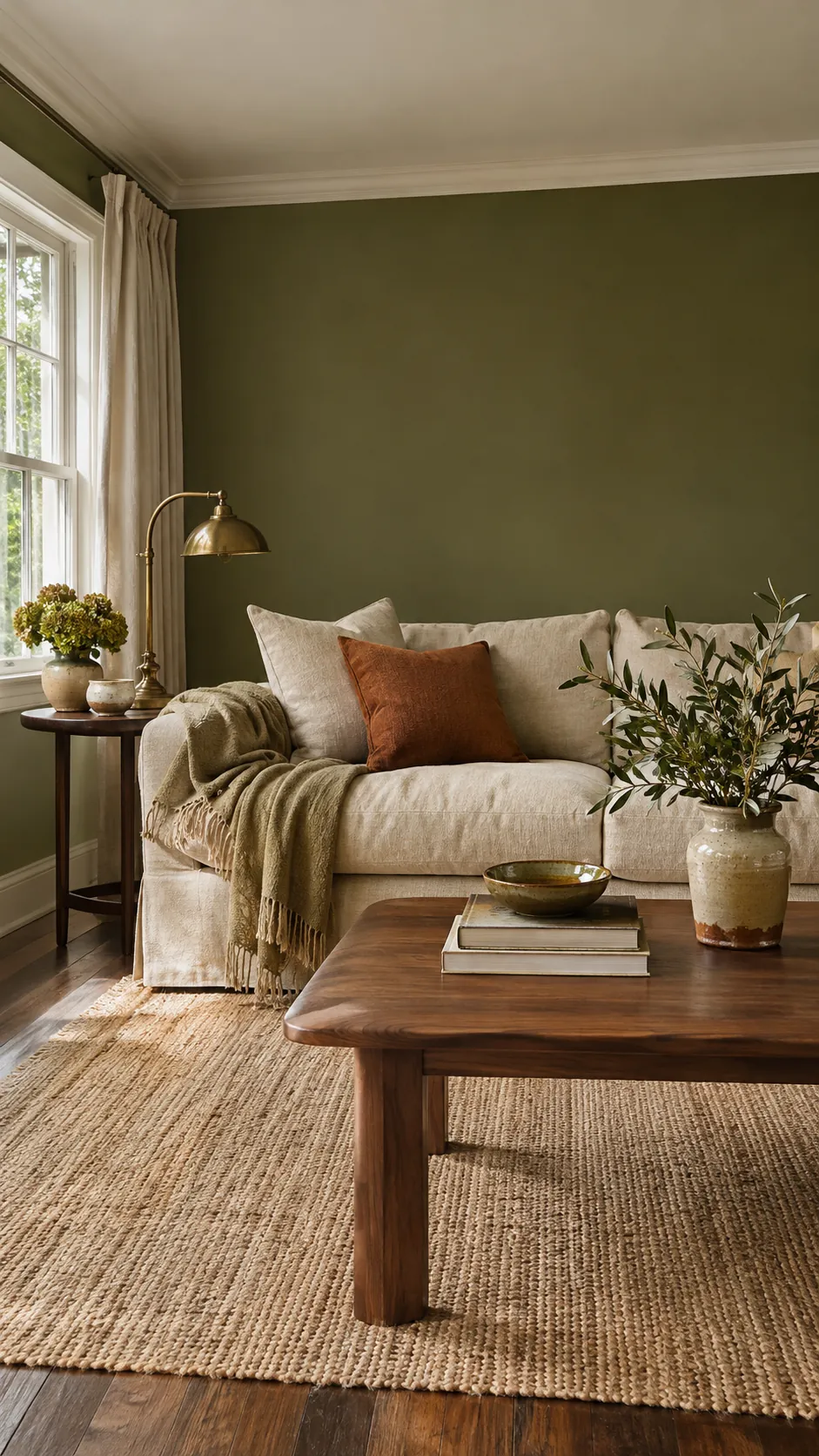
Olive works best as an earthy anchor, not as a rule that every object must follow. Its yellow and brown undertones connect naturally with cream, wood, clay, aged metal, and muted red. The room stays comfortable when olive appears in one large place and only a few smaller echoes.
Start with the surface you already have. An olive sofa needs a different plan from olive walls, while a neutral rental may only need textiles and ceramics. Decide where the color carries the most visual weight before buying supporting decor.
Build an olive and cream foundation
Cream gives olive green home decor enough light to feel welcoming. Use it on large upholstery, curtains, bedding, or a rug, then allow olive to hold one wall or major furniture piece. Warm white is usually easier than brilliant white beside the brown undertone of olive.
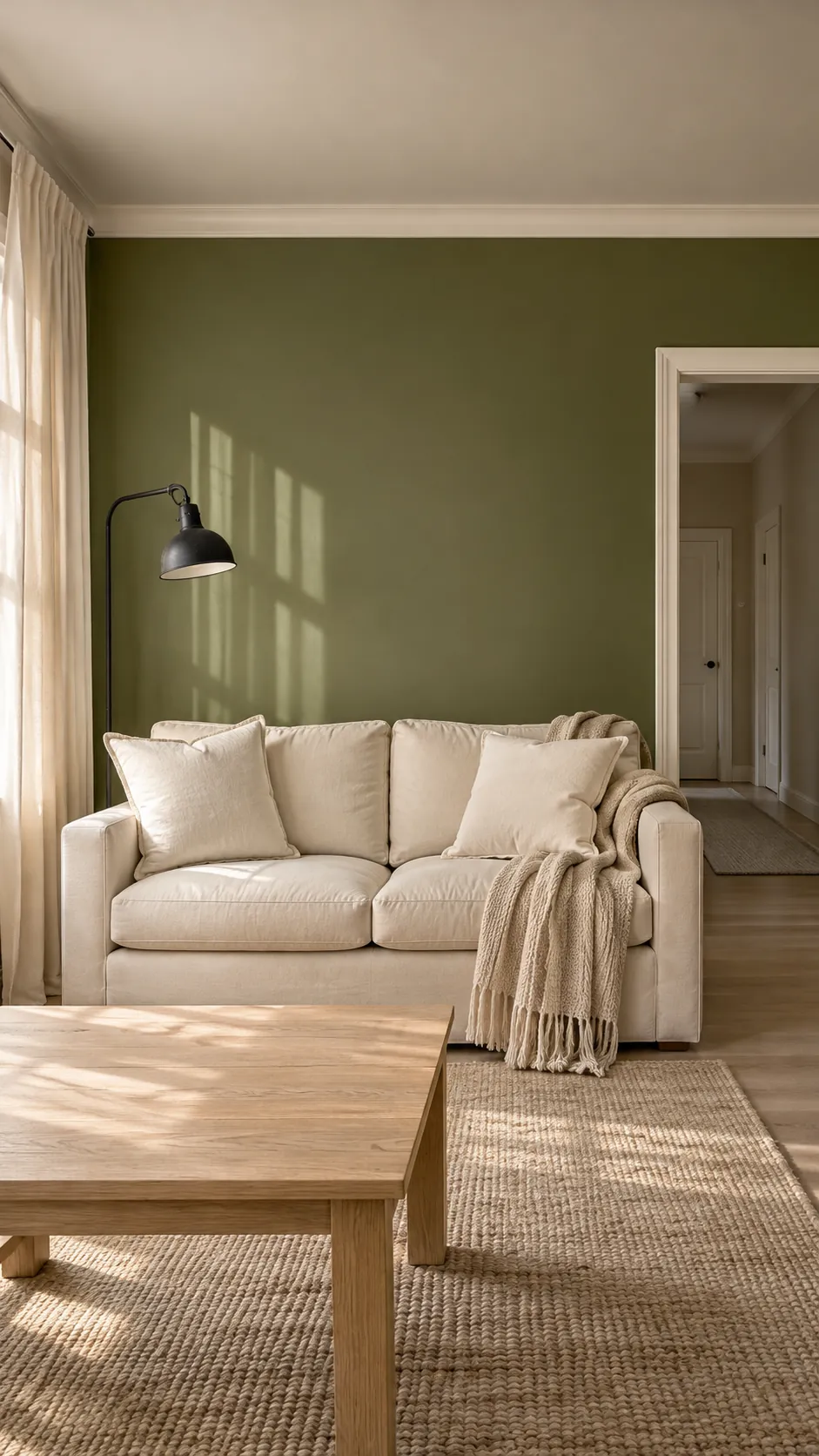
Repeat cream across separate surfaces so it feels structural rather than decorative. A sofa, curtain, and rug can create a bright frame around olive walls. Add one dark line through black iron or deep brown wood if the pale areas need definition.
Choose wood tones that reinforce the warmth
Walnut and medium oak bring out the warmer side of olive. Pale oak creates a lighter modern result, while dark wood suits a traditional or moody room. Keep the largest pieces related in tone so the palette does not become visually scattered.
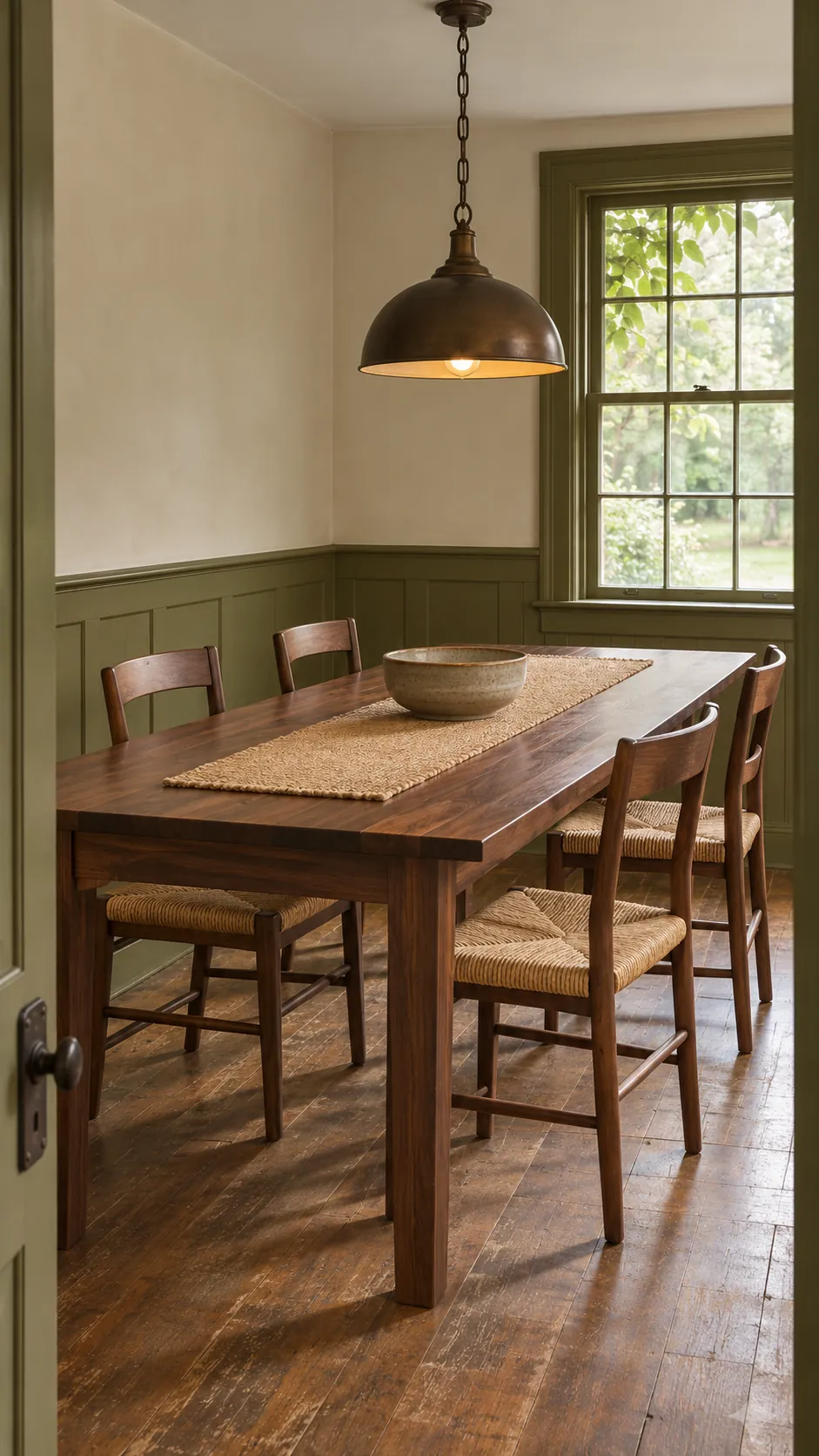
Rattan, jute, and linen can bridge different wood finishes because their natural texture matters more than an exact color match. These materials also keep an olive theme from becoming flat. Use enough smooth cream surface to balance the grain and weave.
Let an olive sofa be the main color
An olive velvet sofa already supplies color, depth, and texture. Surround it with a cream or tan rug, warm wood tables, and quiet walls before adding another strong hue. This lets the sofa feel intentional rather than isolated.
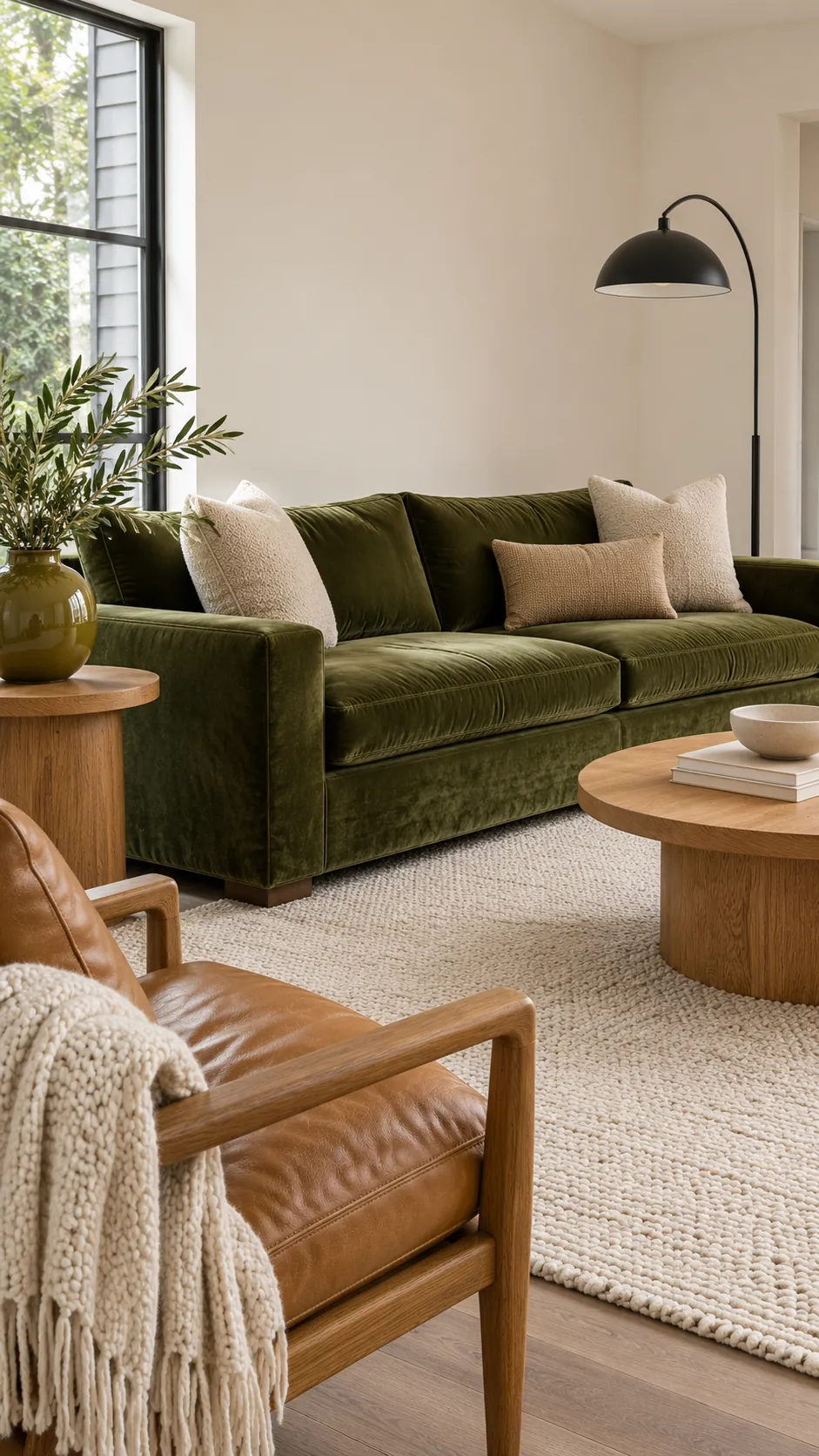
Use one or two smaller olive repeats, such as a ceramic or a stripe in a cushion. Do not add olive curtains, an olive rug, and olive wall paint automatically. Different values of the same green can work, but they need visible neutral breaks.
Add rust, burgundy, or muted plum carefully
Warm red families create a rich contrast with olive. Rust feels earthy, burgundy looks traditional, and muted plum adds a cooler vintage note. Choose one and use it on a rug, throw, or small chair rather than spreading all three around the room.
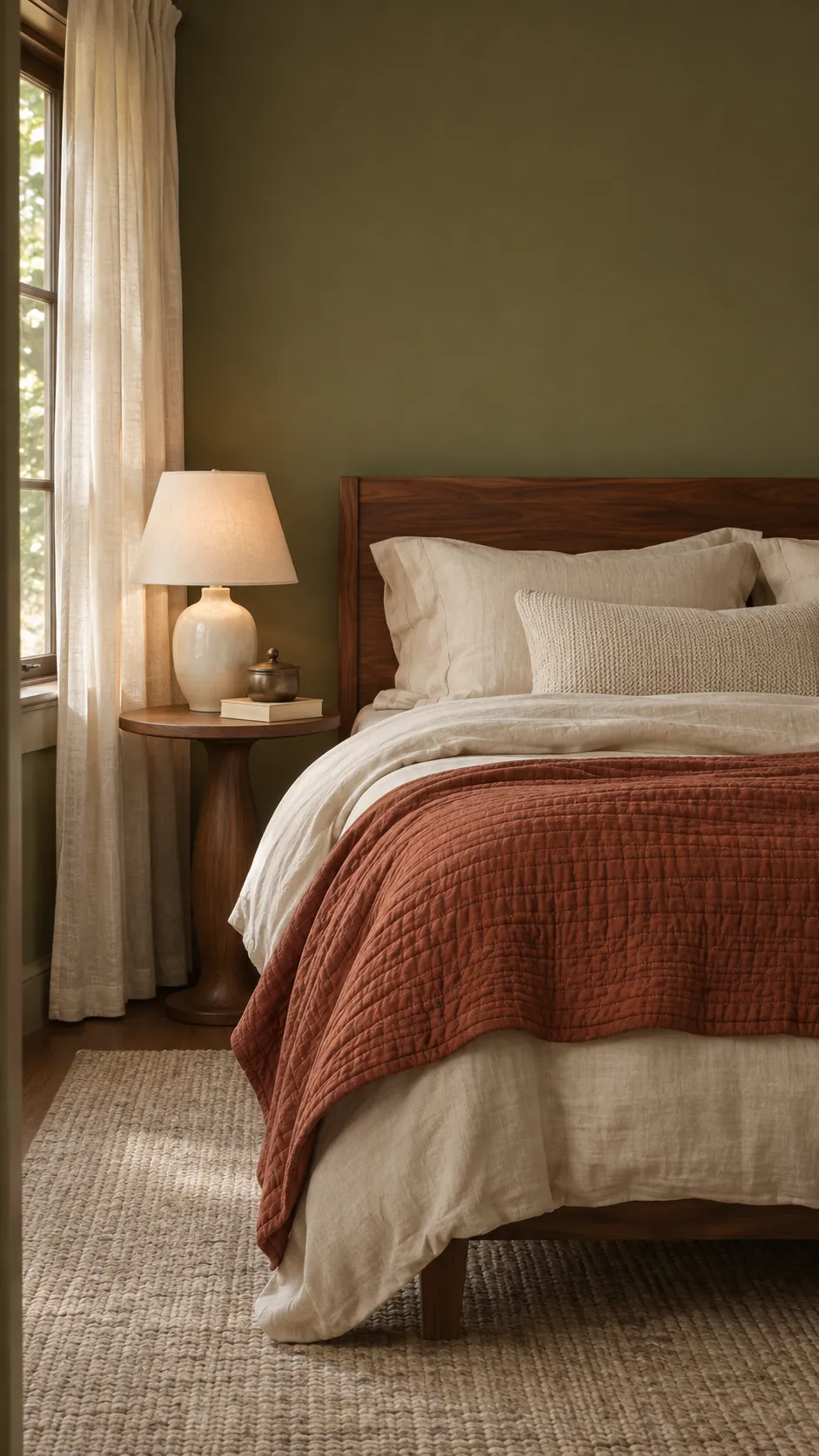
Test the accent beside the exact olive surface. Some olives lean yellow and can make clear red look harsh. Dusty, brown influenced reds usually connect more easily with wood and woven fibers.
Create a Mediterranean olive mood with materials
Mediterranean olive decor comes from texture and light more than themed objects. Limewashed cream walls, terracotta, aged brass, dark timber, linen, and handmade ceramics create the setting. Olive then appears as paint, upholstery, or natural foliage rather than a printed motif everywhere.
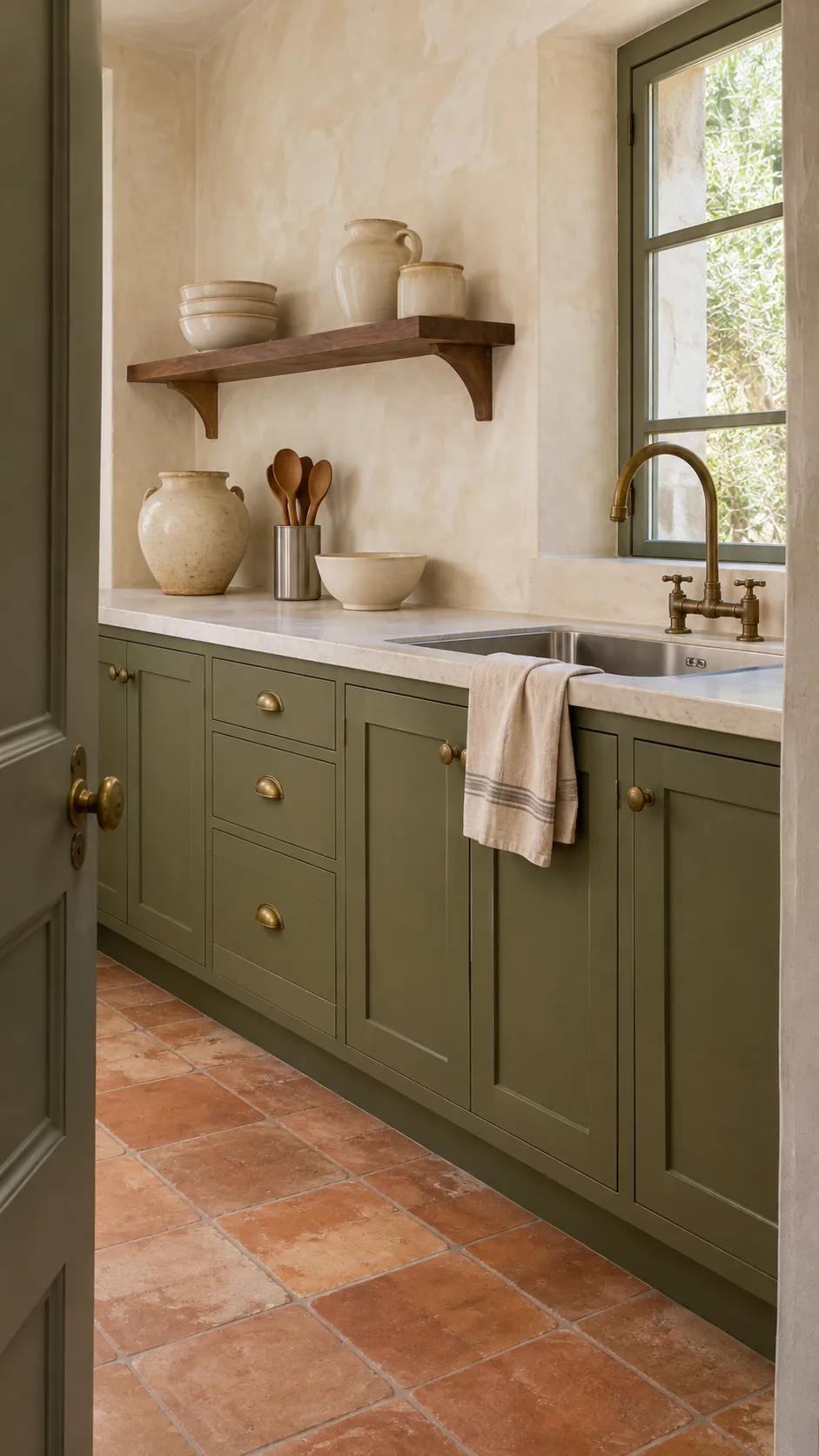
Keep the finish variation natural and restrained. One terracotta floor, a few ceramic pieces, and an aged metal light can carry the idea. Avoid filling shelves with decorative replicas that do not serve the room.
Use olive textiles when you cannot paint
Olive green textiles can change a gray, cream, or white rental without permanent work. Start with one substantial piece, such as curtains, a quilt, or a rug. Add smaller echoes only after the first item feels balanced with the existing floor and furniture.
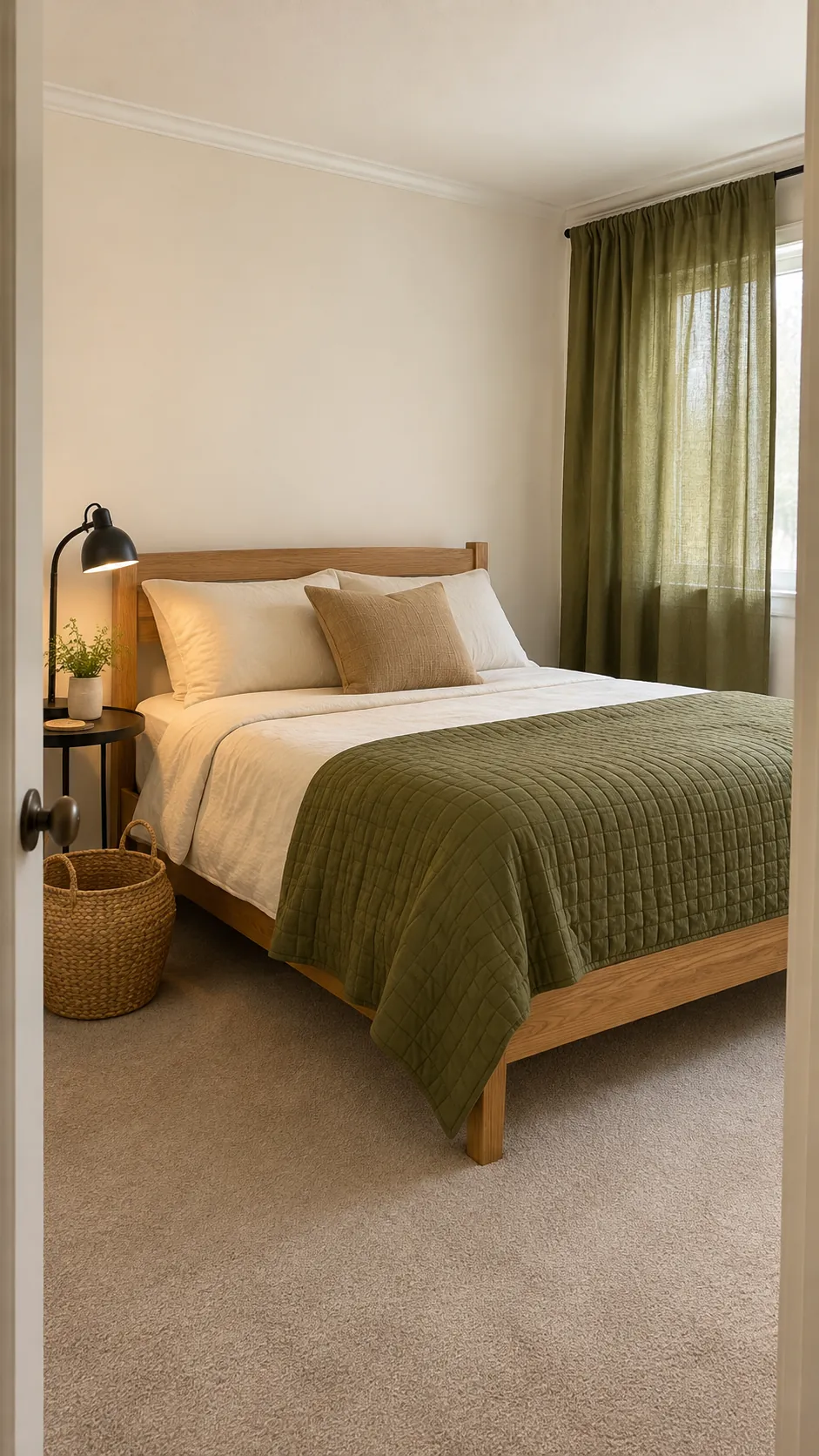
Compare fabrics in daylight and evening light because olive can shift from fresh green to brown. Mix fabric weights instead of matching every shade exactly. Linen curtains, a wool throw, and a cotton cushion can share the theme while keeping the room varied and usable.