
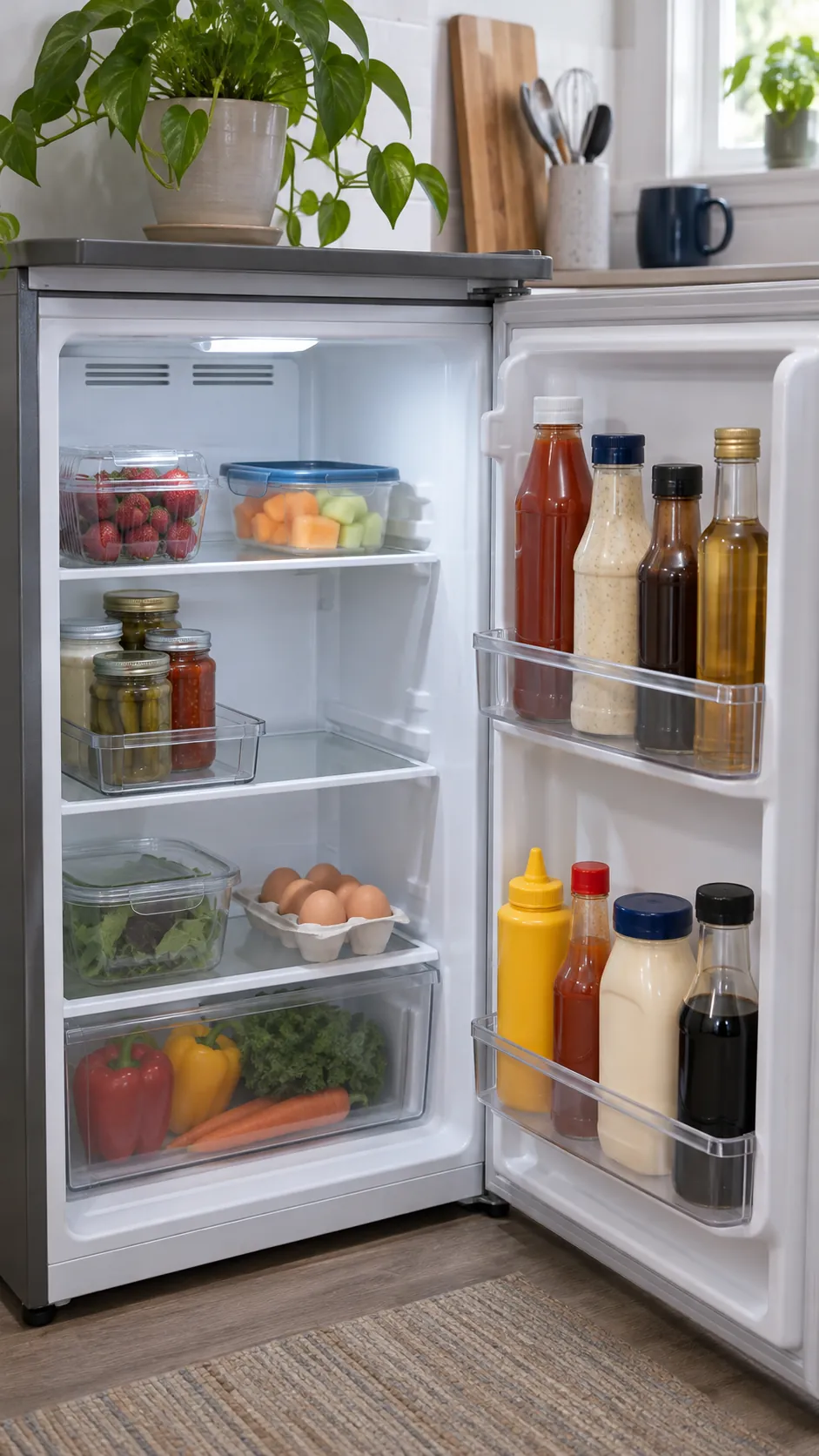
A full fridge door does not mean every sauce jar needs a second home on the main shelves. First remove duplicates and products that do not require refrigeration according to their labels. Then give the remaining condiments one shallow, reachable shelf zone. A narrow tray usually preserves more small fridge capacity than several bins or a broad refrigerator turntable.
Audit What Actually Needs Refrigeration
Take every condiment out and read its storage instructions. Keep products refrigerated when the label requires it. Move only suitable unopened or shelf stable items to pantry storage, following the manufacturer guidance.
Combine nothing unless food safety and labeling remain clear. Check duplicate mustards, sauces, dressings, and jars before opening another package. Dispose of food only according to safe guidance, and do not taste questionable products to test them.
Keep the Door for Bottles That Fit Safely
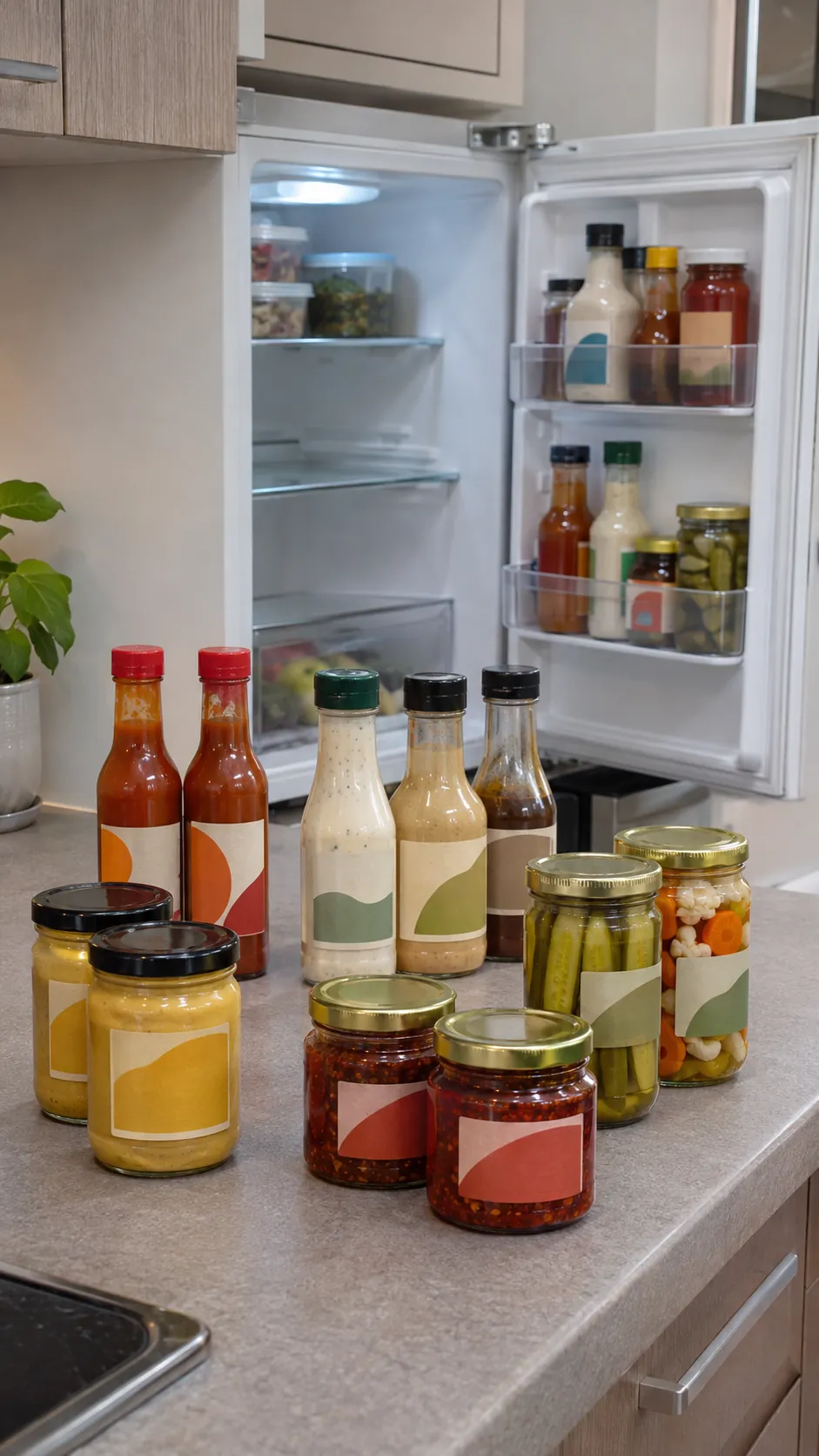
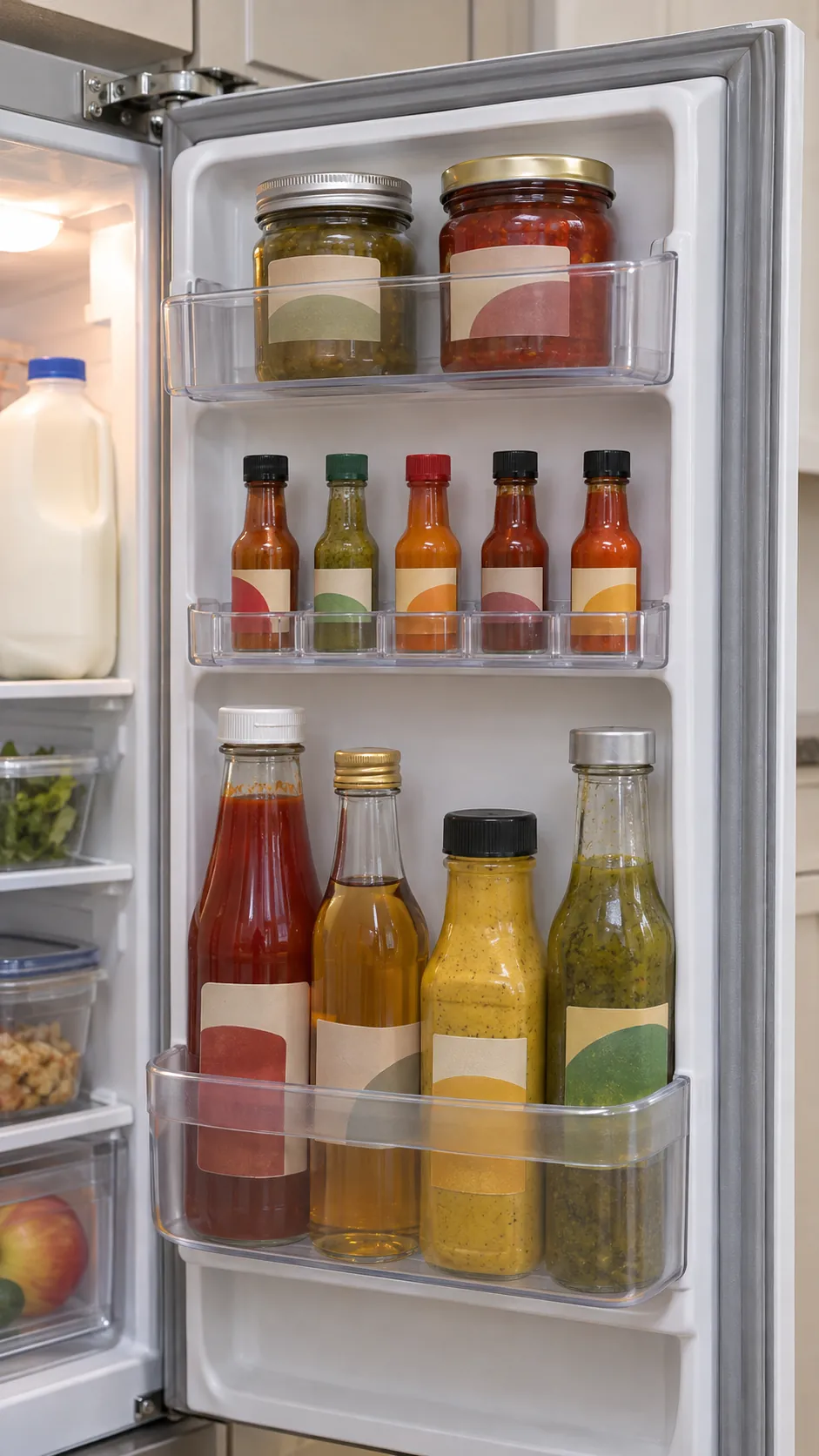
Use the deepest door shelf for tall bottles that stand securely and clear the shelf above. Short narrow door shelves can hold small hot sauce bottles or slim jars if the retaining rail stops them from falling when the door moves.
Do not wedge containers against the gasket or pack the door so tightly that products hide each other. Keep heavy jars where the door shelf and appliance guidance support them. A bottle that tips or prevents closing belongs in the interior zone.
Create One Narrow Interior Condiment Tray
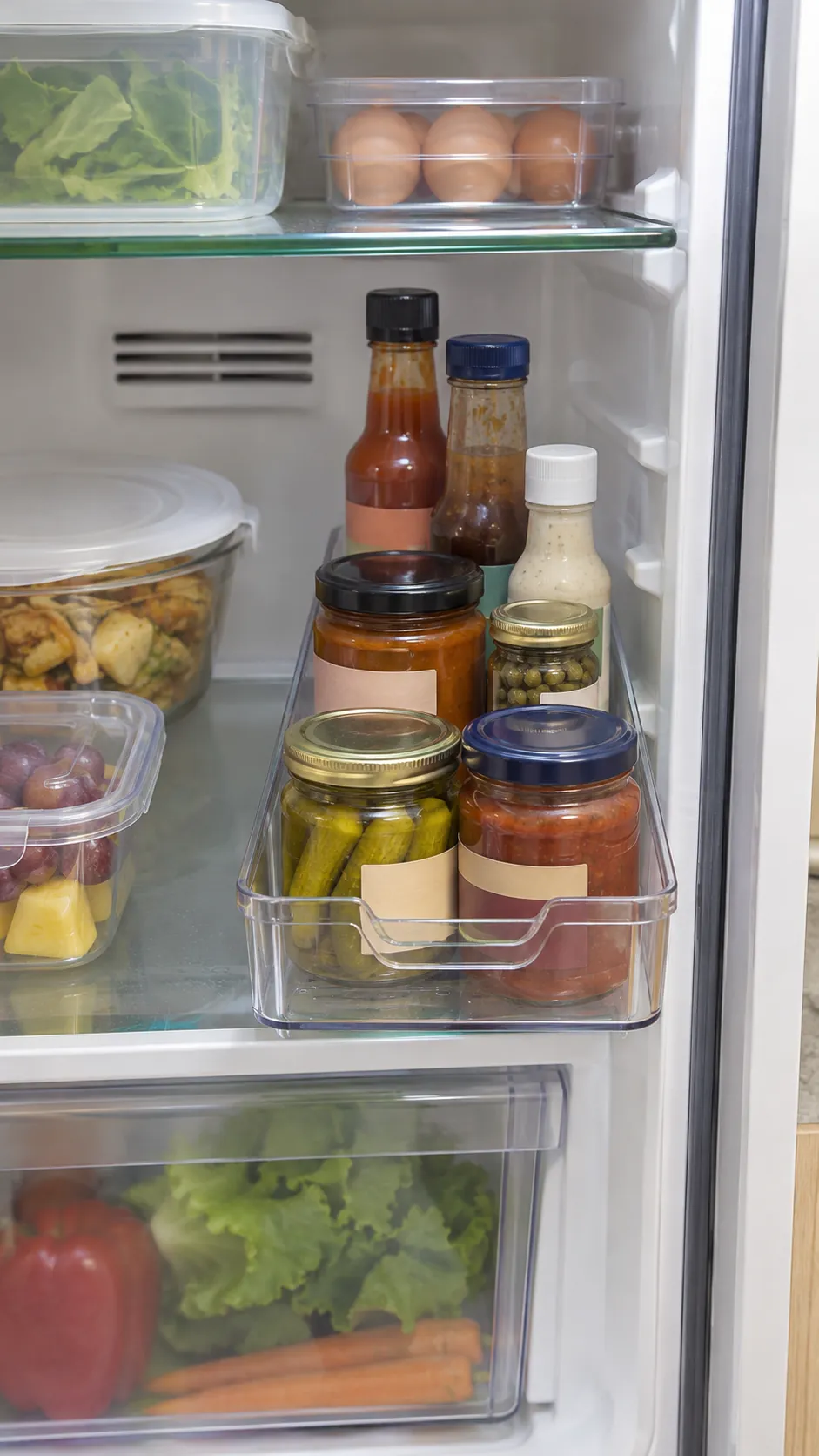
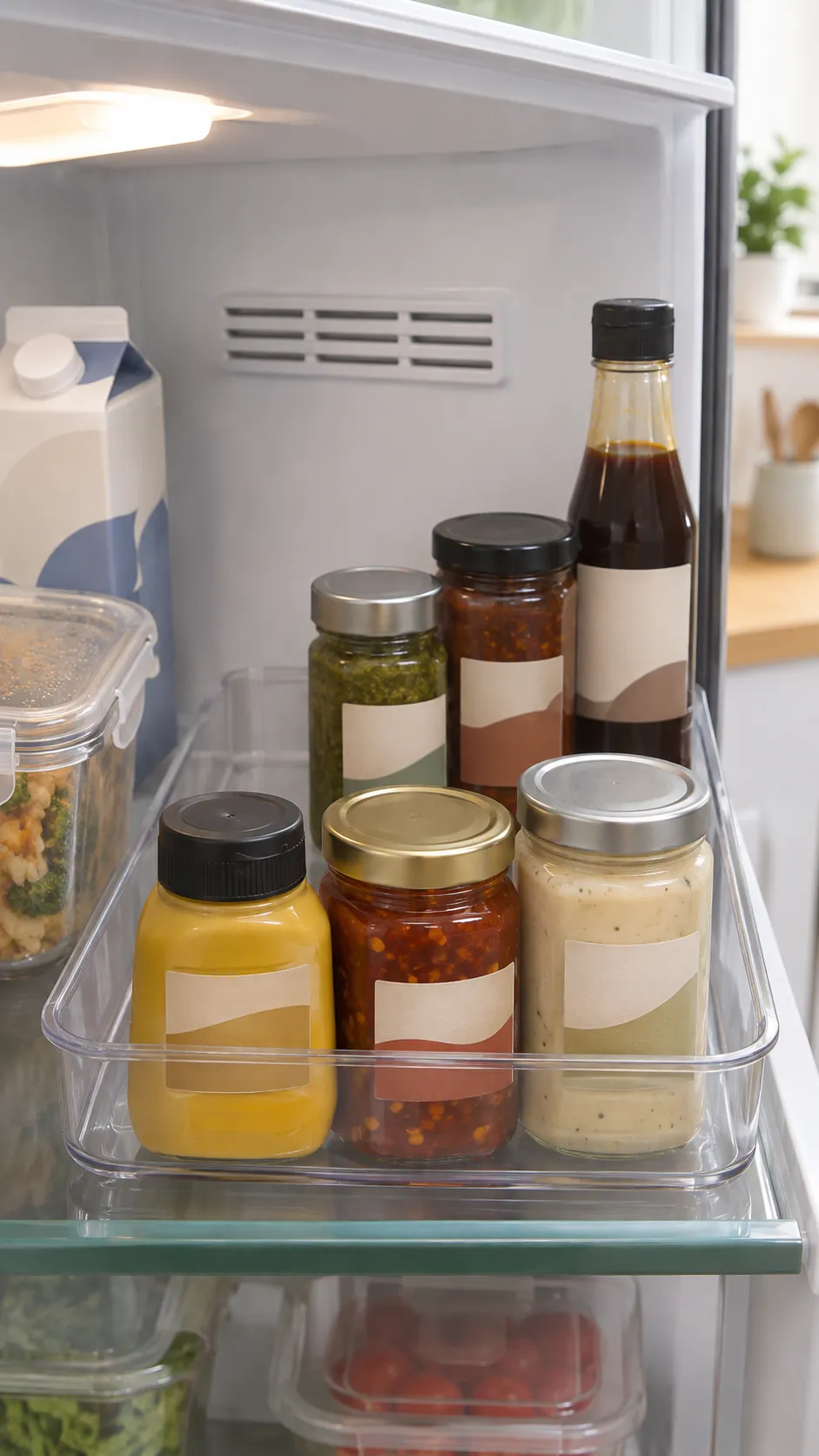
Choose a shallow condiment tray that is only wide enough for the jars that cannot stay in the door. Measure shelf depth, height, and the pullout path before buying. Low walls make labels and lids easier to see and waste less space than tall fridge bottle bins.
Place the tray at the front of an upper or middle shelf where the household can remove it with one hand. Keep it away from vents and leave the rest of the shelf flexible for food containers.
Arrange by Frequency and Height
Put frequently used sauces at the tray front and occasional specialty jars behind them. Keep taller bottles toward one side so shorter jars remain visible. A simple height gradient works better than several tiny categories.
If the rear row is invisible, the tray is too deep or too full. Remove rarely used duplicates or choose a shorter row. The goal is one motion to reach a sauce, not a perfect collection that must be unpacked.
Use a Turntable Only With Enough Depth
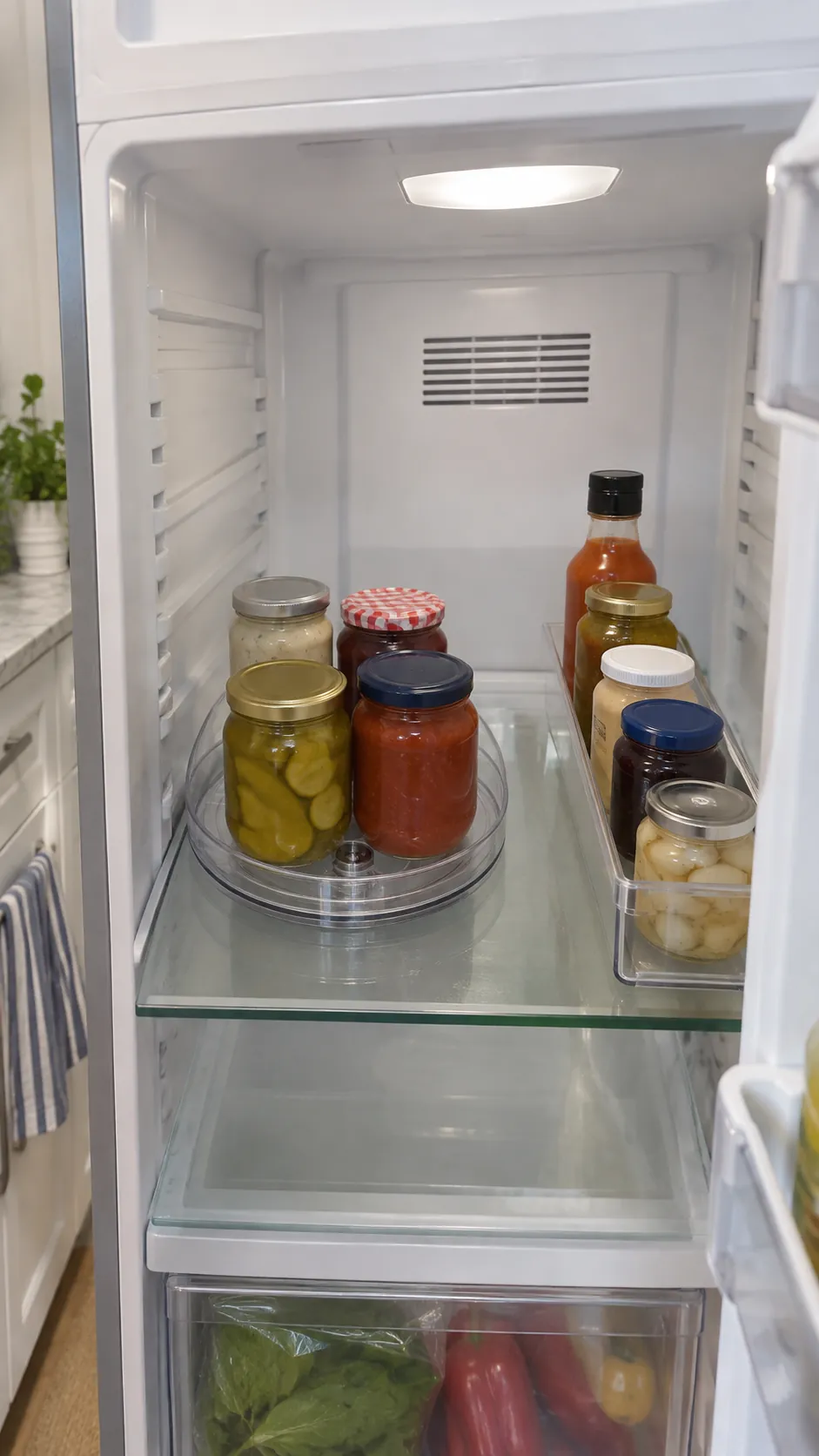
A refrigerator turntable can reveal jars at the back, but its circular footprint leaves unused corners on a rectangular shelf. It also needs clearance to rotate without striking bottles or the shelf edge. Measure the full diameter before choosing one.
Use it for a compact group of medium jars when rotation solves a real access problem. Skip it when shelf width is scarce, bottles are tall, or a narrow pullout tray holds the same products with less lost area.
Give Tiny Jars a Low Stable Row
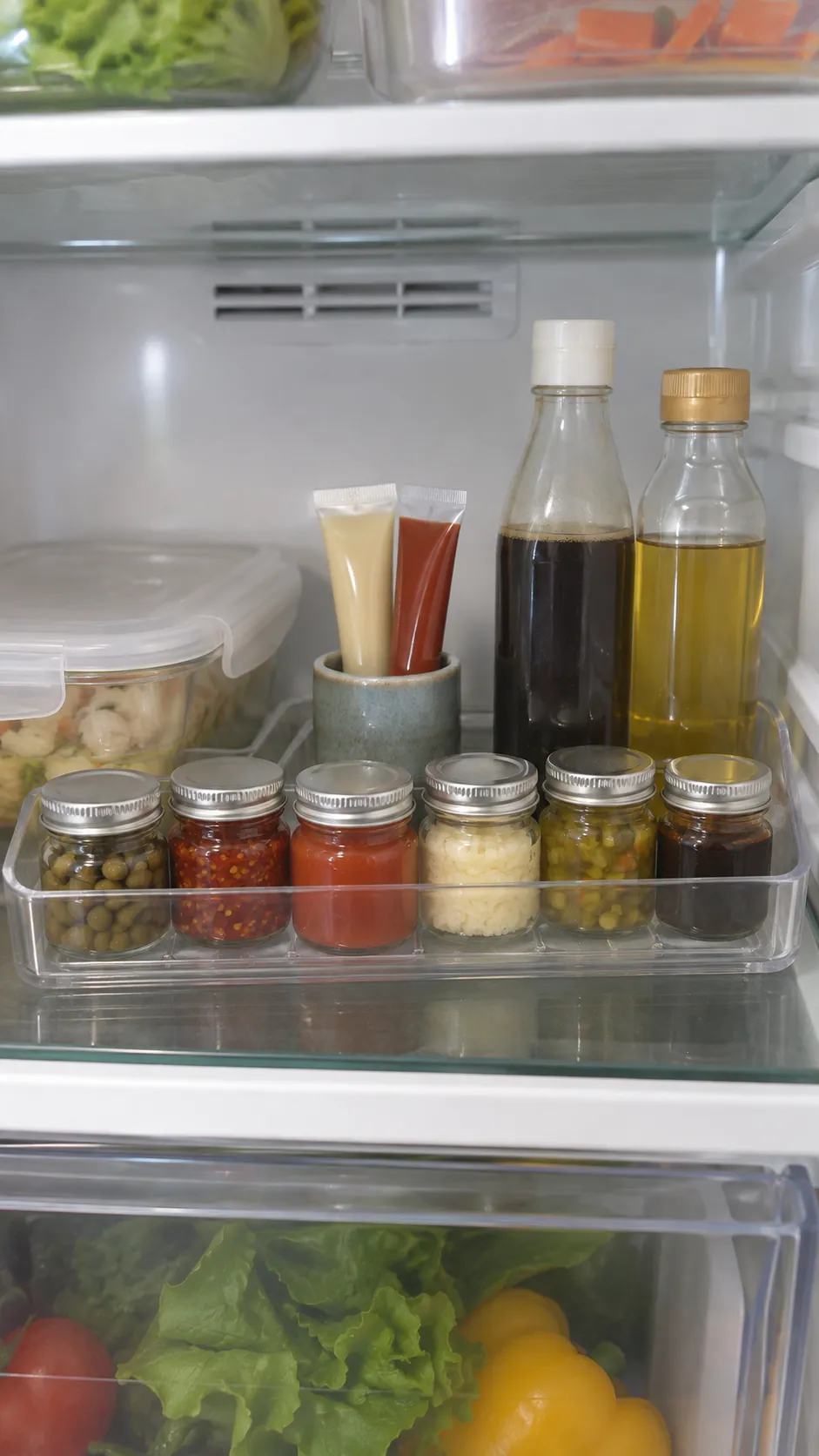
Capers, paste jars, and small sauce containers disappear behind tall bottles. Place them in one low row at the tray front or in a very small stable cup inside the tray. Keep every lid visible and avoid stacking glass jars.
When several tiny products support the same kind of cooking, keep them close together. The grouping helps you see what you own before buying another jar, while the outer tray contains drips and makes cleaning easier.
Reset the Condiment Inventory Before Shopping
Once a month or before a large grocery trip, pull out the tray and wipe it. Check storage instructions, condition, and duplicates. Put the products used most often back at the front.
A useful condiment inventory can be a quick visual check rather than a detailed list. If the tray no longer fits its assigned shelf width, pause new sauce purchases until space returns. The boundary keeps refrigerator condiment storage from expanding into produce and leftovers areas.