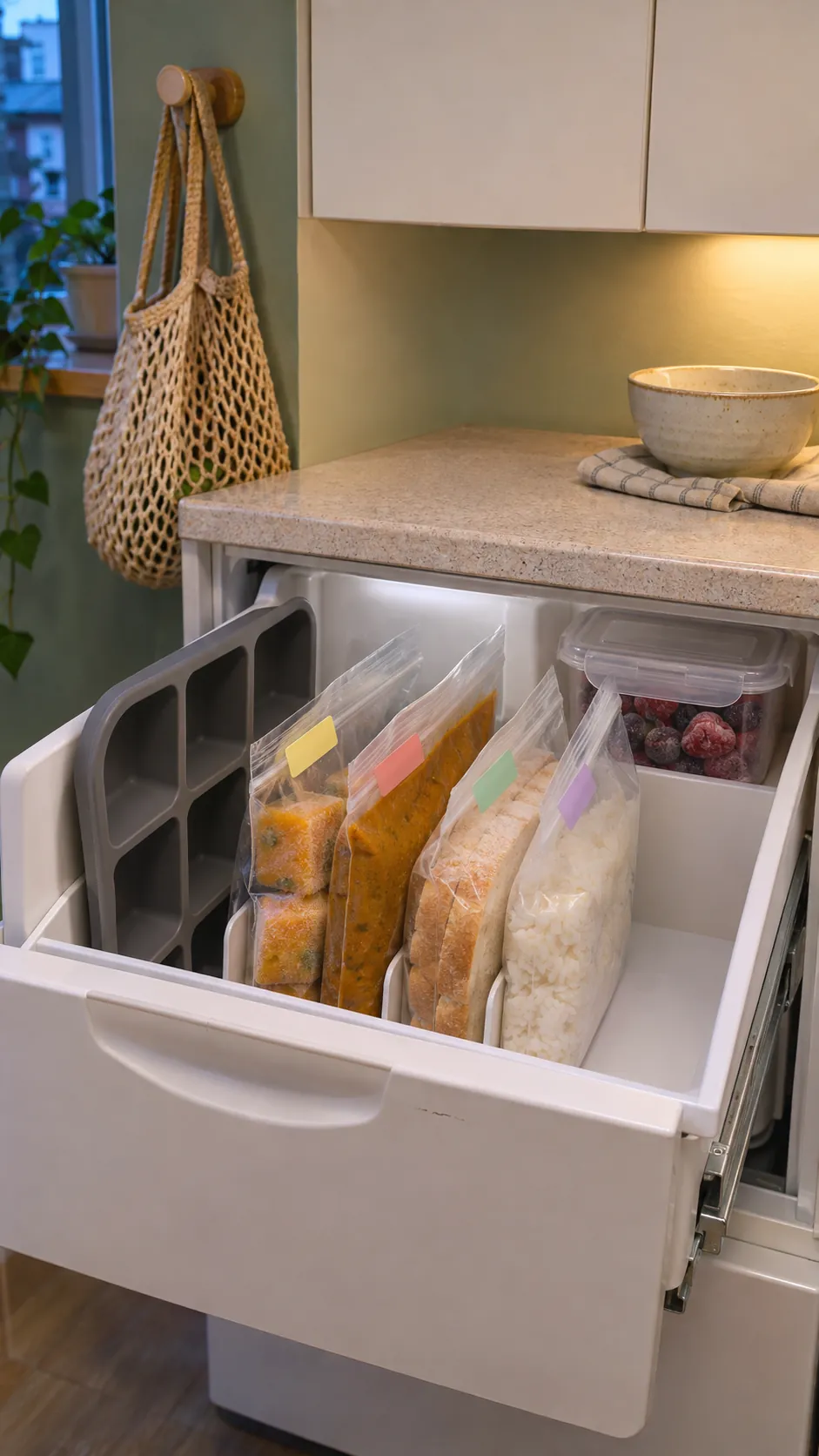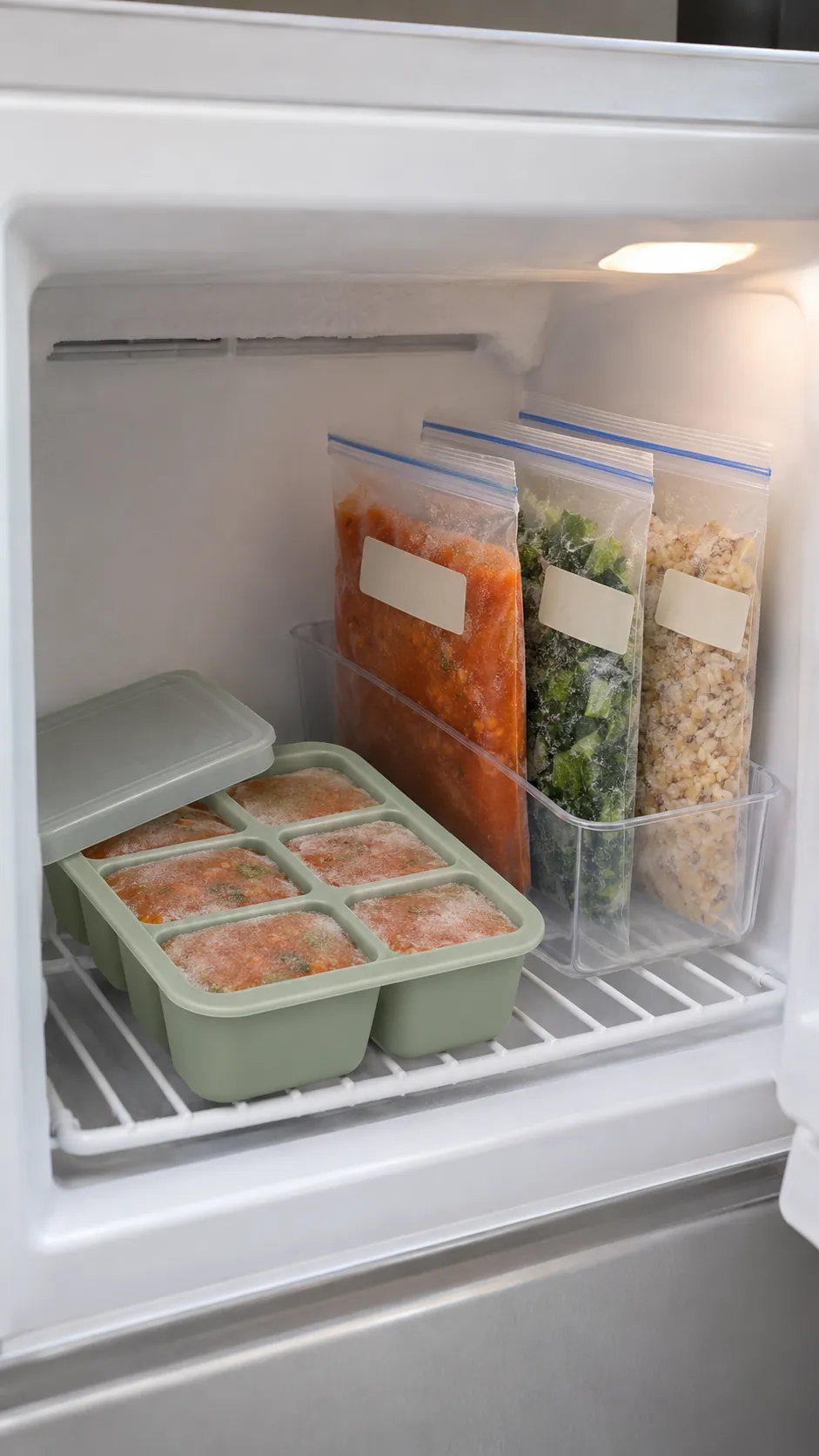
A small freezer punishes the wrong package. A rigid container can waste the narrow gap above a shelf, while a soft bag can disappear behind everything else. The useful question is not which product is universally better. It is which shape keeps each kind of food compact, protected, visible, and easy to retrieve.
The short answer is to use both
Silicone freezer trays work best when you want repeatable portions of soup, sauce, cooked grains, mashed vegetables, or other soft food. Once the portions are solid, you can remove the cubes and consolidate them in a labeled freezer bag. Freezer bags work best for flat packages, irregular ingredients, and food that you can press into a thin layer.
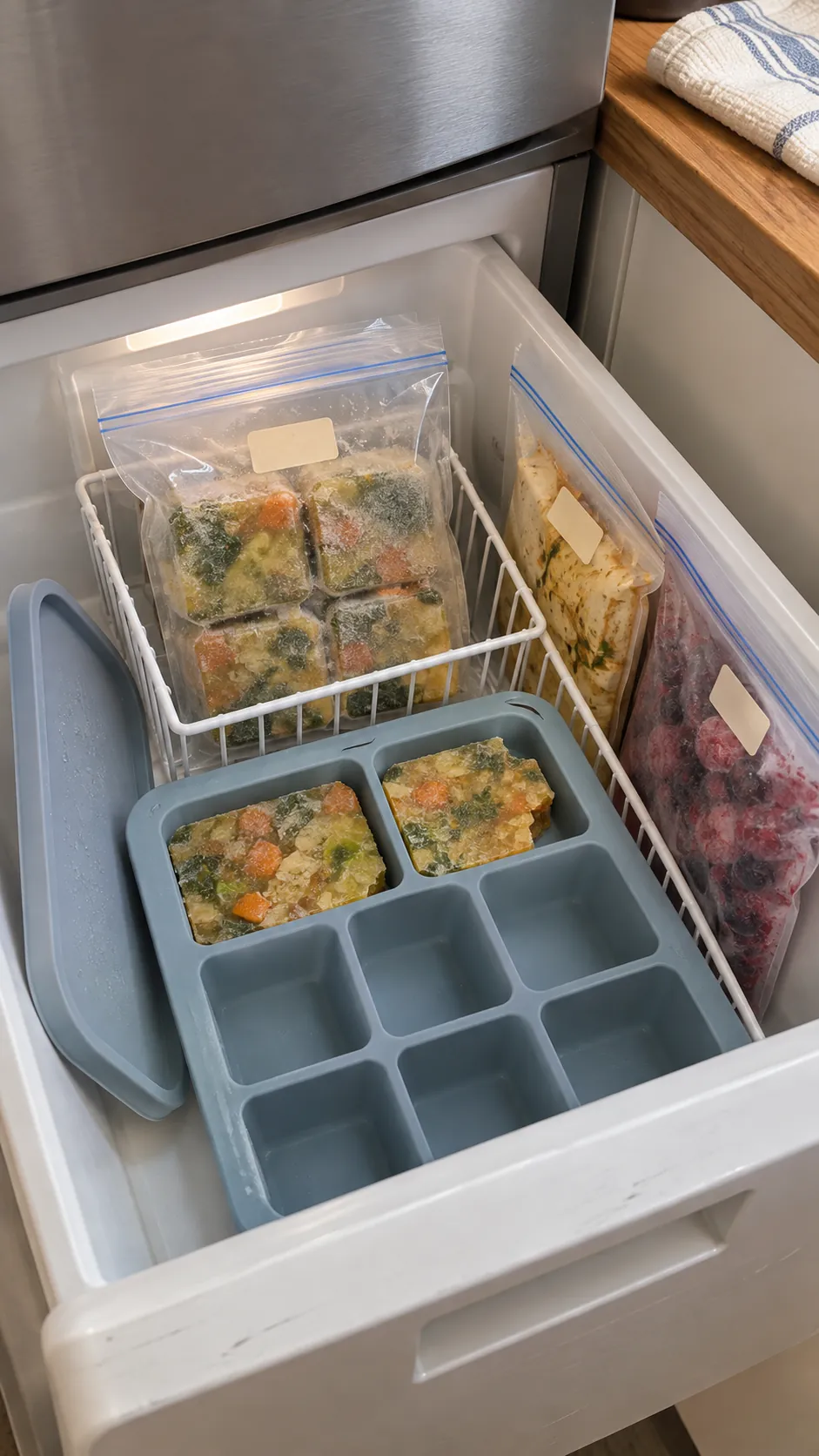
This hybrid method solves the main weakness of each option. The tray controls portion size, but it does not need to occupy freezer space for months. The bag compresses and stores the frozen portions, but it does not have to hold loose liquid while it freezes.
Choose trays for measured liquid portions
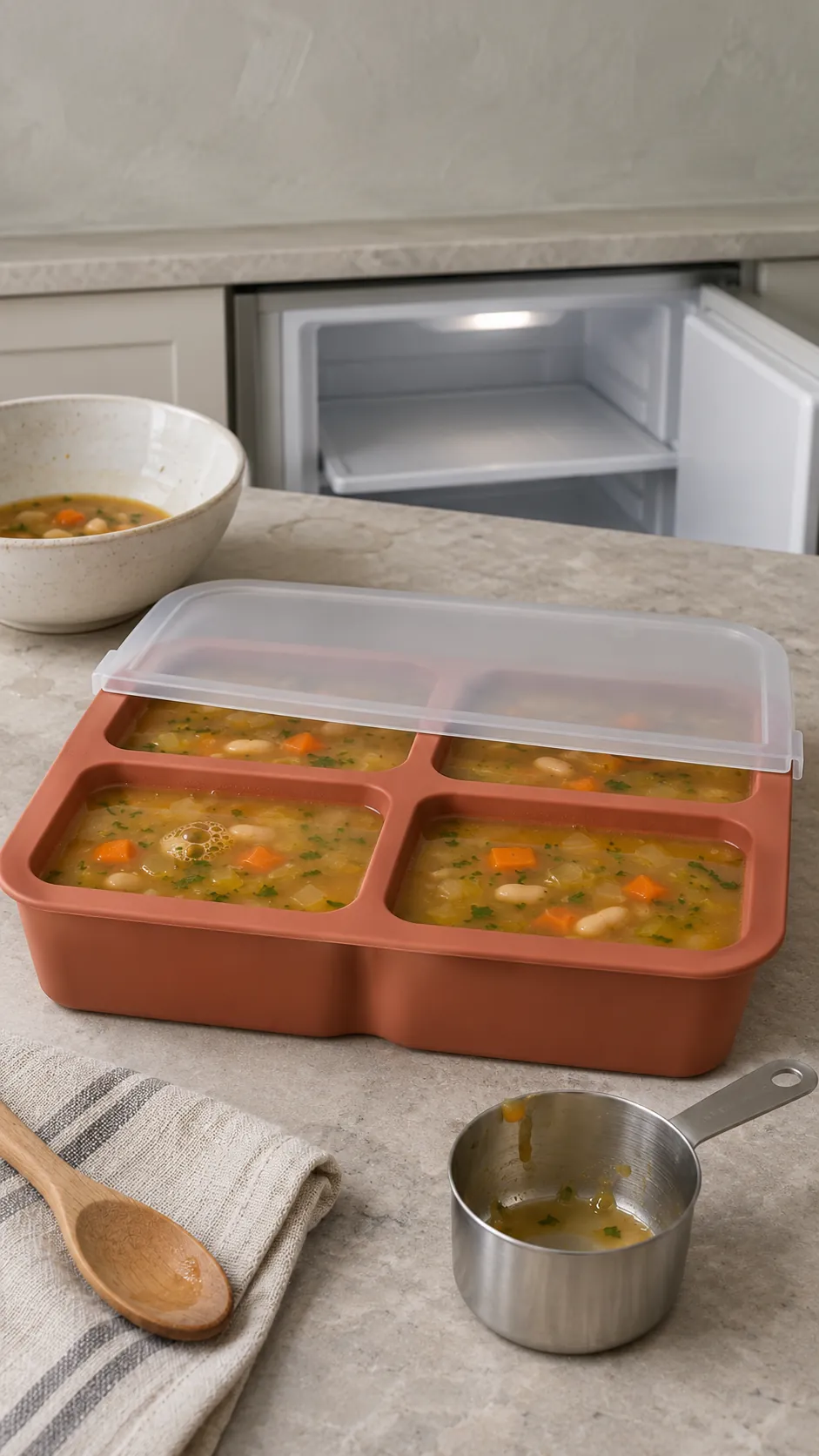
A portion freezer mold gives soup, stock, pesto, tomato paste, and cooked beans a predictable shape. Equal portions make meal planning easier because you can thaw only what one recipe or one person needs. A firm lid also helps you move a filled tray without spilling it into the freezer.
Measure one cavity before you rely on the markings. Leave a little room for food to expand, and cool hot food before it enters the freezer. Put the tray on a level surface until the portions become solid, then release them promptly so the mold can serve the next batch.
Choose bags for flat and flexible storage
A freezer bag can conform to the remaining space around baskets, shelves, and awkward packages. It is especially efficient for ground meat, shredded cheese, chopped vegetables, pancakes, and cooled sauces that can freeze in a thin layer. Flat packages also thaw faster than deep blocks because more surface area is exposed.
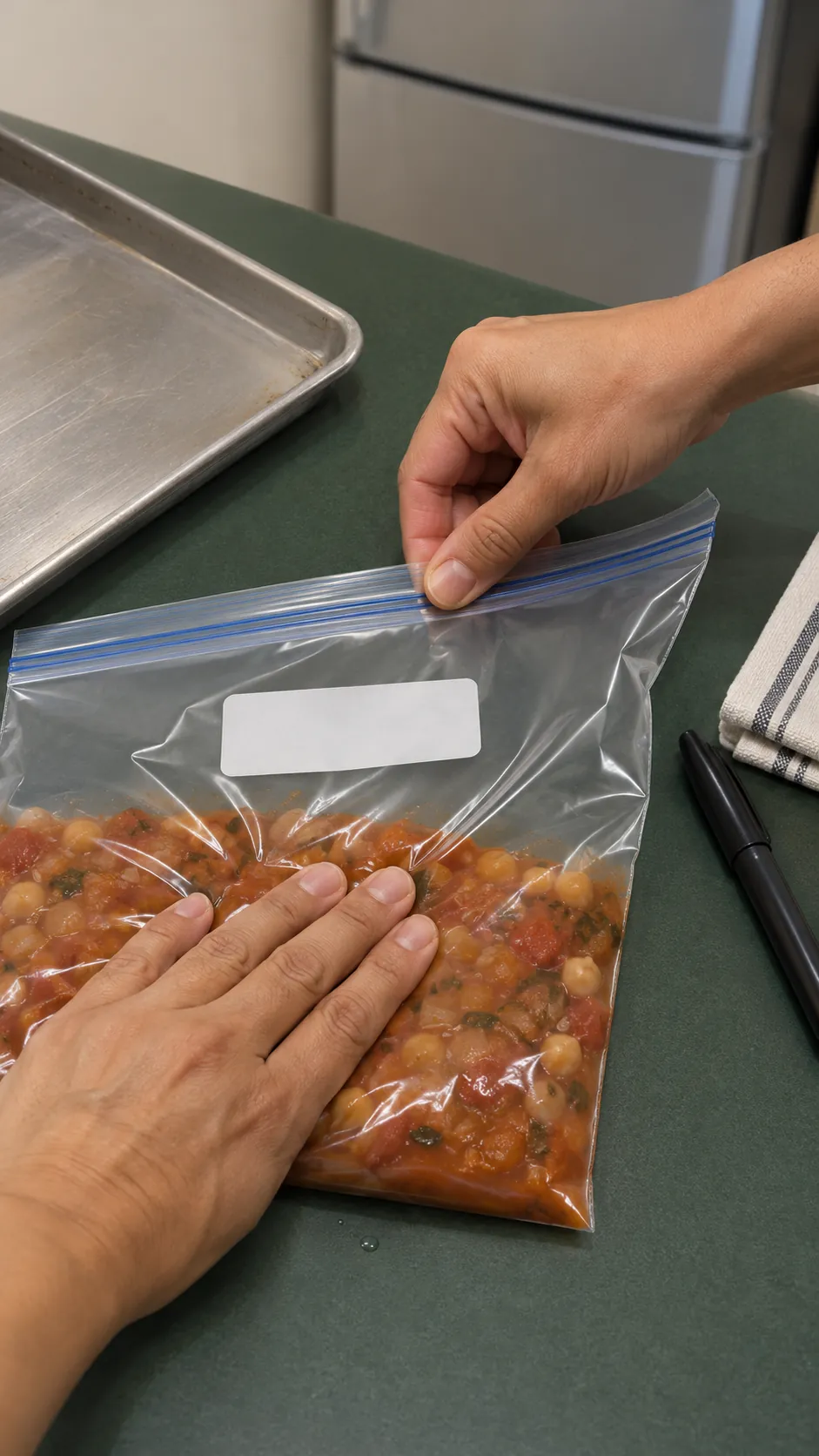
Press out excess air without forcing liquid toward the seal. Freeze the bag flat on a small tray or cutting board, then stand the solid package upright like a file. Use genuine freezer bags for longer storage because their thicker material and stronger closure resist punctures and air exchange better than thin sandwich bags.
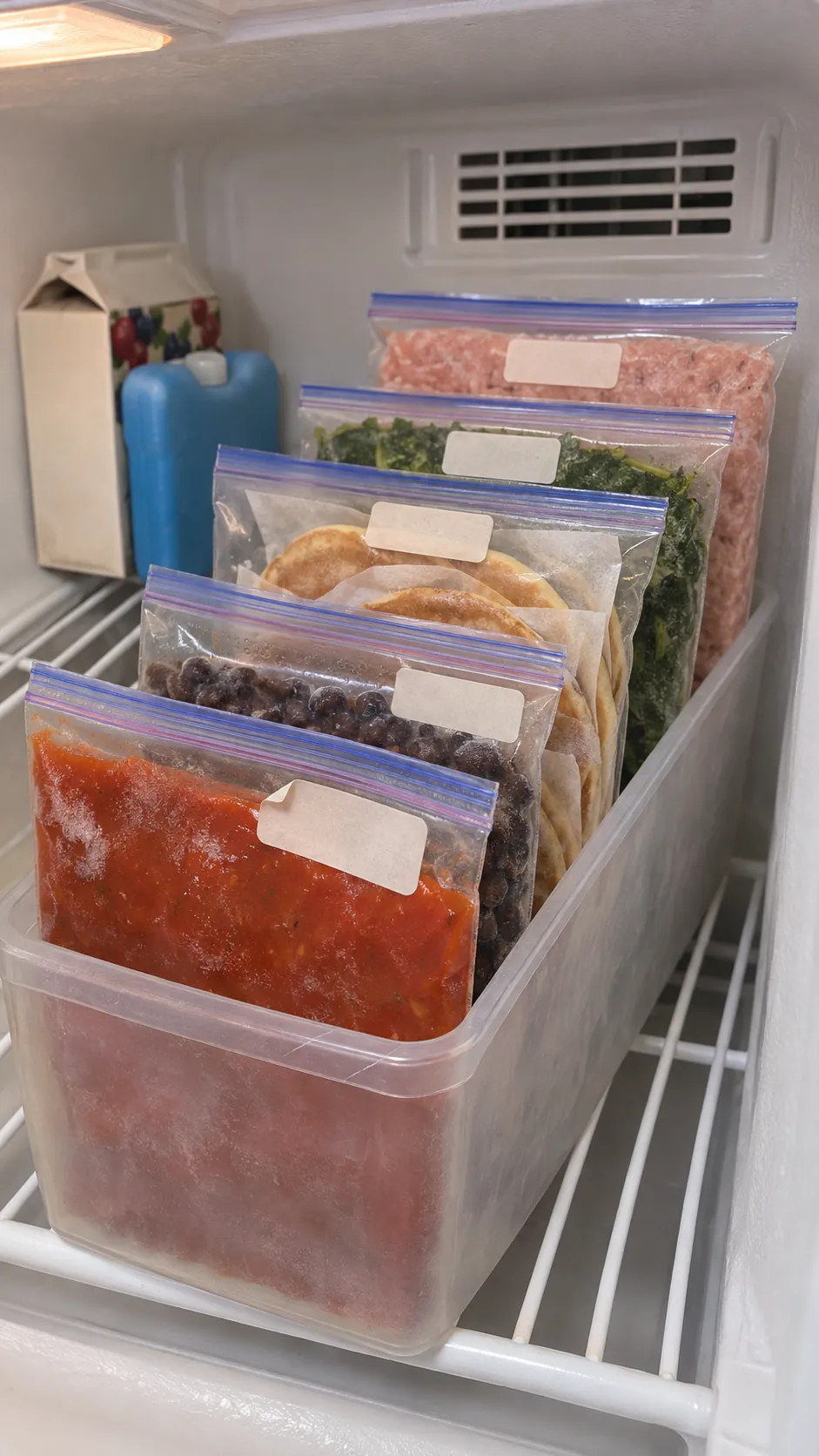
Compare the space that food uses after freezing
The tray itself looks bulky, but the finished portions do not have to stay in it. A one cup cube has straight sides and stacks neatly after transfer to a bag. Smaller cubes can fill gaps around larger packages, although too many loose shapes make labels and first in, first out rotation harder.
A bag saves the most space when its contents form an even slab. A lumpy bag of mixed pieces can become less efficient than organized cubes because it creates unusable pockets. Before buying any portion freezer molds, measure the shelf depth, the clear height, and the narrow opening around the freezer door.
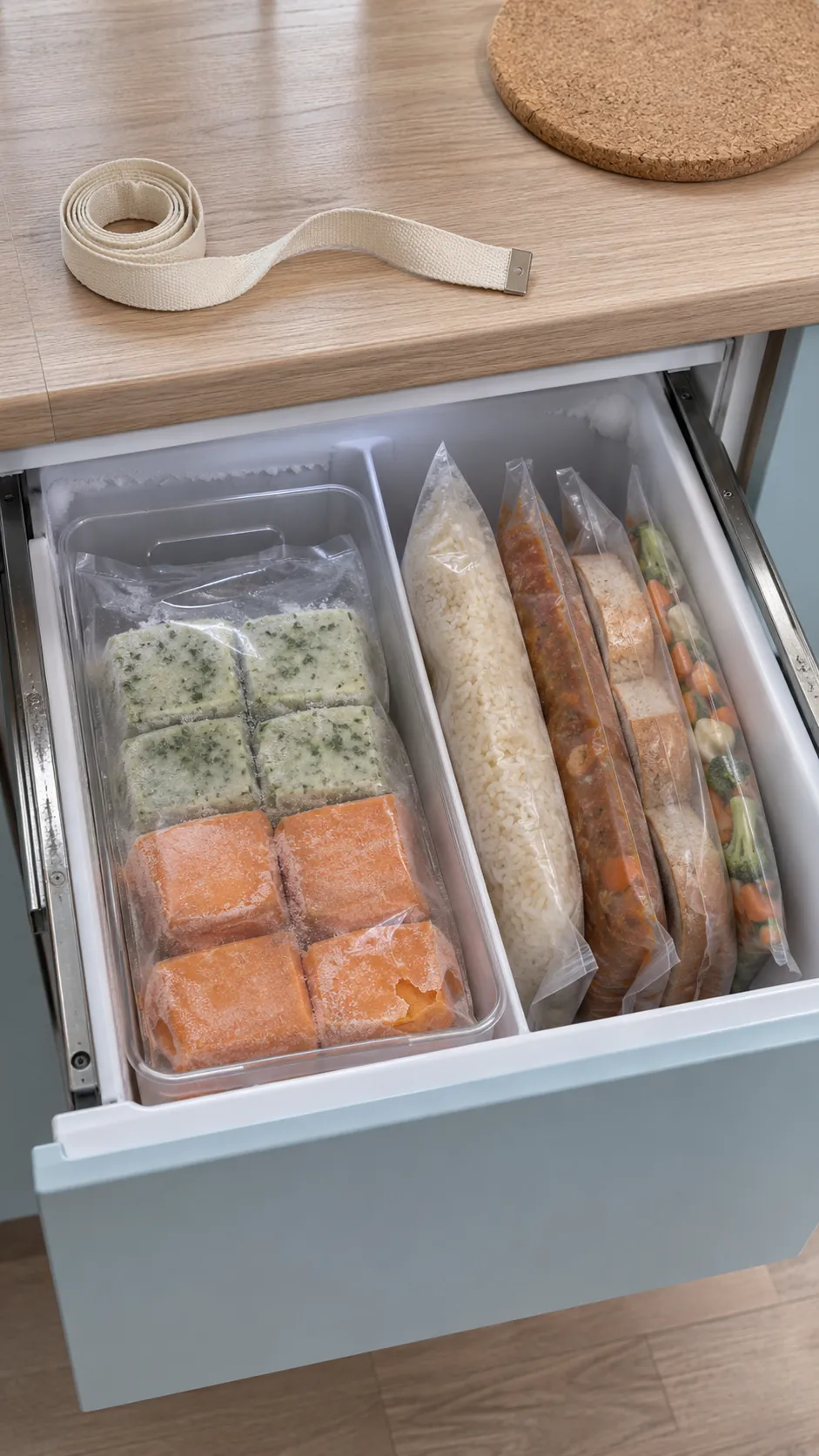
Control air to protect flavor and texture
Freezer burn develops when exposed food loses moisture and oxygen reaches the surface. The package must fit the amount of food. A half empty rigid cavity leaves more air around the portion, while a bag can usually be pressed closer to the food.
Trays are useful for the first freeze, but their lid is not always the best long term barrier. Transfer solid portions to a well sealed bag, remove excess air, and label the food and date. For delicate pieces, freeze them separately first so the bag does not crush them into one mass.
Check seals for trapped crumbs, frozen droplets, or folded edges. Replace a bag that has a puncture or a closure that no longer tracks cleanly. For reusable silicone bags, wash and dry the corners completely so moisture and odors do not remain between uses.
Count cleanup and cost as part of capacity
A reusable tray costs more at the start, yet one tray can shape many batches without becoming permanent storage. The best value comes from choosing a cavity size you actually use. A large set of mismatched molds can consume cabinet space without improving the freezer.
Disposable freezer bags are inexpensive and remarkably compact, but repeated use adds cost and waste. Reusable bags reduce that stream only when their seams, seals, and drying routine suit your household. Wide openings are easier to clean than narrow corners, and a bag must be fully dry before storage.
Start with one tray and a small supply of freezer grade bags. Use the tray for foods that benefit from measured portions, then move the frozen pieces into one clearly labeled bag. Use separate flat bags for foods that already have a useful slab shape. This small system preserves the main advantage of both tools without filling the freezer with empty packaging.