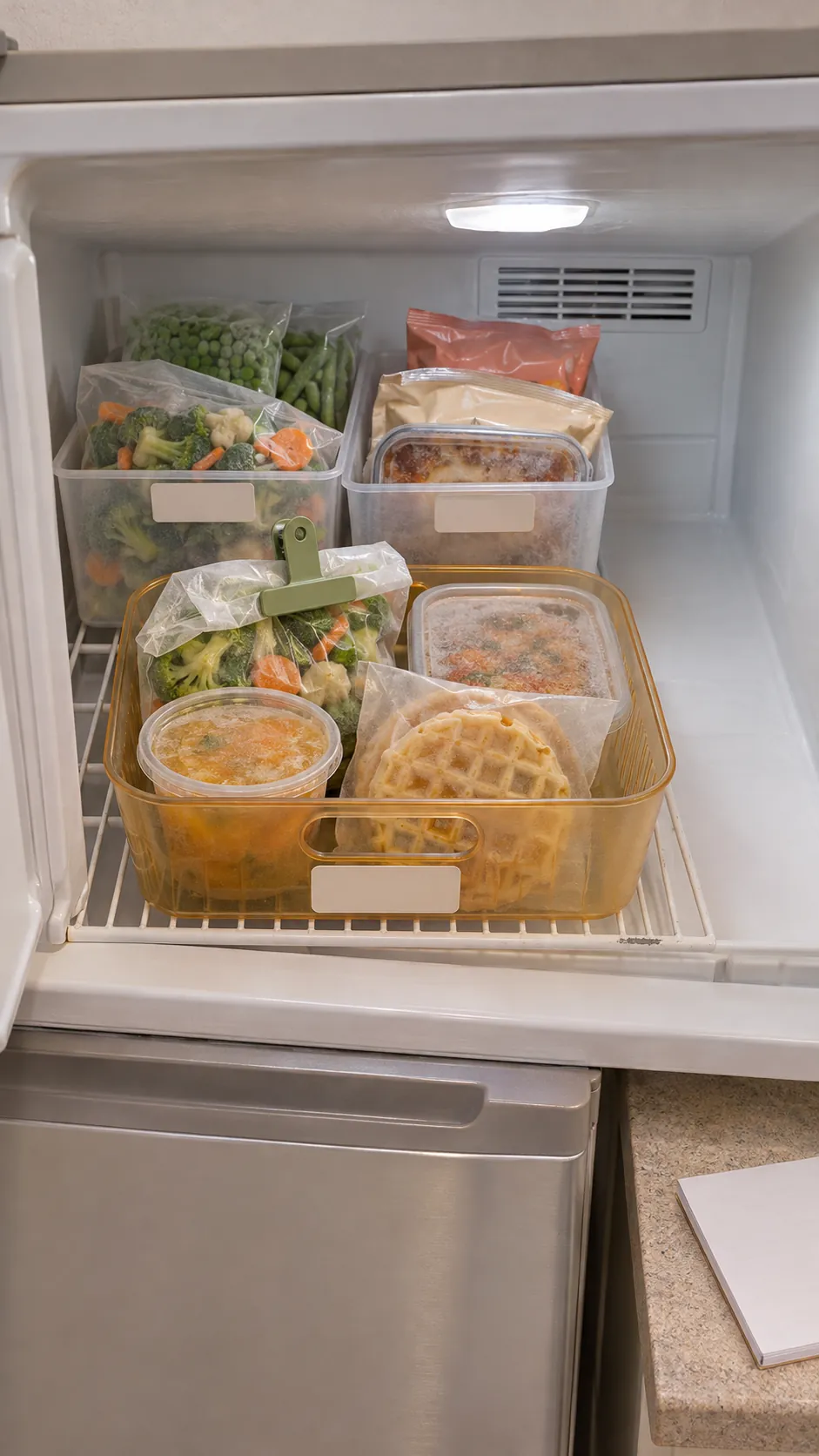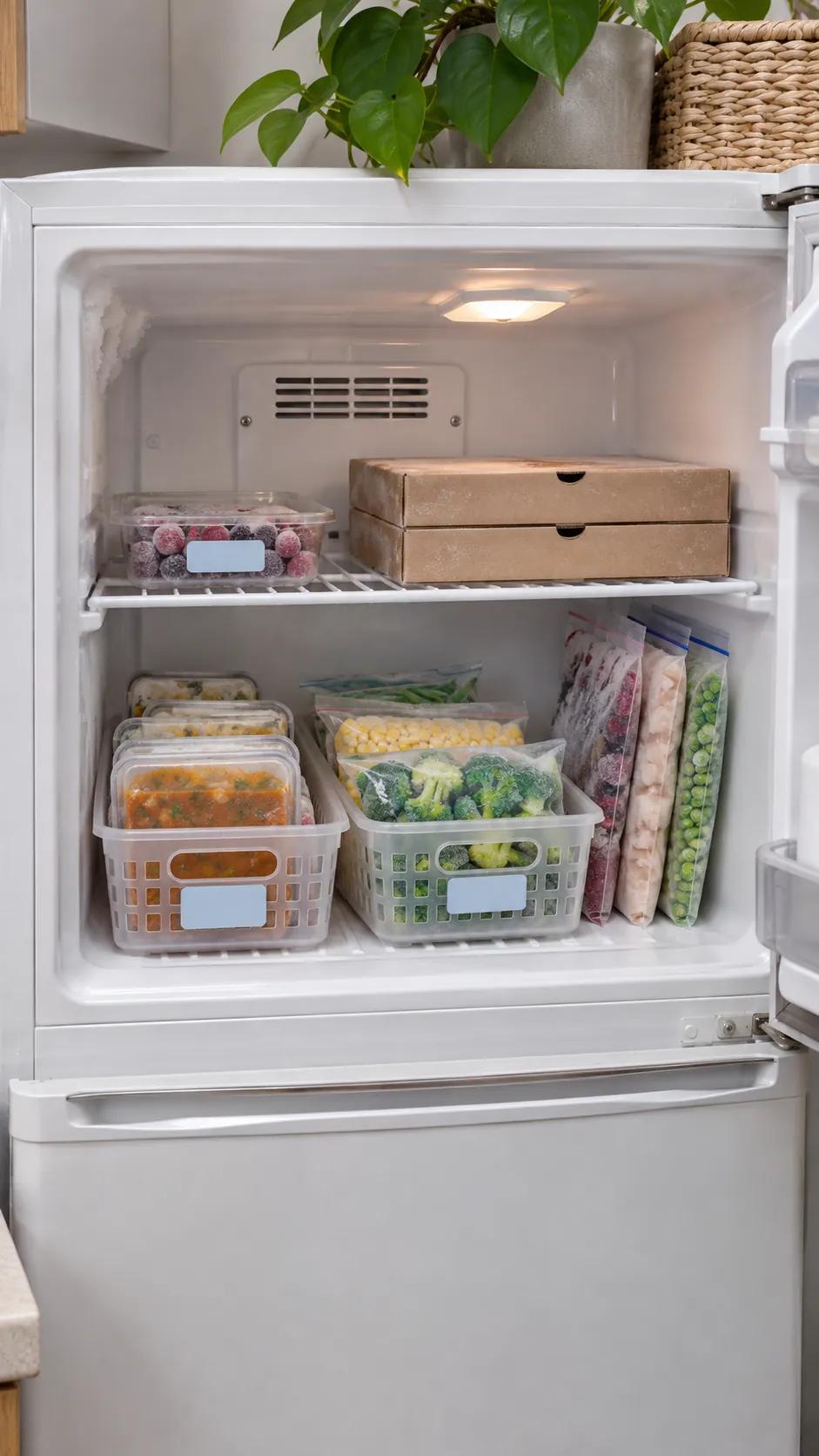
A top freezer can look full while still hiding half its food. The problem is usually depth, not total volume. Loose bags slide behind boxes, small items fall under larger packages, and a tall stack must be dismantled before you can reach the back.
Start with an empty compartment and a few measurements
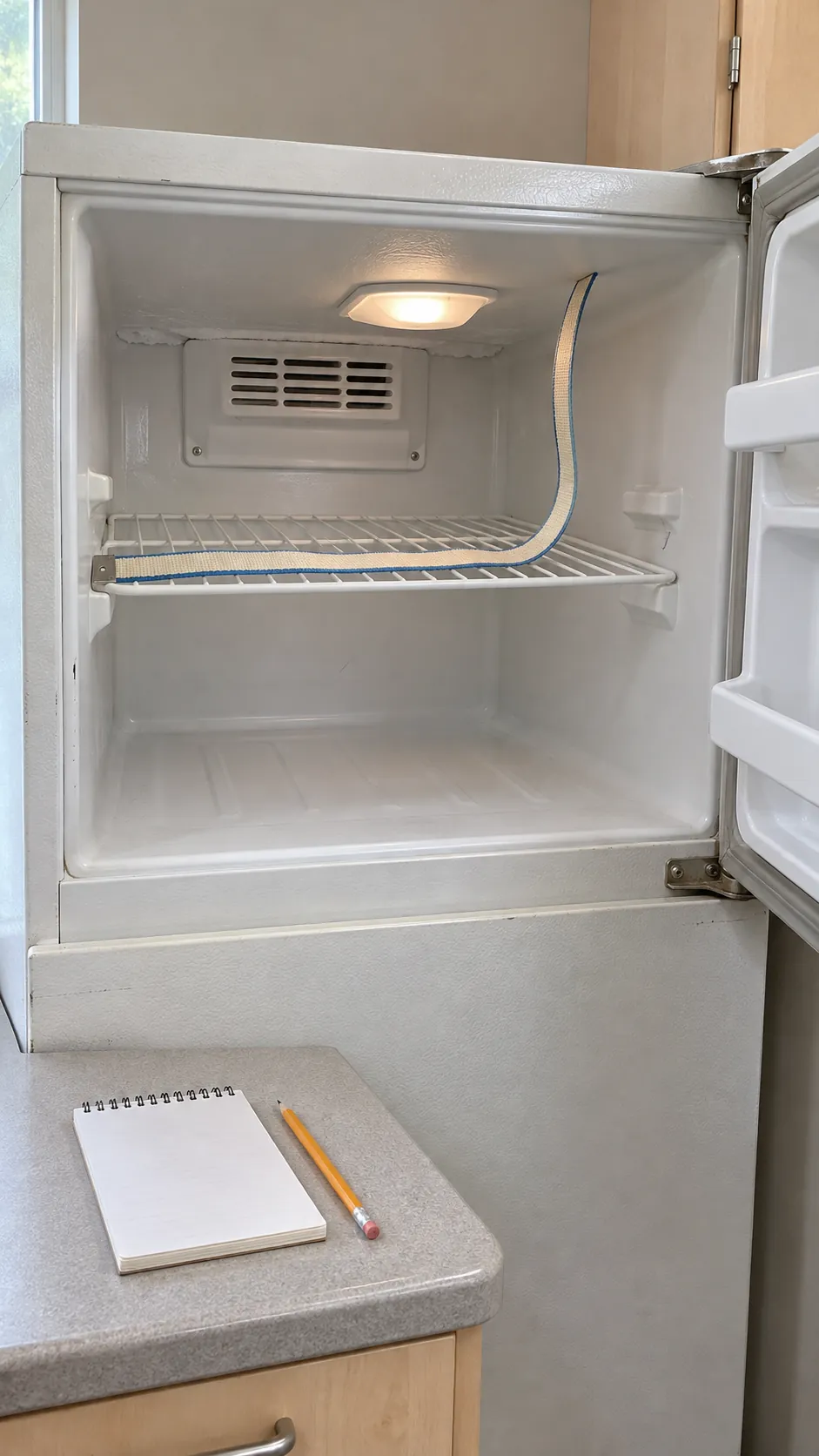
Remove everything and discard food that is spoiled, unidentifiable, or far beyond the quality date you use at home. Measure the usable width, depth, and height after accounting for the door, shelf supports, ice maker, light, and vents. A basket that fits the bare shelf can still block the door or cold air once it is filled.
Keep a clear strip near the vent and avoid packing food against the ceiling. Cold air needs a route around packages. If the freezer has a fixed wire shelf, measure both levels separately because the rear height may differ from the front.
Give the front and back different jobs
Use the front for food you reach every week, such as breakfast items, vegetables, and prepared portions. Reserve the back for a small amount of slower moving stock that has a clear label. This arrangement prevents a forgotten package from sitting in front of something you need each morning.
Do not create more categories than the compartment can support. Three broad zones are often enough: meals, ingredients, and quick foods. The important part is that each zone can move as one unit when you need access behind it.
Use shallow open bins that pull out safely
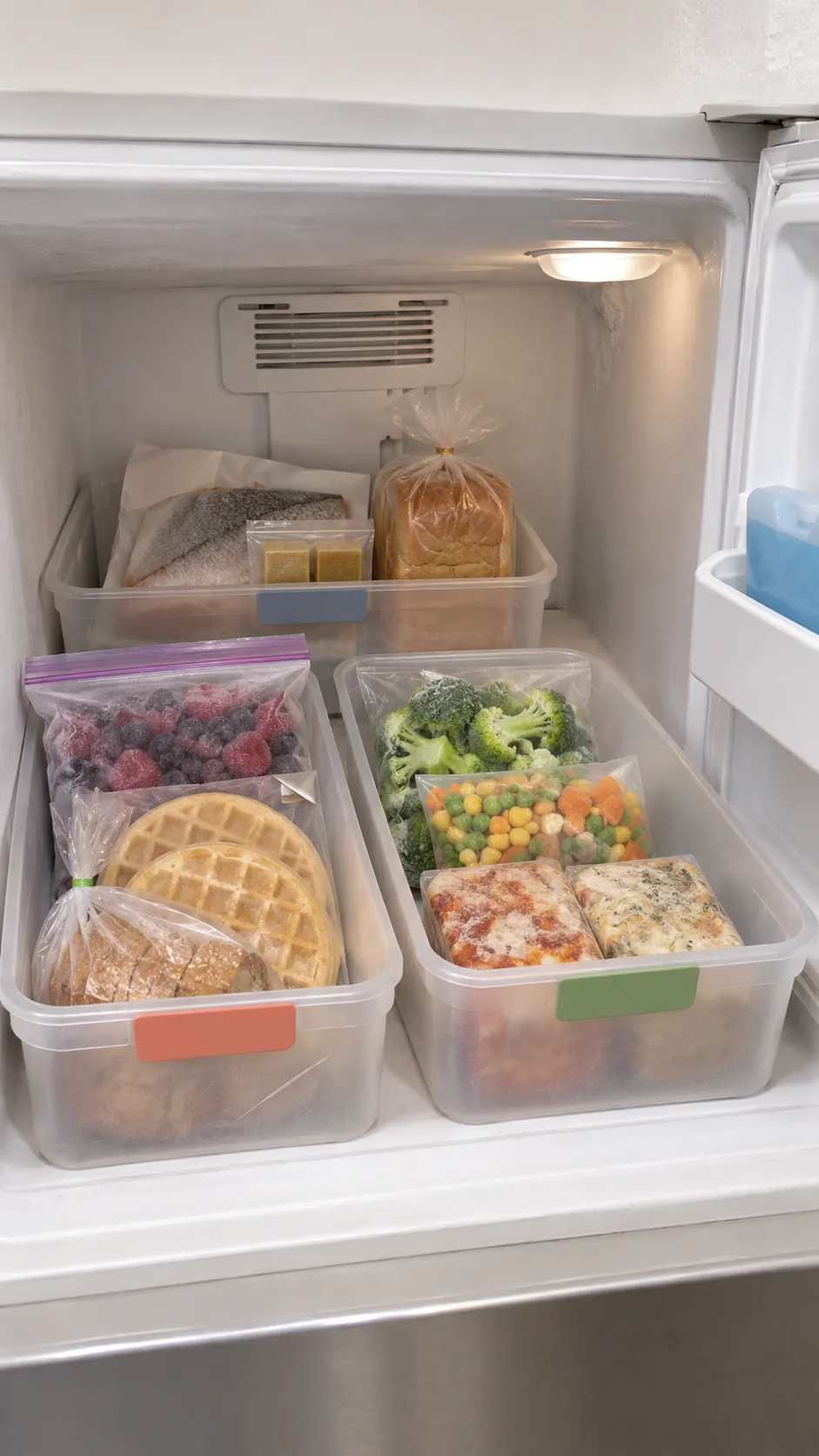
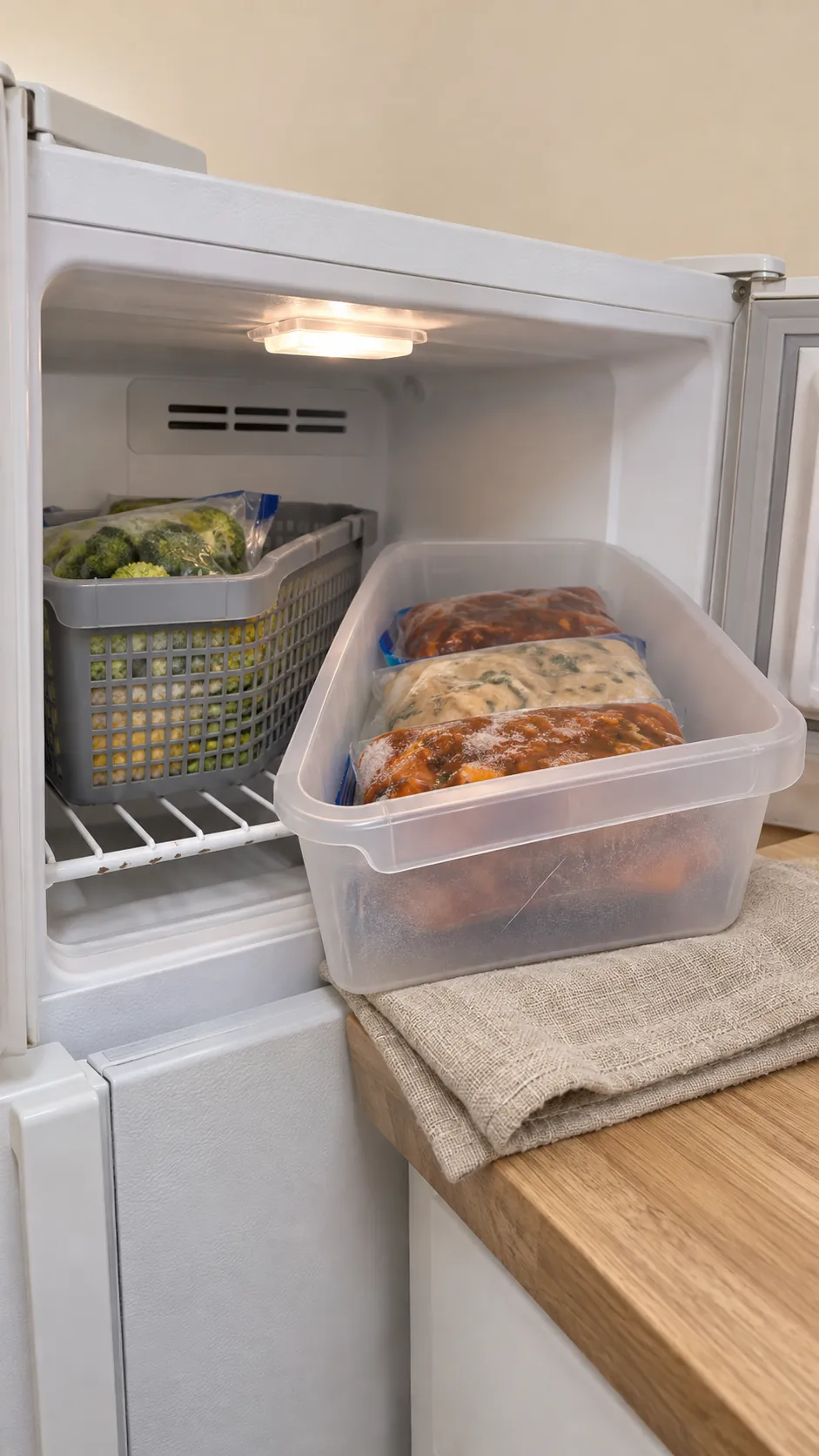
A freezer storage basket should act like a removable drawer, not another deep box. Choose an open top bin that lets you see package edges and reach the back row. Handles or a sturdy front lip make the bin easier to pull without squeezing frozen food.
Check that the material is rated for freezer temperatures. Thin brittle plastic can crack when it is cold and loaded. Leave enough space above the bin to lift it over the shelf edge, and never fill it so heavily that a safe one handed pull becomes difficult.
File flexible packages instead of piling them
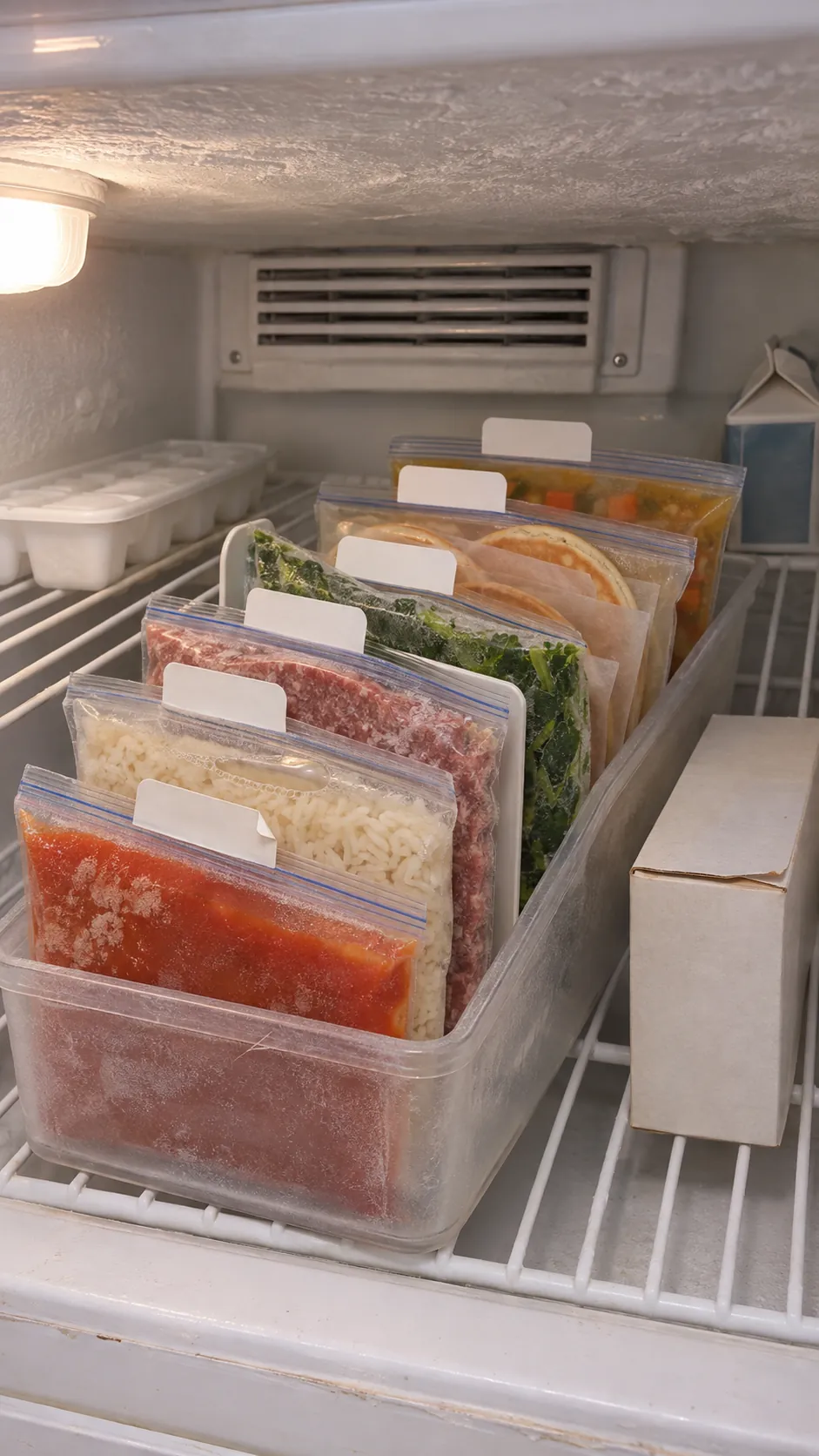
Freeze sauces, cooked grains, ground meat, and similar foods in thin flat packages. Once solid, stand them upright in a narrow bin or between freezer safe dividers. You can read the package edge and remove one item without lifting the entire group.
Open retail boxes only when the inner package has its own cooking directions and safe storage information. Keep instructions if you still need them. A half empty cardboard box often uses more space than the food, but loose unmarked inner bags create confusion and increase the chance of waste.
Limit stacks to one easy move
Some packages cannot stand upright. Stack those in low groups of similar size, with the food used most often on top. If reaching one package requires moving three separate piles, the system is too deep.
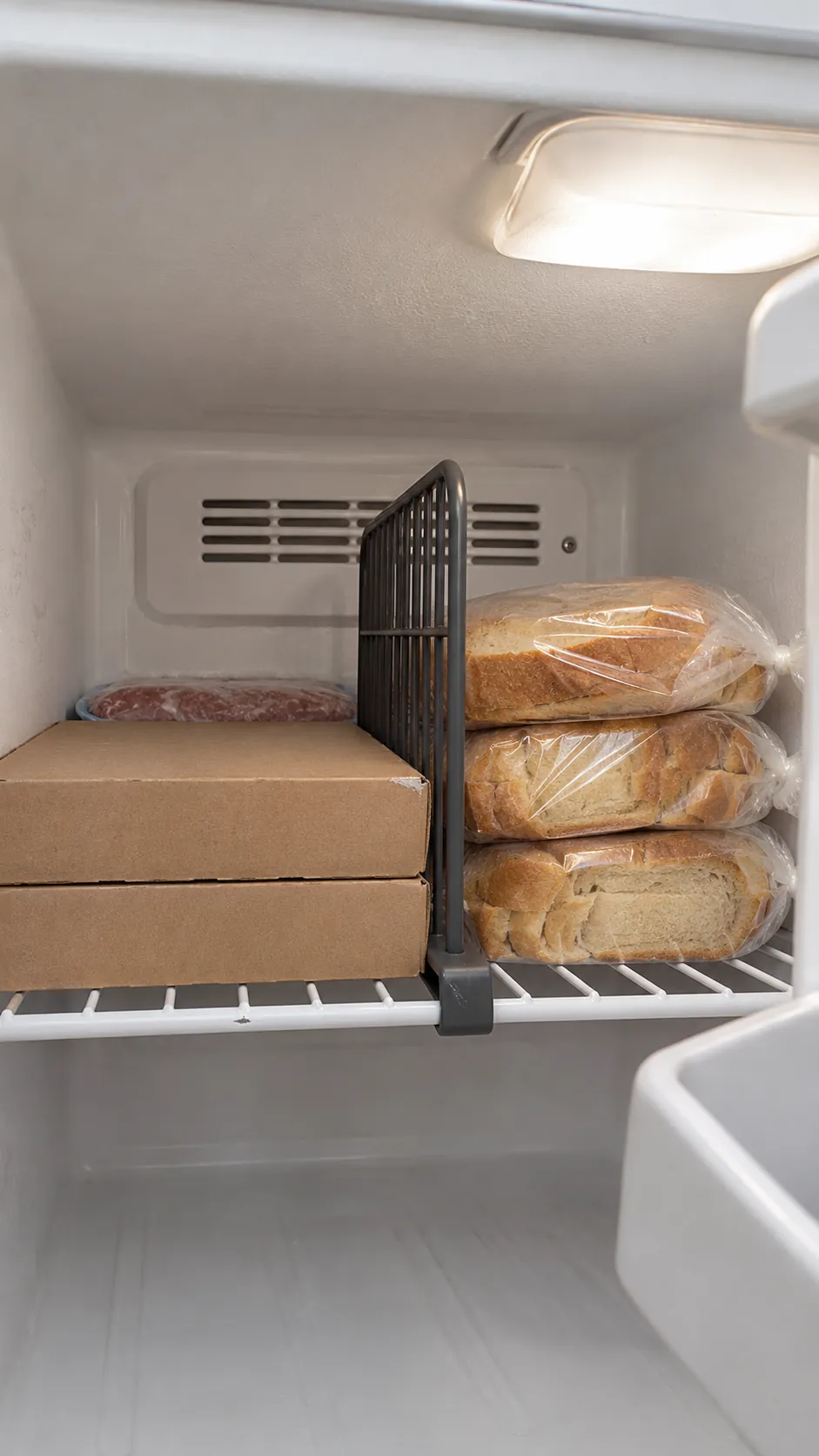
A simple shelf divider can stop frozen pizzas, bread, or narrow containers from collapsing into the next zone. The divider must be stable, freezer safe, and short enough to avoid the door. Keep heavy packages low and close to the shelf so they cannot fall when the door opens.
Maintain one use first zone
Dedicate one small front basket or shelf corner to food that should be used soon. Move opened packages, older meals, and single remaining portions there. This visible queue prevents good organization from becoming a way to store food indefinitely.
During grocery planning, look through the use first zone before adding anything to the list. Once a week, return stray packages to their broad categories and bring older food forward. The reset should take a few minutes because every category moves as one bin or one upright group.
A successful small freezer is not packed to its physical limit. It keeps a narrow path for air, one open handhold for each bin, and enough room to remove a package without excavation. That small amount of free space is what makes the stored food visible and usable.