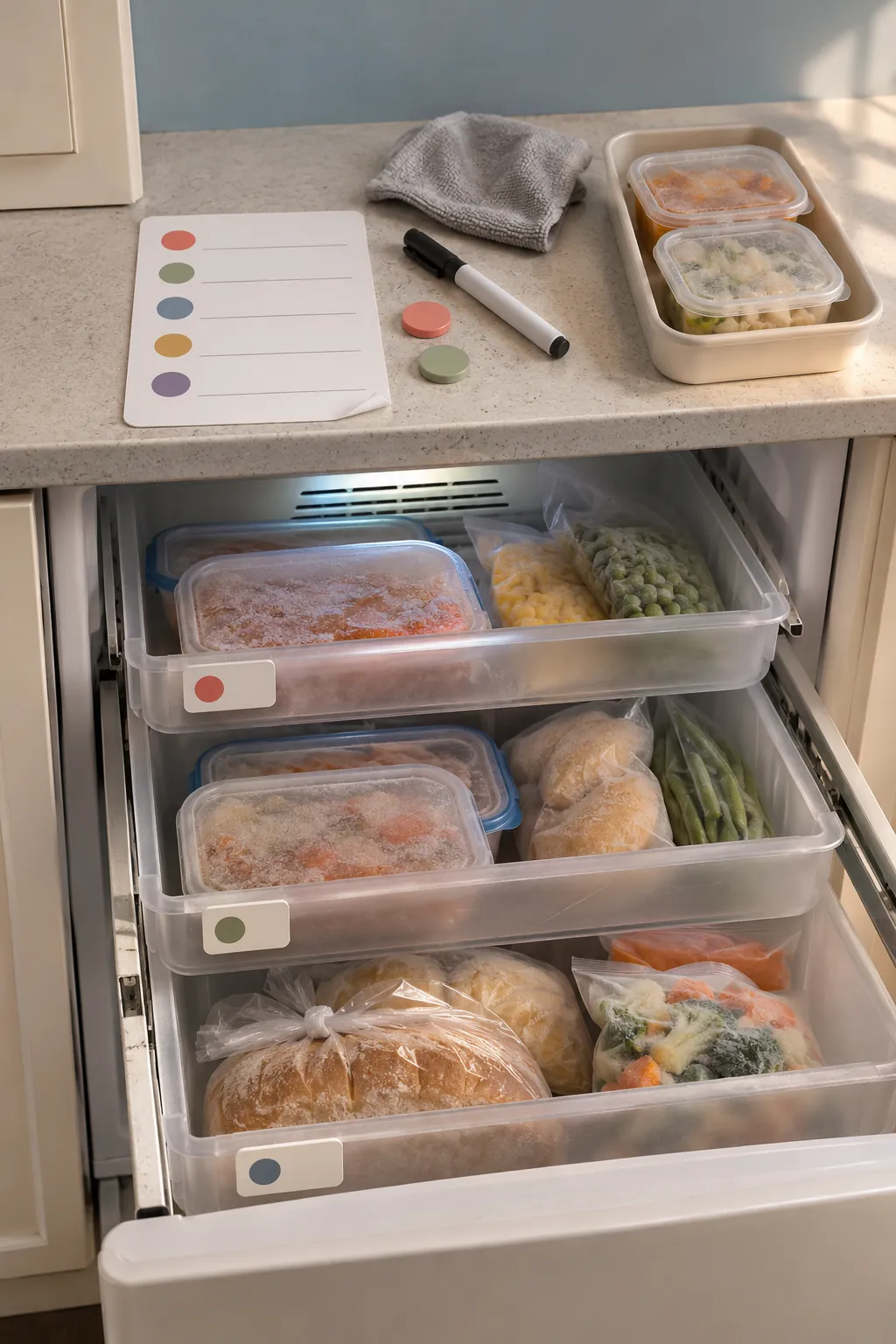
A freezer inventory fails when it asks for more effort than opening the freezer. The goal is not to record every product detail. The goal is to answer three questions before shopping: what is here, how much is left, and what should be used first.
Choose one inventory that everyone can reach
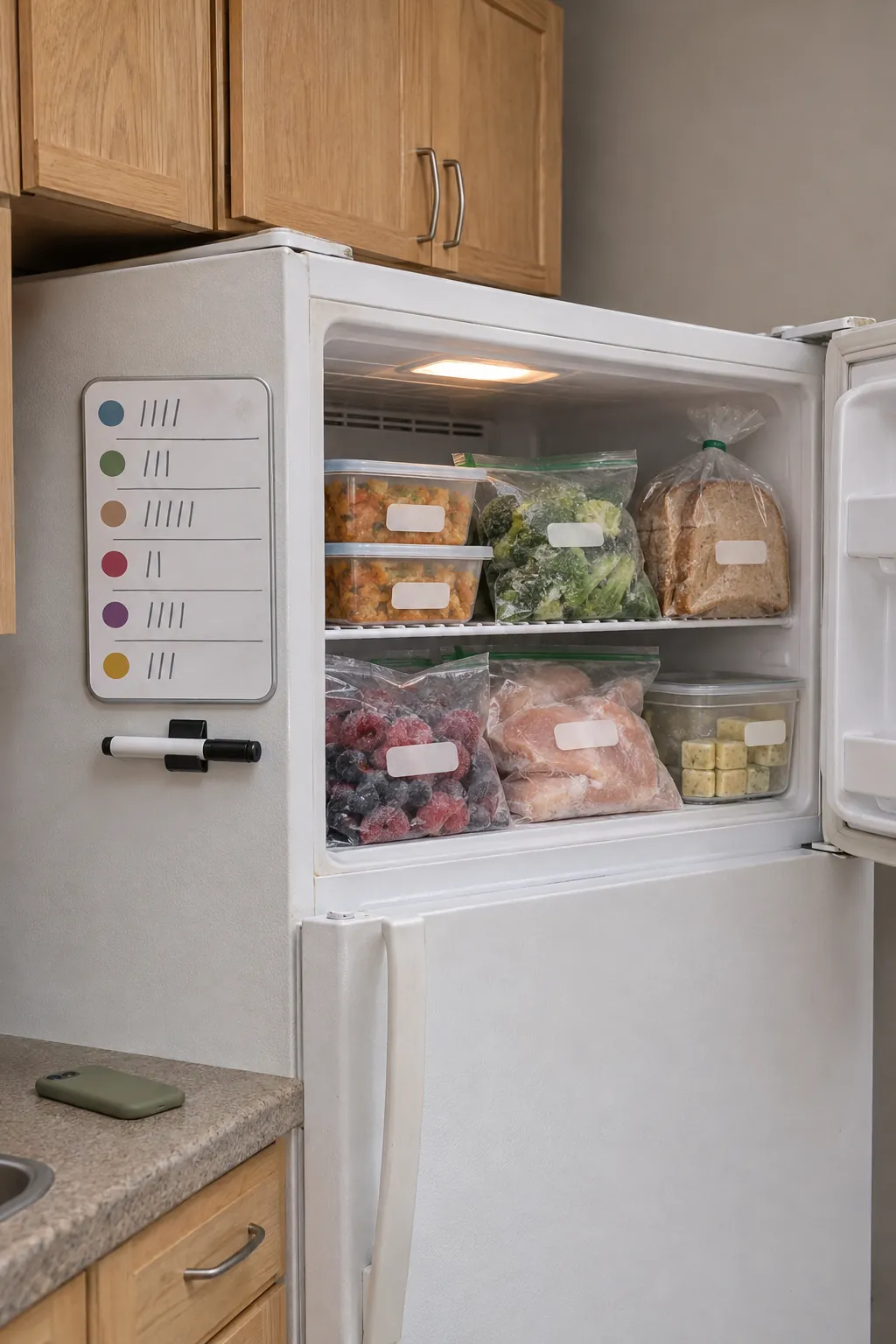
Use one shared note, simple spreadsheet, or erasable list near the freezer. Do not split information between an app, a paper list, and memory. A small freezer usually needs only broad food names, quantity, and a useful date.
If two people shop, both people must be able to update the same list. A shared phone note works when everyone carries a phone. A freezer door list works when physical visibility creates a stronger habit. Pick the place that will be checked before an item enters the shopping cart.
Label every package before it freezes
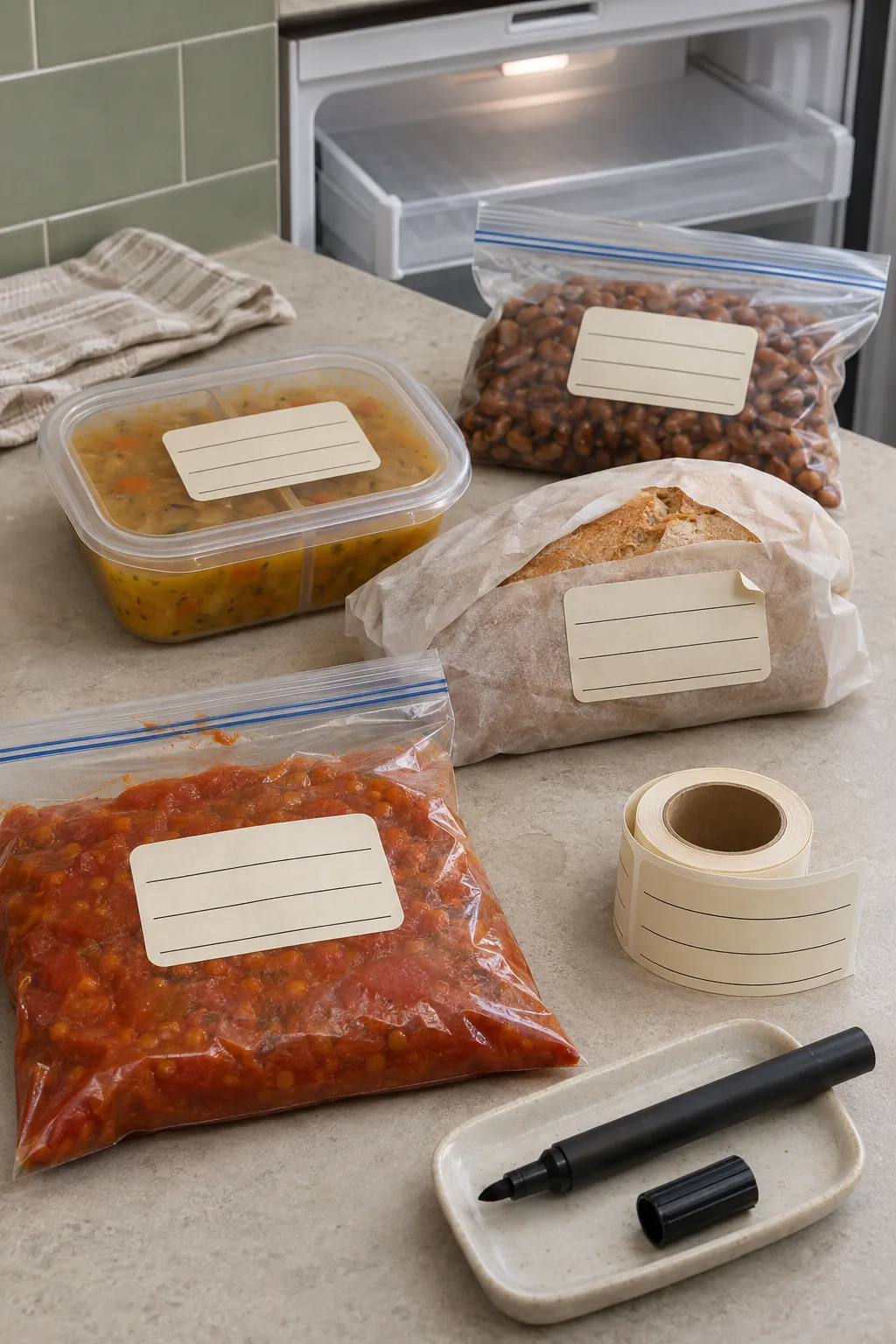
Write the food name, freezing date, and useful portion count before the package becomes cold and damp. For prepared food, include the detail that changes how you will use it, such as spicy, vegetarian, or two servings. Avoid vague labels such as leftovers.
Put the label where it stays visible after the package is filed or stacked. Use a marker and label material that remain legible in the freezer. The inventory can use a shorter name, but it should match the package closely enough that nobody has to guess.
Make the freezer zones match the list
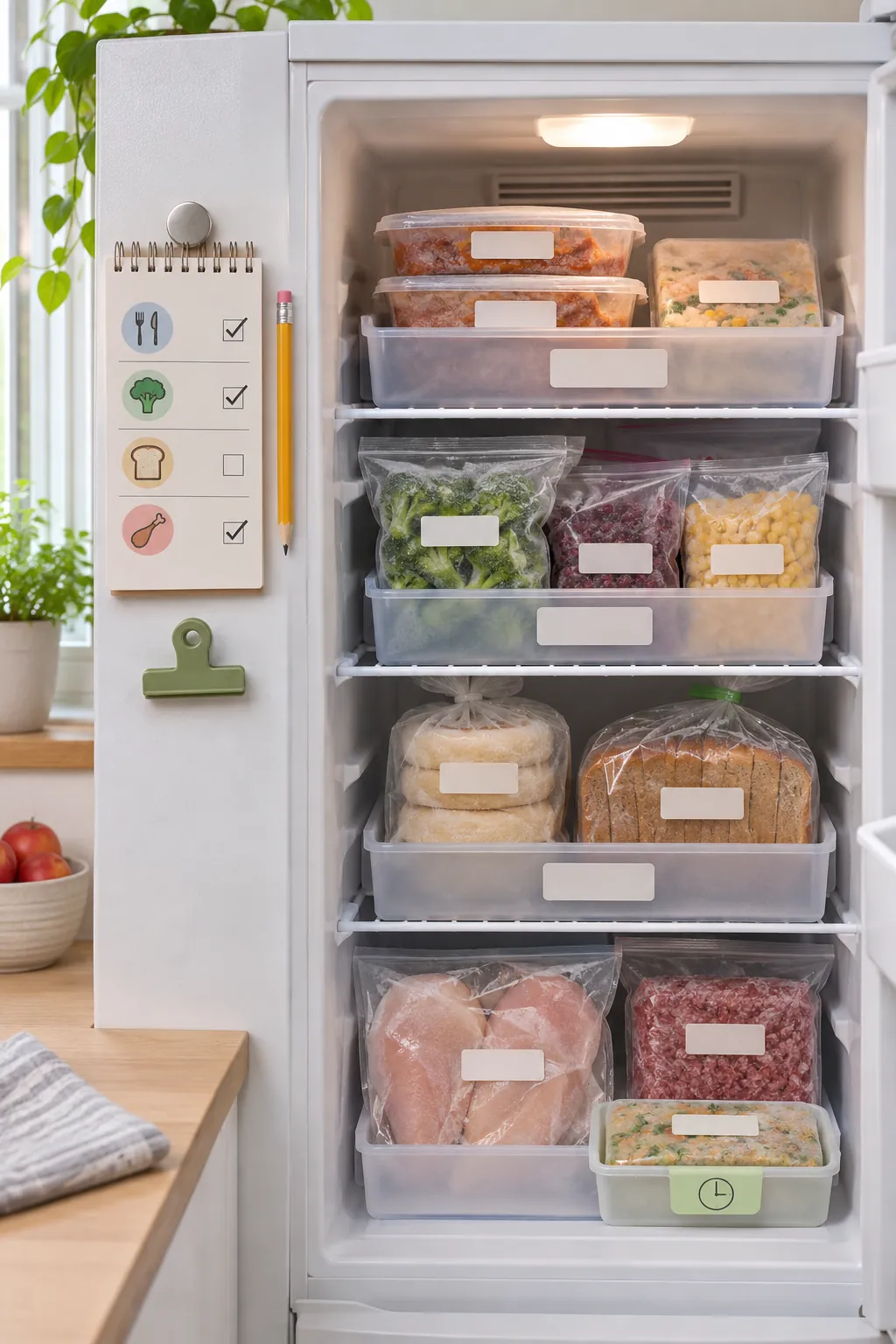
Use the same few categories in the freezer and in the inventory. Meals, vegetables, proteins, bread, and cooking ingredients are often enough. Broad categories make it faster to locate an item and faster to check whether the list is accurate.
Give each category one bin, shelf section, or upright file. Do not create a location code for every inch. The list only needs a location when the freezer has more than one place where the same food could hide.
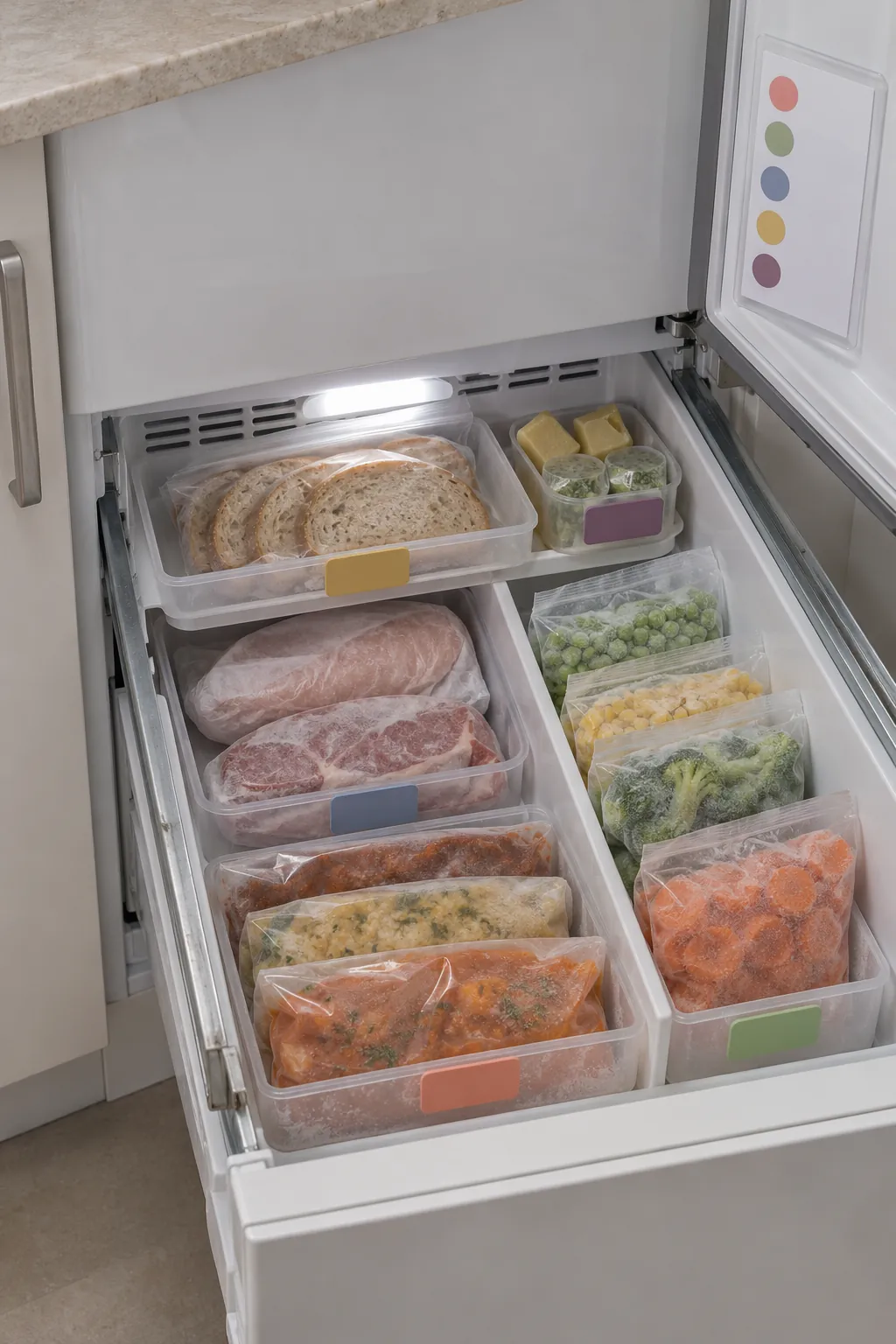
Update quantities at the moment food moves
Add an item when it enters the freezer and subtract it when it leaves. Waiting until later turns one missed change into a list that nobody trusts. Keep the inventory within arm reach or use a shared note that opens in one tap.
Track useful units rather than exact weights unless weight changes a recipe. Three meal portions is clearer than one container. For a package that holds several pieces, reduce the count each time instead of deleting the whole line after the first use.
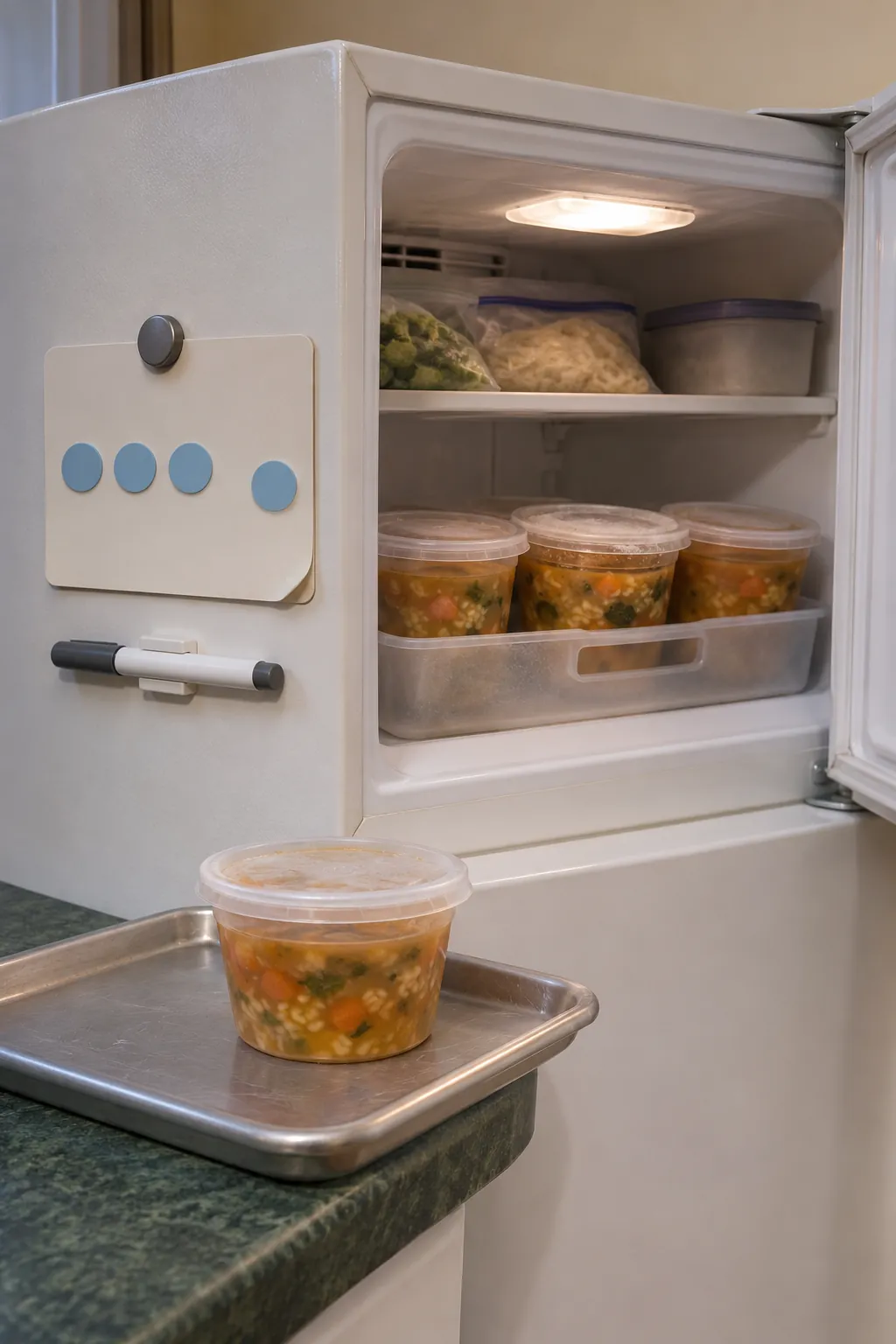
Check inventory before the grocery list
Build the next meal plan from food already available, then add only the missing ingredients. This order prevents a sale or habit from creating a second bag of food you already have. A quick inventory check is more reliable than opening the door and scanning the front row.
Choose a low stock point for basics you want to keep. One remaining loaf or two vegetable portions might trigger a purchase, while occasional foods need no automatic replacement. A low stock cue should reflect how quickly the household uses the item and how much space it consumes.
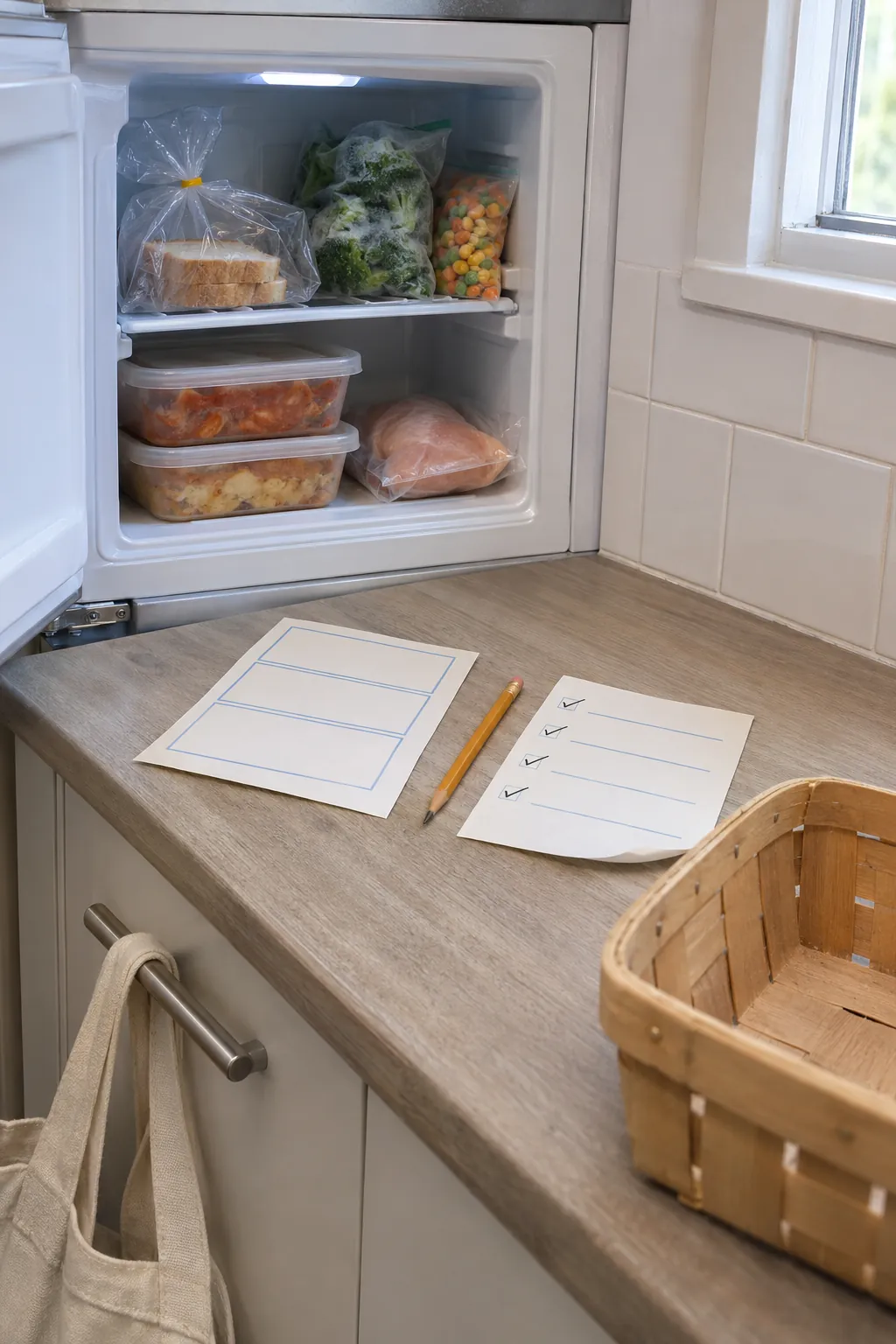
Reconcile the list during one weekly reset
Once a week, compare the inventory with each broad freezer zone. Correct missed changes, bring older packages forward, and mark two or three foods for upcoming meals. This reset should take only a few minutes in a small freezer.
If the list is often wrong, simplify it before adding technology. Remove fields nobody uses, combine narrow categories, and stop tracking information that does not change a buying decision. A basic list that stays current prevents more duplicates than a detailed system that people avoid.
The best sign that tracking works is a calmer grocery list. You can see what supports the next meals, what is running low, and what should stay out of the cart. The inventory becomes a small decision tool rather than another household record to maintain.