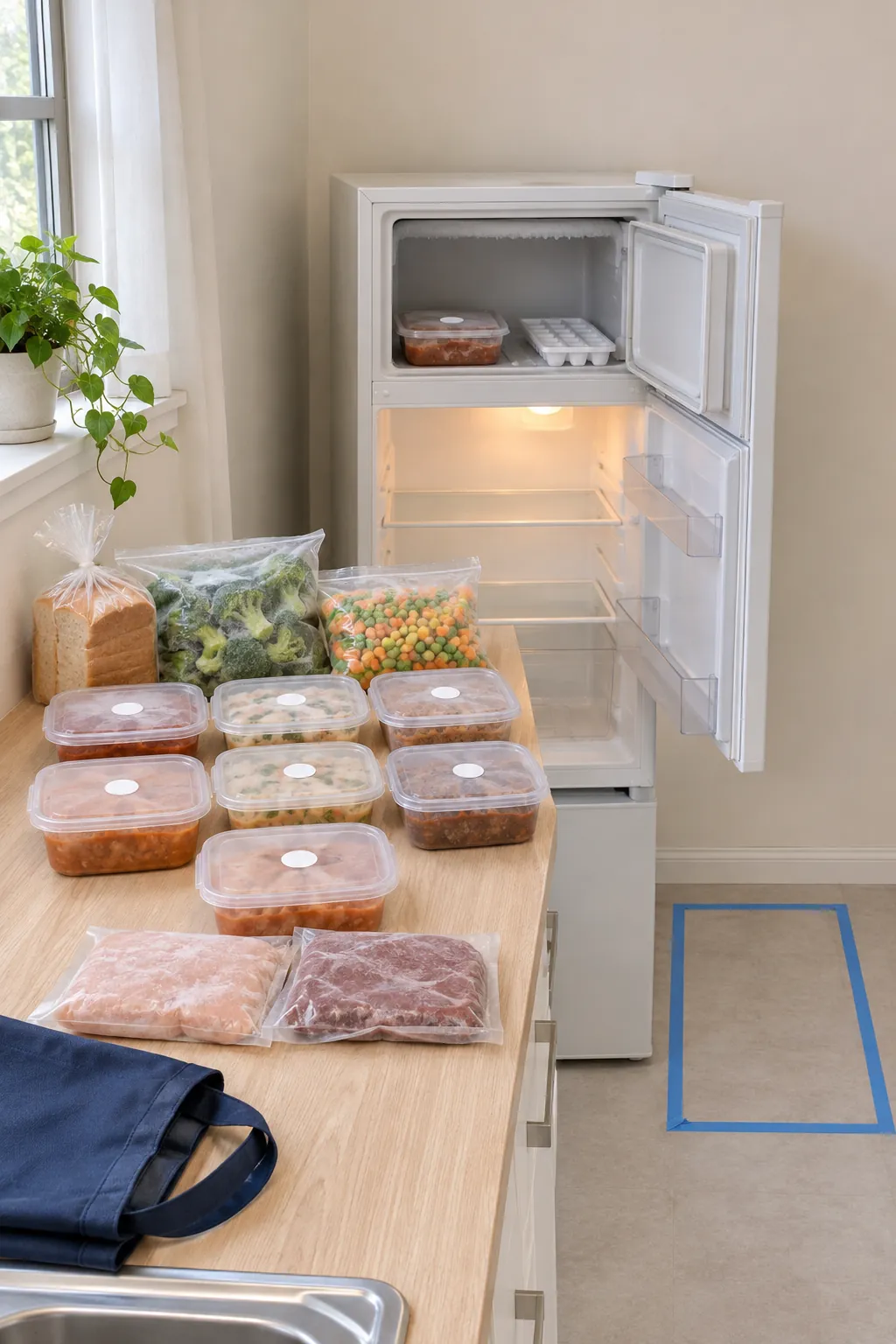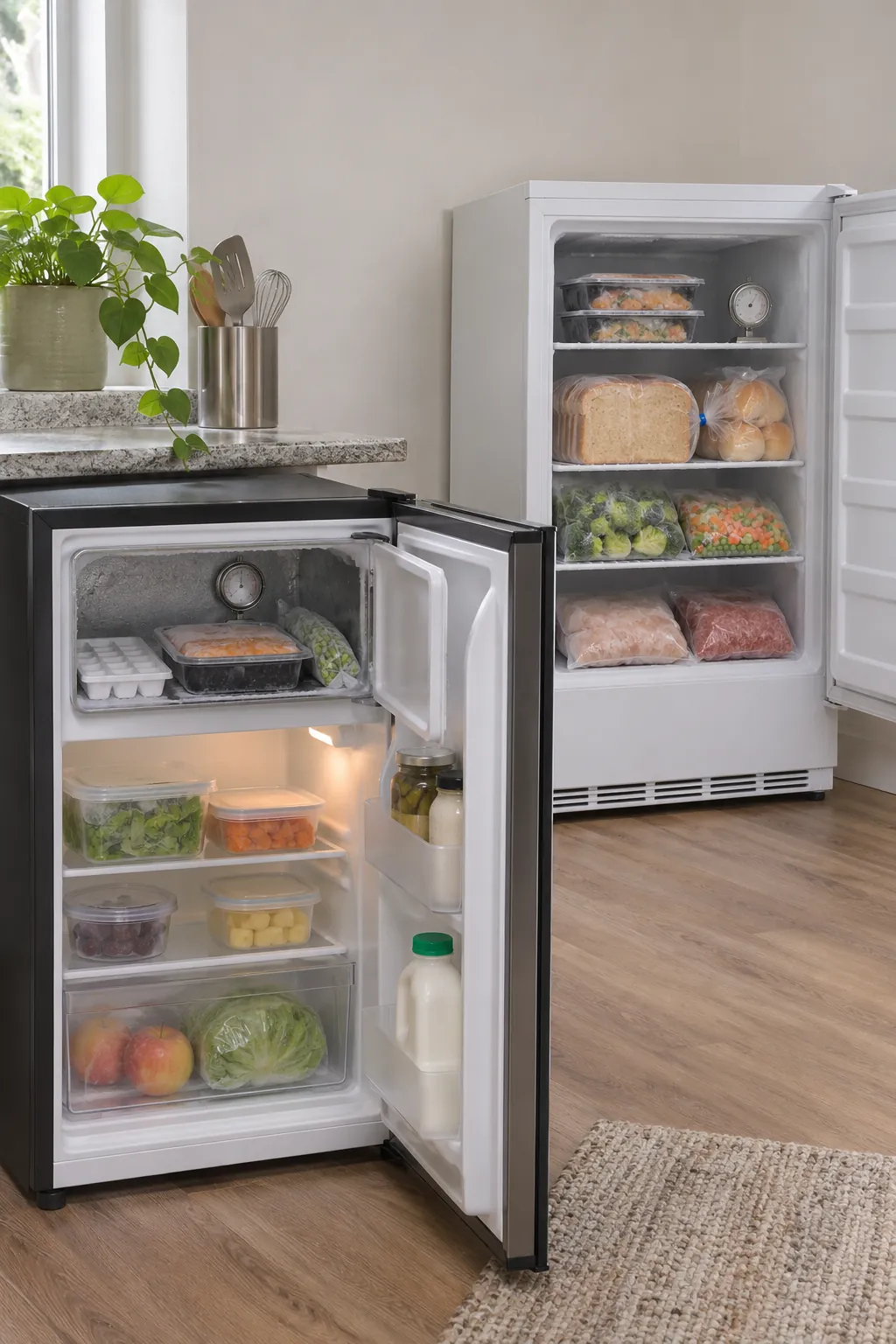
The small metal box inside a compact refrigerator may look like a freezer, but appearance does not prove storage performance. Some boxes are designed mainly to make ice. A separate freezer is built to hold frozen food at a stable freezing temperature. The safe comparison starts with the appliance specification, not the door size.
Identify what the freezer box is rated to do
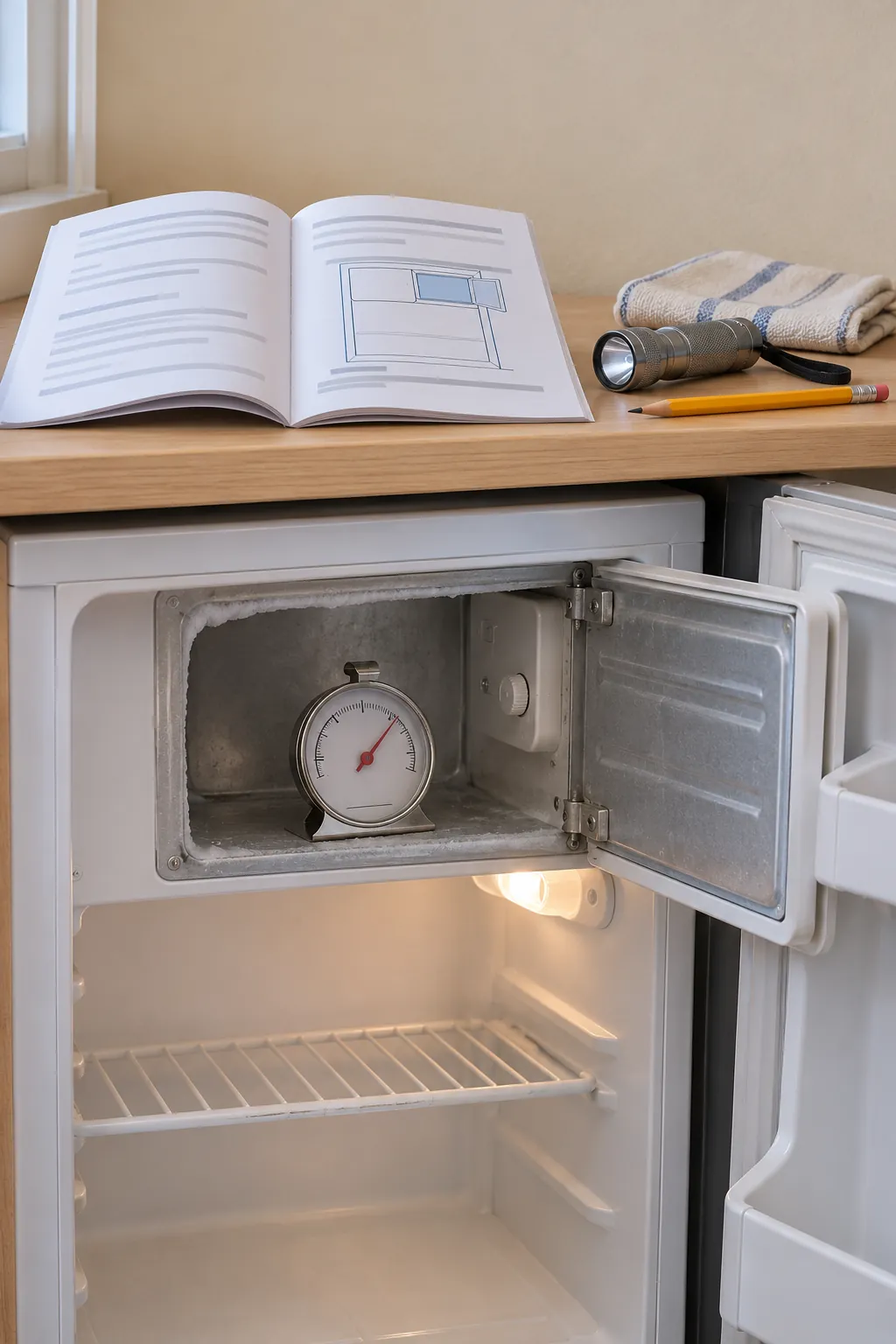
Read the mini fridge manual and the marking on the freezer compartment. Look for the stated temperature range and intended storage use. If the maker describes the box only as an ice making compartment, do not assume it can preserve frozen meals like a separate freezer.
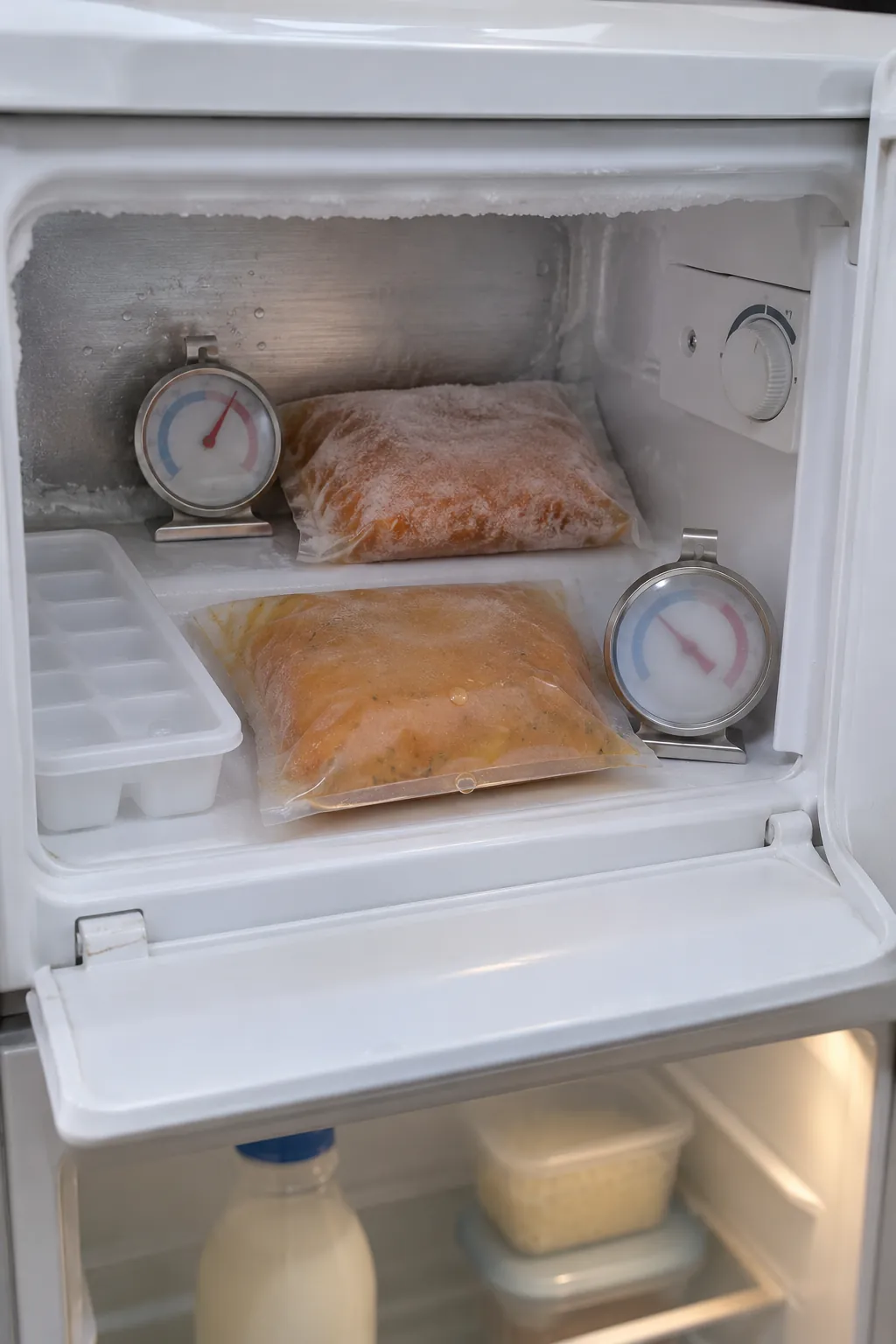
Place an appliance thermometer where food would sit and check it after the door has stayed closed. A freezer used for long term frozen food should hold about zero degrees Fahrenheit, which is minus eighteen degrees Celsius. Check again after normal door openings because a tiny box can warm quickly.
A freezer box suits a few small frozen items
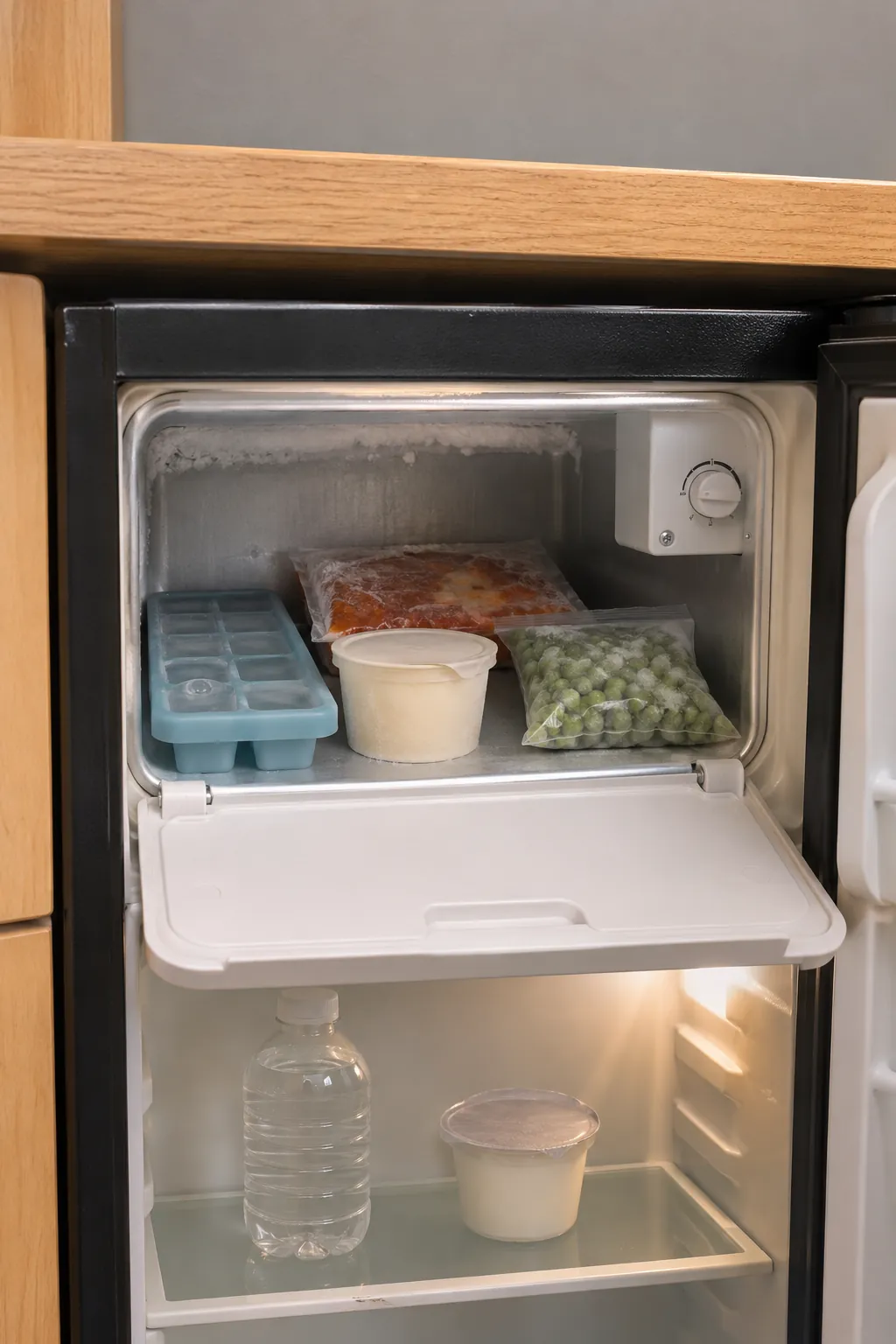
When the compartment is rated for frozen food and reaches the required temperature, it can hold a few compact packages. Ice trays, one or two frozen meals, a small bag of vegetables, or a modest dessert may fit. Flat packages use the limited depth better than bulky cartons.
Keep food away from the door flap and thermostat parts. Leave enough space to close the compartment fully and allow cold air to move. The usable capacity is smaller than the visible cavity once frost, an ice tray, and irregular walls take their share.
Do not rely on an unrated box for long storage
If the box cannot maintain the correct temperature, use it only as the manufacturer directs. Food that repeatedly softens and refreezes loses quality, and unsafe temperature history cannot be fixed by freezing it harder later. Do not judge safety by whether a package merely feels cold or contains some ice.
Temperature can vary between the metal surface and the front of the box. A package touching the cold plate may freeze while another near the flap softens. A thermometer and the manual provide better evidence than a single frozen corner.
A separate compact freezer supports routine frozen storage
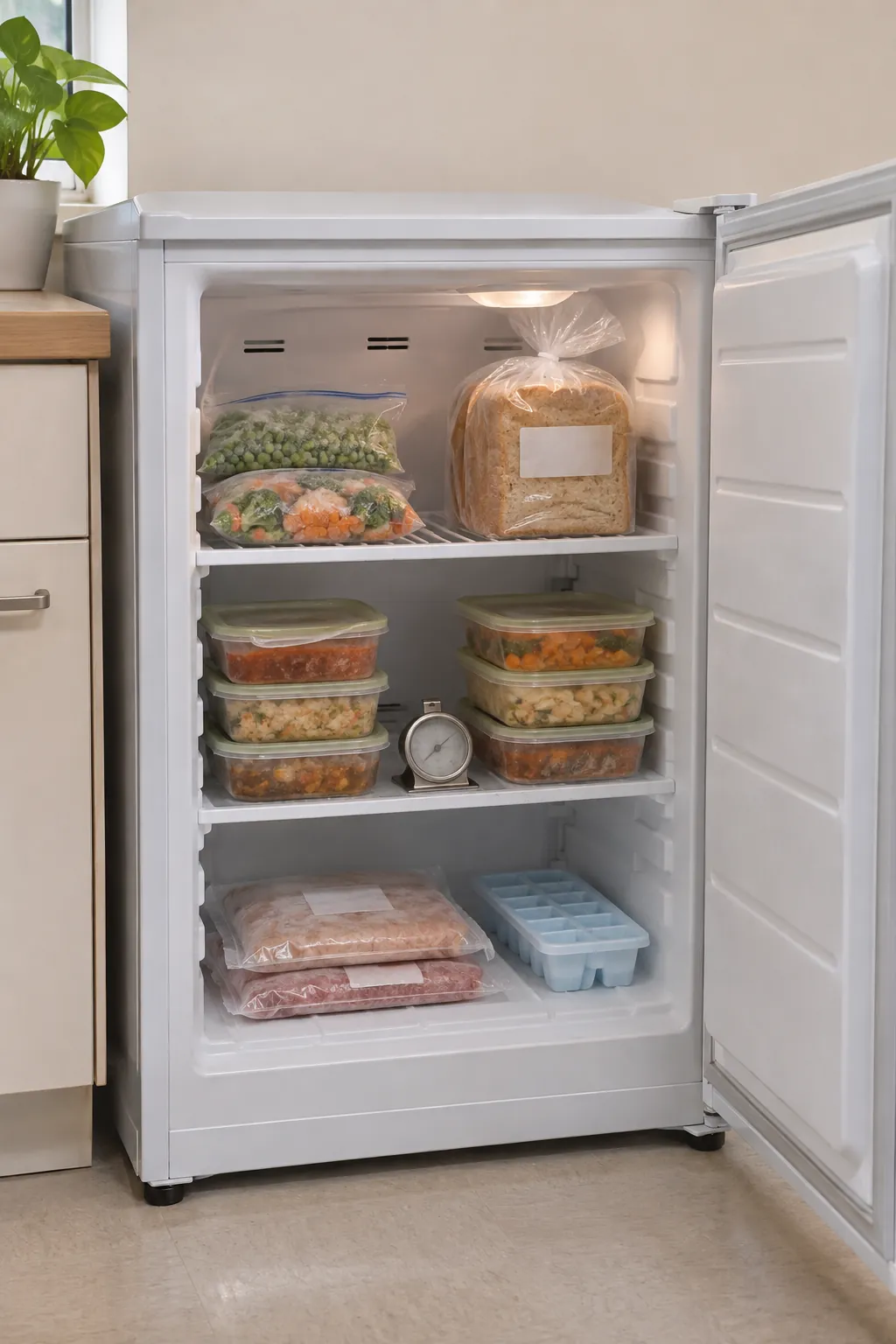
A separate compact freezer gives frozen food its own insulated cabinet, thermostat, and door. It can support weekly meal portions, batch cooked food, meat, bread, vegetables, and other staples when it maintains the correct temperature. Baskets or shelves also make those packages easier to see and rotate.
Capacity still depends on package shape. Measure the interior and compare it with the containers you actually freeze. A small upright model improves access, while a compact chest style may use floor space efficiently but requires lift out baskets to prevent buried food.
Count floor space noise and ventilation
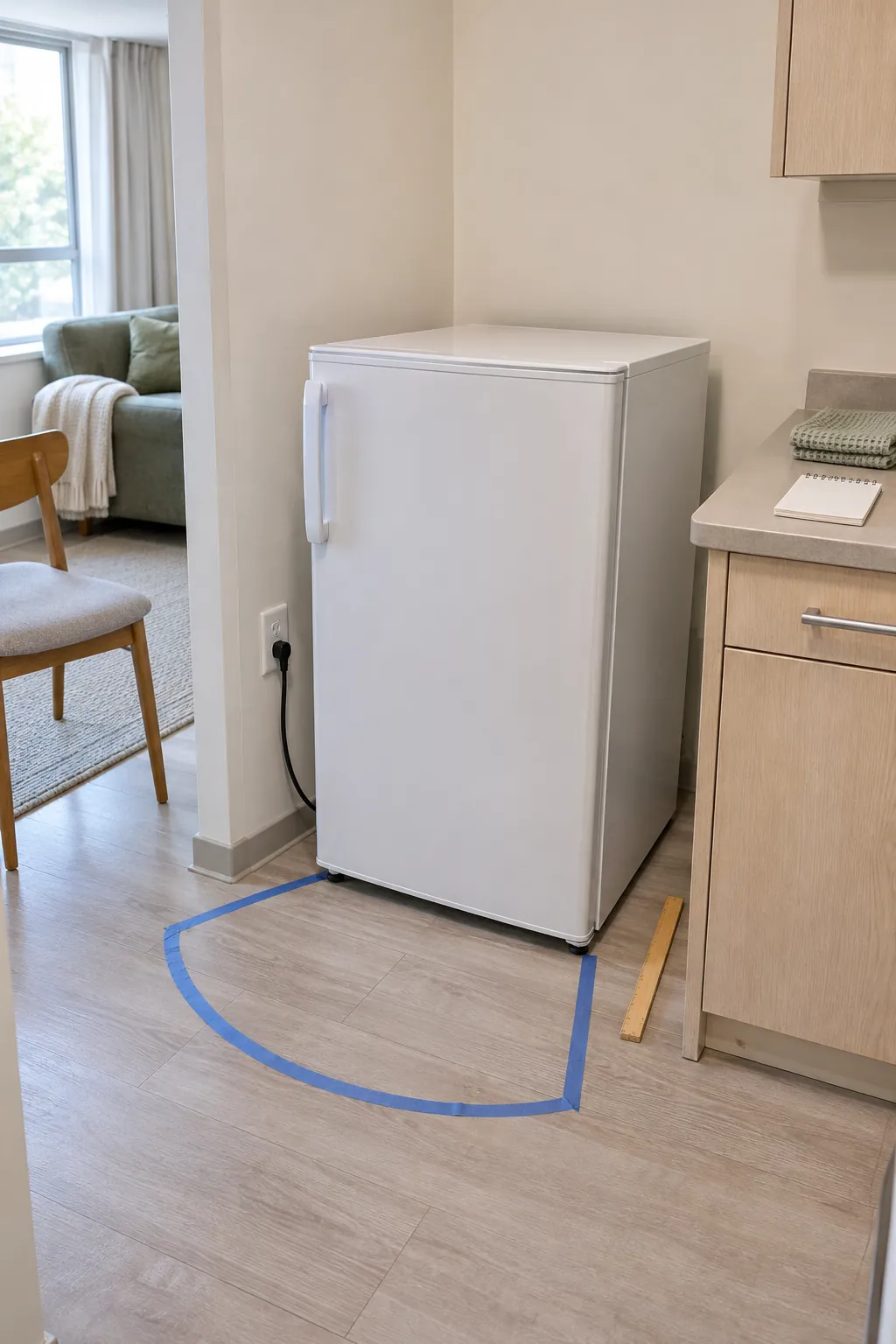
A separate appliance needs a safe electrical connection, ventilation clearance, and room for its door or lid. It also adds compressor noise and energy use. Check the manufacturer clearances and energy information before choosing a corner in a bedroom, dorm, or studio.
Do not place either appliance where bedding, curtains, or stored boxes block vents. Measure the full door swing and the walking path. A freezer that cannot open far enough for basket removal will be harder to use than its capacity suggests.
Test your real storage habit before buying
For one week, record the frozen food you want to keep and the package size it needs. Separate occasional ice and dessert from meals, proteins, vegetables, bread, and batch cooking. This short record reveals whether the freezer box is truly limiting you or whether a few smaller packages would solve the problem.
Keep the mini fridge box when its rating, temperature, and small capacity match your actual use. Choose a separate freezer when you regularly need stable space for several meals or staples and can provide the required room and ventilation. Buying the larger option only helps when the household will rotate and eat the food it holds.
The decisive question is not how much food can be forced inside. It is whether the appliance can maintain the right temperature while packages remain visible, accessible, and used on time.