A canopy frame can make a bedroom feel calm and intentional, but its height and visual weight leave little room for guesswork. The best choice is not simply the prettiest timber finish. It is the frame that fits your ceiling, leaves comfortable walking space, supports the mattress correctly, and stays quiet after the novelty wears off.
Before you compare styles, measure the room and decide whether you want the posts to define the bed or support fabric. That single decision affects the frame size, the wood profile, the hardware, and the amount of upkeep you will accept.
Measure the room as a three dimensional space
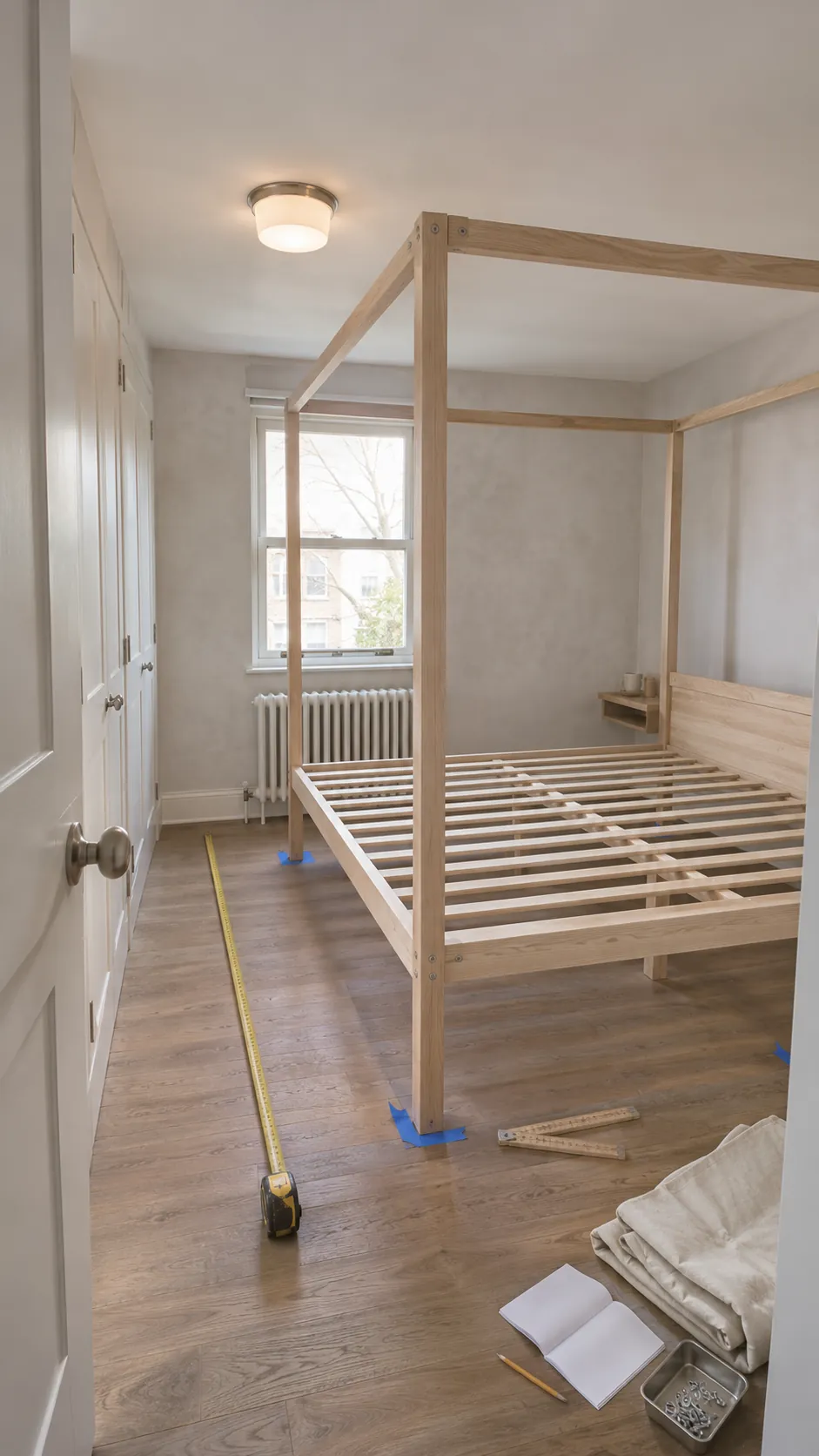
Start with the frame dimensions, not the mattress dimensions. Canopy posts often extend beyond the mattress at each corner, and a substantial headboard can add more depth than expected. Mark the full footprint on the floor with removable tape, then confirm that doors, drawers, vents, and closet panels can still open without conflict.
Next, measure from the floor to the lowest ceiling feature above the bed. Include beams, fans, pendant lights, smoke alarms, and sloped sections. A little open space above the top rails prevents the bed from looking wedged into the room and gives you room to lift the assembled pieces into position.
Keep the main walking route generous enough for daily use. In a compact bedroom, a slim post profile and an open headboard preserve sight lines. A bulky king size canopy can work in a large room, but it should not force every other piece of furniture against a wall.
Choose a wood structure that matches daily use
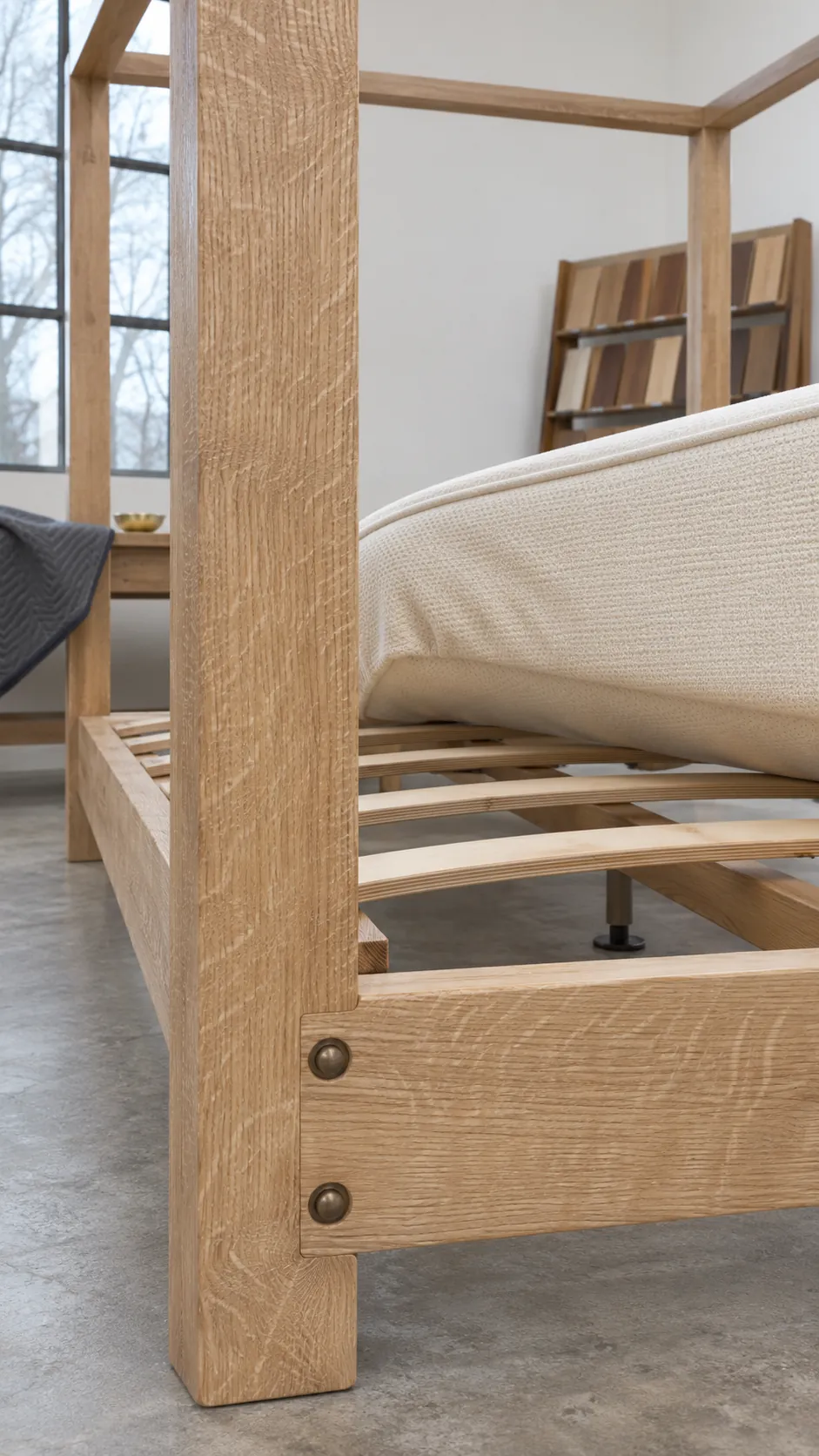
Solid hardwood usually gives the strongest impression of permanence, but species and construction matter more than a broad label. Oak, maple, ash, and walnut can all make durable frames when the posts are straight, the joints are precise, and the rails have adequate support. Softer woods can also perform well, though they tend to show dents and scratches sooner.
Engineered wood is not automatically a poor choice. It can remain stable across seasonal humidity changes, especially in panels and headboards. Inspect where the load travels: corner joints, side rail connections, center supports, and slats should use reliable hardware and substantial material rather than thin decorative skins.
Ask for the total weight limit and whether it includes the mattress. Check the required foundation, slat spacing, and number of center legs. These details affect comfort and warranty coverage, yet product photos rarely show them clearly.
Compare modern and vintage silhouettes
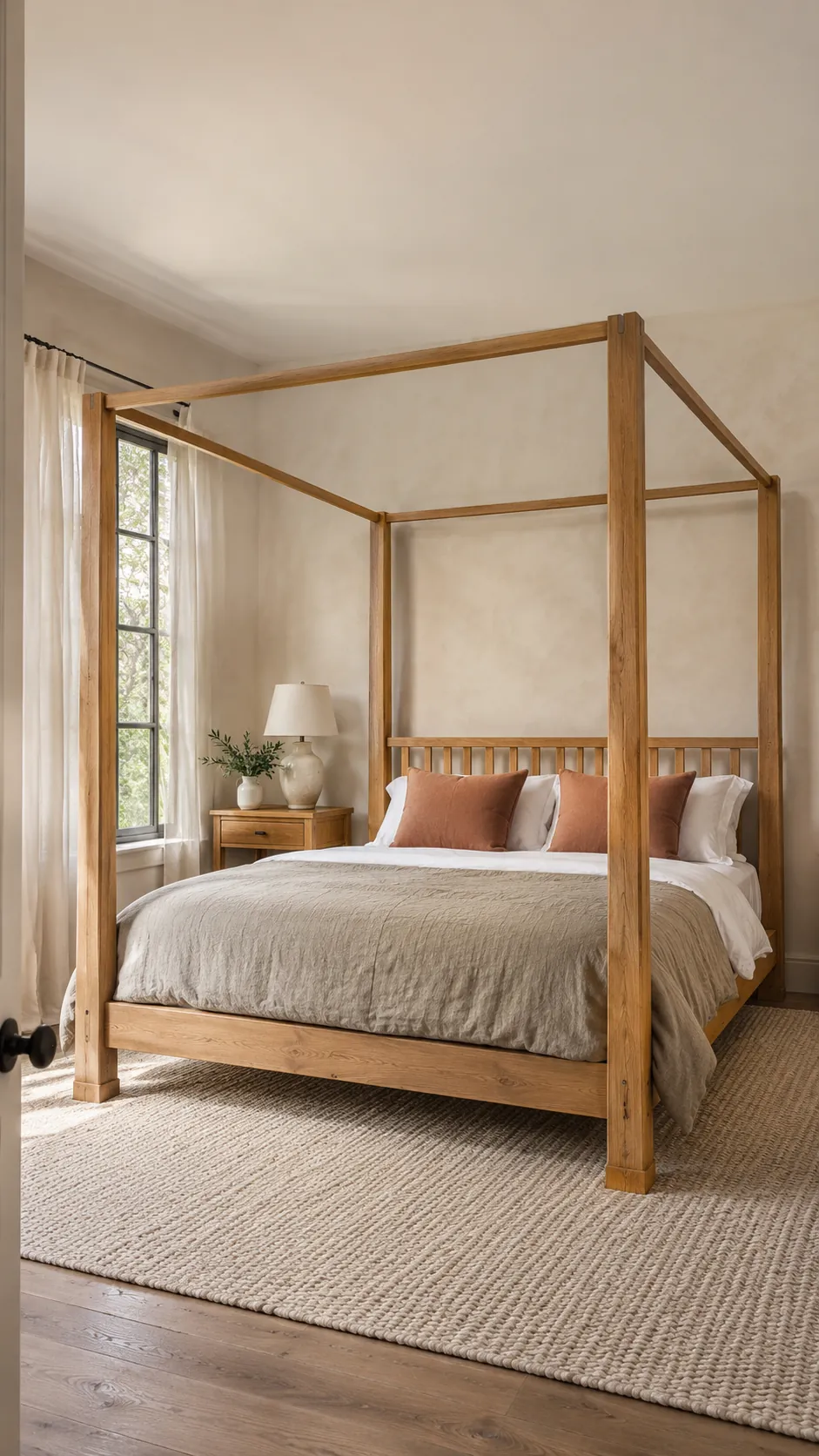
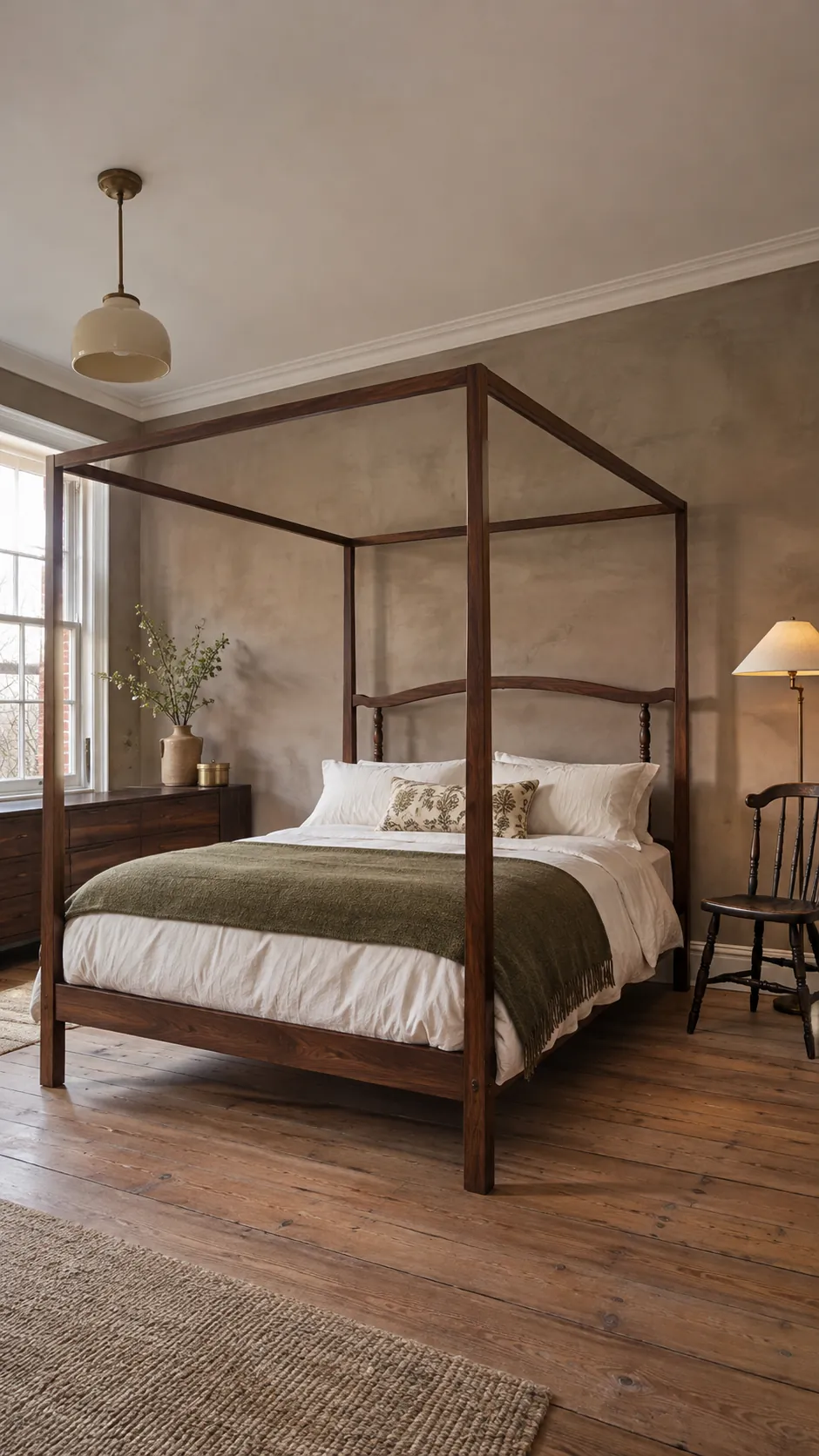
A modern canopy bed often uses straight posts, narrow rails, and a restrained finish. This keeps the outline clear and lets bedding provide softness. Pale oak and medium walnut suit warm contemporary rooms, while a dark stained frame creates the graphic effect of a black canopy bed without losing visible wood grain.
A vintage canopy bed may have turned posts, carved details, or a taller headboard. Those features need visual breathing room. Pair them with simpler bedside tables and a quieter rug so the room does not become crowded with competing shapes.
Look at the frame from the doorway as well as from beside the bed. The upper rectangle becomes one of the strongest lines in a modern canopy bedroom. If it aligns awkwardly with windows or slopes, a lower half canopy bed may give you the enclosed feeling you want with less overhead structure.
Use fabric without making the bed feel heavy
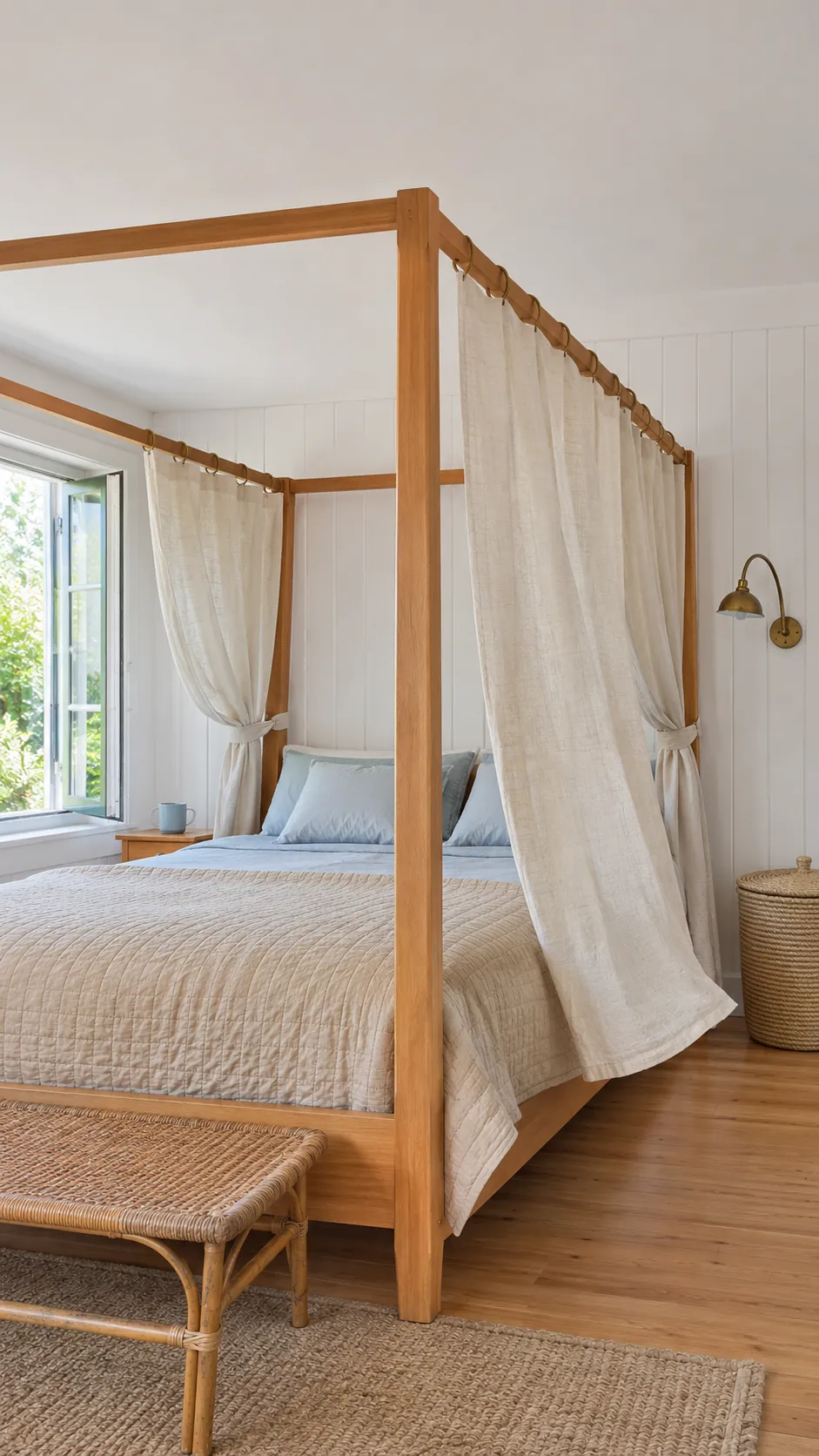
Fabric changes both the appearance and function of a canopy bed frame. Loose linen panels soften a strong timber outline and move gently with air. Denser curtains provide more privacy, but they add weight, collect dust, and can make a small room feel closed.
Choose fabric after you confirm what the top rails can support. Use proper canopy ties or rings that slide without scraping the finish. Keep fabric away from heaters, lamps, candles, ceiling fans, and electrical outlets, and avoid attaching heavy panels to decorative rails that were not designed for a load.
Quality is easy to judge in person. Hold a sample toward a window, feel its drape, and check whether the weave resembles curtain fabric rather than a thin table covering. Washable panels are the practical choice for homes with dust sensitivity, pets, or humid weather.
Plan assembly before delivery day
Long posts and top rails can be difficult to turn through stairs, narrow halls, and low doorways. Compare the package dimensions with the full route from the entrance to the bedroom. If the frame arrives in large sections, confirm that each section can reach the room before you place the order.
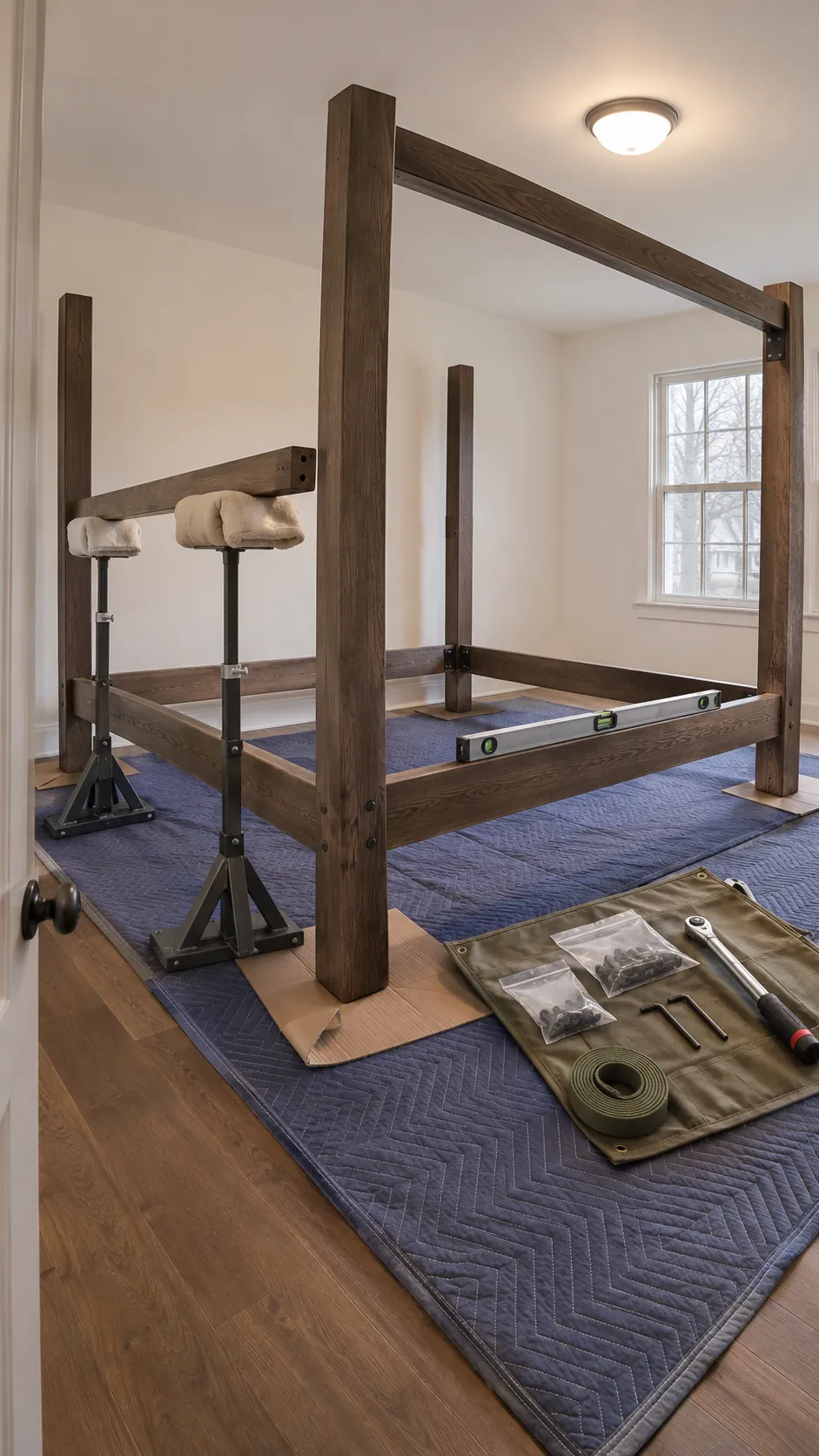
Assembly usually needs two adults because the upper rails must remain supported while the corner joints are aligned. Build the frame in its final location, protect the floor, and tighten hardware gradually in a balanced sequence. Fully tightening one corner too early can pull the frame out of square.
After the mattress is in place, confirm that all feet contact the floor and that the side rails sit level. Save the instructions and the correct tool for later adjustments. A small labeled bag attached to the underside of a slat keeps spare hardware easy to find.
Keep the frame quiet and the finish healthy
Wood moves slightly as indoor humidity changes, so a frame may need a careful hardware check after its first weeks of use. If a joint squeaks, locate the exact connection before tightening anything. Check that the frame is square, the floor is level, and each fastener is secure without crushing the wood.
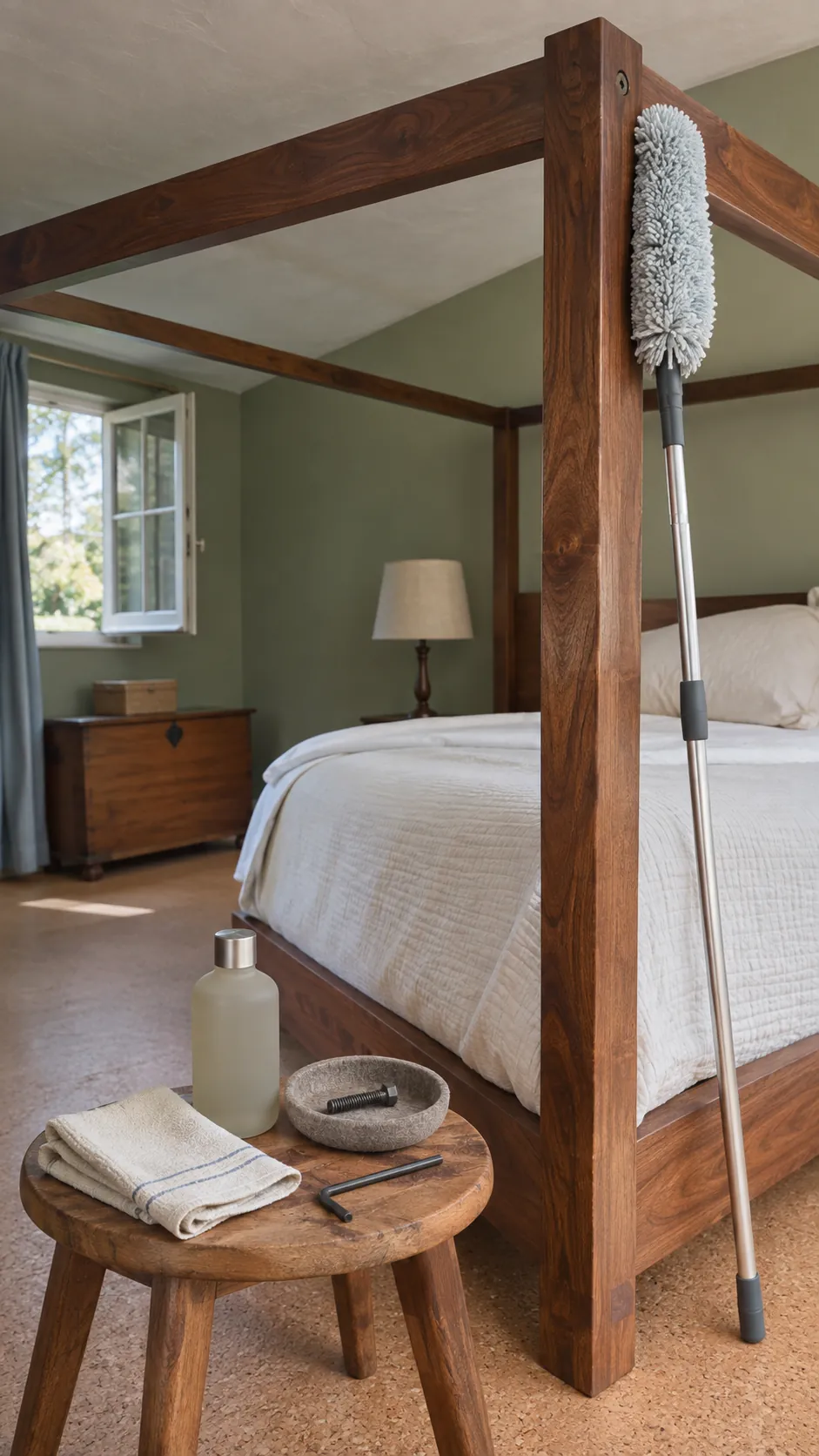
Dust the upper rails with a soft tool that reaches every corner. Clean the finish with the method specified by the maker, since excess water and aggressive sprays can cloud or dry the surface. If you use canopy fabric, wash it on a regular schedule and inspect every tie while it is removed.
A thoughtful wood canopy bed should feel substantial without controlling the whole room. When the scale, support system, fabric, and maintenance needs suit your real routine, the strong outline becomes a useful design anchor rather than an obstacle.