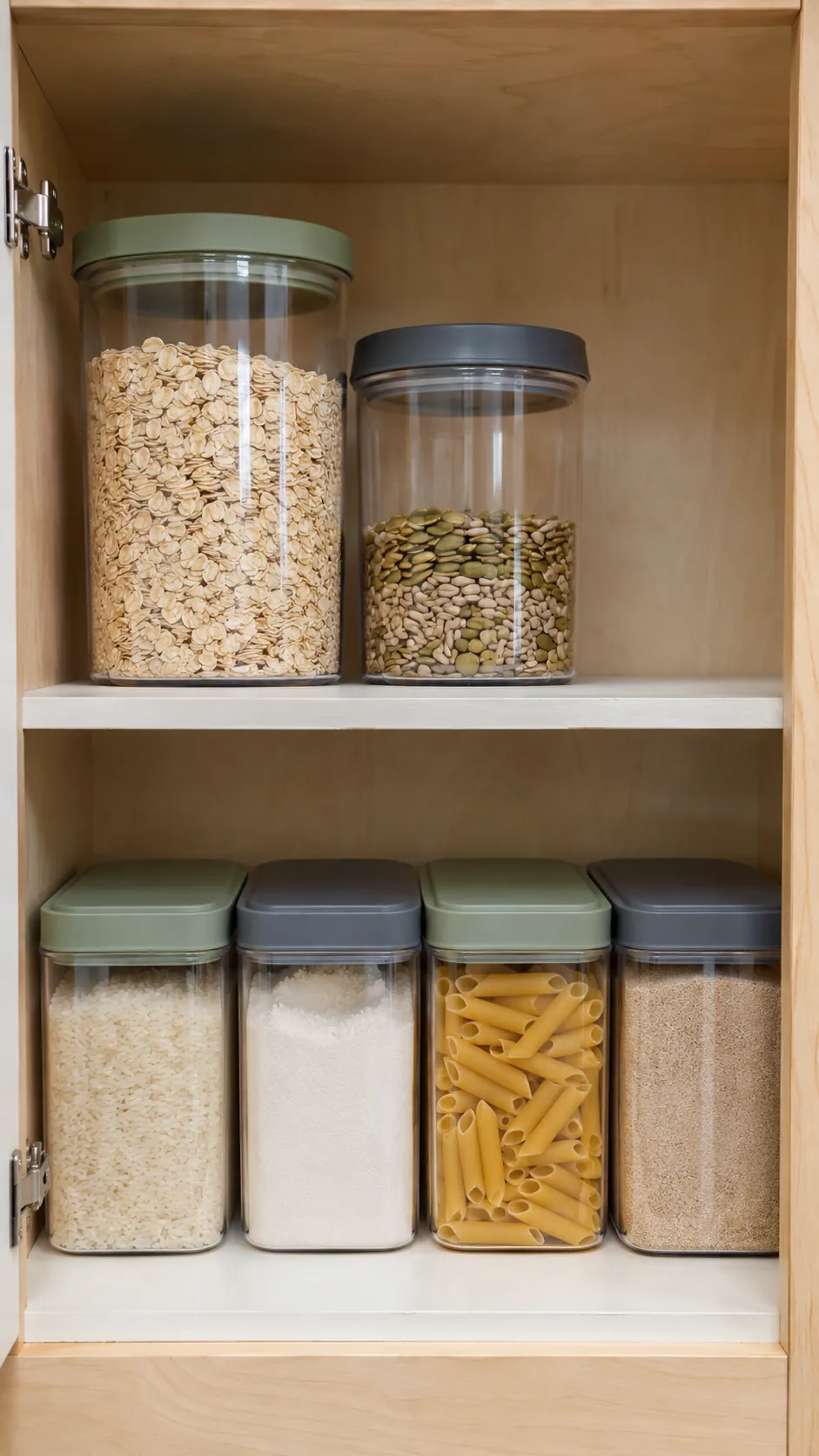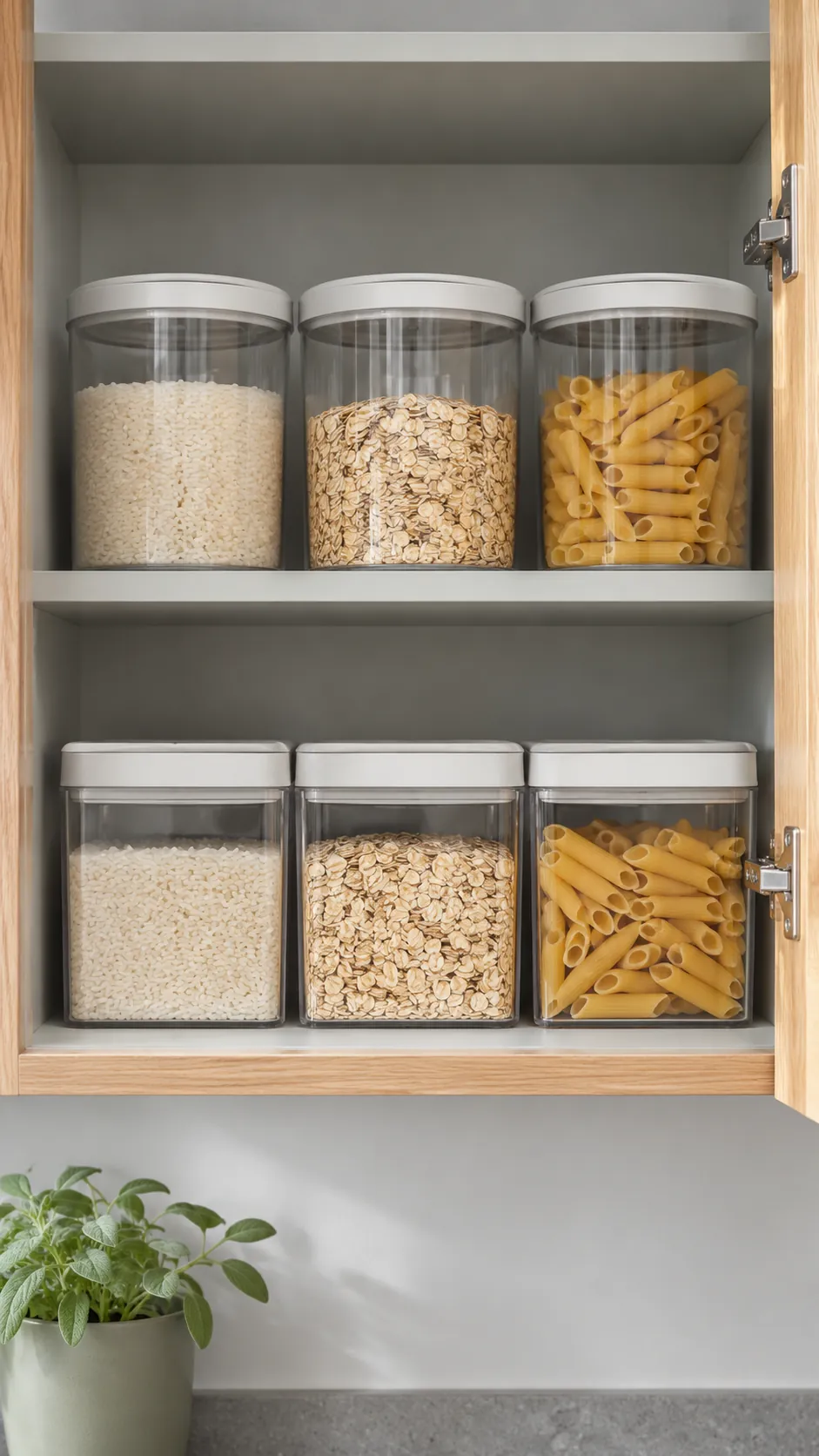
A shallow shelf punishes the wrong container before storage capacity even matters. A canister that is only slightly too deep can block the cabinet door, hide its label, or force every item behind it out of reach. The better shape is the one that fits the shelf, the food, and the way your hand enters the cabinet.
Measure Shelf Depth Before Comparing Shapes
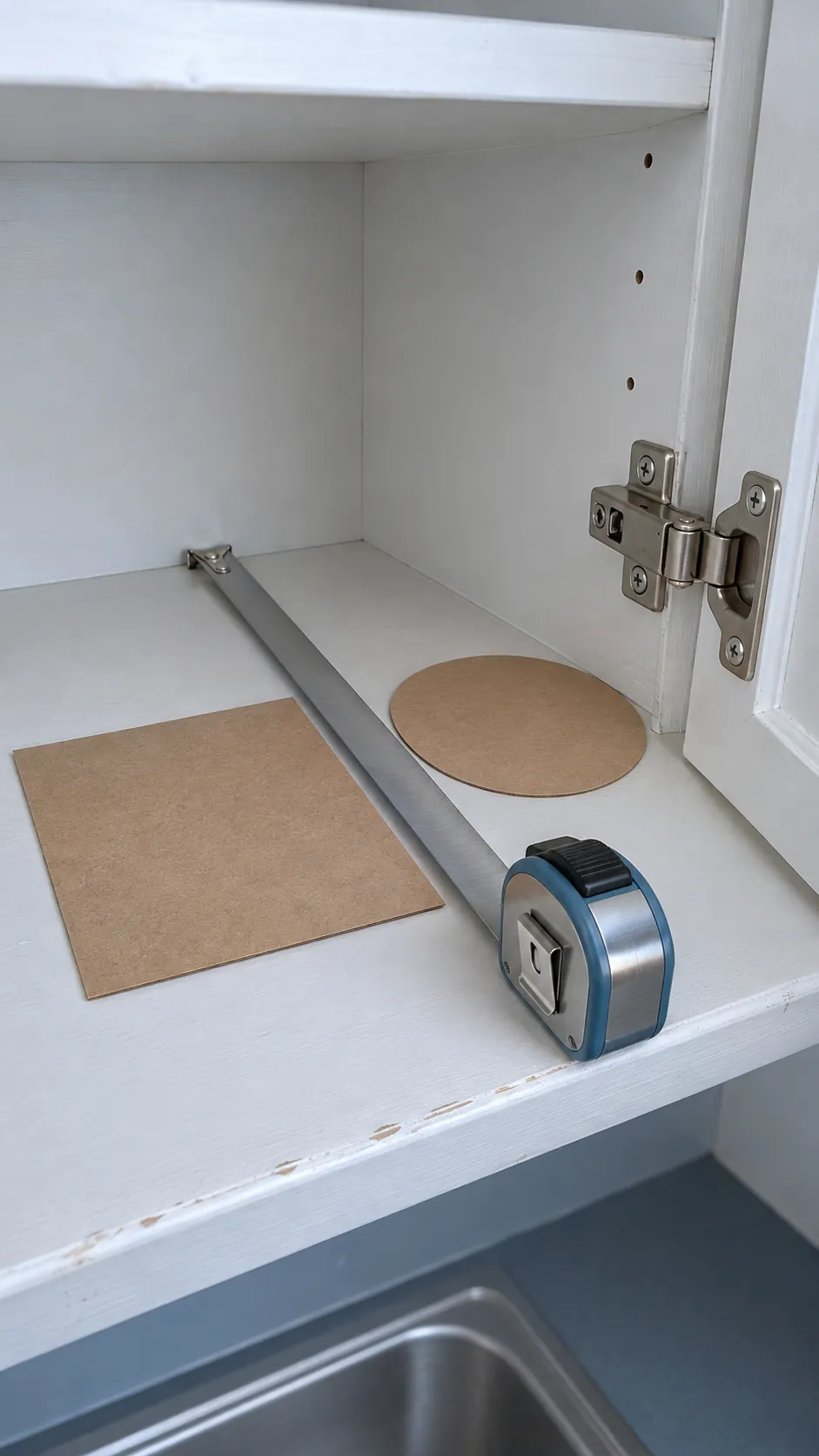
Measure from the back wall to the inside face of the closed door, then subtract space for hinges and easy removal. Use that usable depth when reading product dimensions. Include lid clips, handles, and any label holder because they can extend beyond the container body.
Test the proposed footprint with a paper rectangle or circle on the shelf. Leave enough front clearance to curl your fingers around the container without tipping its neighbor. A technically fitting canister is not useful if it must be twisted or unloaded every time.
Square Containers Use Width Efficiently
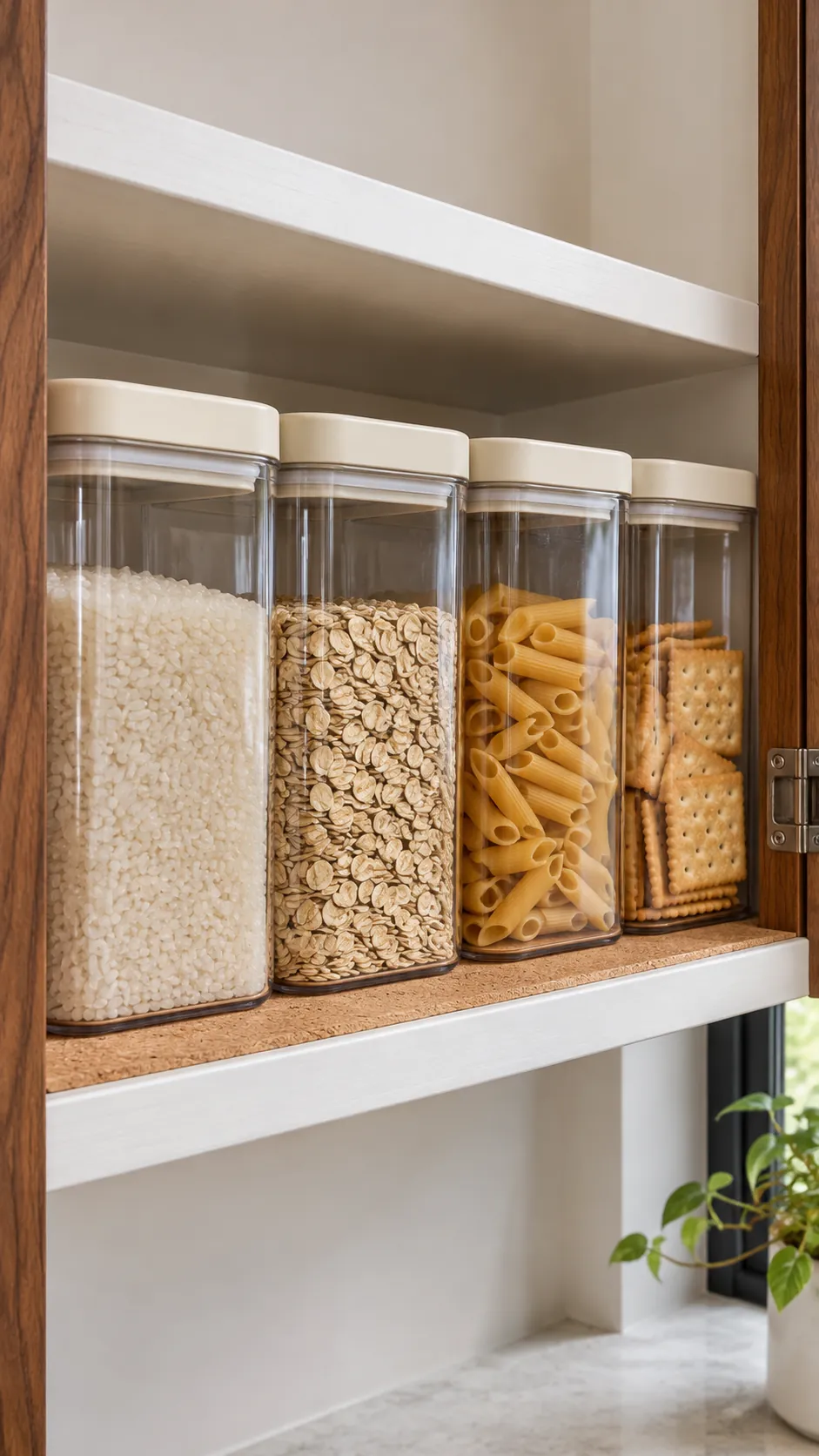
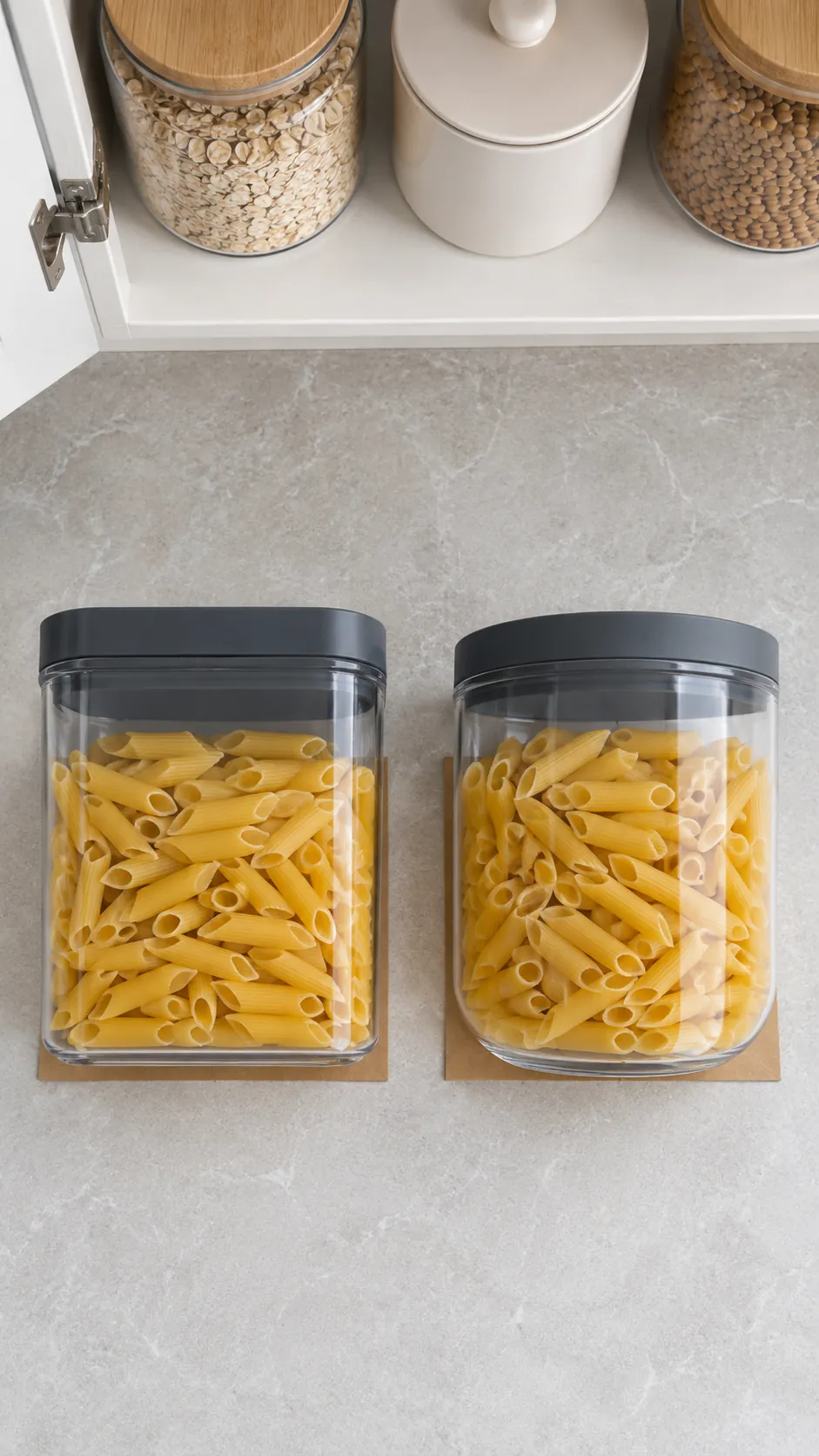
Square food containers sit close together with narrow gaps, so a row uses cabinet width efficiently. Flat fronts also make labels easy to read and allow containers to align with the shelf edge. This shape suits flour, rice, pasta, and snacks when the container depth stays within the cabinet limit.
The corners are not free capacity if food becomes trapped there. Choose a square canister with gently rounded interior corners and an opening large enough for your scoop. Check that the lid can lift straight up without touching the shelf above.
Round Containers Simplify Scooping and Cleaning
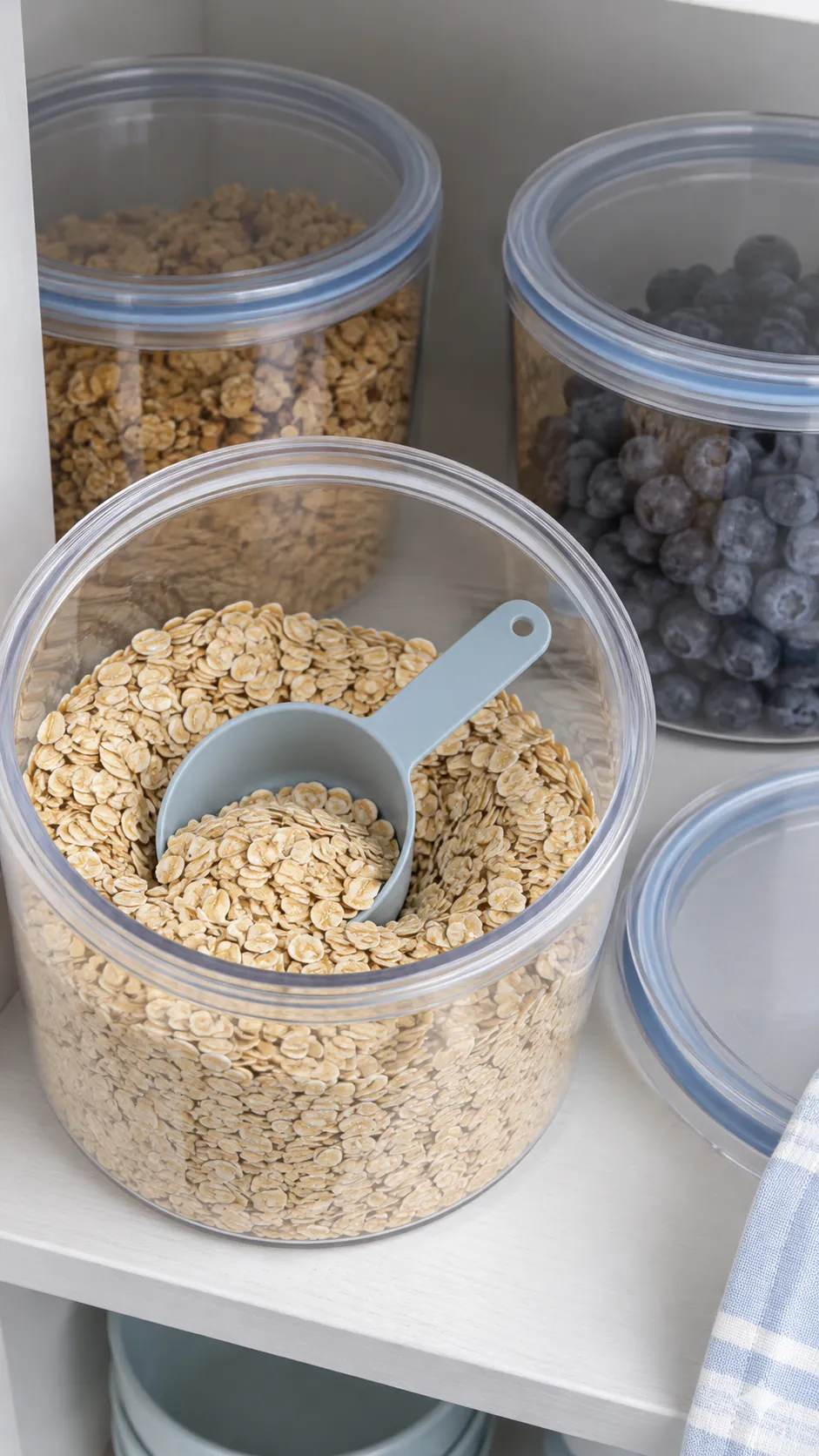
Round food containers have no interior corners, so a measuring cup can sweep around the wall easily. Granules pour smoothly and hand washing requires fewer detail passes. A round lid with a broad sealing ring can also be quick to align.
The tradeoff is the curved gap between neighboring canisters. Those gaps are small with two containers but become meaningful across a full shelf. Round designs work best when easy access matters more than filling every strip of width.
Compare Capacity Only After the Fit Test
Advertised capacity does not show how much shelf area a container consumes. Compare the outer width and depth of containers that hold a similar food amount. A broad round canister may hold less than a similarly wide square one, while a tall narrow round canister may use vertical clearance better.
Keep food in its original package until you confirm that the full package fits the chosen container. Decanting half a bag creates a second storage problem. For frequently purchased staples, select capacity from the actual package weight and the food density you use.
Check Airtight Lids and Replacement Parts
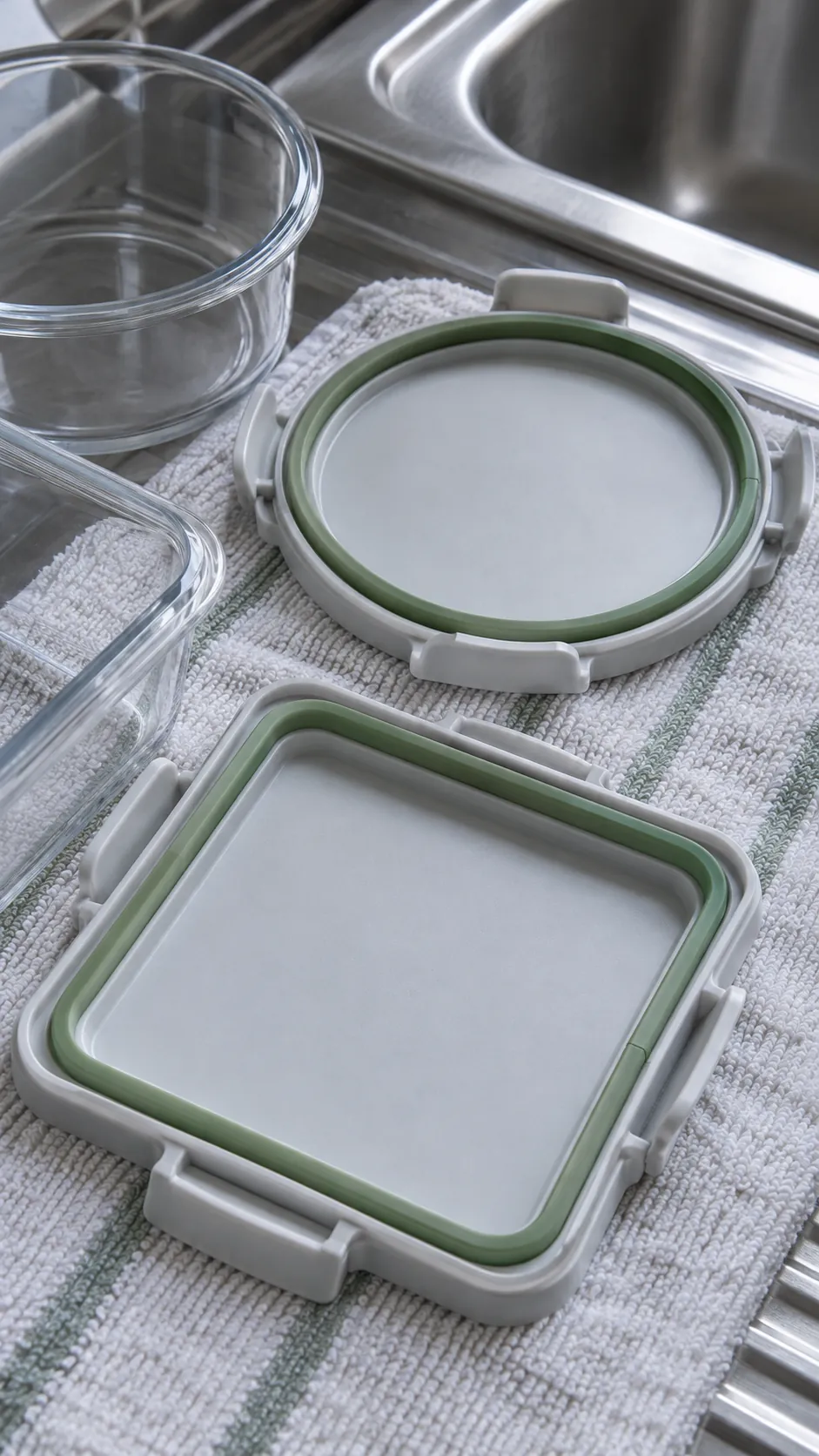
Shape alone does not make food storage airtight. Inspect the seal, locking method, and rim for even contact, then follow the maker instructions for cleaning the gasket. A simple lid that closes correctly every time is more useful than a compact design with uncertain alignment.
Before buying a full set, check whether lids or seals are sold separately. Shared lid sizes reduce the number of parts a small kitchen must organize. Store every component fully dry and remove containers with cracked rims or seals that no longer sit flat.
Use the Shape That Matches Each Food
A mixed system can be more compact than forcing one shape across every ingredient. Use square canisters where several staples must form a tight row. Use round canisters for foods you scoop often, small quantities, or positions where curved gaps do not block another item.
Keep the palette and lid system consistent if visual order helps you maintain the shelf. Limit the collection to containers that fit a known package and a measured position. Shallow kitchen shelves work best when every vessel has a defined front facing home and can be removed without moving the whole row.