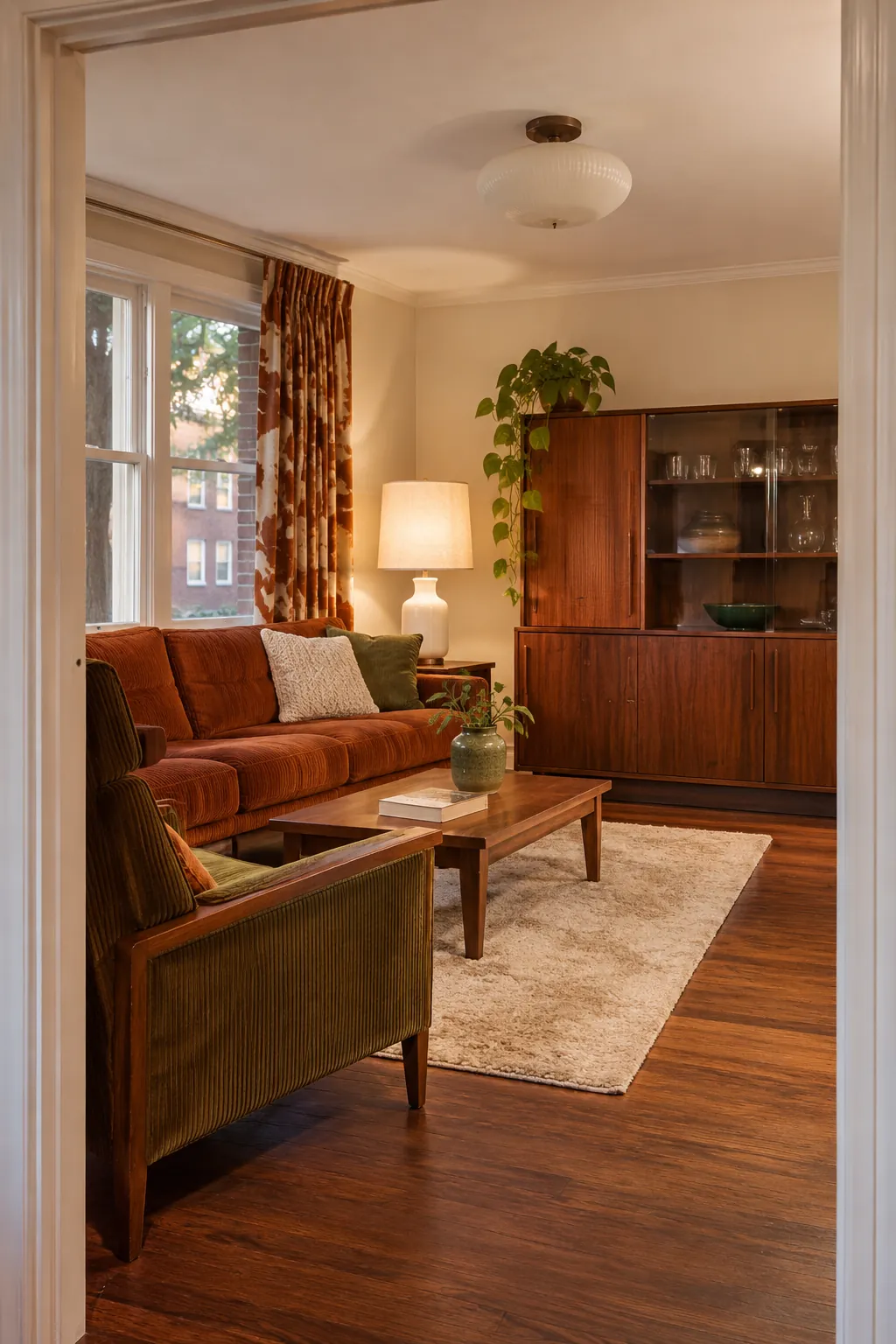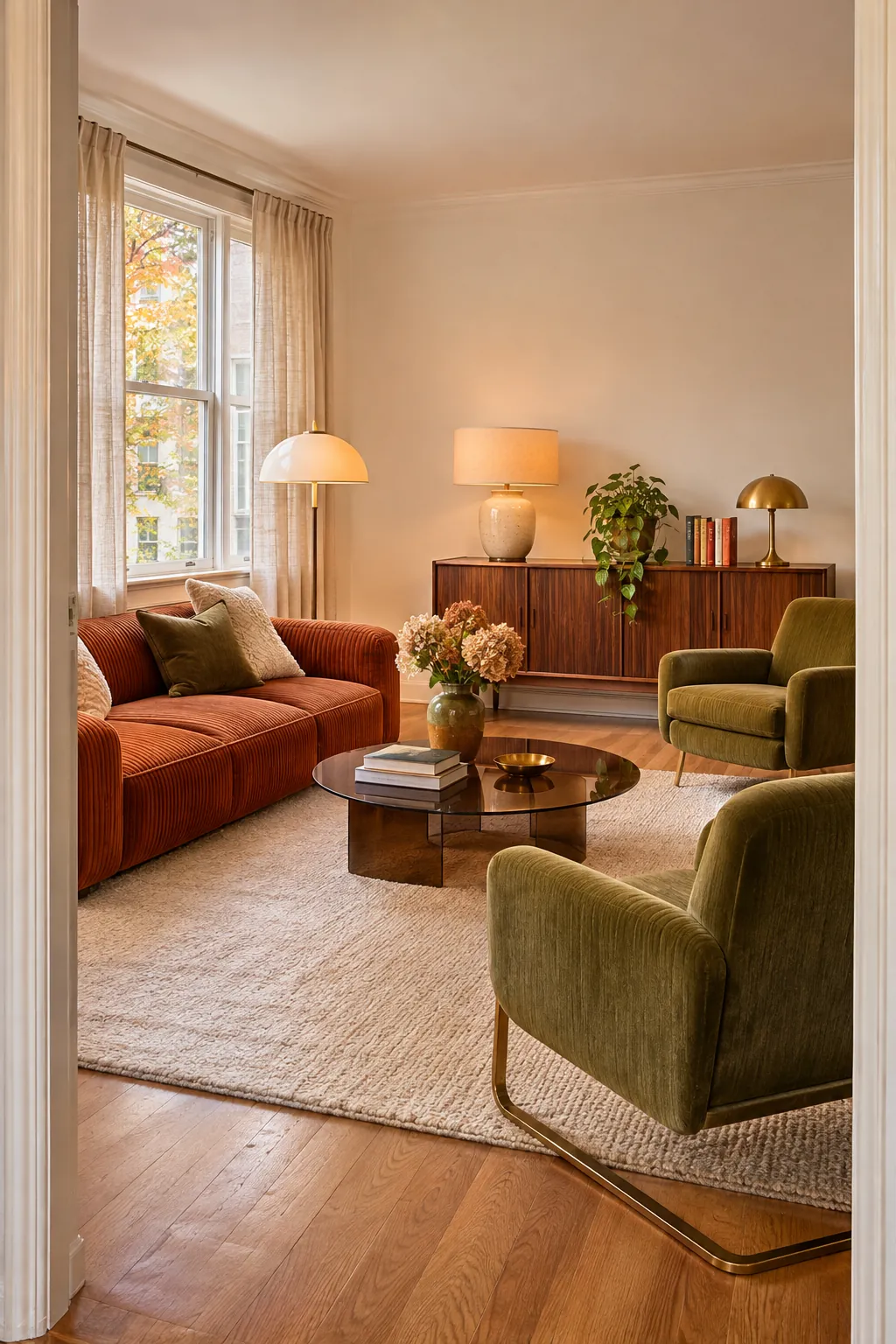
The most convincing retro spaces are comfortable before they are nostalgic. They arrange people for conversation, connect collected furniture through material and color, and make room for current routines. That balance keeps a vintage interior from feeling like a set that cannot be touched.
Plan the Conversation First
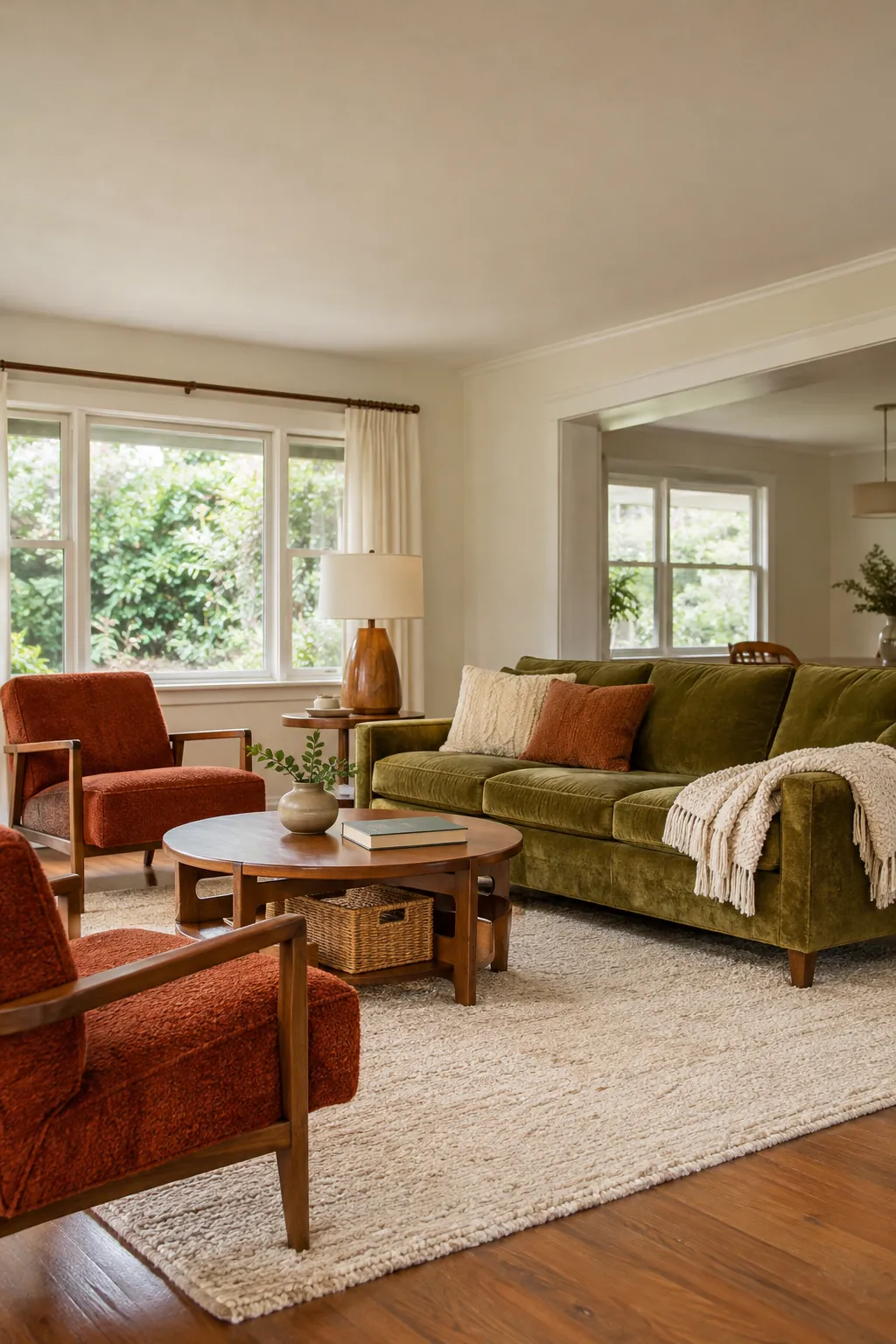
A vintage living room works best when the seats face one another rather than only the television. Angle two chairs toward a low sofa and keep the coffee table within comfortable reach of each place. Leave one obvious route through the group so the room feels social without becoming an obstacle course.
Let Walnut Connect Thrifted Pieces
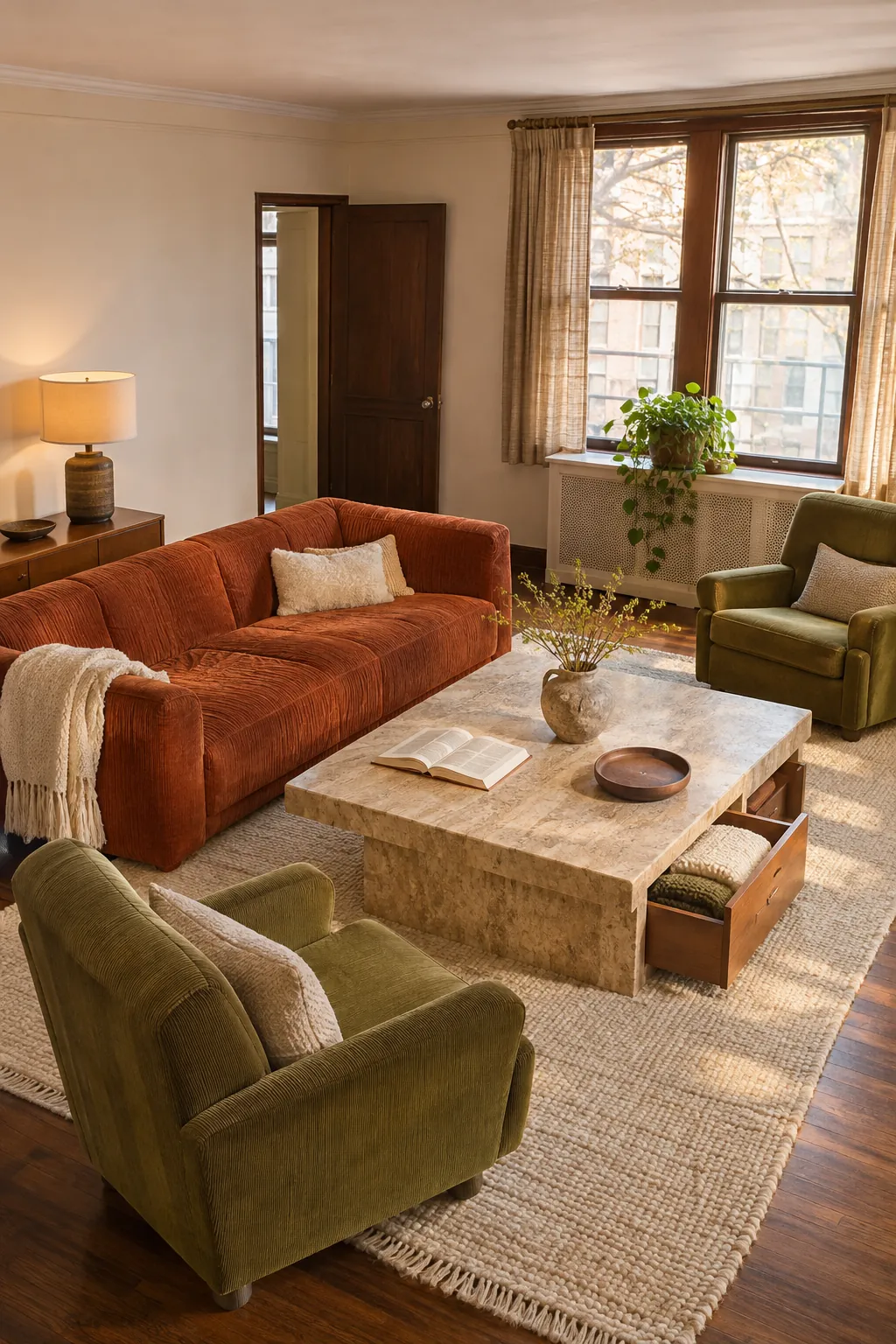
Secondhand furniture does not need to be a matching set. Similar walnut tones across a credenza, side table, and lamp base can connect pieces from different makers and years. Vary the shapes and functions, then repeat one metal finish so the collection looks intentional.
Use One Deep Texture at a Time
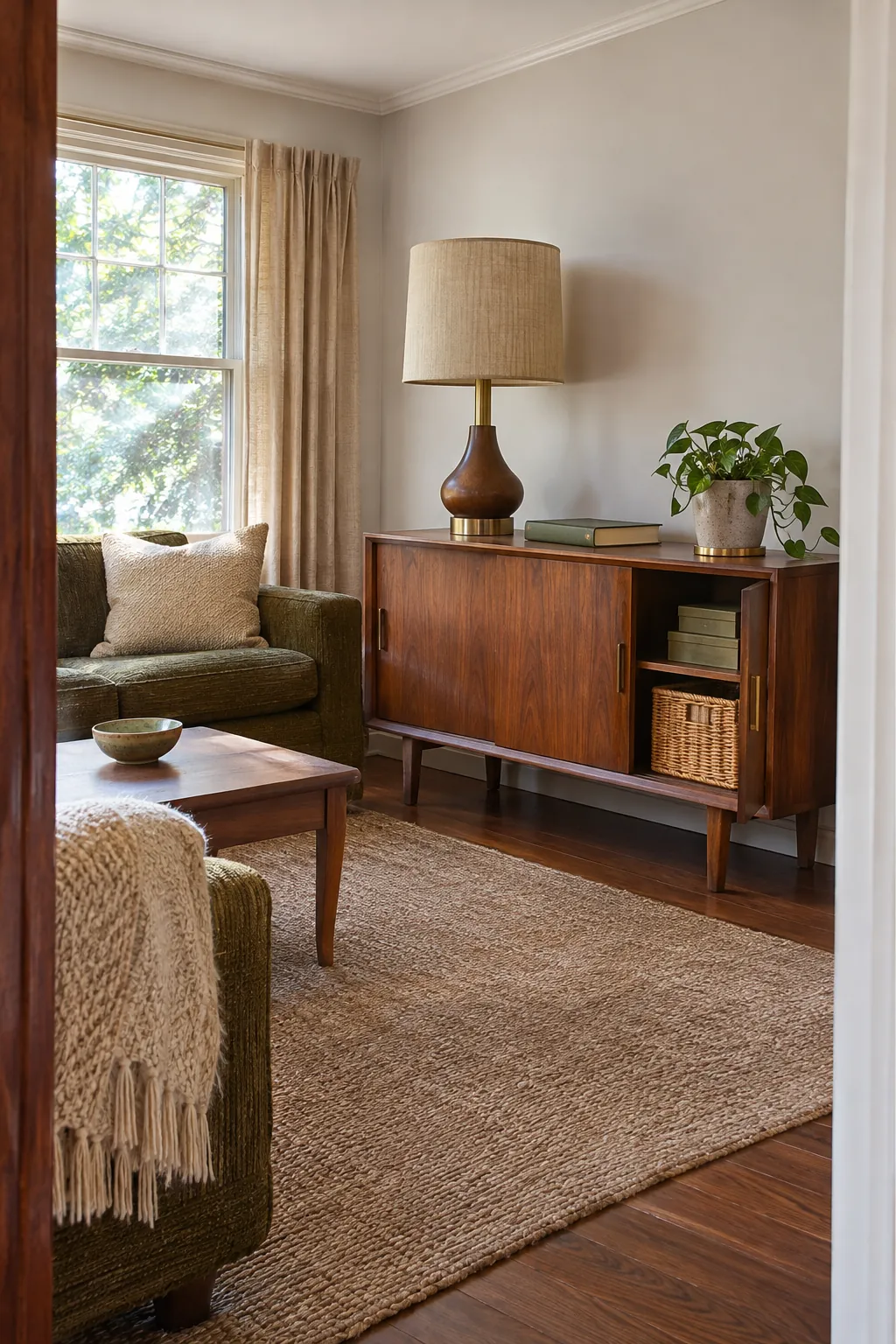
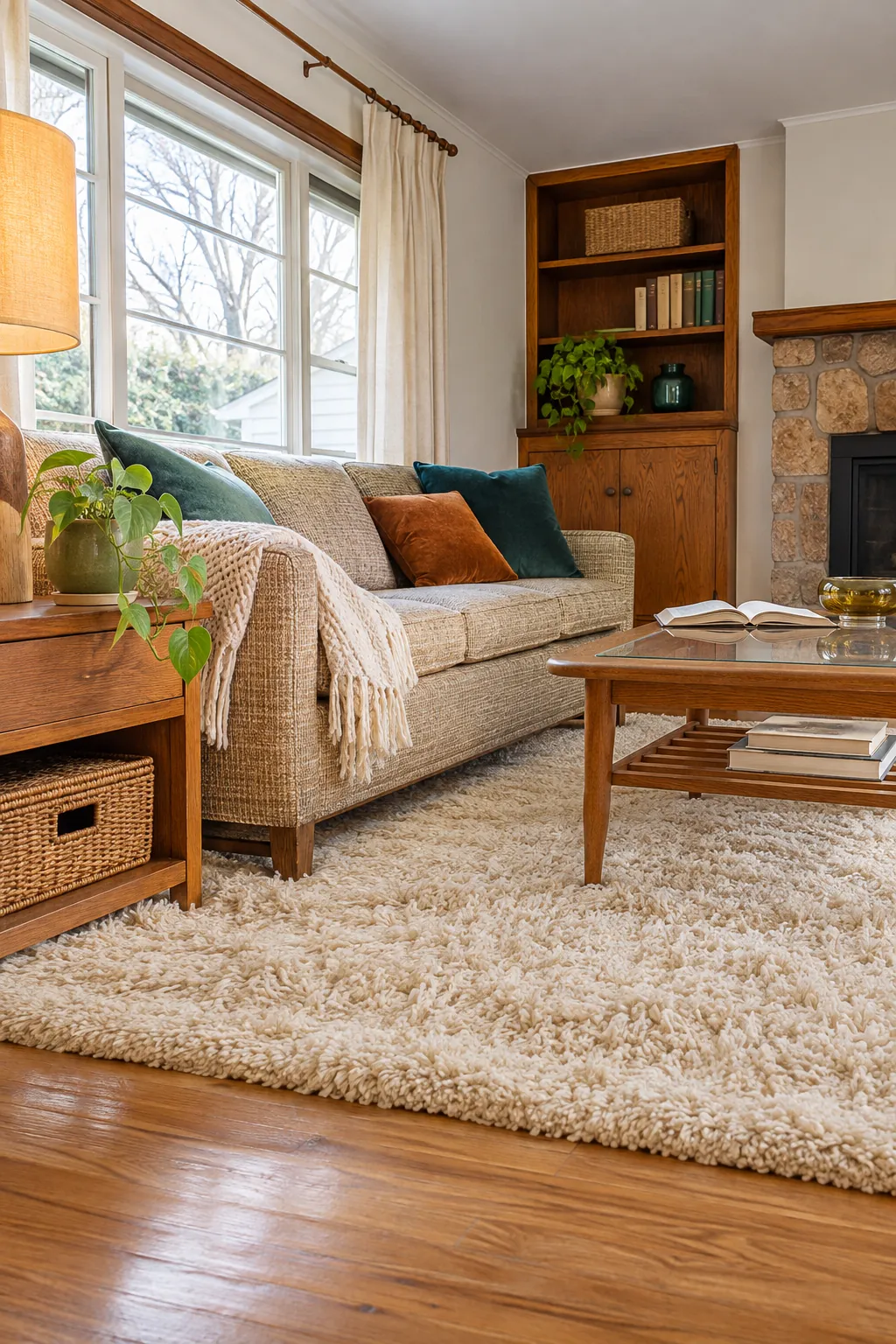
Shag rugs, boucle chairs, corduroy sofas, and thick curtains all suit the decade, but using every texture at once makes cleaning difficult. Choose one deep pile surface as the tactile focus and use flatter weaves nearby. The contrast preserves softness while showing the shape of each furniture piece.
Build Warm Light in Layers
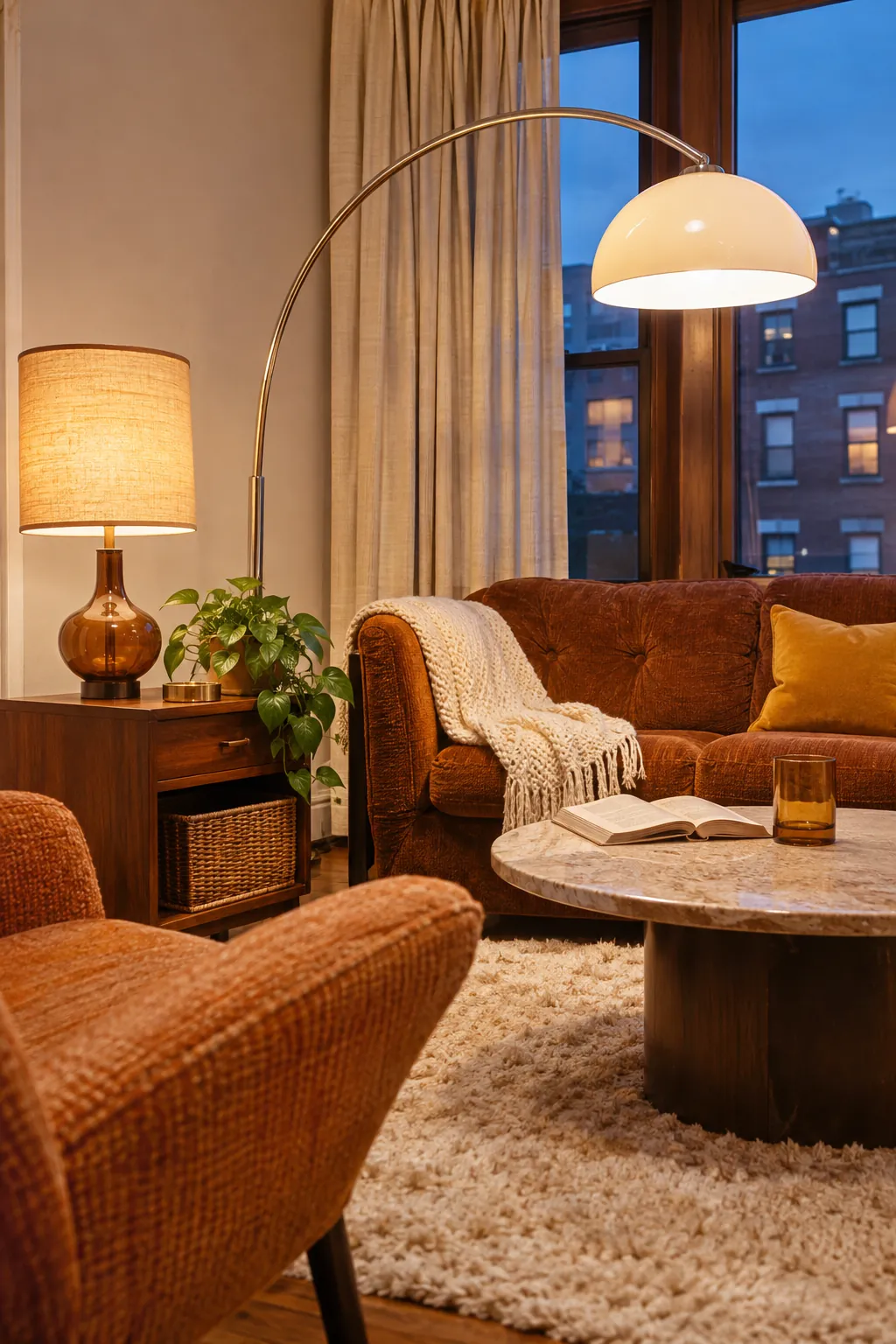
A cozy retro living room needs more than a warm bulb in the ceiling. Combine a shaded floor lamp near seating, a smaller table lamp for evening tasks, and soft ambient light across the room. Keep the bulbs similar in color so wood and upholstery do not shift from orange to gray between corners.
Keep Period Color Grounded
Olive, rust, mustard, and brown feel richer when cream or warm white separates them. Put the strongest color on one large useful item, then echo it twice in smaller pieces. This rhythm creates a 1970s aesthetic home without coating every surface in the same decade palette.
Edit for Modern Daily Life
Authentic style does not require keeping uncomfortable seating, unsafe wiring, or storage that no longer works. Preserve the useful vintage forms, then add hidden cable management, durable textiles, and clear surfaces for current routines. The final room should feel inherited and personal, but it must also be easy to sit in, clean, and move through.