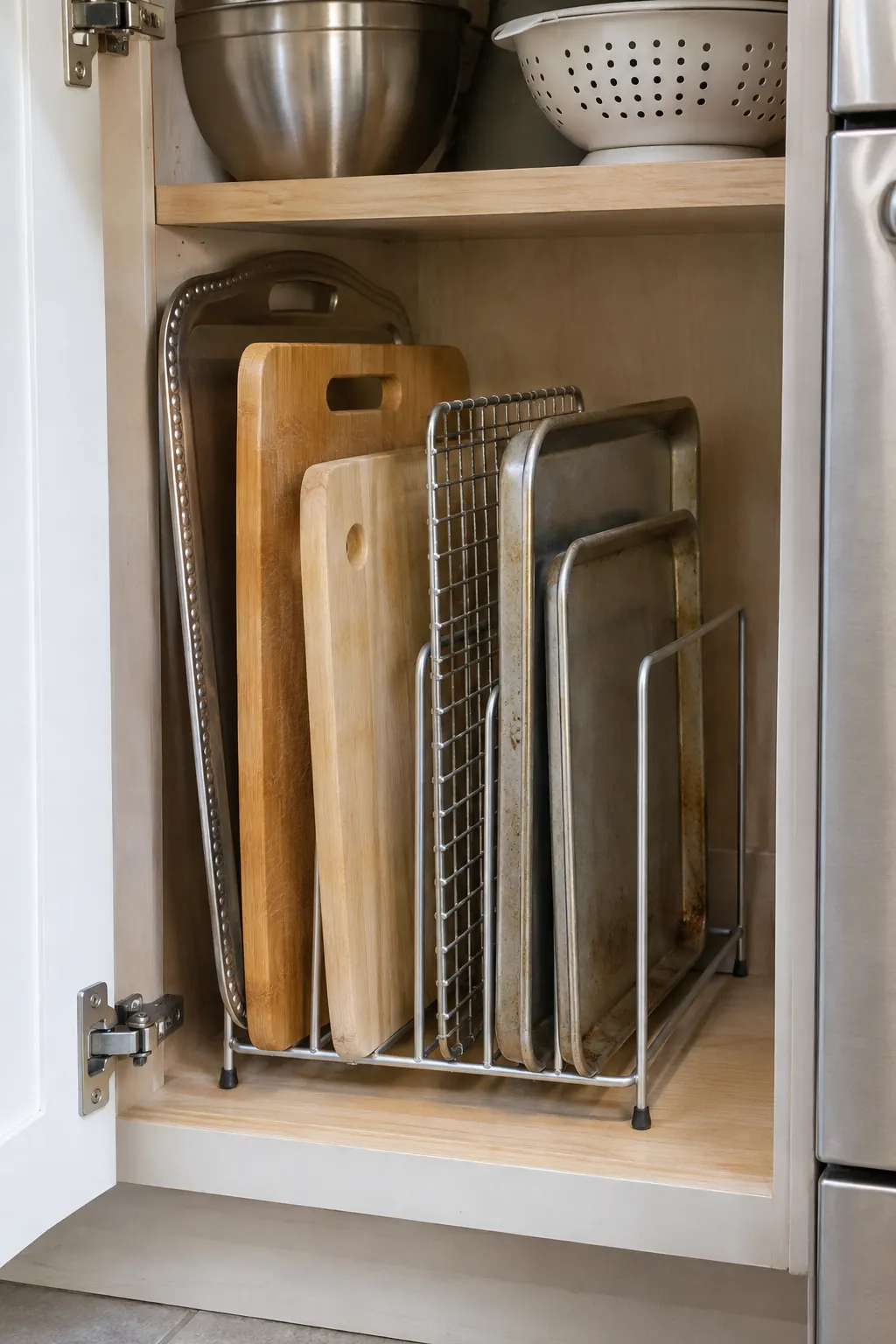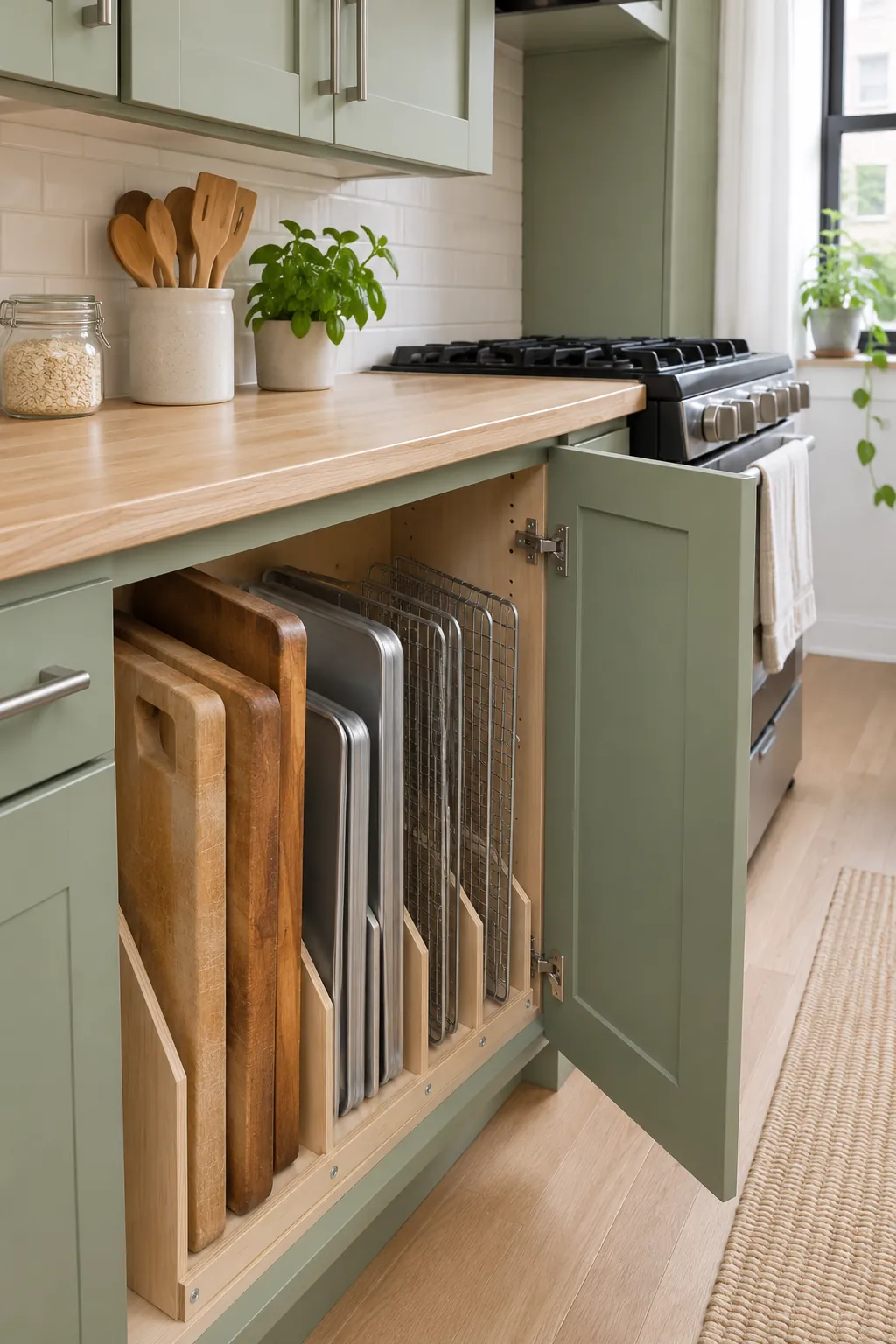
Flat kitchen equipment wastes surprising space when it is stacked. The bottom piece becomes hard to reach, sheet pan rims catch one another, and heavy cutting boards can slide forward when the pile shifts.
The useful change is to store most boards, sheets, racks, and trays on edge in stable slots. Choose a location by weight, reach, cabinet depth, and how often each item is used.
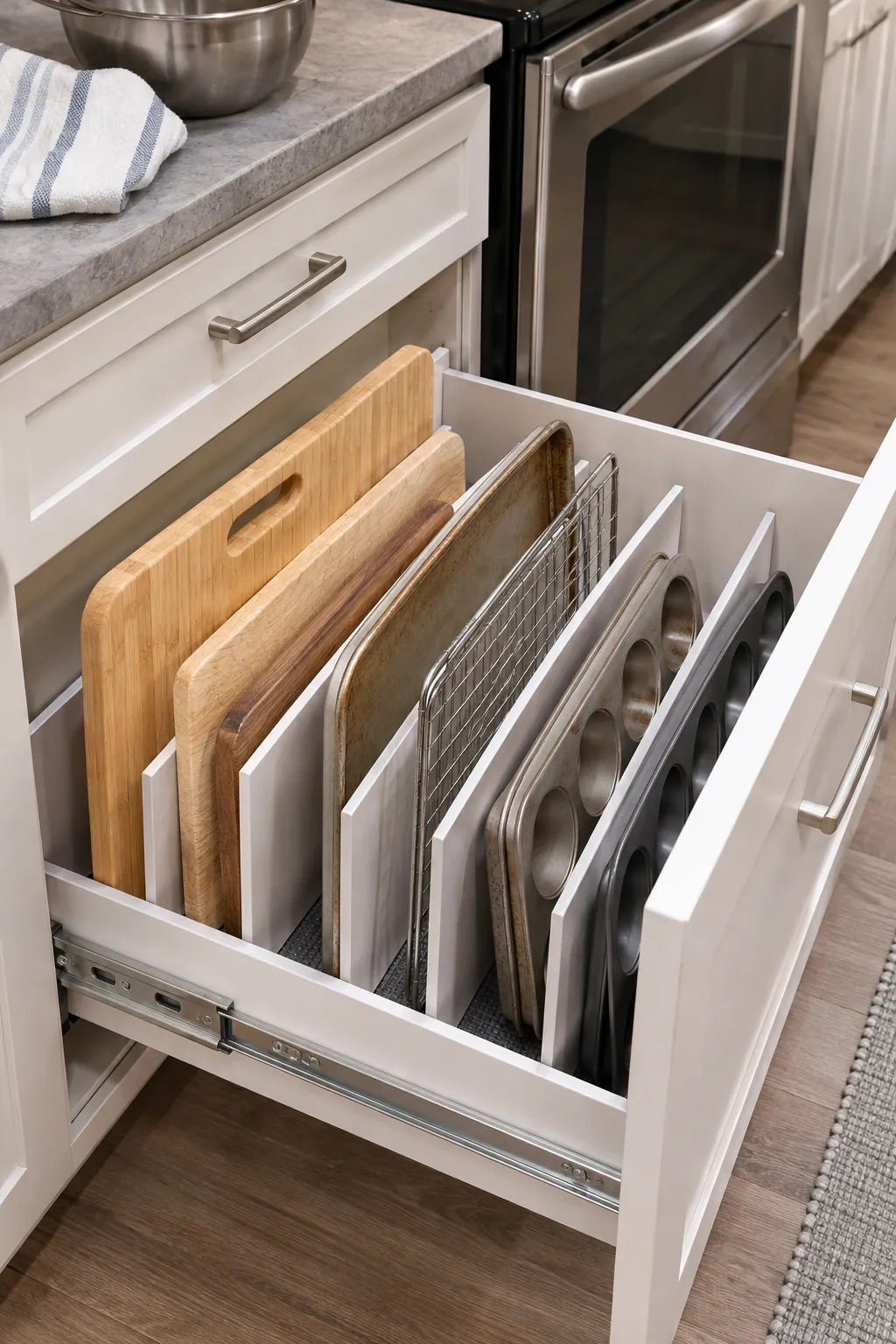
Fixed cabinet dividers
Divide one base cabinet into several vertical bays with firmly anchored panels. Give heavy cutting boards a wider bay and thin baking sheets a narrower one so each piece stands without leaning. Measure the tallest and widest pan before choosing divider positions.
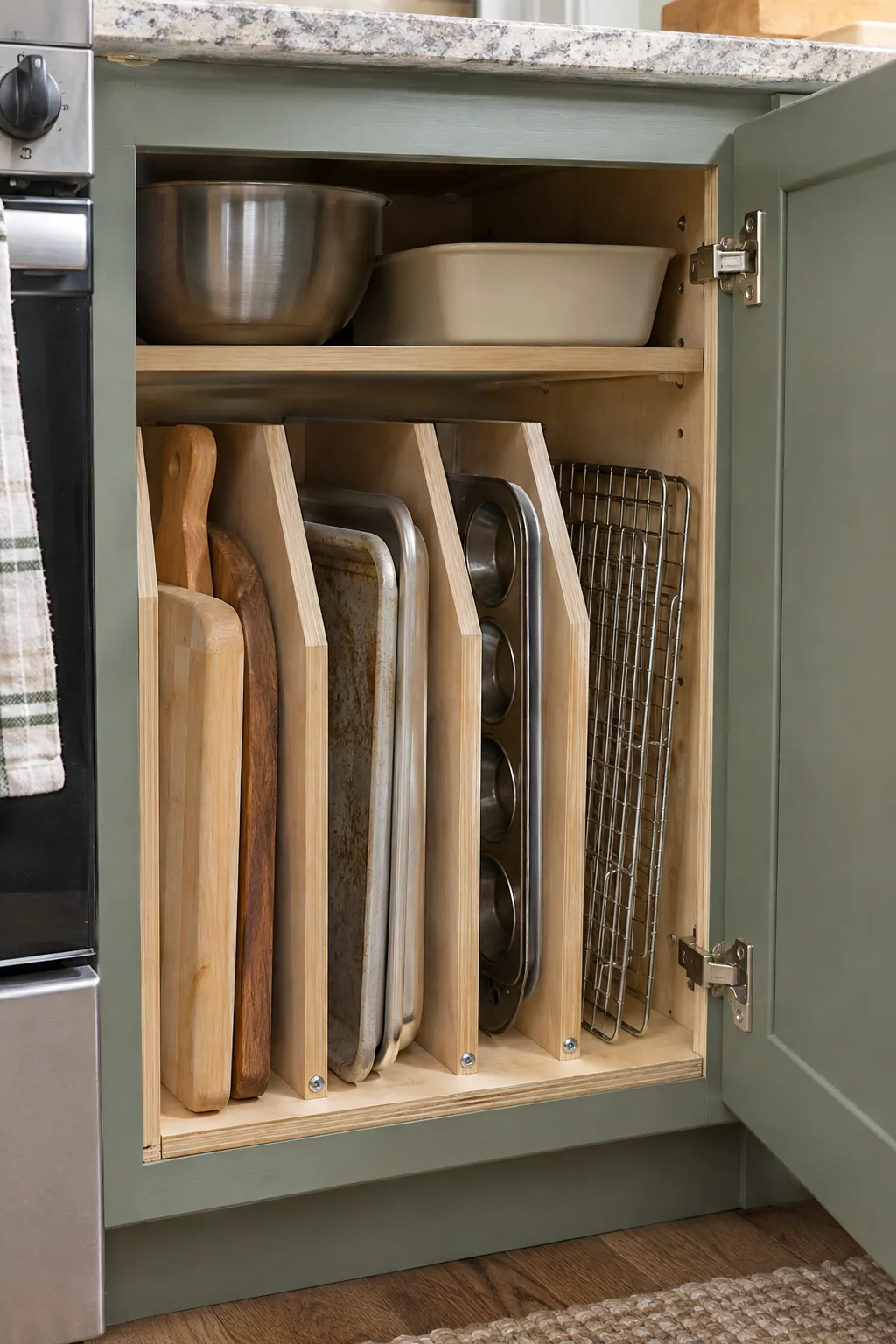
Adjustable tension dividers
Adjustable dividers can create vertical tray storage without permanent cabinet changes. Set each bar tightly according to its instructions and test it with the heaviest board before filling the space. Keep slots wide enough that pan rims do not catch.
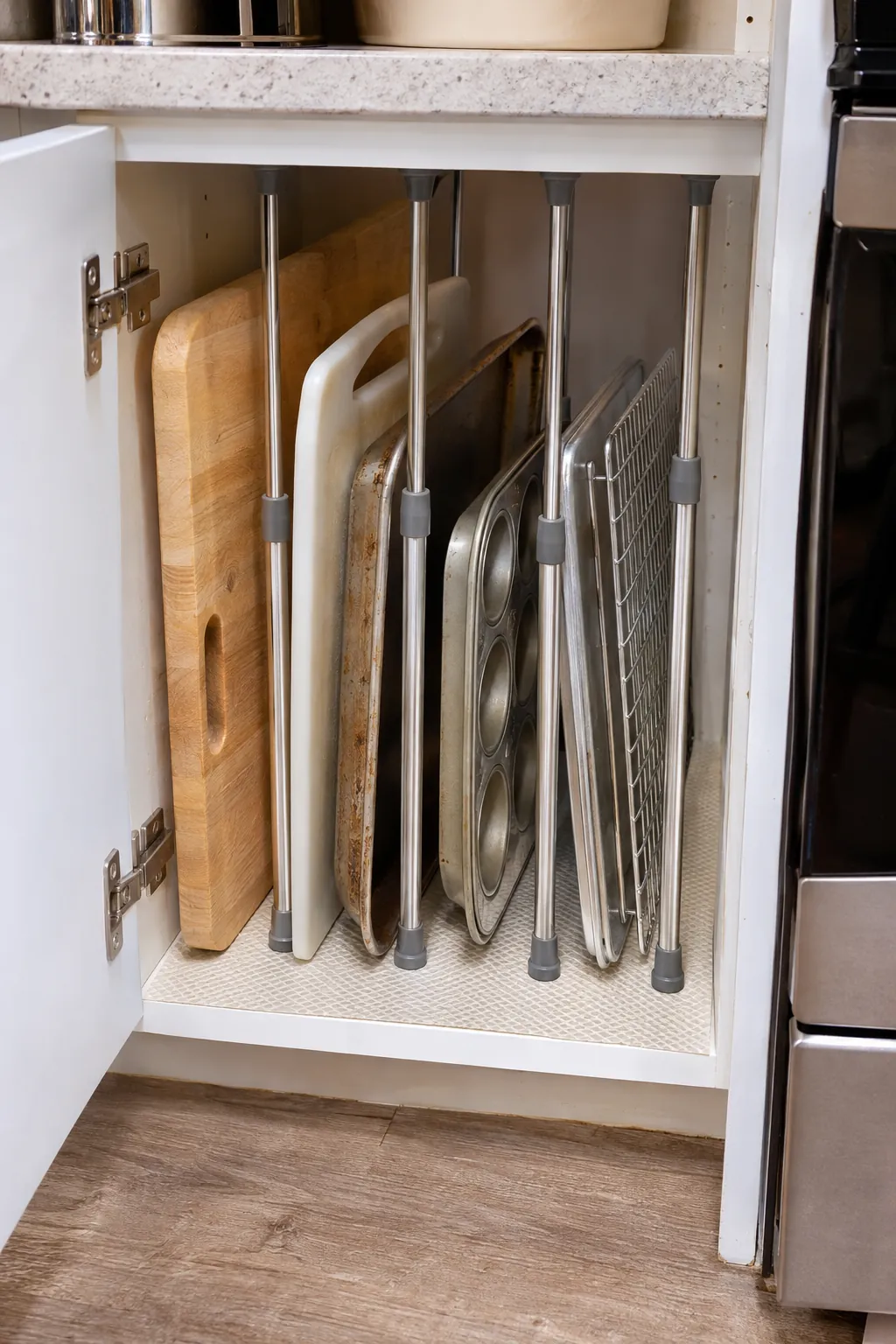
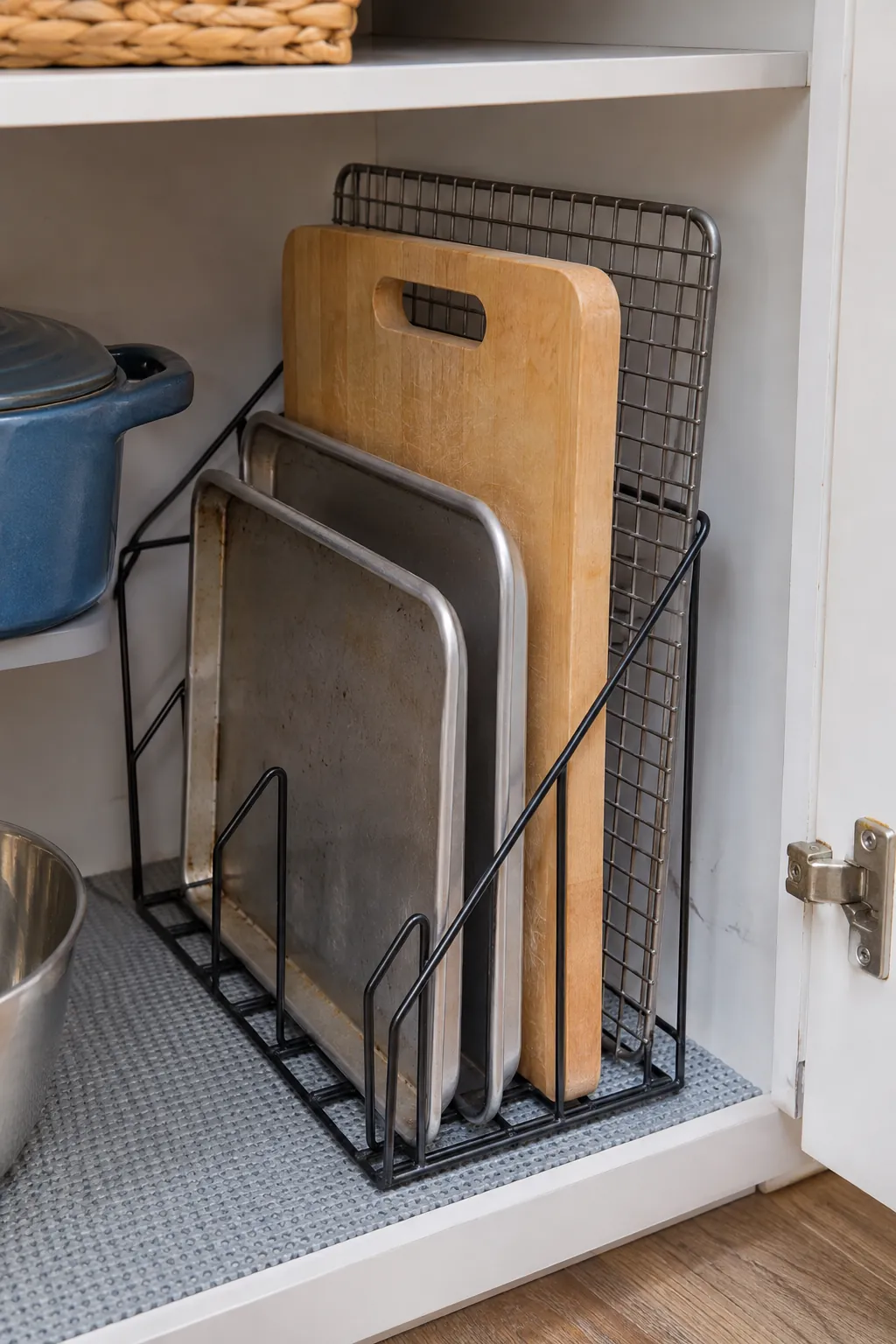
Wire magazine holder
A sturdy wire magazine holder is a useful baking sheet organizer for a narrow shelf. Choose one with a stable base, place the tallest pan at the back, and avoid loading it beyond its intended strength. The open wire keeps every edge visible.
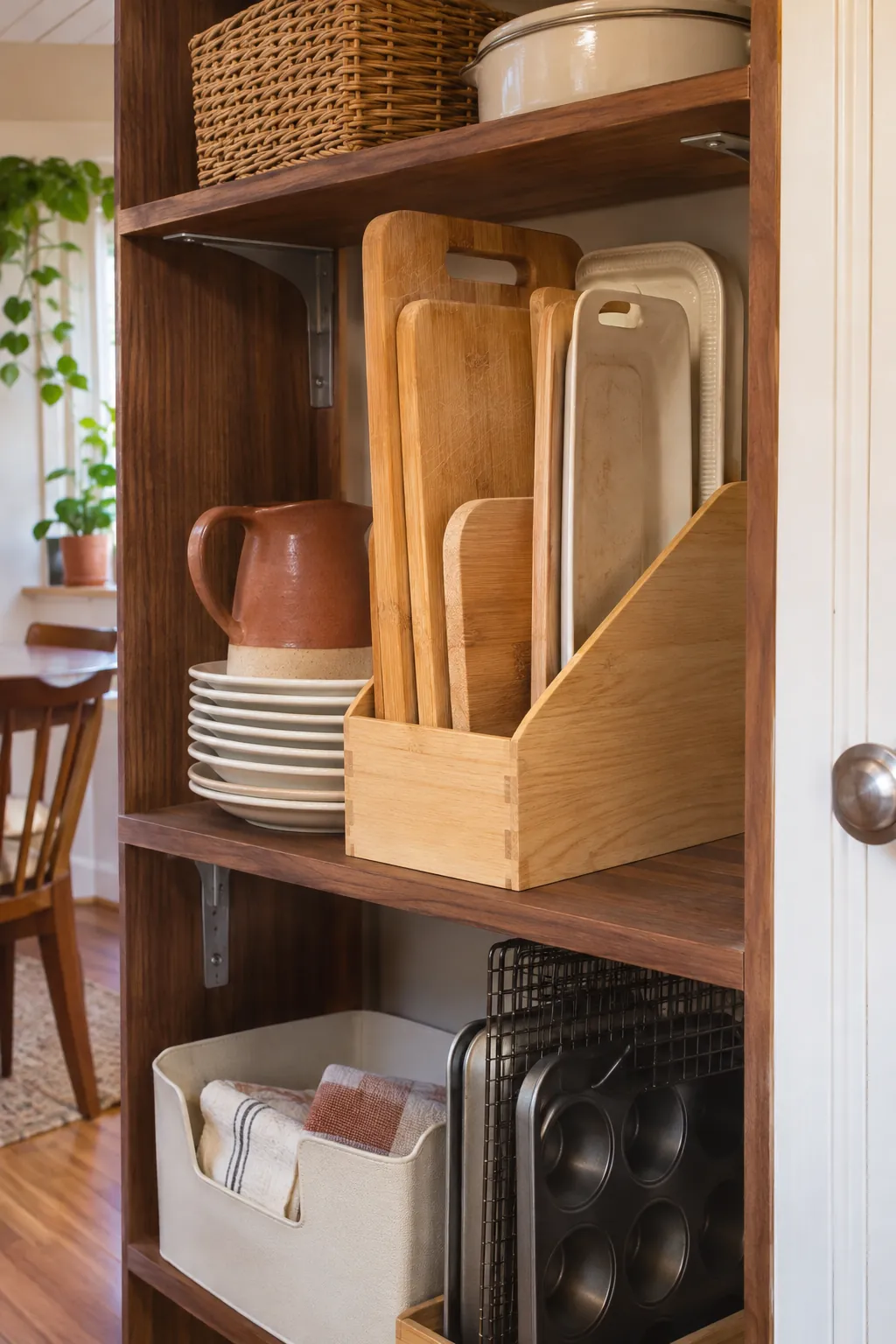
Wood magazine file
A solid wood file can contain lighter boards and serving trays while hiding visual clutter. Confirm that the interior is wide enough for thick board handles and that the base sits flat. Keep very heavy cast pieces in a stronger low cabinet.
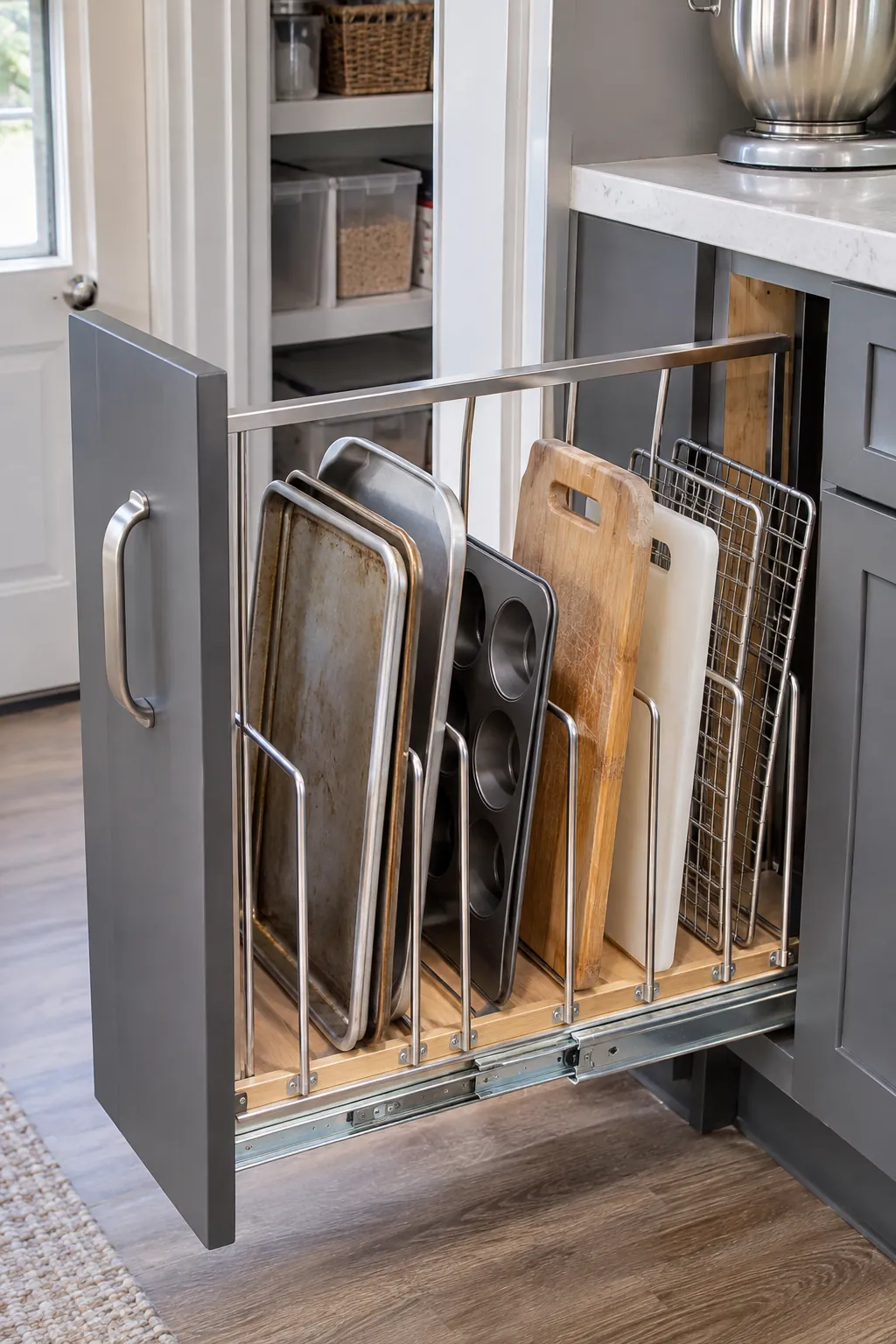
Vertical pullout rack
A narrow vertical pullout makes the back of a deep cabinet reachable. Use full extension hardware rated for the load, then divide the rack so boards cannot slide into sheet pans. Pull it out slowly until you know how the weight behaves.
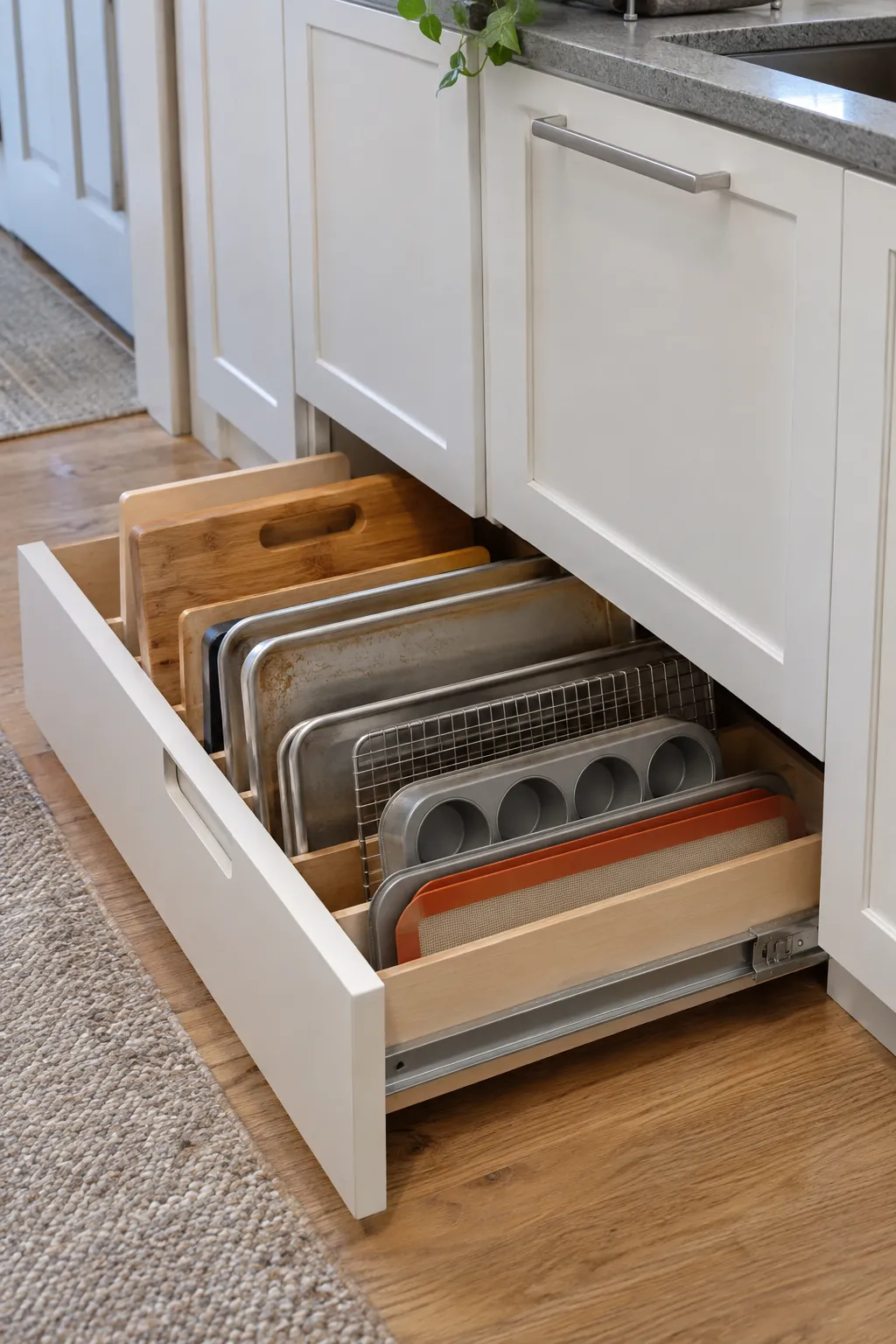
Toe kick drawer
A toe kick drawer can hold the flattest baking sheets when a suitable built in drawer already exists. Check heat, dust seals, and weight limits before using it for cookware. Store only clean dry pieces and keep enough clearance for smooth closing.
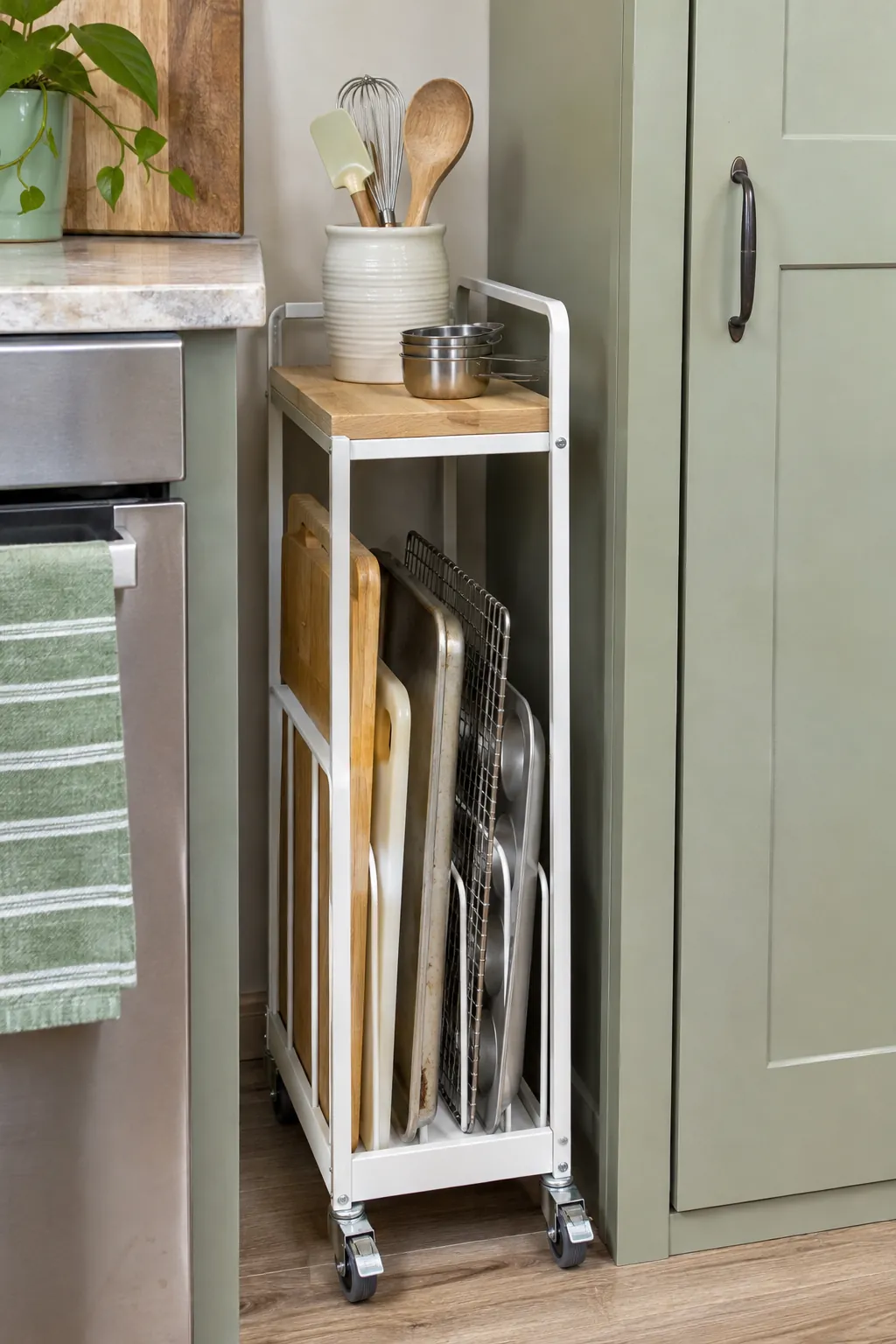
Slim gap cart
A narrow cart can hold boards and trays in vertical slots beside a cabinet. Lock the wheels during use and make sure the cart cannot tip when one heavy board is removed. This works best in a gap that does not block appliance doors.
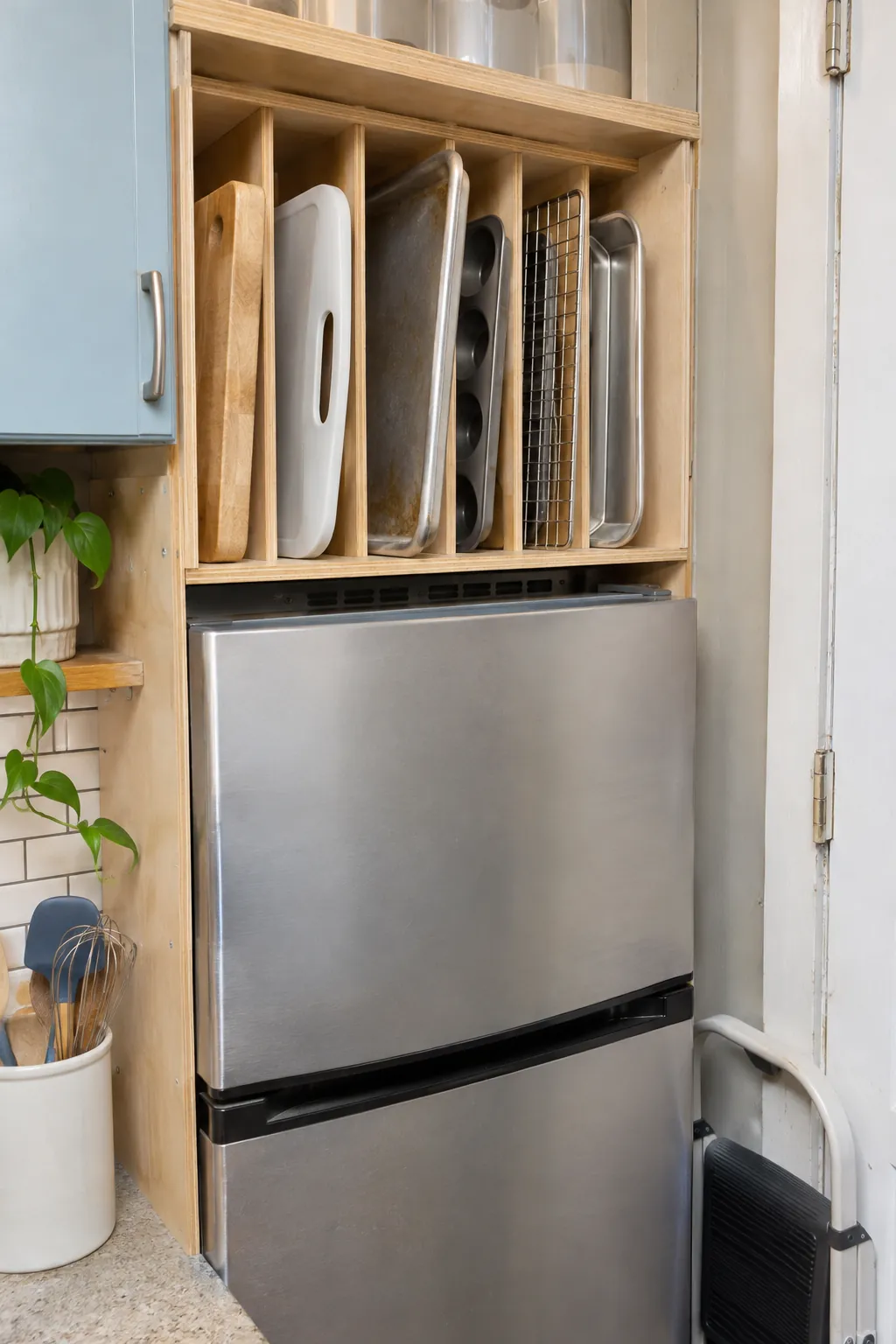
Above refrigerator slots
A divided cubby above the refrigerator can store trays that are easy to pull down by a bottom corner. Verify that the area stays cool and use a stable step when needed. Do not place heavy boards above a height you can control.
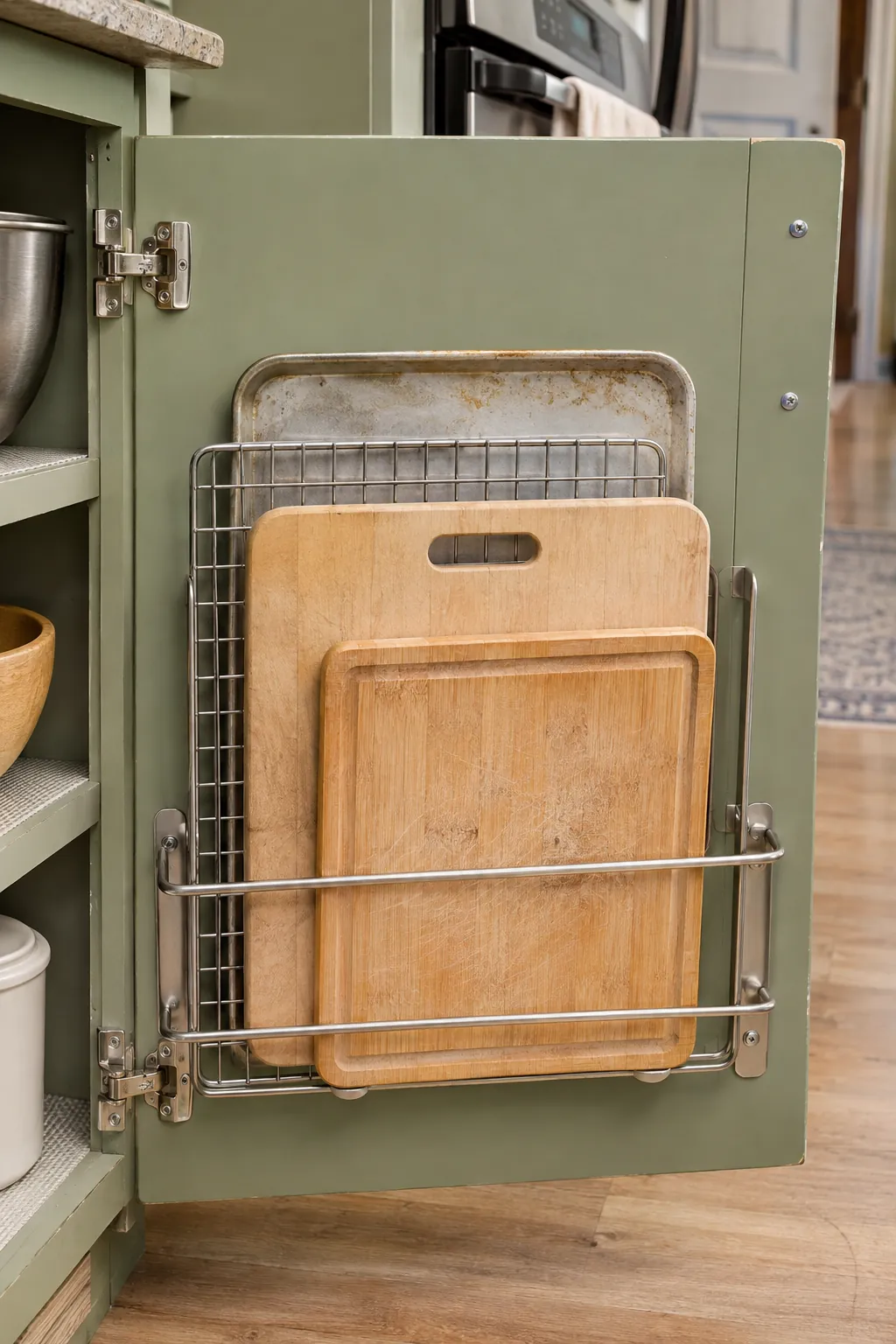
Cabinet door board rack
A shallow rack on a strong cabinet door can hold one or two light cutting boards. Check hinge capacity, screw clearance, and the space needed for the door to close. Use a retaining rail so boards cannot swing out.
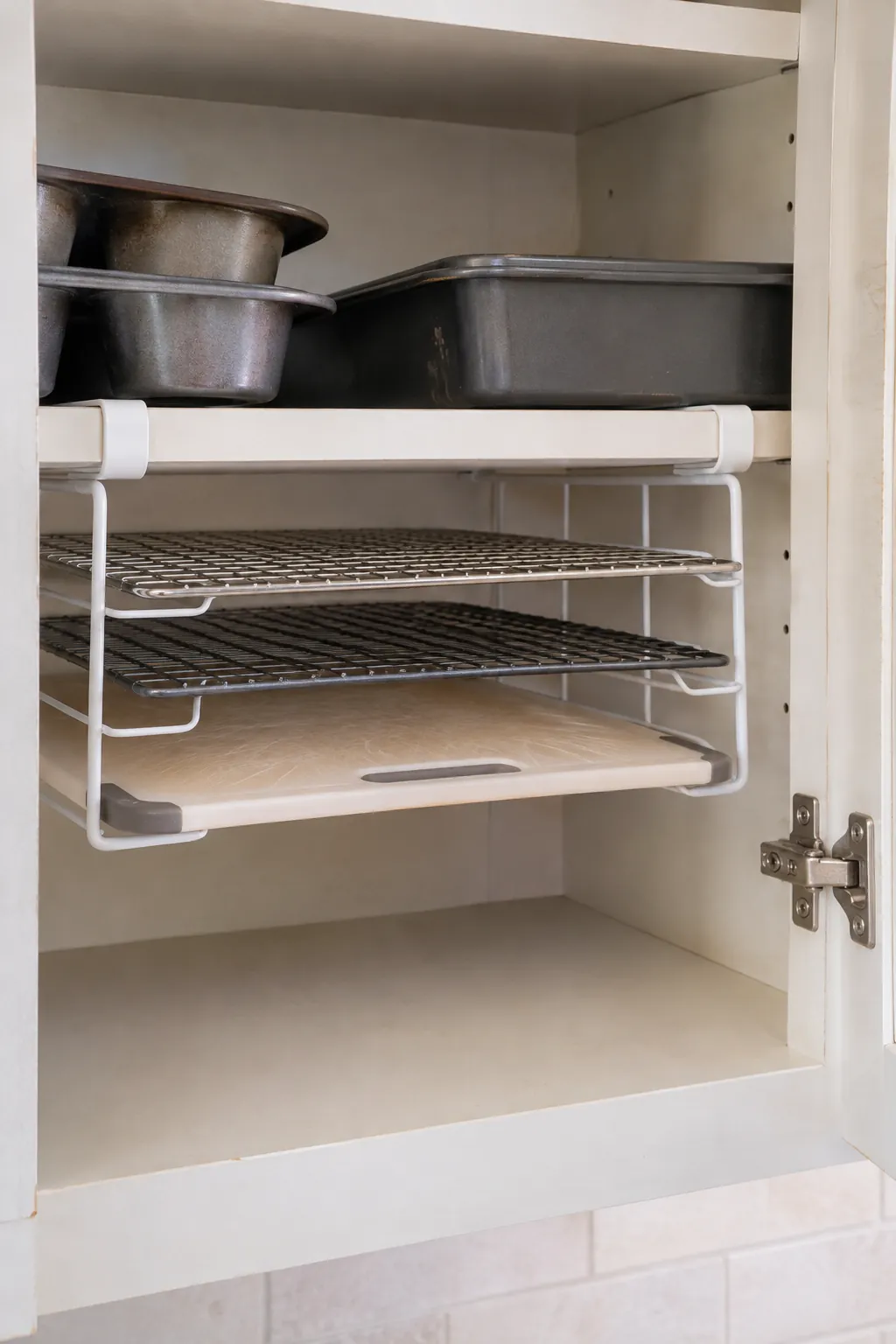
Under shelf tray slot
A hanging under shelf rack can store light cooling racks or thin boards in unused air. Confirm the shelf thickness and load rating, then keep the stored pieces below the cabinet opening. Avoid placing a heavy sheet pan where it can pull the rack forward.
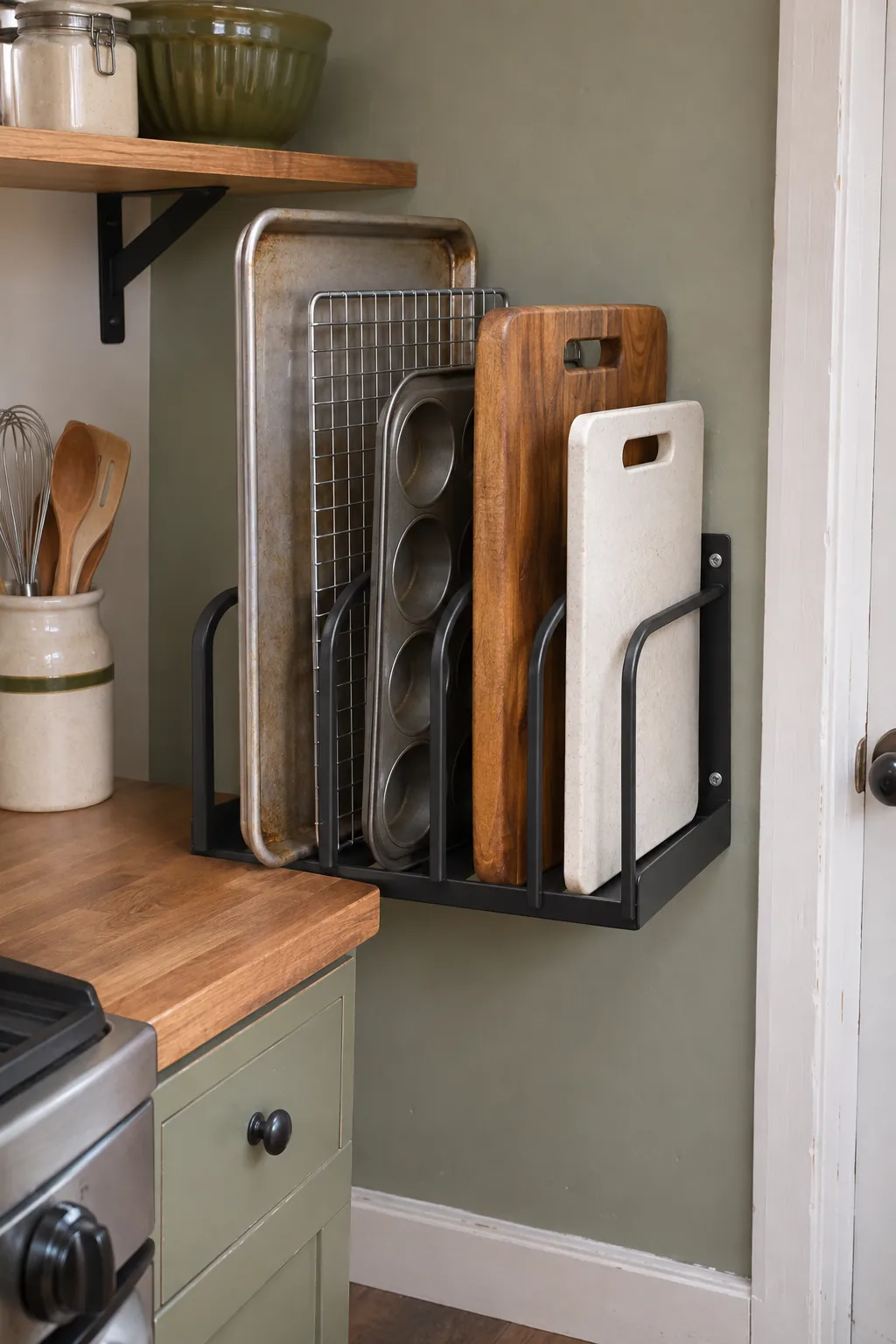
Wall mounted board rack
A wall rack keeps frequently used boards visible and frees the cabinet. Anchor it into suitable support, separate boards so air can move after cleaning, and place it away from splashes and heat. Reserve the rack for boards light enough to lift safely.
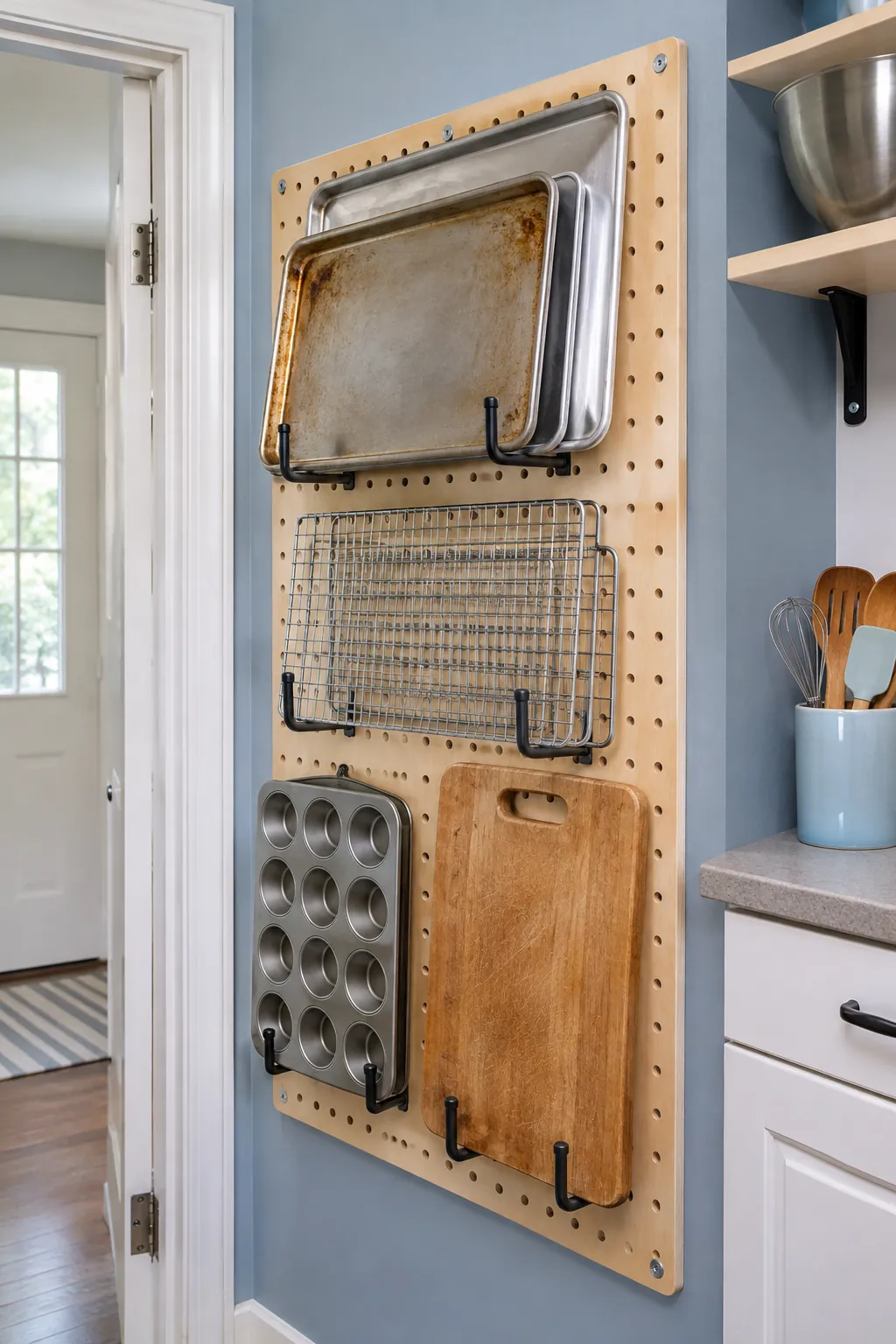
Pegboard pan hooks
A strong pegboard can organize light trays and racks with flexible hooks. Spread the weight across proper anchors and place large items low so they do not cover smaller ones. Trace the door swing and walking path before choosing the wall.
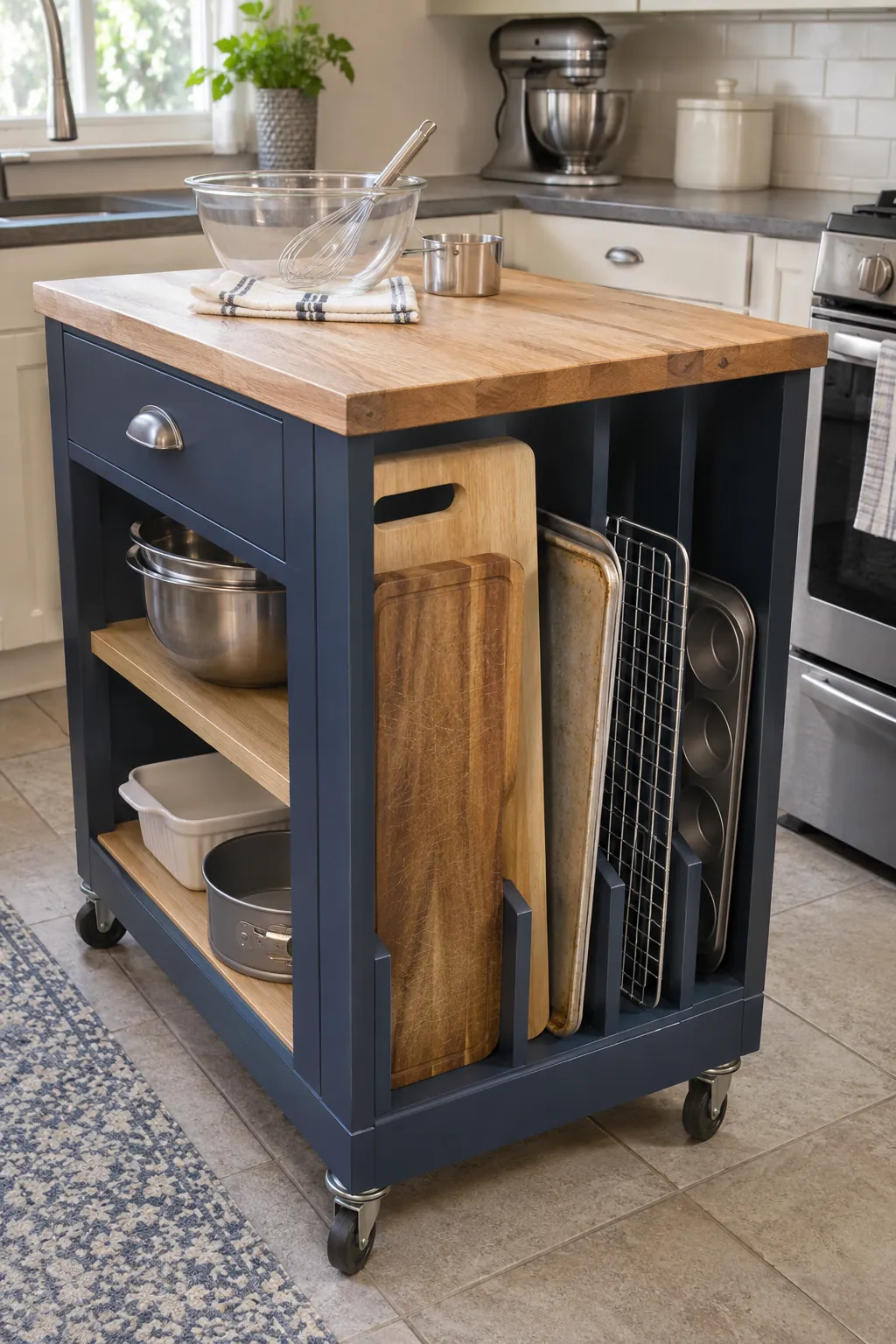
Island end slots
The end of a mobile island can hold vertical slots without using its work surface. Keep the heaviest board low, preserve wheel access, and confirm that protruding handles stay inside the island footprint. Lock the island before removing equipment.
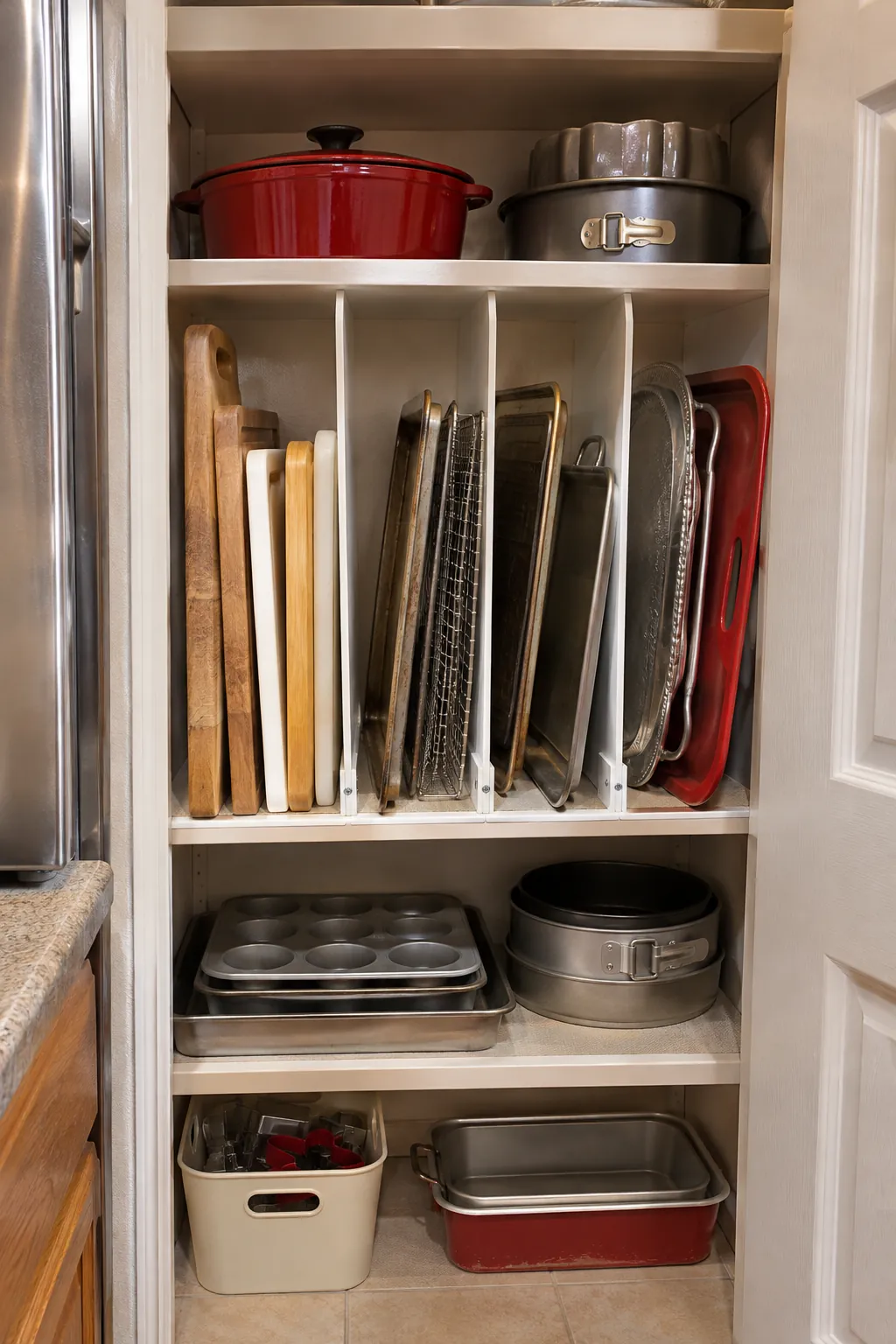
Pantry shelf dividers
A pantry shelf with vertical dividers can group flat equipment by task. Keep everyday cutting boards at the easiest height and move seasonal cookie sheets higher. Use separate bays so a small tray does not disappear behind a full sheet pan.
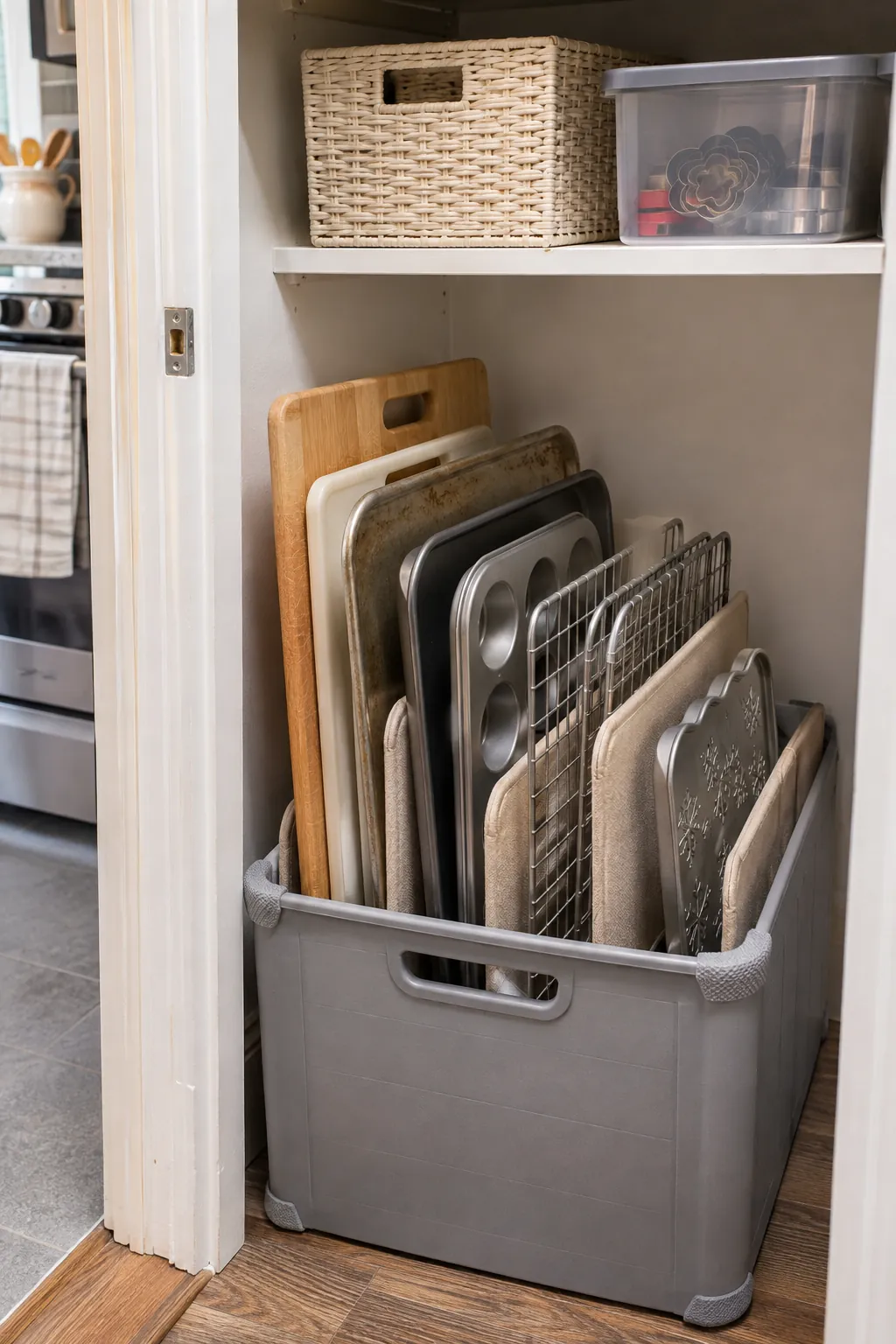
Nearby closet baking bin
Rarely used baking sheets do not need prime kitchen space. Stand holiday pans inside a sturdy bin in a nearby closet, protect sharp corners, and keep the bin light enough to move. Bring the whole group to the kitchen only when needed.
Low drawer with dividers
A deep drawer can store boards and pans on edge when the drawer height allows it. Install stable dividers, place heavy boards near the drawer sides, and test full extension with the complete load. Leave the handles clear so nothing catches when closing.
Edit the collection to fit
Storage works better when every pan earns its space. Keep sheet sizes that match the oven and recipes you actually use, then nest compatible pairs only when they separate easily. Donate duplicates in usable condition instead of building a larger organizer around them.