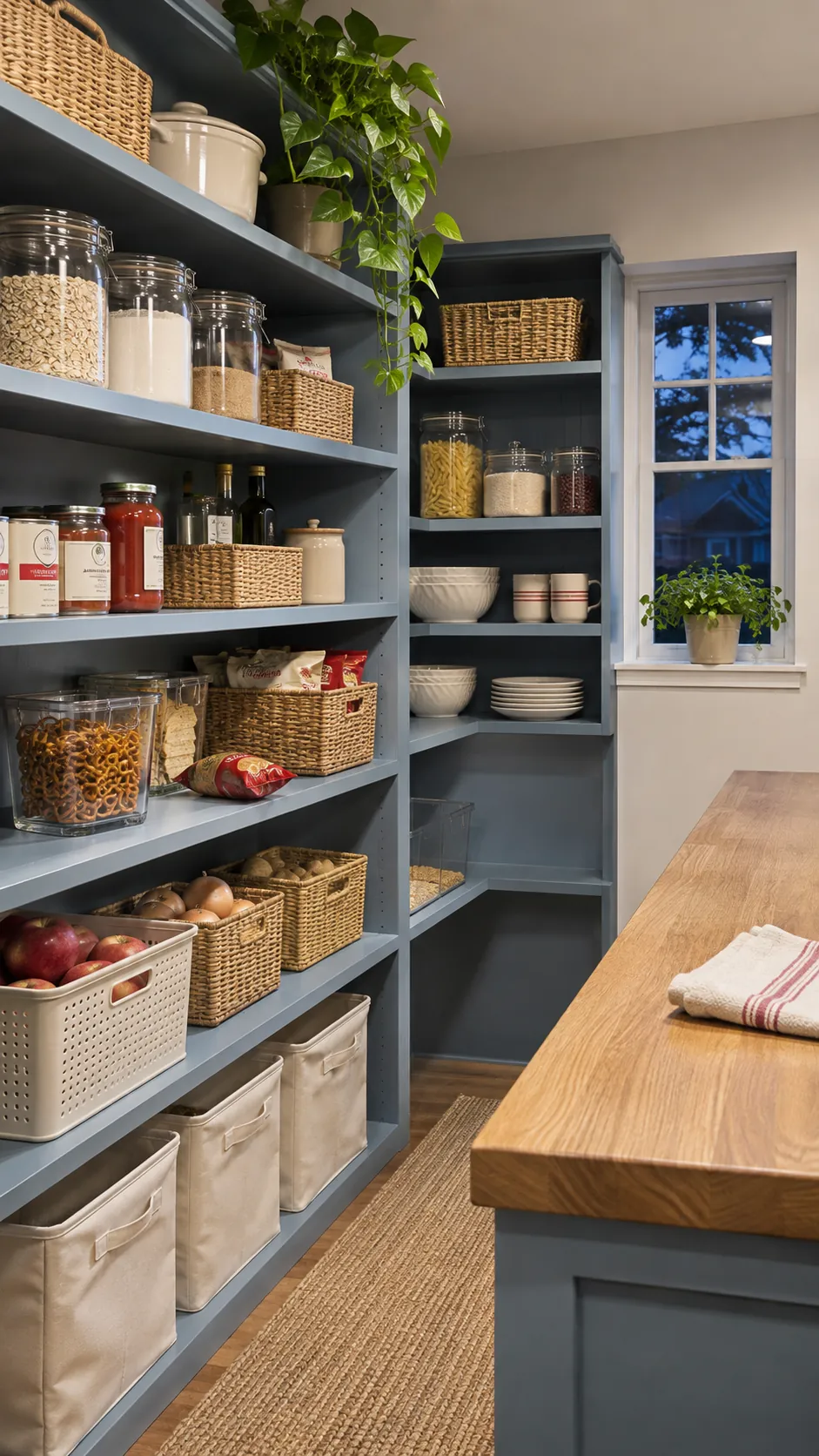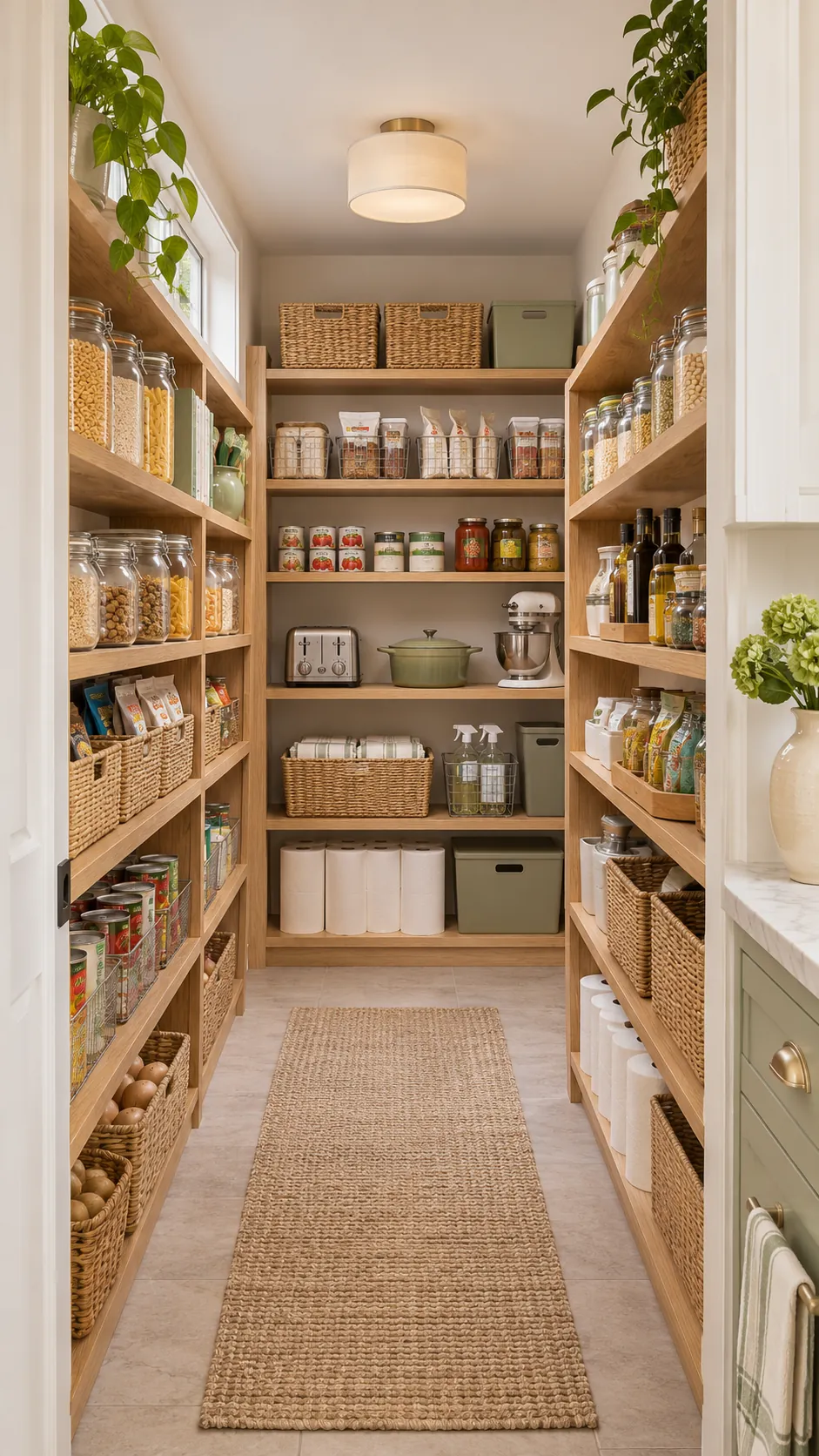
A large pantry can hide more food than a small cabinet when every shelf is deep and every item competes for the front row. Organization improves when the room is divided by use, not by matching containers. The best system keeps ordinary groceries visible and makes restocking simple.
Map the Pantry Before Buying Bins
Measure shelf width, depth, height, and the clear walking aisle. Record door swing, outlets, vents, and any corner that is difficult to reach. This prevents a collection of attractive bins from reducing useful space.
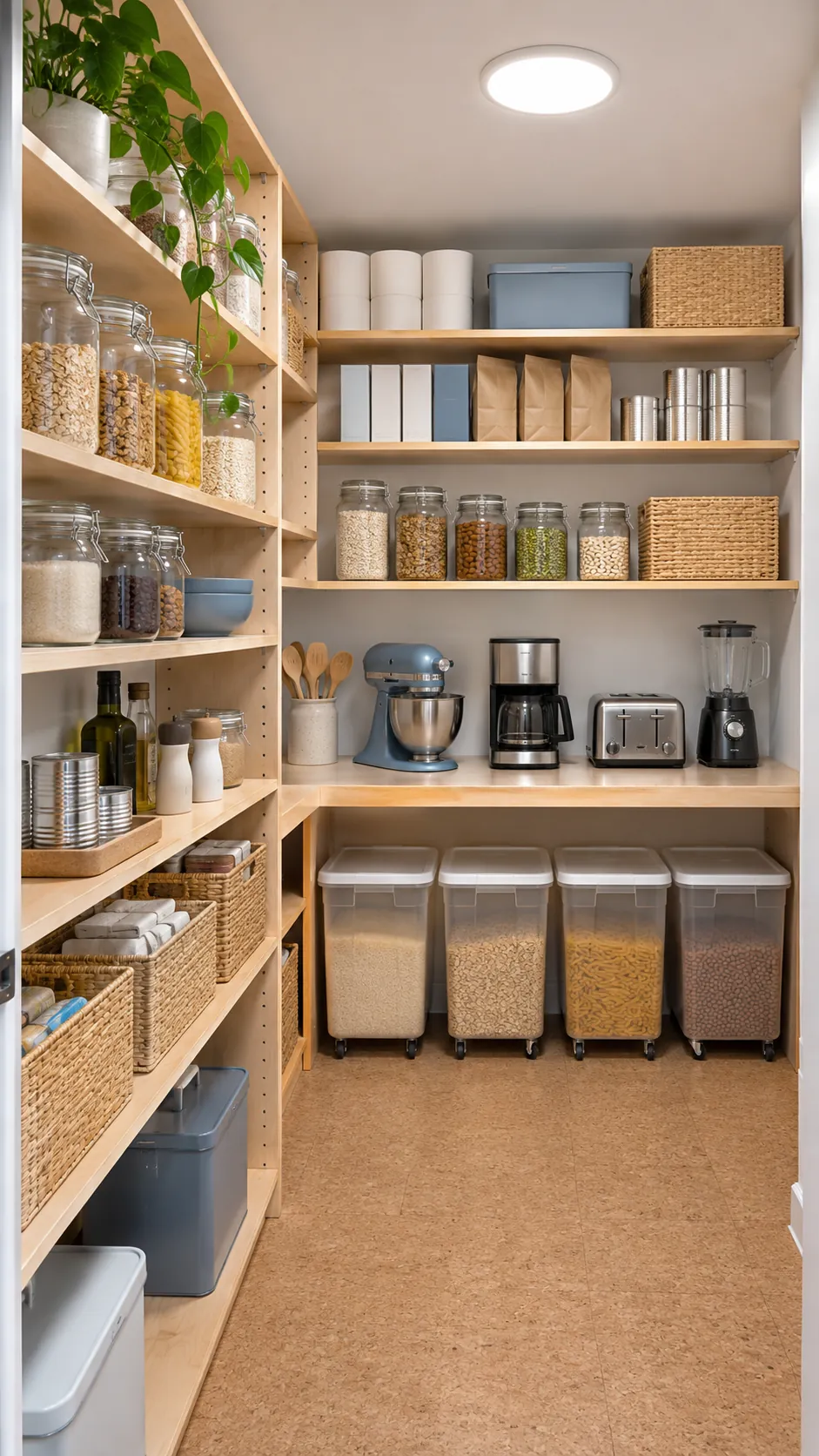
Assign the easiest shelves to foods used each week. Reserve high shelves for light backstock and the floor for heavy sealed containers. Keep the aisle free so the room remains a walk in pantry rather than a storage obstacle course.
Create Zones That Match Real Routines
Group food by the task that brings it out of the pantry. A breakfast zone can hold oats, cereal, coffee supplies, and spreads together. A baking zone can combine flour, sugar, decorating tools, and the mixer near a usable counter.
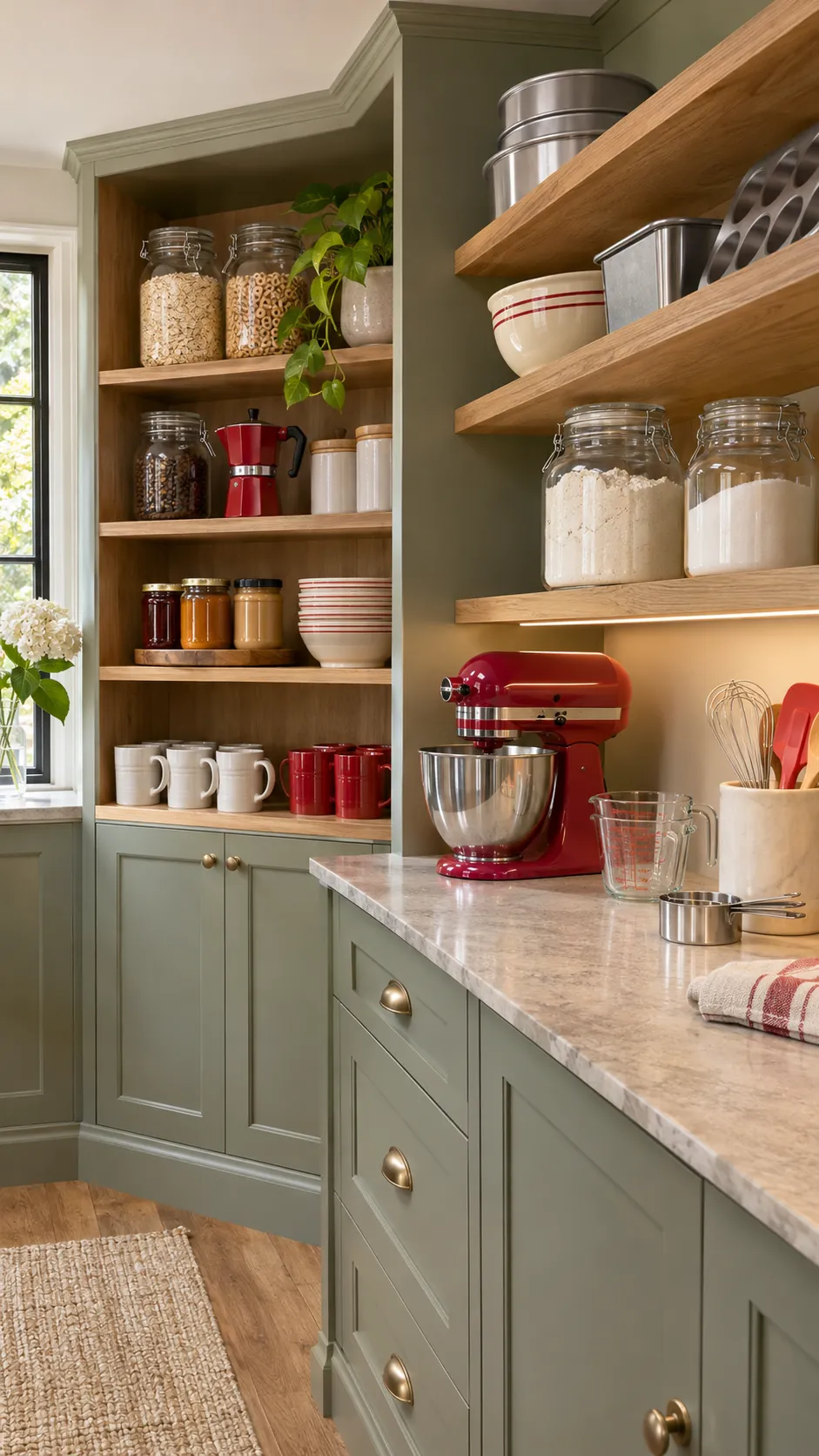
Zones should reflect the household rather than a generic label set. Place children’s snacks where they can reach them safely. Keep occasional entertaining supplies farther from the main traffic area.
Fix Deep Shelves With Access, Not More Stacking
Deep shelves invite forgotten rows behind the visible food. Use long handled bins for one category, turntables for bottles and jars, or pull out shelves when the cabinet can support proper hardware. Shelf risers help short cans remain visible behind one another.
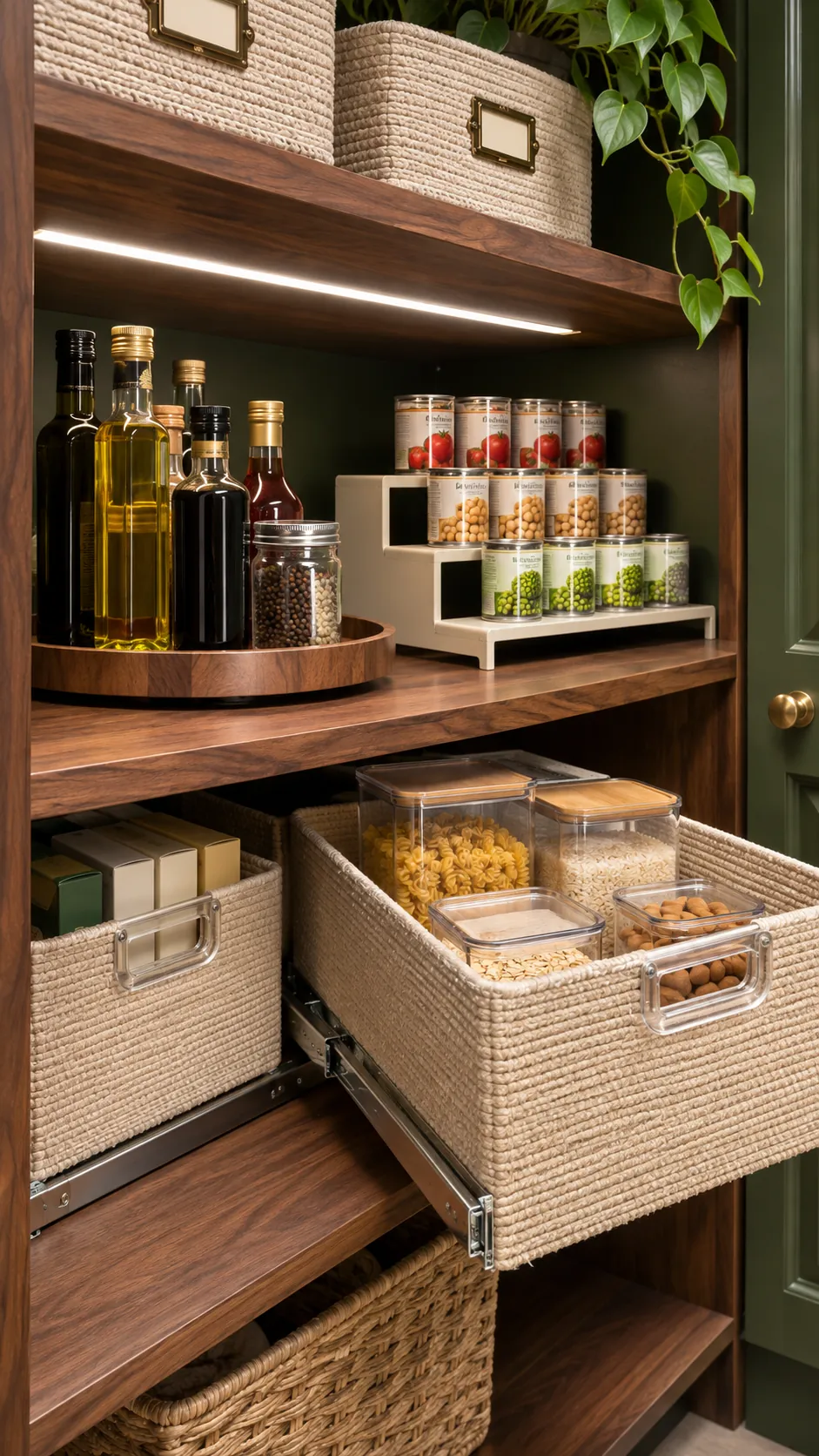
Avoid placing three bins in front of three more bins because the rear row will disappear from daily use. If shelf depth can be changed during a pantry remodel, shallower upper shelves often improve visibility. Test every container while full because weight changes how easily it moves.
Use Corners Without Losing the Aisle
A corner walk in pantry works best when the shelves turn cleanly and leave room for shoulders. Curved or clipped corner shelves make the inner area easier to reach. A turntable can serve oils or condiments, but it needs enough side clearance to rotate.
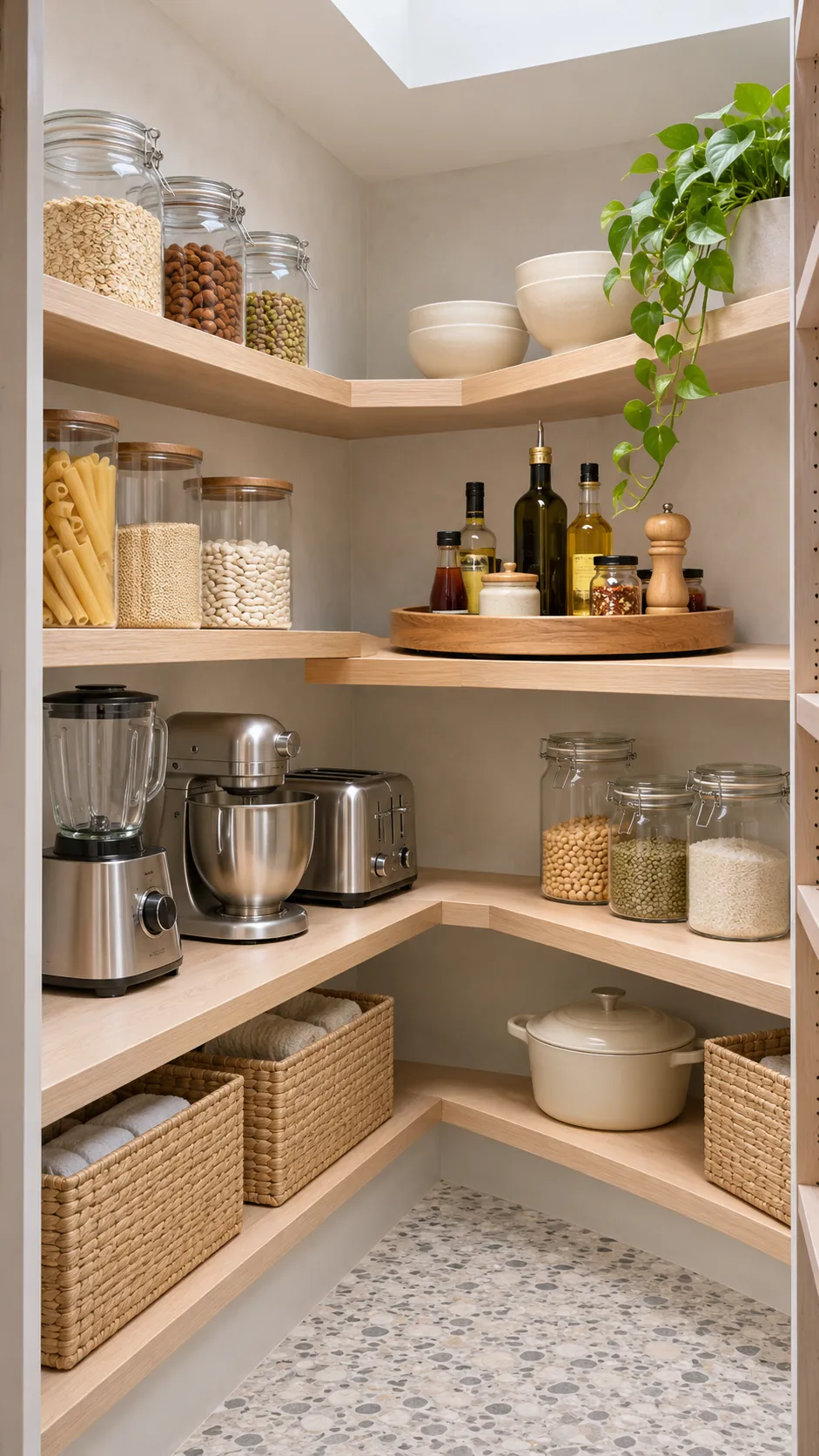
Do not bridge the corner with containers that require moving several items first. Keep bulky appliances on a straight shelf near the entrance. This protects the central route and makes awkward space serve a clear purpose.
Make Backstock Easy to Count
Extra food saves money only when it is used before another duplicate is purchased. Give each backstock category a fixed limit and keep the oldest date at the front. Clear fronts or open bins make quantity checks faster than closed decorative boxes.
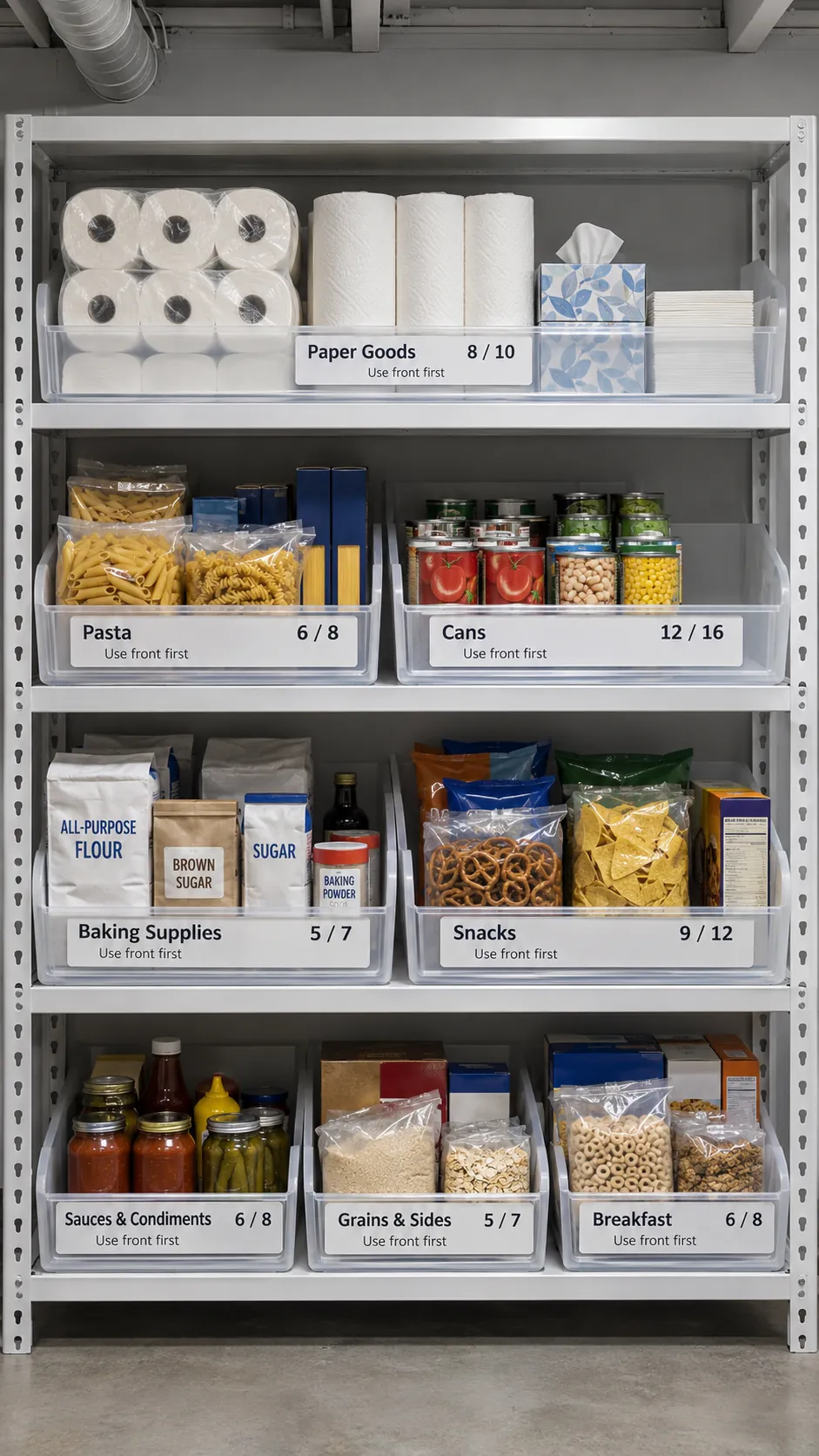
Store paper goods separately from food so they do not crowd the prime shelves. Leave a little empty capacity in each zone for shopping day. A completely full dream pantry walk in design often becomes difficult to maintain after one grocery trip.
Build a Reset That Takes Minutes
Choose one short weekly reset instead of waiting for a major cleanout. Return stray items to their zones, move older food forward, wipe one shelf, and note what is low. Keep labels broad enough that every family member understands where an item belongs.
Review the system when one bin repeatedly overflows or one shelf stays empty. That pattern shows a sizing problem, not a failure to stay organized. Walk in pantry organization lasts when the layout changes with actual shopping and cooking habits.