
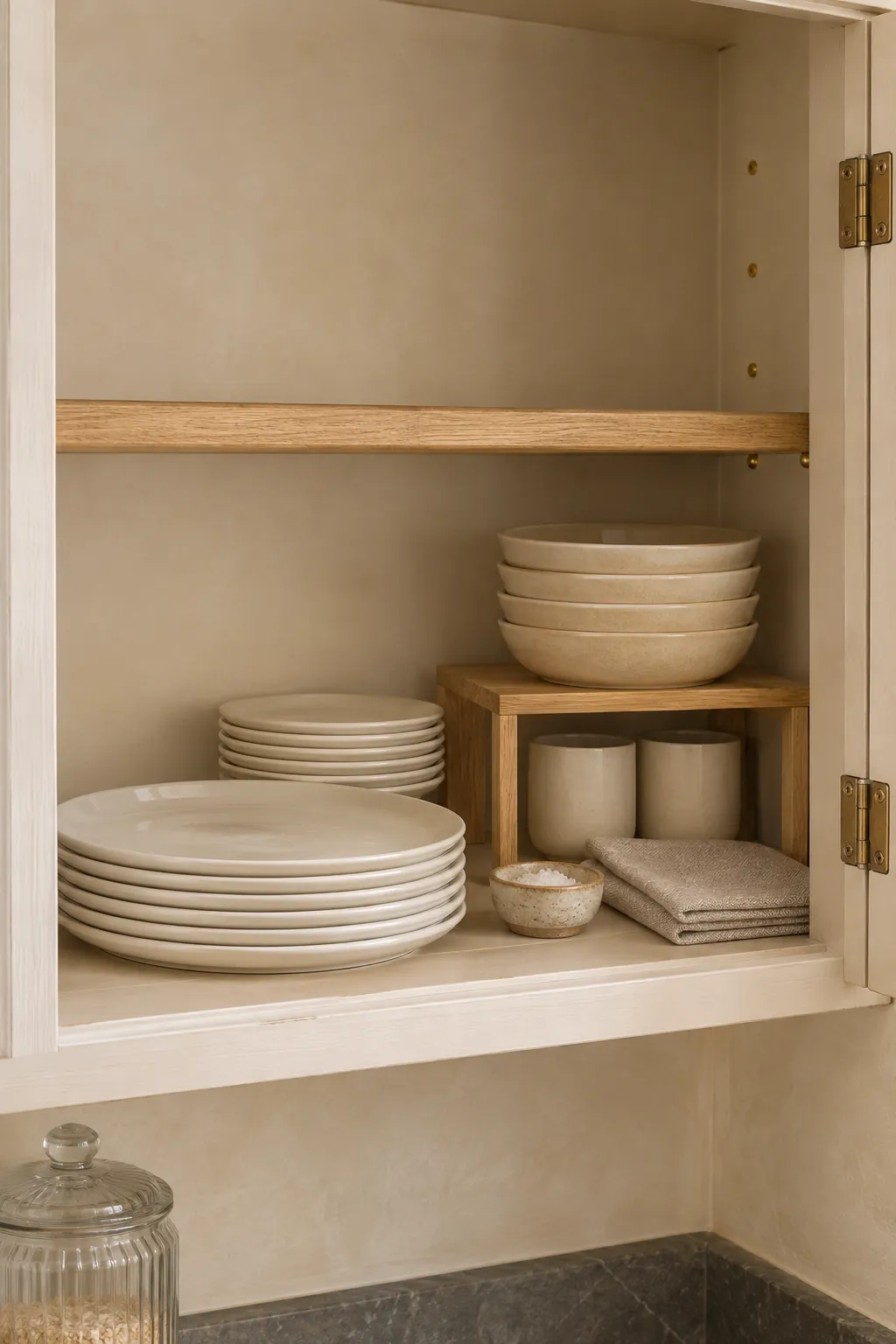
A dish set can look compact in a product photo and still waste half a cabinet at home. Wide rims, steep bowl sides, heavy materials, and awkward mug handles all change how much useful space the set consumes. A few measurements before buying can prevent daily lifting, leaning stacks, and shelves that feel overloaded.
Measure the cabinet before comparing sets
Measure the clear width, depth, and height inside the cabinet, not the outside frame. Note the hinge, face frame, shelf supports, and door lip because each one can reduce usable space. Then measure the vertical gap above the shelf where the plates will sit.
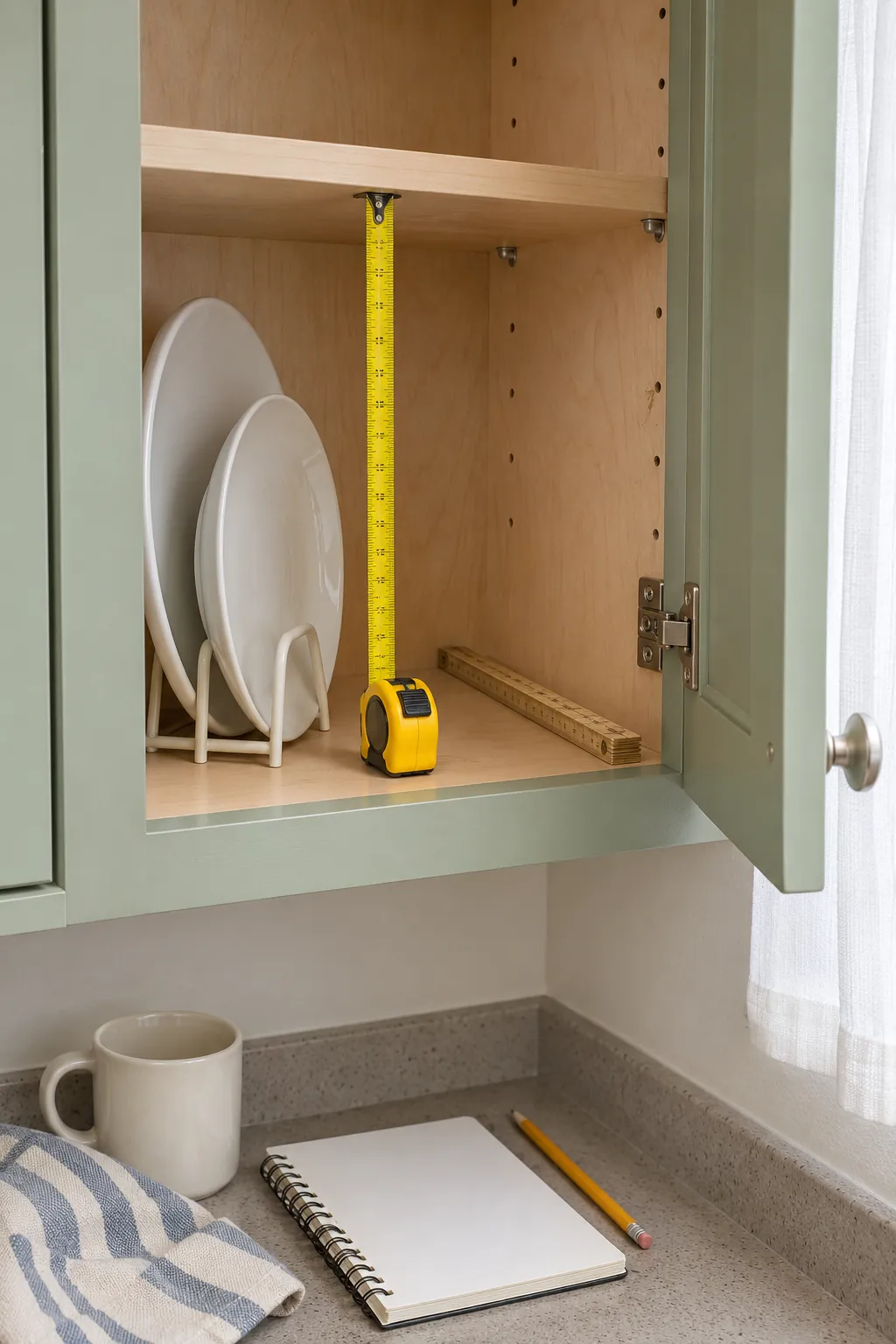
Leave enough clearance to lift the top plate without scraping the shelf above. If the cabinet is deep, confirm that a full plate can pass through the door opening without tilting into the hinge. Record these limits on your phone so you can check dimensions while shopping.
Judge the actual nesting shape
True nesting depends on the underside foot and the angle of each side, not only the top diameter. Plates with broad flat rims often stack higher than coupe plates with slim edges. Bowls with rounded bases can rock, while bowls with a stable foot and gently flared sides tend to form a neat column.
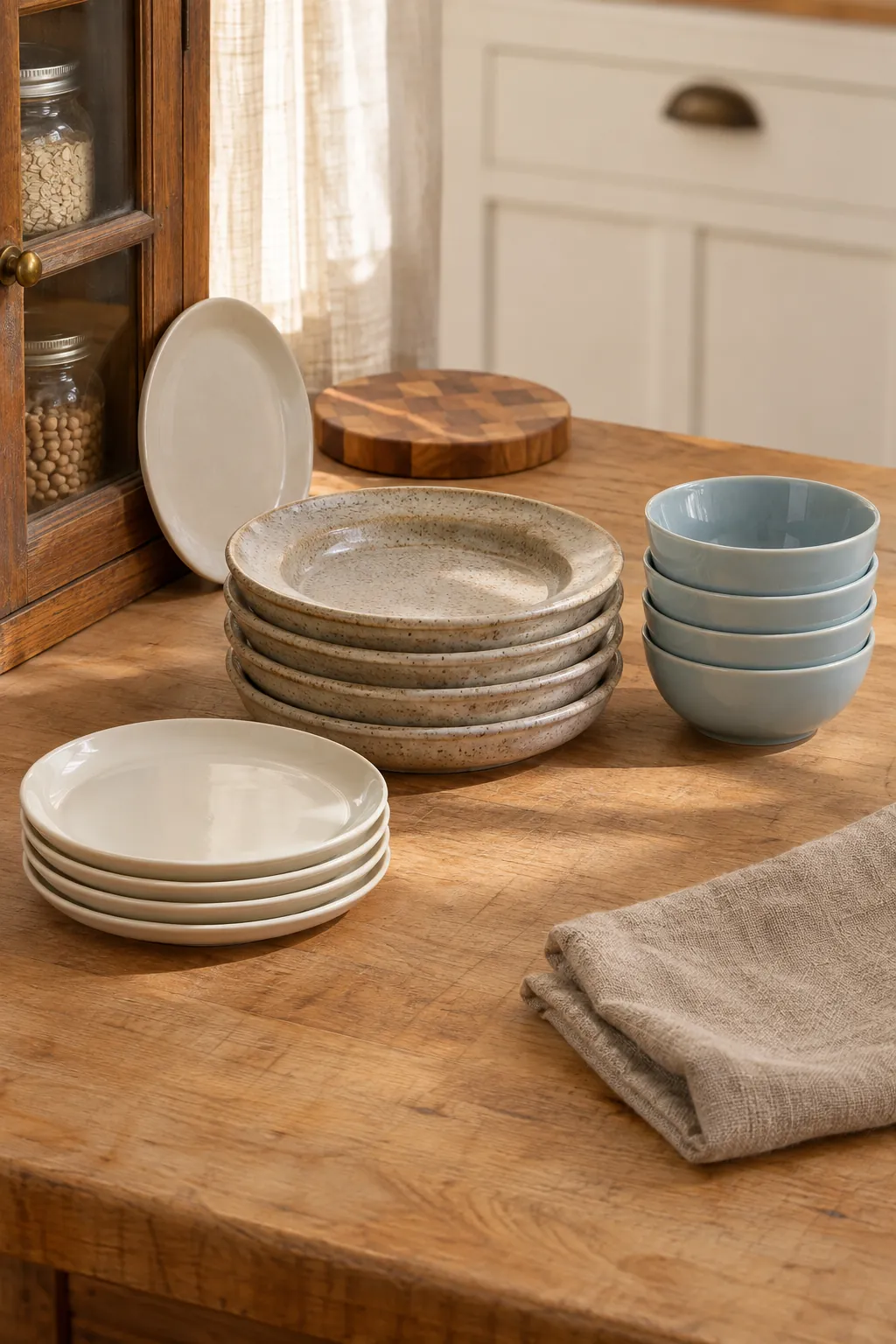
If possible, stack four plates and four bowls in the store. Look for wobble, trapped handles, and large gaps between pieces. A set that nests cleanly should stay aligned when you touch the side lightly.
Choose useful pieces instead of a large place setting
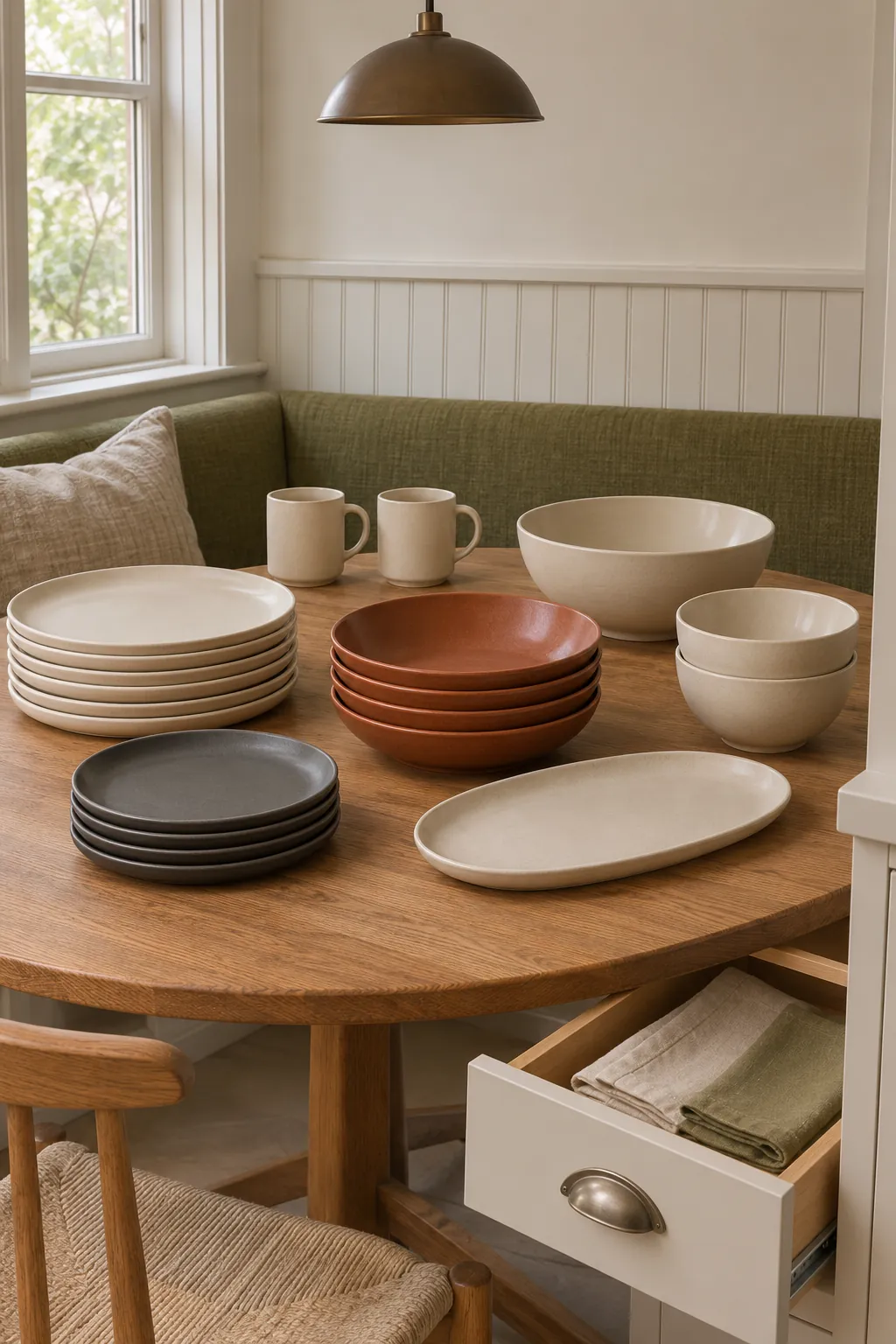
Count what your household uses during one ordinary day, then add only a small buffer for guests or a late dishwasher cycle. Many boxed sets include saucers, tiny bowls, or oversized dinner plates that never earn their cabinet space. A compact dinner plate set with versatile pasta bowls can cover breakfast, lunch, and dinner with fewer shapes.
Open stock collections are especially practical in a small kitchen. You can buy six plates, four bowls, and two serving pieces instead of accepting a fixed bundle. You can also replace one chipped item without storing a spare set.
Balance durability with plate stack weight
Stoneware can feel warm and substantial, but a tall stack becomes tiring to lift and places more load on an adjustable shelf. Porcelain is often thinner for the same useful diameter, so more pieces can fit in the same cabinet shelf height. Tempered glass can be light and compact, although its look and edge feel differ from ceramic dishes.
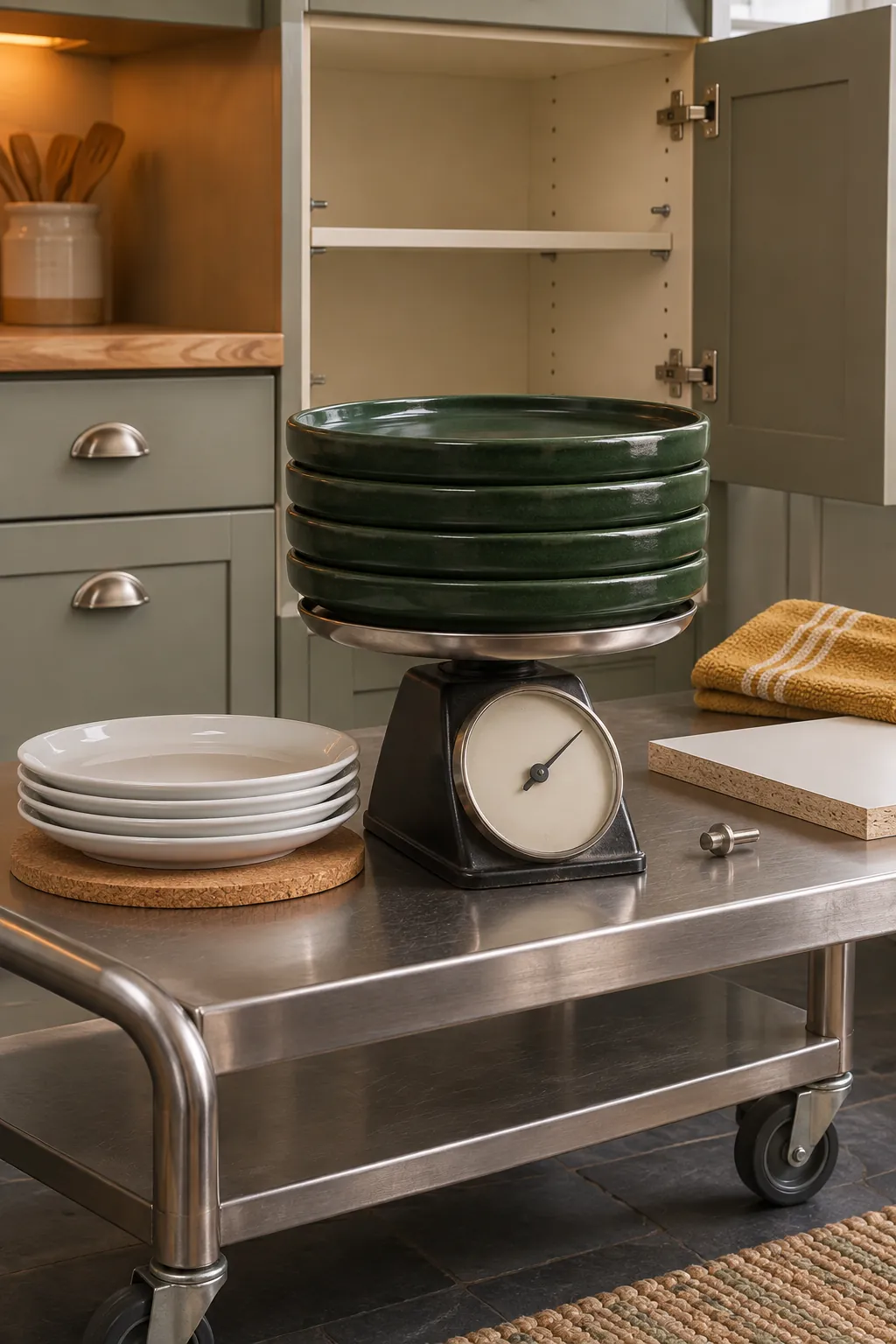
Lift the number of plates you expect to store together. The stack should feel controlled with one hand supporting the base. Check the shelf pins and cabinet condition before placing a dense stack on an older or bowed shelf.
Test everyday handling details
A plate should fit your dishwasher rack, microwave turntable, and usual serving portions. A bowl should be easy to separate from the stack when your hands are damp. Matte glazes can show utensil marks, while deeply textured rims can hold water after washing.
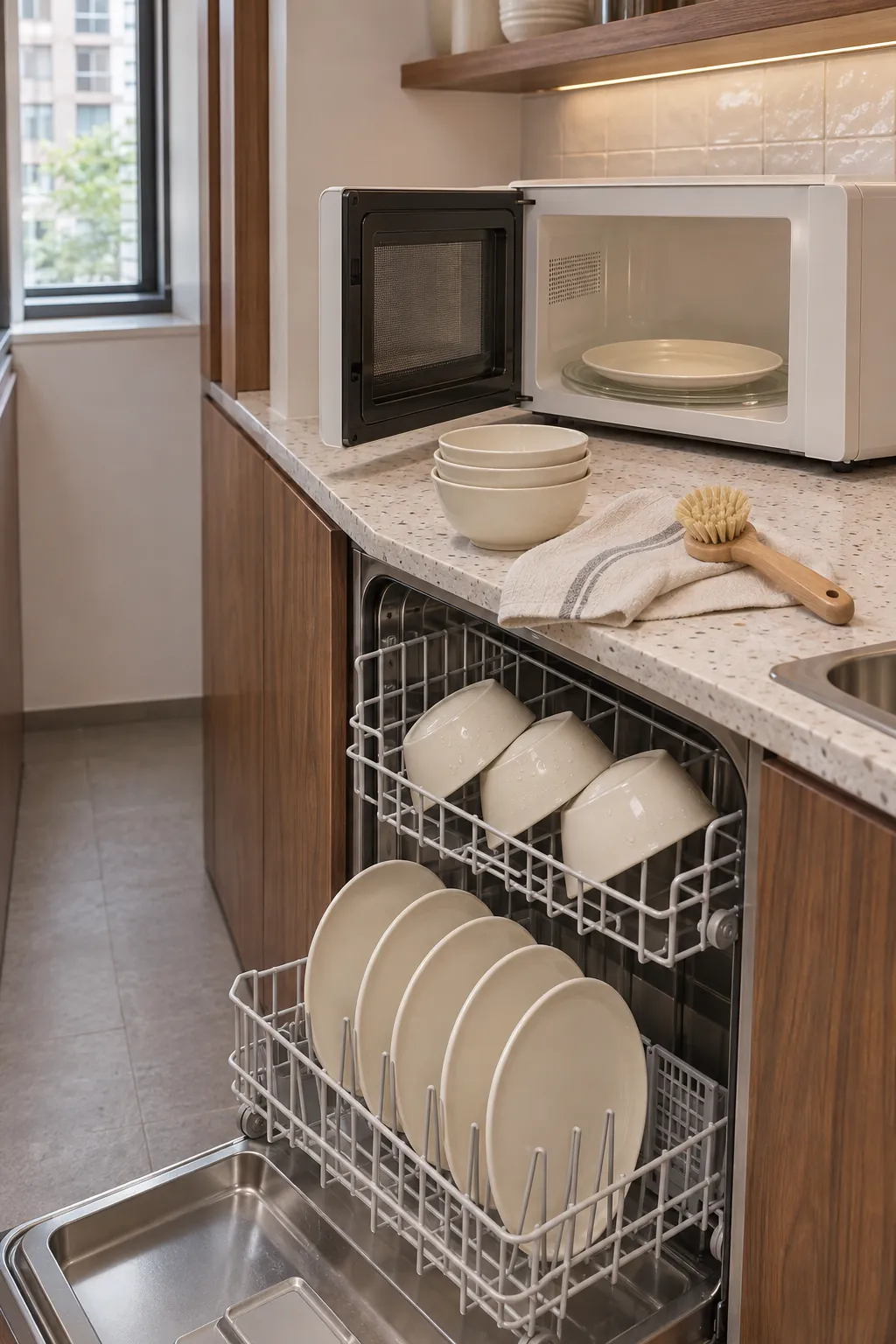
Check care instructions for dishwasher, microwave, oven, and freezer use rather than assuming every ceramic piece has the same limits. Examine the rim and foot for rough spots that could scratch the piece below. If mugs are included, place two side by side to see whether their handles force a wide, inefficient row.
Plan a low effort cabinet layout
Store daily plates and bowls between waist and shoulder height. Keep each stack short enough that you can remove one item without steadying a tall tower. A shelf riser can create a separate level for bowls, but only when the lower stack still has comfortable hand clearance.
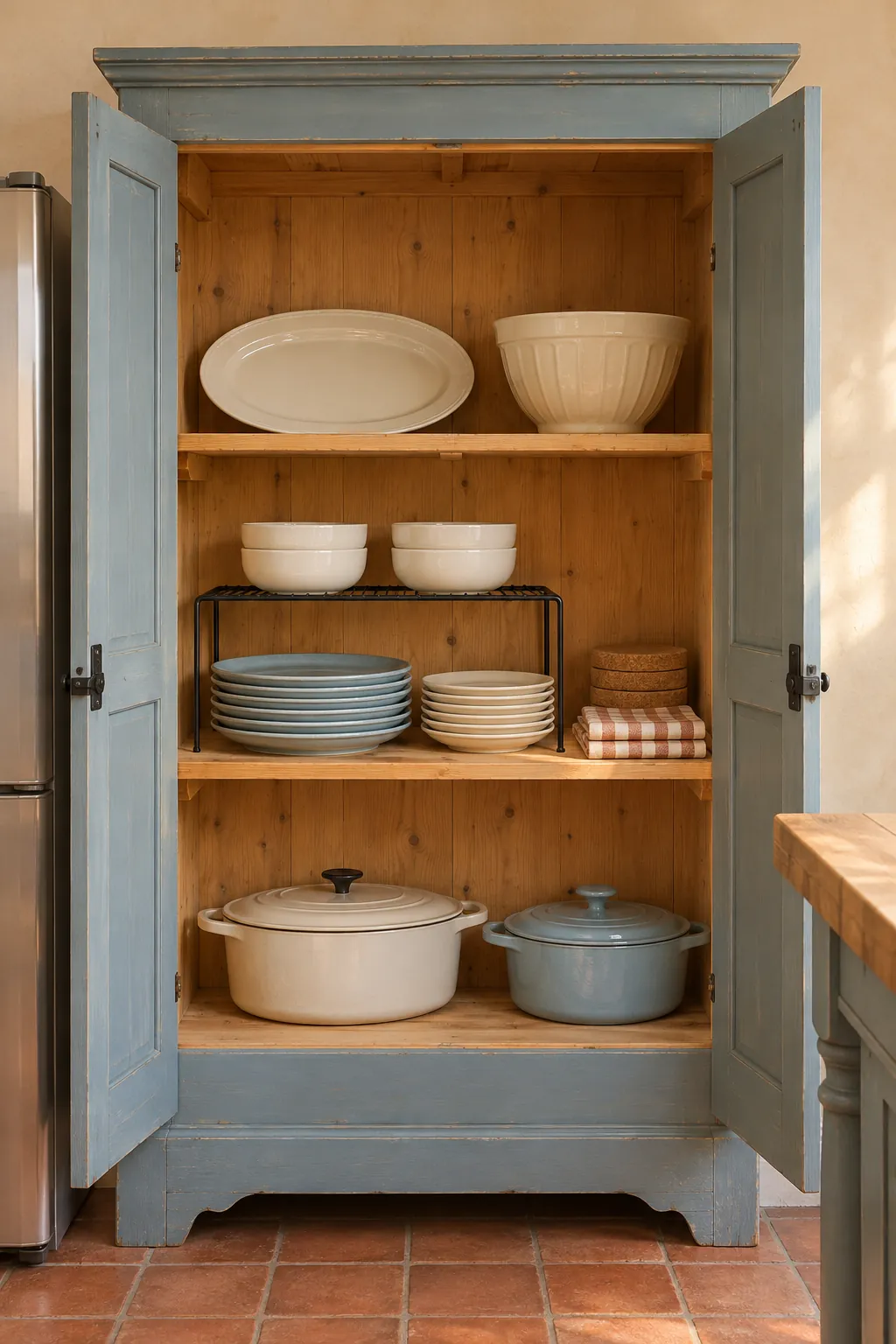
Put occasional serving pieces on the upper shelf and keep heavy items low. Do not mix several bowl profiles in one unstable stack. The best space saving crockery is the set that fits the cabinet and remains easy to use every day.