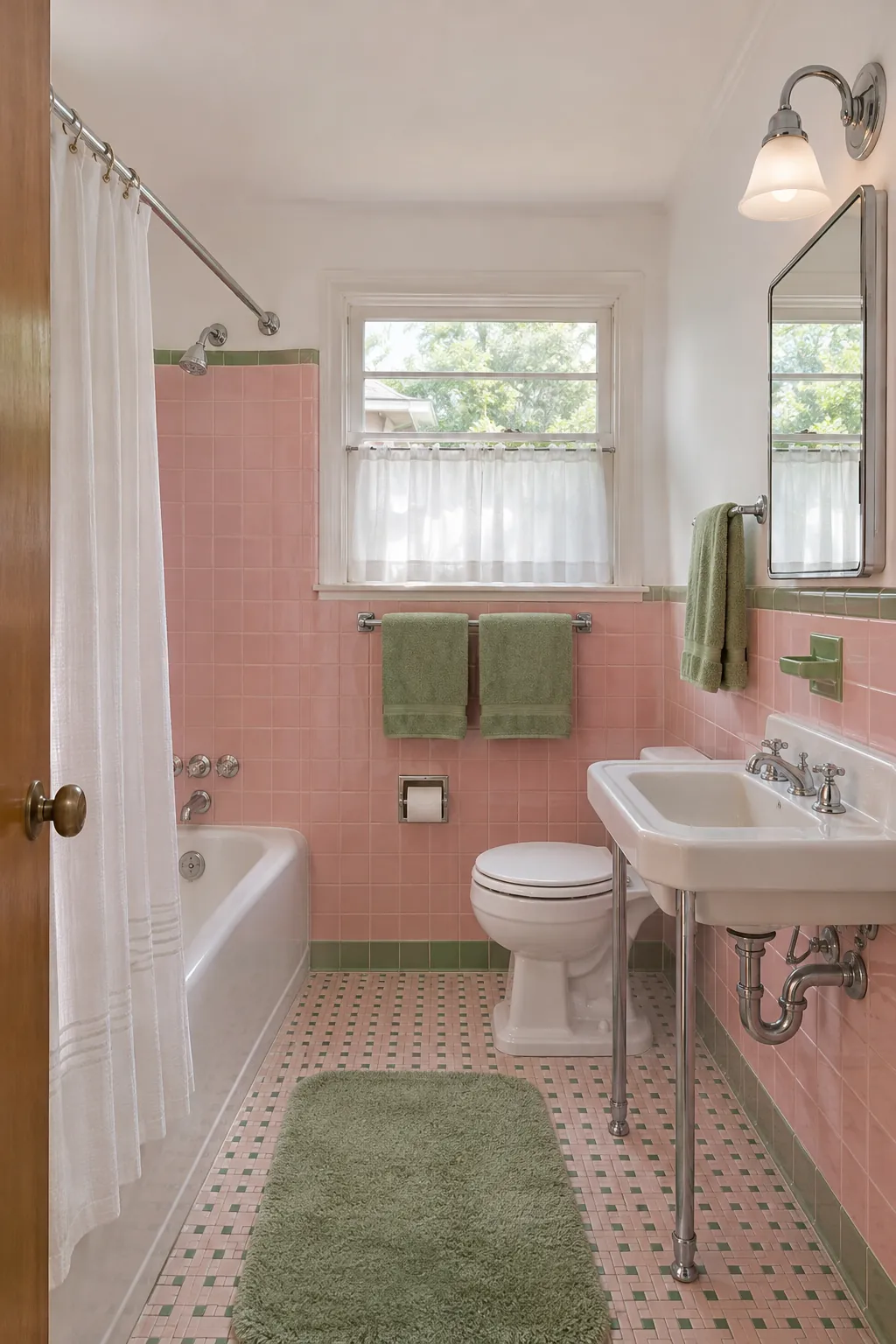
Original color is rarely the real reason an old bathroom feels difficult. Failed grout, a clashing later floor, poor light, and awkward shower hardware create most of the friction. Treat those problems in the right order and a strong pink or blue scheme can become the room’s best feature.
Indexed homeowner discussions repeatedly ask how to save tile without hiding damage or spending for a full gut. The practical answer begins with moisture and movement, then turns to the floor, vanity, lighting, and replaceable details. This sequence protects both the budget and the character.
Document What Can Be Saved
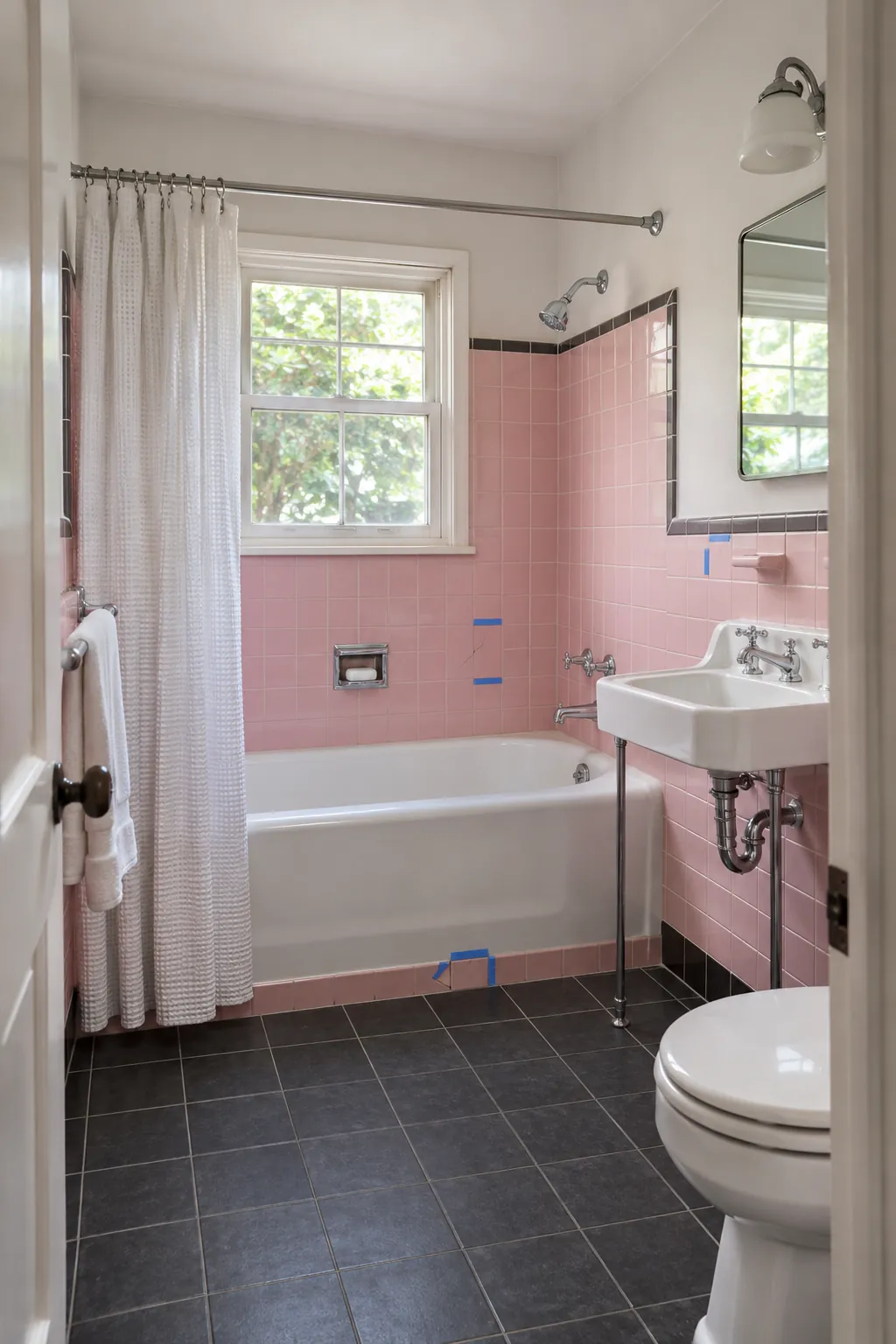
A good makeover starts with a measured survey. Photograph the tile, trim, fixtures, grout failures, plumbing access, and every later alteration before choosing finishes. Sound original work can guide the palette, while loose tile, moisture, soft flooring, or unknown old materials need professional assessment before disturbance.
Repair Grout Before Decorating
Cleaning cannot solve grout that has separated because the tile assembly moves. Identify the cause, remove failed material carefully, and use a grout compatible with the joint width and existing tile. Changes of plane normally need a suitable flexible sealant rather than rigid grout.
Mixed patches deserve special attention because incompatible layers can hide failure. Test cleaning products in a discreet area and avoid aggressive abrasion on vintage glaze. A tile professional can advise whether the wall remains serviceable.
Choose A Floor That Supports The Tile
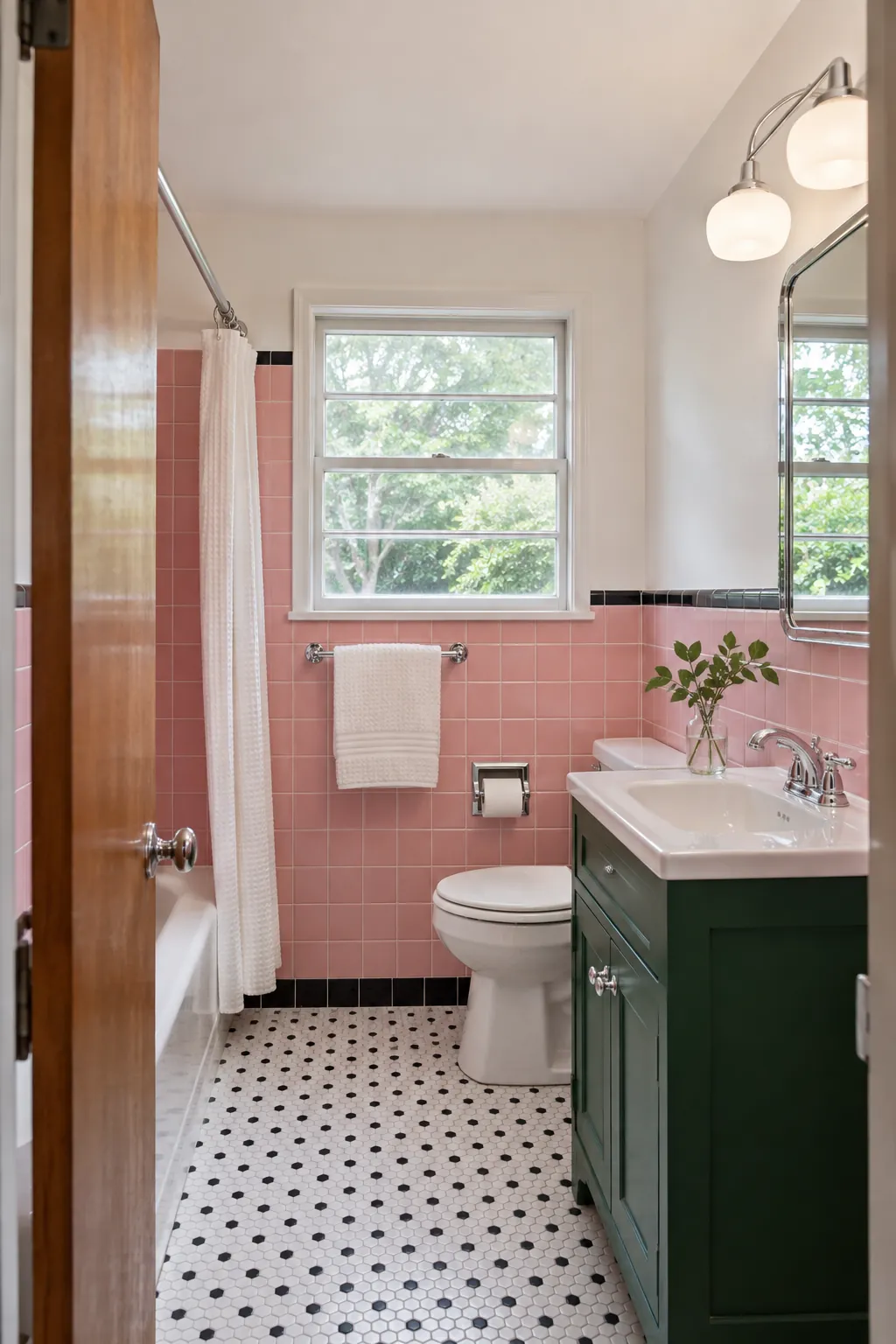
When wall tile stays, the new floor should support it rather than introduce a second dominant story. Black and white hex mosaic gives pink tile a crisp base and fits the scale of a vintage small bathroom. Warm gray grout softens contrast and handles daily use better than a bright white joint.
Confirm slip performance, subfloor stiffness, waterproofing, and transitions before ordering. If an old floor may contain hazardous material, do not sand, drill, or remove it until it has been assessed. Safety decisions come before the pattern.
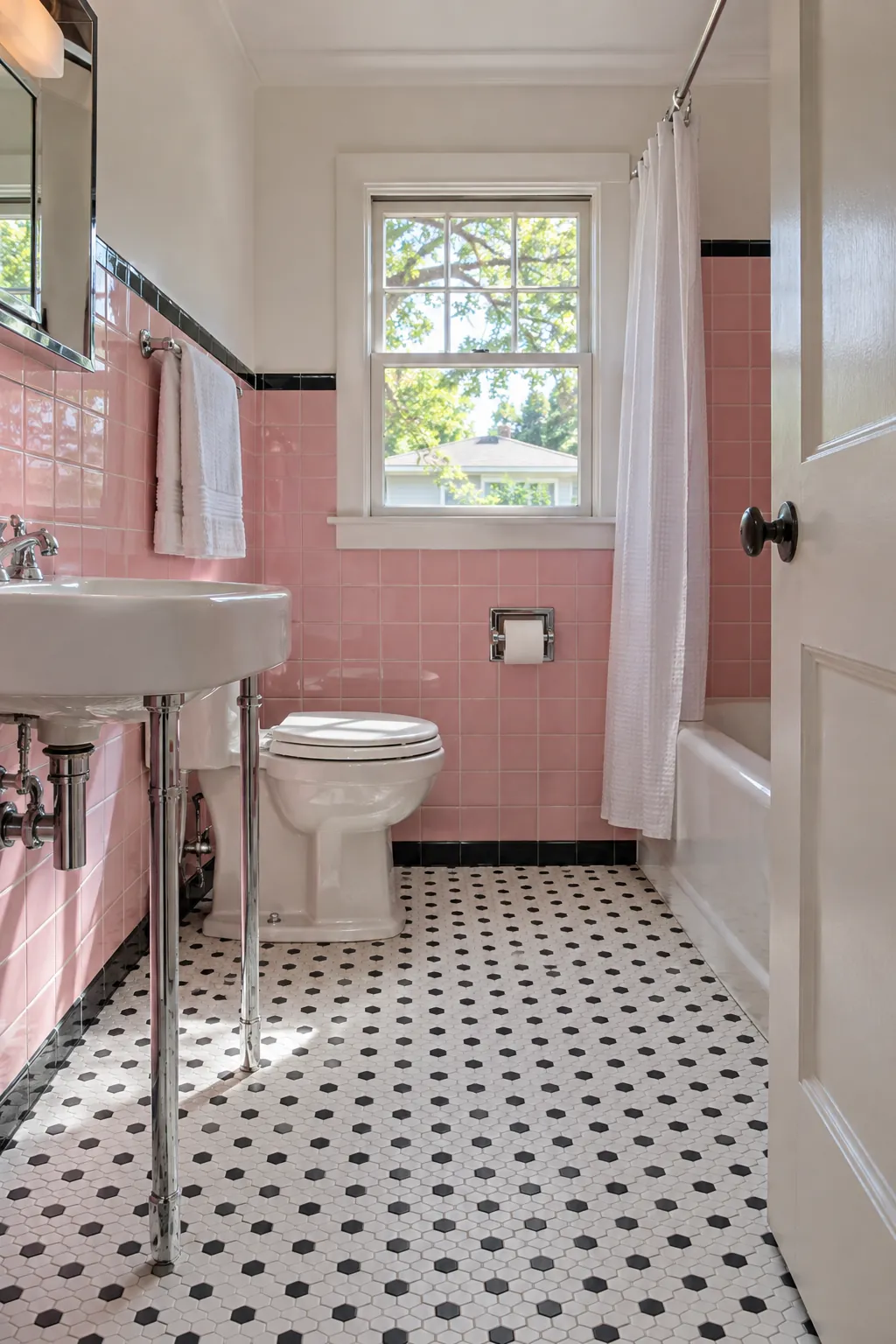
Paint The Vanity A Grounding Color
A sound vanity can become the visual counterweight to pink or blue tile. Forest green, deep burgundy, or charcoal connects saturated wall color to a practical fixed element. Prepare the surface for the chosen coating and keep the counter pale so the room does not become heavy.
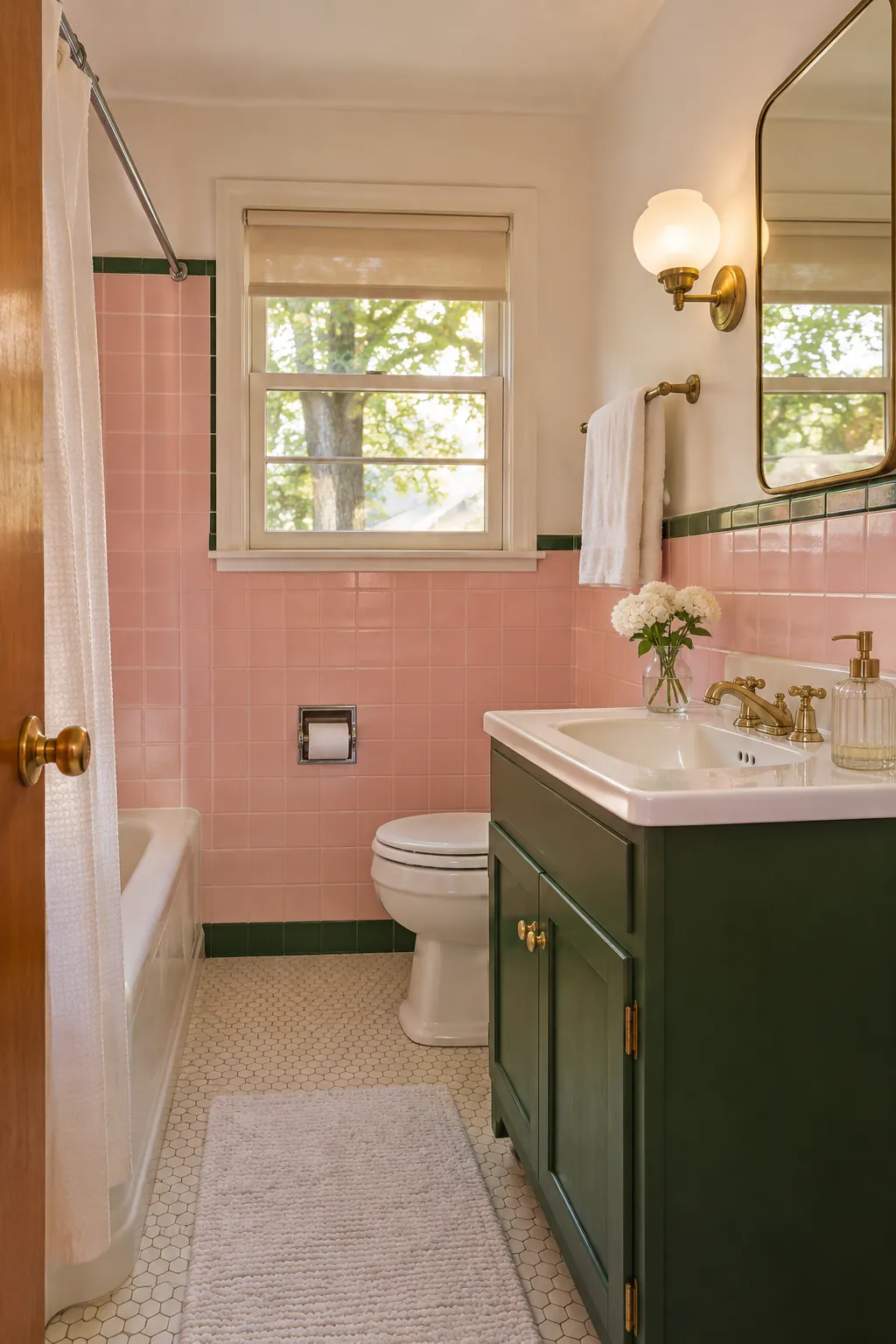
Improve The Shower Without Losing Character
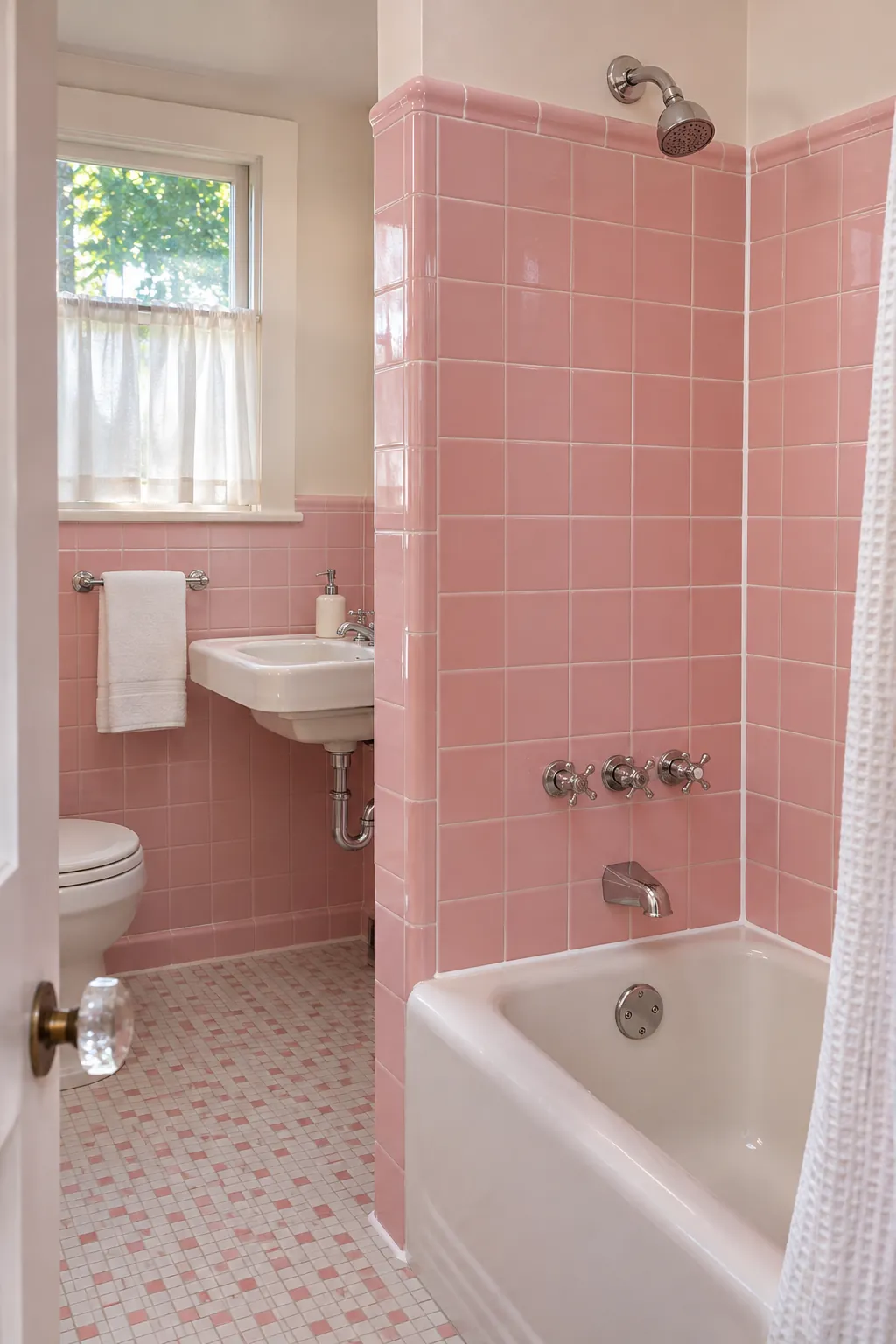
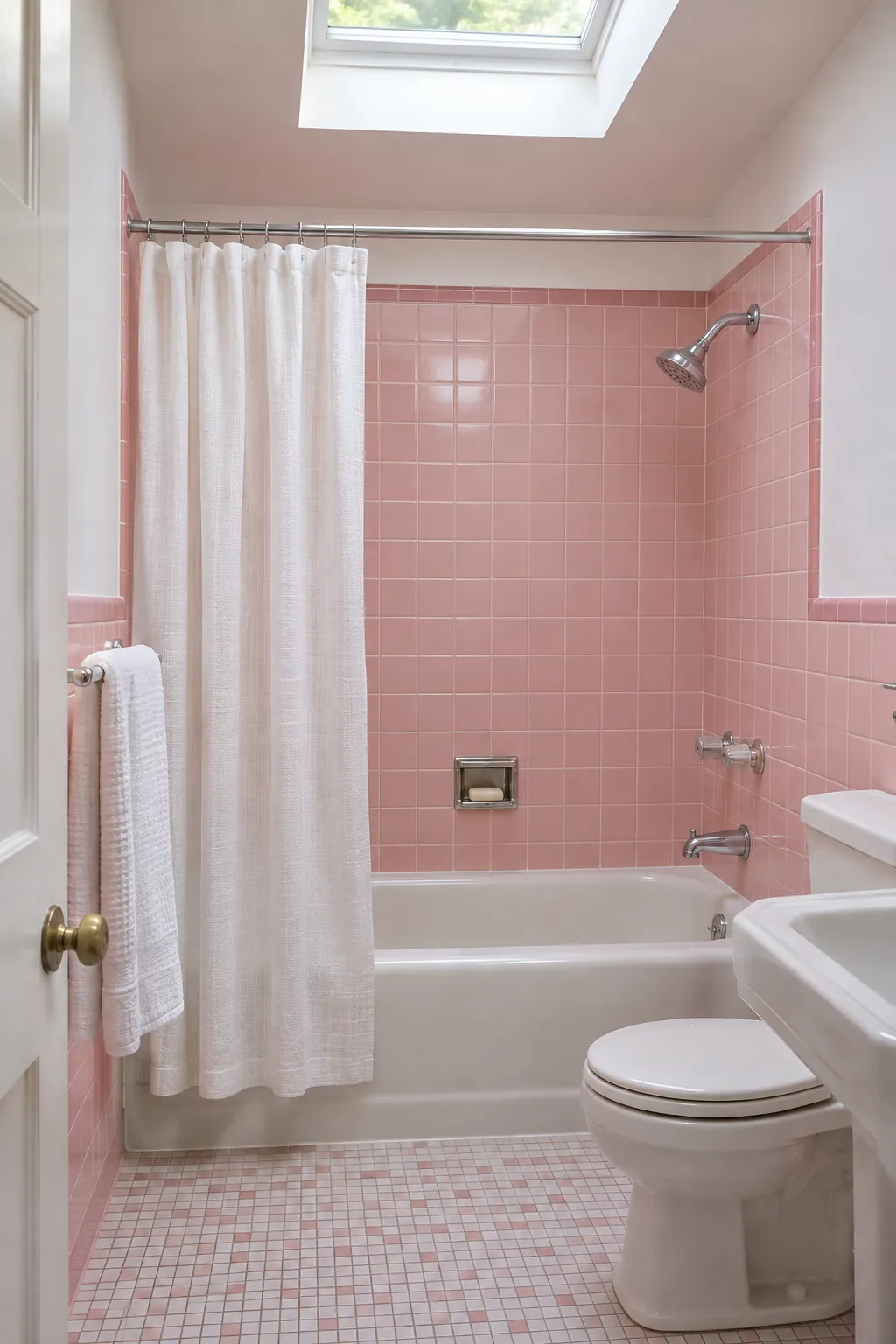
A beautiful alcove still needs to work every day. A plumber can add or correct a shower riser and controls while limiting damage, but the waterproof assembly and pipe condition must be understood first. Use a plain curtain and preserve rounded trim when possible.
Do not assume new sealant can solve movement or water behind the wall. Persistent staining, odor, loose tile, or soft material calls for investigation. Functional repairs protect the character you are trying to save.
Use Period Lighting With Better Output
Opal glass gives a 1950 bathroom familiar shape without forcing weak light. Place diffused sources near both sides of the face where space allows, then add a ceiling fixture for general illumination. Consistent lamp color keeps pink tile flattering and white porcelain neutral.
Electrical work near water must follow current requirements and use fixtures rated for the location. An electrician can confirm safe placement and required protection. Good light is a functional upgrade, not merely decoration.
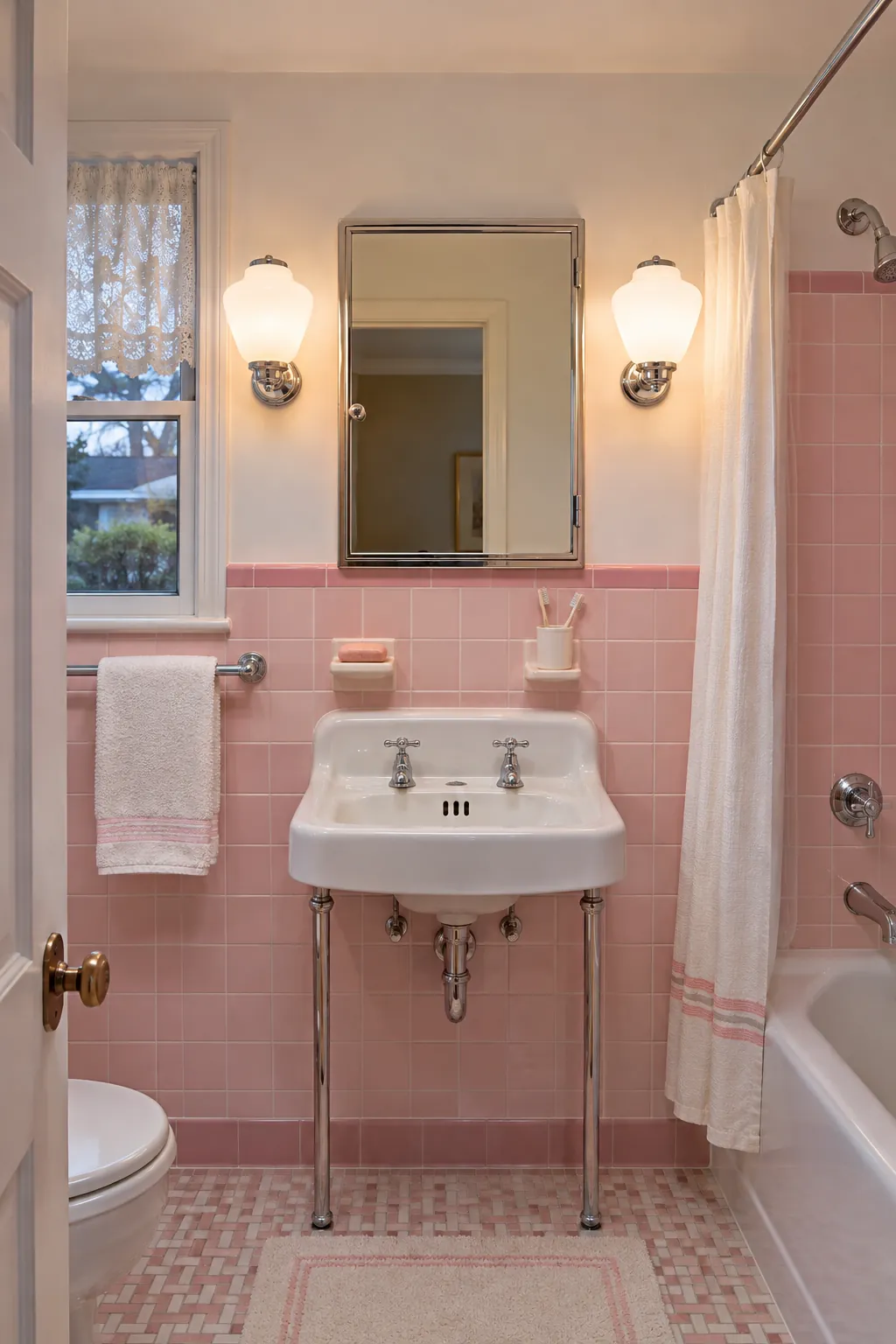
Finish With Simple Coordinated Details
Repeat the tile color lightly and let one contrasting tone organize the room. Green towels, a white curtain, and chrome hardware are enough to make pink feel intentional. Keep the counter clear, retain useful original fittings, and avoid filling every wall with period references.
The strongest result is not a replica. It is a clean, ventilated, watertight room where original material still carries the story and every new choice supports daily use.