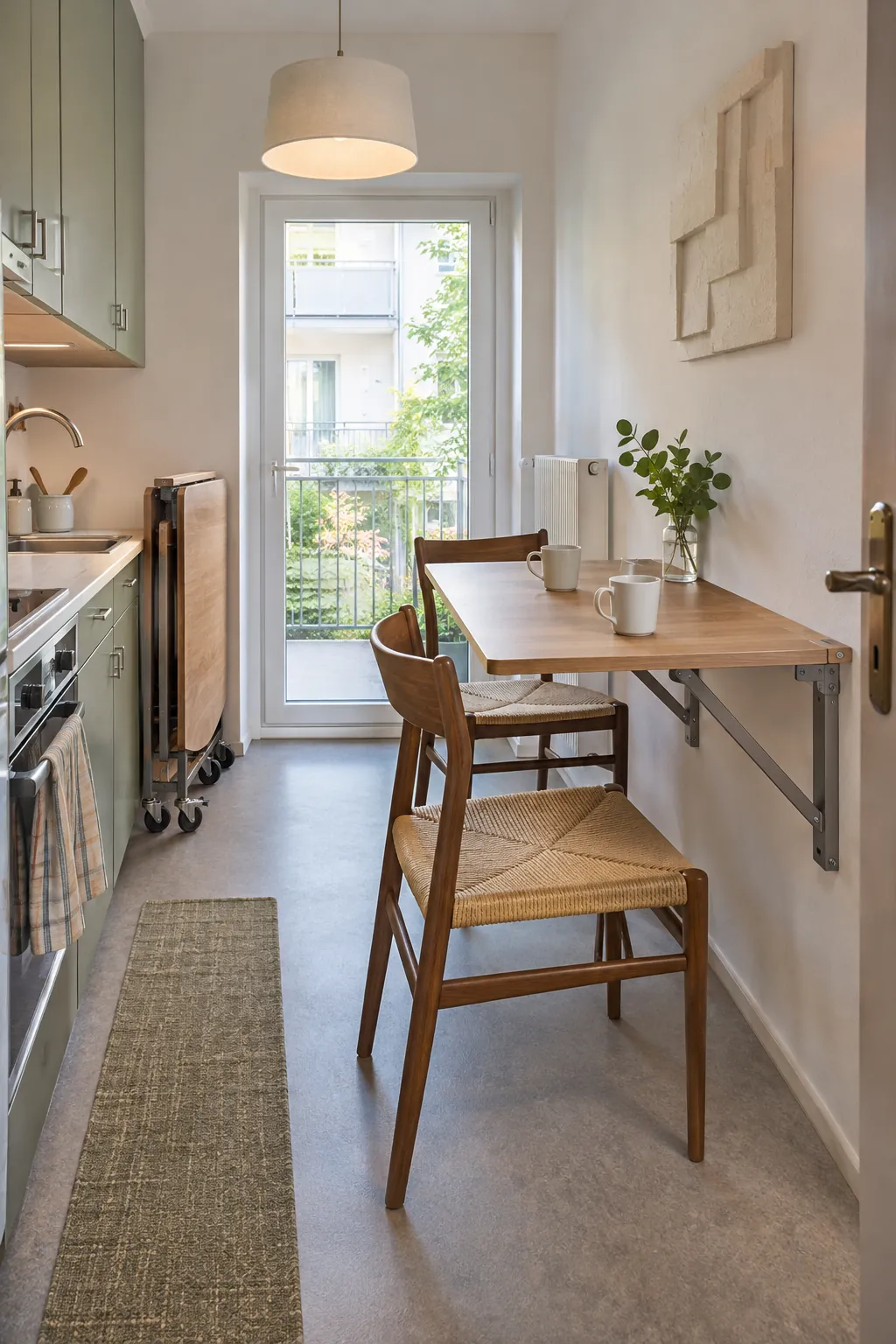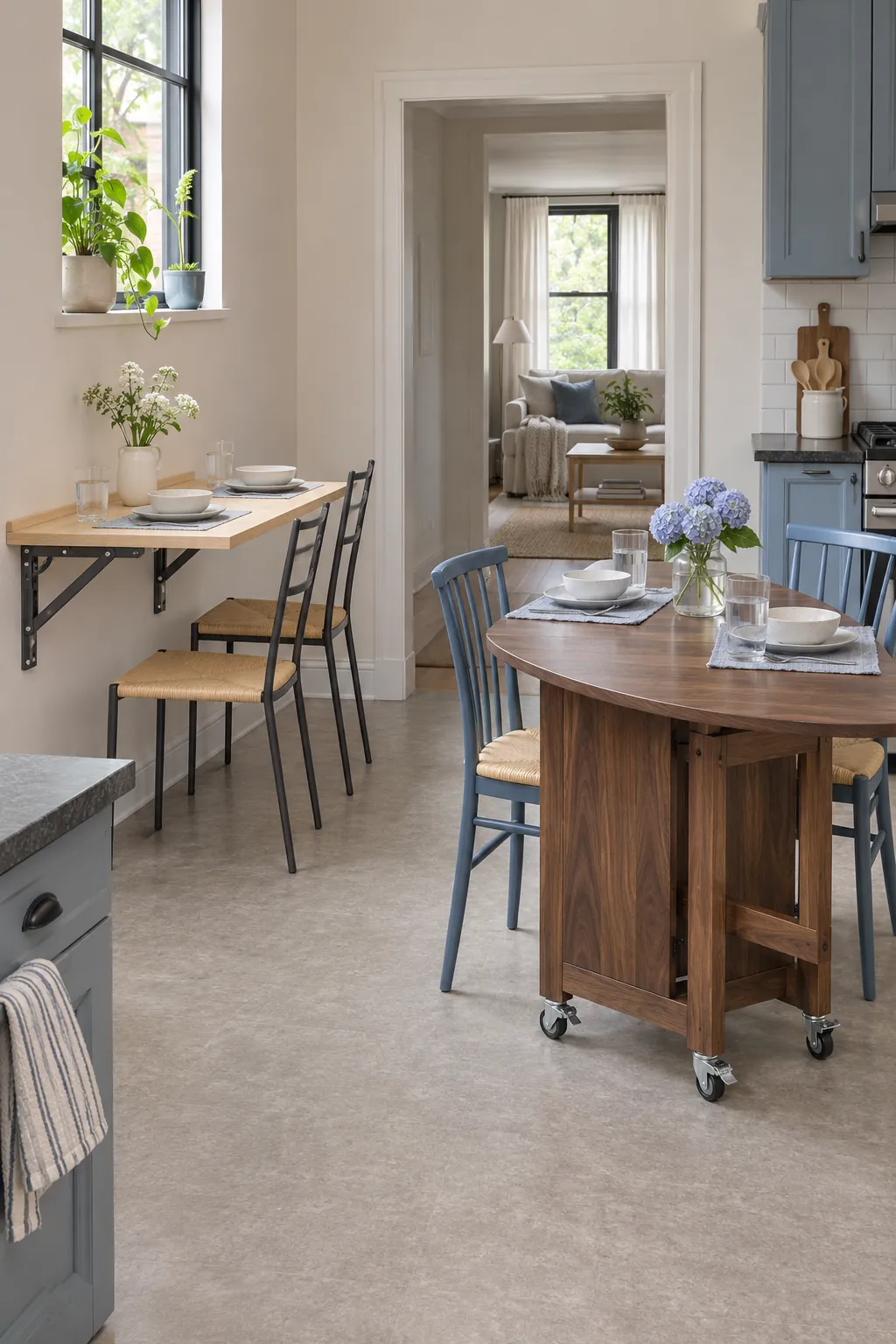
A folding table saves space only when its closed form, opening motion, and support system suit the kitchen. A wall model removes legs from the floor but depends on the building. A freestanding model asks for more stored depth but can move when the room or lease changes.
Compare the Closed Footprint
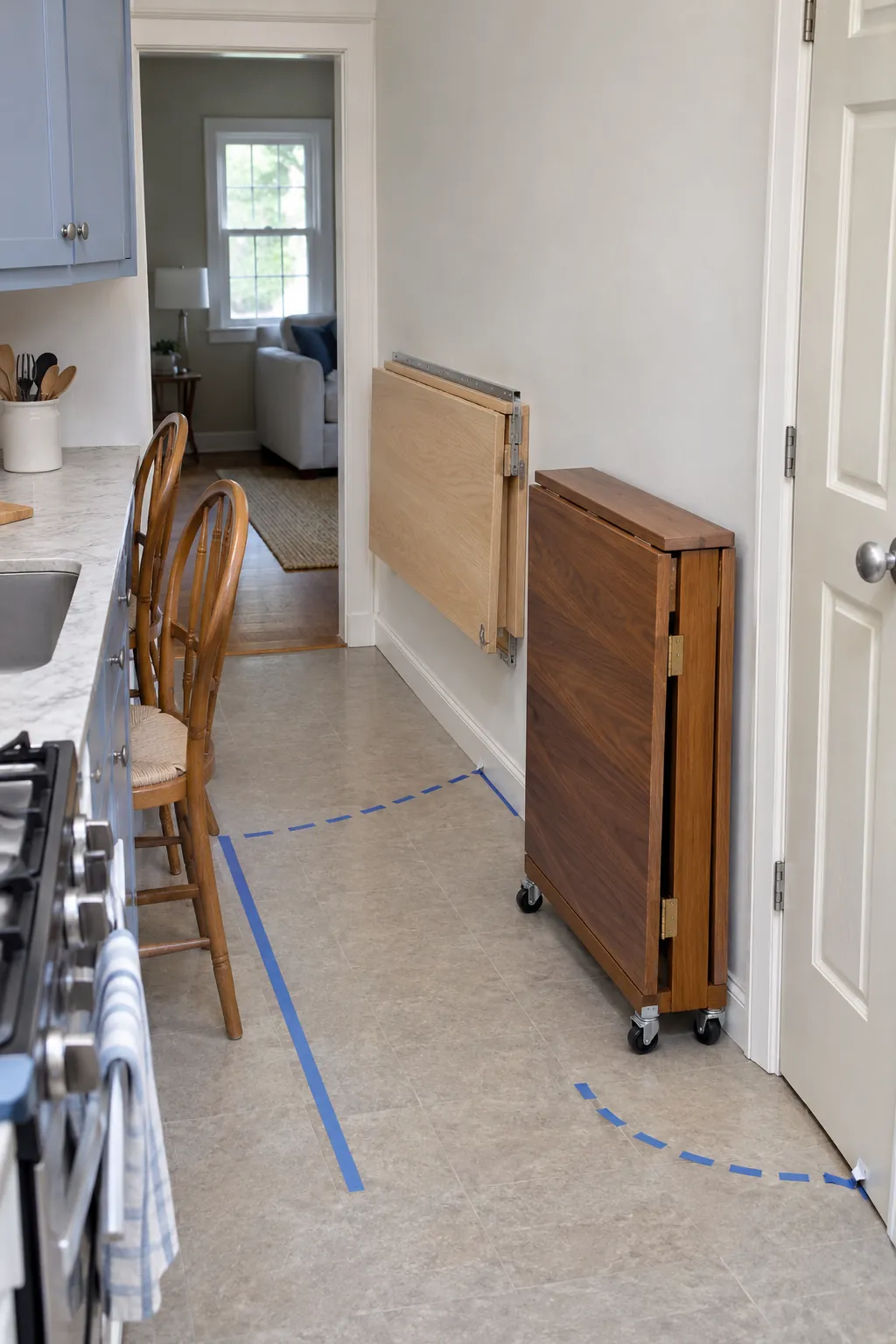
Measure how far each table projects when closed, including handles, hinges, feet, and stored leaves. A wall mounted folding table may become a shallow panel, while a freestanding model usually keeps a cabinet or leg package on the floor. Mark both outlines before deciding.
Also map the opening arc and chair positions. A thin closed table can still be awkward if its top blocks a door while unfolding. The useful footprint includes every stage between closed and ready.
Wall Tables Keep the Floor Clear
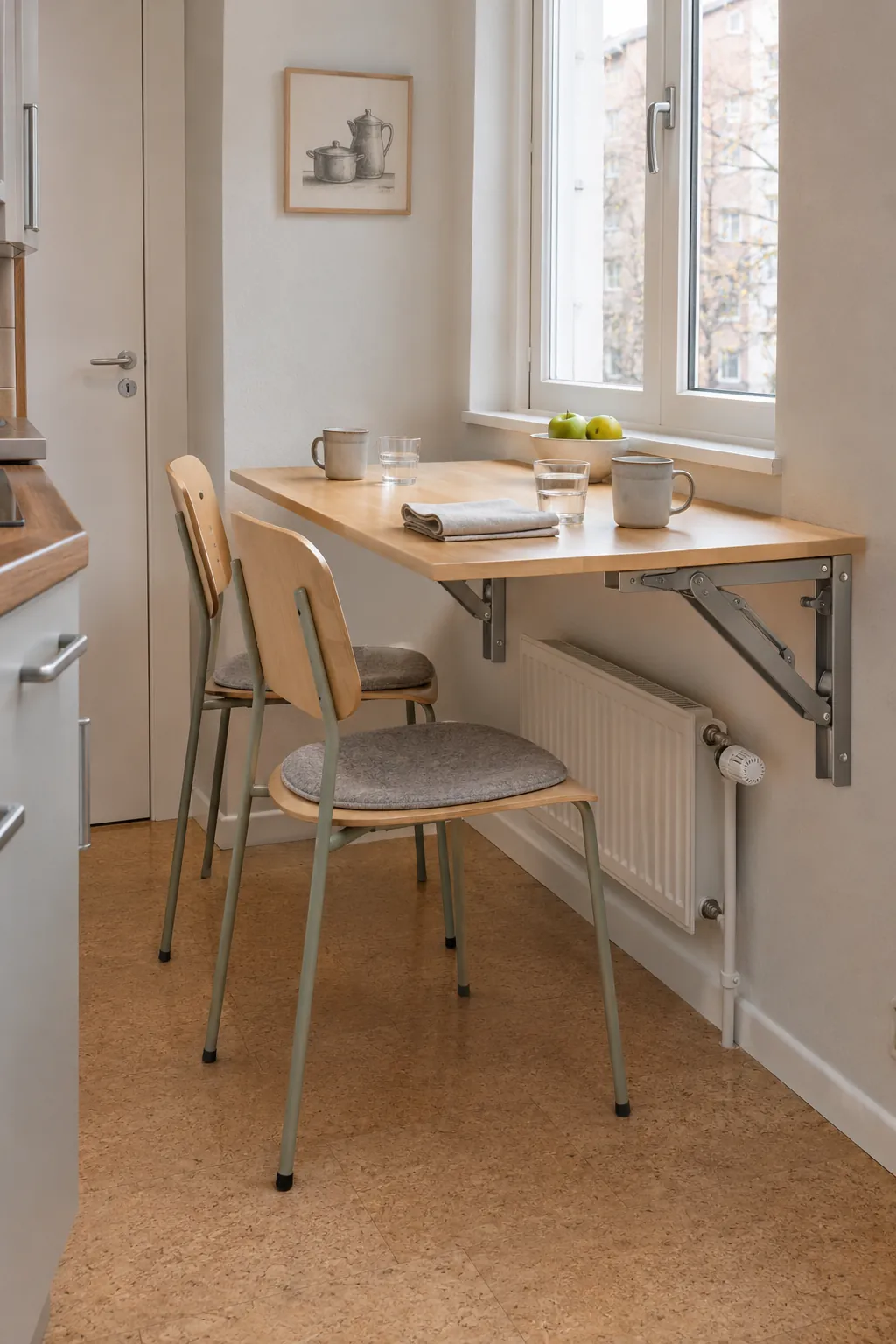
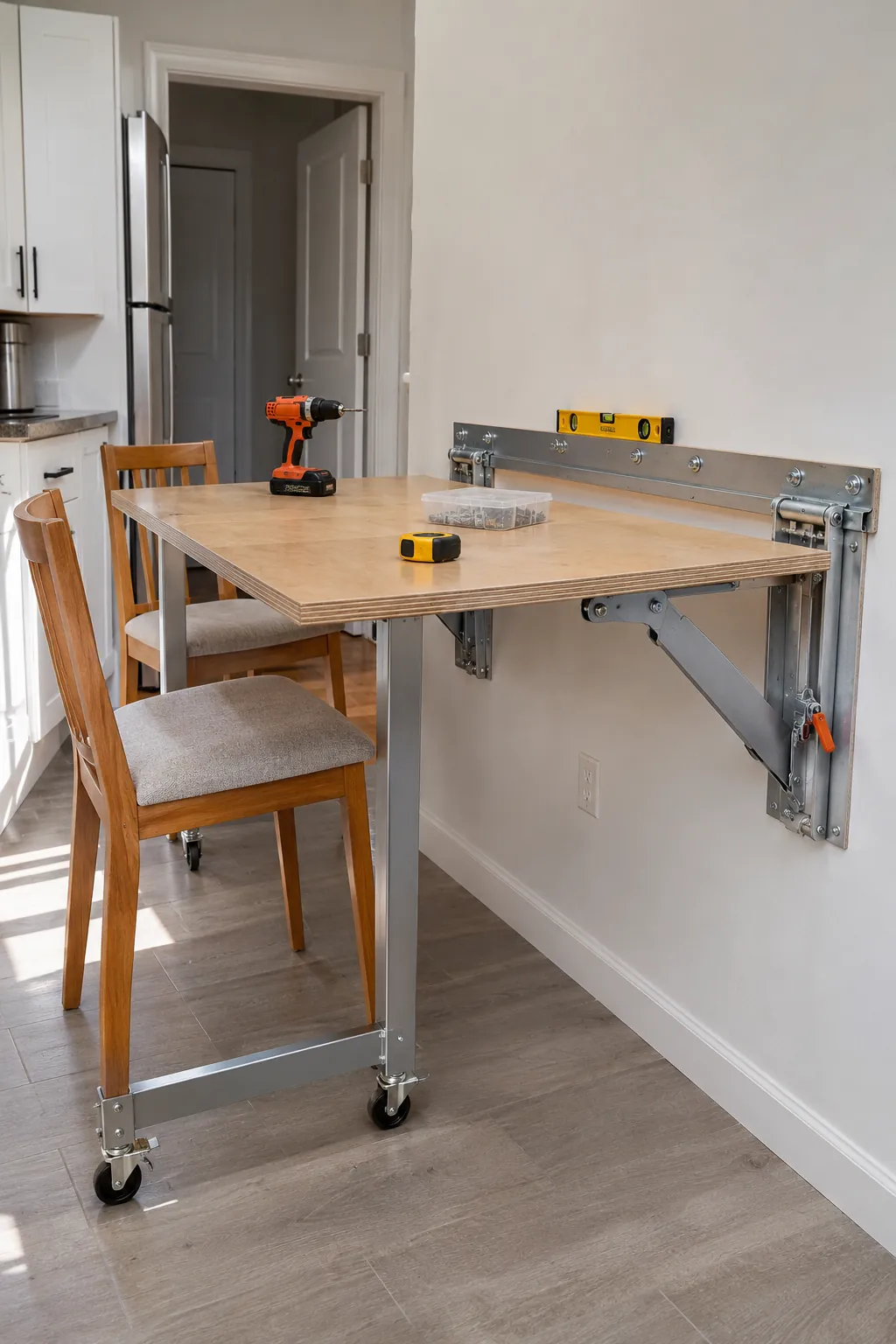
A properly supported wall table leaves the area below open for feet, cleaning, and circulation. It works well in a fixed breakfast spot where the correct height and location are known. The top can also provide temporary prep space when the kitchen counter is short.
The wall determines whether this advantage is realistic. Fasteners and brackets must connect to suitable structure and carry the table, dishes, and normal leaning forces. Drywall alone is not a substitute for a verified support method.
Installation Is the Main Wall Table Tradeoff
Confirm stud, masonry, pipe, and cable locations before drilling. The mounting rail must be level, and every support must lock fully before the top is loaded. Follow the manufacturer limits and use a qualified installer when the wall structure is uncertain.
Renters also need written permission for substantial anchors. Even when installation is allowed, removal may require patching and paint. A wall table is best when the location will remain useful for a long time.
Freestanding Tables Move With the Kitchen
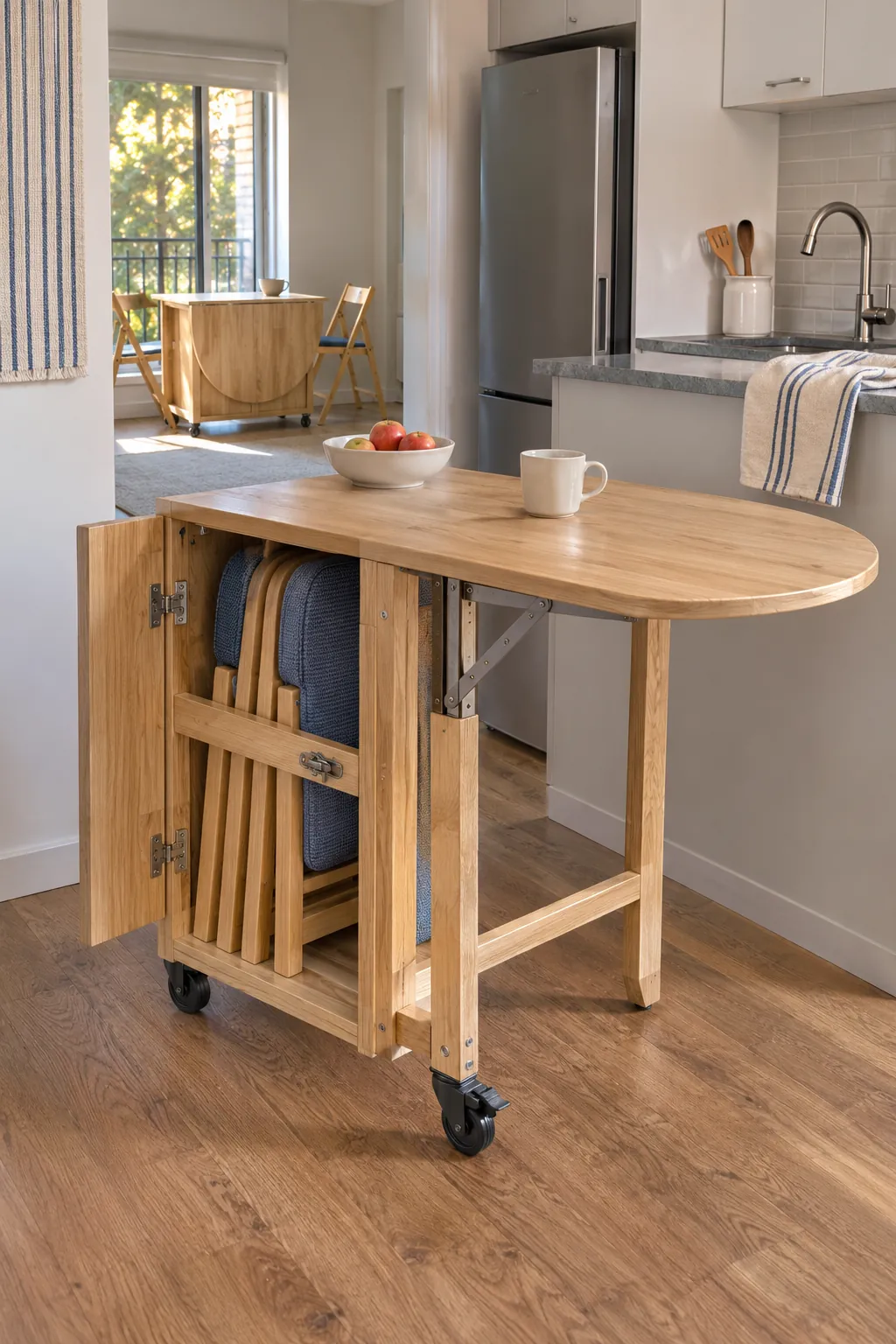
A freestanding folding table can shift between a wall, window, and open room. It can leave with the tenant and does not depend on hidden wall structure. Some designs also store leaves, chairs, or kitchen items within the base.
The tradeoff is a floor based support package that remains when the top folds. Check caster locks, leg braces, and tipping resistance in every configuration. A mobile table must stay stable when someone rises from a chair or presses near an edge.
Test Stability and Working Height
Open the table completely and engage every bracket, gate, or brace. Press gently near several edges and watch the supports rather than only the top. The surface should settle without twisting, rolling, or pulling away from the wall.
Then test the intended task at the real height. Dining, laptop work, and food preparation place different demands on the surface. Confirm knee space, chair reach, and safe clearance from hot appliances before using the table as a second counter.
Choose Fixed Efficiency or Flexible Placement
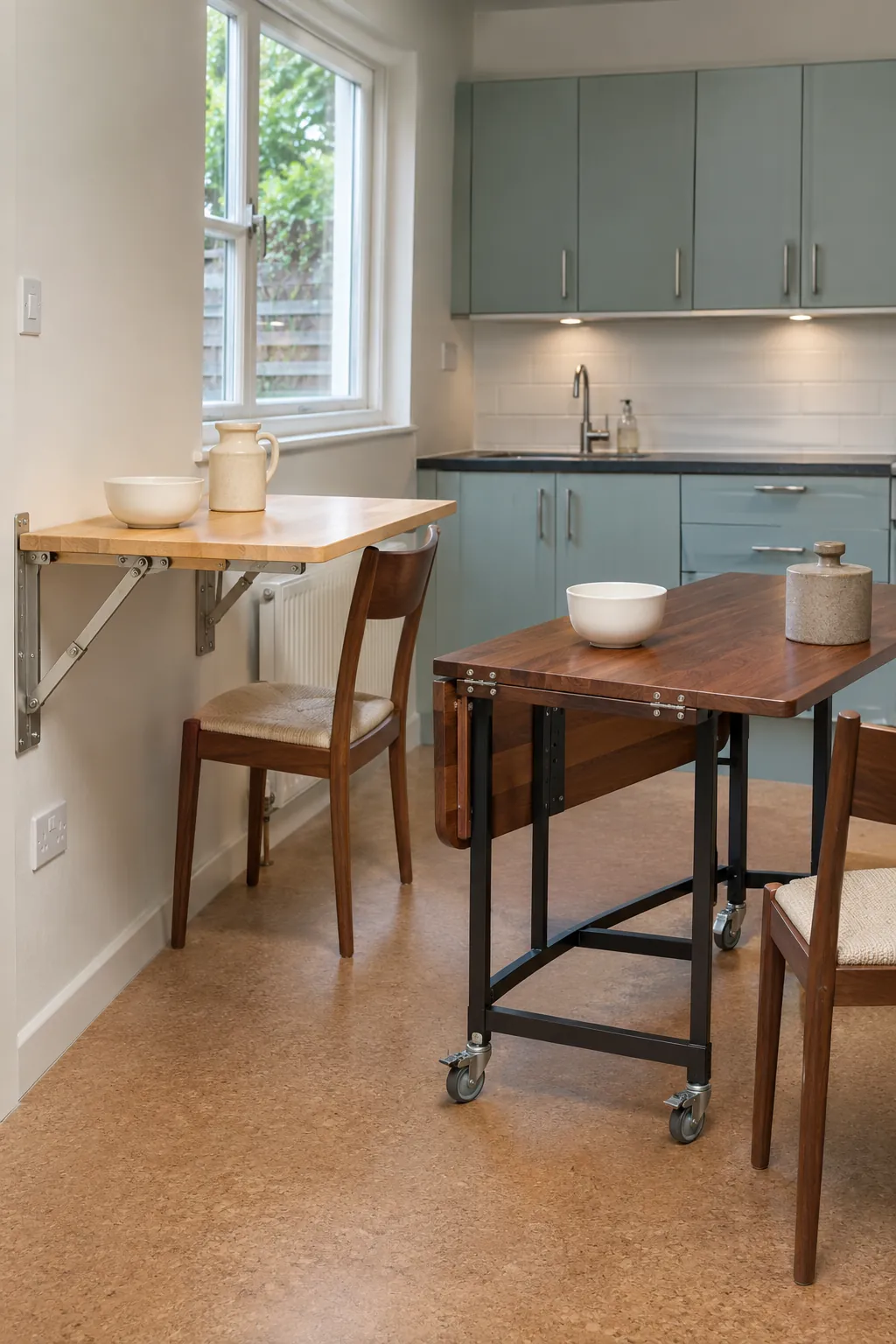
Choose wall mounted when the wall is suitable, the location is permanent, and clear floor area matters most. Choose freestanding when rental limits, changing layouts, or multipurpose use make mobility more valuable. Neither format is automatically safer or smaller.
Live with taped closed and open outlines for a day. Walk through the kitchen, open every door, place the chairs, and simulate the full setup routine. The better table is the one that removes a daily obstacle without creating a new installation or stability problem.