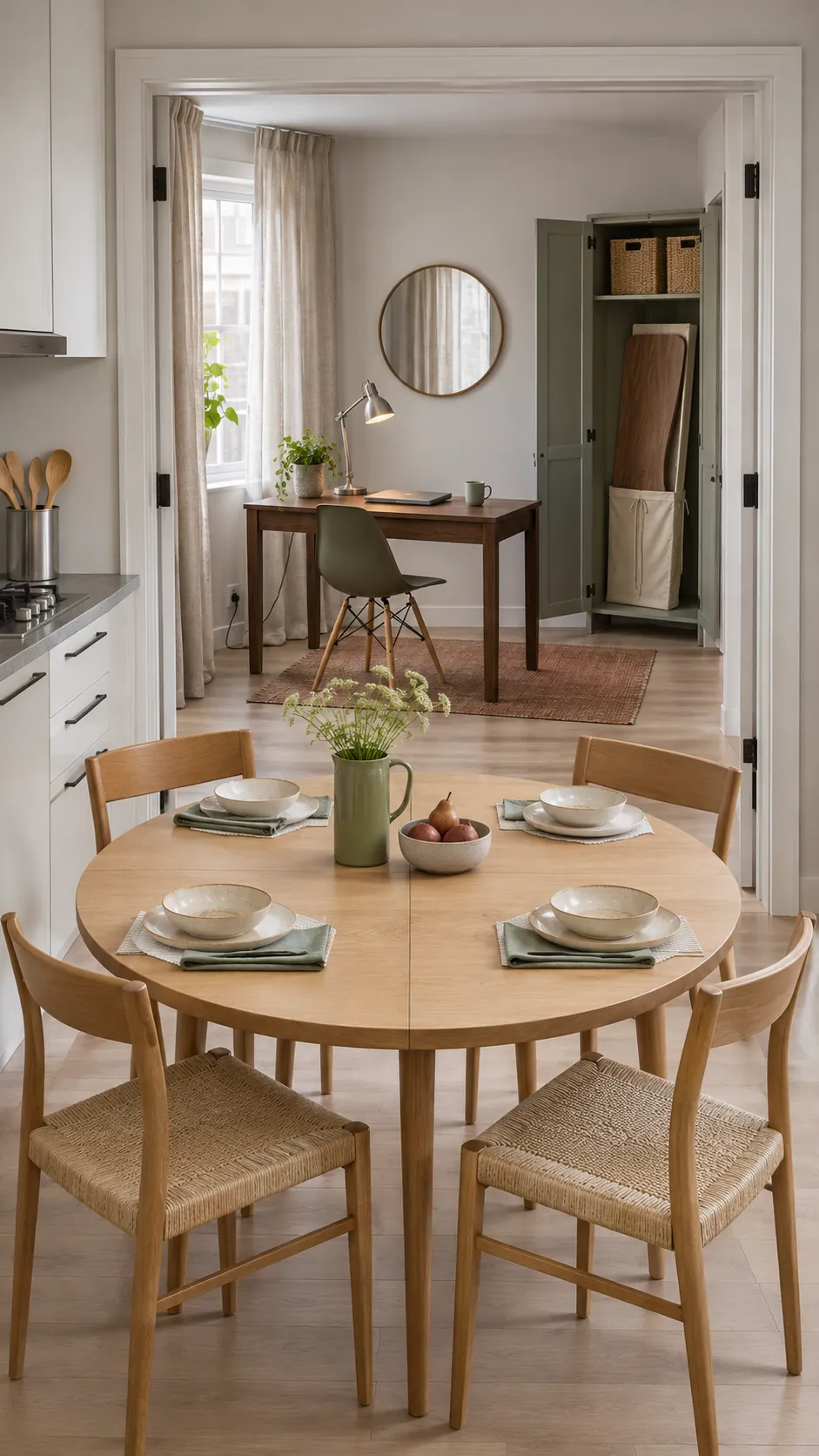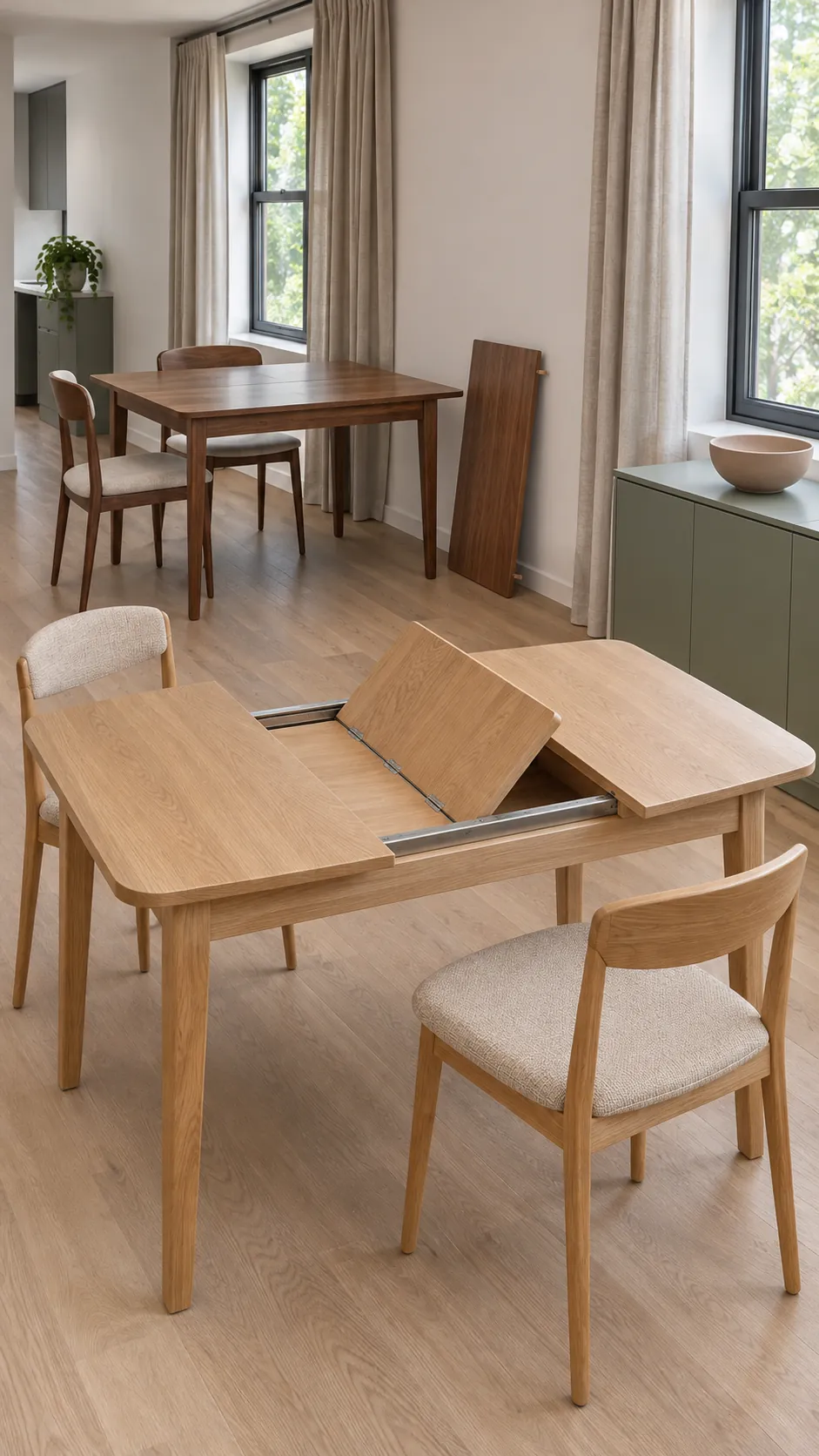
An extendable table can save space only when its expansion method fits the way you live. A self storing butterfly leaf removes a storage chore, but its folded hardware adds weight and bulk beneath the top. A separate leaf keeps the mechanism simpler, yet the panel needs a safe home somewhere else.
The better choice depends on more than floor area. Setup frequency, lifting ability, knee clearance, storage conditions, and repair access all matter. Compare the two systems in both their closed and expanded forms before judging either one.
How each extension system works
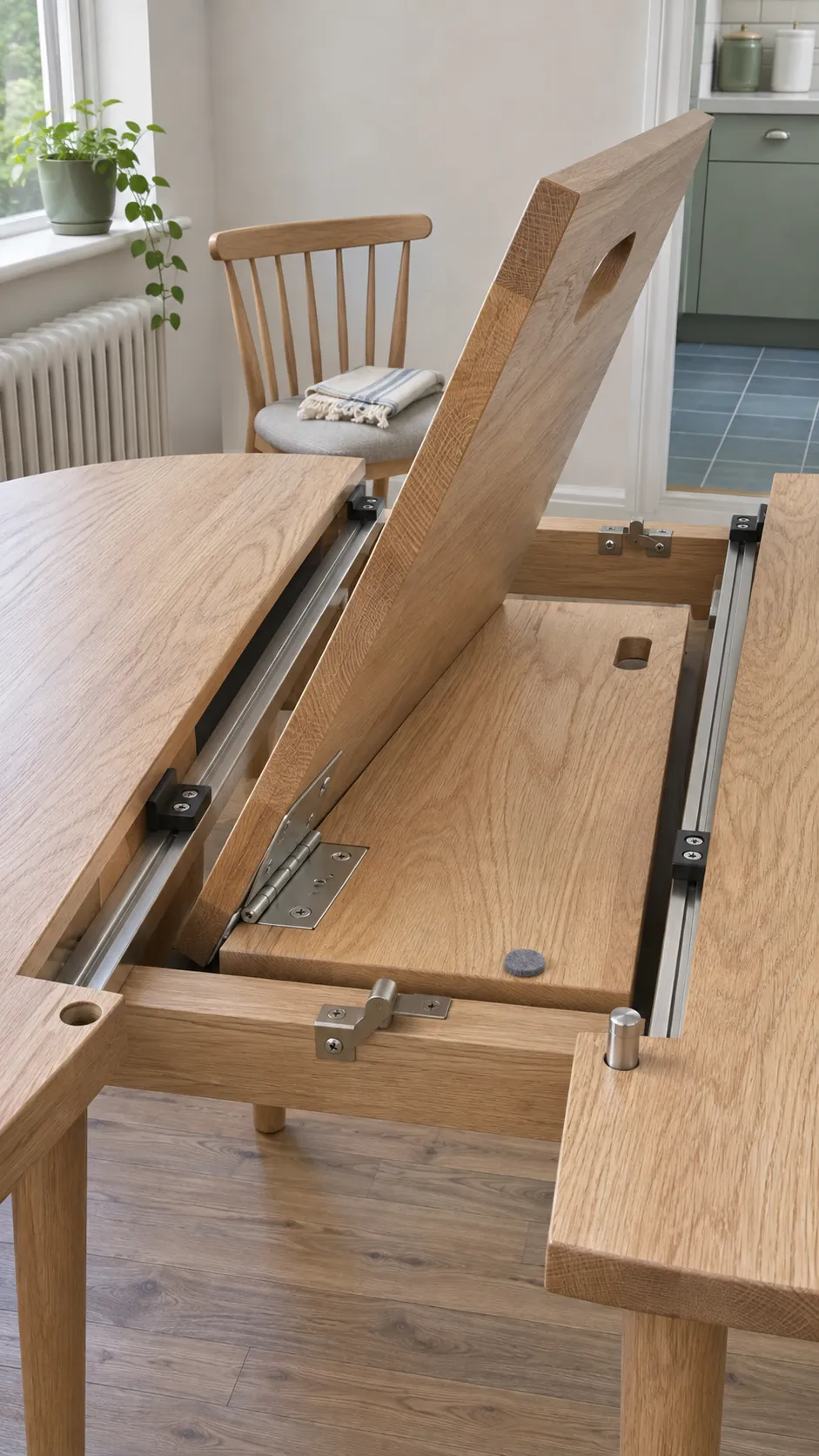
A butterfly leaf folds along a center hinge and stores beneath the tabletop. You pull the table halves apart, lift the folded section, open it, and align it with the surrounding top. The leaf stays with the table, so every required part is available when guests arrive.
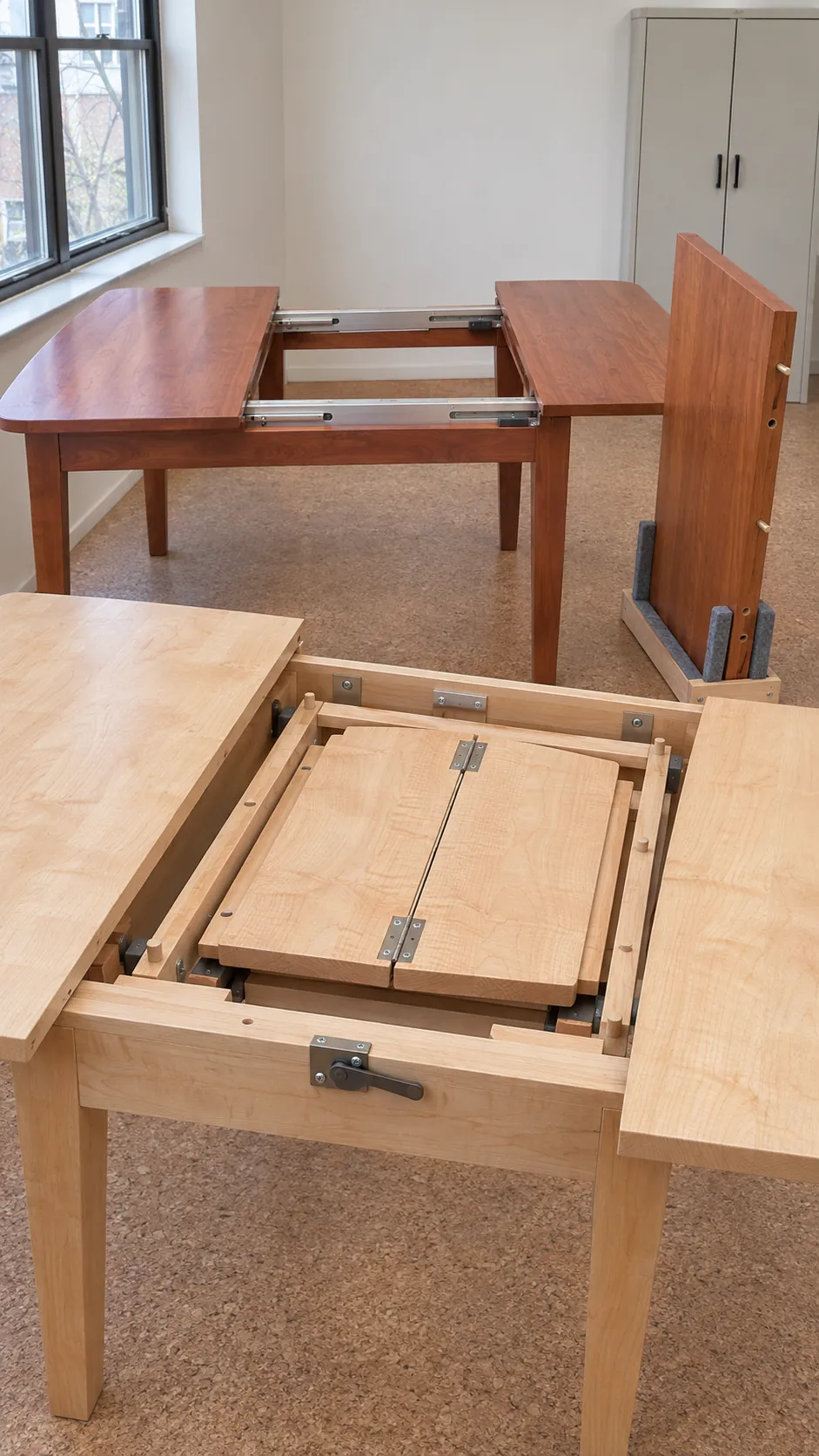
A separate extension leaf is a removable solid panel. After opening the table, you carry the panel from storage and place its alignment pins into matching holes. This arrangement can use fewer moving parts under the top, although some designs still have complex rails and locks.
Daily convenience and setup effort
A butterfly leaf is convenient when the table changes size often. There is no panel to retrieve, and the complete process happens at the table. The tradeoff is that lifting and unfolding a connected leaf can feel awkward if the hinge is heavy or the opening offers little room for your hands.
A separate leaf divides the work into clear steps, but someone must carry and align it. Ask for the panel weight and dimensions, then simulate that movement between the storage location and table. A lighter panel may be easier than a stiff butterfly mechanism, so the self storing option is not automatically the easiest.
Closed size and legroom
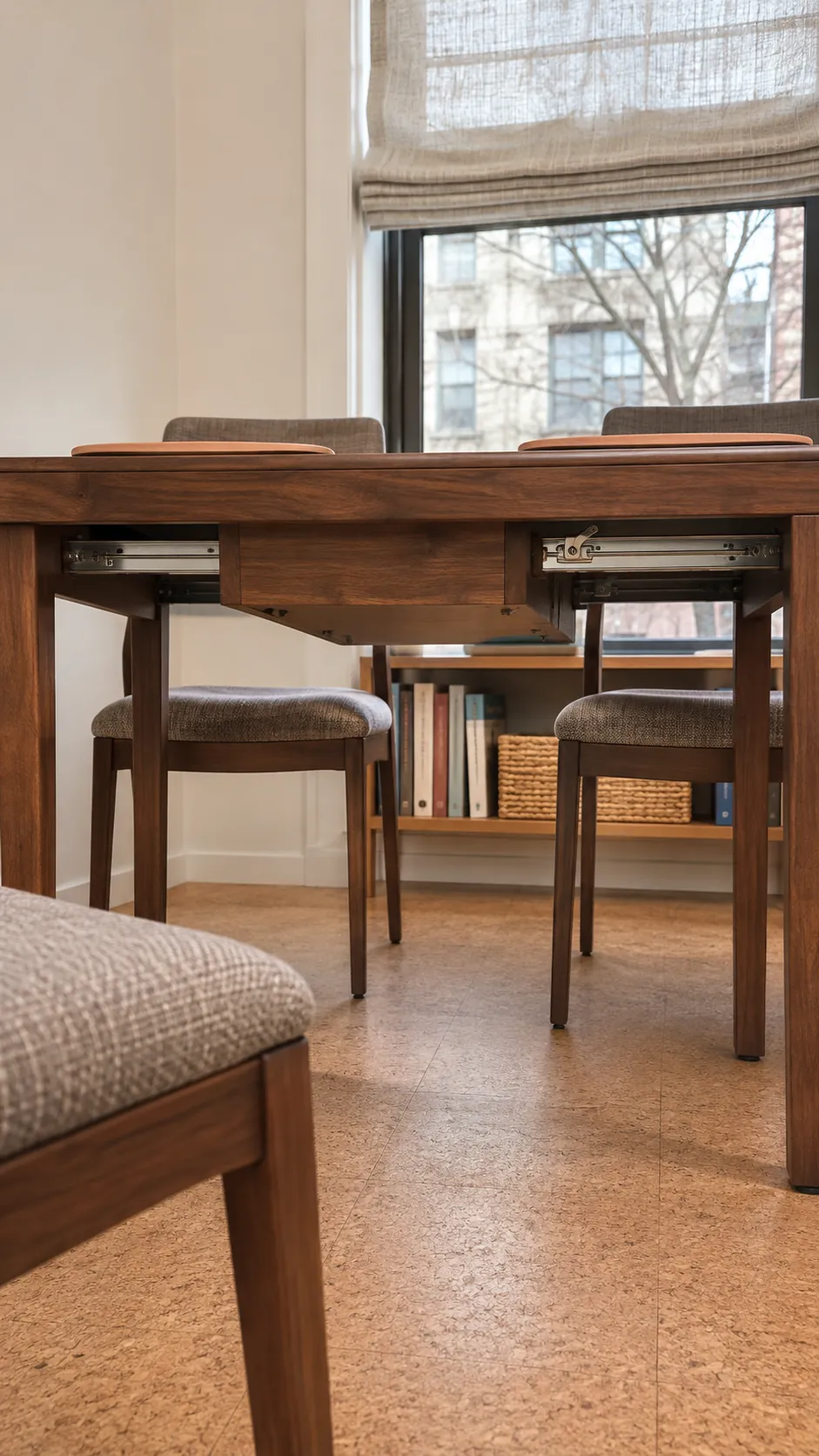
The folded butterfly leaf occupies space below the tabletop. That storage pocket can make the apron deeper or place hardware near seated knees. Sit at every intended position while the table is closed, especially at the ends where compact designs may concentrate their supports.
A separate leaf table can have a shallower underside because the panel lives elsewhere. This can improve knee clearance and reduce visual bulk, but the result depends on the rail design. Measure floor to apron clearance rather than assuming one system will always feel lighter.
Storage and finish protection
A butterfly leaf solves the separate storage problem and keeps its finish in the same room conditions as the table. It can still collect crumbs or dust inside the cavity, so check whether the area is accessible for cleaning. Confirm that the folded leaf locks securely and does not rattle during normal use.
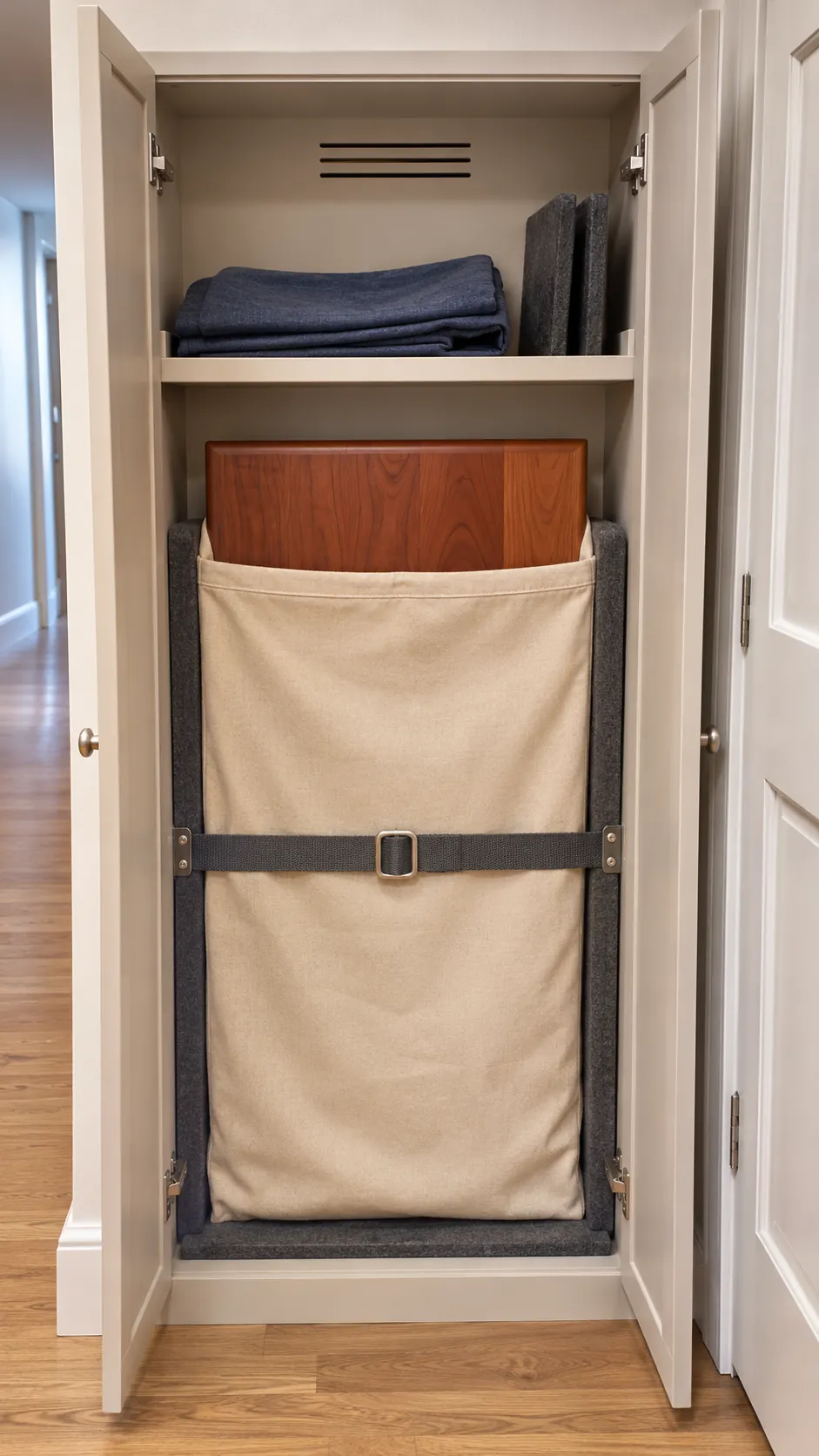
A removable leaf needs dry, supported storage away from heat and impact. Use a breathable cover and soft separators, and follow the maker’s required orientation. The panel can develop a different colour from the exposed tabletop over time, so avoid strong sunlight on only one part of the set.
Stability, cleaning, and repair
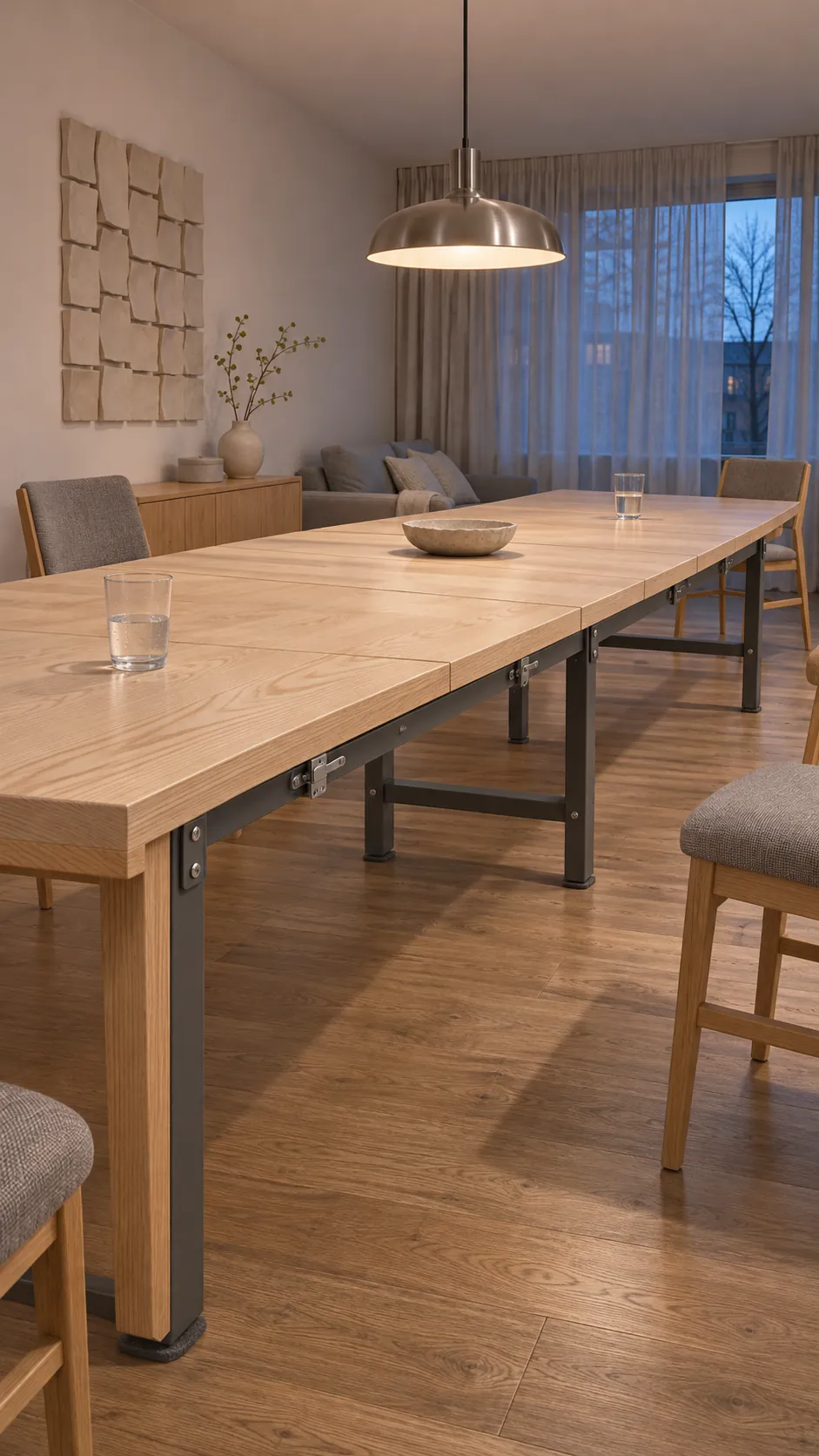
Both designs can be stable when their rails, locks, and supports are well made. Check for level leaf edges, tight seams, and resistance to sideways movement. Test the largest configuration because long spans expose weak supports more clearly than the closed table does.
Butterfly systems have hinges and folding joints that may need adjustment, but the parts remain attached and are harder to misplace. Separate leaves avoid a center hinge, although their pins and sockets can be damaged during carrying or storage. Ask whether replacement hardware is available and whether routine tightening requires common tools.
Which leaf type fits your home
Choose a butterfly leaf when you expand the table often, lack safe panel storage, and can operate the connected mechanism comfortably. It is especially useful when every closet already has a job. Verify the closed apron depth and cleanability before accepting the convenience.
Choose a separate leaf when you value a simpler looking underside, have a suitable dry storage spot, and do not mind carrying the panel. It can also make sense when you expand the table only for occasional gatherings. The final decision should come from a hands on setup test, real chair clearance, and a complete storage plan rather than the leaf name alone.