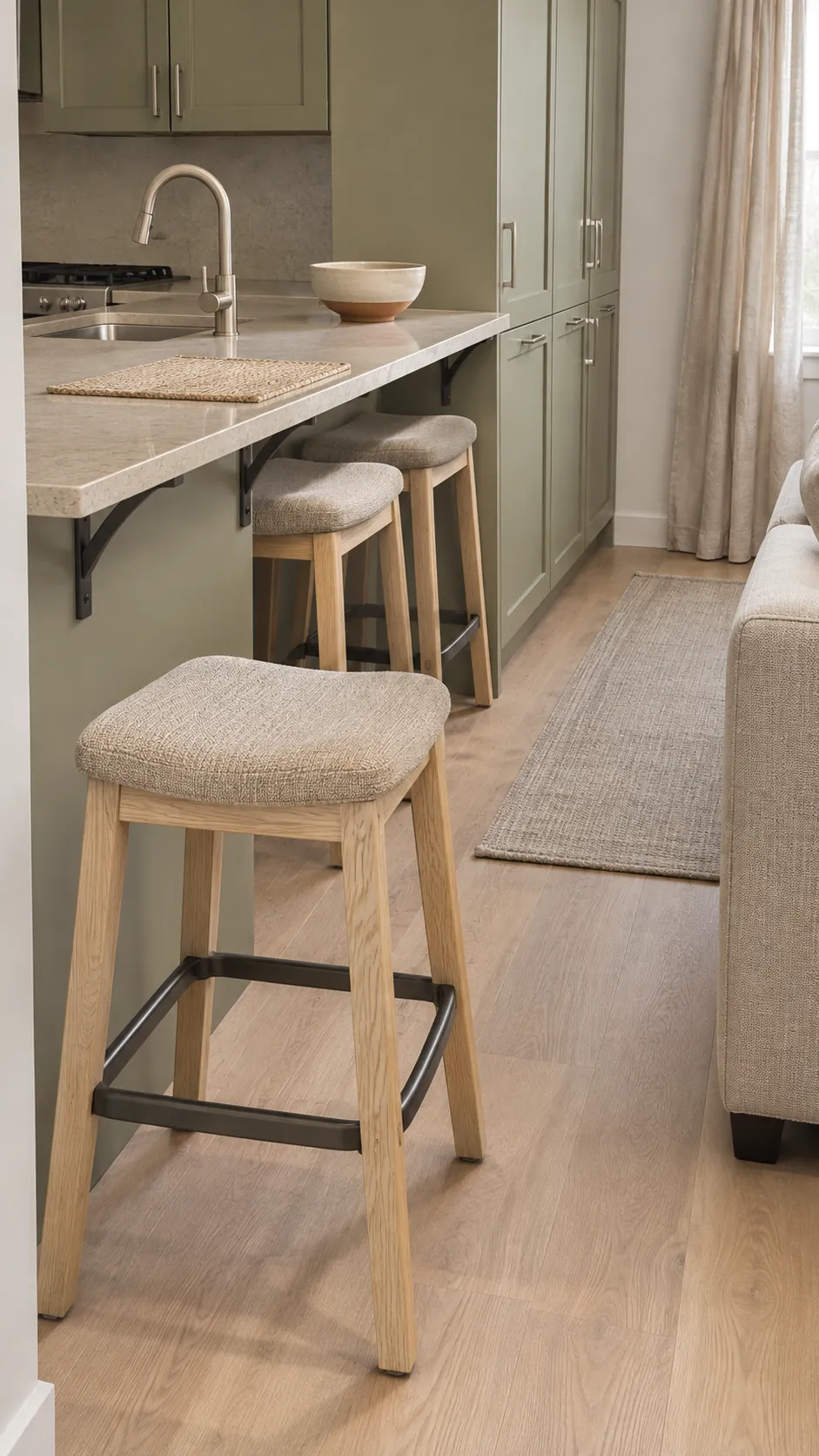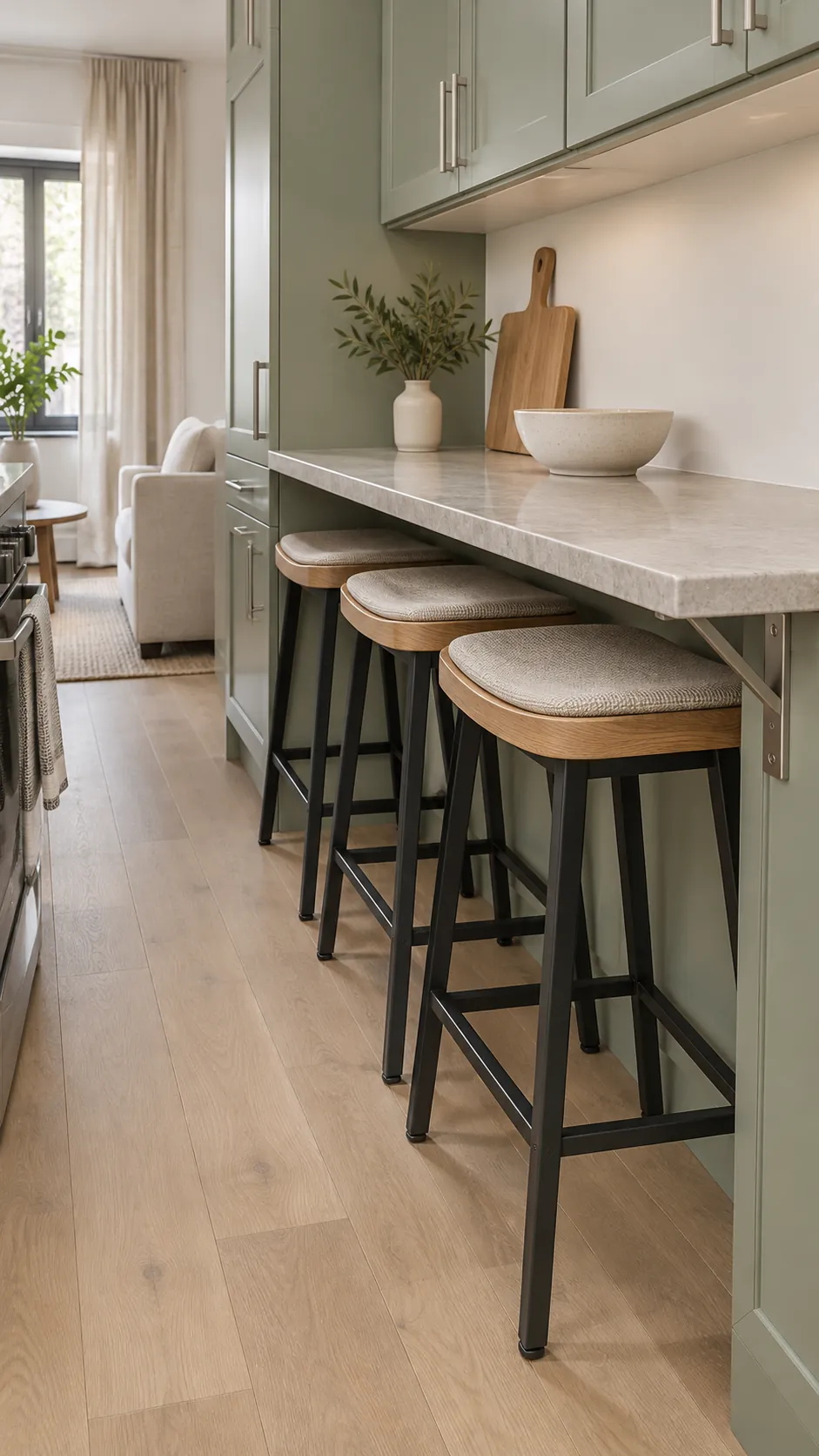
A backless stool can disappear beneath a kitchen counter, but only when its full frame fits. Seat depth is just one measurement. Angled legs, footrests, counter supports, and the space a person needs for knees can all extend beyond the visible overhang.
Measure the counter and the floor before shopping. Then compare those limits with the widest and deepest points of each stool, not the product’s seat alone. This prevents a compact looking design from becoming a permanent obstacle in a narrow kitchen route.
Measure the usable counter opening
Measure from the floor to the underside of the counter, not to the top surface. Note any apron, bracket, drawer, trim, or support that reduces the opening. Record the clear width between cabinet ends and the overhang depth from the cabinet face to the counter edge.
A shallow overhang limits knee space even when the stool fits underneath. Sit at a similar counter before buying if possible. The furniture can tuck away perfectly and still be uncomfortable during a meal.
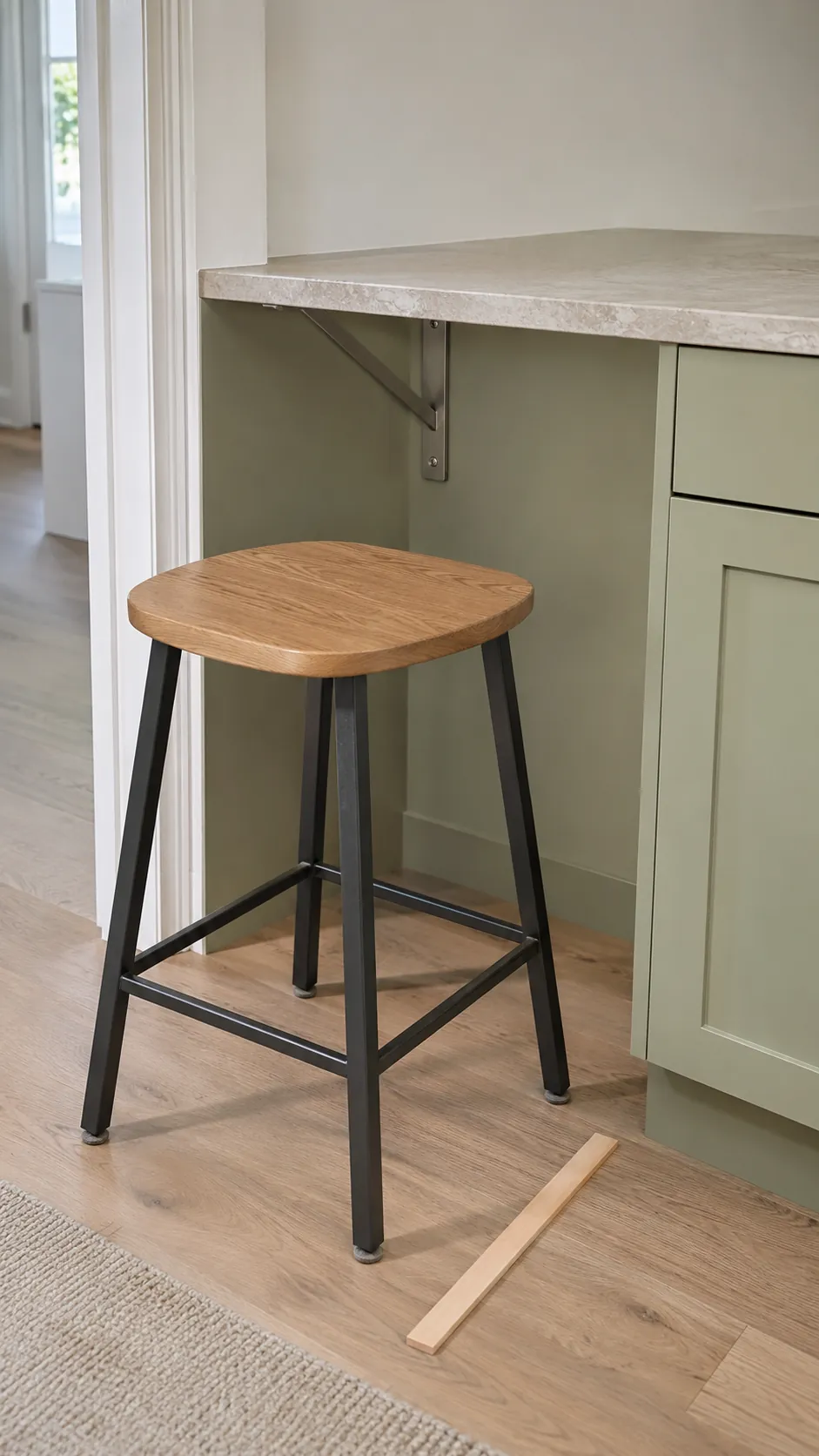
Match seat height to the underside
Counter stools and bar stools are not interchangeable. A stool made for a commercial height bar is usually too tall for a normal kitchen counter. Compare the seat height with the clear underside and allow comfortable thigh space.
Measure to the top of a firm seat or to the compressed level of a cushioned seat. Swivel mechanisms and thick upholstery can raise the body even when the frame dimensions look suitable. Test the exact model with shoes and ordinary sitting posture.
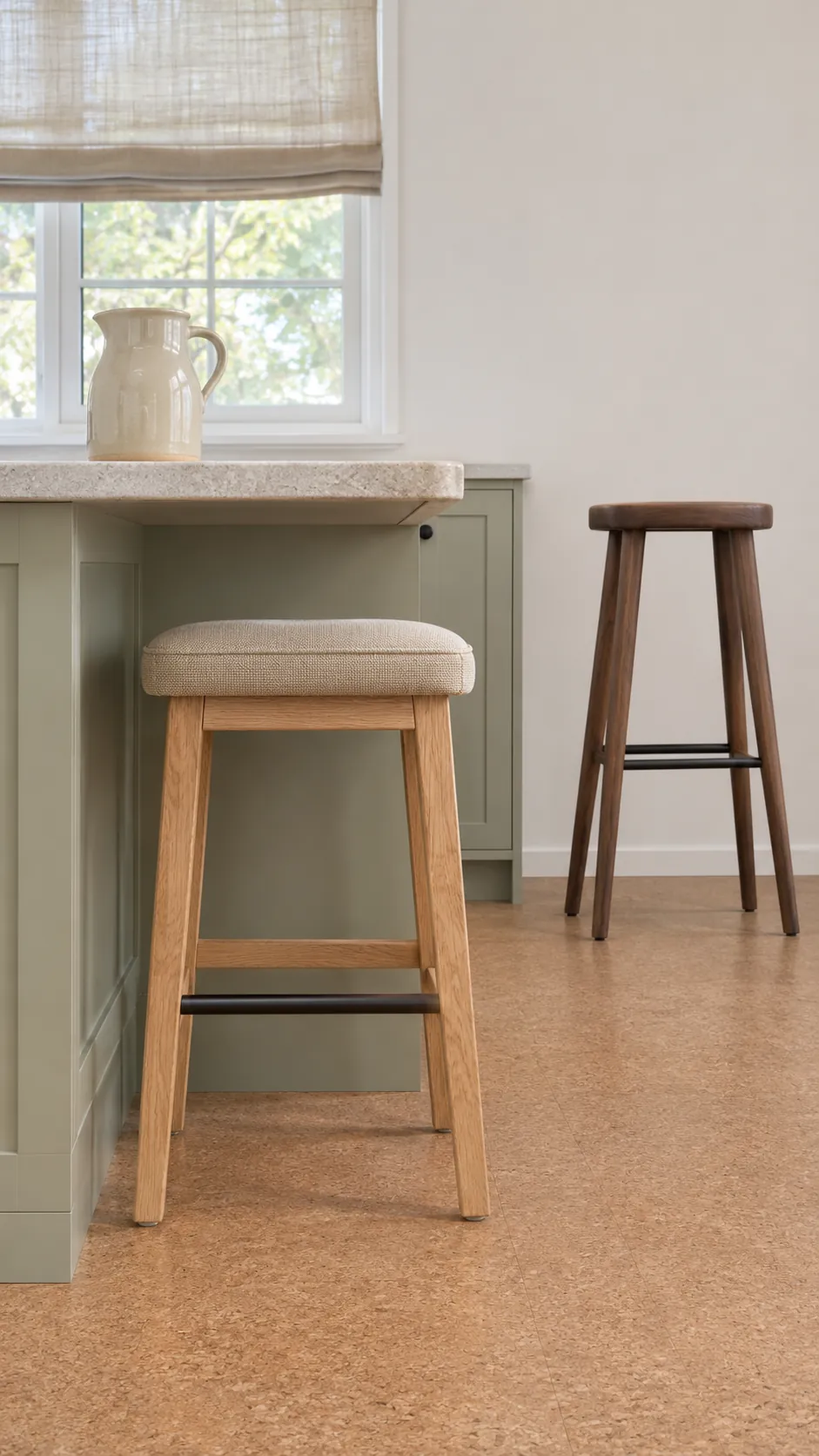
Check the complete stool footprint
Measure the widest points of the legs and footrests at floor level. Many stools flare outward for stability, so their footprint is deeper than the seat. A round seat can also sit on a square or triangular base that does not align neatly with the counter.
Mark the footprint beneath the counter and confirm that cabinet doors, nearby appliances, and the main walkway remain clear. Leave enough room to pull the stool out and turn before sitting. A frame that barely fits when empty may still block movement during use.
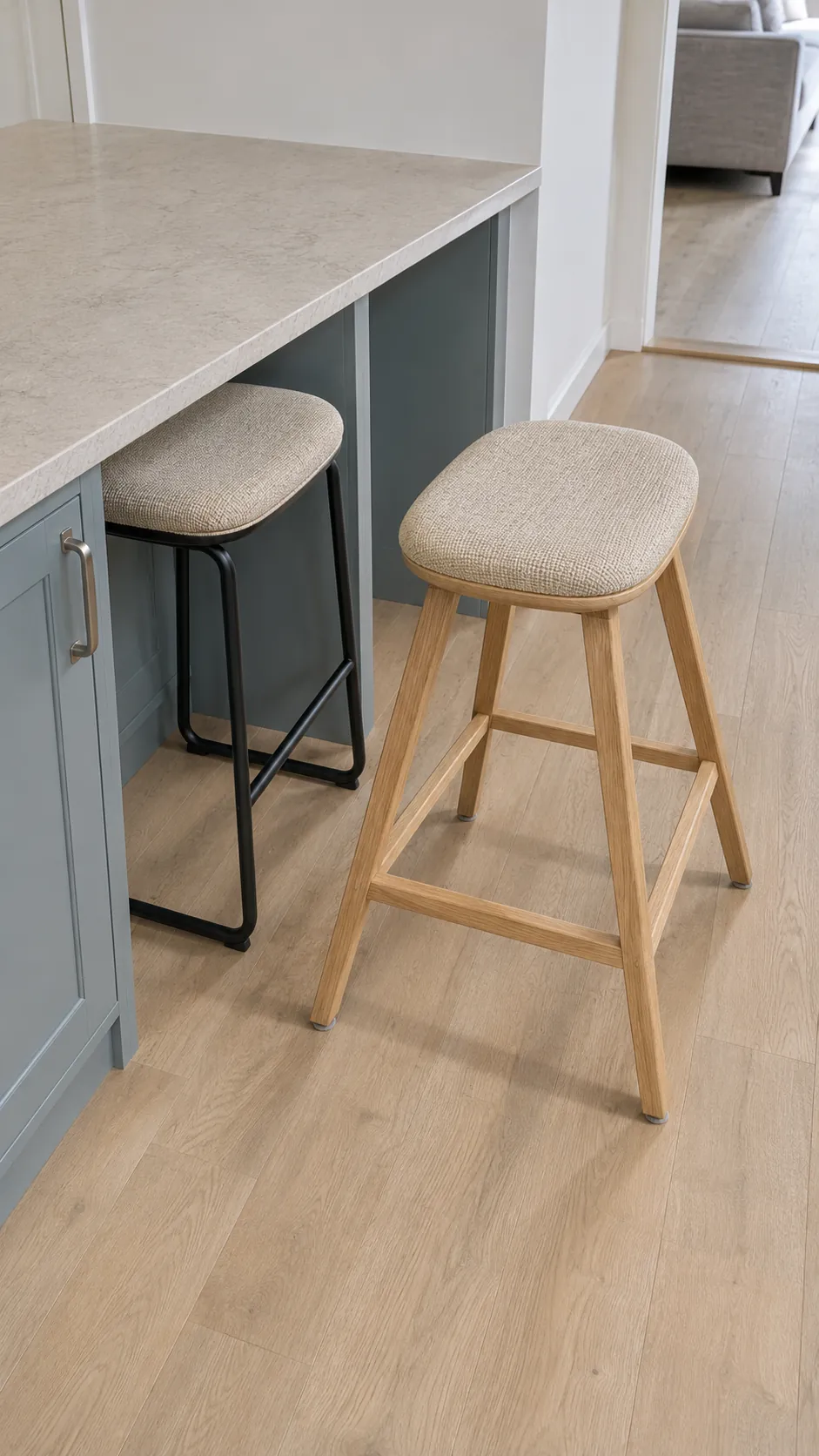
Balance a shallow seat with comfort
A very shallow seat saves depth but can feel insecure or tiring. Look for a gently shaped surface, a softened front edge, and enough width for stable posture. A small cushion adds comfort, although it can change seat height and may slide during entry.
Backless stools suit brief breakfasts and occasional seating better than long conversations for many people. If the counter is used for homework or extended meals, a low backed stool may offer a better compromise even if part of the back remains visible above the counter.
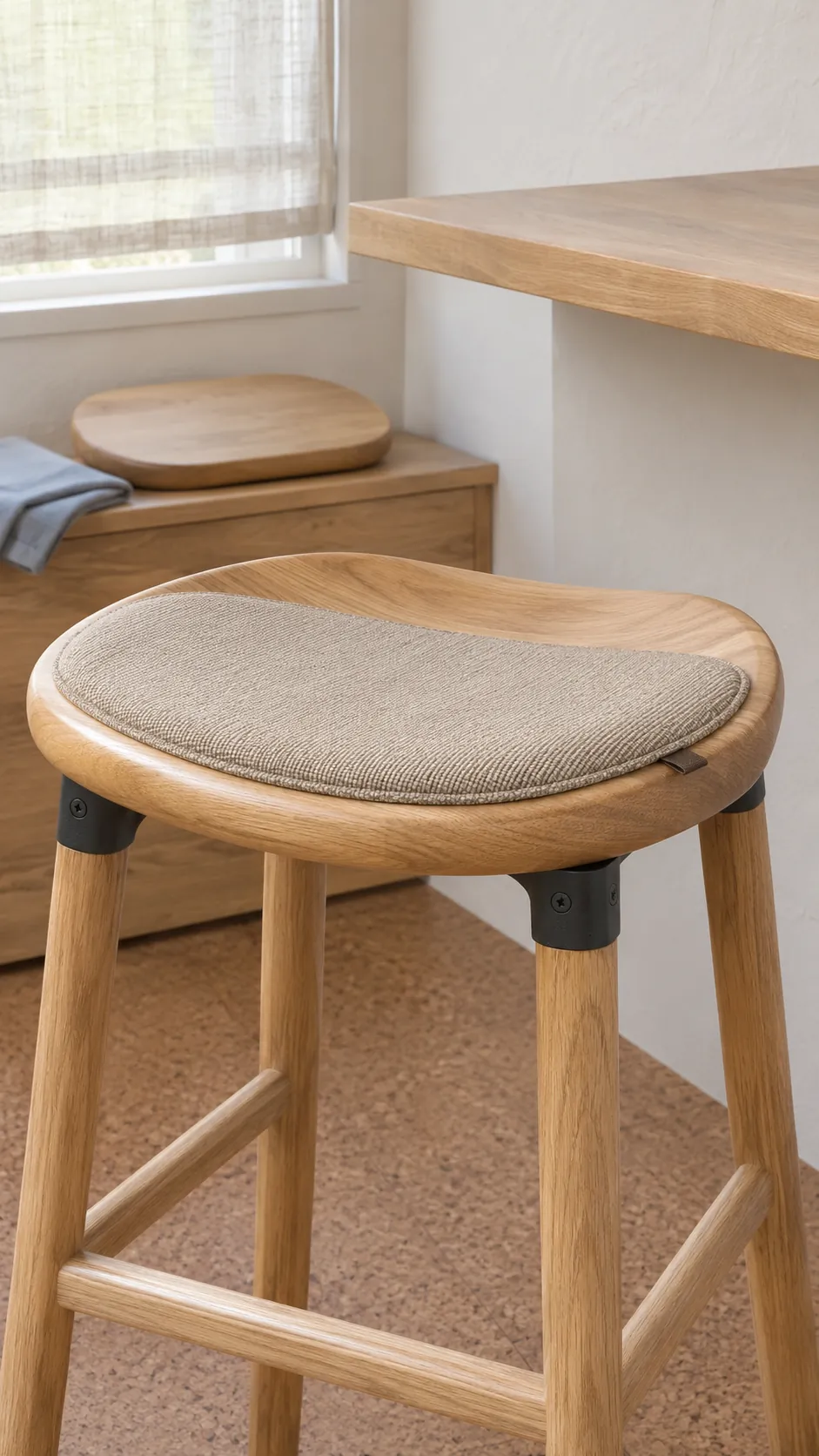
Choose a usable footrest and stable base
A counter stool needs a footrest because most people cannot place both feet on the floor while seated. Check its height, width, and edge shape. A narrow bar that presses into the foot can make even a well sized seat uncomfortable.
Test the stool for rocking on the kitchen floor and look for strong joints where the footrest meets the legs. Felt pads should protect the floor without making the base unstable. A swivel can simplify entry in tight spaces, but it adds moving parts and may encourage the seat to strike the counter.
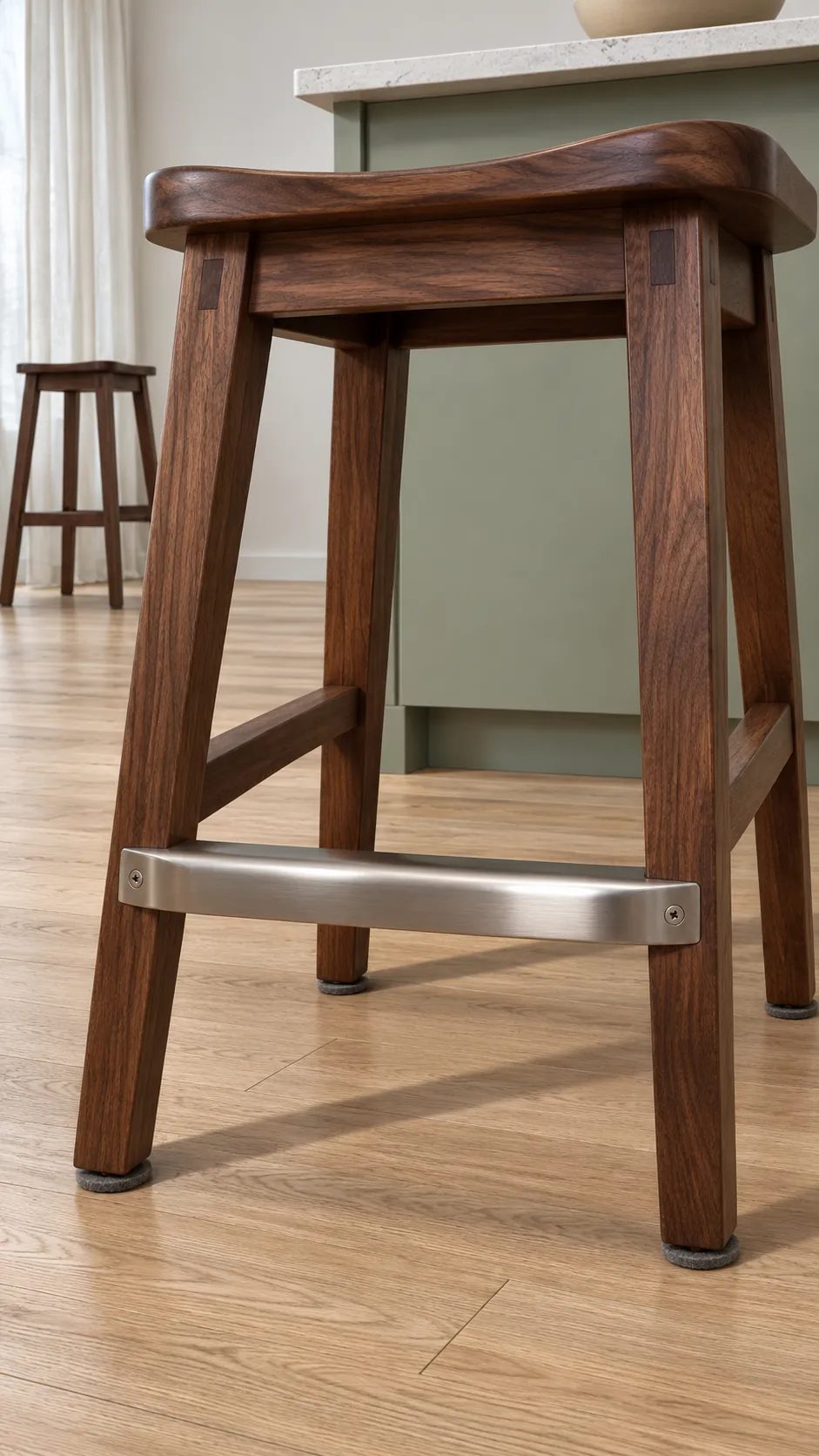
Test the whole setup before buying
Make a cardboard seat outline and a floor outline for the complete base. Place both beneath the counter, then check cabinet access, knee position, and the route behind the stool. Repeat the test with every stool you plan to use because several small bases can consume a long stretch of floor.
Choose the model that gives you the correct seat height, a stable footrest, and a frame that tucks away without reducing comfort beyond your intended use. A shallow kitchen counter may support quick seating, but it cannot create knee room that is not there. Honest measurement is more useful than the word compact on a product page.