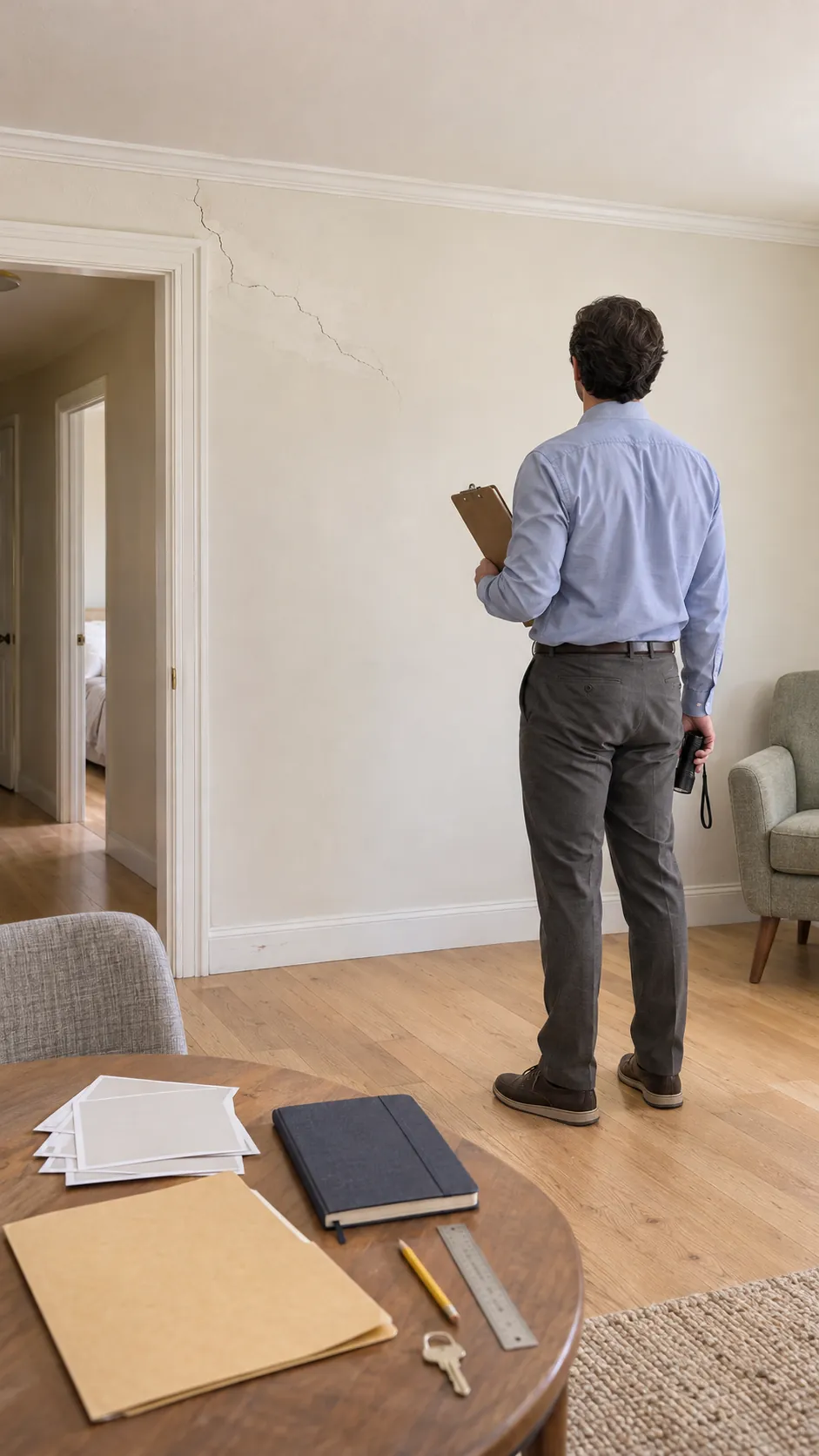
A crack that returns after fresh compound and paint is evidence, not just a surface flaw. The line may follow a loose drywall seam, seasonal framing movement, moisture, or a building condition that filler cannot correct.
Record the crack before repairing it again
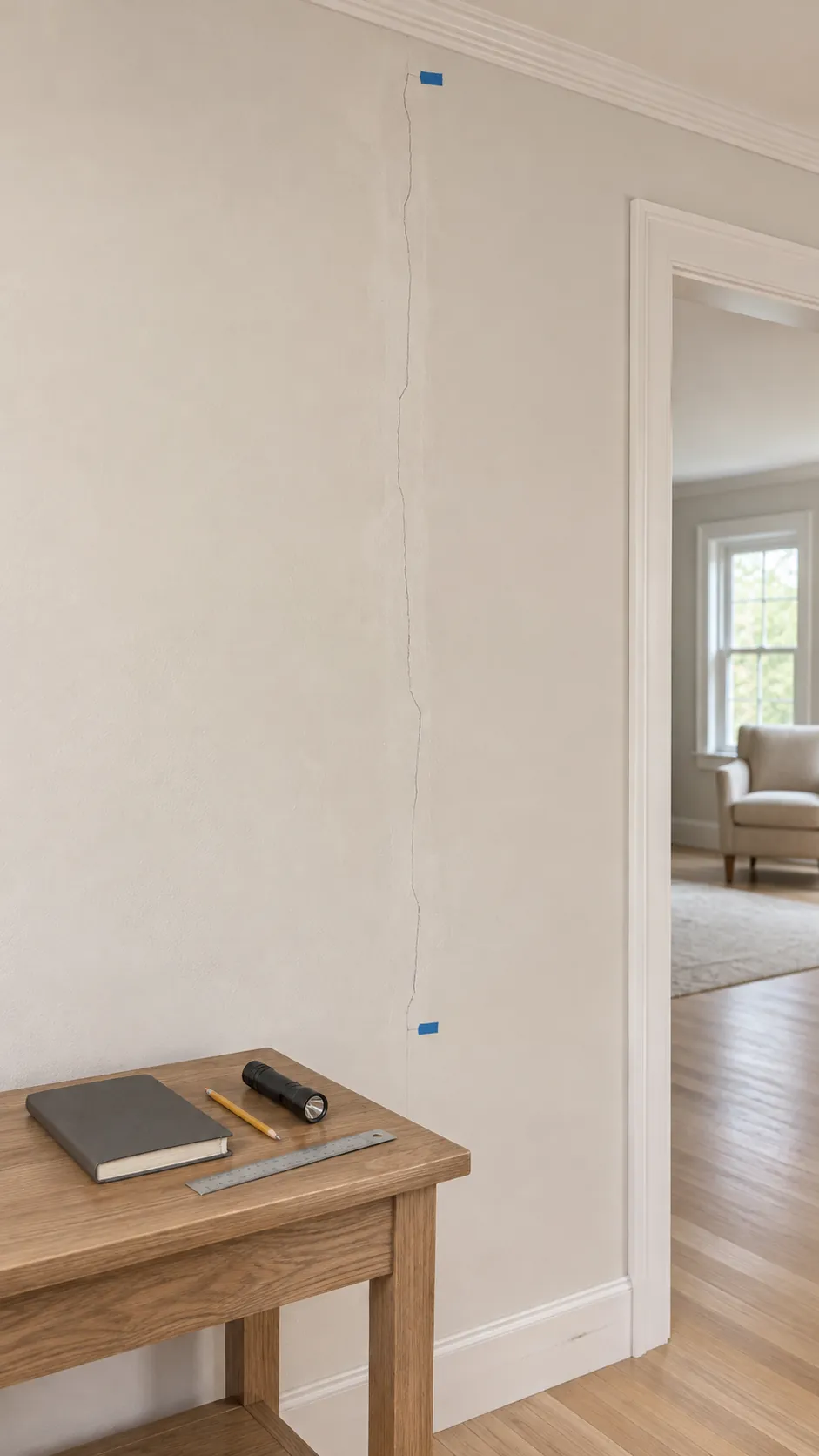
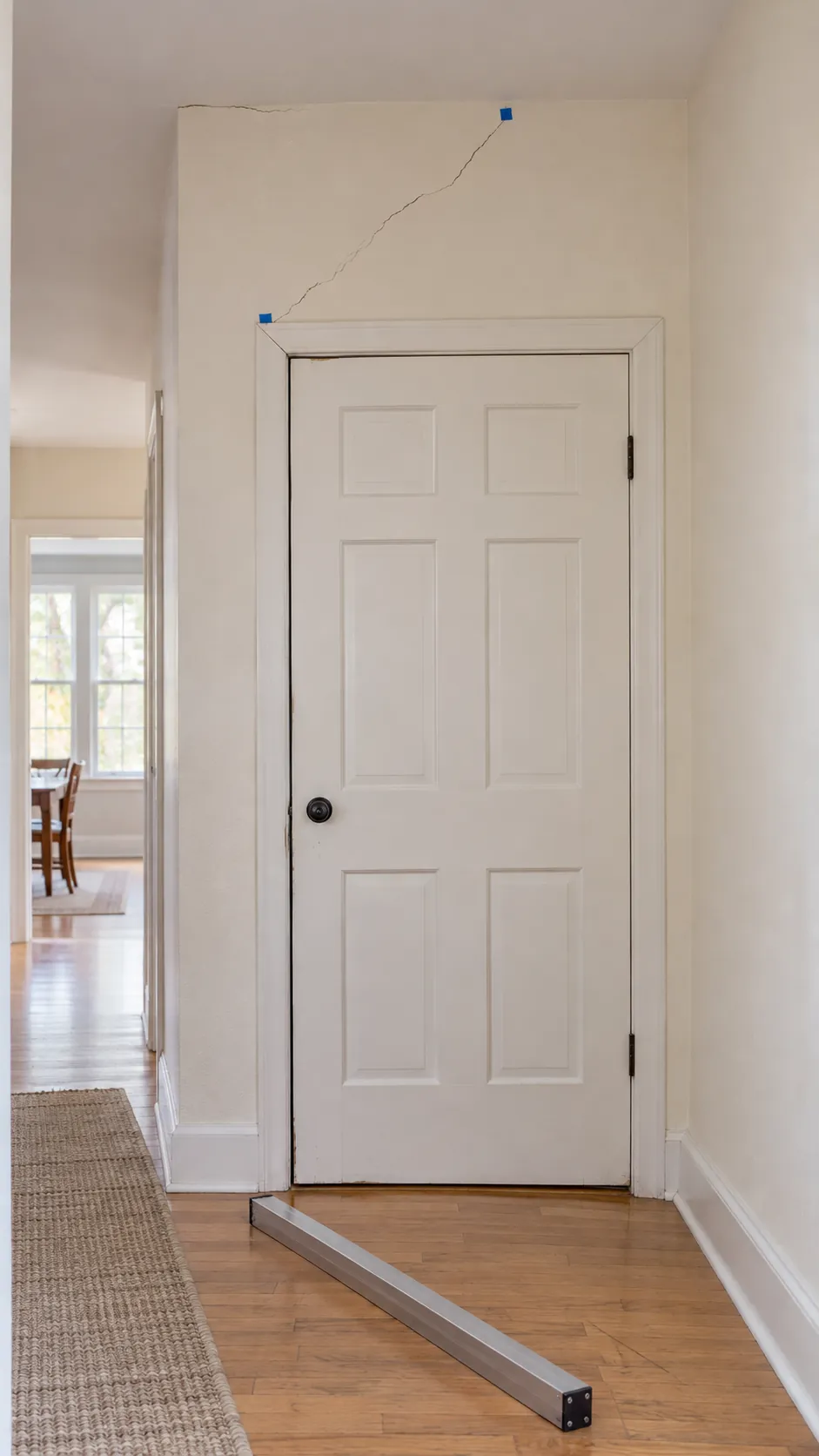
Photograph the full wall, then make closer images with a ruler beside the line and record the date. Mark the endpoints lightly and note doors that stick, new floor slopes, recent leaks, and whether the crack changes with the season. A simple record helps distinguish a stable finish defect from movement that is still active.
Read the location and pattern
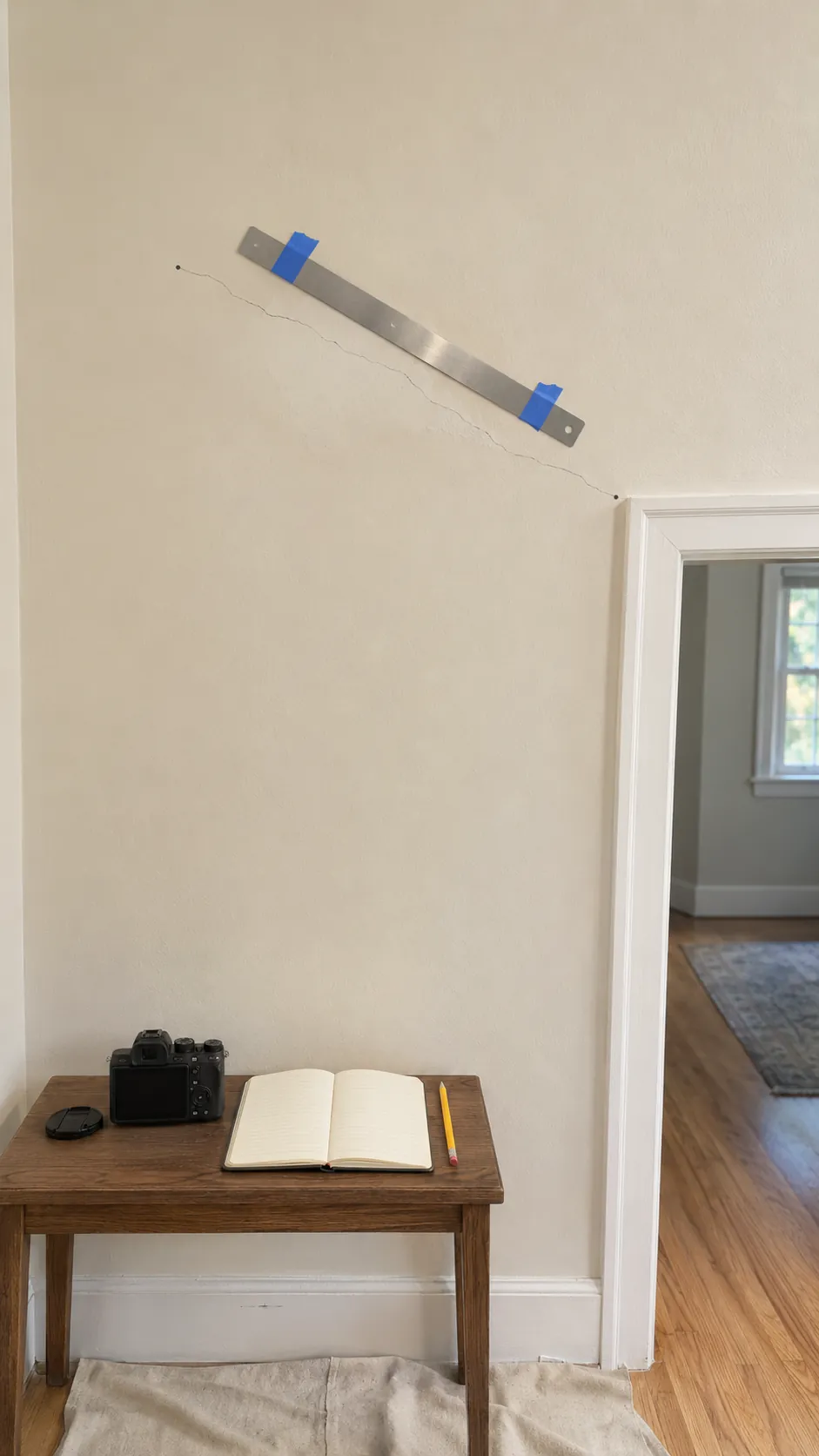
A straight line along a drywall joint often points to failed tape, insufficient compound, or movement between sheets. Cracks at door and window corners can concentrate stress, while a repeating ceiling seam may reflect framing movement or poor panel layout. A random diagonal line that crosses materials deserves more caution than a fine isolated paint crack.

Check for loose panels and moisture
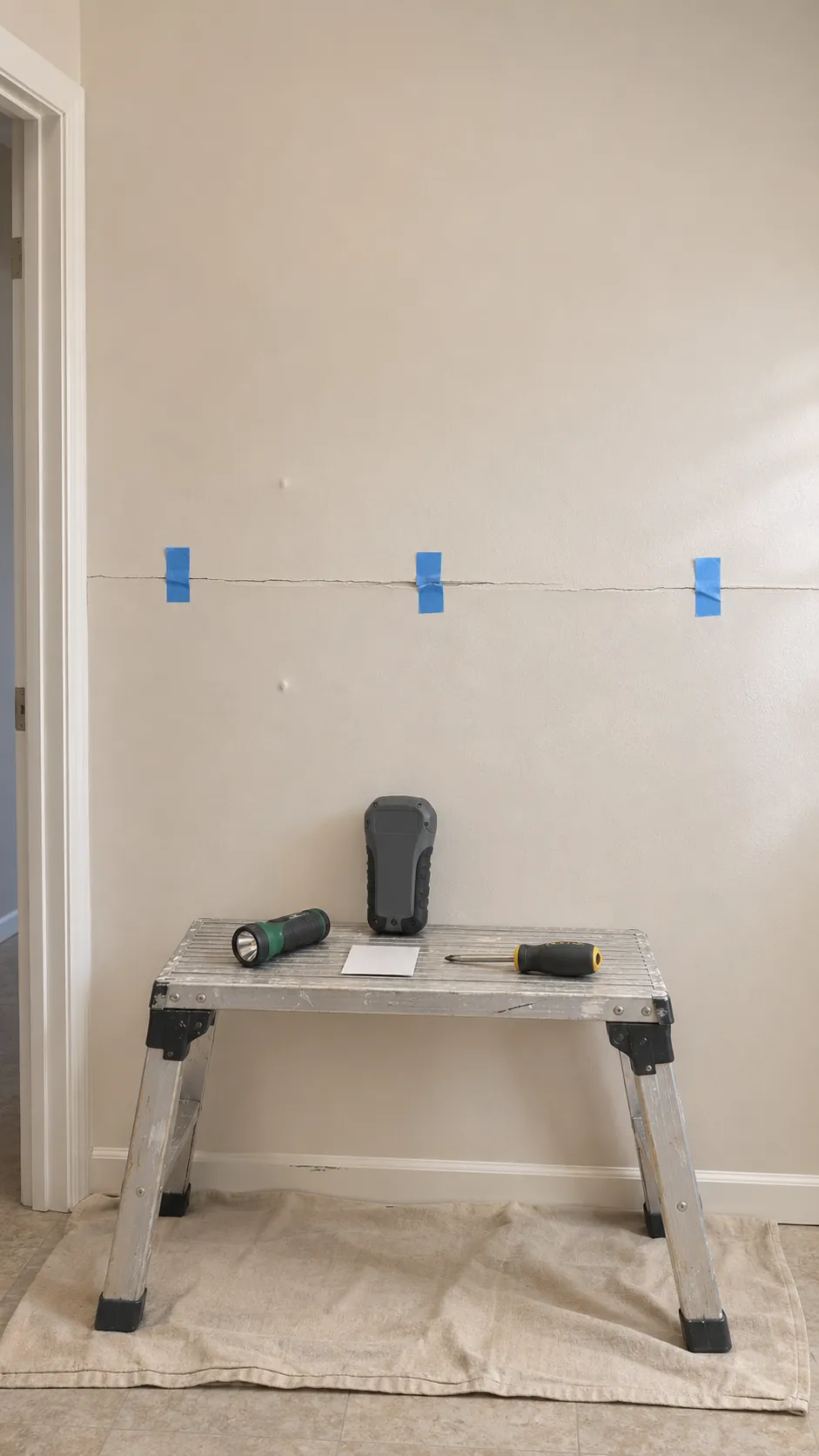
Press gently near the line and listen for movement without forcing the surface. Look for popped fasteners, discoloration, softness, musty odor, and gaps at nearby trim. Resolve leaks and unstable attachment before opening the crack, because new tape over moving or damp drywall is likely to fail again.
Rebuild a stable failed seam
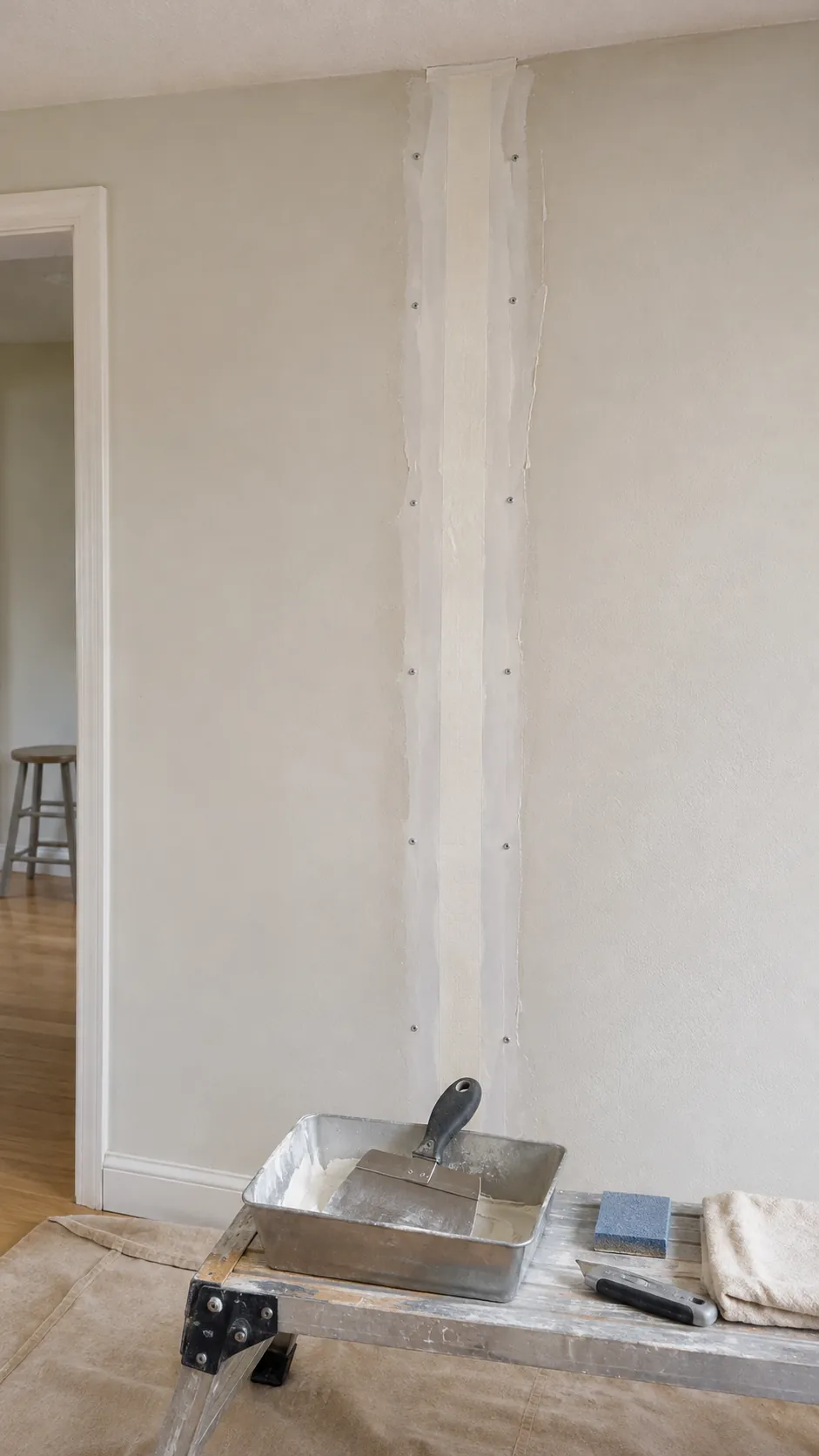
When the problem is limited to a sound drywall joint, remove loose compound and failed tape until firm edges remain. Secure the sheets to framing where attachment is inadequate, then embed new tape in suitable joint compound and feather several thin coats wide. Let each coat dry, sand lightly, prime, and repaint only after the seam stays flat.
Recognize warning signs beyond drywall
Call for prompt assessment when a crack widens quickly, is accompanied by sticking doors, visible foundation movement, sloping floors, displaced trim, multiple new diagonal cracks, or separation at wall and ceiling junctions. Water damage, repeated fastener movement, and cracks that reopen immediately after a correct seam repair also need a cause based investigation. Avoid declaring a structural problem from appearance alone, but do not conceal a pattern that is changing.
Choose the right professional
A drywall contractor can diagnose attachment, tape, compound, and finishing failures at a stable seam. A home inspector can document a wider pattern, while a structural engineer is the appropriate source for an independent opinion when movement or framing is suspected. Bring dated photographs, repair history, moisture information, and notes about seasonal changes so the visit starts with evidence rather than another cosmetic patch.