
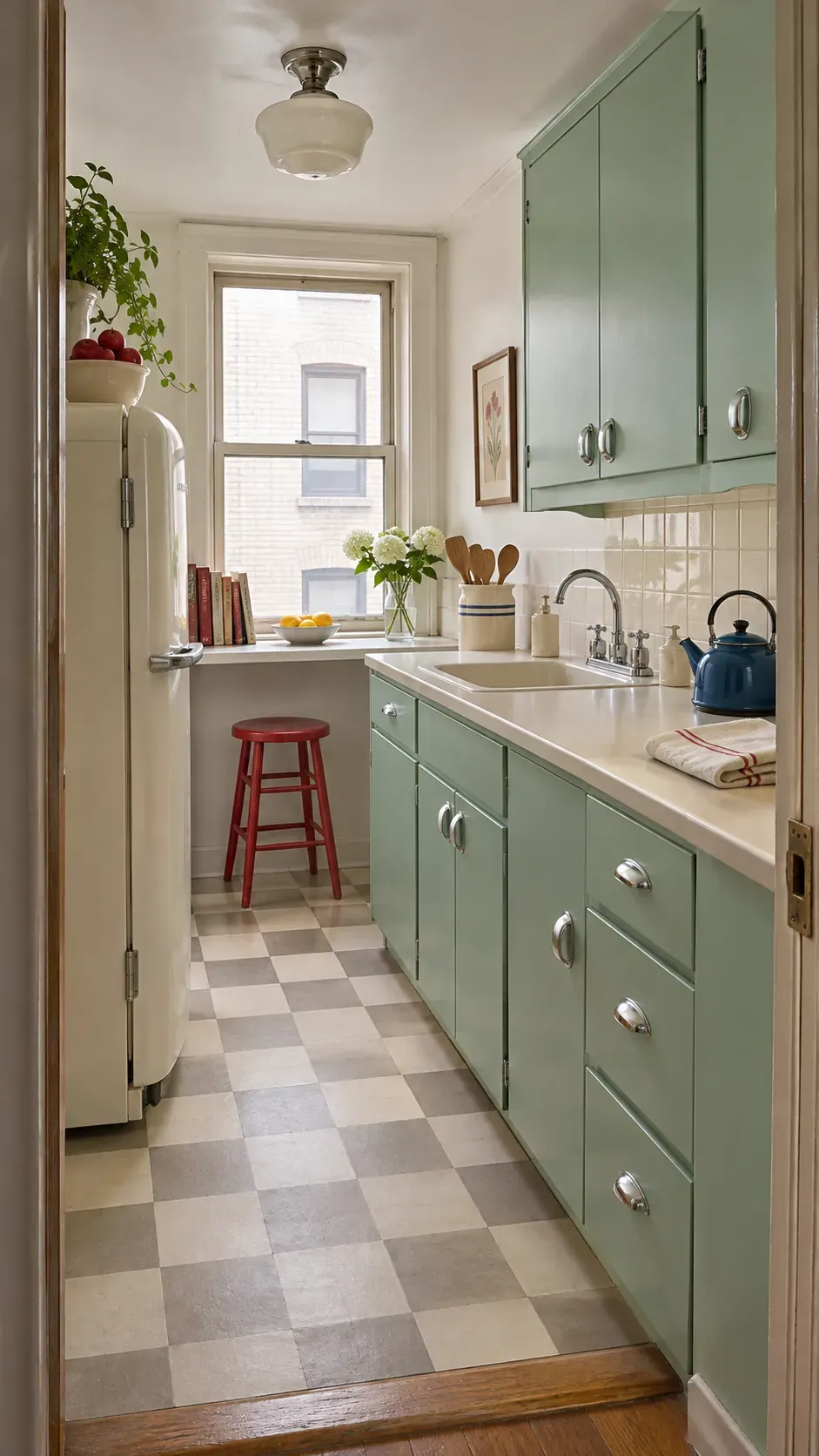
A toaster and a dish rack can take up most of the worktop before you even start dinner. In a narrow kitchen, the most useful vintage touches do a job or use a surface that already exists. Before you buy anything, check how far the fridge opens, where you set groceries down, and which bit of counter you actually use to chop. Those three spots tell you where a splash of color can help and where you need to leave space.
A Checkerboard Floor That Fits the Room
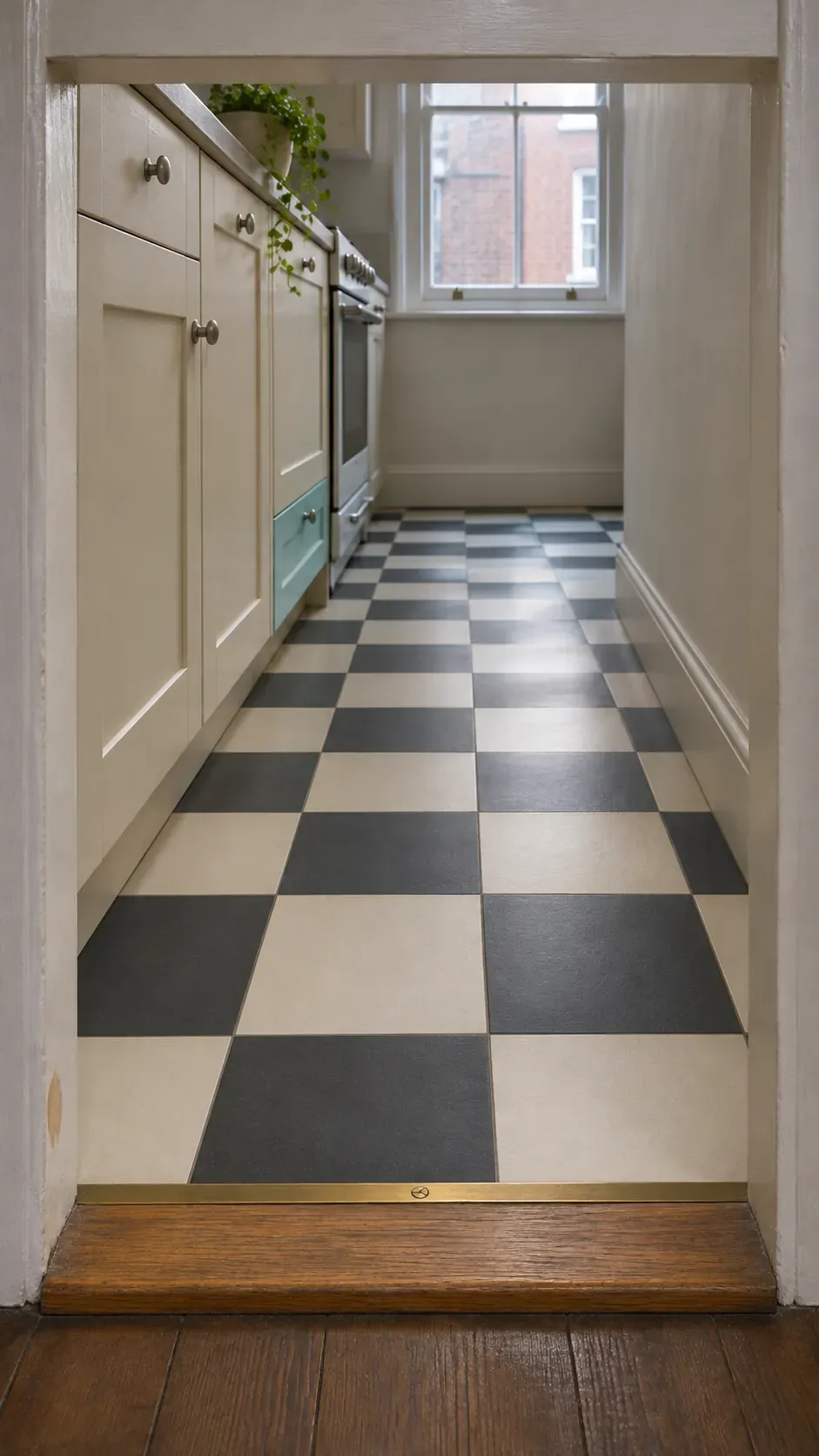
In a tight galley, cream and charcoal squares can give the floor a clear rhythm. Lay a few paper squares on the floor first to see where the pattern meets the doorway and cabinet bases. If you rent, ask whether a loose kitchen floor cloth is allowed and choose one with a backing suited to the existing floor. Check that the door clears its edge and the cloth lies flat before you use it.
Paint the Base Cabinets Sea Glass Green
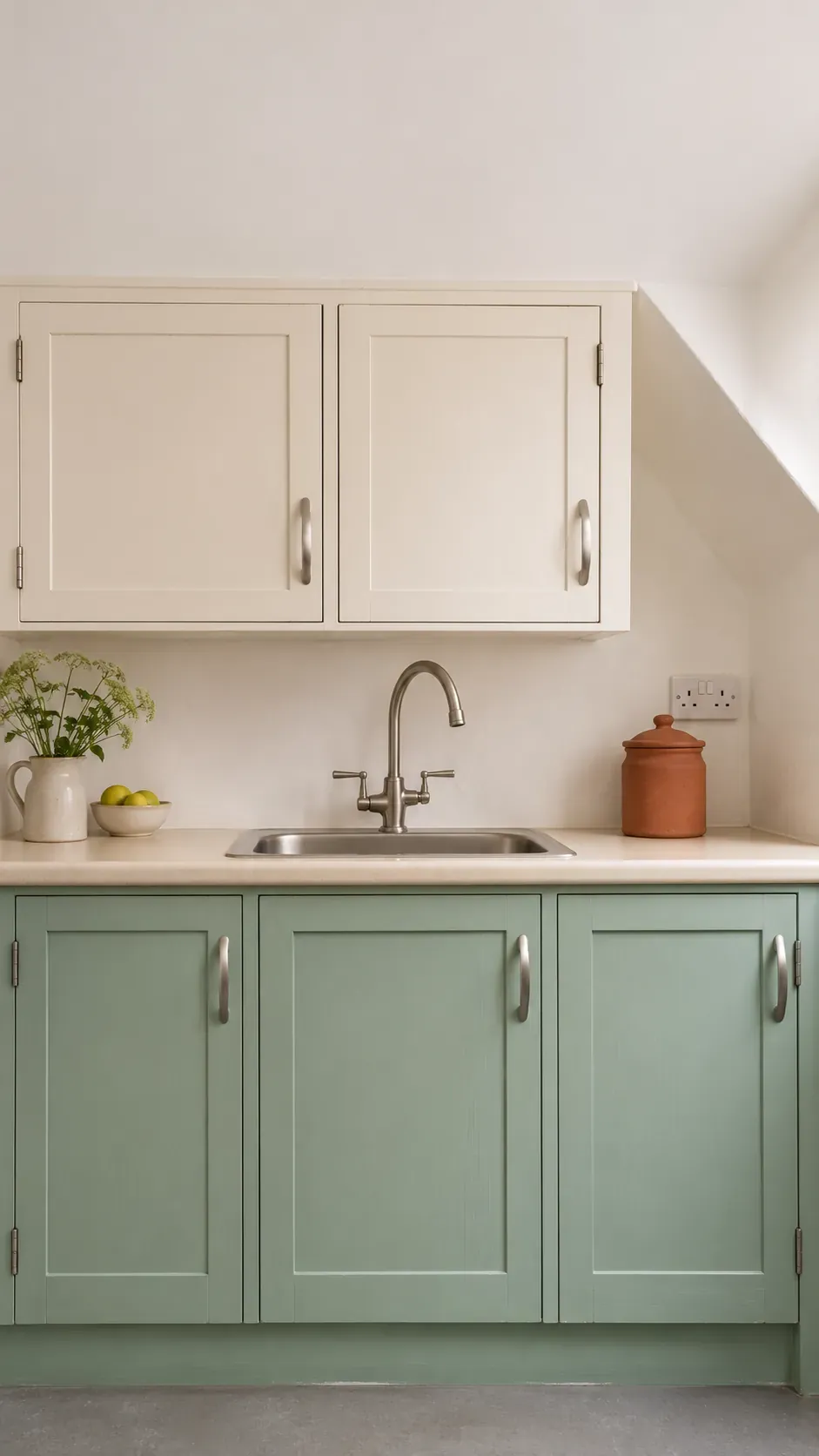
Paint the lower doors sea glass green and leave the upper cabinets warm white. The pale uppers keep the room bright where the wall units sit close to your face. Try a painted sample board beside the countertop under both daylight and your kitchen bulbs. If the doors are laminate, choose a prep system and primer that specify that surface.
Give the Fridge Its Own Recess
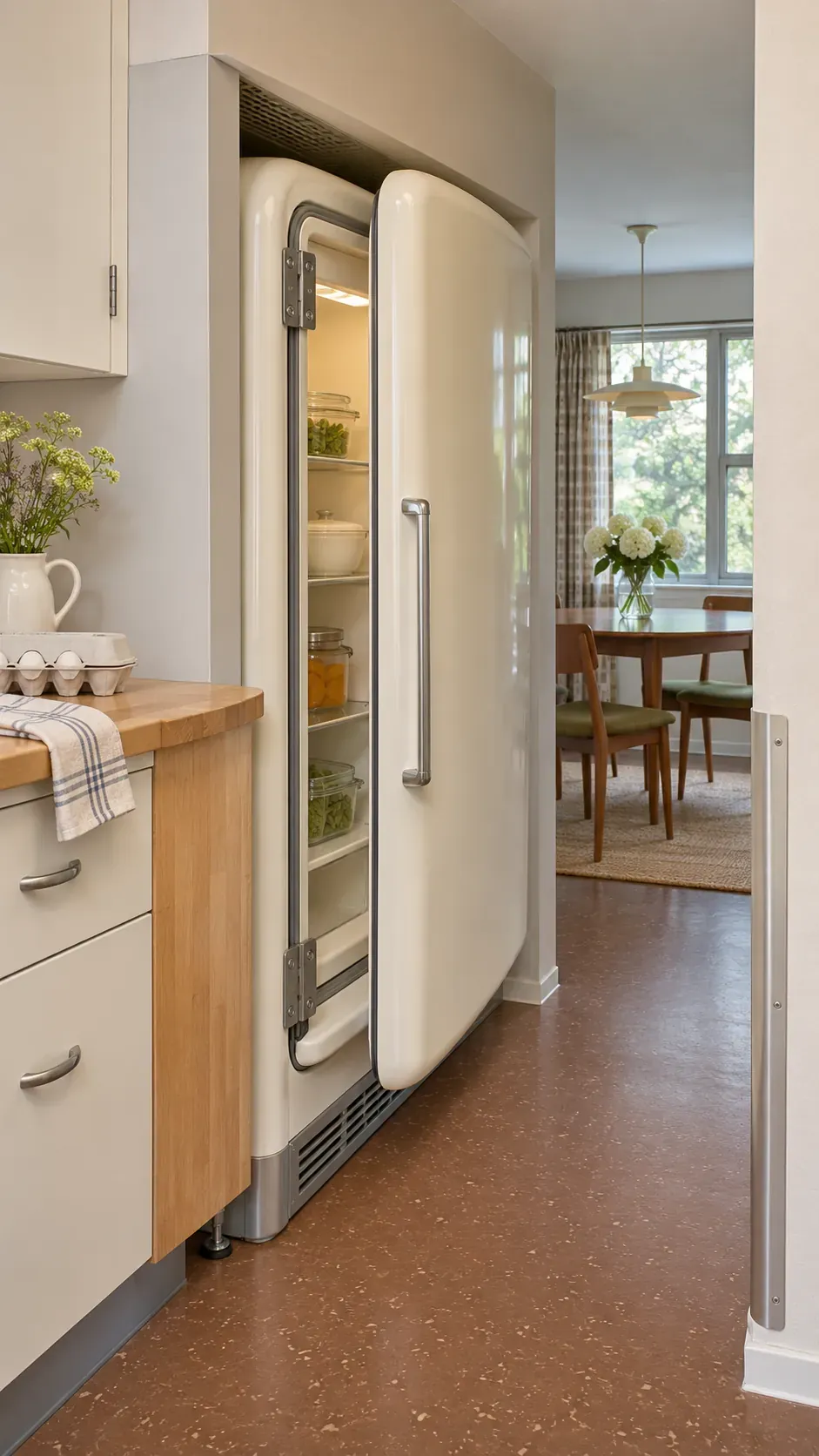
A fridge that projects into a retro galley kitchen can make the aisle feel tighter every time you pass it. If replacement is already due, measure the space from the back wall to the counter edge as well as the width and height. Include the published ventilation clearances, the handles, and the room the hinge needs to swing. Open the proposed door against that wall on a plan before you order. Check the drawer removal instructions too, since some drawers need the door to open farther than they do for daily use.
Hang a Rail for the Tools You Use
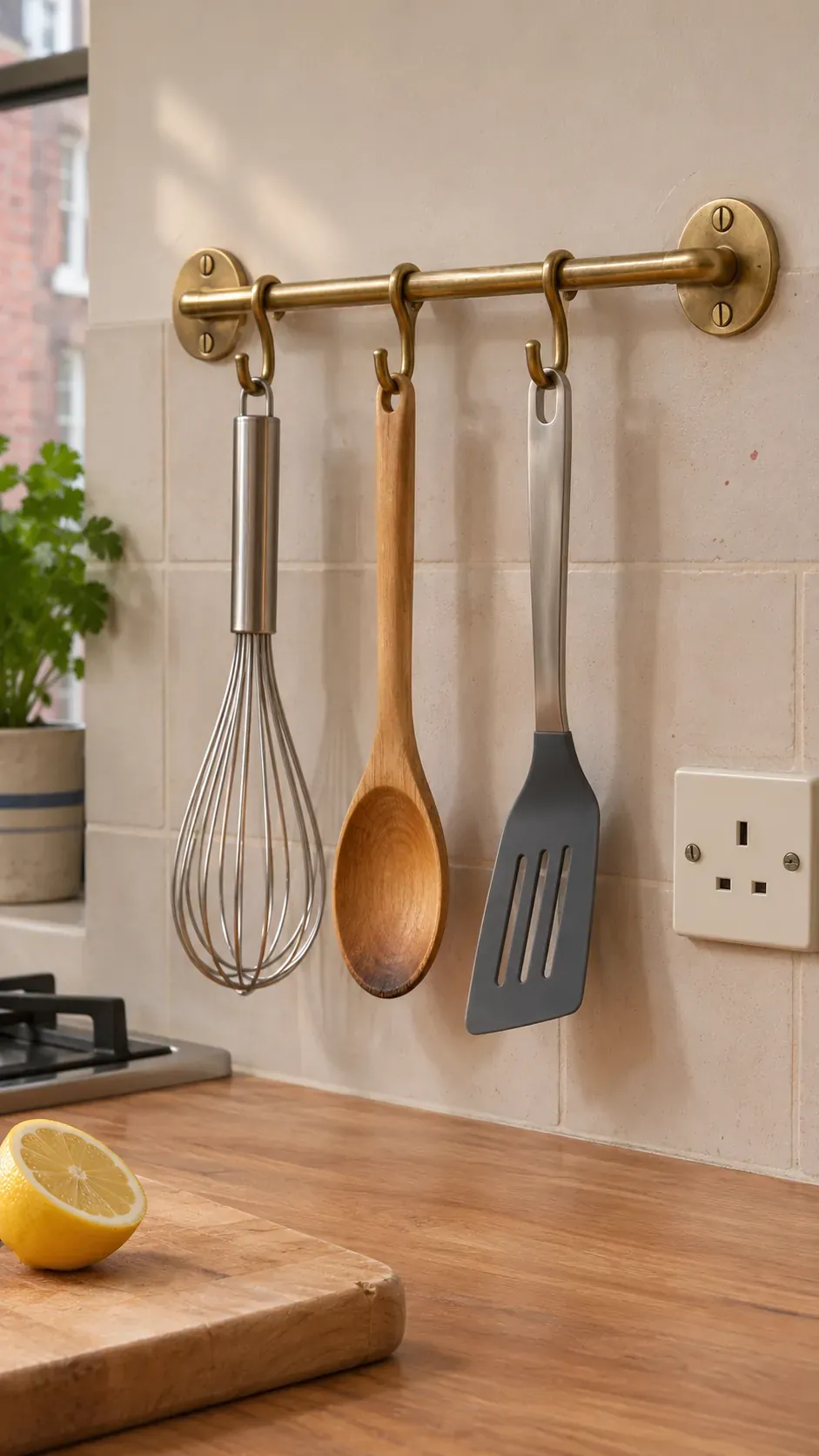
A short brass rail can take a ladle, a whisk, and a spatula off the counter. Put it beside the prep area where you can grab a utensil without reaching over a burner. Hang your longest tool on a piece of string to see whether it would strike an outlet or the worktop.
Check the weight limit on the rail before hanging anything heavier. Leave the hook nearest the wall empty if there is too little room to turn a handle. Keep the rest of the utensils in a drawer so the hooks stay easy to reach.
Put Breakfast Dishes on One Shallow Shelf
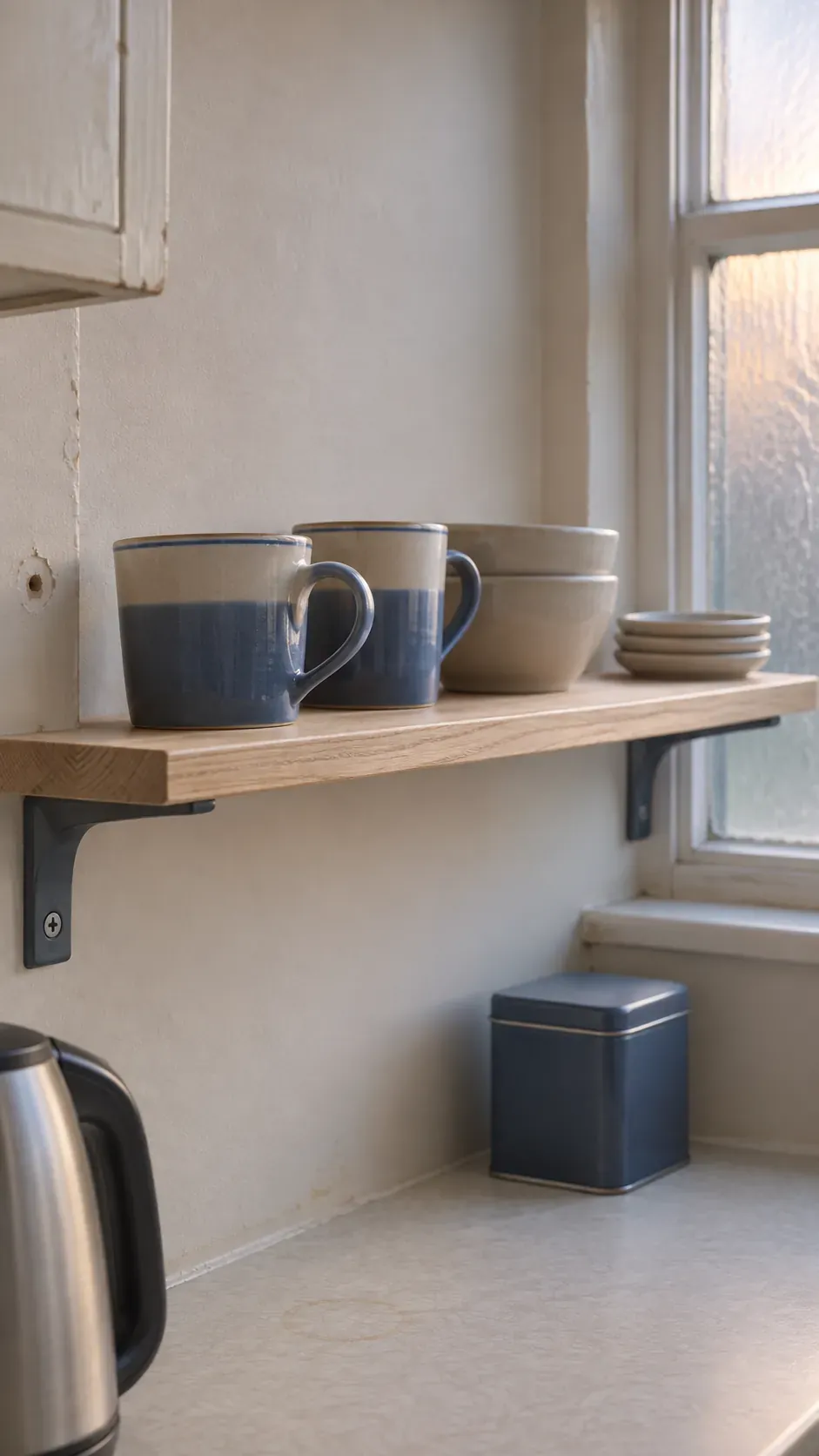
Vintage kitchen shelves work well when they hold the things you use every morning. Fit one shelf for mugs, cereal bowls, and saucers, and size its depth to the largest item you intend to put there. Mount it above a counter where it will not jut into a walkway.
Space the piles so you can lift a bowl without moving the mug next to it. A turned cup handle gives you more room to grip the one beside it. Make sure the shelf stays dry if it sits close to the kettle.
Use a Drop Leaf for Two
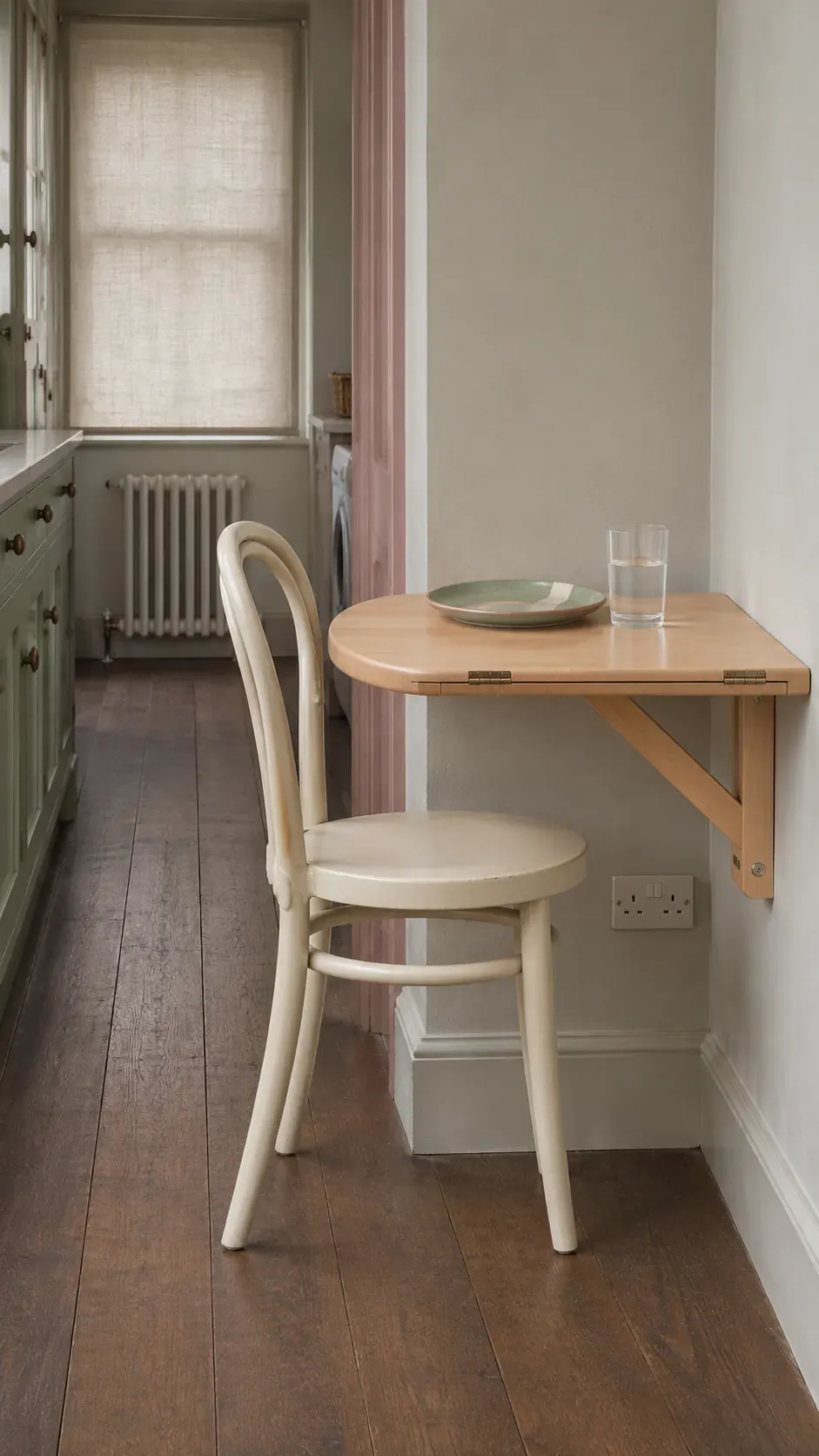
A wall table with a rounded leaf can fit a cup of tea and a plate in a spot where a full table would block the aisle. Mark the open shape on the floor with tape and move a chair through the space before you commit. Pick hardware rated for the load and fasten it to suitable structure with permission. When the leaf is down, the chair should have a home outside the main path.
Run a Stripe of Tile Behind the Sink
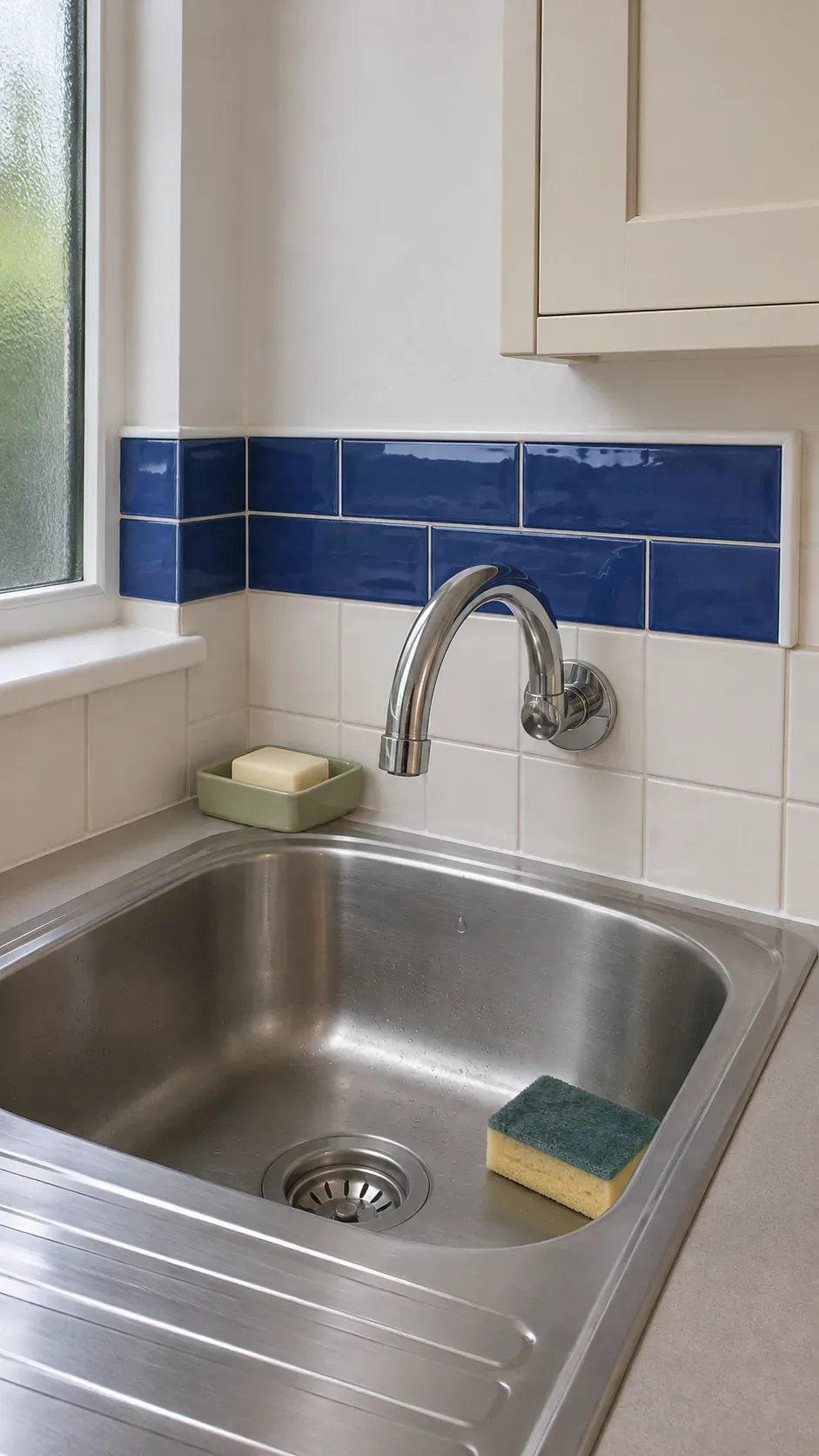
Two rows of glossy blue tile between plain white ones can suggest an older kitchen without covering it in pattern. Carry the stripe to an inside corner or finish it with matching edge trim so the ends look deliberate. Look at a sample beside your tap since cool chrome and aged brass reflect blue differently. Choose a grout that stands up to the cleanup you do at the sink.
Bring Back Chrome Cabinet Pulls
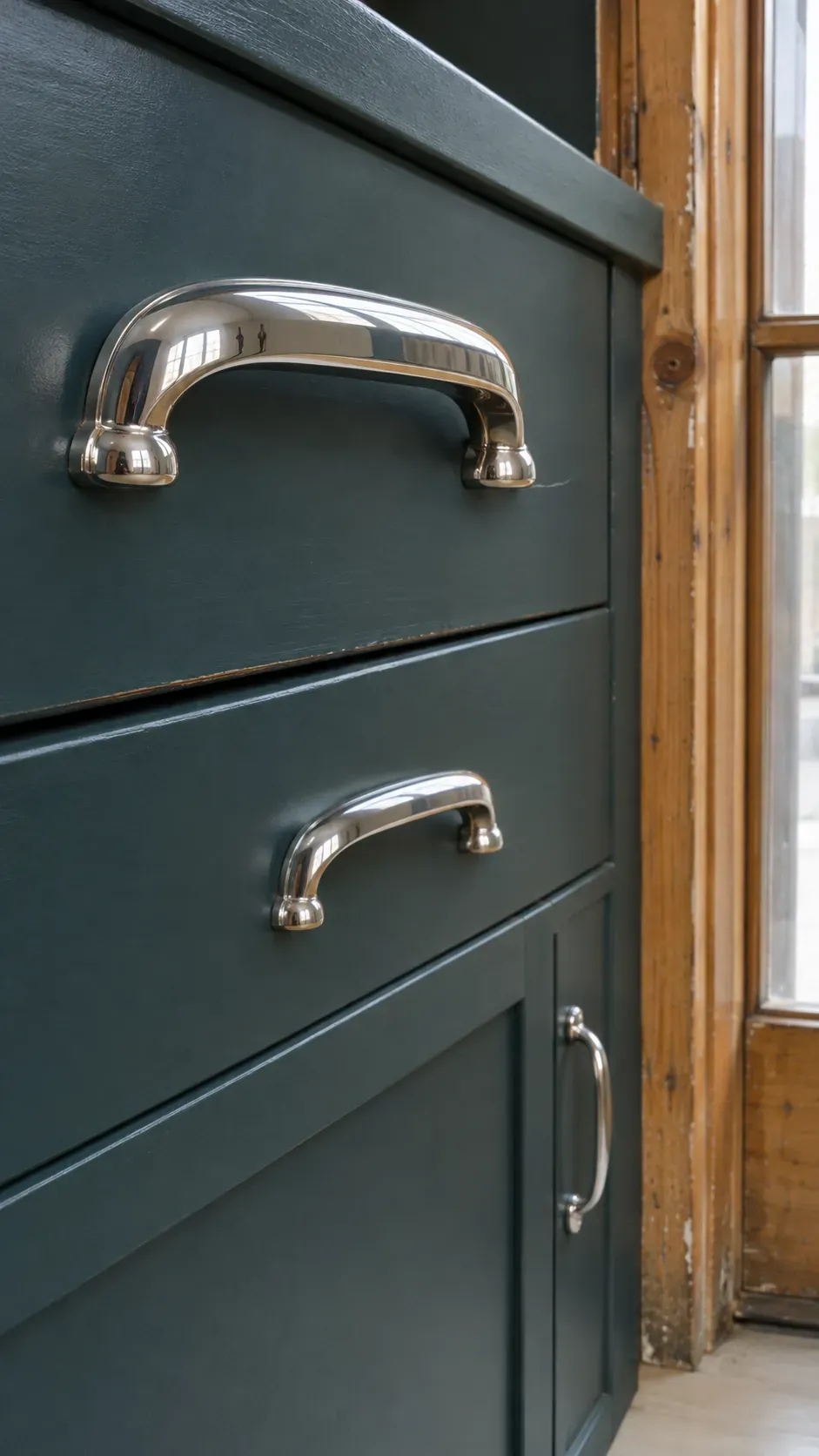
Rounded chrome pulls catch the light and suit plain cabinet fronts. Unscrew one handle and measure from hole center to hole center before shopping, since the overall length can hide a mismatched spacing. A curved pull with a smooth underside feels better on a heavy drawer than a handle with pointed ends.
Use a Low Profile Counter Lamp
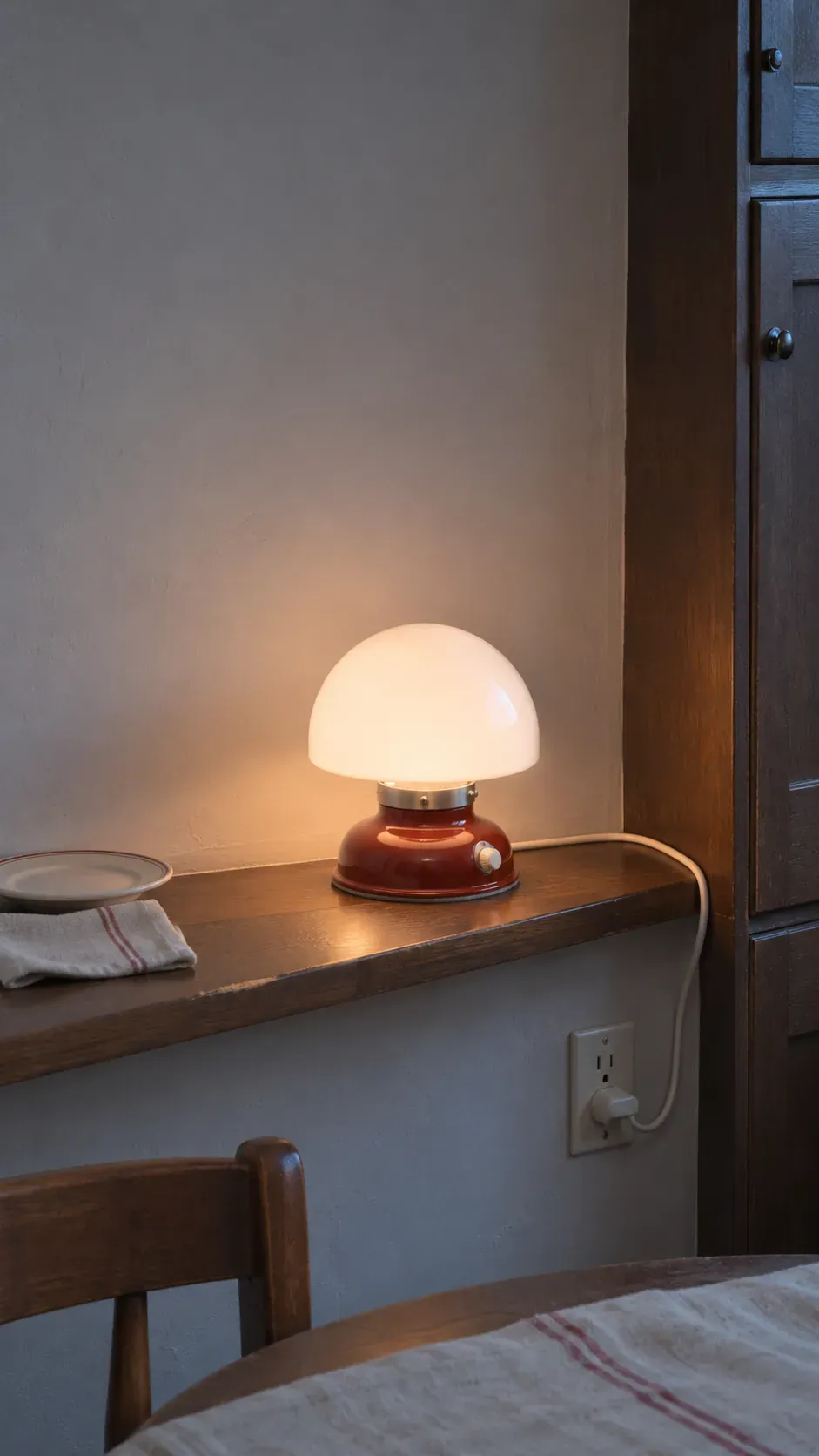
A small opal lamp can make the far end of a galley feel pleasant after the overhead lights go off. Give it a dry spot away from the stove and sink, such as an empty shelf on the dining side. Find a model whose switch is easy to reach and route the cord close to the wall. The cord needs to stay clear of hot surfaces and free from pinch points.
Build an Easy Reach Pantry at the Door
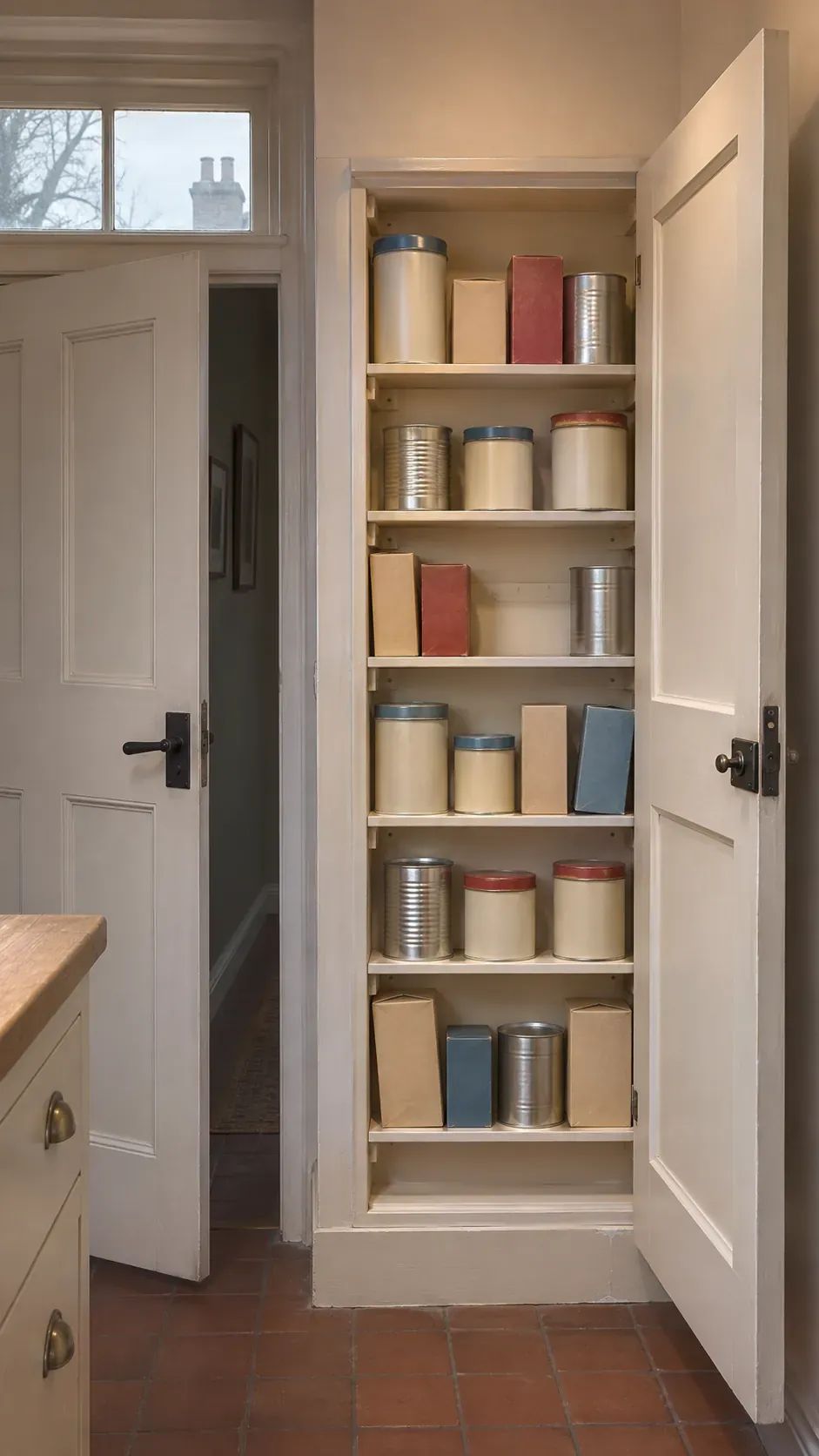
A shallow pantry can make good use of an empty end wall where a deep cabinet would interrupt traffic. Stand tins in a single row and set the shelf heights to the packages you buy each week. Before drilling, draw the full swing of the room door and any cabinet door that opens toward it. Anchor the cabinet using the fixings specified for the wall and the unit.
Add a Red Stool Under the Counter
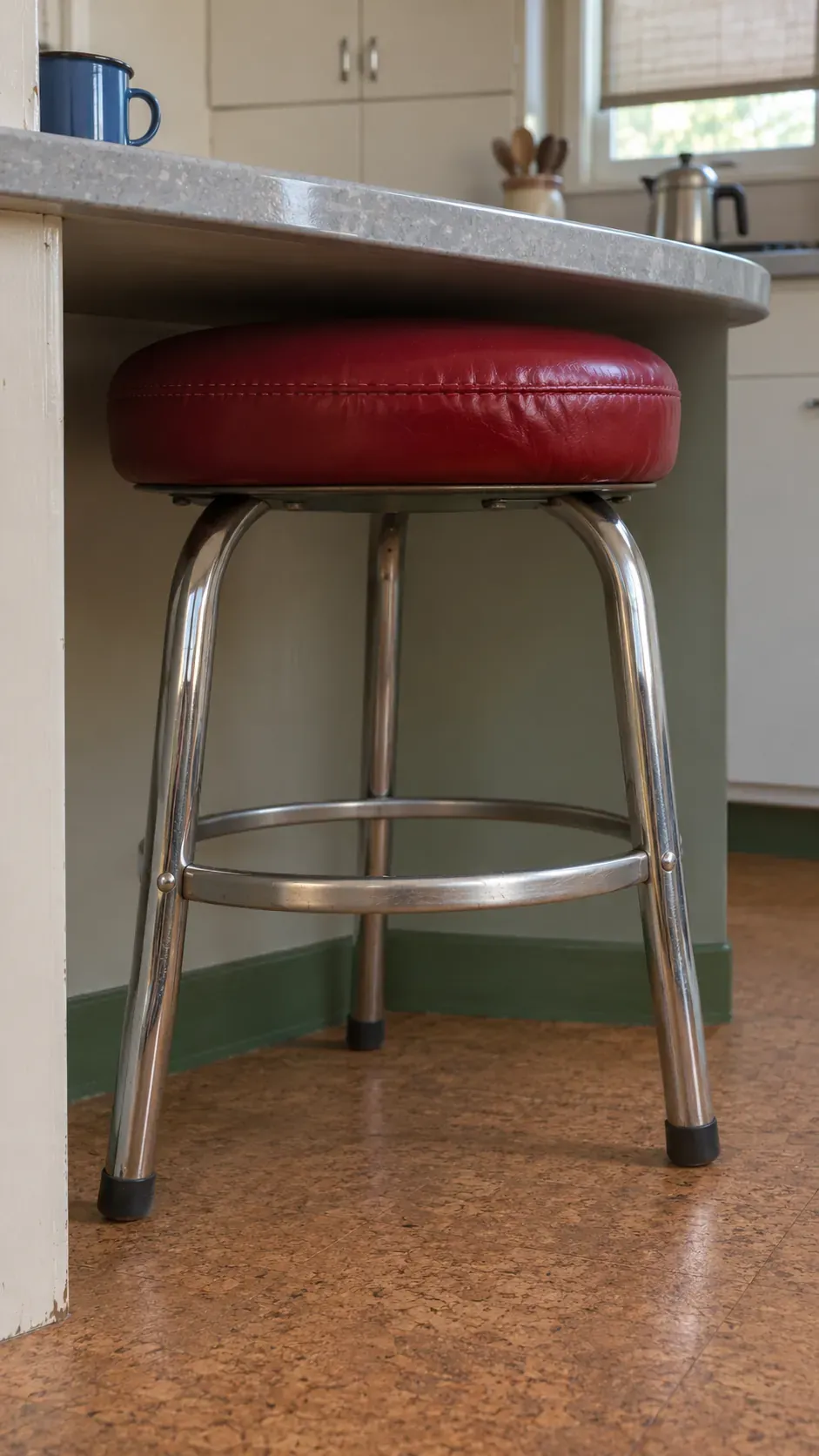
One cherry red stool can give a small vintage kitchen a diner accent. Look for a backless design that tucks fully under the eating ledge, with rubber feet to protect the floor. Measure from the seat to the underside of the counter instead of choosing by the label on the stool. Sit to check that you can rest your feet and slide out without catching your knees.
Treat a Rolling Cart as Extra Prep Space
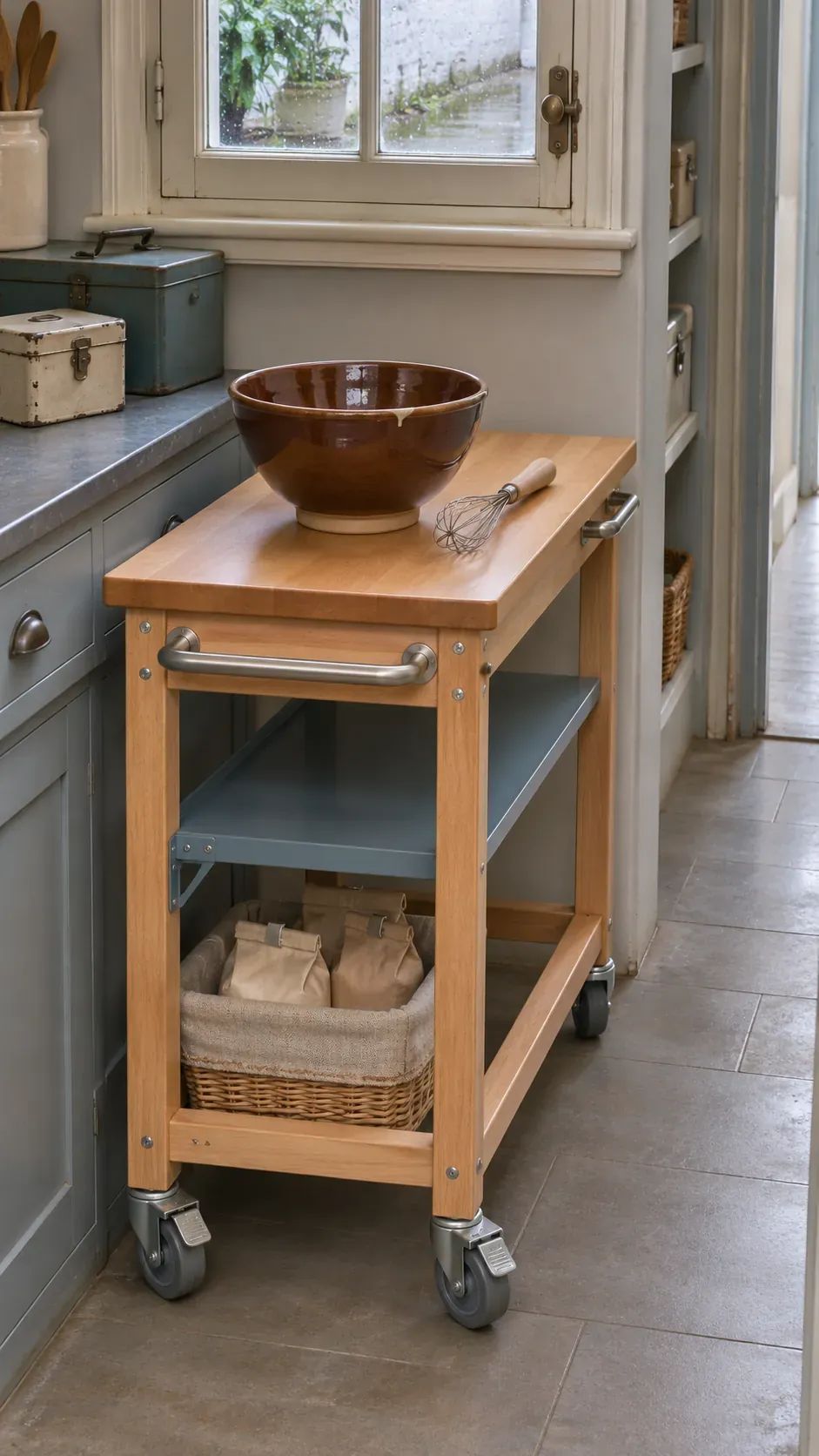
A narrow cart with a beech top gives you somewhere to put mixing bowls while you use the main counter. Give it a parking spot that stays clear of the exit and test the fridge and oven doors with the cart parked there. Pick locking wheels so it stays put when you work. Use the lower shelf for dry supplies you reach for often.
Bring Light Under the Cabinets
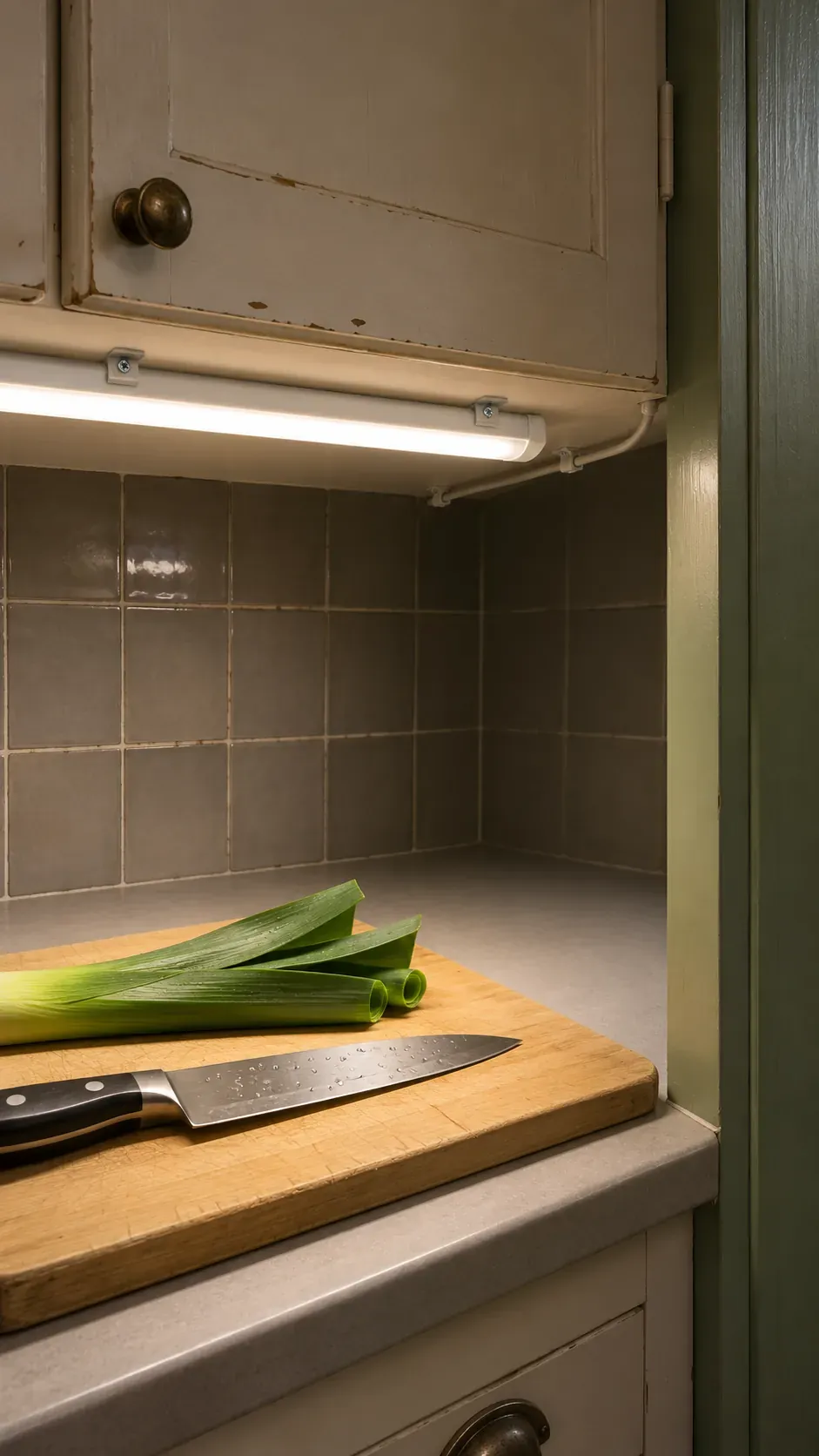
A slim light under the front part of an upper cabinet puts light in front of your hands at the chopping board. A plug in model keeps the work simple in a rental if you can route the cable out of the prep area and away from water and heat. Choose a diffuser if a shiny counter reflects every individual light. Try the light against your cabinet paint in the evening before committing to several units.
Use a Short Gingham Curtain
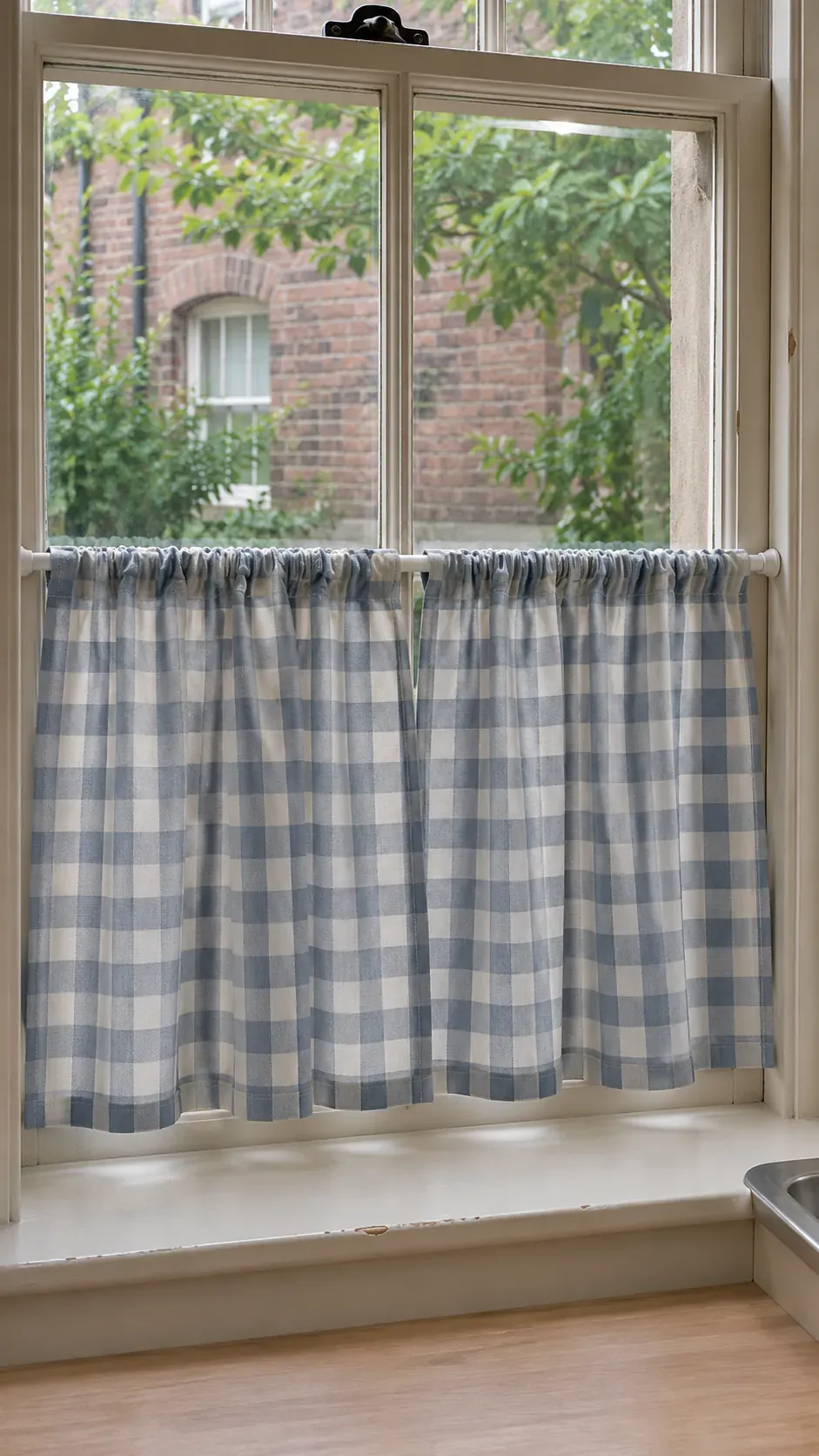
A gingham cafe curtain can screen the bottom half of a sink window and leave the brighter top pane open. Mount a tension rod inside the frame if it fits securely. Hang the fabric above the ledge and beyond the splash zone so you can wipe the sill without moving it. Keep curtains clear of burners and other heat sources.
Store Trays Upright in a Cupboard
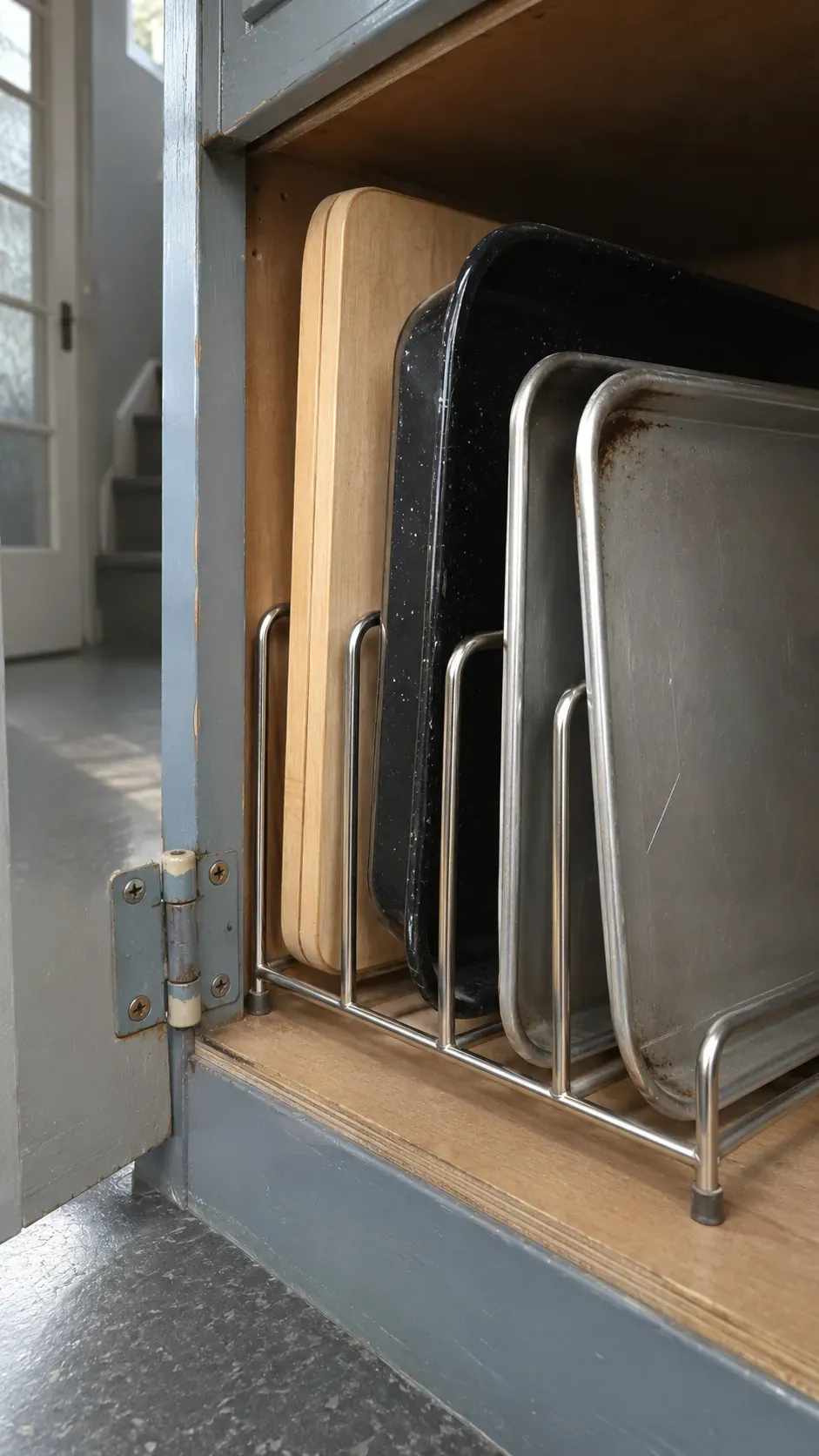
Sliding a baking sheet out like a record is easier than lifting a pile of pans to get to it. Measure your tallest tray from end to end and include the space your hand needs to lift it past the cabinet frame. A sturdy rack inside the cupboard keeps the trays from drifting sideways.
Give large cutting boards their own slot so they do not trap the trays. Set the tray you use most often on the side nearest the door. If the cabinet is short, try turning a tray on its long edge before moving a shelf.
Make a Clear Landing Spot by the Fridge
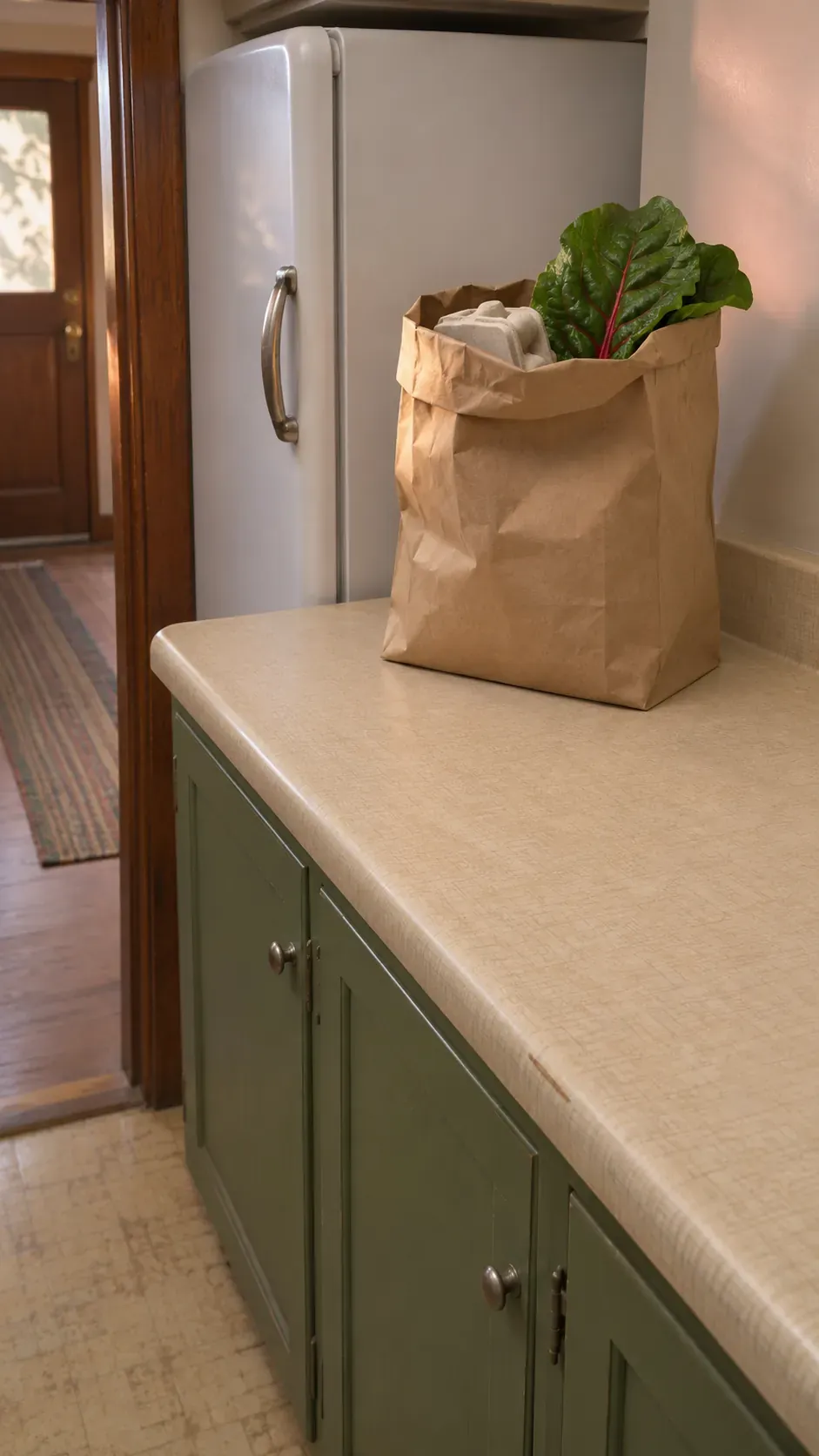
A short run of counter next to the fridge has more value when it stays free for a carton of milk or a bag of groceries. Set the vintage bread bin at the breakfast end of the kitchen and mount the towel holder elsewhere. Try unloading a full grocery bag before adding anything to the cleared spot. That test tells you how much of the surface to save for daily use.
Stop a Bold Paint Color at the Door Trim
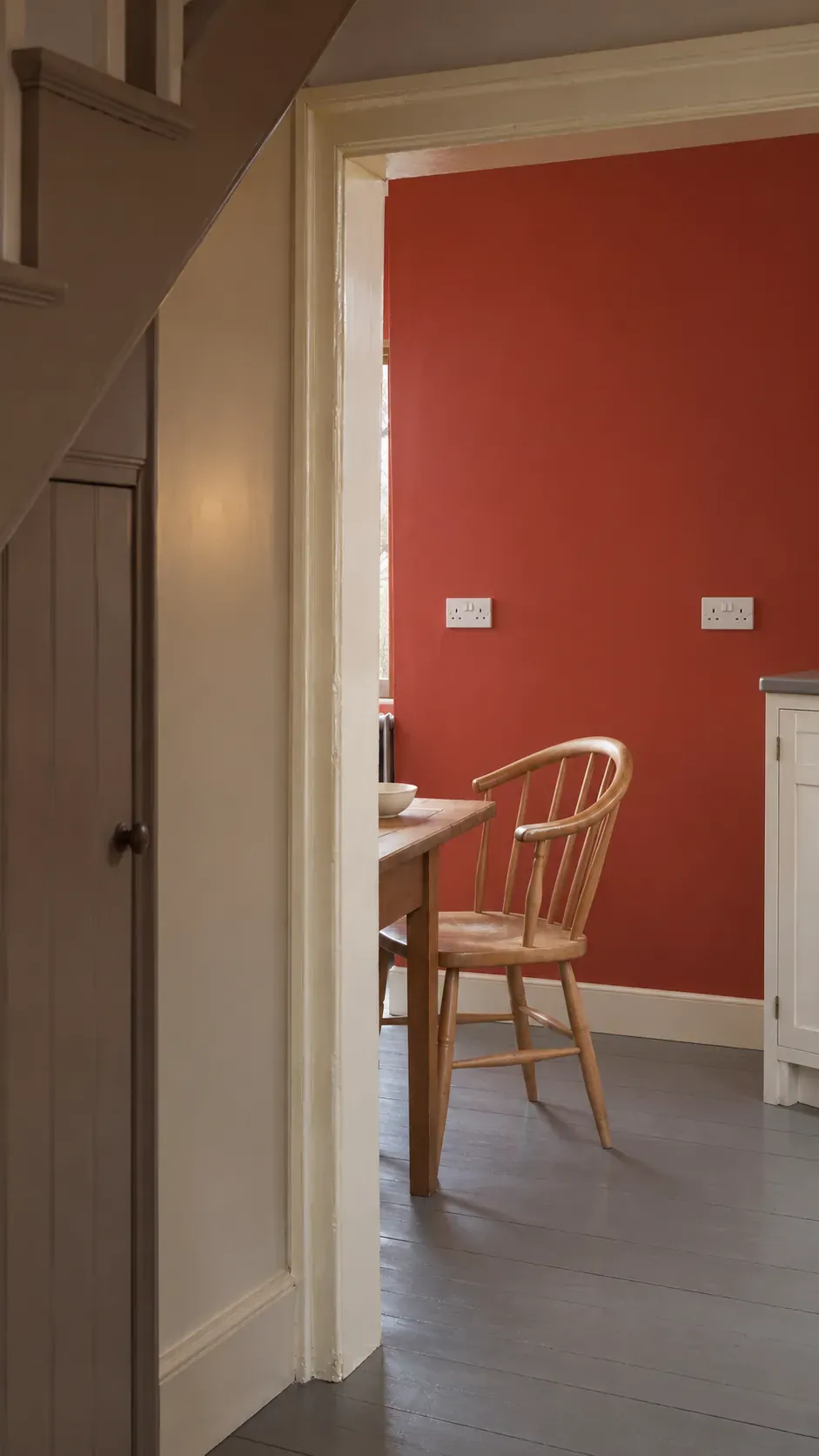
A panel of muted tomato red at the dining end can warm up a kitchen with white cupboards. Use the door trim or an inside corner as a stopping point so the color follows the room. A washable finish helps near chair backs, where fingers and bag straps leave marks. Check the dried sample from the room next door, since you may see the red from there more often.
Fit a Rack for the Plates You Reach For
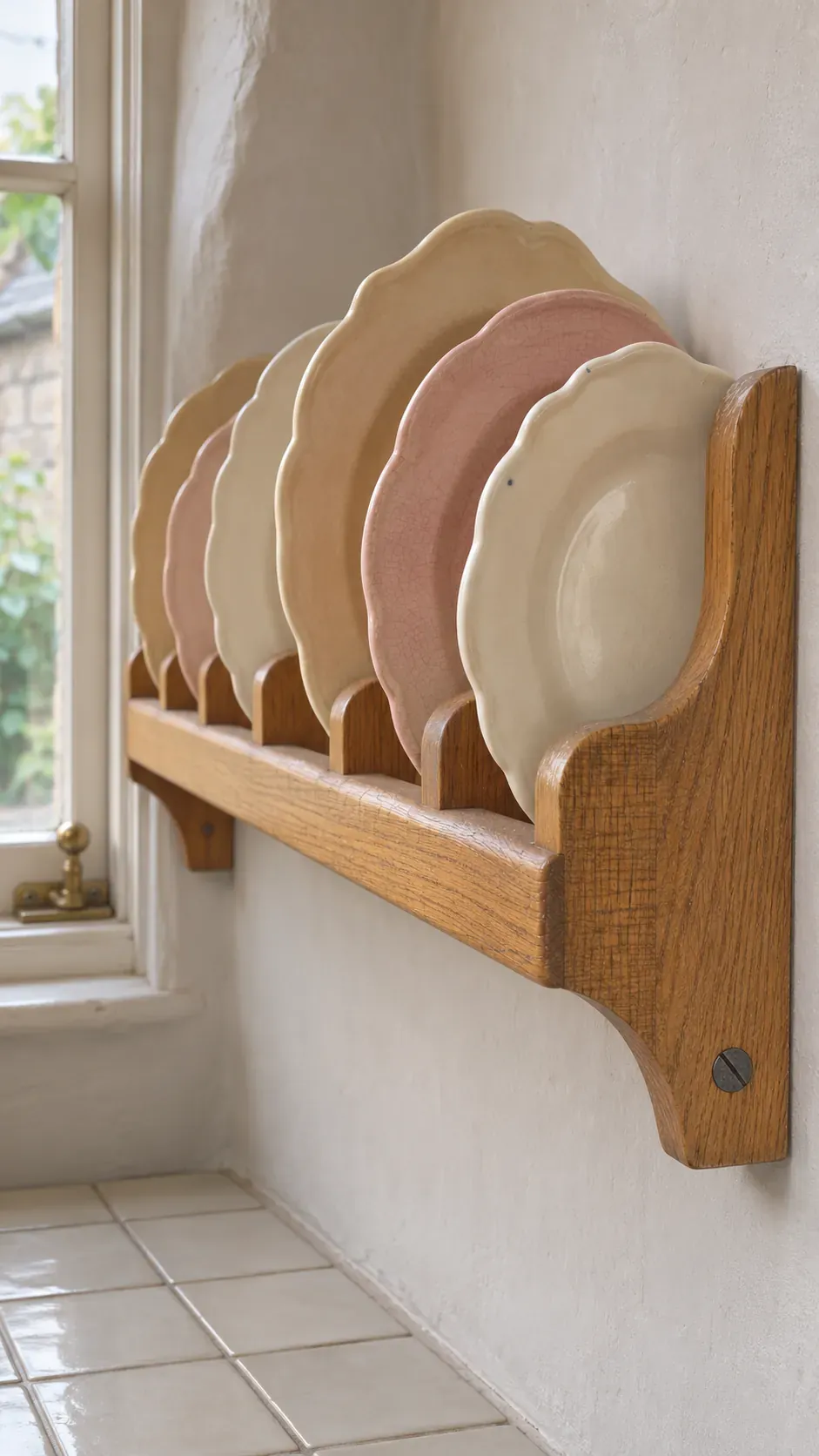
A plate rack above the counter displays the scalloped edges of a few everyday dishes. Measure the largest plate and try sliding it in and out of the slot before you mount the rack. Keep heavy platters in a lower cupboard and mount the rack with fixings suited to its weight and wall type. Leave room below to wipe the worktop easily.
Pick a Small Pendant With a Diffuser
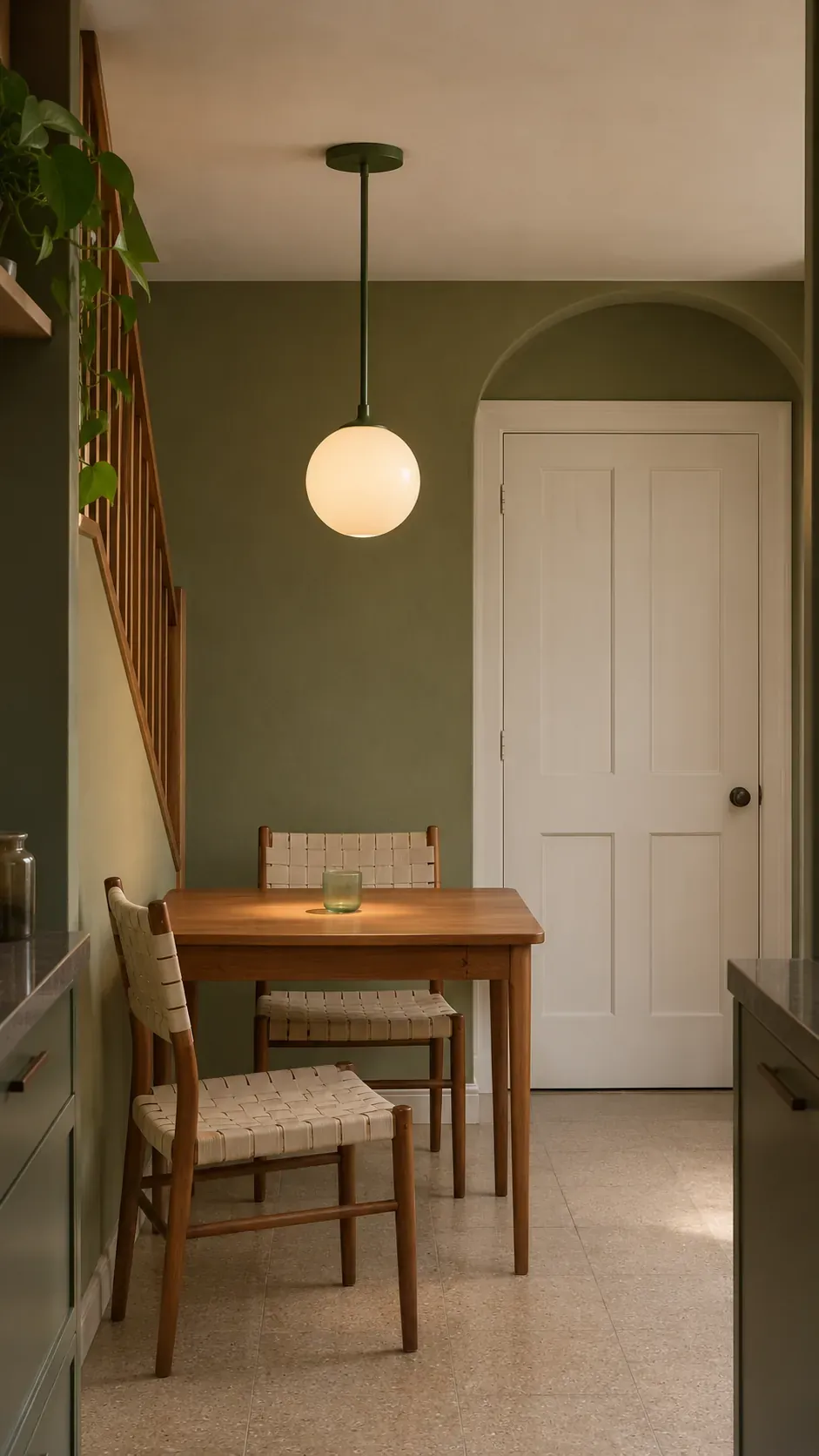
An opal globe can add a period shape above a tiny table without filling the sightline into the rest of the kitchen. Choose a shade narrow enough that it sits within the edges of the table, and sit down to judge the glare from below. Leave headroom for anyone walking past. Use a qualified installer if the fitting needs new wiring.
Collect a Few Enamel Canisters
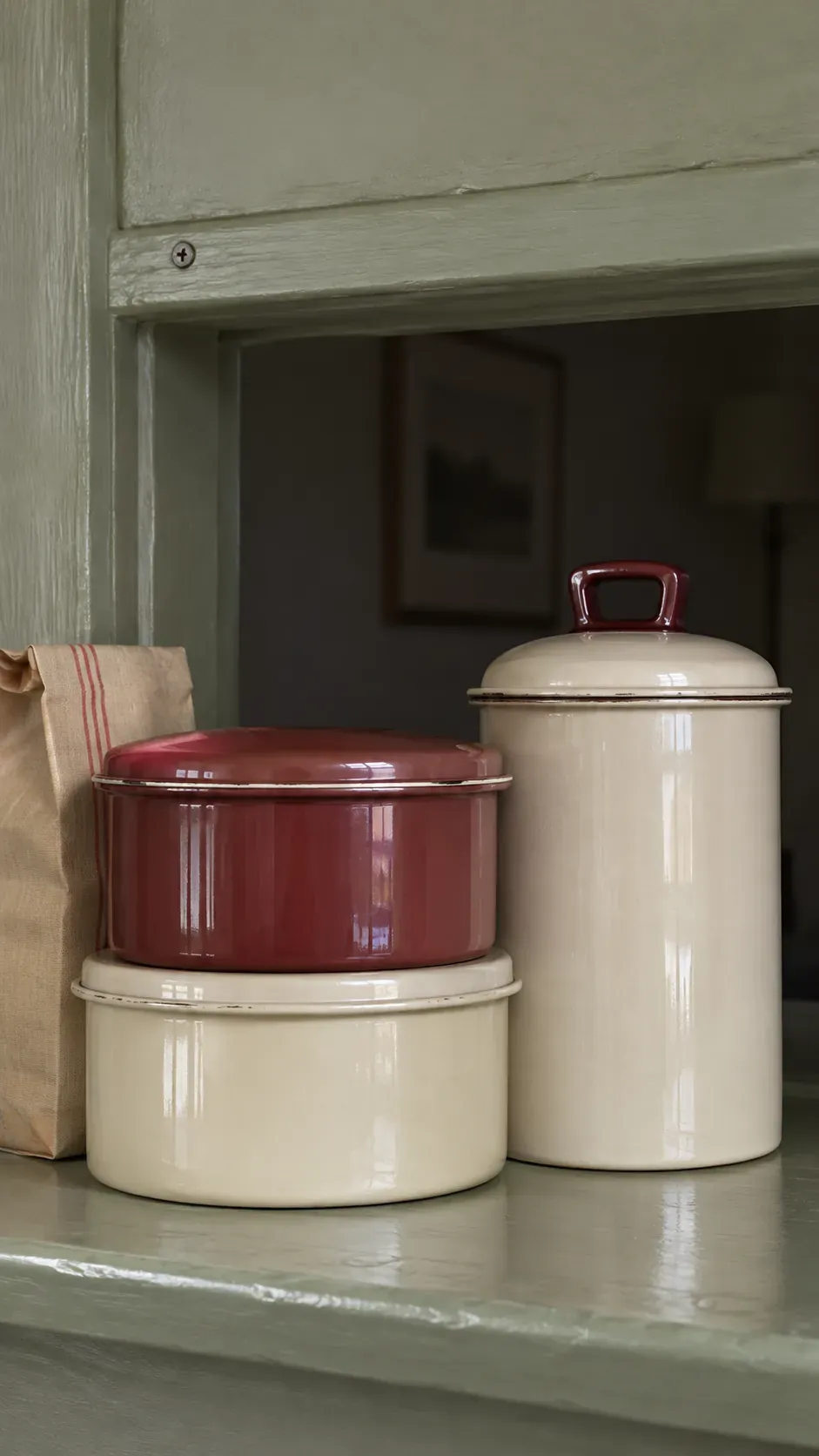
A set of stackable enamel canisters can store tea bags and coffee filters on a small shelf. Buy by what you need to contain and by the clearance required to lift each lid. Check vintage enamel for damage and use lined containers or newer food safe pieces for ingredients that touch the inside. Keep the brightest color on one tin so it reads clearly in a busy room.
Cut a Rounded Corner on an Eating Ledge
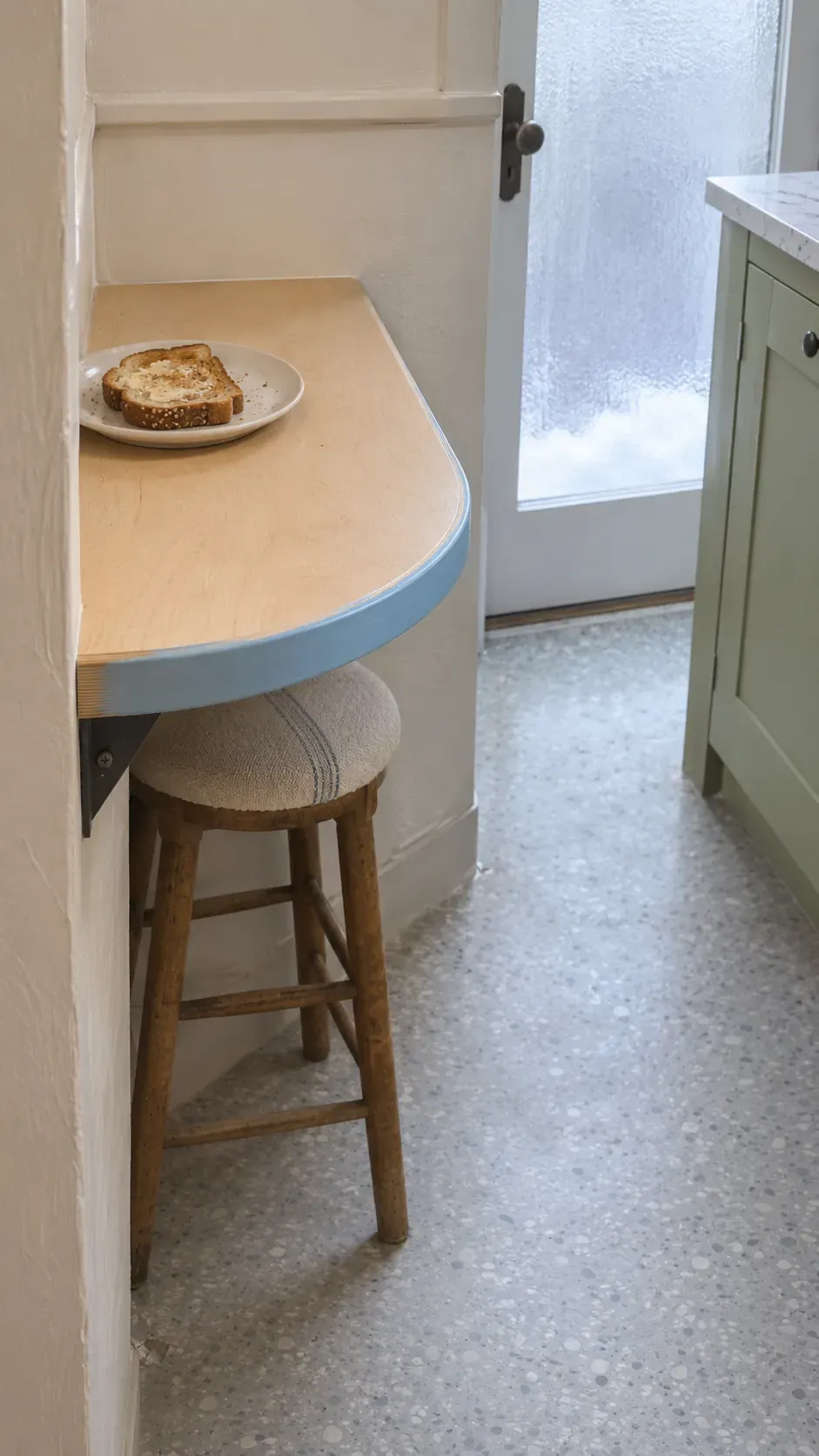
A shallow ledge can turn a stretch of wall into a spot for breakfast. Round the outside corner where you pass from the kitchen to the next room and keep the stool fully under the ledge. Allow enough depth for your plate and enough support for the projected surface. Mock up the ledge in cardboard to see whether you can open nearby drawers with someone seated.
Keep Cups in a Pull Out Drawer
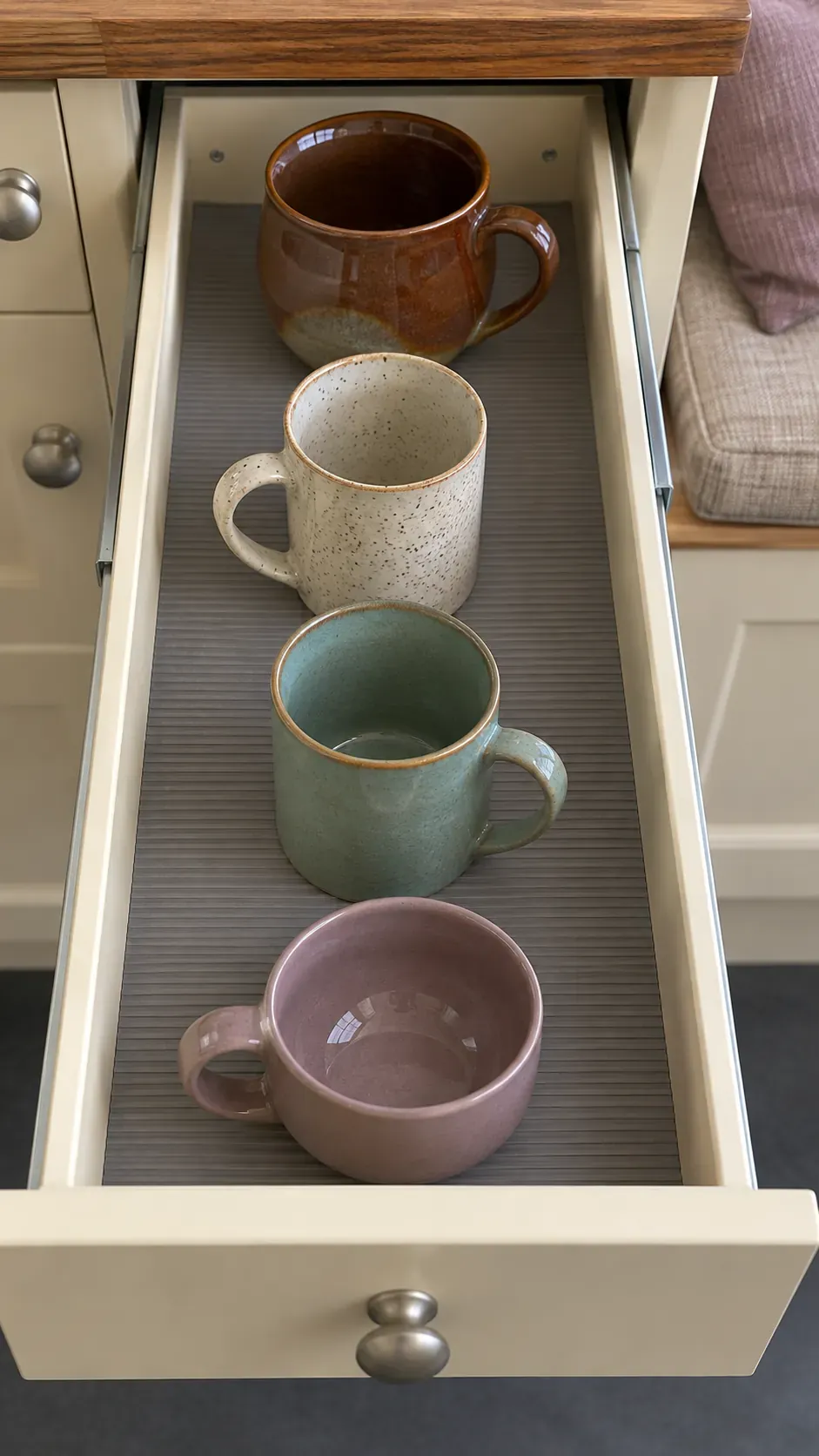
A deep drawer near the kettle puts mugs within reach without using an upper shelf. Add a cut to fit nonslip liner, then place mugs with space for their handles so they do not rattle against each other. Check the drawer load rating and test how smoothly it shuts with your usual mugs inside. Stack only cups designed to nest.
Choose One Small Appliance in a Period Color
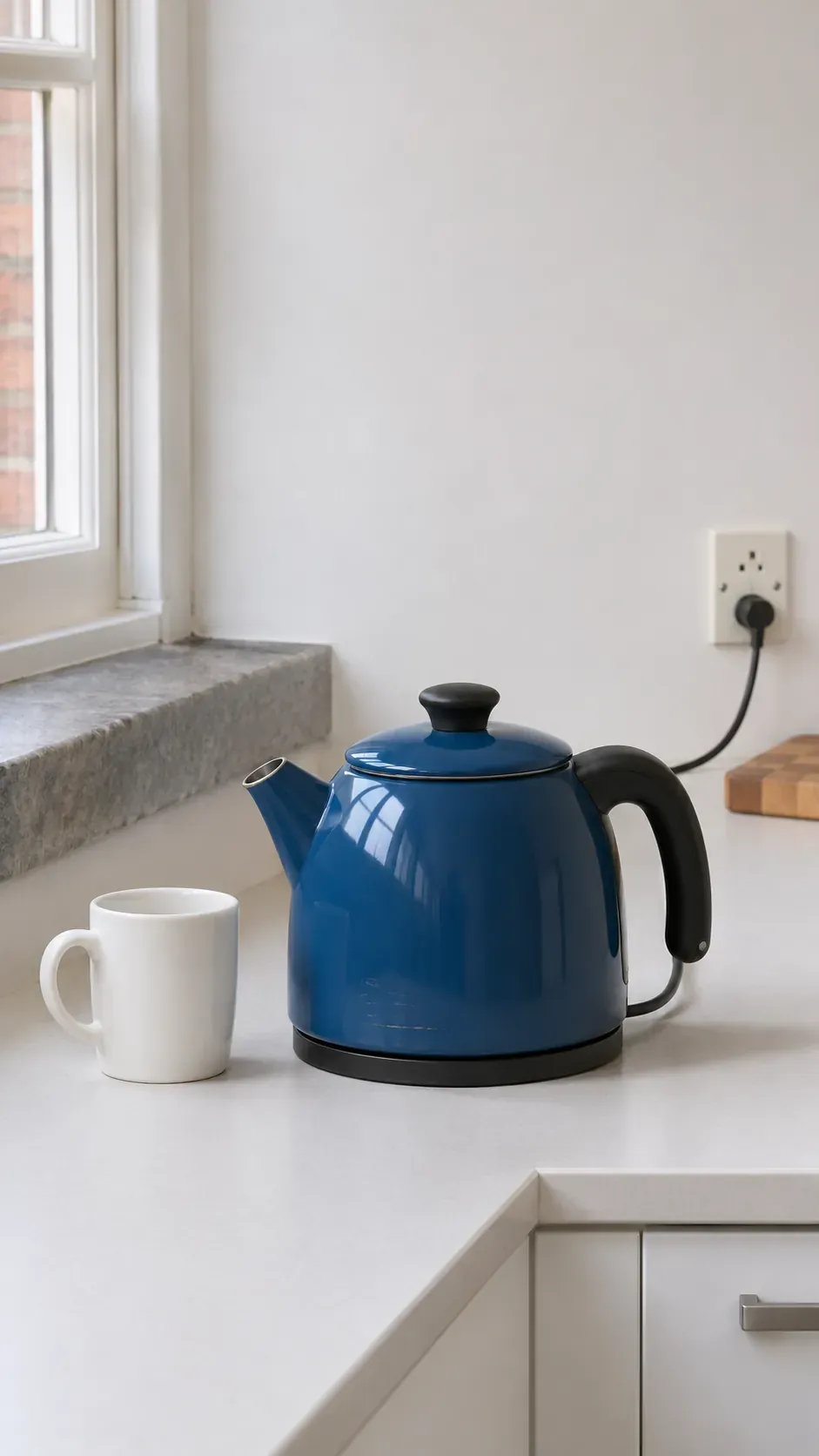
A blue kettle does more for a white rental kitchen when it sits by the cups and outlet you already use. Choose a size you can refill comfortably at your sink. Leave the clearance specified by the maker so steam can rise away from the underside of a cabinet. The same blue can recur in a tea towel without taking up any extra counter space.
Put Narrow Shelves in an Existing Niche
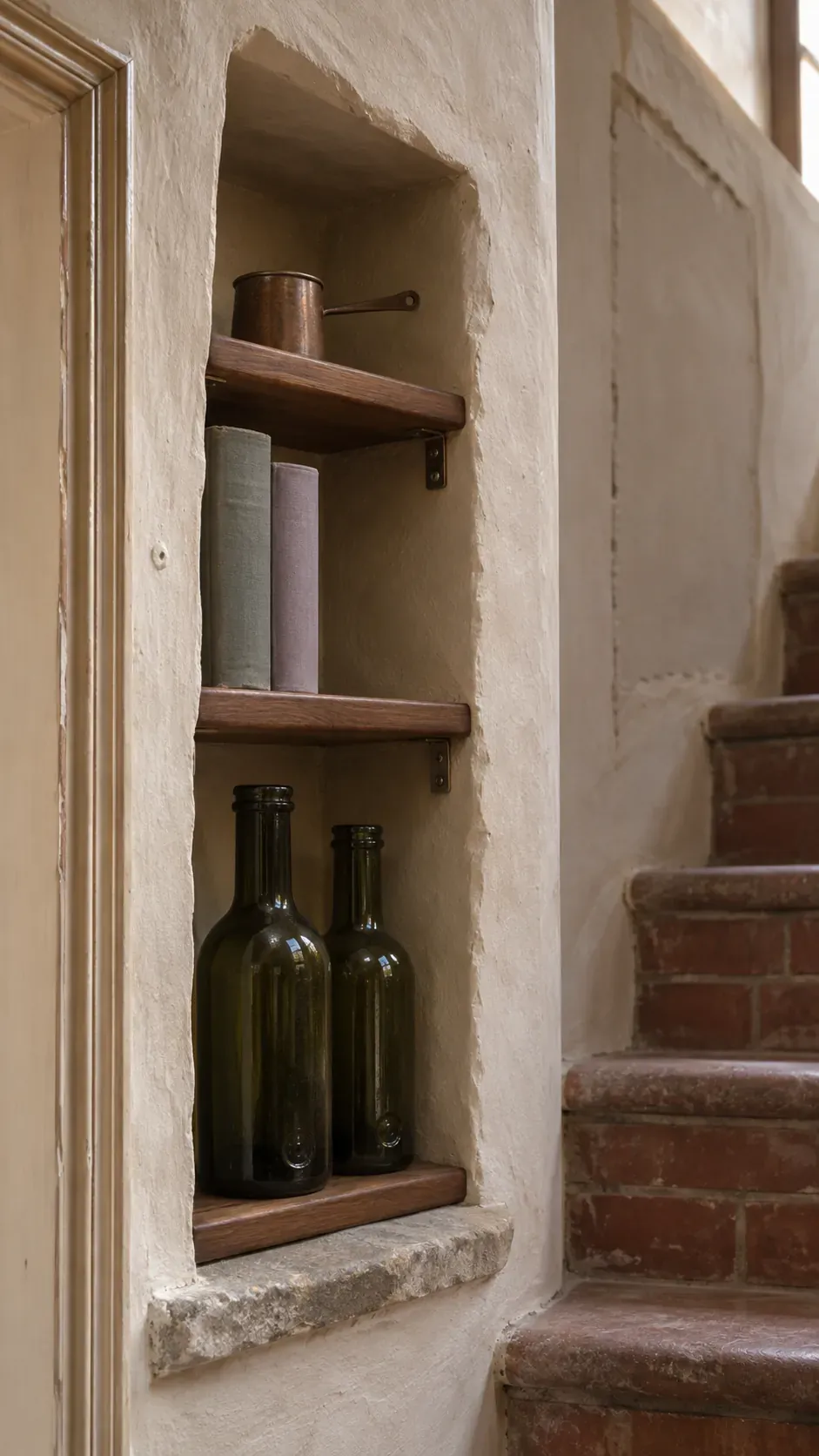
A shallow recess between the kitchen door and wall can hold oils or cookbooks without a shelf projecting into the room. Measure the top and bottom of the opening, since the sides of old plaster niches can lean. Use the narrowest measurement as your starting point and mount shelves with appropriate fixings. Save the highest shelf for light items you use infrequently.
Let Existing Wood Cabinets Set the Palette
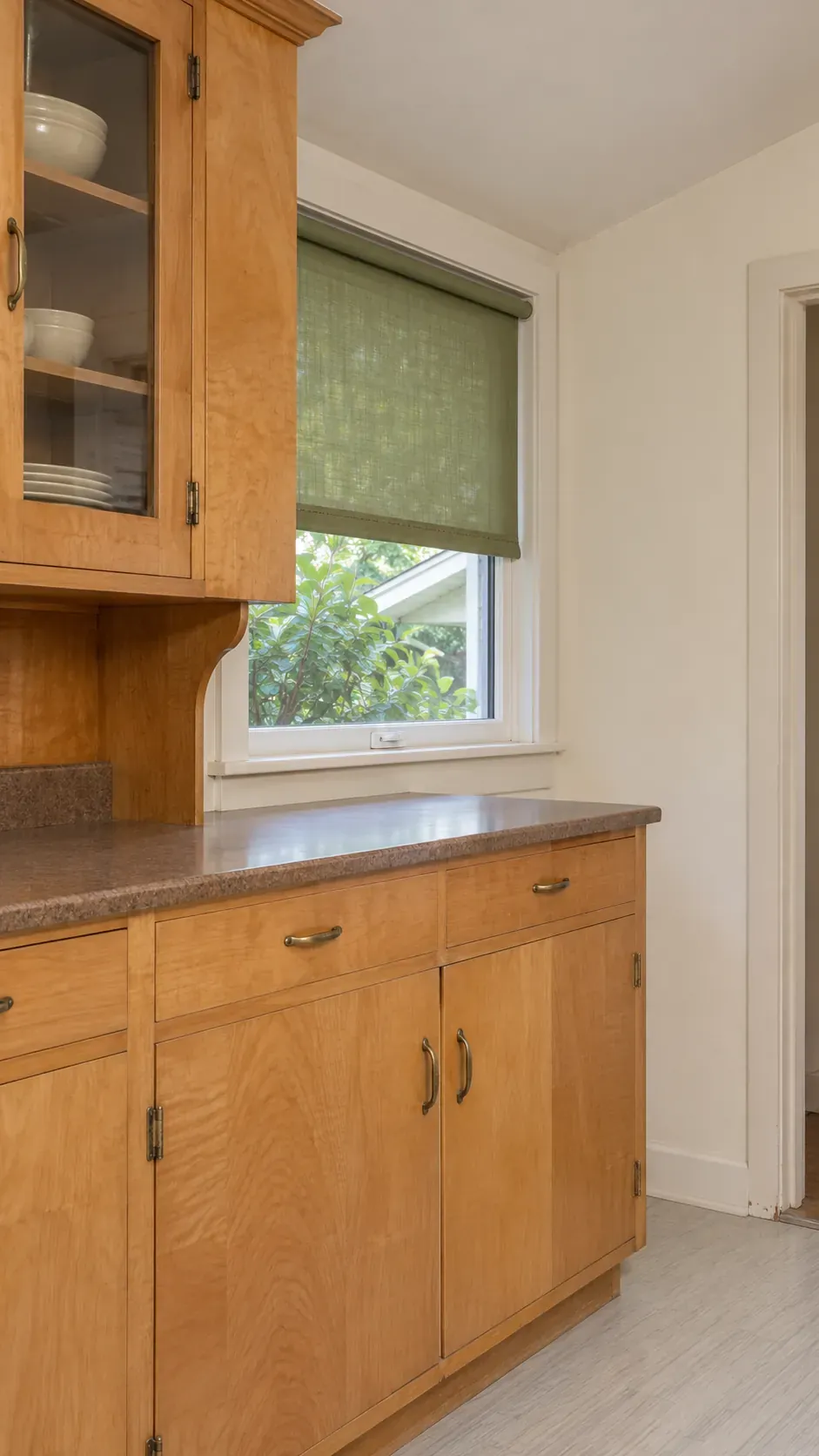
Honey colored cabinet doors can look deliberate next to soft cream paint and a green cotton shade. Look for a cream that reads warm alongside the doors without amplifying the yellow in the wood. Test your samples next to the counter and the floor, since those surfaces may be harder to change than the paint. Clean and tighten the door hardware before deciding what else needs replacing.
Stack Cookware in a Low Corner Drawer
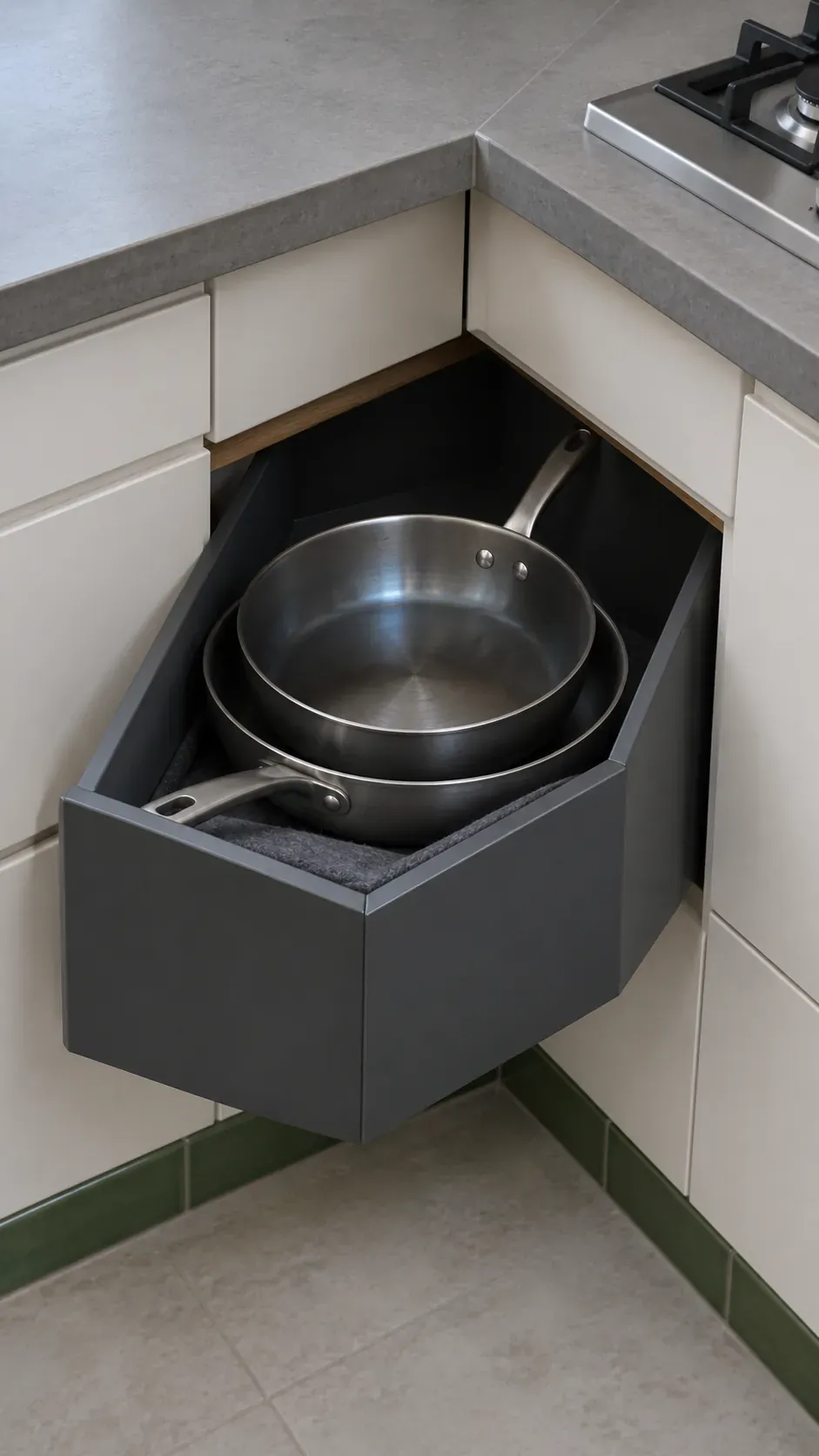
A corner drawer designed for that cabinet can bring two pans within reach that used to disappear behind a door. Have the cabinet measured before ordering, since the mechanism and handle need room to clear adjacent fronts. Check that the bottom pan lifts out with the drawer fully open. Store lighter lids in a slim divider near the range.
Use a Wipeable Tablecloth With One Big Pattern
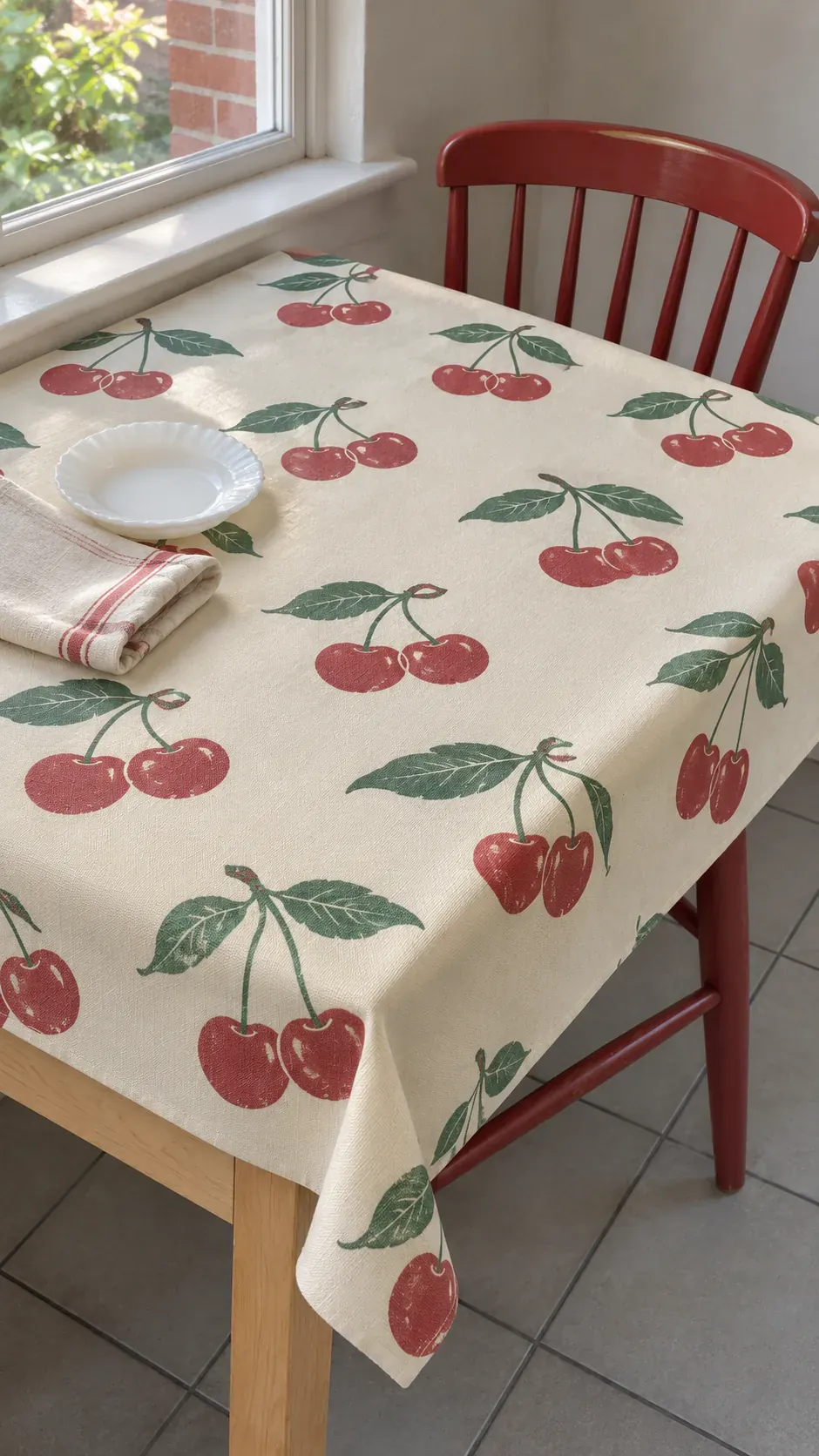
A simple fruit print can make a plain little table feel vintage at breakfast. Choose a cloth with a short drop so the corners do not catch on knees or stool backs. Look at the repeat on a folded sample, since a large motif can disappear if most of it falls over the edge. Keep the lead color close to something already in the room, such as a red chair.
Choose a Compact Dish Rack With a Drain Tray
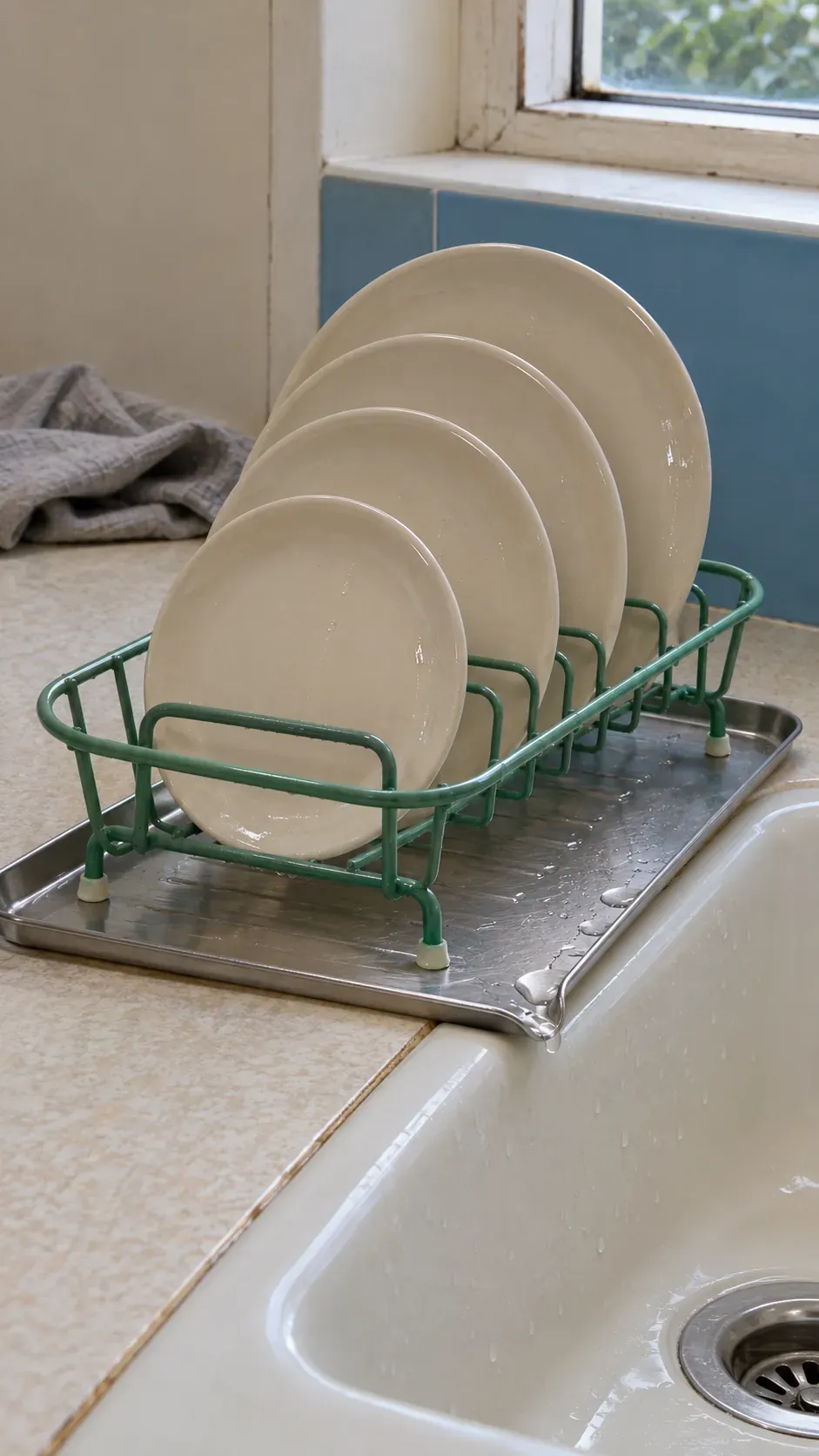
A simple wire rack with a drain tray is a useful fit for a kitchen with no dishwasher. Measure how much counter your largest plate requires when it is upright and check that the tray can drain toward the sink on your particular counter. Try the rack with your usual dinner dishes before giving it a permanent home. Keep a dry cloth and an empty bit of worktop nearby for a second load.
Paint the Cabinet Interiors for a Small Surprise
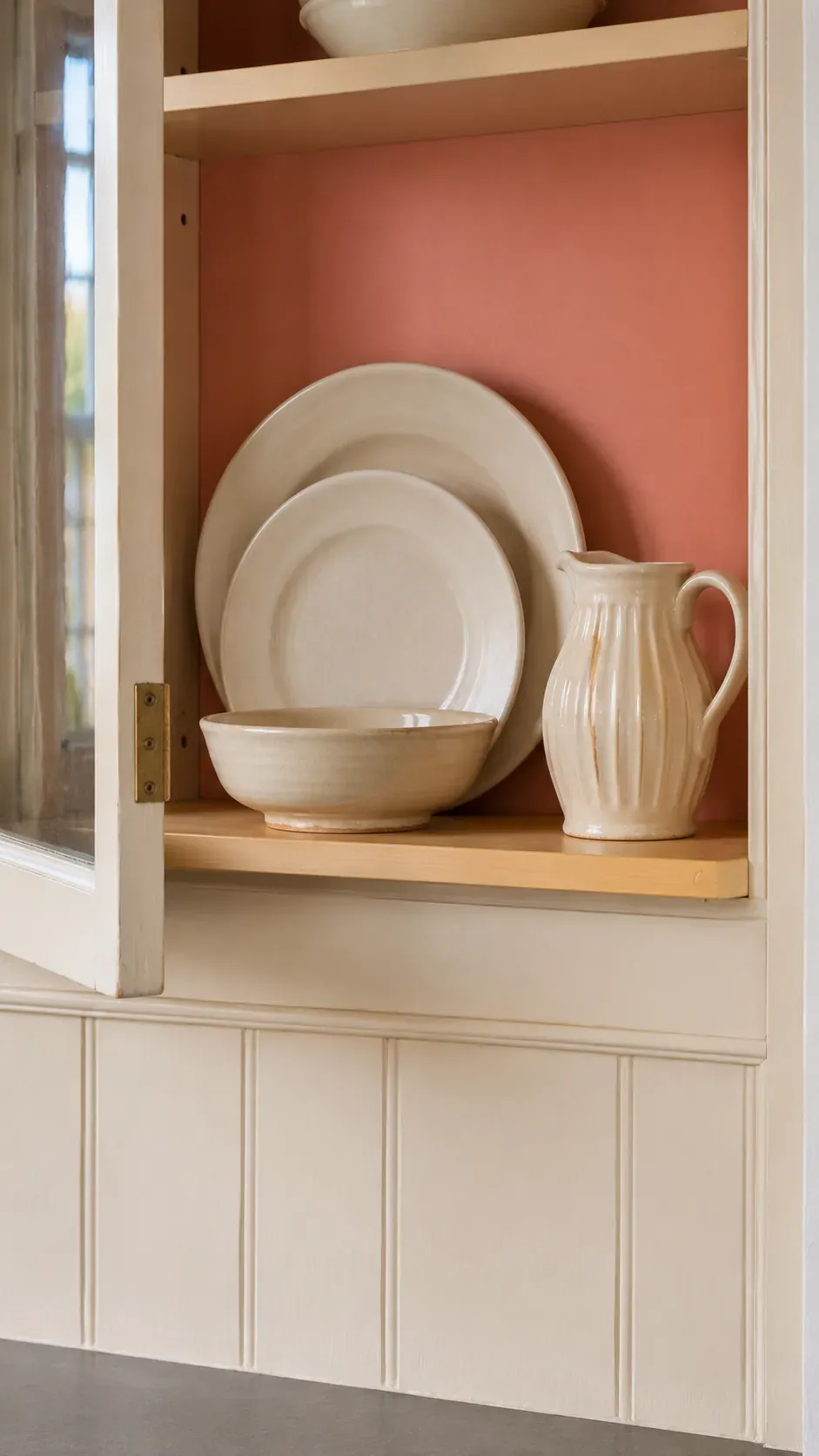
Inside a glass front cupboard, a pale coral back panel helps cream dishes stand out. Remove the shelves and measure their positions before painting so each shelf goes back with clearance to slide. Use a finish suitable for cabinet surfaces and wait for it to cure as directed before loading dishes. If you have landlord permission for a removable insert, you can paint that panel instead.
Store Flat Tools on the Back of a Door
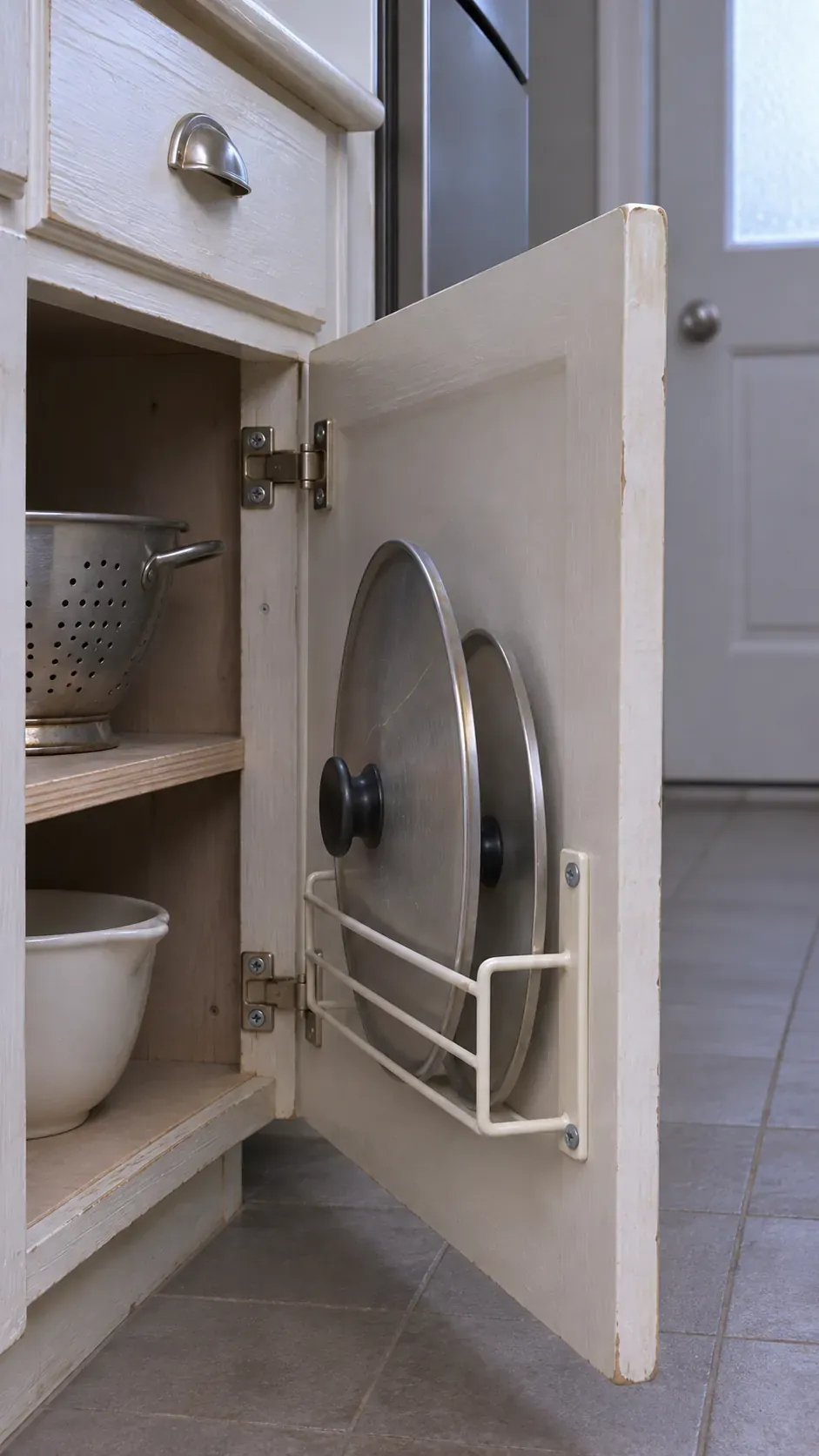
The inside of a cabinet door can hold pot lids, a small sieve, or loose measuring spoons. Tape a mockup at the intended height and shut the door slowly to see whether the shelves interfere. Check screw depth against the thickness of the door if you use a mounted holder. Keep heavy pieces in the cabinet so the hinge does less work.
Slip a Woven Basket Into an Open Cubby
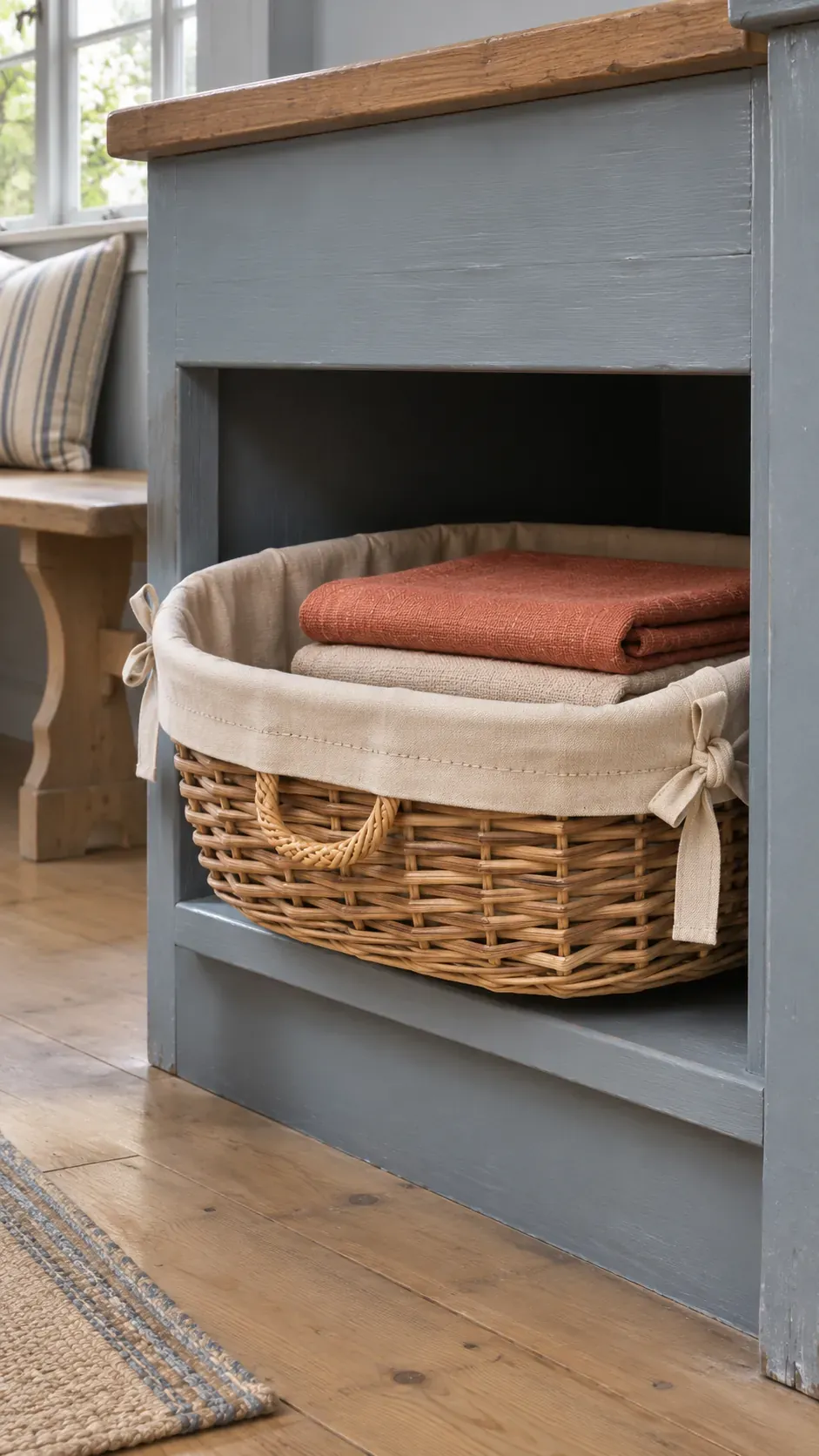
A low woven basket under the counter can hold the cloths that usually spill out of a drawer. Find one that slides clear without brushing its sides against the cabinet frame or catching on a knob. Choose a smooth cotton liner if the weave snags your towels. This is a good spot for dry textiles away from sink leaks and spills.
Use a Vintage Clock to Draw the Eye Up
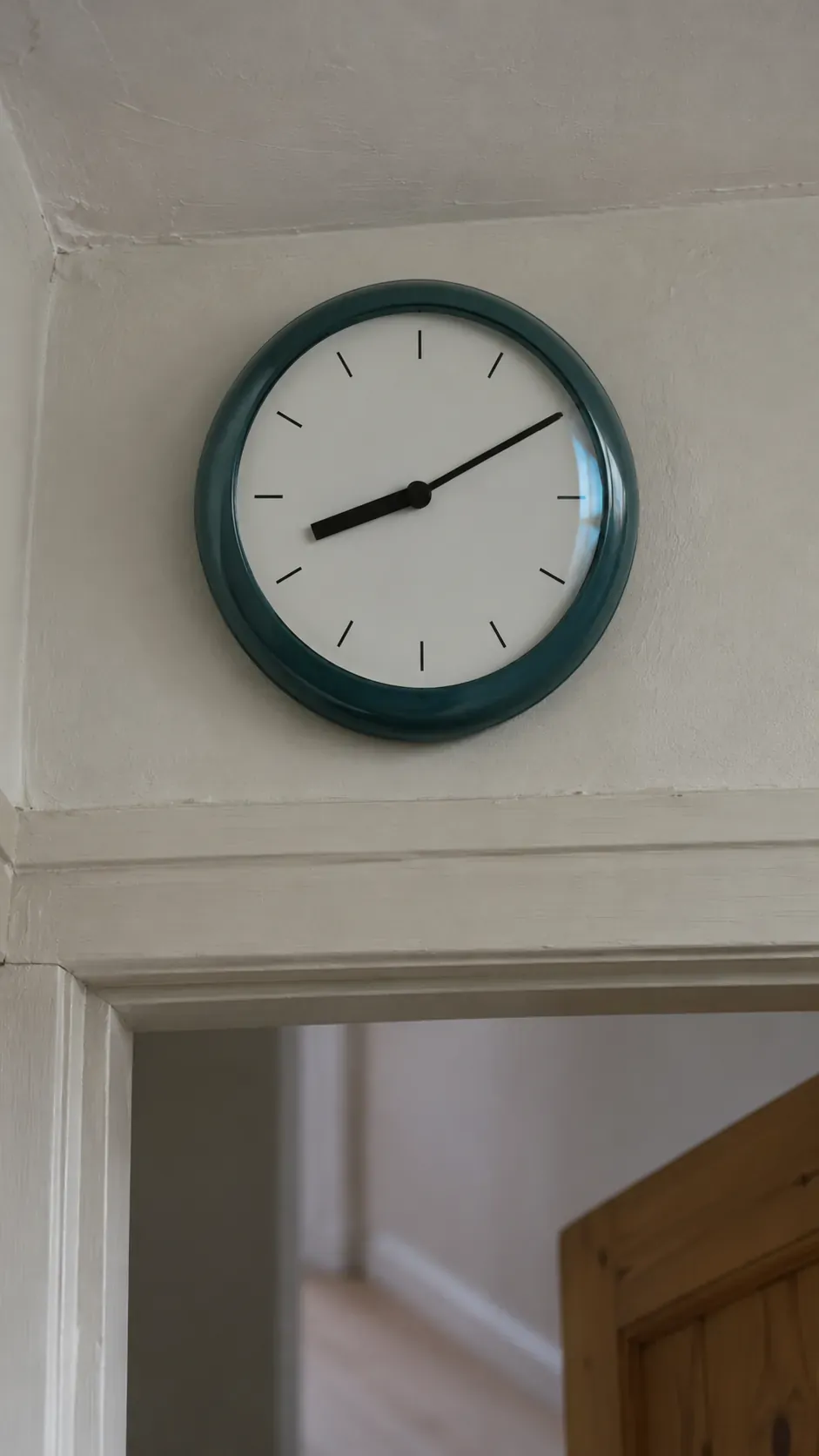
A plain round clock with a deep teal rim can use the slim wall above a doorway. Check that you can read its hands from the prep area and that a swung door leaves plenty of room below. A light battery clock needs only the fastener suited to its weight and the wall. Skip a projecting shelf in that spot and keep the space above the frame easy to dust.
Change the Toe Kick Color
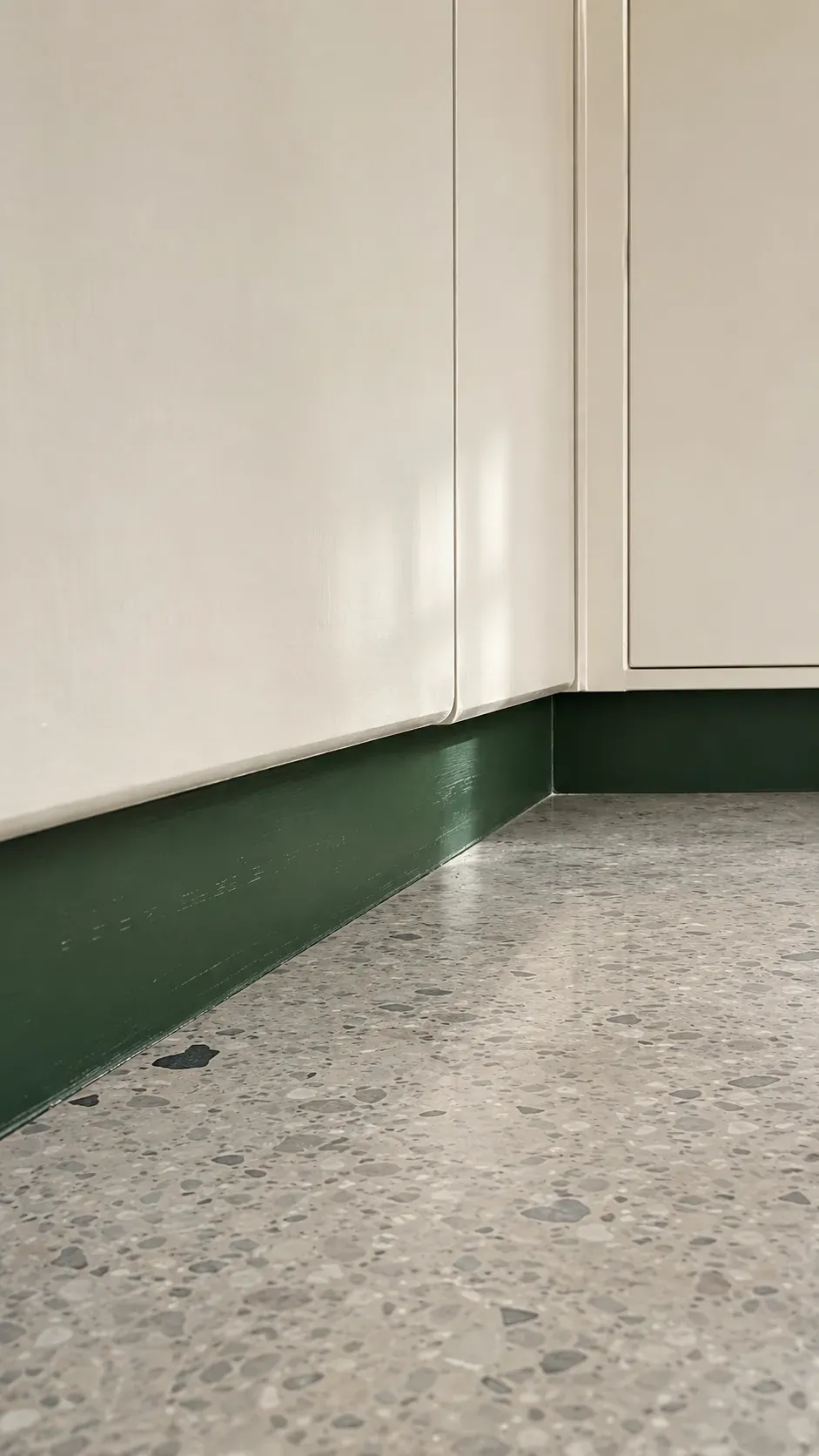
A deep green strip along the toe kick gives a run of white base cabinets a grounded look. Wipe it with a damp cloth before picking the finish so you can see how often it catches dirt. Use a durable and washable coating suited to the material. A cardboard paint sample tucked under the doors helps you see whether the color will register in the shadow.
Use Open Space Above Short Cabinets Sparingly
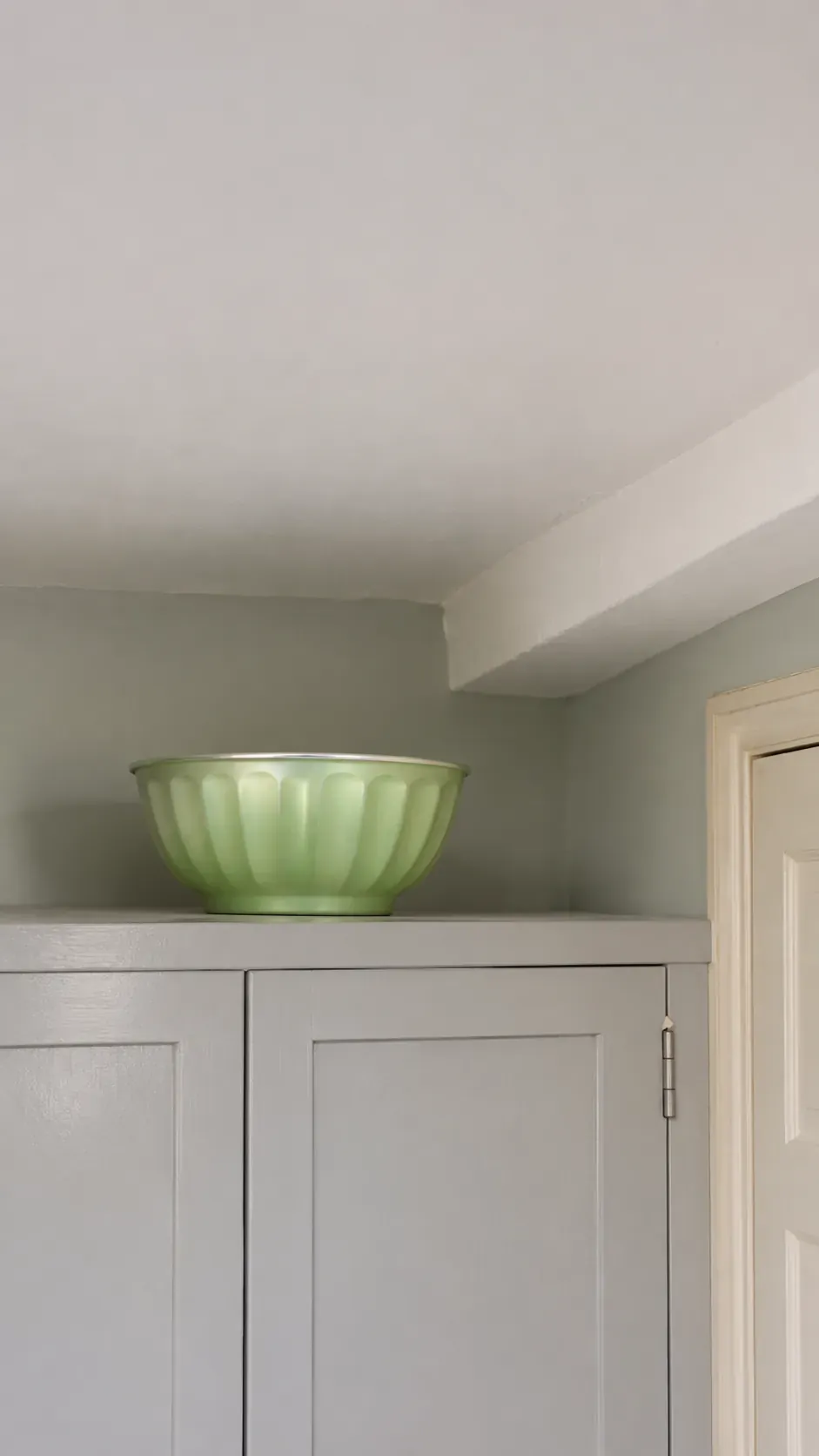
One lightweight vintage serving bowl can soften the gap above a short bank of cupboards. Measure from the top of the cabinet to the ceiling and pick a shape you can lift down comfortably when you clean. Keep the area above a range empty and leave vents and equipment clear. Save heavy pottery for a lower shelf where you can reach it easily.
Clear a Drawer for the Things That Crowd the Counter
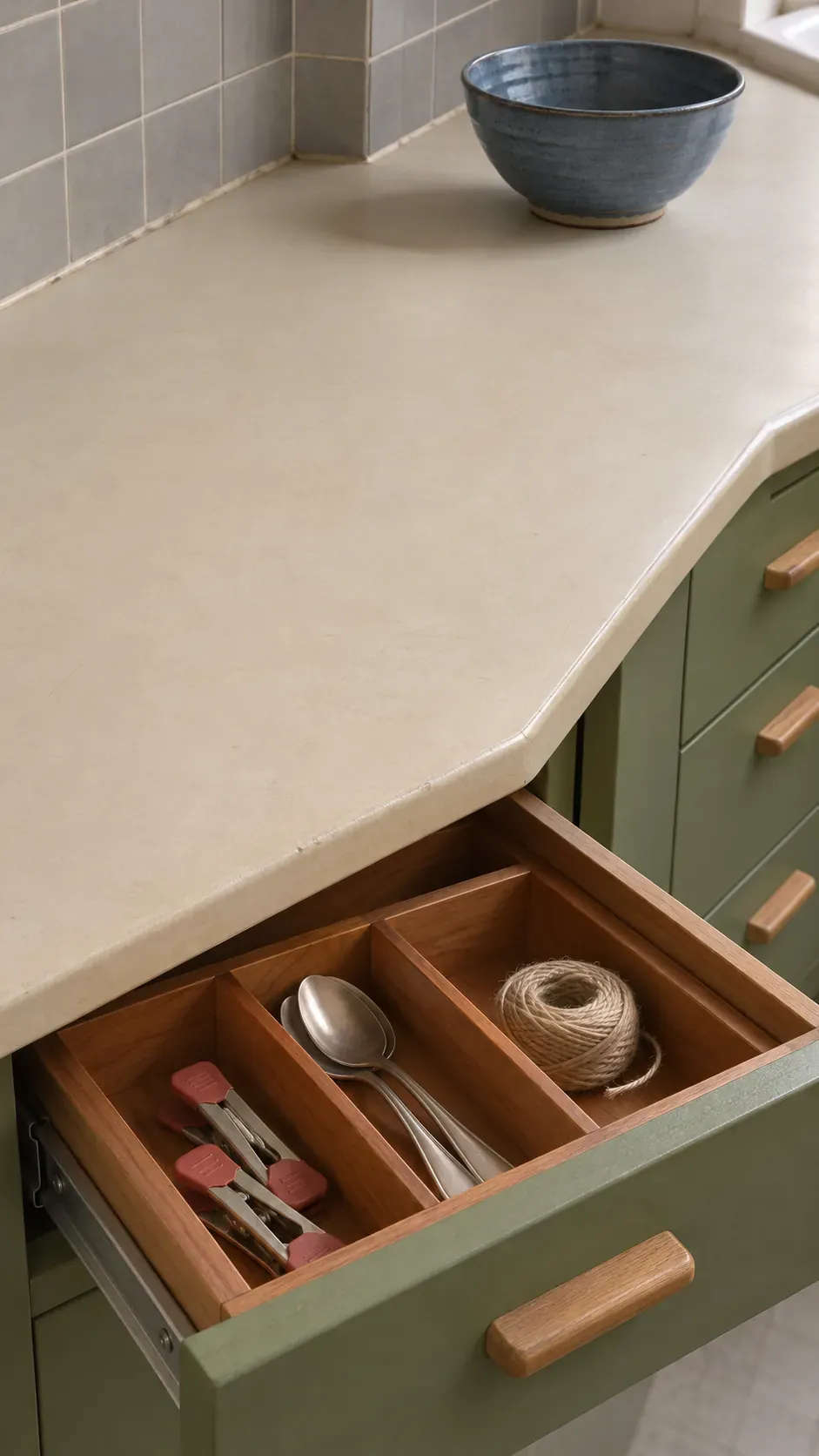
Take everything off the worktop for one evening except the tools you need to make dinner. Put the extras in a wide drawer with a shallow wood tray for clips, spoons, and other small things that slide around. In the morning see what you reach for again and give those things a place beside the task they serve. A clear counter leaves room for the vintage kettle or bowl you wanted to see in the first place.