
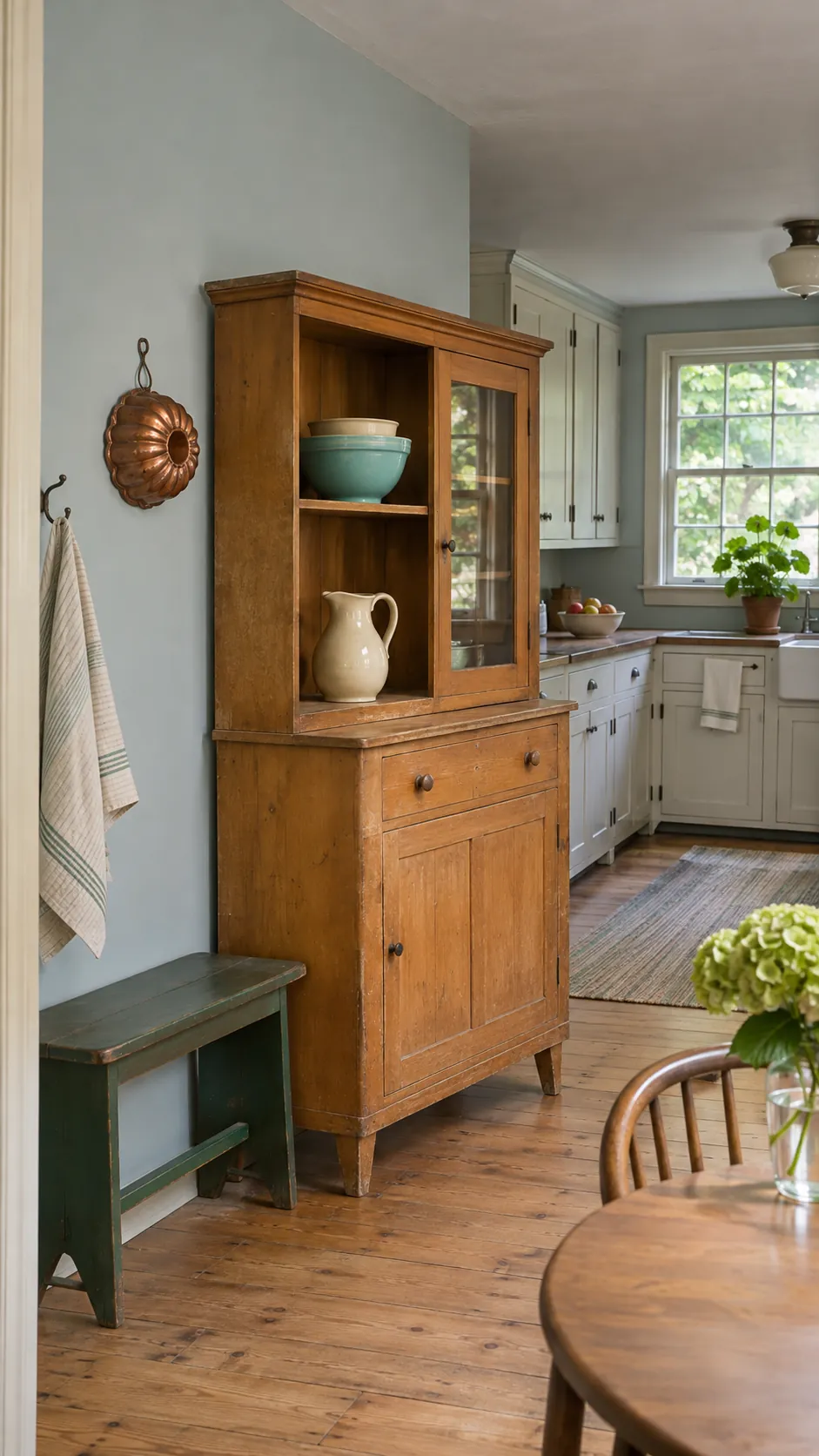
A thrift store bowl needs one spot where you can see it. A full dinner set needs a cupboard, safe stacking space, and a reason to bring it home. Decide what job a piece will do before buying it. A kitchen usually looks more collected when each new find earns its place.
Show the Colors in a Nest of Pyrex Bowls
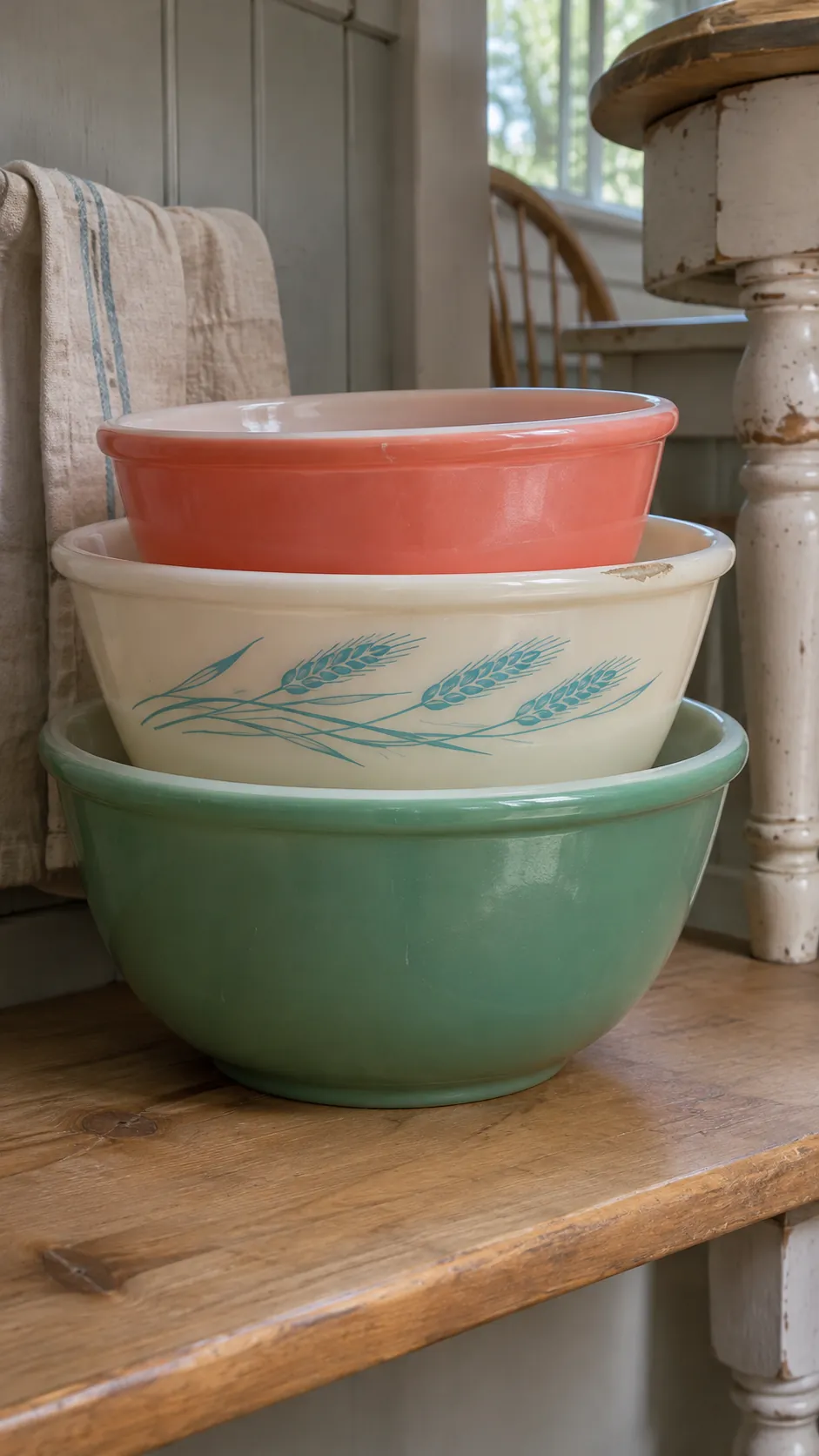
Turn a stack of vintage Pyrex bowls so two or three bands of color are visible. If the rims disappear inside each other, try a low fitted display spacer with a nonslip surface. Put the stack on a reachable shelf so you can lift it with both hands. Check the older bowls for chips before you buy, especially around the rim.
Give One Pattern Its Own Shelf
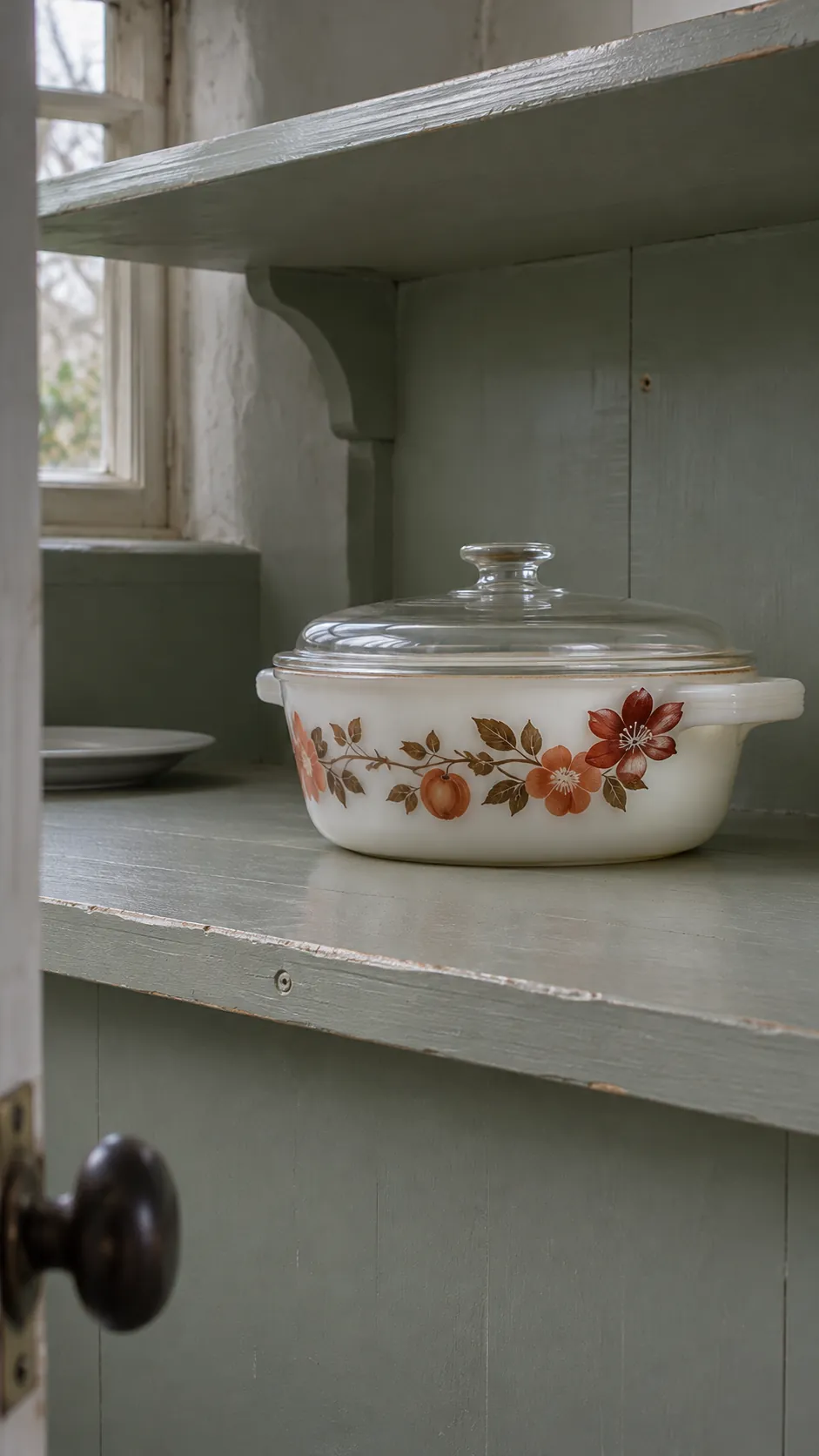
When every dish on the shelf has a pattern, the one you hunted for can disappear. Give a favorite floral casserole an open spot at eye height with a plain dish some distance away. Look at the shelf from the kitchen entrance before adding a second patterned piece. Turn the casserole enough that you can see its handles.
Stand Transferware Plates Upright
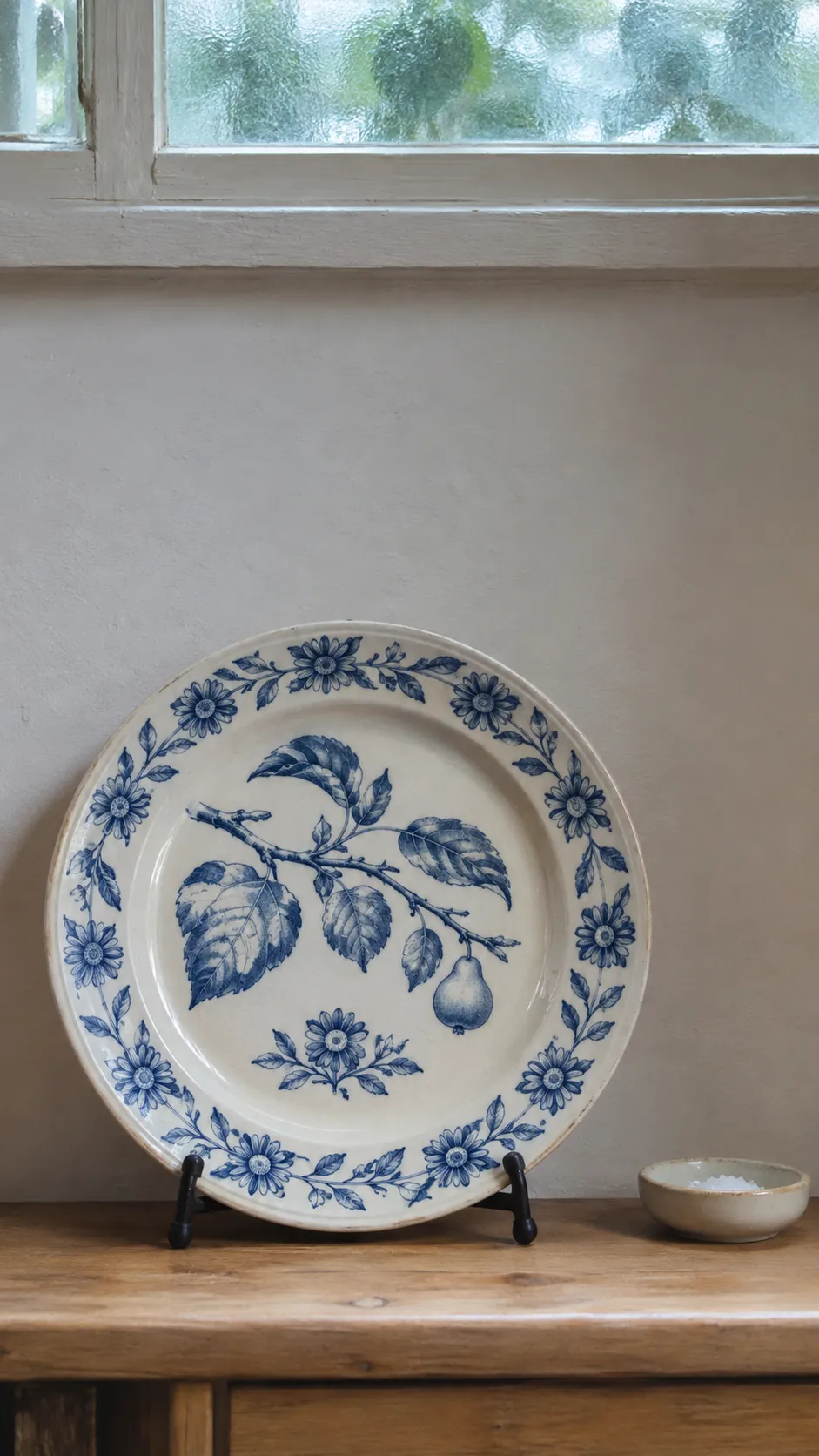
Set a transferware plate in a stand sized to its weight and diameter. Move it far enough back that you can reach a cup without brushing the rim. A dark border looks clear against a pale cabinet back and gives you a starting point for other colors. Pass on a cracked plate if the stand would put pressure on the damaged section.
Open Up a Small Glass Front Hutch
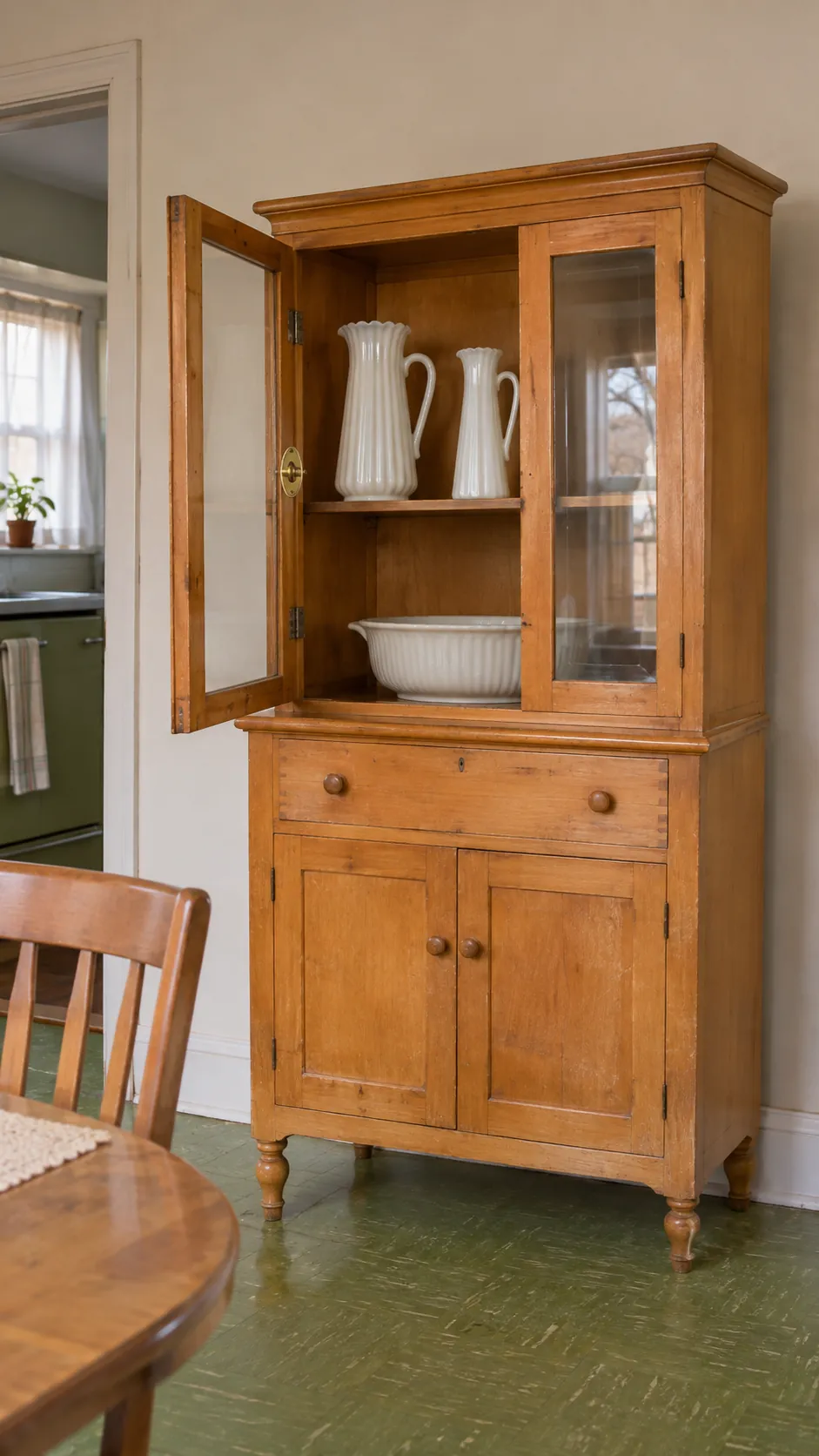
Width is only one measurement when you shop for a secondhand hutch. Measure its base depth, the swing of the doors and the narrowest point on the way into the kitchen. Short legs let a little floor show underneath. Anchor a tall hutch according to the maker or a furniture specialist.
Put heavier dishes on a lower shelf where you can lift them with both hands. Leave a tall gap above a pitcher so you can lift its base without tipping it forward. Test both latches with the cabinet level before loading it.
Turn a Stoneware Crock Into a Tool Holder
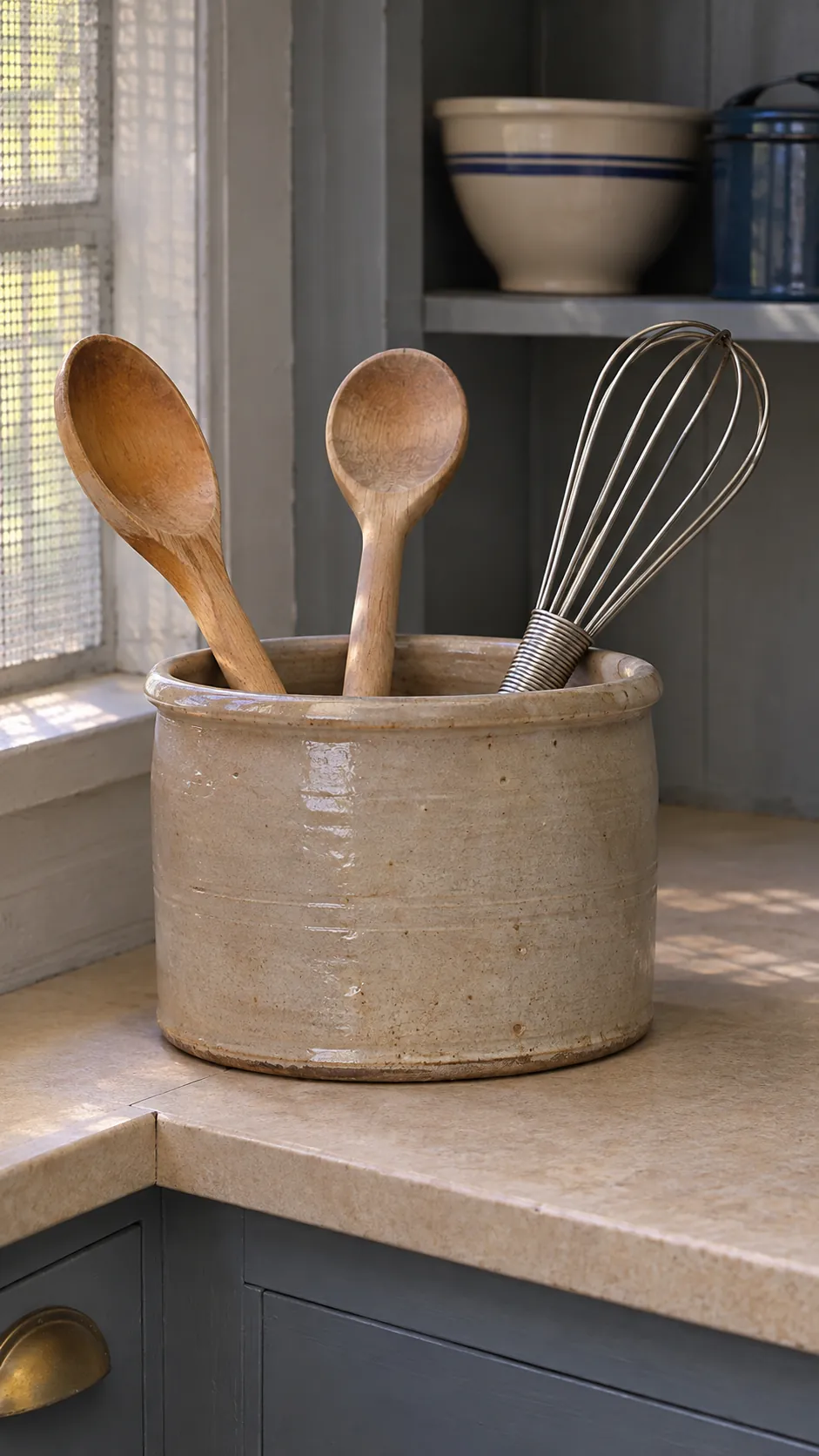
Look for a crock wide enough to lift a whisk without tangling it with the wooden handles. A broad flat foot matters more than the maker’s mark if you plan to reach into it while cooking. Put it next to a clear bit of counter with enough height above for your longest spoon. Use a piece with an unknown glaze for dry tools instead of loose ingredients.
Hang an Old Rolling Pin Across Two Supports
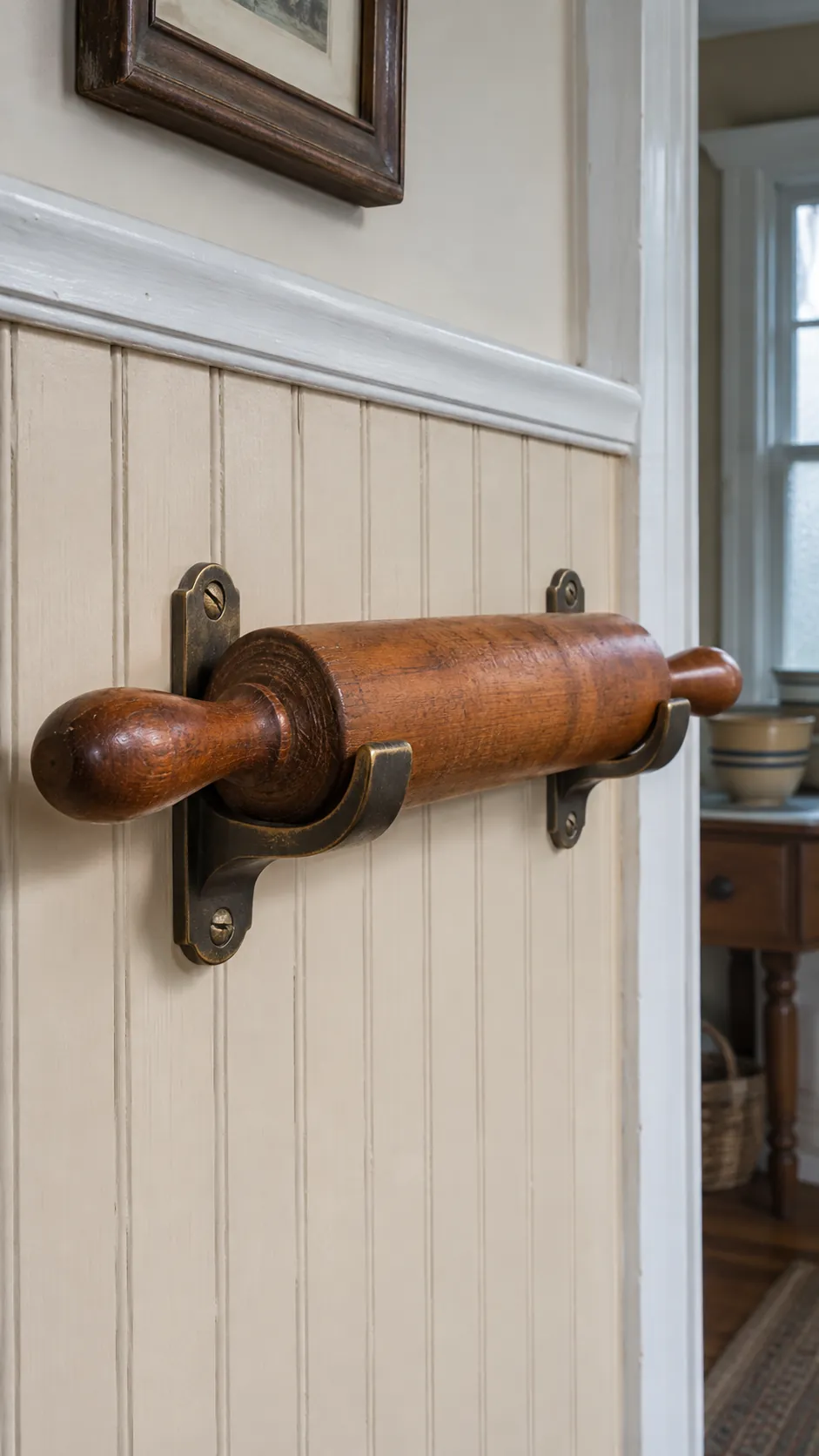
A worn rolling pin shows its age where hands polished the wood around the grips. Use two secure holders under the barrel and choose a type that prevents rolling. Mount the pin on an open wall away from the cooktop. Space the holders so both grips clear the wall when you lift the pin.
Give Copper Molds a Small Wall
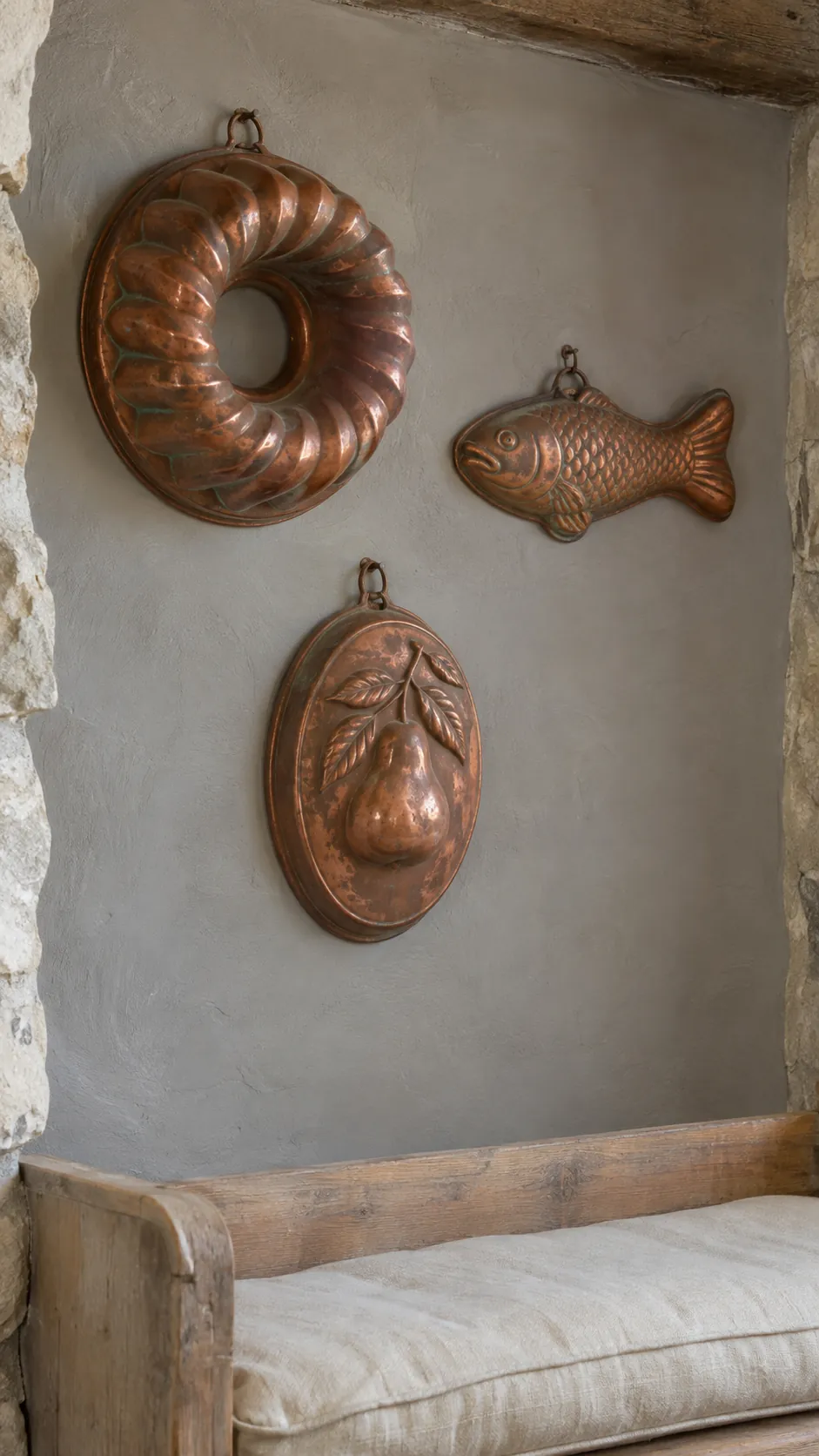
A copper ring mold and two smaller shapes can fit above a breakfast bench. Leave space between them so the relief casts distinct shadows. Check the hanging loops before you buy and replace damaged holders. Keep molds with unknown linings on display.
Put an Old Recipe Box Near the Table
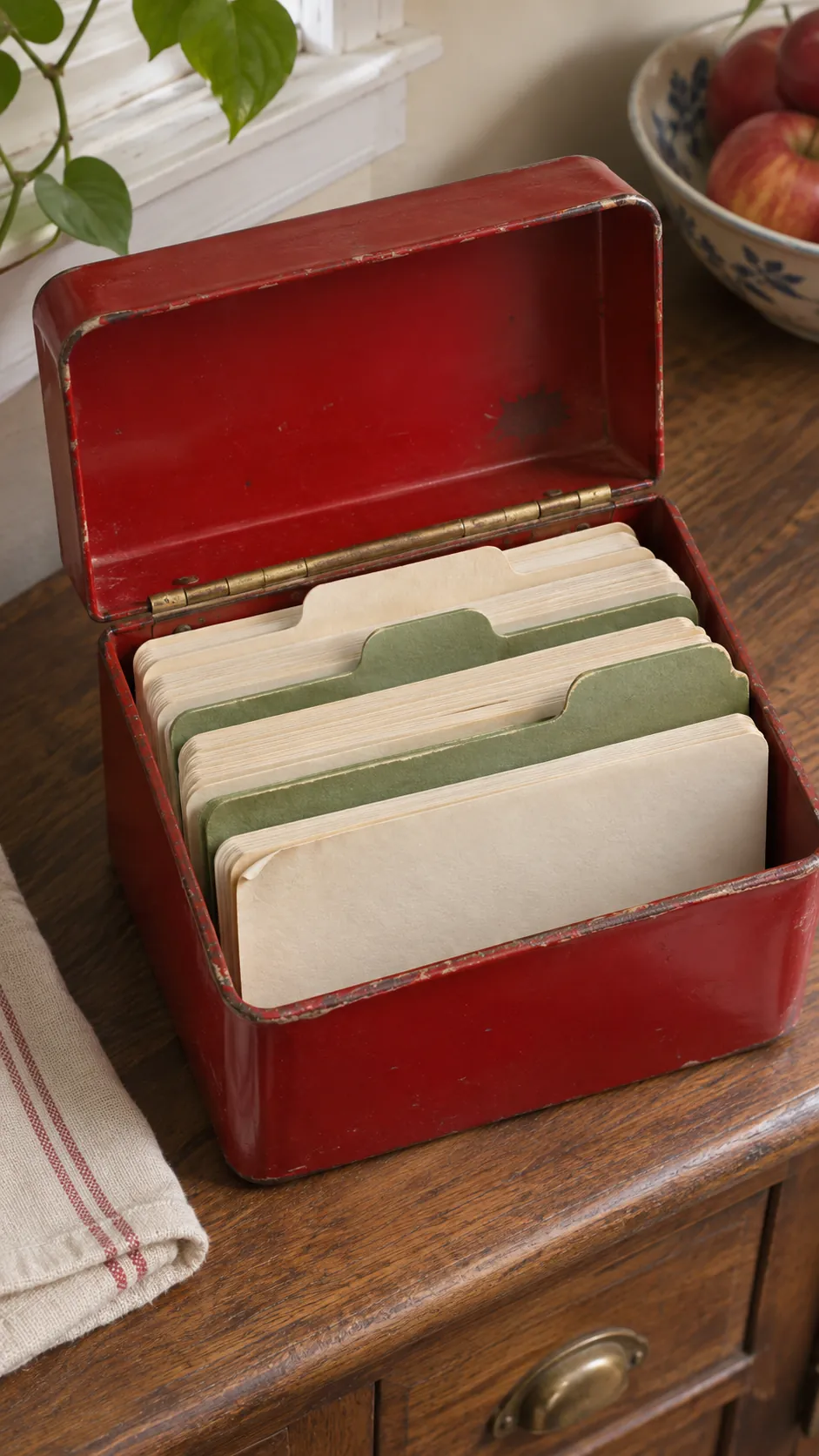
Take a blank recipe card of the size you use when you go thrifting. Older tin boxes vary in width, and some lids close inside the top rim. Give the box a dry spot on the dining side of the room. Leave a couple of blank dividers facing forward if you like seeing the worn corners when you open it.
Frame a Handwritten Family Recipe
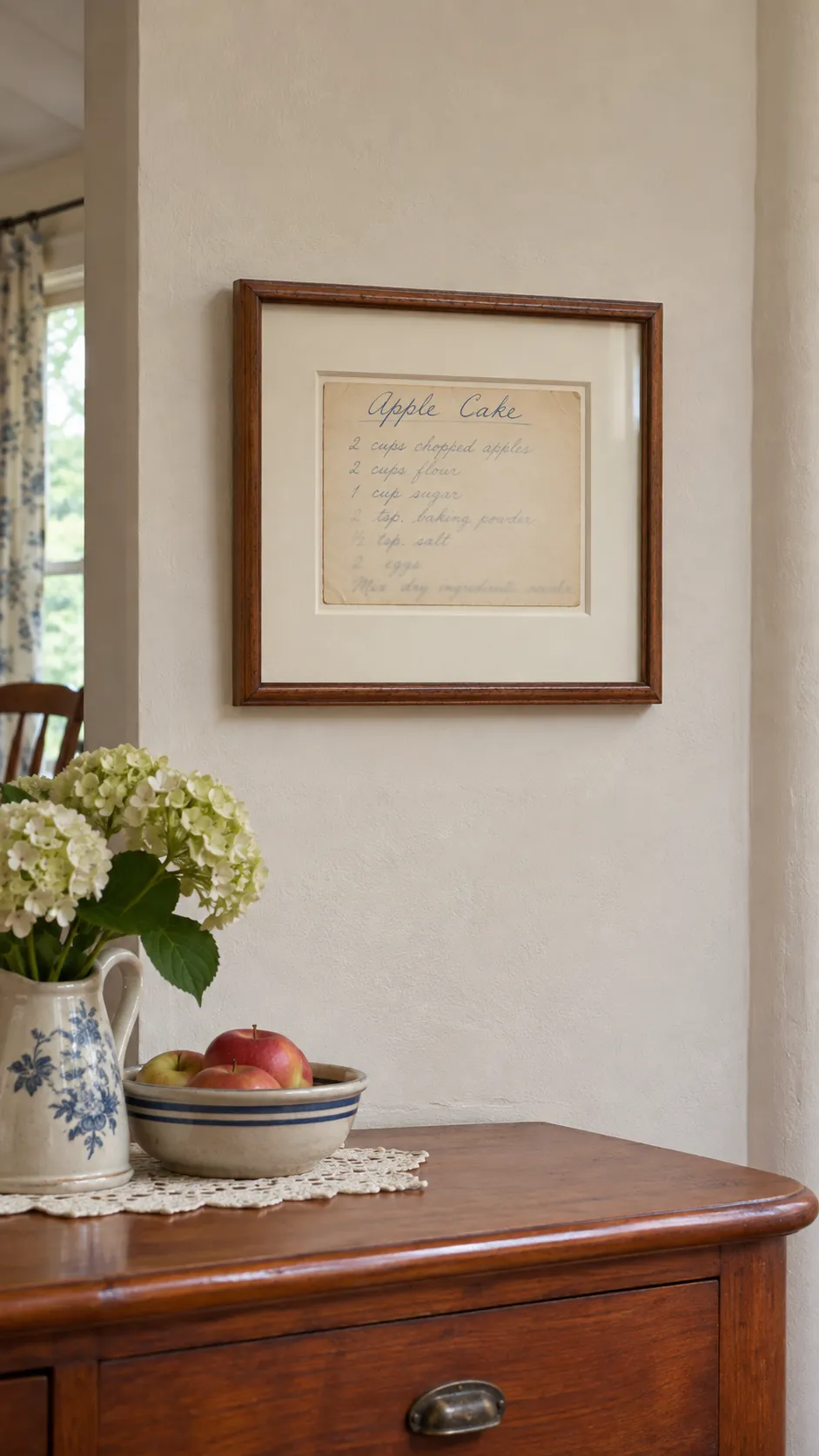
A familiar scribble can carry more meaning than a printed kitchen sign. Display a copy if the original card is fragile or irreplaceable. Give the paper a little space behind the glass to keep it from touching the glazing. Hang it away from direct sunlight, steam and cooking splashes.
Find a Glass Butter Dish With Both Parts
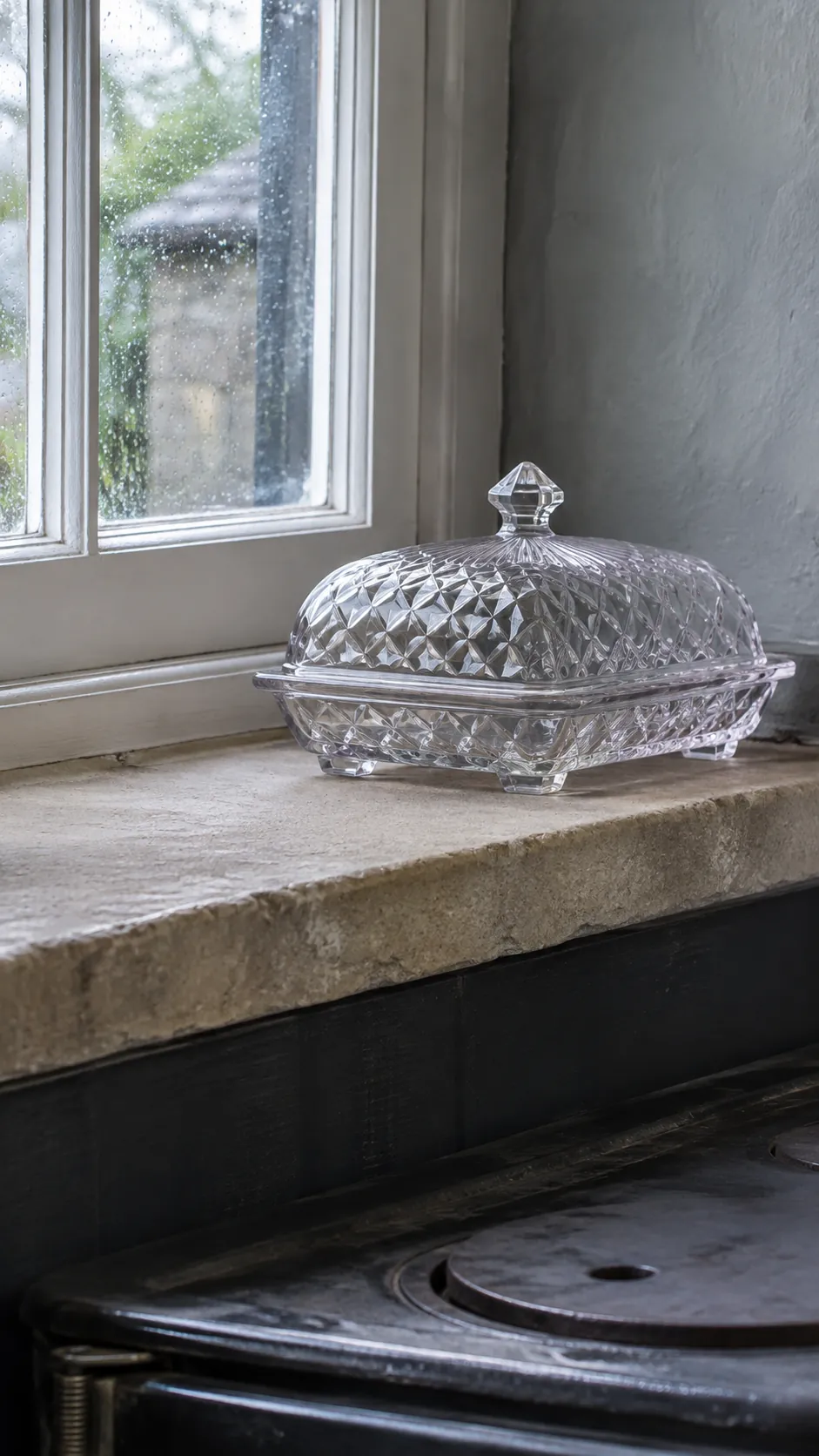
A pressed glass butter dish can catch light on a shelf without using much room. Check that the cover sits flat in the tray before you buy, since a loose one can chip around the rim. Measure the butter you use if you want a dish that fits. If you are unsure about the glass, keep it closed on display.
Put Small Creamers on a Ledge
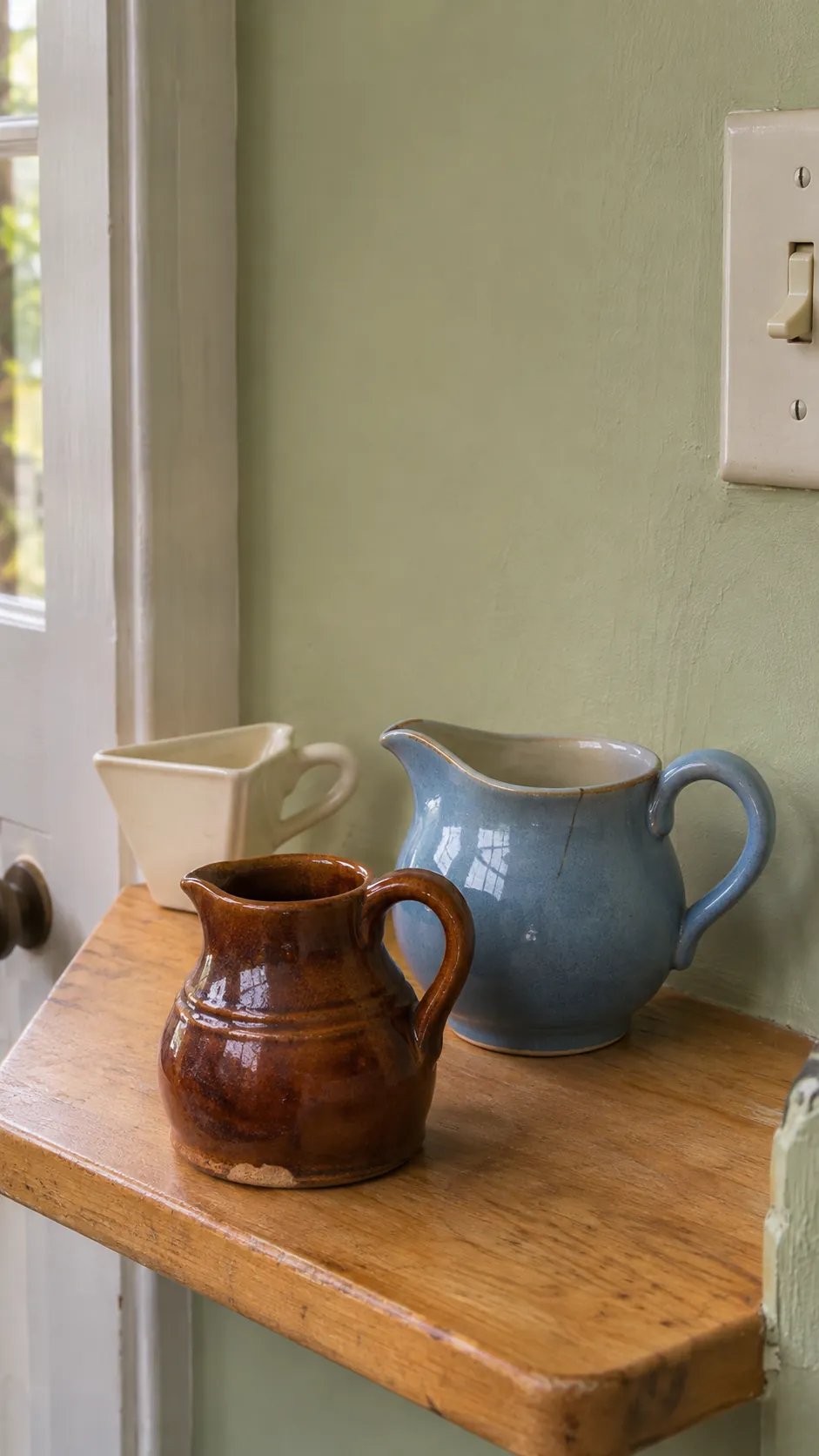
A miniature creamer can disappear behind an upright plate. Give two or three small ones a ledge with a low raised edge. Face the handles at different angles so you can see their shape. Compare the width across the spouts before bringing another one home.
Arrange Shakers by Shape
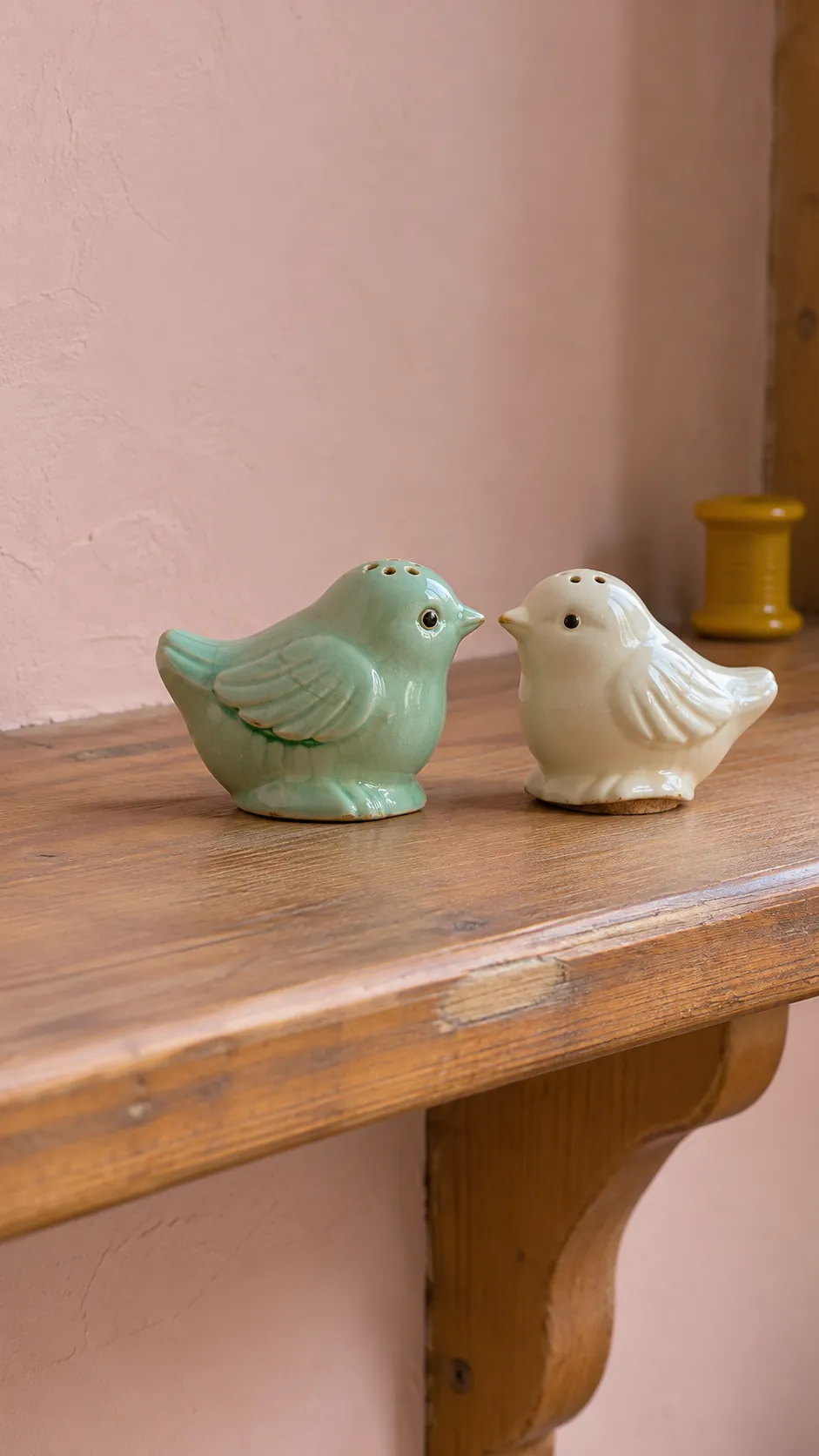
Turn a pair of bird shakers toward each other and give their beaks space. An odd find nearby works when it stays lower or sits back from the pair. Check that the bases are flat and their old plugs stay in place if you pick them up. Leave unknown or damaged pieces empty.
Hang a Striped Tea Towel
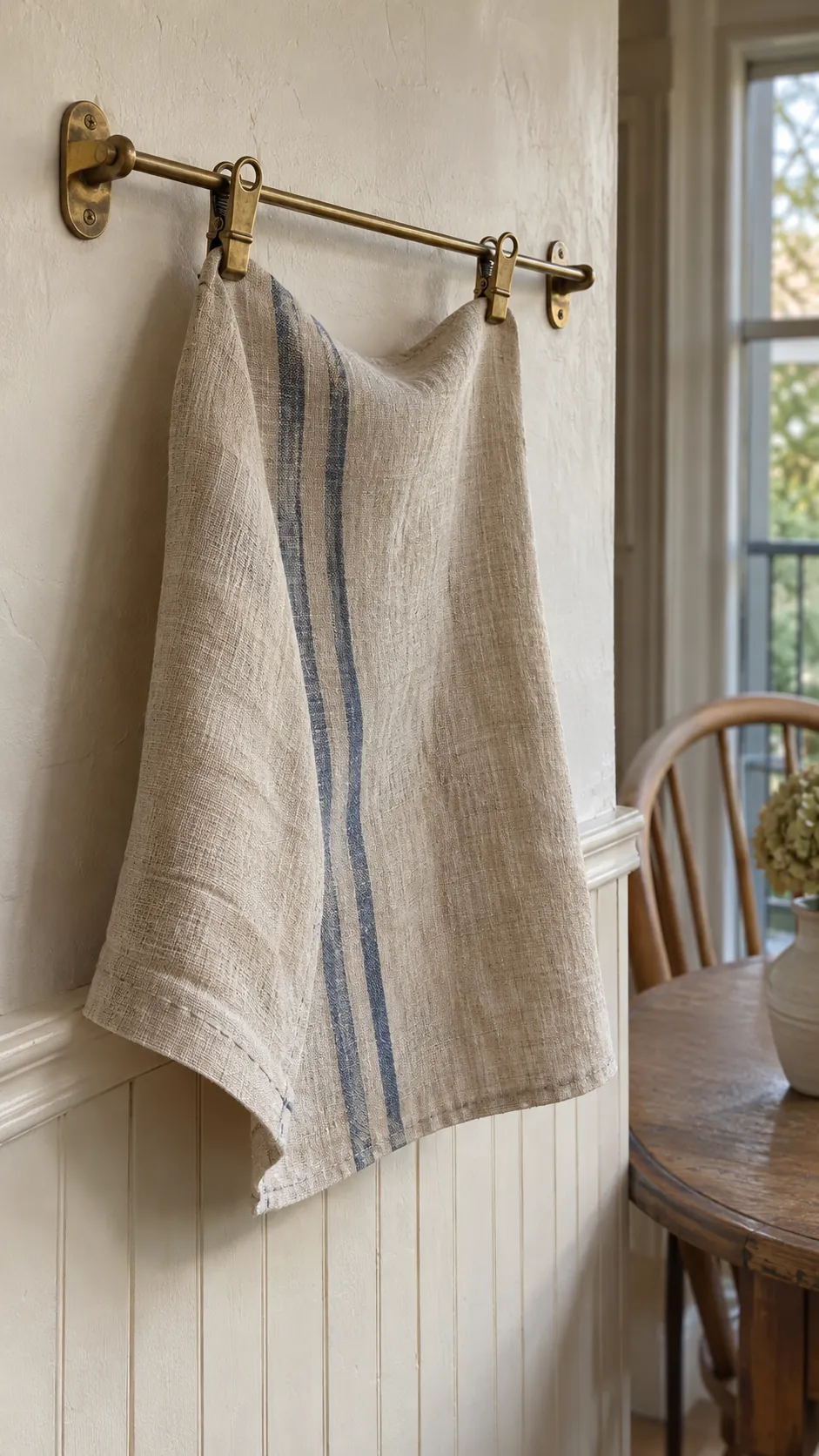
A faded linen towel can soften a blank spot by the breakfast table. Hold it with a pair of fabric clips or a little quilt hanger that needs no holes through the cloth. Wash it according to its care needs and dry it completely before hanging. Keep the loose end away from burners.
Stand Up an Old Enamel Tray
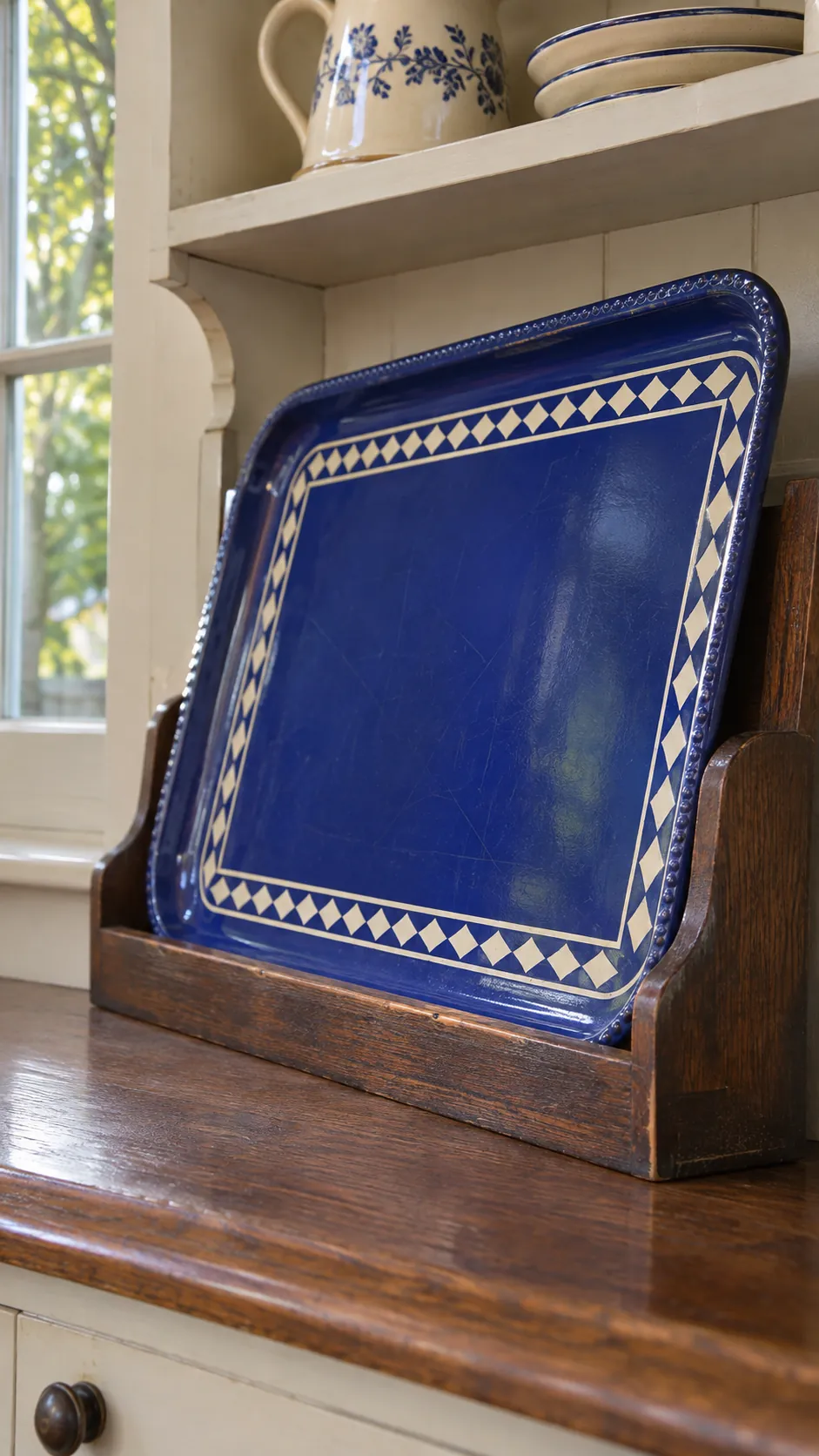
Choose a holder with a deep enough front lip to catch the rim of an enamel tray. Look around the edge in good light for sharp chips. Put a vivid tray against a pale shelf back where its color can read. Store trays you use for baking in a lower divider.
Move Jadeite Into Indirect Daylight
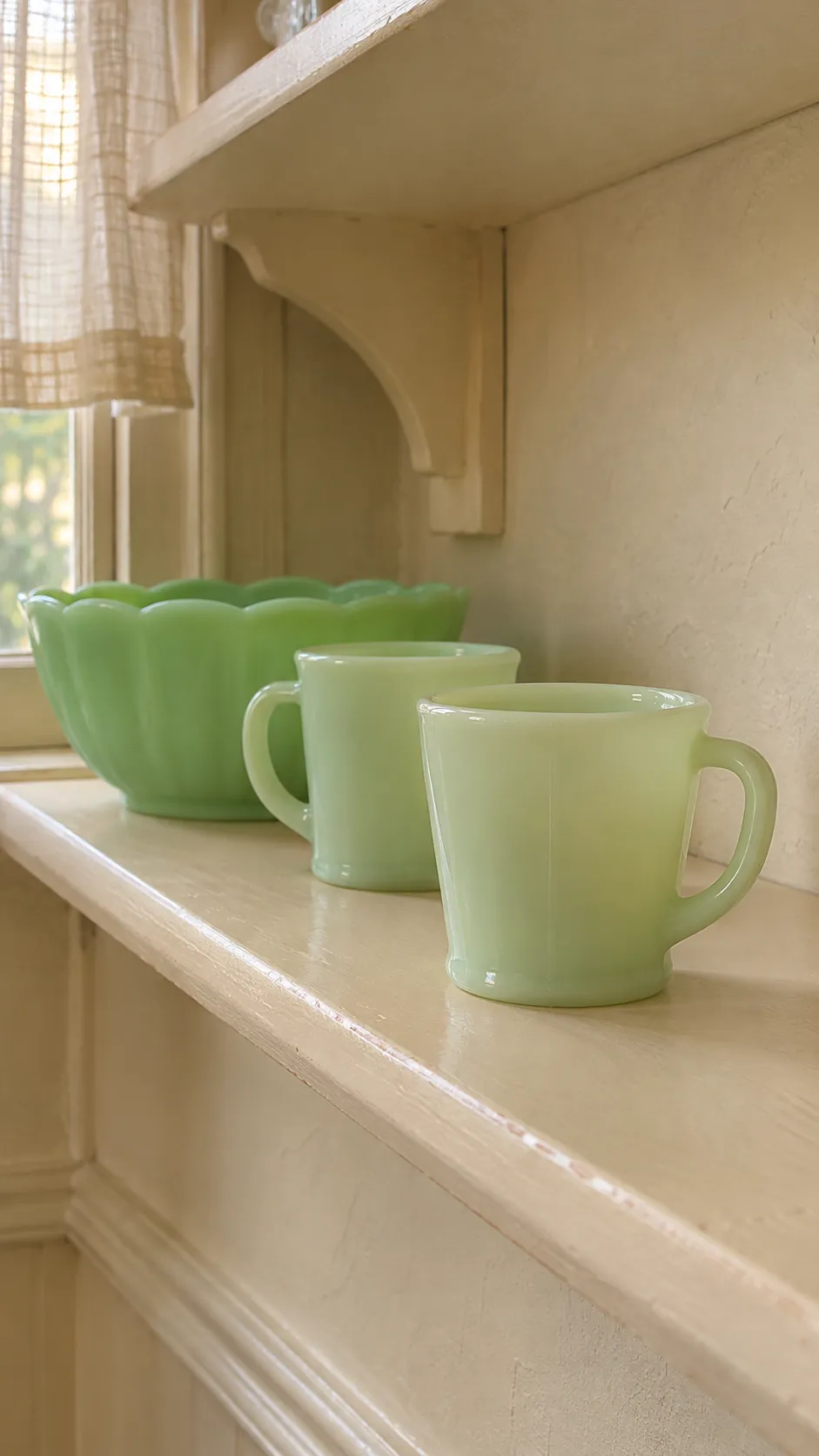
Pale green milk glass can look washed out in direct sun or dull deep inside a cabinet. Try it on an open shelf near a side window, where indirect light shows the edges. A cream backing lets several slightly different greens sit together. Leave room between handles so you can lift one mug at a time.
Put Dried Stems in an Old Pitcher
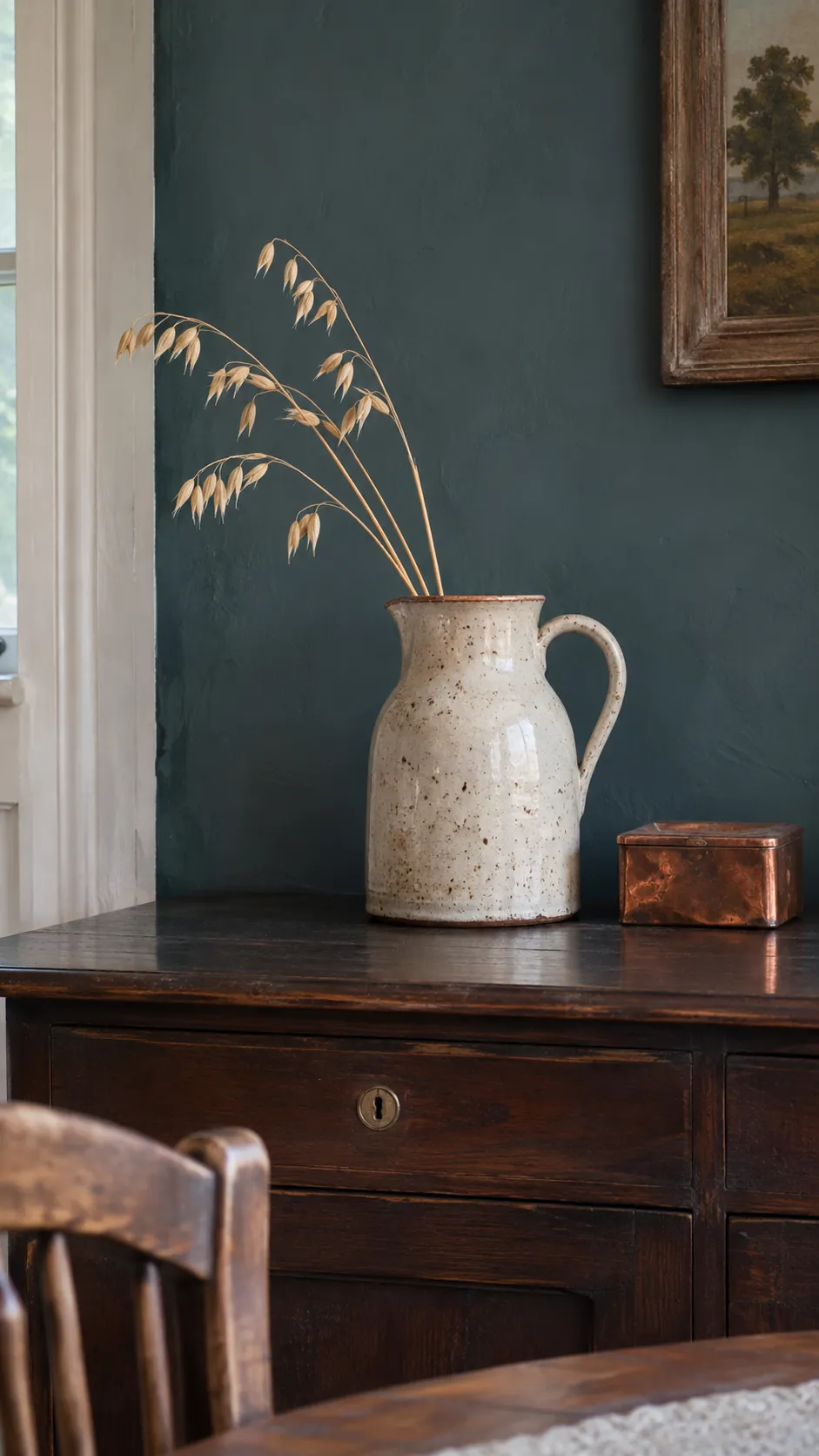
A tall pitcher with an appealing handle can earn its place even if you are unsure about pouring from it. Put a few short dried stems inside and set it back on a sideboard. Trim anything that extends into the walking route. A vessel with a wide foot stays steadier if a sleeve catches a stem.
Set a Kitchen Scale on a Sideboard
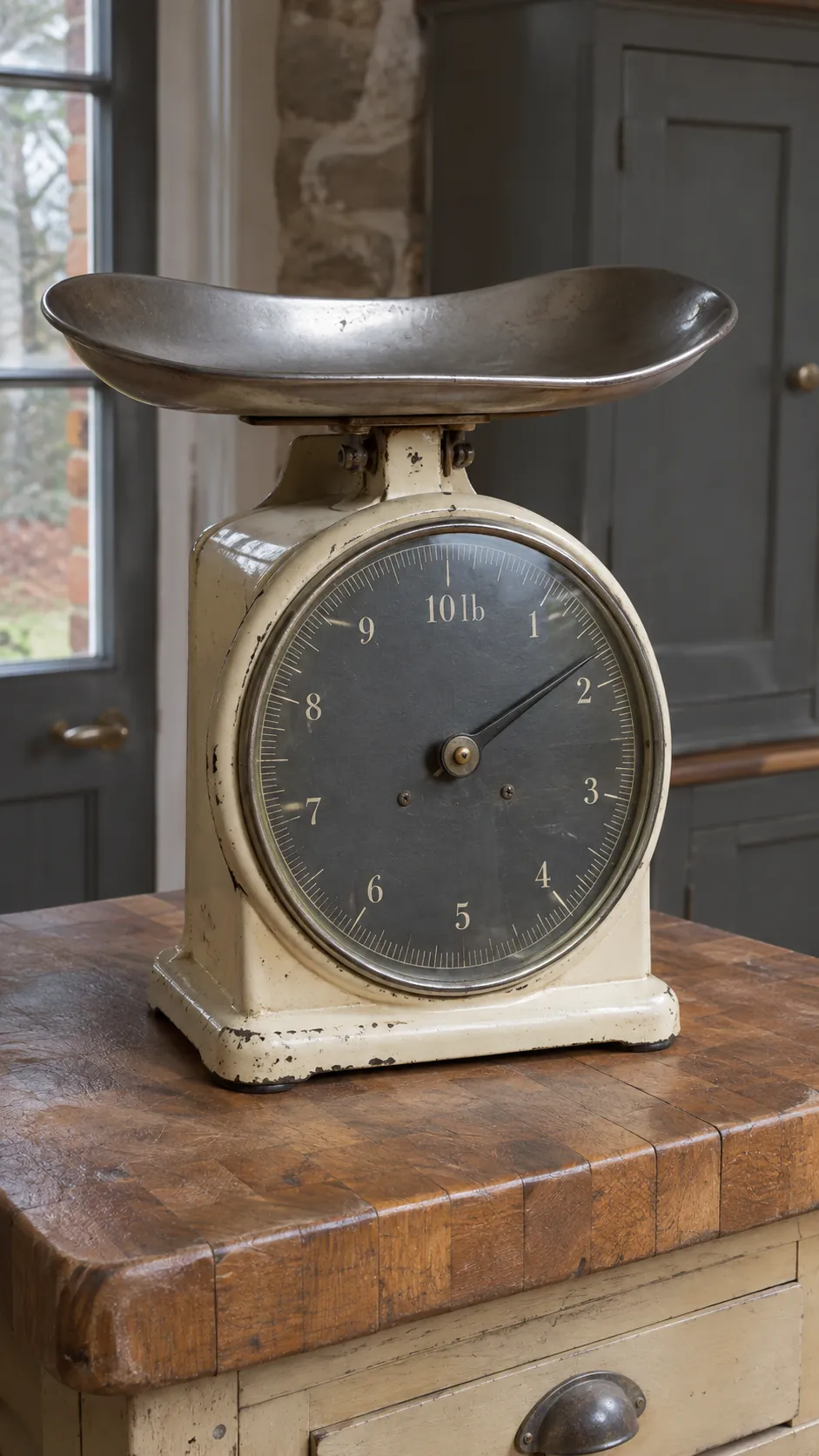
An old scale needs a deep base of support and more room than the dial suggests. Try the platform gently if the seller allows it. Ensure you can open nearby cabinet doors without nudging the scale. Keep it for display if you cannot verify its accuracy.
Nest Stoneware Bowls by Color
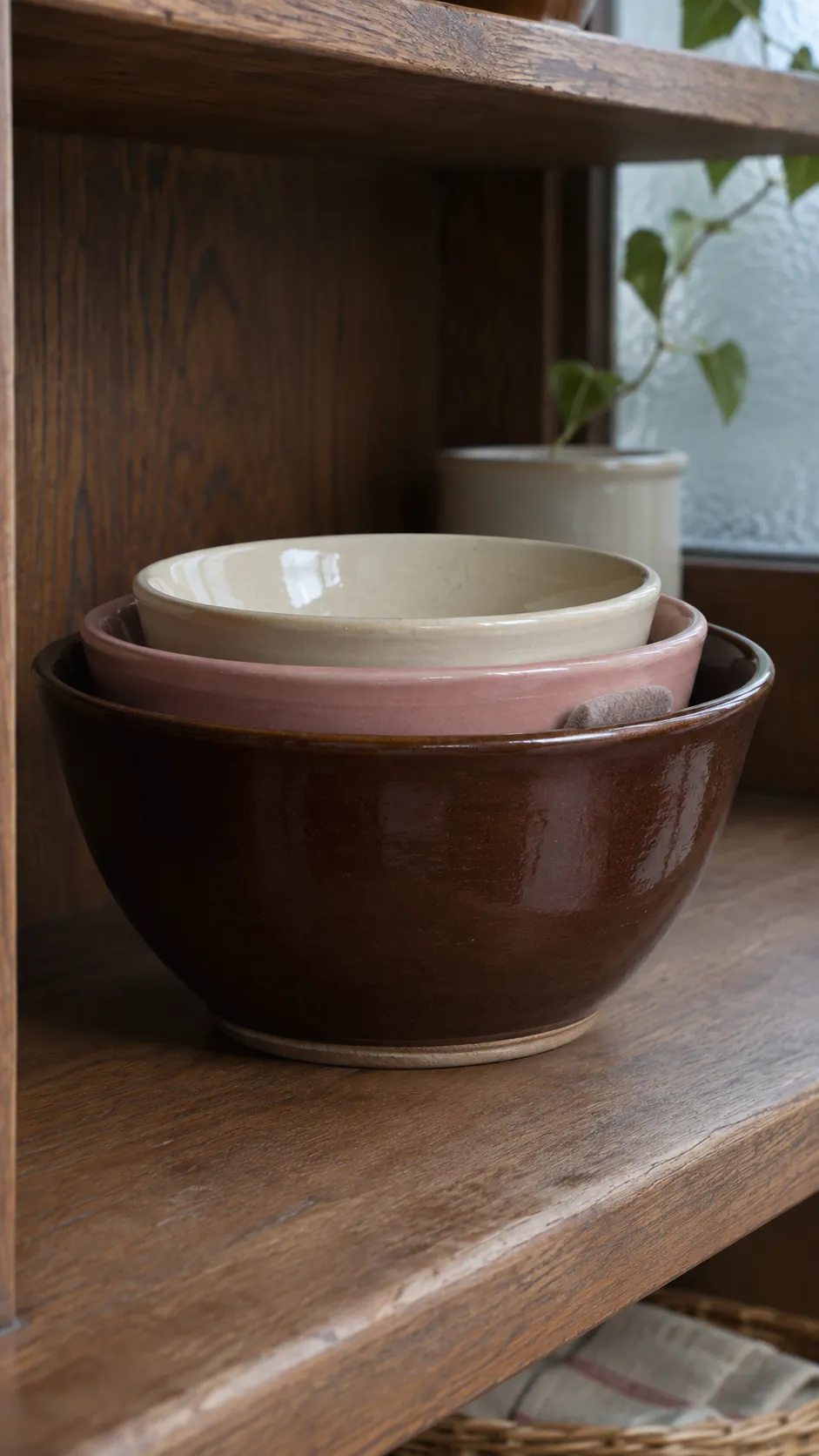
Plain bowls from different sets can look related when their outer shades move from dark to light. Test each foot against the bowl below before buying another size. Keep the largest and heaviest bowl at the bottom for stability. A clean thin felt pad can protect the glaze where display bowls touch.
Stand a Bread Board on a Dry Sideboard
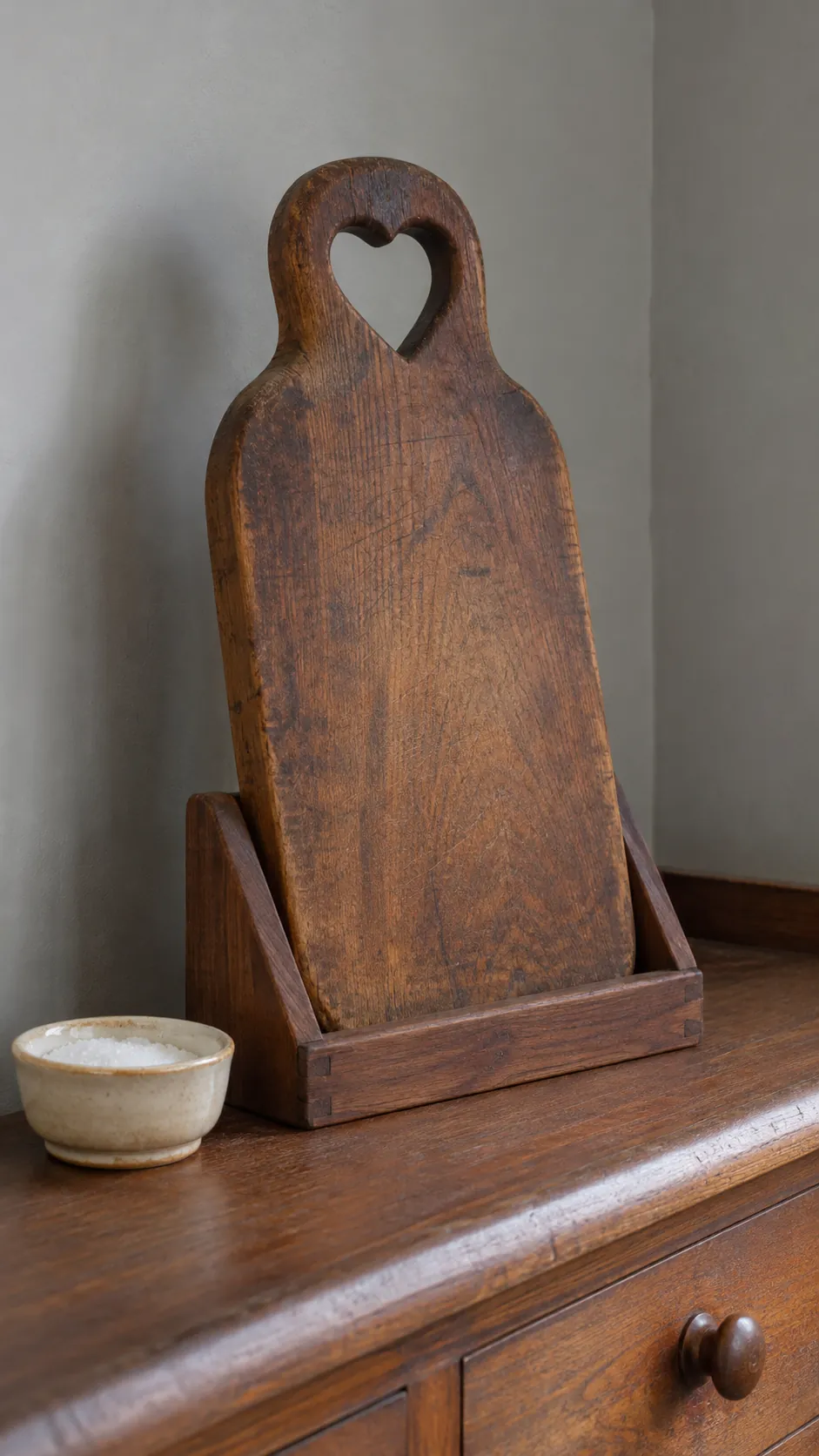
An old board with a shaped handle can add height behind low crockery. Rest it in a stable holder well inside the sideboard edge. Look for damage before you buy, especially active mold or a crack that continues through the wood. Use a separate food safe board for chopping if the old finish is uncertain.
Show a Cookbook Cover Face Out
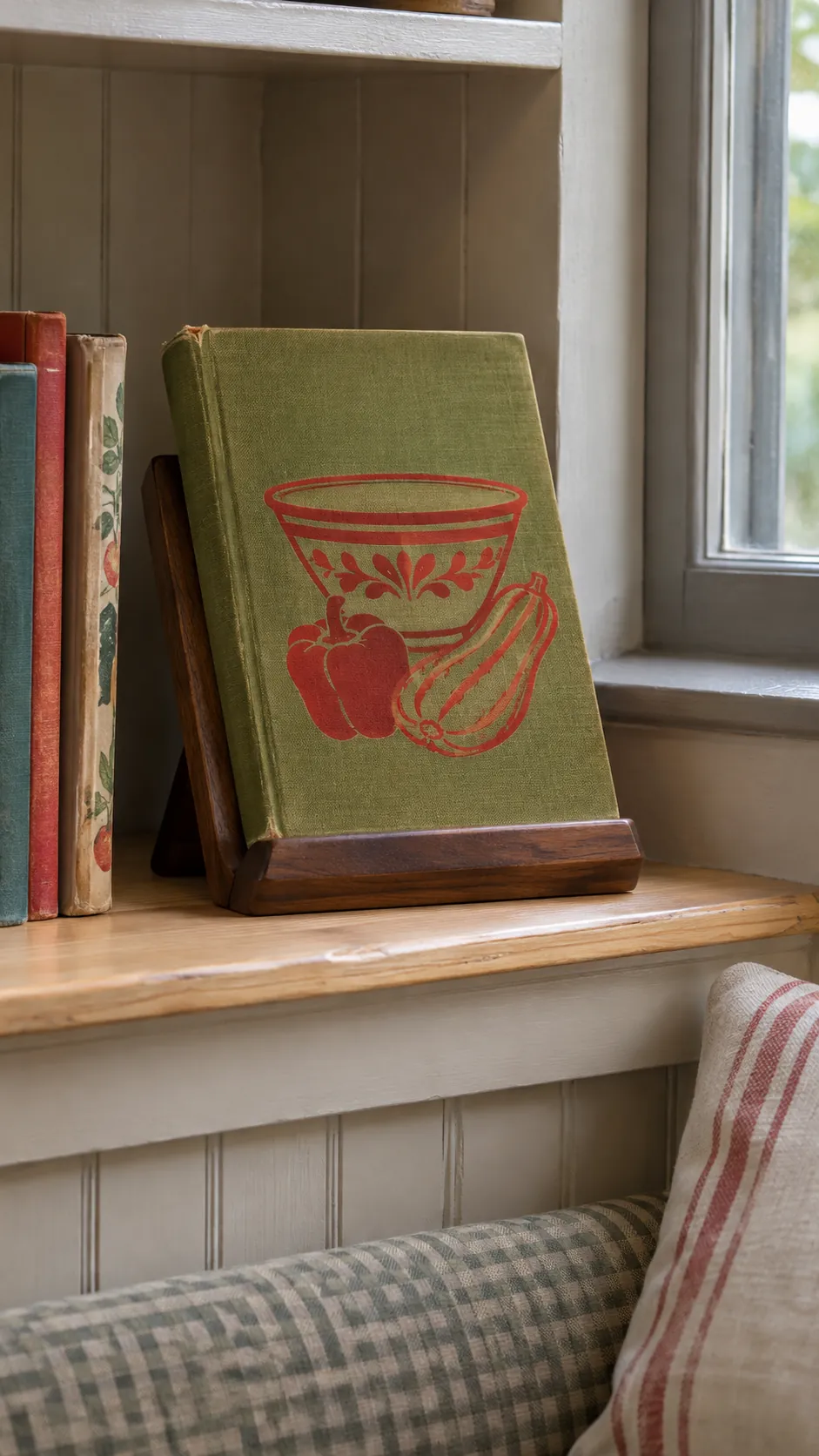
One cookbook facing forward lets you see its cover when you pass. Choose a stand that supports the closed cover without forcing the spine. Set the other cookbooks upright in a dry place nearby. Change the displayed book when you want a new cover or a different recipe within reach.
Tuck a Bread Bin on a Side Shelf
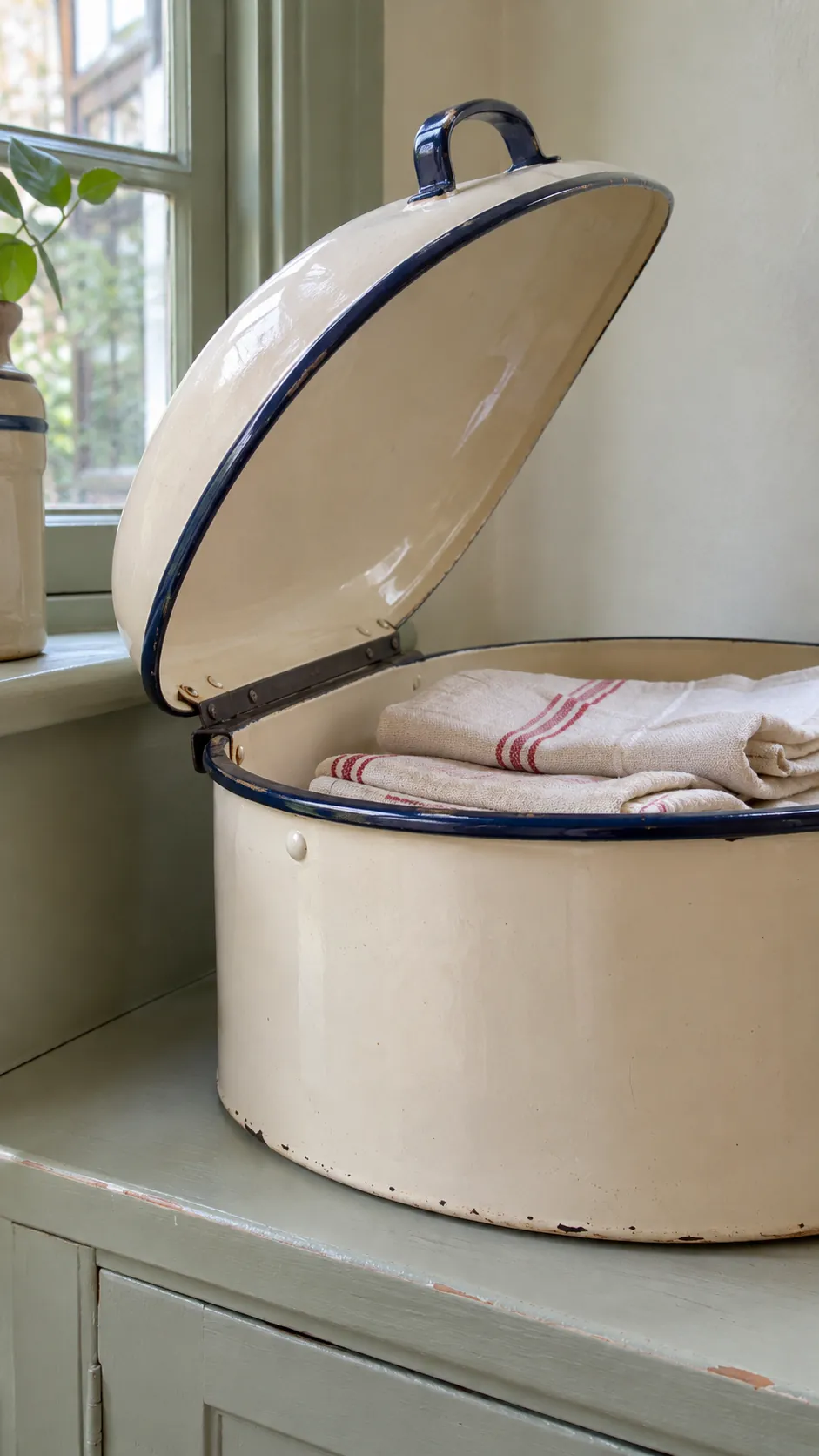
An enamel bin looks at home at the breakfast end of the kitchen. Check the hinge and measure the space the lid needs when you open it. If the finish is uncertain, use the bin for spare cloths or sealed packets. Lift it while empty so you know you can move it to wipe underneath.
Hang a Small Group of Biscuit Tins
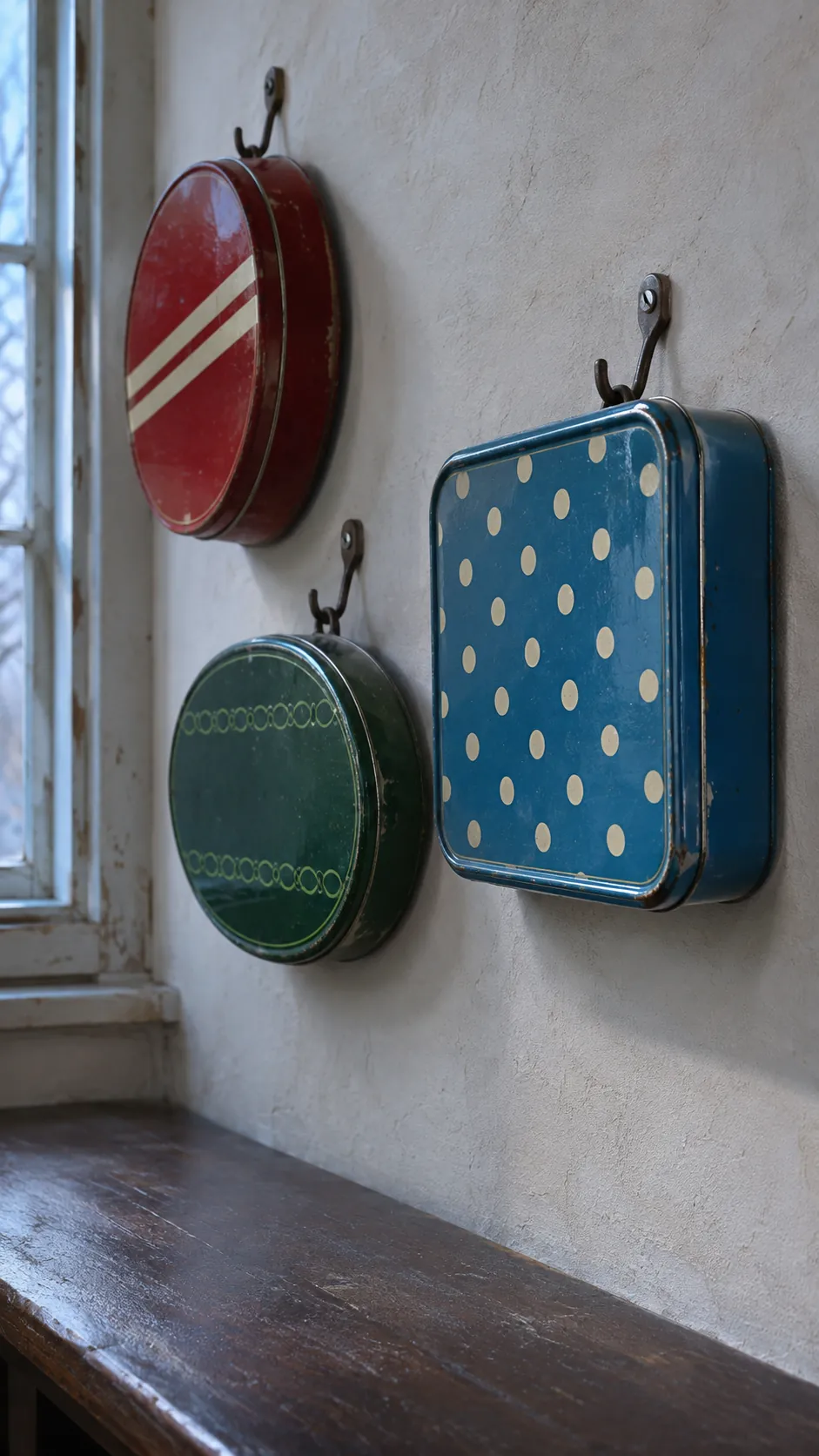
Light empty tins with working hanging fittings can add color to a narrow wall. Cut paper shapes to match the tins and move them around before drilling. Leave enough space to dust the narrow sides. If a tin has no suitable attachment, display it on a shelf.
Line a Wire Egg Basket for Napkins
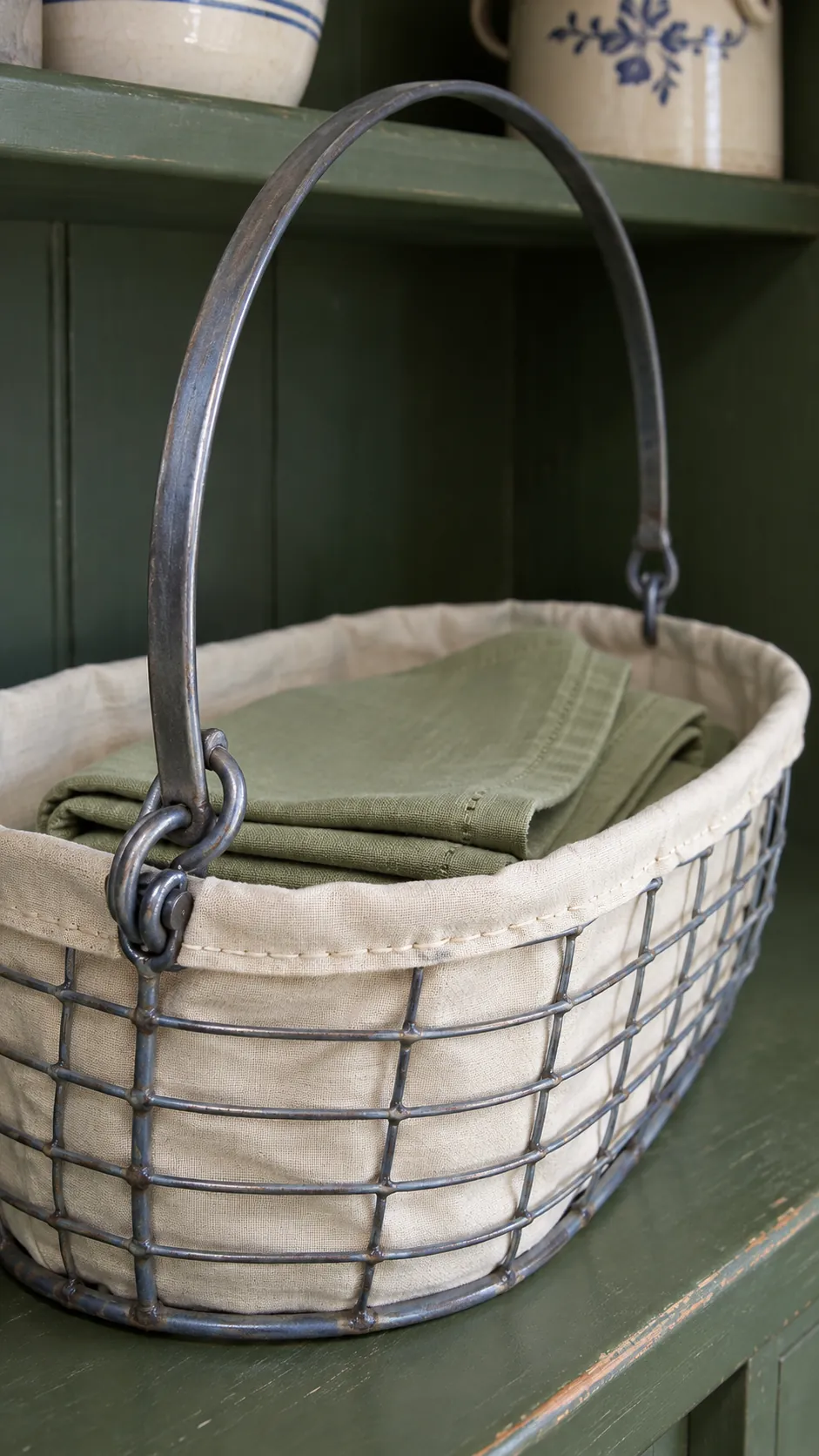
Fold spare napkins inside a wire egg basket where you can see them before setting the table. Run a scrap of fabric over the wire to find any rough welds first. A cotton liner can protect the napkins if the wire is smooth and intact. Store the basket where you can lift the handle without knocking another piece.
Keep a Gravy Boat for Rings
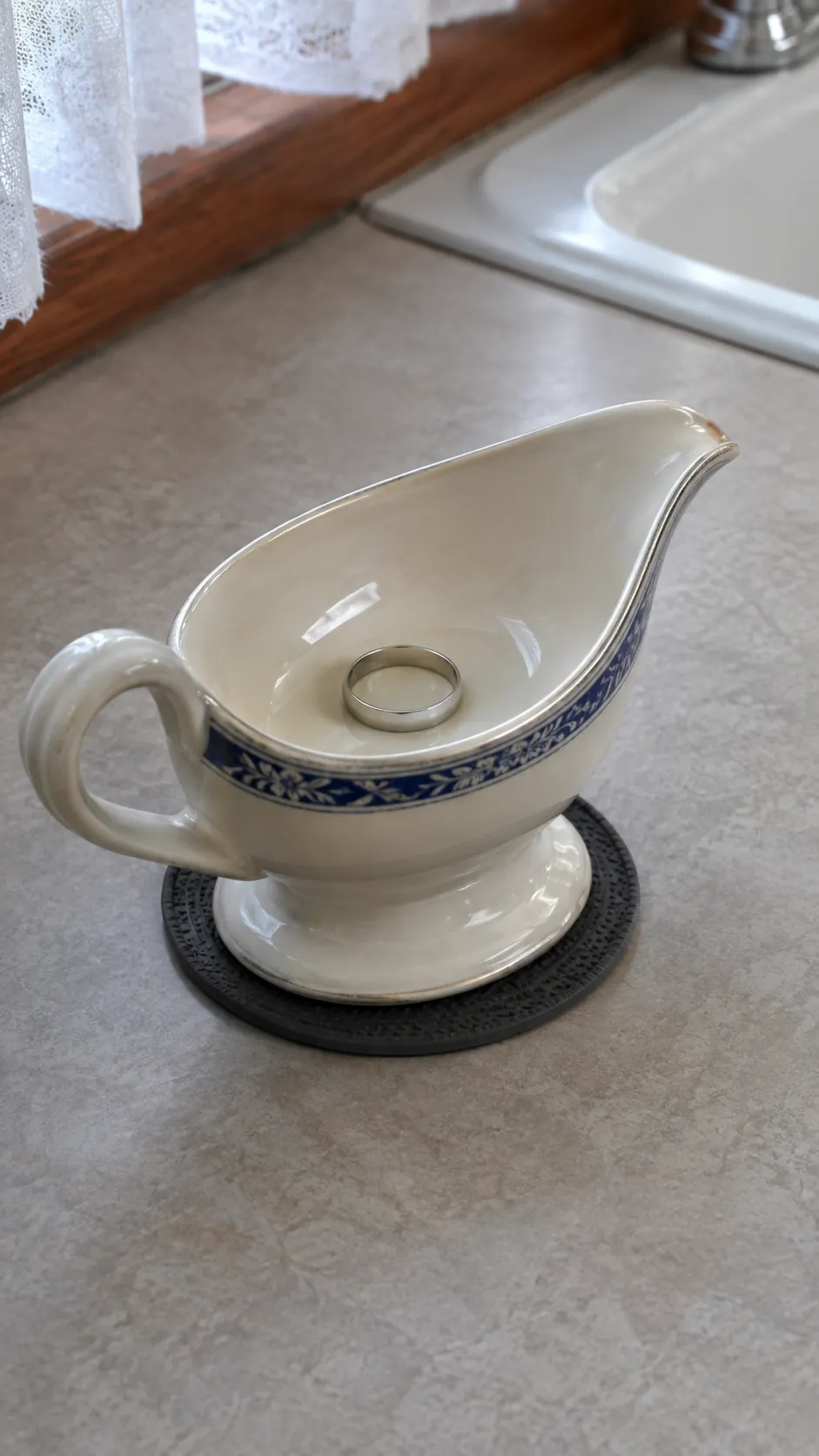
A shallow gravy boat can catch a ring or watch while you wash dishes. Look for a broad foot and use a nonslip pad to stop it sliding on the dry counter. Put it far enough back that your sleeve does not catch the handle. A pale bottom makes small jewelry easier to see.
Set a Covered Compote on the Sideboard
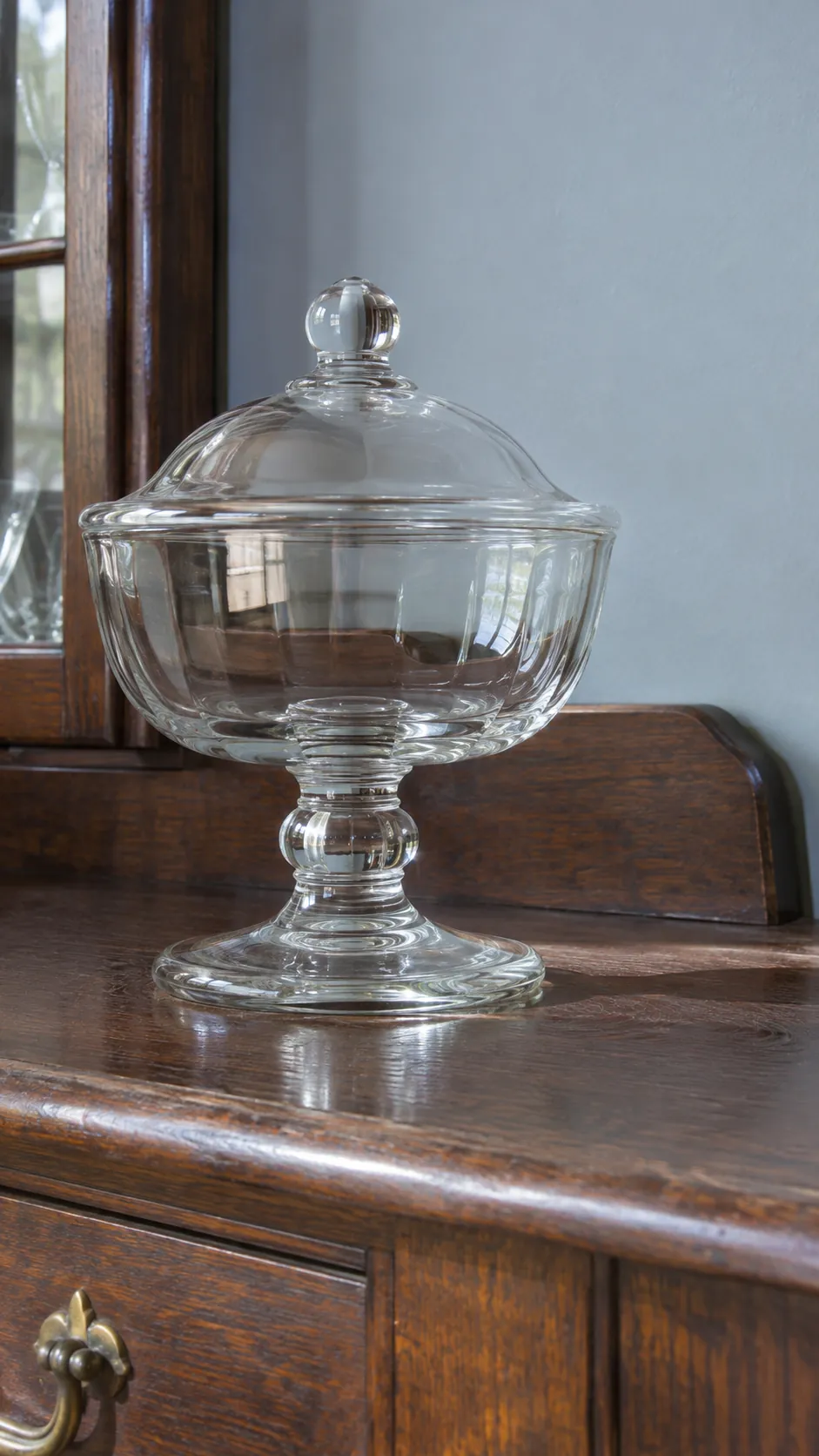
A low glass compote shows off its stem when it has a little air beneath the bowl. Check the cover for a firm grip and see that it sits evenly. Leave room beside it to lay the lid down when cleaning. If you cannot verify the glass is suitable for food, fill it with wrapped pieces or keep it empty.
Mount a Short Spoon Rack
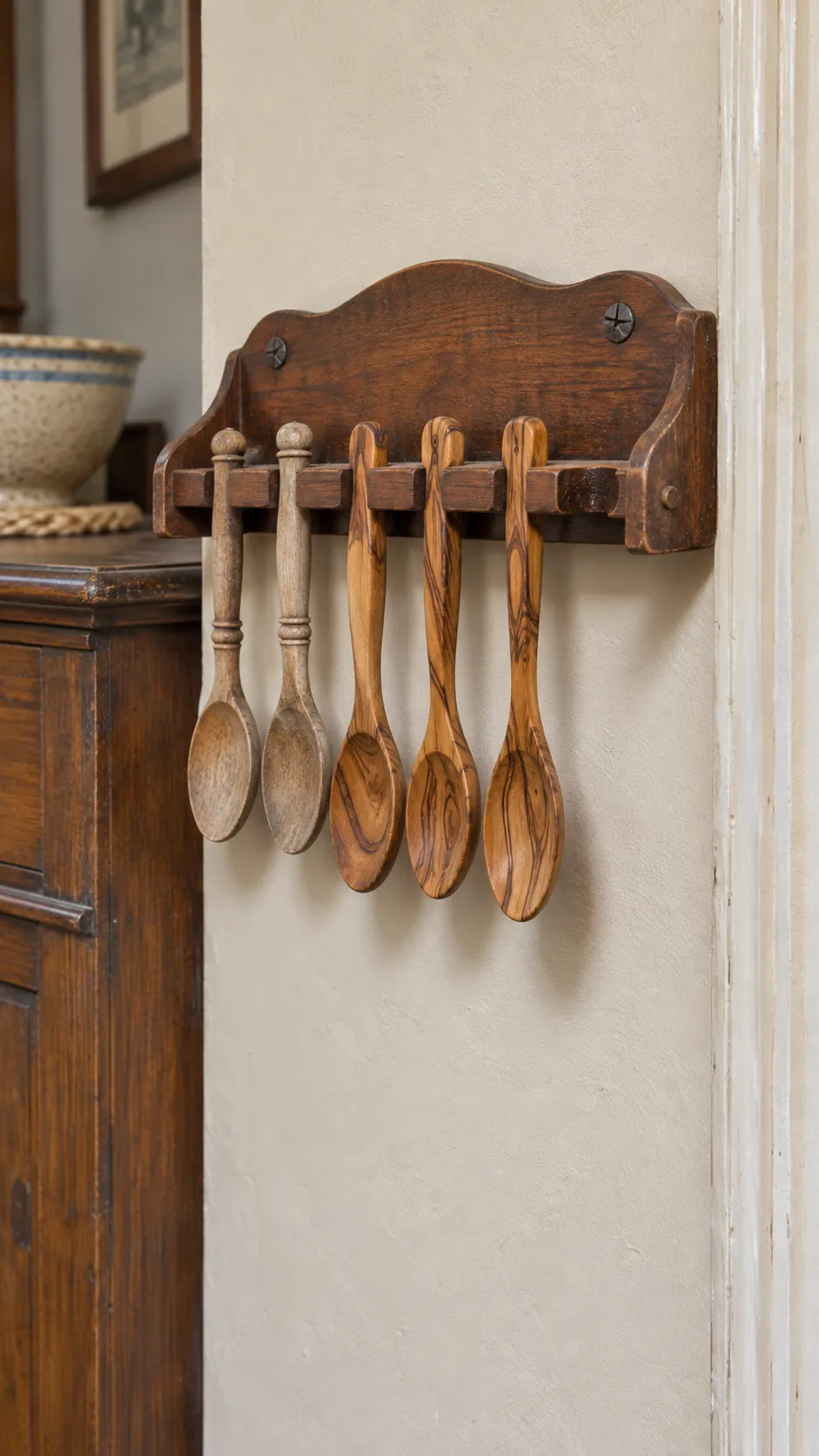
An old spoon rack can fit a plain wall strip that is too narrow for a cabinet. Measure down from the hanging point of your longest spoon before making holes. Choose sound slots and fix the rack securely to the wall. Leave an open slot so you can move spoons aside while you dust.
Give Mail a Thrifted Tray
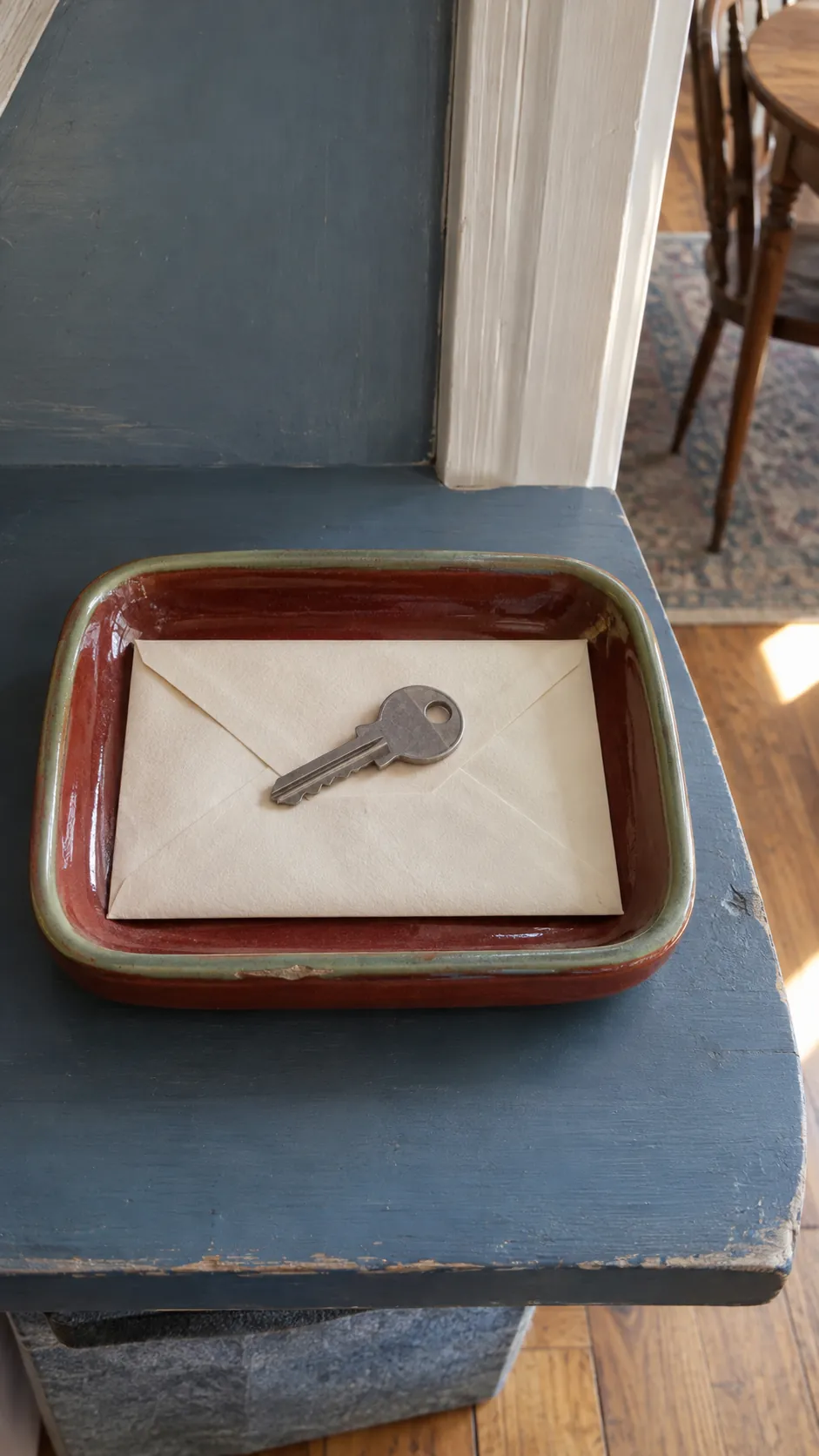
A small metal tray or a pottery relish dish can catch mail and pocket items as you come in. Measure it against the shelf and a folded envelope before you buy. Add felt feet if the underside would scratch your surface. Clear it once the pile approaches the rim.
Show the Ridges on a Glass Lemon Press
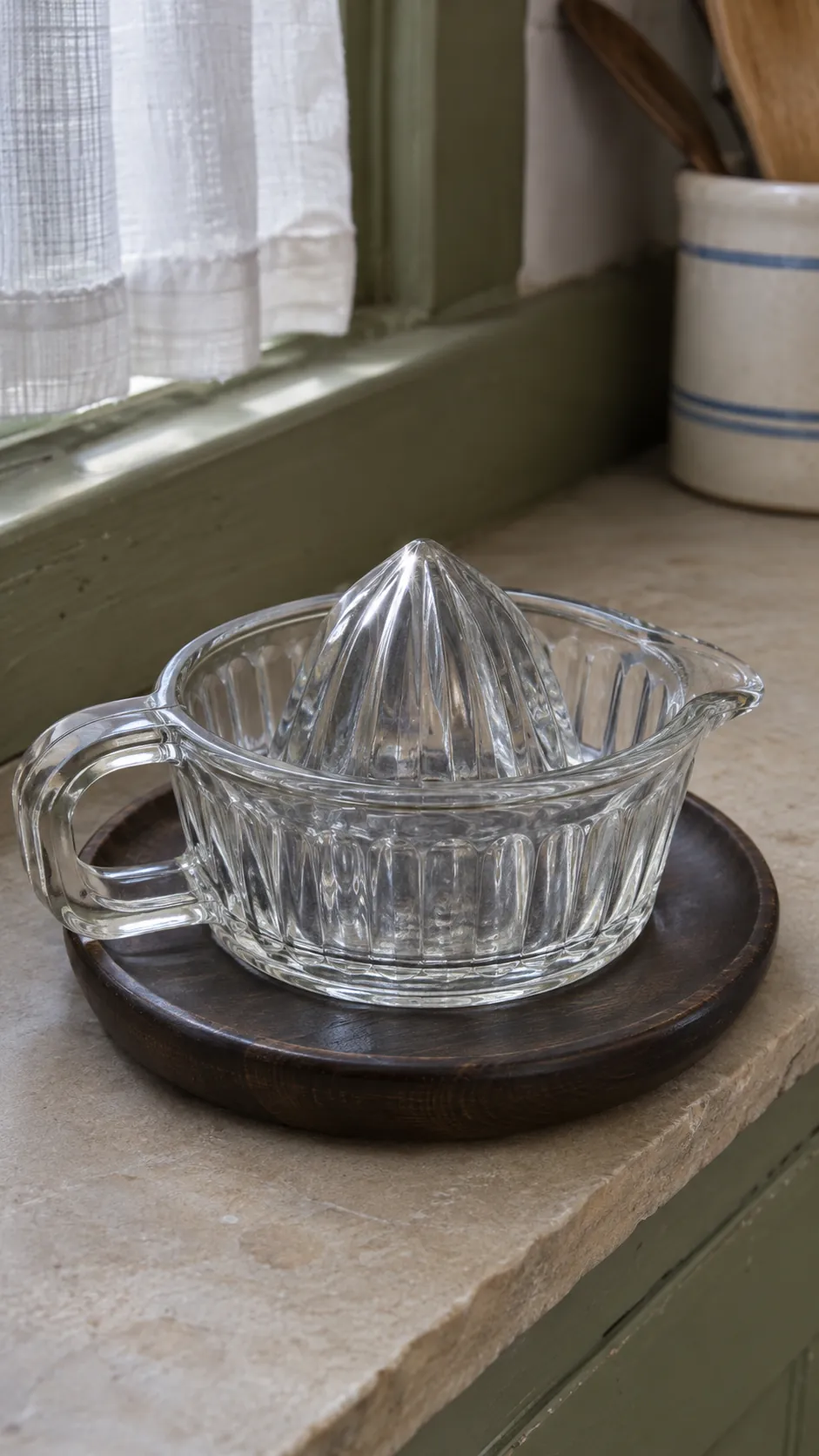
The ribs on a pressed glass citrus squeezer are easy to miss in a drawer. Set it on a dark wood saucer where side light catches the raised center. Inspect the handle and tip of the spout for chips. Keep it for display if you are uncertain about its history.
Keep Serving Spoons in a Pottery Jug
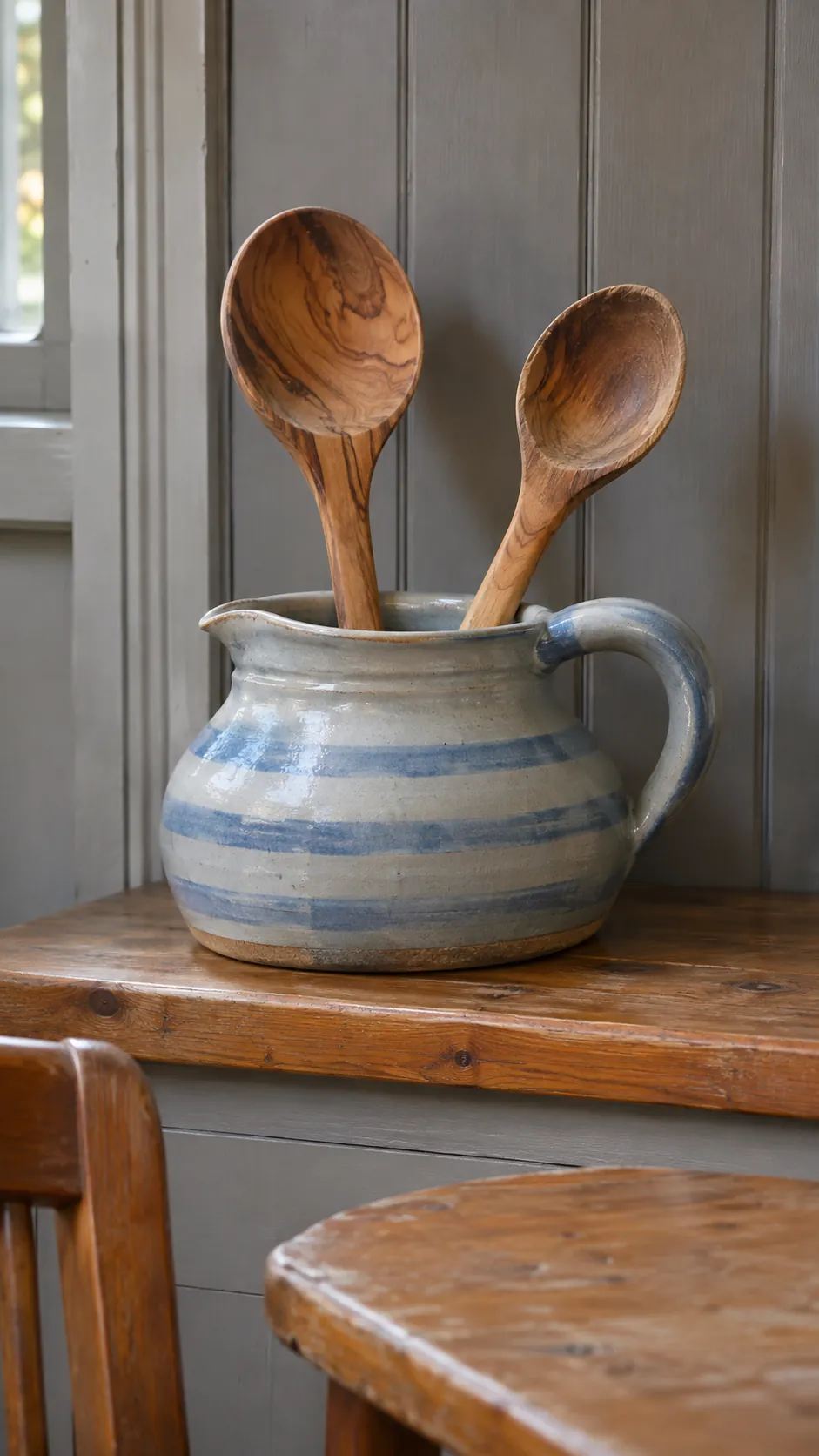
A little jug can hold serving spoons near the dining table. Try a broad handle in the neck before buying, since some spouts narrow the opening. Check that one heavy spoon does not tip the jug when you let go. Leave room to wipe under the foot.
Stand Recipe Cards in a Toast Rack
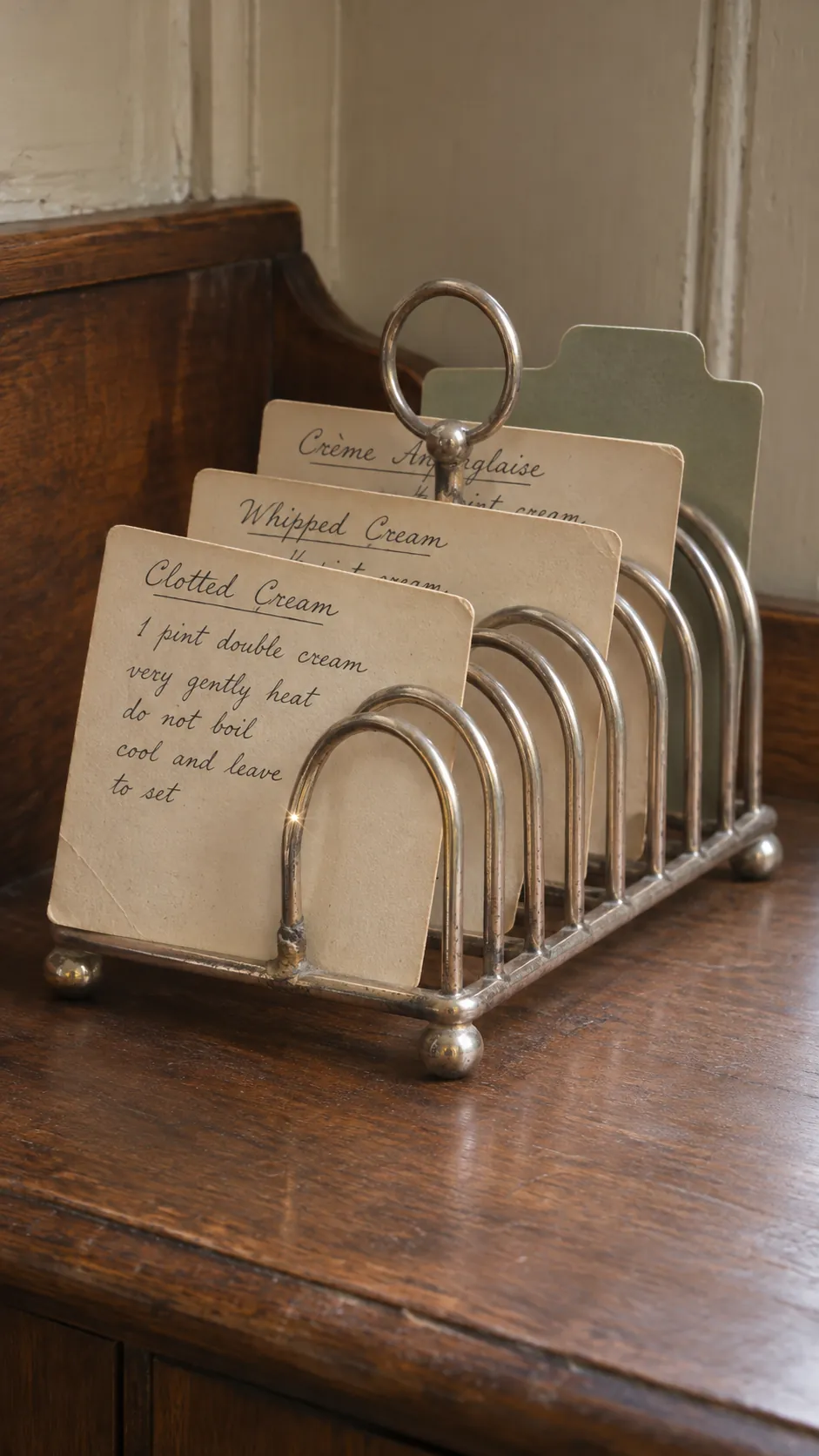
An old toast rack with closely spaced bars can hold two or three recipe cards. Check that a card stands without sliding under the wires. Keep the rack far enough away from the hob that you can read the card clear of the heat and splashes. Put the rest of the cards in a box for storage.
Put a Framed Botanical Study on a Shelf
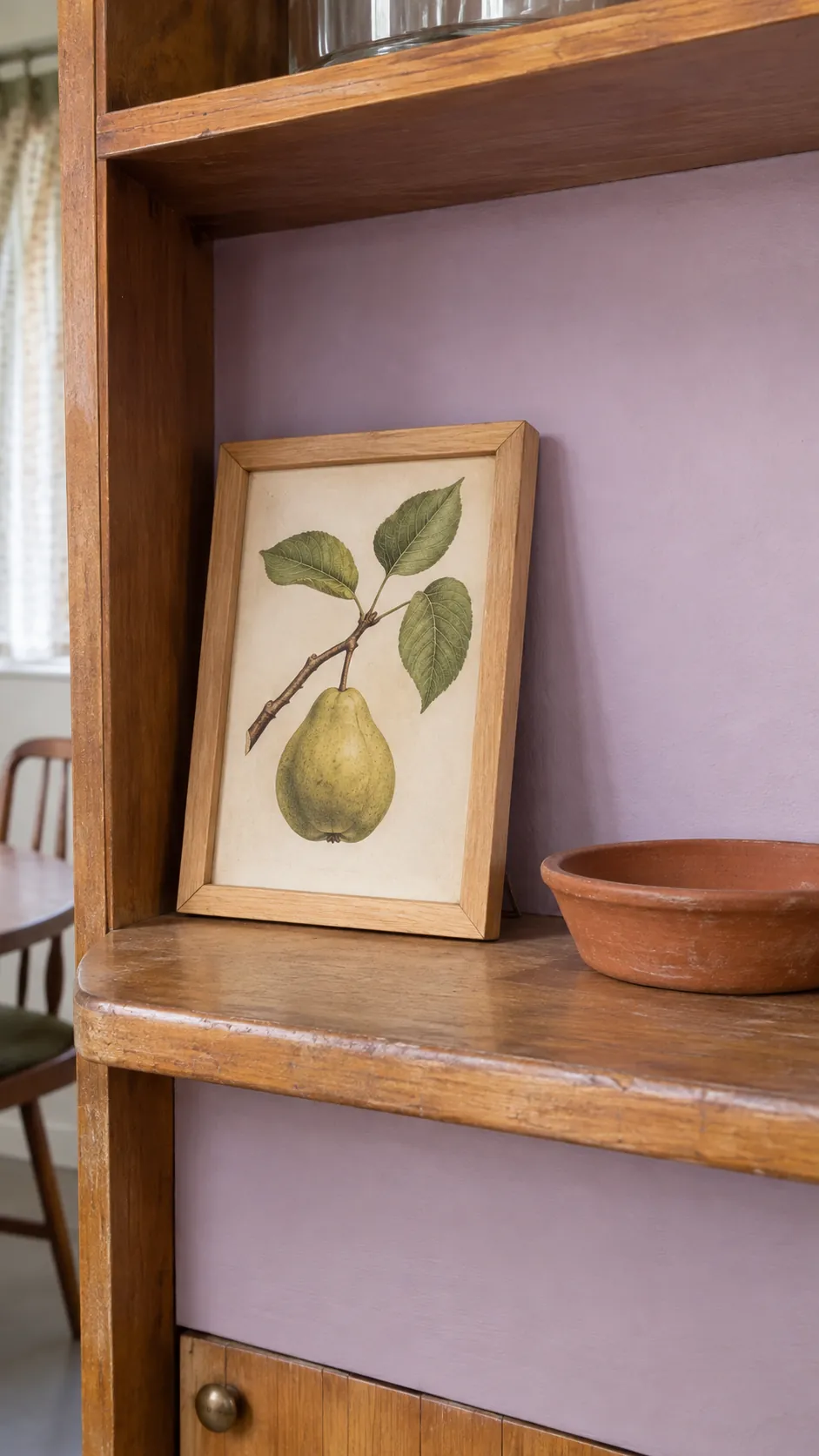
A small old print of a pear branch or bean pod can give colored crockery a quieter backdrop. Check the frame joints and secure it to the shelf or wall so it does not slip. Choose a dry position away from steam. Move the frame sideways until you can see enough of the subject without moving the dishes.
Keep an Old Sugar Bowl by the Coffee Cups
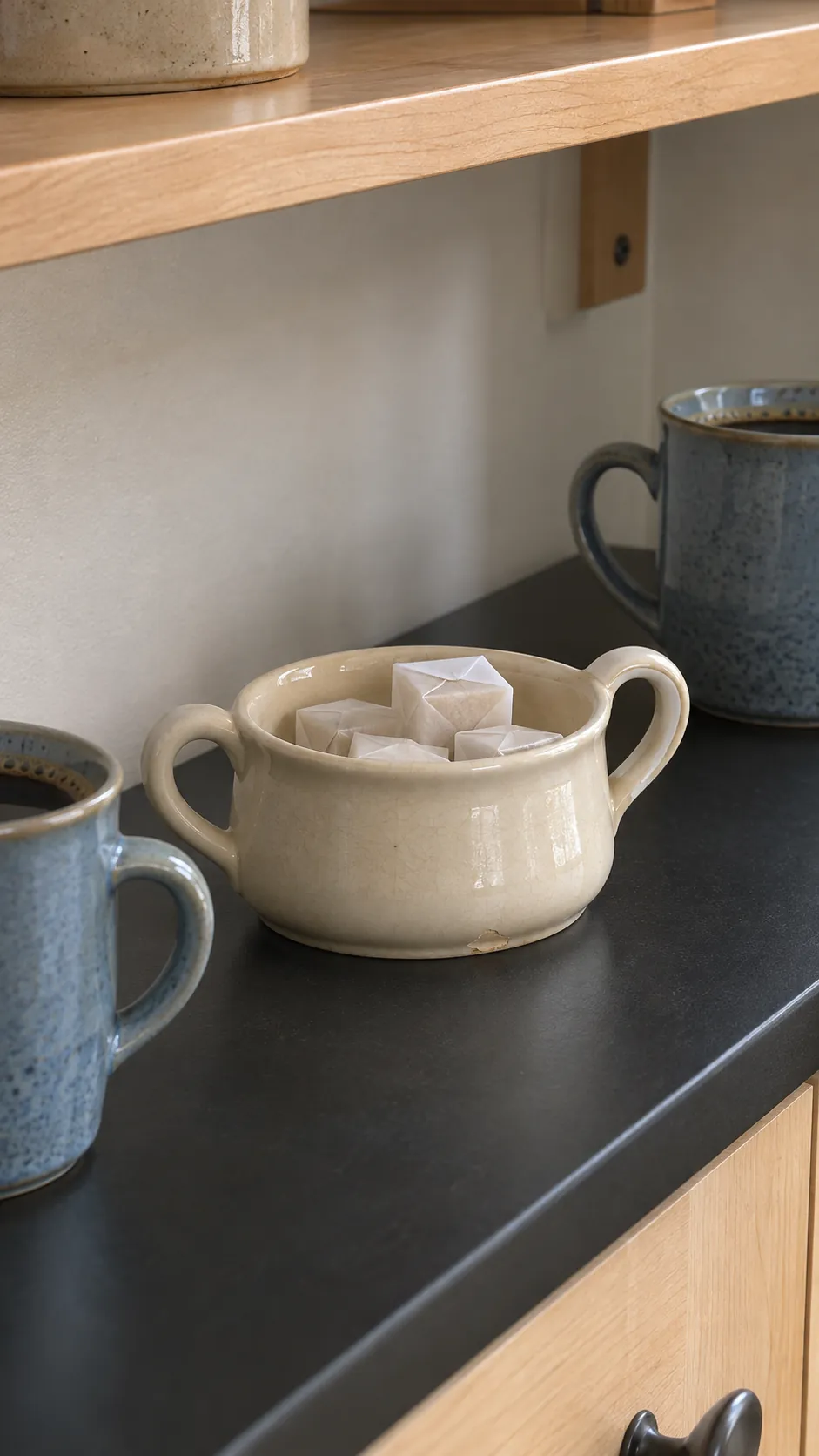
A handled sugar bowl with a missing lid can hold wrapped sugar cubes or sealed tea bags. Look for cracks where each handle joins the body. Give both handles room so you can lift it without bumping a mug. Dry the foot before replacing it on the shelf after washing.
Give a Diner Mug Its Own Spot
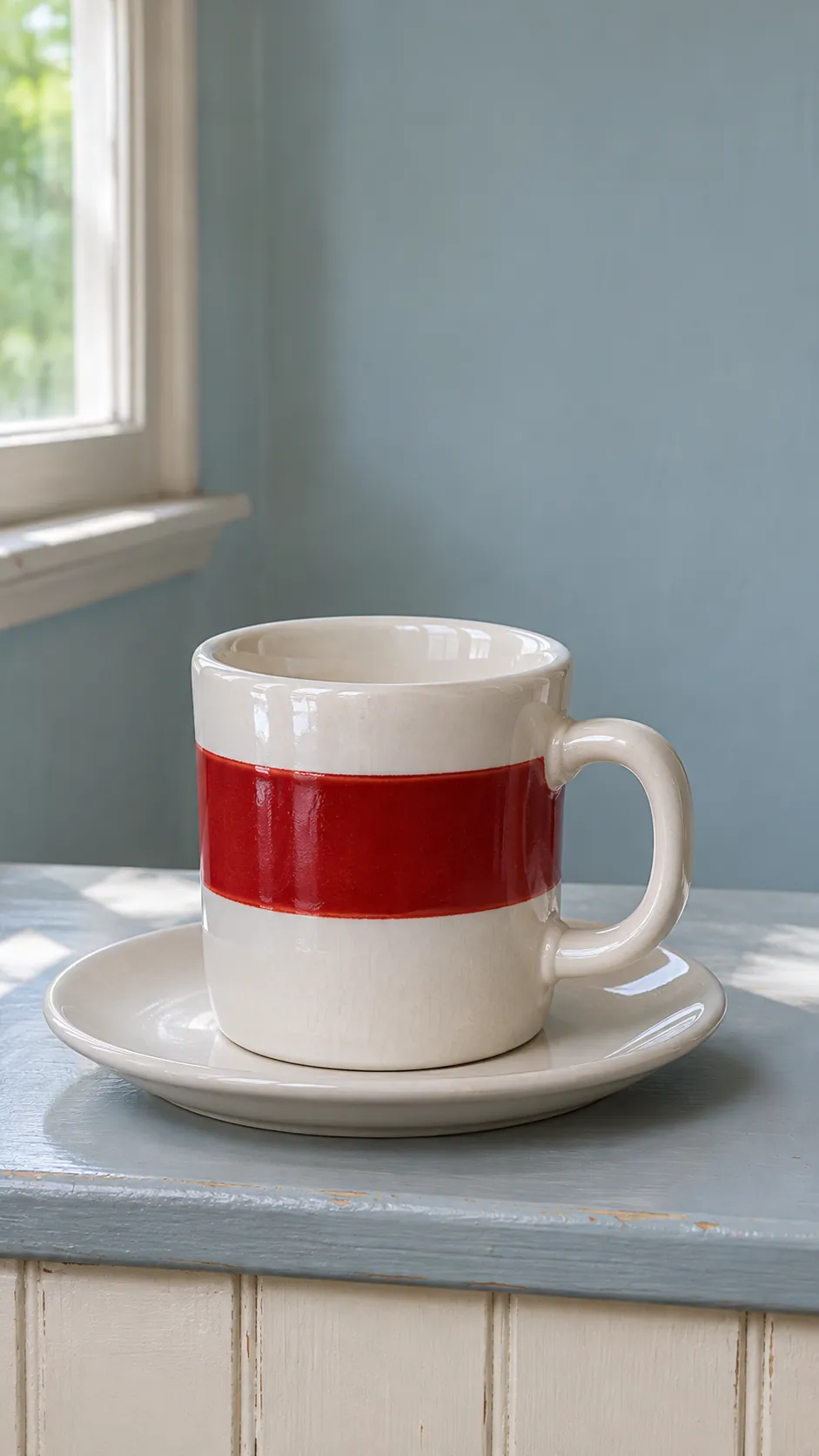
A thick striped diner mug is easy to pick out among everyday cups. Lift it at the store to check its weight and the fit of the handle. Set it on a plain saucer with room around it. Choose a sound mug you can verify for food use if you want to drink from it.
Keep a Cutlery Caddy on the Sideboard
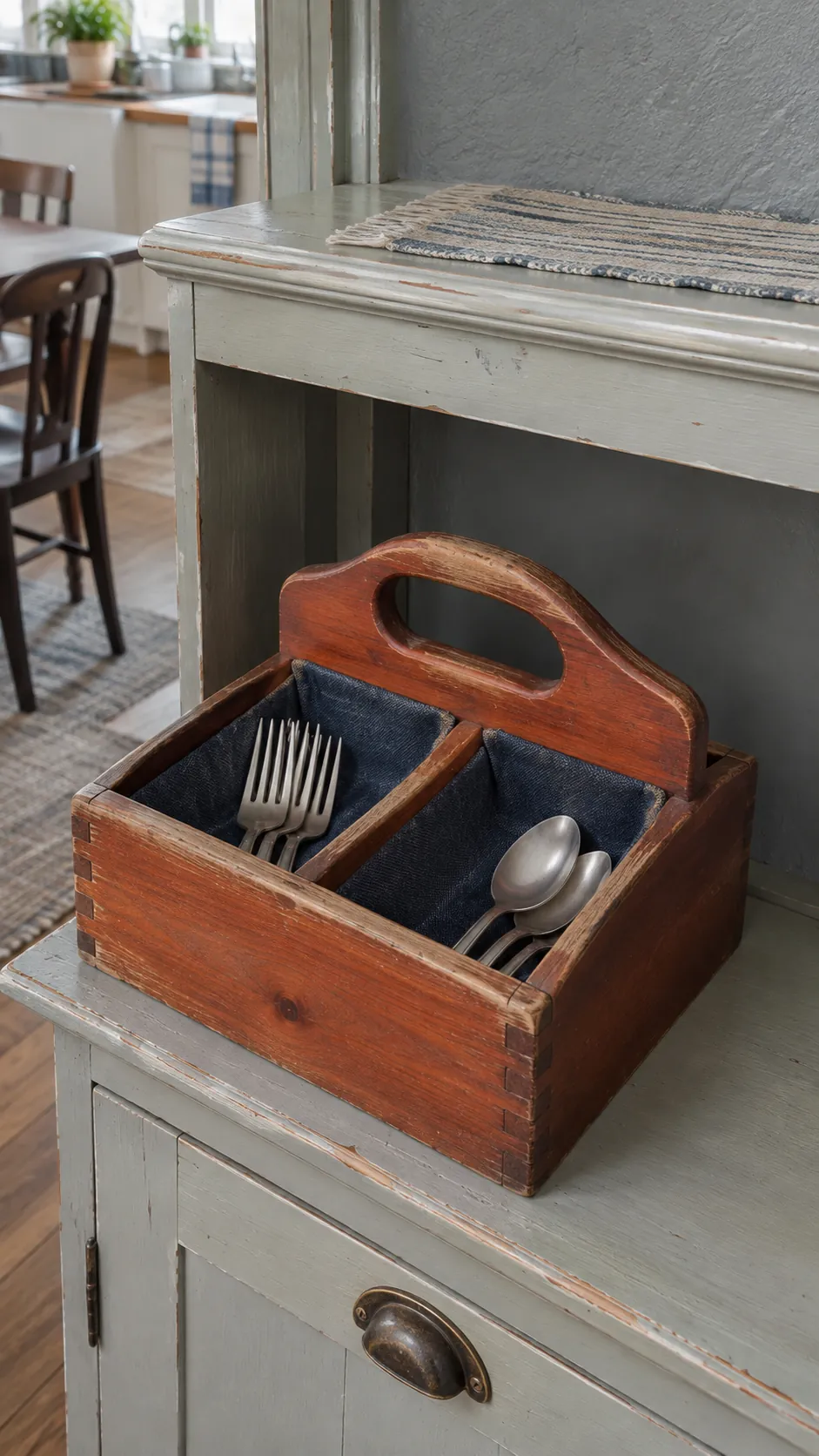
A handled caddy makes it easy to carry forks and spoons to the table. Check the underside and the joints where the handle attaches. Use clean removable liners if the wood feels rough. Leave an opening high enough for the handle to clear without any tilting.
Set a Spare Saucer Under a Herb Pot
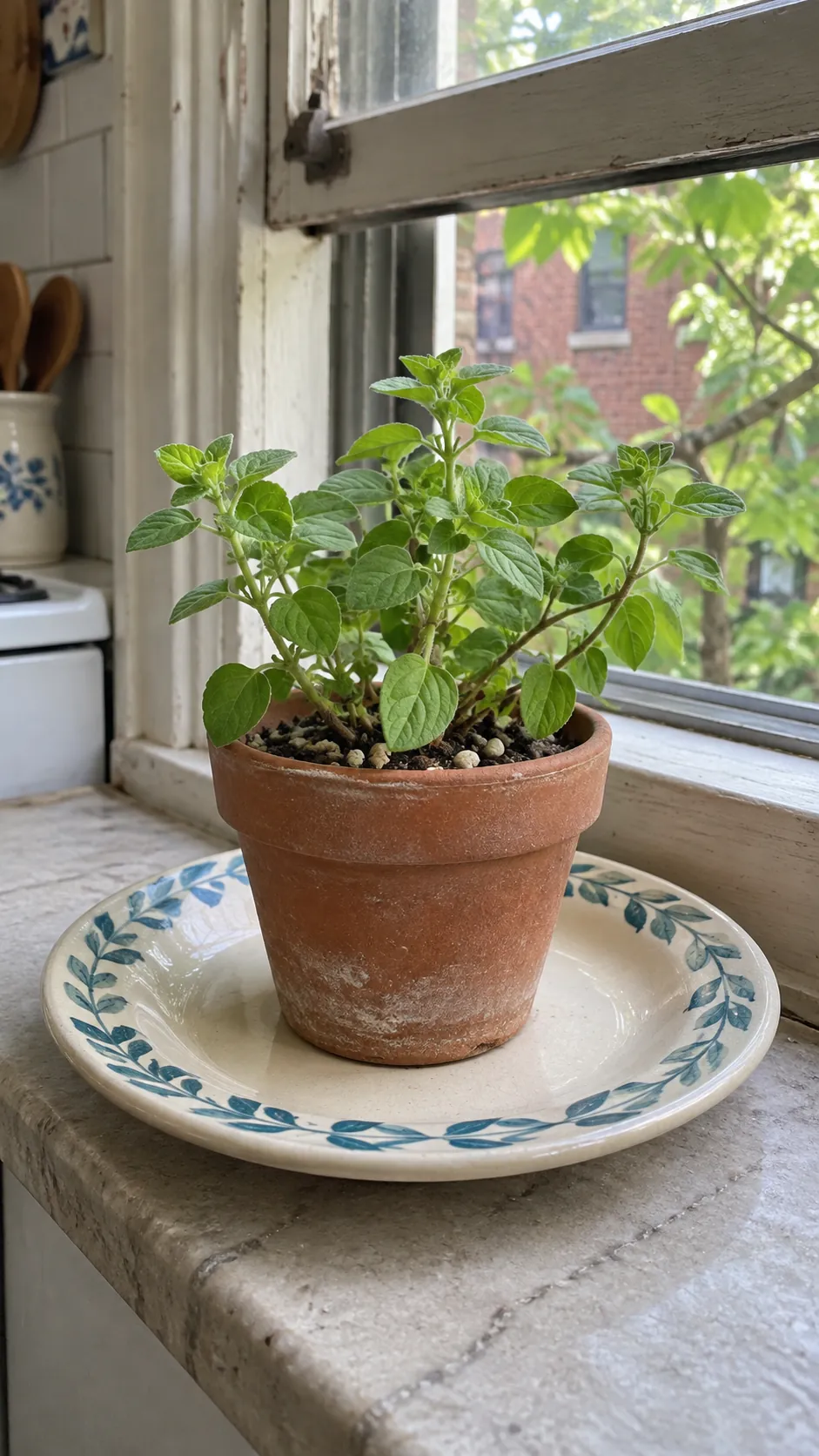
An orphan saucer can catch drainage if it is wider than the pot and has a deep enough lip. Check it for cracks by adding water over the sink. Wait for the plant to drain, then empty the saucer and dry the sill underneath. A bright rim can make a plain terracotta pot feel intentional.
Rotate One Find Into an Open Space
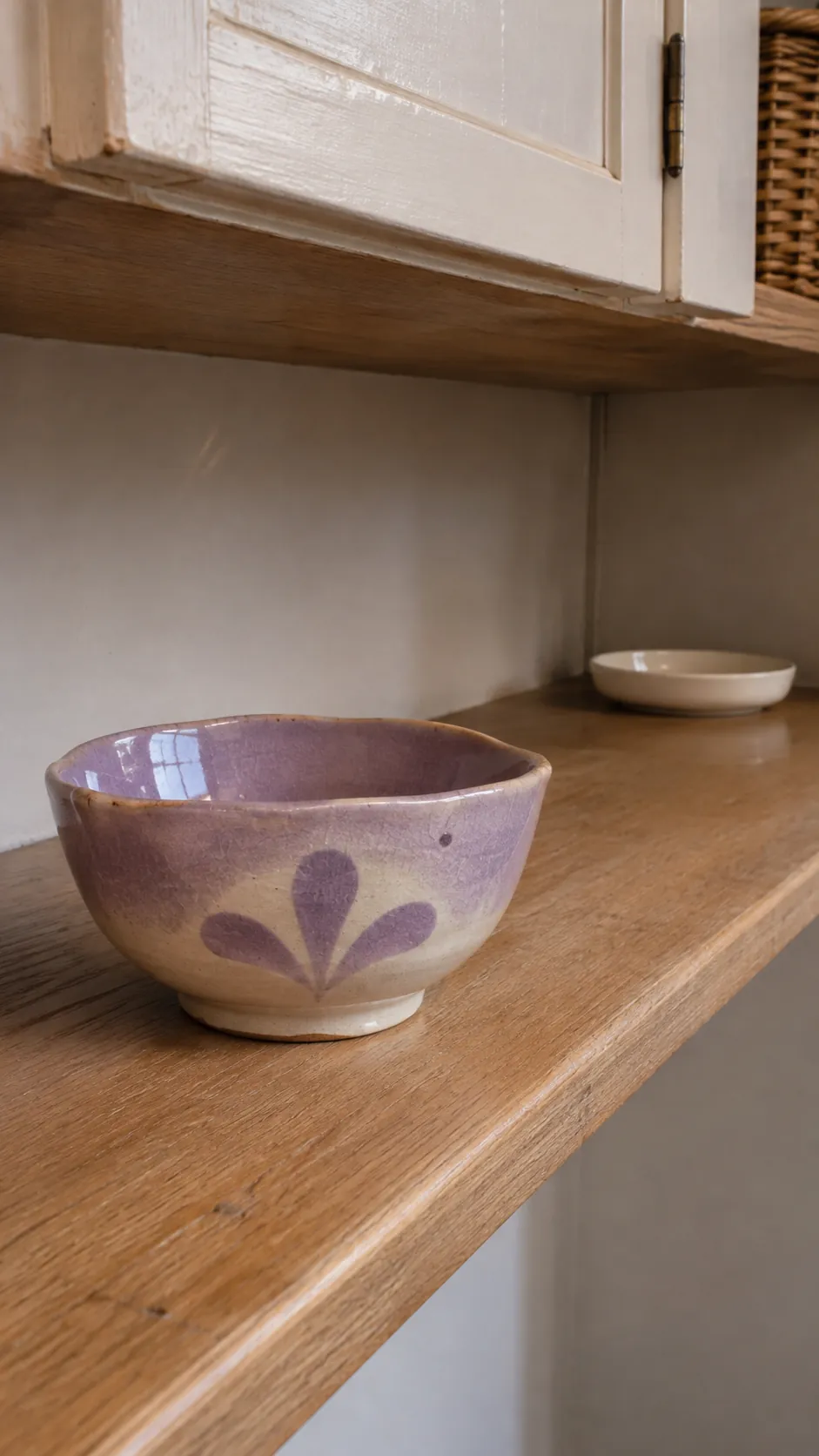
Leave a gap about the width of a bowl when a shelf starts to look too full. Give it to the piece whose shape made you stop in the thrift store aisle. Store the other pieces where you can lift each one without reorganizing the cabinet. Before buying something else, see whether it would earn that same spot.