
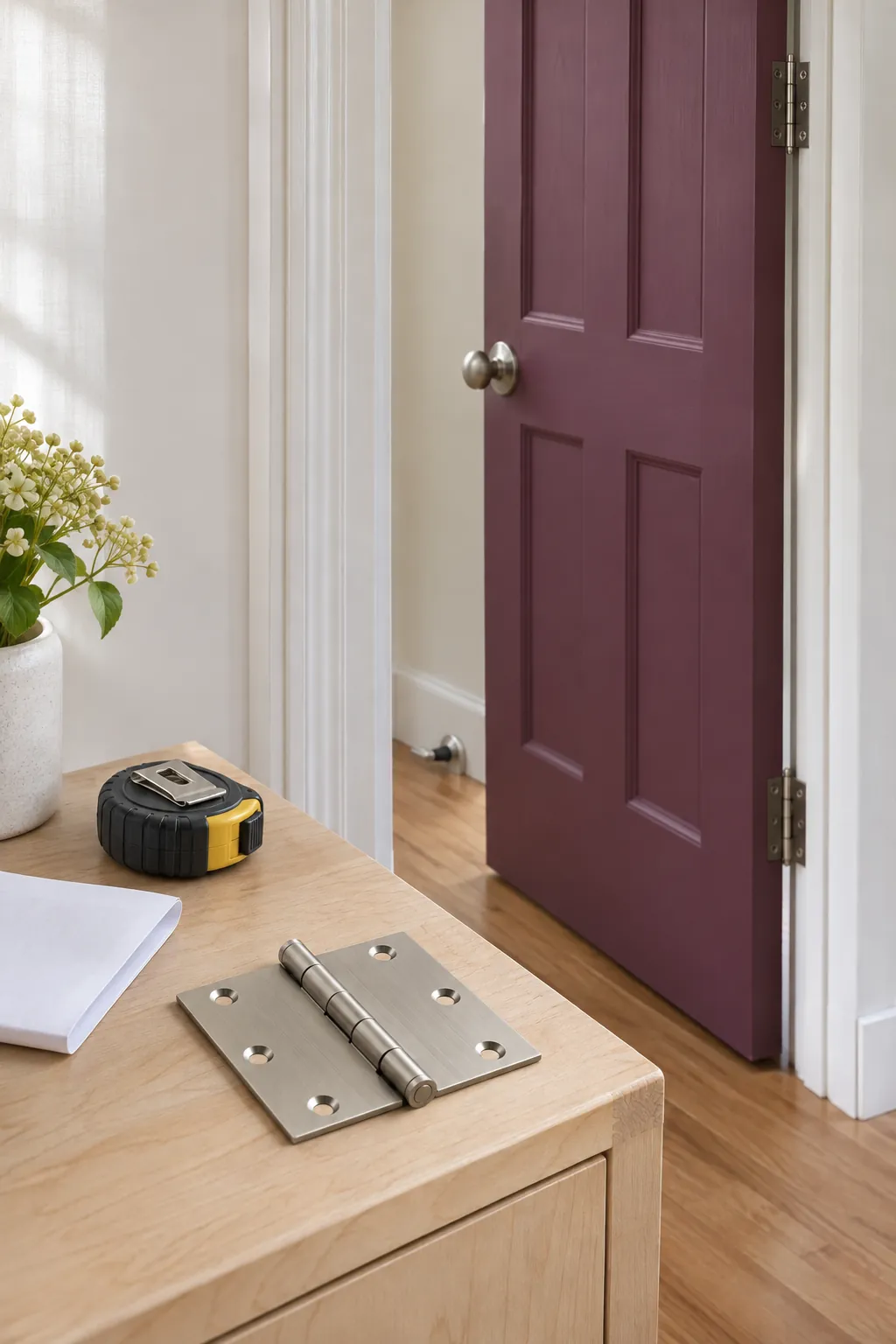
A replacement hinge can match the height of the old one and still leave the door rubbing. The shape of the corners, the depth of the cutout and the screw pattern all affect the fit. Take the old hinge with you or make a record of both leaves before you order.
Record the dimensions of both leaves
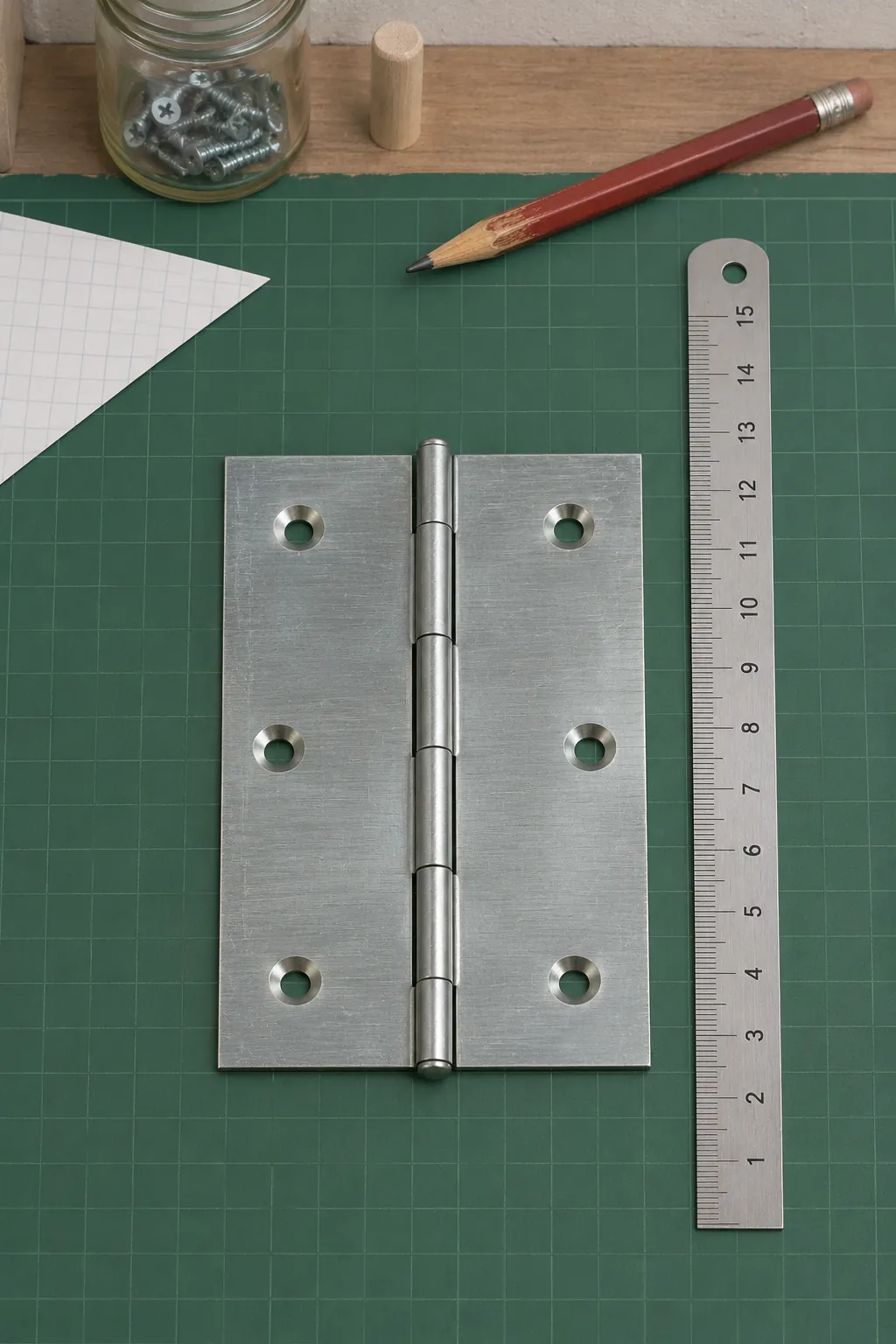
Support the door before removing a hinge. Open the hinge flat on a bench and measure the height parallel to the pin. Measure the overall width across the open hinge, then measure each leaf from its outer edge to the barrel. Check the door side and jamb side separately because the two leaves are not always identical.
Write down the hinge positions from the top of the slab if you are replacing the door too. Two slabs with the same height and width can have their hinges at different heights.
Match the corner shape to the cutout
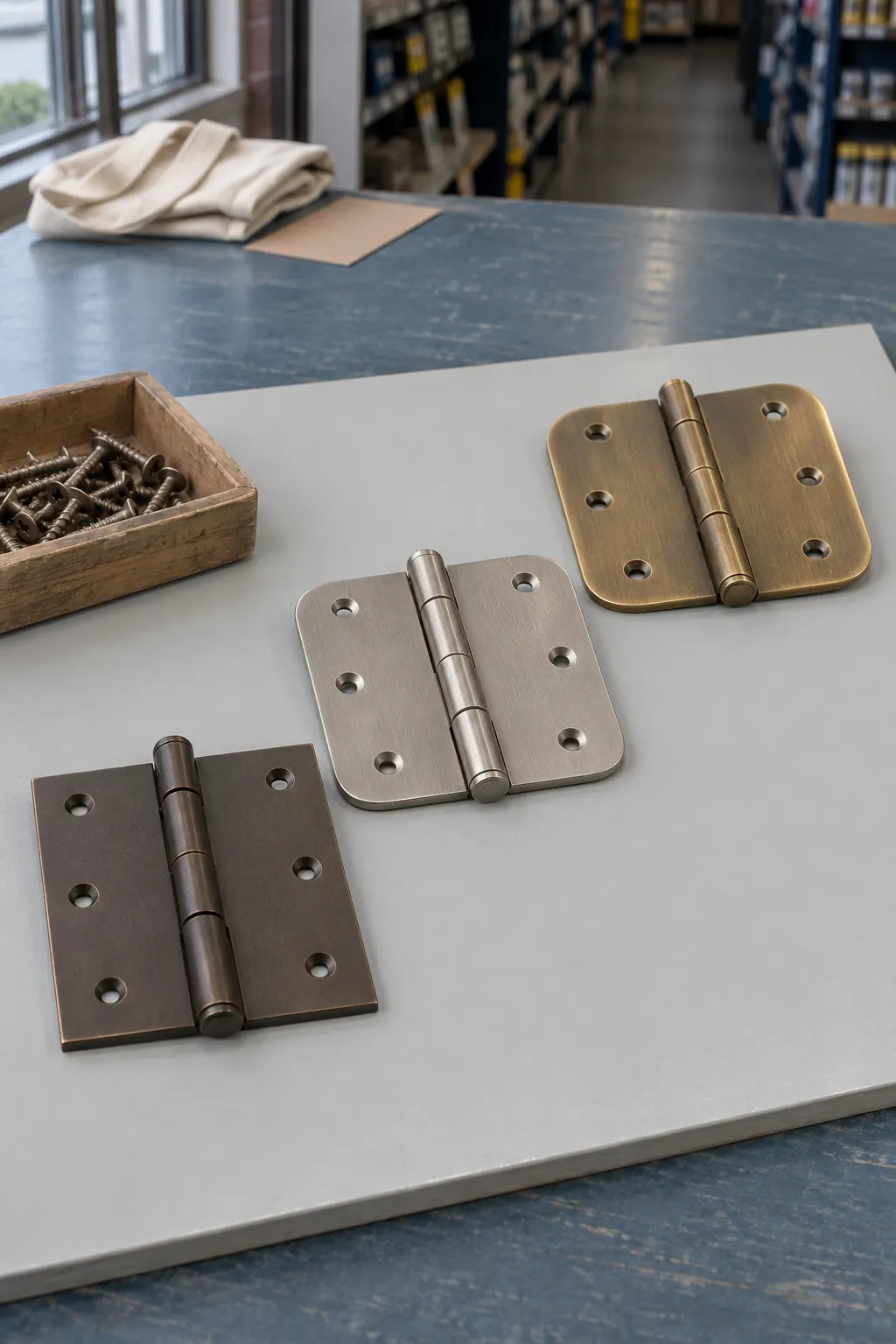
The shallow recess that holds the hinge leaf is called a mortise. Check whether its ends are square or rounded. For rounded corners, compare the old leaf with the supplier’s outline or corner templates at their actual size. A broader curve leaves a visible pocket when it sits in a cutout made for a tighter curve, and a tighter curve can foul the corners of a rounder cutout.
Check that the leaf sits flush
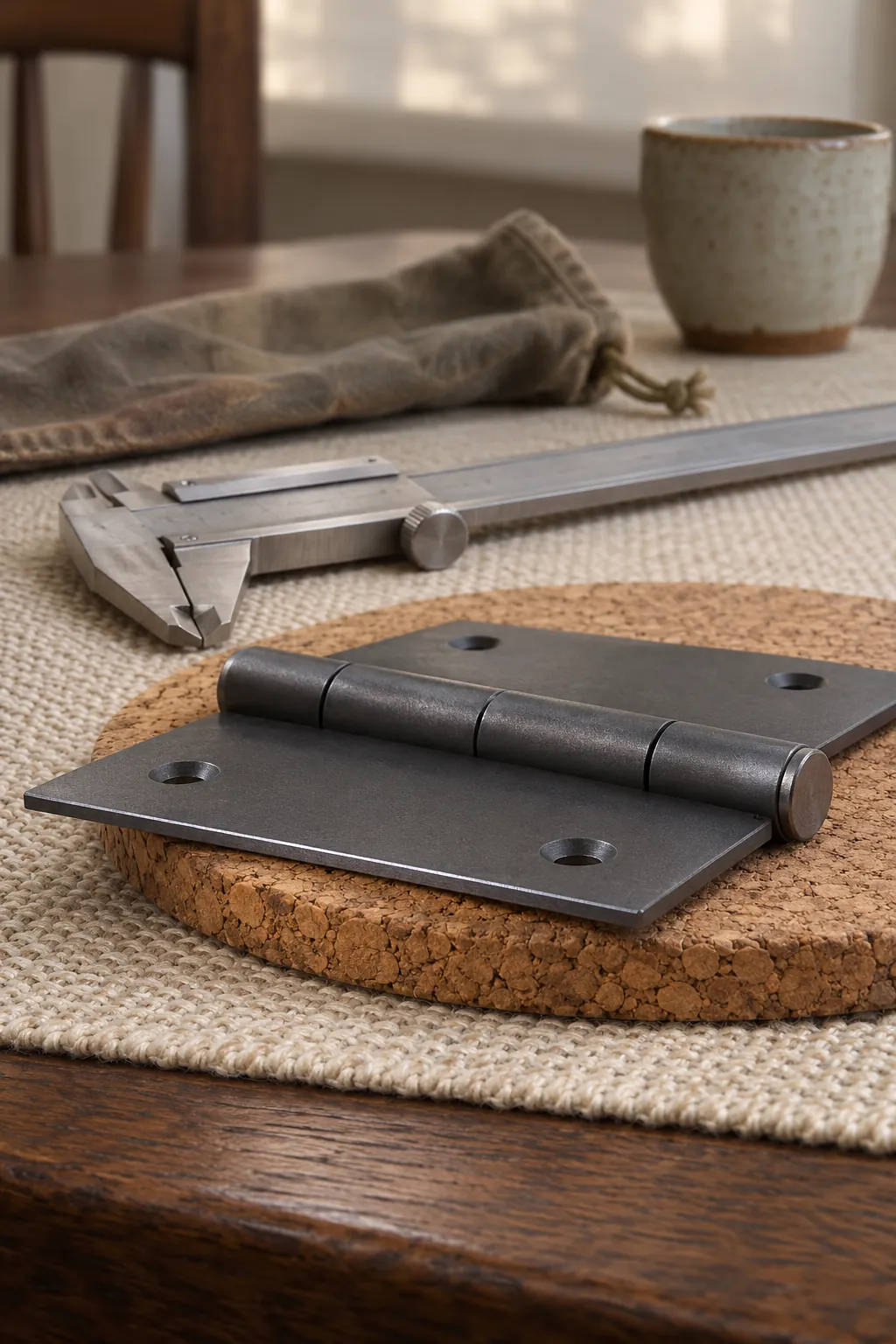
Measure the thickness across a flat part of the old leaf with calipers. Keep the jaws away from the rolled barrel and countersunk screw holes. Compare the result with the depth of the clean mortise and the thickness in the supplier’s drawing.
A leaf that stands proud can change the gap at the latch side. A leaf that sinks into the recess can let the hinge side bind. Remove loose paint from the recess before testing the fit, and correct irregular buildup before you decide the cutout needs trimming.
Compare every screw hole
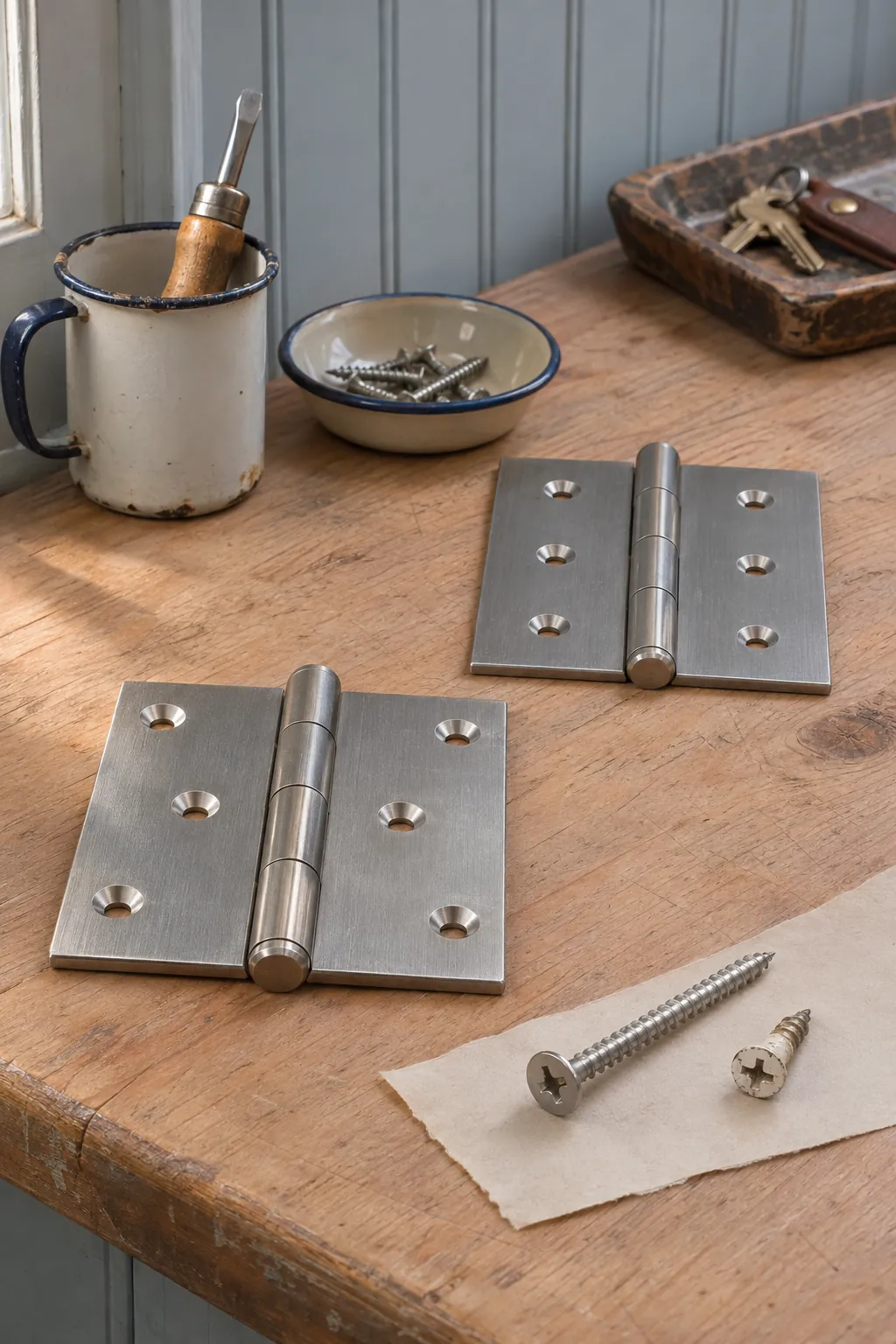
Lay each new leaf over the corresponding old leaf and look through the screw holes. If you are ordering online, compare the hole centers in the drawing with a tracing of both leaves. Check that the screw heads seat flush in the new countersinks.
If holes partly overlap, a new screw can pull sideways into the old hole and shift the hinge. Choose an exact match if the original holes are firm. Where the old holes are stripped or cannot be reused, repair the substrate before drilling new pilot holes and use fixings suitable for the door and frame.
Verify the hinge rating and configuration
Check the manufacturer’s rating for the door’s weight and width and the specified number of hinges. Follow the instructions for that exact hinge. A heavier replacement slab may need a different hinge type, better fixings or another hinge position even when the old leaves fit the cutouts.
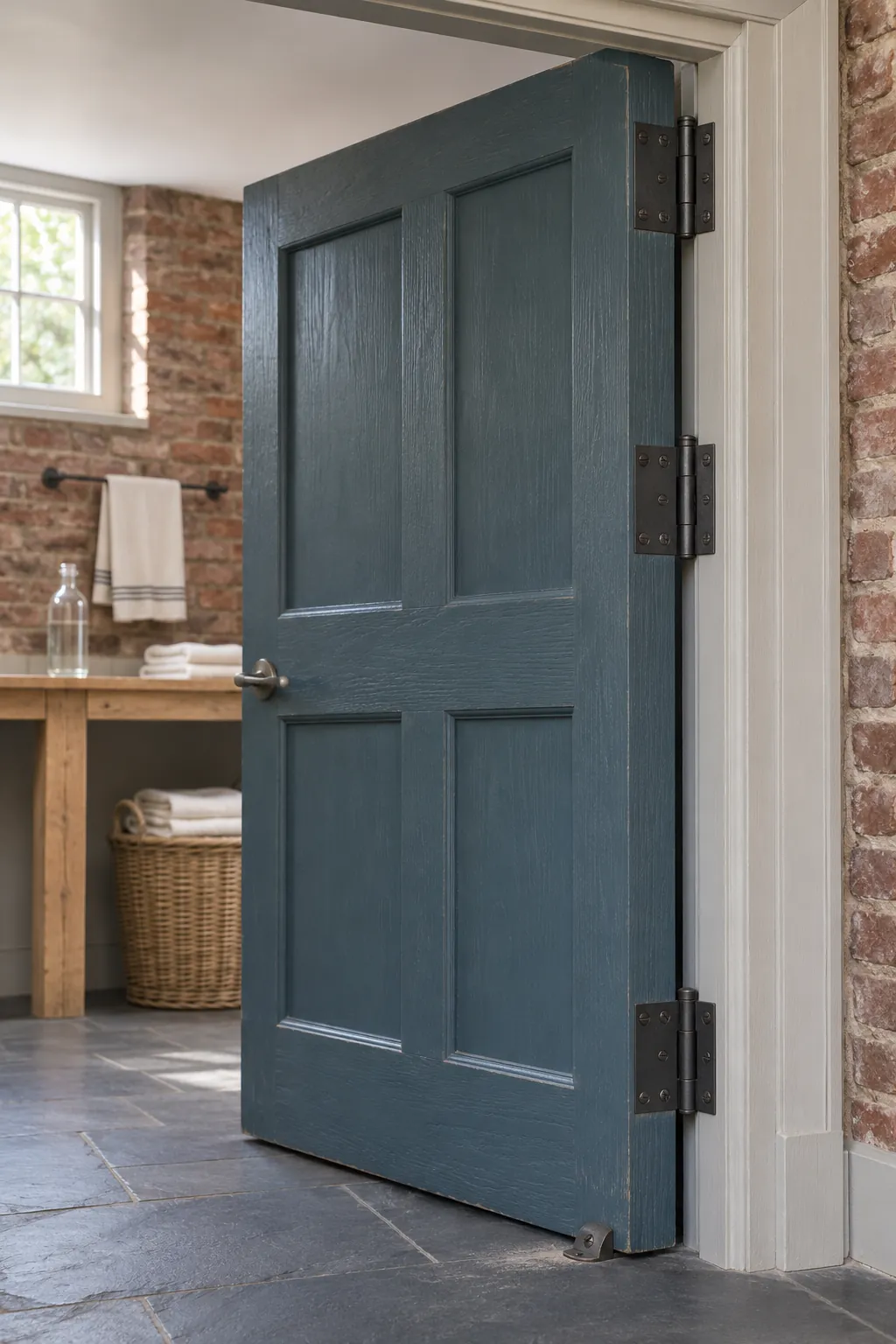
Also check whether an unusual leaf offset, fixed pin or handing is part of the original design. Match the working details before choosing a finish.
Test one hinge before ordering the whole set
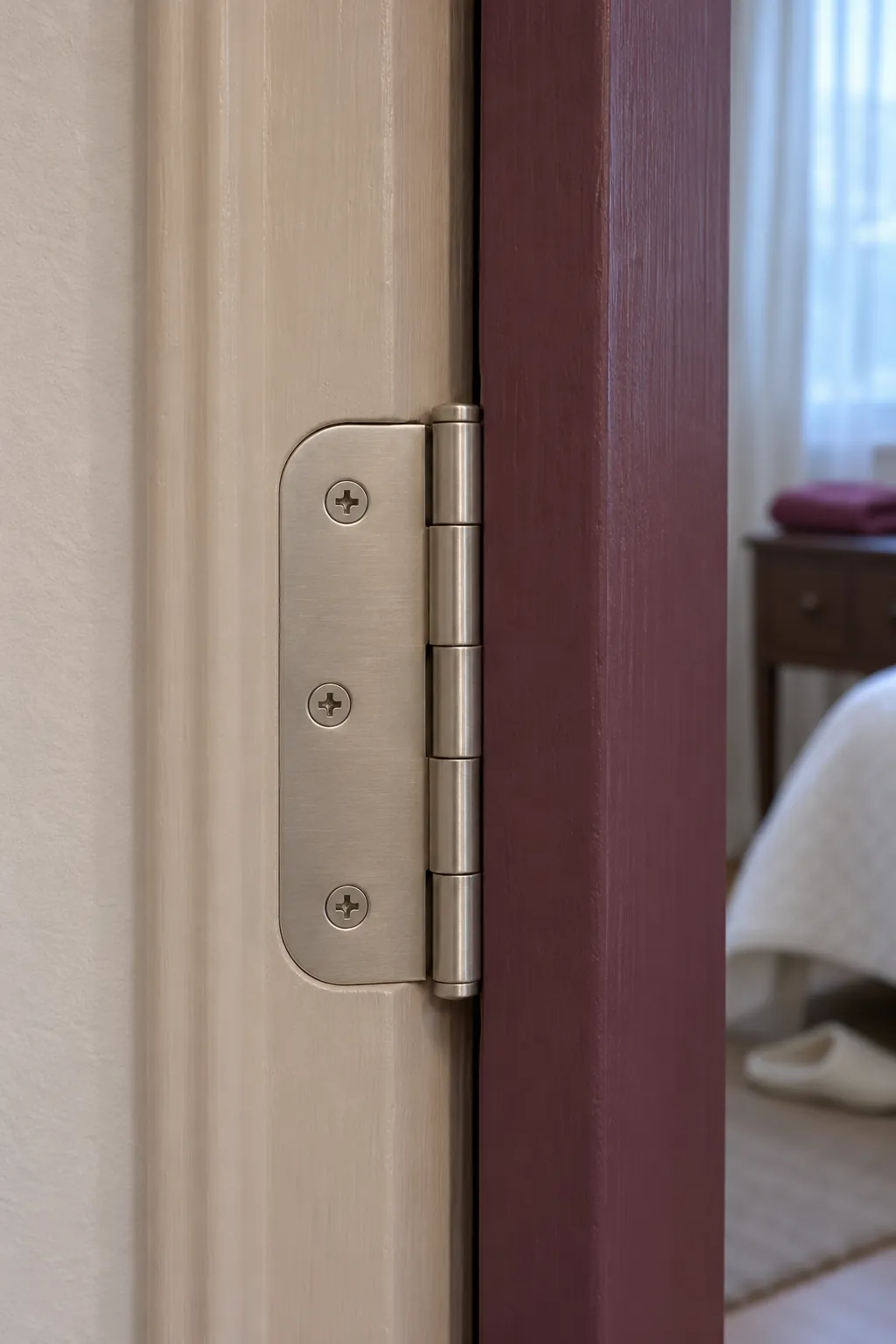
If the doors look identical, check one hinge on each opening for differences left by past repairs. Buy or borrow a sample and fit it with the slab supported. Close the door gently and look at the clearance near the stop, along the latch side and at the floor. Once the sample sits flush and the door closes without rubbing, use that model number for matching openings.