A sofa can look sleek in a listing and still tower over the chairs you already own. Start with the furniture and finishes your room needs to keep. Then choose which part of the room needs a lighter shape, a better lamp, or a stronger color.
Choose a sofa with visible legs
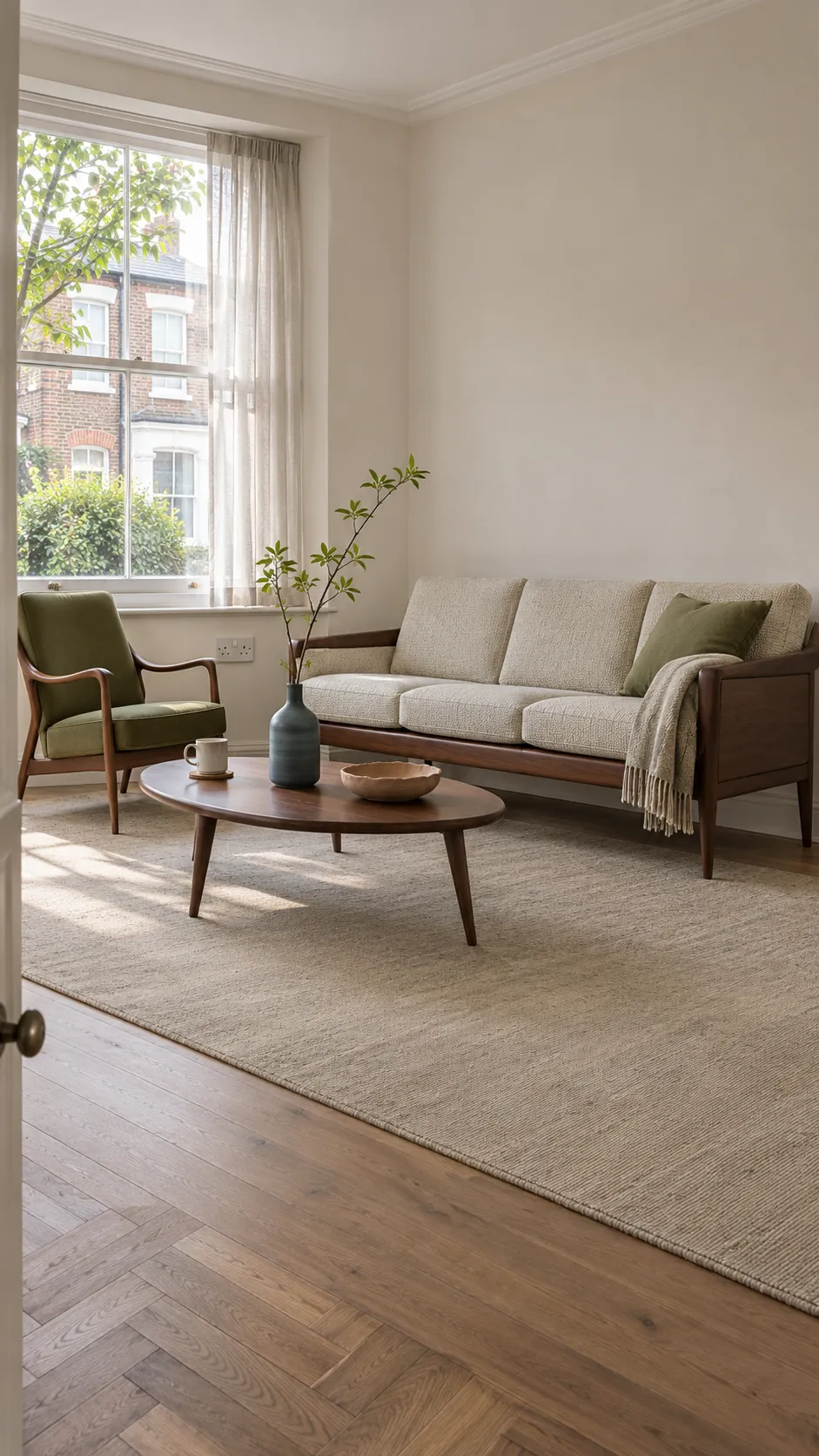
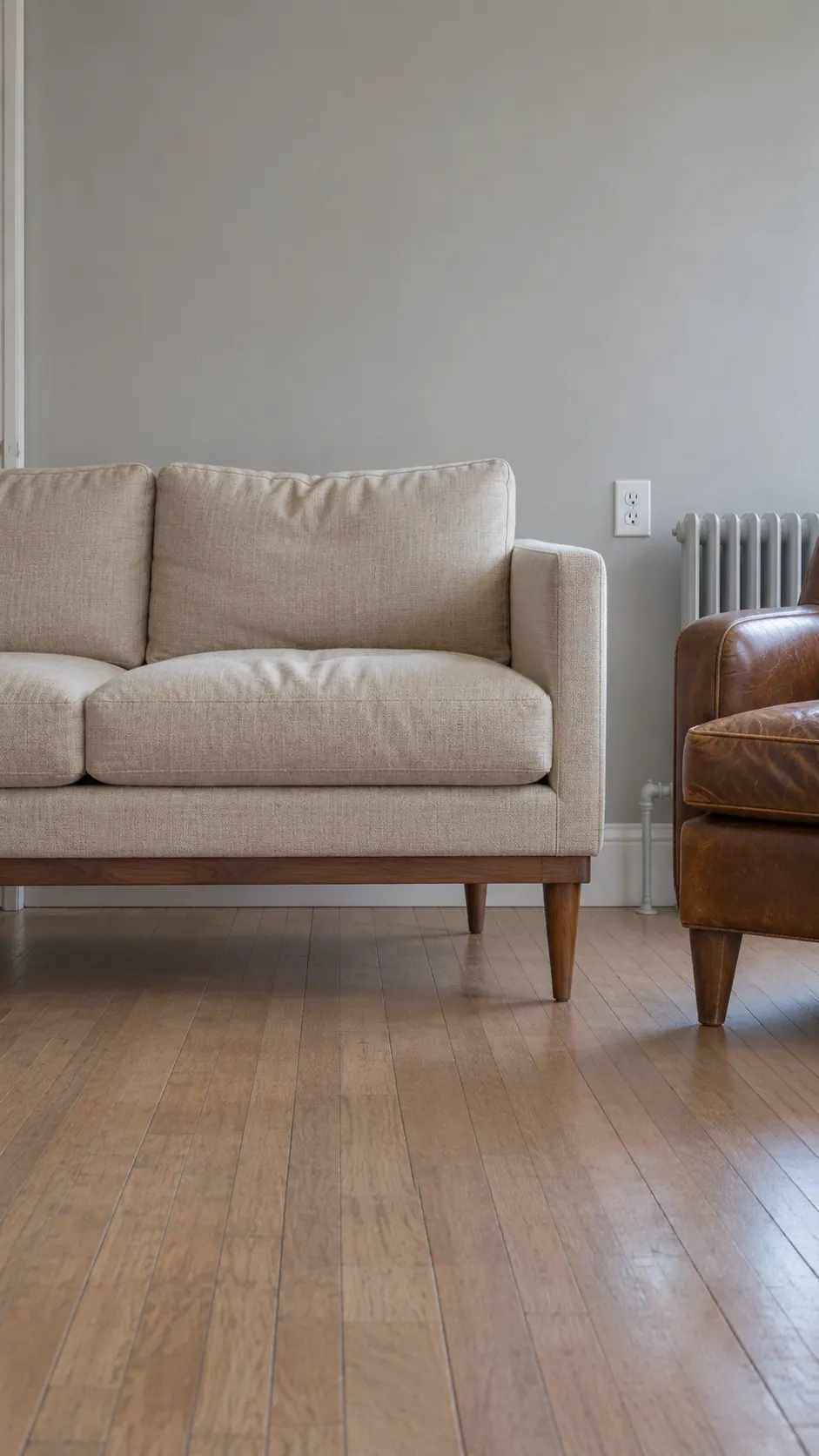
A low profile sofa leaves more wall in view, and exposed legs carry the floor line beneath the seat. Compare the height of its seat cushion with the chair you use most, since a deep drop between seats can feel awkward in conversation. Use your usual sitting position to test the cushion depth before you commit.
Turn a lounge chair toward the sofa
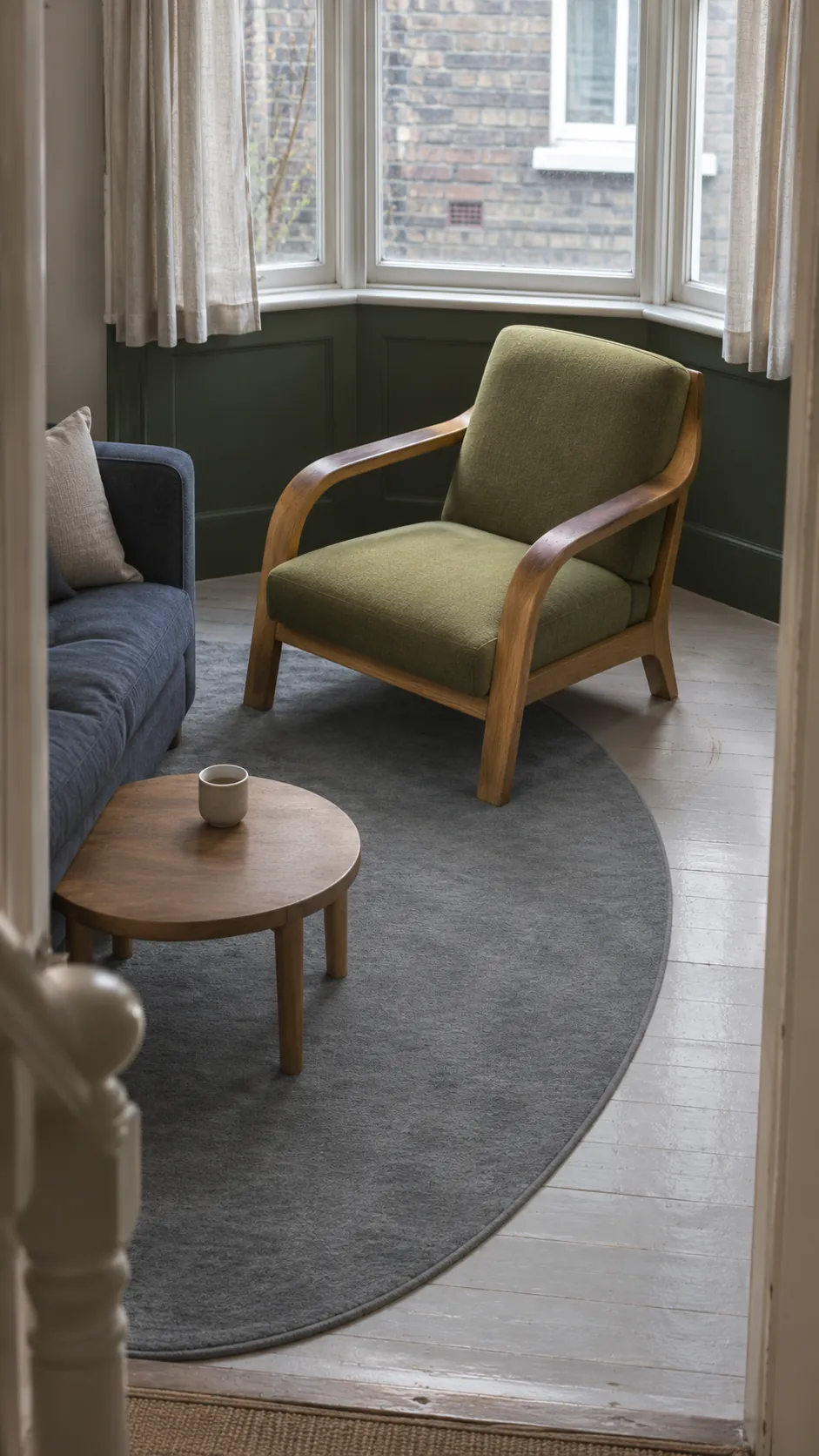
Pivot a wood frame chair until its front edge faces the conversation area. You should be able to look at the person on the sofa without twisting your shoulders. Leave the chair enough room to turn away from the window if afternoon light falls in your eyes.
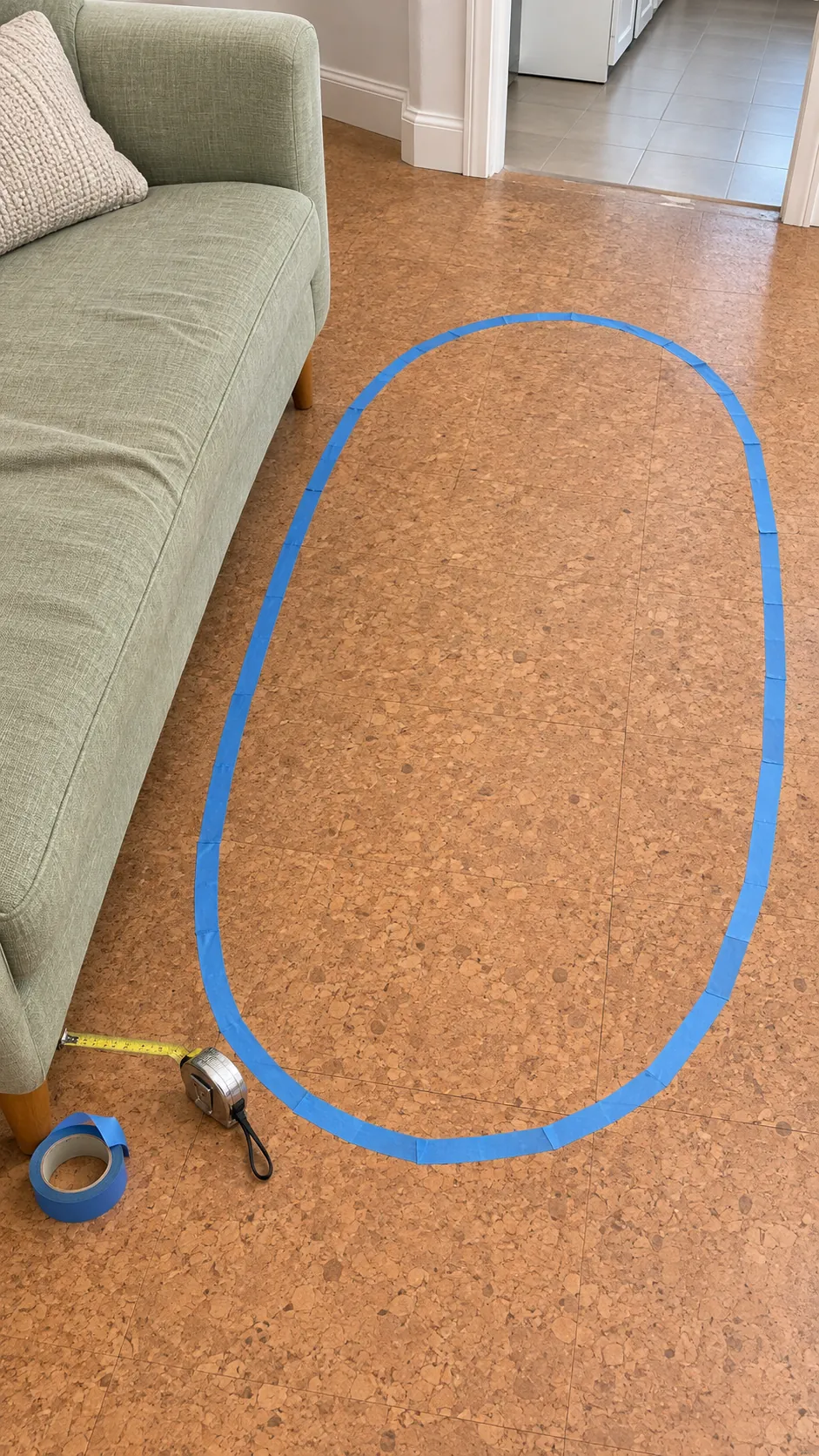
Tape out the coffee table first
Mark the outline on the floor and sit down before measuring the reach to your cup. An oval table gives knees more room at the corners where people pass. Check the gap beside the longest seat as well, since generous end clearance can hide a pinch point along the sofa.
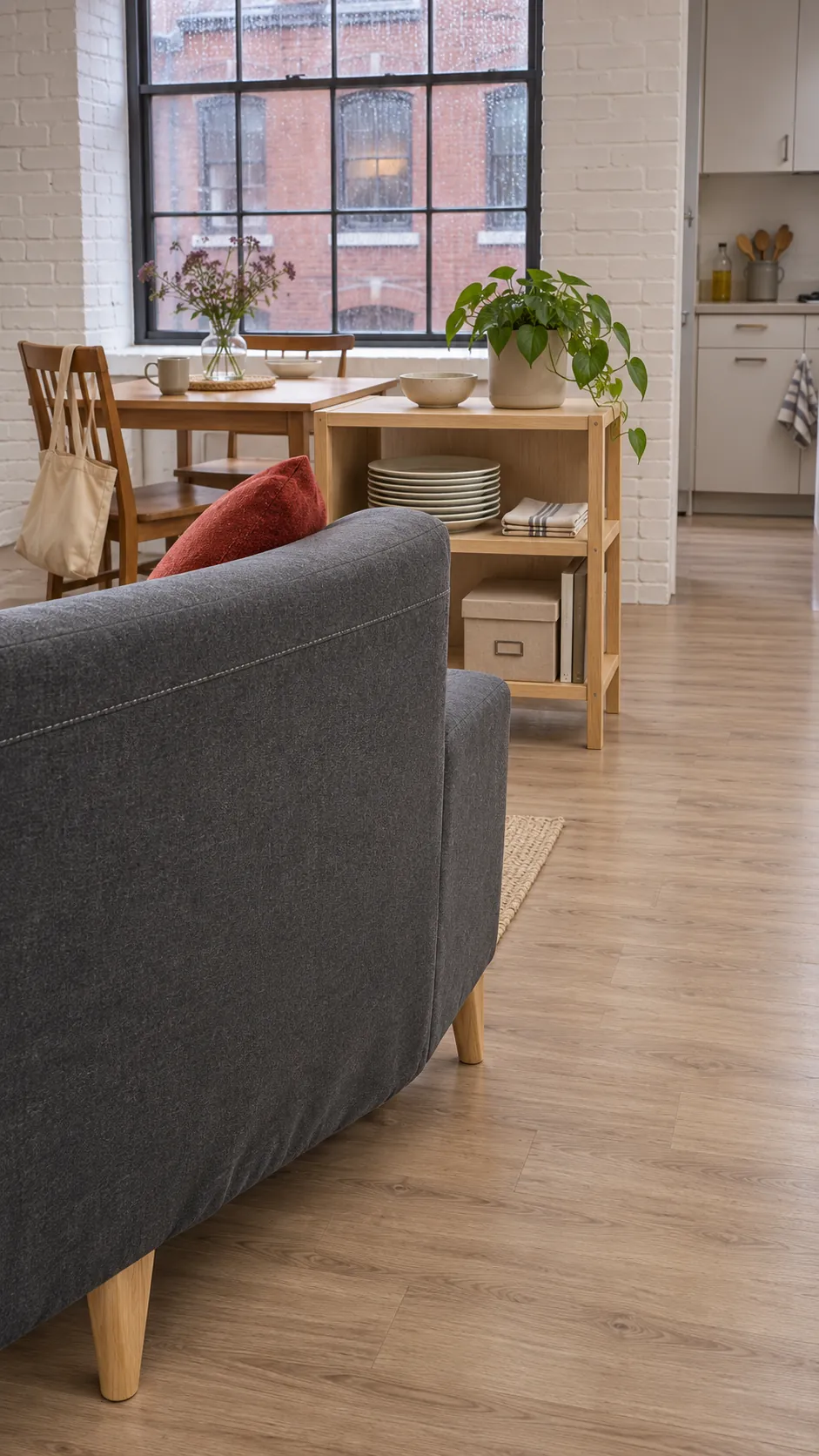
Float a loveseat at the studio boundary
A loveseat with a finished back can mark where a studio living area begins. Run its back parallel to a short open shelf or the edge of the dining zone. Sit in every seat and check that the path to the kitchen stays open. A narrow console can hide cords behind the loveseat if the walkway has room.
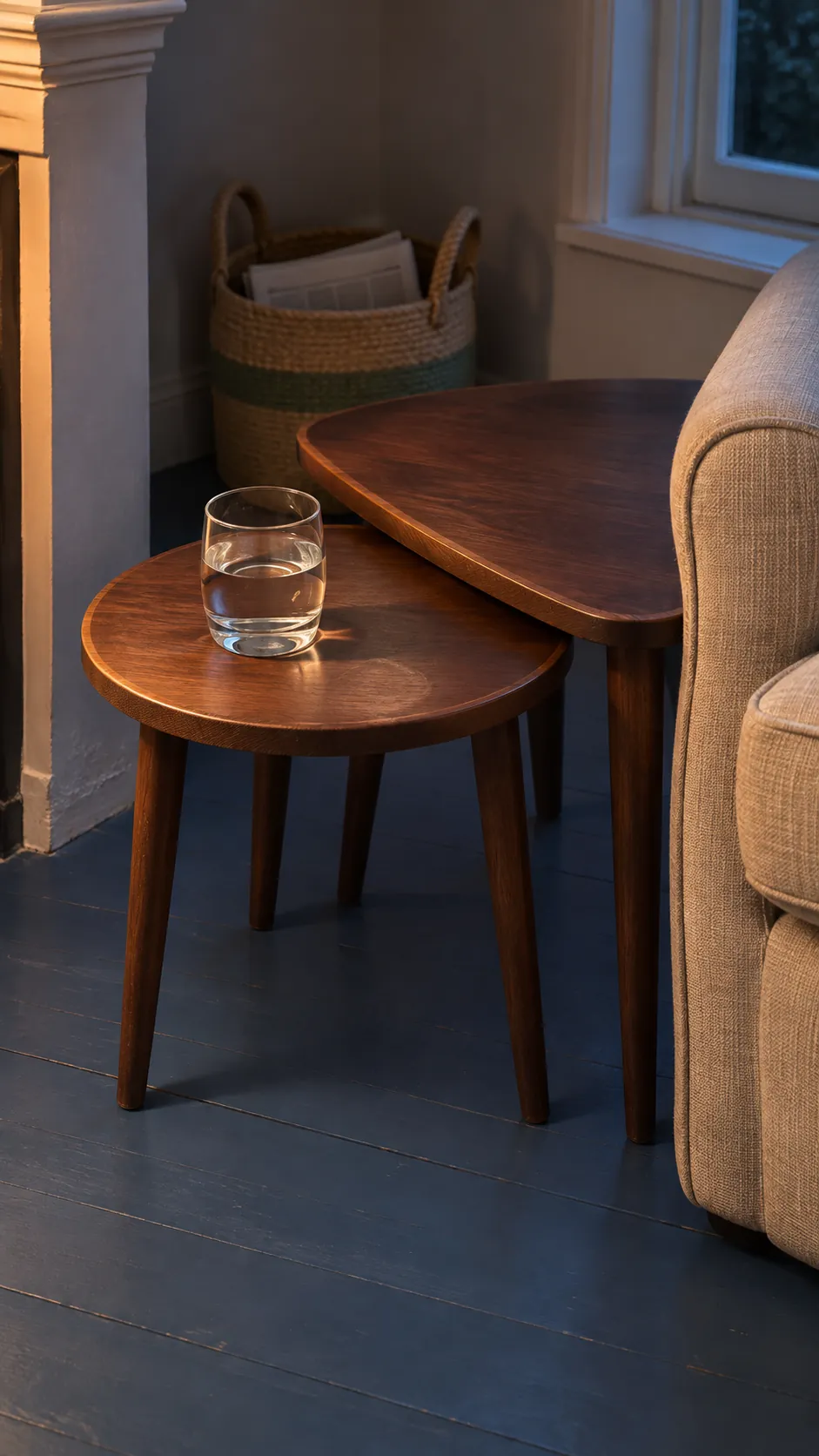
Use a nesting table beside a tight seat
Two small nesting tables can give a guest a place for a drink without taking up that floor space all week. Look for a smaller table you can slide out from the seating side. A solid rim helps you find the edge when you put a glass down during a movie.
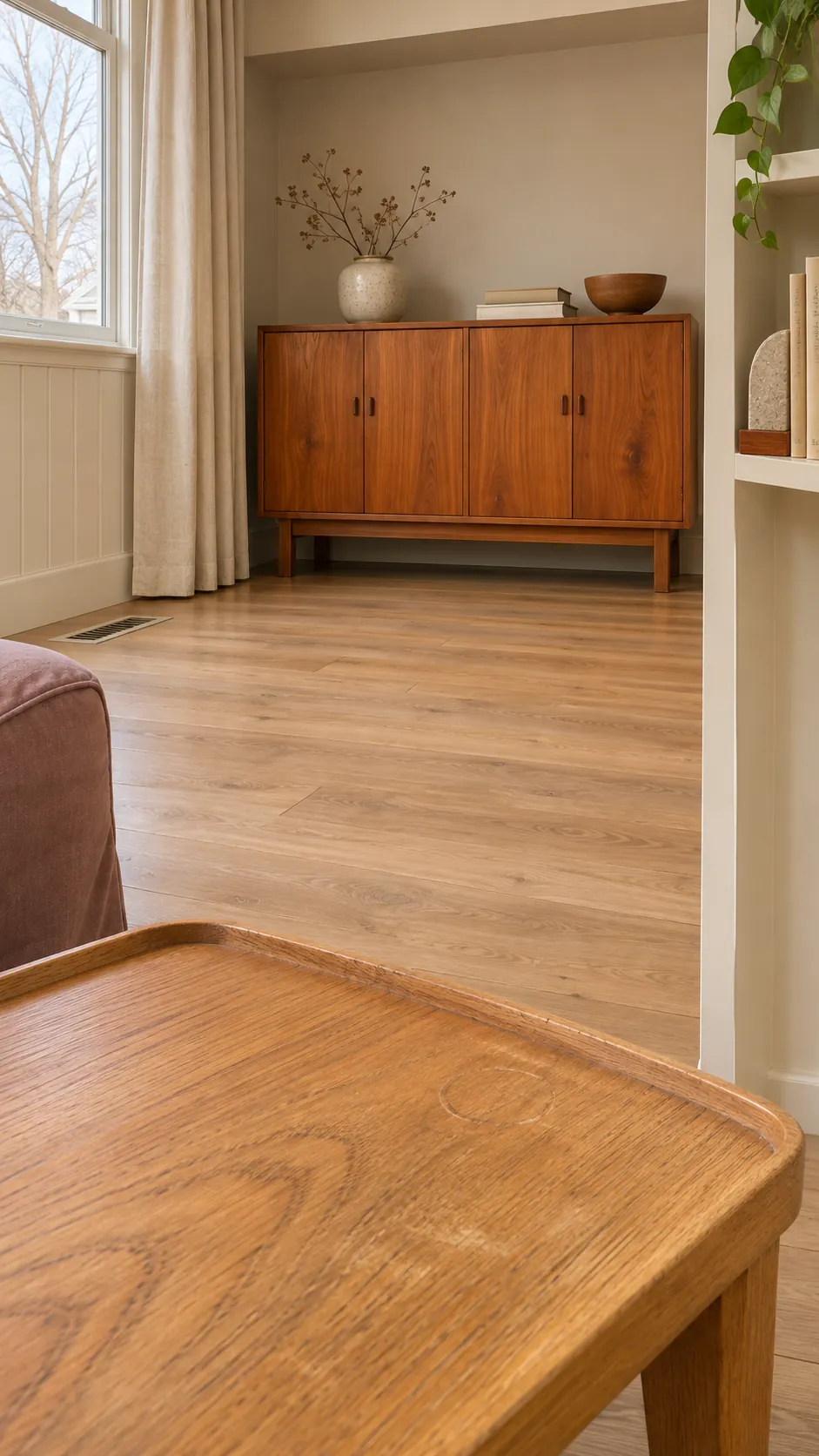
Bring two wood tones together
Put a sample of each finish next to your floor in daylight. An amber teak cabinet and a honey oak table can share a warm undertone even when their grain and depth differ. Set a smaller piece in the darker tone across the room so the cabinet has a visual link to the rest of the space.
Give a teak sideboard one clear job
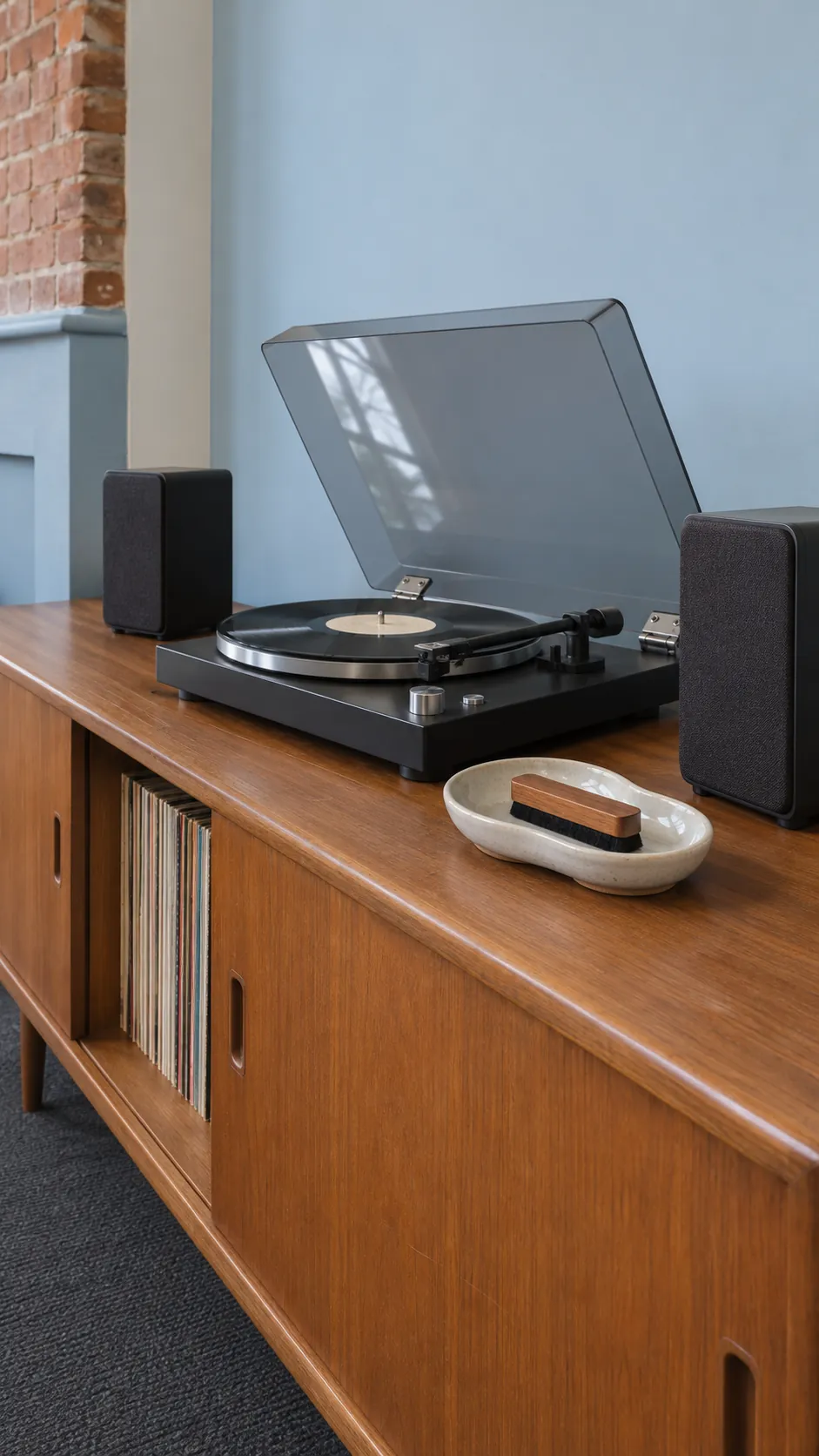
For teak sideboard styling, decide what the cabinet needs to hold before filling the top. If your speakers and turntable live there, a shallow dish for a record brush can keep the controls clear. Leave room to raise the turntable lid fully. Check that the cabinet is level before setting down the player.
Check the joints on a vintage chair
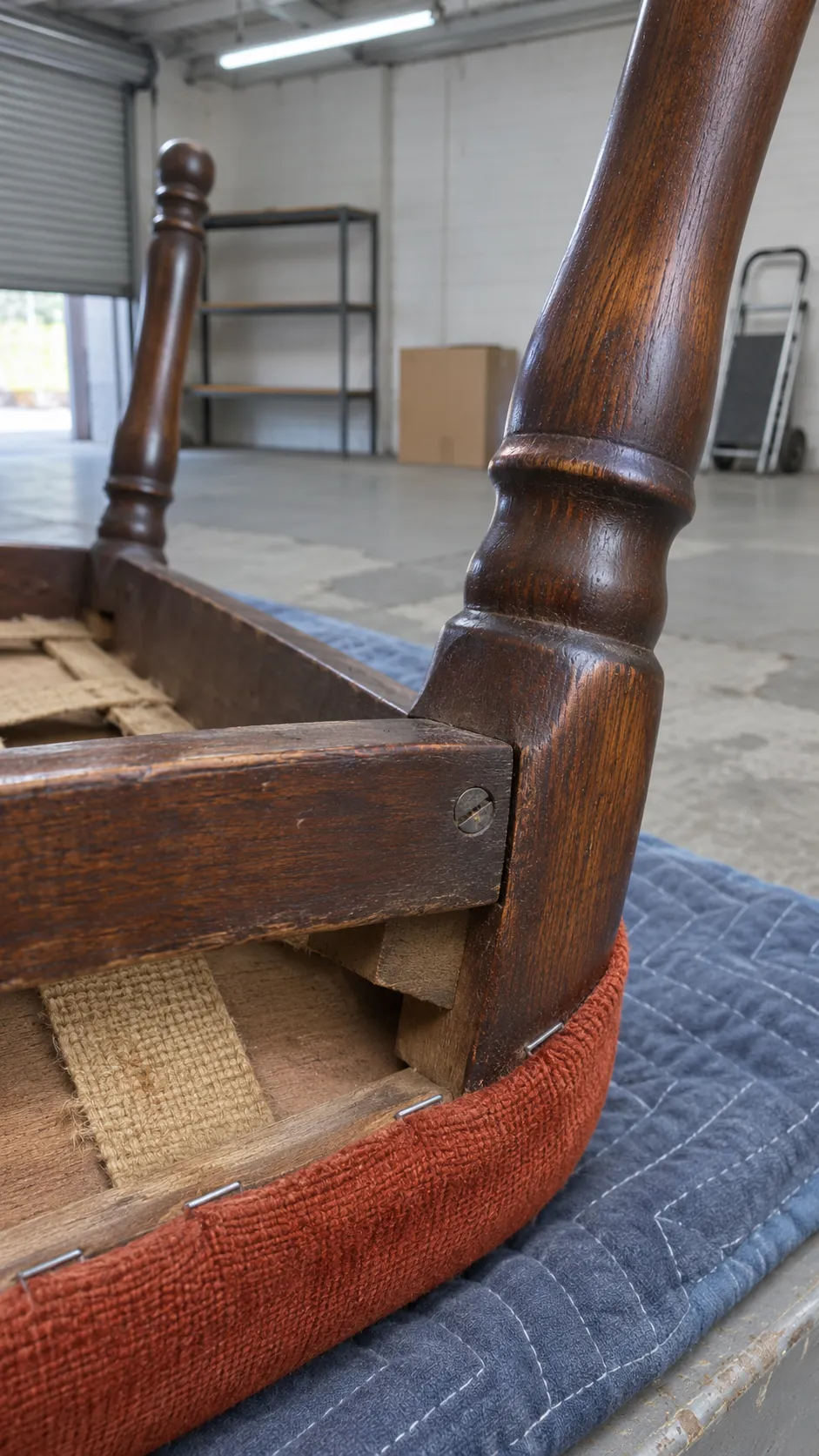
Run a hand along the underside for loose fasteners and ask the seller if you can test the chair on level flooring. Look underneath a Danish modern furniture frame for split rails or loose joints where the legs meet the seat. Factor repairs and new upholstery into the price, especially if you need the chair for daily use.
Make a slim wall shelf earn its depth
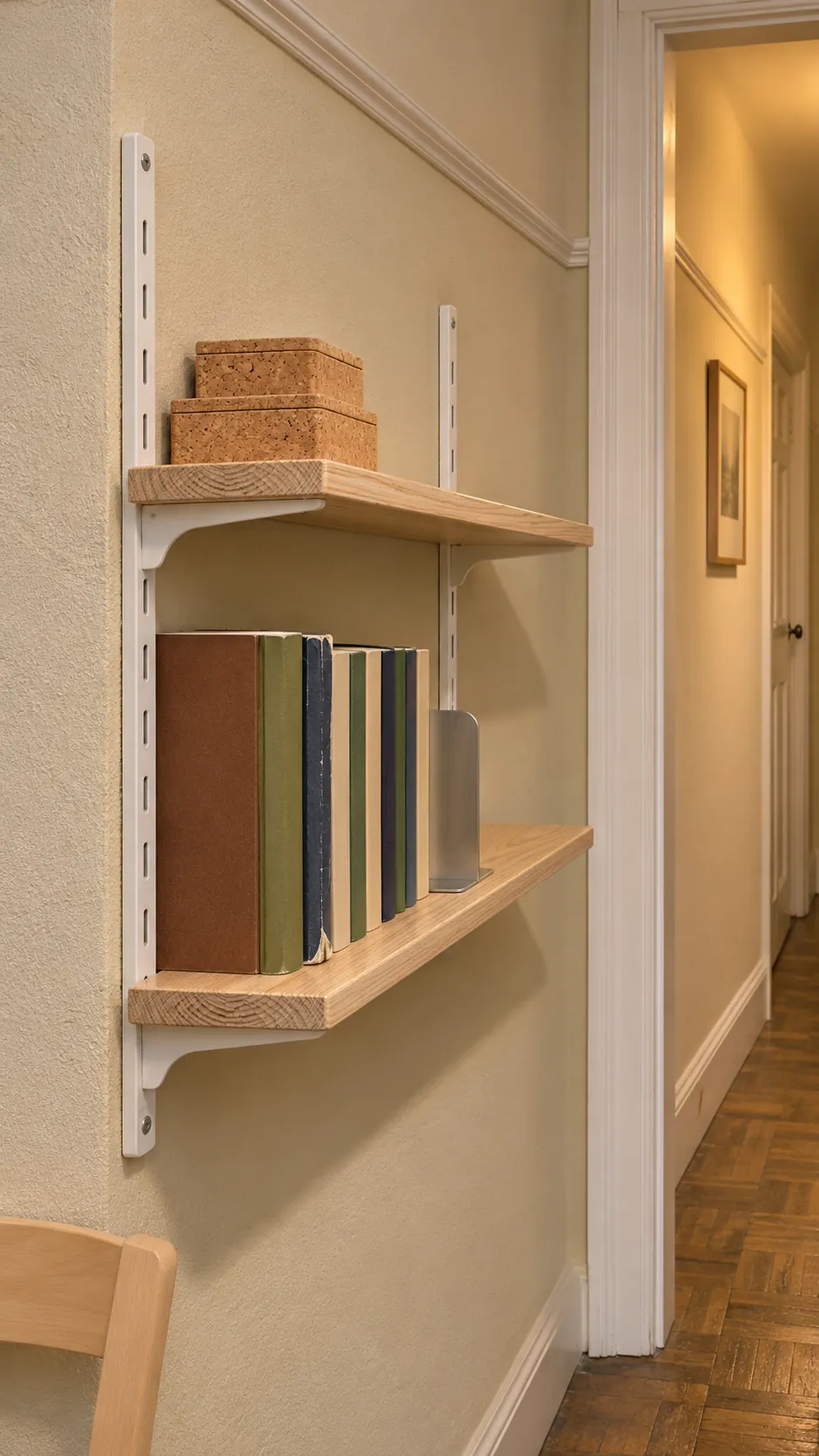
A narrow shelf can hold paperbacks on a wall that would feel crowded with a deep bookcase. Check the depth against your widest book and place heavier objects where the system can support them. Follow the mounting instructions for your wall type and ask your landlord before you drill in a rental.
Use a woven seat to break up solid wood
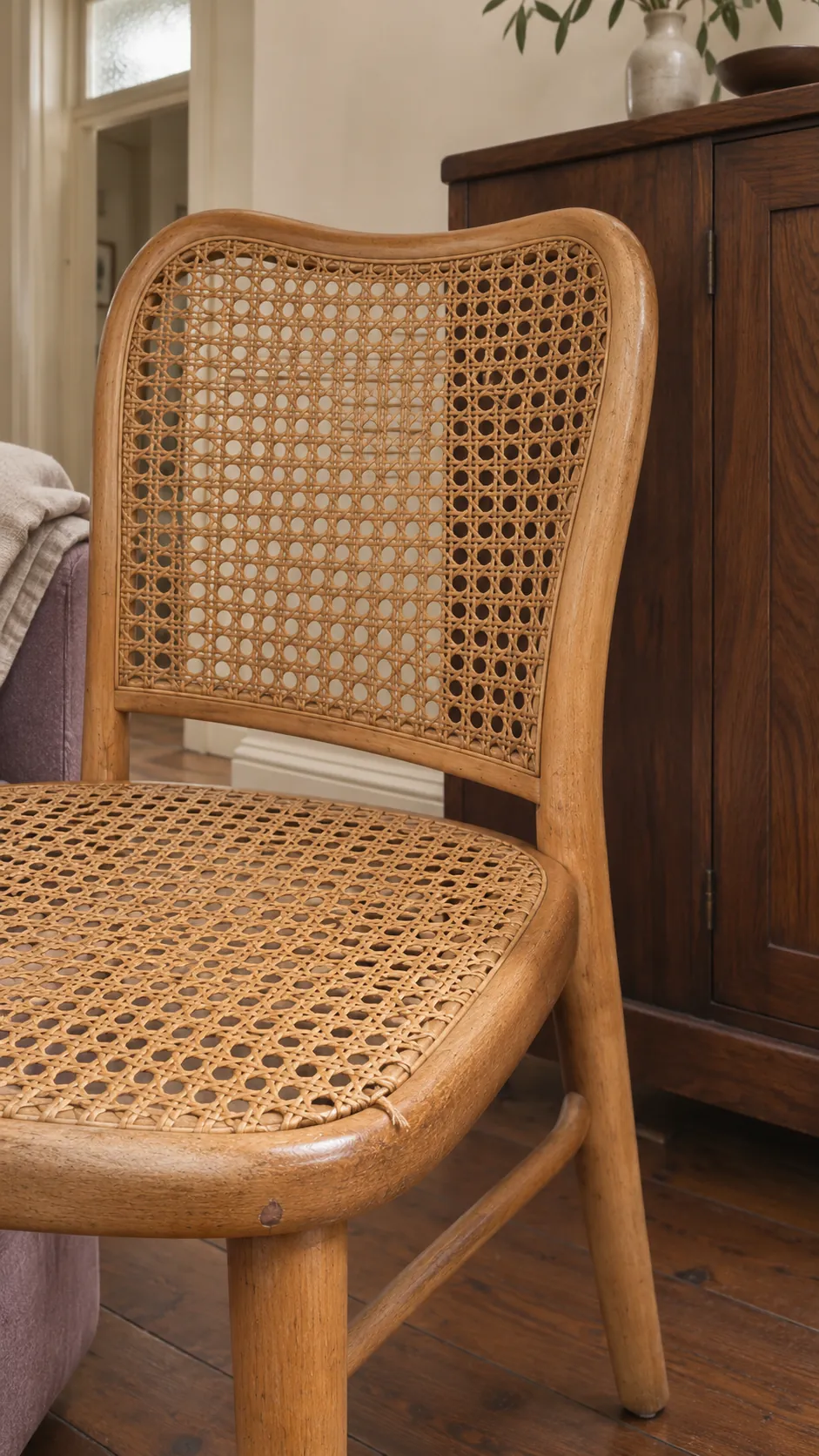
Open cane gives a chair a lighter outline next to a broad cabinet or a flat sofa arm. Check the weave at the front edge, where regular use puts strain on older seats. In a sunny room, move the chair away from the strongest direct light to reduce uneven fading.
Choose a rug that joins the seats
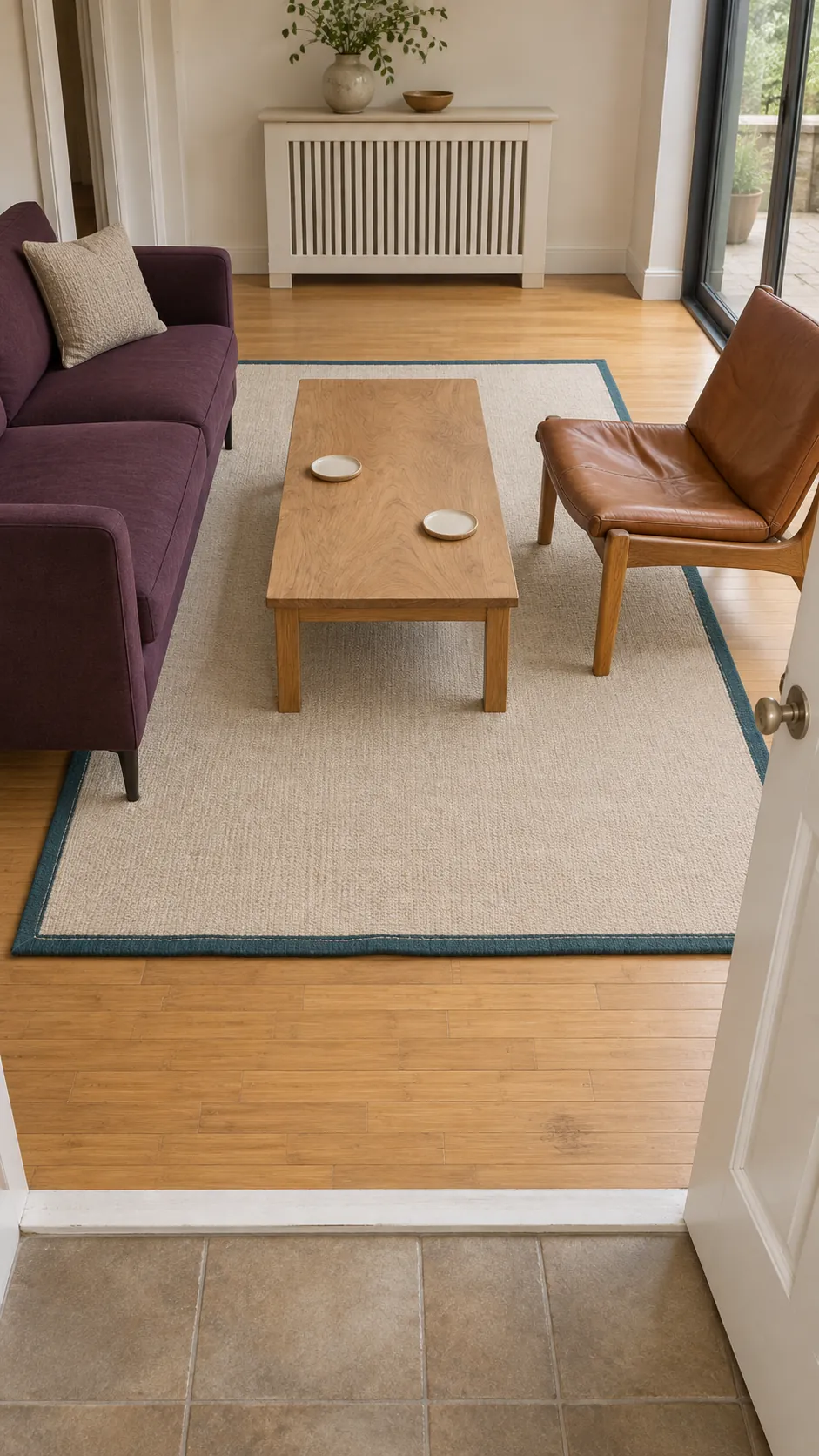
Lay out a rug so the sofa and facing chair can both rest their front legs on it. A narrow border around an open center lets the coffee table and chairs share one clear area. Use an appropriate rug pad and check the door swing if the rug reaches an entry.
Soften a straight sofa with an organic shape
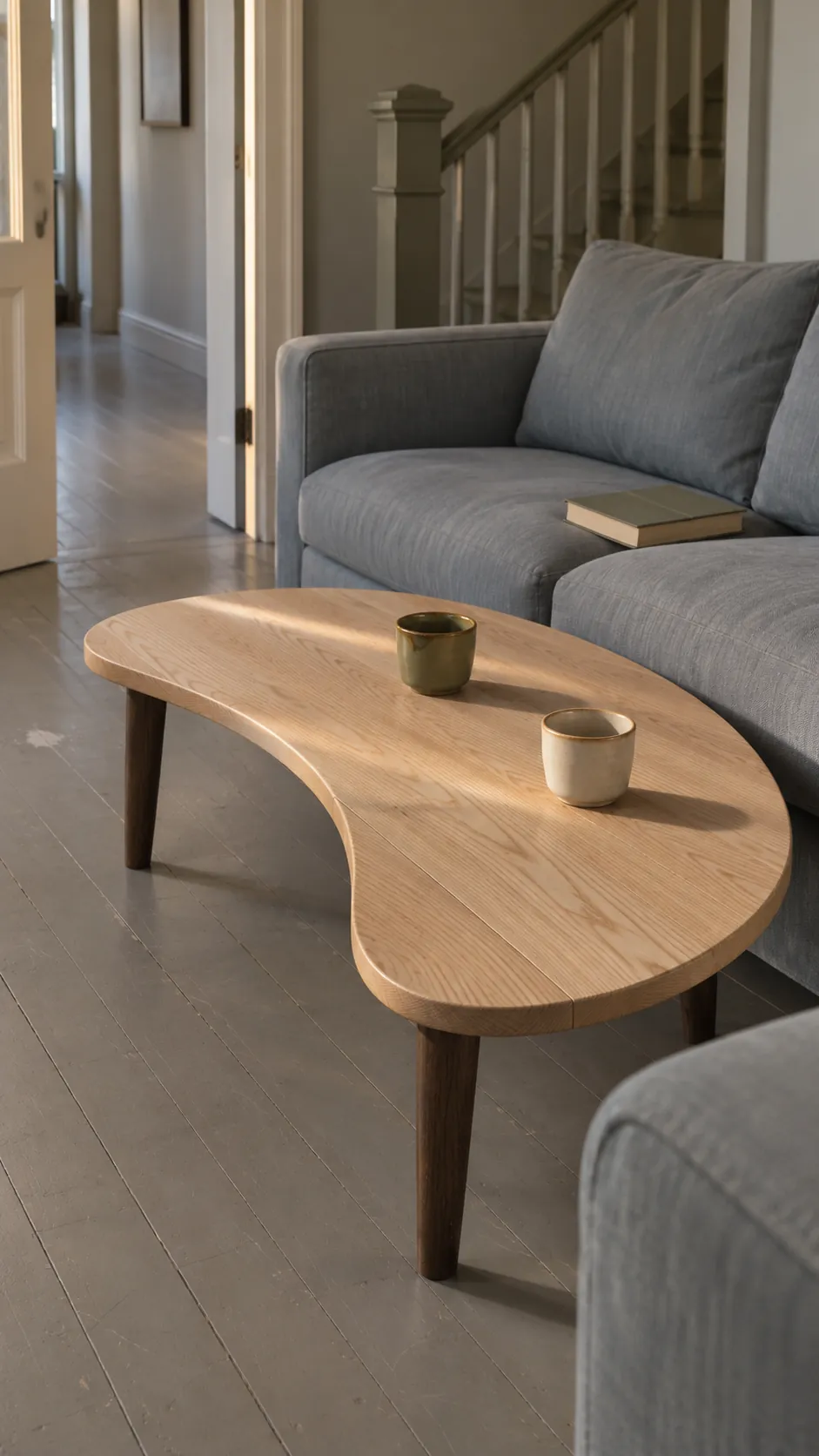
A kidney shaped table can round off a boxy seating group. Turn the narrow end toward the busier route through the room. From the sofa, check that the broad part still lets two people reach the tabletop. Organic modern shapes work best here when the curve helps the room function.
Warm up a gray room with olive and clay
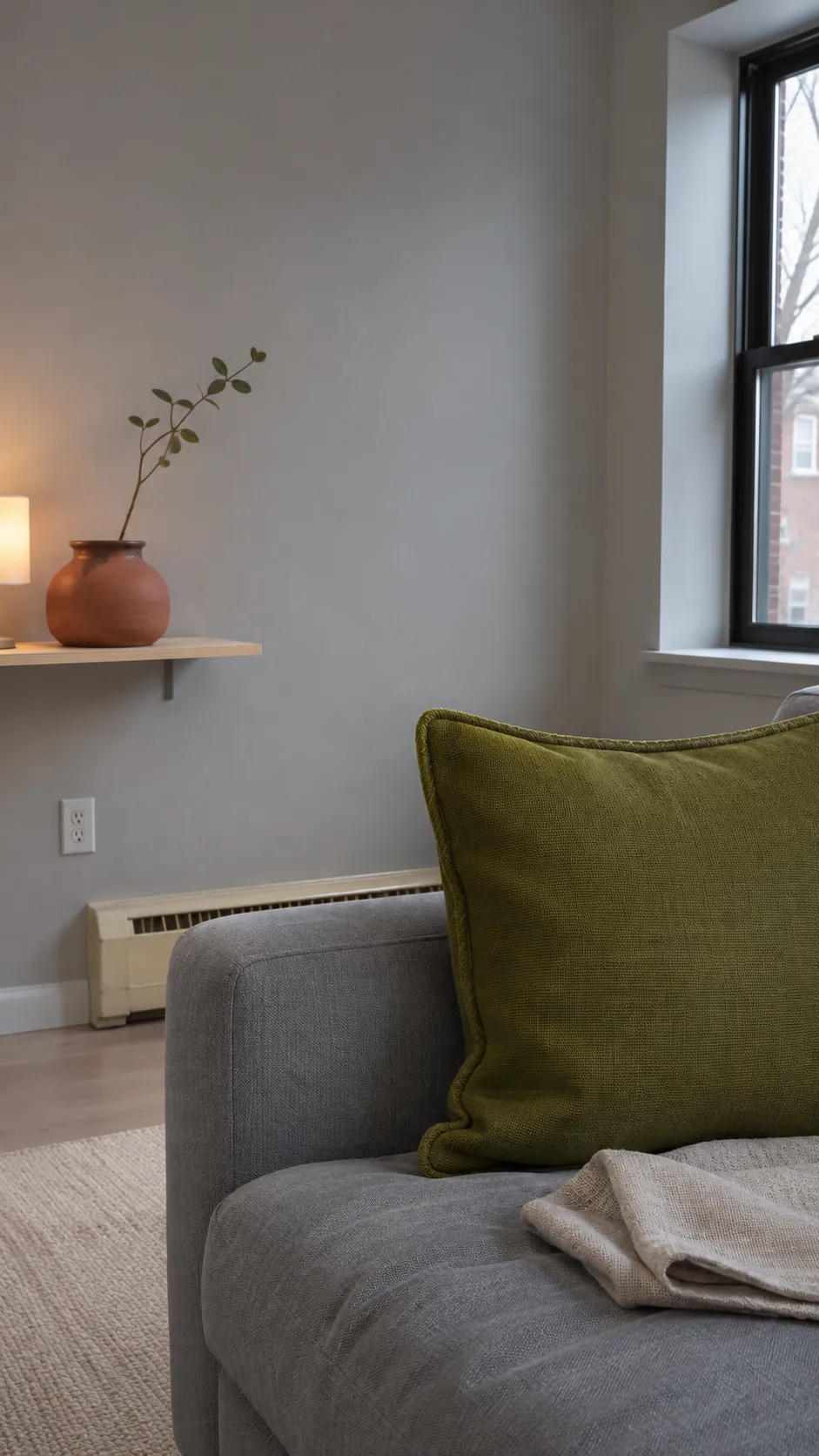
Olive and muted clay can sit beside gray walls while you build a warmer mid century color palette. Try an olive cushion against the sofa, then place a clay colored object across the room where you can see the two together. Sample both in evening light, when some grays look bluer than they do by day.
Use the yellow chair to set the palette
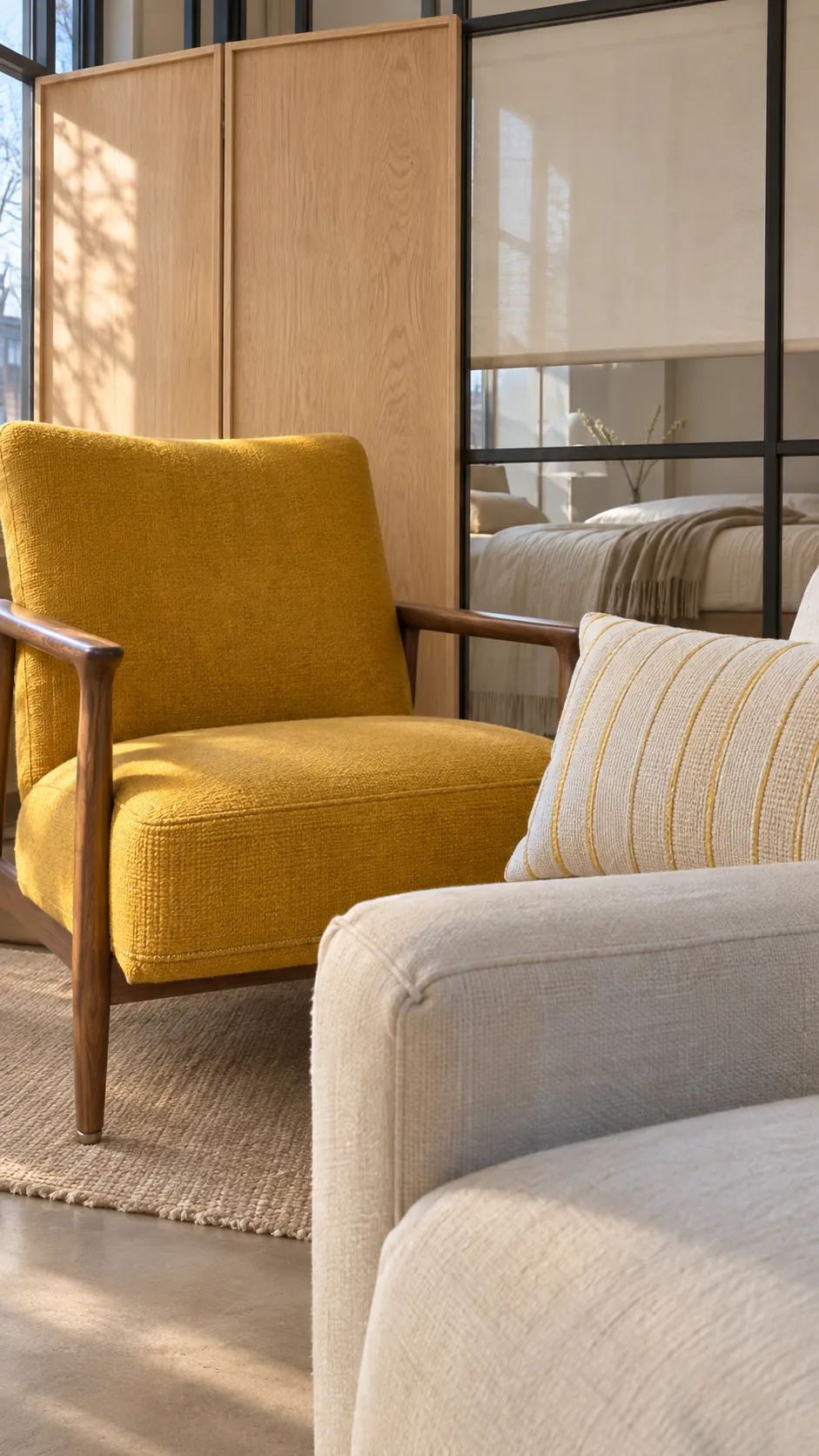
Hold sofa fabric against the yellow chair and check how both fabrics respond to window light. A warm white sofa can make the chair easier to live with if the yellow already dominates the view. Choose one small detail that repeats the yellow, such as a stripe in a cushion, then let the floor and wood add quieter color.
Use a dark textile to ground pale floors
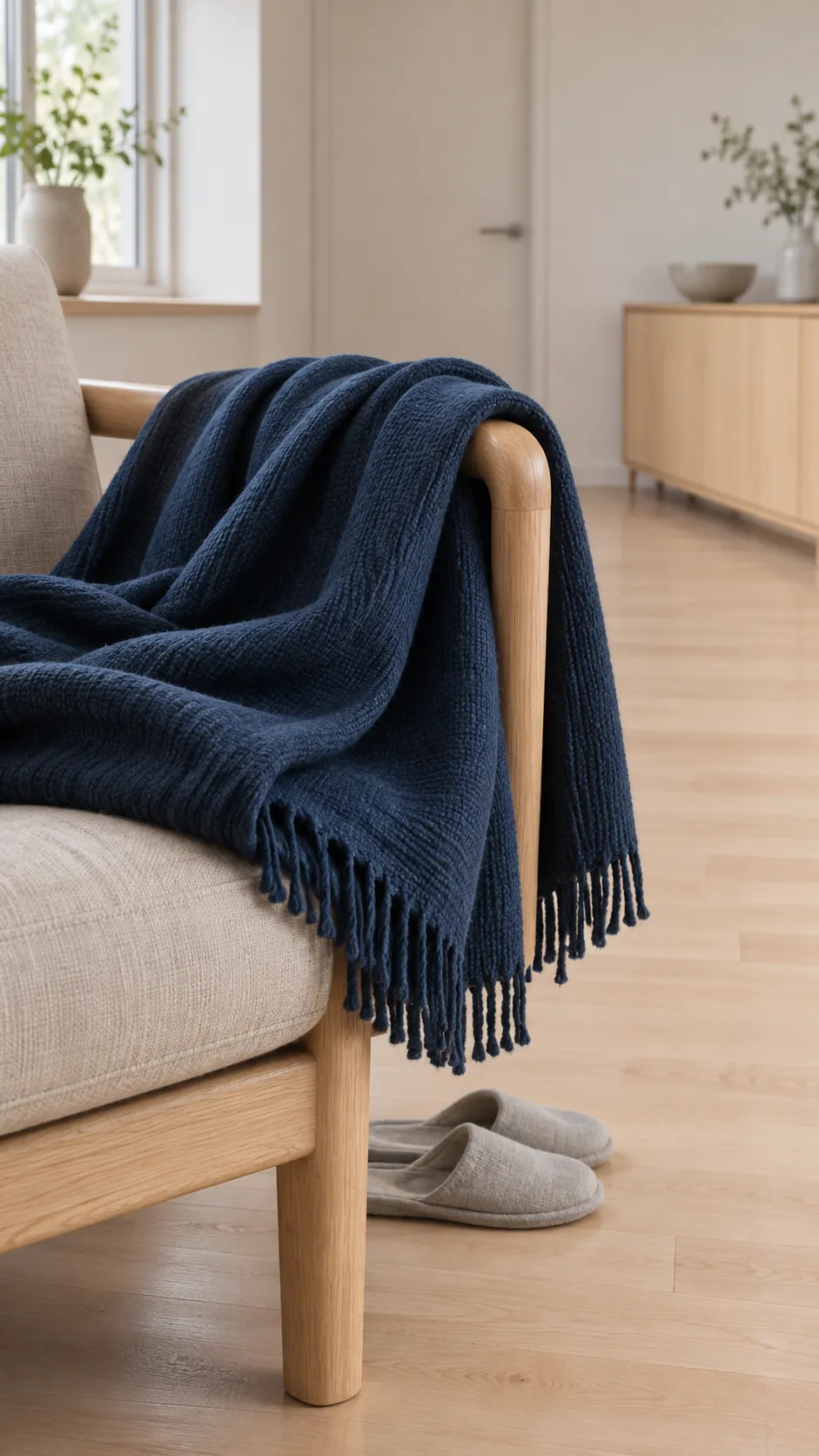
A charcoal or ink blue throw can give a pale wood room a clear point of rest. Put it on a seat that already needs a blanket, where the folds add depth on their own. A washable wool blend or cotton weave is useful if the seat sees daily traffic.
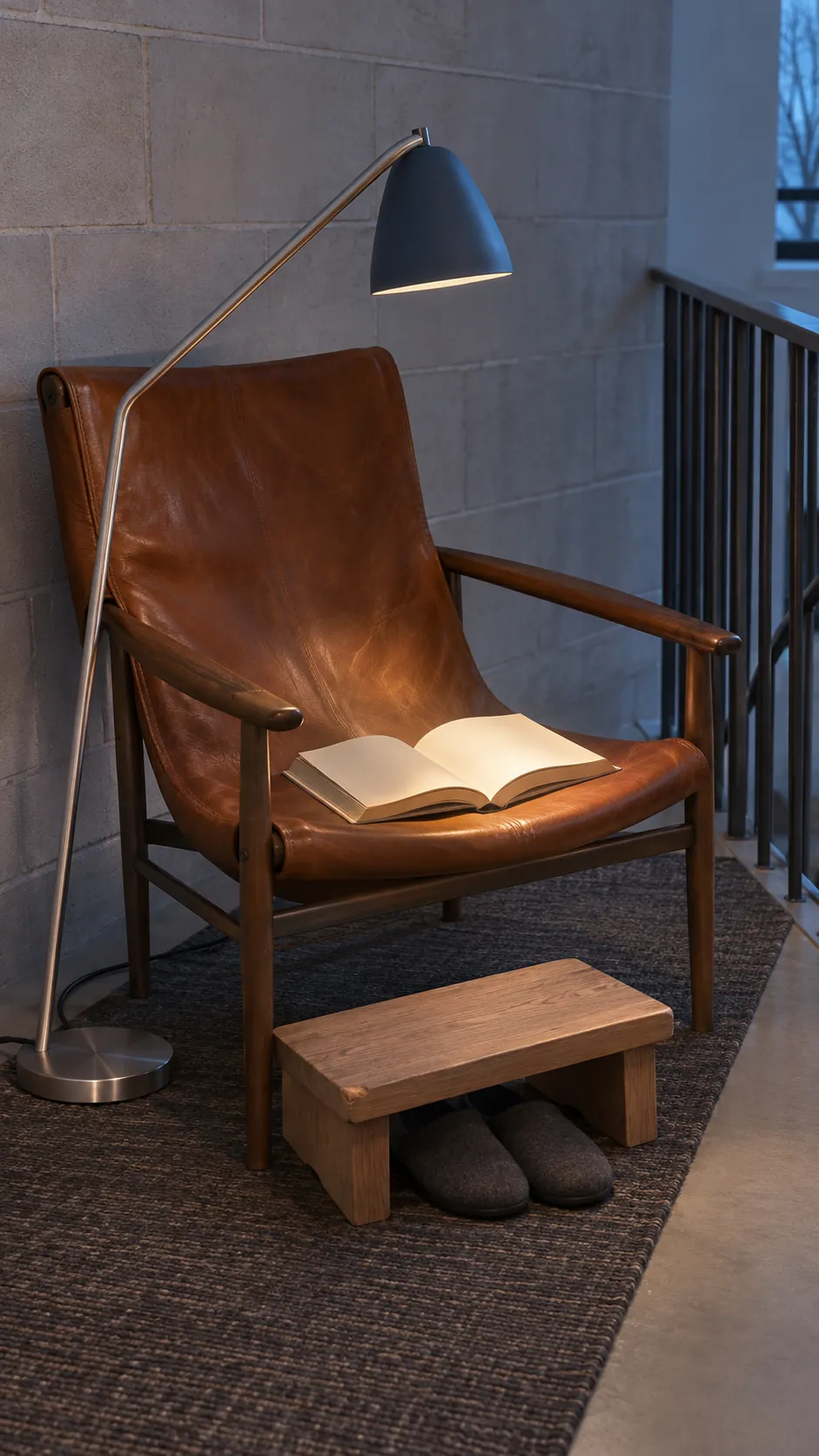
Put glare free light beside the reading chair
Set a floor lamp behind your outer shoulder and aim the shade at an open book. The shade should hide the bulb when you look up from the chair. Mark the base location before buying so you can check whether it crowds your feet or the nearest walkway.
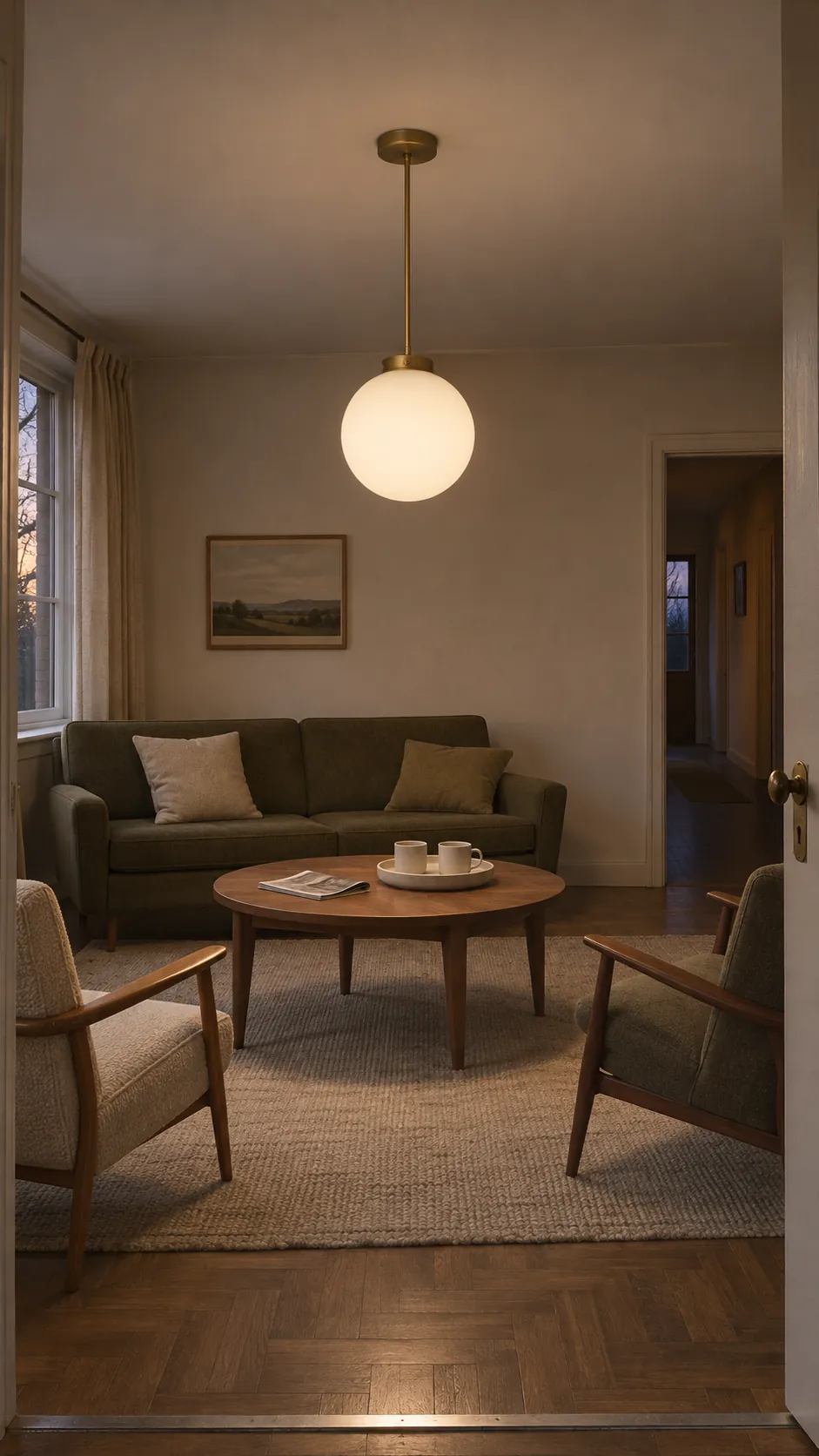
Let a globe pendant mark a conversation area
Use a frosted globe to spread gentle light across a seating group with a coffee table below it. Judge its diameter from the doorway, where you see the whole furniture arrangement at once. Check the hanging height from a standing position and use an electrician for any wiring changes.
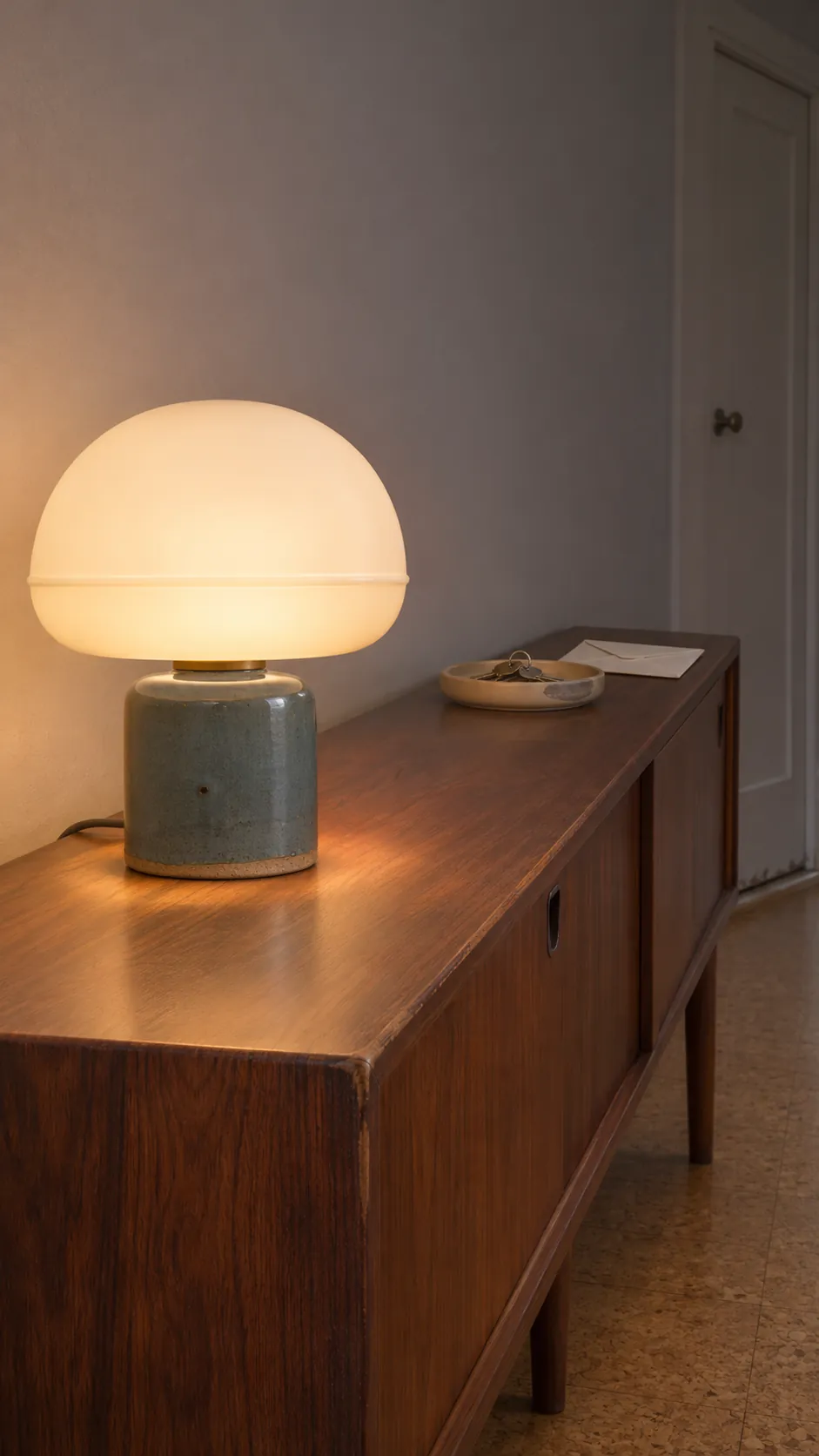
Give a small lamp room to glow
A vintage modern table lamp can make a quiet pool of light at the end of a long console. Clear nearby objects far enough that the light falls on the surface around the base. Use a bulb within the fixture rating and have old wiring checked before using a secondhand lamp regularly.
Try a plug in sconce above an end table
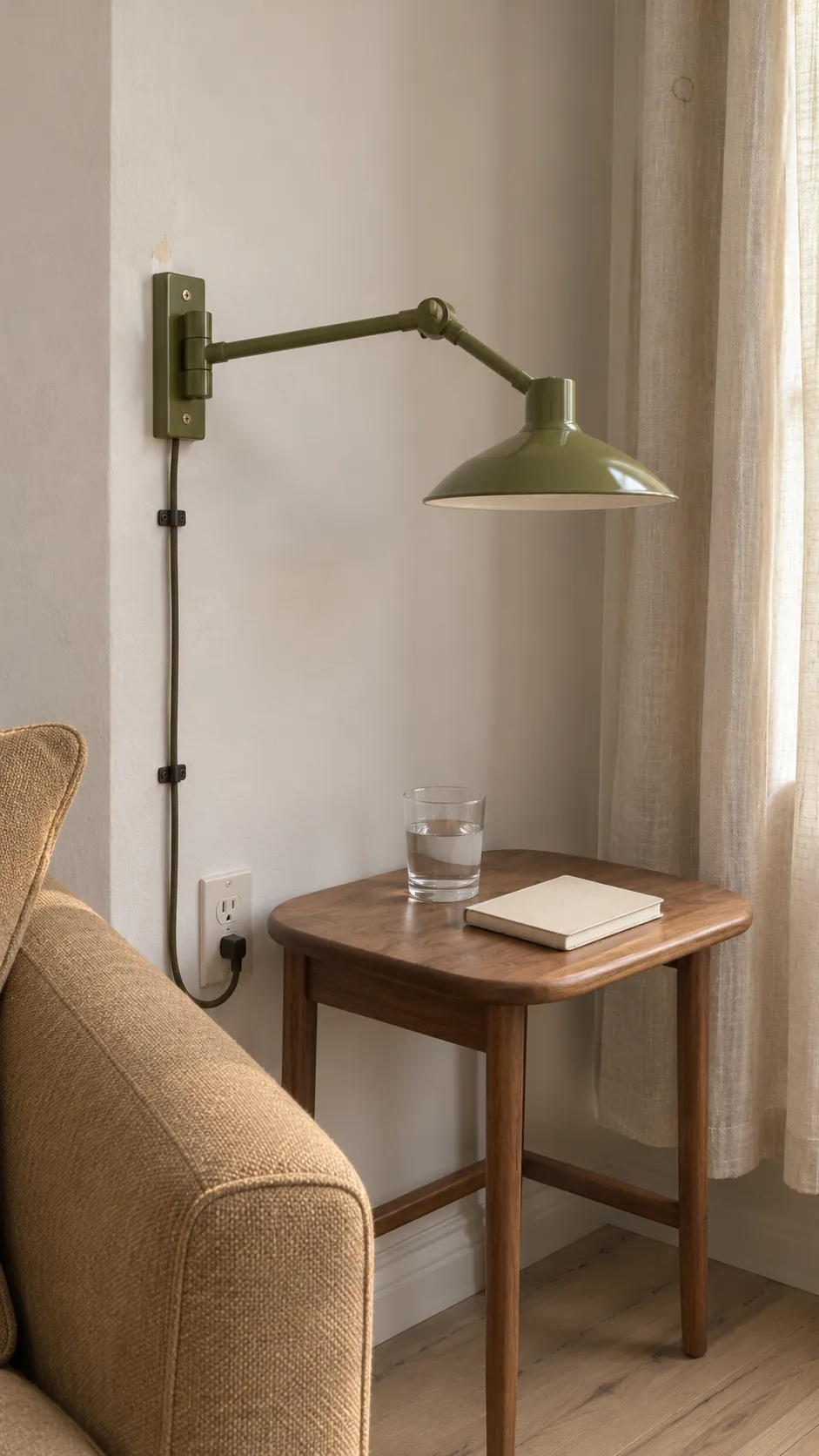
A wall light frees the small surface you reach from the arm of the sofa. Before mounting it, hold it against the wall and check whether the shade can swing without hitting curtains. Plan a short cord route to an outlet beside the table so the cord stays out of the walking path.
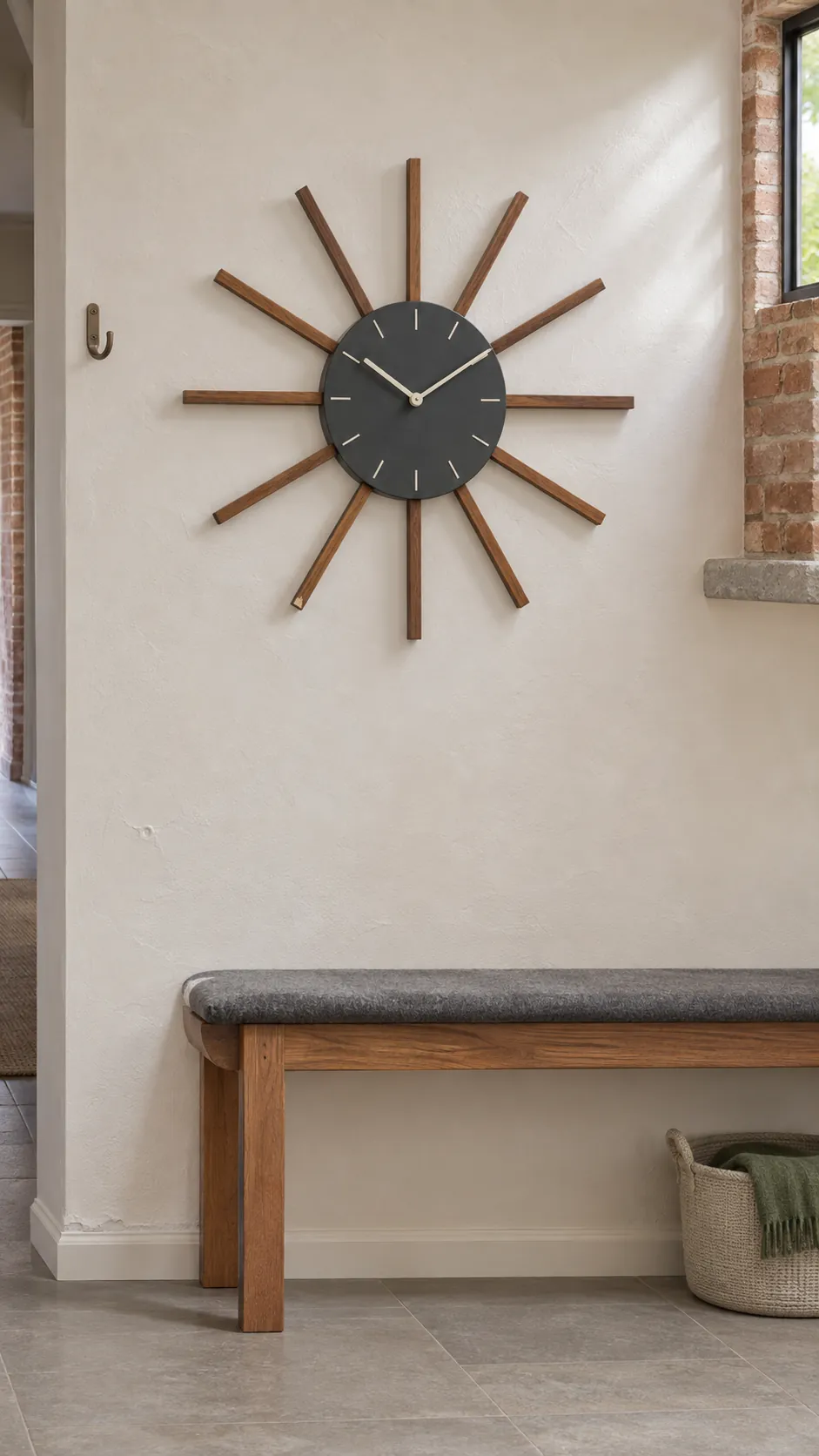
Place a starburst clock on a clear stretch of wall
Choose a spot where the clock hands read clearly from the seat you use most. A bit of open wall around the metal rays makes the outline easier to see. Check that you can reach the clock for battery changes without climbing onto the furniture.
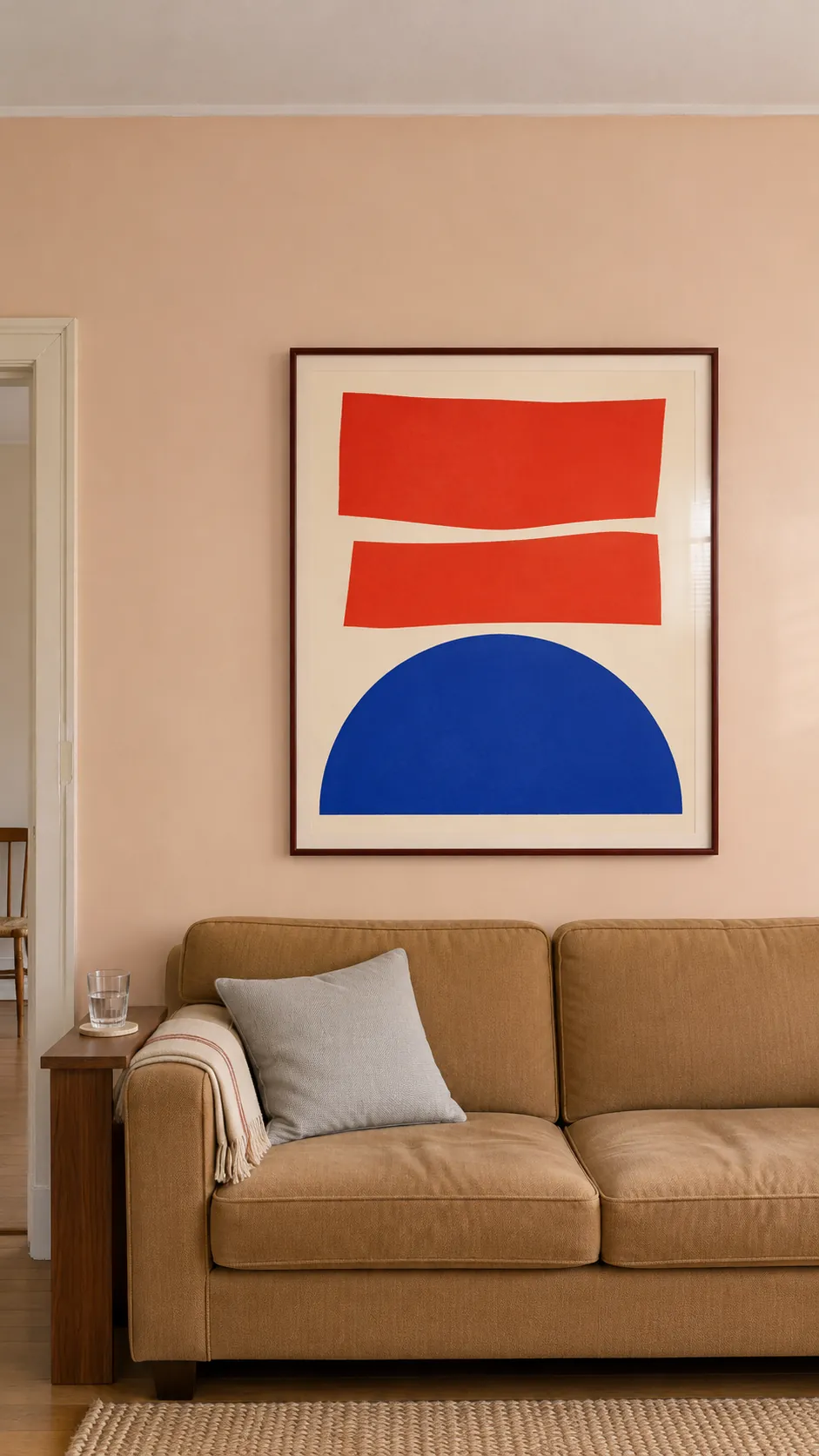
Hang one graphic print close to the furniture
A print of broad geometric shapes can give a sofa wall a focal point. Hold a paper outline in place before hanging the frame, then look from both the sofa and the doorway. Lower the outline if a tall gap makes the print and sofa feel like separate groups. Use hardware rated for the finished frame.
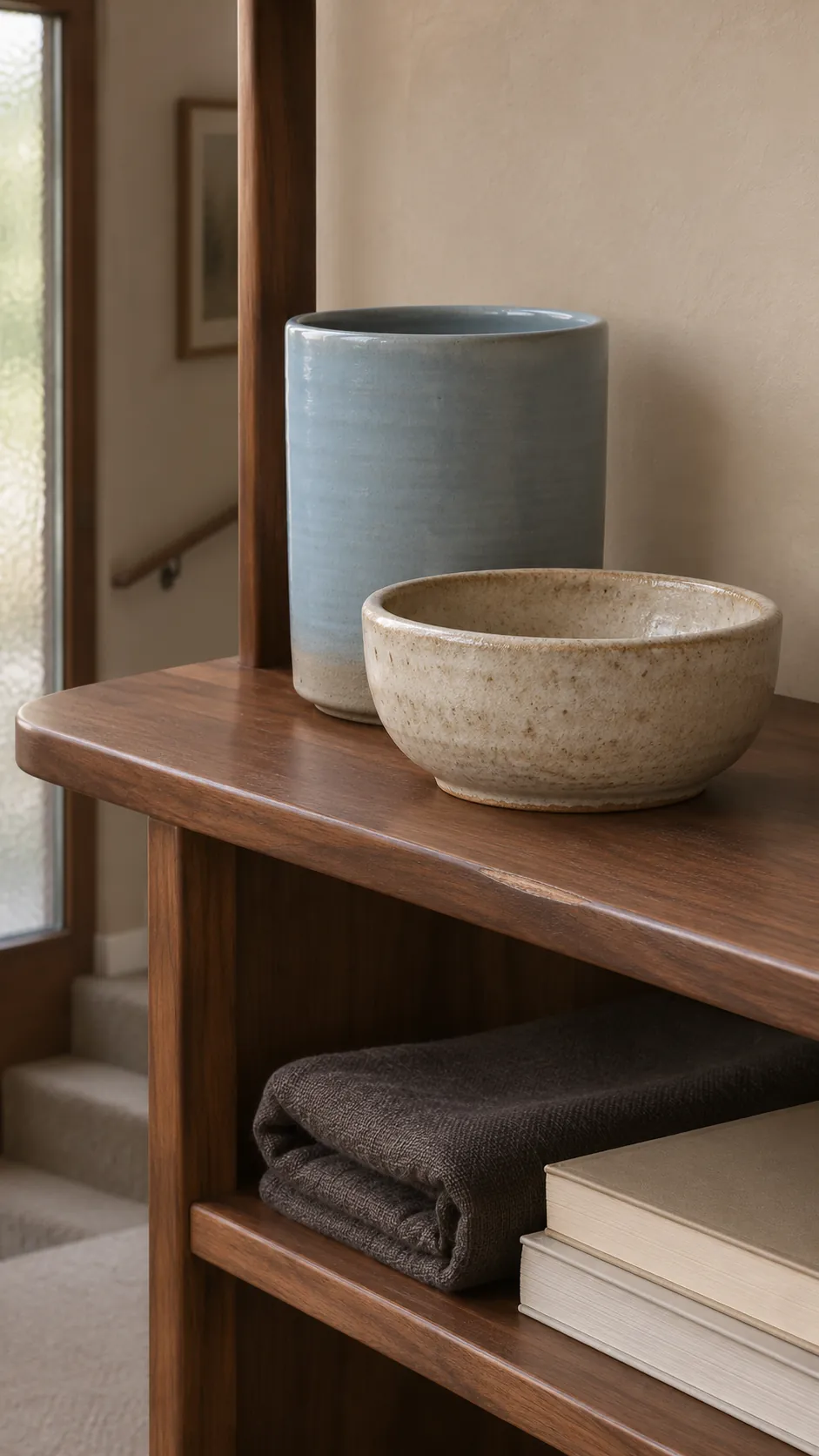
Set ceramics at different depths
Set a squat vessel forward and a taller piece a little behind it on an open shelf. From the doorway, give each rim enough space to read against the wall. Leave the front edge of the shelf clear if it sits beside a path or at the height of a swinging bag.
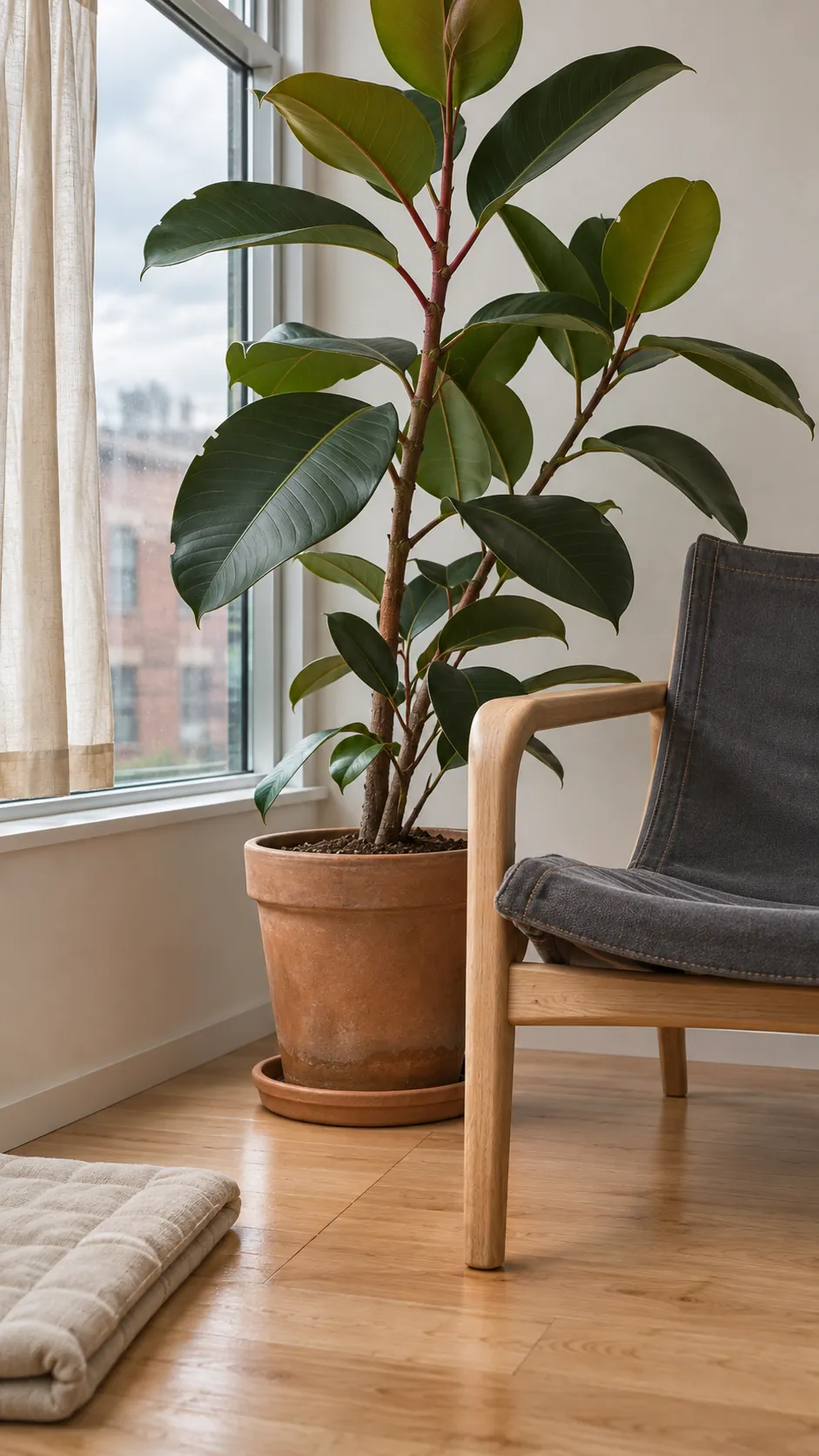
Place a tall plant where it has light
A rubber plant can soften an empty corner behind a chair if the leaves receive enough light for the plant. Check the sun at different times of day before choosing the pot location. Use a liner or saucer to protect wood flooring. Allow enough room to move the chair for watering.
Let the window set the seating direction
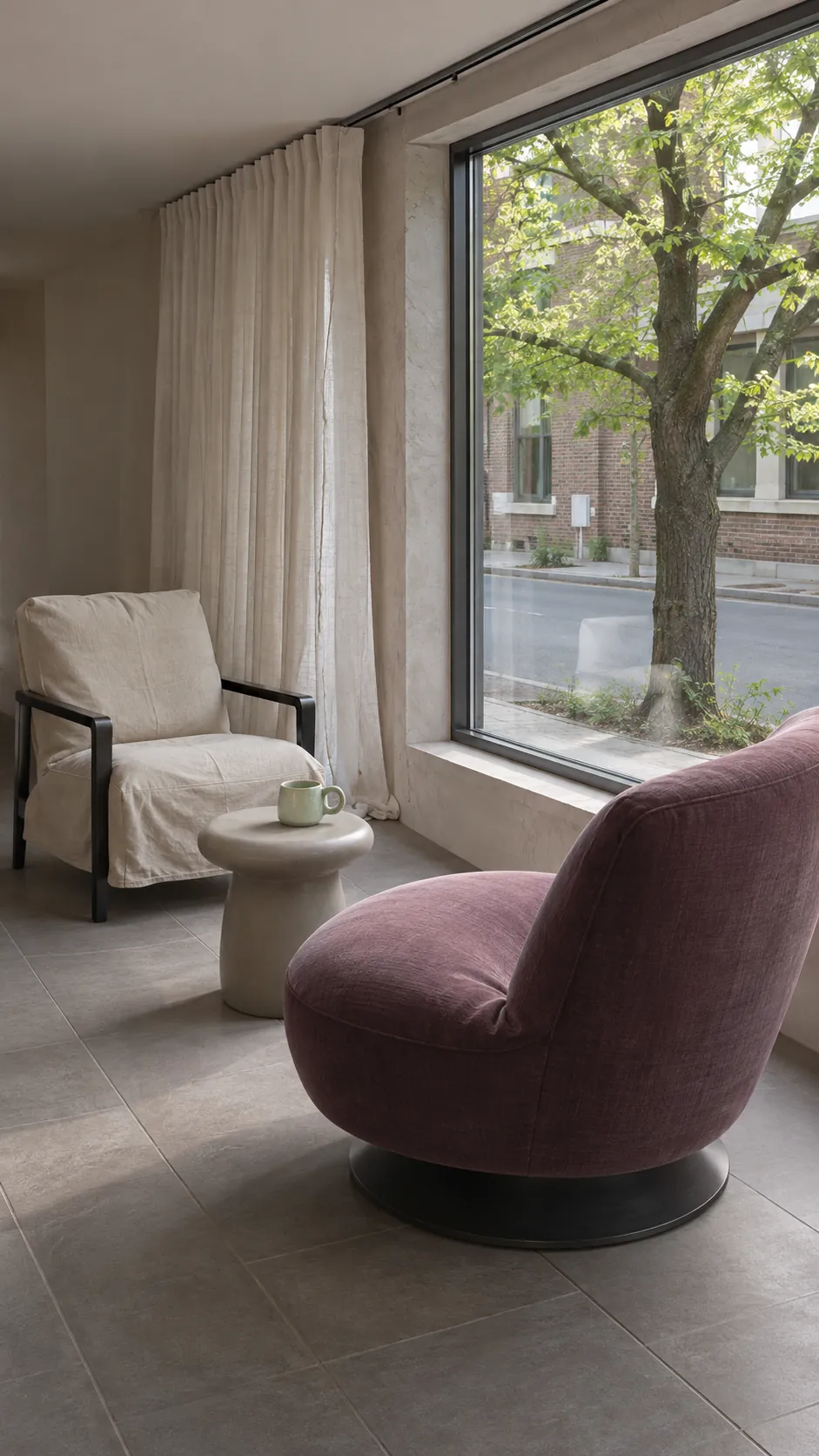
Turn one chair toward the part of the window with the clearest view and pull it back far enough to open the curtain. Keep its companion seat close enough for conversation. If the window throws glare onto the television, test the layout with the screen on before moving heavier pieces.
Keep one contemporary piece in the mix
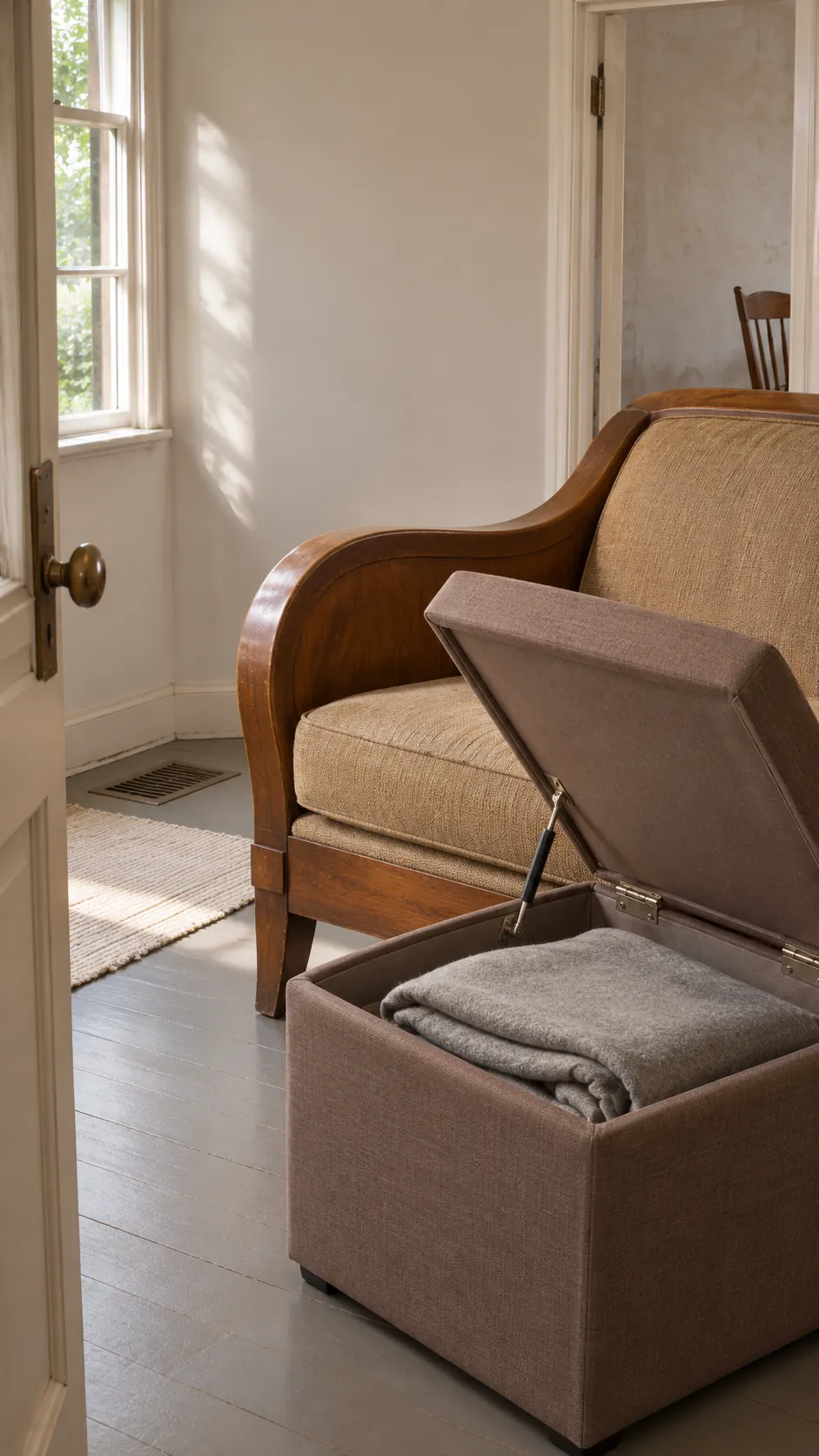
A plain modern storage ottoman can give everyday blankets a home beside a vintage sofa. Take your cue from the sofa fabric when choosing its color and give the pair at least one shared material or tone. Look at the arrangement from the entrance and let the vintage piece keep the stronger outline.