
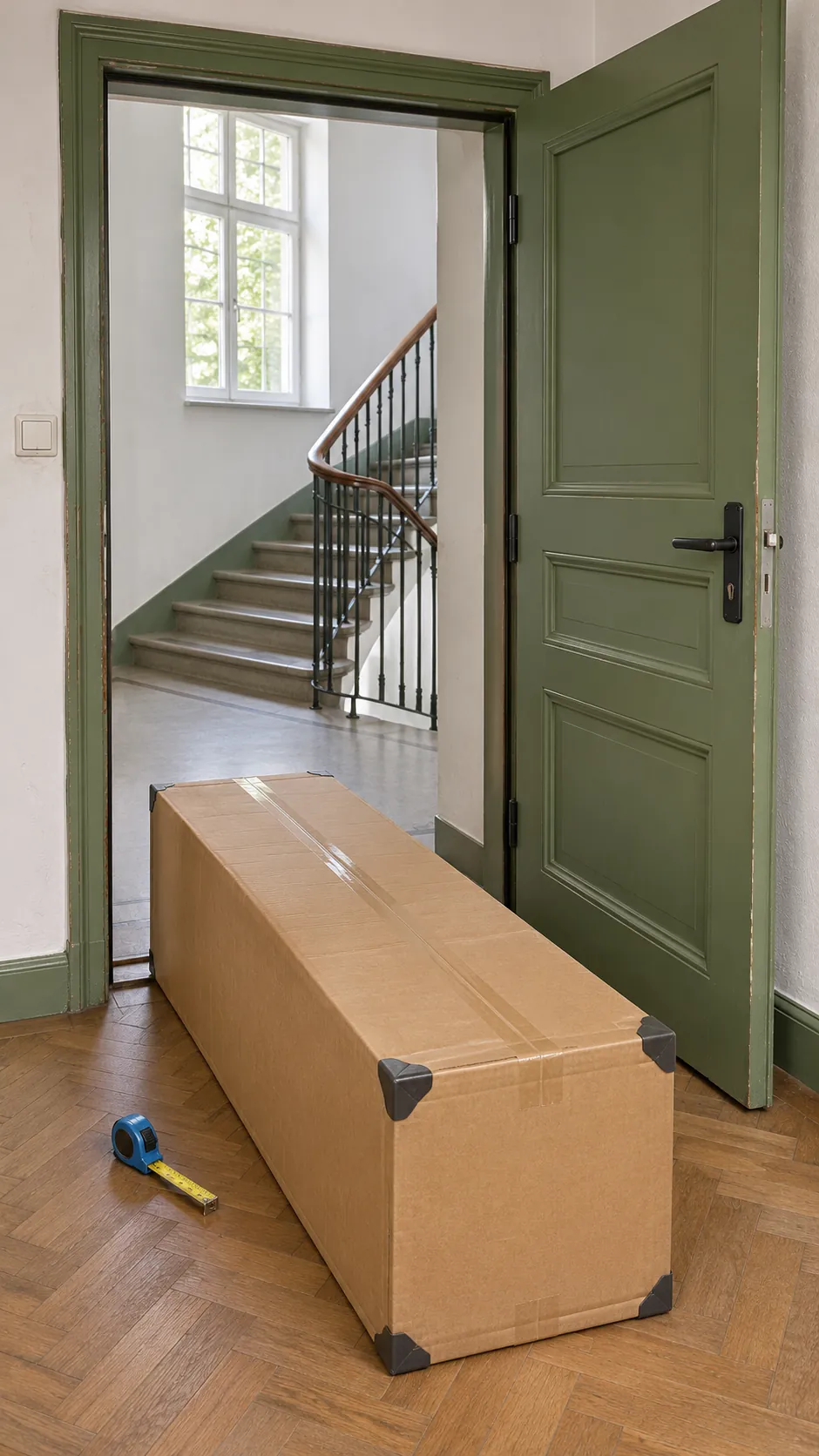
A sofa can clear the apartment door and still get stuck on the landing outside it. It has to make every turn in the shape it arrives in. Before you order, get the dimensions the delivery crew will work with and walk the entire route from the truck to your room.
Ask for the dimensions of every carton
Ask the seller for the length, width, height and weight of each carton or rigid piece. A sleeper mechanism can make the largest piece heavy even when the arms ship separately. Check who can safely handle it and whether the delivery crew will carry it upstairs or only drop it at the building entrance.
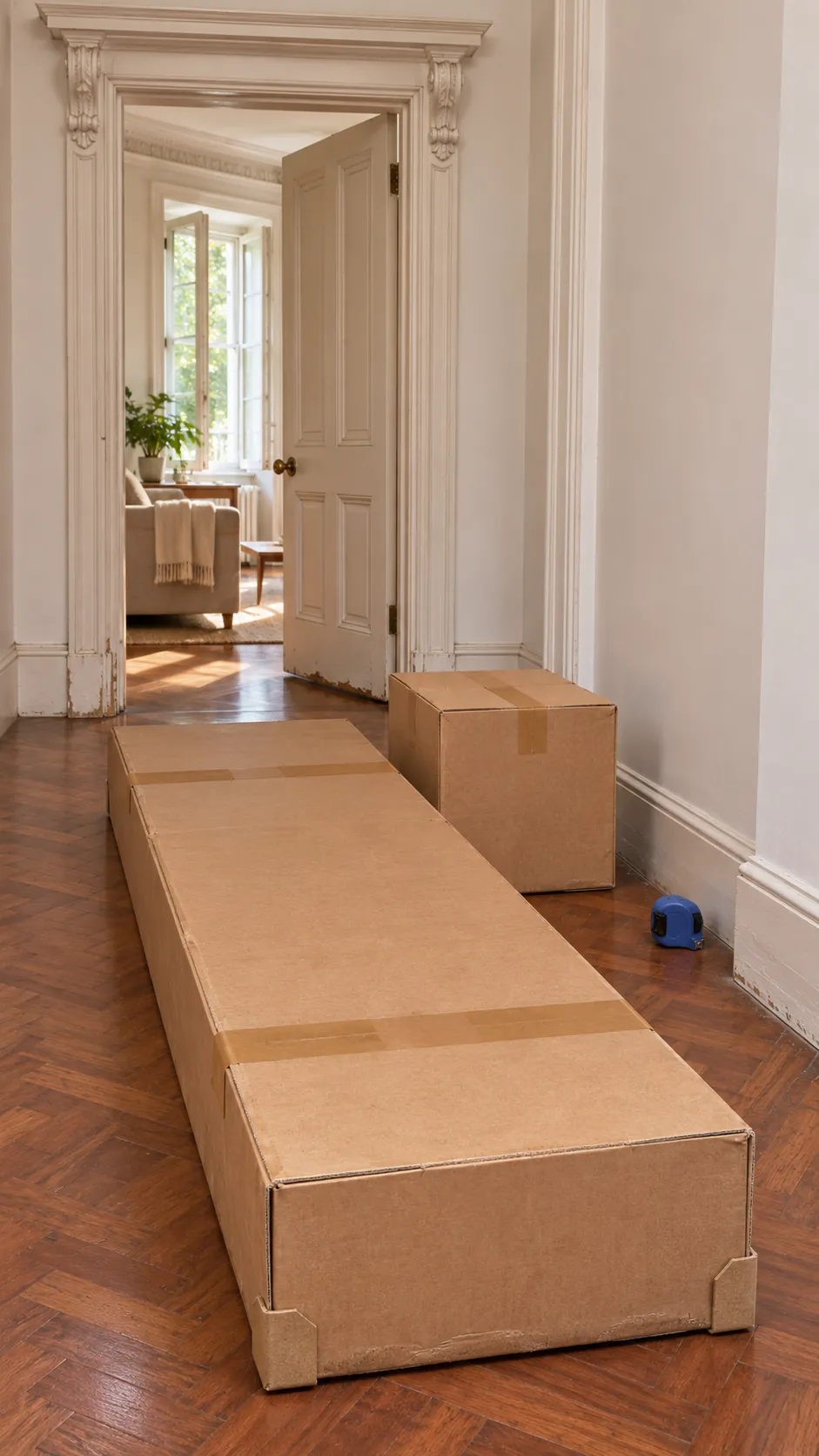
If the only measurements are for the assembled sofa, ask for shipping dimensions in writing. If the crew can unpack at the entrance, find out which parts the maker permits them to remove and whether unpacking affects returns.
Measure the clear door opening
Begin at the building entrance. Measure the narrowest clear width between the open door and the opposite jamb, and the clear height from the floor or threshold to the top. Include anything that sticks into the opening, such as a handle or closer. Repeat this at each interior door along the route.
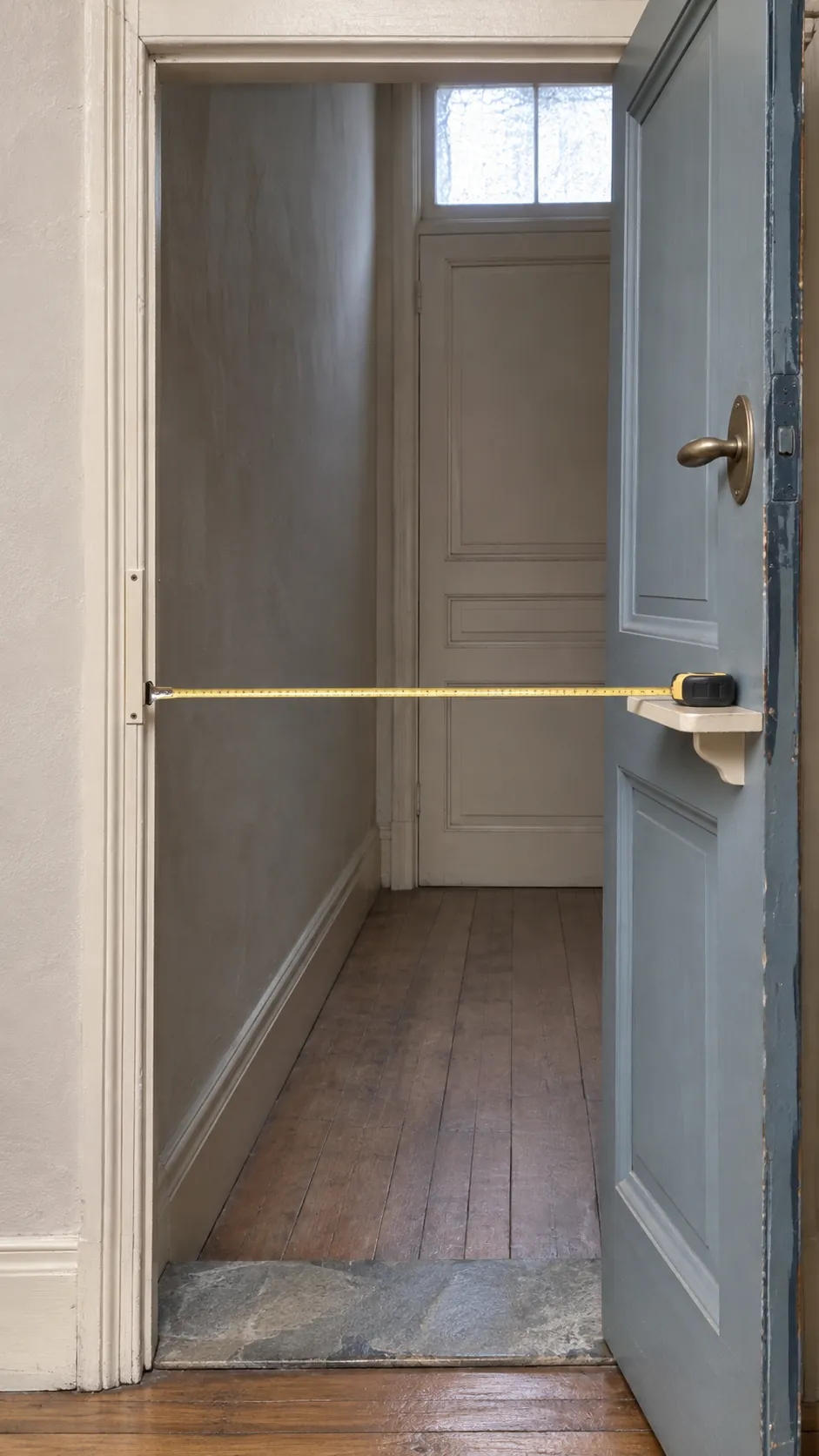
Look at the approach on both sides. A carton may be thin enough to go through on edge but too long to line up if the door faces a wall a few feet away.
Check the elevator door and cab separately
Write down the open elevator door’s width and height. Measure the usable cab width, depth and height separately, including the effect of rails and fixtures. Check where the door sits in the wall of the cab. An opening offset toward one side can leave little turning room.
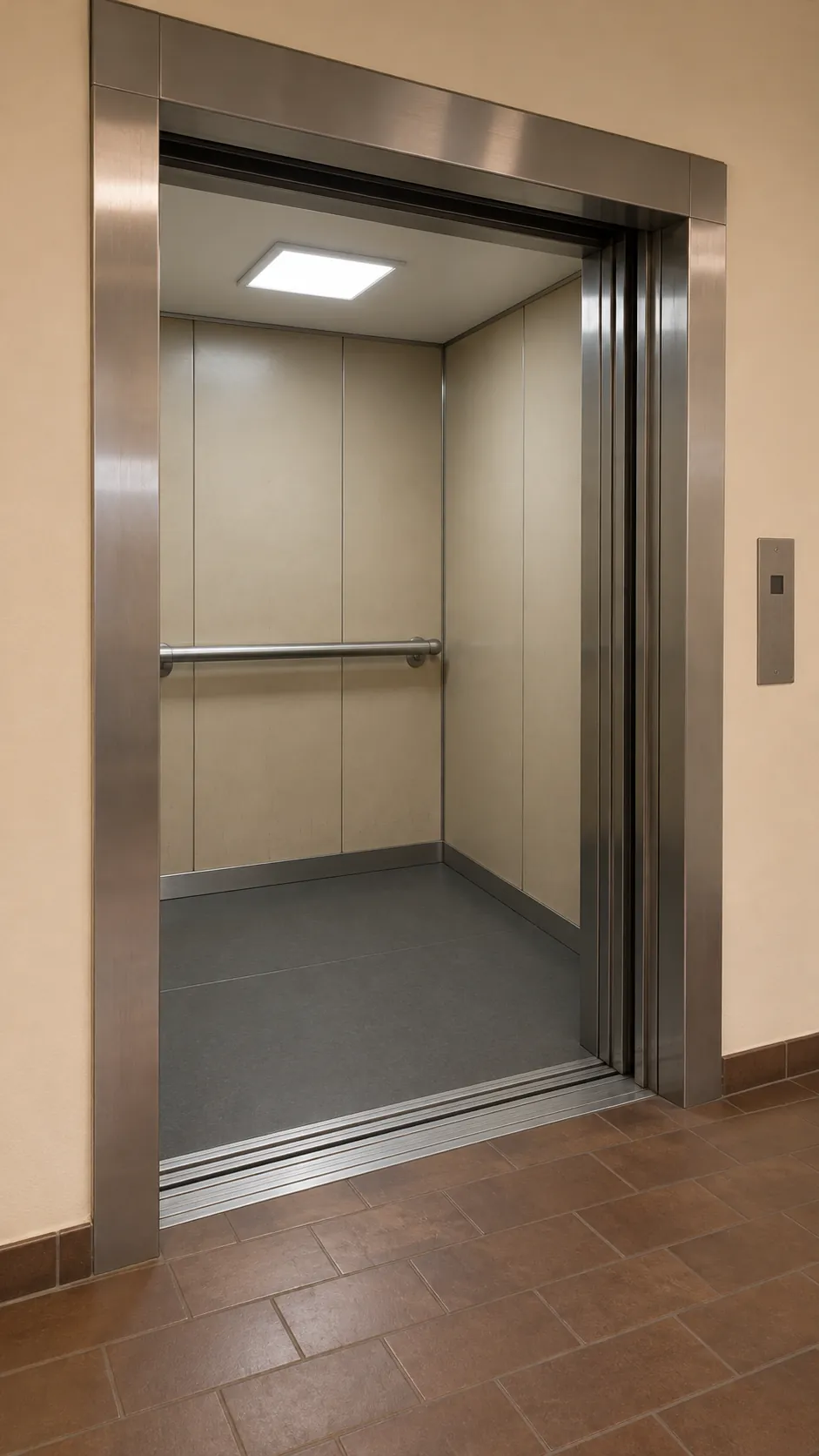
Measure the lobby space needed to swing the longest carton in and the hall outside the elevator on your floor. If the numbers are close, send the carrier photos and the dimensions. A cab diagonal by itself does not tell you whether a rigid box can pass through the door or rotate inside.
Walk the stairs all the way to your floor
Measure between the wall and the inside edge of the handrail at the narrowest point of each flight. Record the size of each landing and the ceiling height at turns, including low beams or the underside of a flight overhead. Check the top landing where the crew has to rotate the carton to reach your door.
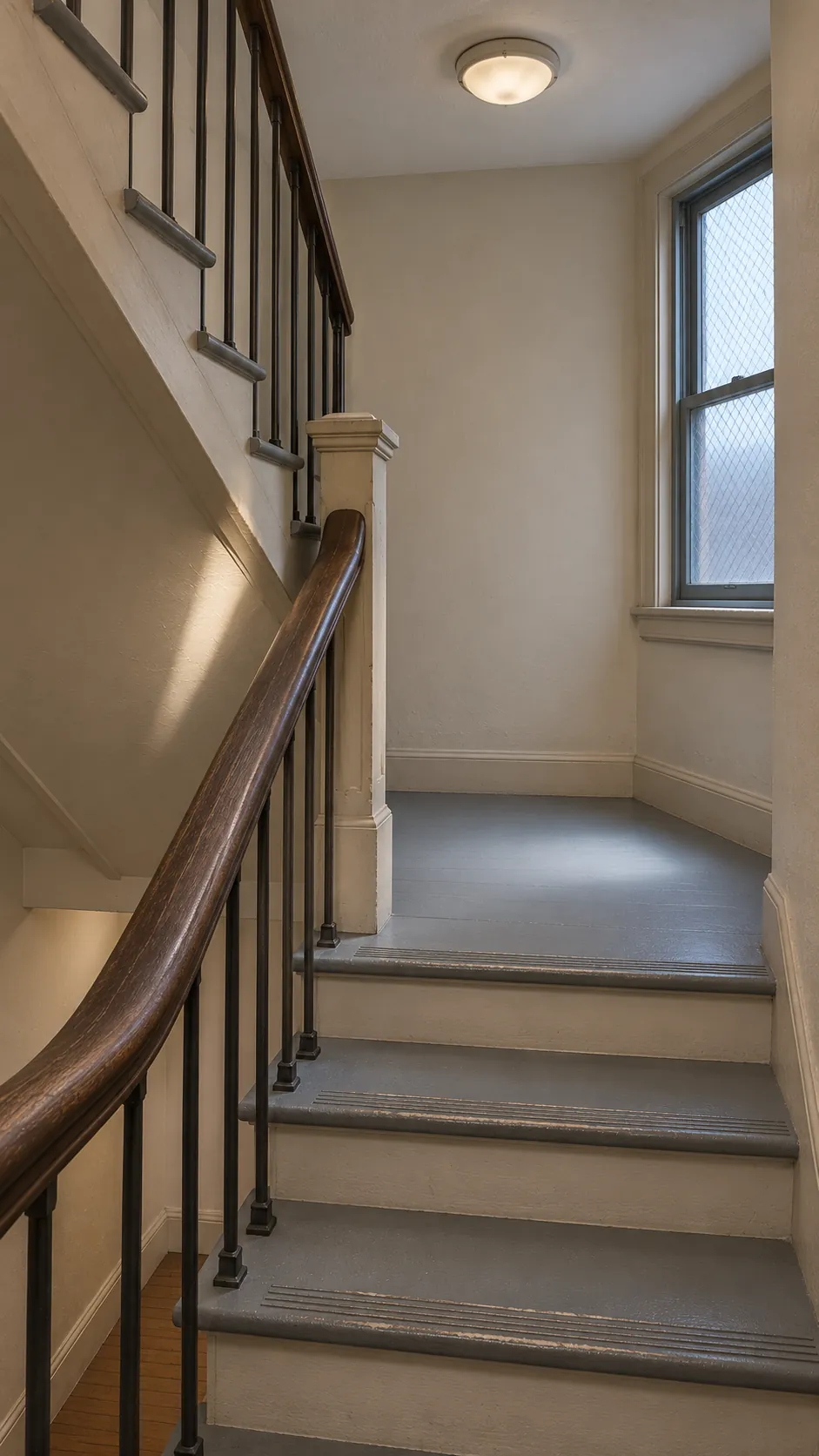
Do not count on taking off a rail or propping a fire door. If the route is tight, let the carrier assess it before checkout. Ask the building whether there are limits on using the stairs for deliveries.
Leave space to open the boxes and assemble
Measure the space at the final turn into the room and the area where the sofa can be assembled. Check the maker’s instructions for the orientation and clearance needed to attach the arms or install the feet. Mark the sofa footprint on the floor, then mark where the bed reaches when it is fully extended.
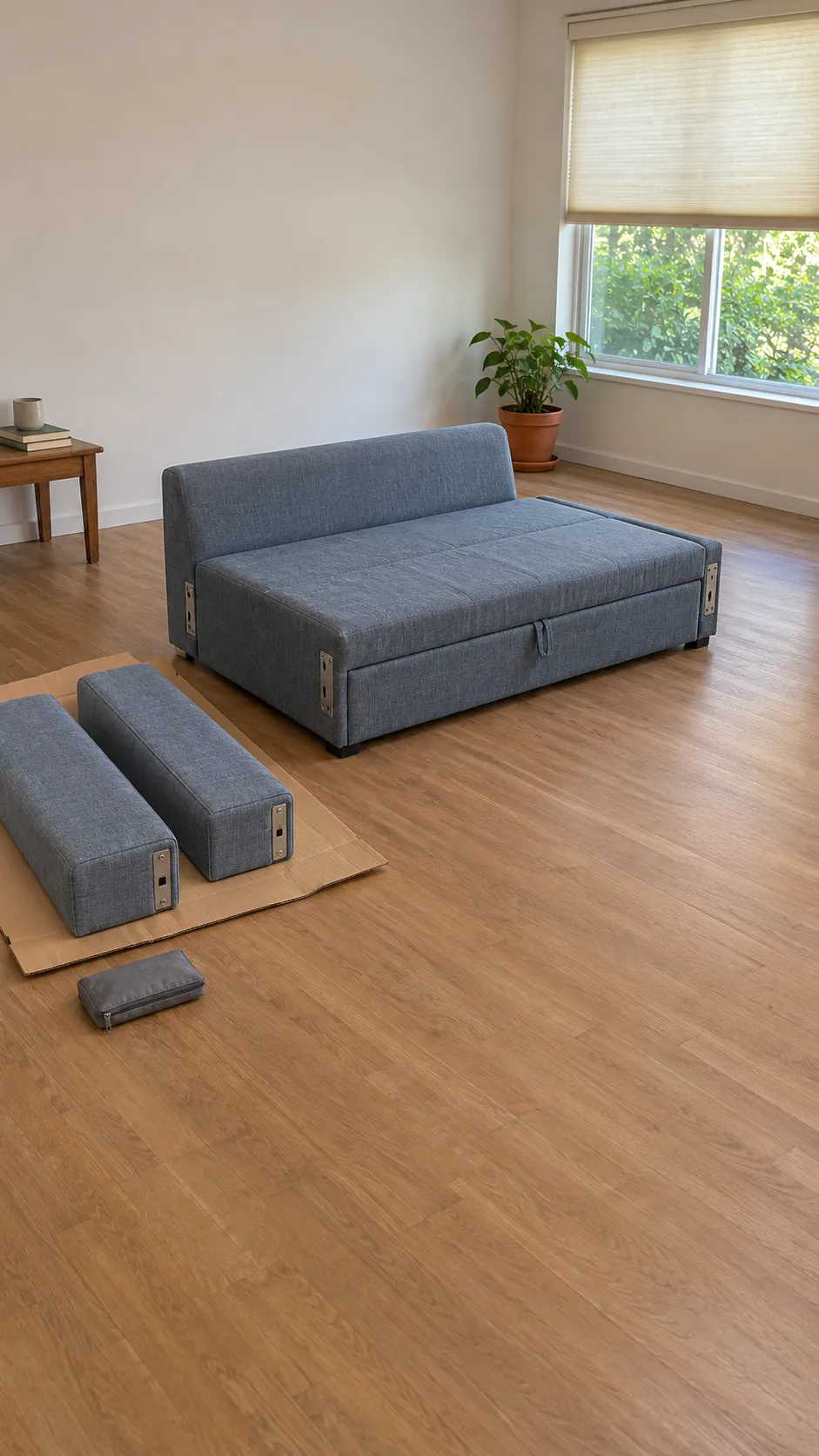
If a single rigid piece will not make the turn, consider a flat pack sleeper sofa or a model shipped in parts. Verify the largest piece in the new design against the same route.
Confirm the route with the crew before delivery
Send the carrier the carton sizes, the narrowest openings, the stair and landing measurements, and photos of tight turns. Ask which route the crew plans to use and what happens if the item cannot fit. Confirm any fees for stairs, assembly, a failed attempt, or a return.
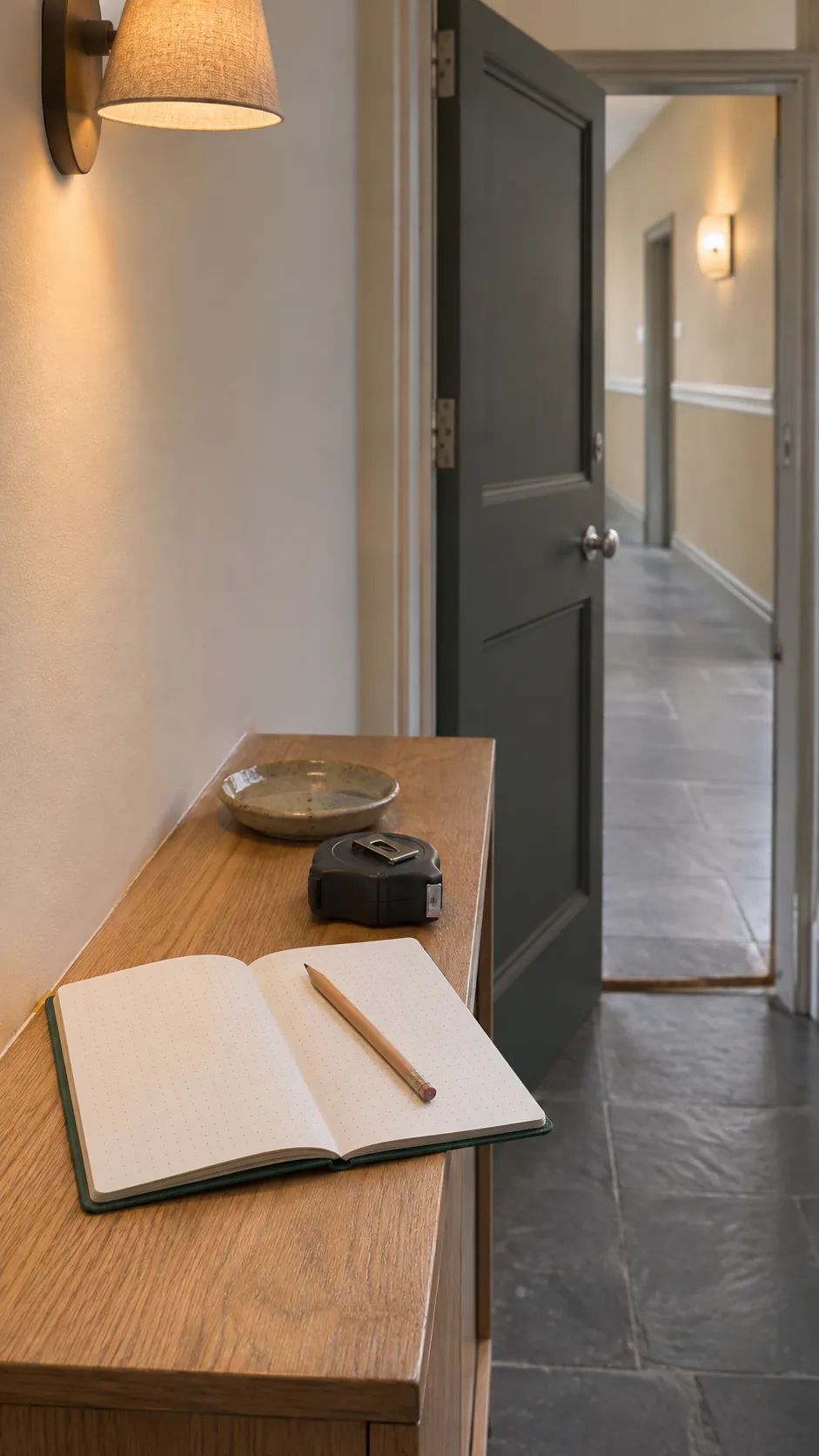
Reserve a freight elevator or loading bay if the building requires it. Clear shoes, small tables and rugs from the approved route on delivery day. If the carrier cannot confirm a tight turn from photos, ask whether they can assess it on site before you place the order.